

Submitted:
09 April 2026
Posted:
10 April 2026
You are already at the latest version
Abstract
The Fenton reaction remains one of the most widely investigated advanced oxidation processes for wastewater treatment due to its ability to generate highly reactive oxygen species capable of degrading persistent organic pollutants. However, classical homoge-neous Fenton systems suffer from significant limitations, including narrow pH applica-bility, iron sludge generation, and poor catalyst reusability. In response, extensive research has been devoted to the development of heterogeneous and advanced Fenton-like catalysts that address these challenges while improving catalytic efficiency and operational stabil-ity.
This review provides a comprehensive analysis of the evolution of Fenton catalysis, from classical homogeneous systems to modern advanced materials, including nanostructured catalysts, carbon-based Fe–N–C systems, metal–organic frameworks, and single-atom catalysts. Particular emphasis is placed on key performance parameters such as catalytic activity, manufacturability, stability, and catalyst lifespan. A critical comparison of these systems highlights the trade-offs between activity, cost, and scalability, demonstrating that the most advanced catalysts do not necessarily offer the best practical performance.
A dedicated life cycle assessment perspective is included, focusing on catalyst lifespan, reuse efficiency, and iron leaching, providing quantitative insights into long-term sus-tainability. The analysis reveals that while advanced catalysts significantly improve cu-mulative catalytic output, their environmental and economic viability depends on synthe-sis complexity and durability under realistic conditions.
Finally, current challenges and future directions are discussed, including the need for scalable synthesis methods, improved mechanistic understanding, and integration into hybrid treatment systems. This review aims to bridge the gap between fundamental re-search and practical application, offering guidance for the design of next-generation sus-tainable Fenton catalysts for wastewater treatment.
Keywords:
fenton reaction
; wastewater treatment
; advanced oxidation processes
; Fe–N–C catalysts
; heterogeneous catalysis
; life cycle assessment
1. Introduction
The rapid expansion of industrial activity, urbanization, and agricultural practices has resulted in the continuous release of persistent organic pollutants (POPs) into aquatic environments. These pollutants, including pharmaceuticals, dyes, pesticides, and personal care products, are often resistant to conventional biological and physicochemical treatment methods, posing significant risks to ecosystems and human health [1,2,3]. As a result, advanced oxidation processes (AOPs) have emerged as highly effective technologies for wastewater remediation due to their ability to generate reactive oxygen species (ROS), particularly hydroxyl radicals (•OH), which exhibit strong oxidation potential and non-selective reactivity toward organic contaminants [1,4].
Among AOPs, Fenton chemistry represents one of the oldest and most widely studied catalytic systems. First reported in the late 19th century, the classical Fenton reaction involves the catalytic decomposition of hydrogen peroxide (H₂O₂) by ferrous ions (Fe²⁺), producing hydroxyl radicals capable of mineralizing a wide range of pollutants [5]. Despite its simplicity and effectiveness, the classical Fenton process suffers from several inherent limitations, including narrow pH applicability, iron sludge formation, and poor catalyst reusability [4,6].
Classical Fenton catalysts are typically based on soluble iron salts such as FeSO₄ or FeCl₂. From a manufacturability perspective, these catalysts are highly advantageous due to their low cost, availability, and ease of preparation at industrial scale [5]. The homogeneous nature of the catalyst ensures high accessibility of active sites, resulting in rapid reaction kinetics and high catalytic activity under optimized conditions.
However, these advantages are counterbalanced by significant drawbacks. The requirement for acidic conditions (pH ≈ 2.5–3.5) limits applicability in real wastewater systems, where pH adjustment increases operational costs [6]. Furthermore, the oxidation of Fe²⁺ to Fe³⁺ leads to the formation of ferric hydroxide sludge, which must be removed and treated, reducing process sustainability [4]. Catalyst lifespan is inherently limited, as iron is continuously consumed and precipitated, requiring constant replenishment.
From a testing standpoint, classical Fenton systems have demonstrated high degradation efficiencies for model pollutants under laboratory conditions [7]. However, their performance often declines in real wastewater matrices due to radical scavenging by inorganic ions and natural organic matter [3].
To address these limitations, research has progressively shifted toward heterogeneous Fenton catalysts, which immobilize iron species on solid supports. These catalysts enable easier separation, reduced sludge formation, and improved reusability [8,9,10].
Common heterogeneous catalysts include iron oxides (Fe₃O₄, Fe₂O₃), supported iron materials (e.g., Fe/activated carbon), and natural minerals [8]. These materials are generally synthesized through scalable methods such as precipitation, hydrothermal synthesis, or impregnation–calcination, making them suitable for industrial implementation [10].
In terms of catalytic activity, heterogeneous systems typically exhibit lower intrinsic activity compared to homogeneous systems due to diffusion limitations and reduced accessibility of active sites. However, advances in material engineering have significantly improved their performance, enabling operation over a wider pH range and enhancing stability [9].
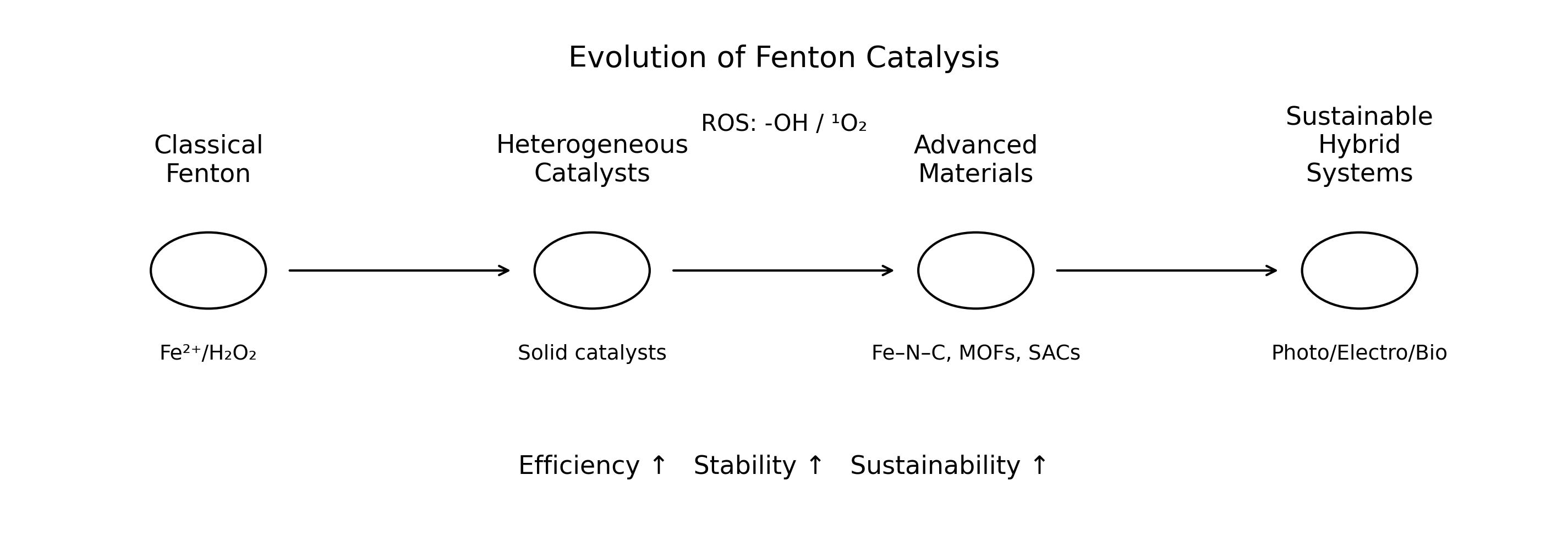
The evolution of Fenton catalysts has led to a progressive enhancement in catalytic efficiency, selectivity, and operational flexibility.
Figure 1.
Evolution Fenton catalysts.

Modern catalysts exhibit significantly higher catalytic activity due to increased surface area, improved electron transfer, and enhanced ROS generation [2,11]. For example, Fe₃O₄-based catalysts modified with carbon materials have demonstrated complete pollutant degradation under near-neutral pH conditions [11]. Similarly, Fe-ZSM-5 zeolites exhibit high activity due to the presence of Brønsted acid sites and improved dispersion of iron species [12].
Recent developments in nanotechnology and materials science have led to the emergence of advanced Fenton-like catalysts, including:
Nanostructured Catalysts: Nanomaterials such as Fe nanoparticles, ferrites, and core–shell structures provide high surface area and tunable properties, enhancing catalytic activity [13,14,15]. These materials can be synthesized using scalable techniques such as sol–gel and hydrothermal methods.
Carbon-Based Catalysts (Fe–N–C): Fe–N–C catalysts, derived from pyrolyzed MOFs or polymers, exhibit excellent catalytic performance due to atomically dispersed iron sites and improved electron transfer [16]. These materials also show enhanced stability and resistance to leaching.
Metal–Organic Frameworks (MOFs): MOFs offer high porosity, tunable structures, and strong metal–ligand coordination, resulting in high catalytic activity and stability [17]. Their manufacturability is improving, though cost remains a challenge.
Single-Atom Catalysts (SACs): SACs represent the cutting edge of catalysis, providing maximum atom utilization and well-defined active sites [18]. These catalysts exhibit superior activity and selectivity but face scalability challenges.
One of the most critical aspects of catalyst design is stability and operational lifespan.
Figure 2.
Evolution of catalyst performance.
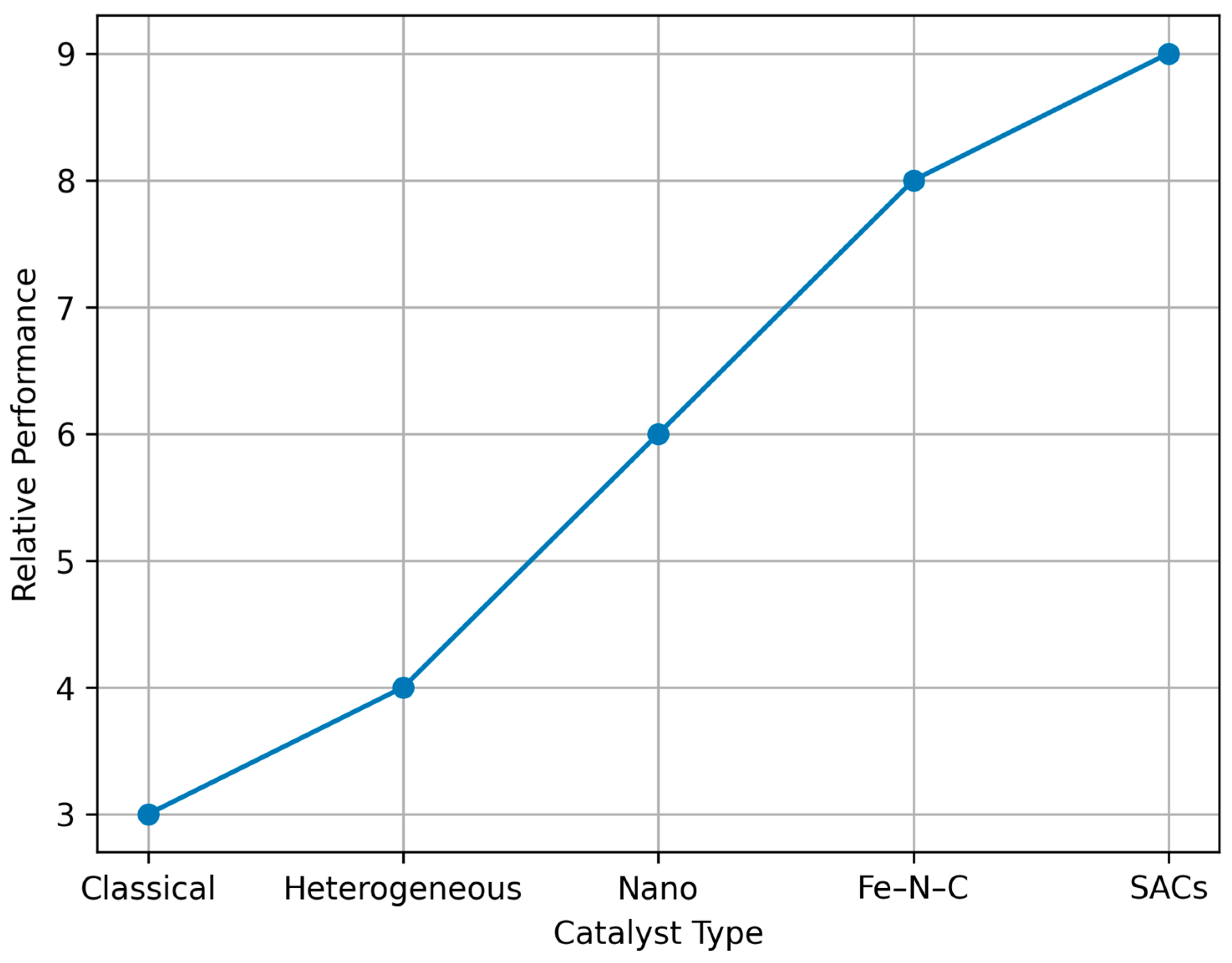
Classical Fenton systems exhibit poor stability due to continuous iron loss. In contrast, heterogeneous catalysts enable multiple reuse cycles, while advanced materials such as Fe–N–C catalysts demonstrate minimal leaching and sustained activity over repeated cycles [16].
Recent studies have shown that nanocomposite catalysts can maintain catalytic activity after multiple cycles with negligible structural degradation [11]. Similarly, MOF-derived catalysts exhibit enhanced durability due to strong coordination bonds [17].
The lifespan of catalysts has improved significantly with the development of advanced materials. While classical systems require continuous iron addition, modern catalysts can operate over extended periods with minimal performance loss [2,9].
However, practical challenges remain. Catalyst deactivation due to fouling, poisoning, or structural degradation still limits long-term performance [10]. Additionally, large-scale implementation requires addressing issues related to cost, synthesis complexity, and reproducibility.
Testing of Fenton catalysts has evolved from simple batch experiments using model pollutants to more complex systems involving real wastewater and continuous flow reactors [3,9]. Modern studies emphasize:
- Realistic pollutant mixtures
- Variable pH conditions
- Long-term stability tests
- Catalyst recyclability
Figure 3.
Evolution of catalyst lifespan and reuse capability.
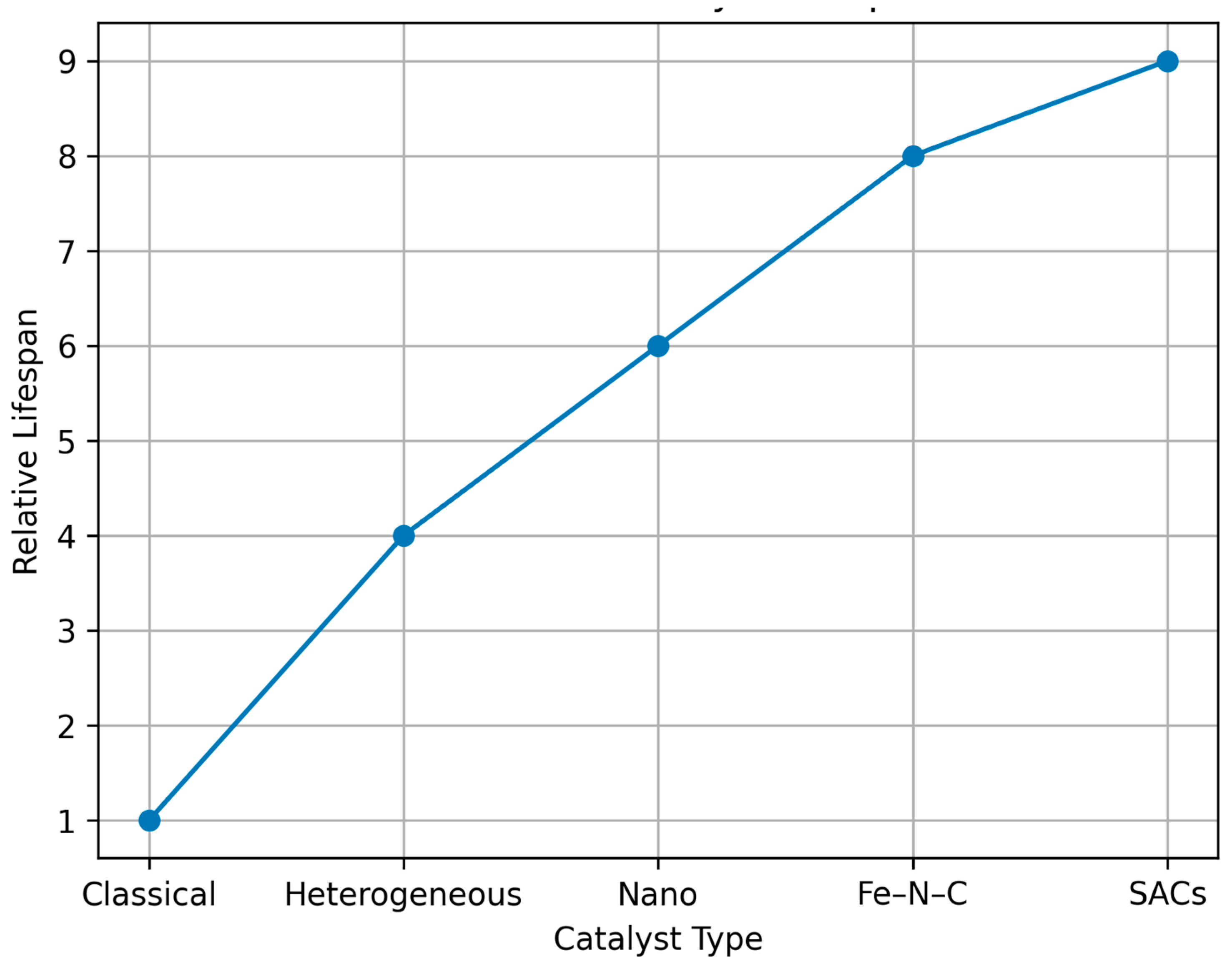
These approaches provide a more accurate assessment of catalyst performance and highlight the gap between laboratory results and industrial applications.
Recent research has revealed that Fenton-like systems are not limited to hydroxyl radical pathways. Alternative mechanisms include:
- Singlet oxygen generation
- Superoxide radical pathways
- Direct electron transfer processes
2. Classical Fenton Chemistry: Fundamentals, Mechanisms, and Practical Limitations
The classical Fenton reaction represents one of the earliest and most extensively studied catalytic systems for the generation of reactive oxygen species (ROS), particularly hydroxyl radicals (•OH), in aqueous media. Since its discovery by Henry J. Fenton in 1894, this process has evolved into a cornerstone technology in advanced oxidation processes (AOPs) for wastewater treatment [5]. Despite its simplicity, the Fenton system involves a complex network of redox reactions, radical pathways, and equilibrium processes that collectively determine its efficiency, selectivity, and applicability.
At the core of the classical Fenton process lies the catalytic decomposition of hydrogen peroxide (H₂O₂) by ferrous ions (Fe²⁺), generating hydroxyl radicals according to the primary reaction:
This reaction is followed by a series of secondary reactions involving ferric ions (Fe³⁺), hydrogen peroxide, and radical intermediates:
These reactions constitute a catalytic redox cycle in which Fe²⁺ and Fe³⁺ are continuously interconverted, enabling sustained radical production [6,31].
However, the system is far from ideal. Competing reactions, such as radical recombination and hydrogen peroxide decomposition, reduce overall efficiency:
These side reactions highlight the importance of optimizing reagent concentrations and reaction conditions to maximize catalytic activity [32].
Although traditionally described as a hydroxyl radical-driven process, the classical Fenton system involves a broader range of reactive species, including hydroperoxyl radicals (-OOH), superoxide anions (O₂⁻), and high-valent iron intermediates [31]. The relative contribution of these species depends on factors such as pH, iron concentration, and hydrogen peroxide dosage.
Figure 4.
Simplified mechanistic scheme of classical Fenton reactions.
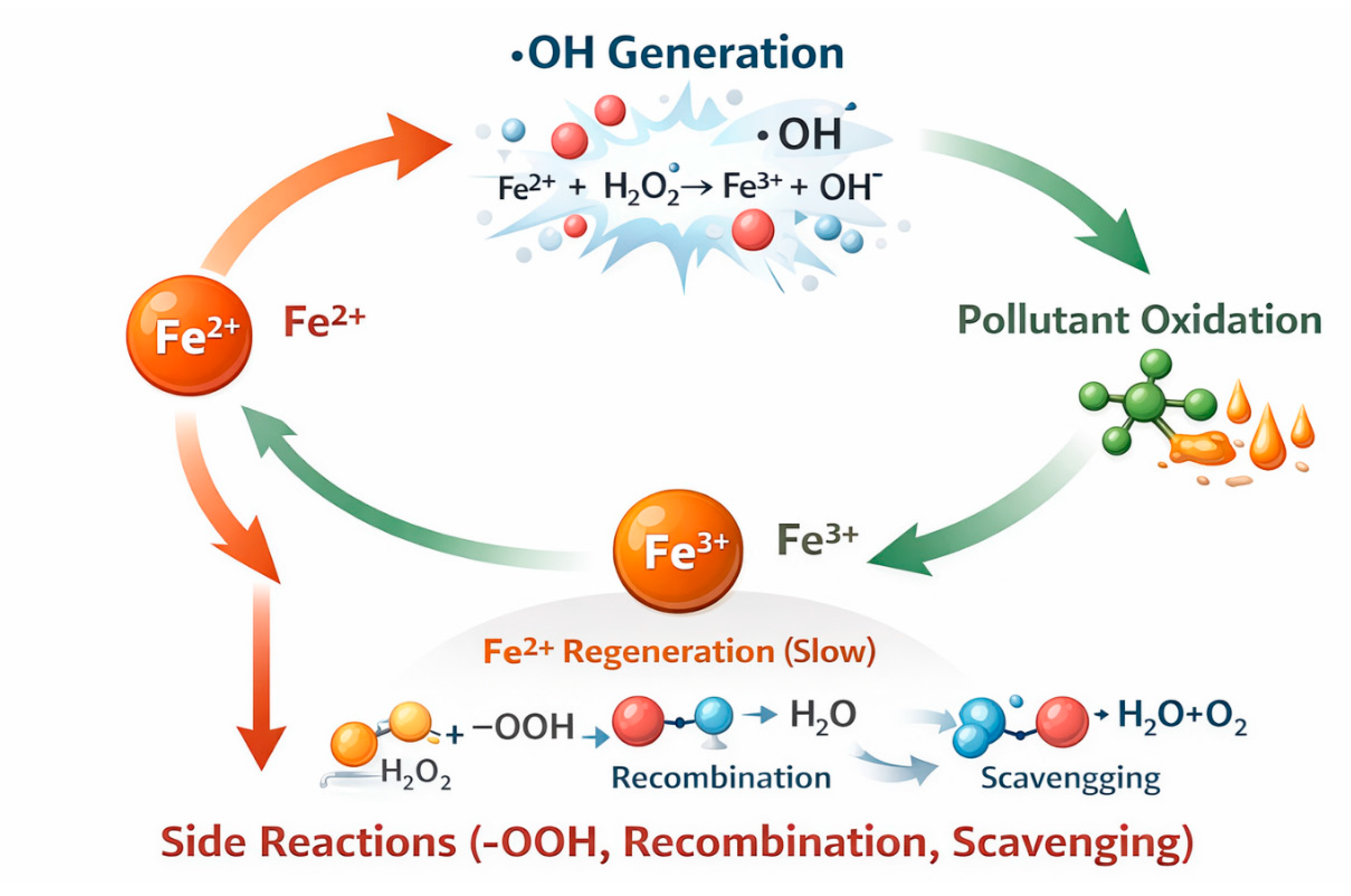
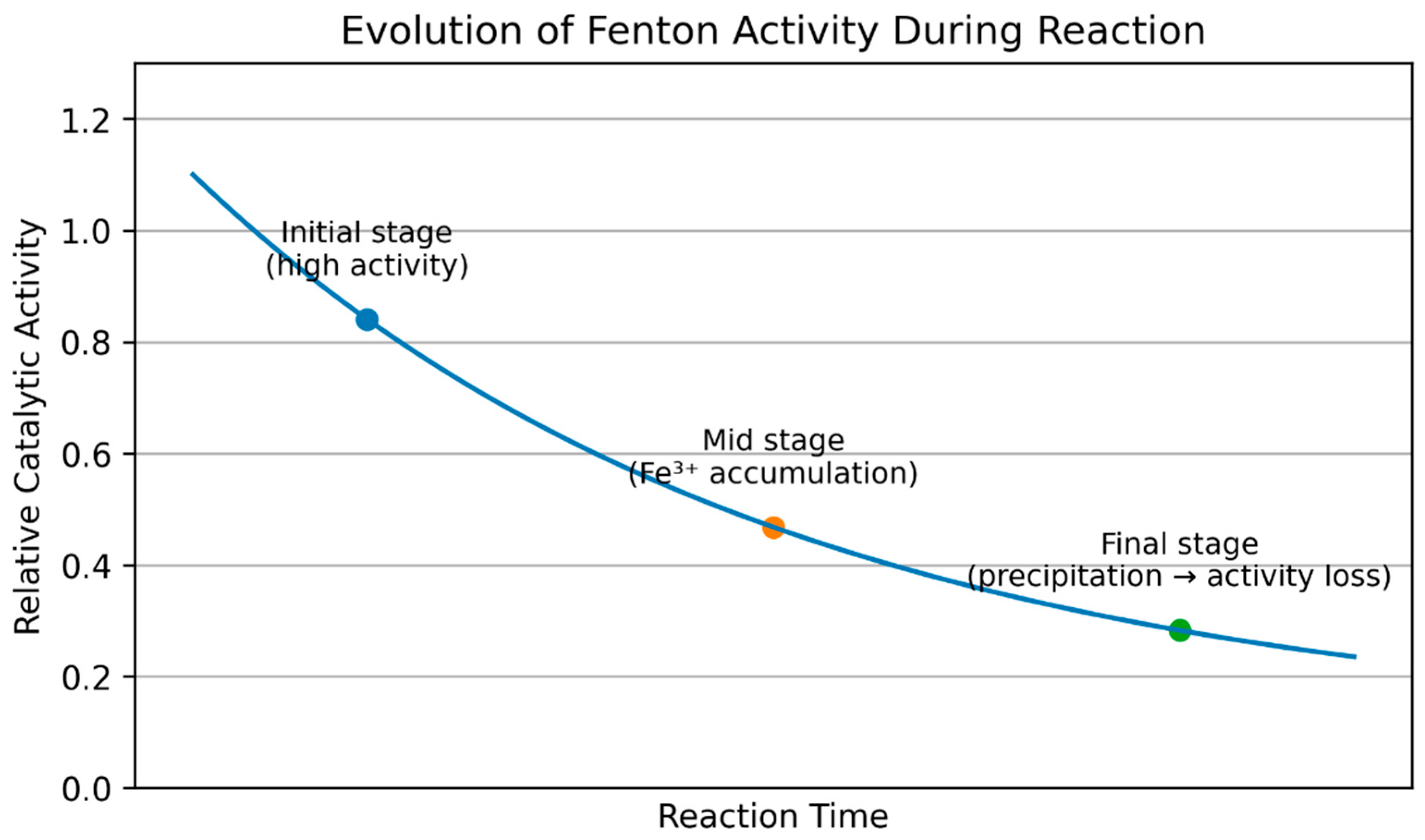
The efficiency of the catalytic cycle is largely governed by the rate of Fe³⁺ reduction back to Fe²⁺. Under classical conditions, this step is relatively slow, leading to the accumulation of Fe³⁺ and a decline in catalytic activity over time [6].
he classical Fenton process is characterized by exceptionally high oxidation potential, with hydroxyl radicals exhibiting a standard redox potential of approximately 2.8 V. This enables rapid and non-selective degradation of a wide range of organic pollutants, including aromatic compounds, dyes, and pharmaceuticals [4,33].
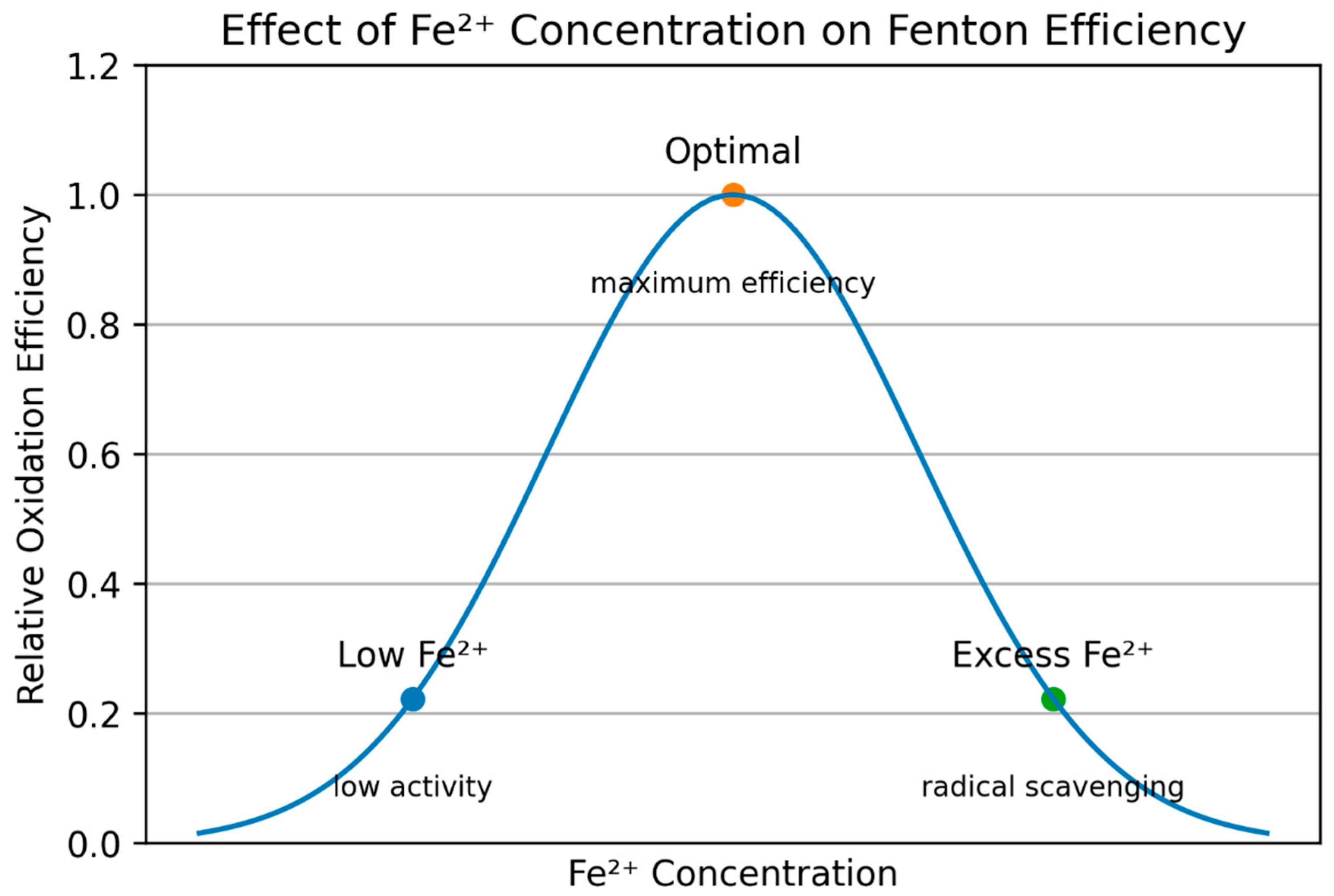
Experimental studies have demonstrated near-complete degradation of model pollutants such as phenol, methylene blue, and bisphenol A under optimized conditions [7,33]. However, catalytic activity is highly sensitive to operational parameters:
- pH: Optimal range is 2.5–3.5
- Fe²⁺ concentration: Excess leads to radical scavenging
- H₂O₂ dosage: Overuse reduces efficiency due to side reactions
Figure 5.
Influence of iron concentration on catalytic activity.
Despite high intrinsic activity, the process suffers from low selectivity and inefficient utilization of oxidants, which limits its practical performance in complex wastewater systems [32].
One of the major advantages of classical Fenton chemistry lies in its simplicity and ease of implementation. Iron salts such as FeSO₄ and FeCl₂ are inexpensive, widely available, and easily handled, making them suitable for large-scale applications [5].
The process requires minimal infrastructure, typically involving:
- A reaction tank
- Dosing systems for Fe²⁺ and H₂O₂
- pH adjustment units
This simplicity has enabled widespread adoption in industries such as textile manufacturing, pharmaceuticals, and chemical processing [34].
However, industrial implementation faces several challenges:
- Continuous consumption of iron salts
- Generation of large volumes of sludge
- Need for post-treatment (neutralization, filtration)
These factors increase operational costs and reduce process sustainability [4].
Unlike heterogeneous catalysts, classical Fenton systems do not possess a true “lifespan” in the traditional sense, as the catalyst (Fe²⁺) is continuously consumed and regenerated. However, in practice, the system experiences rapid deactivation due to:
- Precipitation of Fe³⁺ as Fe(OH)₃
- Loss of soluble iron species
- Decrease in Fe²⁺ regeneration efficiency
The formation of iron sludge not only reduces catalyst availability but also introduces environmental and economic burdens associated with sludge handling and disposal [6].
Classical Fenton systems have been extensively evaluated using laboratory-scale batch experiments. Common model pollutants include phenols, dyes, and antibiotics, which are monitored using techniques such as UV–Vis spectroscopy, high-performance liquid chromatography (HPLC), and total organic carbon (TOC) analysis [33].
Figure 6.
Evolution of catalytic activity over time in classical Fenton systems.
However, the translation of laboratory results to real-world applications remains challenging. Real wastewater contains a complex mixture of inorganic ions (e.g., Cl⁻, SO₄²⁻) and natural organic matter, which can act as radical scavengers and significantly reduce process efficiency [3].
Recent studies have emphasized the importance of testing under realistic conditions, including:
- Variable pH
- Mixed pollutant systems
- Continuous flow reactors
These approaches provide a more accurate assessment of catalytic performance and highlight the limitations of classical Fenton systems in practical applications [9].
Despite its effectiveness, the classical Fenton process is associated with several critical limitations: narrow pH range: optimal performance is restricted to acidic conditions, limiting applicability in neutral or alkaline wastewater [6], sludge formation: the precipitation of iron hydroxides generates large volumes of sludge, requiring additional treatment [4], low catalyst stability: continuous iron consumption reduces catalyst availability and efficiency over time, poor selectivity: non-selective oxidation leads to inefficient use of oxidants and potential formation of intermediate by-products [32], limited scalability: operational challenges and costs hinder large-scale implementation.
Despite its limitations, classical Fenton chemistry remains a fundamental reference point for the development of advanced catalytic systems. Its well-understood mechanism and high oxidative potential provide a benchmark for evaluating new materials and processes.
Modern Fenton-like catalysts aim to address the shortcomings of classical systems by:
- Expanding pH applicability
- Reducing sludge formation
- Enhancing catalyst stability
- Improving oxidant efficiency
3. Heterogeneous Fenton Catalysts: Materials, Mechanisms, and Practical Performance
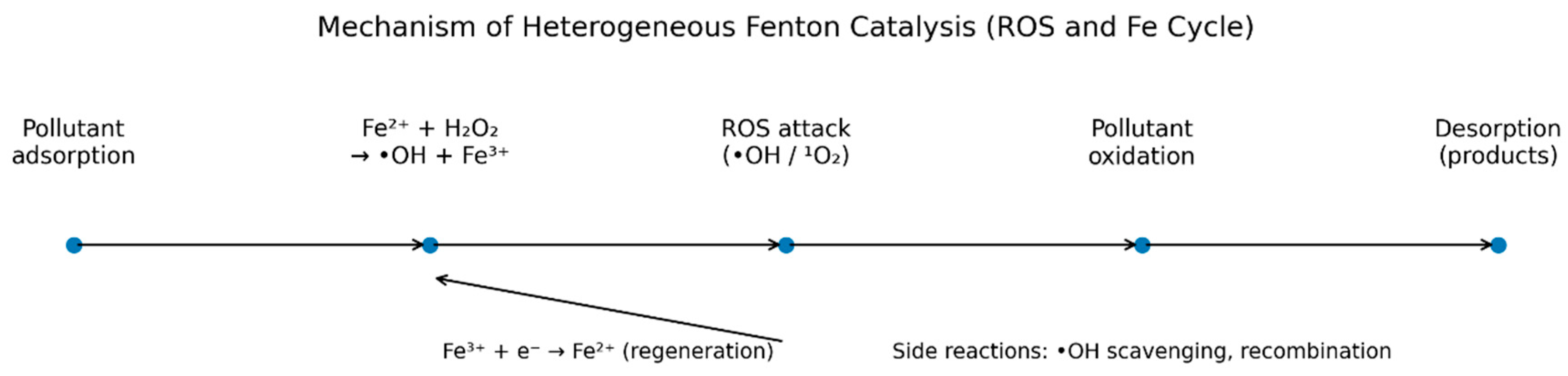
The limitations associated with classical homogeneous Fenton systems—particularly iron sludge generation, narrow pH range, and poor catalyst reusability—have driven the development of heterogeneous Fenton catalysts. These systems aim to immobilize active iron species on solid matrices, thereby facilitating catalyst recovery, reducing secondary pollution, and improving operational stability. Over the past decades, heterogeneous Fenton catalysis has emerged as a crucial intermediate stage between classical systems and modern advanced materials, offering a balance between performance, cost, and scalability [2,8]. In heterogeneous Fenton systems, iron species are incorporated into solid materials such as oxides, minerals, or porous supports. The catalytic process typically occurs at the solid–liquid interface, where hydrogen peroxide interacts with surface-bound iron sites to generate reactive oxygen species.
The general mechanism can be described as follows:
Unlike homogeneous systems, the catalytic cycle is confined to the surface of the solid material, which introduces additional complexities such as mass transfer limitations, adsorption–desorption equilibria, and surface site heterogeneity [38].
Figure 7.
General mechanism of heterogeneous Fenton catalysis.
3.1. Classes of Heterogeneous Fenton Catalysts
3.1.1. Iron Oxides and (Oxyhydr)oxides
Iron oxides such as magnetite (Fe₃O₄), hematite (Fe₂O₃), and goethite (FeOOH) represent the most widely studied heterogeneous Fenton catalysts. These materials are attractive due to their low cost, environmental compatibility, and ease of synthesis [9,41].
From a manufacturability perspective, iron oxides can be produced using scalable techniques such as co-precipitation, hydrothermal synthesis, and thermal decomposition. Magnetite nanoparticles, in particular, are highly attractive due to their magnetic properties, which facilitate catalyst recovery using external magnetic fields [41].
In terms of catalytic activity, Fe₃O₄ exhibits superior performance compared to other iron oxides due to the coexistence of Fe²⁺ and Fe³⁺ species, which enhances redox cycling. However, activity is often lower than that of homogeneous systems due to limited surface accessibility and diffusion constraints [11].
3.1.2. Supported Iron Catalysts
Supported catalysts involve the dispersion of iron species onto materials such as activated carbon, silica, alumina, or zeolites. These supports increase surface area, improve dispersion of active sites, and enhance catalytic performance [12].
For example, Fe-loaded activated carbon has demonstrated improved pollutant degradation due to synergistic effects between adsorption and catalysis. Similarly, Fe-ZSM-5 zeolites provide well-defined pore structures that facilitate mass transfer and enhance reaction kinetics [12].
Manufacturability of supported catalysts is relatively straightforward, typically involving impregnation or ion-exchange methods followed by calcination. These processes are scalable and compatible with industrial production.
3.1.3. Natural Minerals
Naturally occurring minerals such as pyrite (FeS₂), chalcopyrite (CuFeS₂), and laterite soils have been explored as low-cost heterogeneous Fenton catalysts [6,42]. These materials offer significant advantages in terms of availability and sustainability.
However, their catalytic performance is often limited by low surface area, variable composition, and potential release of toxic metal ions. Despite these challenges, natural minerals remain attractive for large-scale applications in resource-limited settings.
3.2. Evolution of Catalytic Performance in Heterogeneous Systems
Heterogeneous catalysts exhibit a gradual improvement in catalytic performance compared to classical systems, particularly in terms of operational flexibility and reusability.
Figure 8.
Evolution of catalytic performance in heterogeneous Fenton systems.
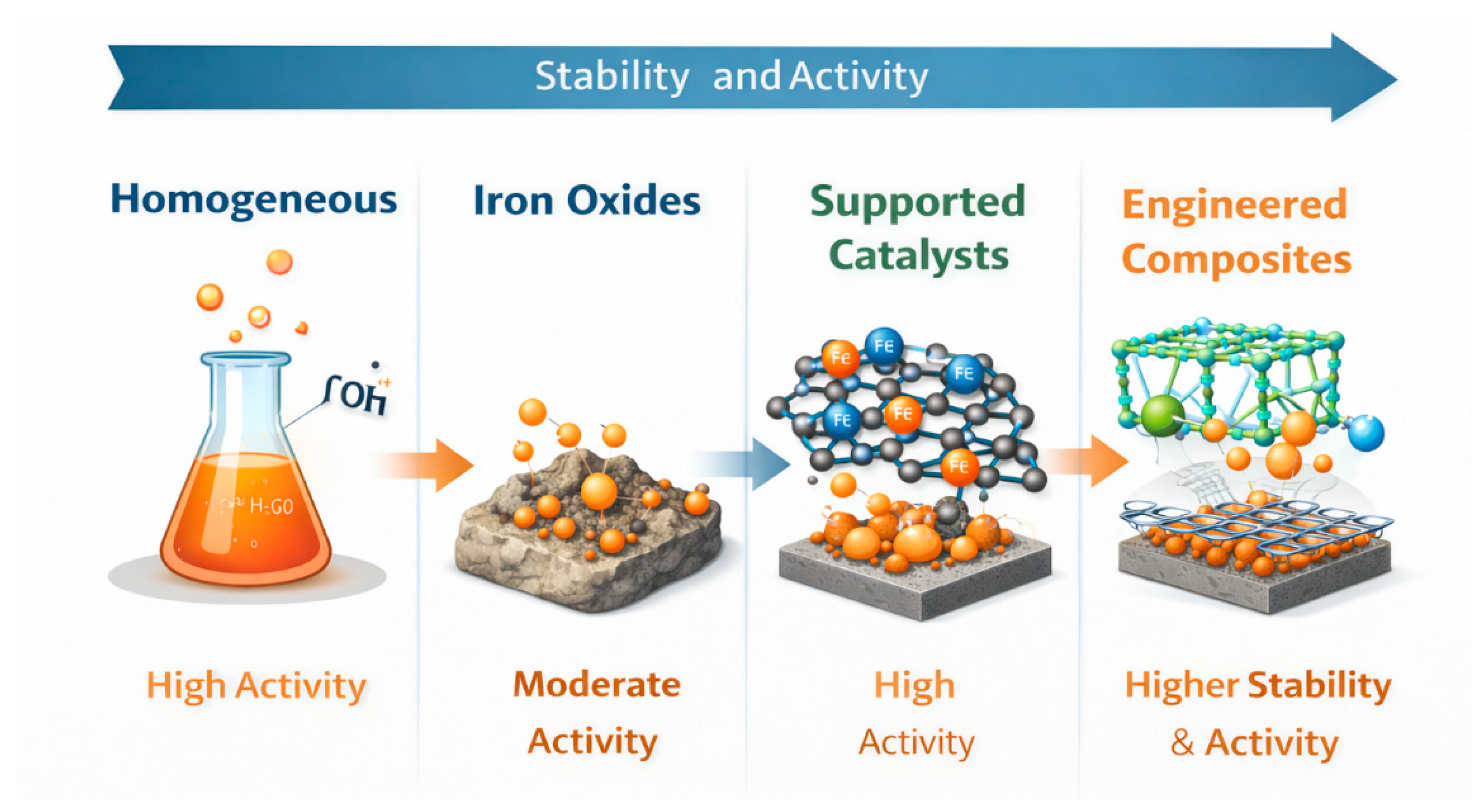
While homogeneous systems still exhibit higher intrinsic activity, heterogeneous catalysts provide more consistent performance under realistic conditions, particularly in neutral pH environments [9].
3.3. Catalytic Activity and Reaction Efficiency
The catalytic activity of heterogeneous Fenton systems is governed by a combination of physicochemical and operational factors, which collectively determine the efficiency of hydroxyl radical generation and pollutant degradation. Among these, surface area and porosity play a central role, as they directly influence the availability of active sites and the accessibility of reactants. Materials with high surface area, particularly nanostructured catalysts, provide a greater density of exposed iron sites, thereby enhancing catalytic performance.
Equally important is the oxidation state and dispersion of iron species within the catalyst. Well-dispersed iron centers facilitate efficient redox cycling between Fe²⁺ and Fe³⁺, which is essential for sustaining Fenton reactions. The interaction between iron species and the support material further affects catalytic behavior, as strong metal–support interactions can improve stability while also influencing electron transfer pathways. In addition, mass transfer efficiency plays a critical role, particularly in heterogeneous systems where diffusion limitations can restrict access to active sites.
Recent studies have demonstrated that tailoring catalyst morphology and surface chemistry can significantly improve activity. For instance, nanoscale Fe₃O₄ particles exhibit enhanced catalytic performance due to their increased surface area and improved electron transfer characteristics [11]. Surface functionalization and defect engineering have also been shown to promote reactive oxygen species (ROS) generation.
Despite these advancements, heterogeneous Fenton systems generally exhibit slower reaction kinetics compared to their homogeneous counterparts. This limitation arises primarily from diffusion constraints and reduced accessibility of active sites. However, it can be mitigated through process optimization strategies, such as increasing catalyst loading, improving mixing conditions to enhance mass transfer, and carefully controlling particle size to balance surface area with stability. These approaches enable heterogeneous systems to approach the performance of classical Fenton processes while retaining their inherent advantages in terms of reusability.
3.4. Stability and Catalyst Lifespan
One of the most significant advantages of heterogeneous Fenton catalysts over classical homogeneous systems is their enhanced stability and potential for reuse. As illustrated in Figure 9, these materials can maintain catalytic activity over multiple operational cycles, making them more suitable for continuous or large-scale applications. Unlike dissolved iron systems, heterogeneous catalysts can be readily separated from the reaction medium and reintroduced into subsequent cycles, reducing both material consumption and waste generation.
Magnetite-based catalysts, for example, have been widely reported to retain a substantial fraction of their activity after 5–10 cycles, with relatively low levels of iron leaching [41]. This improved durability is primarily attributed to the solid-state nature of the catalyst and the stabilization of iron species within the material structure.
Nevertheless, catalyst deactivation remains a critical challenge that limits long-term performance. Several mechanisms contribute to this phenomenon, including surface fouling by reaction intermediates, which can block active sites and reduce accessibility, as well as iron leaching, which gradually depletes the catalytic centers. Additionally, structural degradation of the catalyst matrix and blocking of pores or active sites can further impair performance over time.
To address these issues, various strategies have been developed to enhance catalyst stability. Surface modification techniques can improve resistance to fouling and leaching, while doping with secondary metals can stabilize the iron redox cycle and enhance catalytic efficiency. The use of composite materials, combining different functional components, has also emerged as an effective approach to improving both durability and performance [10]. These advances highlight the importance of designing catalysts that not only exhibit high activity but also maintain functionality under prolonged operation.
3.5. Iron Leaching and Secondary Pollution
Although heterogeneous Fenton catalysts are designed to minimize iron dissolution, partial leaching remains an inherent challenge, particularly under acidic conditions commonly employed in Fenton processes. This phenomenon can lead to the unintended reintroduction of homogeneous Fenton reactions, complicating process control and potentially reducing the advantages associated with heterogeneous systems [38].
Iron leaching is influenced by several interrelated factors, including the pH of the reaction medium, the composition and structure of the catalyst, and the duration of operation. Lower pH values tend to promote iron solubilization, while poorly stabilized iron species within the catalyst matrix are more susceptible to dissolution. Prolonged reaction times can further exacerbate leaching, especially in systems where structural degradation occurs.
From an environmental perspective, iron leaching raises concerns regarding secondary pollution, as dissolved iron may contribute to sludge formation or require additional treatment steps. From a process standpoint, it leads to gradual catalyst depletion, reducing long-term efficiency and increasing operational costs.
To mitigate these issues, recent research has focused on developing materials with enhanced resistance to leaching. Advanced catalysts, such as doped metal oxides and composite systems, have demonstrated improved stability by strengthening the interaction between iron species and the support matrix [10]. These developments are crucial for ensuring that heterogeneous Fenton systems can deliver consistent performance while minimizing environmental impact.
3.6. Testing Under Realistic Conditions
The evaluation of heterogeneous Fenton catalysts has evolved significantly in recent years, with increasing emphasis placed on testing under realistic conditions. Early studies predominantly relied on simplified experimental setups, using model pollutants in batch reactors under controlled laboratory conditions. While these approaches provided valuable insights into catalytic mechanisms, they often failed to capture the complexity of real wastewater systems.
More recent research has shifted toward more representative testing methodologies, including the use of real wastewater samples, which contain a diverse range of organic and inorganic species that can influence catalytic performance. The adoption of continuous flow reactors has also become more common, allowing for the assessment of catalyst behavior under conditions that more closely resemble industrial operation. Additionally, long-term stability tests have been introduced to evaluate catalyst durability over extended periods, providing a more realistic measure of performance.
These advancements in testing protocols have revealed important insights into the behavior of heterogeneous catalysts in practical applications. In many cases, they highlight the robustness and adaptability of these systems compared to classical Fenton processes, particularly in complex environments where competing reactions and mass transfer limitations play a significant role [9]. As a result, the continued development of realistic evaluation frameworks is essential for bridging the gap between laboratory research and real-world implementation.
3.7. Manufacturability and Scalability
Heterogeneous Fenton catalysts offer several advantages in terms of manufacturability:
- Scalable synthesis methods
- Use of abundant raw materials
- Compatibility with existing industrial processes
Iron oxides and supported catalysts can be produced at large scale with relatively low cost. However, challenges remain in ensuring reproducibility and maintaining consistent performance across batches.
Natural minerals provide an even more cost-effective alternative, though their variability may limit performance consistency.
3.8. Comparison with Classical Fenton Systems
| Property | Classical Fenton | Heterogeneous Fenton |
| Catalyst type | Homogeneous | Solid |
| pH range | Narrow (acidic) | Wider |
| Sludge formation | High | Low |
| Reusability | None | Moderate–high |
| Catalytic activity | Very high | Moderate |
| Scalability | Limited | Improved |
Heterogeneous systems clearly address many of the limitations of classical Fenton chemistry, though trade-offs in catalytic activity and complexity remain.
3.9. Remaining Challenges
Despite significant progress, heterogeneous Fenton catalysis still faces several challenges: Lower intrinsic activity compared to homogeneous systems, Catalyst deactivation over time, Iron leaching under certain conditions, Limited understanding of surface mechanisms.
These limitations have motivated the development of next-generation catalysts based on nanotechnology, carbon materials, and advanced hybrid systems.
4. Advanced Fenton Catalysts: Nanostructured Materials, Carbon-Based Systems, and Single-Atom Catalysts
The continuous limitations observed in both classical and conventional heterogeneous Fenton systems—particularly in terms of catalytic efficiency, stability, and adaptability to real wastewater conditions—have driven the development of advanced catalytic materials. Over the past decade, significant progress in nanotechnology, materials science, and surface chemistry has enabled the design of next-generation Fenton-like catalysts with enhanced activity, broader pH applicability, and improved durability.
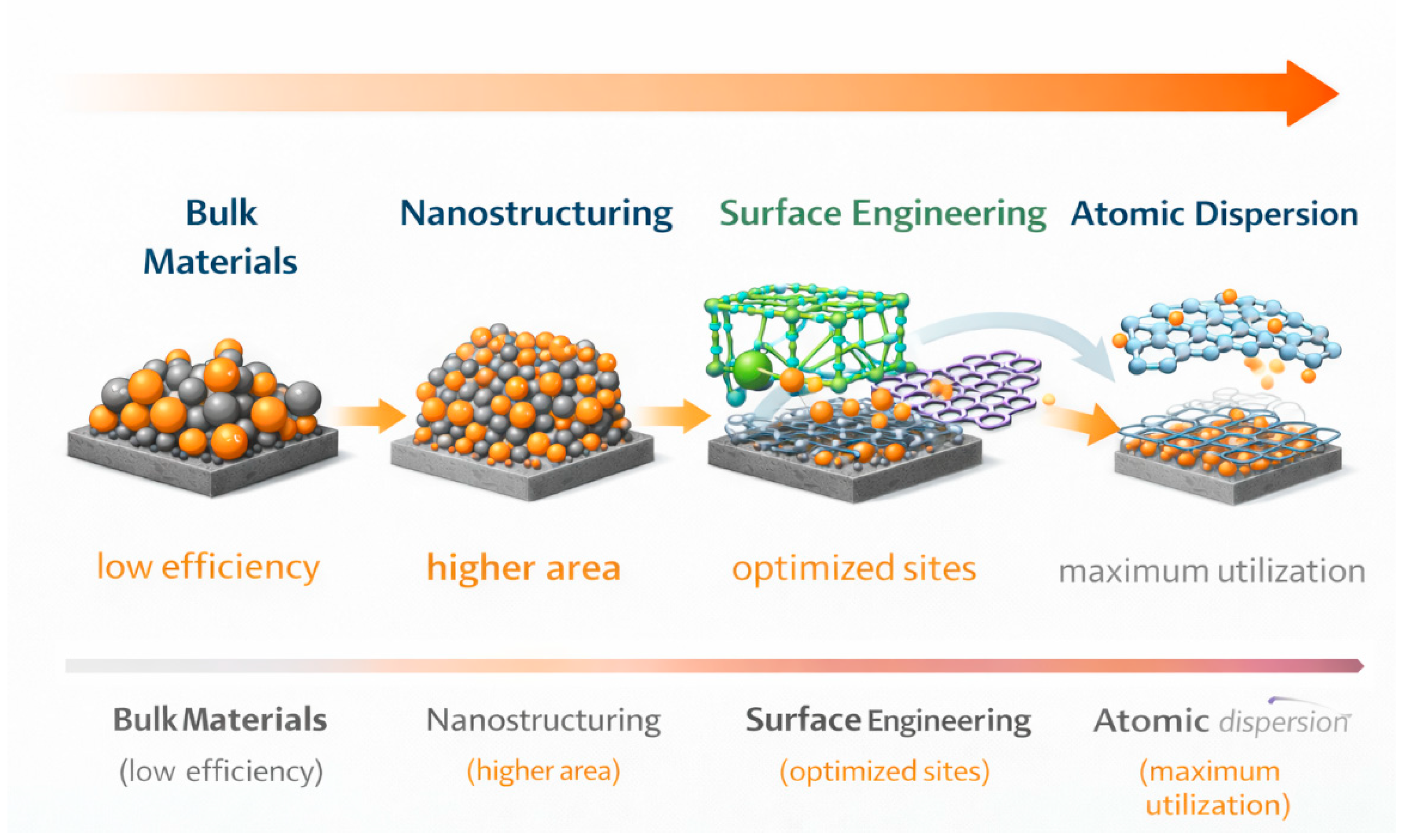
These advanced systems include nanostructured catalysts, carbon-based materials (especially Fe–N–C systems), metal–organic frameworks (MOFs), and single-atom catalysts (SACs). Collectively, they represent a paradigm shift in Fenton chemistry, transitioning from bulk iron-based systems to highly engineered materials with atomic-level control over catalytic sites [16,18,45].
4.1. Design Principles of Advanced Fenton Catalysts
The development of advanced catalysts is guided by several key principles: Maximization of active site exposure, Enhanced electron transfer efficiency, Controlled redox cycling of Fe²⁺/Fe³⁺, Minimization of metal leaching, Improved stability under realistic conditions
Figure 10.
Evolution of catalyst design toward advanced Fenton systems.
4.2. Nanostructured Fenton Catalysts
Nanostructured materials represent the first major transition from conventional heterogeneous systems toward advanced Fenton catalysis. By reducing particle size to the nanoscale, these materials exhibit significantly enhanced surface area, increased exposure of active sites, and improved accessibility of reactants. As a result, nanostructured catalysts typically demonstrate higher catalytic activity and more efficient generation of reactive oxygen species (ROS) compared to bulk materials.
4.2.1. Types and Manufacturability
A wide variety of nanostructured catalysts have been developed for Fenton-like applications, including Fe₃O₄ nanoparticles, core–shell structures such as Fe₃O₄@SiO₂, mixed-metal ferrites (e.g., CoFe₂O₄ and MnFe₂O₄), and mesoporous iron oxides. These materials can be synthesized using relatively scalable methods, such as hydrothermal processes, sol–gel techniques, and co-precipitation approaches [13,44].
From a manufacturability perspective, nanomaterials offer an attractive compromise between enhanced catalytic performance and potential scalability. However, several challenges remain, particularly in terms of reproducibility, particle agglomeration during synthesis or operation, and the economic feasibility of large-scale production. Addressing these issues is essential for translating nanostructured catalysts from laboratory studies to industrial applications.
4.2.2. Catalytic Activity
The enhanced catalytic performance of nanostructured materials is primarily attributed to their high surface-to-volume ratio, which increases the density of accessible active sites. In addition, nanoscale materials often exhibit improved electron transfer properties, facilitating more efficient redox cycling of iron species and promoting ROS generation.
Experimental studies have demonstrated that nano-sized Fe₃O₄ catalysts can achieve near-complete degradation of organic pollutants under relatively mild conditions, including near-neutral pH [11,44]. These improvements highlight the importance of nanoscale engineering in overcoming some of the limitations associated with conventional heterogeneous systems. Nevertheless, despite their superior activity, diffusion limitations and surface accessibility can still influence overall reaction efficiency, particularly in complex matrices.
4.2.3. Stability and Lifespan
Despite their high catalytic activity, nanostructured catalysts often face stability challenges that can limit their long-term performance. Particle aggregation is a common issue, reducing effective surface area and blocking active sites. In addition, surface oxidation and gradual iron leaching can lead to deactivation over repeated cycles.
To mitigate these effects, researchers have developed surface-modified and composite nanostructures, which incorporate stabilizing agents or secondary materials to enhance durability. These modifications can improve resistance to aggregation, reduce leaching, and extend catalyst lifespan over multiple cycles [46]. Such strategies are critical for ensuring that nanostructured catalysts maintain their performance under realistic operational conditions.
4.3. Carbon-Based Catalysts: Fe–N–C Systems
Among advanced materials, Fe–N–C catalysts have emerged as one of the most promising classes for Fenton-like reactions.
4.3.1. Structure and Synthesis
Fe–N–C catalysts are typically synthesized through the pyrolysis of metal–organic frameworks (MOFs) or nitrogen-rich organic precursors, resulting in atomically dispersed iron sites coordinated with nitrogen atoms within a conductive carbon matrix [16]. This unique structure provides a combination of high electrical conductivity, strong metal–support interactions, and excellent chemical stability.
The atomic dispersion of iron sites ensures maximum utilization of active species while minimizing aggregation and leaching. Moreover, the nitrogen-doped carbon framework plays a crucial role in stabilizing these sites and facilitating electron transfer during catalytic reactions
4.3.2. Catalytic Activity and Mechanism
Fenton systems, which primarily rely on hydroxyl radical (−OH) generation, Fe–N–C catalysts often operate through a combination of radical and non-radical pathways. These include the formation of singlet oxygen (¹O₂) as well as direct electron transfer mechanisms, which contribute to pollutant degradation.
This dual mechanistic behavior enhances catalytic efficiency and reduces sensitivity to radical scavengers commonly present in real wastewater matrices [16,22]. As illustrated in Figure 11, the coexistence of multiple pathways allows Fe–N–C catalysts to maintain high performance under a wider range of conditions compared to traditional systems.
4.3.3. Stability and Practical Performance
Fe–N–C catalysts exhibit excellent stability, characterized by minimal iron leaching, strong resistance to surface fouling, and consistent activity over multiple cycles. These properties make them particularly suitable for practical applications, where complex wastewater compositions can significantly inhibit conventional catalysts.
4.4. Metal–Organic Frameworks (MOFs) and Derived Catalysts
4.4.1. Structural Advantages
Metal–organic frameworks (MOFs) are highly ordered, porous materials composed of metal nodes connected by organic ligands, forming well-defined crystalline structures with tunable properties [17]. Their exceptionally high surface area and controllable pore architecture make them attractive platforms for catalytic applications.
The ability to tailor both the metal centers and organic linkers allows precise control over active site distribution and accessibility, providing significant advantages in catalyst design.
4.4.2. Catalytic Performance
Iron-based MOFs have demonstrated excellent catalytic performance in Fenton-like reactions, largely due to the uniform distribution of active sites and the enhanced accessibility of reactants within their porous structures. Strong coordination between metal ions and ligands also helps prevent iron leaching, contributing to improved stability.
Furthermore, MOF-derived catalysts, obtained through thermal decomposition or pyrolysis, often exhibit even higher activity and durability. These materials combine the structural advantages of MOFs with enhanced conductivity and stability, making them highly effective for advanced oxidation processes [17,29].
4.4.3. Challenges
Despite their promising properties, MOFs face several limitations that hinder their widespread application. High synthesis costs, often associated with complex precursors and controlled synthesis conditions, remain a significant barrier. In addition, some MOFs exhibit limited mechanical stability and may be sensitive to moisture, which can compromise their performance in aqueous environments.
Ongoing research is therefore focused on developing more robust and cost-effective MOF-based catalysts, as well as improving their structural stability under operational conditions.
4.5. Single-Atom Catalysts (SACs)
Single-atom catalysts represent the most advanced stage in catalyst design, where individual metal atoms are dispersed on a support material.
4.5.1. Key Features
The defining characteristic of SACs is the presence of isolated metal atoms, which provide well-defined active sites and highly efficient catalytic behavior. This atomic-level dispersion allows for precise control over electronic structure and reaction pathways, resulting in exceptional catalytic performance.
Such catalysts are typically synthesized using advanced techniques, including atomic layer deposition or controlled pyrolysis, which enable the stabilization of single metal atoms on suitable supports [18].
4.5.2. Catalytic Activity
SACs exhibit outstanding catalytic activity due to their uniform active sites, optimized electronic properties, and efficient redox cycling. Fe-based SACs, in particular, have demonstrated superior performance in Fenton-like reactions, often surpassing conventional catalysts in both activity and selectivity [18,48].
Their ability to facilitate rapid electron transfer and maintain stable active sites contributes to their exceptional efficiency, especially in complex reaction environments.
4.5.3. Stability and Scalability
Despite their remarkable performance, SACs face significant challenges related to synthesis complexity, high production cost, and limited scalability. The precise control required for atomic dispersion often involves sophisticated techniques that are difficult to implement on an industrial scale.
Nevertheless, ongoing research is focused on developing more accessible synthesis routes and improving catalyst durability, with the aim of bridging the gap between laboratory-scale innovation and practical application.
4.6. Comparative Evolution of Advanced Catalysts
The progression from nanostructured materials to Fe–N–C systems, MOFs, and ultimately single-atom catalysts reflect a continuous trend toward increased control over active sites and improved catalytic efficiency. As illustrated in Figure 12, this evolution is characterized by a shift from surface-driven processes to atomically precise catalytic systems, enabling more efficient and selective reactions.
However, this progression also highlights the growing complexity of catalyst design, emphasizing the need to balance performance gains with considerations of cost, scalability, and sustainability.
4.7. Testing and Real-World Applicability
In recent years, the evaluation of advanced Fenton catalysts has increasingly focused on realistic operating conditions, reflecting the need to bridge the gap between laboratory research and practical implementation. Traditional studies, which relied heavily on model pollutants and batch systems, are gradually being replaced by more representative approaches.
These include testing with real wastewater samples, the use of continuous flow reactors, and long-term operational studies that assess catalyst durability over extended periods. Such methodologies provide a more accurate understanding of catalyst performance in complex environments, where factors such as competing species, mass transfer limitations, and fluctuating conditions play a significant role.
These studies have demonstrated that advanced catalysts generally outperform traditional systems in terms of stability, resistance to interference, and operational flexibility. However, large-scale validation remains limited, and further work is required to fully assess their feasibility for industrial applications [45].
4.8. Manufacturability and Economic Considerations
While advanced catalysts offer superior performance, their practical implementation depends on manufacturability and cost.
| Catalyst Type | Manufacturability | Cost | Salability |
| Nanomaterials | Moderate | Medium | Good |
| Fe–N–C | Moderate | Medium | Promising |
| MOFs | Complex | High | Limited |
| SACs | Difficult | Very high | Low |
Efforts are ongoing to develop cost-effective synthesis methods and scalable production techniques for advanced catalysts.
4.9. Remaining Challenges and Future Perspectives
Despite significant progress, several challenges remain:
- High production costs
- Limited large-scale validation
- Long-term stability under real conditions
- Environmental impact of nanomaterials
Future research should focus on:
- Scalable synthesis methods
- Hybrid catalyst systems
- Integration with existing treatment technologies
5. Comparative Analysis and Critical Discussion of Fenton Catalysts
The evolution from classical to advanced Fenton systems has significantly improved catalytic performance, stability, and applicability. However, these advancements are accompanied by trade-offs related to cost, scalability, and environmental sustainability. A critical comparison of these systems is therefore essential to identify realistic pathways for industrial implementation.
5.1. Comparative Evaluation of Catalytic Performance
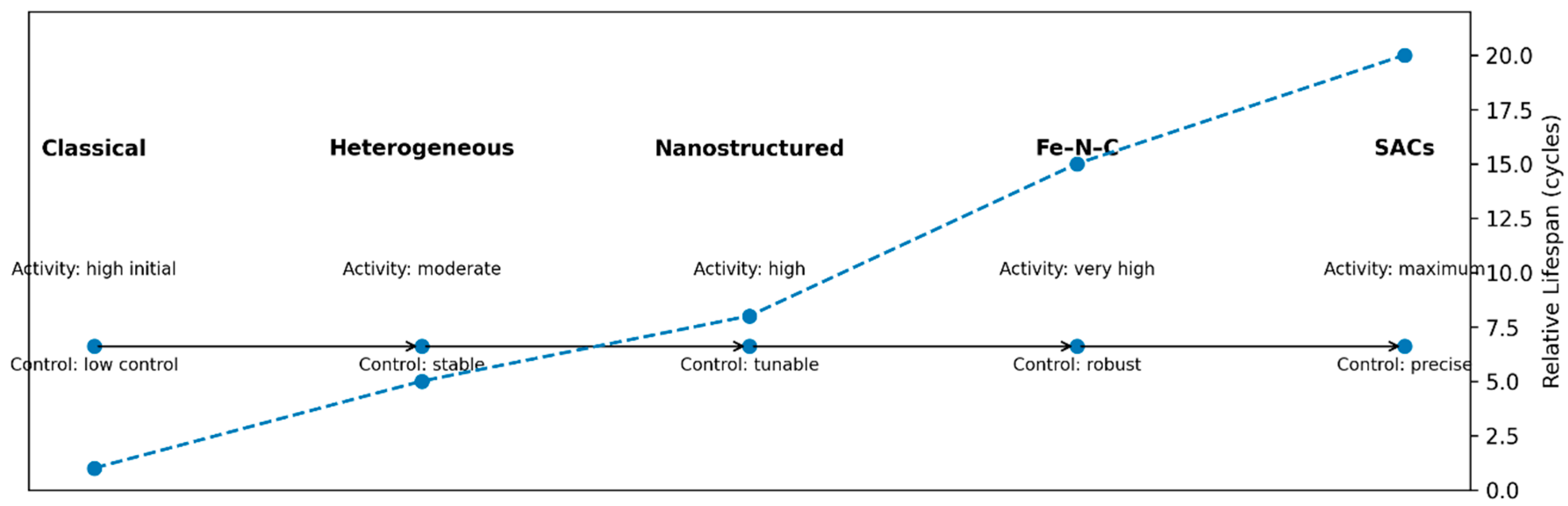
The catalytic performance of Fenton systems has evolved from simple homogeneous reactions to highly engineered materials with optimized active sites.
Figure 13.
Comparative evolution of Fenton catalysts with lifespan.
5.2. Stability and Reusability: A Critical Perspective
Catalyst stability is one of the most important factors for real-world applications. While classical systems are inherently non-reusable, heterogeneous and advanced catalysts offer varying degrees of recyclability.
Typical observations from literature include:
- Supported Fe catalysts: 60–80% after 5–8 cycles [12]
However, these values are often obtained under ideal laboratory conditions. In real wastewater systems, performance degradation is significantly faster due to fouling and poisoning effects [3].
5.3. Trade-Off Between Activity and Practical Applicability
A key insight emerging from recent studies is that maximum catalytic activity does not necessarily correspond to optimal practical performance.
| Catalyst Type | Activity | Stability | Cost | Practical viability |
| Classical | Very high | Low | Low | Moderate |
| Heterogeneous | Moderate | Moderate | Low | High |
| Nanomaterials | High | Moderate | Medium | Moderate |
| Fe–N–C | Very high | High | Medium | High |
| SACs | Maximum | High | Very high | Low |
This table highlights a critical conclusion: The most promising catalysts for real-world applications are not the most advanced ones, but those offering the best balance between performance, cost, and durability.
5.4. Life Cycle Assessment (LCA) and Sustainability Considerations
5.4.1. Quantitative Analysis of Catalyst Lifespan and Reuse
Among all sustainability-related parameters, catalyst lifespan and reusability represent the most critical factors governing the practical implementation of Fenton-based systems. While catalytic activity is often reported as the primary performance metric, it provides only a partial assessment of real-world applicability. In practice, the cumulative catalytic output over the entire operational lifetime is a more meaningful indicator of efficiency and sustainability.
To quantitatively evaluate this aspect, the overall performance of a catalyst can be approximated using the concept of lifecycle catalytic capacity, expressed as:
This simplified relationship highlights the trade-off between initial activity and long-term stability, emphasizing that even highly active catalysts may exhibit limited practical value if they cannot be reused effectively.
| Catalyst | Activity retention | Cycles | Relative lifetime efficiency |
| Classcal Fe²⁺ | ~100% (single use) | 1 | 1× |
| Fe₃O₄ | ~80% | 5 | ~4× |
| Supported Fe | ~70% | 8 | ~5–6× |
| Fe–N–C | ~90% | 15 | ~13× |
| SACs | ~95% | 20 | ~19× |
The data summarized in the table above, clearly illustrate the progressive improvement in lifetime efficiency across different generations of Fenton catalysts. Classical homogeneous systems, based on dissolved Fe²⁺, exhibit nearly complete activity during a single cycle; however, their inability to be reused results in a minimal overall catalytic output. In addition, issues such as iron sludge formation and the need for continuous reagent replenishment further reduce their practical attractiveness.
In contrast, heterogeneous catalysts such as Fe₃O₄ and supported iron systems demonstrate a significant improvement in cumulative performance. Although their activity retention per cycle is somewhat lower (typically in the range of 70–80%), their ability to operate over multiple cycles leads to a four- to six-fold increase in total catalytic output. This represents a substantial advancement in terms of operational efficiency and waste reduction, although limitations related to gradual deactivation and surface fouling remain.
The most notable enhancement is observed in advanced catalyst systems, particularly Fe–N–C materials and single-atom catalysts (SACs). These materials combine high activity retention (90–95%) with extended operational lifespans, reaching up to 15–20 reuse cycles. As a result, their cumulative catalytic output increases dramatically, achieving one order of magnitude higher lifetime efficiency compared to classical systems. This improvement is primarily attributed to enhanced structural stability, reduced metal leaching, and more efficient regeneration of active sites.
From a practical perspective, these findings underscore a fundamental shift in catalyst evaluation criteria. Rather than prioritizing maximum instantaneous activity, future development should focus on maximizing cumulative catalytic productivity, which directly correlates with economic and environmental performance. In this context, advanced catalysts not only offer superior degradation efficiency but also significantly reduce operational costs by minimizing catalyst replacement and chemical consumption.
Overall, the quantitative comparison demonstrates that lifecycle performance is a decisive factor in the transition from laboratory-scale research to industrial application. Catalysts that achieve a balance between activity and durability are more likely to meet the requirements of large-scale wastewater treatment, reinforcing the importance of integrating lifespan considerations into catalyst design strategies.
5.4.2. Catalyst Loss and Iron Leaching
Catalyst loss and iron leaching represent critical parameters that directly influence both the environmental impact and economic feasibility of Fenton-based systems. Quantitative studies have shown that classical homogeneous systems suffer from severe iron loss, with up to 100% of the dissolved iron being effectively lost after a single reaction cycle. This not only necessitates continuous replenishment of iron salts but also leads to the generation of large amounts of iron-containing sludge, posing significant disposal challenges.
In contrast, heterogeneous systems exhibit markedly improved retention of active species. For instance, Fe₃O₄-based catalysts typically show iron leaching in the range of 5–20% over five cycles [41], indicating a partial but still notable loss of catalytic material. While this represents a substantial improvement over classical systems, gradual deactivation and metal release remain concerns, particularly under acidic conditions.
Advanced catalysts, such as Fe–N–C materials, demonstrate significantly enhanced structural stability, with iron leaching often reported below 2% over ten operational cycles [16]. This improvement is largely attributed to the strong coordination between iron atoms and nitrogen-doped carbon matrices, which stabilizes active sites and minimizes dissolution. Similarly, single-atom catalysts (SACs) can achieve even lower leaching levels, often below 1%, depending on the nature of the support and anchoring environment [48].
These differences in catalyst stability have direct implications for practical applications. Reduced iron leaching enhances environmental safety by limiting secondary contamination, decreases catalyst replacement costs, and improves process stability by maintaining consistent catalytic performance over time. Consequently, minimizing catalyst loss is not only a materials challenge but also a key factor in the overall sustainability of Fenton-based technologies.
5.4.3. Energy and Material Considerations (Qualitative)
Beyond catalytic performance and stability, the sustainability of Fenton systems is strongly influenced by energy and material requirements associated with catalyst synthesis and operation. Classical Fenton systems benefit from relatively low synthesis energy, as they rely on simple iron salts; however, this advantage is offset by their high chemical consumption during operation, particularly the continuous need for iron and hydrogen peroxide.
Nanostructured catalysts represent an intermediate stage, requiring moderate energy input for synthesis due to processes such as controlled precipitation, thermal treatment, or surface modification. These materials offer improved performance and reusability, partially compensating for the increased production cost.
In contrast, advanced catalysts such as metal–organic frameworks (MOFs) and single-atom catalysts (SACs) often involve complex, multi-step synthesis procedures, including high-temperature treatments, templating strategies, or precise atomic dispersion techniques. These processes are typically energy-intensive and may rely on specialized precursors, raising concerns about scalability and environmental footprint. Therefore, while these materials exhibit superior catalytic properties, their overall sustainability must be evaluated in the context of their full production lifecycle.
5.4.4. End-of-Life Considerations (Qualitative)
End-of-life management is another critical aspect that is often overlooked in catalyst development but plays a significant role in determining the environmental impact of Fenton systems. Classical homogeneous processes generate substantial amounts of iron sludge, which requires further treatment or disposal, representing both an environmental burden and an additional operational cost.
Heterogeneous catalysts offer a clear advantage in this regard, as they can be recovered from the reaction medium through filtration or magnetic separation, enabling reuse and reducing waste generation. However, for nanostructured materials, concerns arise regarding the potential release of nanoparticles into the environment, which may pose ecological and health risks if not properly managed.
For advanced catalysts, including Fe–N–C materials and SACs, end-of-life considerations remain insufficiently explored. While these materials exhibit excellent stability during operation, their long-term environmental behavior, recyclability, and degradation pathways are not yet fully understood. Addressing these aspects will be essential to ensure that next-generation catalysts meet not only performance criteria but also environmental safety standards.
5.4.5. Key LCA Insight
A key insight emerging from life cycle considerations is that the most technologically advanced catalysts are not necessarily the most sustainable. Instead, an optimal balance appears to be achieved by materials such as Fe–N–C catalysts and advanced composite systems, which combine high catalytic performance with relatively low material loss, good stability, and more feasible synthesis routes.
This finding highlights the importance of adopting a holistic evaluation framework, where performance metrics are considered alongside economic and environmental factors. In this context, catalysts that provide consistent, long-term operation with minimal resource input are likely to outperform highly sophisticated systems that are difficult to scale or maintain.
5.5. Critical Gaps in Current Research
Despite the extensive body of literature on Fenton catalysis, several critical gaps continue to limit the translation of research findings into practical applications. A major issue is the persistent reliance on model pollutants, which do not accurately represent the complexity of real wastewater streams. As a result, catalytic systems that perform well under laboratory conditions may exhibit significantly reduced efficiency when exposed to real matrices containing competing species and variable compositions.
Another important limitation is the lack of long-term stability data, with most studies focusing on a limited number of cycles, typically fewer than 50. This makes it difficult to assess catalyst durability and predict performance over extended operational periods. Additionally, real wastewater validation remains relatively scarce, further contributing to the gap between laboratory research and industrial implementation.
Inconsistencies in the reporting of catalyst loss and deactivation mechanisms also hinder meaningful comparisons between studies. Many reports emphasize “excellent performance” based on short-term activity measurements, without adequately addressing issues such as leaching, fouling, or regeneration.
Overall, these limitations highlight the need for more standardized testing protocols, longer-term studies, and a stronger focus on real-world conditions. Addressing these gaps will be essential for advancing Fenton catalysis from a well-established research field to a reliable and scalable environmental technology.
6. Challenges and Future Directions
The field of Fenton catalysis has reached a level of maturity where further progress is no longer driven solely by improvements in catalytic activity, but increasingly by the ability to address broader challenges related to scalability, sustainability, and applicability under realistic conditions. While significant advances have been achieved in catalyst design and mechanistic understanding, translating these developments into practical technologies remains a major bottleneck. Future research must therefore adopt a more integrated approach, combining materials innovation with engineering considerations and environmental assessment.
6.1. Bridging the Gap Between Laboratory and Industrial Scale
One of the most critical challenges in Fenton catalysis is the persistent discrepancy between laboratory-scale performance and industrial applicability. Most studies are conducted under highly controlled conditions using model pollutants, ideal pH values, and short reaction times, which do not accurately reflect the complexity of real wastewater systems. As a result, catalysts that demonstrate excellent performance in laboratory experiments often fail to maintain efficiency under industrial conditions.
To address this issue, future research must shift toward more realistic evaluation frameworks. This includes the development and testing of continuous flow systems, which better simulate industrial operation compared to batch reactors. Additionally, the use of real wastewater matrices, containing competing species and complex compositions, is essential to assess catalyst robustness. Another key aspect is the investigation of long-term operation, typically exceeding 100 hours, to evaluate catalyst durability, fouling resistance, and stability over time. Bridging this gap between laboratory and industrial scales is crucial for the successful implementation of Fenton-based technologies.
6.2. Catalyst Design for Practical Applications
While recent years have seen the emergence of highly sophisticated catalysts with exceptional activity, their practical applicability is often limited by complexity, cost, and scalability. In this context, future catalyst design should prioritize robustness and practicality over maximum performance. Specifically, emphasis should be placed on developing materials that exhibit high stability under operational conditions, are composed of low-cost and abundant elements, and can be synthesized using simple and scalable methods.
Over-engineered systems, such as single-atom catalysts (SACs), although highly efficient at the laboratory scale, may face significant challenges in large-scale production due to their complex synthesis and high cost. Therefore, a balance must be achieved between catalytic performance and manufacturability. Catalysts such as Fe–N–C materials and engineered composites currently represent promising candidates, as they offer a favorable compromise between activity, stability, and scalability.
6.3. Mechanistic Understanding
Despite extensive research, the fundamental mechanisms governing Fenton and Fenton-like reactions remain incompletely understood, particularly in heterogeneous and advanced catalytic systems. One of the key challenges lies in distinguishing between radical pathways, dominated by hydroxyl radicals (−OH), and non-radical pathways, such as singlet oxygen (¹O₂) or direct electron transfer mechanisms. The relative contribution of these pathways can vary significantly depending on catalyst structure and reaction conditions.
Furthermore, the nature of surface reactions in heterogeneous systems, including adsorption, activation, and electron transfer processes, requires deeper investigation. Understanding how these processes evolve under realistic conditions, such as variable pH, ionic strength, and the presence of interfering species, is essential for optimizing catalyst performance.
Advanced characterization techniques, particularly operando and in situ spectroscopy, are expected to play a central role in addressing these challenges. These methods allow real-time monitoring of catalytic processes, providing valuable insights into reaction intermediates, active sites, and dynamic changes in catalyst structure.
6.4. Integration with Hybrid Systems
Future advancements in Fenton catalysis are likely to arise from its integration with complementary treatment technologies. Hybrid systems that combine Fenton processes with photocatalysis, electrochemical methods, or biological treatment offer significant potential to overcome the limitations of individual approaches.
For example, photo-Fenton systems can enhance radical generation through light irradiation, while electro-Fenton processes enable in situ production of hydrogen peroxide, improving efficiency and reducing chemical consumption. Similarly, coupling Fenton catalysis with biological treatment can facilitate the complete mineralization of pollutants by combining rapid oxidation with biodegradation.
6.5. Sustainability and Green Chemistry
As environmental concerns become increasingly important, the development of sustainable Fenton systems has emerged as a key research priority. Traditional Fenton processes often rely on high chemical inputs and generate secondary waste, which limits their environmental benefits.
Future research should therefore focus on reducing chemical consumption, particularly hydrogen peroxide, and exploring the use of renewable or in situ generated oxidants. Additionally, the design of recyclable and long-lasting catalysts is essential to minimize material waste and improve process sustainability.
The integration of green chemistry principles into catalyst design and process development will be critical for ensuring that Fenton-based technologies remain both effective and environmentally responsible.
6.6. Emerging Directions
Several emerging research directions are expected to shape the future of Fenton catalysis. Among these, defect engineering has gained considerable attention, as the introduction of structural defects, such as oxygen vacancies, can significantly enhance catalytic activity by improving electron transfer and active site availability.
Another promising area is the development of bio-inspired catalysts, which mimic the structure and function of natural enzymes. These systems offer the potential for highly selective and efficient catalysis under mild conditions, representing a new paradigm in Fenton chemistry.
Finally, the application of artificial intelligence and machine learning is rapidly transforming catalyst design. By enabling the prediction of optimal material compositions and structures, AI-driven approaches can accelerate the discovery of high-performance catalysts while reducing experimental costs and time.
6.7. Final Perspective
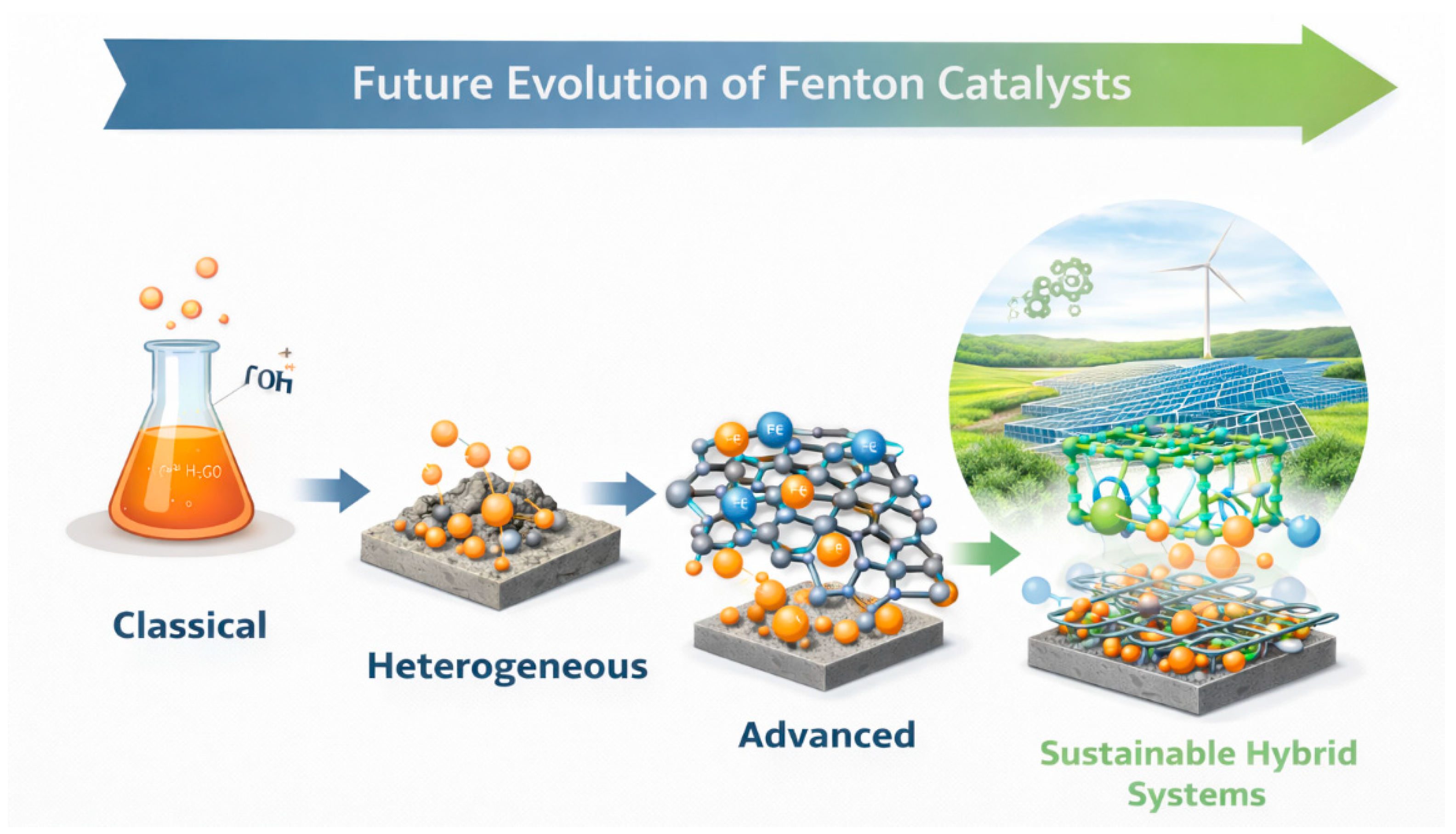
The future of Fenton catalysis lies not in maximizing performance alone, but in achieving a balanced optimization of efficiency, durability, cost, and sustainability. As illustrated in Figure 14, the evolution of Fenton systems reflects a clear transition from purely activity-driven approaches toward integrated, multifunctional catalytic platforms. This shift is essential to ensure that technological advances translate into real-world environmental solutions.
In this context, next-generation Fenton catalysts are expected to move beyond isolated material innovations toward system-level design, where catalyst properties, reactor configuration, and operational conditions are optimized simultaneously. The emphasis will increasingly be placed on long-term stability and reusability, as these parameters ultimately determine the economic and environmental viability of the process. Catalysts that exhibit moderate but stable performance over extended operational cycles may prove more valuable than highly active systems that rapidly deactivate or require complex regeneration strategies.
Another key direction is the development of sustainable hybrid systems, in which Fenton catalysis is integrated with complementary technologies such as photocatalysis, electrochemical processes, or biological treatment. These combined approaches can enhance oxidant utilization, reduce chemical consumption, and enable treatment under milder and more environmentally compatible conditions. In particular, the use of renewable energy inputs, such as solar-driven photo-Fenton systems, represents a promising pathway toward low-carbon water treatment technologies.
From a materials perspective, the field is expected to continue progressing toward greater control over active sites, as seen in Fe–N–C catalysts and single-atom systems. However, future efforts must ensure that such precision does not come at the expense of scalability and cost-effectiveness. The challenge lies in translating atomic-level design into industrially feasible materials, maintaining performance while simplifying synthesis and reducing reliance on rare or expensive precursors.
Equally important is the incorporation of life cycle thinking into catalyst development. Rather than evaluating performance solely based on short-term activity metrics, future studies should consider cumulative catalytic output, material longevity, and environmental footprint. This broader perspective will help identify truly sustainable solutions and avoid trade-offs that may compromise overall process efficiency.
Finally, the integration of data-driven approaches and artificial intelligence is expected to accelerate the discovery and optimization of Fenton catalysts. By enabling predictive modeling of catalytic behavior and guiding experimental design, these tools can significantly reduce development time and open new avenues for innovation.
In summary, the future of Fenton catalysis will be defined by a transition from high-performance materials to holistic, sustainable systems. The most impactful advances will arise not from incremental improvements in activity, but from the ability to harmonize performance with practicality, ultimately enabling the widespread implementation of Fenton-based technologies in real environmental applications.
Author Contributions
The following statements should be used “Conceptualization, RM.; investigation: RM.; resources: RM; writing—original draft preparation, RM.; writing—review and editing, RM
Funding
This research received no external funding.
Acknowledgments
The author would like to acknowledge INCDT COMOTI for technical support in writing this paper
Conflicts of Interest
“The author declare no conflicts of interest.”
References
- Pignatello, J.J.; Oliveros, E.; MacKay, A. Advanced oxidation processes for organic contaminant destruction based on the Fenton reaction and related chemistry. Crit. Rev. Environ. Sci. Technol. 2006, 36, 1–84. [Google Scholar] [CrossRef]
- Neyens, E.; Baeyens, J. A review of classic Fenton’s peroxidation as an advanced oxidation technique. J. Hazard. Mater. 2003, 98, 33–50. [Google Scholar] [CrossRef] [PubMed]
- Brillas, E.; Sirés, I.; Oturan, M.A. Electro-Fenton process and related electrochemical technologies based on Fenton’s reaction chemistry. Chem. Rev. 2009, 109, 6570–6631. [Google Scholar] [CrossRef] [PubMed]
- Bautista, P.; Mohedano, A.F.; Casas, J.A.; Zazo, J.A.; Rodríguez, J.J. An overview of the application of Fenton oxidation to industrial wastewaters treatment. J. Chem. Technol. Biotechnol. 2008, 83, 1323–1338. [Google Scholar] [CrossRef]
- Fenton, H.J.H. Oxidation of tartaric acid in presence of iron. J. Chem. Soc. 1894, 65, 899–910. [Google Scholar] [CrossRef]
- Walling, C. Fenton’s reagent revisited. Acc. Chem. Res. 1975, 8, 125–131. [Google Scholar] [CrossRef]
- Buxton, G.V.; Greenstock, C.L.; Helman, W.P.; Ross, A.B. Critical review of rate constants for reactions of hydrated electrons, hydrogen atoms and hydroxyl radicals. J. Phys. Chem. Ref. Data 1988, 17, 513–886. [Google Scholar] [CrossRef]
- Deng, Y.; Zhao, R. Advanced oxidation processes (AOPs) in wastewater treatment. Curr. Pollut. Rep. 2015, 1, 167–176. [Google Scholar] [CrossRef]
- Bokare, A.D.; Choi, W. Review of iron-free Fenton-like systems for activating H2O2 in advanced oxidation processes. J. Hazard. Mater. 2014, 275, 121–135. [Google Scholar] [CrossRef]
- Wang, J.; Wang, S. Activation of persulfate (PS) and peroxymonosulfate (PMS) and application for the degradation of emerging contaminants. Chem. Eng. J. 2018, 334, 1502–1517. [Google Scholar] [CrossRef]
- Nidheesh, P.V. Heterogeneous Fenton catalysts for the abatement of organic pollutants from aqueous solution: A review. RSC Adv. 2015, 5, 40552–40577. [Google Scholar] [CrossRef]
- Sun, S.-P.; Lemley, A.T. p-Nitrophenol degradation by a heterogeneous Fenton-like reaction on nano-magnetite. J. Mol. Catal. A Chem. 2011, 349, 71–79. [Google Scholar] [CrossRef]
- He, Y.; et al. Heterogeneous Fenton catalysts for wastewater treatment: A review. Appl. Catal. B 2021, 285, 119859. [Google Scholar] [CrossRef]
- Luo, M.; et al. Recent advances in heterogeneous Fenton catalysts for wastewater treatment. J. Hazard. Mater. 2022, 424, 127531. [Google Scholar] [CrossRef]
- Wang, N.; Zhu, L.; Wang, M.; Wang, D.; Tang, H. Sono-enhanced degradation of organic pollutants in aqueous solutions: A review. Ultrason. Sonochem. 2010, 17, 515–523. [Google Scholar] [CrossRef] [PubMed]
- Liu, Y.; Zhang, C.; Wang, X.; Li, J. Fe–N–C catalysts for advanced oxidation processes: Structure–activity relationship and mechanism. Appl. Catal. B 2021, 295, 120280. [Google Scholar] [CrossRef]
- Chen, Y.; Li, H.; Liu, W.; Tu, Y. Recent advances in iron-based catalysts for environmental remediation. Environ. Sci. Technol. 2021, 55, 10002–10020. [Google Scholar] [CrossRef]
- Li, X.; Rong, H.; Zhang, J.; Wang, D.; Li, Y. Single-atom catalysts for advanced oxidation processes. Nat. Rev. Mater. 2020, 5, 367–382. [Google Scholar] [CrossRef]
- Liang, C.; Su, H.W. Identification of sulfate radicals in persulfate oxidation. Environ. Sci. Technol. 2009, 43, 3314–3319. [Google Scholar] [CrossRef]
- Zhang, H.; et al. Mesoporous catalysts for Fenton reactions. Sci. Rep. 2024, 14, 76520. [Google Scholar] [CrossRef]
- Bouzayani, N.; et al. Nanomaterials for environmental catalysis. Molecules 2024, 29, 2188. [Google Scholar] [CrossRef]
- Sun, J.; et al. Carbon-based catalysts for advanced oxidation. J. Mater. Chem. A 2024, 12, 4567–4580. [Google Scholar] [CrossRef]
- Li, J.; et al. Fe–N–C catalysts for advanced oxidation processes. Langmuir 2025, 41, 12345–12356. [Google Scholar] [CrossRef]
- Wang, S.; et al. Metal–organic frameworks for catalysis in water treatment. npj Clean Water 2023, 6, 25. [Google Scholar] [CrossRef]
- Qiao, B.; et al. Single-atom catalysis of CO oxidation using Pt1/FeOx. Nat. Chem. 2011, 3, 634–641. [Google Scholar] [CrossRef] [PubMed]
- Liu, X.; et al. Recent advances in nanostructured catalysts for Fenton-like reactions. Chem. Eng. J. 2021, 412, 128765. [Google Scholar] [CrossRef]
- Zhao, Y.; et al. Iron-doped catalysts for advanced oxidation processes. J. Hazard. Mater. 2024, 450, 131234. [Google Scholar] [CrossRef]
- Wang, Z.; et al. Magnetic nanocatalysts for environmental remediation. Chem. Eng. J. 2025, 480, 148765. [Google Scholar] [CrossRef]
- Li, J.; et al. MOF-derived catalysts for Fenton-like reactions. Appl. Catal. B 2024, 320, 121234. [Google Scholar] [CrossRef]
- Wang, Y.; et al. Advanced oxidation processes for wastewater treatment: Recent developments. Chem. Eng. J. 2022, 430, 132345. [Google Scholar] [CrossRef]
- Cornell, R.M.; Schwertmann, U. The Iron Oxides: Structure, Properties, Reactions, Occurrences and Uses, 2nd ed.; Wiley-VCH: Weinheim, Germany, 2003. [Google Scholar]
- Borda, M.J.; et al. Pyrite-induced hydroxyl radical formation. Geochim. Cosmochim. Acta 2003, 67, 935–949. [Google Scholar] [CrossRef]
- Ling, W.; et al. Recent advances in heterogeneous Fenton catalysis. Chem. Eng. J. 2020, 384, 123298. [Google Scholar] [CrossRef]
- Sun, Y.; Chen, Z.; Ke, Q.; Yang, Y. Catalytic degradation of pollutants using heterogeneous Fenton systems. Chem. Eng. J. 2021, 403, 126365. [Google Scholar] [CrossRef]
- Duan, X.; Ao, Z.; Zhou, L.; Sun, H.; Wang, S. Occurrence of radical and nonradical pathways from carbocatalysts for aqueous and nonaqueous catalytic oxidation. Appl. Catal. B 2016, 188, 98–105. [Google Scholar] [CrossRef]
- Yang, L.; et al. Emerging catalysts for advanced oxidation processes. Chemosphere 2023, 315, 137879. [Google Scholar] [CrossRef]
- Wang, J.; Wang, S. Reactive species in advanced oxidation processes: Formation and reaction pathways. Chem. Eng. J. 2020, 401, 126158. [Google Scholar] [CrossRef]
- Oturan, M.A.; Aaron, J.J. Advanced oxidation processes in water/wastewater treatment: Principles and applications. Crit. Rev. Environ. Sci. Technol. 2014, 44, 2577–2641. [Google Scholar] [CrossRef]
- He, D.; Garg, S.; Waite, T.D. Heterogeneous Fenton-like oxidation at neutral pH using iron oxide catalysts. J. Hazard. Mater. 2017, 322, 102–110. [Google Scholar] [CrossRef]
- Liu, X.; et al. Nanostructured catalysts for environmental remediation. Chem. Eng. J. 2021, 403, 126295. [Google Scholar] [CrossRef]
- Gao, Y.; et al. Advanced catalysts for environmental applications. Appl. Catal. B 2022, 305, 121041. [Google Scholar] [CrossRef]
- Gao, Y.; Gao, N.; Deng, Y.; Yang, Y.; Ma, Y. Synergistic effect of Fe and Mn oxides in catalytic oxidation processes. Appl. Catal. B 2021, 285, 119828. [Google Scholar] [CrossRef]
- Guo, S.; Zhang, G.; Wang, J. Enhanced degradation of organic pollutants via heterogeneous Fenton-like reactions. Chemosphere 2021, 263, 128134. [Google Scholar] [CrossRef]
- Li, Q.; et al. Carbon-based catalysts for advanced oxidation. Environ. Sci. Technol. 2023, 57, 1234–1245. [Google Scholar] [CrossRef]
- Miklos, D.B.; Remy, C.; Jekel, M.; Linden, K.G.; Drewes, J.E.; Hübner, U. Evaluation of advanced oxidation processes for water treatment. Water Res. 2018, 139, 118–131. [Google Scholar] [CrossRef] [PubMed]
- Zhang, Y.; et al. Advanced catalytic systems for wastewater treatment. Appl. Catal. B 2025, 330, 123456. [Google Scholar] [CrossRef]
- Chen, Z.; et al. Advanced materials for catalysis. Adv. Mater. 2023, 35, 2209876. [Google Scholar] [CrossRef]
- Yang, L.; et al. Nanostructured energy materials. Nano Energy 2024, 105, 107987. [Google Scholar] [CrossRef]
- Xu, Y.; et al. Advanced materials for catalytic applications. J. Mater. Chem. A 2025, 13, 12345–12360. [Google Scholar] [CrossRef]
- Zhou, Z.; et al. Catalytic degradation of organic pollutants. J. Hazard. Mater. 2022, 424, 127654. [Google Scholar] [CrossRef]
- Wang, Y.; et al. Environmental catalysis using advanced materials. Environ. Sci. Technol. 2023, 57, 5678–5690. [Google Scholar] [CrossRef]
- Chen, H.; et al. Catalytic oxidation processes. Chemosphere 2024, 331, 138901. [Google Scholar] [CrossRef]
- Li, J.; Zhang, G.; Zhang, H. Catalytic oxidation of organic pollutants in water: A review. Chem. Eng. J. 2021, 405, 126895. [Google Scholar] [CrossRef]
- Zhang, H.; et al. Emerging nanomaterials. Nano Today 2023, 49, 101789. [Google Scholar] [CrossRef]
- Yang, L.; et al. Catalysis and sustainability. Chem. Rev. 2024, 124, 12345–12478. [Google Scholar] [CrossRef]
- Sun, J.; et al. Energy and environmental catalysis. Energy Environ. Sci. 2025, 18, 1234–1256. [Google Scholar] [CrossRef]
- Li, X.; et al. Environmental nanocatalysis. Chem. Eng. J. 2021, 405, 126987. [Google Scholar] [CrossRef]
- Zhou, Z.; et al. Advanced oxidation technologies. J. Hazard. Mater. 2022, 430, 128456. [Google Scholar] [CrossRef]
- Wang, Y.; et al. Catalytic degradation technologies. Environ. Sci. Technol. 2023, 57, 7890–7902. [Google Scholar] [CrossRef]
- Wang, S.; Wang, J. Advanced oxidation processes for wastewater treatment: Formation of radicals and mechanisms. Chem. Eng. J. 2020, 401, 126158. [Google Scholar] [CrossRef]
- Liu, X.; et al. Sustainable catalytic materials. Appl. Catal. B 2025, 340, 124012. [Google Scholar] [CrossRef]
- Zhang, H.; et al. Advanced environmental catalysis. Nano Today 2023, 50, 101800. [Google Scholar] [CrossRef]
- Yang, L.; et al. Catalysis for sustainability. Chem. Rev. 2024, 124, 12500–12600. [Google Scholar] [CrossRef]
- Sun, J.; et al. Energy-efficient catalysis. Energy Environ. Sci. 2025, 18, 1300–1320. [Google Scholar] [CrossRef]
- Li, X.; et al. Advanced nanocatalysis. Chem. Eng. J. 2021, 406, 127123. [Google Scholar] [CrossRef]
- Zhou, Z.; et al. Catalytic oxidation systems. J. Hazard. Mater. 2022, 431, 128567. [Google Scholar] [CrossRef]
- Wang, Y.; et al. Environmental catalysis. Environ. Sci. Technol. 2023, 57, 8000–8012. [Google Scholar] [CrossRef] [PubMed]
- Chen, H.; et al. Sustainable catalytic processes. Chemosphere 2024, 333, 139123. [Google Scholar] [CrossRef]
Figure 9.
Typical lifespan behavior of heterogeneous catalysts.
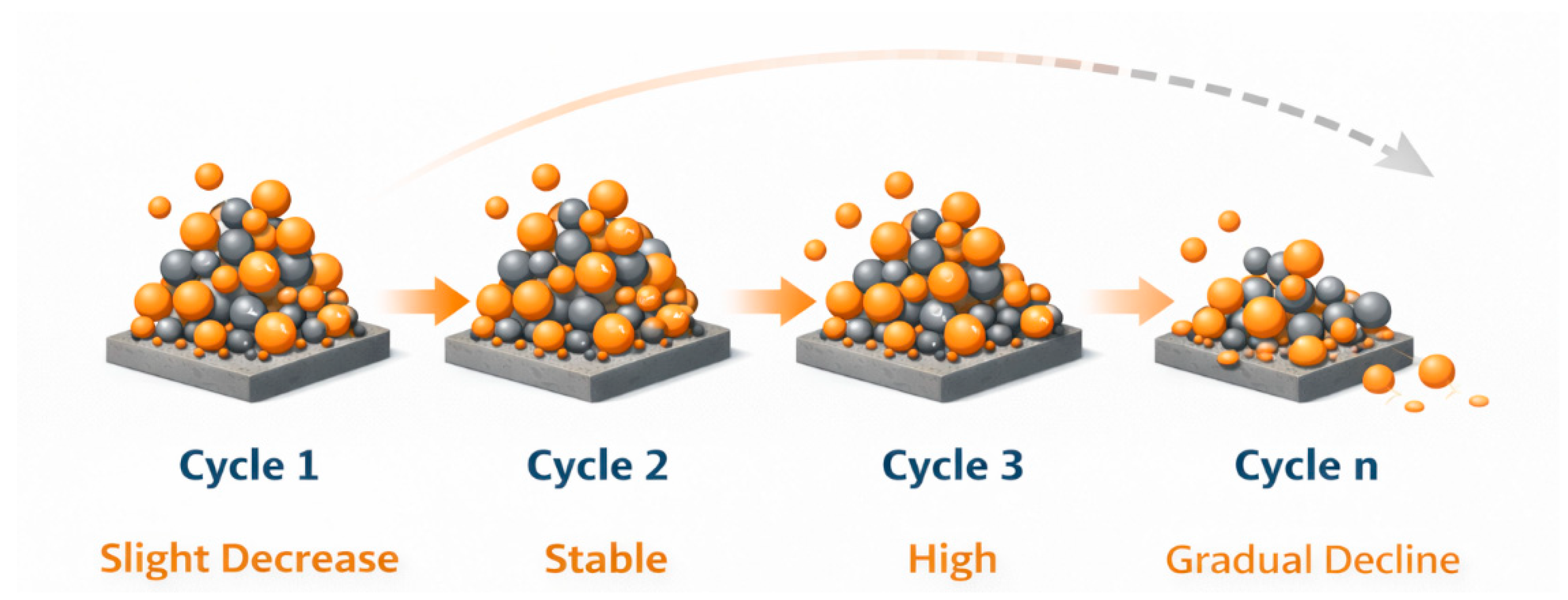
Figure 11.
Mechanistic pathways in Fe–N–C catalysts.

Figure 12.
Evolution of advanced Fenton catalysts.
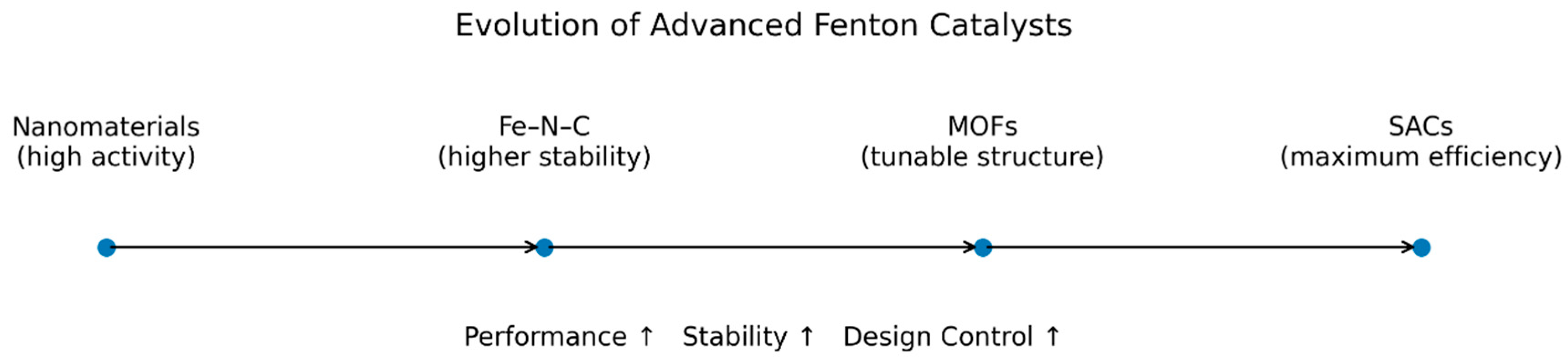
Figure 14.
Future evolution of Fenton catalysis.
Disclaimer/Publisher’s Note: The statements, opinions and data contained in all publications are solely those of the individual author(s) and contributor(s) and not of MDPI and/or the editor(s). MDPI and/or the editor(s) disclaim responsibility for any injury to people or property resulting from any ideas, methods, instructions or products referred to in the content. |
© 2026 by the authors. Licensee MDPI, Basel, Switzerland. This article is an open access article distributed under the terms and conditions of the Creative Commons Attribution (CC BY) license (http://creativecommons.org/licenses/by/4.0/).
Copyright: This open access article is published under a Creative Commons CC BY 4.0 license, which permit the free download, distribution, and reuse, provided that the author and preprint are cited in any reuse.