

Submitted:
08 April 2026
Posted:
10 April 2026
You are already at the latest version
Abstract
Digital transformation is a must to remain competitive in today’s advanced technological environment. This study examines how digitalization influences the performance of SMEs in Albania, focusing on digital adoption, skills, training, and institutional support. Using survey data from SMEs and quantitative analysis, the results show that adopting digital tools helps businesses expand their markets and improve performance. Findings reveal that Albanian SMEs recognize the importance of digitalization, but many use technology in fragmented ways, associated with barriers such as high costs and limited digital skills. Institutional support appears weak, while current training programs may lack practical value.
Keywords:
digitalization
; SMEs
; IT skills
; digital tool
; digital adoption
; institutional support
1. Introduction
Small and Medium-sized Enterprises (SMEs) play a crucial role in the economic development and employment generation of emerging economies, such as Albania. According to the [3], SMEs represent the majority of all businesses in Europe and are essential drivers of innovation and competitiveness (p. 4). In Albania, SMEs account for over 95% of all active enterprises and contribute significantly to the country’s GDP and job creation. Despite their importance, Albanian SMEs face structural, technological, and financial constraints that hinder their growth and competitiveness. Digitalization has emerged as a transformative force, offering SMEs new tools to increase productivity, enhance customer engagement, streamline operations, and access new markets. Yet the adoption of digital technologies among Albanian SMEs remains uneven and limited due to various challenges such as a lack of awareness, inadequate digital skills, and limited access to funding. This study was inspired by the need to understand how digitalization affects SMEs in Albania, both in terms of opportunities and constraints, especially in the wake of increased digital dependence following the COVID-19 pandemic. Given the global shift toward digital economies, analyzing the impact of digitalization on SMEs in Albania has become not only relevant but also necessary to formulate practical strategies and policy recommendations. This research aims to provide evidence-based insights to guide SMEs, stakeholders, and policymakers in fostering digital transformation.
The study aims to fulfill the following research objectives:
- To assess the current level of digitalization among SMEs in Albania.
- To analyze the impact of digital technologies on SME performance and competitiveness.
- To identify the main barriers that hinder digital adoption in SMEs.
- To examine the role of external factors (e.g., government support, digital infrastructure, funding availability) in facilitating digital transformation.
- To provide policy and managerial recommendations for promoting digitalization in the SME sector.
2. Materials and Methods
This study used a structured survey to collect responses from SME representatives, focusing on Tirana, the capital city of Albania. As such, the study benefits from logistical feasibility, high digital penetration rates, and a diverse mix of business activities, making the results particularly relevant for both local policy makers and national digital planning authorities. Focusing on Tirana mirrors methodological precedents in urban-centered SME studies [1], which emphasize urban areas as hubs of innovation and early technology diffusion.
The sampling method applied is non-probability purposive sampling. The selected SMEs represent a diverse range of sectors, including retail, wholesale, professional services, ICT, light manufacturing, and other service-based industries. The inclusion criteria were as follows:
- The SME must be legally registered and actively operating within the city of Tirana;
- The enterprise must fall under the SME classification based on size and turnover;
- The respondent must be in a managerial or decision-making position, preferably responsible for technology or digital activities within the business.
The analysis of the collected data was conducted using descriptive and inferential statistical methods in order to examine digitalization trends, identify key barriers, and explore relationships between variables among SMEs in Tirana.
3. Results and Discussion
The digital transformation of Small and Medium-sized Enterprises (SMEs) is a strategic national objective in Albania, especially in the context of economic modernization, EU accession, and global technological shifts. Recognizing the structural importance of SMEs in employment and GDP contribution, the Albanian government, in collaboration with international partners, has launched several policy frameworks and institutional initiatives to accelerate digital integration across the SME sector. A summary of these initiatives is illustrated in the following Table 1.

Table 1.
Summary of National and International Initiatives.
| Program / Agency | Main Focus | Implementing Body |
| Digital Agenda 2022–2026 | Broadband, e-government, ICT training for businesses | AKSHI |
| Business and Investment Strategy 2021–2027 | SME innovation, tech financing, smart specialization | Ministry of Finance and Economy (MFE) |
| Startup Albania | Digital registration, support for tech entrepreneurs | AIDA / MFE |
| ADISA Integrated Services | Administrative simplification through digital platforms | ADISA |
| OECD Digital and Green SMEs (2024–2026) | Regional policy and capacity building for SME digitization | OECD |
| EBRD–EU “Go Digital” Initiative (2025) | Loans, grants, and training for SME digital transition | EBRD & EU |
Source: Author.
3.1. Sector of operation
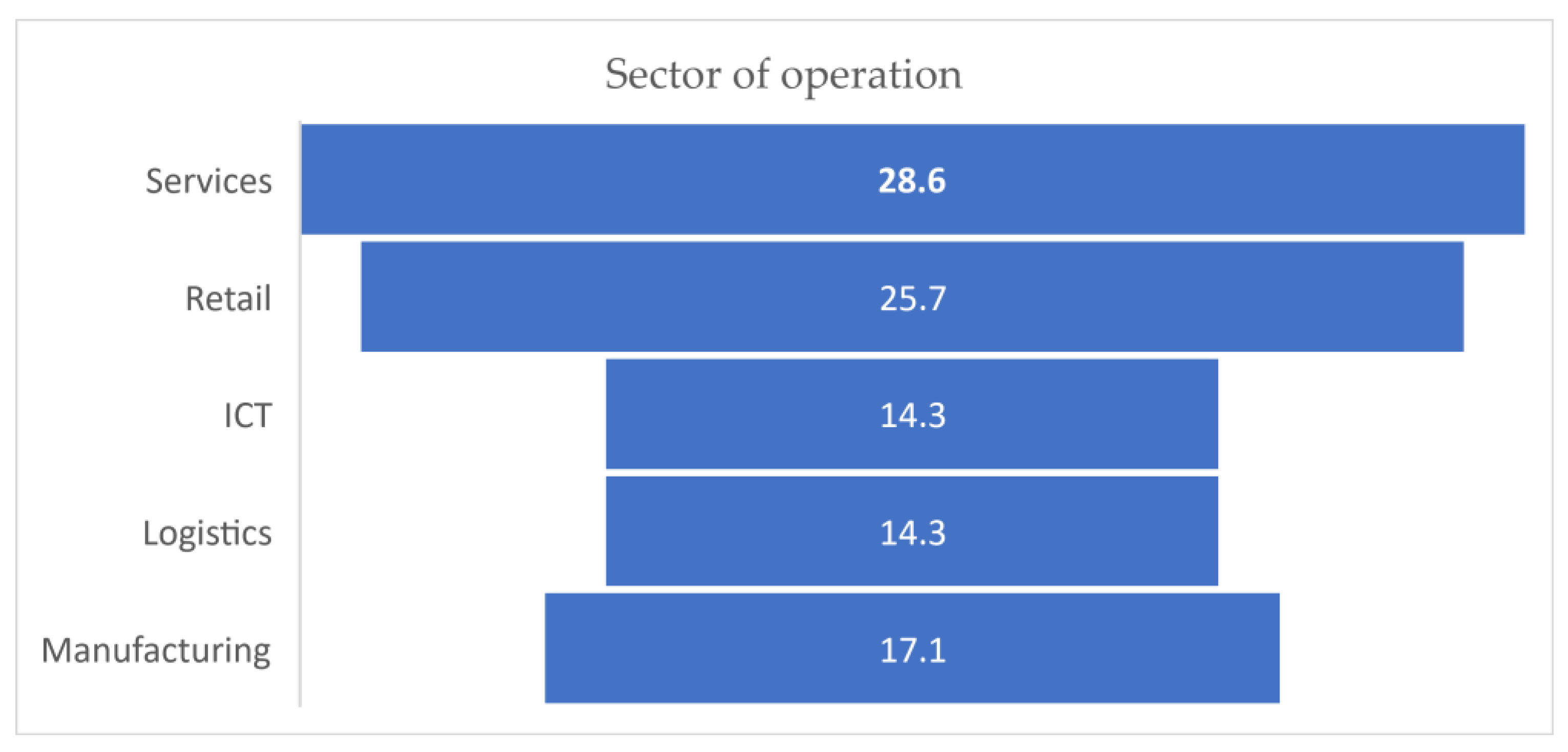
Among SMEs surveyed, 28.6% are in services, 25.7% in retail, and 14.3% each in ICT, logistics, and 17.1% in manufacturing. This distribution (shown in Figure 1) suggests that digital efforts should focus on retail and service-oriented businesses as they represent over 54% of the total sample.
3.2. Usage of Digital Tools
The data are presented as the percentage of SMEs using each tool (in blue) compared to those that do not use it (in orange). The results shown in Figure 2 provide a comprehensive view of the adoption trends among SMEs in Albania.
Accounting Software is the most used digital tool, with 77.1% of SMEs actively utilizing it. This suggests that financial management is a high priority for SMEs, likely due to the need for accurate financial reporting and compliance. However, 22.9% of SMEs still do not adopt this technology, which could indicate challenges in affordability or digital literacy for smaller firms.
Customer Relationship Management (CRM) tools are used by 58.6% of SMEs, with 41.4% still not incorporating them into their business processes. This suggests that while many SMEs recognize the importance of customer relationship management, a significant portion have yet to adopt CRM tools. This could be due to factors such as limited resources or a lack of awareness about the benefits of CRM.
Enterprise Resource Planning (ERP) systems are used by 64.3% of SMEs, while 35.7% do not implement these systems. ERP tools help integrate key business processes, and their adoption rate reflects an ongoing effort by many SMEs to streamline operations, despite barriers like cost and complexity.
E-Commerce platforms have a high adoption rate, with 71.4% of SMEs utilizing them. This high percentage reflects the increasing importance of digital sales channels for businesses in Albania, particularly given the shift toward online shopping. However, 28.6% of SMEs are not yet taking advantage of e-commerce, which may be attributed to limited online presence or logistical constraints.
Cloud services are adopted by 60.0% of SMEs, but 40.0% still do not use them. The adoption of cloud computing facilitates data storage, remote access, and flexibility in business operations. The significant proportion of SMEs not using cloud services suggests a lack of digital infrastructure or reluctance due to concerns over data security.
Cybersecurity tools are used by 67.1% of SMEs, with 32.9% still not adopting them. This highlights an increasing awareness of the importance of securing business data, but the gap suggests that many SMEs may not have sufficient resources or knowledge to fully protect their digital assets.
Social media is the most widely adopted digital tool, with 78.6% of SMEs using it for business purposes. This indicates that SMEs are leveraging social media for marketing, customer engagement, and brand visibility, even though 21.4% still do not use these platforms for business growth.
3.2. Percentage of business operations digitalized
The data in Figure 3 shows that the majority of SMEs fall into the categories of 25% to 75% digitization, with fewer companies reaching a full 100% digital transformation. This suggests that while many businesses have made significant progress, there are still gaps in the complete digitalization of operations.
3.3. Barriers to Digital Transformation
As we can observe from Table 1, technology costs are seen as a strong barrier: Nearly 59% perceive cost as a major hurdle. Targeted financial support could address this barrier.
Table 1.
Barriers to Digital Transformation
| Barriers to Digital Transformation | 1 (Not a barrier) N(%) | 2 N(%) | 3 N(%) | 4 N(%) | 5 (Major barrier) N(%) | Mean (SD) |
| High cost of technology | 9 (12.9) | 13 (18.6) | 7 (10) | 16 (22.9) | 25 (35.7) | 3.5 (1.46) |
| Lack of digital skills | 6 (8.6) | 5 (7.1) | 11 (15.7) | 20 (28.6) | 28 (40) | 3.84 (1.27) |
| Poor internet infrastructure | 10 (14.3) | 22 (31.4) | 13 (18.6) | 6 (8.6) | 19 (27.1) | 3.03 (1.44) |
4. Conclusions
The findings demonstrate that digital adoption plays a pivotal role in expanding market access, confirming that firms utilizing digital tools, such as e-commerce, CRM, and social media platforms, enjoy enhanced competitiveness and outreach. This outcome aligns with the [4,5], who argue that digital intensity directly contributes to market growth and resilience among SMEs. However, the study also revealed that the mere use of digital tools does not necessarily translate into operational efficiency or systemic transformation. This supports the observations of [4,8], who noted that partial or fragmented digital integration often fails to yield process-level improvements.
A major contribution of this research lies in identifying persistent barriers to digitalization in Albania, namely high implementation costs, lack of digital skills, and limited institutional support. These findings are consistent with global and regional analyses by the [5,6,7], which emphasize that financial constraints and inadequate human capital remain the primary obstacles to SME digital transformation. Furthermore, the weak influence of institutional programs highlights a policy gap between strategic initiatives and their effective communication or accessibility for small firms.
Interestingly, while staff training was expected to positively affect adoption, the results indicated a reversed relationship. This suggests that many training programs remain theoretical and do not translate into practical skill application; an outcome echoed by [2,9]. Consequently, Albanian SMEs may require more targeted, sector-specific, and hands-on digital capacity-building initiatives.
Overall, the research concludes that while awareness of digitalization among Albanian SMEs is relatively high, implementation remains uneven and constrained by financial, organizational, and structural limitations. The study confirms that digital adoption enhances market opportunities but that comprehensive transformation requires coordinated support, integrating policy frameworks, accessible funding mechanisms, and sustainable training systems.
From a broader perspective, this study contributes to the growing literature on SME digital transformation in developing economies by offering localized evidence from Albania. It reinforces the idea that digitalization is not only a technological shift but also a socio-economic process dependent on skills, infrastructure, and institutional collaboration. Future research could build on these findings by conducting longitudinal studies to assess how evolving policies and digital ecosystems influence SME competitiveness over time.
Funding
This research received no external funding.
Institutional Review Board Statement
The study was conducted in accordance with the Declaration of Helsinki and approved by the Institutional Ethics Committee of University of New York Tirana (2025).
Informed Consent Statement
“Informed consent was obtained from all subjects involved in the study.”.
Data Availability Statement
Data supporting reported results can be provided by inquiry to the authors.
Acknowledgments
The author would like to acknowledge the invaluable contribution of all the participants who took the time to fill in the questionnaire and provide the data.
Conflicts of Interest
The author declare no conflicts of interest.
References
- Aliu, M., & Zhllima, E. The digital transformation of Albanian agribusiness SMEs. Journal of Agricultural Economics and Rural Development, 2021, 10(1), 89–101.
- Bala-Subrahmanya, M. H. E-commerce adoption in SMEs: Drivers and outcomes. Journal of Small Business and Enterprise Development, 2020, 27(1), 56–73. [CrossRef]
- European Commission. Digital economy and society in the Western Balkans, 2022. Brussels: DG Connect.
- Kraus, S., Clauss, T., Breier, M., Gast, J., Zardini, A., & Tiberius, V. The economics of COVID-19: Digital transformation in SMEs. Journal of Business Research, 2021, 132, 1109–1124. [CrossRef]
- OECD. SMEs Going Digital: Policy Notes. 2021. Paris: OECD Publishing.
- UNCTAD. COVID-19 and e-commerce: A global review. Geneva: United Nations Conference on Trade and Development. 2020.
- World Bank. Digital Economy Assessment Albania. 2021. Washington, DC: World Bank Group.
- Yadav, G., & Ghosh, S.. Digital readiness among SMEs in post-pandemic recovery. Technovation, 2022, 11(2), 102-112.
- Zhu, K., & Kraemer, K. L. Post-adoption variations in usage and value of e-business. Information Systems Research, 2005, 16(1), 61–84.
Figure 1.
Sector of Operation.
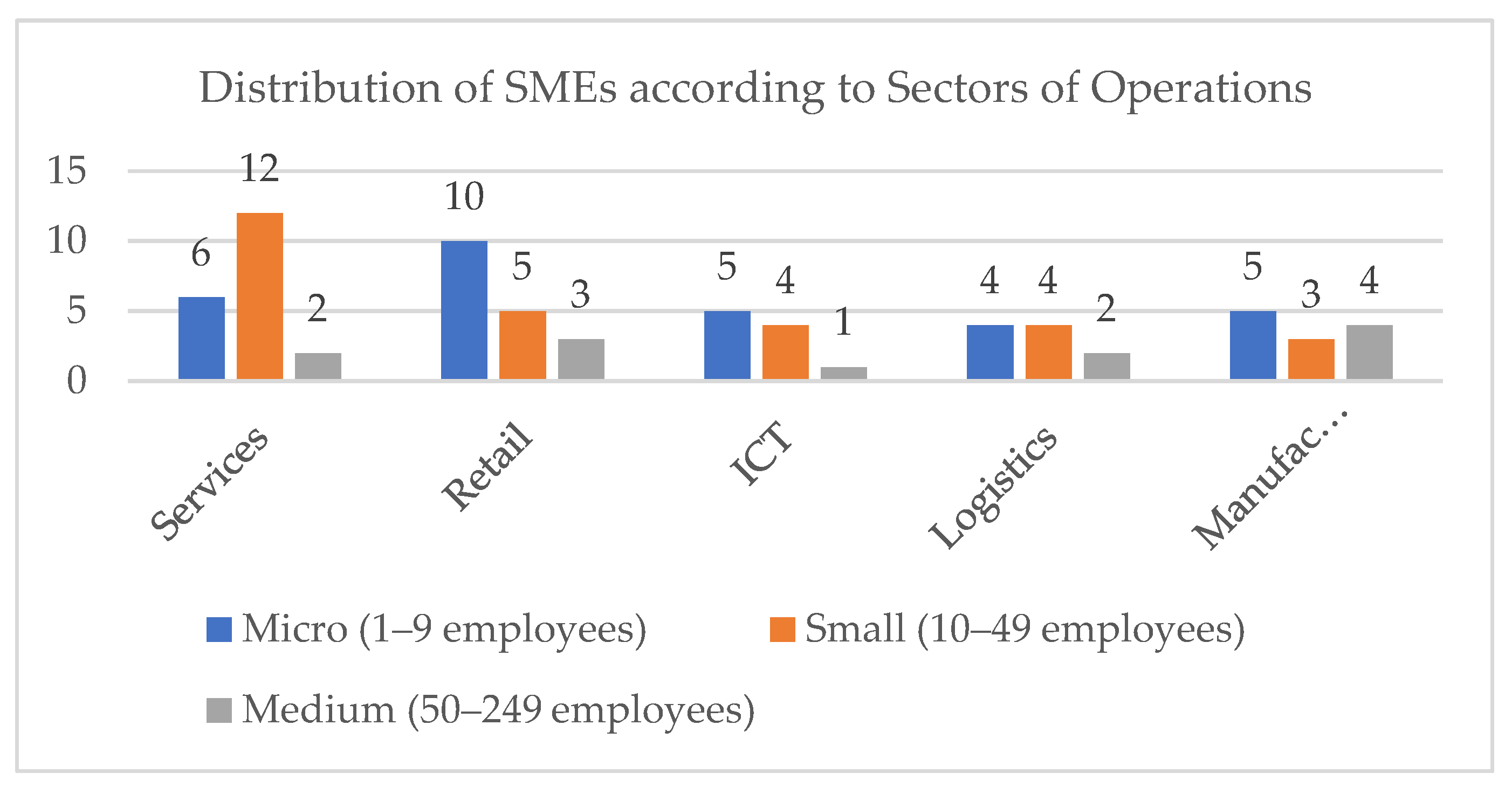
Figure 2.
Usage of Digital Tools
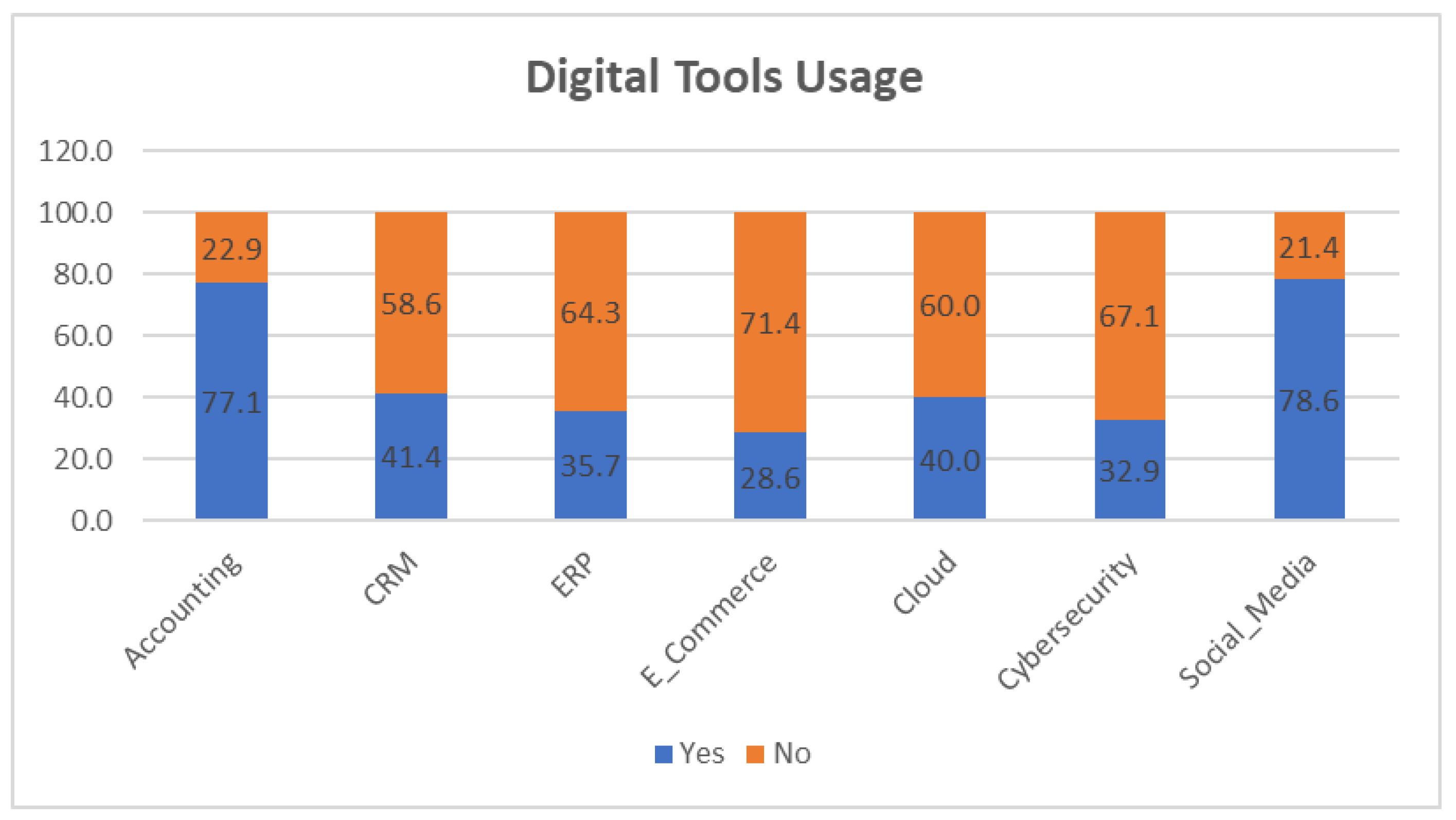
Figure 3.
Percentage of Business Operation digitized per sector of operation.
Disclaimer/Publisher’s Note: The statements, opinions and data contained in all publications are solely those of the individual author(s) and contributor(s) and not of MDPI and/or the editor(s). MDPI and/or the editor(s) disclaim responsibility for any injury to people or property resulting from any ideas, methods, instructions or products referred to in the content. |
© 2026 by the authors. Licensee MDPI, Basel, Switzerland. This article is an open access article distributed under the terms and conditions of the Creative Commons Attribution (CC BY) license (http://creativecommons.org/licenses/by/4.0/).
Copyright: This open access article is published under a Creative Commons CC BY 4.0 license, which permit the free download, distribution, and reuse, provided that the author and preprint are cited in any reuse.


