

Submitted:
08 April 2026
Posted:
09 April 2026
You are already at the latest version
Abstract
Background. The food industry contributes significantly to global greenhouse gas emissions, water consumption, and waste generation. Although environmental impact assessment tools have rapidly diversified, methodological fragmentation continues to limit comparability across studies and the formulation of coherent sustainability strategies. Objective. This study conducted a systematic review to synthesize, critically appraise, and map the evidence on methods, technologies, and applications used in assessing the sustainability of food industry processes, with a view to identifying the most effective approaches and the main research gaps. Data sources and eligibility. The Web of Science Core Collection was queried on November 27, 2025 using a structured strategy based on Boolean operators and Topic fields. Original articles and reviews in English, published between 2020 and 2025, that reported quantitative or qualitative indicators of environmental impact, according to the PICO framework, were included. Results. From an initial 1000 records, 225 studies were included and narratively synthesized into seven major themes. LCA predominated as the standard method, but with significant heterogeneity in system boundaries and functional units. Emerging technologies indicated potential for reducing resource consumption, dependent on subsector and scale. Conclusions: Harmonization of assessment frameworks, industrial validation of circular technologies, and robust comparative studies are essential for the transition to a sustainable food system.
Keywords:
environmental impact assessment
; food industry sustainability
; life cycle assessment
; sustainable food processing
; circular economy
; resource efficiency
; green technologies
; systematic review
1. Introduction
1.1. Research Objectives and Questions
The main objective of this review was to synthesize the evidence on methods, technologies, and applications used to assess the environmental impact and sustainability of food industry processes. The review question was structured according to the PICO framework as follows: Population: food industry processes and technologies, including processing, preservation, packaging, and by-product valorization systems at laboratory, pilot, or industrial scale. Intervention/Exposure: application of environmental impact assessment methods and sustainability-oriented technological strategies, including life cycle assessment, resource-efficiency approaches, process optimization, and emerging technologies aimed at reducing environmental burdens. Comparison: conventional versus optimized or emerging technologies; before-versus-after implementation scenarios; or, where no explicit comparator was available, studies reporting absolute sustainability indicators. Outcomes: quantitative and qualitative indicators of environmental impact and sustainability, including energy use and efficiency, water and raw material consumption, emissions, waste generation and recovery, and overall ecological performance.
2. Introduction
In the current context of the global climate crisis and the depletion of natural resources, the food industry is at a critical point of transformation, being responsible for a significant proportion of greenhouse gas emissions and water consumption worldwide. The pressure exerted by demographic growth and the need to ensure food security requires a fundamental reconfiguration of the way in which food is processed, packaged and distributed, with the transition from linear production models to circular and sustainable paradigms becoming an absolute priority [1,2]. Recent literature also emphasizes that food systems should be assessed not only in terms of their capacity to feed the population, but also through their wider ecological impact, with the concept of “planetary health” becoming inextricably linked to human nutrition [3,4]. Thus, optimizing industrial processes to reduce the carbon footprint and make resource use more efficient is not only a legislative requirement, but also a condition for long-term economic and ethical viability [5,6].
The fundamental objective of this systematic review is to synthesize and critically evaluate the existing evidence on the environmental impact and sustainability of food processing technologies, identifying the efficiency of emerging methods compared to conventional ones. In this sense, this paper aims to go beyond descriptive approaches, providing a structured analysis of the trade-offs between technological performance, food safety and environmental indicators. Although there are numerous studies that address certain technologies in isolation, an integrated picture is missing that quantifies the real benefits of technological innovations through standardized sustainability metrics [7,8]. Therefore, this scientific approach aims to fill this gap by applying a rigorous methodology for selecting and analyzing the specialized literature.
In terms of the current state of knowledge, technological innovations have advanced rapidly, offering promising solutions for reducing energy consumption and thermal degradation of foods. Non-thermal technologies, such as pulsed electric fields (PEF) and cold plasma, have gained ground as viable alternatives to traditional thermal pasteurization, promising to maintain nutritional quality while reducing energy demand [9,10]. At the same time, the use of ultrasound in the processing of legumes or other plant raw materials has demonstrated the potential to enhance mass transfer and reduce processing times, thus contributing to superior operational efficiency [11]. In parallel, technologies such as vacuum microwave drying (VMD) have been investigated for their ability to optimize dehydration processes, which are traditionally energy-intensive [12,13].
In addition to the actual processing, a major segment of the environmental impact comes from packaging and waste management, areas in which research has exploded in recent years. The development of biodegradable materials and edible films represents a strategic direction for reducing plastic pollution, with numerous studies focusing on the valorization of protein by-products or natural polymers for the creation of active barriers [14,15,16]. Furthermore, the integration of nanotechnology and smart sensors in packaging not only extends the shelf life of products, reducing food waste, but also offers new ways to monitor freshness, with direct implications for logistics and the carbon footprint associated with transportation [17,18]. These innovations are complemented by strategies for valorizing by-products, transforming waste from fruit, vegetable or dairy processing into functional ingredients or energy sources, in the spirit of the circular economy [19,20,21].
However, the implementation of these technologies raises complex issues related to food safety and consumer acceptance, aspects that cannot be dissociated from the sustainability analysis. For example, the reduction of the use of aggressive chemicals in cleaning processes (CIP) by using plasma-activated water or electrolyzed water must be rigorously validated in order not to compromise hygiene standards and not to favor the formation of bacterial biofilms [22,23,24]. In addition, consumer perception plays a decisive role in the adoption of new technologies; their willingness to pay for products processed using emerging methods or packaged in unconventional materials varies significantly and directly influences the economic viability of sustainable solutions [25,26,27]. Thus, a complete sustainability assessment must integrate not only technical indicators, but also socio -economic and food safety variables [28,29].
Despite the abundance of primary studies, the current literature shows significant fragmentation and a lack of methodological consensus in environmental impact assessment. Most research focuses on optimizing process parameters for a single piece of equipment or product, without placing the results in a broad comparative framework that includes life cycle analysis (LCA) or total environmental efficiency [30,31]. There is also a paucity of systematic reviews that aggregate data on resource consumption (water, energy) and emissions for a wide range of emerging technologies, directly comparing them with established industry standards. This heterogeneity of data and the lack of standardized protocols for reporting sustainability indicators make it difficult to formulate generalizable conclusions and adopt policies based on solid evidence [6,32].
The identification of these major gaps substantiates the need for this systematic review, which adopts a structured approach to interrogate the existing literature. Unlike narrative reviews, which can be susceptible to selection bias and subjective interpretation, systematic methodology allows for a transparent and reproducible assessment of the current state of knowledge. By rigorously applying inclusion and exclusion criteria, as well as assessing the risk of bias, this paper aims to distill relevant information from hundreds of disparate studies, providing a clear synthesis of the technological directions that offer the greatest real ecological benefits [33,34]. The strategic importance of this approach lies in its ability to guide technological investment decisions and to orient future research directions towards areas with the greatest potential for mitigating climate impacts.
An explicit PICO (Population, Intervention, Comparison, Outcome) framework was defined to guide the search strategy and study selection. The population of interest is represented by industrial processes and technologies used in the food industry, covering the entire spectrum from processing and transformation to preservation and packaging, regardless of the scale of application (laboratory, pilot or industrial) [31,35]. This broad definition allows capturing a diversity of applications, from dairy and meat processing to the valorization of vegetable by-products, providing a panoramic view of the sector.
The intervention analyzed consists of the application of environmental impact assessment methods and sustainability strategies. This includes, on the one hand, the use of analytical tools such as life cycle assessment (LCA) and environmental footprint monitoring, and, on the other hand, the effective implementation of optimized or emerging technologies (e.g., pulsed electric fields, ultrasound, biodegradable packaging) with the explicit aim of reducing resource consumption and emissions [8,36,37]. Interventions aimed at recovering energy and water from waste streams, in the context of the water-energy-food nexus [5,19], are also included .
Comparisons are made, where possible, between optimized processes or technologies and conventional ones, considered standard in the industry. This involves the analysis of studies that report quantifiable differences between the situation "before" and "after" the implementation of a sustainability measure, or direct comparative studies between alternative technologies (e.g. thermal drying vs. microwave drying) [12,38]. Studies that, although not having an explicit control group, report absolute indicators of environmental performance that can be compared with reference values in the literature are also taken into account.
The outcomes pursued are quantitative and qualitative indicators of environmental impact and sustainability. These include energy efficiency, specific water and raw material consumption, volume and toxicity of emissions, amount of waste generated and its degree of recovery [1,30]. Also relevant are the results that link these environmental indicators to food quality and safety parameters, to assess whether the ecological gains do not compromise the integrity of the final product [39,40].
Based on this PICO framework, the review is guided by the following central research questions: What are the predominant technologies and methods used to improve sustainability in food processing and what is their proven effectiveness in reducing environmental impact? To what extent do emerging technologies (non-thermal, active packaging, AI) offer quantifiable advantages over conventional methods in terms of resource consumption and emissions? What are the main methodological barriers and limitations of current studies that prevent a standardized comparative assessment of sustainability in this sector? Answers to these questions will contribute to a deeper understanding of how innovation can be directed to achieve sustainable development goals [6,33].
In addition, the analysis also considers the role of digitalization and artificial intelligence in process optimization, an emerging trend that promises to revolutionize the monitoring and control of environmental parameters. The use of IoT sensors and machine learning algorithms for quality prediction and defect reduction can significantly reduce waste, but the energy impact of the digital infrastructure itself remains a topic of debate [41,42,43]. Integrating these new technological dimensions into the sustainability equation is essential to provide a future perspective relevant to Industry 4.0 [43].
It is also important to note that this systematic review is not limited to a simple inventory of technologies but critically analyzes the quality of the evidence. The heterogeneity of impact assessment methods, from simplified carbon footprint analyses to complex multi- criteria studies, requires careful filtering of information to avoid erroneous conclusions or hasty generalizations [44,45]. The distinction between theoretical efficiency, calculated under laboratory conditions, and real performance in an industrial environment is another crucial aspect that this review will highlight, underlining the need for industrial scaling and validation studies [31,46].
Finally, the structure of this article follows the logical flow imposed by the PRISMA standards, ensuring transparency in the data selection and analysis process. By clearly identifying gaps in the existing literature and by formulating precise research questions, this introduction establishes the necessary framework for a detailed investigation of the intersection of food technology and environmental science. The complexity of the interactions between process parameters, microbiological safety and ecological indicators requires an integrative approach, able to discern between truly sustainable solutions and those that merely shift environmental impacts to other stages of the life cycle [36,47]. This critical analysis substantiates the need for a rigorous methodological approach, detailed in the next section, to guarantee the validity and relevance of the conclusions drawn.
3. Methodology
This study was designed and conducted as a systematic literature review, following the PRISMA 2020 (Preferred Reporting Items for Systematic Reviews and Meta-Analyses) guidelines to ensure transparency, reproducibility, and methodological rigor in the synthesis process. The fundamental objective of this methodological approach was the transition from a simple inventory of existing literature to a critical and integrative analysis of scientific evidence published between 2020–2025, a period marked by a significant acceleration of technological innovations oriented towards sustainability in the food industry. Although no formal protocol was registered in databases such as PROSPERO prior to the initiation of the study, all procedural steps were documented internally with precision to minimize the risk of bias and to facilitate an objective assessment of the current state of knowledge, as reflected in recent works such as those on pulsed electric fields [9] or total energy efficiency [30].
In order to operationalize the research objectives, an explicit PICO (Population, Intervention, Comparison, Outcome) framework was defined, which guided both the search strategy and the eligibility criteria. The target population was represented by the industrial processes and technologies used in the food industry, covering a wide spectrum from primary processing and transformation stages, to preservation and packaging, investigated both at laboratory and pilot or industrial scale, aspects extensively treated in studies on cold plasma [10] or applications of augmented reality in food science [48]. The intervention of interest consisted of the application of environmental impact assessment methods (e.g., life cycle assessment) and the implementation of optimized technological solutions intended to reduce resource consumption and environmental burdens, such as non-thermal processing, resource-recovery systems, and artificial intelligence-based process control. The comparison was made, where possible, between emerging technologies and conventional processes, or through " before-after " analyses, while the outcomes pursued included quantifiable sustainability indicators, such as energy efficiency, carbon footprint and resource use, highlighted in economic and environmental analyses [7] or in the evaluation of mobile processing units [31].
The Web of Science Core Collection database was selected because of its high standards for indexing peer-reviewed scientific literature. The final query was performed on November 27, 2025, using a complex combination of key terms and Boolean operators (AND/OR) to maximize the sensitivity of the search in the Topic (TS) fields The search strategy combined terms related to food processing ("food process", "food industry", "food manufactur") with terms related to environmental assessment and sustainability ("environmental impact", "environmental assessment", "sustainability", "process optimization", "energy efficiency", and "resource efficiency"). This strategy allowed the identification of an initial corpus of 1000 records, which included diverse studies, from the properties of xerogels [49] to the detection of deposits in the dairy industry [50], ensuring a broad coverage of the field.
Following initial identification, the selection process followed a rigorous two-stage screening flow, managed through the EndNote v21 software platform, which facilitated reference organization and automatic removal of duplicates. In the first stage, the titles and abstracts of the 1000 records were independently assessed to eliminate irrelevant articles, editorials, technical notes without analytical data, and studies that did not explicitly address the intersection of food processing and environmental impact. For example, studies that provided concrete data on innovations in legume processing [11] or the integration of sustainability analysis in new product development [8] were prioritized over purely descriptive ones. This filtering step significantly reduced the volume of literature, eliminating works that, although belonging to the food field, focused exclusively on microbiological aspects without a sustainability component, such as isolated transcriptomic analyses [51], or on pure network aspects without direct process applicability [42].
In the second stage of the selection process, the full texts of the remaining articles were critically reviewed to verify compliance with predefined inclusion and exclusion criteria. Only original scientific articles and reviews written in English, published between 2020–2025, that reported measurable impact indicators or clear methodological descriptions of sustainable processes were considered eligible. A special emphasis was placed on studies that proposed tangible solutions, such as biodegradable packaging [14], phase change materials for thermal efficiency [52] or advanced vacuum drying systems [12]. Instead, studies that did not provide sufficient data for an assessment of ecological performance or that were outside the area of industrial processing, as well as grey literature (theses, technical reports), were excluded, in order to maintain a high standard of evidence.
The data extraction process was carried out using a standardized form, developed ad hoc to capture the heterogeneity of information specific to this interdisciplinary field. For each of the 225 studies finally included in the review, information was systematically extracted regarding: the food application area, the type of technological process investigated (e.g., the use of electrolyzed water [22] or biodegradable polymers [15]), the impact assessment methodology (LCA, carbon footprint, water footprint), the performance indicators reported, and the authors’ main conclusions. This structured approach allowed for a coherent mapping of the literature, facilitating the comparison of diverse technologies, from DNAzyme -based sensors [39] to pulsed electric field methods [9], despite the inherent variations in the way data were reported.
Assessment of methodological quality and risk of bias was a critical component of this approach, being approached through a structured narrative analysis, adapted to the specifics of technological and process engineering studies. Since most of the included studies were not randomized clinical trials, the use of standard tools such as Cochrane Risk of Bias Tool was not feasible; instead, an assessment of methodological clarity, relevance of selected indicators, and coherence between objectives and results was chosen. The risk of bias was considered moderate across the entire corpus, driven mainly by high methodological variability and the lack of standardized reporting frameworks for sustainability indicators in studies such as those on energy efficiency [30] or cold plasma [10]. A possible bias towards selective reporting of positive results in emerging technologies was also identified, an issue that was treated with caution in the synthesis phase.
Data synthesis was carried out through a structured narrative approach (reasoned narrative synthesis), organizing studies into thematic clusters based on the typology of sustainability processes and interventions. Given the substantial heterogeneity of study designs, measurement units, and system boundaries used in life cycle analyses in the selected articles (from [9] to [53]), conducting a quantitative statistical meta-analysis was not possible and could have generated misleading results. Instead, an in-depth qualitative analysis was preferred, highlighting common patterns, technological divergences, and gaps in the literature. This method allowed the integration of various perspectives, from thermal process optimization [52] to packaging innovations [15], providing a holistic view of the current state of sustainability in the food industry.
In addition, the analysis included a cross-sectional assessment of technological maturity, classifying the identified interventions according to their degree of industrial applicability and their potential to reduce environmental impact. This stratification allowed a clear distinction between solutions at the experimental stage, such as certain applications of advanced sensors [39] or augmented reality [48], and industrially validated technologies, such as high-pressure processing [7]. By triangulating information from multiple sources, the aim was to build a solid argument that would go beyond the simple description of individual results and provide an integrative perspective on the directions of evolution of the field.
It is also important to note that the final selection of 225 studies was the result of a consensus process, with any uncertainty regarding the eligibility of a paper being resolved by critical re-evaluation of the full text against the PICO objectives. This procedural rigor ensured that the final synthesis was based exclusively on relevant and high-quality evidence, eliminating the bibliographic noise generated by peripheral studies or studies with uncertain methodology. Thus, the final body of literature, which includes fundamental works on legume processing [11], sustainable product development [8], and drying technologies [12], constitutes a solid basis for the detailed analysis of the results.
Consequently, the adopted methodology allowed for a systematic and balanced exploration of the literature, efficiently managing the large volume of information and the conceptual diversity of the field. The limitation to the Web of Science database, although it could be considered a restriction, ensured the maintenance of a high standard of scientific quality, focusing the analysis on publications with recognized visibility and impact in the academic community. The absence of grey literature was a decision taken to guarantee the external validity of the conclusions, relying on the peer-review process as the primary quality filter.
Finally, the methodological structure described above facilitated the logical transition to the results presentation stage, providing the necessary framework for interpreting the complex data extracted from the 225 articles reviewed.
3.1. Certainty of Evidence
The overall certainty of the evidence was appraised narratively on the basis of methodological quality, consistency of findings, and applicability of the included studies. Because most studies were technological assessments and process analyses without standardized comparative designs, a formal GRADE rating was not considered appropriate.
4. Results
The literature selection process, conducted in accordance with the PRISMA 2020 protocol, resulted in the identification and inclusion of a final number of studies relevant to the analysis of environmental and sustainability impacts in the food industry. The temporal distribution of included publications, presented in ure 1, indicates a clear upward trend in academic interest in this field over the last five years, correlating technological innovation with legislative pressures on sustainability. The general characteristics of the studies, including experimental design, geographical region and type of technological intervention, are detailed in Table 1. Analysis of the extracted data allowed the categorization of the evidence into seven major themes, ordered in descending order according to the volume of studies, covering the spectrum from processing and alternative ingredients, to packaging, environmental monitoring and consumer perception.
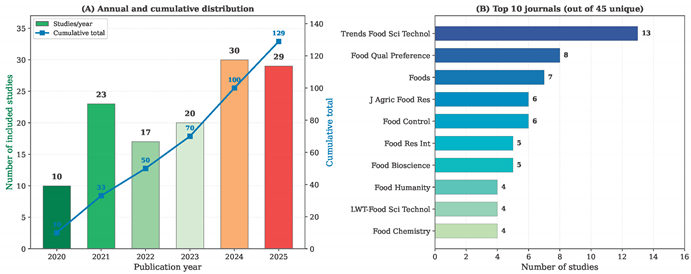

Table 1.
Synthetic characteristics of the included studies, organized by thematic clusters.
| Thematic cluster | No. of studies | Time range | Predominant study designs | Main assessment methods | Main reported indicators | Representative studies |
| Theme 1: Processing technologies, optimization and SDGs | 33 | 2020–2025 | Experimental studies, techno-economic evaluations, case studies | LCA, energy-efficiency analysis, carbon-footprint assessment | Energy consumption, GHG emissions, resource efficiency, product quality | [7,8,9,11,31] |
| Theme 2: Alternative resource valorization and LCA | 28 | 2020–2025 | Comparative LCAs, feasibility studies, nutritional and sustainability evaluations | LCA, multi-criteria analysis, environmental profiling | Carbon footprint, eutrophication, land use, nutritional profile | [14,54,55,56] |
| Theme 3: Advanced packaging materials and preservation | 26 | 2020–2025 | Experimental studies, sensory evaluations, consumer acceptance studies | Barrier-property testing, biodegradability analysis, LCA | Barrier performance, biodegradability, consumer acceptance, freshness preservation | [18,22,57,58] |
| Theme 4: Monitoring contaminants and ecological impact | 23 | 2020–2025 | Observational studies, econometric analyses, environmental monitoring studies | Environmental monitoring, predictive modeling, risk analysis | Contaminants, microbial diversity, pollution indicators, waste-related impacts | [2,34,59] |
| Theme 5: Sensory science, digital technologies and quality perception | 21 | 2021–2025 | Experimental studies, sensory evaluations, AI validation studies | Sensory profiling methods, AI/ML models, digital quality-assessment tools | Detection accuracy, consumer perception, product quality, decision support | [41,43,60,61,62] |
| Theme 6: Microbial ecology, safety and public health | 21 | 2020–2025 | Observational studies, retrospective analyses, case studies | Microbiological monitoring, epidemiological analysis, environmental assessment | Microbial succession, pathogen occurrence, safety indicators, contamination dynamics | [29,63,64] |
| Theme 7: Primary production, cultivation and comparative sustainability | 19 | 2020–2025 | Comparative LCAs, field studies, behavioral experiments | LCA, comparative sustainability assessment, consumer-behavior analysis | GHG emissions, biodiversity-related indicators, consumer preferences, land-use-related impacts | [36,65,66,67] |
Note: The total number of studies across thematic clusters exceeds 225 because some studies were classified into more than one theme based on their multidimensional content. Study design, assessment methods, and reported indicators were extracted from the full text of each included article. Reference numbers correspond to the final bibliography.
4.1. Theme 1: Processing Technologies, Optimization and Sustainable Development Goals (33 Studies)
The literature review on this topic, the largest in volume, highlights an intense concern for aligning food technologies with the Sustainable Development Goals (SDGs). Recent studies have highlighted that technological innovation in the food sector is increasingly being directed toward resource efficiency, waste reduction, and sustainability-oriented process redesign. In this context, a transition has been observed from conventional processing methods to emerging technologies that allow maintaining nutritional quality while reducing the carbon footprint. For example, fermentation conditions can substantially influence the chemical profile and quality attributes of food products, which may create opportunities for process optimization.
In addition, concentration and preservation technologies have been evaluated from the perspective of energy efficiency and finished product quality. Concentration and preservation technologies have also been investigated for their ability to improve process efficiency while maintaining product quality. Simultaneously, bioactive packaging systems based on natural polymers and functional additives have been investigated as alternatives to synthetic preservatives. These systems not only extend shelf life, but also contribute to reducing food waste by maintaining the physical and microbiological stability of sensitive products [52].
Also, the sensory and physicochemical characterization of products processed by alternative methods constitutes an important sub-segment of this topic. Studies have compared the characteristics of cow's butter obtained by traditional methods versus optimized methods, highlighting significant differences in the microbial and sensory profile, which can influence market acceptability and, implicitly, the economic sustainability of producers [50]. In parallel, the analysis of the texture of fluid foods by extrusion techniques has provided quantitative data necessary for optimizing manufacturing processes, minimizing raw material losses during industrial processing [12].
Research has also addressed cultural and perceptual aspects of food choice, showing that consumer preferences may condition the adoption of sustainable food technologies. This data is essential for adapting sustainable technologies to local preferences, ensuring the adoption of optimized products. In the field of functional ingredients, the valorization of food by-products has been identified as a key strategy within the circular economy, enabling the conversion of waste streams into value-added ingredients. This approach is also aligned with the broader exploration of alternative protein sources intended to reduce pressure on land and conventional resource-intensive production systems.
4.2. Theme 2: Alternative Resource Utilization and Life Cycle Analysis (28 Studies)
This theme brings together studies exploring unconventional ingredients and assessing their impact through Life Cycle Analysis (LCA). A prominent direction is represented by the use of insects as a source of protein and lipids. Research has also explored insect-derived ingredients as alternative lipid and protein sources, although sensory acceptance remains a relevant barrier. Similarly, biodegradable and active films derived from protein-rich by-products represent a significant innovation in the valorization of poultry-industry waste and may offer alternatives to petroleum-derived plastics.
In terms of agro-industrial systems, life cycle assessment has been applied extensively to quantify the environmental impacts of sugar production and other industrial crops. Comparative life cycle assessments of agro-industrial systems have identified major hotspots in greenhouse gas emissions and eutrophication, suggesting that upstream agricultural stages are often critical contributors to total impacts Environmental conditions may also influence the nutritional composition of crops, indicating the need to adapt agricultural practices to climate variability in order to preserve both yield and nutritional quality.
On the other hand, the interaction between government regulations and producer behavior has been analyzed in the context of agricultural biodiversity conservation measures. The literature suggests a complex interaction between voluntary and mandatory interventions in shaping the adoption of sustainable agricultural practices. In addition, transitions toward more plant-based dietary patterns have been evaluated from both nutritional and ecological perspectives, often indicating the potential for lower environmental impacts and public-health co-benefits.
The study of environmental microorganisms involved in fermentation has opened new perspectives for improving process control, food quality, and safety in spontaneous fermentation systems. Operational sustainability in food-service settings has also been linked to human factors, including professional values, competencies, and waste-management practices.
4.3. Theme 3: Advanced Packaging Materials and Preservation Technologies (26 Studies)
Research under this theme focuses on innovations in packaging and preservation methods designed to extend product shelf life and reduce waste. A particular focus has been placed on smart composite films that respond to pH or light changes and can provide visual information about product freshness, potentially helping to reduce food waste at the consumer level. Consumer perception and acceptance of edible packaging have also been assessed, with results indicating that openness varies according to product category and the information provided to consumers.
In the field of mechanical and thermal processing, high-temperature transient treatments have also been optimized to reduce material losses and improve process efficiency in selected food applications. Technologies for monitoring powder agglomeration have also been improved, allowing more rigorous quality control and potentially reducing the number of non-conforming batches. These technical innovations are complemented by studies on pathogen inactivation mechanisms, such as the effect of lactic acid on Salmonella Typhimurium, which provide essential data for the design of more efficient and less polluting decontamination processes [28].
Sensory acceptance studies conducted in different testing environments have provided new insights into how context influences the perception of sustainable products. In addition, environmental attitudes have been shown to influence consumer behavior, including the acceptance of environmentally friendly packaging solutions. Future demographic scenarios and changing dietary patterns have highlighted the need for integrated food policies capable of reducing the environmental burdens associated with population growth and changing consumption demands.
At the same time, the influence of environmental microbiota on microbial succession and metabolic profiles during processing has been investigated to better understand cross-contamination risks and bio-preservation opportunities.
4.4. Theme 4: Monitoring Contaminants and the Ecological Impact of Food Systems (23 Studies)
This topic addresses the negative consequences of industrial activities on ecosystems and methods for their monitoring. A major emerging issue identified in the literature is the presence of microplastics in food systems and their potential effects on human health and the environment. Studies have mapped the sources of contamination and proposed standardized methodologies for their detection in various food matrices. In parallel, the impact of environmental factors on bacterial diversity has been analyzed in the context of food safety, demonstrating that climate and pollution variations can alter the structure of microbial communities with direct implications for the food chain [68].
The assessment of institutional quality and the environmental effects of agricultural production has also been explored using econometric approaches, highlighting relationships between governance, agricultural practices, and pollution indicators. Aggregated environmental monitoring data for Listeria spp. in food production environments have also been analyzed to identify persistence patterns and improve hygiene protocols. The relationship between nutritional quality and environmental impact has also been examined through integrative analytical approaches seeking a balance between human and planetary health.
Research has also investigated how changing growing environments affect plant metabolism and crop quality, providing clues to adaptation mechanisms relevant to sustainable production. In addition, optimization of the biodegradation capacity of selected microbial strains against specific contaminants represents a promising direction for agricultural bioremediation.. Simulation of product-package behavior under environmental stress has been proposed as a useful approach for predicting food stability in complex logistics chains and reducing the risk of premature spoilage.
Innovative concepts, such as gluten-free instant noodle prototypes designed on sustainability principles, were developed and tested, demonstrating the feasibility of integrating ecological criteria from the product design phase [67]. Sustainable strategies for limiting nitrogen losses in agriculture have also been emphasized, particularly in relation to more efficient fertilizer management and water-resource protection.
4.5. Theme 5: Sensory Science, Digital Technologies and Quality Perception (21 Studies)
This thematic cluster brought together studies situated at the intersection of sensory evaluation, digitalization, and food quality management. Across the reviewed literature, a clear trend emerged toward the integration of artificial intelligence, machine learning, and digital analytical tools into food quality assessment workflows. These approaches were used to support defect detection, process monitoring, classification tasks, and decision-making under increasingly data-rich production conditions. Representative examples included AI-assisted control systems, augmented reality applications in sensory contexts, and automated optical inspection platforms, all of which illustrated the broader transition toward digitally enabled quality management in the food sector [41,43,60].
A second recurring direction within this theme concerned the modernization of sensory science methodologies. The reviewed studies showed growing interest in rapid sensory profiling tools and in approaches capable of capturing consumer responses under more realistic or digitally enriched testing conditions. Rather than relying exclusively on conventional laboratory protocols, recent work explored more flexible and context-sensitive sensory designs, with the aim of improving the ecological validity of consumer data while preserving analytical robustness. These developments are relevant for sustainability research because product acceptance remains a critical condition for the successful adoption of novel technologies, packaging systems, and alternative food formulations [60,61].
The evidence also suggested that digital technologies may contribute indirectly to sustainability by improving classification accuracy, reducing quality-related losses, and supporting earlier detection of defects or deviations. In this sense, quality perception and quality control should not be treated as separate domains. Instead, the literature indicated that the sensory, technological, and environmental dimensions of food quality are increasingly interconnected. More precise inspection and better characterization of consumer responses may reduce waste, improve consistency, and support the implementation of sustainability-oriented innovations that would otherwise face uncertainty at the market level [43,62].
At the same time, the reviewed studies revealed that the impact of information on consumer choice remains variable. Nutritional claims, environmental cues, and quality-related signals may influence acceptance, but these effects are not uniform across products or consumer groups. This finding reinforces the idea that technological progress alone is insufficient; digital tools and sustainability claims must also be aligned with user perception, familiarity, and trust. Overall, this thematic cluster highlighted the progressive convergence of sensory science, digital technologies, and quality perception as an important component of sustainability-oriented food innovation.
4.6. Theme 6: Microbial Ecology, Safety and Public Health (21 Studies)
This thematic cluster focused on the relationship between microbial ecology, food safety, and public health within environmentally dynamic food systems. The reviewed literature showed that microbial communities are not static background variables but active determinants of process performance, product stability, and contamination risk. Their structure and succession may be influenced by environmental conditions, production settings, and processing practices, with direct consequences for both safety and quality. These findings are especially relevant in fermentation systems and other biologically active food environments, where microbial dynamics shape not only product characteristics but also process reliability [47,63].
Another important direction within this theme concerned the monitoring and control of foodborne hazards. The literature indicated continued interest in environmental surveillance, contamination tracking, and the identification of conditions associated with pathogen persistence or emergence. In this context, food safety was not treated as a separate regulatory issue detached from sustainability, but rather as an integral component of sustainable food production. A process cannot be considered sustainable if reductions in resource use are achieved at the expense of microbiological stability, hygienic performance, or public-health protection [29,59,64].
The reviewed studies also suggested that environmentally responsive safety strategies are becoming increasingly important. Biological control agents, improved surveillance systems, and alternative decontamination concepts may contribute to more targeted and potentially less chemically intensive food safety management. At the same time, environmental change, including climate variability and shifts in production ecology, may modify risk patterns and require more adaptive safety frameworks. This means that the future of sustainable food systems depends not only on efficient technologies, but also on the capacity to understand, monitor, and manage microbial ecosystems with sufficient precision.
Overall, this thematic cluster emphasized that microbial ecology, safety, and public health should be positioned at the center of sustainability assessment rather than treated as secondary or external concerns. The evidence supports a more integrated view in which ecological performance, contamination control, and biological stability are evaluated together, particularly in food systems exposed to environmental variability and increasing production complexity.
4.7. Theme 7: Primary Production, Cultivation and Comparative Sustainability (19 Studies)
The final thematic cluster examined sustainability issues located upstream in the food system, particularly those related to primary production, cultivation practices, and comparative evaluations of alternative production models. The reviewed literature showed that environmental burdens associated with food systems are often strongly conditioned by agricultural management, resource intensity, biological productivity, and land-use patterns. For this reason, sustainability assessments that focus only on downstream processing can overlook important determinants of total system performance [36,65].
A recurrent finding across this cluster was that comparative sustainability is highly context dependent. Production systems that perform well under one set of environmental or economic conditions may not perform equally well under another. This was especially evident in studies comparing different livestock, grazing, or cultivation configurations, where trade-offs frequently emerged between greenhouse gas emissions, land use, biodiversity-related pressures, and productivity. The literature therefore argued against universal assumptions and instead supported the use of context-sensitive comparative frameworks capable of capturing local agronomic, ecological, and market conditions [36,65].
The reviewed studies also highlighted the role of consumer behavior in shaping the practical relevance of sustainability transitions. Alternative products, labeling systems, and information-based interventions may influence purchasing intentions and acceptance, but their effects are uneven and often mediated by familiarity, values, and cultural context. This means that comparative sustainability is not determined only by production efficiency or life cycle metrics; it is also conditioned by whether consumers accept the products and systems proposed as more sustainable alternatives [66,67].
Taken together, the studies in this cluster showed that sustainability at the level of primary production must be understood as a multidimensional and comparative problem. Agricultural practices, resource allocation, product substitution, and consumer response are all part of the same evaluative landscape. Accordingly, this theme reinforced the need for integrated assessments that move beyond simplified oppositions and instead account for trade-offs across environmental, technical, and behavioral dimensions
5. Discussions
5.1. Critical Interpretation
The evidence synthesized in this review indicates that sustainability in the food industry is increasingly being approached as a systems-level challenge rather than as a narrowly technical issue. Across the included studies, environmental performance was linked not only to process efficiency, but also to packaging choices, microbial stability, resource recovery, consumer behavior, and the growing use of digital tools. This broader perspective suggests that sustainability should not be interpreted as the isolated reduction of one environmental burden, but as the coordinated optimization of interdependent technological, ecological, and socio-economic variables.
A consistent pattern across the literature was the central role of life cycle thinking. Even when studies focused on a specific process, material, or intervention, the broader environmental implications frequently depended on system boundaries, upstream burdens, end-of-life assumptions, and trade-offs between efficiency gains and other impacts. For this reason, the review confirms that life cycle assessment remains a core methodological reference point in this field, while also revealing that its practical use is complicated by differences in modeling choices, inventory assumptions, and reporting practices [7,8,9].
The results also showed that emerging technologies are often presented as promising routes toward lower environmental impact, particularly when they reduce energy demand, improve monitoring precision, extend shelf life, or enable by-product valorization. However, the evidence does not support a simplistic assumption that innovation is inherently sustainable. Environmental gains were frequently contingent on scale, context, product category, implementation conditions, and the methodological framework used to assess performance. Accordingly, the review suggests that technological promise should be interpreted with caution unless supported by comparative and context-aware evidence.
Another important finding concerns the growing convergence of sustainability and quality management. In many cases, technologies intended to improve efficiency or reduce environmental burdens were also linked to quality preservation, defect prevention, or risk control. This is particularly relevant because sustainability in food systems cannot be dissociated from safety and acceptability. A process that reduces emissions but compromises microbiological stability, consumer acceptance, or functional product quality does not constitute a robust sustainability solution. The evidence therefore supports a more integrated analytical view in which environmental performance, safety, and quality are evaluated together rather than in parallel but disconnected frameworks.
The review further indicates that circularity is becoming a central organizing principle in food sustainability research. By-product recovery, resource reuse, and waste-stream valorization were repeatedly described as pathways for reducing environmental pressure while generating additional value. At the same time, the literature also showed that such strategies must be assessed rigorously, because the environmental benefit of circular solutions depends on real process performance, downstream usability, and the avoidance of burden shifting between stages of the system [5,20,21].
5.2. Contradictions and Divergences
Despite the general convergence around the importance of sustainability, the reviewed literature showed substantial heterogeneity and several important areas of divergence. One major source of inconsistency concerned life cycle assessment outcomes. Similar product categories or technological interventions could yield different environmental conclusions depending on system boundaries, functional units, allocation procedures, geographical assumptions, and end-of-life scenarios. These differences are not minor technical details; they materially influence interpretation and reduce the comparability of results across studies.
A second area of divergence involved consumer response to sustainable innovations. Although many studies suggested positive attitudes toward environmental protection, actual acceptance of novel technologies, alternative ingredients, or unconventional packaging solutions was often more variable. The literature pointed to an attitude-behavior gap in which sustainability-oriented preferences do not necessarily translate into consistent market acceptance. This divergence is particularly relevant for innovations that depend on consumer trust, perceived naturalness, or unfamiliar technological formats.
Another tension identified in the review concerned the relationship between material substitution and real-world environmental benefit. Biodegradable or bio-based materials are often framed as solutions to plastic-related environmental burdens, but the literature suggests that their net benefit depends heavily on functional performance, disposal infrastructure, and realistic end-of-life conditions. This means that substitution alone may be insufficient if broader waste-management systems remain unchanged.
Finally, contradictions also appeared in comparative evaluations of food systems and production models. Alternative proteins, primary production systems, and different technological pathways were not consistently associated with the same sustainability ranking across studies. Instead, their performance depended on context, modeling assumptions, and which indicators were prioritized. The overall implication is that sustainability in food systems is highly conditional and should not be reduced to categorical claims about inherently “good” or “bad” technologies.
5.3. Limitations of the Evidence
Several limitations of the evidence base must be acknowledged. First, the reviewed literature showed substantial methodological heterogeneity, especially in life cycle assessment design, indicator selection, and reporting structure. This heterogeneity constrained direct comparison and prevented quantitative meta-analysis. Even where studies addressed similar sustainability questions, they often did so through different methodological lenses, reducing the possibility of strong cross-study aggregation.
Second, a considerable proportion of the literature was based on laboratory-scale or pilot-scale evidence. Although these studies are valuable for identifying promising directions, they do not always capture the operational complexity of industrial implementation. Therefore, the external validity of some reported environmental gains remains uncertain until more industrial-scale validation studies become available [7,31].
Third, the geographical distribution of the evidence was uneven. Many studies originated from regions with stronger research infrastructure, while data from less represented contexts remained comparatively limited. This imbalance affects the generalizability of conclusions, particularly because food-system sustainability is strongly shaped by local production conditions, regulatory environments, energy systems, infrastructure, and consumer behavior.
Fourth, some areas of the literature remain conceptually fragmented. Environmental assessment, microbiological risk, consumer acceptance, and digital process control are often investigated in parallel but not fully integrated within common frameworks. As a result, many studies still capture only one dimension of sustainability at a time, even though practical decision-making in food systems requires simultaneous consideration of multiple dimensions.
5.4. Theoretical and Practical Implications
The findings of this review have several practical implications for the food industry. First, they support the need for sustainability strategies that go beyond isolated process optimization and instead consider the full interaction between technology, quality, safety, and resource use. This suggests that firms should prioritize integrated decision-making frameworks rather than adopting environmental interventions in a piecemeal way.
Second, the results point to the value of digitalization as a supporting infrastructure for sustainability. AI-based inspection, monitoring systems, and data-driven process control may contribute to better quality management, earlier detection of deviations, and potentially lower waste levels. However, their contribution should be assessed in relation to actual operational outcomes rather than assumed on the basis of technological novelty alone.
Third, the review has implications for policy and standard-setting. The observed heterogeneity in sustainability assessment methods reinforces the need for clearer reporting standards, better harmonization of methodological practice, and more transparent description of assumptions in comparative studies. Without such harmonization, the translation of research findings into robust industrial or regulatory guidance remains limited.
From a theoretical perspective, the review supports a multidimensional interpretation of sustainability in food systems. Environmental indicators alone are insufficient to characterize sustainable performance if they are disconnected from safety, quality, circularity, and behavioral feasibility. A more adequate conceptual model is therefore one in which sustainability is treated as a relational property of the food system, emerging from the interaction of material flows, biological processes, technological control, and human acceptance.
5.5. Integrative Synthesis and Meta-Interpretation
Taken together, the reviewed evidence supports an interpretation of the food industry as a complex food–ecology–technology system in which sustainability outcomes emerge from the interaction of multiple partially competing objectives. Efficiency, safety, product stability, circularity, and consumer acceptance are not separate domains; they are mutually conditioning components of the same system. This integrative perspective helps explain why apparently promising innovations do not always deliver unambiguous sustainability gains once they are evaluated under broader system conditions.
A central insight of the review is that precision increasingly functions as a unifying mechanism across sustainability-oriented innovations. Whether through more targeted processing, better monitoring, improved defect detection, finer environmental assessment, or more accurate matching between product characteristics and consumer expectations, many of the reviewed approaches seek to reduce waste, uncertainty, and burden shifting by improving precision at one or more stages of the food system.
At the same time, an important unresolved issue concerns the interaction between multiple interventions. Most studies examined one technology, one packaging strategy, one monitoring tool, or one production configuration at a time. Real food systems, however, operate through overlapping interventions and cumulative effects. Future research therefore needs to move beyond isolated evaluations and toward more integrated designs capable of assessing how multiple sustainability strategies interact under realistic industrial conditions.
Overall, this review indicates that meaningful progress toward sustainable food systems will not be achieved through a single technological solution. Rather, it will depend on the coordinated development of robust assessment methods, industrially relevant innovations, biologically informed safety strategies, and socially acceptable implementation pathways. This conclusion supports a transition from fragmented optimization to integrative sustainability governance across the food value chain
6. Conclusions
This systematic review confirms that the food industry is undergoing a structural transition from a linear production model to a circular ecosystem, in which sustainability becomes an intrinsic dimension of product quality. Integrating environmental impact assessment into the design and optimization phases of processes is no longer a peripheral option, but a strategic necessity.
The synthesized evidence indicates that emerging non-thermal processing technologies, biodegradable and active packaging, and digital monitoring systems offer validated solutions for reducing carbon footprint, water and energy consumption, without compromising food safety or sensory quality. At the same time, the valorization of agri-food by-products as functional ingredients demonstrates technical and economic feasibility, redefining the concept of waste in the value chain. However, the lack of methodological standardization in life cycle assessments, the predominance of laboratory-scale studies, uneven geographical distribution, and insufficient longitudinal data limit the generalizability of conclusions.
Future research should focus on validating circular technologies at industrial scale, developing multi- criteria predictive models and investigating consumer behavior towards sustainable innovations. Real progress will come from the intelligent orchestration of material, digital and biological innovations, guided by coherent policies and internationally harmonized assessment frameworks.
Funding
This work was financially supported by Lucian Blaga University of Sibiu through research grant LBUS-IRG-2024.
Acknowledgments
The author acknowledges support from the Google Cloud Research Credits program. All computational analyses and data processing for this project were conducted using infrastructure provided by Google Cloud.
Conflicts of Interest
The author declares no financial, professional, or personal conflicts of interest that could influence the objectivity or impartiality of the results presented in this manuscript.
Author Contributions
Specifically, the sole author contributed to the following: Conceptualisation; methodology; investigation; Data cleaning; Formal analysis; validation; visualization; Writing – original draft; Writing - review and editing; Project administration. Furthermore, the author assumes full responsibility for the scientific content, the interpretation of the results, and the final version of the manuscript.
Ethical Considerations
This study used publicly available, aggregated secondary data and did not involve human participants, animals, clinical records, or identifiable personal data. Therefore, formal ethical approval was not required.
References
- Mitrovic, M.; Tomasevic, I.; Djekic, I. Assessment of Environmental Impacts from Different Perspectives-Case Study of Egg Value Chain System in Serbia . FOODS, 2022. [Google Scholar]
- Hussein, O.A.; Abdullahi, A.M. Assessing the impact of agricultural production and institutional quality on environmental degradation in Somalia . DISCOVER FOOD, 2025. [Google Scholar]
- Wood, A. From "good for people" to "good for people and planet"-Placing health and environment on equal footing when developing food-based dietary guidelines . In FOOD POLICY; 2023. [Google Scholar]
- Han, A.X.; Chai, L.; Liao, X.W. Demographic Scenarios of Future Environmental Footprints of Healthy Diets in China . FOODS, 2020. [Google Scholar]
- Udugama, I.A. Resource recovery from waste streams in a water-energy-food nexus perspective: Toward more sustainable food processing . In FOOD AND BIOPRODUCTS PROCESSING; 2020. [Google Scholar]
- Parvathy, S.U.; Kolil, V.K.; Achuthan, K. Assessing Environmental Hotspots and Sustainable Development Goal Alignment in Food Production in India . FOOD SCIENCE & NUTRITION 2025. [Google Scholar]
- Cacace, F. Evaluation of the economic and environmental sustainability of high pressure processing of foods . In INNOVATIVE FOOD SCIENCE & EMERGING TECHNOLOGIES; 2020. [Google Scholar]
- Garcia-Garcia, G.; Azanedo, L.; Rahimifard, S. Embedding sustainability analysis in new food product development . In TRENDS IN FOOD SCIENCE & TECHNOLOGY; 2021. [Google Scholar]
- Arshad, R.N. Pulsed electric field: A potential alternative towards a sustainable food processing . In TRENDS IN FOOD SCIENCE & TECHNOLOGY; 2021. [Google Scholar]
- Desai, M. Uses and future prospects of cold plasma in agriculture . In FOOD AND HUMANITY; 2024. [Google Scholar]
- Kumar, G. Innovations in legume processing: Ultrasound-based strategies for enhanced legume hydration and processing . In TRENDS IN FOOD SCIENCE & TECHNOLOGY; 2023. [Google Scholar]
- González-Cavieres, L. Advances in vacuum microwave drying (VMD) systems for food products . In TRENDS IN FOOD SCIENCE & TECHNOLOGY; 2021. [Google Scholar]
- Hancerliogullari, B.Z.; Toprak, U.; Yilmaz, R. Analyses of Metabolites in Microwave-treated Maize Flours . In FOOD AND BIOPROCESS TECHNOLOGY; 2024. [Google Scholar]
- Shaikh, S.; Yaqoob, M.; Aggarwal, P. An overview of biodegradable packaging in food industry . CURRENT RESEARCH IN FOOD SCIENCE, 2021. [Google Scholar]
- Ibn Sayed, N. Biodegradable Polymers for the Preparation of Active Food Packaging . GREEN MATERIALS FOR ACTIVE FOOD PACKAGING, 2025. [Google Scholar]
- Linares-Castañeda, A. Cereal and legume protein edible films: a sustainable alternative to conventional food packaging . In INTERNATIONAL JOURNAL OF FOOD PROPERTIES; 2023. [Google Scholar]
- Zhang, Y.B.; Sun, D.W.; Xu, L. Bacterial cellulose-driven sustainable food packaging innovations: Biosynthesis, functionalization, and applications . TRENDS IN FOOD SCIENCE & TECHNOLOGY 2025. [Google Scholar]
- Sathianathan, R.V. Analysis of Smart Packaging Film for Tomato Freshness: ZnO-Fe2O3/PVA with Musa Paradisiaca Bract Anthocyanin . FOOD BIOPHYSICS 2025. [Google Scholar] [CrossRef]
- Arutselvy, B.; Rajeswari, G.; Jacob, S. Sequential valorization strategies for dairy wastewater and water hyacinth to produce fuel and fertilizer . In JOURNAL OF FOOD PROCESS ENGINEERING; 2021. [Google Scholar]
- Comunian, T.A.; Silva, M.P.; Souza, C.J.F. The use of food by-products as a novel for functional foods: Their use as ingredients and for the encapsulation process . In TRENDS IN FOOD SCIENCE & TECHNOLOGY; 2021. [Google Scholar]
- Singh, P.; Krishnaswamy, K. Sustainable zero-waste processing system for soybeans and soy by-product valorization . TRENDS IN FOOD SCIENCE & TECHNOLOGY 2022, 128, 331–344. [Google Scholar]
- Sun, J.Z. Recent trends and applications of electrolyzed oxidizing water in fresh foodstuff preservation and safety control . FOOD CHEMISTRY, 2022. [Google Scholar]
- Chuang, S.H.Y.; McLandsborough, L. Clean-in-place (CIP) validation of oil-based cleaning and sanitization for Salmonella-contaminated tubing: Evaluation of Enterococcus faecium as a surrogate . FOOD CONTROL 2024. [Google Scholar] [CrossRef]
- Rivero, W.C. Exploration of plasma-activated water (PAW) as a cleaning-in-place (CIP) solution for fouling removal and microbial reduction . In JOURNAL OF FOOD PROCESS ENGINEERING; 2024. [Google Scholar]
- Coutinho, N.M. Are consumers willing to pay for a product processed by emerging technologies? The case of chocolate milk drink processed by cold plasma . In LWT-FOOD SCIENCE AND TECHNOLOGY; 2021. [Google Scholar]
- Hyldelund, N.B. Food pleasure across nations: A comparison of the drivers between Chinese and Danish populations . In FOOD QUALITY AND PREFERENCE; 2022. [Google Scholar]
- Tong, Q.M. The roles of pollution concerns and environmental knowledge in making green food choices: Evidence from Chinese consumers.; FOOD RESEARCH INTERNATIONAL, 2020. [Google Scholar]
- Grau-Noguer, E. Effectiveness of official food safety control in Barcelona city: Digital and traditional inspections . In FOOD CONTROL; 2024. [Google Scholar]
- Holst, M.M. Environmental Antecedents of Foodborne Illness Outbreaks, United States, 2017-2019.; JOURNAL OF FOOD PROTECTION, 2024. [Google Scholar]
- Xie, X.; Li, K. Measuring total-factor energy environment efficiency, energy-saving and carbon emission-reduction potential in China's food industryAQ1: Based on a meta-frontier slacks-based measure model . FOOD AND ENERGY SECURITY, 2022. [Google Scholar]
- Zdravkovica, M. Sustainability assessment of mobile juice processing unit: Farmers perspective . In FUTURE FOODS; 2021. [Google Scholar]
- Magdovitz, B.F. Evaluating Environmental Monitoring Protocols for Listeria spp. and Listeria monocytogenes in Frozen Food Manufacturing Facilities . In JOURNAL OF FOOD PROTECTION; 2020. [Google Scholar]
- Numa, I.A.N.; Wolf, K.E.; Pastore, G.M. FoodTech startups: Technological solutions to achieve SDGs . FOOD AND HUMANITY 2023. [Google Scholar] [CrossRef]
- Venkatachalam, C.D. Microplastics and their effects in food systems: Unveiling their human and environmental toxicity . FOOD BIOSCIENCE, 2025. [Google Scholar]
- Ma, Z. A comprehensive review on the recent advances in membrane-based processes for fruit juice concentration . In FOOD AND BIOPRODUCTS PROCESSING; 2024. [Google Scholar]
- Faucher, M. Electromembrane approach to substantially improve the ecoefficiency of deacidified cranberry juice production: Physicochemical properties, life cycle assessment and ecoefficiency score . In JOURNAL OF FOOD ENGINEERING; 2020. [Google Scholar]
- Dantas, A. The combined use of progressive and block freeze concentration in lactose-free milk: Effect of process parameters and influence on the content of carbohydrates and proteins . JOURNAL OF FOOD PROCESS ENGINEERING 2021, 44(11). [Google Scholar] [CrossRef]
- Li, K. Mechanism of seed coat removal of walnut kernel by high temperature transient thermal radiation and experimental evaluation . JOURNAL OF FOOD PROCESS ENGINEERING 2024, 47(9). [Google Scholar] [CrossRef]
- Ma, X.Y. Rapid detection of Aeromonas hydrophila with a DNAzyme-based sensor . FOOD CONTROL, 2021. [Google Scholar]
- Zhang, M.J. The effect and mechanism of sublethal injury by lactic acid on Salmonella Typhimurium planktonic and biofilm cells . FOOD MICROBIOLOGY 2025, 132. [Google Scholar] [CrossRef] [PubMed]
- Podrzaj, P. AI Control for Pasteurized Soft-Boiled Eggs . FOODS, 2025. [Google Scholar]
- Ting, Y.T.; Chan, K.Y. Optimising performances of LoRa based IoT enabled wireless sensor network for smart agriculture . JOURNAL OF AGRICULTURE AND FOOD RESEARCH, 2024. [Google Scholar]
- Liong, S.T. Moving towards agriculture 4.0: An AI-AOI carrot inspection system with accurate geometric properties . In JOURNAL OF FOOD ENGINEERING; 2023. [Google Scholar]
- Wang, L. The impact of environmental factors on the environmental bacterial diversity and composition in the Jiang-flavoured Baijiu production region . In LWT-FOOD SCIENCE AND TECHNOLOGY; 2021. [Google Scholar]
- Magdovitz, B.F. Analyzing aggregate environmental monitoring data for Listeria spp. in frozen food manufacturing environments . FOOD CONTROL, 2022. [Google Scholar]
- Mudadu, A.G. Detection of Arcobacter spp. in environmental and food samples collected in industrial and artisanal sheep's milk cheese-making plants . FOOD CONTROL, 2021. [Google Scholar]
- Xu, S.S. Environmental microbiota and its influence on microbial succession and metabolic profiles in baijiu fermentation across three distinct-age workshops . In LWT-FOOD SCIENCE AND TECHNOLOGY; 2024. [Google Scholar]
- Protogeros, G. Conceptualizing and advancing on Extended Reality applications in food science and technology . JOURNAL OF FOOD ENGINEERING 2025. [Google Scholar] [CrossRef]
- Mummaleti, G.; Kong, F.B. Fabrication, properties and applications of xerogels in food processing . In JOURNAL OF AGRICULTURE AND FOOD RESEARCH; 2023. [Google Scholar]
- Fysun, O. Detection of dairy fouling by cyclic voltammetry and square wave voltammetry . In FOOD SCIENCE & NUTRITION; 2020. [Google Scholar]
- Zhou, A.L. Global transcriptomic analysis of Cronobacter sakazakii CICC 21544 by RNA-seq under inorganic acid and organic acid stresses.; FOOD RESEARCH INTERNATIONAL, 2020. [Google Scholar]
- Subramaniam, B.S.K. Performance analysis of oleic/caprylic acid phase change materials incorporated with copper oxide nanofluids for food processing applications . JOURNAL OF FOOD SCIENCE AND TECHNOLOGY-MYSORE 2025. [Google Scholar] [CrossRef] [PubMed]
- Song, B. Single-cell RNA sequencing of mouse neural stem cell differentiation reveals adverse effects of cadmium on neurogenesis . FOOD AND CHEMICAL TOXICOLOGY 2021, 148. [Google Scholar] [CrossRef] [PubMed]
- Santos, M.M.F. Biodegradable and active film based on keratin and protein hydrolysate of free-range chicken feathers: Structural and antioxidant properties . FOOD BIOSCIENCE, 2024. [Google Scholar]
- Güereca, L.P.; Padilla-Rivera, A.; Aguilar-Rivera, N. Life cycle assessment of nine representative agroindustrial systems of sugar production in Mexico . FOOD AND BIOPRODUCTS PROCESSING, 2022. [Google Scholar]
- Barreiro-Hurle, J. Willing or complying? The delicate interplay between voluntary and mandatory interventions to promote farmers' environmental behavior . In FOOD POLICY; 2023. [Google Scholar]
- Cai, Y. pH and light-responsive polycaprolactone/curcumin@zif-8 composite films with enhanced antibacterial activity . In JOURNAL OF FOOD SCIENCE; 2021. [Google Scholar]
- Iqbal, S. Designing Smart and Sustainable Edible Packaging Materials from Biopolymers, Proteins, and Polysaccharides . GREEN MATERIALS FOR ACTIVE FOOD PACKAGING 2025. [Google Scholar]
- Crandall, P.G. Environmental monitoring in food manufacturing: Current perspectives and emerging frontiers . FOOD CONTROL, 2024. [Google Scholar]
- Dong, Y.Y. Application of Augmented Reality in the Sensory Evaluation of Yogurts.; FERMENTATION-BASEL, 2021. [Google Scholar]
- Pineau, N. Comparison of RATA, CATA, sorting and Napping? as rapid alternatives to sensory profiling in a food industry environment.; FOOD RESEARCH INTERNATIONAL, 2022. [Google Scholar]
- Nadeem, H. Cellulose nanofibre films as a substitute for plastic packaging: A comparative environmental life cycle assessment . In FOOD AND BIOPRODUCTS PROCESSING; 2024. [Google Scholar]
- De Filippis, F. Environmental microbiome mapping as a strategy to improve quality and safety in the food industry . In CURRENT OPINION IN FOOD SCIENCE; 2021. [Google Scholar]
- Crandall, P.G. Environmental monitoring in food manufacturing: Current perspectives and emerging frontiers . FOOD CONTROL 2024, 159. [Google Scholar] [CrossRef]
- Portuguez-Acuna, J. Life cycle assessment of contrasting grazing systems within a yearling stocker stage of beef cattle production . JOURNAL OF AGRICULTURE AND FOOD RESEARCH 2025. [Google Scholar] [CrossRef]
- Borusiak, B. Predictors of intention to reduce meat consumption due to environmental reasons-Results from Poland and Slovakia . MEAT SCIENCE, 2022. [Google Scholar]
- Tobias-Mamina, R. The effects of information and naming restriction on South African consumer preferences for farm-raised meat and meat alternatives . FUTURE FOODS 2025. [Google Scholar] [CrossRef]
- Dou, X. Employing genome-wide association studies to investigate acid adaptation mechanisms in Listeria monocytogenes.; FOOD RESEARCH INTERNATIONAL, 2024. [Google Scholar]
Disclaimer/Publisher’s Note: The statements, opinions and data contained in all publications are solely those of the individual author(s) and contributor(s) and not of MDPI and/or the editor(s). MDPI and/or the editor(s) disclaim responsibility for any injury to people or property resulting from any ideas, methods, instructions or products referred to in the content. |
© 2026 by the authors. Licensee MDPI, Basel, Switzerland. This article is an open access article distributed under the terms and conditions of the Creative Commons Attribution (CC BY) license (http://creativecommons.org/licenses/by/4.0/).
Copyright: This open access article is published under a Creative Commons CC BY 4.0 license, which permit the free download, distribution, and reuse, provided that the author and preprint are cited in any reuse.


