
Submitted:
08 April 2026
Posted:
09 April 2026
You are already at the latest version
Abstract
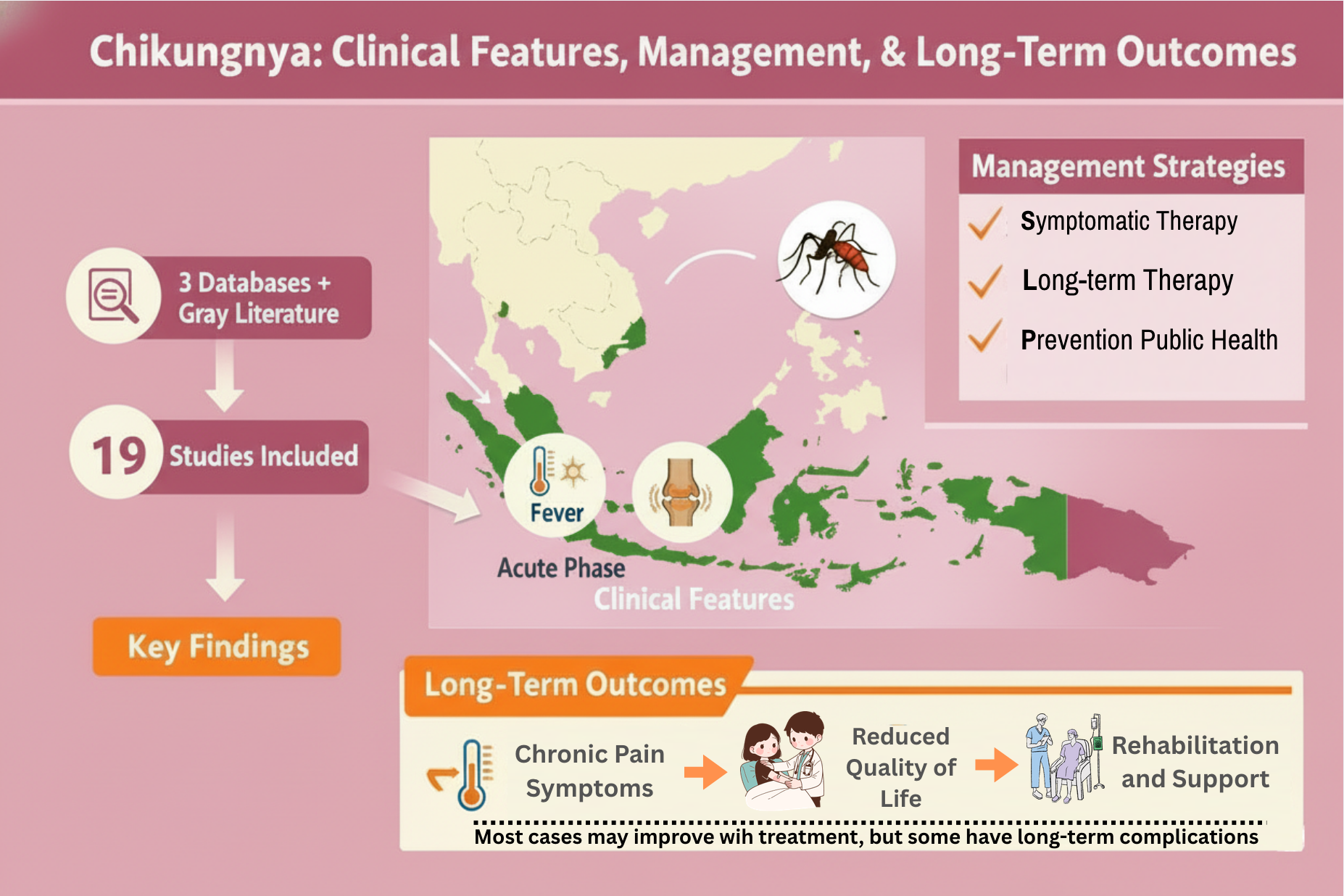
Chikungunya poses a tough challenge because of its varied symptoms and frequent misdiagnosis. Inappropriate treatment can affect long-term patient outcomes. This review aims to identify clinical features, current management and therapeutic strategies, and long-term clinical outcomes of Chikungunya disease. This scoping review, reported according to the JBI and PRISMA-ScR guidance. This study was conducted from three databases as primary data sources and several of gray literatures. From 19 studies were included in this review, fever and joint symptoms were reported as the main clinical features of acute Chikungunya infection, which may persist and become chronic, then affecting the patient’s quality of life. The primary management of Chikungunya infection, include symptomatic and long-term therapy. Preventions and public health management also play a role. In conclusion, most cases of Chikungunya may improve with treatment, but some have long-term complications that require rehabilitation, support, prevention, and public health management.
Keywords:
chikungunya
; adult
; tropical regions
; endemic
; epidemic
; clinical features
; management strategies
; long-term outcomes
; scoping review
Copyright: This open access article is published under a Creative Commons CC BY 4.0 license, which permit the free download, distribution, and reuse, provided that the author and preprint are cited in any reuse.


