

Submitted:
07 April 2026
Posted:
08 April 2026
You are already at the latest version
Abstract
Background: Colorectal cancer (CRC) caused over 1.9 million new cases and 930,000 deaths globally in 2020. There is an urgent need for novel biomarkers capable of predicting disease progression and therapeutic response. The gut microbiome has emerged as a promising source of diagnostic and prognostic indicators. Objective: This narrative review summarizes current evidences on gut microbiota and their metabolites as potential biomarkers for CRC diagnosis and prognosis. Main Content: Gut microbiomes influence CRC development through metabolism, immune modulation, inflammation, proliferation/apoptosis regulation, genotoxicity, and mucosal barrier disruption. Pathogenic species including Fusobacterium nucleatum and enterotoxigenic Bacteroides fragilis promote tumorigenesis via FadA-mediated signaling and Th17/IL-17 responses. Beneficial bacteria such as Faecalibacterium prausnitzii and Akkermansia muciniphila exert protective effects through short-chain fatty acid production. Macrophages phenotype physiological equilibrium is interrupted or maintained by different floras and inflammatory status fluctuates under the former. Metabolically, hydrogen sulfide damages mitochondrial DNA and secondary bile acids stimulate proliferation. Common detection methods include 16S rRNA sequencing and shotgun metagenomics, while organoids and gene arrays as innovate carriers are in exploratory stage so far. Clinical studies show F. nucleatum abundance correlates with advanced tumor stage, with combined F. nucleatum and colibactin-producing E. coli detection achieving 84.6% sensitivity for early CRC. A. muciniphila levels also predict response to PD-1 blockade immunotherapy. These microbiomes or metabolites support predictions in diagnosis, prognosis, therapeutic efficacy and even locations in earlier stages. Conclusion: Microbiome-based biomarkers represent a promising frontier in CRC management. Future research should focus on standardizing detection protocols, validating multi-marker panels, and exploring metabolite-based approaches to enhance clinical translation.
Keywords:
colorectal cancer
; gut microbiome
; biomarker
; Fusobacterium nucleatum
; diagnosis
; prognosis
; immunotherapy
1. Introduction
Newly diagnosed colorectal cancer (CRC) cases achieved more than 150 thousands and ranked third most in both sexes in America, 2024 [1]. The predicted death number of CRC is about 53,000 in the USA and 153,000 in the European Union during 2024 [1,2]. CRC casts persistent heavy burden on both individual family expenditure and worldwide hygiene. One of the most powerful factor in prejudging the disease outcome is tumor stage. Most CRC developed from benign polyps in a long term of 10 to 15 years. Proper adenoma detection and excision do break the incidence of CRC [3]. In England, Duke A stage CRC reached a 5 year overall survival (OS) as high as 98%, with a gradual decrease from 85%, 63% to 7.5% for Duke B, C and D stage diseases [4]. This result was identical to another research concluded stage III CRC 65-70% 5 year survival and steep reduction to stage IV, 13-14% [5,6]. A huge scale study based on Martinique Cancer Registry between 1993 and 2012 reported a median OS of 2.0 year for stage III to IV CRC while stage I to II diseases had not reach that outcome until program terminated [7]. Efficient test is in urgent need to advance diagnosis and prognosis.
So far, the most widely accepted screen methods include colonoscopy, fecal immunohistochemical test (FIT). Colonoscopy provided magnified view and appended clarification based on directly acquired sample [8]. Although colonoscopy is the golden standard test in CRC diagnosis, the trauma and high expense refused it in some patients. Researches concluded FIT displayed sensitivity of 74% to 94% and specificity of 85% to 95% [9,10]. There are still large unknown area for particular anticipation. For example, as for patients undergoing watch-and-wait procedure after their lesion assured complete remission with CT or colonoscopy, a novel screen test feasible to predict its progress instead of just waiting until in some cases relapse would definitely be more safety. Another occasion is therapeutic predication. These further demands call for more markers other than just 100% accurate colonoscopy alone. Circulating tumor DNA (ctDNA) test and tumor mutation burden (TMB) are both innovative and derivative tumor examination in these decades.
About 100 trillion microorganisms reside in human gut, of which Firmicutes taking the lead proportion of approximately 67% and Bacteroidetes as the second of 21% [11,12]. Previous evidences supported their role in some tumors, such as oral, breast cancer and malignant melanoma [13,14,15,16]. Same as them, microbiomic test has a great potential in predicting CRC outcomes, including therapy related or not. Recent studies demonstrated high level of Fusobacterium nucleatum and Bacteroides fragilis indicates poor prognosis [17]. The former is also reported to closely relevant to chemotherapy resistance and distant metastasis [18].
Based on the accumulating assays on the microorganisms, we conducted this narrative review to summarize existing evidences, differences, limitations and expectations of them as CRC biomarkers and associative mechanisms.
2. The Roles of Microbiomes Play in CRC Formation and Progression
Human gut microbiomes affects colorectal carcinogenesis and progression in intricate pathways. To summarize, we collected fetched information listed as below: metabolism, immune, inflammation, proliferation or apoptosis, genetoxin and barrier.
2.1. Metabolism
Microbiomes take carbon hydrates, proteins, lipid, water and other nutrition from intraluminal contents, produce substances they need and excrete metabolic waste. Some natural or metabolic intermediate sulfur-containing proteins (like disulfide bonds) discharge hydrogen sulfide along degradation under particular enzymes catalysis [19]. This process is halfly adjusted by intestinal microbes [20]. Hydrogen sulfide acts a dual role in gastrointestinal micro-ecology. It enables electric transmission in mitochondrial electron transport chain in complex II [21]. However, excessive produced hydrogen sulfide inactivated complex IV and inhibited mitochondrial respiratory chain [22,23]. This further caused triphosadenine loss and reinforced reactive oxygen (ROS) [24,25]. Hydrogen sulfide exceeds mitochondrial permeability transition (MPT) and triggers hepatocyte apoptosis [26]. Overload ROS strain injures both mitochondrial DNA (mtDNA) and nuclear DNA, contributing to genetic instability in CRC to some extents [23,27]. It suppresses short chain acyl-CoA dehydrogenase and thus downregulating butyrate β-oxidation, which is deemed to be one of the main energy supply for colonic epidermal cells [28]. Desulfovibrio, a gram staining negative obligate anaerobic bacillus, belongs to Proteobacteria phylum. As one of the most currently studied sulfate-reducing bacteria (SRB), Desulfovibrio degrade sulfate and extract hydrogen sulfide through membranous and soluble sulfite reductase [29]. Contrary to most other microbiomes in bowel generating hydrogen sulfide in assimilatory sulfate reduction pathway, Desulfovibrio operated that in dissimilatory path [30]. This process synthesized hydrogen sulfide was proved to be harmful to colonocyte respiratory. Following accumulated ROS stress interrupted DNA stability and act like a genetoxin [31]. Additionally, colonic epithelial tight junction was broken by Desulfovibrio via activating transcription factor Snail 1 and altering occludin localization [32].
Bile acid is a group of hepatocyte synthesized cholesterol derivatives promoting lipid digestion and absorption. Primary bile acids (PCAs) include cholic and chenodeoxycholic acids. They are delivered into duodenum after combined with glycine or taurine. Some PCAs are modified right after secretion into secondary bile acids (SBAs). Deoxycholic Acid (DCA), Lithocholic Acid (LCA), isoLCA, alloLCA and other derivatives composed SBAs family [33]. Classic bild acid receptors consist of Farnesoid X Receptor (FXR) and Takeda G Protein-Coupled Receptor 5 (TGR5). Apart from bile acids physiological administrated glucolipid metabolism, enterohepatic circulation and cholecystic systemic function, excessive load of them deteriorates inflammation, damages DNA double chains and arouses cellular proliferation [34]. A recent experiment elucidated mice exposed to high level DCA for a long interval suffered raised risk of colonic adenoma converting into adenocarcinoma [35]. DCA enhances arachidonic acid excretion and promptes their transformation into pro-angiogenic prostaglandin and ROS, injuring DNA and curb restore process. It also augments cyclooxygenage 2 (COX-2) via stimulate epidermal growth factor receptor (EGFR), further impels colonic carcinogenesis or distant metastasis [36]. An animal experiment conducted microbiomic test and founded that DCA modulated APC gene and cause bowel dysbiosis. Facilitate opportunistic plantation of Shigella and Desulfovibri and reduce Bifidobacterium and Lactobacillus [37]. That disruption on entero-ecology thus changed equilibrium to pro-tumor side. In a high fat diet fed Apcmin/+ CRC rodent model, SBAs stimulated colonic cell stemness and tumourogenesis by combination with FXR, leading to ribosomal instability partly due to ROS production [38]. High fat diet extends the proportion of colonic Clostridium and increase DCA level. The latter upregulates hepatic stellate cell caducity-related expression and pro-flammatory phenotype, which advanced into hepatocellular carcinoma in final [39]. Similarly, Clostridium was revealed to induce CRC development by other independent researches [40,41]. It is safe to draw a conclusion that high fat diet potentially elected PCA producing microorganisms, accelerating tumor formation and process [42]. SBAs attach their pressure on digestive ecology in various aspects including immune, inflammatory and microbial composition. LCA inhibit hepatic infiltrated macrophages glycolysis and facilitate intracellular oxidative phosphorylation, reshaping macrophages from anti-tumor M1 into immune suppressive M2 phenotype [43]. This adaption is synergized by activating mannose receptor followed M2 recruitment in CRC microenvironment [44]. M1 is more aggressive as an inflammatory biomarker maintaining immune clearance. M2 typed tumor associated macrophages (TAMs) oppositely establish an immune privilege. Physiological bile acid synthesis and metabolism do behave in intestinal micro-ecological balance. Pathological suppression of FXR ruined that rhythm, which restrained secretory immunoglobulin A (sIgA) and elevated Enterotoxigenic Bacteroides Fragilis (ETBF) colonization, causing colitis associated CRC [45].
Short chain fatty acids (SCFAs) refers to a saturated fatty acid with a limited length of carbon chain less than 6. Acetic acid, propionic acid and butyric acid are common SCFAs within human body. Peroxisome proliferator-activated receptor γ (PPAR-γ) is activated by butyrates, remodeling to β-oxidation, a peculiar energy supply for colonic epithelium, and blocks some harmful germs colonization [46]. More than 90% SCFAs are rapidly absorbed in proximal colon [47]. Merely about 5% are later discharged in feces [48]. CRC development is correlated to colonic Bacteroides and Firmicutes proportion deduction. They both synthesize SCFAs. SCFA producing flora enrichment in turn restrain PI3K/AKT pathway, triggering apoptosis related genes and decrease tumor volume [47,49]. Those phenomena are corresponded to colonic butyric acid level reduce in CRC patients [50]. According to animal and cellular experiments, SCFAs inhibited pro-imflammatory factors, TNF-α, IL-18, IL-1β, IL-6 and iNOS, while simultaneously raise IL-10, repolarizing macrophages into M2 type [51,52]. Besides, butyrates enhanced Lysine 9 on histone H3 (H3K9) methylation and downregulated histone deacelylases (HDAC) methylate STAT6, which also transformed macrophages into M2 [53]. SCFAs is a group of anti-inflammatory substances downsizing potential energy associated damages.
In addition to above discussed metabolites, literature mentioned some others. Aromatic amino acid abnormal synthesis would disturb mucosal barrier integrity. Colonic tissue samples collected from volunteers and patients supported a gradual elevation of some specified amino acids, L-alanine, glycine, L-valine, and myristic acid, from healthy controls, adenoma to CRC [54]. Knockout of monocarboxylate transporterprotein 2 (MCT2) gene interrupted Firmicutes and Bacillus spp. Following Lactic acid excessive gathering would drive macrophages into M2 phenotype, thus promoting pro-tumor microenvironment in respiratory and upper digestive malignant diseases [55,56]. In short, specified or common productions are core intermediate nodes for large quantities of microorganisms contributing to pro- or anti- CRC process. Microbial metabolites effects and mechanisms are depicted in Table 1. Figure 1 illustrated microbial metabolites and products influences on CRC.
2.2. Immune
Microbiomes intervene immune microenvironment through various metabolic poisons or modifications. Fusobacterium nucleatum is a gram staining negative obligate anaerobion colonizing in human mouth, gastrointestinal and urogenital tract, encoding Fusobacterium adhesin A (FadA). It combines to T cell immune receptor immunoglobulin and immuno receptor tyrosine-based inhibitory motif (ITIM) domains and dampens T cells and natural killer (NK) cells via downstream signals [57]. Fap2 protein is a fusobacterial Gal-GalNAc-binding lectin. It manages F. nucleatum adheres to CRC membranous E-cadherin and propels proliferation [58,59]. At the same time induce over expression of toll-like receptor 4 (TLR4), actuating the failure of immunological surveillance and chemotherapeutic resistance [60]. F. nucleatum expands CD11b+ myeloid-drived suppressor cells (MDSCs) consisting of TAMs, dendritic cells (DCs), and granulocytes within tumor immune microenvironment [61,62]. The abundance of F. nucleatum is positively correlated with CCL20 expression. MiR-1322/CCL20 axis expanded TAMs and MDSCs recruitment via NF-κB signal pathway, giving rise to M2 polarization markers, such as CD206, ARG1, IL-10 and TGF-β [63,64]. F. nucleatum reinforced suppressive T cells, TAMs, DCs and MDSCs, contributing to immune escape and motivate angiogenesis in CRC.
Bacteroides fragilis toxin (BFT) is a metalloproteinase toxin synthesized from some detrimental Bacteroides Fragilis. It is a vital medium in B. fragilis drived colitis and CRC occurrence [65,66]. Studies manifested recruited Th17 type regulatory T cell (Treg) and IL-17 play a role in B. fragilis drived CRC [67,68]. Inconsistent with sporadic CRC, intensive MDSC infiltration were spotted within BFT constructed CRC microenvironment [69]. IL-17 aroused δγT cells attracted CXCR2+ polymorphic nuclear innate myeloid cells and impelled the latter differentiate into pro-tumor MDSCs [69,70]. B. fragilis tends to establish an immune privilege microenvironment as soil for tumorigenesis centered on regional high-level Th17 and IL-17.
More than above discussed representative bacterium, evidences indicated immune regulation a momentous step of most microorganisms attaching influences on CRC. Kikuchi et al. founded more Bacteroides and Bacillus faecalis linked with incremental Tregs infiltration in CRC [71]. Lopes team detected regional CD3+ T cell decline were exhibited in Colibactin-Positive Escherichia Coli (CoPEC) colonized CRC, whether when investigate on patients or murine animal models [72]. Compared with control and adenoma group, colonic samples acquired from rats allocated to colitis associated CRC group exhibited higher abundance of Streptococcus gallolyticus. Zhang and colleagues illustrated their recruitment on MDSCs and laid of carcinogenetic microenvironment [73]. Probiotics defend local pro-tumor factors through their own immune intervention, too. Nontoxigenic Bacteroides Fragilis (NTBF) secrets SCFAs, suppressing NLRP3 induced inflammatory pathways and refraining macrophages from uncontrollable activation. Colitis associated CRC is repressed as a result [52]. NTBF and Akkermansia muciniphila synergy in expedition of dendritic cells (DCs) development and maturity. They upregulate IL-12 and enlarge cytotoxicity T cells group. Strengthened immune elimination has been ensured to multiply therapeutic efficiency of immune checkpoint inhibitors (ICIs) in clinical practice [74,75]. B. adolescent regulates GAS1 via Wnt signal pathway. Improved CD143+ cancer associated fibroblasts (CAFs) is then engaged in anti-tumor process [76]. Bifidobacterium strain raises CD4+ and CD8+ T cells, NK cells, and the ratios of CD4+/Treg, CD8+/Treg, and effector CD8+/Treg to inhibit tumor [77]. To summarize, carcinogenetic flora facilitate suppressive immune microenvironment while probiotics promote anti-tumoral immune cells.
2.3. Inflammation
Various metabolic products from intestinal microbes take part in inflammation control. Hydrogen sulfide not only break mitochondrial respiratory chain, but also increase risk of CRC in virtue of inflammatory NF-κB pathway [23]. Inflammatory recession on basis of HDAC inhibition and G protein-coupled receptor expression enable SCFAs minimize metabolic damage [78,79]. SCFAs interactively cast negative regulation on inflammatory factors, TNF-α, IL-1β/6, iNOS and stimulate anti-inflammatory IL-10 expression. These adaptions modify macrophages to M2 phenotype and drive T cells differentiation to manage inflammation [51,80].
Organic generic hurt from B. fragilis is realized with BFT. BFT increases the level of IL-17 and IL-23, boosts spermine oxidase (SPO) to produce ROS, both directly added inflammation [49,81]. The evoked IL-17 and Th17 cells would plus trigger chemokines, CXCL1, CXCL2, and CXCL5, appending secondary inflammatory cascade. S. gallolyticus execerbates CRC invasiveness by means of COX-2, IL-1 and IL-8 expansion [82]. Samples collected from CRC patients and those suffered from other colorectal diseases supported abundances of Faecalibacterium prausnitzii and A. muciniphila sank down from that of healthy controls. Studies explained the two potential protective mechanism with inflammatory restrictions from Treg cells and butyrates [83,84].
Fungus affected inflammatory condition, too. Malik’s research group discovered colonic symbiotic fungus modulated spleentyrosine kinase (SYK)-caspase recruitment domain 9 (CARD9) pathway and elevated inflammasome and IL-18. Mild uplift of inflammation heightened regional immune elimination and curbed CRC development [85]. However, extensive and longtime inflammatory infiltration will oppositely promote CRC.
2.4. Proliferation and Apoptosis
Cell cycle adaptation from intestinal microorganisms is put into effect under the alteration of some correlative signal pathways. NF-κB is a hot node located in that regulatory network. It is a family of transcription factors exert influences on a wide range of biological activities. As one aspect of core functions, maintenance of cell survival and uncontrollable proliferation permit malignant cellular multiplication. Aberrant activation of NF-κB evokes diversified driving genes of cell cycle, cyclin D1 and c-Myc for example, sustaining consistent dynamic cell division [86,87]. Excessive stimulation of NF-κB was detected in lung and breast cancer [88,89]. Tumor of APC gene knockdown mice gained diversity with the aid of F. nucleatum advanced on NF-κB [63]. In E. coli enema transplanted murine animals, tumor microenvironment generated lipopolysaccharide binded to histone-degrading enzymecathepsin K (CTSK), initiated TLR4 and vitalize CRC expansion and metastasis [90]. BFT also motivates Wnt, NF-κB, MAPK and STAT3 pathways by Th17 and IL-17 [67,91,92]. Peptostreptococcus anaerobius membranous signal domain PCWBR2 crosslinks with colorectal epithelial α2/β1 integrin, propelling NF-κB and proliferation through PI3K-Akt pathway [93].
Wnt/β-catenin is another significant proliferative pathway in CRC initiation and process. When Wnt ligand interrupted degradation complex, causal stable β-catenin catabolic process came to a brake, encouraging downstream cascade including c-Myc, cyclin D1 etc. and launch immoderate proliferation [94]. BFT lifts CRC proliferative rate in this pathway. Unique adhesive factor of F. nucleatum, FadA, expedites β-catenin by binding with epithelial E-cadherin to promote tumor formation [59]. In contrast, Parvimonas micra and P. anaerobius inactivate β-catenin and perturb colonic epithelial renewal homeostasis. Inordinate suppression on biological proliferation coherently brings about CRC [95]. Probiotics enable elimination based on autophage or apoptosis mechanisms. SCFAs produced from some Bacteroides and Firmicutes downregulate PI3K/AKT pathway. Following pro-apoptosis effect facilitates fade of tumor mass [47]. NTBF secreted membranous exosomes starts non-canonical autophage path and dispels established colitis associated CRC according to Hiutung et al. conducted research [96]. Delicate homeostasis on proliferation or elimination is one of the central regulatory spot by which microorganisms attached their impacts on CRC. Microbiomes adjusted proliferation or apoptosis associated signal pathways or targets is listed in Table 2.
2.5. Genotoxin and Mucosal Barrier
Some germs generated special toxins capable to unwind and break DNA. They are called genotoxins. The most common representative one is E. coli produced colibactin. E. coli could be divided into 4 phylogroups, A, B1, B2, and D [97]. Colibactin is a polyketide-peptide genotoxin encoded in pks gene island of B2 group E. coli. [98,99]. That group is correlated with inflammatory bowel disease (IBD) and tends to force out other group strains once civilized [100,101]. Persistent colitis in rodent ulcerative colitis (UC) model induced pks expression, contributing to amplified mutation frequency and consolidated colitis associated CRC [102,103]. Whole genome sequencing affirmed adenosine and thymine base pair is enriched in colibactin broken DNA target fragments [104]. Apart from former mentioned BFT and others, Campylobacter jejuni synthesize cytolethal distending toxin (CDT). Its catalyzation on DNA dissociation relys on CDT b subunit since this part mutation reversed carcinogenesis [105].
Structural and functional intact mucosal barrier defends epithelium from varieties of mechanical and biochemical injures. The single layer epithelial cells connected by collagen IV based tight junction concurrently realize nutrition absorption and microbiomic isolation [106,107]. BFT is a exogenous zinc-dependent matrix metalloproteinase. BFT cut down E-cadherin and destroy tight junctions [108]. In human derived colonic cells this process is companied with IL-8 secretion while in rat colonoids with tight junction protein 1 (TJP1/ZO-1) reduction [109,110]. E. coli operon afa-1 encodes non-classical adhesive factor other than pilus, assuring its invasion to colonocytes [111]. F. nucleatum applies FadA binding to E-cadherin, redeploying distribution of tight junction proteins to increase mucosal permeability [112]. S. gallolyticus is a gram-positive non-motile bacteria streptococcus. S. gallolyticus adheres to mucosal collagen I and IV in a higher affinity more than S. bovis, decomposes the latter and looses epithelial barrier [113]. Proximate two thirds of invasive S. gallolyticus infected patients suffered from concomitant CRC [114,115,116]. Figure 2 demonstrated above discussed microbiomes and host interactions.
3. Contemporary Applications of Microbiological Markers in CRC Diagnosis or Prognosis
3.1. Genetic Detective Methods and Carriers
On account of the specialized genetic segments designing respective toxins in microorganisms, quantify these regions would provide a detailed landscape of microflora construction and some potential information to predict state of CRC. The most widespread adopted method of fecal microbiological test is 16S rRNA test and shotgun metagenomic sequencing [117,118]. 16S rRNA is a tiny subunit of bacteric rRNA. It possesses a highly conserved and nine hypermutable regions, insuring primer design effective and distinctive identifiability to great sorts of microbiomes [119,120]. Compared to FIT with a fair sensitivity of 79% according to a meta-analysis, multi-target DNA test ameliorates sensitivity to 92.3% accompanied with acceptable increased false positive rate [121,122]. Shotgun metagenomic sequencing get rid of targeted amplification and turned to operate on entire DNA within sample environment. Shotgun stands for randomized cut off. Obtained segments undergo high-throughput sequencing to directly analyse components and their functional information, rebuilding metagenome-assembled genomes and recognize microbes in the level of species [123,124]. Efferent results could be put into deeper researches of drug tolerance, virulence factors, biosynthetic gene cluster and other focused points [125]. Many scholars has established fecal or tissue originated metagenomic sequencing databases [41,126,127].
Organoids and gene arrays are new test vectors under investigation. Genetic mutational signature is distinctive characteristic paradigm left in particular DNA districts after exposing to respective inducer. This property props up organoids manner in gastrointestinal flora analysis [128]. Furthermore, the superiority in procedural cost reduction and facility accessibility benefited antibody test in practice [129,130]. As for the metabolites participating in CRC development, Nuclear magnetic resonance spectroscopy, chromatography and chains of advanced approaches make material authentication and quantification feasible. Table 3 summarizes methodologies in microbiological test and applications in CRC.
3.2. Microbial Biomarkers
Bacterial composition fluctuates under pathological circumstances. This drift is applicable to tumor process since adenomatous lesion set up, cancerization until tumor metastasis. The most predominant colonic microbial species includes Firmicutes, Bacteroidetes, and Actinobacteria [131]. Dysbiosis index defined as Firmicutes-to-Bacteroidetes ratio was primarily designed to reflect host gastrointestinal health status. Studies illustrated higher dysbiosis index is correlated with longer survival outcome in CRC patients [132,133]. F. nucleatum is an hot spot in this field with ample evidences supporting its predictive value on worse outcome. Fecal and colonoscopic obtained samples confirmed its higher propagation in CRC patients than others [134,135]. Comparison between CRC tissues and closely adjoining normal tissues presented extensive enrichment in the former [136]. A metagenomic analysis operated in three methods uniformly demonstrated F. nucleatum and P. micra enriched in CRC patients [137]. Higher relative abundance of F. nucleatum indicated larger CRC volume in a clinical trial [138]. FadA gene from colonic adenomas and adenocarcinomas samples expressed as 10 to 100 times as that of healthy control [59]. Another study concentrated on advanced colorectal neoplasia stated quantify F. nucleatum effectuates discrimination of adenoma from all screened individuals [139]. In 2019, a large scale research enrolled 606 patients again provided consistent conclusion that F. nucleatum abundance was positively associated with CRC clinical stage process from initial intramucosal cancer to advanced disease [41]. Dramatically, Zhang et al. published study found oral harvested F. nucleatum DNA level relevant to CRC. Diagnostic curve highlighted the superiority over traditional carcinoembryonic antigen and carbohydrate antigen 199 indeed [140].
E. coli is another attractive node deemed as a predicative factor of early onset CRC [80]. Colibactin encoding gene owned by some tributaries isolated from CRC patients emerged an overexpression condition according to Wassenaar team reported [141]. In accordance with that, a case-control study discovered gradual reinforce of colibactin-producing E. coli along with the whole development of colorectal adenocarcinoma. When united with F. nucleatum the prediction on early CRC would come up to a 63.1% specificity and 84.6% sensitivity and this is consistent with Piawah and his co-researchers study [142,143]. Other bacterium were referred in some literature. Clostridium perfringens, P. micra, E. cordens and X. perforans may be early predicative factors [54]. C. symbiosum is regarded as a stage related marker [144]. Campylobacter potentially forebodes elevated metastasis risk from a Chinese trial enrolled initial I to II stage CRC patients [145].
For patients planned to receive immunotherapy, microbial biomarkers manifested considerable efficiency in potency anticipation. A. muciniphila is a gram stained negative obligate anaerobic bacteria concerned with CRC. Studies proved higher level of A. muciniphila guided to more active therapeutic response of PD-1 block. Thus CRC mice received artificial complementary A. muciniphila exhibited improvement of PD-1 blocker curative effects [146]. This attributes to promotion on DC activation, Th1 polarization and cytotoxic T cell recruitment [75].
Microbiological biomarker not only instructed judgement on tumor present status and potential resistance against chemical therapy, but also transmit its location messages. A multi-cohort analysis completed in 2025 proposed a CRC site associated microorganic group, from which estimation on tumor location (right colon, left colon or rectum) would attain an AUC of 82.92%. They put forward successive upward α-diversity from right CRC, left CRC to RC [147]. Microbial CRC associated microbiological markers and clinical applications are presented in Table 4.
A few animo acids concentration accumulates along with CRC growth. Alanine, glutamine and glycine were examples verified in different studies [54,148,149,150,151]. Glycine offered precursors for nucleotide, lipid and protein synthesis, which is in urgent need for tumor proliferation. One carbon metabolism network consist of glycine and serine, inducing immune suppressive microenvironment [152,153]. DCA and lactate were also reported as effective CRC process predicative factors [56,154].
4. Discussion
It was estimated that in 2020 over 1.9 million new CRC cases presented all over the world. 930,000 deaths were attributed to CRC [155]. The survival outcome is negatively correlated with disease stage. To prepose diagnosis and prevent treatment opportunity loss, oncologists and clinicians explored and tested biometrical indicators under the assistance of earlier started screen tests. The most universal biomarkers are carcino-embryonic antigen (CEA) and carbohydrate antigen 199 (CA199). Nevertheless, smoking, IBD, liver diseases, pancreatitis and some other pathological alteration also pull up CEA, for CA199 relevant cases include liver cirrhosis, acute cholangitis, diabetes mellitus, endometriosis and bronchiectasis [156]. Not so ideal specificity may miss some determined while not previously exhibited CRC cases, leading to uncontrollable occasions. Microbiomes have been evaluated in a number of malignant diseases including oral, breast cancer and malignant melanoma etc. as biomarker at different degrees of validity. That is at least equally effectual in CRC as they still locate in closest site.
Microbes exert their own oncological dynamic administrations on host colorectal micro-ecology. The comprehensive influences could be classified into metabolism, immune, inflammation, proliferation/apoptosis, genetoxin and mucosal barrier associated fields. Although complicated structural network crosslinks among them, this sort manner enable us to tease out and summarize.
Too much aggregated hydrogen sulfide inactivates complex IV and cut the electron transport chain. ROS emerged soon damages intra-cellular DNA, both nuclear and mitochondrial ones. SRBs represented by Desulfovibrio engaged in this process as a role of proteins bioconversion. Excessive PCAs adhesion with FXR initiates colonic ROS and inflammation, stimulating colonocytes proliferation. One of SCAs induced effects is macrophages repolarizing into M2 phenotype. SCFAs also trigger the same change, while the theme turned to anti-inflammation other than so called anti-immune. So SCFAs adjustment of β-oxidation guards colonic epithelial from unexpected injures and carcinogenesis. F. nucleatum produced FadA influences T cells and NK cells function and attracts MDSCs. B. fragilis main set point of immune is Th17 and IL-17 related parts. BFT arouses SPO and expands ROS. SCFAs act as a anti-inflammatory factor within microenvironment. Cytokine system is broadly concerned to inflammation accommodation and under multitudinous and multiple influences from colonic microflora. B. fragilis and E. coli realize their effects via NF-κB and Wnt/β-catenin signal pathway which controlled cell cycle related proteins. E. coli encoded colibactin to damage DNA and BFT is a extracellular metalloproteinase collapsing collagen IV based tight junctions among colonic epidermis.
Traditional and mature detective methods include 16S rRNA test, shotgun metagenomic sequencing and FIT. Comparing to restricted fragment of 16S rRNA test, shotgun metagenomic sequencing expands test category to those not previously determined. Some brand new technologies like organoids and gene arrays require more verifications on efficacy or standard operation procedures (SOPs). Abundance of specified species or their ratios, predefined genic fragments and concentrations of products are dominated 3 trains of thought when trying to diving into new biomarker designment.
More than just about diagnosis and prognosis, the CRC whole developing process and most likely sites information are also contained in appropriate samples. Latest studies have switched to probe in therapeutic effective predication of leading modes represented by immunocheckpoint inhibitors predominated ones. They have already got periodical achievements. This topic calls for more clinical trials in the future, as now available facts rely heavily on animal experiments. Current evidences indicated that obvious and potential species have been analyzed a lot. Future efforts tended to be made more on further data treating and reasonable filter to deduct dimensions and simplify clinical application process. In terms of restricted predictive efficiency, suitable combinations might provide more beneficial selections. There is a to be established balance between simplification and efficacious. It might be a practical attempt to concentrate more on metabolites and their combinations as so far statistic process are too depending on microbiomic automated analysis which received statistics submitted by microorganic detectors and panels. Maybe there is a much simpler and convenient manner waiting to discover. Futhermore, though fungus, virus and phages contributed less than germs, they should not be excluded from prospective investigations. Few literatures on this topic has provided limited instructions. This part together with metabolites founded explorations has a great potential in coming new era of CRC microbiomic biomarkers. It still demands to dive much more potential useful microbiomic related biomarkers and conduct clinical translation as global CRC incidence accumulation in recent years. The already and coming to occurred lifestyle changes along with economic growth would highlight CRC correlated prejudging fields even more than instant.
Institutional Review Board Statement
Not applicable.
Informed Consent Statement
Not applicable.
Data Availability
Not available.
Conflicts of Interest
The authors declares no conflict of interest.
Abbreviations
CRC, colorectal cancer; FIT, fecal immunohistochemical test; ROS, reactive oxygen; SRB, sulfate-reducing bacteria; PCAs, primary bile acids; SBAs, secondary bile acids; DCA, deoxycholic acid; LCA, lithocholic acid; FXR, Farnesoid X Receptor; TGR5, Takeda G Protein-Coupled Receptor 5; TAMs, tumor associated macrophages; ETBF, Enterotoxigenic Bacteroides Fragilis; SCFAs, short chain fatty acids; HDAC, histone deacelylases; FadA, Fusobacterium adhesin A; MDSCs, myeloid-drived suppressor cells; DCs, dendritic cells; BFT, bacteroides fragilis toxin; CoPEC, Colibactin-Positive Escherichia Coli; CAFs, cancer associated fibroblasts; IBD, inflammatory bowel disease.
References
- Siegel, R.L.; Giaquinto, A.N.; Jemal, A. Cancer statistics, 2024. Ca A Cancer J. Clin. 2024, 74, 12–49. [Google Scholar] [CrossRef]
- Santucci, C.; Mignozzi, S.; Malvezzi, M.; Boffetta, P.; Collatuzzo, G.; Levi, F.; La Vecchia, C.; Negri, E. European cancer mortality predictions for the year 2024 with focus on colorectal cancer. Ann. Oncol. 2024, 35, 308–316. [Google Scholar] [CrossRef]
- Helsingen, L.M.; Kalager, M. Colorectal Cancer Screening—Approach, Evidence, and Future Directions. NEJM Evid. 2022, 1, EVIDra2100035. [Google Scholar] [CrossRef]
- England, N. Clinical Advice for the Commissioning of the Whole Bowel Cancer Pathway. Available online: https://www.england.nhs.uk/south/wp-content/uploads/sites/6/2018/10/Clinical-Advice-for-the-Provision-of-Bowel-Cancer-Services-Jan-2018.pdf.
- Liu, Z.; Xu, Y.; Xu, G.J.; Baklaushev, V.P.; Chekhonin, V.P.; Peltzer, K.; Ma, W.J.; Wang, X.; Wang, G.W.; Zhang, C. Nomogram for predicting overall survival in colorectal cancer with distant metastasis. BMC Gastroenterol. 2021, 21, 103. [Google Scholar] [CrossRef]
- Robinson, J.R.; Newcomb, P.A.; Hardikar, S.; Cohen, S.A.; Phipps, A.I. Stage IV colorectal cancer primary site and patterns of distant metastasis. Cancer Epidemiol. 2017, 48, 92–95. [Google Scholar] [CrossRef]
- Joachim, C.; Macni, J.; Drame, M.; Pomier, A.; Escarmant, P.; Veronique-Baudin, J.; Vinh-Hung, V. Overall survival of colorectal cancer by stage at diagnosis Data from the Martinique Cancer Registry. Medicine 2019, 98, e16941. [Google Scholar] [CrossRef]
- Robertson, D.J.; Rex, D.K.; Ciani, O.; Drummond, M.F. Colonoscopy vs the Fecal Immunochemical Test: Which is Best? Gastroenterology 2024, 166, 758–771. [Google Scholar] [CrossRef]
- Castells, A.; Quintero, E.; Bujanda, L.; Castán-Cameo, S.; Cubiella, J.; Díaz-Tasende, J.; Lanas, A.; Ono, A.; Serra-Burriel, M.; Frías-Arrocha, E.; et al. Effect of invitation to colonoscopy versus faecal immunochemical test screening on colorectal cancer mortality (COLONPREV): A pragmatic, randomised, controlled, non-inferiority trial. Lancet 2025, 405, 1231–1239. [Google Scholar] [CrossRef]
- Laszlo, H.E.; Seward, E.; Ayling, R.M.; Lake, J.; Malhi, A.; Stephens, C.; Pritchard-Jones, K.; Chung, D.; Hackshaw, A.; Machesney, M. Faecal immunochemical test for patients with ‘high-risk’ bowel symptoms: A large prospective cohort study and updated literature review. Br. J. Cancer 2022, 126, 736–743. [Google Scholar] [CrossRef]
- Borrego-Ruiz, A.; Borrego, J.J. The Gut Microbiome in Human Obesity: A Comprehensive Review. Biomedicines 2025, 13, 2173. [Google Scholar] [CrossRef]
- Rinninella, E.; Tohumcu, E.; Raoul, P.; Fiorani, M.; Cintoni, M.; Mele, M.C.; Cammarota, G.; Gasbarrini, A.; Ianiro, G. The role of diet in shaping human gut microbiota. Best Pract. Res. Clin. Gastroenterol. 2023, 62–63, 101828. [Google Scholar] [CrossRef]
- Bohm, M.S.; Joseph, S.C.; Sipe, L.M.; Kim, M.; Leathem, C.T.; Mims, T.S.; Willis, N.B.; Tanveer, U.A.; Elasy, J.H.; Grey, E.W.; et al. The gut microbiome enhances breast cancer immunotherapy following bariatric surgery. JCI Insight 2025, 10, 187683. [Google Scholar] [CrossRef]
- Limeta, A.; Ji, B.Y.; Levin, M.; Gatto, F.; Nielsen, J. Meta-analysis of the gut microbiota in predicting response to cancer immunotherapy in metastatic melanoma. JCI Insight 2020, 5, 140940. [Google Scholar] [CrossRef]
- Mandal, D.P.; Mohanty, N.; Behera, P.K.; Gopinath, D.; Panda, S.; Al-Kheraif, A.A.; Divakar, D.D.; Anil, S.; Panda, S. A Plausible Proposition of CCL20-Related Mechanism in Fusobacterium nucleatum-Associated Oral Carcinogenesis. Life 2021, 11, 1218. [Google Scholar] [CrossRef]
- Pignatelli, P.; Nuccio, F.; Piattelli, A.; Curia, M.C. The Role of Fusobacterium nucleatum in Oral and Colorectal Carcinogenesis. Microorganisms 2023, 11, 2358. [Google Scholar] [CrossRef]
- Yu, L.L.; Zhao, G.; Wang, L.J.; Zhou, X.; Sun, J.; Li, X.X.; Zhu, Y.S.; He, Y.Z.; Kofonikolas, K.; Bogaert, D.; et al. A systematic review of microbial markers for risk prediction of colorectal neoplasia. Br. J. Cancer 2022, 126, 1318–1328. [Google Scholar] [CrossRef]
- Li, Z.R.; Liu, J.; Li, J.; Zhou, Z.K.; Huang, X.F.; Gopinath, D.; Luo, P.; Wang, Q.; Shan, D. Fusobacterium in the microbiome: From health to disease across the oral-gut axis and beyond. npj Biofilms Microbiomes 2025, 11, 200. [Google Scholar] [CrossRef]
- Myszkowska, J.; Derevenkov, I.; Makarov, S.V.; Spiekerkoetter, U.; Hannibal, L. Biosynthesis, Quantification and Genetic Diseases of the Smallest Signaling Thiol Metabolite: Hydrogen Sulfide. Antioxidants 2021, 10, 1065. [Google Scholar] [CrossRef]
- Birg, A.; Lin, H.C. The Role of Bacteria-Derived Hydrogen Sulfide in Multiple Axes of Disease. Int. J. Mol. Sci. 2025, 26, 3340. [Google Scholar] [CrossRef]
- Módis, K.; Coletta, C.; Erdélyi, K.; Papapetropoulos, A.; Szabo, C. Intramitochondrial hydrogen sulfide production by 3-mercaptopyruvate sulfurtransferase maintains mitochondrial electron flow and supports cellular bioenergetics. FASEB J. 2013, 27, 601–611. [Google Scholar] [CrossRef]
- Hill, B.C.; Woon, T.C.; Nicholls, P.; Peterson, J.; Greenwood, C.; Thomson, A.J. INTERACTIONS OF SULFIDE AND OTHER LIGANDS WITH CYTOCHROME-C OXIDASE—AN ELECTRON-PARAMAGNETIC-RESONANCE STUDY. Biochem. J. 1984, 224, 591–600. [Google Scholar] [CrossRef]
- Attene-Ramos, M.S.; Wagner, E.D.; Plewa, M.J.; Gaskins, H.R. Evidence that hydrogen sulfide is a genotoxic agent. Mol. Cancer Res. 2006, 4, 9–14. [Google Scholar] [CrossRef]
- Jiang, J.J.; Chan, A.; Ali, S.; Saha, A.; Haushalter, K.J.; Lam, W.L.M.; Glasheen, M.; Parker, J.; Brenner, M.; Mahon, S.B.; et al. Hydrogen Sulfide-Mechanisms of Toxicity and Development of an Antidote. Sci. Rep. 2016, 6, 20831. [Google Scholar] [CrossRef]
- Caro, A.A.; Thompson, S.; Tackett, J. Increased oxidative stress and cytotoxicity by hydrogen sulfide in HepG2 cells overexpressing cytochrome P450 2E1. Cell Biol. Toxicol. 2011, 27, 439–453. [Google Scholar] [CrossRef]
- Thompson, R.W.; Valentine, H.L.; Valentine, W.M. Cytotoxic mechanisms of hydrosulfide anion and cyanide anion in primary rat hepatocyte cultures. Toxicology 2003, 188, 149–159. [Google Scholar] [CrossRef]
- Mallardi, D.; Chimienti, G.; Maqoud, F.; Orlando, A.; Drago, S.; Malerba, E.; De Virgilio, C.; Akbarali, H.I.; Russo, F. The Dual Role of Exogenous Hydrogen Sulfide (H2S) in Intestinal Barrier Mitochondrial Function: Insights into Cytoprotection and Cytotoxicity Under Non-Stressed Conditions. Antioxidants 2025, 14, 384. [Google Scholar] [CrossRef]
- Pieper, R.; Tudela, C.V.; Taciak, M.; Bindelle, J.; Pérez, J.F.; Zentek, J. Health relevance of intestinal protein fermentation in young pigs. Anim. Health Res. Rev. 2016, 17, 137–147. [Google Scholar] [CrossRef]
- Steuber, J.; Cypionka, H.; Kroneck, P.M.H. MECHANISM OF DISSIMILATORY SULFITE REDUCTION BY DESULFOVIBRIO-DESULFURICANS—PURIFICATION OF A MEMBRANE-BOUND SULFITE REDUCTASE AND COUPLING WITH CYTOCHROME C(3) AND HYDROGENASE. Arch. Microbiol. 1994, 162, 255–260. [Google Scholar]
- Singh, S.B.; Carroll-Portillo, A.; Lin, H.C. Desulfovibrio in the Gut: The Enemy within? Microorganisms 2023, 11, 1772. [Google Scholar] [CrossRef]
- Szabo, C. Gasotransmitters in cancer: From pathophysiology to experimental therapy. Nat. Rev. Drug Discov. 2016, 15, 185–203. [Google Scholar] [CrossRef]
- Singh, S.B.; Coffman, C.N.; Varga, M.G.; Carroll-Portillo, A.; Braun, C.A.; Lin, H.C. Intestinal Alkaline Phosphatase Prevents Sulfate Reducing Bacteria-Induced Increased Tight Junction Permeability by Inhibiting Snail Pathway. Front. Cell. Infect. Microbiol. 2022, 12, 882498. [Google Scholar] [CrossRef]
- Fleishman, J.S.; Kumar, S. Bile acid metabolism and signaling in health and disease: Molecular mechanisms and therapeutic targets. Signal Transduct. Target. Ther. 2024, 9, 97. [Google Scholar] [CrossRef]
- Zhang, Y.X.; Zhou, Z.; Li, Y.S.; Xu, M.Y.; Li, Y.; Yang, Y.Q.; Hu, X.F.; Wang, X.N.; Yi, H.W.; Wu, X.D. Clostridial-dominated gut microbiota promotes 7α-dehydroxylation of obeticholic acid to lithocholic acid in cholestasis treatment. Biochem. Biophys. Res. Commun. 2025, 782, 152565. [Google Scholar] [CrossRef]
- Liu, Y.; Xu, J.; Ren, X.H.; Zhang, Y.; Ke, Z.L.; Zhou, J.H.; Wang, Y.; Zhang, Y.F.; Liu, Y.L. Cholecystectomy-induced secondary bile acids accumulation ameliorates colitis through inhibiting monocyte/macrophage recruitment. Gut Microbes 2022, 14, 2107387. [Google Scholar] [CrossRef]
- Cheng, K.R.; Raufman, J.P. Bile acid-induced proliferation of a human colon cancer cell line is mediated by transactivation of epidermal growth factor receptors. Biochem. Pharmacol. 2005, 70, 1035–1047. [Google Scholar] [CrossRef]
- Cao, H.L.; Xu, M.Q.; Dong, W.X.; Deng, B.R.; Wang, S.N.; Zhang, Y.J.; Wang, S.; Luo, S.H.; Wang, W.Q.; Qi, Y.R.; et al. Secondary bile acid-induced dysbiosis promotes intestinal carcinogenesis. Int. J. Cancer 2017, 140, 2545–2556. [Google Scholar] [CrossRef]
- Fu, T.; Coulter, S.; Yoshihara, E.; Oh, T.G.; Fang, S.; Cayabyab, F.; Zhu, Q.Y.; Zhang, T.; Leblanc, M.; Liu, S.H.; et al. FXR Regulates Intestinal Cancer Stem Cell Proliferation. Cell 2019, 176, 1098–1112.e18. [Google Scholar] [CrossRef]
- Yoshimoto, S.; Loo, T.M.; Atarashi, K.; Kanda, H.; Sato, S.; Oyadomari, S.; Iwakura, Y.; Oshima, K.; Morita, H.; Hattori, M.; et al. Obesity-induced gut microbial metabolite promotes liver cancer through senescence secretome. Nature 2013, 499, 97–101. [Google Scholar] [CrossRef]
- Wirbel, J.; Pyl, P.T.; Kartal, E.; Zych, K.; Kashani, A.; Milanese, A.; Fleck, J.S.; Voigt, A.Y.; Palleja, A.; Ponnudurai, R.; et al. Meta-analysis of fecal metagenomes reveals global microbial signatures that are specific for colorectal cancer. Nat. Med. 2019, 25, 679–689. [Google Scholar] [CrossRef]
- Yachida, S.; Mizutani, S.; Shiroma, H.; Shiba, S.; Nakajima, T.; Sakamoto, T.; Watanabe, H.; Masuda, K.; Nishimoto, Y.; Kubo, M.; et al. Metagenomic and metabolomic analyses reveal distinct stage-specific phenotypes of the gut microbiota in colorectal cancer. Nat. Med. 2019, 25, 968–976. [Google Scholar] [CrossRef]
- Ridlon, J.M.; Wolf, P.G.; Gaskins, H.R. Taurocholic acid metabolism by gut microbes and colon cancer. Gut Microbes 2016, 7, 201–215. [Google Scholar] [CrossRef]
- Shao, J.W.; Ge, T.T.; Tang, C.L.; Wang, G.; Pang, L.T.; Chen, Z. Synergistic anti-inflammatory effect of gut microbiota and lithocholic acid on liver fibrosis. Inflamm. Res. 2022, 71, 1389–1401. [Google Scholar] [CrossRef]
- Liu, L.; Dong, W.X.; Wang, S.N.; Zhang, Y.J.; Liu, T.Y.; Xie, R.X.; Wang, B.M.; Cao, H.L. Deoxycholic acid disrupts the intestinal mucosal barrier and promotes intestinal tumorigenesis. Food Funct. 2018, 9, 5588–5597. [Google Scholar] [CrossRef]
- Guo, S.H.; Peng, Y.; Lou, Y.; Cao, L.J.; Liu, J.Q.; Lin, N.M.; Cai, S.; Kang, Y.; Zeng, S.; Yu, L.S. Downregulation of the farnesoid X receptor promotes colorectal tumorigenesis by facilitating enterotoxigenic Bacteroides fragilis colonization. Pharmacol. Res. 2022, 177, 106101. [Google Scholar] [CrossRef]
- Byndloss, M.X.; Olsan, E.E.; Rivera-Chávez, F.; Tiffany, C.R.; Cevallos, S.A.; Lokken, K.L.; Torres, T.P.; Byndloss, A.J.; Faber, F.; Gao, Y.D.; et al. Microbiota-activated PPAR-γ signaling inhibits dysbiotic Enterobacteriaceae expansion. Science 2017, 357, 570–575. [Google Scholar] [CrossRef]
- Ma, H.; Yu, Y.; Wang, M.M.; Li, Z.X.; Xu, H.S.; Tian, C.; Zhang, J.; Ye, X.L.; Li, X.G. Correlation between microbes and colorectal cancer: Tumor apoptosis is induced by sitosterols through promoting gut microbiota to produce short-chain fatty acids. Apoptosis 2019, 24, 168–183. [Google Scholar] [CrossRef]
- Deleu, S.; Machiels, K.; Raes, J.; Verbeke, K.; Vermeire, S. Short chain fatty acids and its producing organisms: An overlooked therapy for IBD? eBioMedicine 2021, 66, 103293. [Google Scholar] [CrossRef]
- Louis, P.; Hold, G.L.; Flint, H.J. The gut microbiota, bacterial metabolites and colorectal cancer. Nat. Rev. Microbiol. 2014, 12, 661–672. [Google Scholar] [CrossRef]
- Lahouty, M.; Fadaee, M.; Aghaei, R.; Alizadeh, F.; Jafari, A.; Sharifi, Y. Gut microbiome and colorectal cancer: From pathogenesis to treatment. Pathol. Res. Pract. 2025, 271, 156034. [Google Scholar] [CrossRef]
- Liu, T.F.; Li, J.; Liu, Y.X.; Xiao, N.; Suo, H.T.; Xie, K.; Yang, C.L.; Wu, C. Short-Chain Fatty Acids Suppress Lipopolysaccharide-Induced Production of Nitric Oxide and Proinflammatory Cytokines Through Inhibition of NF-κB Pathway in RAW264.7 Cells. Inflammation 2012, 35, 1676–1684. [Google Scholar] [CrossRef]
- Shao, X.Y.; Sun, S.S.; Zhou, Y.Q.; Wang, H.Y.; Yu, Y.; Hu, T.; Yao, Y.Z.; Zhou, C.L. Bacteroides fragilis restricts colitis-associated cancer via negative regulation of the NLRP3 axis. Cancer Lett. 2021, 523, 170–181. [Google Scholar] [CrossRef] [PubMed]
- Ji, J.; Shu, D.M.; Zheng, M.Z.; Wang, J.; Luo, C.L.; Wang, Y.; Guo, F.Y.; Zou, X.; Lv, X.H.; Li, Y.; et al. Microbial metabolite butyrate facilitates M2 macrophage polarization and function. Sci. Rep. 2016, 6, 24838. [Google Scholar] [CrossRef]
- Coker, O.O.; Liu, C.; Wu, W.K.K.; Wong, S.H.; Jia, W.; Sung, J.J.Y.; Yu, J. Altered gut metabolites and microbiota interactions are implicated in colorectal carcinogenesis and can be non-invasive diagnostic biomarkers. Microbiome 2022, 10, 35. [Google Scholar] [CrossRef] [PubMed]
- Zhang, A.K.; Xu, Y.Z.; Xu, H.S.; Ren, J.; Meng, T.; Ni, Y.J.; Zhu, Q.W.; Zhang, W.B.; Pan, Y.B.; Jin, J.L.; et al. Lactate-induced M2 polarization of tumor-associated macrophages promotes the invasion of pituitary adenoma by secreting CCL17. Theranostics 2021, 11, 3839–3852. [Google Scholar] [CrossRef]
- Khalyfa, A.; Qiao, Z.H.; Raju, M.; Shyu, C.R.; Coghill, L.; Ericsson, A.; Gozal, D. Monocarboxylate Transporter-2 Expression Restricts Tumor Growth in a Murine Model of Lung Cancer: A Multi-Omic Analysis. Int. J. Mol. Sci. 2021, 22, 10616. [Google Scholar] [CrossRef]
- Gur, C.; Ibrahim, Y.; Isaacson, B.; Yamin, R.; Abed, J.; Gamliel, M.; Enk, J.; Bar-On, Y.; Stanietsky-Kaynan, N.; Coppenhagen-Glazer, S.; et al. Binding of the Fap2 Protein of Fusobacterium nucleatum to Human Inhibitory Receptor TIGIT Protects Tumors from Immune Cell Attack. Immunity 2015, 42, 344–355. [Google Scholar] [CrossRef]
- Abed, J.; Emgård, J.E.M.; Zamir, G.; Faroja, M.; Almogy, G.; Grenov, A.; Sol, A.; Naor, R.; Pikarsky, E.; Atlan, K.A.; et al. Fap2 Mediates Fusobacterium nucleatum Colorectal Adenocarcinoma Enrichment by Binding to Tumor-Expressed Gal-GalNAc. Cell Host Microbe 2016, 20, 215–225. [Google Scholar] [CrossRef] [PubMed]
- Rubinstein, M.R.; Wang, X.W.; Liu, W.D.; Hao, Y.J.; Cai, G.F.; Han, Y.P.W. Fusobacterium nucleatum Promotes Colorectal Carcinogenesis by Modulating E-Cadherin/β-Catenin Signaling via its FadA Adhesin. Cell Host Microbe 2013, 14, 195–206. [Google Scholar] [CrossRef]
- Dong, H.D.; Strome, S.E.; Salomao, D.R.; Tamura, H.; Hirano, F.; Flies, D.B.; Roche, P.C.; Lu, J.; Zhu, G.F.; Tamada, K.; et al. Tumor-associated B7-H1 promotes T-cell apoptosis: A potential mechanism of immune evasion. Nat. Med. 2002, 8, 793–800. [Google Scholar] [CrossRef]
- Coussens, L.M.; Pollard, J.W. Leukocytes in Mammary Development and Cancer. Cold Spring Harb. Perspect. Biol. 2011, 3, a003285. [Google Scholar] [CrossRef]
- Qian, B.Z.; Pollard, J.W. Macrophage Diversity Enhances Tumor Progression and Metastasis. Cell 2010, 141, 39–51. [Google Scholar] [CrossRef]
- Kostic, A.D.; Chun, E.Y.; Robertson, L.; Glickman, J.N.; Gallini, C.A.; Michaud, M.; Clancy, T.E.; Chung, D.C.; Lochhead, P.; Hold, G.L.; et al. Fusobacterium nucleatum Potentiates Intestinal Tumorigenesis and Modulates the Tumor-Immune Microenvironment. Cell Host Microbe 2013, 14, 207–215. [Google Scholar] [CrossRef]
- Xu, C.C.; Fan, L.N.; Lin, Y.F.; Shen, W.Y.; Qi, Y.D.; Zhang, Y.; Chen, Z.H.; Wang, L.; Long, Y.Q.; Hou, T.Y.; et al. Fusobacterium nucleatum promotes colorectal cancer metastasis through miR-1322/CCL20 axis and M2 polarization. Gut Microbes 2021, 13, 1980347. [Google Scholar] [CrossRef] [PubMed]
- Sears, C.L.; Geis, A.L.; Housseau, F. Bacteroides fragilis subverts mucosal biology: From symbiont to colon carcinogenesis. J. Clin. Investig. 2014, 124, 4166–4172. [Google Scholar] [CrossRef] [PubMed]
- Rhee, K.J.; Wu, S.G.; Wu, X.Q.; Huso, D.L.; Karim, B.; Franco, A.A.; Rabizadeh, S.; Golub, J.E.; Mathews, L.E.; Shin, J.; et al. Induction of Persistent Colitis by a Human Commensal, Enterotoxigenic Bacteroides fragilis, in Wild-Type C57BL/6 Mice. Infect. Immun. 2009, 77, 1708–1718. [Google Scholar] [CrossRef] [PubMed]
- Wu, S.G.; Rhee, K.J.; Albesiano, E.; Rabizadeh, S.; Wu, X.Q.; Yen, H.R.; Huso, D.L.; Brancati, F.L.; Wick, E.; McAllister, F.; et al. A human colonic commensal promotes colon tumorigenesis via activation of T helper type 17 T cell responses. Nat. Med. 2009, 15, 1016–1022. [Google Scholar] [CrossRef]
- Geis, A.L.; Fan, H.N.; Wu, X.Q.; Wu, S.G.; Huso, D.L.; Wolfe, J.L.; Sears, C.L.; Pardoll, D.M.; Housseau, F. Regulatory T-cell Response to Enterotoxigenic Bacteroides fragilis Colonization Triggers IL17-Dependent Colon Carcinogenesis. Cancer Discov. 2015, 5, 1098–1109. [Google Scholar] [CrossRef]
- Orberg, E.T.; Fan, H.; Tam, A.J.; Dejea, C.M.; Shields, C.E.D.; Wu, S.; Chung, L.; Finard, B.B.; Wu, X.; Fathi, P.; et al. The myeloid immune signature of enterotoxigenic Bacteroides fragilis-induced murine colon tumorigenesis. Mucosal Immunol. 2017, 10, 421–433. [Google Scholar] [CrossRef]
- Chung, L.; Orberg, E.T.; Geis, A.L.; Chan, J.L.; Fu, K.; Shields, C.E.D.; Dejea, C.M.; Fathi, P.; Chen, J.; Finard, B.B.; et al. Bacteroides fragilis Toxin Coordinates a Pro-carcinogenic Inflammatory Cascade via Targeting of Colonic Epithelial Cells. Cell Host Microbe 2018, 23, 203–214.e5. [Google Scholar] [CrossRef]
- Kikuchi, T.; Mimura, K.; Ashizawa, M.; Okayama, H.; Endo, E.; Saito, K.; Sakamoto, W.; Fujita, S.; Endo, H.; Saito, M.; et al. Characterization of tumor-infiltrating immune cells in relation to microbiota in colorectal cancers. Cancer Immunol. Immunother. 2020, 69, 23–32. [Google Scholar] [CrossRef]
- Lopès, A.; Billard, E.; Casse, A.; Villéger, R.; Veziant, J.; Roche, G.; Carrier, G.; Sauvanet, P.; Briat, A.; Pagès, F.; et al. Colibactin-positive Escherichia coli induce a procarcinogenic immune environment leading to immunotherapy resistance in colorectal cancer. Int. J. Cancer 2020, 146, 3147–3159. [Google Scholar] [CrossRef]
- Zhang, Y.C.; Weng, Y.J.; Gan, H.Y.; Zhao, X.M.; Zhi, F.C. Streptococcus gallolyticus conspires myeloid cells to promote tumorigenesis of inflammatory bowel disease. Biochem. Biophys. Res. Commun. 2018, 506, 907–911. [Google Scholar] [CrossRef]
- Furusawa, Y.; Obata, Y.; Fukuda, S.; Endo, T.A.; Nakato, G.; Takahashi, D.; Nakanishi, Y.; Uetake, C.; Kato, K.; Kato, T.; et al. Commensal microbe-derived butyrate induces the differentiation of colonic regulatory T cells. Nature 2013, 504, 446–450. [Google Scholar] [CrossRef]
- Singh, N.K.; Beckett, J.M.; Kalpurath, K.; Ishaq, M.; Ahmad, T.; Eri, R.D. Synbiotics as Supplemental Therapy for the Alleviation of Chemotherapy-Associated Symptoms in Patients with Solid Tumours. Nutrients 2023, 15, 1759. [Google Scholar] [CrossRef] [PubMed]
- Chen, S.J.; Fan, L.A.; Lin, Y.F.; Qi, Y.D.; Xu, C.C.; Ge, Q.W.; Zhang, Y.; Wang, Q.W.; Jia, D.J.C.; Wang, L.; et al. Bifidobacterium adolescentis orchestrates CD143+ cancer-associated fibroblasts to suppress colorectal tumorigenesis byWnt signaling-regulated GAS1. Cancer Commun. 2023, 43, 1027–1047. [Google Scholar] [CrossRef] [PubMed]
- Yoon, Y.; Kim, G.; Jeon, B.N.; Fang, S.; Park, H. Bifidobacterium Strain-Specific Enhances the Efficacy of Cancer Therapeutics in Tumor-Bearing Mice. Cancers 2021, 13, 957. [Google Scholar] [CrossRef] [PubMed]
- Sivaprakasam, S.; Prasad, P.D.; Singh, N. Benefits of short-chain fatty acids and their receptors in inflammation and carcinogenesis. Pharmacol. Ther. 2016, 164, 144–151. [Google Scholar] [CrossRef]
- Chang, P.V.; Hao, L.M.; Offermanns, S.; Medzhitov, R. The microbial metabolite butyrate regulates intestinal macrophage function via histone deacetylase inhibition. Proc. Natl. Acad. Sci. USA 2014, 111, 2247–2252. [Google Scholar] [CrossRef]
- Greten, F.R.; Grivennikov, S. Inflammation and Cancer: Triggers, Mechanisms, and Consequences. Immunity 2019, 51, 27–41. [Google Scholar] [CrossRef]
- Goodwin, A.C.; Shields, C.E.D.; Wu, S.G.; Huso, D.L.; Wu, X.Q.; Murray-Stewart, T.R.; Hacker-Prietz, A.; Rabizadeh, S.; Woster, P.M.; Sears, C.L.; et al. Polyamine catabolism contributes to enterotoxigenic Bacteroides fragilis-induced colon tumorigenesis. Proc. Natl. Acad. Sci. USA 2011, 108, 15354–15359. [Google Scholar] [CrossRef]
- Abdulamir, A.S.; Hafidh, R.R.; Abu Bakar, F. Molecular detection, quantification, and isolation of Streptococcus gallolyticus bacteria colonizing colorectal tumors: Inflammation-driven potential of carcinogenesis via IL-1, COX-2, and IL-8. Mol. Cancer 2010, 9, 249. [Google Scholar] [CrossRef] [PubMed]
- Miquel, S.; Martín, R.; Rossi, O.; Bermúdez-Humarán, L.G.; Chatel, J.M.; Sokol, H.; Thomas, M.; Wells, J.M.; Langella, P. Faecalibacterium prausnitzii and human intestinal health. Curr. Opin. Microbiol. 2013, 16, 255–261. [Google Scholar] [CrossRef]
- Atarashi, K.; Tanoue, T.; Shima, T.; Imaoka, A.; Kuwahara, T.; Momose, Y.; Cheng, G.H.; Yamasaki, S.; Saito, T.; Ohba, Y.; et al. Induction of Colonic Regulatory T Cells by Indigenous Clostridium Species. Science 2011, 331, 337–341. [Google Scholar] [CrossRef]
- Malik, A.; Sharma, D.; Malireddi, R.K.S.; Guy, C.S.; Chang, T.C.; Olsen, S.R.; Neale, G.; Vogel, P.; Kanneganti, T.D. SYK-CARD9 Signaling Axis Promotes Gut Fungi-Mediated Inflammasome Activation to Restrict Colitis and Colon Cancer. Immunity 2018, 49, 515–530.e5. [Google Scholar] [CrossRef]
- Alipourgivi, F.; Lu, T. Celebrating the 40-year milestone: NF-KB in oncoimmunity. Cancer Lett. 2026, 636, 218087. [Google Scholar] [CrossRef] [PubMed]
- Mao, H.M.; Zhao, X.C.; Sun, S.C. NF-κB in inflammation and cancer. Cell. Mol. Immunol. 2025, 22, 811–839. [Google Scholar] [CrossRef]
- Kim, B.Y.; Gaynor, R.B.; Song, K.; Dritschilo, A.; Jung, M. Constitutive activation of NF-κB in Ki-ras-transformed prostate epithelial cells. Oncogene 2002, 21, 4490–4497. [Google Scholar] [CrossRef]
- Zhang, Y.C.; Huo, F.C.; Wei, L.L.; Gong, C.C.; Pan, Y.J.; Mou, J.; Pei, D.S. PAK5-mediated phosphorylation and nuclear translocation of NF-κB-p65 promotes breast cancer cell proliferation in vitro and in vivo. J. Exp. Clin. Cancer Res. 2017, 36, 146. [Google Scholar] [CrossRef]
- Li, R.; Zhou, R.; Wang, H.; Li, W.D.; Pan, M.X.; Yao, X.Q.; Zhan, W.Q.; Yang, S.B.; Xu, L.J.; Ding, Y.Q.; et al. Gut microbiota-stimulated cathepsin K secretion mediates TLR4-dependent M2 macrophage polarization and promotes tumor metastasis in colorectal cancer. Cell Death Differ. 2019, 26, 2447–2463. [Google Scholar] [CrossRef]
- Sears, C.L.; Pardoll, D.M. Perspective: Alpha-Bugs, Their Microbial Partners, and the Link to Colon Cancer. J. Infect. Dis. 2011, 203, 306–311. [Google Scholar] [CrossRef] [PubMed]
- Kim, J.M.; Jung, H.Y.; Lee, J.Y.; Youn, J.; Lee, C.H.; Kim, K.H. Mitogen-activated protein kinase and activator protein-1 dependent signals are essential for Bacteroides fragilis enterotoxin-induced enteritis. Eur. J. Immunol. 2005, 35, 2648–2657. [Google Scholar] [CrossRef]
- Long, X.H.; Wong, C.C.; Tong, L.; Chu, E.S.H.; Szeto, C.H.; Go, M.Y.Y.; Coker, O.O.; Chan, A.W.H.; Chan, F.K.L.; Sung, J.J.Y.; et al. Peptostreptococcus anaerobius promotes colorectal carcinogenesis and modulates tumour immunity. Nat. Microbiol. 2019, 4, 2319–2330. [Google Scholar] [CrossRef]
- Xue, C.; Chu, Q.F.; Shi, Q.M.; Zeng, Y.F.; Lu, J.; Li, L.J. Wnt signaling pathways in biology and disease: Mechanisms and therapeutic advances. Signal Transduct. Target. Ther. 2025, 10, 106. [Google Scholar] [CrossRef]
- Pelka, K.; Hofree, M.; Chen, J.H.; Sarkizova, S.; Pirl, J.D.; Jorgji, V.; Bejnood, A.; Dionne, D.; Ge, W.H.; Xu, K.H.; et al. Spatially organized multicellular immune hubs in human colorectal cancer. Cell 2021, 184, 4734–4752.e20. [Google Scholar] [CrossRef]
- Chu, H.T.; Khosravi, A.; Kusumawardhani, I.P.; Kwon, A.H.K.; Vasconcelos, A.C.; Cunha, L.D.; Mayer, A.E.; Shen, Y.; Wu, W.L.; Kambal, A.; et al. Gene-microbiota interactions contribute to the pathogenesis of inflammatory bowel disease. Science 2016, 352, 1116–1120. [Google Scholar] [CrossRef]
- Ha, J.; Kim, D.; Yeom, J.; Kim, Y.; Yoo, S.M.; Yoon, S.H. Identification of a gene cluster for D-tagatose utilization in Escherichia coli B2 phylogroup. Iscience 2022, 25, 105655. [Google Scholar] [CrossRef] [PubMed]
- Tripathi, P.; Bruner, S.D. Structural Basis for the Interactions of the Colibactin Resistance Gene Product ClbS with DNA. Biochemistry 2021, 60, 1619–1625. [Google Scholar] [CrossRef]
- Buc, E.; Dubois, D.; Sauvanet, P.; Raisch, J.; Delmas, J.; Darfeuille-Michaud, A.; Pezet, D.; Bonnet, R. High Prevalence of Mucosa-Associated E-coli Producing Cyclomodulin and Genotoxin in Colon Cancer. PLoS ONE 2013, 8, e56964. [Google Scholar] [CrossRef] [PubMed]
- Condamine, B.; Morel-Journel, T.; Tesson, F.; Royer, G.; Magnan, M.; Bernheim, A.; Denamur, E.; Blanquart, F.; Clermont, O. Strain phylogroup and environmental constraints shape Escherichia coli dynamics and diversity over a 20-year human gut time series. ISME J. 2025, 19, wrae245. [Google Scholar] [CrossRef]
- Qiu, L.; Chirman, D.; Clark, J.R.; Xing, Y.K.; Santos, H.H.; Vaughan, E.E.; Maresso, A.W. Vaccines against extraintestinal pathogenic Escherichia coli (ExPEC): Progress and challenges. Gut Microbes 2024, 16, 2359691. [Google Scholar] [CrossRef] [PubMed]
- Cuevas-Ramos, G.; Petit, C.R.; Marcq, I.; Boury, M.; Oswald, E.; Nougayrède, J.P. Escherichia coli induces DNA damage in vivo and triggers genomic instability in mammalian cells. Proc. Natl. Acad. Sci. USA 2010, 107, 11537–11542. [Google Scholar] [CrossRef]
- Cevallos, S.A.; Lee, J.Y.; Tiffany, C.R.; Byndloss, A.J.; Johnston, L.; Byndloss, M.X.; Bäumler, A.J. Increased Epithelial Oxygenation Links Colitis to an Expansion of Tumorigenic Bacteria. mBio 2019, 10, e02244-19. [Google Scholar] [CrossRef]
- Dziubanska-Kusibab, P.J.; Berger, H.; Battistini, F.; Bouwman, B.A.M.; Iftekhar, A.; Katainen, R.; Cajuso, T.; Crosetto, N.; Orozco, M.; Aaltonen, L.A.; et al. Colibactin DNA-damage signature indicates mutational impact in colorectal cancer. Nat. Med. 2020, 26, 1063–1069. [Google Scholar] [CrossRef] [PubMed]
- Lara-Tejero, M.; Galán, J.E. A bacterial toxin that controls cell cycle progression as a deoxyribonuclease I-like protein. Science 2000, 290, 354–357. [Google Scholar] [CrossRef]
- Overstreet, A.M.C.; Burge, M.; Anderson, B.; Zhu, X.R.; Tao, Y.; Cham, C.M.; Michaud, B.; Horam, S.; Sangwan, N.; Dwidar, M.; et al. HMGB1 functions as a critical mediator of host defense at the gut mucosal barrier. Cell Host Microbe 2026, 34, 230–244.e13. [Google Scholar] [CrossRef]
- Qiao, Y.R.; He, C.E.; Xia, Y.X.; Ocansey, D.K.W.; Mao, F. Intestinal mucus barrier: A potential therapeutic target for IBD. Autoimmun. Rev. 2025, 24, 103717. [Google Scholar] [CrossRef]
- Ko, S.H.; Jeon, J.I.; Woo, H.A.; Kim, J.M. Bacteroides fragilis enterotoxin upregulates heme oxygenase-1 in dendritic cells via reactive oxygen species-, mitogen-activated protein kinase-, and Nrf2-dependent pathway. World J. Gastroenterol. 2020, 26, 291–306. [Google Scholar] [CrossRef] [PubMed]
- Kim, W.S.; Hwang, S.; Gwon, S.Y.; Jo, M.; Yoo, S.H.; Hong, J.; Jang, H.; Hong, J.E.; Kang, D.H.; Yun, M.; et al. Bacteroides fragilis Toxin Induces Sequential Proteolysis of E-Cadherin and Inflammatory Response in Mouse Intestinal Epithelial Cell Line. Microorganisms 2025, 13, 781. [Google Scholar] [CrossRef] [PubMed]
- Patterson, L.; Allen, J.; Posey, I.; Shaw, J.J.P.; Costa-Pinheiro, P.; Walker, S.J.; Gademsey, A.; Wu, X.N.; Wu, S.G.; Zachos, N.C.; et al. Glucosylceramide production maintains colon integrity in response toBacteroides fragilistoxin-induced colon epithelial cell signaling. FASEB J. 2020, 34, 15922–15945. [Google Scholar] [CrossRef]
- Prorok-Hamon, M.; Friswell, M.K.; Alswied, A.; Roberts, C.L.; Song, F.; Flanagan, P.K.; Knight, P.; Codling, C.; Marchesi, J.R.; Winstanley, C.; et al. Colonic mucosa-associated diffusely adherent afaC plus Escherichia coli expressing lpfA and pks are increased in inflammatory bowel disease and colon cancer. Gut 2014, 63, 761–770. [Google Scholar] [CrossRef]
- Liu, H.; Hong, X.L.; Sun, T.T.; Huang, X.W.; Wang, J.L.; Xiong, H. Fusobacterium nucleatumexacerbates colitis by damaging epithelial barriers and inducing aberrant inflammation. J. Dig. Dis. 2020, 21, 385–398. [Google Scholar] [CrossRef]
- Sillanpää, J.; Nallapareddy, S.R.; Singh, K.V.; Ferraro, M.J.; Murray, B.E. Adherence characteristics of endocarditis-derived Streptococcus gallolyticus ssp gallolyticus (Streptococcus bovis biotype I) isolates to host extracellular matrix proteins. Fems Microbiol. Lett. 2008, 289, 104–109. [Google Scholar] [CrossRef] [PubMed]
- Intarajak, T.; Udomchaiprasertkul, W.; Khoiri, A.N.; Sutheeworapong, S.; Kusonmano, K.; Kittichotirat, W.; Thammarongtham, C.; Cheevadhanarak, S. Distinct gut microbiomes in Thai patients with colorectal polyps. World J. Gastroenterol. 2024, 30, 3336–3355. [Google Scholar] [CrossRef] [PubMed]
- Kumar, R.; Taylor, J.C.; Jain, A.; Jung, S.Y.; Garza, V.; Xu, Y. Modulation of the extracellular matrix by Streptococcus gallolyticus subsp. gallolyticus and importance in cell proliferation. PLoS Pathog. 2022, 18, e1010894. [Google Scholar] [CrossRef] [PubMed]
- Pasquereau-Kotula, E.; Martins, M.; Aymeric, L.; Dramsi, S. Significance of Streptococcus gallolyticus subsp gallolyticus Association With Colorectal Cancer. Front. Microbiol. 2018, 9, 614. [Google Scholar] [CrossRef]
- Villéger, R.; Lopès, A.; Carrier, G.; Veziant, J.; Billard, E.; Barnich, N.; Gagnière, J.; Vazeille, E.; Bonnet, M. Intestinal Microbiota: A Novel Target to Improve Anti-Tumor Treatment? Int. J. Mol. Sci. 2019, 20, 4584. [Google Scholar] [CrossRef]
- Wang, Q.; He, M.X.; Liang, J.; Tan, X.H.; Wu, Q.M.; Wang, J.; Li, X.; Qiao, M.Q.; Huang, Z.M.; Xie, Q.; et al. Chinese guidelines for integrated diagnosis and treatment of intestinal microecology technologies in tumor application (2024 Edition). J. Cancer Res. Ther. 2024, 20, 1130–1140. [Google Scholar] [CrossRef]
- López-Aladid, R.; Fernández-Barat, L.; Alcaraz-Serrano, V.; Bueno-Freire, L.; Vázquez, N.; Pastor-Ibáñez, R.; Palomeque, A.; Oscanoa, P.; Torres, A. Determining the most accurate 16S rRNA hypervariable region for taxonomic identification from respiratory samples. Sci. Rep. 2023, 13, 3974. [Google Scholar] [CrossRef]
- Clarridge, J.E. Impact of 16S rRNA gene sequence analysis for identification of bacteria on clinical microbiology and infectious diseases. Clin. Microbiol. Rev. 2004, 17, 840–862. [Google Scholar] [CrossRef]
- Imperiale, T.F.; Gruber, R.N.; Stump, T.E.; Emmett, T.W.; Monahan, P.O. Performance Characteristics of Fecal Immunochemical Tests for Colorectal Cancer and Advanced Adenomatous Polyps A Systematic Review and Meta-analysis. Ann. Intern. Med. 2019, 170, 319–329. [Google Scholar] [CrossRef]
- Kisiel, J.B.; Limburg, P.J. Colorectal Cancer Screening With the Multitarget Stool DNA Test. Am. J. Gastroenterol. 2020, 115, 1737–1740. [Google Scholar] [CrossRef]
- Liu, Y.X.; Qin, Y.; Chen, T.; Lu, M.P.; Qian, X.B.; Guo, X.X.; Bai, Y. A practical guide to amplicon and metagenomic analysis of microbiome data. Protein Cell 2021, 12, 315–330. [Google Scholar] [CrossRef]
- Quince, C.; Walker, A.W.; Simpson, J.T.; Loman, N.J.; Segata, N. Shotgun metagenomics, from sampling to analysis. Nat. Biotechnol. 2017, 35, 833–844. [Google Scholar] [CrossRef]
- Chen, X.; Yin, X.L.; Xu, X.Q.; Zhang, T. Species-resolved profiling of antibiotic resistance genes in complex metagenomes through long-read overlapping with Argo. Nat. Commun. 2025, 16, 1744. [Google Scholar] [CrossRef]
- Feng, Q.; Liang, S.S.; Jia, H.J.; Stadlmayr, A.; Tang, L.Q.; Lan, Z.; Zhang, D.Y.; Xia, H.H.; Xu, X.Y.; Jie, Z.Y.; et al. Gut microbiome development along the colorectal adenoma-carcinoma sequence. Nat. Commun. 2015, 6, 6528. [Google Scholar] [CrossRef]
- Zeller, G.; Tap, J.; Voigt, A.Y.; Sunagawa, S.; Kultima, J.R.; Costea, P.I.; Amiot, A.; Böohm, J.; Brunetti, F.; Habermann, N.; et al. Potential of fecal microbiota for early-stage detection of colorectal cancer. Mol. Syst. Biol. 2014, 10, 766. [Google Scholar] [CrossRef]
- Pleguezuelos-Manzano, C.; Puschhof, J.; Huber, A.R.; van Hoeck, A.; Wood, H.M.; Nomburg, J.; Gurjao, C.; Manders, F.; Dalmasso, G.; Stege, P.B.; et al. Mutational signature in colorectal cancer caused by genotoxic pks+E. coli. Nature 2020, 580, 269–273. [Google Scholar] [CrossRef] [PubMed]
- Butt, J.; Blot, W.J.; Teras, L.R.; Visvanathan, K.; Le Marchand, L.; Haiman, C.A.; Chen, Y.; Bao, Y.; Sesso, H.D.; Wassertheil-Smoller, S.; et al. Antibody Responses to Streptococcus Gallolyticus Subspecies Gallolyticus Proteins in a Large Prospective Colorectal Cancer Cohort Consortium. Cancer Epidemiol. Biomark. Prev. 2018, 27, 1186–1194. [Google Scholar] [CrossRef] [PubMed]
- Wang, H.F.; Li, L.F.; Guo, S.H.; Zeng, Q.Y.; Ning, F.; Liu, W.L.; Zhang, G. Evaluation of antibody level against Fusobacterium nucleatum in the serological diagnosis of colorectal cancer. Sci. Rep. 2016, 6, 33440. [Google Scholar] [CrossRef] [PubMed]
- Flint, H.J.; Scott, K.P.; Louis, P.; Duncan, S.H. The role of the gut microbiota in nutrition and health. Nat. Rev. Gastroenterol. Hepatol. 2012, 9, 577–589. [Google Scholar] [CrossRef]
- Magne, F.; Gotteland, M.; Gauthier, L.; Zazueta, A.; Pesoa, S.; Navarrete, P.; Balamurugan, R. The Firmicutes/Bacteroidetes Ratio: A Relevant Marker of Gut Dysbiosis in Obese Patients? Nutrients 2020, 12, 1474. [Google Scholar] [CrossRef]
- Azad, M.B.; Konya, T.; Guttman, D.S.; Field, C.J.; Sears, M.R.; HayGlass, K.T.; Mandhane, P.J.; Turvey, S.E.; Subbarao, P.; Becker, A.B.; et al. Infant gut microbiota and food sensitization: Associations in the first year of life. Clin. Exp. Allergy 2015, 45, 632–643. [Google Scholar] [CrossRef]
- Xu, K.H.; Jiang, B. Analysis of Mucosa-Associated Microbiota in Colorectal Cancer. Med. Sci. Monit. 2017, 23, 4422–4430. [Google Scholar] [CrossRef] [PubMed]
- Yang, Y.Z.; Misra, B.B.; Liang, L.; Bi, D.X.; Weng, W.H.; Wu, W.; Cai, S.J.; Qin, H.L.; Goel, A.; Li, X.X.; et al. Integrated microbiome and metabolome analysis reveals a novel interplay between commensal bacteria and metabolites in colorectal cancer. Theranostics 2019, 9, 4101–4114. [Google Scholar] [CrossRef]
- de Carvalho, A.C.; Pereira, L.D.; Datorre, J.G.; dos Santos, W.; Berardinelli, G.N.; Matsushita, M.D.; Oliveira, M.A.; Duraes, R.O.; Guimaraes, D.P.; Reis, R.M. Microbiota Profile and Impact of Fusobacterium nucleatum in Colorectal Cancer Patients of Barretos Cancer Hospital. Front. Oncol. 2019, 9, 813. [Google Scholar] [CrossRef] [PubMed]
- Yu, J.; Feng, Q.; Wong, S.H.; Zhang, D.; Liang, Q.Y.; Qin, Y.W.; Tang, L.Q.; Zhao, H.; Stenvang, J.; Li, Y.L.; et al. Metagenomic analysis of faecal microbiome as a tool towards targeted non-invasive biomarkers for colorectal cancer. Gut 2017, 66, 70–78. [Google Scholar] [CrossRef]
- Guo, S.H.; Li, L.F.; Xu, B.L.; Li, M.H.; Zeng, Q.Y.; Xiao, H.; Xue, Y.; Wu, Y.X.; Wang, Y.D.; Liu, W.L.; et al. A Simple and Novel Fecal Biomarker for Colorectal Cancer: Ratio of Fusobacterium Nucleatum to Probiotics Populations, Based on Their Antagonistic Effect. Clin. Chem. 2018, 64, 1327–1337. [Google Scholar] [CrossRef]
- Wong, S.H.; Kwong, T.N.Y.; Chow, T.C.; Luk, A.K.C.; Dai, R.Z.W.; Nakatsu, G.; Lam, T.Y.T.; Zhang, L.; Wu, J.C.Y.; Chan, F.K.L.; et al. Quantitation of faecal Fusobacterium improves faecal immunochemical test in detecting advanced colorectal neoplasia. Gut 2017, 66, 1441–1448. [Google Scholar] [CrossRef]
- Zhang, X.; Zhang, Y.P.; Gui, X.R.; Zhang, Y.L.; Zhang, Z.H.; Chen, W.D.; Zhang, X.W.; Wang, Y.X.; Zhang, M.J.; Shang, Z.Q.; et al. Salivary Fusobacterium nucleatum serves as a potential biomarker for colorectal cancer. Iscience 2022, 25, 104203. [Google Scholar] [CrossRef] [PubMed]
- Wassenaar, T.M. E-coli and colorectal cancer: A complex relationship that deserves a critical mindset. Crit. Rev. Microbiol. 2018, 44, 619–632. [Google Scholar] [CrossRef]
- Eklöf, V.; Löfgren-Burström, A.; Zingmark, C.; Edin, S.; Larsson, P.; Karling, P.; Alexeyev, O.; Rutegård, J.; Wikberg, M.L.; Palmqvist, R. Cancer-associated fecal microbial markers in colorectal cancer detection. Int. J. Cancer 2017, 141, 2528–2536. [Google Scholar] [CrossRef]
- Piawah, S.; Venook, A.P. Targeted therapy for colorectal cancer metastases: A review of current methods of molecularly targeted therapy and the use of tumor biomarkers in the treatment of metastatic colorectal cancer. Cancer 2019, 125, 4139–4147. [Google Scholar] [CrossRef]
- Xie, Y.H.; Gao, Q.Y.; Cai, G.X.; Sun, X.M.; Zou, T.H.; Chen, H.M.; Yu, S.Y.; Qiu, Y.W.; Gu, W.Q.; Chen, X.Y.; et al. Fecal Clostridium symbiosum for Noninvasive Detection of Early and Advanced Colorectal Cancer: Test and Validation Studies. eBioMedicine 2017, 25, 32–40. [Google Scholar] [CrossRef] [PubMed]
- He, Z.; Yu, J.; Gong, J.L.; Wu, J.J.; Zong, X.; Luo, Z.H.; He, X.W.; Cheng, W.M.; Liu, Y.G.; Liu, C.; et al. Campylobacter jejuni-derived cytolethal distending toxin colorectal cancer metastasis. Cell Host Microbe 2024, 32, 2080–2091.e6. [Google Scholar] [CrossRef]
- Xu, S.Y.; Yin, W.; Zhang, Y.L.; Lv, Q.M.M.; Yang, Y.J.; He, J. Foes or Friends? Bacteria Enriched in the Tumor Microenvironment of Colorectal Cancer. Cancers 2020, 12, 372. [Google Scholar] [CrossRef]
- Lin, Y.F.; Lau, H.C.H.; Liu, C.F.; Ding, X.; Sun, Y.; Rong, J.M.; Zhang, X.; Wang, L.Y.; Yuan, K.; Miao, Y.L.; et al. Multi-cohort analysis reveals colorectal cancer tumor location-associated fecal microbiota and their clinical impact. Cell Host Microbe 2025, 33, 589–601. [Google Scholar] [CrossRef]
- Li, J.Y.; Pan, J.S.; Wang, L.S.; Ji, G.; Dang, Y.Q. Colorectal Cancer: Pathogenesis and Targeted Therapy. Medcomm 2025, 6, e70127. [Google Scholar] [CrossRef] [PubMed]
- Zhang, R.L.; Perekatt, A.; Chen, L. Metabolic regulation of intestinal homeostasis: Molecular and cellular mechanisms and diseases. Medcomm 2024, 5, e776. [Google Scholar] [CrossRef] [PubMed]
- Monleón, D.; Morales, J.M.; Barrasa, A.; López, J.A.; Vázquez, C.; Celda, B. Metabolite profiling of fecal water extracts from human colorectal cancer. Nmr Biomed. 2009, 22, 342–348. [Google Scholar] [CrossRef]
- Lin, Y.; Ma, C.C.; Liu, C.K.; Wang, Z.N.; Yang, J.R.; Liu, X.M.; Shen, Z.W.; Wu, R.H. NMR-based fecal metabolomics fingerprinting as predictors of earlier diagnosis in patients with colorectal cancer. Oncotarget 2016, 7, 29454–29464. [Google Scholar] [CrossRef]
- Xie, Y.L.; Chen, H.M.; Fang, J.Y. Amino acid metabolism-based molecular classification of colon adenocarcinomavia in silico analysis. Front. Immunol. 2022, 13, 1018334. [Google Scholar] [CrossRef]
- Amelio, I.; Cutruzzolá, F.; Antonov, A.; Agostini, M.; Melino, G. Serine and glycine metabolism in cancer. Trends Biochem. Sci. 2014, 39, 191–198. [Google Scholar] [CrossRef] [PubMed]
- Dadgar-Zankbar, L.; Elahi, Z.; Shariati, A.; Khaledi, A.; Razavi, S.; Khoshbayan, A. Exploring the role of Fusobacterium nucleatum in colorectal cancer: Implications for tumor proliferation and chemoresistance. Cell Commun. Signal. 2024, 22, 547. [Google Scholar] [CrossRef] [PubMed]
- Morgan, E.; Arnold, M.; Gini, A.; Lorenzoni; Cabasag, C.J.; Laversanne, M.; Vignat, J.; Ferlay, J.; Murphy, N.; Bray, F. Global burden of colorectal cancer in 2020 and 2040: Incidence and mortality estimates from GLOBOCAN. Gut 2023, 72, 338–344. [Google Scholar] [CrossRef] [PubMed]
- Tan, E.; Gouvas, N.; Nicholls, R.J.; Ziprin, P.; Xynos, E.; Tekkis, P.P. Diagnostic precision of carcinoembryonic antigen in the detection of recurrence of colorectal cancer. Surg. Oncol.-Oxf. 2009, 18, 15–24. [Google Scholar] [CrossRef]
Figure 1.
Gut microbiotic metabolites in CRC development.
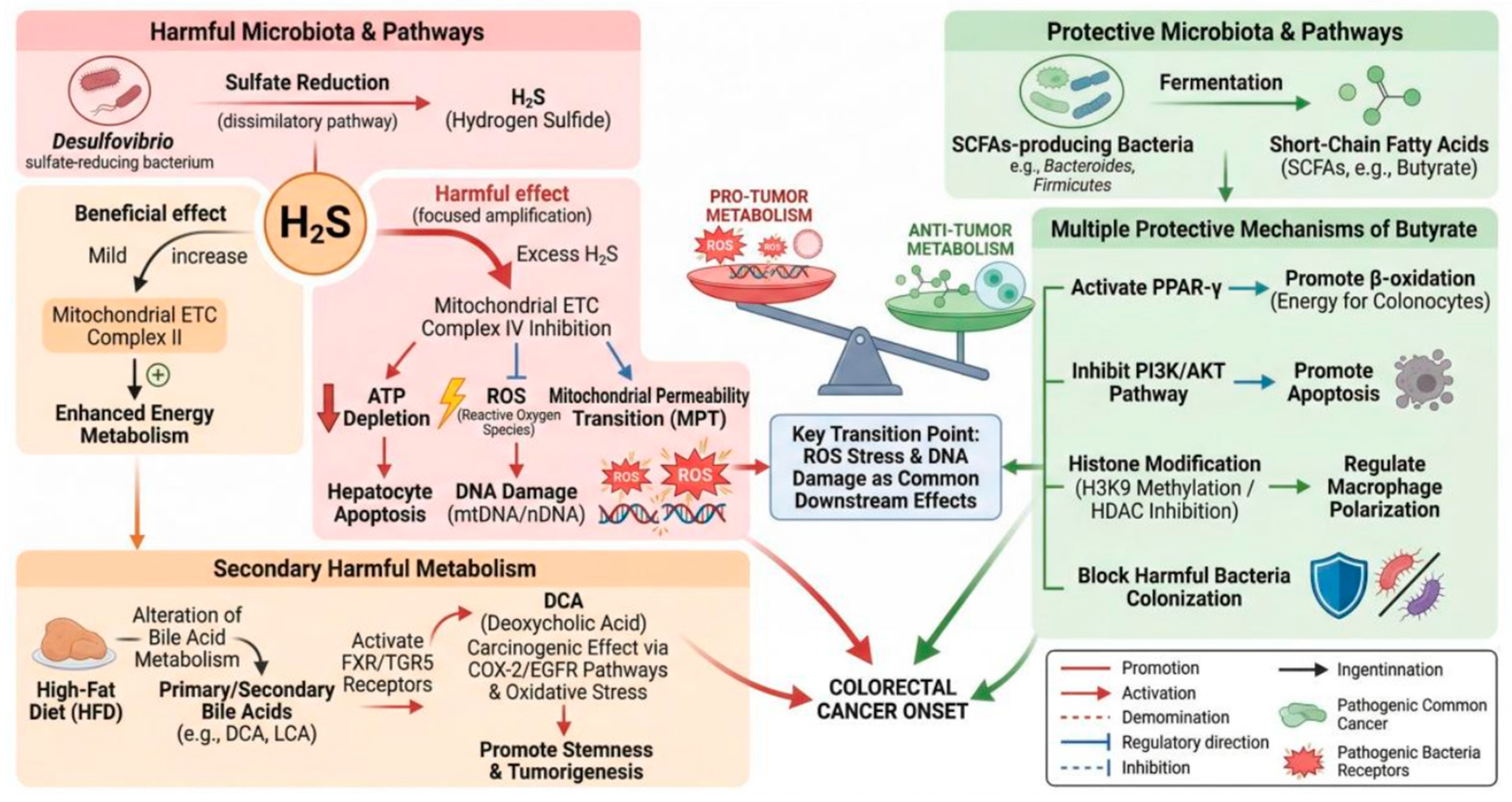
Figure 2.
Microbiomes and host interactions on CRC.
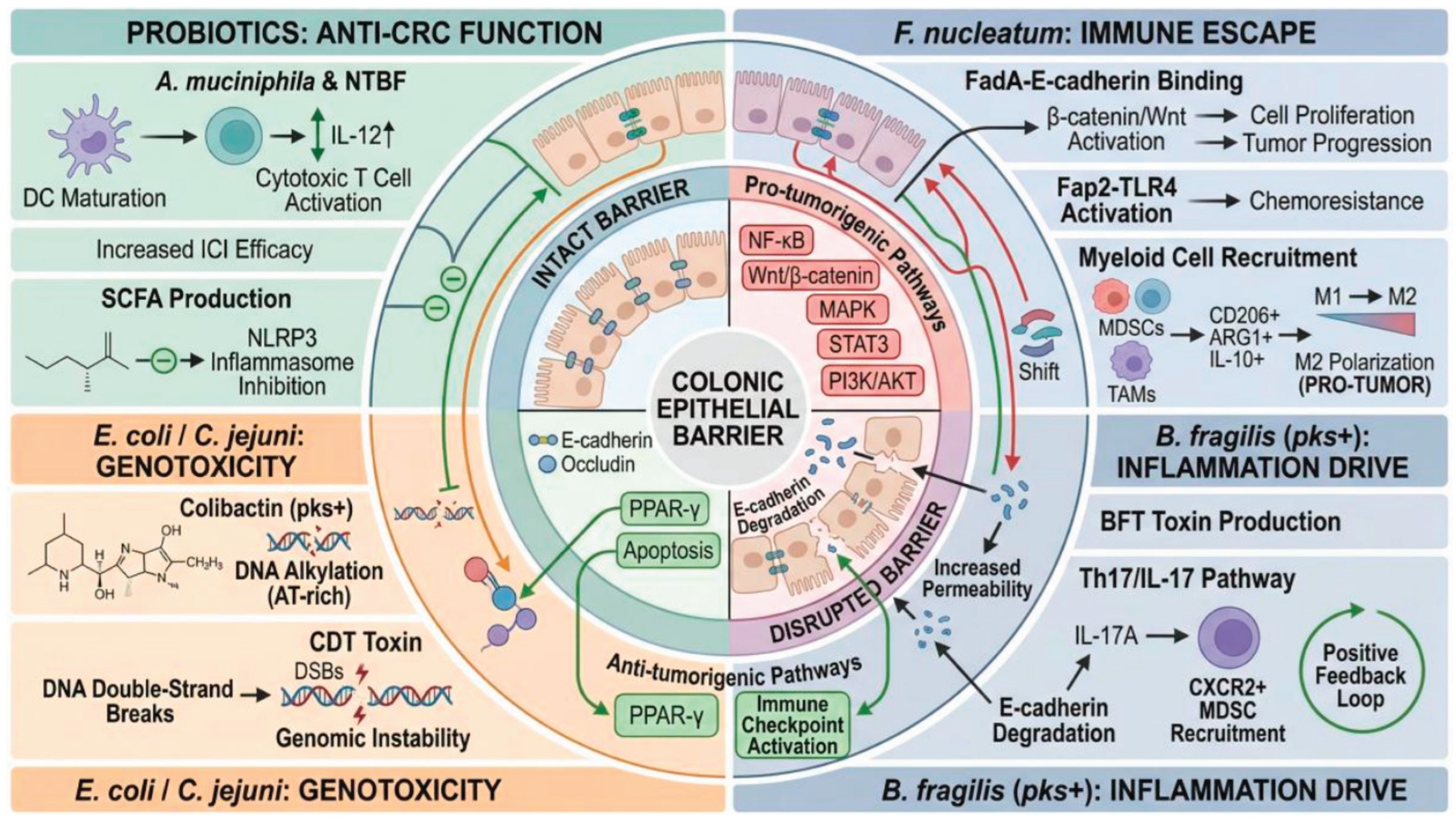

Table 1.
Microbial metabolites effects and mechanisms on CRC.
| Substances and Toxins | Microbiomes | Effects and Mechanisms on CRC |
|---|---|---|
| Hydrogen sulfide | Sulfur-producing microorganisms: Bilophila wadsworthia, Desulfovibrio, Pyramidobacter etc. | 1. Genotoxicity: Direct DNA chains break and ROS elevation induced indirect damages. 2. Energy cutoff: Suppression on mitochondrial respiratory chain complex IV and butyrate application in energy supply of crypt cells. 3. Proliferation: Crypt epithelial cells proliferation ratio rise at about 50 percents level. |
| Deoxycholic acids | 7α-Decarboxylating bacteria: Clostridium scindens etc. | 1. Angiogenesis: Promotion on colonic cytomembraneous arachidonic acids excretion and COX-2 stimulation, facilitating neovascularization. 2. Propelling stem and invasiveness of CRC: FXR and TGR5 upregulation to endow stem. Deteriorating β-catenin pathway and adding aggressiveness to CRC. 3. DNA injures: ROS accumulation and DNA damages. 4. Cancer suppressor protein interruption: Proteasome activation and p53 protein degradation, selecting DNA injured cells survival to retain genetic instability. 5. Dysbiosis: Pathogen abundance augment and probiotics slash. |
| Lactate | General species | 1. Macrophages repolarization: Reshaping TAMs into M2 phenotype. 2. Lift on tumor invasiveness: Inducing TAMs to secrete CCL17 and MDSCs infiltration. |
| Amino acid metabolites (alanine, glycine etc.) | General species | 1. Nutrition supply: Supporting biosynthetic precursors and energetic sources for exuberant tumor cells. 2. Synergism: Glycine cooperating with P. anaerobius on proliferation acceleration. |
| Butyrate | Fiber-fermenting bacteria including Faecalibacterium prausnitzii, Roseburia, Clostridium butyricum, Eubacterium etc. | 1. Predominant energetic origin of colonic epithelium. 2. Epigenetic regulation: Effectuating histone hyperacetylation as a histone deacetylase inhibitor. 3. Differentiation and apoptosis expedition 4. Immune mediated inflammation management: Hastening Tregs differentiation to restrain inflammation. 5. Barrier restoration: Mucin synthetic enhancement and reconstruct damaged mucosal barrier. |
| Colibactin | pks+ E. coli | 1. Genotoxin: Direct cleavage on host DNA double chains. 2. Genetic mutation: Leading to genetic instability and chromosomal aberration and leaving mutational signature within adenine-rich regions. 3. Cell aging: Urging cell aging and following secretion of HGF to spur CRC growth. |
| BFT | ETBF | 1. Debonding epithelial barrier: Decomposition of E-cadherin, intra-cellular adhesion loss and permeability increase. 2. Proliferation: Secreting β-catenin to activate Wnt and MAPK signal pathways, raising c-Myc expression. 3. Immune suppression: Arousing IL-8 and TNF-α via NF-κB pathway, triggering Th17 and IL-17 mediated inflammation. Reinforcing immunosuppressive microenvironment by MDSCs recruitment. 4. Oxidative stress: stimulating SPO in ROS production. |
| FadA and LPS | F. nucleatum | 1. Proliferation: β-catenin amplification by binding with E-cadherin and prompting carcinogenesis. 2. Chronic inflammation: Inflammation cascade initiation from combination of LPS and T cell expressed TLR4. 3. Chemotherapeutic tolerance: 5-Fu therapeutic efficacy elimination through autophage control. |
Table 2.
Proliferation or apoptosis associated signal pathways or targets.
| Signal Pathways or Targets | Microbiomes | Launcher and Procedures |
|---|---|---|
| Wnt/β-catenin signal pathway | F. Nucleatum, ETBF, S. gallolyticus, P. micra etc. | 1. F. nucleatum: Combination of FadA and E-cadherin actuates β-catenin secretion and activation. 2. ETBF: Cleavage of E-cadherin from BFT enable β-catenin entrance into nucleus. 3. S. Gallolyticus: Nuclear β-catenin level elevation. |
| NF-κB signal pathway | F. nucleatum, P. anaerobius, ETBF, E. faecalis | 1. F. nucleatum: TLR4 activation by LPS. 2. P. anaerobius: Membraneous protein PCWBR2 adhesion with integrin. 3. ETBF: BFT expels inflammation by COX-2 and PGE2 in the downstream of NF-κB, facilitating CRC immune escape. |
| PI3K/Akt pathway | P. anaerobius | 1. P. anaerobius: PCWBR2 binding with integrin α2/β1 starts PI3K/Akt pathway and promotes tumorigenesis. 2. SCFAs: Preventing PI3K/Akt pathway from excessive expression. |
| STAT3 pathway | ETBF, F. nucleatum, Prevotella copri | 1. F. nucleatum: MDSCs infiltration through STAT3 pathway. 2. ETBF and P. copri: Selectively triggering STAT3 and Th17 cells differentiation, contributing to tumorigenesis. 3. STAT3 maintains survival and proliferative status in CRC cells. |
| TIGIT | F. nucleatum | F. nucleatum escapes from immune elimination under the recognition and binding of surface protein Fap2 and TIGIT which is expressed at T cells and NK cells. |
| FXR/TGR5 | Bacteroides, Clostridium etc. | Bacteroides, Clostridium etc. transfer PCAs into SCAs. Later activation of TGR5 and FXR suppression consolidate stem and cause DNA damages. |
Table 3.
Methodologies in microbiological test and applications in CRC.
| Approaches | Principles | Indicators | Characteristics | Advantages | Weaknesses | Significance |
|---|---|---|---|---|---|---|
| Metagenomic Sequencing (Shotgun Sequencing) | Random dissection on all genomes within feces and indiscriminate sequencing. | Specified bacteria abundance and functional genes. | 1. High discrimination: Accurate quantification at bacterial strain level. 2. Functional analysis: Discovering genetic metabolic pathway alteration. 3. Position recognition: Distinguishing microbial proportions at different sites of colon and rectum. |
1. Distinctions at bacterial strain level. 2. Genetic information of various functional or metabolic pathways. 3. High diagnostic precision for CRC with 0.84 AUC value. 4. Exemption from tumor stage leaded effects. |
1. High volume of automatic analysis occupies huge hashrate. 2. Tissue sample is apt to lose efficacy when interrupted with host DNAs. |
1. Decent identification on adenoma and early CRC. 2. Improved sensitivity as united with FIT. |
| 16S rRNA Sequencing | Conserved and hypervariable tRNA domains amplification and sequencing dependent of Fluorescence in Situ Hybridization (FISH). | Microorganic composition and class abundance. | 1. Extensive classification: Flora diversity and community emerging. 2. Acceptable economical burden: Lower cost permits large-scale screening of 16S rRNA rather than metagenomic methods. |
Mature test technology with existing substantial databases. | 1. Distinguishing efficiency just arrive genus specificity. 2. No cellular function representation supported. |
1. CRC risk: Diversity attenuation and F. nucleatum enrichment indicates incremental CRC possibility. 2. Survival predication: Excessive colonization of B. fragilis and F. nucleatum are independent predictive factors for curtailed survival rate in CRC patients. |
| PCR-based Virulence Gene Detection | Specified amplification of function gene related to toxicity or invasiveness. | Selected virulence factors like Colibactin and BFT. | 1. Explicit target: Concentrating on pathogenic genes while not flora itself. 2. Timesaving: Standard procedure and rapid automatic process facilitate its utilization in practice. |
1. High efficacy and convenience. 2. Thorough translation into clinical medicine. |
Constricted test fields with some potentially significant and undiscovered pathogens. | 1. Early prediction: C. symbiosum and Colibactin detection serve higher sensitivity in earlier CRC development. 2. Invasiveness prejudging: Clarifying highly invasive microbiomic subtypes. 3. United test scheme: Combination together with FIT attaches improved detective rate in CRC screening stage. |
| Metabolomic Analysis | Identification and quantification of microbial products within circulation, feces and other biological samples. NMR and mass spectrum technology are common measures. | Metabolites, such as DCA, sulfuretted hydrogen and butyrate. | 1. Most direct and visualized function measurement. 2. Suitable for extracting nutritional and dietary clues on CRC. |
1. Functional regulation realization upon genomic alterations is dependent on downstream substances. Metabolomics offered closest information of this part. 2. Instantaneity: Other than subscribing clues among longer interval, metabolomics transmits instant circumstances within lower gastrointestinal tract. |
1. Timely instability: Daily dietary partterns may got a sudden change in a short time. Some temporary confounding factors cast unstable but obvious differences. 2. Material fluctuation: Some products degrade or transform in poor control conditions. |
1. Whole stage evaluation: DCA, butyrate and alanine assist in judgement of distinct stage lesion from adenoma to cancer. 2. Barrier status assessment: SCFAs test for curative effects from probiotics or dietary administration. Butyrate level reflects epithelial barrier integrity. |
| Metatranscriptomics | Probe on transcription levels and directions from intestinal or fecal samples. | RNAs | 1. Representation of virulent activity, not only existence. 2. Emphasis on more temporary effects than persistent ones. |
1. Concentrating on functions ongoing, closer than DNAs. 2. Containing more messages of recent coming adjustment than merely substances. |
RNAs high instability calls for delicate preservation and brings about indeterminacy. | Not yet systematic put into clinical practice to date. |
Table 4.
CRC associated microbiological markers and clinical applications.
| Microbiomes | Indicative Fields | Mechanisms | Applications |
|---|---|---|---|
| F. nucleatum | Diagnostics, prognostics and therapeutic effect predication | 1. Surface FadA ignite β-catenin signal pathway to accelerate proliferation. 2. Inhibition on autophage pathways significantly reduce chemotherapeutic response. |
1. Adenoma and tumor diagnostic marker. 2. High abundance indicates shorten survival, cancer relapse and lymph node metastasis. 3. Reminding 5-Fu resistance. |
| pks+ E. coli | Diagnostics, classification and stages indication | Colibactin induces DNA double chains break and chromosome instability. | 1. CoPEC is an early actuator of carcinogenesis. 2. Higher concentration in TNM III/IV stages mucosal tissue than earlier periods. 3. Tending to be positive in MSS CRC. 4. Enrichment in familial adenomatous polyposis (FAP). |
| ETBF | Diagnostics, classification and prognostics | 1. Triggering STAT3 signal and lay pro-tumor inflammatory microenvironment by BFT release. 2. Cleavaging E-cadherin and initializing Wnt pathway and Th17 intermediated inflammation. |
1. ETBF enrichment is an independent risk factor of CRC overall survival. 2. Remarkable relevance to CIMP, CpG gene island mythelated phenotype. 3. Significant in early CRC screen. 4. Effective indicator of PD-1/PD-L1 immunotherapy. |
| P. anaerobius | Diagnostics and position marker | Combining membraneous PCWBR2 with integrin. Instigating PI3K-Akt signal to expedite uncontrollable proliferation. | 1. Climbing from adenoma to CRC as a potential early set biomarker. 2. Characteristic signature of rectal cancer. |
| C. symbiosum | Diagnostics | - | 1. AUC value of advanced adenoma or early stage CRC surpasses that of F. nucleatum. 2. Multistep uprising from healthy state, adenoma, early cancer to advanced CRC. |
| Faecalibacterium prausnitzii | Diagnostics and prognostics | A source of butyrates. | 1. Dramatic reduction along tumorigenesis. 2. Positively correlated with long-term cancer related and overall survival. 3. Postoperative abundance restoration prompts intestinal functional recovery. |
| A. muciniphila | Curative effect predication | Enhancing Th1 cells and renovating bowel mucosal integrity. | Ample colonization of A. muciniphila is positively relevant to treatment efficacy. |
| S. gallolyticus | Diagnostics | Upregulating IL-1, IL-8 and other inflammatory cytokines to build tumor microenviroment. | S. gallolyticus caused bacteremia declares latent CRC. |
Disclaimer/Publisher’s Note: The statements, opinions and data contained in all publications are solely those of the individual author(s) and contributor(s) and not of MDPI and/or the editor(s). MDPI and/or the editor(s) disclaim responsibility for any injury to people or property resulting from any ideas, methods, instructions or products referred to in the content. |
© 2026 by the authors. Licensee MDPI, Basel, Switzerland. This article is an open access article distributed under the terms and conditions of the Creative Commons Attribution (CC BY) license (http://creativecommons.org/licenses/by/4.0/).
Copyright: This open access article is published under a Creative Commons CC BY 4.0 license, which permit the free download, distribution, and reuse, provided that the author and preprint are cited in any reuse.


