

Submitted:
06 April 2026
Posted:
08 April 2026
You are already at the latest version
Abstract
Background/Objectives: African swine fever (ASF) is a highly lethal disease of domestic pigs and wild suids that continues to cause substantial economic losses worldwide. Despite recent progress in live-attenuated ASF vaccine development, evidence supporting durable protection under repeated exposure conditions representative of endemic settings remains limited. Here, we assessed the long-term safety and protective efficacy of a live-attenuated ASFV-G-ΔI177L/ΔLVR vaccine using a repeated-challenge experimental design intended to model re-exposure in ASF-endemic regions. Methods: Vaccinated pigs were subjected to homologous virulent ASF virus challenges at multiple intervals, including repeated challenges (three sequential inoculations) and single challenges administered at 8 and 12 weeks post-vaccination. Results: Across all challenge regimens, vaccinated animals survived and remained clinically healthy, including those receiving three challenges, supporting sustained protection under repeated exposure pressure. Animals challenged at 8 or 12 weeks post-vaccination likewise exhibited complete survival, indicating maintained efficacy through at least 12 weeks. No vaccine-associated adverse clinical outcomes were detected over the study period, and post-challenge viral shedding was minimal. Conclusions: Overall, these data demonstrate that the candidate live-attenuated ASF vaccine provides excellent protective efficacy and confers sustained protection against homologous ASF virus infection. This result is expected to be equally applicable under repeated exposure conditions in regions with unstable ASF biosecurity, making it a sufficiently promising model experiment for field application in ASF epidemic areas.
Keywords:
African swine fever virus (ASFV)
; live-attenuated vaccine
; ASFV-G-ΔI177L/ΔLVR
; repeated exposure
; protective efficacy
; endemic control
1. Introduction
African swine fever (ASF) is a highly lethal and often fatal hemorrhagic disease affecting domestic pigs and wild boars, caused by the African swine fever virus (ASFV). ASFV is a large double-stranded DNA virus belonging to the family Asfarviridae [1]. First identified in Kenya in the 1920s, ASF has since spread globally, causing significant economic losses to the swine industry due to high mortality rates, trade restrictions, and population reduction measures [2,3]. In endemic regions such as sub-Saharan Africa, parts of Europe, and Asia, the virus persists through complex transmission cycles involving wild suids, ticks (Ornithodoros spp.), and domestic pigs, making control difficult without effective vaccination [4,5,6,7].
Although existing control strategies, including biosecurity measures and culling, have proven insufficient to prevent outbreaks, particularly in areas of persistent virus circulation, ASF control is further complicated in certain regions by the prevalence of backyard farms [8,9,10]. The development of a safe and effective vaccine has emerged as a top priority, and live attenuated vaccines (LAVs) have emerged as promising candidates due to their ability to induce robust cellular and humoral immune responses mimicking natural infection [5,11].
Among the recently developed LAV strains, both I177L/LVR single gene deletion vaccines and multiple have been constructed based on the currently prevalent ASFV-G strain [12,13,14,15]. These LAVs have demonstrated high efficacy in preventing clinical disease following challenge infections with wild-type homologous viruses as well as field isolates currently circulating in Southeast and Northeast Asian regions [13,14,16,17]. However, gaps remain in understanding long-term efficacy, particularly under conditions simulating endemic exposure that include repeated viral infections reflecting the real-world scenario of multiple infections over time. Although the immunological correlates of protection against these attenuated vaccine strains are not fully understood, studies correlating increased peripheral blood mononuclear cell counts, interferon (IFN)γ-producing cell numbers, and various interleukins (ILs) with strong persistent vaccine antibody levels following ASF attenuated live vaccine administration have been reported [18,19,20].
Consequently, this study utilized a comprehensive experimental design incorporating repeated homologous virus challenge experiments and delayed challenge protocols at 8 and 12 weeks post-vaccination to evaluate both vaccine efficacy and the persistence of ASF protective antibodies in pigs. Furthermore, this clinical trial included serum cytokine analysis to predict correlations with immune responses, albeit with limited experimental scope, thereby providing a comprehensive assessment of live attenuated ASF vaccine performance. One finding was the sustained detection of vaccine genome in blood and maintenance of high vaccine antibody concentrations in most individuals after a single vaccination. However, some individuals maintained high levels of vaccine antibodies for 4 months despite low levels or complete disappearance of the vaccine genome in their blood. Therefore, to understand the correlation between this phenomenon and cellular immune markers, we compared and analyzed the associated IFN-γ, IL-12/IL-23 p40, and the anti-inflammatory cytokine marker interleukin-1 receptor antagonist (IL-1ra).
The experimental design included repeated challenge infections up to three doses following vaccine antibody formation, along with a delayed challenge protocol to assess sustained immunogenicity post-vaccination. This protocol was designed to evaluate durability against cumulative viral pressure under conditions mimicking epidemic conditions. Results demonstrated 100% complete protection and absence of clinical disease in all groups, proving the vaccine's safety and sustained protective efficacy. These findings, built upon previous studies demonstrating initial protective effects [15,21,22,23], extend to long-term and multiple exposure scenarios, laying the groundwork for field trials in ASF-endemic regions.
Consequently, this type of clinical trial is considered a viable field clinical trial model. It is expected to provide valuable data for strategically evaluating vaccine policy efficacy, particularly in specific Asian regions where ASF occurs continuously and periodically, and where numerous backyard farms of varying sizes exist.
2. Materials and Methods
2.1. Cell culture and Virus
The preparation and characterization of the live attenuated ASFV vaccine candidate ASFV-G-ΔI177L/ΔLVR were conducted as previously described in detail [15], in accordance with World Organization for Animal Health (WOAH) guidelines. Briefly, the vaccine strain was derived from an eighth-passage (P8) ASF-LAV provided by the USDA and further passaged in Plum Island porcine epithelial cells (PIPECs) stably expressing bovine αVβ6 integrin. Cells were maintained under standard culture conditions, and viral replication was monitored by mCherry fluorescence [21]. Following serial passaging, the P19 virus stock exhibiting the highest titer and confirmed genetic stability was selected as the master seed virus.
Virus titration was performed using primary swine macrophage cultures, with infectious titers determined by hemadsorption assay and calculated using the Reed and Muench method [24]. Domestic pigs were immunized with the ASFV-G-ΔI177L/ΔLVR vaccine and subsequently challenged with a homologous, highly virulent field strain, Korea/wildboar/ASFV-Hwacheon/2020 (GenBank accession no. OR159219.1), supplied by the Ministry of Environment of the Republic of Korea. Experimental challenge regimens included repeated and delayed homologous inoculations to evaluate long-term safety and durability of protection.
2.2. Animal Experiments
Animal experiments were conducted under Animal Biosafety Level 3 (ABSL-3) conditions at the Wildlife Disease Response Team, National Institute of Wildlife Disease Control and Prevention (NIWDC), Ministry of Environment. All experimental protocols were approved by the Institutional Animal Care and Use Committee (Protocol NIWDC-IACUC-2025-002). The experimental animals were 8-week-old commercial breed pigs. Upon arrival at the facility, they underwent a minimum one-week acclimation period was observed to confirm the absence of the following major swine diseases that could affect the experiment. Blood samples were collected during the acclimation period to confirm infection status for Porcine Circovirus 2, Mycoplasma hyopneumoniae, and Porcine Reproductive and Respiratory Syndrome Virus before use. The animals were divided into three distinct trial models (T-1, T-2, and T-3) for intramuscular vaccination, and a challenge control (C-1, C-2, and C-3) group was assigned to each model. Four pigs were assigned to each trial model for challenge vaccination, and two pigs were assigned to each challenge control group within each model. More detailed information is provided in Table 1.
The experimental groups, divided into three trial models, were intramuscularly inoculated with 1 mL of ASFV-G-∆I177L/∆LVR at 103 TCID50 on the same day. The challenge virus, a highly pathogenic Korean field strain of ASFV, Hwacheon/2020, was prepared at 102 HAD50 for intramuscular inoculation in each experimental model. Following vaccination, clinical signs and rectal temperature were measured daily after challenge for each trial model. All samples were used as reference materials for analyzing vaccine antibodies, vaccine genome, and serum cytokines per ASF challenge interval. Animals were euthanized and necropsied at the end of the experimental period for each model.
i) T-1 Group (V1–V4): Four healthy 8-week-old pigs were used as experimental animals. Whole blood, oral, and rectal swab samples were collected at 0, 3, 7, 10, 14, 17, 21, 24, and 28 days post-vaccination (dpv). These samples were used for vaccine genome copy number, antibody, and cytokine analysis. The primary challenge was conducted on day 28 post-vaccination. Samples were collected for the same purposes at 3, 7, 10, 14, 17, 21, 24, and 28 days post-challenge (dpc). The second challenge was performed 28 days after the first challenge. Samples were collected at 4, 7, 11, 14, 18, 21, and 24 dpc following the second challenge. The final third challenge was conducted on day 24 after the second challenge. Following the third challenge, samples were collected on days 3, 7, 11, 14, 18, and 21, after which the animals were euthanized. The euthanized animals were then necropsied for pathological analysis.
ii) T-2 Group (V5–V8): Four healthy 8-week-old pigs were used as test animals. Whole blood, oral, and rectal swab samples were collected at the same time points as the T-1 group after vaccination. Challenge was performed 59 dpv, and clinical symptoms were monitored until day 101. All samples were analyzed using the same procedures as those applied to the T-1 group.
iii) T-3 Group (V9–V12): Four healthy 8-week-old pigs were used as test animals. Whole blood, oral, and rectal swab samples were collected at the same time points as the T-1 group after vaccination. Challenge was performed at 87 dpv, and clinical symptoms were observed until day 101. All samples were analyzed using the same procedures as those applied to the T-1 group.
iv) Positive control: Three positive control groups (C–13~C14, C–15~C16, and C–17~C18) were assigned two challenge controls per trial model. Challenge inoculation was performed on the control group at the same time as the challenge inoculation for each trial model, and they were used as positive controls. Furthermore, sample collection was also performed at the same time for each trial model, collecting all samples until the time of death and performing necropsy.
2.3. Quantitative Real Time PCR (qPCR) for Detection of the ASFV Genome
qPCR was used to detect ASFV DNA in whole blood, oral swab, and rectal swab samples collected before and after vaccination, as well as after ASFV challenge, in each experimental model. The experimental procedures were conducted according to previously described methods [15,23], with minor modifications. Briefly, whole blood, oral swab, and rectal swab samples were collected at each vaccination and post-challenge time point. ASFV DNA was extracted using the RSC Whole Blood DNA Kit and RSC Tissue DNA Kit (Maxwell®; Promega, Madison, WI, USA) with the Maxwell® CSC 48 Instrument IVD (Promega), following the manufacturer’s instructions. The DNA extraction procedure was identical for all sample types.
For each sample, 300 µL of whole blood or swab suspension was transferred to a reaction tube, followed by the addition of 20 µL of proteinase K and 200 µL of lysis buffer. Samples were vortexed for 10 s and incubated at 56 °C for 20 min using a heating block. DNA purification was subsequently performed according to the manufacturer’s protocol, and nucleic acids were eluted in 50 µL of elution buffer.
ASFV-specific qPCR was performed using the VetMAX™ African Swine Fever Virus Detection Kit (Thermo Fisher Scientific, Waltham, MA, USA), which is validated and certified by the WOAH for ASFV detection targeting the p72 gene [22]. Samples with a cycle threshold (Ct) value < 45 were considered positive.
2.4. ASFV Antibody Detection
Whole blood samples were collected from animals vaccinated with ASFV-G-∆I177L/∆LVR and subsequently challenged. Serum was separated by centrifugation and stored until analysis. ASFV-specific antibody levels in serum were determined using the ID Screen® African Swine Fever Virus competitive enzyme-linked immunosorbent assay (cELISA; IDvet, Grabels, France), according to the manufacturer’s instructions.
The sample-to-negative control ratio (S/N%) was calculated using the formula provided by the manufacturer. Serum samples with an S/N% ≤ 40% were considered positive for ASFV-specific antibodies. Samples with an S/N% ≥ 50% were classified as suspected and were reanalyzed to confirm the results.
2.5. Serum Cytokine Analysis
Porcine cytokine concentrations were determined using DuoSet™ ELISA Development Systems for Porcine IFN-γ (Cat#: DY985), Porcine IL-1ra/IL-1F3 (Cat#: DY780), and Porcine IL-12/IL-23 p40 (Cat#: DY912) (R&D Systems, Minneapolis, MN, USA) according to the manufacturers’instructions. High-binding 96-well microplates (SPL, SPL38096) were coated with capture antibody overnight at room temperature (RT), washed, and blocked with 1% bovine serum albumin in phosphate-buffered saline for 1 h at RT. Standards and samples were then added, followed by sequential incubation with biotinylated detection antibody and streptavidin–horseradish peroxidase. Color was developed using 1-Step™ Ultra TMB-ELISA Substrate (Thermo Scientific, 34028), and the reaction was stopped with stop solution (Invitrogen, SS04). Absorbance was measured at 450 nm with reference correction at 540 nm using an Epoch 2 microplate reader (BioTek), and corrected values (OD450−OD540) were used for analysis. Cytokine concentrations were calculated from standard curves generated using serially diluted standards for each assay.
3. Results
3.1. Protective Efficacy of ASFV-G-ΔI177L/ΔLVR Vaccination Against Multiple and Delayed Challenge in an Experimental Model
The trial group was divided into three subgroups. The first group (T-1) underwent three repeated challenge inoculations using the highly virulent field ASFV strain Hwacheon/2020 to evaluate the durability of protective immunity against ASFV-G-ΔI177L/ΔLVR. The other groups (T-2 and T-3) were challenged with 102 HAD virulent field ASFV-Hwacheon/2020 at planned time points for each experimental model to confirm the protective capacity of the ASFV-G-ΔI177L/ΔLVR vaccine at 8 and 12 weeks post-vaccination. Simultaneously, two positive control animals per group were challenged with virulent field ASFV-Hwacheon/2020 at the challenge time points for each group and evaluated in comparison to the vaccine groups. All six animals in the positive control group, which received only the virulent field ASFV-Hwacheon/2020, exhibited a body temperature rise above 40°C by days 5–6 post-infection (pi) and showed disease-related clinical symptoms including anorexia, depression, cyanosis, staggering gait, and diarrhea (Figure 1a). Symptoms progressively worsened over time, and by days 8–12 pi, the animals either died or were euthanized due to extreme distress. In contrast, animals challenged after vaccination in all three distinct trial models maintained healthy status until market age without fever response or specific clinical findings. Detailed results by inoculation model are as follows.
T-1 Group (V1–V4): Four 8-week-old pigs were initially vaccinated with ASFV-G-ΔI177L/ΔLVR vaccine. Transient febrile responses of 40°C were observed in two animals but resolved spontaneously, with no specific clinical symptoms detected through day 28 post-vaccination. On day 28 post-vaccination, the first challenge was administered intramuscularly (IM) with 1 mL of 10² HAD virulent field ASFV-Hwacheon/2020. No specific febrile responses were observed during the 28-day observation period, and all animals remained clinically normal without any ASF-related symptoms prior to the second challenge. The second challenge was conducted on day 28 post-first challenge, with no specific clinical findings including febrile responses observed during the monitoring period. The final third challenge was performed on day 28 post-second challenge and monitored for 18 days, during which all animals demonstrated normal vigorous feeding behavior and maintained healthy conditions. Upon necropsy of all four animals following three sequential challenges, thorough examination of major organs revealed no detectable ASF lesions in most organs. However, mild congestion and hemorrhage were observed in the gastro-hepatic lymph nodes of all four animals.
Positive Control Group (C-13, C-14): Two pigs served as positive controls and were inoculated IM with 1 mL of 10² HAD virulent field ASFV-Hwacheon/2020 using the same method at the time of the first challenge. High fever exceeding 40°C persisted for 6-9 days beginning on day 4 post-challenge (Figure 1a). One animal died on day 10 and the other on day 13 post-challenge. Necropsy examination revealed severe enlargement and congestion/hemorrhage in most major organs, including submandibular lymph nodes and gastro-hepatic lymph nodes, along with splenomegaly and petechial hemorrhages in the kidneys, representing typical ASF necropsy findings (data not shown).
T-2 Group (V5–V8): Four 8-week-old pigs were initially vaccinated with ASFV-G-ΔI177L/ΔLVR vaccine. Transient fever was observed in two animals through day 28 post-vaccination, but no specific clinical symptoms were detected (Figure 1b). After 59 days post-vaccination, the first challenge was administered IM with 1 mL of 10² HAD virulent field ASFV-Hwacheon/2020. During the approximately 46-day observation period, the animals showed no ASF-related symptoms and maintained clinically normal health status. All four animals in the group were euthanized on day 46 for necropsy examination. Thorough examination of major organs revealed no detectable ASF lesions in most organs. However, similar to the T-1 group, mild congestion and hemorrhage were observed in the gastro-hepatic lymph nodes.
Positive Control Group (C-15, C-16): Two pigs served as positive controls and were inoculated IM with 1 mL of 10² HAD virulent field ASFV-Hwacheon/2020 using the same method at the time of the T-2 group's first challenge. High fever exceeding 40°C persisted for 5–10 days beginning on day 4 post-challenge (Figure 1b). One animal died on day 9 and the other on day 10 post-challenge. Necropsy examination following death revealed typical ASF necropsy findings in most major organs (data not shown).
T-3 Group (V9–V12): Four 8-week-old pigs were initially vaccinated with ASFV-G-ΔI177L/ΔLVR vaccine. Transient fever was observed through day 28 post-vaccination, but no specific clinical symptoms were detected (Figure 1c). After 87 days post-vaccination, the first challenge was administered IM with 1 mL of 10² HAD virulent field ASFV-Hwacheon/2020. During the 18-day observation period, the animals showed no ASF-related symptoms and maintained clinically normal health status. Therefore, the immunogenicity of the ASF vaccine persisted until a very late time point, approximately 3 months post-vaccination, demonstrating protective efficacy even against highly pathogenic field-isolated ASFV. All four animals in this group were also euthanized on day 18 post-challenge for necropsy examination. Thorough examination of major organs revealed no detectable ASF lesions in most organs. However, similar to the T-1 and T-2 groups, mild congestion and hemorrhage were observed in the gastro-hepatic lymph nodes.
Positive Control Group (C-17, C-18): Two pigs served as positive controls and were inoculated IM with 1 mL of 10² HAD virulent field ASFV-Hwacheon/2020 using the same method at the time of the T-3 group's first challenge. High fever exceeding 40°C persisted for 5–10 days beginning on day 4 post-challenge (Figure 1c). One animal died on day 10 and the other on day 12 post-challenge. Necropsy examination following death revealed typical ASF necropsy findings in most major organs (data not shown).
3.2. Evaluation of ASF Vaccine Antibodies in Challenged Pigs After ASFV-G-ΔI177L/ΔLVR Vaccination
Antibody detection using cELISA was interpreted as positive when S/N% values were <40%. Whole blood samples were collected from each group at planned time points post-vaccination to evaluate antibody responses to the vaccine (Figure 2, Figure 3 and Figure 4 and Table 2, Table 3 and Table 4).
T-1 Group (V1–V4): In the ASFV-G-∆I177L/∆LVR vaccinated group, antibody positive responses were detected in one out of four animals on day 7 post-vaccination (25%, 1/4). From day 10 onwards, moderate levels of positive antibody responses (S/N% = 21.48 ± 6.75) were confirmed in all vaccinated animals. At 28 dpv, relatively high levels of positive antibody responses (S/N% = 19.88 ± 1.72) persisted. Following the first challenge, higher antibody levels (S/N% = 9.58 ± 3.12) were maintained. Antibody levels at the time points of the second and third challenges showed progressively higher concentrations that were sustained until euthanasia. In contrast, the ASF positive control group (C13–C14) received no vaccination and was challenged simultaneously with the T-1 group's first challenge at 28 dpv. Therefore, antibodies against field-isolated ASFV began to be detected in the control group from day 7 post-challenge, but all animals died by day 14 (Figure 2, Table 2).
T-2 Group (V5–V8): Positive antibody responses were detected in one out of four animals on day 7 post-vaccination (25%, 1/4). From day 10 onwards, all vaccinated animals showed seroconversion to moderate positive antibody responses, with vaccine antibody levels dramatically increasing over time to reach S/N% = 6.98 ± 3.81 at the challenge time point (day 59). Following challenge on day 59, even higher levels of ASF antibodies (S/N% = 2.28 ± 2.92) were observed (Figure 3, Table 3).
T-3 Group (V9–V12): Positive antibodies were detected in one out of four animals on day 7 post-vaccination, with only three out of four animals showing positive responses by day 17 dpv. Notably, animal V-12 in this group showed a relatively delayed seroconversion, testing positive only on day 21 dpv. Consequently, vaccine antibody levels remained at high levels over time, with strong ASF protective antibodies (S/N% = 2.60 ± 2.45) persisting at the challenge time point (day 87). Following challenge on day 87, even higher levels of ASF antibodies (S/N% = 1.13 ± 2.25) were confirmed. Notably, the T-3 group demonstrated sustained ASF antibody levels above initial levels without apparent antibody half-life decay, maintaining vaccine antibody persistence until challenge even at 3 months post-vaccination (Figure 4, Table 4).
3.3. Evaluation of Viremia Against Multiple and Delayed Challenges Following ASFV-G-ΔI177L/ΔLVR Vaccination
Vaccine-Associated Viremia Assessment
Vaccine-associated viremia following ASFV-G-∆I177L/∆LVR vaccination was assessed using whole blood, serum, and oral and rectal swabs according to the planned protocol. Evaluation of vaccine genome (ASFV p72 gene) was performed based on Ct values obtained from real-time PCR reactions targeting the ASF gene. A comparative analysis between whole blood and serum was conducted throughout the entire experimental period. For detailed whole blood Ct values by trial group, refer to the Supplementary Table. Serum, oral and rectal Ct values for each trial group are summarized in both graphical and tabular formats in the and .
T-1 Group (V1–V4): On day 28 post-vaccination dpv, the whole blood Ct value was measured at an average of 25.18 ± 3.39. Following the first challenge at 28 dpv, the Ct value at 31 dpc was 29.64 ± 3.79, while the Ct value at the end of the second challenge was 36.75 ± 3.33. Subsequently, after the third challenge (at euthanasia), three out of four animals tested negative for the ASF target gene, with only one animal testing positive. The mean Ct value was 43.48 ± 2.63, indicating very low levels of viremia (Figure 5, Table S5a). Comparing vaccine-associated viremia in serum, the Ct value at the end of the first challenge was 37.45 ± 5.38, while the ASF target gene was undetectable at the end of both the second and third challenges. These results demonstrated that whole blood provides more accurate viremia detection than serum for post-vaccination assessment (Figure 5a, Table S5b). Regarding oral swab analysis, vaccine-associated viremia (virus shedding) was confirmed at considerably lower levels (44.32 ± 1.92) compared to whole blood Ct values in most animals after the first challenge, with no virus shedding detected after the third challenge (Figure S5b, Table S5c). Rectal swabs showed significantly low levels after the first challenge, but no virus shedding was detected from the second challenge onwards (Figure S5c, Table S5d).
T-2 Group (V5–V8): At 59 dpv (first challenge time point), the mean Ct value was 30.19 ± 1.84, while the Ct value at euthanasia (46 dpc) was 39.02 ± 0.45 (Figure 6, Table S6a). In contrast, serum Ct values at the first challenge time point averaged 43.72 ± 2.21, with undetectable ASF target gene levels (45.00 ± 0.00) at euthanasia (Figure 6a, Table S6b). Oral swab Ct values at the first challenge time point averaged 45.00 ± 0.00, with very low ASF target gene levels (45.00 ± 0.00) confirmed at euthanasia (46 dpc) (Figure S6b, Table S6c). Rectal swabs similarly showed extremely low values (45.00 ± 0.00) at euthanasia (Figure S6c, Table S6d).
T-3 Group (V9–V12): At 87 dpv (first challenge time point), the mean Ct value was 35.89 ± 5.36, while the Ct value at euthanasia (21 dpc) was 39.33 ± 6.65 (Figure 7, Table S7a). As expected, serum Ct values at the first challenge time point averaged 45.00 ± 0.00, with very low ASF target gene levels (42.108 ± 5.01) confirmed at euthanasia (Figure 7a, Table S7b). Oral swab Ct values at the first challenge time point averaged 45.00 ± 0.00, with very low ASF target gene levels (41.77 ± 3.23) confirmed at euthanasia (21 dpc) (Figure S7b, Table S7c). Rectal swabs similarly showed low values (43.85 ± 1.98) at euthanasia (Figure S7c, Table S7d).
Individual Animal Observations: Regarding vaccine-associated viremia results, individual-specific findings included notable observations for animal V-12, which showed ASF target gene detection in whole blood only until 38 dpv post-vaccination. No ASF target gene detection occurred post-challenge or even at euthanasia approximately 3 months post-vaccination. Remarkably, both oral and rectal samples from V-12 showed no viremia throughout the study period, including post-vaccination and post-challenge phases, distinguishing this animal from others in the study.
3.4. Evaluation of Serum Cytokines Against Multiple and Delayed Challenges Following ASFV-G-ΔI177L/ΔLVR Vaccination
Serum samples from pigs vaccinated against ASF and those receiving only the ASFV challenge were compared for cellular immune markers (IFN-γ and IL-12/IL-23 p40) and the anti-inflammatory cytokine IL-1ra, providing a broader perspective than pro-inflammatory cytokines alone. For reference, the cytokine analysis results in this study were limited by a small sample size, which constrained the reliability of p-value-based interpretation. The data are presented as mean ± standard deviation to illustrate the overall trends and variability rather than to imply statistical significance.
3.4.1. Post-Vaccination Serum Cytokine Responses
For IFN-γ, transient increases were observed in some animals during the early vaccination period; however, there was substantial inter-individual variation overall, and no distinct consistent elevation pattern was apparent. Additionally, no significant differences between groups were observed throughout the post-vaccination period, and similar patterns were maintained without notable additional elevation following challenge inoculation (Figure 8).
For IL-12/IL-23 p40, the T-1 group showed initial elevation followed by gradual stabilization, with levels of 2921.7 ± 2057.8 pg/mL immediately post-vaccination, 2892.8 ± 1989.8 pg/mL at day 7, and 1790.9 ± 1269.7 pg/mL at day 14 (Figure 9a). The T-2 group exhibited similar patterns, with levels of 2015.2 ± 1502.3 pg/mL immediately post-vaccination, 2517.2 ± 1566.2 pg/mL at day 7, and 1782.6 ± 1263.3 pg/mL at day 14 (Figure 9b). The T-3 group also demonstrated initial elevation followed by stabilization, showing 2965.0 ± 992.0 pg/mL immediately post-vaccination, 3243.1 ± 2181.9 pg/mL at day 7, and 1764.0 ± 1127.6 pg/mL at day 14 (Figure 9c).
IL-1ra exhibited similar patterns. The T-1 group showed 2069.2 ± 875.4 pg/mL immediately post-vaccination, 1635.4 ± 1191.9 pg/mL at day 7, and 625.0 ± 411.3 pg/mL at day 14 (Figure 10a). The T-2 group demonstrated 1794.4 ± 549.2 pg/mL, 2165.0 ± 332.5 pg/mL, and 400.3 ± 104.5 pg/mL, respectively (Figure 10b). The T-3 group also displayed initial elevation followed by stabilization with levels of 2367.3 ± 885.6 pg/mL immediately post-vaccination, 2297.3 ± 1612.1 pg/mL at day 7, and 814.8 ± 297.2 pg/mL at day 14 (Figure 10c).
3.4.2. Post-Challenge Serum Cytokine Responses
In the vaccinated groups (T-1, T-2 and T-3), no significant additional elevation of IL-12/IL-23 p40 or IL-1ra was observed following challenge inoculation, and levels remained similar to pre-challenge patterns. Notably, even after repeated challenges (1st/2nd/3rd) in the T-1 group, the overall cytokine response patterns did not substantially change and showed similar trends to the delayed challenge groups T-2 and T-3. Specifically, mean IL-12/IL-23 p40 concentrations in the T-1 group following the 1st, 2nd, and 3rd challenges were 2024.8 ± 1223.0 pg/mL, 1376.0 ± 582.3 pg/mL, and 1392.3 ± 880.9 pg/mL, respectively (Figure 9a). Similar trends were confirmed in the T-2 and T-3 groups, with post-challenge levels of 1295.2 ± 880.3 pg/mL and 612.3 ± 361.7 pg/mL, respectively, showing minimal variation (Figure 9b and Figure 9c).
IL-1ra also demonstrated relatively stable patterns in vaccinated groups without significant additional elevation following challenge. In the T-1 group, levels remained unchanged even after repeated challenges at 484.8 ± 226.5 pg/mL, 103.7 ± 153.5 pg/mL, and 97.2 ± 194.5 pg/mL, respectively (Figure 10a). The T-2 and T-3 groups also maintained similar levels to pre-challenge conditions with post-challenge values of 486.2 ± 264.0 pg/mL and 151.1 ± 278.1 pg/mL, respectively (Figure 10b and Figure 10c).
In contrast, the control groups (C-1, C-2, C-3) commonly exhibited rapid elevation of both IL-12/IL-23 p40 and IL-1ra following challenge inoculation. Representatively, IL-12/IL-23 p40 in control groups increased from 1038.4 ± 439.2 pg/mL immediately pre-challenge to 2836.0 ± 291.4 pg/mL at day 7 post-challenge (Figure 9a–9c), while IL-1ra similarly increased from 338.7 ± 290.3 pg/mL to 1188.4 ± 69.9 pg/mL at the same time point (Figure 10a–10c). Subsequently, control animals showed mortality trends, and these responses were consistently confirmed in control groups at each challenge time point.
In vaccinated groups, limited and controlled elevation responses of IL-12/IL-23 p40 and IL-1ra occurred during early vaccination followed by stabilization, with no excessive cytokine elevation induced following challenge inoculation. Conversely, control groups showed rapid elevation of both markers following challenge, which was interpreted as a pattern associated with fatal clinical progression.
4. Discussion
Despite over a century of research since its first identification in 1921, ASFV continues to present formidable challenges that evade conventional eradication strategies. While achieving complete sterile immunity through vaccination has proven elusive, the ongoing devastating socioeconomic impact on the global swine industry necessitates a pragmatic shift in our approach. Given the urgent need to address food security concerns, the strategic deployment of safety-validated LAVs should be prioritized based on regional endemicity patterns and national policy frameworks. This approach represents a more realistic alternative to delaying critical interventions while pursuing an idealized, yet currently unattainable, universal vaccine solution.
Therefore, the development of safe and effective vaccines against ASF represents the most critical challenge for the global swine industry, particularly in endemic regions of Asia where smallholder livestock farming coexists with high viral pressure [11,17,25,26]. This study evaluated the efficacy and immunogenicity of multiple gene deletion LAV candidates under experimental conditions mimicking these high-risk environments, with particular focus on repeated and delayed exposure to homologous wild-type ASFV.
One of the most notable findings of this study was the observation of 100% survival rates and complete absence of clinical symptoms across all vaccinated groups, despite rigorous challenge protocols. While previous studies have demonstrated the initial protective efficacy of LAVs [15,21,23], our results extend these findings by confirming that immune responses remained robust even after three consecutive challenges. This "cumulative viral pressure" model is highly relevant to endemic regions where pigs are continuously exposed to the virus due to environmental contamination, mechanical transmission via vehicles and personnel, and proximity to infected backyard farms. Furthermore, delayed challenges conducted at 8 and 12 weeks post-vaccination demonstrated that vaccine-induced immunity does not decline rapidly, suggesting that a single vaccination in growing pigs could potentially provide protection against ASF until market age. This confirms the provision of sustained protection essential for long-term field application.
A primary concern following LAV is vaccine virus shedding that could affect cohabiting animals and the surrounding environment. This shedding may involve vaccine genes or viruses remaining detectable in blood, oral secretions, and fecal samples. Importantly, in this study, progressive evidence of partial sterile immunity was observed following vaccination and challenge. Despite three consecutive challenges at 28-day intervals, minimal levels of vaccine genome were detected only in whole blood samples from one out of four animals, while no detection was observed in blood, oral, and fecal samples from all other animals. This suggests that the vaccine-induced immune system effectively prevents pathogen survival and replication within the host a characteristic of sterile immunity that provides additional safety assurance for field applications.
The near-absence of viral shedding under repeated high-dose challenges indicates that vaccinated animals not only resist clinical disease but also limit secondary transmission potential. This dual protection mechanism represents critical advancement toward population-level disease control, particularly significant in endemic regions where continuous viral circulation threatens both vaccinated and unvaccinated populations.
Although partial, this sterile immunity demonstrates that LAV-established immune memory is sufficiently robust for rapid neutralization upon subsequent viral exposure, supporting the potential for broader epidemiological control beyond individual animal protection.
A key observation from the clinical trial was the differential pattern between vaccine genome detection and antibody maintenance. While the majority of vaccinated pigs showed persistent detection of vaccine genome in blood alongside high antibody titers, some individuals maintained high antibody levels for up to 4 months even after vaccine genome was completely cleared or significantly reduced. This suggests that initial replication of the LAV strain alone is sufficient to induce long-term memory T-cell and B-cell responses. From a safety perspective, the host's ability to ultimately clear the vaccine virus while maintaining protective immunity is a highly desirable characteristic, reducing the risk of chronic persistence or potential virulence reversion in the field.
To understand the cellular mechanisms underlying this robust protection, we analyzed the profiles of key pro-inflammatory and anti-inflammatory cytokines. According to previous reports, sustained levels of IFN-γ and IL-12/23 p40 subunit in protected pigs indicate a strong Th1-biased cellular immune response. IL-12 and IL-23 play pivotal roles in linking innate and adaptive immunity, promoting the differentiation of IFN-γ-producing T cells and natural killer cells that are crucial for suppressing ASFV replication [18].
In this study, IFN-γ exhibited a transient elevation following vaccination; however, no significant differences between groups were observed throughout the study period, and similar patterns were maintained even after challenge inoculation without additional elevation. Notably, IL-12/IL-23 p40, which induces macrophage activation, showed maximum elevation in all vaccine groups immediately post-vaccination, but decreased and stabilized by day 14 post-vaccination. These results demonstrate that the immune regulatory system operates effectively during the early stages of vaccination to maintain homeostasis. Additionally, the balanced expression of IL-1ra could explain why clinical side effects or excessive systemic inflammation commonly associated with LAVs did not occur. By modulating the pro-inflammatory effects of IL-1, IL-1ra likely contributes to creating a controlled immune environment that neutralizes the virus without triggering the fatal hemorrhagic cytokine storm characteristic of wild-type ASFV infection.
Furthermore, from a vaccine virus shedding perspective, the controlled excretion of vaccine virus through oral and fecal routes, as observed in swab examinations, further supports the field applicability of this vaccine candidate. In many Asian countries where backyard farms are scattered among smallholder operations with suboptimal biosecurity, a vaccine that provides broad protection while limiting shedding is an essential tool. Our "repeated and delayed re-infection" model serves as a strategic evaluation framework for assessing vaccine durability in this specific geographical context.
5. Conclusions
The multiple gene deletion LAV candidate demonstrated exceptional durability and safety in high-intensity challenge models. This vaccine candidate achieved safety by inducing limited and controlled immune responses during the early vaccination phase, while effectively suppressing the fatal cytokine surge observed in control groups upon actual viral exposure, thereby enhancing survival rates. This strongly supports that vaccine-induced immune memory suppresses wild-type virus replication and controls the host immune system to prevent runaway responses. Therefore, the results from repeated and delayed challenge experiments simulating ASF endemic regions conducted in this study suggest that the multi-gene deleted live attenuated vaccine candidate represents a promising vaccination strategy capable of providing sustained protective efficacy in ASF-endemic areas.
Supplementary Materials
The following supporting information can be downloaded at the website of this paper posted on Preprints.org, Tables S5a-S5d: Summarize qPCR Ct values for samples (whole blood, serum, oral, and rectal) from experimental groups T-1 and C-1 following vaccination and challenge infection. Tables S6a-S6d: Summarize qPCR Ct values for samples (whole blood, serum, oral, and rectal) from experimental groups T-2 and C-2 following vaccination and challenge infection. Tables S7a-S7d: Summarize qPCR Ct values for samples (whole blood, serum, oral, and rectal) from experimental groups T-3 and C-3 following vaccination and challenge infection. Figures S5b-S5c: qPCR Ct values for oral and rectal samples from experimental groups T-1 and C-1 following vaccination and challenge infection. Figures S6b-S6c: qPCR Ct values for oral and rectal samples from experimental groups T-2 and C-2 following vaccination and challenge infection. Figures S7b-S7c: qPCR Ct values for oral and rectal samples from experimental groups T-3 and C-3 following vaccination and challenge infection.
Author Contributions
Conceptualization, J.H.S., W.H.J. and S.C.M.; methodology S.J.L. and Y-J.K.; formal analysis, J.H.S., S.J.L. and S.A.C.; investigation, S.Y.L., X.Z., D.S.K., Y-J.K., S.J.L., S.A.C., S.P.S., W-J.K, Y-W.S., B-C.S., S-A.C., J-Y.S. and G-R.K.; writing—original draft preparation, J.H.S.; writing—review and editing, J.H.S., S.A.C. and S.P.S.; supervision, W.H.J. and J.H.S.. All authors have read and agreed to the published version of the manuscript.
Funding
This research was funded by Komipharm and the National Institute of Wildlife Disease Control and Prevention (NIWDC), Ministry of Climate, Energy and Environment (MCEE) of the Republic of Korea (NIWDC-2025-RP-06).
Institutional Review Board Statement
Animal experiments to collect blood, oral and rectal swabs were performed under biosafety level 3 conditions in the animal facilities at the Wildlife Disease Control and Prevention (NIWDC). All animal procedures were carried out in compliance with the approval of the Institutional Animal Care and Use Committee of National Institute of NIWDC, Ministry of Climate, Energy and Environment (MCEE), of the Republic of Korea (Protocol NIWDC-IACUC-2025-002).
Informed Consent Statement
Not applicable.
Data Availability Statement
Not applicable.
Conflicts of Interest
The authors declare no conflicts of interest.
Abbreviations
The following abbreviations are used in this manuscript:
| ASFV | African swine fever virus |
| LAVs | Live attenuated vaccines |
| WOAH | World Organization for Animal Health |
| PIPEC | Plum Island porcine epithelial cells |
| dpv | Days post-vaccination |
| dpc | Days post-challenge |
| WPV | Week post-vaccination |
| IM | Intramuscular |
| qPCR | Quantitative real-time PCR |
| HAD | Hemadsorption dose |
| TCID | Tissue culture infectious dose |
| ELISA | Enzyme-linked immunosorbent assay |
| Ct | Cycle threshold |
References
- Dixon, L.K.; Islam, M.; Nash, R.; Reis, A.L. African swine fever virus evasion of host defences. Virus Res. 2019, 266, 25–33. [Google Scholar] [CrossRef] [PubMed]
- Penrith, M.L.; Vosloo, W. Review of African swine fever: Transmission, spread and control. J. S. Afr. Vet. Assoc. 2009, 80, 58–62. [Google Scholar] [CrossRef] [PubMed]
- Eustace Montgomery, R.E. On a form of swine fever occurring in British East Africa (Kenya Colony). J. Comp. Pathol. Ther. 1921, 34, 159–191. [Google Scholar] [CrossRef]
- Sánchez-Cordón, P.J.; Montoya, M.; Reis, A.L.; Dixon, L.K. African swine fever: A re-emerging viral disease threatening the global pig industry. Vet. J. 2018, 233, 41–48. [Google Scholar] [CrossRef] [PubMed]
- Lv, T.; Xie, X.; Song, N.; Zhang, S.; Ding, Y.; Liu, K.; Diao, L.; Chen, X.; Jiang, S.; Li, T.; et al. Expounding the role of tick in Africa swine fever virus transmission and seeking effective prevention measures: A review. Front. Immunol. 2022, 13, 1093599. [Google Scholar] [CrossRef]
- Sánchez-Vizcaíno, J.M.; Mur, L.; Bastos, A.D.S.; Penrith, M.L. New insights into the role of ticks in African swine fever epidemiology. Rev. Sci. Tech. 2015, 34, 503–511. [Google Scholar] [CrossRef]
- Costard, S.; Mur, L.; Lubroth, J.; Sanchez-Vizcaino, J.M.; Pfeiffer, D.U. Epidemiology of African swine fever virus. Virus Res. 2013, 173, 191–197. [Google Scholar] [CrossRef]
- Busch, F.; Haumont, C.; Penrith, M.L.; Laddomada, A.; Dietze, K.; Globig, A.; Guberti, V.; Zani, L.; Depner, K. Evidence-based African swine fever policies: Do we address virus and host adequately? Front. Vet. Sci. 2021, 8, 637487. [Google Scholar] [CrossRef]
- Penrith, M.-L.; van Heerden, J.; Pfeiffer, D.U.; Oļševskis, E.; Depner, K.; Chenais, E. Innovative research offers New Hope for managing African swine fever better in resource-limited smallholder farming settings: A timely update. Pathogens 2023, 12, 355. [Google Scholar] [CrossRef]
- World Organisation for Animal Health (WOAH). African swine fever. Available online: https://www.woah.org/en/disease/african-swine-fever/ (accessed on 11 March 2026).
- Chandana, M.S.; Nair, S.S.; Chaturvedi, V.K.; Abhishek; Pal, S.; Charan, M.S.S.; Balaji, S.; Saini, S.; Vasavi, K.; Deepa, P. Recent progress and major gaps in the vaccine development for African swine fever. Braz. J. Microbiol. 2024, 55, 997–1010. [Google Scholar] [CrossRef]
- Borca, M.V.; Ramirez-Medina, E.; Silva, E.; Vuono, E.; Rai, A.; Pruitt, S.; Holinka, L.G.; Velazquez-Salinas, L.; Zhu, J.; Gladue, D.P. Development of a highly effective African swine fever virus vaccine by deletion of the I177L gene results in sterile immunity against the current epidemic Eurasia strain. J. Virol. 2020, 94, e02017-19. [Google Scholar] [CrossRef] [PubMed]
- O’Donnell, V.; Holinka, L.G.; Gladue, D.P.; Sanford, B.; Krug, P.W.; Lu, X.; Arzt, J.; Reese, B.; Carrillo, C.; Risatti, G.R.; et al. African swine fever virus Georgia isolate harboring deletions of MGF360 and MGF505 genes is attenuated in swine and confers protection against challenge with virulent parental virus. J. Virol. 2015, 89, 6048–6056. [Google Scholar] [CrossRef] [PubMed]
- Boikos, C.; McGovern, I.; Molrine, D.; Ortiz, J.R.; Puig-Barberà, J.; Haag, M. Review of analyses estimating relative vaccine effectiveness of cell-based quadrivalent influenza vaccine in three consecutive US influenza seasons. Vaccines 2022, 10, 896. [Google Scholar] [CrossRef] [PubMed]
- Choi, S.A.; Kim, Y.; Lee, S.J.; Moon, S.C.; Ahn, K.S.; Zheng, X.; Kim, D.S.; Lee, S.Y.; Shin, S.P.; Tark, D.; et al. African swine fever vaccine candidate ASFV-G-ΔI177L/ΔLVR protects against homologous virulent challenge and exhibits long-term maintenance of antibodies. Animals (Basel) 2025, 15, 473. [Google Scholar] [CrossRef]
- Chen, W.; Zhao, D.; He, X.; Liu, R.; Wang, Z.; Zhang, X.; Li, F.; Shan, D.; Chen, H.; Zhang, J.; et al. A live-attenuated virus-based candidate vaccine for African swine fever. Sci. China (Life Sci.) 2020, 63, 790–801. [Google Scholar]
- Ngo, T.T.N.; Oh, T.; Do, D.T. The Prospects and Challenges of Live Attenuated Vaccines Against African Swine Fever Virus in Vietnam. Vaccines 2026, 14(3), 284. [Google Scholar] [CrossRef]
- Attreed, S.E.; Silva, C.; Abbott, S.; Ramirez-Medina, E.; Espinoza, N.; Borca, M.V.; Gladue, D.P.; Diaz-San Segundo, F. A highly effective African swine fever virus vaccine elicits a memory T cell response in vaccinated swine. Pathogens 2022, 11, 1438. [Google Scholar] [CrossRef]
- Lotonin, K.; Brito, F.; Mehinagic, K.; García-Nicolás, O.; Liniger, M.; Donzé, N.; Python, S.; Talker, S.; Ploegaert, T.C.W.; Ruggli, N.; et al. Correlates of protection against African swine fever virus identified by a systems immunology approach. eLife 2025, 107579. [Google Scholar] [CrossRef]
- Wang, Z.; Ai, Q.; Huang, S.; Ou, Y.; Gao, Y.; Tong, T.; Fan, H. Immune escape mechanism and vaccine research progress of African swine fever virus. Vaccines 2022, 10, 344. [Google Scholar] [CrossRef]
- Borca, M.V.; Rai, A.; Ramirez-Medina, E.; Silva, E.; Velazquez-Salinas, L.; Vuono, E.; Pruitt, S.; Espinoza, N.; Gladue, D.P. A cell culture-adapted vaccine virus against the current African swine fever virus pandemic strain. J. Virol. 2021, 95, e0012321. [Google Scholar] [CrossRef]
- Tran, X.H.; Le, T.T.P.; Nguyen, Q.H.; Do, T.T.; Nguyen, V.D.; Gay, C.G.; Borca, M.V.; Gladue, D.P. African swine fever virus vaccine candidate ASFV-G-ΔI177L efficiently protects European and native pig breeds against circulating Vietnamese field strain. Transbound. Emerg. Dis. 2022, 69, e497–e504. [Google Scholar] [CrossRef]
- Lee, S.J.; Kim, Y.; Choi, S.A.; Ahn, K.S.; Lee, S.Y.; Zheng, X.; Kim, D.S.; Kim, W.; Shin, Y.; Kim, S.J.; et al. Safety of live attenuated ASFV-G-ΔI177L/ΔLVR vaccination in sows with advanced pregnancies. Transbound. Emerg. Dis. 2025, 2025, 8007143. [Google Scholar] [CrossRef]
- Reed, L.J.; Muench, H. A simple method of estimating fifty percent endpoints. Am. J. Epidemiol. 1938, 27, 493–497. [Google Scholar] [CrossRef]
- Auer, A.; Cattoli, G.; Padungtod, P.; Lamien, C.E.; Oh, Y.; Jayme, S.; Rozstalnyy, A. Challenges in the application of African swine fever vaccines in Asia. Animals (Basel) 2024, 14, 2473. [Google Scholar] [CrossRef]
- Penrith, M.-L.; Depner, K.; Jori, F.; Dione, M.; Alders, R.; Chenais, E. Editorial: African swine fever in smallholder and traditional pig farming systems: Research, challenges and solutions. Front. Vet. Sci. 2022, 9, 878928. [Google Scholar] [CrossRef]
Figure 1.
Kinetics of rectal temperature values in pigs intramuscular inoculated with ASFV-G-ΔI177L/ΔLVR /103TCID50 and after the challenge with ASFV-Hwacheon/2020 (G-II) /102HAD50. The dotted line indicates the threshold for fever at 40 °C. Each curve represents an individual animal’s values in each group. Data from control animals are depicted in red. (a), Triple challenge; (b), Challenge at Week 8; (c), Challenge at Week 12.
Figure 1.
Kinetics of rectal temperature values in pigs intramuscular inoculated with ASFV-G-ΔI177L/ΔLVR /103TCID50 and after the challenge with ASFV-Hwacheon/2020 (G-II) /102HAD50. The dotted line indicates the threshold for fever at 40 °C. Each curve represents an individual animal’s values in each group. Data from control animals are depicted in red. (a), Triple challenge; (b), Challenge at Week 8; (c), Challenge at Week 12.
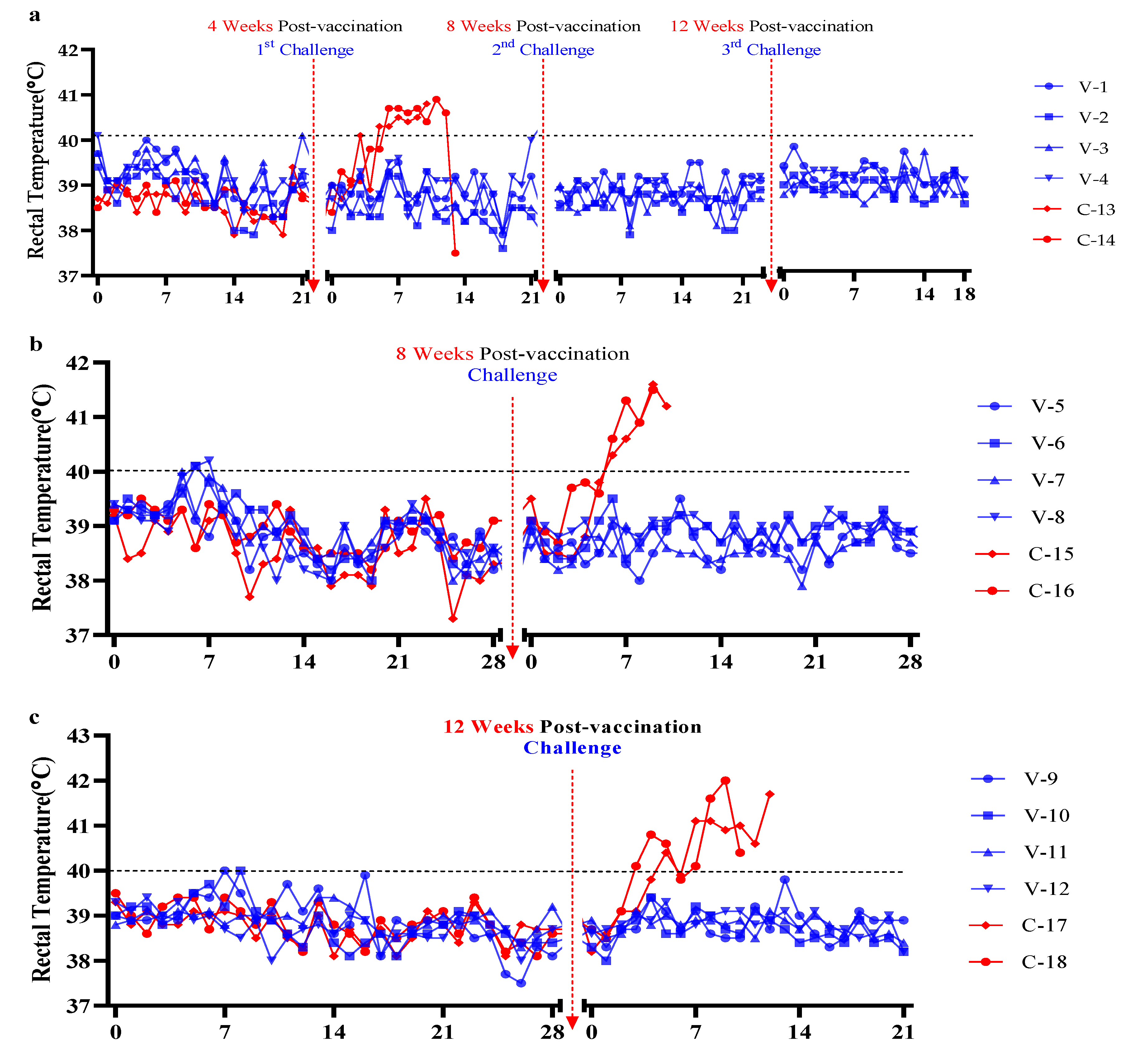
Figure 2.
This graph shows vaccine antibody titers measured by competitive enzyme-linked immunosorbent assay (cELISA) at all intervals following three challenges administered at 4-week intervals after vaccination. Antibodies meeting the positive threshold (S/N% ≤ 40) were detected starting on day 7 post-vaccination, and higher vaccine antibody levels were maintained with each subsequent challenge.
Figure 2.
This graph shows vaccine antibody titers measured by competitive enzyme-linked immunosorbent assay (cELISA) at all intervals following three challenges administered at 4-week intervals after vaccination. Antibodies meeting the positive threshold (S/N% ≤ 40) were detected starting on day 7 post-vaccination, and higher vaccine antibody levels were maintained with each subsequent challenge.
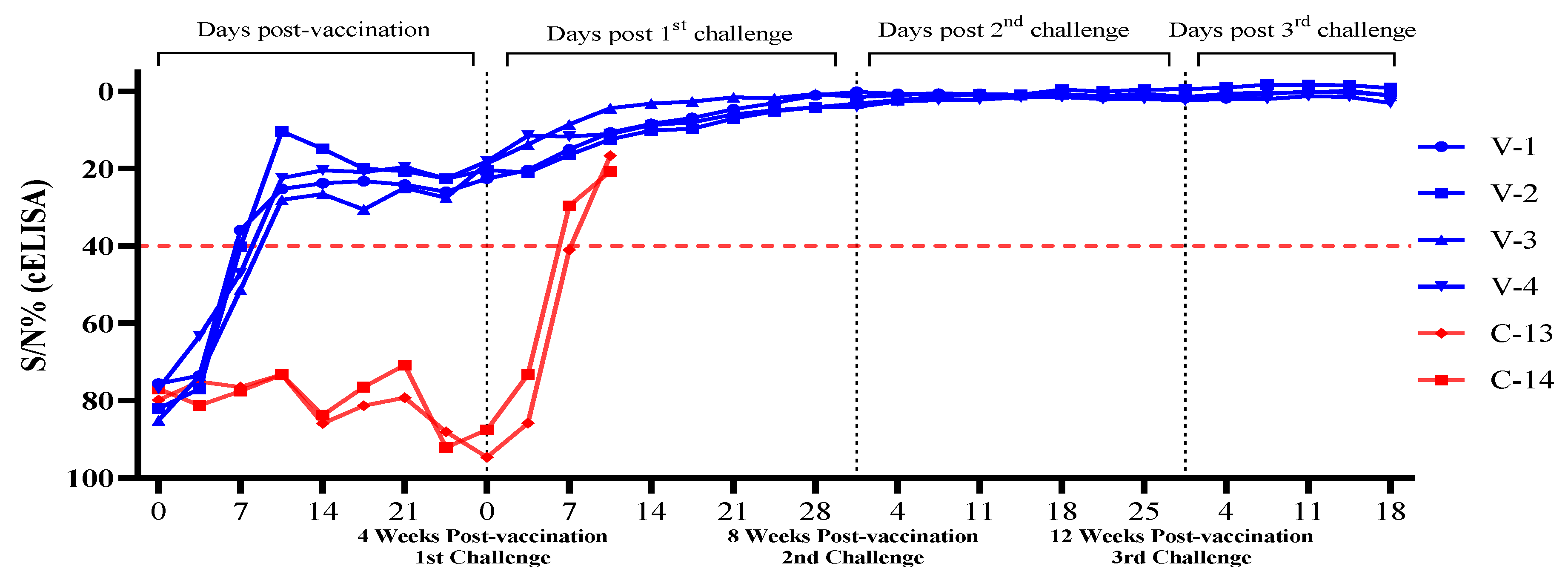
Figure 3.
This graph shows challenge results at 8 weeks post-vaccination and vaccine antibody levels measured by competitive enzyme-linked immunosorbent assay (cELISA). Antibodies meeting the positive threshold (S/N% ≤ 40) were detected starting 7 days post-vaccination. Higher vaccine antibody levels were maintained over time, and even higher antibody levels were confirmed at 8 weeks post-challenge.
Figure 3.
This graph shows challenge results at 8 weeks post-vaccination and vaccine antibody levels measured by competitive enzyme-linked immunosorbent assay (cELISA). Antibodies meeting the positive threshold (S/N% ≤ 40) were detected starting 7 days post-vaccination. Higher vaccine antibody levels were maintained over time, and even higher antibody levels were confirmed at 8 weeks post-challenge.
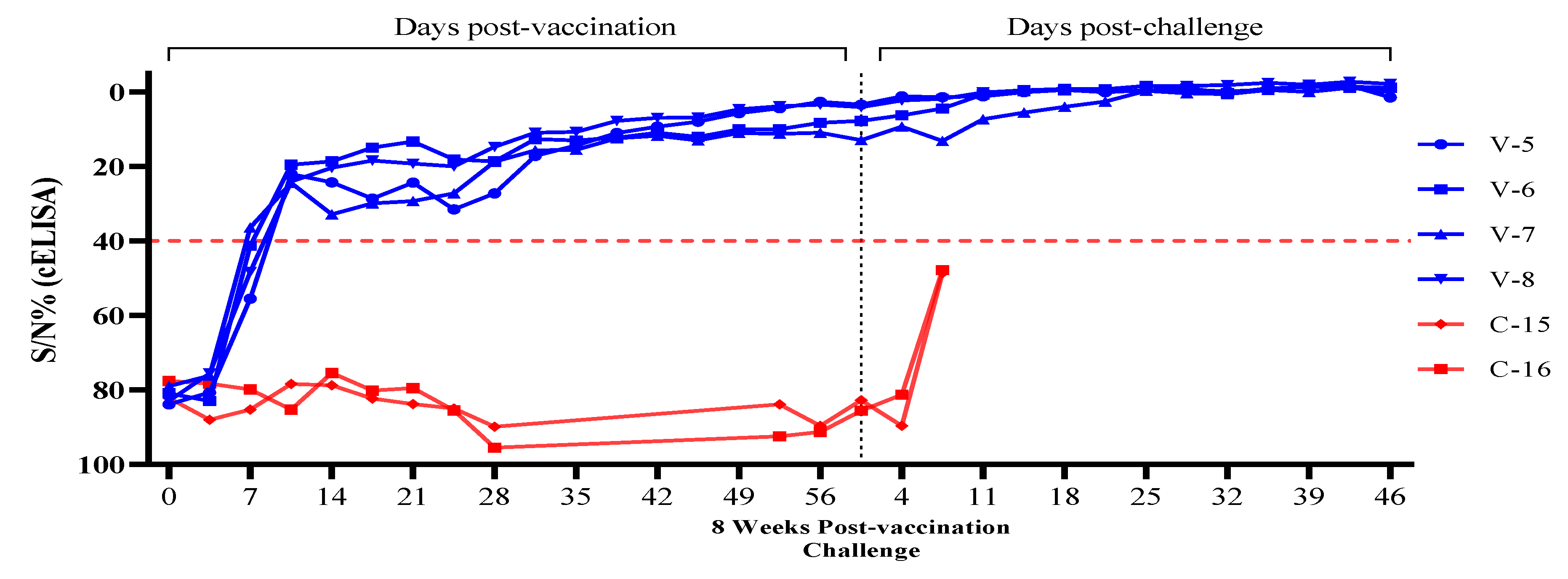
Figure 4.
This graph shows challenge results at 12 weeks post-vaccination and measured vaccine antibody titers via competitive enzyme-linked immunosorbent assay (cELISA). Antibody positivity (S/N% ≤ 40) was confirmed starting 7 days post-vaccination. Higher vaccine antibodies were maintained over time, and even higher antibody titers were confirmed at 12 weeks post-challenge.
Figure 4.
This graph shows challenge results at 12 weeks post-vaccination and measured vaccine antibody titers via competitive enzyme-linked immunosorbent assay (cELISA). Antibody positivity (S/N% ≤ 40) was confirmed starting 7 days post-vaccination. Higher vaccine antibodies were maintained over time, and even higher antibody titers were confirmed at 12 weeks post-challenge.
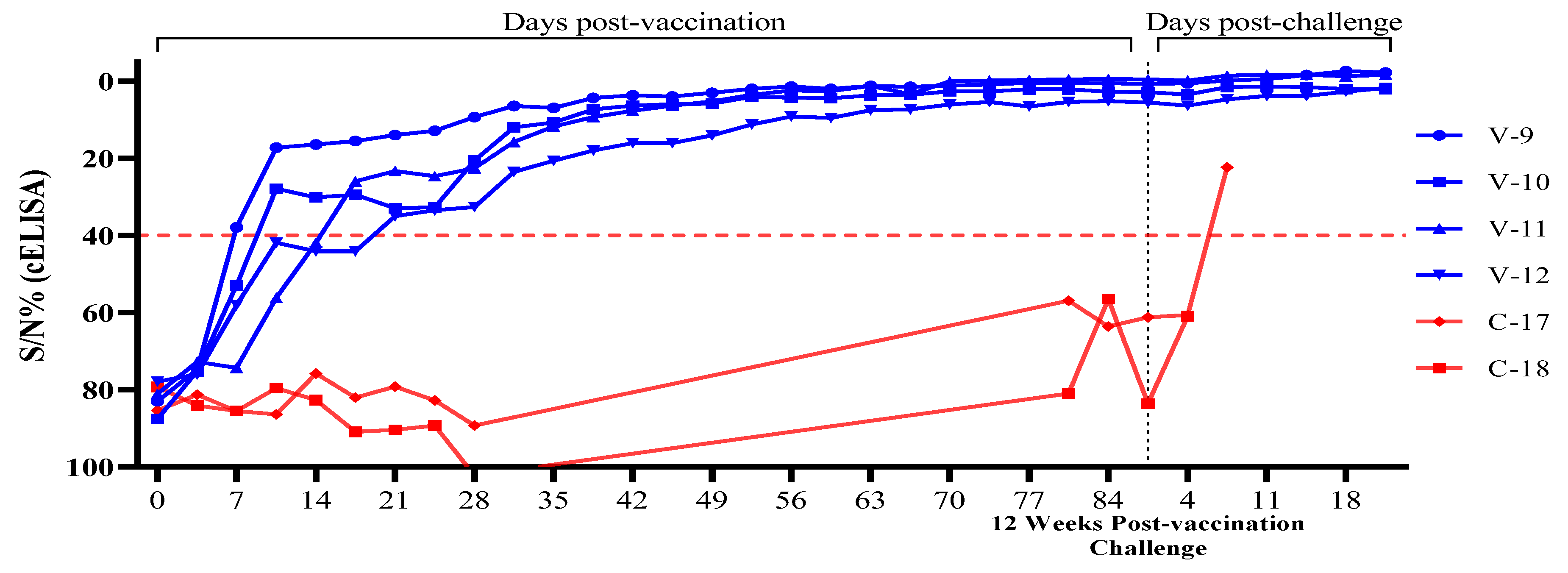
Figure 5.
This graph shows vaccine-associated viremia in whole blood after three repeated challenges at 4 weeks post-vaccination. The positive detection criterion was cycle threshold (Ct)≤45. With each subsequent challenge, vaccine-associated viremia was confirmed to be negative in all three animals except one at the time of euthanasia.
Figure 5.
This graph shows vaccine-associated viremia in whole blood after three repeated challenges at 4 weeks post-vaccination. The positive detection criterion was cycle threshold (Ct)≤45. With each subsequent challenge, vaccine-associated viremia was confirmed to be negative in all three animals except one at the time of euthanasia.
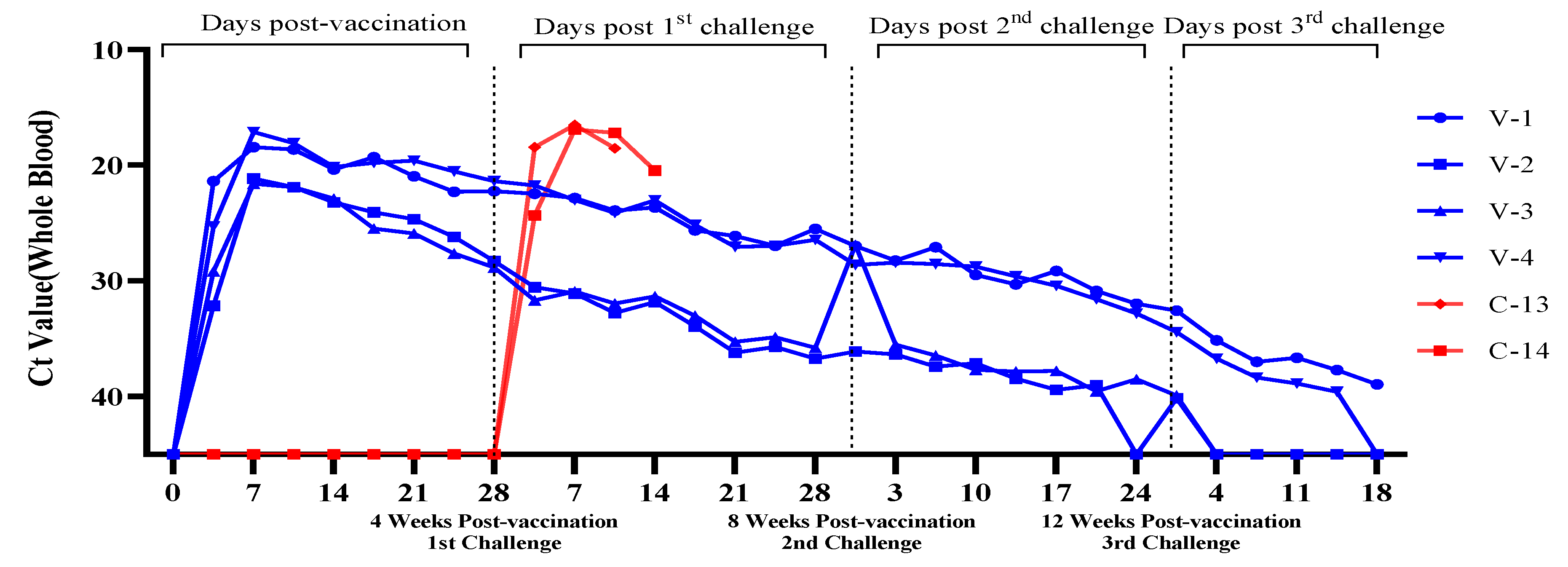
Figure 5a.
This graph shows vaccine-associated viremia observed in serum samples taken at intervals following three repeated challenges 4 weeks after vaccination. The positive detection criterion was Ct≤45. Although the challenge was repeated three times, vaccine-associated viremia was confirmed to be at undetectable levels in all animals starting 8 weeks prior to euthanasia.
Figure 5a.
This graph shows vaccine-associated viremia observed in serum samples taken at intervals following three repeated challenges 4 weeks after vaccination. The positive detection criterion was Ct≤45. Although the challenge was repeated three times, vaccine-associated viremia was confirmed to be at undetectable levels in all animals starting 8 weeks prior to euthanasia.
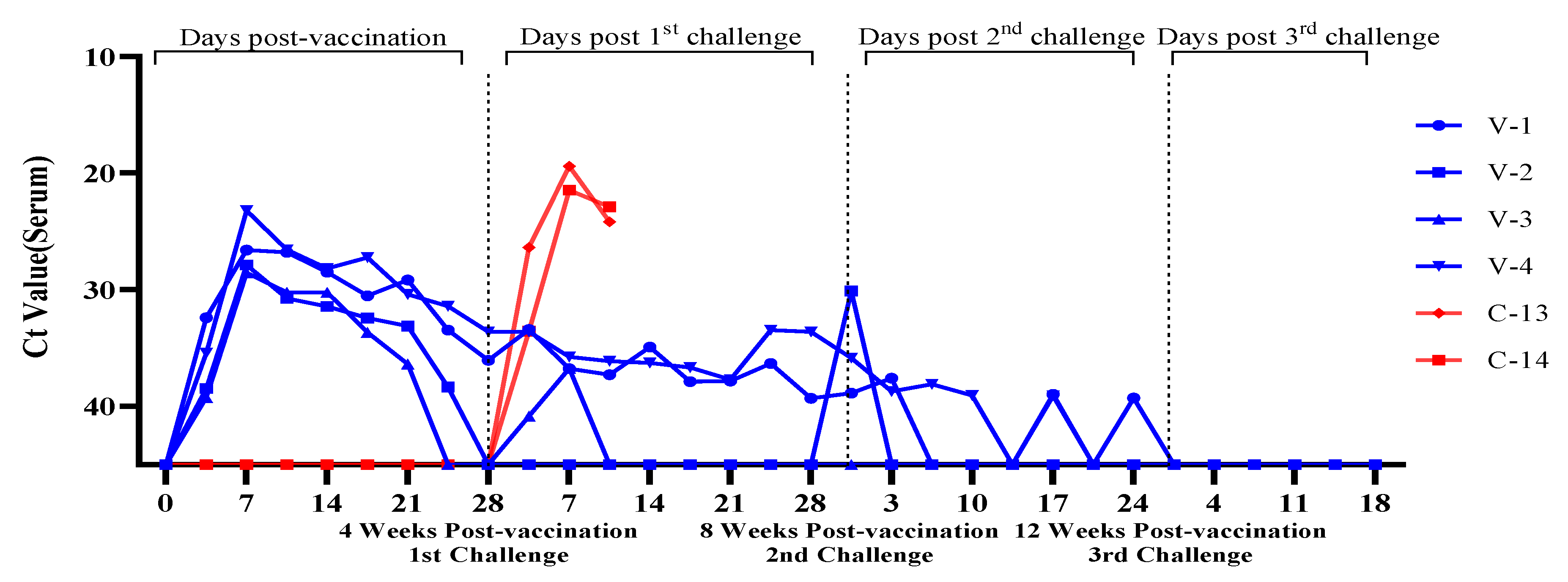
Figure 6.
This graph shows vaccine-associated viremia in whole blood following an 8-week challenge after vaccination. The positivity threshold is Ct≤45. A sharp decrease in vaccine-associated viremia is observed over time.
Figure 6.
This graph shows vaccine-associated viremia in whole blood following an 8-week challenge after vaccination. The positivity threshold is Ct≤45. A sharp decrease in vaccine-associated viremia is observed over time.
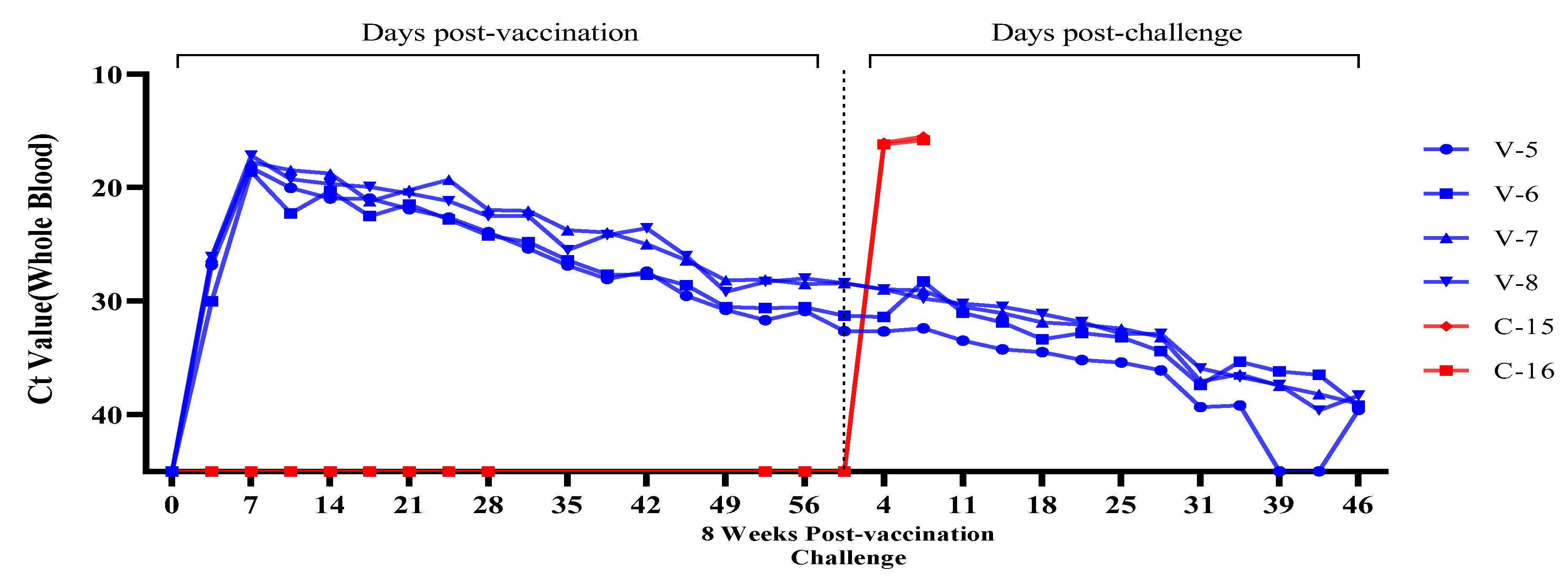
Figure 6a.
This graph shows vaccine-associated viremia observed in serum samples taken at various time points following vaccination and challenge 8 weeks later. The positive detection criterion is Ct≤45. Vaccine-associated viremia was confirmed to be at undetectable levels in all animals starting 3–4 weeks prior to euthanasia.
Figure 6a.
This graph shows vaccine-associated viremia observed in serum samples taken at various time points following vaccination and challenge 8 weeks later. The positive detection criterion is Ct≤45. Vaccine-associated viremia was confirmed to be at undetectable levels in all animals starting 3–4 weeks prior to euthanasia.
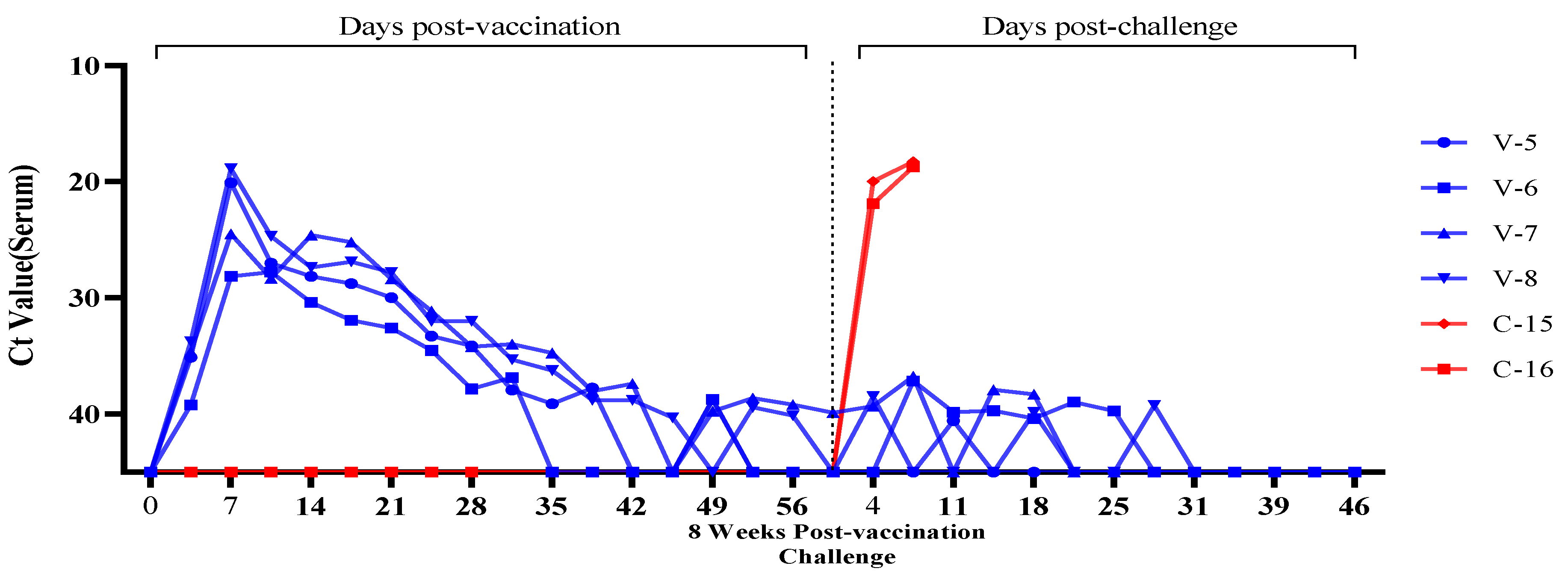
Figure 7.
This graph shows vaccine-associated viremia in whole blood following challenge at 12 weeks post-vaccination. The positivity threshold is Ct≤45. Over time, vaccine-associated viremia shows a sharp decline, with two out of the four animals testing negative.
Figure 7.
This graph shows vaccine-associated viremia in whole blood following challenge at 12 weeks post-vaccination. The positivity threshold is Ct≤45. Over time, vaccine-associated viremia shows a sharp decline, with two out of the four animals testing negative.
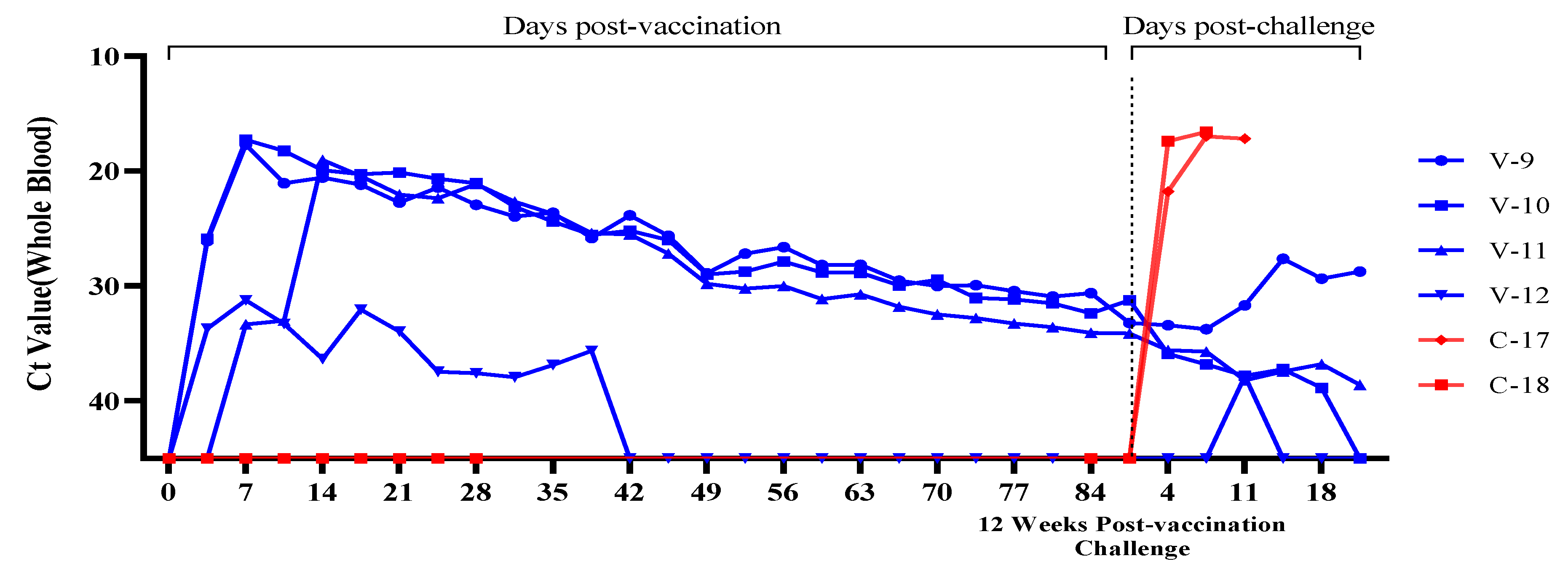
Figure 7a.
This graph shows vaccine-associated viremia observed in serum samples at different time points following vaccination and challenge 12 weeks later. The positive detection criterion is Ct≤45. Starting 3 weeks prior to euthanasia, vaccine-associated viremia was confirmed to be at undetectable levels in all animals except one.
Figure 7a.
This graph shows vaccine-associated viremia observed in serum samples at different time points following vaccination and challenge 12 weeks later. The positive detection criterion is Ct≤45. Starting 3 weeks prior to euthanasia, vaccine-associated viremia was confirmed to be at undetectable levels in all animals except one.
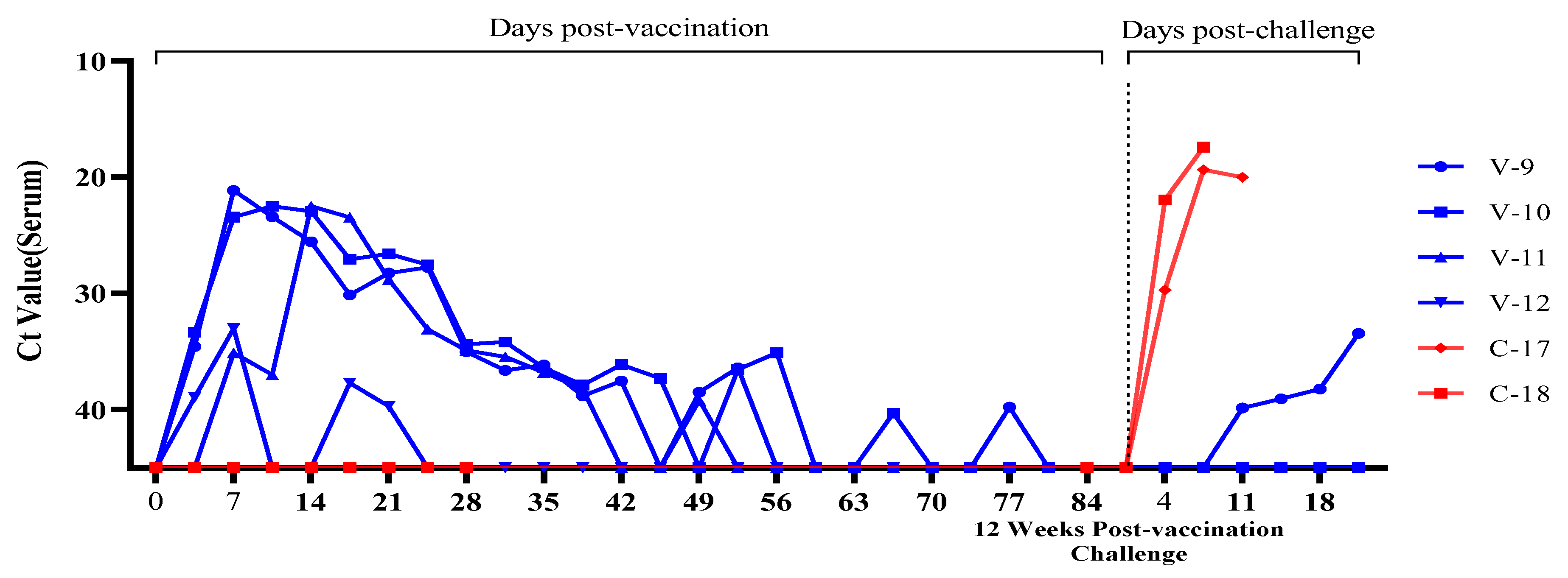
Figure 8.
Interferon(IFN)-γ ELISA. A temporary increase was observed in some individuals during the initial phase of vaccination, but no consistent overall upward trend was evident. Following the challenge, a similar pattern persisted without any significant additional increase. DPV, days post-vaccination; dpc, days post-challenge.
Figure 8.
Interferon(IFN)-γ ELISA. A temporary increase was observed in some individuals during the initial phase of vaccination, but no consistent overall upward trend was evident. Following the challenge, a similar pattern persisted without any significant additional increase. DPV, days post-vaccination; dpc, days post-challenge.
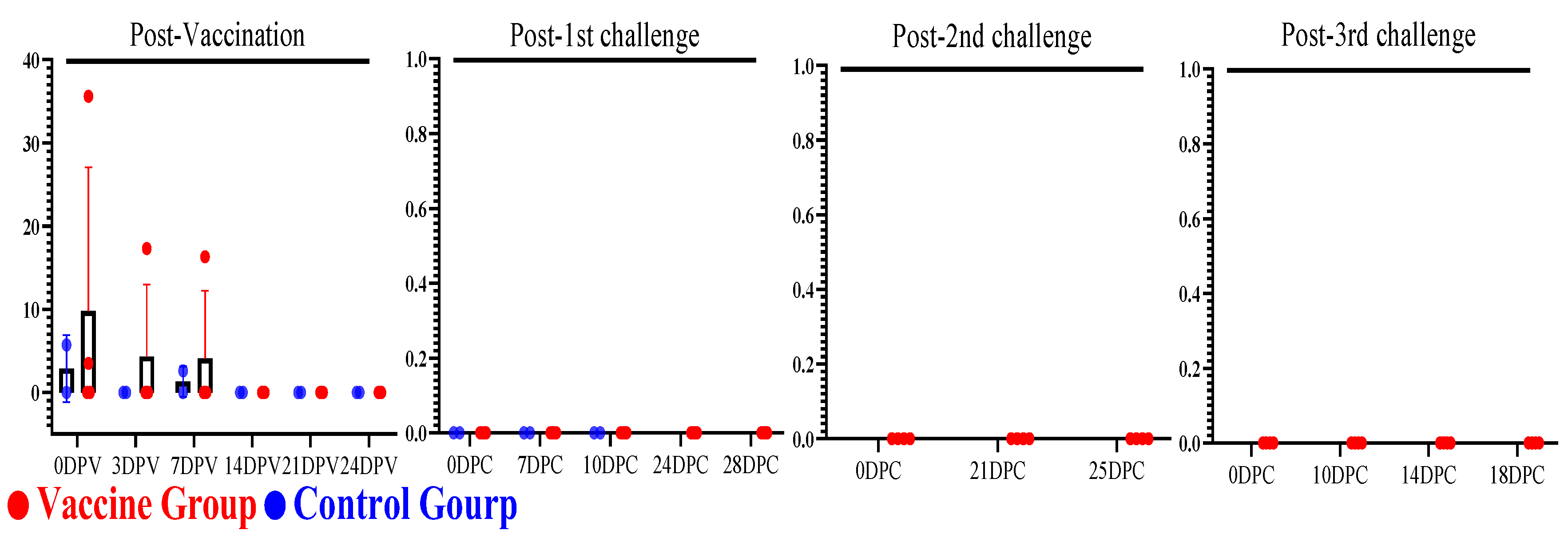
Figure 9.
a. IL-12/IL-23p40 ELISA. T-1 Group: The IL-12/IL-23p40 response showed an initial increase 7–14 days after vaccination, followed by a gradual stabilization trend. Even after repeated challenge vaccinations, the overall IL-12/IL-23p40 response pattern remained largely unchanged and maintained stabilization. C-1 Group: A sharp increase was observed 7 days after challenge vaccination. Subsequently, all control animals died. b. IL-12/IL-23p40 ELISA. T-2 Group: In the group challenged 8 weeks after vaccination, a gradual stabilization trend was observed following an initial rise between days 7 and 14 immediately after vaccination. A similar trend was confirmed post-challenge without significant changes. C-2 Group: A sharp rise was observed on day 7 after challenge vaccination. Subsequently, all control animals died. c. IL-12/IL-23p40 ELISA. T-3 Group: The group challenged at 12 weeks post-vaccination showed a trend of initial increase from 7 to 14 days after vaccination, followed by gradual stabilization. A similar trend was observed post-challenge without significant changes. C-3 Group: A sharp increase was observed on day 7 after challenge vaccination. Subsequently, all control animals died.
Figure 9.
a. IL-12/IL-23p40 ELISA. T-1 Group: The IL-12/IL-23p40 response showed an initial increase 7–14 days after vaccination, followed by a gradual stabilization trend. Even after repeated challenge vaccinations, the overall IL-12/IL-23p40 response pattern remained largely unchanged and maintained stabilization. C-1 Group: A sharp increase was observed 7 days after challenge vaccination. Subsequently, all control animals died. b. IL-12/IL-23p40 ELISA. T-2 Group: In the group challenged 8 weeks after vaccination, a gradual stabilization trend was observed following an initial rise between days 7 and 14 immediately after vaccination. A similar trend was confirmed post-challenge without significant changes. C-2 Group: A sharp rise was observed on day 7 after challenge vaccination. Subsequently, all control animals died. c. IL-12/IL-23p40 ELISA. T-3 Group: The group challenged at 12 weeks post-vaccination showed a trend of initial increase from 7 to 14 days after vaccination, followed by gradual stabilization. A similar trend was observed post-challenge without significant changes. C-3 Group: A sharp increase was observed on day 7 after challenge vaccination. Subsequently, all control animals died.
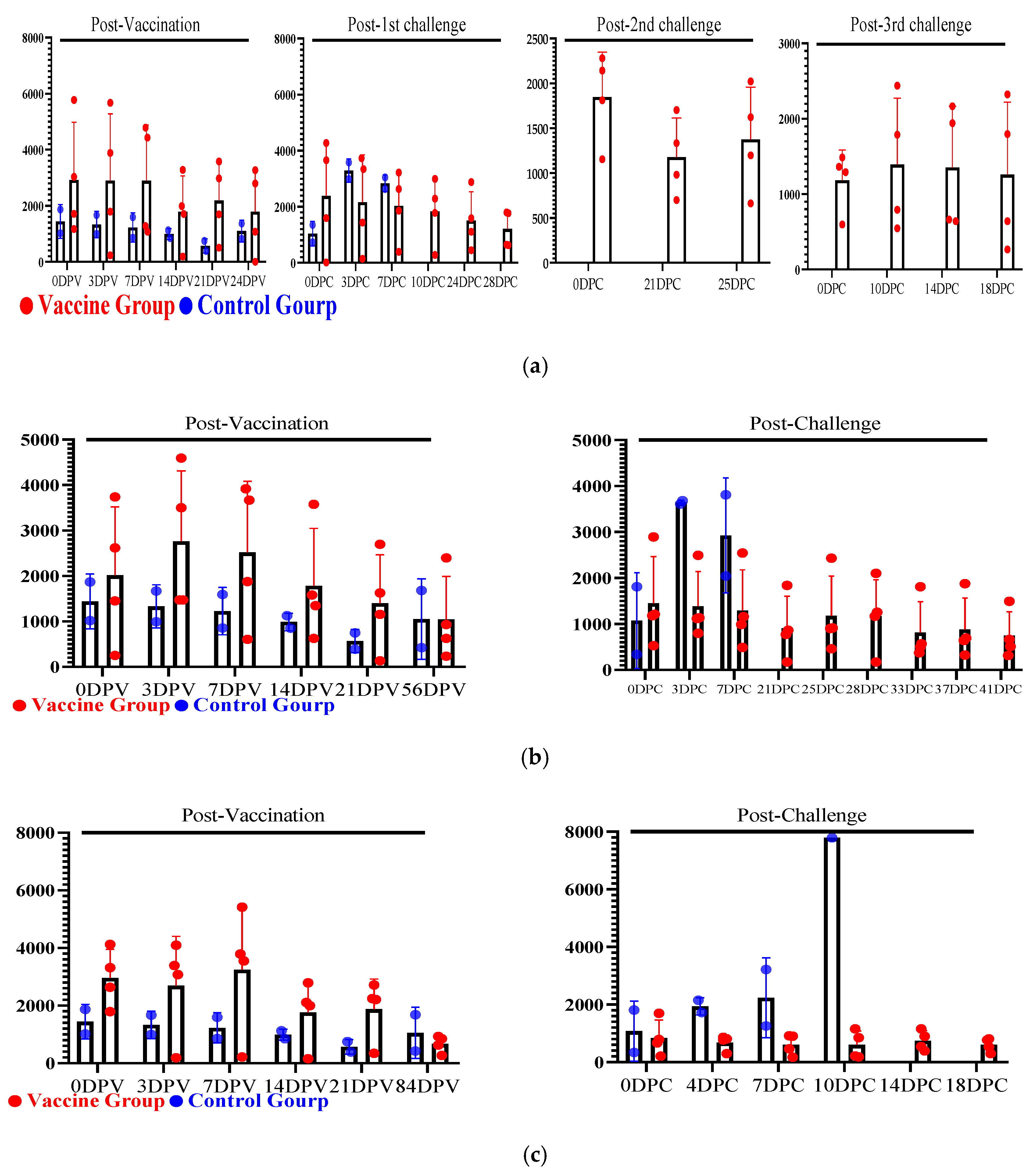
Figure 10.
a. Interleukin-1 receptor antagonist (IL-1ra) ELISA. T-1 Group: The IL-1ra response showed an initial increase 7–14 days after vaccination, followed by a gradual stabilization trend. Even after repeated challenge vaccinations, the overall IL-1ra response pattern remained largely unchanged and maintained stabilization. C-1 Group: A sharp increase was observed 7 days after challenge vaccination. Subsequently, all control animals died. b. IL-1ra ELISA. T-2 Group: The group challenged at 8 weeks post-vaccination showed an initial rise immediately after vaccination, followed by a gradual stabilization trend. A similar trend was observed without significant change even after the challenge. C-2 Group: A sharp increase was observed on day 7 post-challenge vaccination. Subsequently, all control animals died. c. IL-1ra ELISA. T-3 Group: The group challenged at 12 weeks post-vaccination showed a trend of initial increase from 7 to 14 days immediately after vaccination, followed by gradual stabilization. Post-challenge, a similar stabilization trend was observed without significant change. C-3 Group: A sharp increase was observed at 7 days post-challenge vaccination. Subsequently, all control animals died.
Figure 10.
a. Interleukin-1 receptor antagonist (IL-1ra) ELISA. T-1 Group: The IL-1ra response showed an initial increase 7–14 days after vaccination, followed by a gradual stabilization trend. Even after repeated challenge vaccinations, the overall IL-1ra response pattern remained largely unchanged and maintained stabilization. C-1 Group: A sharp increase was observed 7 days after challenge vaccination. Subsequently, all control animals died. b. IL-1ra ELISA. T-2 Group: The group challenged at 8 weeks post-vaccination showed an initial rise immediately after vaccination, followed by a gradual stabilization trend. A similar trend was observed without significant change even after the challenge. C-2 Group: A sharp increase was observed on day 7 post-challenge vaccination. Subsequently, all control animals died. c. IL-1ra ELISA. T-3 Group: The group challenged at 12 weeks post-vaccination showed a trend of initial increase from 7 to 14 days immediately after vaccination, followed by gradual stabilization. Post-challenge, a similar stabilization trend was observed without significant change. C-3 Group: A sharp increase was observed at 7 days post-challenge vaccination. Subsequently, all control animals died.
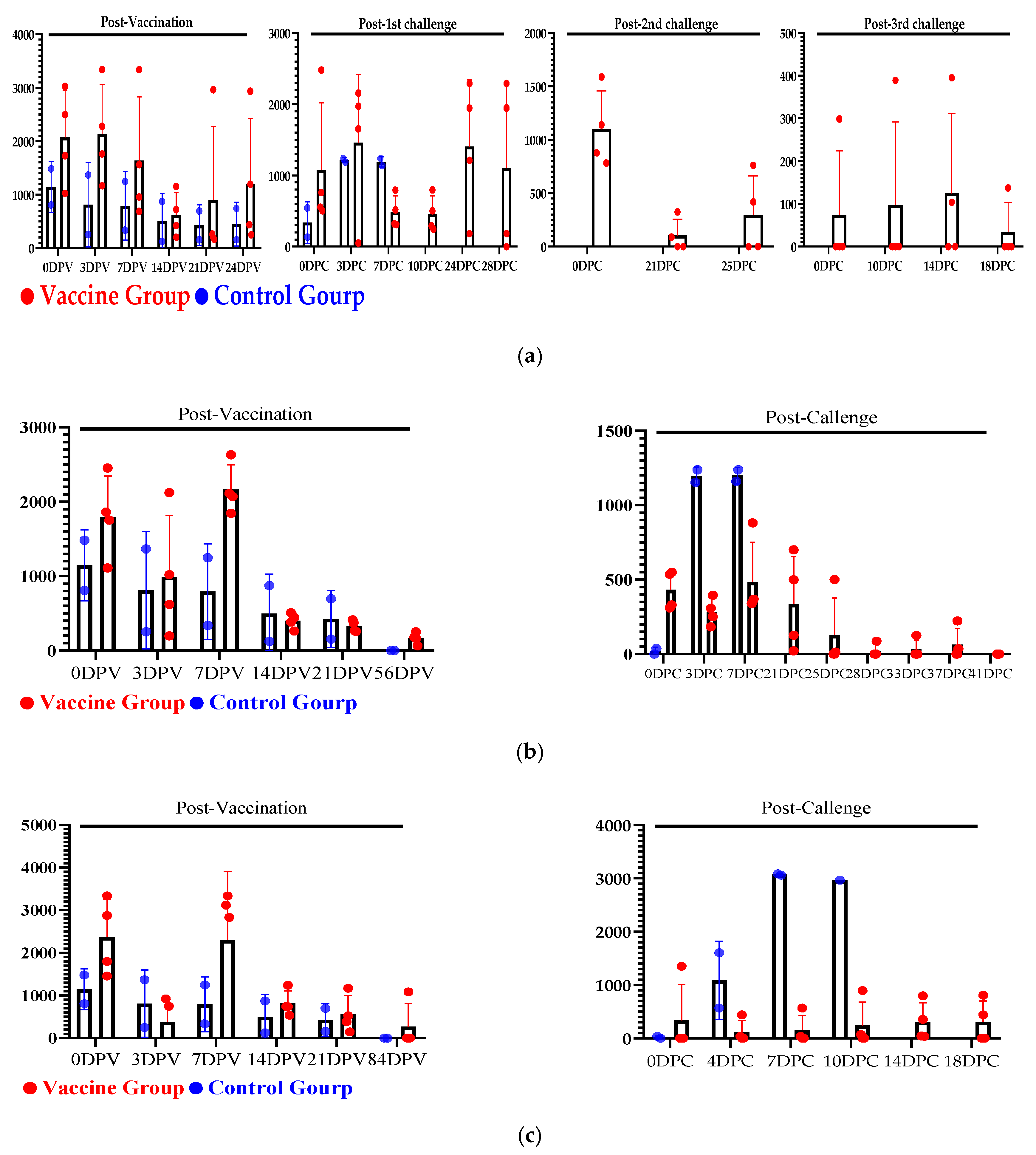

Table 1.
Summary of the ASFV vaccine clinical trial design.
| Trial Group | Animal No. Identification | Number of Challenge & Timing | Vaccine/Dose | Challenge/Dose | Route | ||
|---|---|---|---|---|---|---|---|
| T-1 | 4 (*V1–V4) | 1st | 2nd | 3rd | ASFV-G-ΔI177L/ΔLVR /103TCID50 | ASFV-Hwacheon/2020 (G-II) /102HAD50 |
IM |
| 4WPV | 8WPV | 12WPV | |||||
| T-2 | 4 (V5–V8) | 8WPV | |||||
| T-3 | 4 (V9–V12) | 12WPV | |||||
| C-1 | 2 (§C13–C14) | T-1 Challenge control | Not applicable | ||||
| C-2 | 2 (C15–C16) | T-2 Challenge control | |||||
| C-3 | 2 (C17–C18) | T-3 Challenge control | |||||
*; Vaccinated; §; Control; WPV; week post-vaccination, IM; Intramuscular.
Table 2.
ASF vaccine antibody in blood samples of the T-1 and C-1 groups.
| Group | S/N % (cELISA) | ||||||||||||||||||||||||||||||
|---|---|---|---|---|---|---|---|---|---|---|---|---|---|---|---|---|---|---|---|---|---|---|---|---|---|---|---|---|---|---|---|
| DPV (Days Post-Vaccination) |
1st DPC (1st Days Post-Challenge) |
2nd DPC (2nd Days Post-Challenge) |
3rd DPC (3rd Days Post-Challenge) |
||||||||||||||||||||||||||||
| 0 | 3 | 7 | 10 | 14 | 21 | 24 | 28 | 3 | 7 | 10 | 14 | 17 | 21 | 24 | 28 | 31 | 4 | 7 | 11 | 14 | 18 | 21 | 25 | 28 | 4 | 7 | 11 | 14 | 18 | ||
| T1 | V-1 | 75.6 | 73.5 | 35.9 | 25.2 | 23.7 | 24.1 | 25.9 | 22.5 | 20.3 | 15.0 | 10.6 | 8.4 | 6.8 | 4.6 | 3.0 | 1.0 | 0.1 | 0.6 | 0.6 | 0.6 | 1.0 | 0.6 | 1.4 | 1.2 | 1.6 | 1.7 | 0.6 | 0.0 | 0.3 | 0.9 |
| V-2 | 82.0 | 76.9 | 40.2 | 10.3 | 14.8 | 20.6 | 22.5 | 20.3 | 21.0 | 16.4 | 12.4 | 10.1 | 9.6 | 7.0 | 5.1 | 4.1 | 3.1 | 2.2 | 0.7 | 0.7 | 0.8 | -0.5 | 0.0 | -0.5 | -0.6 | -1.0 | -1.8 | -1.7 | -1.6 | -0.9 | |
| V-3 | 85.1 | 73.6 | 51.3 | 28.0 | 26.5 | 24.9 | 27.5 | 18.6 | 13.7 | 8.5 | 4.3 | 3.1 | 2.6 | 1.5 | 1.7 | 0.6 | 1.4 | 1.0 | 0.9 | 0.9 | 0.9 | 0.7 | 1.2 | 0.5 | 1.4 | 0.6 | 0.2 | 0.2 | -0.2 | 1.1 | |
| V-4 | 76.9 | 63.3 | 47.0 | 22.4 | 20.4 | 19.6 | 22.5 | 18.1 | 11.4 | 11.6 | 11.0 | 8.7 | 7.9 | 5.9 | .8 | 4.1 | 4.0 | 2.5 | 2.2 | 2.1 | 1.5 | 1.4 | 1.9 | 1.9 | 2.3 | 1.9 | 1.9 | 1.2 | 1.4 | 3.0 | |
| C-1 | C-13 | 79.8 | 75.1 | 76.5 | 73.2 | 85.9 | 79.2 | 88.0 | 94.6 | 85.8 | 41.0 | 16.6 | D | - | - | - | - | - | - | - | - | - | - | - | - | - | - | - | - | - | - |
| C-14 | 76.9 | 81.2 | 77.5 | 73.3 | 83.7 | 70.8 | 92.1 | 87.5 | 73.2 | 29.6 | 20.7 | D | - | - | - | - | - | - | - | - | - | - | - | - | - | - | - | - | - | - | |
Table 3.
ASF vaccine antibody in blood samples of the T-2 and C-2 groups.
| Group | S/N % (cELISA) | |||||||||||||||||||||||||||||||
|---|---|---|---|---|---|---|---|---|---|---|---|---|---|---|---|---|---|---|---|---|---|---|---|---|---|---|---|---|---|---|---|---|
| DPV (Days Post-Vaccination) | DPC (Days Post-Challenge) | |||||||||||||||||||||||||||||||
| 0 | 3 | 7 | 10 | 14 | 17 | 21 | 24 | 28 | 31 | 35 | 38 | 42 | 45 | 49 | 52 | 56 | 59 | 4 | 7 | 11 | 14 | 18 | 21 | 25 | 28 | 32 | 35 | 39 | 42 | 46 | ||
| T2 | V-5 | 83.9 | 80.7 | 55.5 | 22.0 | 24.2 | 28.6 | 24.3 | 31.5 | 27.2 | 17.1 | 14.3 | 11.0 | 9.3 | 7.9 | 5.6 | 4.3 | 2.6 | 3.3 | 1.1 | 1.3 | 1.1 | 0.0 | -0.6 | 0.0 | -0.5 | -0.7 | -0.2 | -0.7 | -1.6 | -1.8 | 1.4 |
| V-6 | 80.9 | 83.0 | 41.3 | 19.5 | 18.6 | 14.9 | 13.3 | 18.1 | 18.6 | 12.6 | 13.0 | 12.2 | 10.9 | 12.1 | 10.3 | 9.9 | 8.2 | 7.7 | 6.2 | 4.4 | 0.6 | -0.3 | -0.5 | -0.7 | -1.7 | -1.1 | 0.2 | -1.0 | -1.4 | -1.5 | -1.2 | |
| V-7 | 79.0 | 76.2 | 36.4 | 24.4 | 32.8 | 29.9 | 29.3 | 27.2 | 18.7 | 15.6 | 15.5 | 12.4 | 11.7 | 12.5 | 10.8 | 11.2 | 10.9 | 12.9 | 9.3 | 13.1 | 7.3 | 5.5 | 3.9 | 2.5 | -0.4 | 0.3 | 0.5 | -0.6 | -0.1 | -1.2 | 0.0 | |
| V-8 | 82.9 | 75.6 | 48.3 | 24.0 | 20.3 | 18.4 | 19.2 | 19.9 | 14.7 | 10.9 | 10.7 | 7.7 | 6.9 | 6.8 | 4.6 | 3.8 | 3.3 | 4.0 | 2.2 | 1.8 | 0.1 | -0.5 | -0.9 | -0.8 | -1.7 | -1.7 | -1.9 | -2.5 | -2.0 | -2.8 | -2.2 | |
| C-2 | C-15 | 82.2 | 88.0 | 85.3 | 78.4 | 78.8 | 82.3 | 83.8 | 85.0 | 89.9 | No Data | 83.9 | 89.7 | 82.8 | 89.7 | 48.6 | D | - | - | - | - | - | - | - | - | - | - | |||||
| C-16 | 77.6 | 78.3 | 79.9 | 85.3 | 75.4 | 80.2 | 79.5 | 85.5 | 95.5 | 92.5 | 91.3 | 85.6 | 81.3 | 47.8 | D | - | - | - | - | - | - | - | - | - | - | |||||||
Table 4.
ASF vaccine antibody in blood samples of the T-3 and C-3 groups.
| Group | S/N % (cELISA) | |||||||||||||||||||||||||||||||||
|---|---|---|---|---|---|---|---|---|---|---|---|---|---|---|---|---|---|---|---|---|---|---|---|---|---|---|---|---|---|---|---|---|---|---|
| DPV (Days Post-Vaccination) | DPC (Days Post-Challenge) |
|||||||||||||||||||||||||||||||||
| 0 | 3 | 7 | 10 | 14 | 17 | 21 | 24 | 28 | 31 | 35 | 38 | 42 | 45 | 49 | 52 | 56 | 59 | 63 | 66 | 70 | 73 | 77 | 80 | 84 | 87 | 4 | 7 | 11 | 14 | 18 | 21 | |||
| T3 | V-9 | 83.0 | 74.8 | 37.9 | 17.2 | 16.4 | 15.5 | 13.9 | 12.8 | 9.3 | 6.4 | 6.9 | 4.3 | 3.6 | 3.9 | 3.0 | 1.9 | 1.3 | 1.9 | 1.2 | 1.4 | 1.1 | 0.8 | 0.4 | 0.5 | 0.5 | 0.6 | 0.5 | -0.2 | -0.6 | -1.6 | -2.7 | -2.3 | |
| V-10 | 87.6 | 75.2 | 52.9 | 27.9 | 30.1 | 29.4 | 32.9 | 32.7 | 20.5 | 11.9 | 10.7 | 7.3 | 6.3 | 5.9 | 5.8 | 4.0 | 4.2 | 4.4 | 3.6 | 3.5 | 2.6 | 2.6 | 2.1 | 2.1 | 2.7 | 2.8 | 3.4 | 1.5 | 1.3 | 1.5 | 2.0 | 2.0 | ||
| V-11 | 81.1 | 72.8 | 74.3 | 56.2 | 41.9 | 25.9 | 23.3 | 24.6 | 22.5 | 15.7 | 11.7 | 9.3 | 7.6 | 6.3 | 5.2 | 3.5 | 2.4 | 2.5 | 1.2 | 3.3 | 0.0 | -0.2 | -0.4 | -0.5 | -0.6 | -0.5 | -0.2 | -1.5 | -1.7 | -1.7 | -1.3 | -1.7 | ||
| V-12 | 77.9 | 76.0 | 58.1 | 41.9 | 44.1 | 44.1 | 35.0 | 33.4 | 32.6 | 23.5 | 20.6 | 17.9 | 16.0 | 15.8 | 13.9 | 11.2 | 9.1 | 9.5 | 7.5 | 7.3 | 6.0 | 5.3 | 6.5 | 5.3 | 5.1 | 5.5 | 6.3 | 4.7 | 3.8 | 3.8 | 2.7 | 1.7 | ||
| C-3 | C-17 | 85.4 | 81.3 | 85.5 | 86.4 | 75.8 | 82.0 | 79.2 | 82.8 | 89.3 | No Data | 56.9 | 63.6 | 61.2 | 60.6 | 22.3 | D | - | - | - | ||||||||||||||
| C-18 | 79.3 | 84.1 | 85.5 | 79.6 | 82.7 | 90.9 | 90.4 | 89.3 | 102.3 | 81.0 | 56.5 | 83.6 | 60.9 | D | - | - | - | - | ||||||||||||||||
Abbreviations: ASF, African swine fever; S/N%, sample-to-negative control percentage; DPV, days post-vaccination; DPC, days post-challenge. Values are presented as individual competitive enzyme-linked immunosorbent assay (cELISA) S/N% results. According to the assay criteria, S/N% values of ≤40% were considered positive, 41–49% doubtful, and ≥50% negative. “D” indicates that the animal died. “No Data” indicates that the sample was not collected or that the result was unavailable. “-” indicates no available data.
Disclaimer/Publisher’s Note: The statements, opinions and data contained in all publications are solely those of the individual author(s) and contributor(s) and not of MDPI and/or the editor(s). MDPI and/or the editor(s) disclaim responsibility for any injury to people or property resulting from any ideas, methods, instructions or products referred to in the content. |
© 2026 by the authors. Licensee MDPI, Basel, Switzerland. This article is an open access article distributed under the terms and conditions of the Creative Commons Attribution (CC BY) license (http://creativecommons.org/licenses/by/4.0/).
Copyright: This open access article is published under a Creative Commons CC BY 4.0 license, which permit the free download, distribution, and reuse, provided that the author and preprint are cited in any reuse.


