
Submitted:
07 April 2026
Posted:
08 April 2026
You are already at the latest version
Abstract
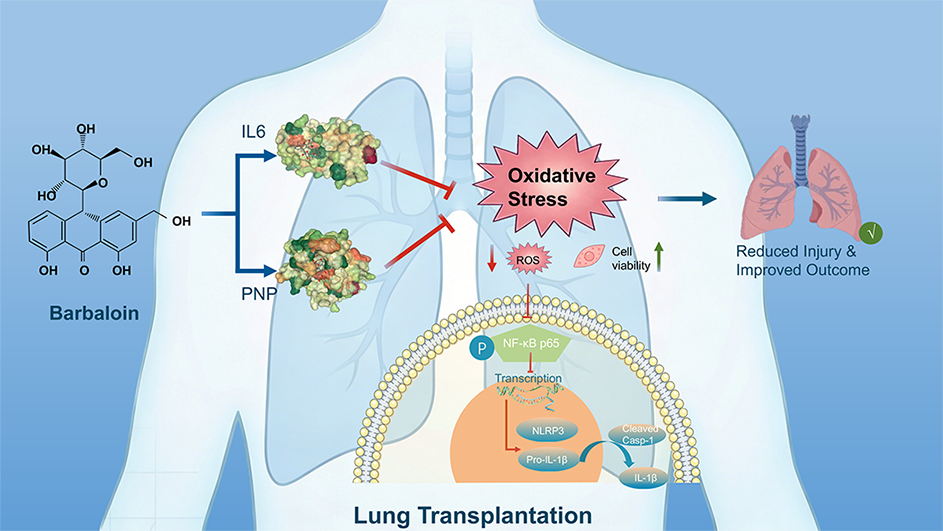
Ischemia-reperfusion injury (IRI) is a primary driver of graft dysfunction following lung transplantation, yet effective therapeutic strategies remain limited. Through integrated multi-omics analysis, target prediction, and experimental validation, this study identifies barbaloin as a potent dual-target agent that alleviates lung IRI by simultaneously inhibiting interleukin-6 (IL-6) and purine nucleoside phosphorylase (PNP). Mechanistically, barbaloin reduces intracellular Reactive Oxygen Species (ROS) accumulation by suppressing both IL-6 and PNP, thereby abrogating the ROS-dependent NF-κB/NLRP3 signaling cascade and subsequent immune-inflammatory responses. These findings highlight the pivotal role of the IL-6/PNP axis in mediating barbaloin’s antioxidant and anti-inflammatory effects. Furthermore, barbaloin’s favorable ADMET profile supports its potential as a novel therapeutic candidate for lung transplantation and other oxidative stress-driven inflammatory disorders.
Keywords:
lung transplantation
; ischemia-reperfusion injury
; barbaloin
; IL-6
; PNP
; oxidative stress
; NF-κB/NLRP3 inflammasome
Copyright: This open access article is published under a Creative Commons CC BY 4.0 license, which permit the free download, distribution, and reuse, provided that the author and preprint are cited in any reuse.


