
Submitted:
06 April 2026
Posted:
07 April 2026
You are already at the latest version
Abstract
Cardiovascular diseases remain the leading cause of mortality worldwide, with coronary artery disease being the most significant contributor. The management of coronary artery disease, including stable ischemic heart disease and acute coronary syndrome, through non-surgical revascularization procedures has been widely practiced and extensively discussed in the literature, particularly regarding the benefits of complete revascularization. Complete revascularization has been associated with better prognostic outcomes and improved functional capacity in patients compared to incomplete revascularization. This study aims to compare the functional capacity, as measured by the six-minute walk test (6MWT), between patients undergoing complete and incomplete revascularization. The study employed a cross-sectional design and was conducted at Prof. Dr. R.D. Kandou General Hospital, Manado, within the Division of Cardiac Prevention and Rehabilitation. The study population consisted of hospitalized coronary artery disease patients who had undergone revascularization procedures and completed the 6MWT. Data collection took place from October 2020 to October 2023, yielding a total sample of 303 patients. The findings of this study demonstrate a significant difference in the functional capacity, as assessed by the 6MWT, between patients who underwent complete and incomplete revascularization procedures. Patients who underwent complete revascularization exhibited better functional capacity, as indicated by the greater distance covered during the 6MWT, compared to those who underwent incomplete revascularization.
Keywords:
six-minute walk test
; revascularization
; coronary artery disease
; cardiac rehabilitation
Introduction
According to Indonesia’s 2018 Basic Health Research (Riset Kesehatan Dasar), the incidence of heart disease has continued to rise, with an estimated 15 out of every 1,000 individuals in Indonesia affected by heart conditions, with coronary artery disease ranked as the leading cause [1]. Coronary artery disease is a major cause of morbidity and mortality worldwide [2,3]. To improve morbidity and mortality outcomes in patients with coronary artery disease, various therapeutic interventions have been developed, including pharmacological treatments, percutaneous revascularization, and coronary artery bypass grafting (CABG). Revascularization, either through percutaneous coronary intervention (PCI) or CABG, has been shown to reduce angina, enhance functional capacity, and improve quality of life in patients with coronary artery disease [4,5].
The management of coronary artery disease, including stable ischemic heart disease and acute coronary syndromes, often involves non-surgical revascularization, and extensive literature supports the benefits of complete revascularization. A landmark trial, the COMPLETE trial, demonstrated that angiography-guided PCI aimed at complete revascularization significantly reduced cardiovascular mortality and new myocardial infarction rates compared to culprit-lesion-only PCI in patients with ST-segment elevation myocardial infarction [6]. Various guidelines and literature on coronary revascularization also recommend complete revascularization prior to patient discharge, whether for patients with stable angina or acute coronary syndrome with stable hemodynamics [7,8].
Several modalities exist for the objective evaluation of functional capacity, with one of the most widely used clinical functional tests being the six-minute walk test (6MWT). The 6MWT is a simple and practical test requiring only a 30-meter walking track, minimal equipment, and no advanced technician training. Walking is a daily activity performed by almost everyone, except for those with severe physical disabilities. The test measures the distance a patient can walk on a flat, hard surface within six minutes [9].
The 6MWT, first introduced by the American Thoracic Society in 2002, is a simple submaximal exercise test used to assess aerobic capacity, endurance, therapeutic effects, and prognosis [9]. It provides an indirect estimation of oxygen consumption without requiring advanced cardiac stress testing. Unlike other cardiac stress tests, the 6MWT is inexpensive, easy to administer, highly reproducible, and widely available in all healthcare facilities, requiring only a marked track, a stopwatch, and clear instructions [10]. When combined with optimal cut-off values, the 6MWT can predict major adverse cardiovascular events (MACE) in post-percutaneous revascularization patients [11]. A study by Fiorina et al. demonstrated that the 6MWT is applicable to both adults and elderly patients post-cardiac surgery and serves as a baseline reference in cardiac rehabilitation centers [12].
Patients undergoing complete revascularization are associated with better prognostic outcomes compared to those with incomplete revascularization, supported by improved functional capacity [13]. Therefore, this study aims to compare the functional capacity, as assessed by the 6MWT, in patients who have undergone complete versus incomplete revascularization. Specifically, this research aims to compare functional capacity based on distance and METs obtained from the 6MWT between patients with complete and incomplete revascularization, and analyze differences in functional capacity based on gender among these patients.
Introduction
Research Design
This study employed an experimental research design, with subjects selected using the accidental sampling method. A total of 303 patients participated in the study. The inclusion criteria were patients diagnosed with coronary heart disease who underwent percutaneous coronary revascularization and completed the 6MWT. Patients were excluded if they were unable to complete the 6MWT due to technical issues or if contraindications prevented them from continuing the test.
The independent variable was the outcome of the revascularization procedure (complete or incomplete), while the dependent variables were the distance and functional capacity measured during the 6MWT. Data analysis was conducted using SPSS version 21. Levene’s test was used to assess the equality of variances, followed by an independent t-test to compare the distances covered during the 6MWT between patients with complete and incomplete revascularization. Results were presented in the form of tables and narrative descriptions. Ethical clearance for the study was obtained from the Ethics Committee of RSUP Prof. Dr. R.D. Kandou, Manado, prior to commencing the research.
Data Collection
Informed consent and a thorough explanation of the study were provided to all eligible patients who had undergone either complete or incomplete revascularization. The 6MWT was performed in the rehabilitation unit of the Division of Prevention and Cardiac Rehabilitation at RSUP Prof. Dr. R.D. Kandou, Manado, under the supervision of physicians and medical personnel. After completing the 6MWT, the distance covered by each patient was recorded and converted into METs (Metabolic Equivalents). The final data were analyzed statistically, and the findings were processed for presentation. The results of this study are intended to serve as a reference in the field of healthcare.
Results & Discussion
This study involved a total of 303 patients. The distribution between patients undergoing complete PCI and those undergoing incomplete PCI was relatively balanced, with 153 patients (50.4%) in the complete PCI group and 150 patients (49.6%) in the incomplete PCI group. The age of the participants ranged from 28 to 82 years, with a mean age of 57 years (SD=9.90). The majority of patients were male, accounting for 83.8% of the total sample (n=254). The distribution of patients undergoing complete and incomplete revascularization by gender was also relatively balanced: 24 females and 129 males in the complete PCI group, compared to 25 females and 125 males in the incomplete PCI group. The average 6MWT distance for all patients was 303.9 meters (SD=75.21), with the shortest distance recorded at 72 meters and the longest at 540 meters.

Table 1.
Distribution of patient characteristics.
| Characteristic | n (%) | Mean |
|---|---|---|
| Age | - | 57 |
| Sex | ||
| Male | 254 (83,8) | - |
| Female | 49 (16,2) | - |
| Revascularization | ||
| Complete | 153 (50,4) | - |
| Incomplete | 150 (49,6) | - |
| Primary PCI | 125 (41,2) | - |
| Elective PCI | 178 (58,8) | - |
Table 2.
Results of 6MWT measurement on revascularization.
| Procedure | Revascularization | Description | Range (m) |
|---|---|---|---|
| 6MWT | Complete | Mean | 316 |
| Median | 328 | ||
| Standard Deviation | 70 | ||
| Incomplete | Mean | 290 | |
| Median | 300 | ||
| Standard Deviation | 77 |
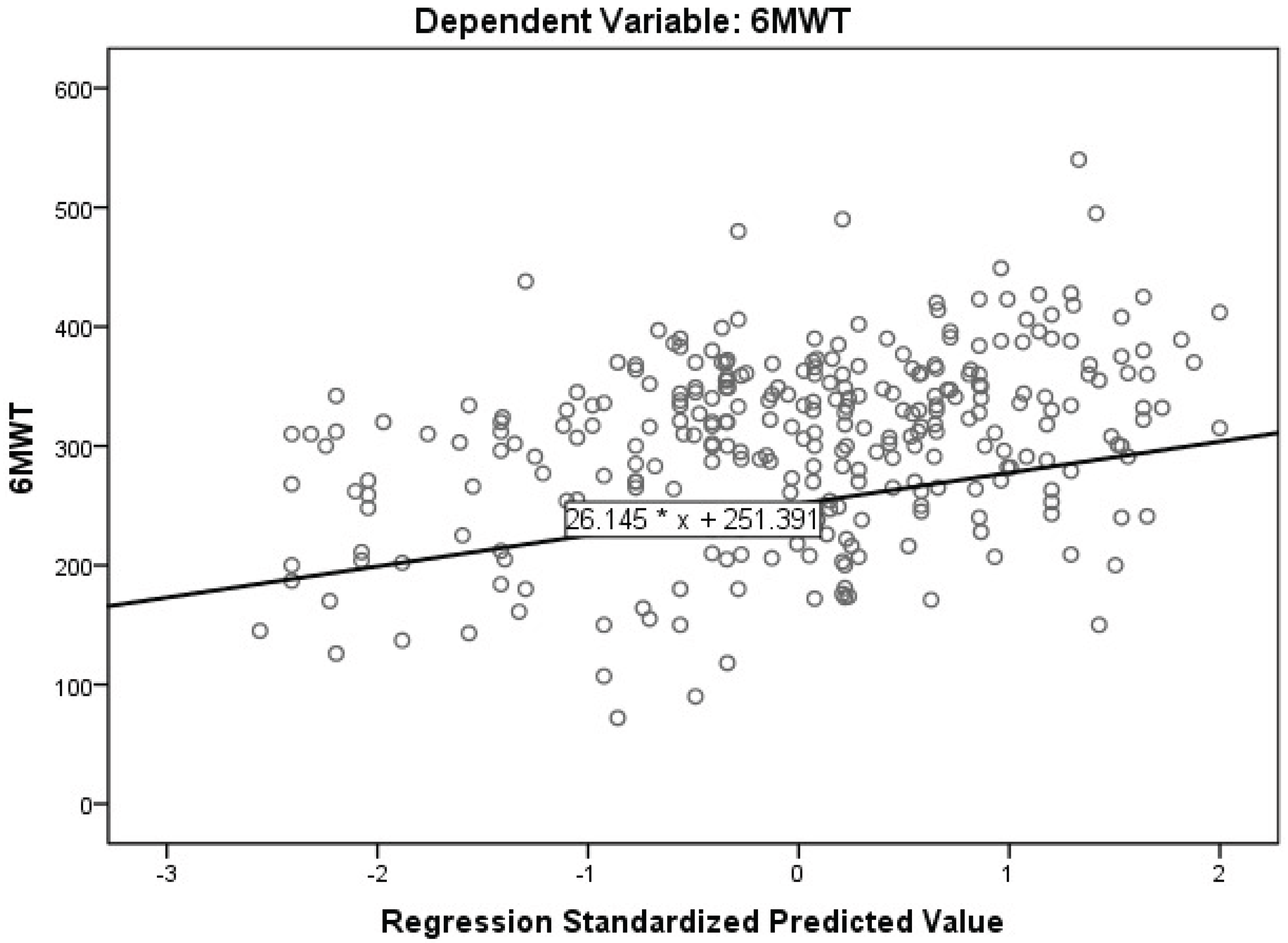
To assess the differences in 6MWT performance between the complete and incomplete PCI groups, a statistical analysis was conducted. The results revealed a significant difference in the 6MWT distances between the two groups. Patients in the complete PCI group achieved a mean distance of 316.9±70.6 meters, compared to 290.5±77.6 meters in the incomplete PCI group, yielding t(301)=3.1; p=0.002. These findings indicate that patients who underwent complete revascularization demonstrated superior functional capacity, as reflected by both the greater 6MWT distance and higher METs scores, compared to those who underwent incomplete revascularization.
In the subgroup analysis based on gender, no significant difference was observed in the 6MWT performance between females who underwent complete versus incomplete PCI (t [47]=0.94; p=0.35). However, among males, a significant difference was noted, with those in the complete PCI group performing better than those in the incomplete PCI group (t[252]=3.01; p=0.003).
Table 3.
Results of 6MWT measurement on revascularization.
| T-Test For Equality | ||||||
| df. | Sig. (2-tailed) | Mean Difference | 95% Confidence Interval of the Difference | |||
| Lower | Upper | |||||
| 6MWT | Equal Variances | 301 | 0.002 | 26.41 | 9.64 | 43.18 |
| Equal Variances Not Assumed | 297,1 | 0.002 | 26.41 | 9.62 | 43.19 | |
The results of this study indicate that patients undergoing complete PCI exhibited significantly better functional capacity compared to those undergoing incomplete PCI. This conclusion is supported by the difference in mean distances achieved during the 6MWT, with the complete PCI group averaging 316.9±70.6 meters compared to 290.5±77.6 meters in the incomplete PCI group (t[301]=3.1; p=0.002). The findings highlight the critical role of complete revascularization in enhancing physical functionality, particularly in terms of cardiovascular and overall physical endurance.
The improved functional capacity in the complete PCI group may have far-reaching clinical implications. First, complete revascularization could potentially reduce the risk of recurrent cardiac events and improve long-term quality of life by enhancing exercise tolerance and physical activity levels [14]. This finding emphasizes the importance of achieving complete revascularization when feasible, especially in patients who are candidates for elective PCI. Moreover, the results may influence clinical guidelines by advocating for a more robust effort to achieve complete revascularization in appropriate patients to optimize functional outcomes. Additionally, the significant difference observed in functional capacity suggests that the degree of myocardial perfusion restoration plays a pivotal role in determining post-procedural physical performance [15]. This relationship underscores the importance of targeting not just symptom relief but also functional improvement when planning PCI procedures.
The superior performance in the 6MWT observed in the complete PCI group is likely attributable to better restoration of coronary blood flow and myocardial oxygen supply. Complete revascularization addresses all ischemic regions of the myocardium, thereby improving overall cardiac output and reducing ischemic burden during physical exertion. Conversely, incomplete revascularization may leave residual ischemia, which can limit functional recovery and physical performance [16]. The lack of significant differences in the female subgroup (t[47]=0.94; p=0.35) may be explained by the smaller sample size of female patients, leading to insufficient statistical power to detect a difference. Additionally, physiological and hormonal differences, as well as variations in baseline fitness levels, could contribute to the observed gender-specific outcomes. In contrast, the significant improvement in functional capacity among males who underwent complete PCI (t[252]=3.01; p=0.003) suggests that this group may experience greater cardiovascular benefits from the procedure, possibly due to differences in coronary anatomy or higher baseline physical activity levels.
Despite the robust findings, several limitations warrant consideration. First, the cross-sectional design of the study limits causal inferences regarding the relationship between revascularization completeness and functional capacity. Future studies with longitudinal designs are necessary to confirm these findings and explore the long-term impact of complete PCI on physical performance and cardiovascular outcomes. Second, the predominance of male patients (83.8%) introduces potential gender bias, limiting the generalizability of the results to female populations. Larger and more balanced samples are needed to further investigate gender-specific outcomes. Additionally, other confounding factors, such as baseline comorbidities, adherence to cardiac rehabilitation, and socioeconomic status, were not assessed in this study. These factors may influence the observed differences in 6MWT performance and should be considered in future research.
The findings of this study underscore the functional benefits of complete PCI, with significant improvements in 6MWT performance compared to incomplete PCI. These results highlight the importance of achieving complete revascularization to optimize physical functionality and quality of life in patients with coronary artery disease. However, further research is needed to validate these findings in more diverse populations and to explore the underlying mechanisms driving the observed gender-specific outcomes.
Figure 1.
Complete and incomplete revascularization relationship spread diagram with 6MWT mileage.
Conclusion
This study demonstrates a significant difference in functional capacity, as assessed by the simple 6MWT, between patients undergoing complete and incomplete revascularization procedures. Patients who underwent complete revascularization tended to exhibit better functional capacity compared to those who underwent incomplete revascularization.
Based on these findings, complete revascularization is recommended for all patients with coronary artery disease, provided there are no contraindications, as it is associated with improved functional capacity. It is hoped that this study serves as a foundation for future research comparing the functional capacity of patients undergoing coronary revascularization procedures.
Author Contributions
Conceptualization: F.N. and N.A.T.; Methodology: F.N., N.A.T., and M.I.; Software: M.I. and F.N.; Validation: A.A.H., R.I.A., and E.H.; Formal Analysis: F.N., M.I., and S.S.; Investigation: J.N.S., F.H., A.A.H., and R.I.A.; Resources: N.A.T. and R.R.T.; Data Curation: F.N. and M.I.; Writing—Original Draft Preparation: F.N., S.S., J.N.S., N.A.T. and M.I.; Writing—Review and Editing: F.N., N.A.T., A.M., and R.R.T.; Visualization: F.N. and S.S.; Supervision: N.A.T., S.S., A.M. and R.R.T.; Project Administration: F.N. All authors have read and agreed to the published version of the manuscript.
Funding
Sam Ratulangi University.
Institutional Review Board Statement
Ethical clearance for the study was obtained from the Ethics Committee of RSUP Prof. Dr. R.D. Kandou, Manado, prior to commencing the research.
Ethical Statement
Ethical clearance for the study was obtained from the Ethics Committee of RSUP Prof. Dr. R.D. Kandou, Manado, prior to commencing the research.
Informed Consent Statement
Written informed consent was obtained from the patient and the patient’s family for publication of this case and any accompanying data.
Data Availability Statement
The original contributions presented in this study are included in the article. The datasets used and/or analysed during the current study are available from the corresponding authors on reasonable request. Further inquiries can be directed to the corresponding authors.
Acknowledgments
Not Applicable.
Conflicts of Interest
The authors declare no conflict of interest.
Clinical Trial
Not applicable.
References
- Hari Jantung Sedunia (World Heart Day): Your Heart is Our Heart Too - Penyakit Tidak Menular Indonesia [Internet]. Available online: http://p2ptm.kemkes.go.id/kegiatan-p2ptm/pusat-/hari-jantung-sedunia-world-heart-day-your-heart-is-our-heart-too (accessed on 25 January 2025).
- Amini, M; Zayeri, F; Salehi, M. Trend analysis of cardiovascular disease mortality, incidence, and mortality-to-incidence ratio: results from global burden of disease study 2017. BMC Public Health 2021, 21, 401. [Google Scholar] [CrossRef] [PubMed]
- Gaidai, O; Cao, Y; Loginov, S. Global cardiovascular diseases death rate prediction. Curr Probl Cardiol 2023, 48, 101622. [Google Scholar] [CrossRef] [PubMed]
- Kim, Y. Health-related quality of life in patients with coronary artery disease undergoing percutaneous coronary intervention: A cross-sectional study. J Nurs Res 2021, 30, e186. [Google Scholar] [CrossRef] [PubMed]
- Pavasini, R; Biscaglia, S; Kunadian, V; Hakeem, A; Campo, G. Coronary artery disease management in older adults: revascularization and exercise training. Eur Heart J 2024, 45, 2811–23. [Google Scholar] [CrossRef] [PubMed]
- Mehta, SR; Wood, DA; Storey, RF; Mehran, R; Bainey, KR; Nguyen, H; et al. Complete revascularization with multivessel PCI for myocardial infarction. N Engl J Med 2019, 381, 1411–21. [Google Scholar] [CrossRef] [PubMed]
- Collet, J-P; Thiele, H; Barbato, E; Barthélémy, O; Bauersachs, J; Bhatt, DL; et al. 2020 ESC Guidelines for the management of acute coronary syndromes in patients presenting without persistent ST-segment elevation. Eur Heart J 2021, 42, 1289–367. [Google Scholar] [CrossRef] [PubMed]
- Neumann, F-J; Sousa-Uva, M; Ahlsson, A; Alfonso, F; Banning, AP; Benedetto, U; et al. 2018 ESC/EACTS Guidelines on myocardial revascularization. Eur Heart J 2019, 40, 87–165. [Google Scholar] [CrossRef] [PubMed]
- ATS Committee on Proficiency Standards for Clinical Pulmonary Function Laboratories. ATS statement: guidelines for the six-minute walk test. Am J Respir Crit Care Med 2002, 166, 111–7. [Google Scholar] [CrossRef] [PubMed]
- Ross, RM; Murthy, JN; Wollak, ID; Jackson, AS. The six minute walk test accurately estimates mean peak oxygen uptake. BMC Pulm Med 2010, 10, 31. [Google Scholar] [CrossRef] [PubMed]
- Dasari, TW; Patel, B; Wayangankar, SA; Alexander, D; Zhao, YD; Schlegel, J; et al. Prognostic value of 6-minute walk distance in patients undergoing percutaneous coronary intervention: A veterans affairs prospective study. Tex Heart Inst J 2020, 47, 10–4. [Google Scholar] [CrossRef] [PubMed]
- Fiorina, C; Vizzardi, E; Lorusso, R; Maggio, M; De Cicco, G; Nodari, S; et al. The 6-min walking test early after cardiac surgery. Reference values and the effects of rehabilitation programme. Eur J Cardiothorac Surg 2007, 32, 724–9. [Google Scholar] [CrossRef] [PubMed]
- Gaba, P; Gersh, BJ; Ali, ZA; Moses, JW; Stone, GW. Complete versus incomplete coronary revascularization: definitions, assessment and outcomes. Nat Rev Cardiol 2021, 18, 155–68. [Google Scholar] [CrossRef] [PubMed]
- Gao, Y; Yue, L; Miao, Z; Wang, F; Wang, S; Luan, B; et al. The effect and possible mechanism of cardiac rehabilitation in partial revascularization performed on multiple coronary artery lesions. Clin Interv Aging 2023, 18, 235–48. [Google Scholar] [CrossRef] [PubMed]
- Melotti, E; Belmonte, M; Gigante, C; Mallia, V; Mushtaq, S; Conte, E; et al. The role of multimodality imaging for percutaneous coronary intervention in patients with Chronic total occlusions. Front Cardiovasc Med 2022, 9, 823091. [Google Scholar] [CrossRef] [PubMed]
- Tjahjono, C; Arthamin, M. The role of cardiac rehabilitation in facilitating return to work after cardiovascular events. Med Res Arch 2024, 12. [Google Scholar] [CrossRef]
Disclaimer/Publisher’s Note: The statements, opinions and data contained in all publications are solely those of the individual author(s) and contributor(s) and not of MDPI and/or the editor(s). MDPI and/or the editor(s) disclaim responsibility for any injury to people or property resulting from any ideas, methods, instructions or products referred to in the content. |
© 2026 by the authors. Licensee MDPI, Basel, Switzerland. This article is an open access article distributed under the terms and conditions of the Creative Commons Attribution (CC BY) license (http://creativecommons.org/licenses/by/4.0/).
Copyright: This open access article is published under a Creative Commons CC BY 4.0 license, which permit the free download, distribution, and reuse, provided that the author and preprint are cited in any reuse.


