

Submitted:
03 April 2026
Posted:
07 April 2026
You are already at the latest version
Abstract
Cells of higher organisms express numerous cell surface proteins, and their spectrum and level of expression are directly related to cells’ functions. The technology of mass cell selection based on the surface protein expression levels may be highly important both for basic research and cell therapy applications. We have previously developed a method of magnetic selection of cells differing in surface marker expression levels, which we term here MACS-MEL (Magnetic Assisted Cell Selection by Marker Expression Levels). The method demonstrated its effectiveness in the artificial model system, namely retrovirally transduced NIH 3T3 cells. However, whether it was also applicable to complex natural cell populations remained unclear. In the current study, we validated the MACS-MEL approach by separating mouse bone marrow (BM) cells into fractions according to the expression of pan-hematopoietic marker CD45. In the basic protocol, two-stage fractionation of CD45+ cells from BM was performed using selection of cells consecutively with 2 μl and 8 μl of anti-CD45 magnetic beads, resulting in isolation of CD45high and CD45int cell populations. To explore in full the potential of the method, the extended protocol was also tested, where a third selection stage with 30 μl of anti-CD45 beads was added. The isolated cell fractions were analyzed by flow cytometry for CD45 expression, as well for CD11b, Gr-1, CD117, CD115 and CD19 markers, while their progenitor function was assessed by quantitating colony-forming units (CFUs) in methyl cellulose. The results of analysis demonstrate that the isolated cell fractions significantly differed both in their surface phenotypes and CFU potential. In particular, cell fractions with progressively reduced CD45 expression were characterized by decreasing expression of myeloid differentiation markers CD11b and Gr-1, as well as B-lymphoid marker CD19. The expression of stem/progenitor cell marker CD117, on the contrary, significantly increased. The CFU frequency also strongly correlated with decrease in CD45 expression, while differentiation potential of CFUs differed substantially in various cell fractions. In general, our results demonstrate that more primitive, less differentiated cells in mouse BM are characterized by lower CD45 expression levels, in full accordance with data obtained in human system. Successful validation of MACS-MEL in a BM system characterized by existence of multiple cell types and high phenotypic and functional heterogeneity, demonstrated the effectiveness, simplicity and affordability of this method. The MACS-MEL approach can be applied for mass selection of cells based on differential marker expression and may yield cell subsets suitable for advanced cell therapy applications.
Keywords:
MACS
; MACS‐MEL
; magnetic selection
; bone marrow
; CD45
; CD11b
; Gr‐1
; CD115
; CD117
; CD19
; CFUs
1. Introduction
Cells of higher organisms express numerous cell surface proteins, and their repertoires are directly related to cells’ functions. The differences in surface marker expression reflect cell state and role in the body in normal and pathological conditions, and have fundamental importance for biomedical research [1,2], as well as for diagnostic and therapeutic applications in medicine. This makes methods of surface marker-based cell separation virtually indispensable for these fields. Magnetic cell sorting approaches based on selection of surface markers provide certain advantages over fluorescence-activated cell sorting. Among them are the ability to isolate large numbers of cells required for clinical and certain basic applications, short processing time and minimization of negative effects on cells while maintaining cells’ original characteristics. Although magnetic selection is generally considered only suitable for isolation of populations either positive or negative for a selected marker, we previously developed an approach that allows using magnetic selection to fractionate cells into populations with high and low surface marker expression levels [3]. This method, which we term here MACS-MEL (Magnetic Assisted Cell Selection by Marker Expression Levels), makes it possible to select cells based on the level of marker expression in a short time and at a minimal cost. The method demonstrated its effectiveness in the artificial model system, namely NIH 3T3 cells transduced by bicistronic retroviral vectors expressing the surface protein LNGFR as a selection marker, as well as EGFP or DsRedExpress2 as indicators of the expression level [3].
However, whether the method was also applicable to complex natural cell populations remained unclear. In the current study, we validated the MACS-MEL approach in a non-model system by separating mouse bone marrow (BM) cells into fractions according to the expression of pan-hematopoietic marker CD45. BM is a tissue of primary importance for hematopoiesis and with a vast phenotypic cell diversity, including surface maker expression [4,5], and was thus used as the cellular system for validation of the MACS-MEL. CD45 receptor tyrosine phosphatase, a hallmark of all nucleated hematopoietic cells and an important regulator of signaling cascades in immune cells, was selected as a selective marker protein [6]. CD45 expression disorders often causes autoimmune, immunodeficiency, and oncological diseases [7]. It is therefore of considerable interest for biology and medicine, including its use as a target for biotechnological manipulations [8,9,10].
During mouse embryogenesis, CD45 expression begins in the hematopoietic cells of the yolk sac, while in the aorta-gonad-mesonephros region, CD45lowc-kit+ cells demonstrate the greatest CFU activity in vitro [11]. In the adult humans, the level of CD45 expression increases with the maturation of cells of B and T lymphoid lines, as well as the monocytic cell line expressing CD11b and CD14 [12], while in umbilical cord blood multipotent precursors are CD45-low [13]. Paradoxically, despite the almost ubiquitous presence of the CD45 marker in hematopoietic cells, the studies connecting the functional or differentiation state with expression level of CD45 in mouse system seem to be lacking.
An issue that is important for the experiments described in this study is the potential existence of CD45-negative hematopoietic progenitors. Indeed, CD45-negative erythroid and lymphoid progenitors have been discovered earlier in murine BM [14]. One should also mention the reported existence of CD45-negative cells in skeletal muscles that can reconstitute multilineage hematopoiesis in irradiated mice [15]. The issue, however, remains controversial as another study demonstrated these cells to be CD45-positive and migrate from BM [16].
Another relevant question is whether CD45 expression in BM is specific for hematopoietic cells, or certain non-hematopoietic cells are also CD45-positive. There is currently a significant controversy as to whether mesenchymal stem/stromal cells (MSCs) in bone marrow express CD45 marker. Cultured MSCs are clearly CD45-negative, whereas some studies report that MSCs in BM are CD45-low or even CD45-intermediate [17,18], while others demonstrate that they are CD45-negative [19,20].
Summarizing the above, BM cells are an adequate and interesting object for testing MACS-MEL approach in a natural system. Although validation of MACS-MEL in this study was carried out on the basis of CD45 expression, the isolated cell fractions demonstrated also significant differences in surface phenotype, in particular myeloid markers CD11b and Gr-1, B-lymphoid marker CD19, as well as CD117 (c-Kit), a known regulator of stem/progenitor cells [21,22]. Additionally, a colony forming unit (CFU) analysis of the isolated fractions in methylcellulose demonstrated large differences in CFU frequencies and their negative correlation with CD45 expression. In general, our results demonstrate that less differentiated, more primitive cells in mouse BM are characterized by lower CD45 expression levels, in good accordance with data obtained in human system.
2. Materials and Methods
2.1. Isolation of Bone Marrow Cells
All animal procedures were performed in accordance with Russian regulations on animal protection and approved by the local Ethics Review Committee at EIMB RAS (Protocol No. 3 from 27.10.2022). BM cells were obtained from the femoral bones of the C57Bl/6 mouse using aseptic techniques. Cells were then suspended in 10 ml of DMEM-high glucose (#C420E, PanEco, Russia), centrifuged for 10 min at 300× g and +4o C, and the cell pellet was suspended in PBE (1x PBS, 0.5% newborn bovine serum (#IVD8002, Globe Kang, China), 2 mM EDTA). The cell suspension was passed through a 40 µm cell strainer (#93040, SPL Life Sciences, Korea) and centrifuged for 10 min at 300× g and +4o C, the cell pellet was suspended in PBE.
2.2. Two-Stage Magnetic Selection of CD45-Positive BM Cells (Basic Protocol)
CD45 MicroBeads (#130-052-301), hereinafter referred to as MBs, LS columns (#130-042-401) and a QuadroMACS magnet (#130-090-976) (all from Miltenyi Biotec, Germany), were used for magnetic selection of CD45-positive cells from BM. Two-stage magnetic cell selection was performed under the laminar hood according to the manufacturer’s recommendations. In the first stage, 12 x 106 BM cells were suspended in 98 µl of PBE, 2 µl of MBs were added, mixed, and incubated for 15 minutes at +4o C. After incubation, the unbound MBs were removed as follows: 2 ml of PBE was added to the cell suspension, cells were centrifuged for 10 min at 300× g and +4o C and resuspended in 500 µl of PBE. Thereafter, the cell suspension was loaded onto LS column that was mounted on the QuadroMACS and washed with 3 ml of cold PBE prior to cell application. The column flow-through was collected in a centrifuge tube, followed by column washes with 3 x 3 ml of cold PBE into the same tube (combined flow-through fraction 1). To recover the CD45-positive cells (column fraction 1), the column was removed from the QuadroMACS and mounted on a 15-ml tube, 5 ml of PBE was added to the column, and the suspension of detached cells was pushed through the column with a piston into the tube. The collected cells of the flow-through fraction 1 and column fraction 1 were centrifuged at 300× g for 10 min at +4o C and suspended in 1-2 ml of PBE.
For the 2nd stage of selection, 10 x 106 cells of the flow-through 1 fraction were centrifuged at 300× g for 10 min at +4o C, and resuspended in 92 µl of PBE. 8 µl MBs was then added to suspension and the procedure described for the 1st stage of selection was repeated. The isolated CD45-positive cells of the first and second stages of selection were used for cytometry and quantitation of CFUs in methylcellulose. The cells in fractions were counted using a hemacytometer. Cell viability was determined using Trypan blue, as well as propidium iodide staining using flow cytometry.
For the extended protocol, isolation stages 1 and 2 were scaled up 2-fold, and the third selection stage was added using 6.4 x 10⁶ cells of the flow-through 2 fraction and 30 µl MBs.
2.3. Flow Cytometry
The following antibodies were used for surface phenotype analysis by flow cytometry: anti-mouse CD45-FITC (# 103108, clone 30-F11), anti-mouse CD117-PE (# 105807. clone 2B8), anti-mouse CD115-Brilliant Violet 421 (#135513, clone AFS98), anti-mouse/human CD11b-APC (# 101211, clone M1/70), anti-mouse Gr-1-FITC (#108405, clone RB6-8C5), anti-mouse CD45-APC (# 103112, clone 30-F11), anti-mouse CD45-Brilliant Violet 421 (#103134, clone 30-F11), and anti-mouse CD19-APC (#115511, clone 6D5) (all from BioLegend, San Diego, CA, USA). For cell staining, antibody cocktails were prepared by combining the antibodies with different fluorochromes. The cells in selected fractions were centrifuged for 5 min at +4oC at 300× g, resuspended in 100 µl of PBE, antibody mixes were added, and cell samples incubated in the dark at +4oC for 30 min. After staining, the cells were washed from the antibodies with 2 ml of PBE buffer and stored at +4oC for no more than 30 minutes before cytometry. To assess the viability of the selected populations, antibody-free cells were stained with Propidium iodide (10 µg/ml) for 1 min immediately before cytometry. Cell viability during selection was at least 90%.
The cells were analyzed on a BDLSR Fortessa cytometer (BD Life Sciences, Franklin Lakes, NJ, USA) equipped with a 405 nm laser with 450 ± 25 nm filter, 488 nm laser with 530 ± 15 nm and 710 ± 25 nm filters, 561 nm laser with 586 ± 7.5 nm filter, and 640 nm laser with 670 ± 7 nm filter. Fluorescence of antibody fluorochromes was compensated using BD FACSDiva software version 8.0.1. Cell debris and clusters were eliminated from the analysis by gating according to FSC-A/SSC-A and FSC-H/FSC-A, respectively. When measuring all samples, the cytometer settings were kept constant, and the number of collected events was at least 10,000. The cytometric data was processed using software Flowing Software version 2.5.1 (https://bioscience.fi/services/cell-imaging/flowing-software).
2.4. CFU Analysis
To analyze the frequencies of CFUs in the isolated cell fractions of two-stage protocol, 3 replicates of 1 × 10⁴ cells/well were seeded into the wells of a 12-well plate containing MethoCult™ GF M3434 (# 03434, StemCell Technologies, Vancouver, BC, Canada). For the extended 3-stage protocol, due to the vast differences in CFU frequency, the different numbers of cells per well were seeded in three replicates for each fraction to obtain optimal numbers of colonies for counting. For the fractions column 1, column 2, flow-through 2, column 3 and flow-through 3, the seeded cell numbers were 3×10⁴ cells, 1 × 10⁴ cells, 1 × 10⁴ cells, 0.25×10⁴ cells and 10x104 cells, respectively, per well. The cells were cultured for 10-12 days at 37 oC and 5% CO2, the grown colonies were then counted and identified in accordance with the manufacturer’s Technical Manual “Mouse Colony-Forming Unit (CFU) Assays Using MethoCult™” (https://www.stemcell.com/mouse-colony-forming-unit-cfu-assays-using-methocult.html). The colonies were counted in three replicas for each variant. Colonies were photographed with an EVOS FL microscope camera (Thermo Fisher Scientific, Waltham, MA, USA).
2.5. Statistical Analysis
Experiments of the basic protocol were performed three times. The data are presented, where appropriate, as average values ± standard deviation.
3. Results
3.1. Basic Protocol: Two-Stage Magnetic Selection of BM Cells
To validate the MACS-MEL approach, the two-stage magnetic selection of BM was performed as described in the Materials and Methods. Both the initial BM cells and the isolated CD45-positive cell fractions were stained for the CD45 marker, myeloid markers CD11b, Gr-1, CD115, and the early marker CD117 (c-kit), and characterized by flow cytometry to trace the dynamics of changes in their expression during selection. The basic experimental protocol is depicted in the Figure 1. For the first selection round, BM cells were incubated with 2 µl MBs and separated on a column into two fractions, column fraction 1 and flow-through fraction 1. In the second selection round, the flow-through fraction 1 was incubated with 8 µl MBs and separated again into two fractions, column fraction 2 and flow-through fraction 2. The first and second round column fractions were analyzed by flow cytometry and for colony-forming activity by CFU assay in methylcellulose.
Three independent experiments with the two-stage selection protocol were performed demonstrating reproducible results; Figure 2, Figure 3 and Figure 4 depict the results of one representative experiment of three. The results of antibody staining of BM cells before and after selection are shown as one-dimensional histograms of CD45, as well as CD11b, Gr-1, CD115, CD117 markers with superimposed distributions of stained cells after stages 1 and 2 of selection, and as two-dimensional dot plot diagrams showing CD45 co-expression with the above hematopoietic markers (Figure 2).
Note that only CD45+ BM cells were directly selected in these experiments, and as a result, the cells isolated in rounds 1 and 2 of selection differed in CD45 expression profile both from the initial population of BM cells and from each other (Figure 2A). In addition, the MFI of CD45+ cells in round 1 was 1.5 times higher than that of CD45+ cells in round 2 (Figure 2A). Thus, cells with higher CD45 expression (9,04% of total BM cells and 15.58% of CD45+ BM cells) were selected in the first round, while cells with lower CD45 expression (15.9% of total BM cells and 27.34% of CD45+ cells) were isolated in the second round (Figure 3C).
3.2. Basic Protocol: Immunophenotypic Study of the 1st and 2nd Stage Cell Fractions
To characterize the isolated fractions of CD45-positive cells in more detail, we stained them with antibodies to CD117, CD115, CD11b and Gr-1 (Figure 2B-E). The important markers of myeloid differentiation Gr-1 and CD11b demonstrated similar behavior in two fractions. Before selection, the proportion of Gr-1-positive cells in BM was about 30%; after selection, the proportion of Gr-1+ cells in the selected populations increased to approximately 50% in both fractions. Additionally, cells isolated in the 1st stage had a higher level of Gr-1 expression compared to the initial sample and cells of the 2nd stage, as judged by MFI levels (Figure 2B). The CD11b marker expression levels demonstrated fairly similar behavior, namely around 30% positivity in the initial BM population and about 50% in both column fractions (Figure 2C). In addition, the MFI of CD11b+ cells was significantly higher in the 1st stage than in the 2nd stage fractions. Both isolated CD45+ column fractions contained myeloid as well as non-myeloid (Gr-1-negative/CD11b-negative) compartments, and the myeloid one was separated by the two-stage protocol into populations with high and intermediate expression of Gr-1 and CD11b. Accordingly, myeloid cell subsets selected with the two-stage protocol can be classified as CD45high/CD11bhigh/Gr-1high in the 1st round, and CD45int/CD11bint/Gr-1int in the 2nd round.
CD115 (M-CSF receptor) is an important marker of myeloid differentiation of BM cells and plays a key role in the maturation of monocytes and their differentiation to macrophages. The proportion of CD115-positive cells in BM was about 3%, and increased two-fold in both selected fractions (Figure 2D). The MFI of CD115+ cells was similar in the 1st and 2nd stages and modestly increased as compared to BM. At the same time, CD117/c-kit (receptor of stem cell factor, an important regulator of stem/progenitor cells) demonstrated a contrasting behavior. The proportion of CD117-positive cells in BM was about 11%. In the CD45high cell population selected in the 1st stage, the proportion of CD117+ cells dropped to 3%, whereas in the CD45int population of the 2nd stage, this proportion nearly reverted to BM levels (Figure 2E). These results may indicate a tendency for selection of less differentiated cells at the 2nd stage of selection.
Summarizing the expression patterns of differentiation markers, the levels of early and late myeloid differentiation markers correlated with the levels of CD45 in cell fractions isolated in the 1st and 2nd stages of selection. In the population selected in the 1st stage, a large decrease in CD117+ cell expression was observed together with higher expression levels of CD45 and late differentiation markers Gr-1 and CD11b, whereas in the 2nd round of selection, the expression patterns showed the opposite dynamics. Thus, the levels of CD117, CD11b and Gr-1 reflect the phenotypic differences between CD45high and CD45int cell subsets, with a potential impact on the CFU numbers in selected populations.
3.3. Basic Protocol: CFU Analysis of the 1st and 2nd Stage Cell Fractions
To study the hematopoietic colony forming potential in selected populations, cells were seeded in MethoCult™ GF M3434 medium and colonies were counted 10-12 days thereafter. The number of CFUs in the 2nd stage fraction (CD45int cells) was about 2 and 9 times higher than in BM and the 1st stage fraction (CD45high cells), respectively (Figure 4A). In the CD45int cell population, the proportion of CFU-GEMM CFUs (the earliest progenitors with the ability to differentiate into granulocytes, erythrocytes, macrophages and megakaryocytes) was about 4 times higher than in BM and CD45high fraction, while in the CD45high population about 65% CFUs were of erythroid lineage, namely BFU-E (Figure 4B-C). The average proportion of CFU-GMs (granulocyte and macrophage progenitors) was also substantially higher in CD45int fraction than in CD45high cells, while it was a predominant CFU type in BM (Figure 4B). Thus, CD45int cells apparently represent earlier progenitors with multiple differentiation potential.
The above results demonstrate clearly that with the two-stage magnetic selection, bone marrow cells can be fractionated according to the level of CD45 expression, resulting in the selection of the CD45high population in the first stage and CD45int population in the second stage. These populations differ significantly both in cell surface phenotypes and functional properties, primarily their differentiation potential.
3.4. Extended Protocol: Immunophenotypic Study of CD45high and CD45low Cell Populations
Although the results described above demonstrated successful application of MACS-MEL protocol for CD45-expressing cells of mouse BM and thus presented the adequate validation of our approach, three essential considerations prompted us to perform an additional extended experiment consisting of three selection stages. First, in the basic two stage experimental scheme, a substantial fraction of CD45-positive cells (about 20% of input CD45+ cells as in Figure 3C, and ca. 45% of combined stage one plus two CD45+ cells) remained unselected and non-characterized. Second, the column 1 and column 2 fractions demonstrated a clear tendency for increase in CD117 positivity and CFU frequency in a cell fraction with reduced CD45 expression. It was therefore important to test whether this tendency persists also in cell fractions with even lower CD45 expression levels. Third, we were interested to check whether the reduction of CD45 levels on BM cells was accompanied by the decrease in expression of not only myeloid, but also lymphoid differentiation markers.
We therefore performed an extended experiment where two selection rounds (scaled up 2-fold) were identical to those of basic protocol, whereas the third round was performed with 30 μl of MBs using 6.4x 10⁶ cells of the column 2 flow-through fraction. Accordingly, the cytometric and CFU analyses were performed with three additional fractions, namely flow-through 2, column 3 and flow-through 3. The data on cell yields at each stage of MACS-MEL and the cytometric analysis are provided in Table 1, while the results of cytometric analysis are depicted in Figure 5.
According to cytometry diagrams of CD45 marker (Figure 5A), a majority of cells in the column 3 fraction is represented by CD45low subset with MFI about 853 as compared to CD45high and CD45int subsets with MFIs 3084 and 1958 (column fractions 1 and 2, respectively). This indicates that the major part of cells with high and intermediate CD45 expression was removed from the population during selection stages 1 and 2. Analysis of Gr-1 and CD11b markers (Figure 5B and 5C) demonstrates that, while column 1 and 2 fractions contain cells with high and intermediate expression of these markers, fractions column 3 and flow-through 2 contain cells with mostly low, and to some extent, intermediate expression levels, as reflected in their MFI levels.
A highly interesting pattern was observed for the B-lymphoid marker CD19 (Figure 5D). In BM and both column fractions 1 and 2, two main populations of CD45+CD19+ cells were observed. However, CD19+ cells were nearly completely absent in the flow-through 2 and column 3 fractions, indicating that differentiated B-lymphoid cells, but possibly not the earliest lymphoid progenitors and B-committed precursors [23], were removed in the first two rounds of selection.
For the CD117/c-kit marker (Figure 5F), the consecutive column 1 to column 3 fractions demonstrated steady and significant increase in CD117 positivity, in particular ratio of CD117-positive to CD117-negative cells within the CD45-positive population. This ratio was about 0.09 for column 1, 0.26 for column 2, and 1.06 for column 3 fractions. This tendency was also conserved for flow-through 2 and flow-through 3 fractions (1.34 and 1.95 ratios, respectively). In addition, MFI value for CD117-positive cells demonstrated a similar tendency, raising from ca. 180 for column 1 to 708 for column 3 fractions, respectively. These observations clearly demonstrate that expression of an important stem/progenitor regulator CD117/c-kit is increased in parallel with a decrease in CD45 expression on BM cells. In contrast to the above hematopoietic markers, cytometric profiles for the myeloid regulator CD115 (M-CSF receptor) (Figure 5E) were fairly similar for all three column fractions, although a higher proportion of CD115 cells was observed in the column 3 fraction.
3.5. Extended Protocol: CFU Analysis of Stage 1-3 Fractions
Analysis of CFUs in various fractions of extended protocol (Figure 6A) demonstrated that the frequency of CFUs was 273 per 105 cells in BM, dropped to 79 in column 1 fraction, while increasing to 603 and 1293 per 105 total cells for column 2 and column 3 fractions, respectively. Thus, the CFU frequency increased in successive isolation stages in parallel with reduction of CD45 expression.
For the flow-through fractions 2 and 3, the CFU frequencies were 393 and 16 per 105 cells, respectively. However, the CD45-positive cells in fractions flow-through 2 and 3 were diluted by large numbers of CD45-negative cells non-hematopoietic unable to produce hematopoietic colonies. To obtain a more objective analysis of CFU activity for various fractions, we calculated the CFU frequency for CD45-positive cells only (Figure 6B). In this case, the frequency of CFUs was highest in the column 3 and flow-through 2 fractions, while for BM, as well as column 2 and flow-through 3 fractions these frequencies were fairly similar.
The rise of CFU frequency in consecutive column fractions was paralleled by the increase in CD117 levels, suggesting that colony-forming activity was dependent in part on CD117 expression. We therefore calculated the CFU frequencies per CD117-positive cells. The results of this analysis (Figure 6C) demonstrate that, indeed, these values were significantly less variable for BM and three consecutive fractions column 2, flow-through 2 and column 3, as compared to CFU frequencies per CD45-positive cells. These data agree with the assumption that CD117 expression in cell subsets is an important factor contributing significantly to their CFU activity.
4. Discussion
Magnetic cell sorting is attractive and highly used approach in cell biology due to its simplicity, accessibility, low costs and ability to carry out mass cell selection. MACS-MEL, a method for selecting cells with high or low expression of a surface marker, is also based on magnetic sorting. MACS-MEL exploits the fact that when cells are labeled with a small number of magnetic particles, only cells with a high level of expression of this marker will acquire sufficient magnetization and remain on the column, while cells with an intermediate and low expression level will end up in the flow-through fraction. This latter fraction, in turn, can be further fractionated using an increased number of magnetic particles.
Despite the successful demonstration of the MACS-MEL method using a model system of retrovirally transduced NIH 3T3 cells [3], it was not clear whether it was also applicable to real-life cases of natural primary cell systems. Taking into account ever increasing need for mass selection and transplantation of BM cells [24,25,26], in this work we validated MACS-MEL approach on BM cells, demonstrating that MACS-MEL can be a useful tool for cell regenerative therapy. The choice of CD45 in the current work as a selection marker was stipulated by its commonality on BM cells, significant variability of expression depending on cell type and differentiation status, and considerations of its use as a therapeutic target in a number of studies [27].
The basic protocol including two selection rounds convincingly demonstrated the efficiency of MACS-MEL for selection of cell populations differing both in expression of the selected marker and in other properties including functional ones. We also tested an extended protocol with three rounds of selection to analyze in detail the separation potential of the method and the properties of the entire spectrum of selected populations. The combined results of two protocols indicate that consecutive column 1 to 3 fractions contain cell subsets with progressively diminishing CD45 expression, from CD45high subset to CD45low subset, respectively. Importantly, decrease in CD45 expression is accompanied by reduced expression of myeloid differentiation markers Gr-1 and CD11b, important proteins playing a role in the pathogenesis of various diseases [28,29], as well as B-lymphoid marker CD19 [23].
In contrast to differentiation markers mentioned above, column 1 to 3 fractions demonstrated a clear elevation of expression of the key regulator of stem/progenitor cells, CD117, with the proportion of CD117+ cells increasing in various experiments from about 3-8% to 10-20% and to ca. 37% in column 1, 2 and 3 fractions, respectively. These results are consistent with previously published studies analyzing the expression of early differentiation markers. In one study, human CD34+ BM cells were separated into three fractions according to the level of KIT expression (CD117): KIThigh, KITlow, and KITnegCD34+, and KIThigh cells produced significantly more colonies than CD34+KITlow and KITneg cells [30]. In our extended protocol, the CFU frequency of the selected CD45low and CD45int subsets was 16 and 7.5-fold higher than in the CD45high subset, respectively, which correlated well with the differences in the frequency of CD117+ cells in the populations. The obtained results reveal clearly that both the expression of CD117 and CFU activity of CD45-positive cells increase in parallel with the decrease in CD45 expression. These data thus are in good agreement with those reported for the human system [12,13].
One of the results obtained in this study, in our opinion, deserves a special attention. CFU frequency normalized to CD45-positive cell content demonstrates a steady increase in successive fractions from column 1 to column 3, indicating that with decline in CD45 expression levels frequency of progenitor cells increases (Figure 6B). Importantly, the flow-through fraction 2 conforms perfectly to this tendency, as its CD45-normalized frequency is several-fold higher than that of column 2, in line with the notion that its CD45-postive cells must have lower CD45 expression levels and, respectively, higher progenitor proportion. However, this tendency is reversed when comparing column 3 and flow-through 3 fractions, where flow-through fraction displays lower CFU frequencies in CD45-positive cells than column fraction. Although not following the logics observed for the earlier cell fractions, this finding can be explained by the assumption that the part of CFU-forming cells in the flow-through 3 fraction are CD45-negative. This conjecture is in fact in a good agreement with earlier data on existence of CD45-negative erythroid and lymphoid progenitors in murine BM [14]. Moreover, the fact that this fraction is characterized by a vast predominance of erythroid BFU-E progenitors (Figure 6D), provides an additional strong support for this explanation.
Finally, an important issue that deserves discussion is potential limitations of the approach. In our work, we used two-stage MACS-MEL selection in a basic protocol, and three-stage selection in an extended one. Our findings suggest that three selection rounds study is likely a practical limit of this approach, mostly due to cumulative cell losses augmenting with each selection round, as well as increased time for processing cells, which is expected to result in deterioration of cell condition and functional performance. The reduced CD45-normalized CFU frequency in fractions column 3 and flow-through 3 as compared to flow-through 2 indicates that the longer treatment times and/or extra stress of the 3d selection stage is a likely cause of the observed CFU frequency drop.
We estimate that for most cases of mass isolation of cell subsets, two selection rounds will suffice, representing an optimal compromise between resolution of target cell subsets and their yield. Although the number of required rounds depends on the objectives of the selection process, in certain cases and under appropriate selection conditions, the optimal results can possibly be obtained even with a single-round selection scheme. Of relevance, isolation of partially CD45-negative cells using AutoMACS Pro Separator in one selection step was recently reported for the rabbit system, although the enrichment of hematopoietic progenitors in isolated fractions, in our opinion, has not been conclusively demonstrated [31]. It should also be noted that, due to a limited resolving power of magnetic selection, successful application of MACS-MEL approach requires a fairly broad distribution of expression levels of selectable marker.
Summarizing the above, we believe that MACS-MEL can potentially be used to create automated processes for the production of cellular drugs currently under development [32].
5. Conclusions
The MACS-MEL method has previously demonstrated good selection efficiency in the model system of NIH 3T3-transduced cells. In the present study, its effectiveness in the selection of natural cell populations was confirmed for CD45-positive cells from BM. We believe that MACS-MEL is able to take its place among the technologies of mass cell separation for the selection of target cells and for the primary enrichment of populations with target cells.
Author Contributions
Conceptualization, O.K., N.P. and A.B.; experimental work, N.P. and O.K.; writing—original draft preparation, N.P. and O.K.; writing—review and editing, N.P., O.K. and A.B. All authors have read and agreed to the published version of the manuscript.
Funding
This work was supported by the Program of Fundamental Research in the Russian Federation for the 2021–2030 period (project No. 125020501527-0).
Institutional Review Board Statement
All animal procedures were performed in accordance with Russian regulations on animal protection and approved by the local Ethics Review Committee at Engelhardt Institute of Molecular Biology, Russian Academy of Sciences (Protocol No. 3 from 27.10.2022).
Informed Consent Statement
Not applicable.
Data Availability Statement
Original data are available upon request.
Acknowledgments
We thank Maria Kalashnikova for the help in animal experiments.
Conflicts of Interest
The authors declare no conflict of interest.
References
- Ueda, Y.; Kondo, M.; Kelsoe, G. Inflammation and the reciprocal production of granulocytes and lymphocytes in bone marrow. J Exp Med. 2005, 201, 1771–80. [Google Scholar] [CrossRef]
- Osorio, D.; Yu, X.; Zhong, Y.; Li, G.; Yu, P.; Serpedin, E.; Huang, J.Z.; Cai, J.J. Single-Cell Expression Variability Implies Cell Function. Cells 2019, 9, 14. [Google Scholar] [CrossRef]
- Polyakova, N.; Kandarakov, O.; Belyavsky, A. Selection of Cell Populations with High or Low Surface Marker Expression Using Magnetic Sorting. Cells 2023, 12, 1286. [Google Scholar] [CrossRef]
- Pinho, S.; Frenette, P.S. Haematopoietic stem cell activity and interactions with the niche. Nat Rev Mol Cell Biol. 2019, 303–320. [Google Scholar] [CrossRef] [PubMed]
- Hofmann, J.; Kokkaliaris, K.D. Bone marrow niches for hematopoietic stem cells: life span dynamics and adaptation to acute stress. Blood 2024, 144, 21–34. [Google Scholar] [CrossRef]
- Hermiston, M.L.; Xu, Z.; Weiss, A. CD45: a critical regulator of signaling thresholds in immune cells. Annu Rev Immunol. 2003, 21, 107–137. [Google Scholar] [CrossRef]
- Rheinländer, A.; Schraven, B.; Bommhardt, U. CD45 in human physiology and clinical medicine. Immunol Lett. 2018, 196, 22–32. [Google Scholar] [CrossRef]
- Garaudé, S.; Marone, R.; Lepore, R.; Devaux, A.; Beerlage, A.; Seyres, D.; Dell’ Aglio, A.; Juskevicius, D.; Zuin, J.; Burgold, T.; Wang, S.; Katta, V.; Manquen, G.; Li, Y.; Larrue, C.; Camus, A.; Durzynska, I.; Wellinger, L. C.; Kirby, I.; Van Berkel, P. H.; et al. Selective haematological cancer eradication with preserved haematopoiesis. Nature 2024, 630, 728–735. [Google Scholar] [CrossRef] [PubMed]
- Yang, C.; Wang, X.; To, K.K.W.; Cui, C.; Luo, M.; Wu, S.; Huang, L.; Fu, K.; Pan, C.; Liu, Z.; Fan, T.; Yang, C.; Wang, F.; Fu, L. Circulating tumor cells shielded with extracellular vesicle-derived CD45 evade T cell attack to enable metastasis. Sig. Transduct. Target. Ther. 2024, 9, 84. [Google Scholar] [CrossRef]
- Salehi Farid, A.; Rowley, J.E.; Allen, H.H.; Kruger, I. G.; Tavakolpour, S.; Neeley, K.; Cong, M.; Shahbazian, H.; Dorafshani, N.; Berrada, A.; MacDonagh, A. C.; Padera, R. F.; Brugarolas, P.; Packard, A. B.; Rosenbaum, M. W.; Divakaran, S.; Di Carli, M. F.; Rashidian, M. CD45-PET is a robust, non-invasive tool for imaging inflammation. Nature 2025, 639, 214–224. [Google Scholar] [CrossRef]
- Nobuhisa, I.; Yamasaki, S.; Ramadan, A.; Taga, T. CD45(low)c-Kit(high) cells have hematopoietic properties in the mouse aorta-gonad-mesonephros region. Exp. Сell Res. 2012, 318, 705–715. [Google Scholar] [CrossRef]
- Shah, V.O.; Civin, C.I.; Loken, M.R. Flow cytometric analysis of human bone marrow. IV. Differential quantitative expression of T-200 common leukocyte antigen during normal hemopoiesis. J. Immunol. 1988, 140, 1861–1867. [Google Scholar] [CrossRef] [PubMed]
- Mayani, H.; Dragowska, W.; Lansdorp, P. M. Characterization of functionally distinct subpopulations of CD34+ cord blood cells in serum-free long-term cultures supplemented with hematopoietic cytokines. Blood 1993, 82, 2664–2672. [Google Scholar] [CrossRef] [PubMed]
- Boulais, P. E.; Mizoguchi, T.; Zimmerman, S.; Nakahara, F.; Vivié, J.; Mar, J. C.; van Oudenaarden, A.; Frenette, P. S. The Majority of CD45- Ter119- CD31- Bone Marrow Cell Fraction Is of Hematopoietic Origin and Contains Erythroid and Lymphoid Progenitors. Immunity 2018, 49, 627–639.e6. [Google Scholar] [CrossRef]
- Jackson, K. A.; Mi, T.; Goodell, M. A. Hematopoietic potential of stem cells isolated from murine skeletal muscle. Proc. Natl. Acad. Sci. U S A. 1999, 96, 14482–14486. [Google Scholar] [CrossRef]
- Issarachai, S.; Priestley, G. V.; Nakamoto, B.; Papayannopoulou, T. Cells with hemopoietic potential residing in muscle are itinerant bone marrow-derived cells. Exp. Hematol. 2002, 30, 366–373. [Google Scholar] [CrossRef]
- Cuthbert, R. J.; Giannoudis, P. V.; Wang, X. N.; Nicholson, L.; Pawson, D.; Lubenko, A.; Tan, H. B.; Dickinson, A.; McGonagle, D.; Jones, E. Examining the feasibility of clinical grade CD271+ enrichment of mesenchymal stromal cells for bone regeneration. PLoS One 2015, 10, e0117855. [Google Scholar] [CrossRef]
- Deschaseaux, F.; Gindraux, F.; Saadi, R.; Obert, L.; Chalmers, D.; Herve, P. Direct selection of human bone marrow mesenchymal stem cells using an anti-CD49a antibody reveals their CD45med,low phenotype. Br. J. Haematol. 2003, 122, 506–517. [Google Scholar] [CrossRef]
- Li, H.; Ghazanfari, R.; Zacharaki, D.; Ditzel, N.; Isern, J.; Ekblom, M.; Méndez-Ferrer, S.; Kassem, M.; Scheding, S. Low/negative expression of PDGFR-α identifies the candidate primary mesenchymal stromal cells in adult human bone marrow. Stem Cell Reports 2014, 3, 965–74. [Google Scholar] [CrossRef]
- Yeh, S. P.; Chang, J. G.; Lo, W. J.; Liaw, Y. C.; Lin, C. L.; Lee, C. C.; Chiu, C. F. Induction of CD45 expression on bone marrow-derived mesenchymal stem cells. Leukemia 2006, 20, 894–6. [Google Scholar] [CrossRef]
- Waskow, C.; Paul, S.; Haller, C.; Gassmann, M.; Rodewald, H.R. Viable c-Kit(W/W) mutants reveal pivotal role for c-kit in the maintenance of lymphopoiesis. Immunity 2002, 17, 277–288. [Google Scholar] [CrossRef] [PubMed]
- Edling, C. E.; Hallberg, B. c-Kit--a hematopoietic cell essential receptor tyrosine kinase. Int. J. Biochem. Cell Biol. 2007, 39, 1995–1998. [Google Scholar] [CrossRef]
- Bueno, C.; Barrera, S.; Bataller, A.; Ortiz-Maldonado, V.; Elliot, N.; O’Byrne, S.; Wang, G.; Rovira, M.; Gutierrez-Agüera, F.; Trincado, J. L.; González-González, M.; et al. CD34+CD19-CD22+ B-cell progenitors may underlie phenotypic escape in patients treated with CD19-directed therapies. Blood 2022, 140, 38–44. [Google Scholar] [CrossRef]
- El-Jawhari, J.J.; Cuthbert, R.; McGonagle, D.; Jones, E.; Giannoudis, P.V. The CD45lowCD271high Cell Prevalence in Bone Marrow Samples May Provide a Useful Measurement of the Bone Marrow Quality for Cartilage and Bone Regenerative Therapy. J. Bone Joint Surg. Am. 2017, 99, 1305–1313. [Google Scholar] [CrossRef]
- Passweg, J.R.; Baldomero, H.; Ciceri, F.; Corbacioglu, S.; de la Cámara, R.; Dolstra, H.; Glass, B.; Greco, R.; McLornan, D.P.; Neven, B.; de Latour, R.P.; Perić, Z.; Ruggeri, A.; Snowden, J.A.; Sureda, A. Hematopoietic cell transplantation and cellular therapies in Europe 2021. The second year of the SARS-CoV-2 pandemic. A Report from the EBMT Activity Survey. Bone Marrow Transplant. 2023, 58, 647–658. [Google Scholar] [CrossRef]
- Okalova, J.; Spencer, T.H.; Chandrakasan, S. Next generation targeted non-genotoxic conditioning for hematopoietic stem cell and hematopoietic stem cell-based gene therapy. Front. Immunol. 2025, 16, 1653344. [Google Scholar] [CrossRef]
- Dahlke, M.H.; Larsen, S.R.; Rasko, J.E.; Schlitt, H.J. The biology of CD45 and its use as a therapeutic target. Leuk. Lymphoma 2004, 45, 229–236. [Google Scholar] [CrossRef]
- Forghani, P.; Harris, W.; Li, j.-M.; Khorramizadeh, M.R.; Waller, E. CD11b+ gr-1+ myeloid Derived Suppressor Cells (MDSC) In Normal Bone Marrow Suppress T Cell Proliferation and Enhance T-Regulatory Function Via a IL10-, IL4- and IDO-Independent Mechanism. Blood 2010, 116, 4801. [Google Scholar] [CrossRef]
- Zhao, Y.; Wu, T.; Shao, S.; Shi, B.; Zhao, Y. Phenotype, development, and biological function of myeloid-derived suppressor cells. Oncoimmunology 2015, 5, e1004983. [Google Scholar] [CrossRef]
- Gunji, Y.; Nakamura, M.; Osawa, H.; Nagayoshi, K.; Nakauchi, H.; Miura, Y.; Yanagisawa, M.; Suda, T. Human primitive hematopoietic progenitor cells are more enriched in KITlow cells than in KIThigh cells. Blood 1993, 82, 3283–3289. [Google Scholar] [CrossRef] [PubMed]
- Vašíček, J.; Baláži, A.; Bauer, M.; Svoradová, A.; Tirpáková, M.; Ondruška, Ľ.; Parkányi, V.; V. Makarevich, A.; Chrenek, P. Enrichment of Rabbit Primitive Hematopoietic Cells via MACS Depletion of CD45+ Bone Marrow Cells. Magnetochemistry 2021, 7, 11. [Google Scholar] [CrossRef]
- Willasch, A.; Eing, S.; Weber, G.; Kuçi, S.; Schneider, G.; Soerensen, J.; Jarisch, A.; Rettinger, E.; Koehl, U.; Klingebiel, T.; Kreyenberg, H.; Bader, P. Enrichment of cell subpopulations applying automated MACS technique: purity, recovery and applicability for PCR-based chimerism analysis. Bone Marrow Transplant. 2010, 45, 181–189. [Google Scholar] [CrossRef] [PubMed]
Figure 1.
Experimental scheme (basic protocol).
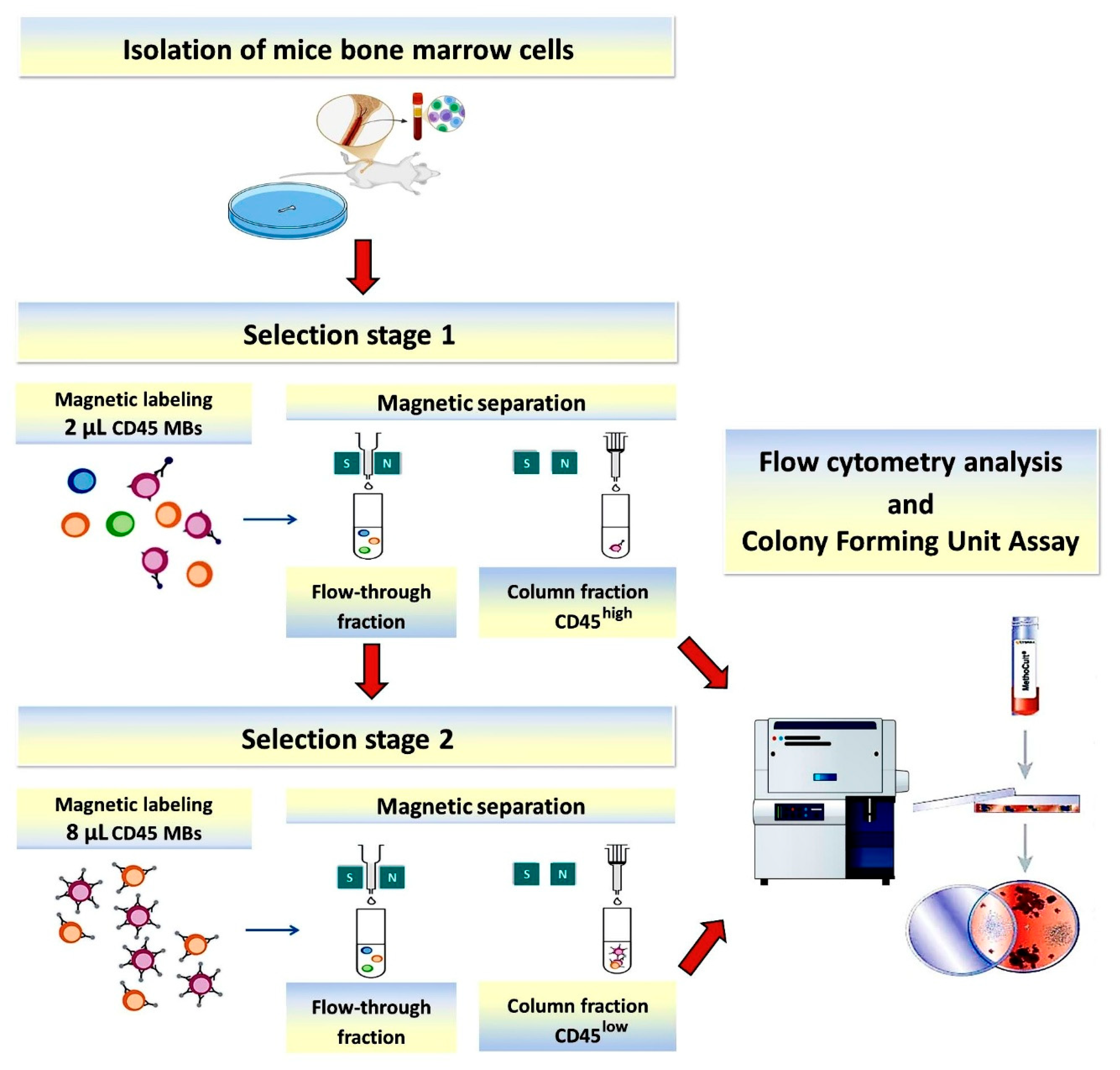
Figure 2.
Flow cytometry analysis of cell fractions selected in the basic 2-stage protocol. A) CD45-APC, B) Gr-1-FITC and Gr-1-FITC/CD45-APC, C) CD11b-APC and CD11b-APC/CD45-FITC, D) CD115-BV421 and CD115-BV421/CD45-FITC and E) CD117-PE and CD117-PE/CD45-FITC. Control—unstained cells. Data are representative of 1 of 3 replicate experiments.
Figure 2.
Flow cytometry analysis of cell fractions selected in the basic 2-stage protocol. A) CD45-APC, B) Gr-1-FITC and Gr-1-FITC/CD45-APC, C) CD11b-APC and CD11b-APC/CD45-FITC, D) CD115-BV421 and CD115-BV421/CD45-FITC and E) CD117-PE and CD117-PE/CD45-FITC. Control—unstained cells. Data are representative of 1 of 3 replicate experiments.
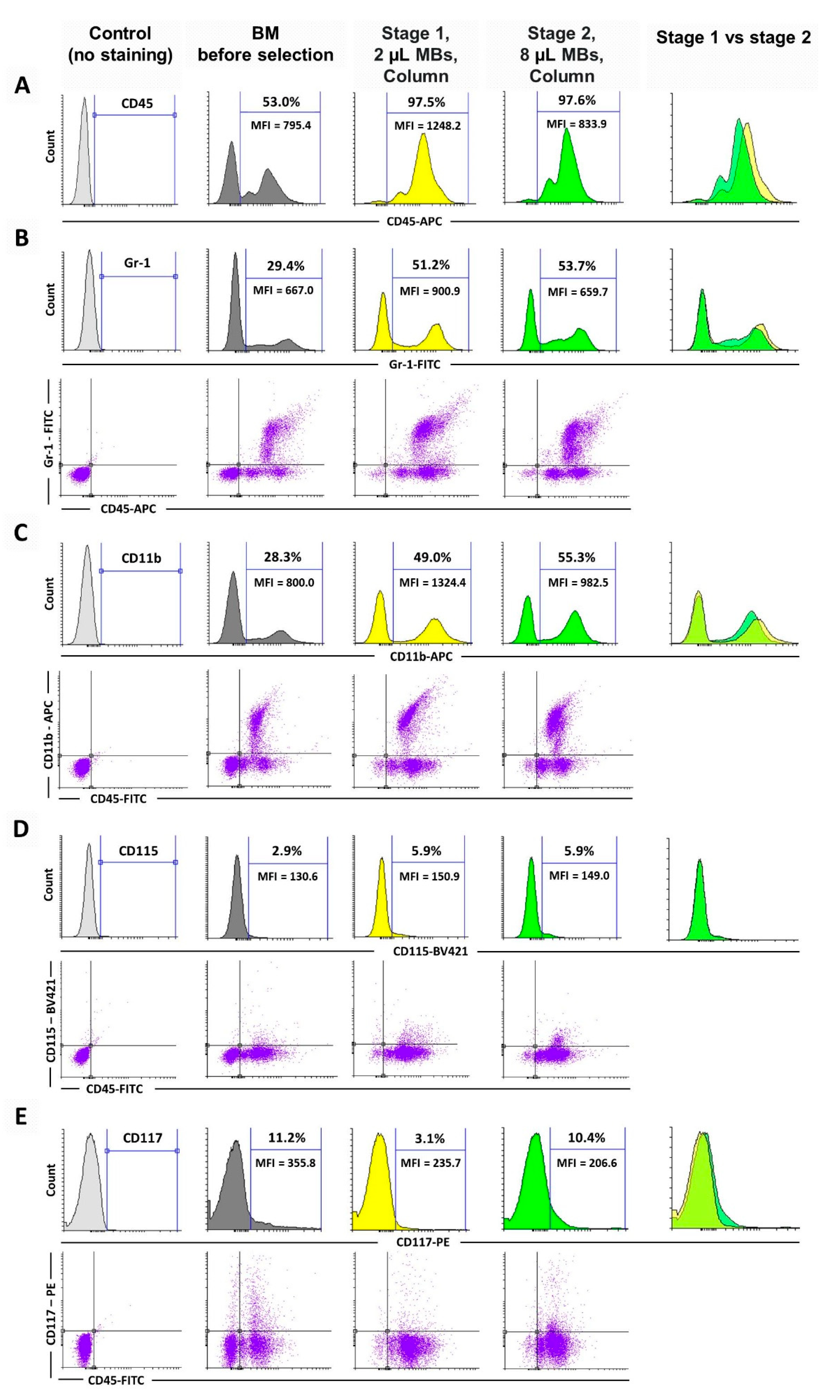
Figure 3.
Parameters of cell populations during selection. A) The yields of column and flow-through fractions in selection stages 1 and 2. B) Cumulative yield of total cells after two selection stages. C) Cumulative yield of CD45-positive cells after two selection stages. Data are representative of 1 of 3 replicate experiments.
Figure 3.
Parameters of cell populations during selection. A) The yields of column and flow-through fractions in selection stages 1 and 2. B) Cumulative yield of total cells after two selection stages. C) Cumulative yield of CD45-positive cells after two selection stages. Data are representative of 1 of 3 replicate experiments.
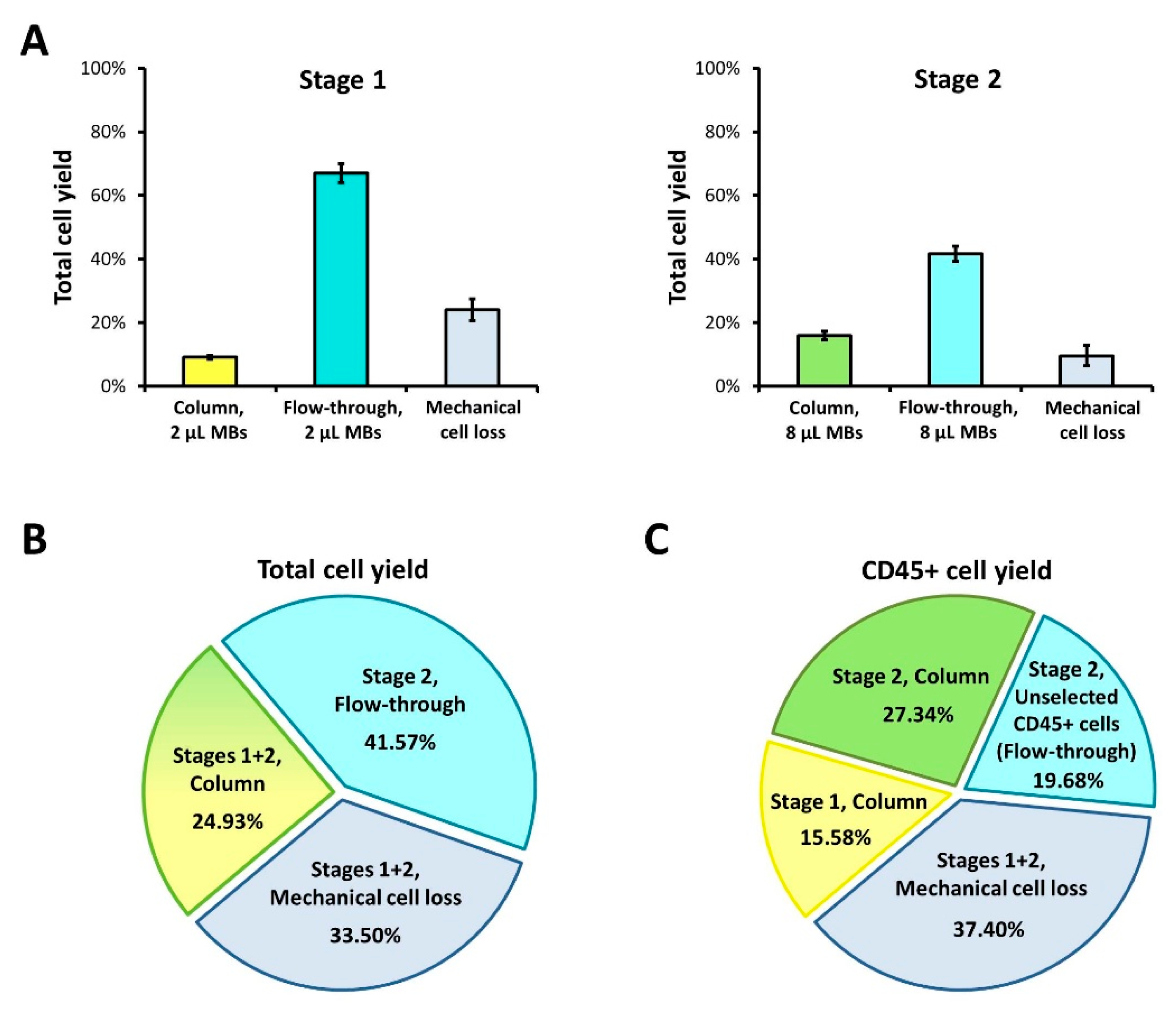
Figure 4.
Analysis of CFU activity in MethoCult™ medium of CD45high and CD45int fractions selected in the basic 2-stage protocol. A) The frequency of CFUs in BM and cell populations isolated in stages 1 and 2. B) The proportion of colony-forming units BFU-E, CFU-GM and CFU-GEMM in populations. C) The morphology of BFU-E, CFU-GM and CFU-GEMM colonies. Bar—1 mm. Data are representative of 1 of 3 replicate experiments.
Figure 4.
Analysis of CFU activity in MethoCult™ medium of CD45high and CD45int fractions selected in the basic 2-stage protocol. A) The frequency of CFUs in BM and cell populations isolated in stages 1 and 2. B) The proportion of colony-forming units BFU-E, CFU-GM and CFU-GEMM in populations. C) The morphology of BFU-E, CFU-GM and CFU-GEMM colonies. Bar—1 mm. Data are representative of 1 of 3 replicate experiments.
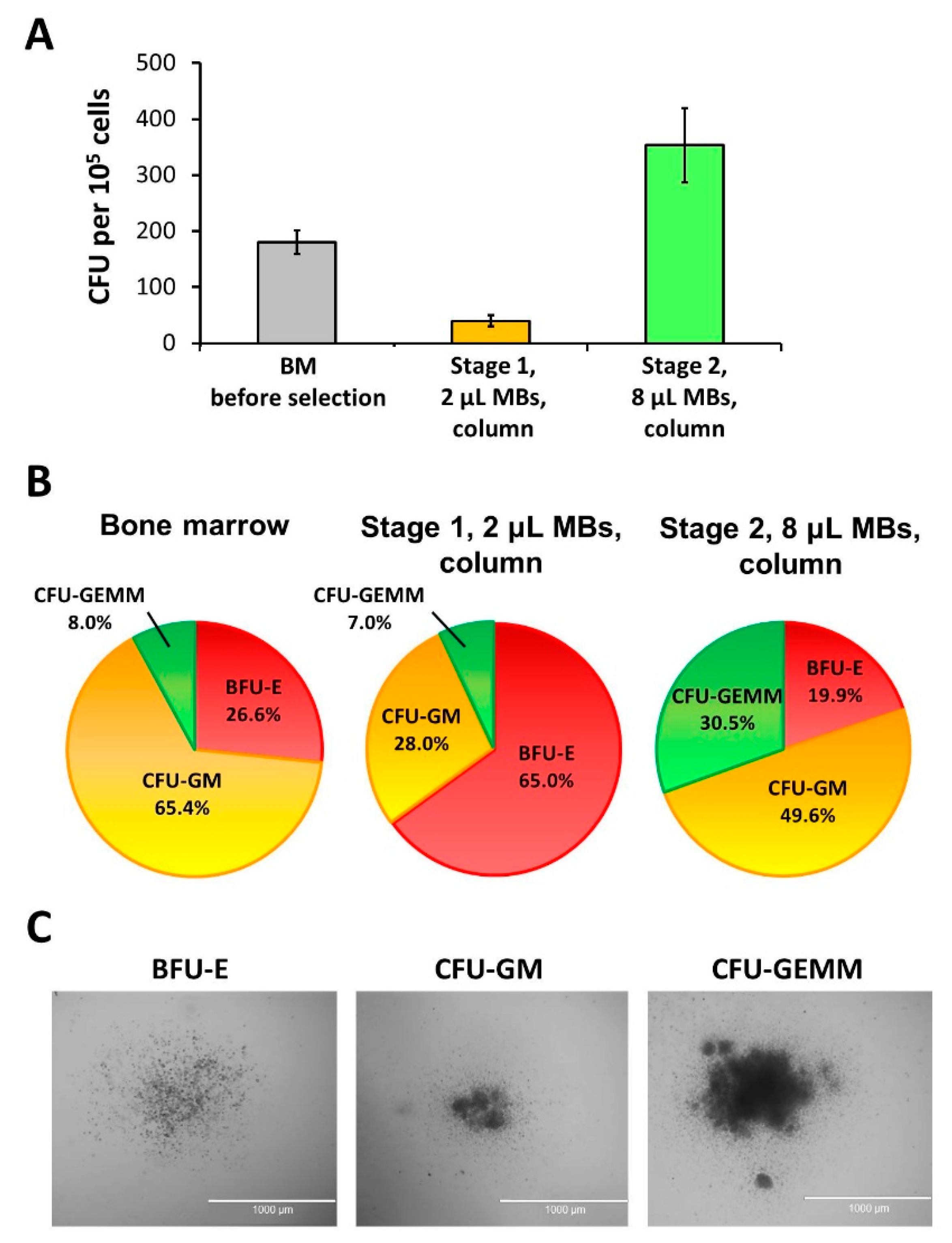
Figure 5.
Flow cytometry analysis of cell fractions selected in the extended 3-stage protocol. A) CD45-BV421, B) Gr-1-FITC and Gr-1-FITC/CD45-BV421, C) CD11b-APC and CD11b-APC/CD45-FITC, D) CD19-APC and CD19-APC/CD45-BV421, E) CD115-BV421 and CD115-BV421/CD45-FITC. F) CD117-PE and CD117-PE/CD45-FITC. Control—unstained cells.
Figure 5.
Flow cytometry analysis of cell fractions selected in the extended 3-stage protocol. A) CD45-BV421, B) Gr-1-FITC and Gr-1-FITC/CD45-BV421, C) CD11b-APC and CD11b-APC/CD45-FITC, D) CD19-APC and CD19-APC/CD45-BV421, E) CD115-BV421 and CD115-BV421/CD45-FITC. F) CD117-PE and CD117-PE/CD45-FITC. Control—unstained cells.
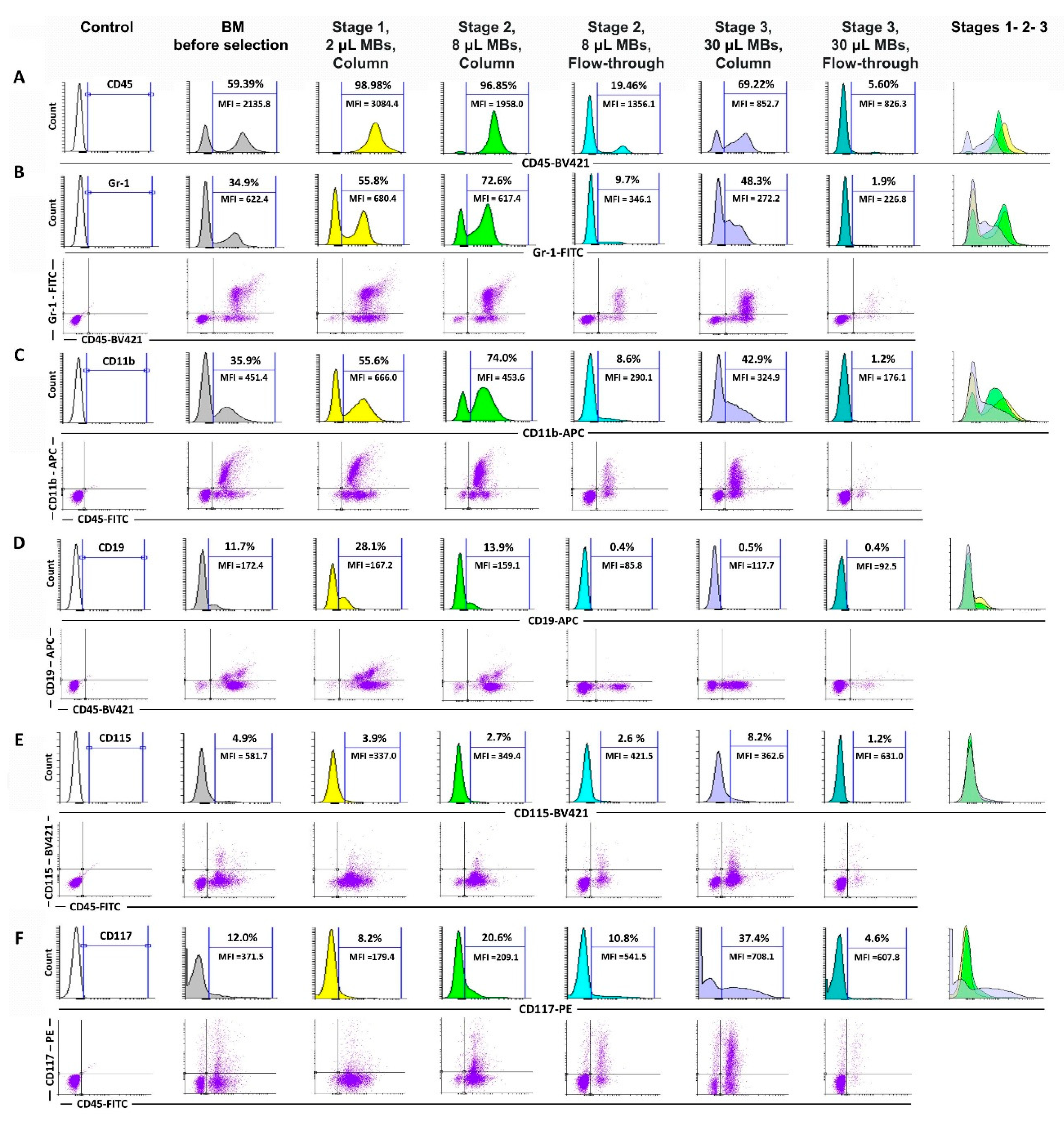
Figure 6.
Analysis of CFU activity in MethoCult™ medium of cell fractions selected in the extended protocol. A) CFU frequencies of selected fractions, B) CD45-normalized CFU frequencies; C) CD117-normalized CFU frequencies, D) Proportions of colony-forming units BFU-E, CFU-GM and CFU-GEMM in populations.
Figure 6.
Analysis of CFU activity in MethoCult™ medium of cell fractions selected in the extended protocol. A) CFU frequencies of selected fractions, B) CD45-normalized CFU frequencies; C) CD117-normalized CFU frequencies, D) Proportions of colony-forming units BFU-E, CFU-GM and CFU-GEMM in populations.
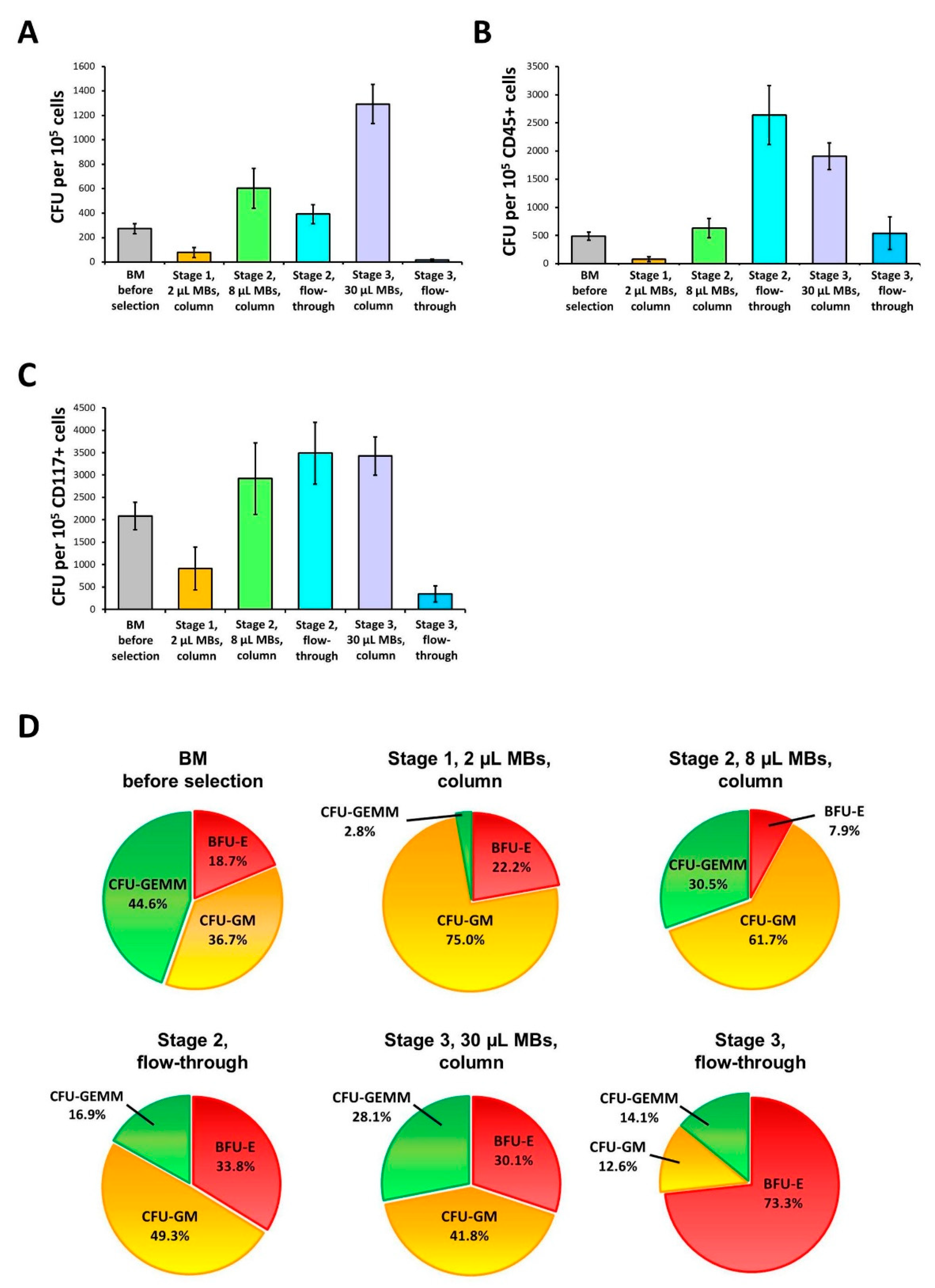

Table 1.
Cell yield in the extended experiment, in particular yield of total cells in the column-retained and flow-through fractions, as well as the proportion of mechanical cell loss after selection stages. Absolute cell yield is the yield of cells in a given fraction relative to the starting cell number of the entire experiment (25 x 106). The relative cell yield is the proportion of cells in the fractions in a given selection stage relative to the number of cells at the start of this stage.
Table 1.
Cell yield in the extended experiment, in particular yield of total cells in the column-retained and flow-through fractions, as well as the proportion of mechanical cell loss after selection stages. Absolute cell yield is the yield of cells in a given fraction relative to the starting cell number of the entire experiment (25 x 106). The relative cell yield is the proportion of cells in the fractions in a given selection stage relative to the number of cells at the start of this stage.
| Stage | Fraction | Total cell yield | |
|---|---|---|---|
| Absolute cell yield | Relative cell yield | ||
| BM | Starting cell number | 100% (2.5*107 cells) | |
| Stage 1 | Column | 14.32% | 14.32% |
| Flow-through | 62.80% | 62.80% | |
| Mechanical loss | 22.88% | 22.88% | |
| Stage 2 | Column | 20.10% | 32.01% |
| Flow-through | 30.66% | 48.82% | |
| Mechanical loss | 12.04% | 19.17% | |
| Stage 3 | Column | 2.76% | 9.02% |
| Flow-through | 24.08% | 78.54% | |
| Mechanical loss | 3.82% | 12.44% | |
Disclaimer/Publisher’s Note: The statements, opinions and data contained in all publications are solely those of the individual author(s) and contributor(s) and not of MDPI and/or the editor(s). MDPI and/or the editor(s) disclaim responsibility for any injury to people or property resulting from any ideas, methods, instructions or products referred to in the content. |
© 2026 by the authors. Licensee MDPI, Basel, Switzerland. This article is an open access article distributed under the terms and conditions of the Creative Commons Attribution (CC BY) license (http://creativecommons.org/licenses/by/4.0/).
Copyright: This open access article is published under a Creative Commons CC BY 4.0 license, which permit the free download, distribution, and reuse, provided that the author and preprint are cited in any reuse.


