

Submitted:
03 April 2026
Posted:
07 April 2026
You are already at the latest version
Abstract
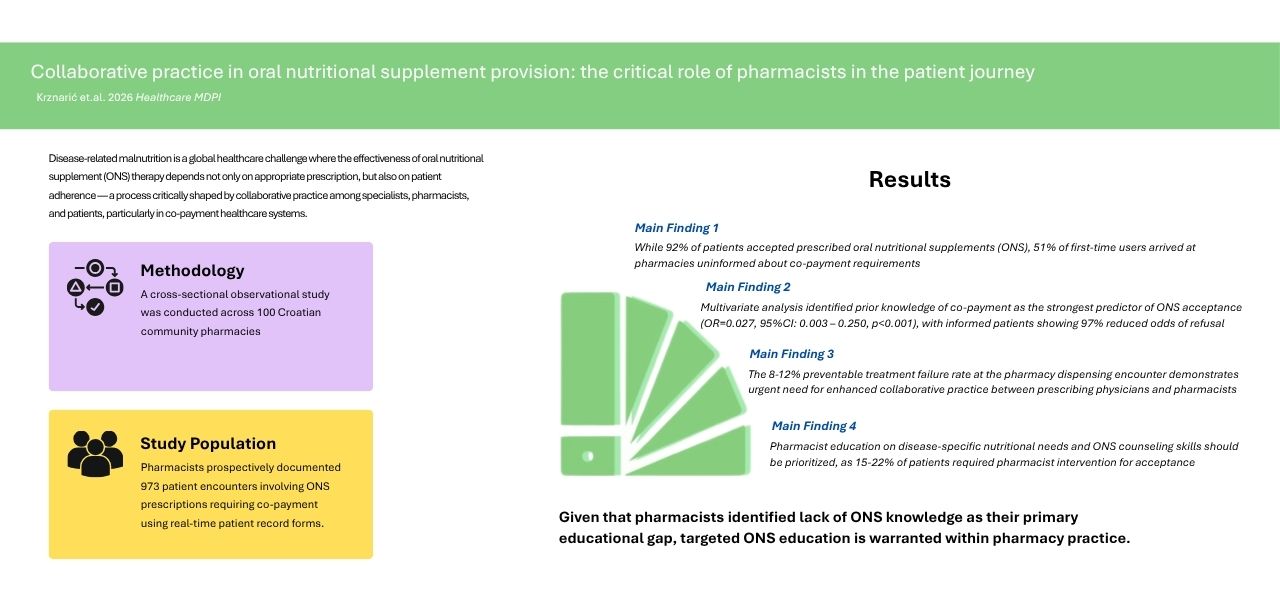
Background/Objectives: Disease-related malnutrition affects millions of patients worldwide. Nutrition support therapy (NST), namely oral nutritional supplements (ONS), serve as a cornerstone therapeutic intervention. However, treatment effective-ness depends not only on appropriate prescription but also on patient acceptance and adherence. This study evaluates the provision pathway of ONS within a co-payment healthcare system, focusing on patient acceptance patterns, barriers to adherence, and the critical yet underexplored role of pharmacist-patient interactions in determining treatment outcomes. Methods: A cross-sectional observational study was conducted across 100 Croatian community pharmacies during September-October 2025. Pharma-cists prospectively documented 973 patient encounters involving ONS prescriptions requiring co-payment using real-time patient record forms. Data captured patient demographics, diagnoses, prescription patterns, prior knowledge of co-payment re-quirements, acceptance responses, and pharmacist-assessed reasons for refusal. Re-sults: While 65% of all patients knew about co-payment requirements in advance, 51% of first-time users arrived uninformed, leading to dramatically different acceptance patterns (93% immediate acceptance when informed versus 33% when uninformed, p< 0.05). Overall, 8-12% of patients refused or reduced prescribed ONS. Among refus-als, 59% cited financial burden, but critically, 23% appeared not to understand why ONS was prescribed or what benefits to expect, revealing significant communication gaps in the care pathway. Fifteen percent of patients overall required pharmacist ex-planation before accepting their prescription, demonstrating pharmacists' decisive role as gatekeepers of nutritional therapy. Conclusions: Successful ONS provision requires enhanced collaborative practice across prescribers, pharmacists, and patients or their families. Key interventions include comprehensive prescriber-patient communication about co-payment and clinical rationale, specialized pharmacist education in dis-ease-specific nutrition and ONS counseling, and systematic communication protocols between prescribers and pharmacists. The pharmacy dispensing encounter represents an important decision point, where insufficient preparation and coordination may lead to avoidable treatment failures among vulnerable patient populations.
Keywords:
oral nutritional supplements (ONS)
; disease-related malnutrition (DRM)
; collaborative practice
; pharmacist role
; patient adherence
; healthcare communication
; co-payment barriers
; nutritional therapy
1. Introduction
Disease-related malnutrition (DRM) represents a significant public health challenge affecting millions of patients worldwide, particularly those with chronic conditions, oncological diseases, and age-related decline. DRM in various clinical settings is associated with increased morbidity, mortality, prolonged hospital stays, rehospitalizations and reduced quality of life. The economic burden is substantial, with malnourished patients requiring more healthcare resources and experiencing poorer treatment outcomes [1,2].
Oral nutritional supplements (ONS) serve as a cornerstone intervention for managing disease-related malnutrition. These specialized medical nutrition products provide energy, protein, essential nutrients and pharmaconutrients designed for patients who cannot meet their nutritional needs through regular diet alone, either temporarily or permanently [3]. In the European Union, ONS are regulated under the category of Foods for Special Medical Purposes (FSMP), primarily governed by Regulation (EU) No. 609/2013 on foods for specific groups and further specified by Commission Delegated Regulation (EU) 2016/128 [4,5]. FSMP is defined as " food specially processed or formulated and intended for the dietary management of patients, including infants, to be used under medical supervision; it is intended for the exclusive or partial feeding of patients with a limited, impaired or disturbed capacity to take, digest, absorb, metabolize or excrete ordinary food or certain nutrients contained therein, or metabolites, or with other medically-determined nutrient requirements, whose dietary management cannot be achieved by modification of the normal diet alone” [5].
Clinical evidence demonstrates that appropriate ONS use improves nutritional status, supports recovery, reduces complications, and enhances patient outcomes across various conditions including cancer, gastrointestinal diseases, chronic obstructive pulmonary disease (COPD), neurological diseases, geriatric medicine, and perioperative care [6,7,8,9]. However, the effectiveness of ONS depends not only on appropriate clinical prescription but also on patient adherence and accessibility [10]. Reimbursement of ONS by the national healthcare fund is shown to facilitate ONS consumption and increase adherence in many studies [10,11]. In healthcare systems where ONS require patient co-payment, the step from prescription to actual use becomes critical barrier to adherence [9,10]. It involves several stakeholders requiring coherent collaborative practice: specialists who diagnose malnutrition and prescribe treatment, clinical dietitians who advise on nutrition support therapy, general practitioners who coordinate care, pharmacists who dispense and advise, and patients who must understand and follow the therapy [3,12].
The current healthcare landscape emphasizes integrated care models and collaborative practice, recognizing that optimal patient outcomes require coordinated efforts across disciplines rather than isolated clinical encounters [3,13]. However, the ONS provision pathway often operates as a fragmented sequence rather than a cohesive system [14]. Understanding the dynamics of this care continuum—particularly the key touchpoint at the pharmacy where prescribed therapy is first presented to the patient—is essential for optimizing nutritional outcomes and ensuring that patient populations at nutritional risk receive required therapeutic nutrition [15]. The management of disease-related malnutrition requires coordinated efforts across healthcare disciplines. While specialists, clinical dietitians and general practitioners possess clinical expertise to identify nutritional needs and prescribe appropriate interventions, they typically lack direct insight into what occurs at the pharmacy dispensing encounter—the moment when medical recommendations transform into treatment decisions [9]. Conversely, pharmacists interact directly with patients but often lack comprehensive clinical context about the prescribing rationale and patient-specific considerations. Research reveals that 87.2% of pharmacists identify lack of expertise in nutrition counseling as the main barrier to providing nutritional support, with inadequate knowledge and unavailability of educational materials limiting their practice [15]. Pharmacists occupy a distinct position in the patient care pathway, often representing the final point of contact before a prescription is dispensed. This role places them in a meaningful position to support adherence to oral nutritional supplement (ONS) therapy; however, their contribution to nutritional care remains relatively underexplored in both clinical practice and research literature. From a pharmaceutical care perspective, the role of the pharmacist extends beyond dispensing and explanation of co-payment. At the point of supply, pharmacists should assess whether patients understand the therapeutic purpose of ONS, are able to incorporate it into daily routines, and are likely to adhere to the recommended regimen. They are also often the first to identify practical barriers such as affordability concerns, anticipated poor palatability, treatment fatigue, or caregiver dependence, which may not be fully apparent during prescribing. This unique position makes pharmacists emergent gatekeepers of ONS therapy, yet their role in nutritional care remains underexplored and under-supported in both clinical practice and research literature [9,10,12]
This study examines the ONS provision pathway in Croatia’s co-payment healthcare system, focusing on patient acceptance patterns, barriers to adherence, and the pivotal role of pharmacist-patient interactions in determining treatment outcomes. Croatia provides an instructive case study as a European Union member state with a mainly public healthcare system where some categories of ONS require substantial patient co-payment, creating financial barriers like those experienced in many healthcare systems globally.
The research investigates fundamental questions about the ONS care pathway:
- What factors influence patients’ willingness to accept and collect prescribed ONS at the pharmacy dispensing encounter?
- What proportion of patients experience barriers—financial, informational, or psychological—that prevent them from obtaining prescribed nutrition therapy?
- How do pharmacist-patient interactions influence acceptance decisions, and what role do pharmacists currently play in supporting nutritional therapy?
- What gaps exist in the communication pathway from prescriber through pharmacist to patient, and how might enhanced collaborative practice optimize this crucial stage in the care pathway?
Given that pharmacists often represent the final opportunity to educate and support patients before treatment is initiated or discontinued, their role and the patient experience at this point are critical for treatment success. Identifying gaps at this stage of the care continuum also creates opportunities for targeted interventions through stronger collaborative practice models between prescribers and pharmacists.
2. Materials and Methods
2.1. Study Design and Rationale
This study employed a cross-sectional design conducted in Croatian community pharmacies between September and October 2025. Data were collected prospectively using structured patient record forms (PRFs), completed by pharmacists immediately following patient encounters involving oral nutritional supplement (ONS) prescriptions requiring co-payment. This approach was selected for several methodological advantages: it captures observed patient behavior rather than reported intentions, minimizes recall bias through immediate documentation, observes patients in their natural care-seeking context, and allows pharmacist observations to provide professional insight into patient understanding and concerns that patients themselves might not articulate in survey responses. The prospective real-time documentation approach proved crucial for capturing authentic patient responses and decision-making. Unlike retrospective surveys or hypothetical scenarios, this methodology records what patients do when confronted with co-payment requirements, providing ecologically valid data about a critical healthcare decision point.
2.2. Sample Design and Recruitment
Pharmacist Sample: Sample was designed through stratified sampling based on two major criteria: geographic region and settlement size. Croatia has approximately 1,200 community pharmacies (excluding hospital pharmacies), and the sample design ensured proportional representation across: four major geographic regions (Zagreb area, Adriatic coast, Northern Croatia, and Slavonia/Eastern Croatia), and five settlement size categories (regional centers over 100,000 residents, large cities 50,000-100,000, medium cities 10,000-50,000, small towns under 10,000, and rural areas). However, within strata, pharmacist participation was based on voluntary recruitment, and therefore the sample should be considered a structured pragmatic sample rather than a strictly probabilistic sample of Croatian pharmacies. Pharmacists were invited to participate through professional network Croatian Pharmacists Chamber and participation was voluntary.
One pharmacist per pharmacy participated in the study to ensure independence of observations. In total, 100 pharmacists were included. Information on professional role, years of experience, and pharmacy characteristics (ownership and chain affiliation) was collected to describe the sample. Within each pharmacy, we documented whether the respondent was the pharmacy owner, Master of Pharmacy, or pharmaceutical technician. We also collected information about pharmacy type (state/city-owned versus private) and chain affiliation (independent versus small or large chain) to identify and control for potential systematic biases in the pharmacy sample. Participating pharmacists had substantial professional experience and spent an average of 83% of their work time in direct patient contact, ensuring they possessed both the expertise and patient interaction frequency necessary for reliable observations (Table 1). The majority (73%) held Master of Pharmacy degrees, with the remainder being pharmaceutical technicians working at the dispensing counter.
2.3. Patient Record Form (PRF) Data Collection
Each pharmacist prospectively collected PRFs over a four-week period during September-October 2025. The protocol specified that pharmacists complete a brief PRF immediately following every patient encounter involving an ONS prescription requiring co-payment. This real-time documentation approach was critical for accuracy and completeness.
Each PRF captured: patient demographics (age, gender, retirement status), primary diagnosis necessitating ONS, presence of comorbidities and co-payment for other medications, prescribed ONS brand and dosage (number of bottles/packages), whether this was the patient’s first ONS prescription or a refill, pharmacist’s assessment of whether the patient knew in advance about co-payment requirements, patient’s immediate response to learning the co-payment amount (accepted immediately, requested additional explanation then accepted, requested cheaper alternative or smaller dose, or refused entirely), and if refused, the pharmacist’s professional assessment of the primary reason. These assessments were based on the pharmacist’s interpretation of the patient interaction at the time of dispensing.
The planned sample size was 1,000 PRFs to achieve a confidence interval of ±3%. This estimate is based on standard assumptions for proportion estimation under simple random sampling and should be interpreted as indicative given the study design. Each pharmacist was asked to complete approximately 13 PRFs during the four-week collection period. Some pharmacists completed fewer forms due to lower patient volumes, so additional pharmacists were recruited to reach the target. Ultimately, 973 fully completed PRFs were analyzed.
The brief duration of each PRF (1-2 minutes) and the easily recollectable nature of the data (information just discussed with the patient), combined with financial incentives for participation, ensured high-quality data collection with minimal pharmacist burden. All patient data were collected anonymously with no personally identifying information recorded, and pharmacists provided informed consent acknowledging their voluntary participation and understanding of the research purpose.
2.4. Statistical Analysis
Data was analyzed using SPSS software (IBM SPSS Statistics for Windows, Version 24.0. Armonk, NY: IBM Corp.). Descriptive statistics are used to describe the basic features of the sample in a study (proportions for categorical data and mean+/- standard deviation). Binary or categorical outcome variables were analyzed with Chi-square test or Fisher’s exact test (alternative to the chi-square for 2x2 contingency tables). Univariate binary logistic regression analyses were performed to examine the association between each independent variable and the outcome (refusal of ONS co-payment). Variables that were statistically significant in univariate analyses were subsequently included in the multivariate logistic regression model. Variables with a p-value < 0.10 in univariate analyses were considered for inclusion in the multivariate logistic regression model.
3. Results
3.1. Study Population Characteristics
The final analyzed dataset comprised 973 patient encounters, with demographics shown in Table 2. The patient population reflected the expected demographics of individuals requiring ONS therapy in a European healthcare system.
The diagnostic distribution (Figure 1) reveals substantial heterogeneity in the patient population, with oncological diseases representing the single largest category (32%). The large ‘other’ category (26%) predominantly comprises patients with diabetes-related malnutrition, cachexia without identified underlying cause, and general protein-energy malnutrition, reflecting the complex and often multifactorial nature of malnutrition in clinical practice.
3.2. Treatment Patterns and Prescribing Practices
Analysis of prescription patterns provided insight into real-world ONS prescribing practices in a co-payment system is shown in Table 3.
Patient preparedness for the pharmacy encounter varied notably by prior experience with ONS therapy. While 65% of all patients knew in advance about ONS co-payment requirements, fully 51% of first-time users arrived at the pharmacy uninformed or insufficiently informed about the associated costs. This knowledge gap proved consequential for acceptance patterns and the quality of the pharmacist-patient interaction, shown in Table 4. Patient responses to co-payment disclosure for all patients and first-time users are shown in Table 5.
3.3. Determinants of ONS Prescription Refusal
Among the 3% of patients (N=26) who refused their ONS prescription entirely, pharmacists provided professional assessment of the primary reason for refusal. These insights reveal that cost, while predominant, is not the sole barrier (Table 6).
Characteristics of patients who refused ONS are shown in Table 7. While financial burden was cited in 59% of refusals, 23% of patients that refused prescribed ONS appeared not to understand why ONS was prescribed or what benefits to expect.
Pharmacists state that education about the benefits of ONS and necessity of ONS in certain diagnoses would be most beneficial in their day-to-day work with patients (Table 8) .
Univariate binary logistic regression analyses were performed to examine the association between each independent variable and the outcome (Table 9). Variables that were statistically significant in univariate analyses were subsequently included in the multivariate logistic regression model. Variables with a p-value < 0.10 in univariate analyses were considered for inclusion in the multivariate logistic regression model.
Binary logistic regression model was then calculated to determine what factors significantly contribute to criterium variable (refusal of ONS co-payment). Model explains 34% of variance (Nagelkerke R2=0.336, Hosmer and Lemeshov test shows model is acceptable, chi-square=2.589, df=7, p=0.920).
4. Discussion
This study provides the first comprehensive examination of the ONS provision pathway in Croatian co-payment healthcare system, revealing critical gaps in collaborative practice that lead to avoidable treatment failures. The predominantly elderly patient population (73% over age 60) aligns with epidemiological expectations for disease-related malnutrition, which disproportionately affects older adults due to age-related physiological changes, multiple chronic conditions, polypharmacy effects, and social factors including isolation and economic constraints [9,16].
The high prevalence of comorbidities (53% confirmed, with an additional 22% where pharmacists could not definitively assess) underscores the complex medical profiles typical of ONS users [17]. Among patients with documented comorbidities, cardiovascular disease was most prevalent (66%), followed by diabetes (24%) and mental health disorders (21%). This comorbidity pattern has important implications for patient capacity to manage multiple treatment regimens and cumulative co-payment burdens.
Notably, 65% of patients had other co-paid medications, meaning the ONS co-payment represented an additional financial burden atop existing medication cost [18]. This cumulative cost consideration proved relevant for understanding patient acceptance patterns.
This dosing pattern suggests potential under prescribing, with many patients receiving less than optimal monthly supplies, given that most ONS require prescription of 2 bottles/bags a day as a recommended dose due to the content of energy, protein or pharmaconutrients [19]. Several factors might explain this pattern: prescriber caution about patient acceptance of co-payment costs, uncertainty about patient tolerance or adherence during initial treatment phases, insurance or reimbursement policies that may limit prescription quantities, or clinical decision-making that favor shorter prescriptions for reassessment [20].
The overall acceptance rate of prescribed ONS of 92% (77% immediate acceptance plus 15% after pharmacist explanation) indicates that most patients successfully obtain prescribed ONS. However, 8% experiencing significant barriers (3% refusing entirely, 5% requesting cheaper alternatives or reduced doses) represents nearly 1 in 12 patients, a substantial rate of avoidable treatment failure for a population at nutritional risk, requiring nutritional intervention. More concerning is the vulnerability of first-time ONS users, among whom 12% experienced acceptance barriers (5% refused, 7% requested alternatives) compared to 8% in the overall cohort. This heightened vulnerability at treatment initiation suggests that the first prescription encounter represents a critical window where inadequate preparation and communication can derail medical nutrition therapy before it begins.
While 65% of all patients knew about co-payment requirements in advance, 51% of first-time users arrived without adequate prior knowledge of co-payment requirements. This knowledge gap had notable consequences for acceptance outcomes: patients who arrived informed showed 93% immediate acceptance with only 3% requiring additional explanation, whereas uninformed patients showed only 33% immediate acceptance and 49% required pharmacist explanation before deciding (p<0.05). This marked divergence in acceptance patterns based on prior knowledge illuminates a fundamental breakdown in care continuity. Collaborative practice between healthcare providers has been proven to result in better quality care and health outcomes for patients. Ineffective interprofessional communication leads to patient dissatisfaction, misdiagnosis, delayed treatment, medication errors and injury or death [21]. The finding that patient awareness of co-payment decreased refusal rate (almost 0% among informed patients versus 9% among uninformed) strongly suggests that the barriers to ONS acceptance are primarily caused by lack of information rather than purely economic reasons. If cost alone drove refusal, awareness would not matter—patients would refuse regardless of whether they were surprised or prepared.
Analysis of the 26 patients who refused ONS provides crucial insights into barriers beyond financial constraints. While 59% cited expensive co-payment as the primary reason, the finding that 23% appeared not to understand why ONS was prescribed or what benefits to expect is particularly revealing. This substantial minority suggests inadequate therapeutic education during prescription, leaving patients unclear about whether ONS constitutes genuine medical necessity or optional nutritional enhancement. Pharmacists identified education regarding ONS benefits and clinical indication for specific diagnoses as their primary unmet need (Table 8), indicating a systemic gap in professional training. In contrast to conventional pharmacotherapy, ONS education in pharmacy curricula is often minimal, leaving pharmacists inadequately prepared to explain nutritional interventions to patients requiring disease-specific counseling [22].
In univariate logistic regression analyses, 4 variables (oncological diagnosis, knowing about co-payment prior to coming to the pharmacy, frequency of collecting ONS (first time or second and other times) and co-payment of other therapy) were significantly associated with the outcome and were therefore included in the multivariate model, based on statistical significance and clinical relevance. Model reveals only variables are in fact statically significant predictors of co-payment refusal of ONS: knowing about co-payment prior to coming to the pharmacy (OR=0.027, 95%CI: 0.003 – 0.250, p<0.001), meaning that those patients who knew they needed to co-pay had 97% less chance of refusal that those who were informed about co-payment, as well as co-payment of other therapy (OR=0.244, 95%CI: 0.066 – 0.901, p=0.034), indication those who already co-pay for other therapy have 76% less chance to refuse ONS co-payment than those who do not co-pay for other therapy. The protective effect of prior knowledge (97% reduced odds of refusal) aligns with research demonstrating that effective clinician-patient communication about treatment costs and expectations significantly improves adherence and reduces treatment abandonment [23]. This finding supports the shared decision-making model, which emphasizes that patients who receive clear and transparent information about financial obligations are better positioned to make informed treatment decisions and prepare accordingly [24]. Patients already managing co-payments for other therapies showed 76% reduced odds of refusing ONS, despite facing cumulative financial burden. This finding contradicts the assumption that patients with existing medication costs would be more likely to refuse additional expenses. Instead, it suggests that experience with healthcare co-payments normalizes the financial aspect of chronic disease management and may reflect greater acceptance of therapeutic necessity. Research on medication adherence in chronic disease populations demonstrates that patients managing multiple therapies often develop coping strategies and integrate co-payments into their healthcare budgets [25,26].
The findings should be interpreted with some caution, as several variables were based on pharmacist assessment during the dispensing encounter rather than direct patient self-report. While this real-time approach reduces recall bias, it means that some results reflect pharmacists’ interpretation of patient behavior and may therefore be influenced by observer and interpretation bias.
4.1. Elements of Effective Collaborative Practice in ONS provision
Effective collaborative practice requires integration across specialties with patients as informed partners [24,27,28], however the present findings suggest that current ONS provision does not consistently meet this standard.
Drawing on evidence-based frameworks and our findings, three interventions target identified gaps;
Prescriber-Patient Communication: To address the finding that 51% of first-time users presented without adequate prior knowledge of co-payment requirements, prescribers should explicitly discuss co-payment amounts, provide disease-specific rationale addressing the 23% who didn't understand necessity, explain expected benefits and timeline, and position ONS as essential therapy. Written information should accompany prescriptions, addressing the critical gap whereby uninformed patients showed 33% immediate acceptance versus 93% among informed patients. Patients who receive clear information demonstrate higher adherence [23].
Prescriber-Pharmacist Communication: To address the 15-22% requiring pharmacist intervention and the 23% questioning therapeutic rationale, systematic protocols should enable bidirectional communication. Prescriber-to-pharmacist communication should include clinical rationale, patient education provided, and prescriber contact information. Pharmacist-to-prescriber communication should report acceptance patterns, patient concerns, and financial barriers. Studies show that communication and dialogue during early professional relationship stages establish trust and enable collaboration [29].
Pharmacist Education: To address the educational needs identified by pharmacists in this study (Table 8) and to better support patients requiring nutritional intervention, pharmacy education and continuing professional development should prioritize disease-specific nutritional knowledge applicable to the diverse clinical profiles encountered in ONS prescribing. Interprofessional education and training improve communication skills and patient outcomes [22]. Professional organizations should develop ONS competency frameworks establishing nutritional counseling as recognized advanced practice.
5. Conclusions
This research demonstrates that the pharmacy dispensing encounter represents an important decision point in the ONS care pathway, a moment where treatment either succeeds or fails. Rather than accepting 8-12% failure as inevitable, we must recognize it as a systems problem requiring systems solutions. In an era of increasing healthcare complexity, cost pressures, and emphasis on patient-centered care, collaborative practice represents not merely best practice but ethical imperative. Patients deserve coordinated care teams who communicate effectively, provide consistent education, and work together to overcome barriers to treatment adherence.
Author Contributions
“Conceptualization, Ž.K. and D.V.B..; methodology, Ž.K., I.R. and A.S.; investigation, A.S.., D.V.B, I.R., D.LJ.K.; resources N.D..; writing—original draft preparation, D.V.B.; writing—review and editing, Ž.K., N.D. and D.LJ.K.; supervision, A.S..; project administration, I.R, D.V.B. and D.LJ.K. authors have read and agreed to the published version of the manuscript.”.
Funding
“This research received no external funding”.
Institutional Review Board Statement
“The study was conducted in accordance with the Declaration of Helsinki and approved by the Institutional Review Board (or Ethics Committee) of CROATIAN MEDICAL ASSOCIATION (protocol code 2360/25, date of approval: August 29th 2025).”.
Informed Consent Statement
Informed consent was obtained from all subjects involved in the study.
Data Availability Statement
The raw data supporting the conclusions of this article will be made available by the authors on request.
Acknowledgments
We would like to acknowledge SmartUp market research agency from Croatia, for the administrative and technical support.
Conflicts of Interest
“The authors declare no conflicts of interest.”.
Abbreviations
The following abbreviations are used in this manuscript:
| ONS | Oral Nutritional Supplements |
| DRM | Disease Related Malnutrition |
| FSMP | Food For Special Medical Purposes |
| NST | Nutrition Support Therapy |
| PRF | Patient Record Form |
References
- Cass, AR; Charlton, KE. Prevalence of hospital-acquired malnutrition and modifiable determinants of nutritional deterioration during inpatient admissions: A systematic review of the evidence. J Hum Nutr Diet. 2022, 35(6), 1043–1058. [Google Scholar] [CrossRef]
- Benković, V; Kolčić, I; Ivičević Uhernik, A; Vranešić Bender, D; Oreb, I; Stevanović, R; Krznarić, Ž. The economic burden of disease-related undernutrition in selected chronic diseases. Clin Nutr. 2014, 33(4), 689–93. [Google Scholar] [CrossRef]
- Bahat, G; Pinar, E; Abbasoglu, O; Karan, MA; Ozturk, S; Barazzoni, R; Bauer, J; Bischoff, SC; Cederholm, T; Chen, LK; Cherubini, A; Correia, MITD; Gąsowski, J; Gonzalez, MC; Jager-Wittenaar, H; Landi, F; Mendonça, N; Muscaritoli, M; Onder, G; Piotrowicz, K; Prado, CM; Schneider, S; Visser, M; Wakabayashi, H; Wirth, R; Woo, J; Erdogan, T; Ozkok, S; Cruz-Jentoft, AJ; KEPAN ONS Consensus Working Group. Nutritional care using oral nutritional supplements: 22 questions every clinician Asks-Answered by global experts in a Delphi consensus study. Clin Nutr. 2026, 57, 106552. [Google Scholar] [CrossRef] [PubMed]
- Kang, HJ; Park, YK. Food for Special Medical Purposes: A Global Review of Usage Trends, Regulatory Frameworks, and Key Growth Drivers. Clin Nutr Res. 2025, 14(2), 146–156. [Google Scholar] [CrossRef]
- https://eur-lex.europa.eu/legal-content/EN/TXT/PDF/?uri=CELEX:52017XC1125(01).
- Stratton, RJ; Elia, M. A review of reviews: A new look at the evidence for oral nutritional supplements in clinical practice. Clin Nutr ESPEN 2007, 2(1), 5–23. [Google Scholar] [CrossRef]
- Liu, Y; Wu, Z; Shao, T; Zheng, W; Huang, J. Application of oral nutritional supplements to control body weight loss in postoperative patients suffering from solid tumors: a systematic review and meta-analysis. Front Nutr. 2025, 12, 1476463. [Google Scholar] [CrossRef]
- Sa-Nguansai, S; Pintasiri, P; Tienchaiananda, P. Efficacy of oral nutritional supplement in cancer patients receiving chemotherapy: a systematic review and meta-analysis of randomized controlled trials. Ann Palliat Med. 2024, 13(2), 260–272. [Google Scholar] [CrossRef] [PubMed]
- Cederholm, T; Bosaeus, I. Malnutrition in Adults. N Engl J Med. 2024, 391(2), 155–165. [Google Scholar] [CrossRef] [PubMed]
- Liljeberg, E; Payne, L; Skinnars Josefsson, M; Söderström, L; Einarsson, S. Understanding the complexity of barriers and facilitators to adherence to oral nutritional supplements among patients with malnutrition: a systematic mixed-studies review. Nutr Res Rev. 2025, 38(2), 407–427. [Google Scholar] [CrossRef]
- Smith, TR; Cawood, AL; Walters, ER; Guildford, N; Stratton, RJ. Ready-Made Oral Nutritional Supplements Improve Nutritional Outcomes and Reduce Health Care Use-A Randomised Trial in Older Malnourished People in Primary Care. Nutrients 2020, 12(2), 517. [Google Scholar] [CrossRef]
- Hashizume, N; Tanaka, Y; Fukahori, S; Ishii, S; Saikusa, N; Koga, Y; Higashidate, N; Masui, D; Sakamoto, S; Yagi, M. Adherences to oral nutritional supplementation among hospital outpatients: An online cross-sectional survey in Japan. PLoS One 2019, 14(9), e0222972. [Google Scholar] [CrossRef]
- Lester, S; Kleijn, M; Cornacchia, L; Hewson, L; Taylor, MA; Fisk, I. Factors Affecting Adherence, Intake, and Perceived Palatability of Oral Nutritional Supplements: A Literature Review. J Nutr Health Aging 2022, 26(7), 663–674. [Google Scholar] [CrossRef] [PubMed]
- Bahat, G; Erdoğan, T; Pınar, E; Özkök, S; Karan, MA; Gündüz, M; Abbasoğlu, O. Oral nutritional supplements in clinical nutrition: Insights into healthcare professionals' knowledge and practices. Nutrition 2026, 144, 113059. [Google Scholar] [CrossRef] [PubMed]
- Medhat, M; Sabry, N; Ashoush, N. Knowledge, attitude and practice of community pharmacists towards nutrition counseling. Int J Clin Pharm. 2020, 42(6), 1456–1468. [Google Scholar] [CrossRef]
- Streicher, M; Themessl-Huber, M; Schindler, K; Sieber, CC; Hiesmayr, M; Volkert, D. Who receives oral nutritional supplements in nursing homes? Results from the nutritionDay project. Clin Nutr. 2017, 36(5), 1360–1371. [Google Scholar] [CrossRef]
- Stratton, RJ. Managing malnutrition and multimorbidity in primary care: dietary approaches to reduce treatment burden. Proc Nutr Soc. 2025, 84(4), 381–389. [Google Scholar] [CrossRef]
- Zanetti, M; Veronese, N; Riso, S; Boccardi, V; Bolli, C; Cintoni, M; Francesco, VD; Mazza, L; Onfiani, G; Zenaro, D; Pilotto, A. Polypharmacy and malnutrition in older people: A narrative review. Nutrition 2023, 115, 112134. [Google Scholar] [CrossRef] [PubMed]
- Dent, E; Wright, ORL; Woo, J; Hoogendijk, EO. Malnutrition in older adults. Lancet 2023, 401(10380), 951–966. [Google Scholar] [CrossRef]
- Perugini, M; Johnson, TJ; Beume, TM; Dong, OM; Guerino, J; Hu, H; Kerr, K; Kindilien, S; Nuijten, M; Ofili, TU; Taylor, M; Wong, A; Freijer, K. Are We Ready for a New Approach to Comparing Coverage and Reimbursement Policies for Medical Nutrition in Key Markets: An ISPOR Special Interest Group Report. Value Health 2022, 25(5), 677–684. [Google Scholar] [CrossRef]
- Foronda, C; MacWilliams, B; McArthur, E. Interprofessional communication in healthcare: An integrative review. Nurse Educ Pract. 2016, 19, 36–40. [Google Scholar] [CrossRef]
- Morgan, S; Pullon, S; McKinlay, E. Observation of interprofessional collaborative practice in primary care teams: An integrative literature review. Int J Nurs Stud. 2015, 52(7), 1217–30. [Google Scholar] [CrossRef] [PubMed]
- Street, RL, Jr.; Makoul, G; Arora, NK; Epstein, RM. How does communication heal? Pathways linking clinician-patient communication to health outcomes. Patient Educ Couns. 2009, 74(3), 295–301. [Google Scholar] [CrossRef]
- Saba, GW; Villela, TJ; Chen, E; Hammer, H; Bodenheimer, T. The myth of the lone physician: toward a collaborative alternative. Ann Fam Med. 2012, 10(2), 169–73. [Google Scholar] [CrossRef] [PubMed]
- Sketris, I; Langille Ingram, EM; Lummis, H. Strategic opportunities for effective optimal prescribing and medication management. Can J Clin Pharmacol 2009, 16(1), e103-25. [Google Scholar]
- McDonough, RP; Doucette, WR. Developing collaborative working relationships between pharmacists and physicians. J Am Pharm Assoc (2003) 2001, 41(5), 682–692. [Google Scholar] [CrossRef]
- Schmutz, JB; Meier, LL; Manser, T. How effective is teamwork really? The relationship between teamwork and performance in healthcare teams: a systematic review and meta-analysis. BMJ Open. 2019, 9(9), e028280. [Google Scholar] [CrossRef]
- Reeves, S; Pelone, F; Harrison, R; Goldman, J; Zwarenstein, M. Interprofessional collaboration to improve professional practice and healthcare outcomes. Cochrane Database Syst Rev. 2017, 6(6), CD000072. [Google Scholar] [CrossRef]
- Snyder, ME; Zillich, AJ; Primack, BA; Rice, KR; Somma McGivney, MA; Pringle, JL; Smith, RB. Exploring successful community pharmacist-physician collaborative working relationships using mixed methods. Res Social Adm Pharm. 2010, 6(4), 307–23. [Google Scholar] [CrossRef]
Figure 1.
Primary Diagnoses Requiring ONS (N=973).
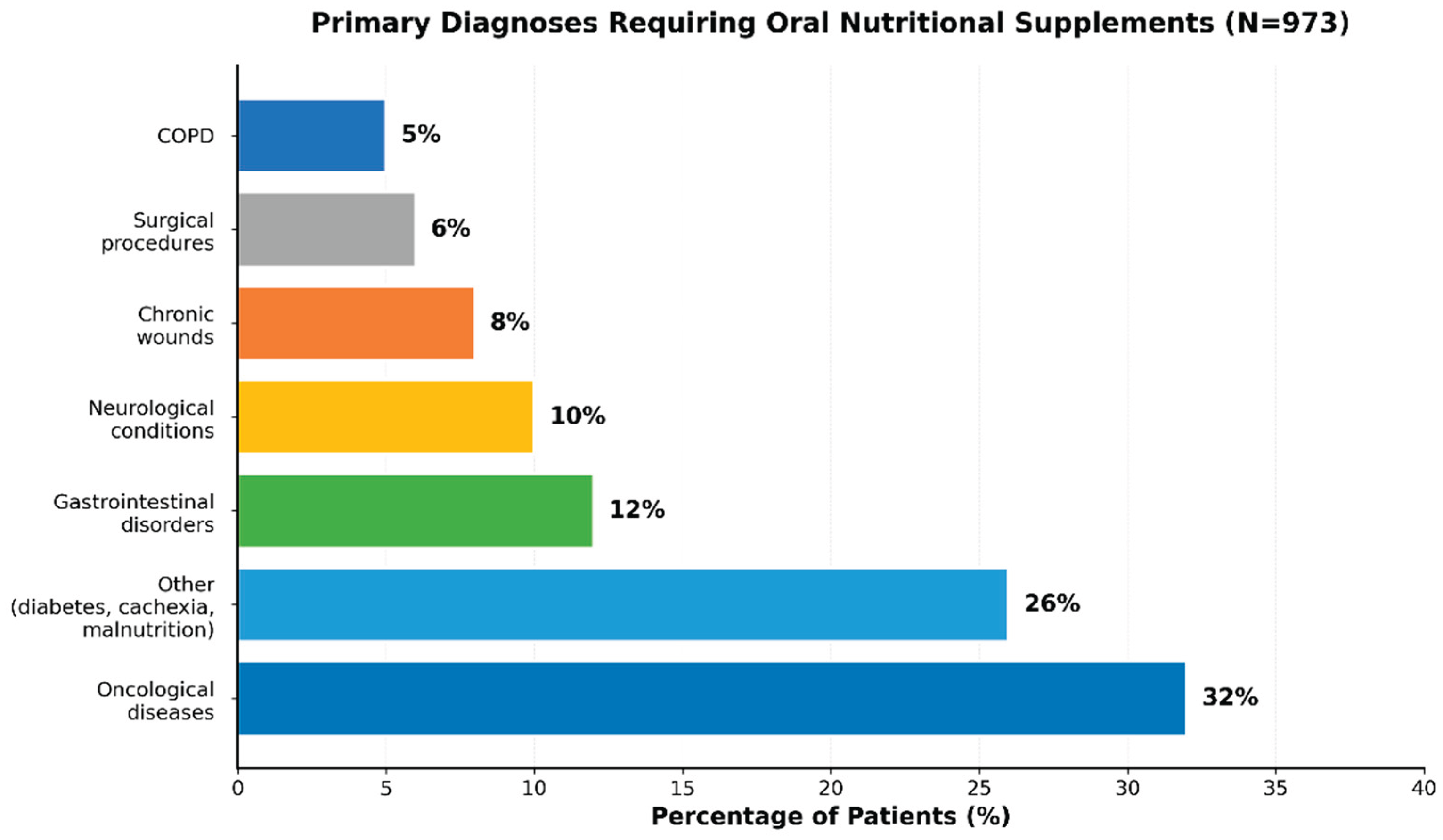

Table 1.
Pharmacist Sample Characteristics.
| Characteristic | Value |
| Total pharmacists | N = 100 |
| Average work experience | 16 years (SD=9, range 1-37) |
| Direct patient contact time | 83% of work time |
| Education level | 73% Masters of Pharmacy |
| Sample design | National by region and settlement size |
Table 2.
Patient Demographics (N=973).
| Characteristic | Distribution |
| Gender | 51% female, 49% male |
| Mean age | 68 years (SD=15.4, range 12-96) |
| Age ≥60 years | 73% |
| Comorbidities present | 53% confirmed, 22% uncertain |
| Other co-paid therapy | 65% |
Table 3.
Prescribed Dose of Oral Nutritional Supplements (N=973).
| Prescribed Dose | Percentage |
| Up to 10 bottles/bags | 14% |
| 11 to 20 bottles/bags | 17% |
| 21 to 30 bottles/bags | 32% |
| 31 to 40 bottles/bags | 12% |
| 41 to 50 bottles/bags | 2% |
| 51 to 60 bottles/bags | 20% |
| More than 60 bottles/bags | 2% |
| Up to 30 bottles/bags (≤1 month supply) | 63% |
Table 4.
Patient Awareness of Co-payment Requirements and impact on acceptance.
| Patient Group | Aware | Unaware |
| All patients | 65% | 35% |
| First-time ONS users | 49% | 51% |
| Impact on acceptance: | ||
| Aware patients | 93% immediate acceptance | 3% need explanation |
| Unaware patients | 33% immediate acceptance | 49% need explanation |
Table 5.
Patient Response to Co-payment Disclosure (N=973).
| Response Category | All Patients | First-time Users |
| Accepted immediately | 77% | 64% |
| Accepted after explanation | 15% | 22% |
| Total accepted full prescription | 92% | 86% |
| Requested cheaper/less | 5% | 7% |
| Refused entirely | 3% | 5% |
| Total with acceptance barriers | 8% | 12% |
Table 6.
Primary Reasons for ONS Refusal (N=26).
| Reason for Refusal | Percentage |
| Co-payment too expensive | 59% |
| Doesn’t understand benefit/necessity | 23% |
| Poor mental state | 8% |
| Non-adherence to therapy | 8% |
| Other reasons | 2% |
Table 7.
Characteristics of Patients Who Refused ONS (N=26).
| Characteristic | Finding |
| Gender | 54% female, 46% male |
| Mean age | 64 years (range 35-84) |
| Retired | 50% |
| Had comorbidities | 38% (mainly cardiovascular) |
| Other co-paid therapy | 35% |
| Knew about co-payment | 31% (69% unaware) |
| First-time users | 50% |
| Geographic pattern | Higher in Osijek region |
| Settlement size | Higher in large cities (50-100K) |
Table 8.
Pharmacist-Identified Educational Needs.
| Support Needed | Priority |
| Education about ONS benefits | Highest priority |
| Disease-specific nutritional needs | High priority |
| When ONS is medically necessary | High priority |
| Expected patient outcomes | Moderate priority |
| Product differentiation | Lower priority |
Table 9.
Univariate binary logistic regression indicators, and binary logistic regression model with only significant predictors included.
Table 9.
Univariate binary logistic regression indicators, and binary logistic regression model with only significant predictors included.
| Univariate binary logistic regressions | Binary logistic regression model | |||||||
| Variables | OR | P | 95%CI | OR | P | 95%CI | ||
| Diagnosis (oncological) | 0.287 | 0.031 | 0.092 | – 0.890 | 0.366 | 0.155 | 0.092 | – 1.461 |
| Diagnosis (neurological) | 0.227 | 0.156 | 0.029 | – 1.762 | 0.000 | 0.997 | 0.000 | – 0.000 |
| Diagnosis (other) - ref | ||||||||
| Age (up to 60 yrs) | 1.623 | 0.384 | 0.546 | – 4.829 | ||||
| Age (61 to 80 yrs) | 0.840 | 0.753 | 0.283 | – 2.489 | ||||
| Age (81+ yrs) - ref | ||||||||
| Knew about co-payment | 0.062 | 0.000 | 0.021 | – 0.186 | 0.027 | 0.001 | 0.003 | – 0.250 |
| Didn't know - ref | ||||||||
| Frequency of collecting ONS (first time) | 3.732 | 0.002 | 1.612 | – 8.639 | 0.632 | 0.509 | 0.162 | – 2.465 |
| Second and other times - ref | ||||||||
| Co-payment of other therapy | 0.250 | 0.002 | 0.104 | – 0.601 | 0.244 | 0.034 | 0.066 | – 0.901 |
| No co-payment - ref | ||||||||
| Region (Zagreb and north Croatia) | 0.984 | 0.977 | 0.342 | – 2.831 | ||||
| Region (Slavonia) | 2.238 | 0.192 | 0.667 | – 7.510 | ||||
| Region (Istria and north Kvarner) | 0.939 | 0.932 | 0.220 | – 3.998 | ||||
| Region (Middle and South Dalmatia) - ref | ||||||||
| Settlement size (regional center) | 0.808 | 0.708 | 0.266 | – 2.460 | ||||
| Settlement size (large city) | 1.684 | 0.422 | 0.472 | – 6.007 | ||||
| Settlement size (medium-sized city) | 0.624 | 0.525 | 0.146 | – 2.669 | ||||
| Settlement size (small town) | 0.378 | 0.152 | 0.100 | – 1.431 | ||||
| Settlement size (rural area) - ref | ||||||||
| Variable(s) entered on step 1: Oncological, neurological and other diagnosis grouped together, Frequency, Did the patient know in advance that he would have to co-pay, Other co-paid therapy. | ||||||||
Disclaimer/Publisher’s Note: The statements, opinions and data contained in all publications are solely those of the individual author(s) and contributor(s) and not of MDPI and/or the editor(s). MDPI and/or the editor(s) disclaim responsibility for any injury to people or property resulting from any ideas, methods, instructions or products referred to in the content. |
© 2026 by the authors. Licensee MDPI, Basel, Switzerland. This article is an open access article distributed under the terms and conditions of the Creative Commons Attribution (CC BY) license (http://creativecommons.org/licenses/by/4.0/).
Copyright: This open access article is published under a Creative Commons CC BY 4.0 license, which permit the free download, distribution, and reuse, provided that the author and preprint are cited in any reuse.


