

Submitted:
03 April 2026
Posted:
06 April 2026
You are already at the latest version
Abstract
Background: Surface electromyography (sEMG) and movement analysis are increasingly applied to characterize neuromuscular impairments and guide rehabilitation after stroke. Objectives: To synthesize recent literature on the application of sEMG and movement analysis in adult stroke rehabilitation, identify trends and gaps, and discuss implications for clinical practice and future research. Methods: A non-systematic scoping search was performed across PubMed, Scopus, Web of Science, and Google Scholar using combinations of “Movement analysis”, “Gait analysis”, “Electromyography”, and “Stroke.” The first 100 relevant articles (determined by title and abstract relevance) reaching data saturation were included. Data were extracted into a comparative table with fields for study descriptors, outcomes, main results, and clinical implications. Results: Publications increased from the 1990s with a concentration around 2017. Rehabilitation journals accounted for the largest share, followed by neuroscience and engineering. Motion analysis dominated study aims (62%); experimental designs were predominant (82%). Only a minority of studies used sEMG as a primary outcome measure. Most research focused on chronic stroke and lower-limb gait, though a substantial portion addressed upper-limb function. Limitations included methodological heterogeneity, underrepresentation of acute/subacute phases, and limited use of randomized designs. Conclusions: sEMG and movement analysis offer complementary, clinically relevant insights for personalized post-stroke rehabilitation, but broader, standardized adoption—particularly in acute/subacute settings and as routine outcome measures—is needed to translate advances into improved patient care.
Keywords:
electromyography
; stroke
; movement analysis
; gait analysis
1. Introduction
Stroke remains a leading cause of death, long-term disability, and social isolation worldwide [1,2]. Survivors often contend with persistent impairments that limit activities and participation. Restoration of gait and upper-limb function are central rehabilitation goals: post-stroke gait is frequently characterized by reduced stride length and speed, diminished joint range and muscle power, decreased peak knee flexion during swing, quadriceps overactivation in inappropriate gait phases, hip flexor weakness, and ankle plantarflexor hyperactivity [3]. Upper-limb tasks such as reaching and grasping are commonly impaired and tightly linked to functional limitations in daily life.
The scientific study of human movement has deep roots that predate modern rehabilitation. Late 19th-century photographic and chronophotographic methods—most notably Eadweard Muybridge’s sequential photographs and Étienne-Jules Marey’s chronophotography—established the first systematic visual records of locomotion and shifted gait study from intuitive observation to measurable science. Over the 20th century those visual methods evolved into instrumented gait analysis with marker-based kinematic systems, force platforms, and, more recently, wearable inertial sensors, enabling precise quantification of spatiotemporal parameters, joint kinematics, and kinetics that underpin contemporary biomechanical assessment.
In parallel, centuries of inquiry into bioelectric phenomena laid the groundwork for electrophysiological assessment of muscle. Electromyography matured through the 20th century from invasive needle recordings to surface electromyography (sEMG), a noninvasive technique that captures muscle excitation patterns during dynamic tasks [5]. Improvements in electrode design, amplification, and digital signal processing progressively rendered sEMG a practical and reliable tool for both research and clinical applications.
The convergence of quantitative movement analysis and sEMG produced a multimodal approach able to link observable kinematics with underlying neuromuscular control strategies, contributing to modern biomechanics and rehabilitation science [4,8]. This integration moved assessment beyond descriptive metrics—such as speed or stride length—toward mechanistic interpretations of motor control after neurological injury. In stroke rehabilitation, combined kinematic and sEMG assessment has been used to identify abnormal muscle timing and co-contraction, distinguish restitution from compensation, select muscles for functional electrical stimulation, and deliver real-time biofeedback to facilitate motor relearning.
Technological advances in the late 20th and early 21st centuries—portable sEMG systems, improved decomposition algorithms, and multimodal data-fusion techniques—have increased assessment sensitivity and enabled novel interventions such as EMG-driven robotic control and closed-loop neuromodulation [14]. Despite these innovations, clinical uptake has lagged: heterogeneity in acquisition protocols, normalization strategies, and outcome reporting has limited cross-study comparability and hindered routine clinical integration.
Understanding this historical and clinical context clarifies why movement analysis and sEMG remain central to efforts to personalize stroke rehabilitation. By combining a long tradition of objective motion measurement with modern neurophysiological insight, these tools offer a path toward more precise diagnosis, targeted interventions, and improved monitoring of recovery trajectories. This scoping review therefore summarizes the current role and application of sEMG and movement analysis in stroke rehabilitation, maps existing evidence, and highlights persistent methodological gaps and directions for future research.
2. Methods
To explore the role of surface electromyography (sEMG) and movement analysis in post-stroke rehabilitation, we carried out a comprehensive, albeit non-systematic, literature search. This search spanned four major scientific databases—PubMed, Scopus, Web of Science, and Google Scholar—using a combination of targeted keywords such as “Movement analysis,” “Gait analysis,” “Electromyography,” and “Stroke.” The aim was to capture a broad yet thematically coherent body of literature relevant to our topic.
In terms of selection criteria, we focused on the first 100 articles that met our search parameters and demonstrated clear relevance based on their titles and abstracts. Both experimental studies and review articles were considered eligible, provided they addressed the application of sEMG and/or movement analysis in adult stroke patients, regardless of whether the stroke was in the acute, subacute, or chronic phase. The decision to limit the selection to 100 articles was guided by the principle of data saturation—once we observed that additional studies were no longer contributing novel insights or divergent perspectives, we concluded the selection process.
For each article included in the review, we systematically extracted a range of key data points. These included the title, authors, year of publication, journal, study type, research objectives, presence of a control group (if applicable), total and group-specific participant numbers, outcome measures, main findings, and clinical implications. The extracted data were then synthesized descriptively, allowing us to identify overarching trends in publication, common methodological approaches, thematic focuses—such as whether the study targeted upper or lower limb function, or specific stroke phases—and the extent to which sEMG was utilized and integrated within the research. This approach enabled a structured and insightful overview of the current landscape and emerging directions in the field.
3. Results
3.1. Publication Trends and Journal Distribution
Scientific interest in surface electromyography (sEMG) and movement analysis for stroke rehabilitation has risen steadily since the 1990s, peaking with a concentration of publications around 2017. Among the 100 articles reviewed, rehabilitation journals accounted for the largest share (~45%), followed by neuroscience (~22%) and engineering (~17%), reflecting the field’s interdisciplinary nature and the convergence of clinical, neurophysiological, and technological perspectives (Figure 1).
3.2. Study Types, Sample Sizes, and Topics
As shown in Figure 1, motion analysis dominated the literature, appearing in 62% of studies, and experimental designs were by far the most common (82%); reviews and systematic reviews were less frequent (10% and 4% respectively). The median study sample across the dataset was 40 participants, with domain-specific medians of 25 in rehabilitation-journal studies and 30 in lower-limb studies, indicating generally modest sample sizes.
3.3. Populations and Anatomical Focus
Study populations were skewed toward the chronic phase of stroke (~47%), with fewer subacute investigations (~26%) and a minority enrolling acute-phase participants or not reporting phase. The anatomical focus was more shifted towards the lower limb (~50%) than the upper limb (~39%), with the remainder addressing combined or other sites. Domain stratification revealed differing emphases: rehabilitation studies (Figure 2) more often targeted the lower limb (~58% lower vs 27% upper), while engineering studies were more likely to evaluate the upper limb (~53% of engineering works) and tended to be concentrated in more recent years (Figure 3).
3.4. Outcome Measures and the Role of sEMG
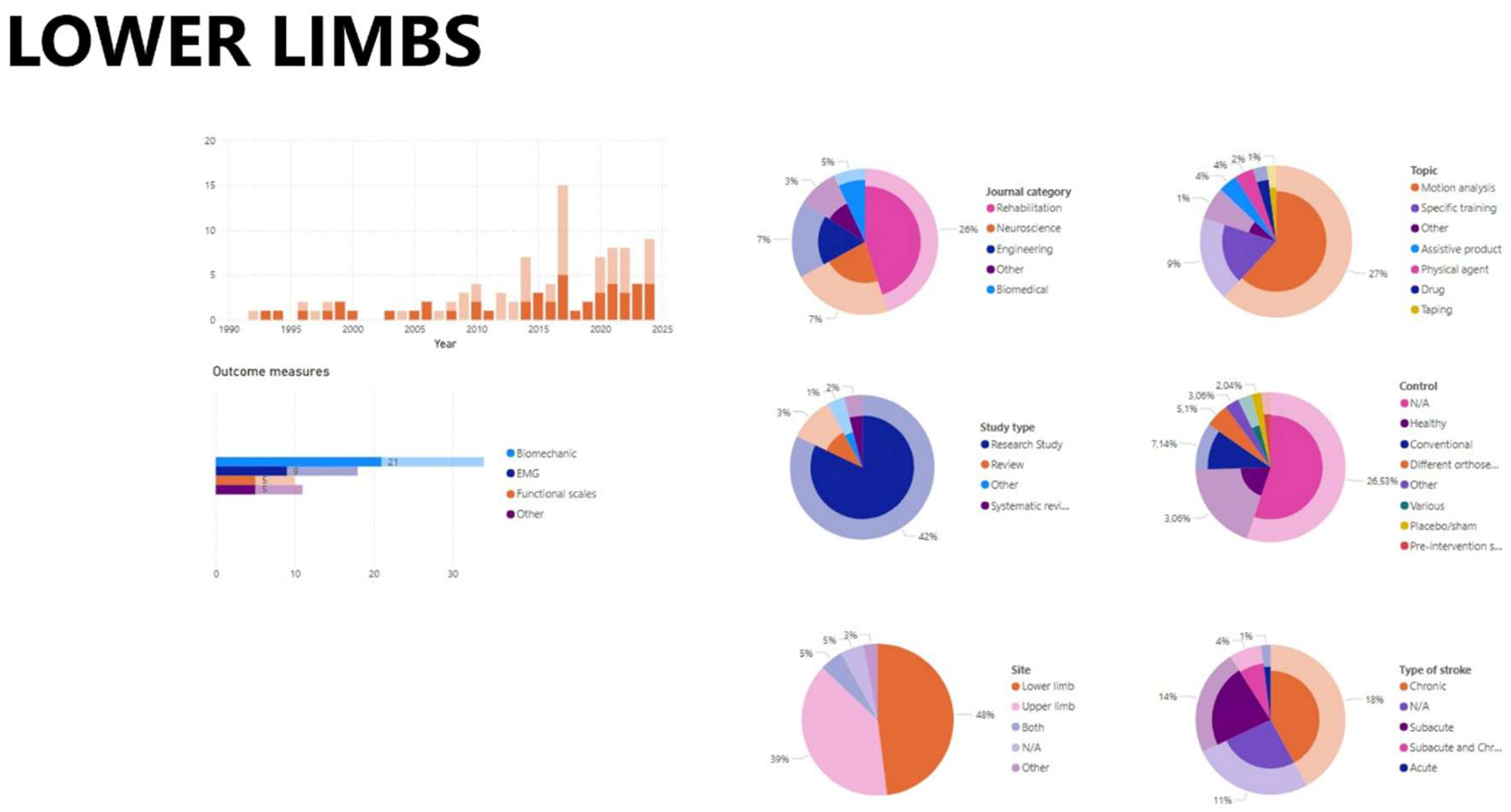
Biomechanical and kinematic outcomes predominated (biomechanics reported in ~34% of studies), while standardized sEMG outcomes were reported in only a minority (~18%) and functional clinical scales in ~10%. Many investigations prioritized kinematic and biomechanical endpoints without standardized EMG metrics; nonetheless, sEMG repeatedly proved useful for detecting altered recruitment patterns, distinguishing compensatory strategies from true motor recovery, and serving as an input or trigger for interventions (biofeedback, FES, robotic controllers). Control group use was heterogeneous: healthy controls were the most common comparator when present (~19.4%), but a substantial portion of studies lacked controls or used other comparator types. Interestingly, lower limb studies tended to focus more on biomechanical outcomes than upper limb studies (Figure 4 and Figure 5).
3.5. Domain Differences and Multimodal Approaches
Engineering-oriented studies emphasized motion analysis (~82% of engineering works), prioritized methodological innovation, and were less likely to include clinical control groups (control present in only ~12% of engineering studies). Rehabilitation-focused studies were more heterogeneous in aims and more likely to include healthy controls (~40% of rehabilitation studies) and clinically relevant functional outcomes. A minority of studies implemented multimodal data fusion (kinematics + kinetics + sEMG); these multimodal efforts consistently enhanced classification and assessment accuracy for hemiparetic gait and yielded richer mechanistic insight, but they remained relatively uncommon and methodologically diverse, limiting cross-study comparability.
3.6. Summary Synthesis
Overall, the literature reflects a growing but uneven body of work characterized by strong representation in rehabilitation journals, a predominance of experimental movement-analysis studies with relatively small median samples, an overrepresentation of chronic-phase research, balanced attention to upper and lower limbs, and persistent underutilization and poor standardization of sEMG as a routine outcome measure despite its demonstrated added value in multimodal assessments.
4. Discussion
This review highlights the increasing adoption of quantitative movement analysis and surface electromyography (sEMG) as tools for understanding motor impairments and optimizing rehabilitation strategies after stroke.
The review revealed important trends and gaps in the Literature that warrant further discussion.
The increasing number of publications on this topic since the 1990s (Figure 1) reflects both technological advancements and a shift toward the willingness of a more precise neuromuscular assessments in stroke rehabilitation. One of the main challenges in rehabilitation is tailoring treatments to the individual’s condition and needs, ensuring the best intervention for each patient while avoiding prescription to non-responders. [18] he progressive integration of these technologies reflects the shift toward personalized, evidence-based rehabilitation guided by objective biomarkers [7,10]. Personalized interventions rely on detailed and comprehensive assessments enabled by the increasing use of advanced technologies, which provide objective descriptions of impairments and recovery. [17] In this context, combining movement kinematics with muscle activity recordings provides valuable insights into both skeletal muscle function and the central control systems underlying motor dysfunction. [16]
However, despite their promise, sEMG remains inconsistently applied and rarely standardized across studies, limiting its potential as a reliable outcome measure [4,12].
To strengthen the recent commitment to generating high-quality evidence, most of the included studies were experimental, with few systematic reviews on the topic (Figure 1).
Where applicable, the majority of studies used healthy controls as a comparison group. This approach is fundamental for establishing a baseline that highlights deviations from the physiological function caused by brain damage. Moreover, healthy controls provide a reference for the ideal outcomes of rehabilitation interventions, which aim to restore motor function to a pattern as close as possible to the physiological. In the field of motor rehabilitation this allows to define the quality of movement during recovery, defined by comparing an individual’s motor task execution to a reference age matched heathy population. The closer the movement matches the reference, the better the quality of their movement is. [4]
The distribution of publications across journals further emphasizes the interdisciplinary nature of this research field. Rehabilitation-related journals accounted for the majority (45%), followed by neuroscience and engineering journals. This distribution reflects the intersection of clinical practice and technological innovation, underscoring the future of stroke rehabilitation research. The integration of biomechanics and neurophysiology could lead to more personalized and effective interventions, optimizing treatment strategies. A promising future direction may involve leveraging machine learning models for iterative treatment refinement. [15)]
Most of the included studies concentrating on movement analysis reinforces the central role of motor function in stroke rehabilitation. The biomechanical evaluation of movement is a key outcome measure used to assess functional improvements. Thus, only 18% of the studies reported muscle activation data through EMG, pointing to a critical gap. SEMG provides essential insights into muscle coordination, recruitment patterns, and neuromuscular deficits, which are pivotal for understanding the underlying pathophysiological mechanisms of movement dysfunction in stroke, furthermore it can be used as a tool integrated with several neuromuscular rehabilitation interventions (serving as a biofeedback or as a trigger for neuromuscular electrical stimulation). [6] While movement analysis can capture gross motor recovery, the underutilization of EMG as an outcome measure may lead to overlook in the role of the neuromuscular control, which could be essential for optimizing interventions.
Another noteworthy observation concerns the prevalence of studies focusing on lower- versus upper-limb analysis in the literature. As expected, research on the lower limb outnumbers that on the upper limb, largely due to the historical development of gait analysis and the earlier maturation of methodologies for assessing lower-limb movement; this trend is particularly evident in rehabilitation journals. Nevertheless, the growing number of studies investigating upper-limb function highlights its clinical relevance. Moreover, the predominance of upper-limb studies in engineering journals reflects the recent development of measurement tools aimed at addressing this gap. Upper limb impairment following stroke often leads to severe disability and reduced quality of life. [14]
In conclusion, this review highlights both the advances and gaps in the application of sEMG and movement analysis in stroke rehabilitation. While technological innovations have enhanced the ability to assess motor function and personalize interventions, further research is needed to expand the application of these tools, particularly in the acute and subacute phases of recovery. Additionally, greater emphasis on integrating sEMG data into rehabilitation protocols could provide a more comprehensive understanding of neuromuscular control, ultimately leading to more effective and individualized treatment approaches for stroke survivors.
4.1. Methodological Gaps and Future Directions
The current evidence base is constrained by substantial methodological heterogeneity, generally small sample sizes, and a notable scarcity of randomized controlled trials, all of which limit confidence in causal inferences and the generalizability of findings.
To move the field forward, future research should focus on several complementary priorities. It might be useful developing and adopting standardized protocols for sEMG acquisition, processing, normalization, and reporting will be essential to improve comparability between studies and enable pooled analyses clear recommendations on sensor placement, sampling and filtering, normalization strategy, and core EMG metrics would make results more interpretable and clinically useful. Moreover, longitudinal study designs that follow patients from the acute through the chronic phases are needed to characterize the temporal evolution of motor control strategies, to identify early predictors of favorable recovery, and to disentangle restitution from compensation. Finally, the cooperation between clinicians and engineers appears to be the best way to move forward: routine use of multimodal assessment—integrating sEMG with kinematic and kinetic measures—should be promoted integrating engineering innovation with rigorous clinical validation to yield richer mechanistic insight and improve classification and prediction of functional outcomes. Fourth, cross-disciplinary collaborations that align Collectively, these advances have the potential to transform clinical practice by providing clinicians with standardized, sensitive biomarkers that support real-time intervention adaptation and clearer distinction between true neurorecovery and compensatory strategies.
4.2. Limitations of the Review
This review has several limitations that should be acknowledged. First, the non-systematic nature of the review means that some studies may have been inadvertently excluded, potentially limiting the comprehensiveness of the findings. Additionally, the heterogeneity of the included studies in terms of methodology, outcome measures, and patient populations poses challenges in drawing definitive conclusions. The predominance of studies involving chronic stroke patients further limits the generalizability of the findings to the acute and subacute stroke population, where rehabilitation dynamics and responses to intervention may differ.
The limited use of sEMG as an outcome measure across studies points to a gap in the literature, suggesting that more research is needed to fully understand its role in stroke rehabilitation.
5. Conclusions
This scoping review highlights the crucial role of surface electromyography (sEMG) and movement analysis in stroke rehabilitation, emphasizing their increasing use in understanding motor impairments and informing therapeutic interventions. Despite the growing interest and advancements in these methodologies, gaps remain, particularly in the integration of sEMG in clinical practice, for the management of upper limb recovery and the focus on the acute phase of recovery. Future research should address the potentialities of the use of sEMG alongside movement analysis, fostering personalized rehabilitation strategies. Interdisciplinary collaboration among rehabilitation, neuroscience, and engineering has the potential to transform stroke recovery, ultimately improving outcomes and quality of life for stroke survivors..
Author Contributions
All authors contributed equally to conceptualization, literature review, drafting, and editing of the manuscript. All authors read and approved the final version.
Funding
This research received no external funding.
Institutional Review Board Statement
Not applicable.
Informed Consent Statement
Not applicable.
Data Availability Statement
The original contributions presented in this study are included in the article. Further inquiries can be directed to the corresponding author(s).
Acknowledgments
This work was supported by the project Ecosystem of Innovation “THE-Tuscany Health Ecosystem” — code ECS00000017, CUP I53 C22000780001.
Conflicts of Interest
The authors declare no conflict of interest.
References
- Vos, T.; Allen, C.; Arora, M.; et al. Global, regional, and national incidence, prevalence, and YLDs for 310 diseases and injuries, 1990–2015. Lancet 2016, 388, 1545–1602. [Google Scholar] [CrossRef] [PubMed]
- Global Burden of Stroke collaborators. Global, regional, and national burden of stroke and its risk factors, 1990–2019. Lancet Neurol 2021, 20, 795–820.
- LeBrasseur, N.K.; Sayers, S.P.; Ouellette, M.M.; Fielding, R.A. Muscle impairments and behavioral factors mediate functional limitations and disability following stroke. Phys Ther 2006, 86, 1342–1350. [Google Scholar] [CrossRef] [PubMed]
- Agostini, V.; Ghislieri, M.; Rosati, S.; Balestra, G.; Knaflitz, M. Surface Electromyography Applied to Gait Analysis: How to Improve Its Impact in Clinics? Front Neurol 2020, 11, 994. [Google Scholar] [CrossRef] [PubMed]
- Farina, D.; Merletti, R.; Enoka, R.M. The extraction of neural strategies from the surface EMG. J Appl Physiol 2004, 96, 1486–1495. [Google Scholar] [CrossRef] [PubMed]
- Muñoz-Novoa, M.; Kristoffersen, M.B.; Sunnerhagen, K.S.; et al. Upper Limb Stroke Rehabilitation Using Surface Electromyography: Systematic Review and Meta-Analysis. Front Hum Neurosci 2022, 16, 897870. [Google Scholar] [CrossRef] [PubMed]
- Kwakkel, G.; Stinear, C.; Essers, B.; et al. Motor Rehabilitation after Stroke: ESO Consensus-Based Definition and Guiding Framework. Eur Stroke J 2023, 8, 880–894. [Google Scholar] [CrossRef] [PubMed]
- Cui, C.; Bian, G.-B.; Hou, Z.-G.; et al. Simultaneous recognition and assessment of post-stroke hemiparetic gait by fusing kinematic, kinetic, and electrophysiological data. IEEE Trans Neural Syst Rehabil Eng 2018, 26, 856–864. [Google Scholar] [CrossRef] [PubMed]
- Pradon, D.; Roche, N.; Zory, R.; et al. Development of Surface Electromyography for Gait Analysis and Rehabilitation of Hemiparetic Patients. Sensors 2024, 24, 5954. [Google Scholar] [CrossRef] [PubMed]
- Fager, S.K.; Dewald, J.P.A.; Sheffler, L.R.; et al. Muscle Activity After Stroke: Perspectives on Deploying Surface Electromyography in Acute Care. Front Neurol 2020, 11, 573291. [Google Scholar]
- Radecka, A.; Radecki, M.; Kaczmarek, M.; et al. The Usefulness of Surface Electromyography in Rehabilitation and Physiotherapy: Systematic Review. Pomeranian J Life Sci 2020, 66, 55–64. [Google Scholar] [CrossRef]
- Kim, S.J.; Park, D.S.; Lee, Y.S.; et al. Three-Dimensional Gait Analysis and Surface Electromyography Measures for Robotic-Assisted Gait Training in Subacute Stroke: A Randomized Controlled Trial. NeuroRehabilitation 2023, 52, 221–233. [Google Scholar]
- Lewandowska-Sroka, K.; Gorzkowska, A.; Ptaszkowska, L.; et al. The Influence of EMG-Triggered Robotic Movement on Walking, Muscle Force and Spasticity after an Ischemic Stroke. Medicina 2021, 57, 227. [Google Scholar] [CrossRef] [PubMed]
- Chen, C.M.; Tsai, C.C.; Chung, C.Y.; Chen, C.L.; Wu, K.P.; Chen, H.C. Potential predictors for health-related quality of life in stroke patients undergoing inpatient rehabilitation. Health Qual Life Outcomes 2015, 13, 118. [Google Scholar] [CrossRef] [PubMed] [PubMed Central]
- Mikołajewska, E.; Mikołajewski, D.; Mikołajczyk, T.; Paczkowski, T. A Breakthrough in Producing Personalized Solutions for Rehabilitation and Physiotherapy Thanks to the Introduction of AI to Additive Manufacturing. Appl. Sci. 2025, 15, 2219. [Google Scholar] [CrossRef]
- Azzollini, V.; Dalise, S.; Chisari, C. How Does Stroke Affect Skeletal Muscle? State of the Art and Rehabilitation Perspective. Front Neurol. 2021, 12, 797559. [Google Scholar] [CrossRef] [PubMed] [PubMed Central]
- Pierella, C.; Pirondini, E.; Kinany, N.; Coscia, M.; Giang, C.; Miehlbradt, J.; Magnin, C.; Nicolo, P.; Dalise, S.; Sgherri, G.; Chisari, C.; Van De Ville, D.; Guggisberg, A.; Micera, S. A multimodal approach to capture post-stroke temporal dynamics of recovery. J Neural Eng. 2020, 17, 045002. [Google Scholar] [CrossRef] [PubMed]
- Boccuni, L.; Marinelli, L.; Trompetto, C.; Pascual-Leone, A.; Tormos Muñoz, J.M. Time to reconcile research findings and clinical practice on upper limb neurorehabilitation. Front. Neurol. 2022, 13, 939748. [Google Scholar] [CrossRef] [PubMed]
Figure 1.
Descriptive analysis of the whole sample of reviewed articles.
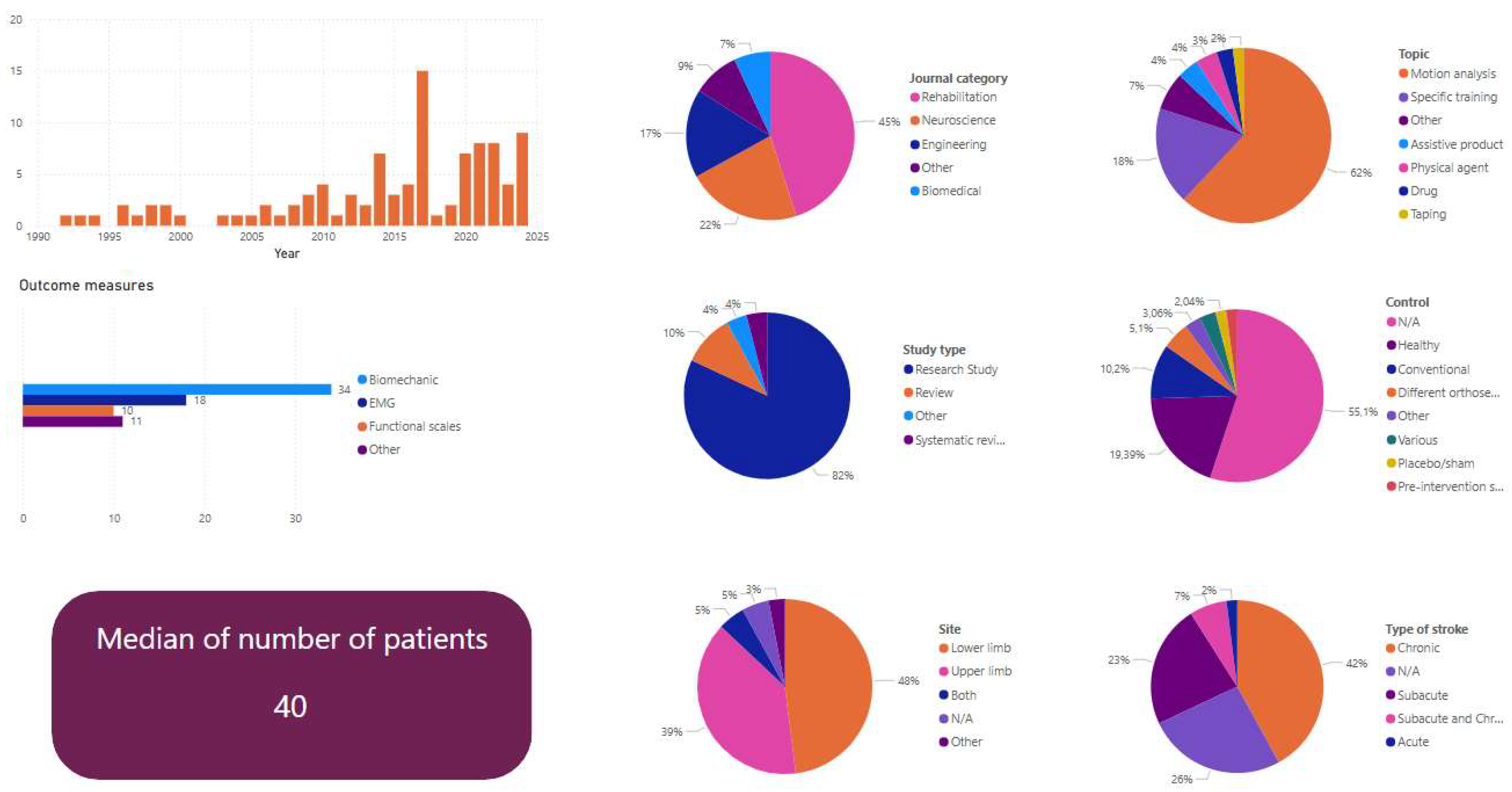
Figure 2.
Descriptive analysis of the rehabilitation studies. Percentages are relative to the total sample of reviewed articles.
Figure 2.
Descriptive analysis of the rehabilitation studies. Percentages are relative to the total sample of reviewed articles.
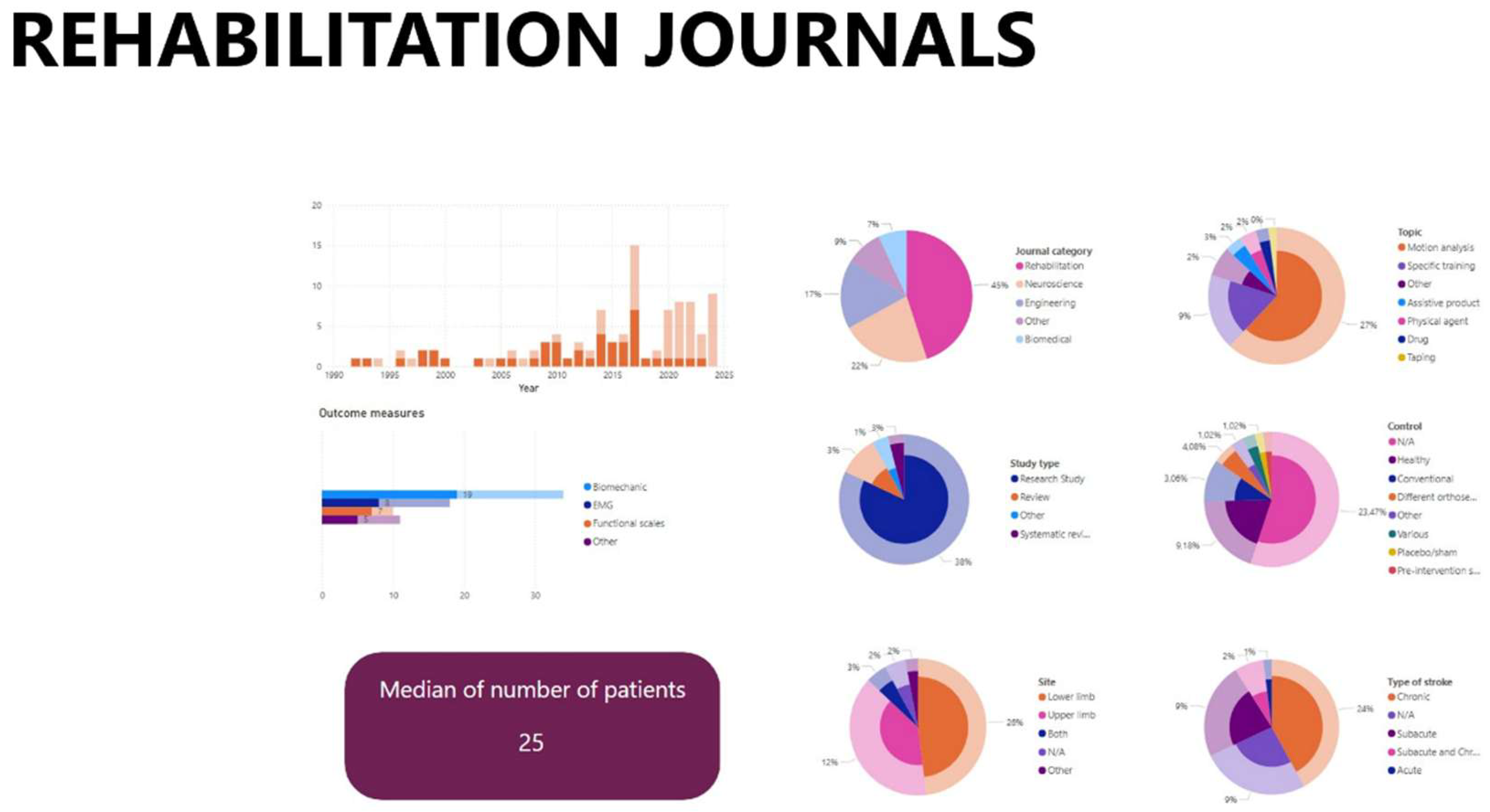
Figure 3.
Descriptive analysis of the engineering studies. Percentages are relative to the total sample of reviewed articles.
Figure 3.
Descriptive analysis of the engineering studies. Percentages are relative to the total sample of reviewed articles.
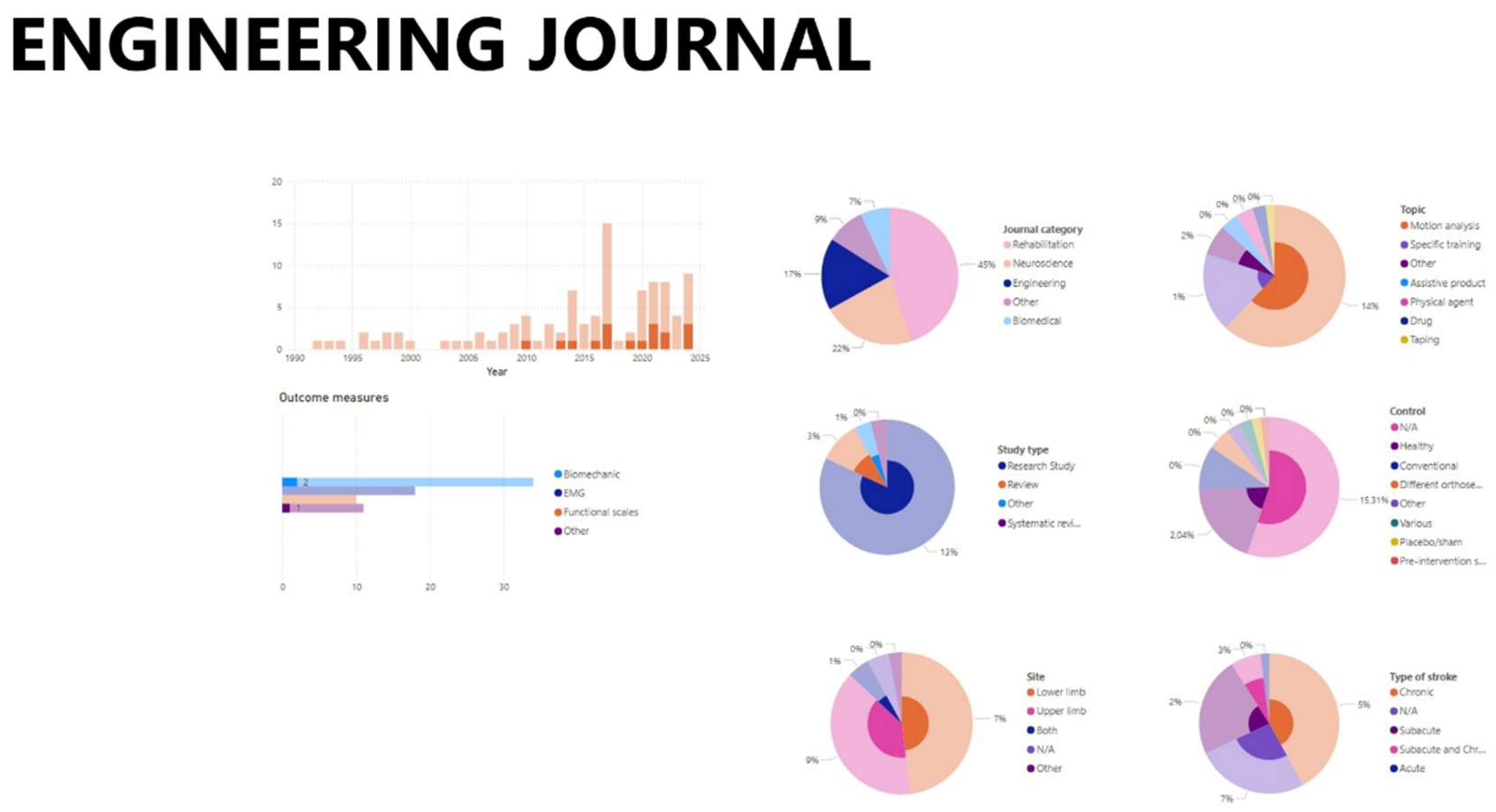
Figure 4.
Descriptive analysis of the studies focusing on the upper limbs. Percentages are relative to the total sample of reviewed articles.
Figure 4.
Descriptive analysis of the studies focusing on the upper limbs. Percentages are relative to the total sample of reviewed articles.
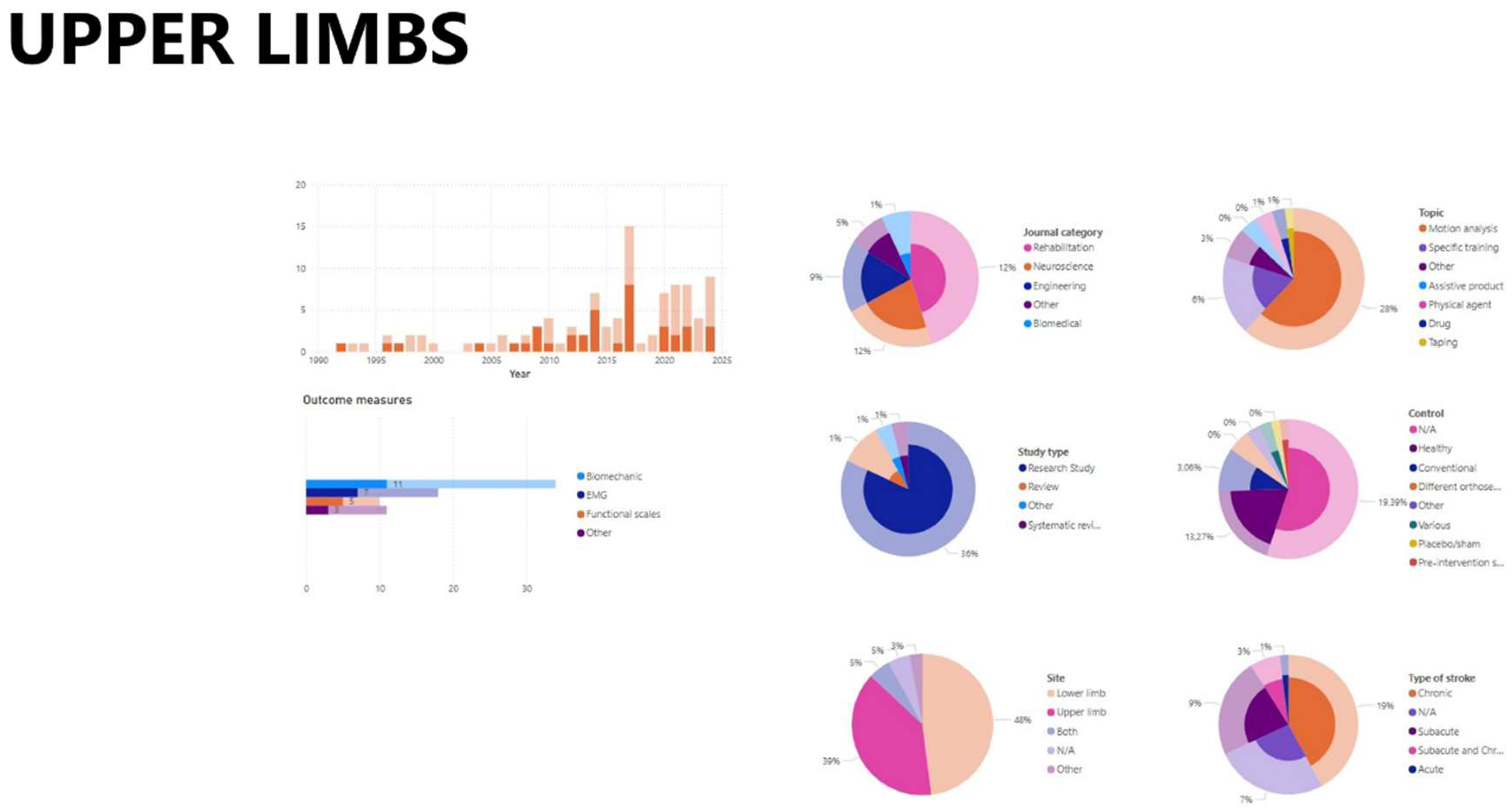
Figure 5.
Descriptive analysis of the studies focusing on the lower limbs. Percentages are relative to the total sample of reviewed articles.
Figure 5.
Descriptive analysis of the studies focusing on the lower limbs. Percentages are relative to the total sample of reviewed articles.
Disclaimer/Publisher’s Note: The statements, opinions and data contained in all publications are solely those of the individual author(s) and contributor(s) and not of MDPI and/or the editor(s). MDPI and/or the editor(s) disclaim responsibility for any injury to people or property resulting from any ideas, methods, instructions or products referred to in the content. |
© 2026 by the authors. Licensee MDPI, Basel, Switzerland. This article is an open access article distributed under the terms and conditions of the Creative Commons Attribution (CC BY) license (http://creativecommons.org/licenses/by/4.0/).
Copyright: This open access article is published under a Creative Commons CC BY 4.0 license, which permit the free download, distribution, and reuse, provided that the author and preprint are cited in any reuse.


