
Submitted:
03 April 2026
Posted:
03 April 2026
You are already at the latest version
Abstract
While skeletal imagery appears across various ancient Andean traditions, the Wari Empire (c. 600–1000 CE) developed a uniquely standardized and widespread skull motif—the uma tullu—distributed throughout its former territory. Through an analysis of 63 artifacts spanning ceramic, textile, and metal media, this study identifies key diagnostic markers of the motif: the representation of the metopic suture and the application of red pigment. By cross-referencing these stylistic features with bioarchaeological data, the research posits that the uma tullu served as a central communicative device. In the absence of a formal script, this motif encoded imperial values and ancestral cult practices, facilitating ideological expansion and state identity. Ultimately, this work demonstrates how standardized iconography functioned as a system of graphic communication and ideological cohesion in the Middle Horizon Andes.
Keywords:
Wari empire
; Middle Horizon
; metopism
; iconography
; ancestor veneration
; bioarchaeology
; Andean archaeology
1. Introduction
In the Andes, a skull is rarely just an anatomical object; it is a contested relic where the violence of colonial science meets the intimacy of Indigenous memory. This tension was personified by Julio C. Tello, the "father of Peruvian archaeology." Born in the Huarochirí Province, Tello grew up collecting Indigenous skulls—some of which were sent to foreign scholars to satisfy the 19th-century appetite for racialized specimens. Yet, for Tello, these remains transcended the cold classifications of phrenology. He later reflected on this formative encounter: “That skull, honored by the centuries, connected with my heart and made me feel the message of the race whose blood ran through my veins. From that moment I became an anthropologist” (Burger 2009, p. 69). Throughout his career, Tello navigated this inherent ambivalence, treating human remains simultaneously as objects of empirical inquiry and as a visceral, heartfelt connection to his own ancestry.
Treatment of the dead in the Central Andes diverges sharply from Judeo-Christian taboos or even other Indigenous traditions in the Americas. In the Andean worldview, the dead are not gone but are perceived as powerful, caring entities that remain active in the world of the living. Whether through the display of ancestors or the ritual handling of severed heads, interacting with human remains has been a common practice for centuries in the Andes (Andrushko 2011; Tung 2008; Eeckhout & Owens 2015; Urioste 1981; Weismantel 2015a), continuing until recently. Anthropologist Catherine Allen (1982) notes that even in contemporary rural communities like Sonqo, families continue to save and display the bones of their dead—particularly skulls—for household protection.
This enduring ontological connection finds its most concentrated expression in the Ayacucho Basin, the ancient heartland of the Wari Empire. Here, the relationship between the living and the dead is not merely an ethnographic relic but a contemporary reality; local artisans at the Cerámicas Wari workshop, for instance, describe the skull motif on their replicas of Wari bowls as symbols of ancestors reunited with their families rather than as morbid curiosities (Personal communication, September 16, 2021). This modern resonance poses a critical question for the Middle Horizon (c. 600–1000 CE): were these Wari skull-shaped objects mere representations of the deceased, or were they presentations—tangible, active manifestations of the dead themselves?
The answer is embedded in the very identity of the Ayacucho region, which historians often translate from Quechua as the "Corner of the Dead" (Cavero Carrasco 2007). Centered in this basin, the Wari Empire (c. 600–1000 CE) became the first expansive state to unify the diverse landscapes of the Peruvian Andes. Preceding the Inca by centuries, the Wari maintained a sophisticated bureaucracy and a cohesive religious ideology, disseminated through a standardized architectural program and the widespread practice of state-sponsored drinking ceremonies (Isbell & Cook 1987; Jennings 2006; Williams et al. 2001).
Linguistically, the term "Wari" is entangled with the dead. In the 17th century, Pablo José de Arriaga (1968, p. 116) noted that huari referred to the "first settlers" or ancestors (Duviols 1973). In contemporary Ayacucho folklore, "Wari" is both a name for the ancient people that lived in the area during the Middle Horizon and a specific affliction caused by coming into contact with ancient bones (Ansión 1987, p. 93). This linguistic overlap suggests that for the Wari, the unfleshed body was likely a central pillar of state identity and social cohesion.
Yet, the role of the deceased has not been fully interrogated within Wari scholarship. While pioneering bioarchaeological research by Tiffiny Tung (2007; 2008; 2012) has scrutinized the empire's skeletal record—specifically regarding cranial deformation, trauma, and trepanation—the iconographic treatment of the skull continues to be overlooked.
2. Defining the Uma Tullu: Terminology and Iconography
2.1. Terminology
This article shifts the focus from biological remains to the skull as a sophisticated visual sign used broadly in Wari material culture. To emphasize that distinction, I refer to it using the Quechua term uma tullu, “skull”, or more literally "bone head." In the early Quechua dictionary of González Holguín (2007), tullu is used to refer to any type of bone in the human body (e.g., huasa tullu means “shin” and huactantullu, “back ribs”) but also that of animals (e.g., challwaptullun, “fish bones”). Interestingly, tullu also applies to the structural element of plants (e.g., quinuap tullun, “the cane/stem of the quinoa”) and things (e.g., puchkap tullun, “the spindle stick”). As such, tullu signifies much more than bone; rather, it stands for a sort of universal structure or spine, which supports humans as well as objects, animals, and plants.
On the other hand, uma (also written huma) does not only designate the head as a purely anatomical feature, but also as the place where memories are kept (Classen 1993, p. 88). Thus, “to remember” can be translated by humayman cuttichicupuni, literally meaning “to bring back to the head” (González Holguín 2007, p. 247). Based on these additional meanings, I intend to reframe the Wari skull motif—uma tullu—not as a symbol of death, but as an animate structural encasement of memory.
2.2. Iconography
The uma tullu is defined by a striking visual consistency across media (Figure 1), characterized by four primary diagnostic markers:
- Coloration: It is almost always painted bone-white on ceramics and textiles;
- Orbital and Nasal Cavities: It features a nasal opening marked by two symmetrical triangles and often, albeit not always, dark and empty eye sockets.
- A Metopic Suture: In over half of the studied corpus (n = 35), a wavy vertical line is depicted in the center of the frontal bone, where the metopic suture would be. Given that some objects decorated with the uma tullu design bear two additional red wavy lines where the coronal and sagittal sutures are located on a skull (Figure 3a; c; d), it is highly likely that the one painted on the central bone is also a direct reference to an anatomical feature of the skull, and not simply an aleatory addition;
- Red Pigmentation: Red highlights are strictly applied to the sutures and the outline of the mouth.
The metopic suture and red pigmentation distinguish the uma tullu from any other skull imagery in the ancient Andes. While medium-specific limitations—particularly in metalwork—occasionally lead to simplification (Figure 2), each iteration clearly adheres to this standardized model.
The presence of the metopic suture is a significant anatomical choice. While this suture normally fuses in humans by nine months of age (Zdilla et al., 2018), the condition of metopism—where the suture persists into adulthood—is a documented genetic trait in the Andes. Bioarchaeologist John Verano (1987; 2003, p. 113) estimated that roughly 10% of Highland Inca populations exhibited metopism, a frequency significantly higher than that of Andean coastal groups (Sullivan 1922, p. 233). The recovery of adult skulls with metopism in the Wari heartland suggests that the Wari were not necessarily depicting infants with unfused metopic sutures on the uma tullu, but rather a recognized biological variation within their own adult population.
The application of red pigment to the mouth and sutures further anchors the motif in biological reality rather than pure imagination. Two factors support this naturalistic interpretation: chromatic consistency and archaeological parallel. First, the Wari made the choice to only use red for highlights on the uma tullu which is itself painted white, suggesting a deliberate attempt to mirror physical treatment of human remains. Second, the use of cinnabar and other red pigments on human remains is well attested in the Wari archaeological record. Individuals interred at Conchopata, in the Wari heartland, and in the "Red Mausoleum" at Castillo de Huarmey, on the North Coast, were found with pigment applied directly to their faces or skeletal remains (Tung & Cook 2006; Więckowski 2019, Figure 29). Based on these parallels, it would appear that the uma tullu functioned as a sophisticated visual record of Wari mortuary practices. By highlighting the metopic suture with pigment, artists transformed a biological idiosyncratic feature into a standardized imperial symbol.
2.3. Cross-Cultural Comparisons
While skeletal imagery appears across the ancient Andes, the Wari uma tullu is unique in its number, standardization, and abstraction. Comparing the Wari motif to the traditions of the Nasca, Moche, and Tiwanaku highlights the specific semiotic role the skull played in the Wari Empire.
In the Early Intermediate Period (200 BCE–600 CE), the Nasca, on the South Coast of present-day Peru, famously curated trophy heads taken from enemies in battle (Proulx 1989). While these heads appear frequently on Nasca pottery—often carried by warriors, deities, or depicted with dripping blood—they are fundamentally different from the uma tullu. Nasca representations focus on the fleshed head, complete with pinned lips and carrying ropes passed through the forehead (Kroeber & Collier 1998). In contrast, the Wari motif depicts a dry, skeletonized skull. While Nasca trophy-head-shaped vessels may have influenced Wari modeled bowls, the Wari transition from a fleshed trophy head to an abstracted skull suggests a shift from celebrating military victory and violence to managing a standardized imperial symbol.
The Moche, contemporary to the Nasca, depicted skeletons more frequently than perhaps any other Andean groups, but their approach was narrative and naturalistic. Moche skeletons are typically full-bodied figures engaged in lively activities such as dancing, playing music, or sexual encounters—themes often linked to ancestor worship and the continuity of life (Donnan 1982, p. 100; Donnan 1978, p. 106; Weismantel 2004, p. 501-502). Visually, Moche skeletons lack the diagnostic markers of the uma tullu, such as the metopic suture or the specific red-pigmented highlights. When standalone skull-shaped vessels do occur in Moche art, they often appear flayed or mutilated—representing an individual in the process of dying in a literal fashion rather than a reinterpreted skeletal symbol. Ultimately, while Moche art uses the full skeleton to tell a story of life and death, Wari art treats the uma tullu as an isolated, abstracted fragment that stands on its own as a state-controlled icon.
Finally, despite the long-standing comparisons between Wari and its contemporary southern state, Tiwanaku, the uma tullu is strikingly absent from the Altiplano repertoire. The rare occurrences of skull designs in Tiwanaku—such as modeled bowls from Moquegua or foot-shaped vessels from Pariti—are widely considered to be Wari-influenced rather than local Tiwanaku motifs (Goldstein 1989, p. 121; Korpisaari & Trigo 2018, 196-198). These isolated examples lack the metopic suture and appear primarily on ceramics, whereas the Wari applied the uma tullu across a wider range of media, including textiles, metal, and shell. This suggests that the skull was a uniquely Wari preoccupation, exported to the Tiwanaku sphere through imperial interaction rather than shared heritage.
By moving away from the fleshy realism of the Nasca and the narrative animation of the Moche, the Wari created a standardized, media-transcendent sign. This abstraction allowed the skull to function as a versatile tool of imperial administration and ideological cohesion across the Middle Horizon.
3. Corpus overview
This study is grounded in a database of 63 objects curated from international museums, private collections, and archaeological reports. The distribution of these objects mirrors the reach of the Wari Empire itself, with samples originating from:
- The Heartland: Ayacucho (Conchopata and Wari);
- The Coast: Castillo de Huarmey and Pachacamac;
- The Southern Highlands: Pikillacta;
- The Eastern Lowlands: Espíritu Pampa.
While preservation bias favors ceramics, the presence of the motif on fragile textiles and precious metals suggests it was a pervasive element of Wari material culture.
Ceramics comprise 70% of the corpus, appearing in four primary forms: painted bowls, modeled vessels, face-neck bottles, and other bottles (Figure 3). Despite this formal variety, the iconography adheres to well-defined sub-types.
3.1. Painted Bowls
Painted bowls are the most common form (n = 10). They are always globular, skillfully painted and burnished. Their uniformity is remarkable: their decoration is divided in two sections on the exterior wall of the vessel, with the upper row depicting repeating uma tullu on a red or dark background, and the lower row being filled with dark side-S motifs on a white background. Such painted bowls have been recovered from Castillo de Huarmey, in the north of the Wari Empire, to Pikillacta, in the south (Więckowski 2019, Cover; Bennett 1953, Plate 3; Glowacki 1996, p. 192; Isbell 1977, Figure 40 E). Considering that most ceramics from Wari provincial sites were produced locally (Glowacki 2005; Williams et al. 2019; Druc et al. 2020), this would suggest that local potters were strictly adhering to a centralized imperial model to produce uma tullu painted bowls.
3.2. Modeled Vessels
These vessels are modeled in the round to recreate an uma tullu. The most well known example is a set from Pachacamac at the American Museum of Natural History (Figure 3a), mistakenly described in scholarship as a pair (Quilter 2005, p. 128). It was actually part of a group of three vessels separated in 1931, when one of the bowls was sent to the Phoebe A. Hearst Museum of Anthropology in Berkeley. Other examples, such as the one excavated at Conchopata, seem to have been unicums (Figure 5).
3.3. Face-Neck Bottles
Wari face-neck bottles effectively humanize the skeletal motif by adorning modeled skulls with elite regalia, such as woven hats, elaborate tunics, and, in some instances, long black hair. Within this corpus, 66% of vessels feature yellow eyeballs, yet the metopic suture—otherwise ubiquitous in uma tullu iconography—is notably absent, marking a striking departure from standard conventions. A significant exception is the bottle excavated by Javier Fonseca Santa Cruz from a D-shaped temple at Espíritu Pampa (Figure 4). This artifact deviates from the "clothed" norm by depicting a skeletonized body with an internal black rhombus (likely representing the liver) and remains the uniquely documented face-neck vessel to incorporate both the metopic suture and a secondary register of uma tullu motifs around the hat’s rim.
3.4. Textiles
Textiles account for 19% of the corpus (n = 12), consisting exclusively of interlocking tapestry tunics. These garments are highly standardized, typically featuring sixteen skulls (eight front, eight back) mirrored around a central seam. The repetition of sixteen skulls could mirror the architectural niches found in Wari D-shaped ritual structures (Cook 2000), which may have been used to display ancestral remains—a practice that has parallels in modern Peru (Allen 1982, p. 184).
Unlike ceramic depictions, textile uma tullu are rendered in profile. They consistently feature two unique elements:
- Stripes and Circles: Four or five colored stripes flow from the base of the skull, ending in concentric circles. These may represent ritual wigs made of human hair and colorful threads, which have been found on Wari mummy bundles (Stone-Miller 1994).
- The “Tuning Fork” Pattern: The background of the tunics is filled with zigzagging "Y" shapes. While textile specialist Susan Bergh (1999, p. 42) associates this design with fertility or Tiwanaku fields, it may also be a stylized representation of the cranial sutures absent from the textile skulls themselves.
These two characteristics reinforce the idea that the uma tullu tunics were primary funerary garments, intended to clothe the deceased in imperial and ancestral identity. It is however important to note that none of the tunics in this corpus have archaeological provenance.
3.5. Metal and Other Media
Due to looting and melting, Wari metalwork is rare, yet the uma tullu persists on gold and silver ornaments. These range from detailed depictions that include the metopic suture to highly abstracted versions featuring only a grin and brow bone. Many were pierced, suggesting that they served as sequins stitched onto garments, likely echoing the layout of the uma tullu tapestry tunics. Smaller occurrences in shell mosaic and featherwork further confirm that the uma tullu was a foundational staple of the Wari visual repertoire.
Overall, the homogeneity of the uma tullu across ceramics, textiles, and metal stands in sharp contrast to the typical diversity of Wari art. Whether these objects were centrally produced or locally copied, the strict adherence to specific diagnostic markers—even when abstracted, like in the case of the metal ornaments—suggests that the uma tullu functioned as a tightly controlled state symbol.
4. Interpretations of the Uma Tullu
The standardization of the uma tullu across diverse media and imperial regions implies that the motif served a defined socio-political function. Its primary diagnostic features (the metopic suture and red highlights) point toward two likely interpretations: sacrificed children or venerated matriarchs.
4.1. The Child Hypothesis: Sacrifice and Imperial Control
Because the metopic suture typically fuses by ten months of age, its prominent depiction on the uma tullu suggests a link with children. In the ancient Andes, deceased children often held a unique status as intercessors between the living and the sacred, and as such, they may have played as objects of imperial control for the Wari. At Conchopata, 23% of recovered trophy heads belonged to children, aged between three and twelve—a significant increase from earlier periods. Isotope analysis reveals that half of these children were non-local, suggesting that the Wari practiced ritual sacrifice of young provincial subjects to assert imperial dominance (Tung & Knudson 2011). This strategy was later mirrored by the Inca in Capacocha ceremonies, during which children from around the empire were brought to high peaks where they were sacrificed (Classen 1993, p. 79-80).
The application of red pigment (either cinnabar or ochre) on child remains is a recurring Andean trope, including in the Wari Empire. In the EA 98 and 179 at Conchopata, the isolated mandible and teeth of children were found covered in cinnabar (Tung 2012, 68; Tung et al. 2024, Figure 2). Later Chimú sacrificial sites at Huanchaco show red pigment on the foreheads of children, matching the exact placement of the red sutures in Wari iconography (Donnan & Foote 1978, p. 406). The bodies of children sacrificed in Inca Capacocha ceremonies also occasionally bear traces of red pigment on their skin, as well as in one case in their vomit and feces, indicating that the pigment had been ingested (Ceruti 2004, p. 106-112).
However, not all remains of Wari children show signs of violence and are associated with sacrificial practices. Some were buried with elite grave goods and inverted bowls over their heads, a treatment identical to that of adult women. This would suggest that, for the Wari, certain children belonged to a protected, elite lineage rather than a sacrificial pool (Tung & Cook 2006; Isbell & Groleau 2010, p. 194). Whether members of the imperial elite or objects of sacrifice, the children mentioned in those multiple examples were far from infants, usually ranging between 5 and 15 years old—hence, far past the stage of displaying a metopic suture.
4.2. The Matriarch Hypothesis: Ancestors and Lineage
An alternative, and more likely, interpretation is that the uma tullu represents powerful ancestral figures. To evaluate this hypothesis, we must first define what constitutes an ancestor within the Wari archaeological record, as scholars continue to debate its precise parameters.
In this study, I define an ancestor as a deceased group member—linked through biological kin or conceptual ties, such as a ruler (Hill & Hageman 2016; McAnany 1995)—whose elevated status is materially manifest through an investment of memory and resources. This archaeological signature is typically characterized by:
- Specialized Mortuary Treatment: Including the curation of skeletal parts, delayed interment, and the application of red pigment;
- Landscape and Architecture: The placement of remains in significant structures like mausolea or near vital water sources;
- Recurring Ritual Performance: Ongoing engagement through offerings and libations.
Ultimately, Wari ancestry is defined here by a sustained investment of care. The following evidence situates the uma tullu within these established patterns of veneration, beginning with its association with elite regalia.
On face-neck bottles, skulls are frequently humanized and dressed in the same intricate tapestry tunics and hats recovered from high-status Wari burials (Stone-Miller 1994; Bergh 1999). This link between iconography and practice is further illustrated by a ceramic bowl excavated from Conchopata (EA 153), which depicts a defleshed uma tullu adorned with a jaguar headdress—a primary emblem of power and prestige (Figure 5). These embodied and dressed versions of the motif mirror the actual treatment of ancestral funerary bundles, which were often richly clothed and topped with false heads. By representing the uma tullu in elite attire, Wari artists blurred the line between the biological dead and the socially active ancestor, reinforcing their continued agency in the present (Parker Pearson 1999).
Secondly, most uma tullu bowls feature rows of "side "S" motifs, which likely represent waves. Water constituted an essential resource in the Andes at the time of the Wari, who rose after a long period of drought and implemented irrigation canals and aqueducts throughout the empire (Williams 1997). Archaeologists Glowacki and Malpass (2003) have argued that the Wari often placed ancestral remains near water sources to mark their territory and legitimate land claims, thus asserting the dominance of Wari ancestry over local lineages. This mirrors the later Inca practice of replacing Chachapoya ancestral remains with their own to finalize the conquest of both the land and its history (Nystrom 2013).
Ultimately, the uma tullu’s primary diagnostic markers—red pigmentation and the metopic suture—find their physical correlates in the Wari bioarchaeological record, specifically within elite female contexts. This pattern underscores a distinctly gendered approach to ancestral curation, where the manipulation of female remains through delayed interment and specific chromatic treatments served as a cornerstone of imperial rituals. No other burial illustrates this correlation better than EA 105 at Conchopata, which included rich grave goods and fourteen individuals in total, starting with a young man at the bottom. Several bodies belonged to infants and children, three to adult women, and the last one at the top to a pregnant woman. While archaeologist William Isbell (2007) identified this tomb as that of a polygamous lord, the man at the bottom of the burial, bioarchaeologist Tiffiny Tung (Tung & Cook 2006, p. 79) hypothetized that it was instead the resting place of a kin group given the shared genetic traits between the deceased. Radiocarbon analysis later confirmed Tung’s intuition, providing a calibrated date of 714-953 CE for the man versus 343-645 CE for the pregnant woman at the entrance of the tomb. Hence, rather than one of many wives in a polygynous society, Tung (2012, p. 43-46) argued that the pregnant woman “may represent an ancestral mummy that was saved for veneration rituals until final interment several centuries after her death.” This suggests the Wari practiced long-term ancestral veneration, and that women could be honored in those rituals.
Several other examples link Wari women to specialized mortuary treatments. Another multiple burial at Conchopata, EA 150, contained rich grave goods such as gold and included the body of an elderly woman whose cranium was covered in cinnabar (Tung 2012, p. 68). In the northern region of the Wari Empire, 30 out of 66 bodies examined from the Red Mausoleum at Castillo de Huarmey were covered with face pigment, and the richest burial was that of an elderly woman who had been painted red (Więckowski 2019, Figure 29). While these examples do not preclude the fact that the Wari revered male ancestors and curated their bodies, it is worth noting that most Wari adult remains painted red that have been found to this day were sexed as female.
Although the occurrence of metopism remains underexplored in the Middle Horizon, significant examples exist within the imperial heartland. A cranium exhibiting both artificial deformation and metopism is currently on display at the Museo de Sitio Wari, and an adult female skull recovered from the Cheqo Wasi sector exhibits the same combination of features (Tung, personal communication, October 20, 2021). While a systematic, sex-cross-referenced survey of skeletal remains is required to confirm its local prevalence, clinical research outside of Andean archaeology suggests a significant gendered correlation. Vinchon (2019), for instance, found that metopism occurs more than twice as frequently in females than in males—a finding that aligns with broader patterns noted by Zdilla et al. (2018). Wari elite female interments and the curation of their remains are well-documented facts, but sex and gender remain marginalized variables in the study of Wari ancestral veneration. Confronting ingrained androcentrism—which can lead to misinterpreting an elite burial as the resting place of a polygynous male lord rather than that of the lineage of a matriarch—is critical for a more sophisticated reconstruction of Middle Horizon social and political power.
Regardless of age or gender, the significance of the uma tullu motif transcends the specific identity of the deceased that it represents. Once transformed into a state-controlled sign, the uma tullu signified far more than the category of person it depicted; it became a vessel for a much broader imperial ideology.
5. Discussion: The Metopic Suture as a Tinkuy
This study shows that the uma tullu was a standardized state icon that was painted, woven, or etched throughout the Wari territory, likely encoding ancestral cult practices. But what was its role throughout the empire? How could skulls and ancestors facilitate ideological expansion and ideological cohesion across the expansive Wari territory? I argue that the uma tullu—and the metopic suture in particular—encoded the Andean concept of tinkuy.
Traditionally referring to the meeting of two rivers, tinkuy describes a potent convergence where two halves meet to create a new, animated whole (Earls & Silverblatt 1978, p. 311; Cereceda 1987, p. 212). While projecting this pan-Andean ontology onto the Wari requires caution, the strategic placement of imperial sites like Cerro Baúl at the confluence of rivers suggests that the concept was foundational to Wari spatial and ideological logic.
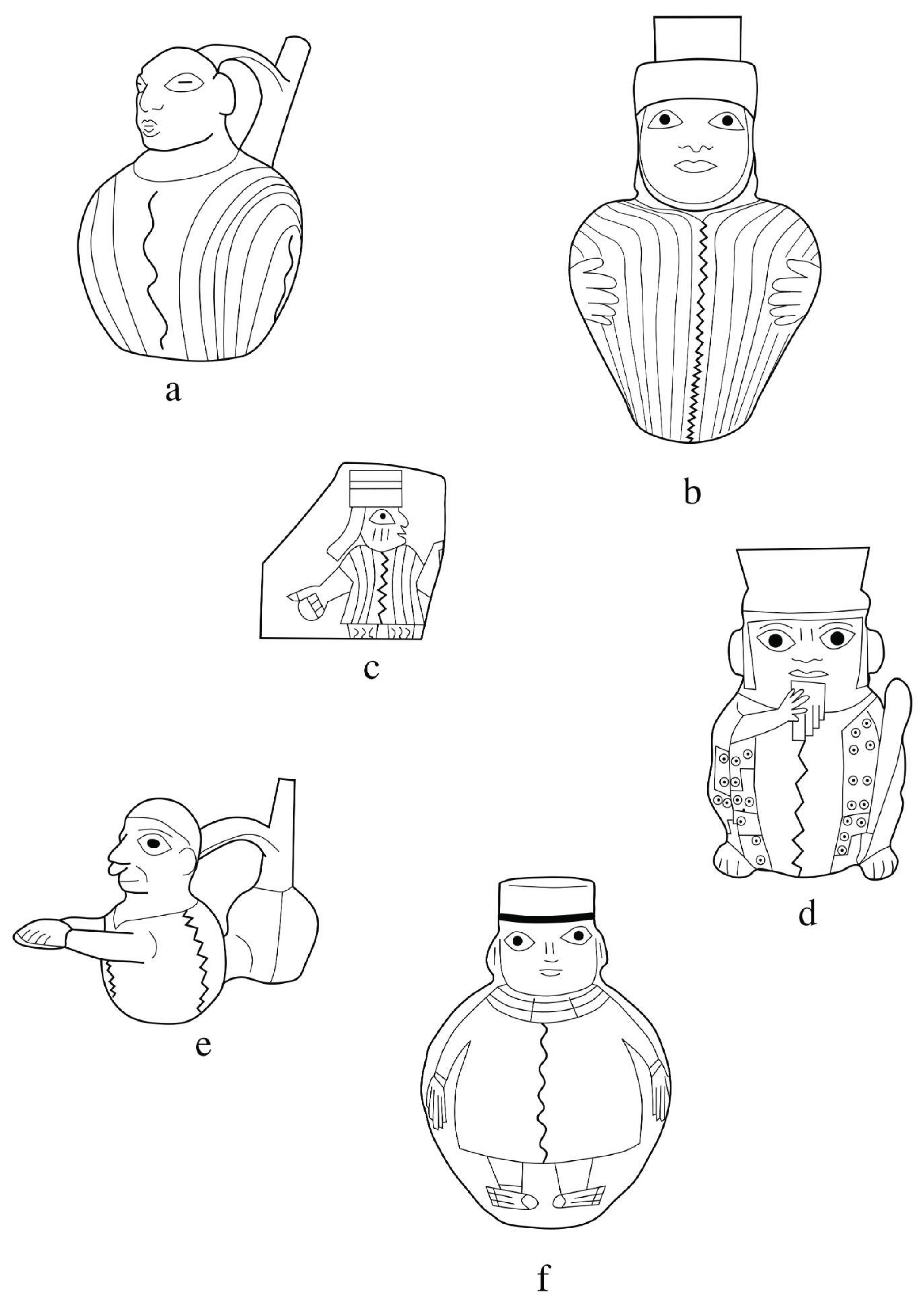
The visual evidence for this connection lies in the representation of the metopic suture as a wavy, undulating line, a convention identical to the rendering of textile seams in Wari art. Unlike Tiwanaku or Inca garments, Wari tunics were constructed from two vertical panels joined at the center by a seam. In Wari iconography, specifically on ceramics depicting striped or tie-dyed garments, artists consistently rendered these seams as zigzagging lines (Figure 6). This choice is a significant departure from physical reality, as on extant tie-dye tunics, the stitches appear as discrete, diagonal dashes. By opting for a stark continuous wavy line on ceramics, Wari artists visually emphasized the tunics’ seams beyond reality. As archaeologist Mary Weismantel (2015b, p. 150) has argued regarding Chavín art, Andean iconography often collapses boundaries between the interior and exterior. Employing a similar strategy of making the invisible—or barely visible—visible, Wari ceramicists retraced the path of the thread as it traveled through both sides of the cloth, like an x-ray view of the stitch.
The striking similarity between the depiction of the tunics’ seam (a textile tinkuy) and that of the metopic suture on the uma tullu (an osteological tinkuy) reinforces a symbolic bridge between the social and the biological. Just as the stitched seams bring together two halves of an imperial garment, the metopic suture acts as the tinkuy of the skull—the essential junction that unifies the human head. By emphasizing this suture on the uma tullu, Wari artists transformed a biological idiosyncratic trait into a profound metaphor for imperial cohesion and the animated power of the ancestors.
If the uma tullu was a locus of convergence, or tinkuy, then objects bearing that iconography may have played a role in building a unified imperial identity. Ceramics, in particular, must have functioned as essential tools for ritual commensality. The strategic focus of the Wari on the curated dead mirrors Susan Niles’ (1999, p. xvii) observation that, for the Inca, "the prestige of the living was directly related to the reputation of the dead." By sharing food or drink from these bowls, the Wari could negotiate lineage, creating fictional blood relationships to integrate disparate groups into the imperial fold.
By framing the metopic suture as a tinkuy—the potent encounter between two halves—the Wari provided a sophisticated visual metaphor for the integration of newly conquered groups into the state. This "suturing" of diverse populations into a single imperial body allowed the Wari to transform local lineages into a unified ancestral narrative. The enduring power of this iconography is perhaps best evidenced by its modern linguistic legacy in the Ayacucho region, where the term “wari” remains inextricably linked to the bones of the ancestors—a persistent echo of an imperial vision that sought to bridge the world of the living and the curated memory of the dead.
Funding
This research received no external funding.
Institutional Review Board Statement
Not applicable.
Informed Consent Statement
Not applicable.
Data Availability Statement
The data used and analysed in the study are available from the author on request.
Acknowledgments
I’d like to thank Tiffany Tung for her help and willingness to discuss her findings throughout my research. I also want to recognize Javier Fonseca Santa Cruz’, providing me with imagery and context around the uma tullu bottle from Espíritu Pampa. He is deeply missed.
Conflicts of Interest
The authors declare no conflicts of interest.
References
- Allen, C. J. Body and Soul in Quechua Thought. Journal of Latin American Lore 1982, 8(2), 179–196. [Google Scholar]
- Andrushko, V. A. How the Wari Fashioned Trophy Heads for Display. A Distinctive Modified Cranium from Cuzco, Peru, and Comparison to Trophies from the Capital Region. In The Bioarchaeology of the Human Head: Decapitation, Decoration, and Deformation; Bonogofsky, M., Ed.; University Press of Florida, 2011; pp. 262–285. [Google Scholar]
- Ansión, J. Desde el Rincón de Los Muertos: el Pensamiento Mítico en Ayacucho; GREDES, 1987. [Google Scholar]
- Bennett, W. C. Excavations at Wari, Ayacucho, Peru; Yale University Press, 1953. [Google Scholar]
- Bergh, S. E. Pattern and Paradigm in Middle Horizon Tapestry Tunics . Ph.D. Dissertation, Columbia University, 1999. [Google Scholar]
- Burger, R. L. The Intellectual Legacy of Julio C. Tello. In The Life and Writings of Julio C. Tello: America’s First Indigenous Archaeologist; Burger, R. L., Ed.; University of Iowa Press, 2009; pp. 65–88. [Google Scholar]
- Cavero Carrasco, R. Retablo de memorias: indígenas e indigenismo en Ayacucho; Universidad Nacional de San Cristóbal de Huamanga, 2007. [Google Scholar]
- Cereceda, V. Aproximaciones a Una Estética Andina: De La Belleza al Tinku. In Tres Reflexiones Sobre El Pensamiento Andino; Bouysse-Cassagne, T., Harris, O., Platt, T., Cereceda, V., Eds.; Hisbol, 1987; pp. 133–223. [Google Scholar]
- Ceruti, C. Human Bodies as Objects of Dedication at Inca Mountain Shrines (North-Western Argentina). World Archaeology 2004, 36(1), 103–22. [Google Scholar] [CrossRef]
- Classen, C. Inca Cosmology and the Human Body; University of Utah Press, 1993. [Google Scholar]
- Cook, A. G. The Middle Horizon Ceramic Offerings from Conchopata. Ñawpa Pacha 1984, 22(1), 49–90. [Google Scholar] [CrossRef]
- Cook, A. G. Huari D-Shaped Structures, Sacrificial Offerings and Divine Kingship. In Ritual Sacrifice in Ancient Peru; Benson, B., Cook, A. G., Eds.; University of Texas Press, 2000; pp. 137–63. [Google Scholar]
- de Arriaga, P. J. The Extirpation of Idolatry in Peru; University of Kentucky Press, 1968. [Google Scholar]
- Donnan, C. B. Moche Art of Peru: Pre-Columbian Symbolic Communication . In Museum of Cultural History; University of California, 1978. [Google Scholar]
- Donnan, C. B. Dance in Moche Art. Ñawpa Pacha 20 1982, 97–120. [Google Scholar] [CrossRef]
- Donnan, C. B.; Foote, L. J. Child and Llama Burials From Huanchaco. In Ancient Burial Patterns of the Moche Valley; Donnan, C. B., Mackey, C. J., Eds.; University of Texas Press, 1978; pp. 399–408. [Google Scholar]
- Druc, I.; Giersz, M.; Kałaskac, M.; Siuda, R.; Makowski, K.; Chylac, J. M.; Pimentel Nita, R.; Syczewskic, M. Offerings for Wari Ancestors: Strategies of Ceramic Production and Distribution at Castillo de Huarmey, Peru. Journal of Archaeological Science Reports 2020, 30, 102229. [Google Scholar] [CrossRef]
- Duviols, P. Huari y Llacuaz: Agricultores y Pastores : Un Dualismo Prehispánico de Oposición y Complementaridad. Revista Del Museo Nacional 39 1973, 153–91. [Google Scholar]
- Earls, J.; Silverblatt, I. La Realidad Fisica y Social En La Cosmologia Andina. Actes Du XLIIe Congrès International Des Américanistes (Paris 1978, 4, 444–473. [Google Scholar]
- Eeckhout, P.; Owens, L. S. Funerary Practices and Models in the Ancient Andes: The Return of the Living Dead; Cambridge University Press, 2015. [Google Scholar]
- Glowacki, M. The Wari Occupation of the Southern Highlands of Peru: A Ceramic Perspective from the Site of Pikillacta . Ph.D. dissertation, Brandeis University, 1996. [Google Scholar]
- Glowacki, M. Pottery From Pikillacta. In Pikillacta: The Wari Empire in Cuzco; McEwan, G. F., Ed.; University of Iowa Press, 2005; pp. 101–113. [Google Scholar]
- Glowacki, M.; Malpass, M. Water, Huacas, and Ancestor Worship: Traces of a Sacred Wari Landscape. Latin American Antiquity 2003, 14(4), 431–48. [Google Scholar] [CrossRef]
- Goldstein, P. S. Omo, a Tiwanaku Provincial Center in Moquegua, Peru . Ph.D. Dissertation, University of Chicago, 1989. [Google Scholar]
- González Holguín, D. Vocabvlario de La Lengva General de Todo El Perv Llamada Lengua Qquichua, o Del Inca; Runasimipi Qespisqa Software, 2007. [Google Scholar]
- Hill, E.; Hageman, J. B. The Archaeology of Ancestors: Death, Memory, and Veneration; University Press of Florida, 2016. [Google Scholar]
- Isbell, W. H. The Rural Foundation for Urbanism: A Study of Economic and Stylistic Interaction Between a Rural and Urban Community in Eighth-Century Peru . Ph.D. dissertation, University of Illinois at Urbana-Champaign, 1977. [Google Scholar]
- Isbell, W. H. A Community of Potters, or Multicrafting Wives of Polygynous Lords? In Craft Production in Complex Societies; Shimada, I., Ed.; University of Utah Press, 2007; pp. 68–96. [Google Scholar]
- Isbell, W. H.; Cook, A. G. Ideological Origins of an Andean Conquest State. Archaeology 1987, 40(4), 27–33. [Google Scholar]
- Isbell, W. H.; Groleau, A. The Wari Brewer Woman: Feasting, Offerings, and Memory. In Inside Ancient Kitchens: New Directions in the Study of Daily Meals and Feasting Events; Klarich, E., Ed.; University of Colorado Press, 2010; pp. 191–220. [Google Scholar]
- Isbell, W. H.; Schreiber, K. J. Was Huari a State? American Antiquity 1978, 43(3), 372–389. [Google Scholar] [CrossRef]
- Jennings, J. Understanding Middle Horizon Peru: Hermeneutic Spirals, Interpretive Traditions, and Wari Administrative Centers. Latin American Antiquity 2006, 17(3), 265–86. [Google Scholar] [CrossRef]
- Knobloch, P. J. A Study of the Andean Huari Ceramics from the Early Intermediate Period to the Middle Horizon Epoch I . Ph.D. Dissertation, State University of New York, 1983. [Google Scholar]
- Korpisaari, A.; Trigo, D. Los Vasos Con Forma de Calavera: Símbolo de Un Ritual de Decapitadores y Elemento Panandino. Arqueologia Boliviana 2018, 4(4), 196–198. [Google Scholar]
- Kroeber, A.; Collier, D. The Archaeology and Pottery of Nazca, Peru: Alfred L. Kroeber’s 1926 Expedition; AltaMira Press, 1998. [Google Scholar]
- McAnany, P. A. Living with the Ancestors: Kinship and Kingship in Ancient Maya Society; University of Texas Press, 1995. [Google Scholar]
- Niles, S. A. The Shape of Inca History: Narrative and Architecture in an Andean Empire; University of Iowa Press, 1999. [Google Scholar]
- Nystrom, K. Bioarchaeological Perspective on Inca Imperialism. In The Dead Tell Tales : Essays in Honor of Jane E. Buikstra; Lozada, M. C., O’Donnabhain, B., Eds.; Cotsen Institute of Archaeology Press, 2013; pp. 123–128. [Google Scholar]
- Parker Pearson, M. The Archaeology of Death and Burial; Sutton Publishing Limited, 1999. [Google Scholar]
- Proulx, D. A. Nasca Trophy Heads: Victims of Warfare or Ritual Sacrifice? In Cultures in Conflict: Current Archaeological Perspectives (Proceedings of the 20th Annual Chacmool Conference); Tkaczuk, D. C., Vivian, B. C., Eds.; Archaeological Association, University of Calgary, 1989; pp. 73–85. [Google Scholar]
- Quilter, J. Treasures of the Andes: The Glories of Inca and Pre-Columbian South America; Duncan Baird, 2005. [Google Scholar]
- Stone-Miller, R. Technique and Form in Huari-Style Tapestry Tunics: The Andean Artist, A.d. 500-800 . Ph.D. Dissertation, Yale University, 1987. [Google Scholar]
- Stone-Miller, E. To Weave for the Sun: Ancient Andean Textiles in the Museum of Fine Arts, Boston; Thames and Hudson, 1994. [Google Scholar]
- Sullivan, L. R. Anatomical Variations in American Crania. Anthropological Papers of the American Museum of Natural History 1922, XXIII(5), 203–258. [Google Scholar]
- Tung, T. A. Trauma and Violence in the Wari Empire of the Peruvian Andes: Warfare, Raids, and Ritual Fights. American Journal of Physical Anthropology 2007, 133(3), 941–956. [Google Scholar] [CrossRef]
- Tung, T. A. Dismembering Bodies for Display: A Bioarchaeological Study of Trophy Heads from the Wari Site of Conchopata, Peru. American Journal of Physical Anthropology 136 2008, 294–308. [Google Scholar] [CrossRef]
- Tung, T. A. Violence, Ritual, and the Wari Empire: A Social Bioarchaeology of Imperialism in the Ancient Andes; University Press of Florida, 2012. [Google Scholar]
- Tung, T. A.; Cook, A. G. Intermediate-Elite Agency in the Wari Empire. In Intermediate Elites in Pre-Columbian States and Empires; Elson, C. M., Covey, R. A., Eds.; University of Arizona Press, 2006; pp. 66–93. [Google Scholar]
- Tung, T. A.; Fancher Whittemore, A.; Snyder, T. J. Dietas de los lactantes y las madres en Conchopata un estudio de isótopos estables de carbono y oxígeno. Chungara: Revista de Antropología Chilena 2024, 56(2), 273–286. [Google Scholar] [CrossRef]
- Tung, T. A.; Knudson, K. J. Identifying Locals, Migrants, and Captives in the Wari Heartland: A Bioarchaeological and Biogeochemical Study of Human Remains from Conchopata, Peru. Journal of Anthropological Archaeology 30 2011, 247–261. [Google Scholar] [CrossRef]
- Urioste, G. L. Sickness and Death in Preconquest Andean Cosmology: The Huarochiri Oral Tradition. In Health in the Andes; Bastien, J. W., Donahue, J. M., Eds.; American Anthropological Association, 1981; pp. 9–18. [Google Scholar]
- Vinchon, M. The Metopic Suture: Natural History. Neuro-Chirurgie 2019, 65(5), 239–245. [Google Scholar] [CrossRef]
- Weismantel, M. Moche Sex Pots: Reproduction and Temporality in Ancient South America. American Anthropologist 2004, 106(3), 495–505. [Google Scholar] [CrossRef]
- Weismantel, M. Many Heads Are Better than One: Mortuary Practice and Ceramic Heads in Ancient Moche Society. In Living with the Dead in the Andes; Shimada, I., Ed.; University of Arizona Press, 2015a; pp. 76–100. [Google Scholar]
- Weismantel, M. Seeing like an Archaeologist: Viveiros de Castro at Chavín de Huantar. Journal of Social Archaeology 2015b, 15(2), 139–159. [Google Scholar] [CrossRef]
- Więckowski, W. Wari Women from Huarmey: Bioarchaeological Interpretation of Human Remains from the Wari Elite Mausoleum at Castillo de Huarmey, Peru; Archaeopress, 2019. [Google Scholar]
- Williams, P. R. The Role of Disaster in the Development of Agriculture and the Evolution of Social Complexity in the South-Central Andes . Ph.D. dissertation, University of Florida, 1997. [Google Scholar]
- Williams, P. R.; Nash, D. J.; Isla, J. A. Cerro Baúl: un enclave Wari en interacción con Tiwanaku. Boletín de Arqueología PUCP 5 2001, 69–87. [Google Scholar] [CrossRef]
- Williams, P.R.; J. Nash, D.; Henkin, J.M.; Armitage, R.A. Archaeometric Approaches to Defining Sustainable Governance: Wari Brewing Traditions and the Building of Political Relationships in Ancient Peru. Sustainability 11 2019, 2333. [Google Scholar] [CrossRef]
- Zdilla, M.; Russell, M.; Koons, A.; Bliss, K.; Mangus, K. Metopism: A Study of the Persistent Metopic Suture. Journal of Craniofacial Surgery 2018, 29, 204–208. [Google Scholar] [CrossRef]
Figure 1.
Primary characteristics of the uma tullu design.
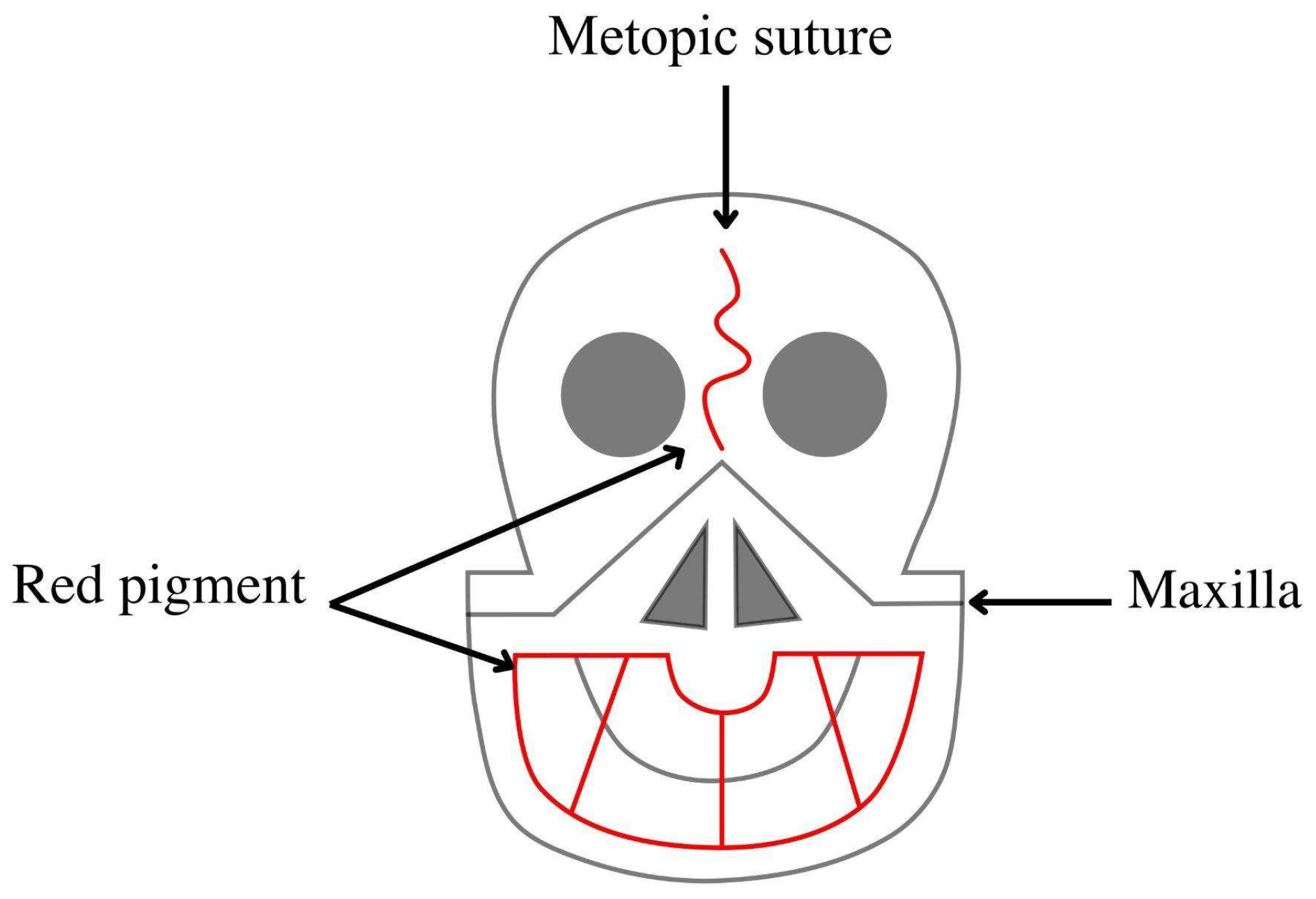
Figure 2.
Uma tullu iconography on metal.

Figure 3.
Typology of Wari ceramics with uma tullu iconography (a) modeled vessel (Pachacamac, American Museum of Natural History); (b) painted bowl (unknown provenance, Museo Larco); (c) bottle with double spout and bridge (unknown provenance, Dumbarton Oaks); (d) bottle (unknown provenance, Fowler Museum); (e) face-neck bottle (Espíritu Pampa). Not to scale.
Figure 3.
Typology of Wari ceramics with uma tullu iconography (a) modeled vessel (Pachacamac, American Museum of Natural History); (b) painted bowl (unknown provenance, Museo Larco); (c) bottle with double spout and bridge (unknown provenance, Dumbarton Oaks); (d) bottle (unknown provenance, Fowler Museum); (e) face-neck bottle (Espíritu Pampa). Not to scale.
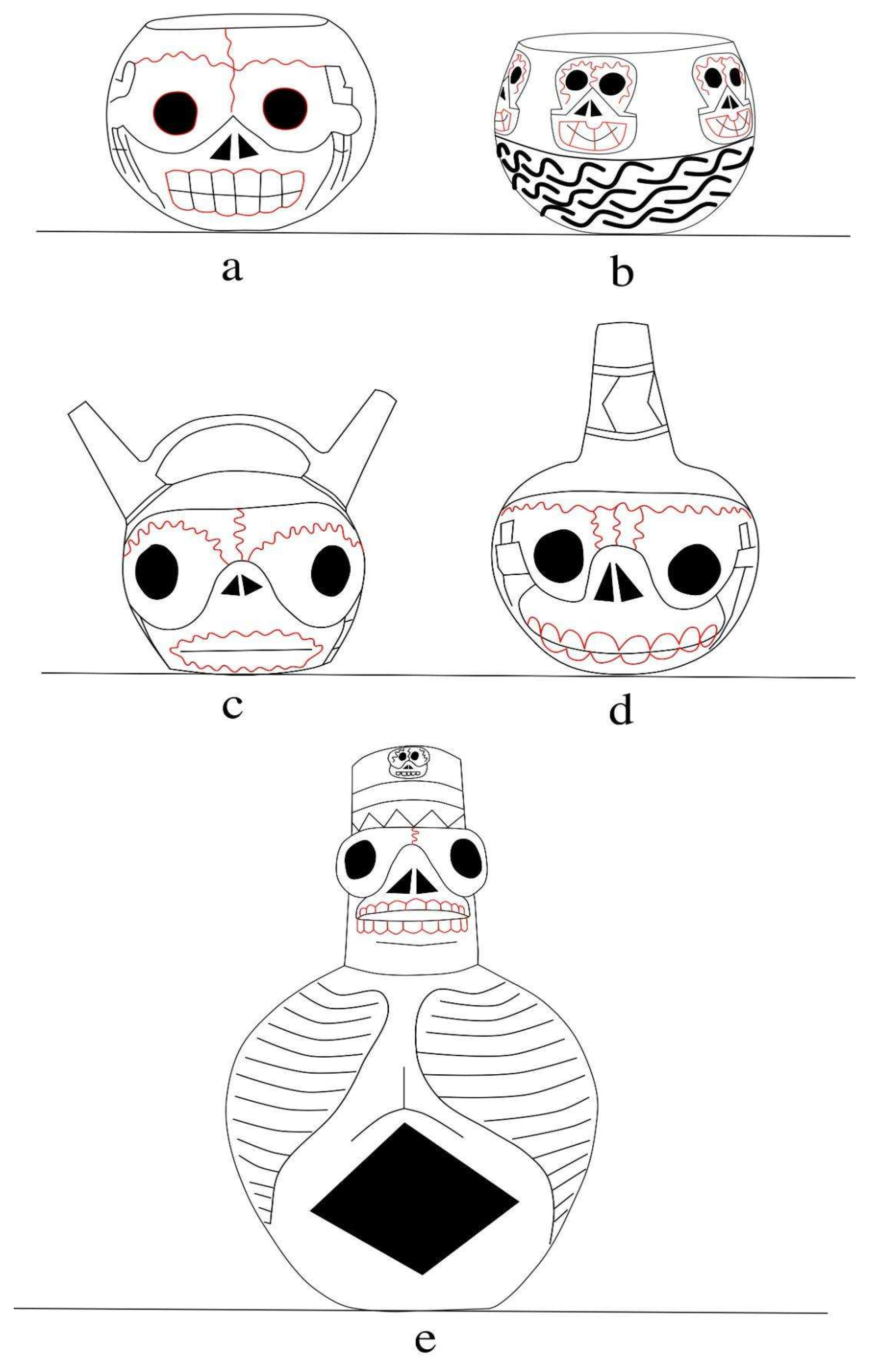
Figure 4.
Uma tullu face-neck bottle featuring a row of uma tullu motifs on its hat, excavated in a D-shaped temple at Espíritu Pampa. Image courtesy Javier Fonseca Santa Cruz.
Figure 4.
Uma tullu face-neck bottle featuring a row of uma tullu motifs on its hat, excavated in a D-shaped temple at Espíritu Pampa. Image courtesy Javier Fonseca Santa Cruz.
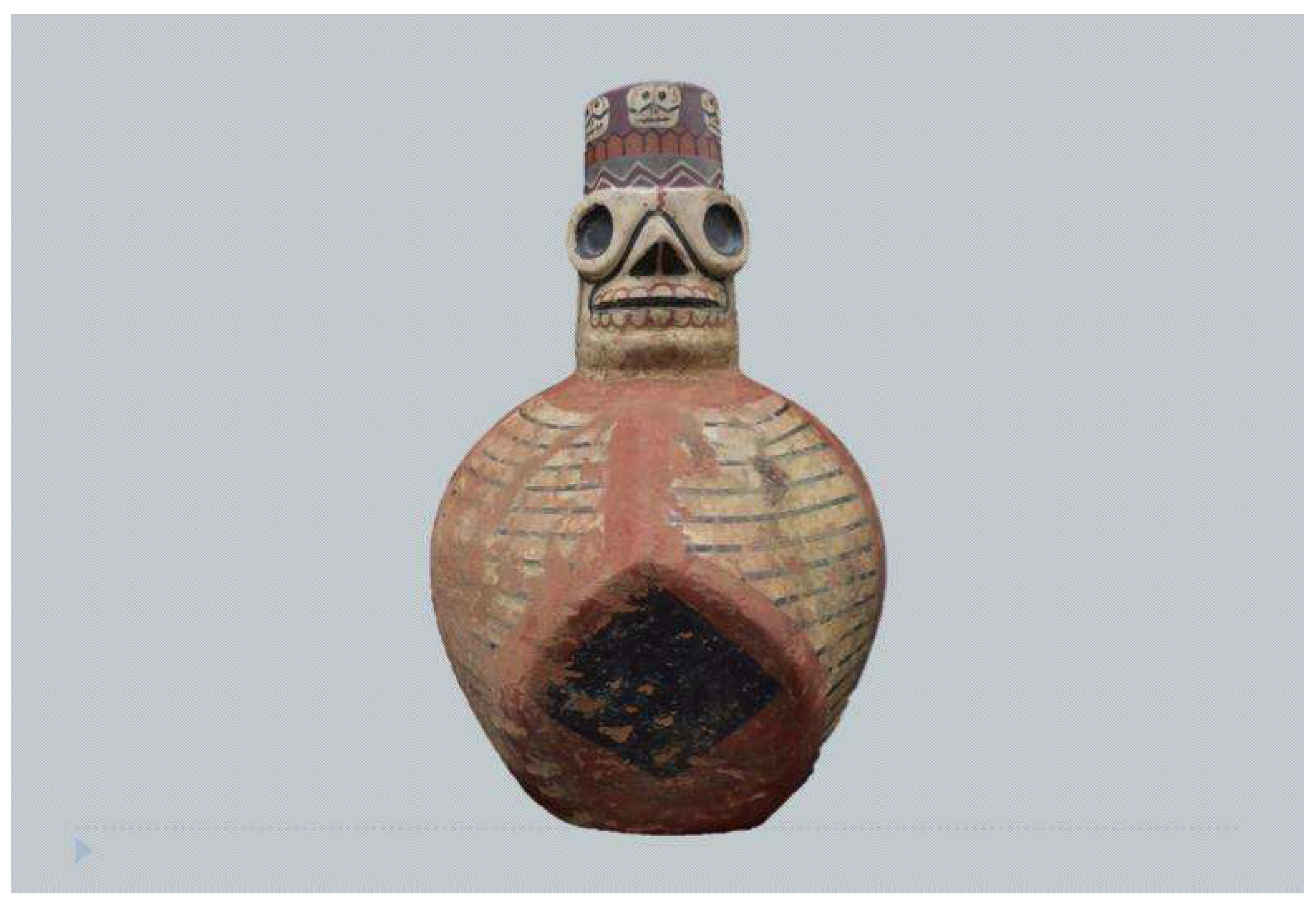
Figure 5.
Modeled bowl featuring an uma tullu with a jaguar headdress excavated in EA 153 at Conchopata. Museo Histórico Regional Hipólito Unanue, Ayacucho.
Figure 5.
Modeled bowl featuring an uma tullu with a jaguar headdress excavated in EA 153 at Conchopata. Museo Histórico Regional Hipólito Unanue, Ayacucho.
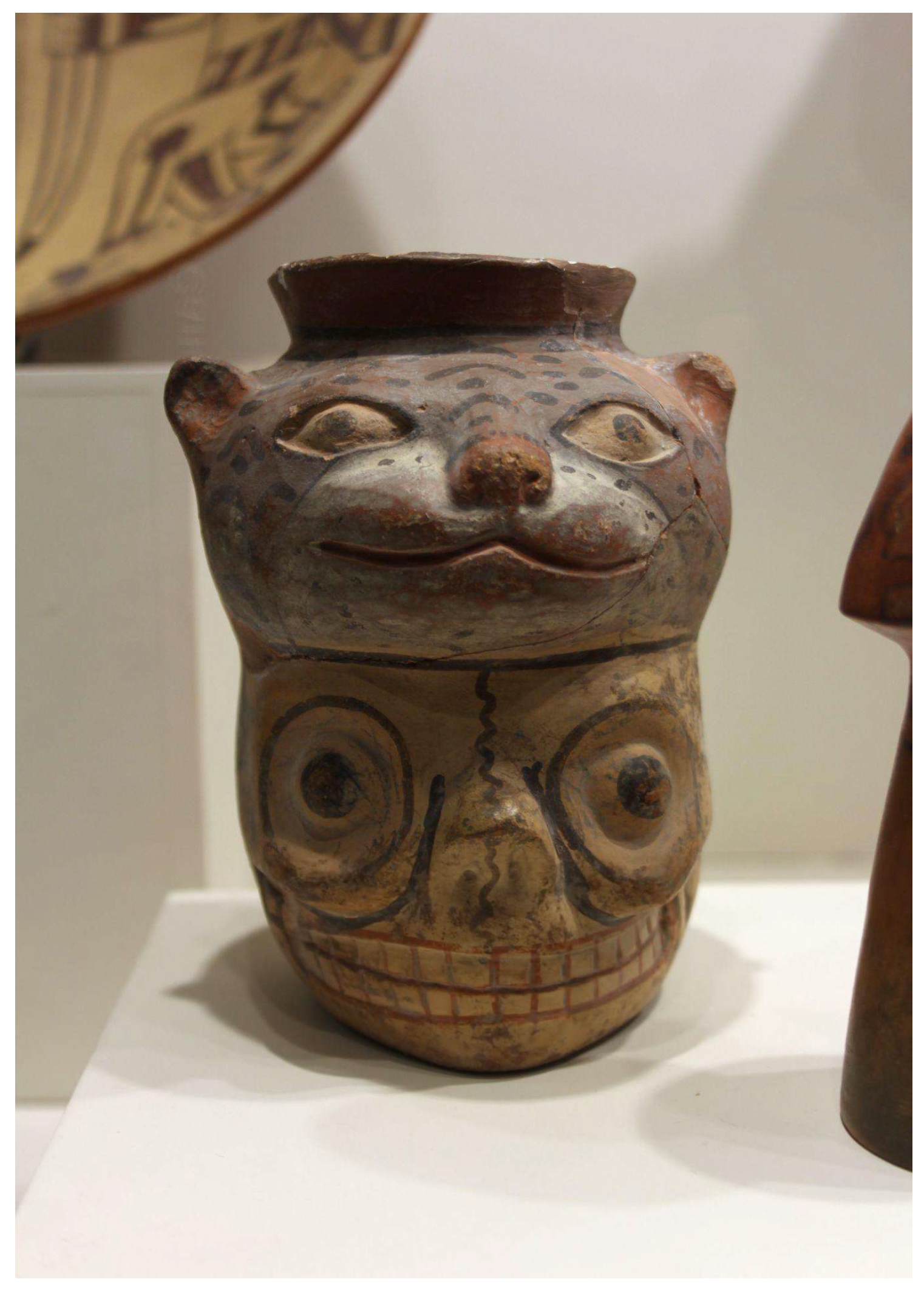
Figure 6.
Examples of Wari ceramics depicting seams on tunics (a) bottle with bridge spout, unknown provenance, Fowler Museum (Los Angeles); (b) face-neck bottle, Pacheco, Museo Nacional de Arqueología Antropología e Historia del Perú (Lima); (c) fragment, Wari, Laboratorio de Arqueologia, UNSCH (Ayacucho); (d) face-neck bottle, Museum of Fine Arts (Houston); (e) double-bodied bottle with bridge spout, Pachacamac, Ethnologisches Museum (Berlin); (f) face-neck bottle, Phoebe A. Hearst Museum of Anthropology (Berkeley). Not to scale.
Figure 6.
Examples of Wari ceramics depicting seams on tunics (a) bottle with bridge spout, unknown provenance, Fowler Museum (Los Angeles); (b) face-neck bottle, Pacheco, Museo Nacional de Arqueología Antropología e Historia del Perú (Lima); (c) fragment, Wari, Laboratorio de Arqueologia, UNSCH (Ayacucho); (d) face-neck bottle, Museum of Fine Arts (Houston); (e) double-bodied bottle with bridge spout, Pachacamac, Ethnologisches Museum (Berlin); (f) face-neck bottle, Phoebe A. Hearst Museum of Anthropology (Berkeley). Not to scale.
Disclaimer/Publisher’s Note: The statements, opinions and data contained in all publications are solely those of the individual author(s) and contributor(s) and not of MDPI and/or the editor(s). MDPI and/or the editor(s) disclaim responsibility for any injury to people or property resulting from any ideas, methods, instructions or products referred to in the content. |
© 2026 by the author. Licensee MDPI, Basel, Switzerland. This article is an open access article distributed under the terms and conditions of the Creative Commons Attribution (CC BY) license.
Copyright: This open access article is published under a Creative Commons CC BY 4.0 license, which permit the free download, distribution, and reuse, provided that the author and preprint are cited in any reuse.