
Submitted:
03 April 2026
Posted:
07 April 2026
You are already at the latest version
Abstract
A comprehensive petrophysical analysis of 232 core samples from the J-III productive horizon (wells 182, 1136, and 8096), supported by routine laboratory analyses and X-ray diffraction (XRD) data from 70 samples, was carried out. Integration of reservoir-property parameters and mineralogical characteristics made it possible to establish genetic relationships between material composition, post-sedimentary transformations, and the formation of reservoir properties. The rock-forming framework is dominated by quartz, albite, and chlorite, while calcite—primarily of secondary origin—is confined to pore spaces, having precipitated during the diagenetic and catagenetic stages. Minor phases, including nacrite, kaolinite, chalcopyrite, molybdenite, and graphite, record superimposed hydrothermal events, with graphite indicating episodic exposure to elevated temperatures during the petrogenetic evolution of the rocks. Mineralogical heterogeneity is pronounced: quartz is ubiquitous and albite widely distributed, yet the abundances of calcite and chlorite show considerable variability. Statistical analysis reveals modal populations of albite and calcite, alongside a near-lognormal distribution of chlorite. Examination of paired mineral associations distinguishes clay-rich from clay-poor varieties and confirms the genetic independence of albitization, chloritization, and calcitization, as well as the secondary nature of carbonate mineralization. The J-III productive horizon is characterized by extremely poor reservoir properties: modal porosity is approximately 1%, more than 95% of the values are below 2%, and permeability is predominantly below 0.01 mD. These rocks therefore belong to the class of tight, low-porosity, and low-permeability reservoirs. Local storage anomalies are largely controlled by the development of microfractures. The lack of a consistent correlation between porosity and the extent of carbonation or dolomitization suggests that these processes exert only a subordinate effect on reservoir properties. Dolomitization is frequently accompanied by additional mineralization and compaction. However, when pore-space volume is preserved, it can lead to an increase in void ratio, as dolomite is denser than calcite while the total pore volume remains nearly unchanged. The reconstructed petrogenetic model involves the deposition of sandy-clayey material containing plagioclase and organic matter, followed by diagenetic and catagenetic transformations—particularly albitization and calcitization—that resulted in a dense, secondarily mineralized rock mass. Late tectono-hydrothermal reactivation led to the development of a fracture system, which governs present-day reservoir properties and serves as the main conduit for hydrocarbon migration and accumulation. Mineralization along these fractures confirms their fluid-conducting role. Experimental acid treatment demonstrated that permeability can increase by up to four orders of magnitude, revealing the presence of hidden storage capacity and mobilizable micropore systems. The J-III horizon is thus interpreted as a fractured reservoir, with a development strategy focused on identifying and mapping fracture zones and enhancing their connectivity through horizontal drilling and stimulation techniques.
Keywords:
tight terrigenous reservoirs
; reservoir properties
; core petrophysics
; X-ray diffraction (XRD)
; mineralogical composition
; albitization
; carbonation
; chloritization
; secondary mineralization
; fractured reservoirs
; microfracturing
; porosity and permeability
; diagenesis and catagenesis
; hydrothermal processes
; Karazhanbas
; J-III horizon
1. Introduction
Understanding the genesis and evolution of reservoir properties in rocks is one of the key tasks in modern petroleum geology and petrophysics, particularly in the study of tight and low-permeability reservoirs. Conventional concepts of reservoir rocks are based on high porosity and permeability values that ensure effective hydrocarbon migration and accumulation. However, under conditions of conventional reservoir depletion and the transition toward the development of geologically complex targets, it becomes necessary to reconsider the mechanisms responsible for the formation of reservoir space, where processes reducing primary matrix porosity and the development of secondary structural elements that maintain fluid flow dominate [1,2,3,4].
Tight terrigenous successions subjected to deep post-sedimentary reworking present a particular challenge, as primary porosity may be almost entirely absent, while permeability is controlled by the development of secondary fracture and micropore networks. Such systems often exhibit extremely low laboratory porosity values (<2%) and permeability values (<0.01 mD), which formally exclude them from the category of reservoirs. Nevertheless, observed commercial hydrocarbon inflows indicate the presence of subvertical and subparallel flow pathways formed through the interaction of sedimentary, diagenetic, tectonic, and hydrothermal processes [5,6,7,8,9]. Resolving this apparent contradiction remains an active topic in the international scientific community and requires an integrated approach, combining petrophysical, mineralogical, structural-textural, and thermobarogeochemical data.
The J-III horizon considered in this study represents an example of such a complex geological target. Laboratory measurements on a pooled core dataset from multiple wells indicate extremely low matrix porosity and permeability, typical of dense, secondarily mineralized rocks. At the same time, production-test results and well-logging data record hydrocarbon inflows, indicating that conventional reservoir-property indicators do not fully reflect the actual filtration mechanisms operating within the horizon. Laboratory analyses of core samples therefore primarily characterize the matrix, which may have negligible permeability but can still serve as a storage domain for fluids. At the matrix–fracture interface, this may increase the effective reservoir void space and mobilize additional matrix-stored formation fluids into the filtration process. This necessitates a detailed analysis of the factors controlling the development of reservoir properties, taking into account depositional history, diagenetic transformations, and late tectonic reactivation.
Mineralogical composition plays a key role in the evolution of reservoir properties. Primary detrital fractions and cement phases undergo transformations under the influence of increasing pressure, temperature, and fluid activity. Post-sedimentary processes—including cementation, recrystallization, dissolution, metasomatism, and tectonic disruption—can either substantially reduce porosity or generate new flow pathways through the development of fracture networks and microvoids [3,7,10,11,12]. In particular, intense carbonation, albitization, and chloritization may fill pore space and increase rock density, whereas tectonic deformation may generate a secondary fracture system capable of compensating for the loss of primary matrix storage capacity. Thus, the sequence, rate, and spatial distribution of these processes critically determine the present-day reservoir potential.
Recent studies of tight terrigenous reservoirs indicate that the evolution of their reservoir properties is governed by the combined influence of sedimentary heterogeneity, deep physicochemical transformations, and late tectonic events [5,8,11,12,13,14]. Literature evidence emphasizes that the relative contribution of each factor varies substantially depending on the geodynamic setting, thermobaric regime, fluid-activity history, and burial conditions. This underscores the necessity of using representative laboratory datasets derived from large core volumes and performing statistical analyses of petrophysical parameters in combination with mineralogical characteristics.
The present study is based on an integrated analysis of laboratory data obtained from core material of the J-III horizon, including standard petrophysical measurements of porosity, permeability, and density, along with X-ray diffraction (XRD) analysis to determine mineralogical composition. Analysis of over two hundred samples from several wells ensures dataset representativeness and enables evaluation of spatial and lithological variability, as well as identification of robust patterns in the distribution of reservoir properties and their relationships to mineralogical composition and textural features. It should be noted that, under conditions of low reservoir quality, many laboratory tests—such as filtration experiments (including relative permeability and displacement-efficiency measurements), capillarimetric, and electrometric studies—were not performed due to their impracticality.
Particular attention was given to the analysis of porosity and permeability distributions, their relationship with density characteristics, and the influence of carbonate minerals and dolomitization on the degradation or preservation of pore space. In addition to conventional petrophysical parameters, the study examines the effects of acid treatment on core samples, which enables an indirect assessment of pore-space mineralization and its potential for secondary reopening under technological stimulation. This is particularly important for tight reservoirs, where the activation of hidden storage components can significantly impact well productivity.
Thus, the present research aims to integrate petrophysical and mineralogical data to develop a coherent concept of reservoir-space formation in tight terrigenous reservoirs and to identify the key geological and post-sedimentary factors controlling their productivity. The expected results are of both fundamental importance for understanding pore-generation and mineralization processes and practical value for predicting reservoir properties and optimizing the development of fields characterized by low matrix storage capacity and high structural heterogeneity.
2. Geological Structure and Characteristics of the Productive Horizon
Structurally and tectonically, the Karazhanbas oil and gas field is situated within the Buzachi uplift (Figure 1) and is associated with a large, asymmetrical brachyanticlinal structure measuring approximately 30 × 6 km, with an amplitude of around 180 m. The structural framework is governed by a complex system of faults of varying magnitudes, producing a pronounced blocky architecture (Figure 2).
Seven distinct tectonic blocks have been delineated, each characterized by variations in the occurrence and thickness of productive horizons, highlighting the fundamentally heterogeneous nature of the reservoir (Figure 2). Lateral variability in reservoir properties is influenced not only by primary sedimentary heterogeneity but also by intense post-depositional tectonic reworking [35,37]. Consequently, fault-controlled tectonics serves as the principal factor regulating the present-day hydrodynamics of the reservoir and the spatial distribution of effective permeability. Interactions between major and minor faults lead to compartmentalization, generating differential pressure regimes, localized fluid connectivity, and preferential enhancement of permeability along fracture corridors [36,40].
The paleogeomorphic evolution of the Buzachi uplift during the Jurassic played a pivotal role in shaping the spatial organization of reservoir bodies. Throughout this period, the uplift functioned as a stable positive morphostructure, within which alternating denudation and accumulation regimes occurred [38]. This complex paleotopography led to the development of asymmetric ridges and erosional depressions, generating localized accommodation space for sediment deposition. These morphological features controlled the distribution of sandstone bodies, imparting lens-shaped geometries, limited lateral continuity, and stratigraphic discontinuity [36,39]. As a result, the spatial distribution of reservoirs exhibits a pronounced inherited character, directly linked to the paleosurface morphology. Accounting for these features is essential in geological modeling, particularly when describing discrete, heterogeneous reservoir elements.
The J-III productive horizon, identified in 2019, represents a fundamentally different type of reservoir compared with the traditionally developed Cretaceous and Neocomian formations. Despite confirmed hydrocarbon saturation, its geological definition remains limited due to a combination of sparse data coverage and high structural complexity. Unlike Cretaceous reservoirs, which are characterized by high porosity (26–40%) and permeability (up to 0.7–6 mD) [35,39], the J-III productive horizon exhibits a distinct pore-space organization. It comprises poorly cemented, lens-shaped sandy bodies that lack lateral continuity and demonstrate pronounced heterogeneity across multiple scales.
Fracturing plays a dominant role in controlling reservoir properties within the J-III productive horizon. Effective permeability is primarily governed by fracture density, orientation, connectivity, and their interaction with matrix porosity. This results in a discrete network of flow channels localized in zones of enhanced permeability, consistent with a dual-porosity/dual-permeability model, where matrix contribution to fluid flow is minimal and fractures constitute the primary conductive pathways [40]. The spatial arrangement and connectivity of these fractures generate anisotropic flow conditions, with preferential hydrocarbon migration along high-permeability corridors, which is critical for reservoir simulation and production strategy.
Additional complexity arises from the weak stratigraphic continuity of the horizon (Figure 3). Correlation of core and log sections is hindered by tectonic fragmentation, lateral discontinuity of sandstone bodies, and localized structural irregularities. Under these conditions, conventional seismic and log interpretation methods have limited efficiency, emphasizing the need for probabilistic geostatistical approaches and structural-facies modeling to accurately characterize discrete, heterogeneous reservoir systems.
Core and fluid studies further reveal a complex genetic relationship of the J-III productive horizon with the broader Jurassic hydrocarbon system. Similarities in hydrocarbon properties indicate a common source and coordinated migration history, whereas differences in reservoir characteristics reflect localized post-depositional evolution, including the intensity of tectonic disturbance and secondary mineral transformations.
Petrographic observations of thin sections (Figure 4) reveal:
- Terrigenous deposits – moderately lithified, with no evidence of deep burial.
- Grain packing – moderate; grain contacts are predominantly linear or point contacts, occasionally conformable.
- Primary clay cements – illite, illite–smectite, illite–chlorite, with less frequent kaolinite.
- Early diagenetic calcite cement – pore-filling and basal morphologies, formed from marine pore waters or biogenic processes in loosely consolidated sediments.
- Sandstone maturity – chemically and physically immature, indicating proximity to sediment sources.
- Clast characteristics – poorly rounded and polymictic, including arkoses and graywacke arkoses, indicating multiple provenance sources.
- Predominance of albite in detrital grains, suggesting derivation from granitic sources such as pegmatites, granodiorites, or acidic volcanic rocks (rhyolites).
- Volcanic fragments – numerous effusive clasts in the detrital fraction, reflecting diverse provenance.
At the core column scale, extensive fracturing and steeply dipping lithological contacts are observed, providing direct evidence of significant structural reworking of the sediments (Figure 5).
Electrical micro-scanner logs from five wells confirm the presence of widespread fracturing and steep bedding planes across the target interval, consistent with core-derived structural observations (Figure 6).
Integration of core, petrophysical, and structural data supports interpreting the J-III productive horizon as a geologically complex, highly heterogeneous reservoir. Its formation reflects the interplay of paleotopography, sedimentary processes, and subsequent tectonic reworking. The transition from a classical pore-dominated model to a fracture-lens system with discrete flow pathways necessitates revising conventional modeling and development strategies. Emphasis should be placed on fracture mapping, identification of high-permeability zones, and matrix–fracture interactions to accurately predict reservoir behavior and optimize hydrocarbon recovery.
In summary, the J-III productive horizon exemplifies a challenging tight reservoir system, where lateral and vertical heterogeneity, fracture control, and inherited paleogeomorphic patterns collectively define reservoir quality. Effective development requires the integration of geological, petrophysical, and structural datasets, with advanced modeling approaches capturing the discrete and anisotropic nature of flow pathways. This comprehensive framework provides a robust basis for field development planning, production optimization, and long-term management of complex reservoirs such as J-III productive horizon.
Degree of Geological and Geophysical Exploration of the Study Area
The Karazhanbas field represents one of the most extensively explored hydrocarbon-bearing regions in Western Kazakhstan. Nevertheless, the high density of available geological and geophysical data does not eliminate the fundamental uncertainty associated with the complex internal architecture of the J-III reservoir. Current geological concepts are based on decades of accumulated seismic, drilling, and production data; however, their interpretation remains subject to ongoing refinement as new datasets and analytical approaches become available.
The earliest stage of exploration (prior to the 1950s) was largely reconnaissance in character and resulted in the establishment of a preliminary geological framework. A major advancement occurred during the 1950s–1970s with the implementation of common-depth-point (CDP) seismic method which enabled the identification of key structural elements and facilitated the delineation of drilling targets. The discovery of commercial oil inflows in 1974 marked the transition to an intensive phase of exploration and field development.
Subsequently, a dense grid of seismic profiles was acquired, allowing detailed imaging of the Jurassic–Cretaceous succession. As conventional anticlinal traps became progressively depleted, exploration strategies shifted toward more complex geological targets, including non-anticlinal accumulations and deeper pre-Jurassic intervals. This transition was accompanied by the implementation of advanced digital processing techniques and a substantial improvement in seismic resolution.
The modern exploration stage is characterized by the widespread application of 3D seismic surveys and large-scale data reinterpretation. Seismic campaigns conducted between 2001 and 2024, followed by advanced processing, reinterpretation, and integrated geological modeling in 2019 and 2025, have significantly refined the geometry of fault systems and the internal block structure. These studies demonstrate that the degree of geological heterogeneity—particularly within Jurassic intervals—is considerably higher than previously assumed.
Despite the extensive drilling coverage, significant uncertainties persist, especially in the characterization of fracture systems and deeper stratigraphic units. The discovery of hydrocarbons within the J-III horizon in 2019 provides compelling evidence of previously unrecognized exploration potential and highlights the limitations of earlier geological models.
Overall, the Karazhanbas field should be regarded as a geologically complex system in which a high level of exploration maturity coexists with the need for continuous model refinement. This underscores the importance of integrated, multidisciplinary approaches and necessitates a reassessment of the role of structural controls in governing reservoir properties and hydrocarbon distribution.
3. Methodology of Laboratory Analysis
The present study is based on an integrated analysis of laboratory data obtained from core samples of the J-III horizon, combining routine petrophysical measurements with X-ray diffraction (XRD) analysis. The primary objective is to identify systematic relationships between reservoir properties, mineralogical composition, and textural characteristics, to evaluate their spatial and lithological variability, and to reconstruct the mechanisms of post-sedimentary transformation.
The analytical dataset comprises 232 core samples collected from wells 182, 1136, and 8096 (31, 115, and 87 samples, respectively). Each sample was subjected to a comprehensive suite of measurements, including porosity, permeability, bulk density, and water saturation. This dataset provides a statistically robust basis for identifying anomalous values and quantifying relationships between petrophysical parameters and mineralogical composition.
The analytical workflow included macroscopic core description, geomechanical testing, reservoir properties, scanning electron microscopy (SEM) with mineralogical analysis, gamma-ray spectrometry of full-diameter core, paleostratigraphic and pyrolytic studies, as well as systematic core photography and thin-section petrography. Although certain datasets are incomplete for individual wells, these gaps do not significantly compromise the overall representativeness or interpretive value of the integrated database.
The integration of routine petrophysical measurement data with XRD analysis enabled precise quantification of both major and accessory mineral phases, including quartz, albite, chlorite, and calcite, as well as minor constituents such as nacrite, kaolinite, chalcopyrite, molybdenite, and graphite. The results demonstrate a strong control of mineralogical composition and rock texture on reservoir properties, allowing reconstruction of the sequence of post-depositional processes, including cementation, albitization, carbonation, and the development of secondary fracture systems.
Statistical treatment of XRD data enabled the delineation of modal mineral abundance domains and the identification of systematic patterns in their co-distribution. Pairwise correlation analysis (quartz–albite, quartz–calcite, calcite–chlorite, albite–chlorite) corroborates the secondary origin of calcite and indicates that the formation of albite and chlorite proceeded independently. These relationships reflect contrasting depositional regimes and distinct pathways of post-depositional (diagenetic) evolution of the host rocks.
Additional experiments involving acid treatment of core samples revealed substantial permeability enhancement in selected samples, in some cases by several orders of magnitude. This finding indicates the presence of latent storage capacity associated with microporous and fracture systems, which can be activated under technological stimulation and significantly contribute to fluid flow.
In summary, the integrated analytical approach combining petrophysical measurements and XRD analysis provides a comprehensive framework for assessing spatial and lithological heterogeneity, identifying key mechanisms controlling reservoir evolution, and evaluating the potential for secondary pore-space enhancement. The results establish a robust foundation for interpreting petrogenetic processes, predicting reservoir quality, and optimizing field development strategies, thereby offering both fundamental insights and significant practical implications.
4. Results of the Study
At the first stage of the study, histograms were constructed for the distribution of the available petrophysical parameters. Figure 7 shows the distribution of the mineralogical density of the reservoir rocks. The distribution is unimodal and close to normal, although it has an asymmetric tail extending toward higher density values. The modal value is around 2.70 g/cm³, and the main part of the distribution lies within the range of 2.66–2.74 g/cm³
A broad range of mineralogical density values, amounting to 0.08 g/cm³ (Figure 8), indicates substantial variability in the mineralogical composition of the reservoir matrix and makes it difficult to estimate porosity solely from density log data. Under such conditions, porosity calculations based only on density logging would be associated with significant error because of the strong heterogeneity of the reservoirs and the very low porosity of the rocks, generally on the order of 1–2% in absolute terms.
Figure 9 shows the distribution of bulk density in the rocks. As in the previous case, the distribution is unimodal and close to normal. A slight asymmetry toward lower density values is observed. The modal value is approximately 2.68 g/cm³.
The porosity distribution visually resembles a lognormal distribution (Figure 10). More than 80% of the studied samples have porosity values of around 1%. 95% of the dataset have porosity below 2%. Only isolated samples show porosity values greater than 2% and appear in the distribution as anomalies, or outliers. Accordingly, the rocks under consideration cannot be regarded as porous. Figure 10 also presents histograms of absolute gas permeability distribution, with permeability plotted on a logarithmic scale. Most samples have permeability below 0.01 mD. Rare samples show permeability values close to 1.0 mD. The rocks are therefore characterized by low permeability, which does not explain the observed inflows in the tested wells under conditions of vertical wells without hydraulic fracturing and in the presence of highly viscous oils.
Calcite content determined by carbonate analysis shows a normal distribution, with a modal value of approximately 15%. The calcite content in the samples ranges from 5% to 25% (Figure 11). In rare samples, the proportion of calcite reaches 40%. On the basis of the available data, however, it is not possible to infer the presence of discrete carbonate layers.
Dolomite occurs in the rocks much less frequently than calcite (Figure 11). According to the carbonate analysis, dolomite is absent in 65% of the samples, and its content does not exceed 15%, which indicates its secondary origin. The presence of dolomite reflects the circulation of formation waters enriched in magnesium ions and may simultaneously exert a positive influence on the reservoir properties of the rocks.
During dolomitization, calcite is partially replaced by dolomite, which creates additional secondary pore space. Because this process occurs predominantly in zones of active fluid flow, the resulting pore channels increase the connectivity of the void space and improve hydrodynamic permeability, thereby contributing to the formation of locally productive intervals within the reservoir.
Because the dolomite content determined by carbonate analysis is substantially lower than the calcite content, the overall carbonate distribution is, in shape, close to the distribution of calcite. The obtained results indicate the ubiquitous presence of carbonate minerals in the studied rocks. At the same time, the question of their genesis—whether primary sedimentary or secondary, associated with post-sedimentary transformations—remains debatable and requires further analysis.
After sample core collection, fluid extraction was carried out under laboratory conditions, followed by the determination of water saturation. This method is widely accepted; however, its reliability depends on compliance with a number of strict conditions, including isolated core recovery using special agents, prompt paraffin sealing or transportation of the core without disturbance of its saturated state, as well as drilling within the productive oil- and gas-saturated interval. In the absence of reliable information confirming compliance with these requirements, the obtained water-saturation values should be regarded as subject to a certain degree of uncertainty.
The distribution of this parameter (Figure 12) is unimodal and close to normal. The modal value is approximately 15%, with a variation range from 5% to 30%. In general, the recorded values are low and are typically characteristic either of rocks with elevated permeability or of hydrophobized reservoirs.
The summary table of the statistical parameters of the studied variables is presented in Table 1.
At the next stage of the study, cross-plots were analyzed for the principal petrophysical parameters, including both two-dimensional relationships and three-dimensional representations in which the third parameter was expressed by marker size. This approach makes it possible to account for multivariate relationships and enhances the interpretive value of the analysis under conditions of lithological heterogeneity.
The comparison of bulk density and porosity is a basic analytical tool; however, its applicability is limited in heterogeneous media such as the J-III productive horizon.
As illustrated in Figure 13, when porosity is below 1.5%, the data exhibit substantial scatter. Although an overall trend of decreasing density with increasing porosity is apparent, the high variability and limited range of values prevent the establishment of a robust correlation. This behavior likely reflects the influence of heterogeneous mineral composition and post-depositional alterations.
At porosity values above 2%, a more pronounced trend emerges, corresponding to the classical relationship of increasing porosity with decreasing density (Figure 13). However, this domain is represented by only a limited number of samples and may therefore be regarded as anomalous. These samples are characterized by a mineralogical density of about 2.72 g/cm³, which may indicate their affinity to siltstone-rich or carbonatized lithologies with minimal secondary void space.
Given the low content of carbonate minerals indicated by carbonate analysis, the development of elevated porosity due to carbonate rocks appears unlikely. Most probably, the observed anomalies are associated with the development of secondary void space caused by fracturing or local dissolution processes, which underscores the key role of structural factors in the formation of reservoir properties.
The relationship between mineralogical density and porosity was also examined (Figure 14). In the porosity range below 2%, the data show a scattered distribution with no clearly expressed relationship. At porosity values above 2%, a stable trend of increasing porosity with increasing mineralogic density is observed.
This relationship indicates differences in the mechanisms of void-space formation. In “clean” terrigenous lithologies, porosity is virtually absent, whereas in clay-enriched and/or carbonatized rocks, secondary porosity develops. In this case, the increase in mineralogical density most likely reflects the influence of secondary transformations accompanied by the formation of additional pore channels.
The identified trend is of practical interest, as it may indicate that enhanced porosity is spatially associated with zones of secondary processes that may be potentially favorable for hydrocarbon accumulation.
Figure 15 illustrates the relationship between bulk density and mineralogical density. Most of the data are concentrated near the line of equal values, indicated by the black line, which explains the predominance of near-zero porosity values in the studied dataset.
The reduced-porosity zone is outlined by a red dash-dotted contour. It is important to note that even at similar bulk-density values, mineralogical density shows substantial scatter. This indicates that porosity calculations are highly sensitive to the correct specification of mineralogical density: an incorrect estimate may lead to significant distortions in porosity values and related parameters, making it impossible to calculate porosity in the studied deposits solely from density-log data.
To test the hypothesis that elevated mineralogical density is related to carbonate content and that porosity is controlled by secondary void space, a cross-plot of mineralogical density versus total carbonate content was constructed (Figure 16). The resulting distribution is cloud-like, and no pronounced correlation between the parameters is observed even at a qualitative level.
This indicates that carbonate content is not the determining factor behind elevated mineralogical density. Accordingly, the increased porosity values observed in individual samples are most likely not related to carbonatization and the development of secondary void space, but are instead controlled by other factors that require further analysis.
To assess the influence of carbonate content on porosity, a cross-plot of bulk density versus porosity was constructed, with calcite content derived from carbonate analysis represented by marker size (Figure 17).
In the domain of elevated porosity, a wide scatter is observed, with calcite content ranging from low to high values. This indicates that calcitization, although it may locally influence the development of porosity, is not the principal factor controlling enhanced porosity in the rocks. To assess the influence of dolomite on porosity, an analogous plot was constructed in which dolomite content is represented by marker size (Figure 18). The distribution shows that elevated porosity is predominantly characteristic of rocks with low or absent dolomite content, indicating its limiting influence on the development of void space.
Dolomite generally forms during the dolomitization of calcite in the presence of magnesium-bearing fluids; therefore, its occurrence may indicate zones of fluid circulation, although it does not always unambiguously reflect intensive flow. Most likely, dolomitization developed in intervals that historically possessed elevated permeability, whereas the present-day zones of enhanced porosity represent residual or secondarily formed flow pathways.
The comparison of dolomite and calcite contents (Figure 18) shows that dolomite occurs only in a limited number of samples and that its content is relatively low compared with calcite, indicating the localized nature of dolomitization. Such a pattern may reflect either restricted circulation of formation waters during the dolomitization stage or partial transformation of dolomite into calcite.
Given the regional evidence for thermal heating of the area and the presence of deep-seated hot fluids, the dedolomitization hypothesis appears to be the most plausible. During this process, dolomite may have been transformed into calcite with simultaneous occlusion of pore space, which explains the near-zero porosity values. In this context, the involvement of metasomatic processes is not required to interpret the observed changes in porosity and mineralogical composition.
Overall, the rocks may be classified as non-reservoirs; however, intervals with improved storage and flow properties are locally developed. For a more comprehensive assessment, a cross-plot of porosity versus absolute gas permeability was constructed (Figure 19). The sample distribution can be conventionally divided into three domains:
- Porosity < 2% and permeability < 0.01 mD, corresponding to a classical non-reservoir.
- Porosity < 2% and permeability > 0.01 mD, predominantly representing samples with well-developed fracturing.
- Porosity > 2%, where elevated porosity is observed, but no pronounced correlation with permeability has been identified. Most likely, this domain reflects micropores or increased pore-space connectivity near the sample surface, whereas the observed high porosity values are controlled by the specific features of the experimental measurements.
This analysis confirms that most of the horizon is characterized by poor reservoir properties, whereas elevated porosity in individual samples is not necessarily associated with commercial productivity.
To test the hypothesis that reservoir fracturing is developed in zones of inferred defects, the samples were color-coded on the plot according to the laboratory notes. Samples with defects, including fractures, chips, and other damage, were highlighted by red square markers.
Figure 20 shows good agreement between the expert-defined zone of fractured core samples and the defect data recorded by the laboratory. At the same time, two samples with elevated porosity were also classified as damaged, one chipped and one broken, which should be taken into account when interpreting their storage and flow properties.
The influence of carbonate alteration on reservoir properties was then examined. Figure 21 presents a cross-plot of porosity versus permeability in which marker size represents calcite content according to carbonate analysis. The plot indicates that no relationship was established between calcite content and reservoir properties.
Figure 22 presents the results of the comparison of reservoir properties, in which marker size reflects dolomite content determined by carbonate analysis. Dolomitization was found to be predominantly confined to the domain of poor storage and flow properties. Samples with defects and elevated porosity generally contain no dolomite or only minor amounts of it, which allows dolomitization to be regarded as a possible indicator of deteriorated reservoir quality. Consequently, in the studied dataset, increased dolomitization is associated with poorer reservoir properties, whereas low dolomite content is not, in itself, a sufficient condition for the development of pronounced fracturing or elevated porosity.
To clarify the nature of the elevated porosity, the porosity-permeability relationship was analyzed by varying marker size according to the grain-size composition derived from granulometric data. It should be taken into account that carbonate-rich lithologies tend to be abraded into fine powder during sample preparation, which leads to their concentration in the fine-grained fraction.
Figure 23 illustrates the relationship between storage and flow properties for samples belonging to different grain-size fractions. Samples corresponding to the coarsest fraction were found to be predominantly concentrated within the domain of minimum reservoir quality. As particle size decreases, which in the original plots was reflected by changes in marker size, samples with elevated porosity begin to appear, together with samples characterized by defects. The generalized analysis presented in the figure 23 shows that samples with elevated porosity are associated with a predominance of fine-grained material, up to the pelitic fraction. This indicates that the observed enhanced porosity is controlled mainly by the development of fine pore space, corresponding to low storage and flow properties and, most likely, to unfavorable reservoir characteristics in the geological past.
The low carbonate content of such samples is apparently related to the fact that the circulation of formation waters and deep-seated solutions occurred predominantly through zones of elevated permeability, which led to mineralization and reduction of the original pore space, mainly through the precipitation of carbonate minerals.
Additional support for this interpretation is provided by the results of acid treatment using a mixture of hydrochloric and acetic acids: for well 1136, permeability increased by factors of 4458 and 5638 (Table 2), indicating a substantial potential for dissolution of mineralized pore space.
Despite the high efficiency of hydrochloric-acid treatments, their application at the present stage appears to be associated with elevated risks and limited technological feasibility.
First, the solutions have relatively high density and, under the action of gravity, tend to drain downward, forming conductive channels, which may lead to accelerated water inflow and premature water breakthrough.
Second, the absence of confirmed reservoir properties of the matrix, according to laboratory studies, calls into question the effectiveness of acid injection into the matrix portion of the rocks and, accordingly, its practical justification.
It is recommended that the development strategy should focus on ensuring that a single well intersects the maximum possible number of fractures. At present, two principal approaches are being considered.
The first is hydraulic fracturing, which, however, is associated with the risk of enhancing hydrodynamic communication with water-saturated zones and, consequently, accelerating water breakthrough. In addition, the high degree of fracturing of the rock mass increases the probability of premature termination of the operation (screenout).
The second is the drilling of horizontal wells in the near-roof part of the target interval, which makes it possible to increase the number of intersected fractures and to ensure more uniform recovery of reserves. At the same time, drawdown must be maintained at the maximum permissible level, since breakthrough along individual fractures may substantially reduce production rates. This approach requires pilot field testing, including justification of the optimal drilling azimuths with due regard to fracture geometry and the stress state of the rock mass.
Principal Minerals and Their Relation to Pore-Space Evolution Based on XRD Data
This section presents the results of X-ray diffraction (XRD) analysis of 70 samples collected from wells 1136 (40 samples) and 8096 (30 samples). Quartz, calcite, albite, and chlorite were identified as the principal rock-forming minerals, while nacrite, kaolinite, chalcopyrite, molybdenite, and graphite are present in subordinate amounts. Summary statistical characteristics of mineral concentrations are presented in Table 3.
It should be noted that a substantial proportion of the samples selected for XRD analysis were taken from depths that do not coincide with the core intervals used in the other laboratory investigations, which limits the possibility of correctly correlating mineralogical composition with the obtained petrophysical data
The occurrence frequency of the identified minerals in the studied samples was analyzed. Figure 24 presents a histogram of their occurrence frequency, normalized to the total number of samples. Quartz was found to be present in 100% of the samples. Albite was identified in 89% of the samples, calcite in 80%, and chlorite in 63%. Clay minerals were recorded in more than half of the samples
Nacrite, kaolinite, chalcopyrite, molybdenite, and graphite were detected in subordinate amounts. The latter was identified in only a single sample, which may indicate rock formation under elevated-temperature conditions.
The statistical analysis of the distributions of the most frequently occurring minerals identified by X-ray diffraction (XRD) is as follows (Figure 25):
- Quartz content is characterized by a complex distribution deviating from normality. The principal mode is confined to the 40–60% interval. In the lower-value range (20–40%), the distribution is relatively uniform, whereas the high-concentration interval (60–80%) is represented by a limited number of samples and occurs much less frequently.
- Albite content exhibits a three-component structure. The main cluster of values is concentrated within the 10–50% interval and is close to a normal distribution with a mode at approximately 35%. About 10% of the samples are characterized by the absence of albite, while another distinct group, also accounting for approximately 10%, falls within the 60–70% range.
- Calcite content in most samples varies from 10% to 25%, with a modal value of about 15%, which is consistent with the carbonate-analysis data. In approximately 20% of the samples, calcite was not detected. Within the 30–45% interval, its values are rare and show no pronounced concentration.
- Chlorite content follows a pattern close to lognormal: about 37% of the samples are characterized by near-zero values. As mineral content increases, its occurrence decreases progressively.
When albite and quartz concentrations are compared across the samples (Figure 26), a clear inverse trend is observed: as the content of one mineral increases, the proportion of the other decreases. Thus, at a quartz concentration of about 20%, the combined content of these two minerals reaches approximately 90% of the total mineral composition of the rocks; at 40% quartz, this value decreases to 80%, and at 60% quartz, to 70%. This indicates an increasing contribution of other minerals with increasing quartz content. Albite and quartz act as the principal rock-forming minerals, whereas samples with nearly zero albite content are extremely rare.
The relationship between quartz and calcite contents (Figure 27) makes it possible to distinguish three characteristic domains. The first domain corresponds to samples with virtually zero calcite content. In the second domain, over a wide range of quartz contents, calcite values are consistently clustered near ~10%. The third domain, which is the most representative in terms of the number of samples, is characterized by a steady decrease in calcite content with increasing quartz proportion. In terms of the type of relationship, this domain is comparable to the previously considered quartz-albite system and reflects a similar inverse relationship between the components.
The marker size is set proportional to albite concentration (Fig. 27). The groups considered above may be interpreted as follows:
- In a number of samples, calcite content is close to zero regardless of quartz concentration, at a moderate albite level.
- At low quartz contents and elevated albite concentrations, calcite is present at a level of about 10%.
- The domain in which calcite content decreases with increasing quartz is characterized by intermediate albite values.
Calcite in the studied samples functions as a secondary or filling mineral; its concentration is inversely correlated with the contents of quartz and albite, occupying the residual volume of the rock.
In the quartz-chlorite distribution (Figure 28), two distinct domains can be recognized. In the first domain, chlorite is virtually absent regardless of quartz content, whereas in the second its concentration increases with increasing quartz proportion. At the same time, the type of relationship observed in the second domain is opposite to that previously identified for the quartz-albite and quartz-calcite relationships. These data may indicate the presence of at least two types of source material, one more enriched and the other less enriched in the clay component.
For analysis of the «quartz-chlorite» distribution, marker size was set proportional to albite content, the second most frequently occurring mineral after quartz (Figure 28). The plot shows that, as chlorite content increases, albite concentration decreases. This indicates that even at relatively low concentrations, clays remain important sedimentary minerals. Thus, the principal or derivative minerals in the studied rocks are quartz, chlorite, and albite, whereas calcite acts as a secondary mineral filling the available pore space.
The calcite-albite distribution field (Figure 36) exhibits several domains. The main group of samples is characterized by decreasing calcite content with increasing albite content. At the same time, individual samples occur with zero calcite content or with calcite present at anomalously high albite concentrations. Overall, the distribution may be described by a linear relationship between the minerals under consideration, despite the presence of individual anomalous domains with non-standard concentration behavior.
Figure 29 illustrates the relationship of calcite content to albite and chlorite concentrations in the samples based on X-ray diffraction (XRD) data. Zero calcite concentrations are observed at various chlorite levels, whereas in some samples chlorite is absent despite substantial calcite concentrations. In the main part of the dataset, a tendency for chlorite content to decrease with increasing calcite content is observed; however, no well-defined dense trends are identified. Of particular interest is the presence of an envelope in the upper half-plane of the distribution, which may indicate a state of system balance in which a decrease in one component is compensated by an increase in the other.
Figure 30 shows the results of the comparison between albite and chlorite concentrations. The distribution field displays no discernible trends. Most likely, these parameters are independent and reflect different sedimentary depositional environments.
5. Discussion
The results of the laboratory study of core samples from the J-III productive horizon significantly refine the current understanding of reservoir properties and the mechanisms controlling the formation of the present reservoir space. The integrated analysis of petrophysical parameters, granulometric characteristics, and mineralogical composition makes it possible to reconstruct both the primary and the late-stage processes controlling the evolution of pore space and fluid flow characteristics.
The extremely low matrix storage capacity of the rocks is one of the key findings of the present study. The porosity distribution resembles a lognormal distribution, with modal values of approximately 1%, while more than 95% of the samples are characterized by porosity values below 2%. Similarly, in the vast majority of cases, absolute gas permeability does not exceed 0.01 mD, which unequivocally places the matrix outside the range typical of effective terrigenous reservoirs [15,16]. These parameters are in sharp contrast to the observed hydrocarbon inflows in wells that were tested without hydraulic fracturing, particularly given the presence of viscous formation fluids. This discrepancy indicates that the conventional matrix-reservoir model is not applicable to the J-III productive horizon and that fluid flow is controlled by alternative mechanisms, primarily a secondary fracture network [17,18].
The relationship between porosity and permeability also shows important deviations from matrix-controlled trends. Analysis of the distribution of these parameters revealed a distinct domain in which permeability is significantly higher than would be expected at low porosity. Comparison of such samples with the corresponding intervals based on macroscopic and microscopic descriptions shows that they correlate with zones of well-developed fracturing or mechanical defects in the core. This provides direct evidence that fluid conductivity is controlled by secondary structural elements rather than by matrix pore space, which is consistent with concepts of fractured reservoirs in tight formations [19,20].
The mineralogical composition of the rocks provides a key to reconstructing the sequence of post-sedimentary transformations that led to the degradation of the primary pore space. The principal rock-forming components are quartz, albite, and chlorite, whereas calcite occurs predominantly as a cementing mineral. The mutual correlations among the concentrations of these phases indicate redistribution of mineral volume during deep diagenetic and catagenetic reworking of the sediments: albitization is accompanied by the release of calcium, which subsequently participates in calcitization of the secondary pore space [7,8]. The occurrence of graphite and other high-temperature minerals in individual samples further indicates the influence of elevated temperatures and pressures characteristic of catagenesis and transitional stages toward metamorphism [21,22].
The role of carbonate processes in these rocks requires separate discussion. Unlike some carbonate reservoirs, where secondary cementation may enhance reservoir quality [23], in the studied interval carbonates predominantly act as a cementing phase, reducing permeability. The absence of a consistent correlation between total carbonate content and porosity indicates that carbonatization does not control reservoir quality within the interval [24]. Moreover, local dolomitization is predominantly confined to zones of reduced reservoir properties, which is consistent with the interpretation of dolomite as an indicator of formerly more permeable intervals that subsequently underwent recrystallization and compaction [25]. Possible dedolomitization processes accompanied by additional calcitization may have further enhanced pore-space filling and oкoнчательнo sealed the original flow pathways.
Granulometric analysis provides further insight into the nature of the residual porosity. Samples with higher porosity are predominantly associated with fine-grained and pelitic material, indicating the dominance of microporosity that is ineffective for fluid flow. Such microporosity represents poorly connected residual pore space and is in line with the concept of selective mineralization, whereby relatively permeable zones were subjected to intensive cementation, whereas low-permeability microporous domains were preserved as textural relics [26].
Acid-treatment experiments using a mixture of hydrochloric and acetic acids revealed significant dissolution potential, resulting in a several-fold increase in permeability. However, this effect should be interpreted with caution, as the observed permeability enhancement is primarily associated with the removal of secondary cementing phases rather than the restoration of the matrix pore system. Furthermore, dense acid solutions tend to migrate downward under gravity, potentially leading to the development of preferential flow channels and premature water breakthrough. Consequently, acid stimulation is likely to be effective only for targeted treatment of the fracture system, rather than for improving matrix reservoir properties [27].
The resulting geological model is based on a multistage evolution of the rocks. At the early stage, terrigenous sediments composed of quartz clasts, clay components, and plagioclase were deposited. During deep burial, active albitization, chloritization, and calcitization took place, accompanied by compaction and loss of primary porosity. Late tectonic events initiated uplift and fracturing, thereby forming the present-day flow pathways. Additional hydrothermal processes along fractures led to the formation of secondary minerals recording fluid activity during late geological time [28,29,30].
The practical implications of this interpretation are of fundamental importance for field development. Since matrix storage capacity is virtually absent, stimulation methods aimed at increasing matrix permeability have limited effectiveness. The main potential for production enhancement is associated with optimization of fracture-network intersection, which requires the application of horizontal drilling and hydraulic fracturing designed with due regard to the stress-strain state of the rock mass and the geometry of fault and fracture systems. At the same time, hydraulic fracturing should be planned with particular caution because of the risk of connecting water-saturated zones [31,32].
Thus, the results of the present study establish an integrated concept of a tight fractured reservoir formed as a result of deep mineralogical reworking followed by tectonic reactivation. Primary porosity has been almost completely lost, and present-day flow properties are controlled by the system of discontinuities. These findings are important both fundamentally, for understanding the post-sedimentary evolution of tight terrigenous formations, and practically, for the development of similar geological targets.
6. Conclusions
The integrated study of core samples from the J-III productive horizon made it possible to develop a coherent understanding of the genesis, evolution, and present-day state of the reservoir properties of the studied rocks. The integration of data from standard laboratory petrophysical analyses, granulometric analysis, and X-ray diffraction mineralogical diagnostics enabled reconstruction of the sequence of geological processes that determined the present-day structure of the pore space and the character of fluid migration. Such a multidisciplinary approach made it possible to link the mineralogical, textural, and petrophysical parameters of the rocks and to clarify which processes controlled the development of their reservoir properties.
The analysis showed that matrix porosity is extremely low: in most samples it is approximately 1–2%, and absolute gas permeability does not exceed 0.01 mD. These characteristics correspond to tight non-reservoir rocks incapable of effectively transmitting hydrocarbons through the matrix, which rules out the application of the conventional reservoir model for evaluating the productivity of the horizon. At the same time, local intervals of increased porosity and permeability were identified, associated with the development of microvoids and secondary fracture channels. Correlation analysis confirmed that it is these structural-textural elements that control the principal flow properties, whereas chemical mineralization exerts only a subordinate influence. Accordingly, the J-III horizon should be regarded as a tight fractured reservoir in which hydrocarbon migration and accumulation are controlled by a system of secondary structural discontinuities rather than by matrix porosity.
The mineralogical composition of the rocks reflects significant post-depositional alteration of the sedimentary material. Quartz and albite are the principal rock-forming minerals and play a key role in the formation of a rigid framework. Calcite performs predominantly a cementing function, filling the residual pore space and ensuring long-term structural stabilization. Chlorite and local high-temperature minerals, including graphite, indicate significant thermobaric conditions characteristic of catagenesis and incipient metamorphism. These data confirm that primary porosity was almost completely destroyed by intensive mineralization and compaction, which led to degradation of the original flow system.
The diagenetic evolution of the horizon includes several key stages. Initially, terrigenous sediments containing quartz clastic material, clay components, and plagioclase were deposited, creating the initial porous and heterogeneous structure. During deep burial, active albitization took place under elevated temperatures and pressures and was accompanied by the release of calcium ions, which initiated intense calcitization. At the same time, chloritization and general rock compaction were observed. These transformations almost completely cemented the pore space, reduced porosity to the observed values, and destroyed the primary matrix flow system.
Late tectonic events exerted a fundamental influence on the formation of the present-day flow framework. Uplift of the rocks, their erosion, and subsequent renewed burial promoted the development of intense fracturing. It was this secondary fracture system that created the principal pathways for hydrocarbon migration and accumulation, compensating for the extremely low matrix porosity. Late hydrothermal processes, manifested by the formation of secondary minerals such as nacrite, kaolinite, chalcopyrite, and molybdenite along fractures, further confirm the presence of long-lived fluid-circulation pathways and indicate the persistence of prolonged hydrodynamic activity within the horizon.
Carbonate processes within the horizon are predominantly cementing in nature and did not contribute to the development of effective secondary pore space. Dolomitization, which is locally restricted, shows no positive correlation with improved reservoir properties. On the contrary, elevated dolomite contents are more commonly associated with zones of poor reservoir quality, which allows dolomite to be regarded as an indicator of intervals that were historically more permeable but subsequently underwent recrystallization and compaction. Possible dedolomitization processes may have further contributed to the final sealing of the pore space, enhancing the dense character of the rocks.
Granulometric analysis revealed that the rare cases of increased porosity are predominantly associated with fine-grained and pelitic fractions. This indicates the development of microporosity that does not provide effective flow and corresponds to selective mineralization: initially more permeable zones were subjected to intense cementation, whereas low-permeability microporous intervals were preserved as relic structural elements.
Acid-treatment experiments confirmed the substantial potential for dissolution of cementing minerals and a multiple increase in permeability. However, the increase in flow capacity is related primarily to the destruction of secondary minerals rather than to the presence of a well-developed matrix network. Moreover, the high probability of forming gravitational drainage channels for the solutions creates significant risks of premature water breakthrough during field-scale application of acid treatments, which limits their technological effectiveness unless the fracture-controlled nature of the horizon is explicitly taken into account.
From a practical standpoint, development of the J-III productive horizon should be focused on intersecting fracture zones, with priority given to horizontal drilling that takes into account the stress state of the rock mass and fracture orientation. Hydraulic fracturing requires a cautious approach because of the risk of connecting water-saturated intervals and uncontrolled fracture propagation. Matrix-oriented stimulation methods are practically ineffective, since the principal flow capacity of the horizon is controlled by the secondary fracture network.
Thus, the J-III productive horizon represents a tight, fractured reservoir formed through multi-stage geological evolution, including deep diagenesis, intense mineralization, compaction of primary pore space, and subsequent tectonic reactivation leading to the development of a secondary fracture system. Present-day flow properties are controlled exclusively by structural discontinuities, whereas primary porosity has been almost completely destroyed.
Schematic evolution:
- Initial sedimentation: deposition of sandy sediments admixed with clays, plagioclase, and organic matter, forming the initial porous structure.
- Deep burial and diagenesis/catagenesis: formation of chlorite and graphite, active albitization accompanied by calcium release, intense calcitization, and compaction and cementation of the pore space.
- Tectonic processes and secondary fracturing: uplift, erosion, renewed burial, and development of a secondary fracture network providing hydrocarbon flow.
- Late hydrothermal processes: formation of secondary minerals along fractures, sustaining long-lived fluid-circulation pathways.
Future research should focus on detailed characterization of fracture-network geometry, integration of laboratory and geophysical data, and the development of geomechanical models for predicting the spatial distribution of effective flow pathways. Implementation of these approaches will improve the accuracy of geological and engineering models and enhance the efficiency of developing complex tight reservoirs
References
- Neuzil, S. How Permeability Depends on Stress and Pore Pressure in Clastic Rocks. Water Resour. Res. 2018. [Google Scholar]
- Collinson, J. D.; Allen, H. G. Sedimentary Structures —, 3rd Ed. ed; Blackwell, 2020. [Google Scholar]
- Cant, D. J. “Diagenesis in Sandstones and Carbonates”. J. Sediment. Res. 2019. [Google Scholar]
- Jackson, M. P. A.; et al. Fractured Reservoirs: Lessons from International Case Studies; SPE Monograph, 2021. [Google Scholar]
- Nelson, H. “Pore Throat Sizes in Sandstones, Carbonates, and Dolomites”. AAPG Bull., 2017. [Google Scholar]
- Wong, T. E. “Mineral Controls on Porosity and Permeability Evolution”; Geology, 2020. [Google Scholar]
- Horsfield, F. J.; Knipe, J. K. Petroleum Migration, Trapping and Storage; Wiley, 2019. [Google Scholar]
- Bertier, H. J. “Role of Chlorite and Albite in Reservoir Quality”. Basin Res. 2022. [Google Scholar]
- Levey, G. H. “Tight Reservoir Characterization – Integrated Approach”. In Mar. Pet. Geol.; 2021. [Google Scholar]
- Hoffman, E. A. “Chemical Diagenesis of Clastic Rocks”, Clay Miner. 2018. [Google Scholar]
- Barton, C. C. “Fracture Network Analysis in Low-Permeability Reservoirs”. J. Struct. Geol. 2020. [Google Scholar]
- Oelkers; Bourg, I. C. “Mineral-Fluid Interactions and Diagenetic Alteration”. Rev. Mineral. Geochem. 2017. [Google Scholar]
- Freeman, K. H. “Hydrocarbon Migration in Tight Systems”. SPE Tech. Pap. 2021. [Google Scholar]
- Duranti, L. J.; Sidle, M. T. “Influence of Burial History on Reservoir Properties”. Basin Stud., 2022. [Google Scholar]
- Lucia, F.J. Petrophysical Principles of Reservoir Characterization; Springer, 2007. [Google Scholar]
- Busch, W.; Amann, F. Fractured Reservoirs: Geology, Petrophysics, and Engineering; Elsevier, 2010. [Google Scholar]
- Nelson, R.A. Geologic Analysis of Naturally Fractured Reservoirs; Gulf Professional Publishing, 2001. [Google Scholar]
- Beard, D.C.; Weyl, P.K. Influence of Mineral Composition on Porosity and Permeability in Sandstones. Journal of Sedimentary Research 1973, 43(1), 119–131. [Google Scholar]
- Laubach, S.E.; et al. Natural Fractures in Reservoirs: Characterization and Implications. AAPG Bulletin 2010, 94(11), 1633–1661. [Google Scholar]
- Ehrenberg, S.N.; Nadeau, P.H. Sedimentary Controls on Fracture Development in Sandstone Reservoirs. Marine and Petroleum Geology 2005, 22(3), 279–291. [Google Scholar]
- Dvorkin, J.; Nur, A. Rock Physics Handbook; Cambridge University Press, 2007. [Google Scholar]
- Anovitz, L.M.; Cole, D.R. Characterization and Analysis of Porosity and Pore Structures in Sedimentary Rocks. Reviews in Mineralogy & Geochemistry 2015, 80, 61–164. [Google Scholar]
- Hower, J.; Odom, I.E. High-Temperature Metamorphism and Graphitization in Sandstones. American Mineralogist 1975, 60, 567–576. [Google Scholar]
- Worden, R.H.; Morad, S. Carbonate Cementation in Sandstones: Implications for Porosity and Permeability. Sedimentary Geology 2003, 157, 1–30. [Google Scholar]
- Sibley, D.F.; Gregg, J.M. Dolomite as a Reservoir Mineral: Geochemical Controls and Porosity Development. AAPG Bulletin 1987, 71(5), 488–507. [Google Scholar]
- Tucker, M.E. Sedimentary Petrology: An Introduction to the Origin of Sedimentary Rocks, 3rd Edition ed; Wiley-Blackwell, 2001. [Google Scholar]
- Mazzullo, S.J.; Reid, A.M. Diagenetic Evolution of Sandstone Reservoirs: Mineralogical and Petrophysical Implications. Journal of Sedimentary Research 1992, 62, 106–120. [Google Scholar]
- Choquette, P.W.; Pray, L.C. Geologic Nomenclature and Classification of Porosity in Sedimentary Carbonates. AAPG Bulletin 1970, 54(2), 207–250. [Google Scholar] [CrossRef]
- Lake, L.W. Enhanced Oil Recovery, 2nd Edition ed; Prentice Hall, 1989. [Google Scholar]
- Nelson, R.A.; Laubach, S.E. Fracture Networks and Reservoir Performance in Tight Reservoirs. AAPG Bulletin 2007, 91(11), 1661–1682. [Google Scholar]
- Loucks, R.G.; et al. Carbonate and Sandstone Reservoirs: Depositional and Diagenetic Controls on Pore Systems. AAPG Memoir 2009, 91, 55–85. [Google Scholar]
- Moore, D.S.; Ramcharan, S. Mineralogical and Textural Controls on Porosity Evolution in Sandstones. Sedimentology 2006, 53, 67–92. [Google Scholar]
- Barton, M.D.; et al. Hydraulic Fracturing of Tight Reservoirs: Geological and Petrophysical Considerations. SPE Journal 2014, 19(1), 121–140. [Google Scholar]
- Economides, M.J.; Nolte, K.G. Reservoir Stimulation, 3rd Edition ed; Wiley, 2000. [Google Scholar]
- Iskuzhiev, B.A.; Votsalevsky, E.S.; Kamalov, S.M.; Bulekbaev, Z.E. Oil and Gas Fields of Kazakhstan: A Reference Book., 3rd ed., revised and expanded; Abdulin, A.A., et al., Eds.; Ministry of Energy and Mineral Resources of the Republic of Kazakhstan, Committee for Geology and Subsoil Use, Mineral Resources of Kazakhstan: Almaty, 1998. [Google Scholar]
- Azhgaliev, U.Sh. Formation of Oil and Gas Fields in the Southeastern Part of the Pre-Caspian Basin; KazNIGRI: Almaty, 2011. [Google Scholar]
- Daukeev, S.Zh.; et al. Deep Structure and Mineral Resources of Kazakhstan. In Oil and Gas; Institute of Geological Sciences named after K.I. Satpayev: Almaty, 2002; Vol. 3. [Google Scholar]
- Kuandykov, B.M. Petroleum Provinces of Kazakhstan; Gylym: Almaty, 2004; p. 416 p. [Google Scholar]
- Aliev, I.M.; Arzhevsky, G.A.; Grigorenko, Yu.G. Petroleum Provinces of the USSR; Nedra: Moscow, 1987; p. 272p. [Google Scholar]
- Obryadchikov, O.S. Geological structure, petroleum potential, and prospects for discovering new giant hydrocarbon fields in the Pre-Caspian Basin. In Petroleum Basins of Kazakhstan and Prospects for Their Development; Kuandykov, B.M., Turkov, O.S., Taskinbaev, K.M., Eds.; KONG: Almaty, 2015; pp. 292–298. [Google Scholar]
Figure 1.
Location map of the study area.

Figure 2.
Geological model of the Karazhanbas oil and gas field.
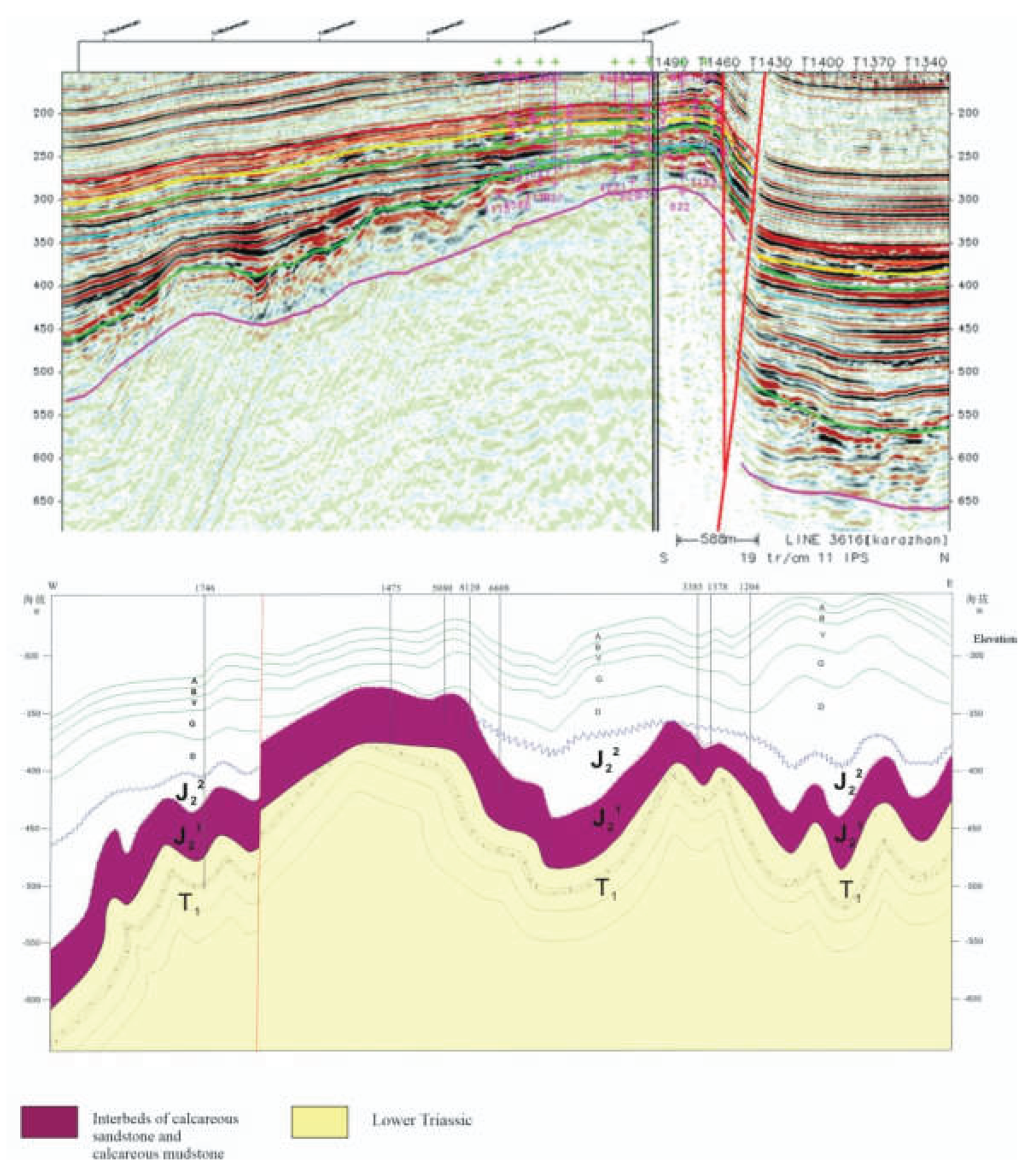
Figure 3.
Conceptual structural model of the studied interval based on core and well-log data.
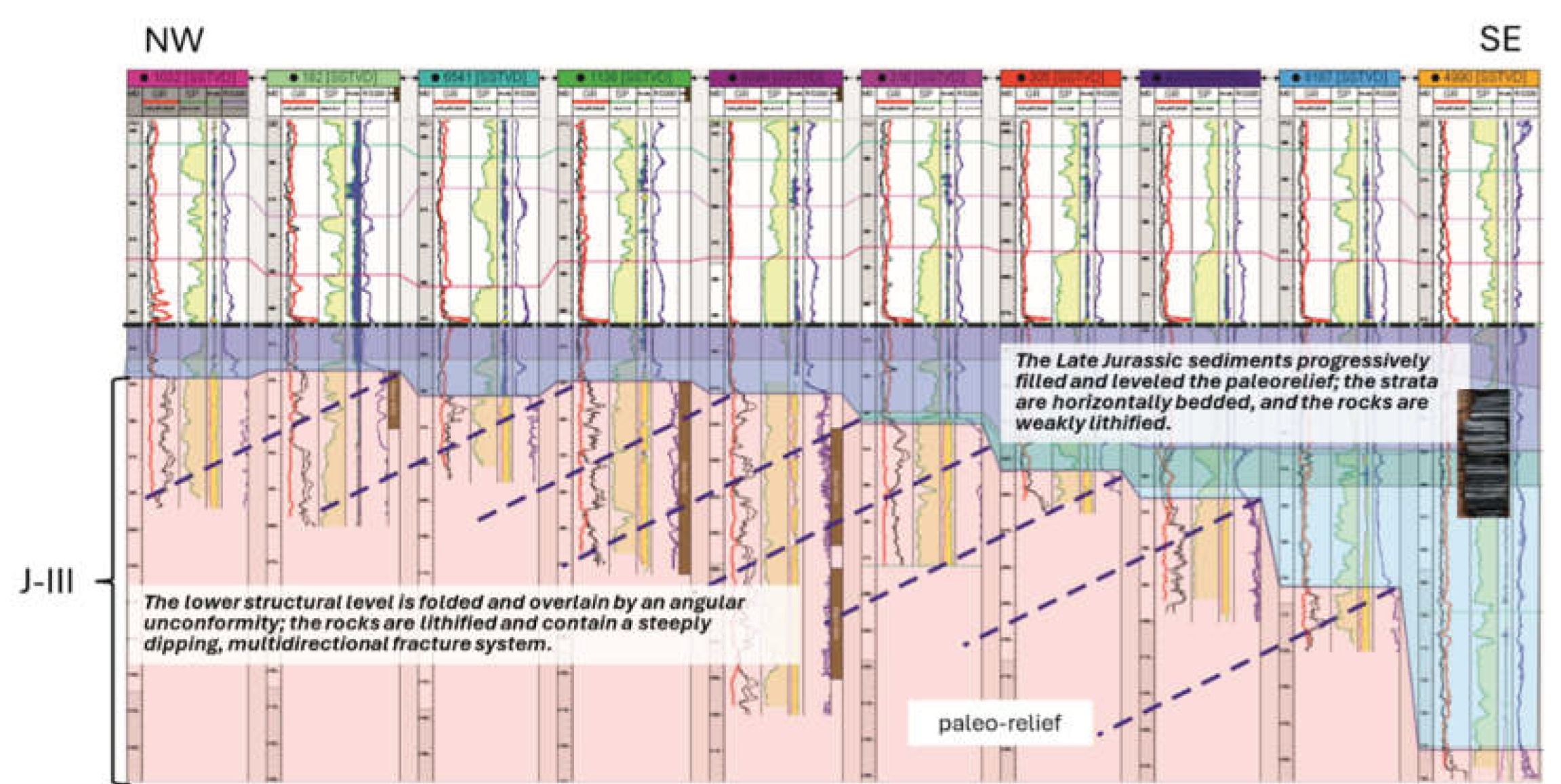
Figure 4.
Examples of petrographic thin sections from the studied interval.
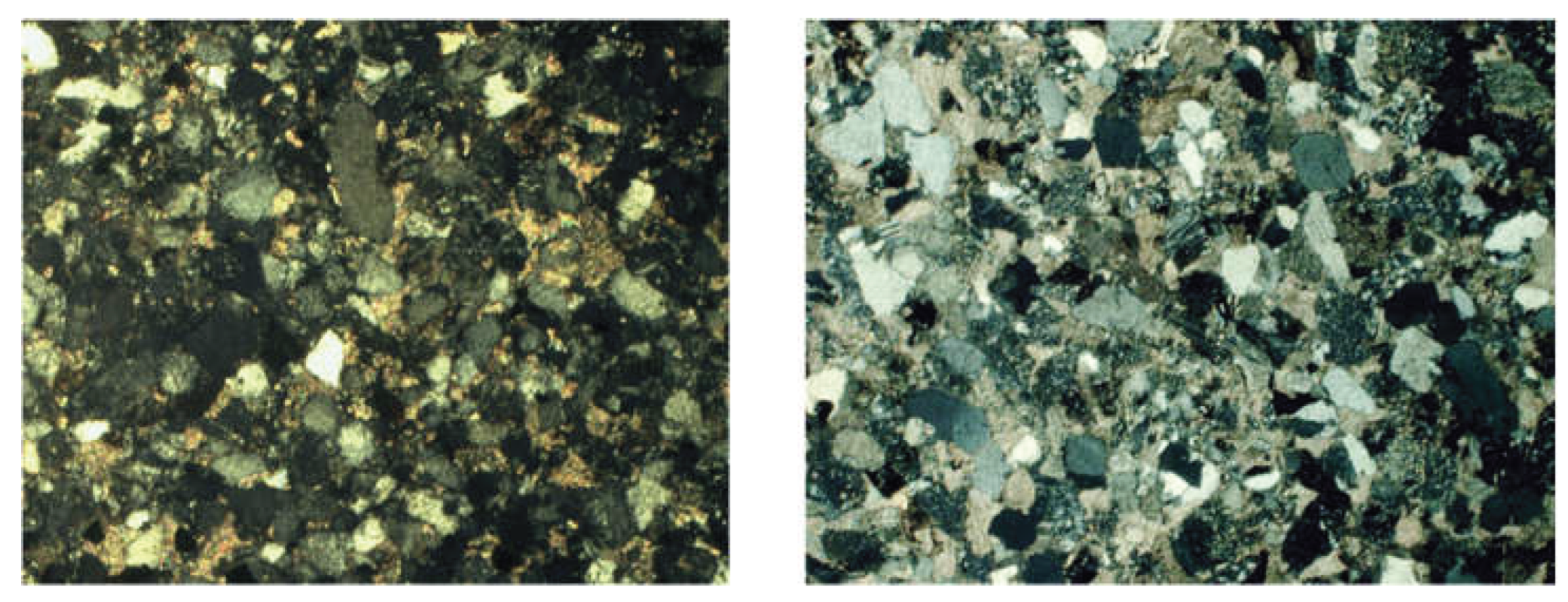
Figure 5.
Representative core column from the studied interval.
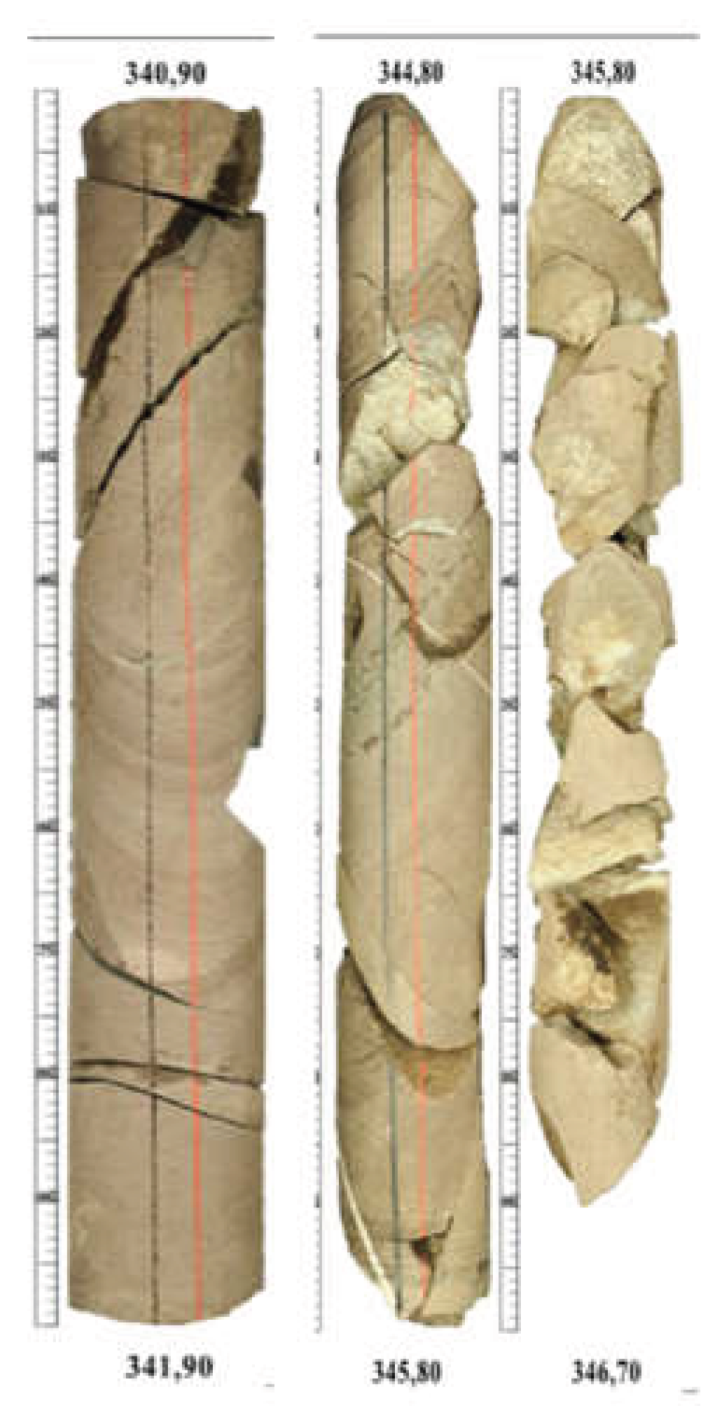
Figure 6.
Borehole electrical microimager results for the target interval.
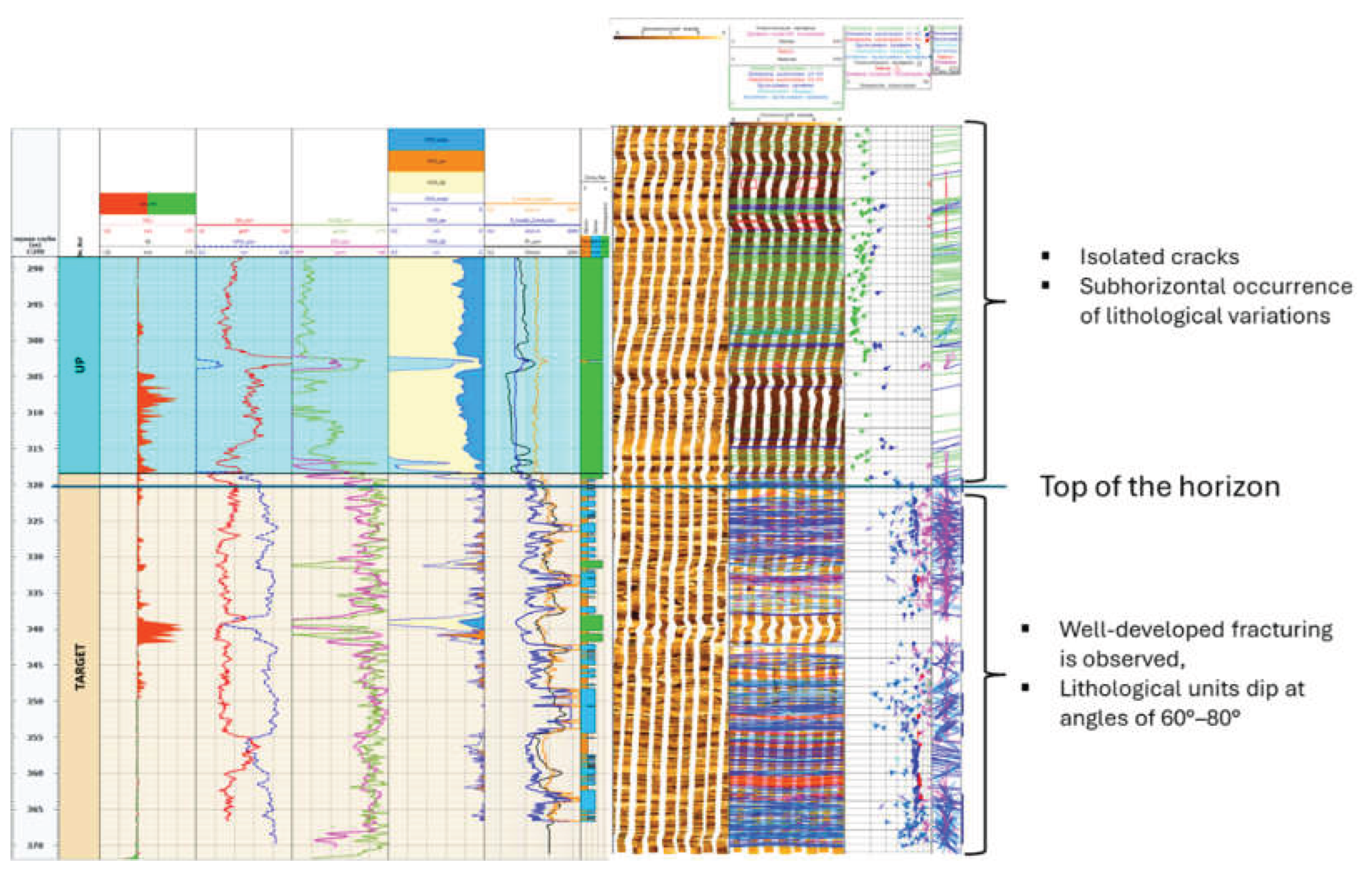
Figure 7.
Distribution of the mineralogical density of reservoir rocks in the J-III horizon.
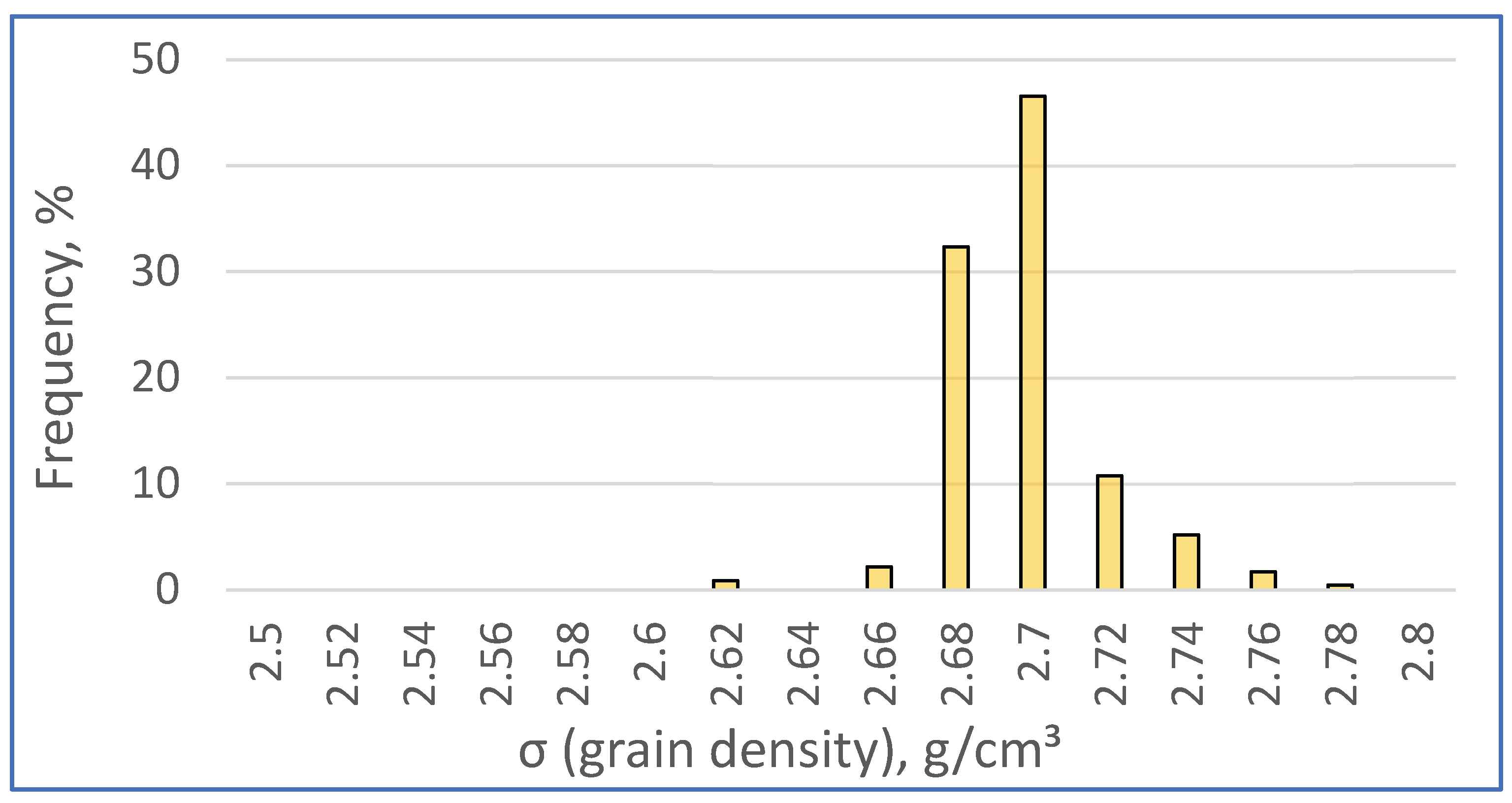
Figure 8.
Histogram of the distribution of rock mineralogical density.
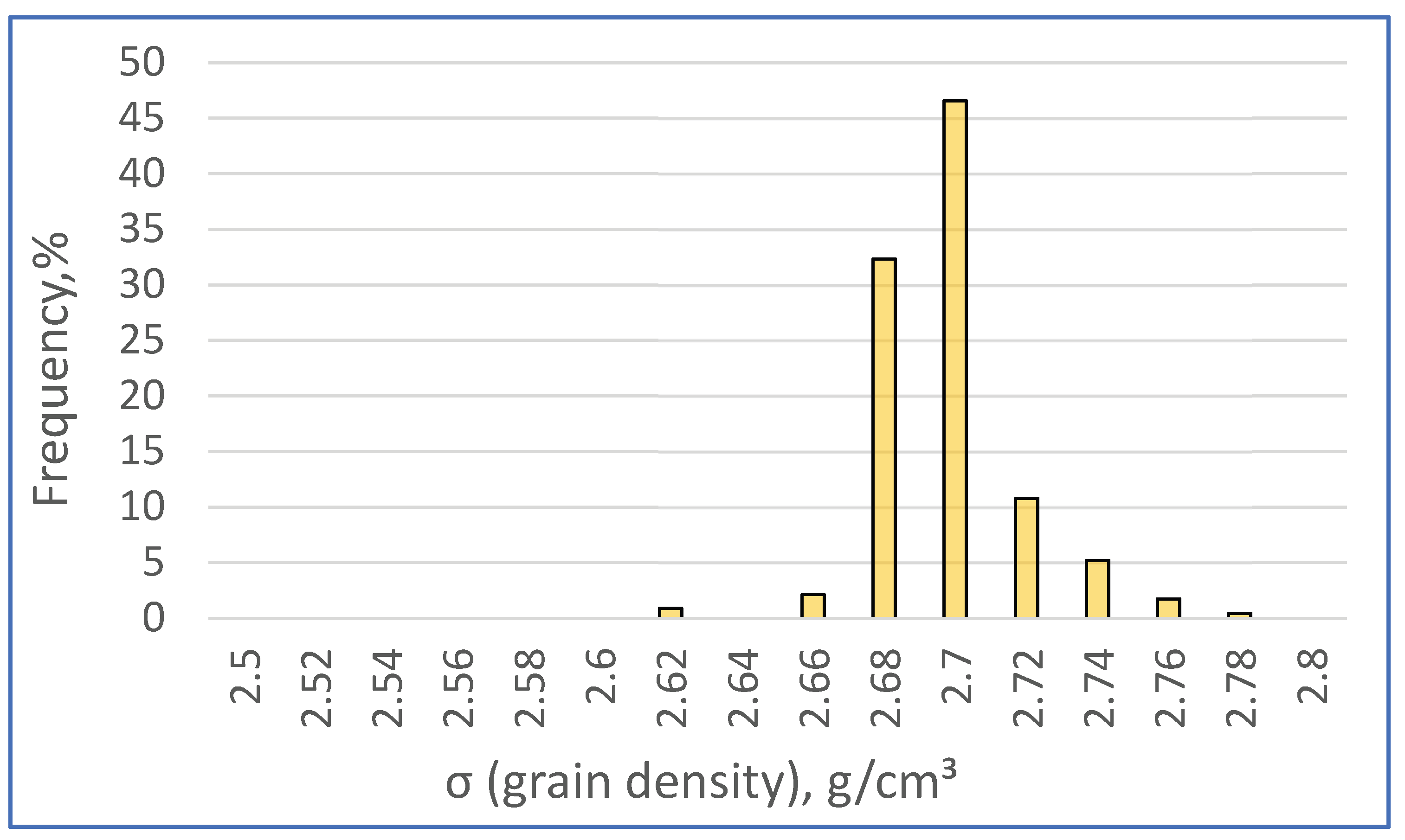
Figure 9.
Histogram of the distribution of bulk density in the rocks.
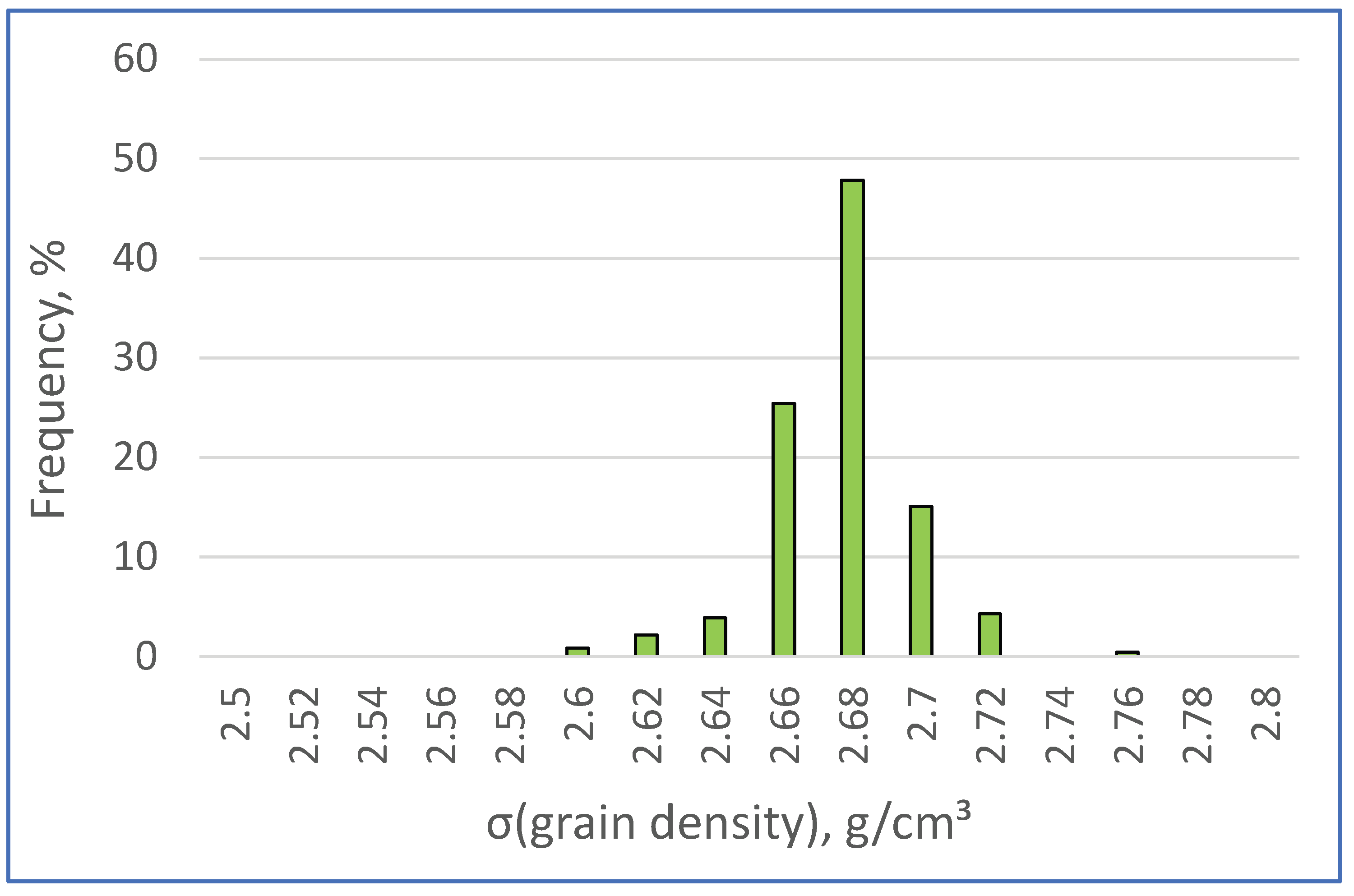
Figure 10.
Histograms showing the distributions of porosity and permeability based on laboratory core analysis.
Figure 10.
Histograms showing the distributions of porosity and permeability based on laboratory core analysis.
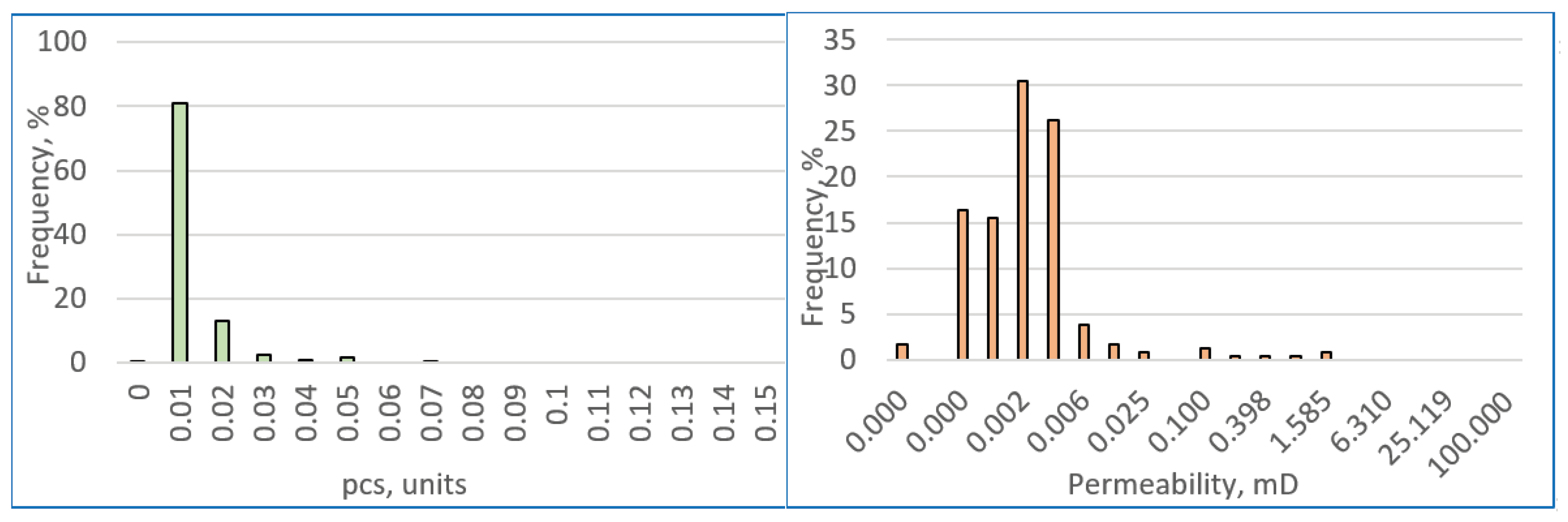
Figure 11.
Histogram showing the distribution of calcite and dolomite contents based on carbonate analysis.
Figure 11.
Histogram showing the distribution of calcite and dolomite contents based on carbonate analysis.
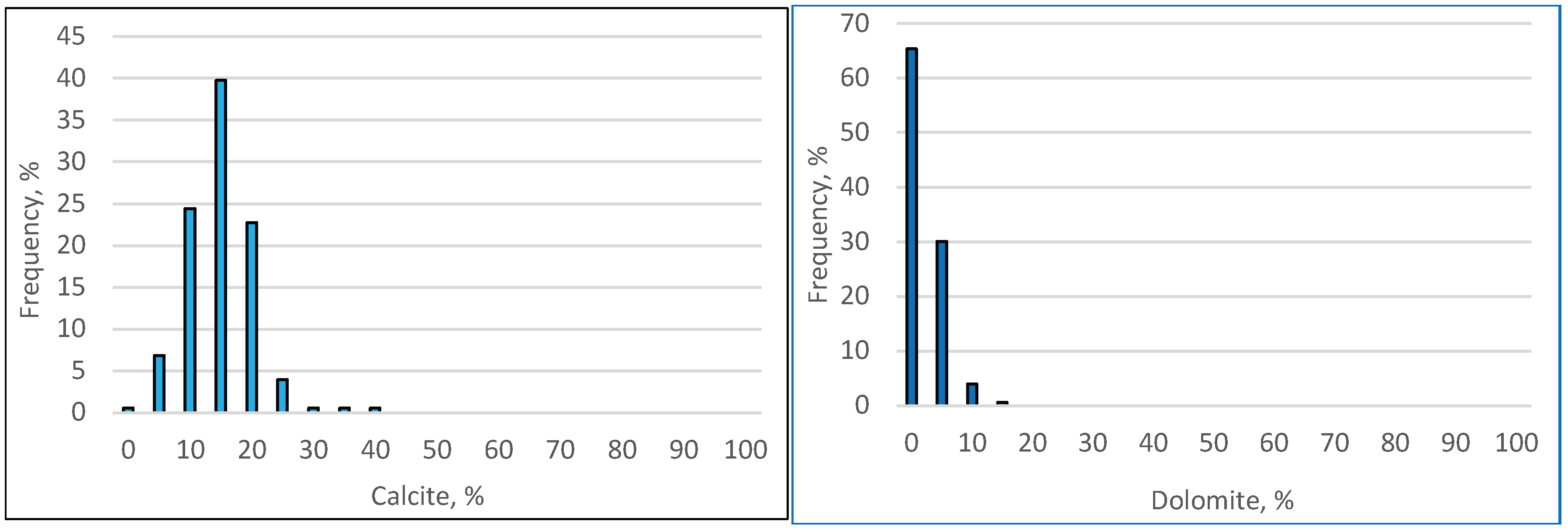
Figure 12.
Histogram showing the distribution of water saturation in the rocks.
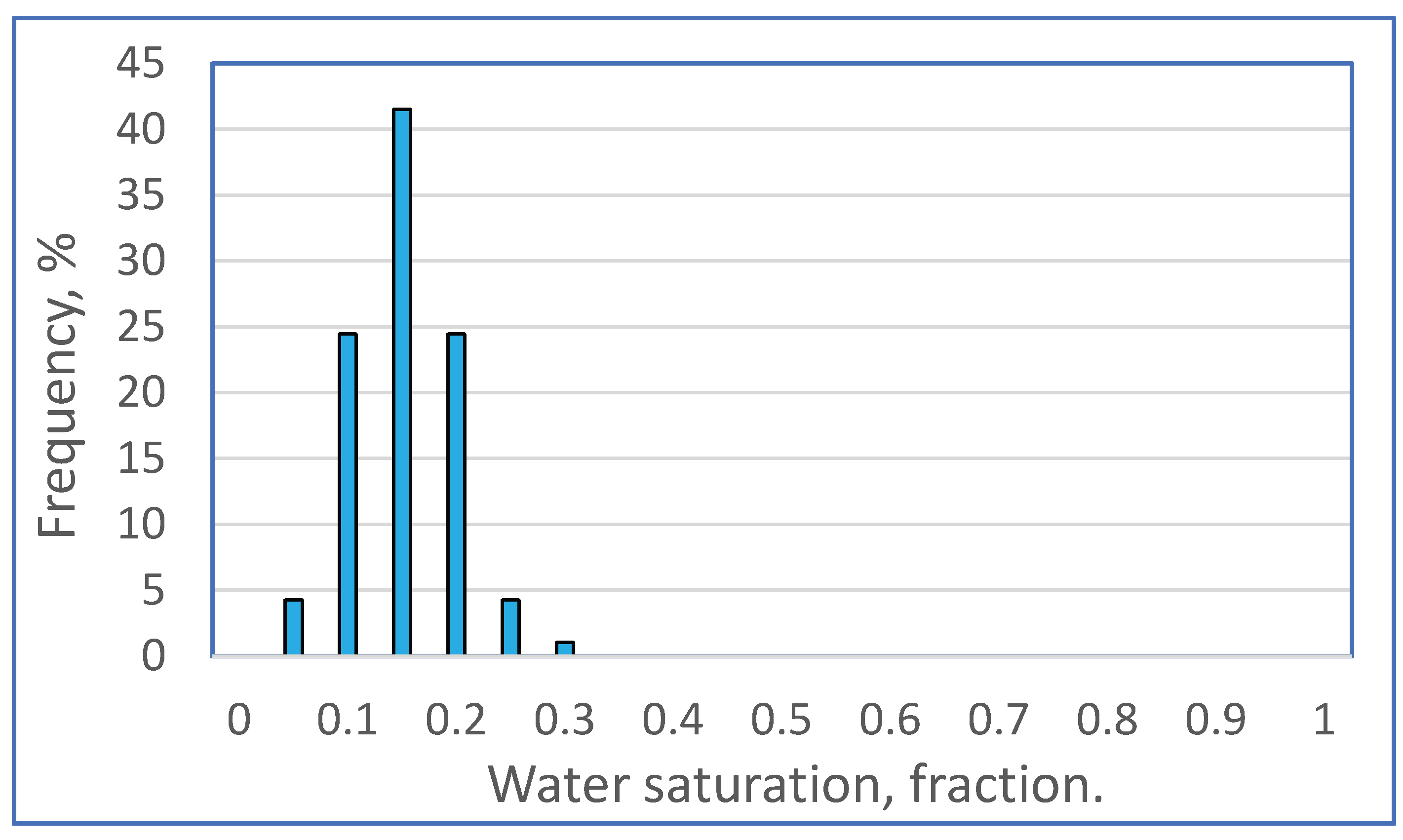
Figure 13.
Cross-plot of porosity versus bulk density.
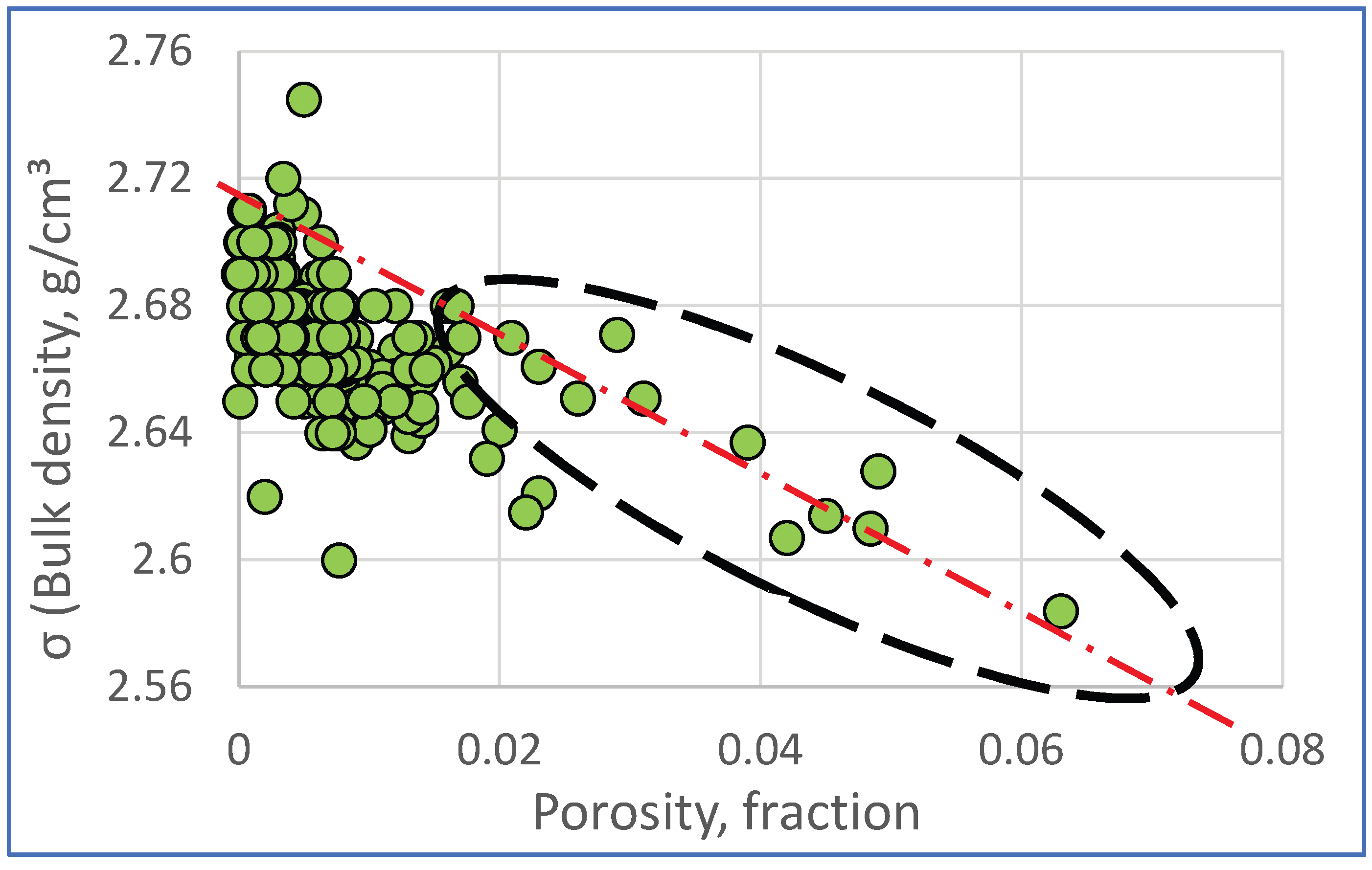
Figure 14.
Cross-plot of porosity versus mineralogical density.
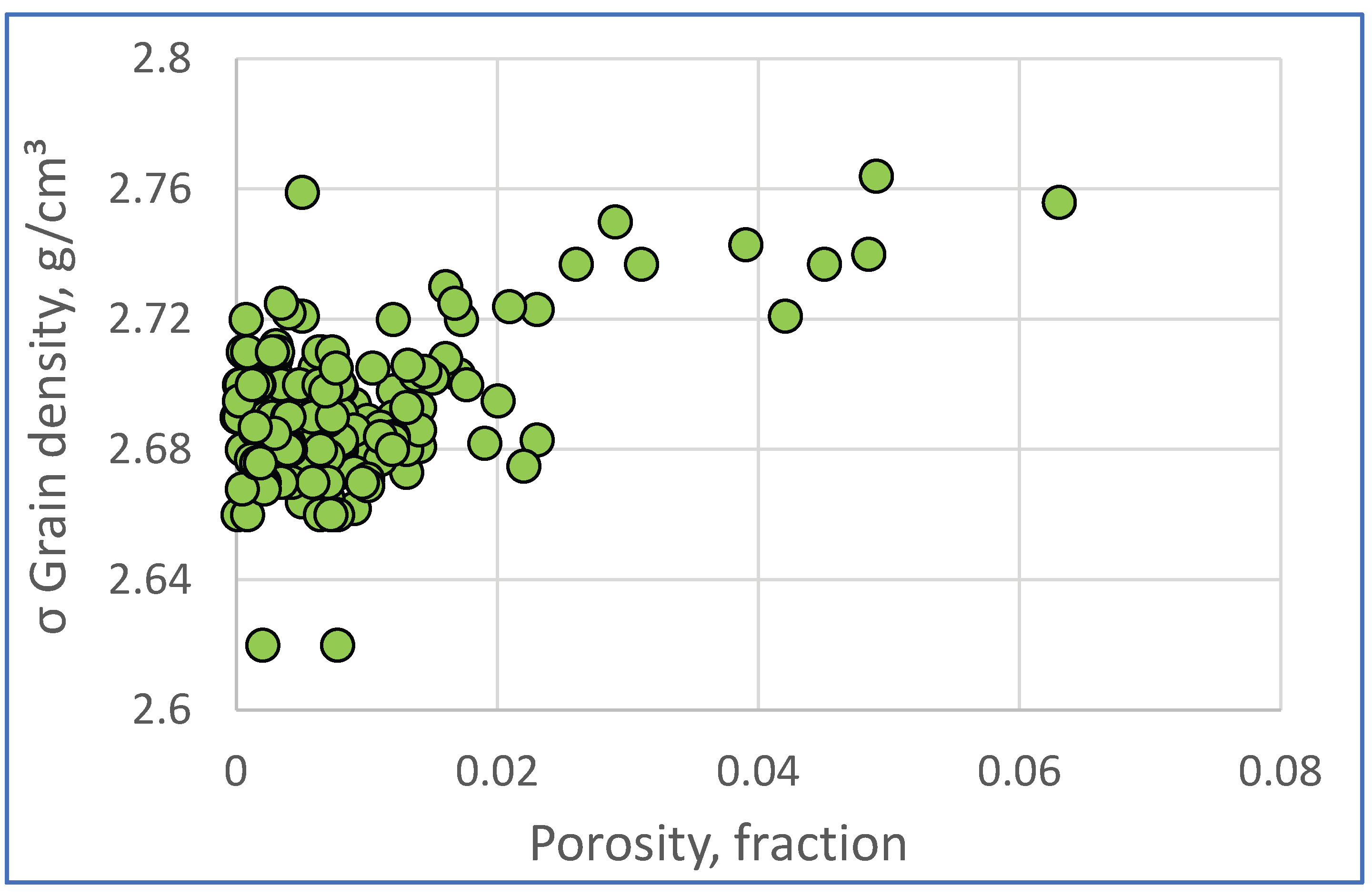
Figure 15.
Cross-plot of mineralogical density versus bulk density.
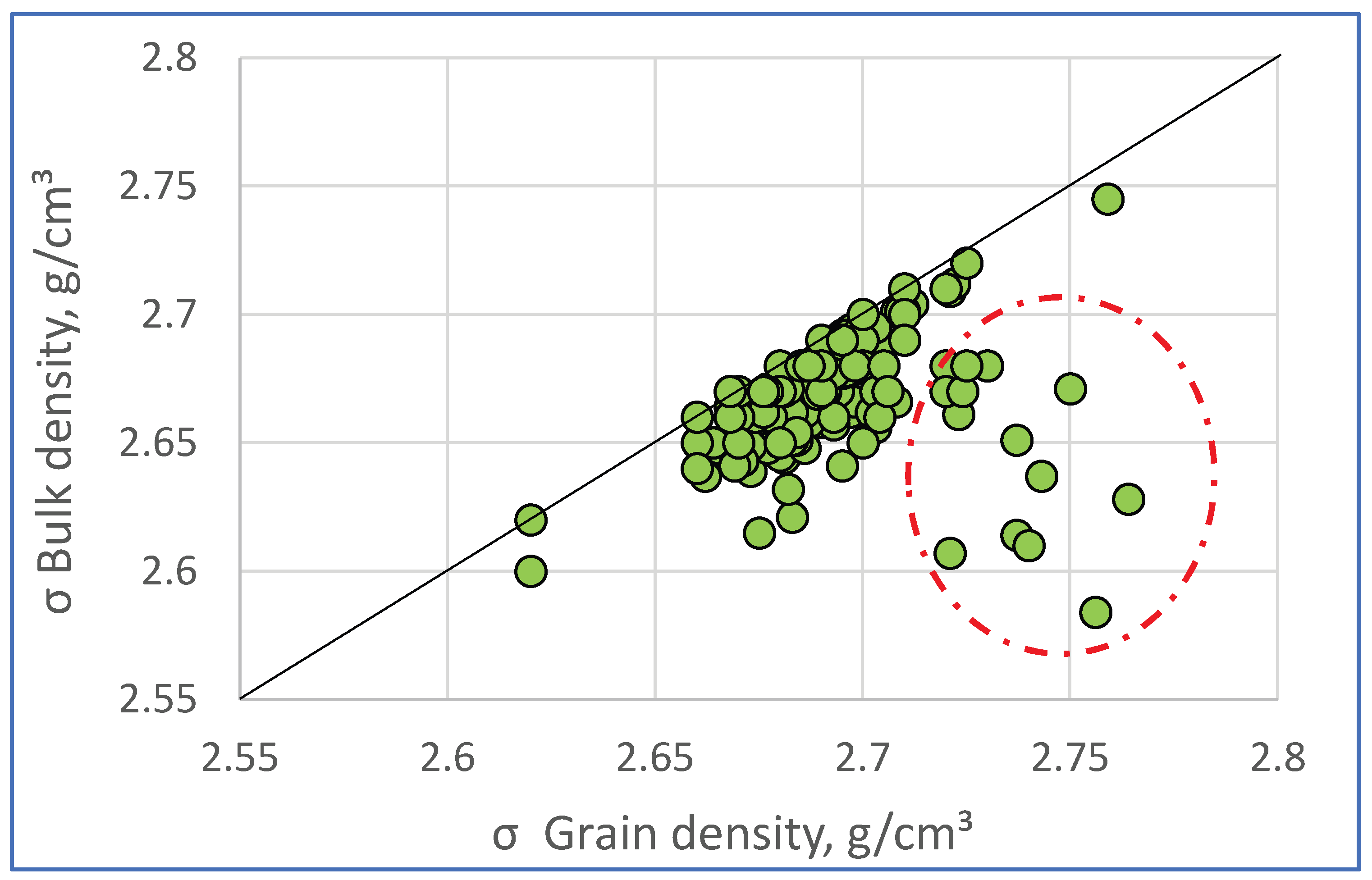
Figure 16.
Cross-plot of carbonate content versus mineralogical density.
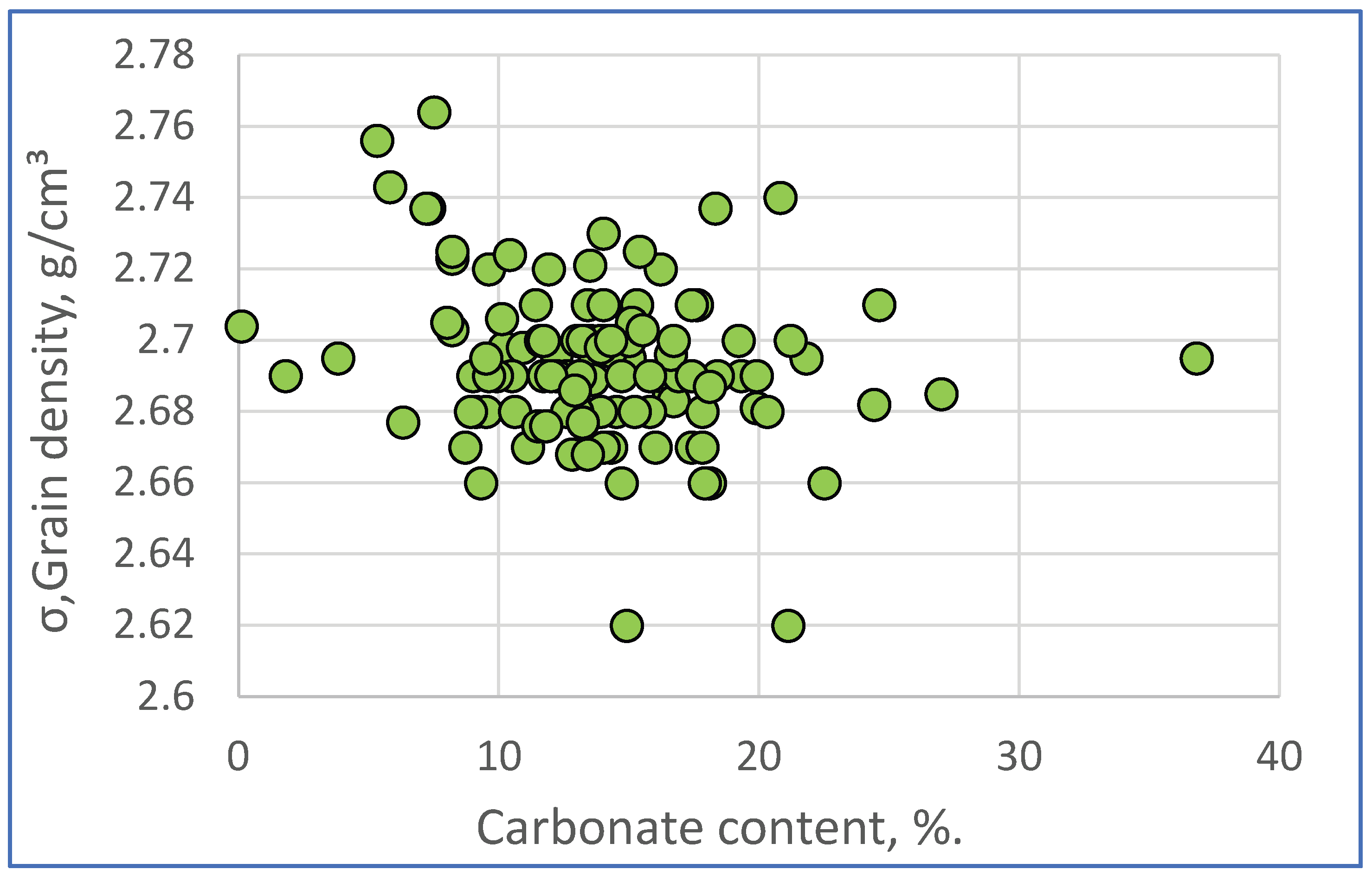
Figure 17.
Cross-plot of porosity versus bulk density. Marker size represents calcite content.
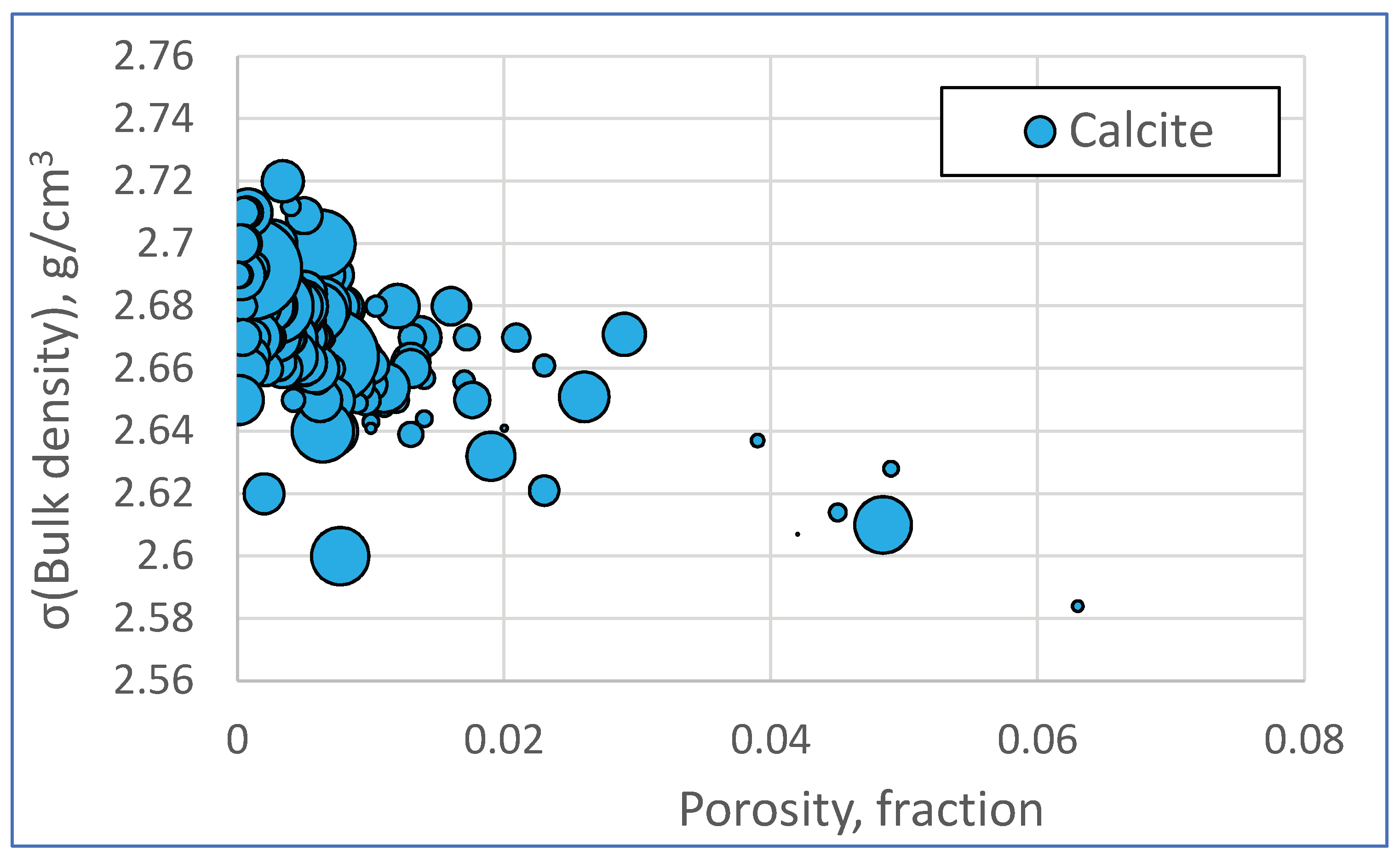
Figure 18.
Cross-plot of calcite versus dolomite content.
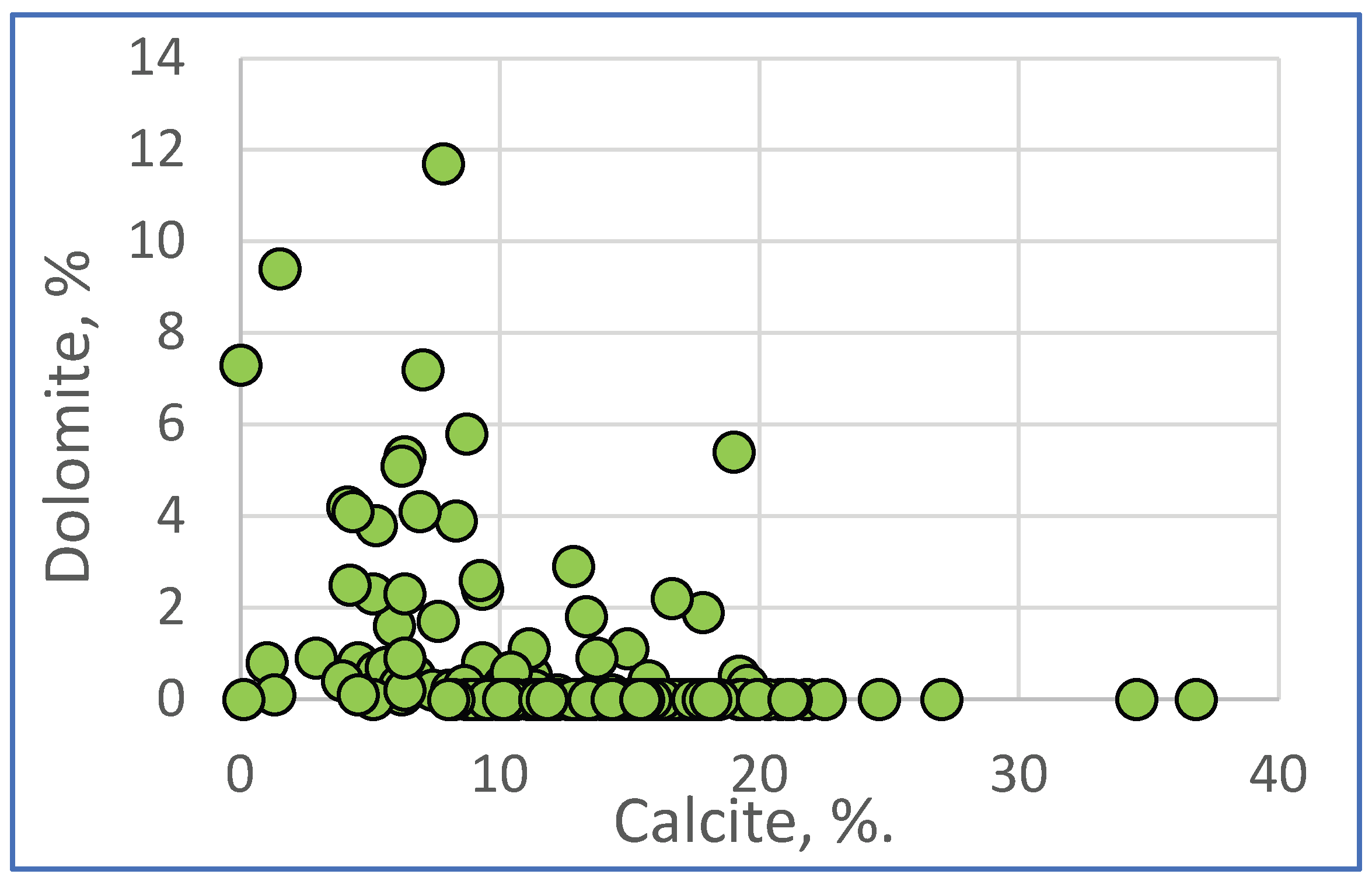
Figure 19.
Comparison of porosity and permeability.
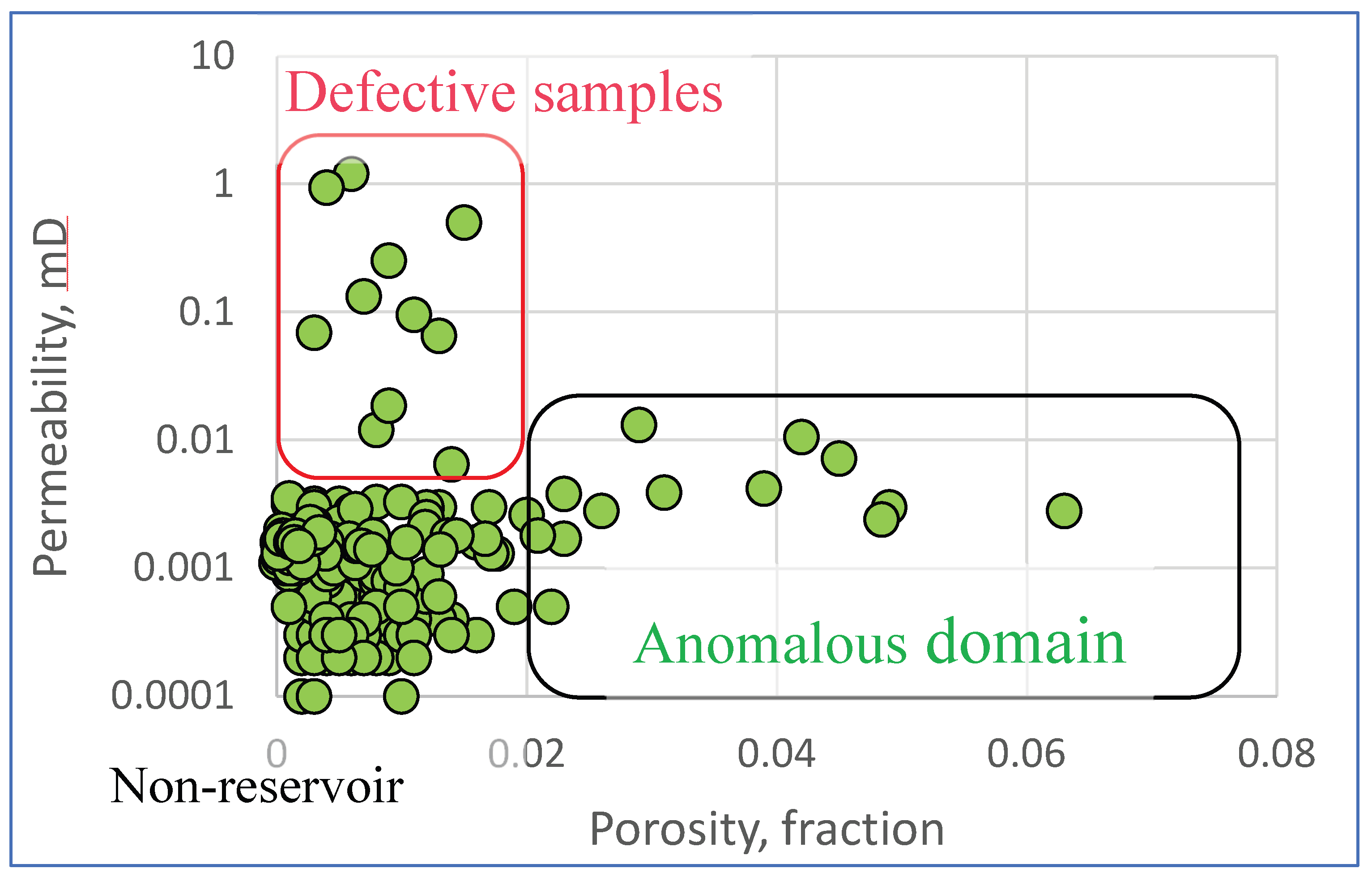
Figure 20.
Cross-plot of porosity versus permeability, with a legend identifying defective samples.
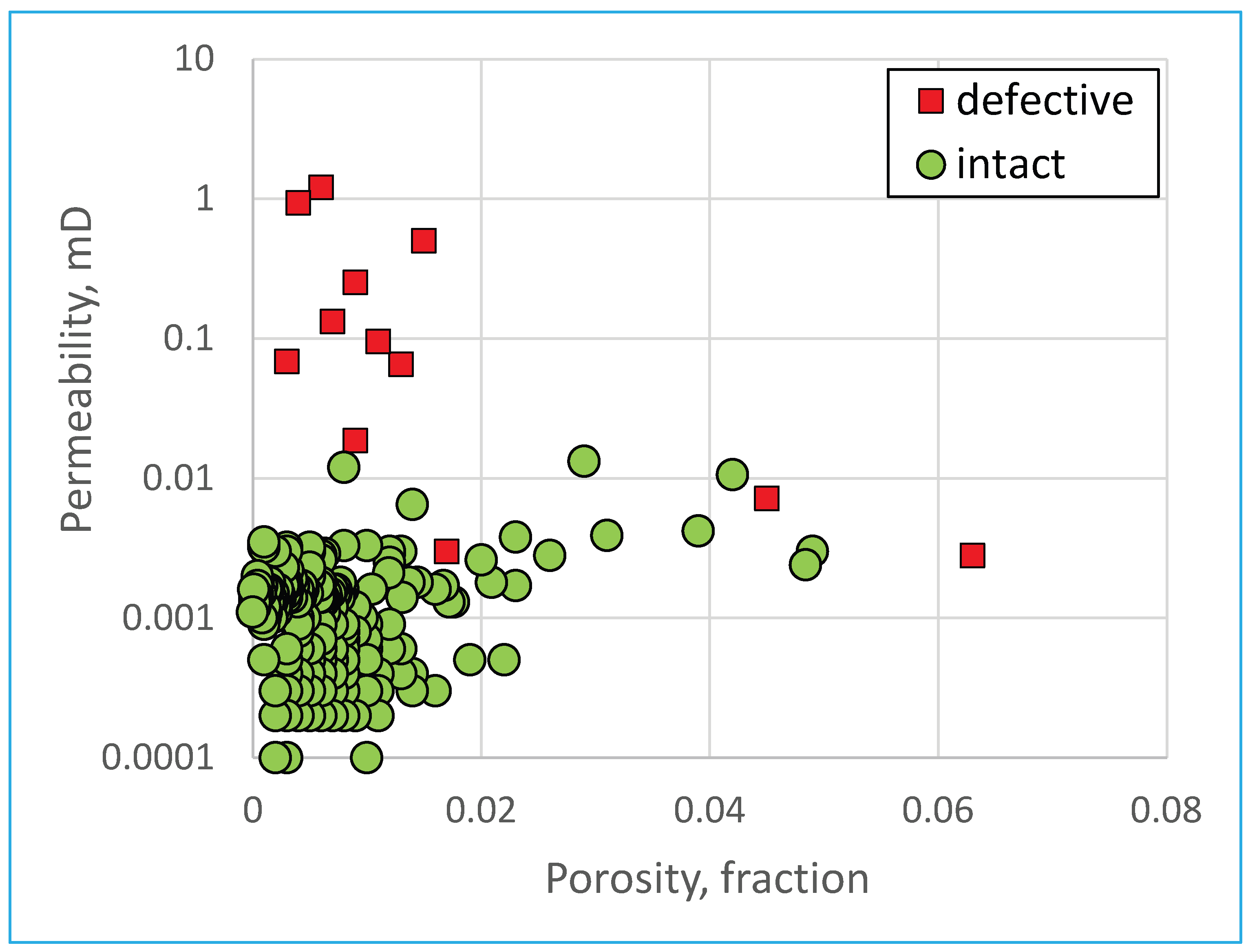
Figure 21.
Cross-plot of porosity versus permeability. Marker size represents calcite content.
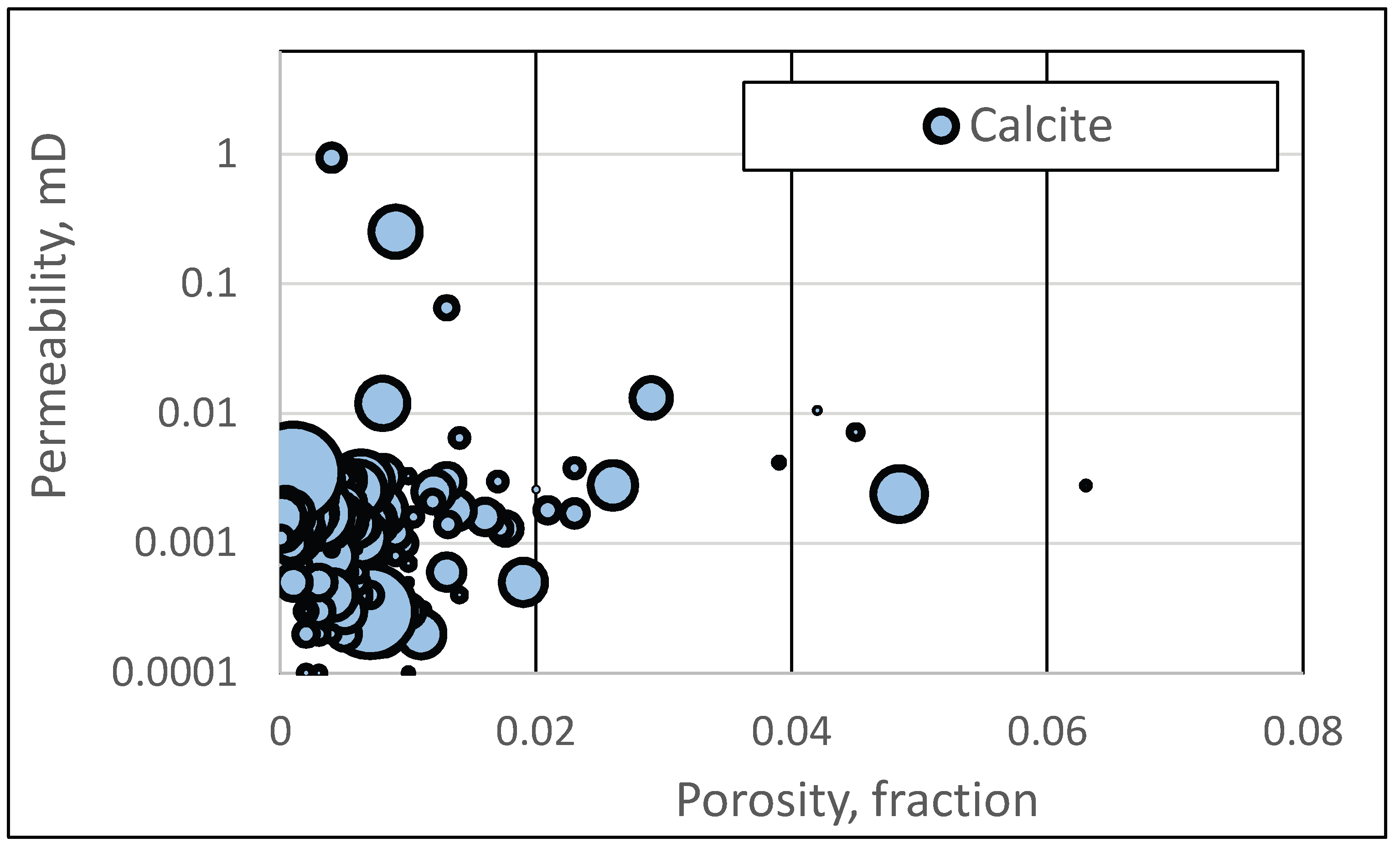
Figure 22.
Cross-plot of porosity versus permeability. Marker size represents dolomite content.
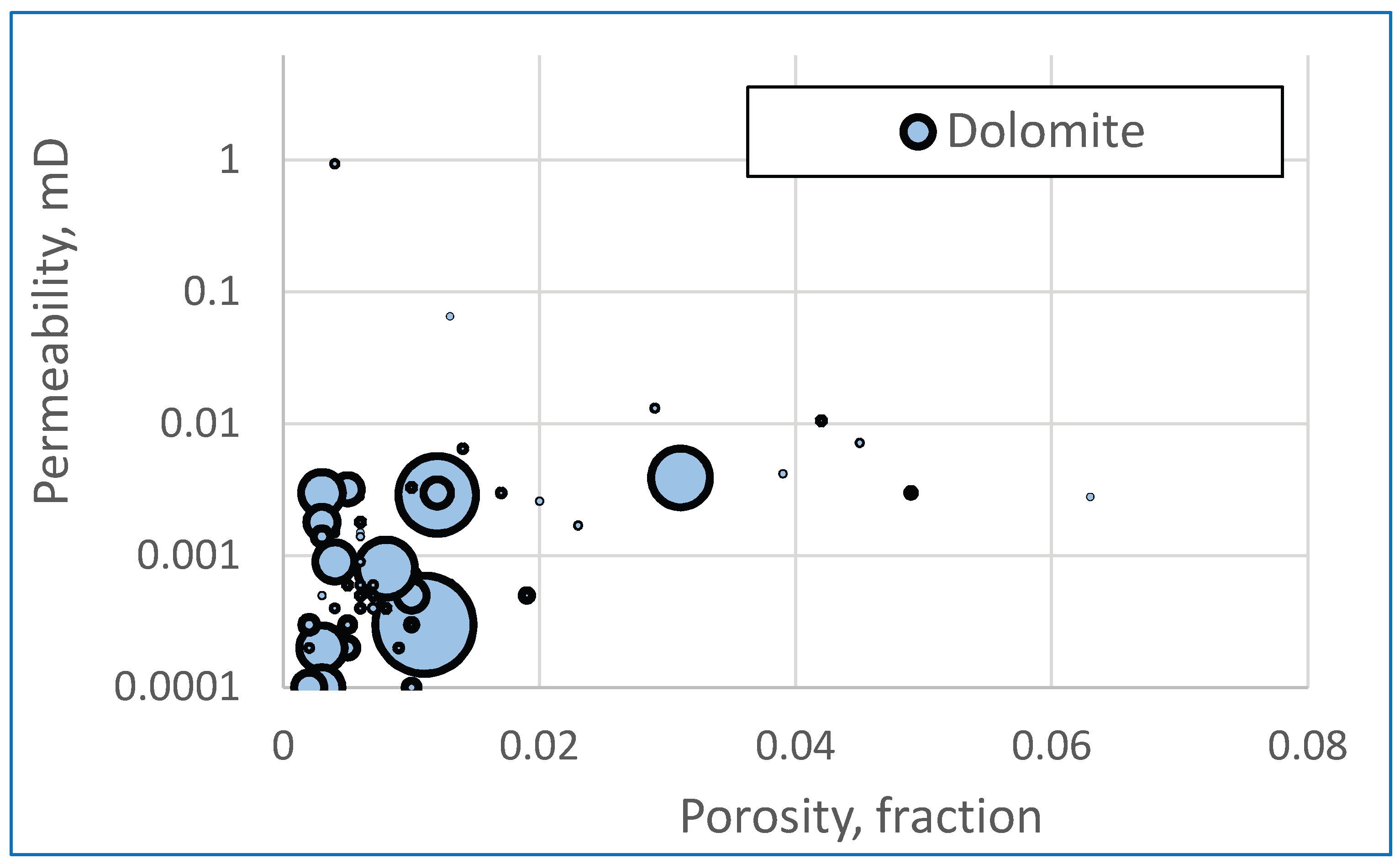
Figure 23.
Cross-plot of porosity versus permeability. Marker size represents grain-size composition.
Figure 23.
Cross-plot of porosity versus permeability. Marker size represents grain-size composition.
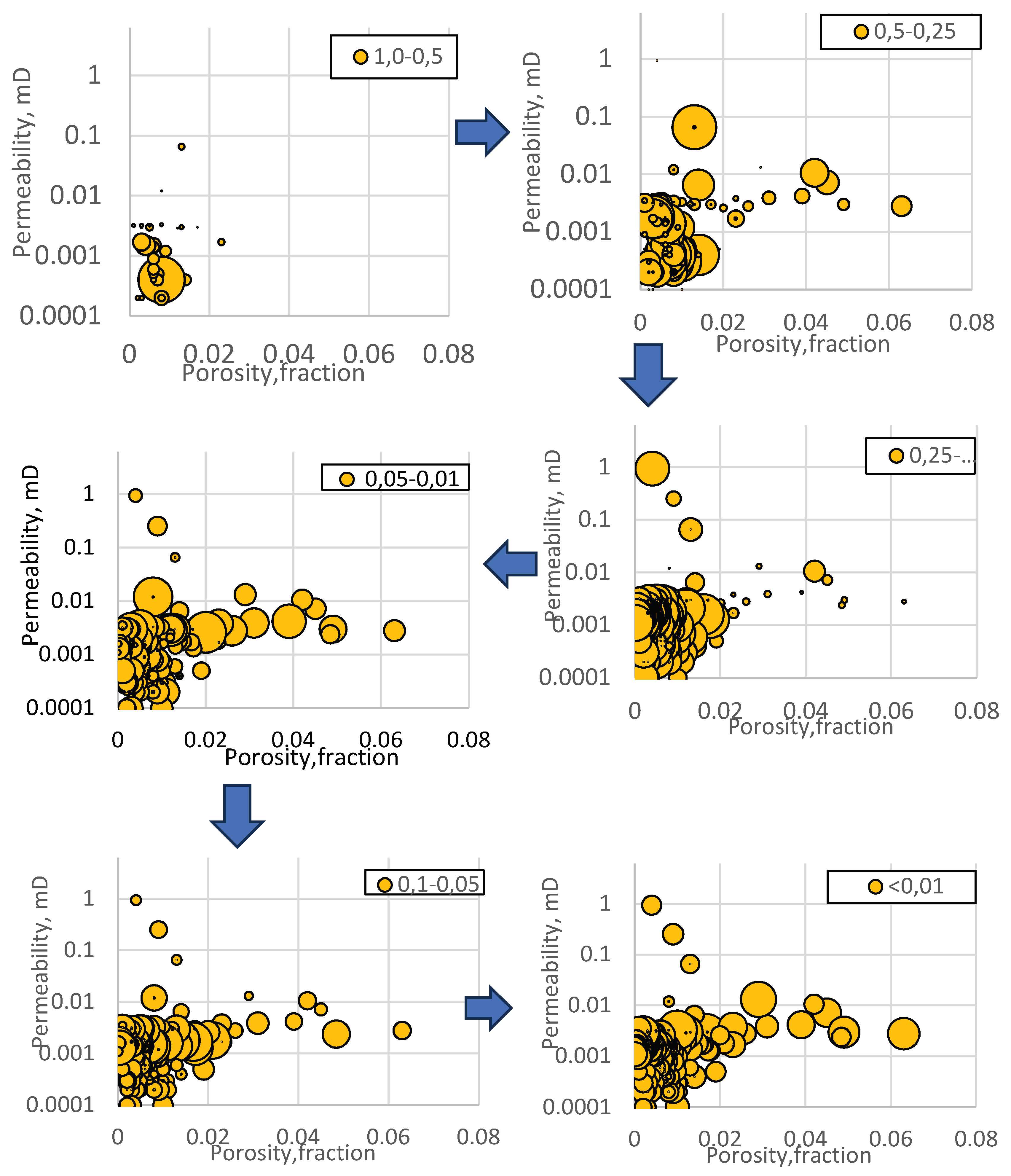
Figure 24.
Occurrence frequency of minerals in the studied samples.
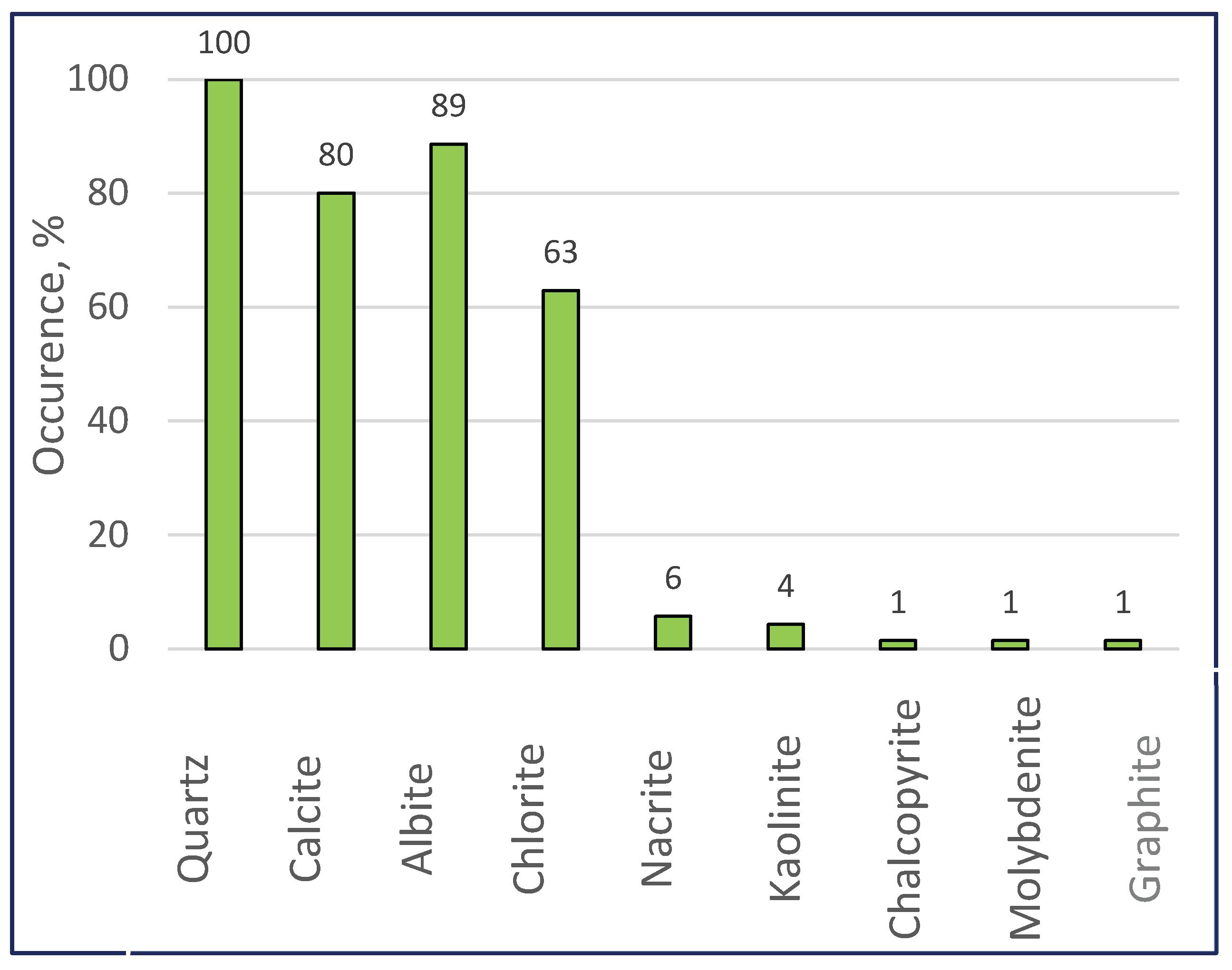
Figure 25.
Histograms showing the distributions of the most abundant minerals in the samples according to X-ray diffraction (XRD) data.
Figure 25.
Histograms showing the distributions of the most abundant minerals in the samples according to X-ray diffraction (XRD) data.
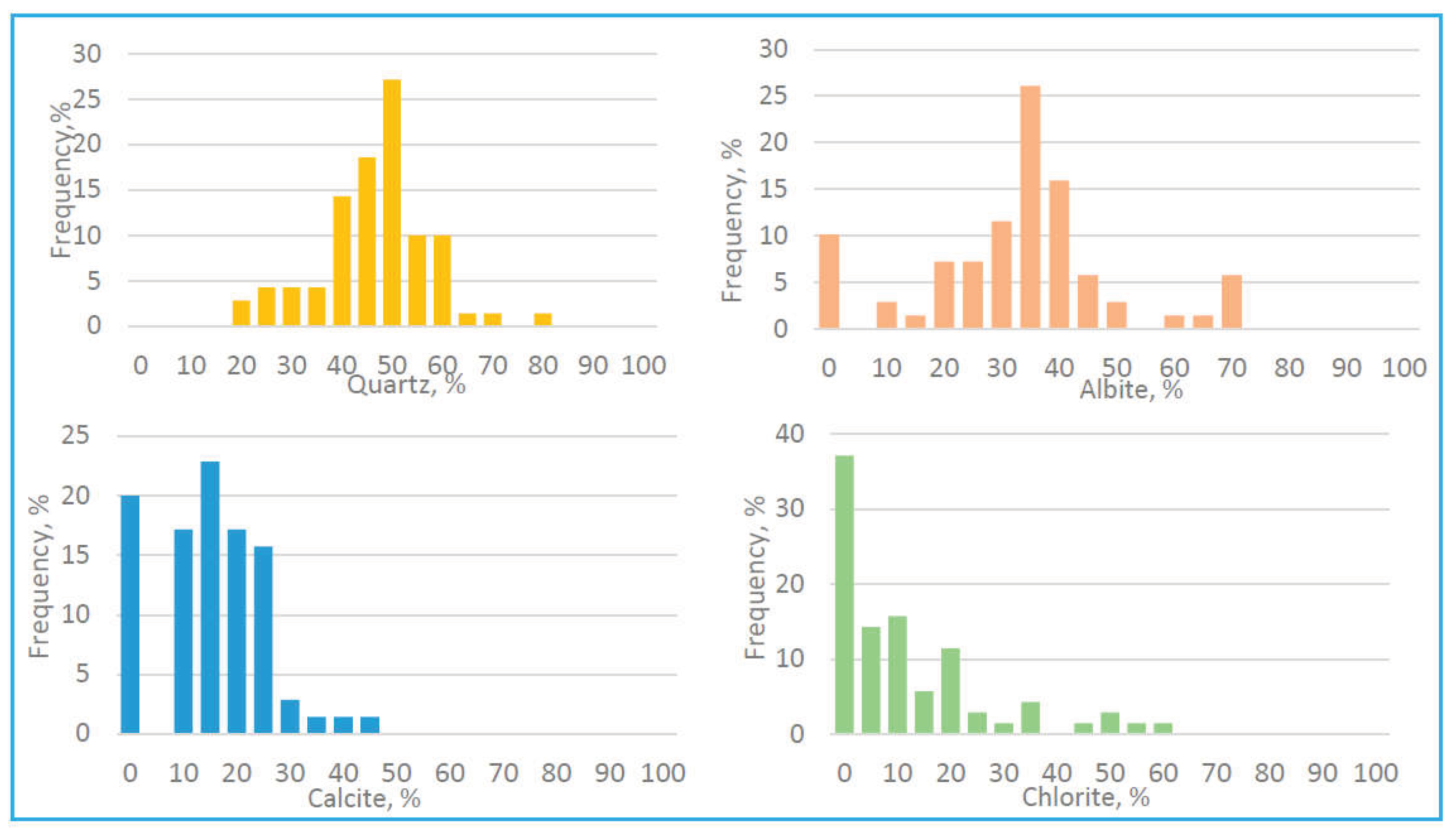
Figure 26.
Cross-plot of quartz versus albite contents in the samples based on X-ray diffraction (XRD) data.
Figure 26.
Cross-plot of quartz versus albite contents in the samples based on X-ray diffraction (XRD) data.
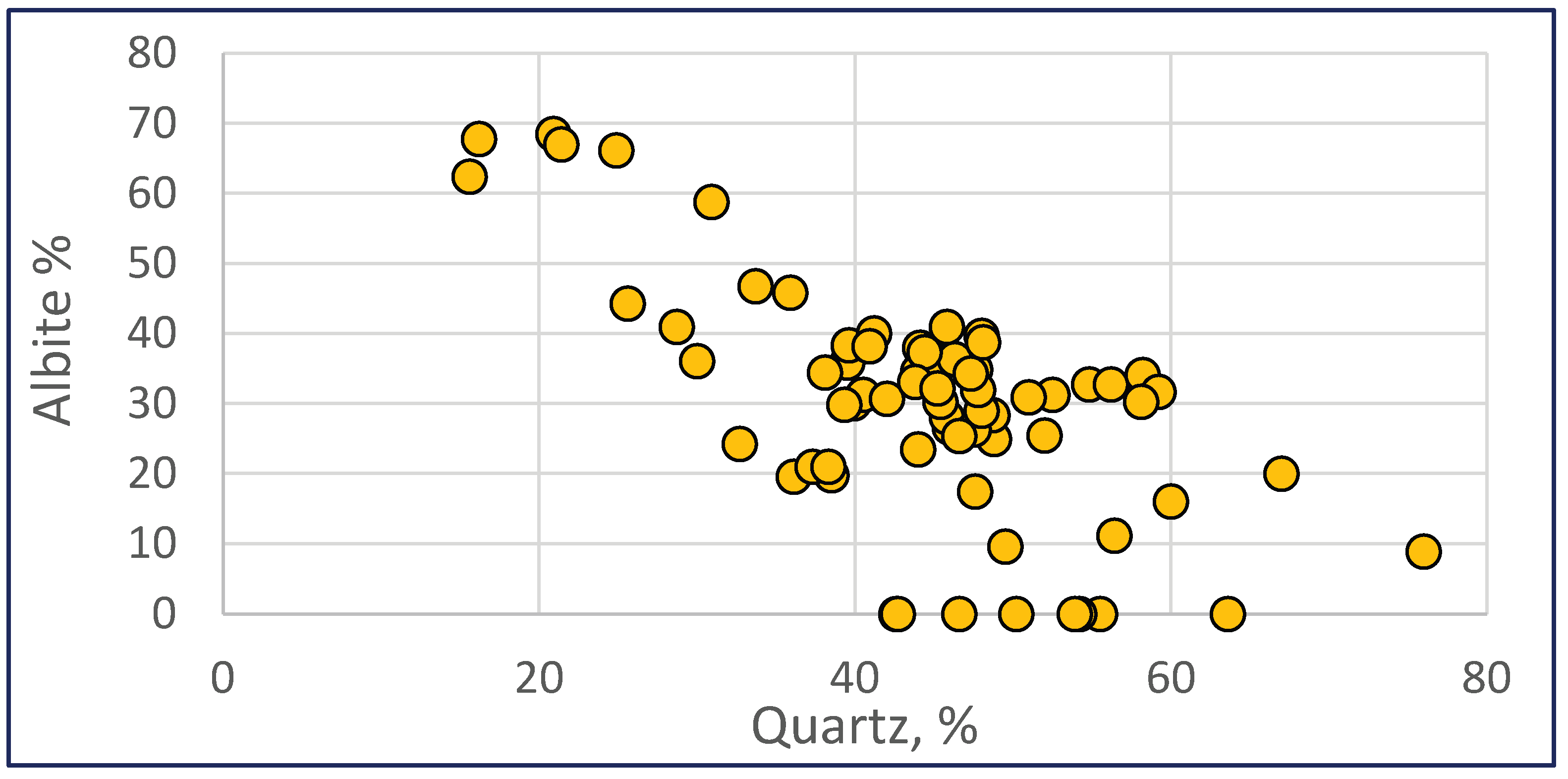
Figure 27.
Cross-plot of quartz versus calcite contents in the samples based on X-ray diffraction (XRD) data. Marker size represents albite content.
Figure 27.
Cross-plot of quartz versus calcite contents in the samples based on X-ray diffraction (XRD) data. Marker size represents albite content.
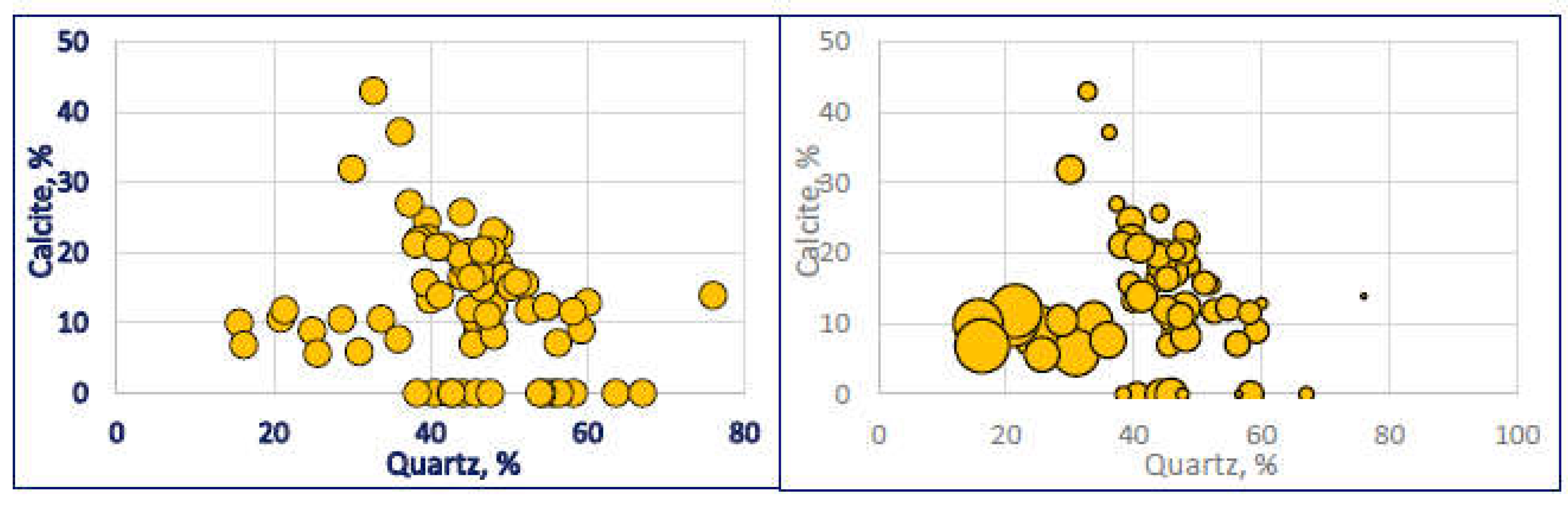
Figure 28.
Cross-plot of quartz versus chlorite contents in the samples based on X-ray diffraction (XRD) data. Marker size represents albite content.
Figure 28.
Cross-plot of quartz versus chlorite contents in the samples based on X-ray diffraction (XRD) data. Marker size represents albite content.
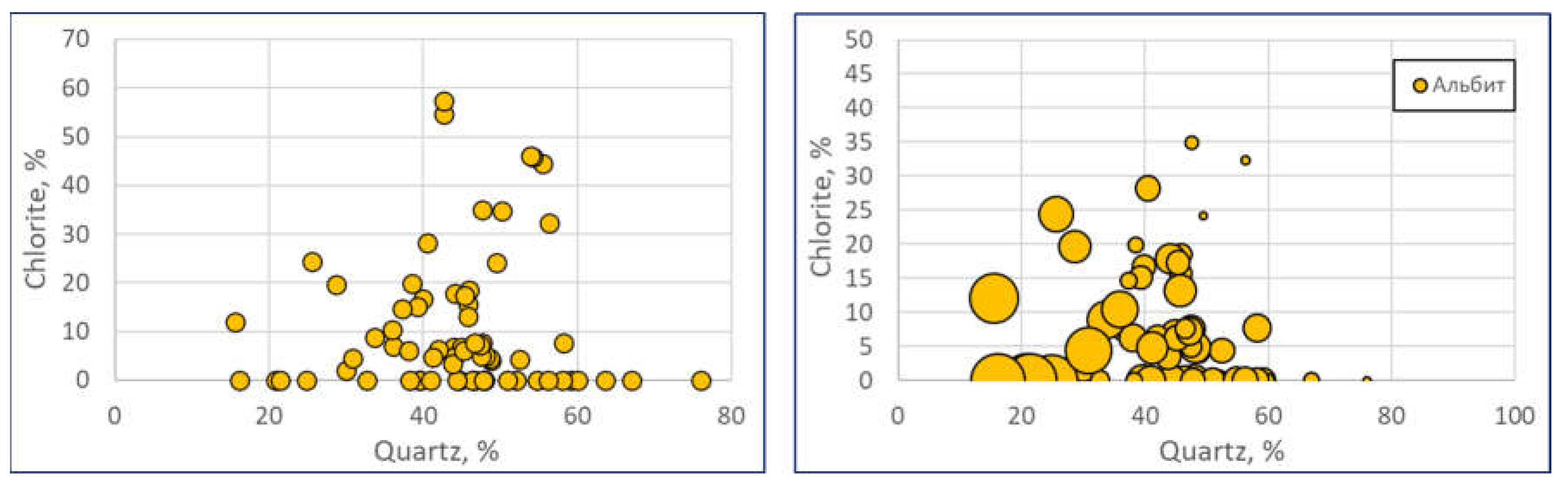
Figure 29.
Cross-plot of calcite content versus albite and chlorite concentrations in the samples based on X-ray diffraction (XRD) data.
Figure 29.
Cross-plot of calcite content versus albite and chlorite concentrations in the samples based on X-ray diffraction (XRD) data.
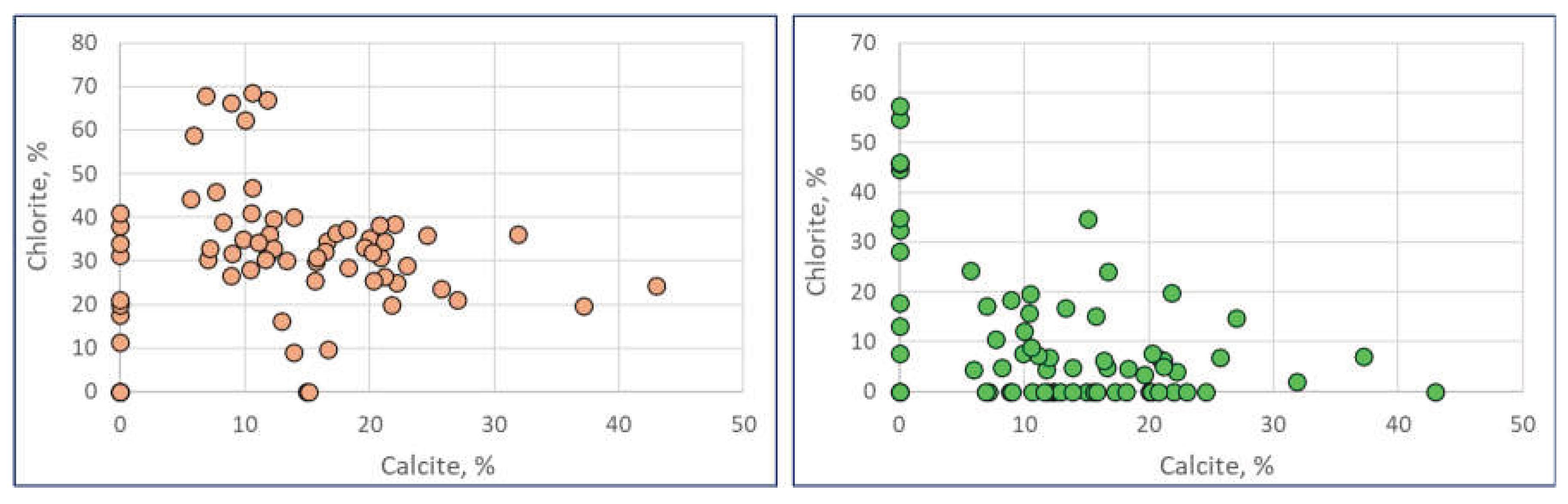
Figure 30.
Cross-plot of albite versus chlorite contents in the samples based on X-ray diffraction (XRD) data.
Figure 30.
Cross-plot of albite versus chlorite contents in the samples based on X-ray diffraction (XRD) data.
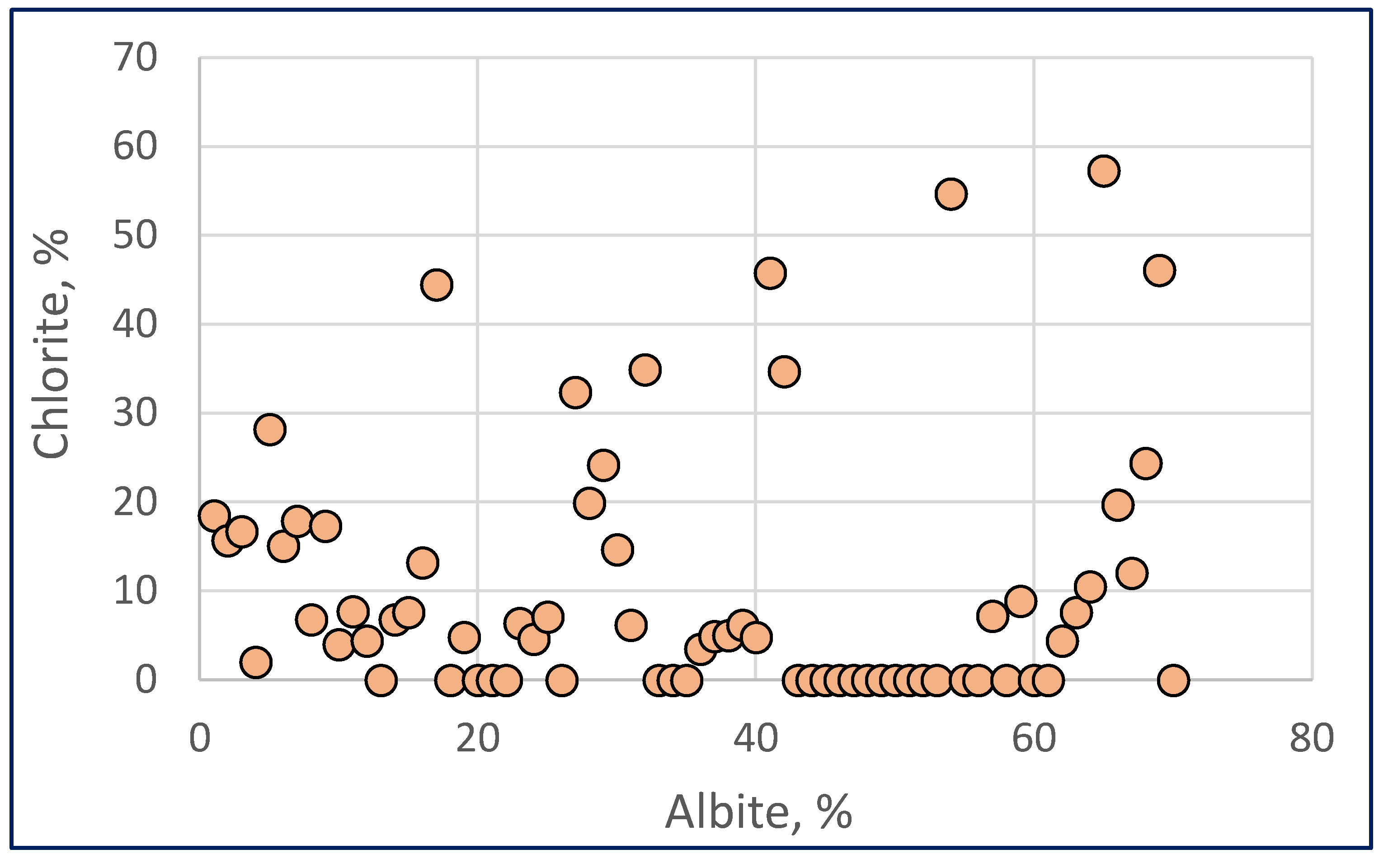

Table 1.
Summary statistics of the results of standard laboratory core analyses.
| Types of analyses | Number of measurements | Mean | Median | Minimum value | Maximum value |
|---|---|---|---|---|---|
| Mineralogical density, g/cm³ | 232 | 2.689401 | 2.687 | 2.62 | 2.764 |
| Bulk density, g/cm³ | 232 | 2.668457 | 2.67 | 2.584 | 2.745 |
| Open porosity, fraction | 232 | 0.007653 | 0.006 | 0 | 0.063 |
| Grain-size composition, %: 1.0–0.5 mm | 176 | 0.383693 | 0 | 0 | 9 |
| Grain-size composition, %: 0.5–0.25 mm | 176 | 3.112386 | 0 | 0 | 17.16 |
| Grain-size composition, %: 0.25–0.1 mm | 176 | 26.55977 | 27.845 | 1.48 | 43.71 |
| Grain-size composition, %: 0.1–0.05 mm | 176 | 16.5704 | 14.42 | 8.87 | 41.81 |
| Grain-size composition, %: 0.05–0.01 mm | 176 | 11.04403 | 8.265 | 2.19 | 31.8 |
| Grain-size composition, %: <0.01 mm | 176 | 29.11199 | 29.06 | 9.21 | 55.57 |
| Content, %: calcite (CaCO3) | 176 | 12.55284 | 13.05 | 0 | 36.8 |
| Content, %: dolomite [CaMg(CO3)2] | 176 | 0.663636 | 0 | 0 | 11.7 |
| Content, %: insoluble residue | 176 | 85.83218 | 86 | 73 | 99.9 |
| Total carbonate content, % | 116 | 13.88276 | 13.9 | 0.1 | 36.8 |
| Gas permeability, mD | 233 | 0.015527 | 0.0014 | 0.0001 | 1.21 |
| Klinkenberg permeability, mD | 118 | 0.001614 | 0.0014 | 0.0008 | 0.0097 |
| Water saturation, fraction | 94 | 0.122617 | 0.1145 | 0.011 | 0.251 |
Table 2.
Comparison of permeability before and after injection of a hydrochloric-acetic acid mixture into the sample. Well No. 1136.
Table 2.
Comparison of permeability before and after injection of a hydrochloric-acetic acid mixture into the sample. Well No. 1136.
| Sample No. 10 | Sample No. 11 | |||
|---|---|---|---|---|
| Before injection | After injection | Before injection | After injection | |
| Permeability based on the formation-water model during injection of 12% HCl + 3% CH3COOH | 0.0278 | 123.93 | 0.0008 | 4.51 |
Table 3.
Summary statistics of mineral concentrations based on X-ray diffraction (XRD) analysis.
| Quartz | Calcite | Albite | Chlorite | Nacrite | Kaolinite | Chalcopyrite | Molybdenite | Graphite | |
|---|---|---|---|---|---|---|---|---|---|
| Number of analyses | 70 | 70 | 69 | 70 | 70 | 70 | 70 | 70 | 70 |
| Occurrence in samples, % | 100.0 | 80.0 | 88.6 | 62.9 | 5.7 | 4.3 | 1.4 | 1.4 | 1.4 |
| Mean content, % | 44.3 | 12.8 | 30.4 | 10.6 | 0.8 | 0.9 | 0.0 | 0.1 | 0.0 |
| Median, % | 45.3 | 12.15 | 31.3 | 4.95 | 0 | 0 | 0 | 0 | 0 |
| Minimum, % | 15.6 | 0 | 0 | 0 | 0 | 0 | 0 | 0 | 0 |
| Maximum, % | 76 | 43 | 68.5 | 57.3 | 36.4 | 40.8 | 2.74 | 3.83 | 1.53 |
Disclaimer/Publisher’s Note: The statements, opinions and data contained in all publications are solely those of the individual author(s) and contributor(s) and not of MDPI and/or the editor(s). MDPI and/or the editor(s) disclaim responsibility for any injury to people or property resulting from any ideas, methods, instructions or products referred to in the content. |
© 2026 by the authors. Licensee MDPI, Basel, Switzerland. This article is an open access article distributed under the terms and conditions of the Creative Commons Attribution (CC BY) license (http://creativecommons.org/licenses/by/4.0/).
Copyright: This open access article is published under a Creative Commons CC BY 4.0 license, which permit the free download, distribution, and reuse, provided that the author and preprint are cited in any reuse.


