

Submitted:
02 April 2026
Posted:
03 April 2026
You are already at the latest version
Abstract
Baja California is the second-highest state in Mexico for hospital discharges attributed to coccidioidomycosis (CM), yet epidemiological information on population-level exposure remains limited. To estimate exposure to Coccidioides and assess its association with environmental factors, we conducted intradermal coccidioidin skin testing among 416 residents across nine regions of Baja California. We analyzed 24 environmental variables, including bioclimatic, topographic, and land use indicators. Overall, 31.9% of participants tested positive. Higher odds of exposure were observed in Valle de las Palmas and La Morita. Differences between high- and low-positivity localities were observed in annual precipitation, precipitation during the wettest month, and elevation. High-positivity areas were characterized by annual precipitation ranging from 243 to 311 mm, wettest-month precipitation from 55 to 79 mm, and elevations between 125 and 276 meters above sea level. These findings indicate heterogeneous exposure to Coccidioides across Baja California and highlight the role of environmental factors in shaping transmission risk, supporting the need for strengthened epidemiologic surveillance in high-positivity areas.
Keywords:
coccidioidomycosis
; skin tests
; environmental exposure
; epidemiology
; Baja California
; Mexico
1. Introduction
Coccidioidomycosis (CM) is an infection caused by fungi of the genus Coccidioides, characterized by a wide clinical spectrum ranging from asymptomatic disease to severe, life-threatening illness. After the United States, Mexico has the second-highest number of reported human cases worldwide, with most cases concentrated in the states of Sonora and Baja California [1,2]. According to national surveillance records, Mexico documented 2,425 hospital discharges for CM from 2013 through 2023, of which 338 (13.94%) occurred in Baja California [2]. This state is therefore the second-largest contributor to national case burden.
Historically, estimates of Coccidioides exposure in Mexico have relied on the intradermal skin test (ST) with coccidioidin or spherulin. A positive skin test (ST+) indicates prior exposure to the antigen rather than active infection [3]. In Baja California, these tests have been reported almost exclusively in the city of Tijuana, where positivity rates of 10% were documented in 1991 [2], 27.5% in 2010 among the general population [4], and 10% in pediatric populations in 1999 [5]. However, these studies did not include other regions of the state, leaving substantial gaps in understanding the geographic distribution of exposure.
Environmental surveillance in 2012 [6] and 2015 [7] detected Coccidioides spp. DNA in soil samples from Valle de las Palmas using nested PCR targeting ITS regions, indicating that the fungus was present in that area at least transiently. In 2016, a coccidioidin-ST was conducted to assess exposure among populations with varying levels of exposure: (1) 273 university students who attended classes in Valle de las Palmas but lived elsewhere, among whom 18 (6.6%) tested positive [8]; and (2) 10 residents of Valle de las Palmas, of whom 6 (60%) were positive [9]. These findings suggest that although Coccidioides may be present in the environment, duration and intensity of exposure strongly influence immune sensitization and ST reactivity.
Given the increasing number of CM cases in Baja California and the limited availability of statewide data on population-level exposure, more comprehensive epidemiologic studies are necessary to better understand risk patterns. This study aimed to estimate exposure to Coccidioides in Baja California using the coccidioidin-ST and to evaluate the association of this exposure with environmental variables that influence fungal growth, survival, and dispersal.
2. Materials and Methods
2.1. Population and Sampling
Participants were recruited from nine regions of Baja California: Ensenada (Ensenada municipality), Mexicali (Mexicali), Plan Libertador (Rosarito), San Felipe (San Felipe), Vicente Guerrero (San Quintín), Valle de las Palmas (Tecate), and the communities of El Niño, Terrazas del Valle, and La Morita (Tijuana) (Figure 1). A nonprobability sampling strategy was used. State health institutions collaborated by providing facilities and mobilizing residents for coccidioidin-ST. Surveys were conducted between 2016 and 2022. Each attendee received an explanation of the study objectives and was informed that individuals of any age, sex, or respiratory symptom status were eligible, provided they had no major immunodeficiencies and were not undergoing chemotherapy. Individuals who voluntarily agreed to participate provided written informed consent under approval by the National Bioethics Commission (CONBIOÉTICA-02-CEI-001-20170526) [10]. For minors, consent was obtained from a parent or legal guardian.
Sociodemographic data (age, sex, residence, travel history) and clinical information (current or chronic underlying conditions, respiratory symptoms within the past 3 months, history of prior skin testing, and any adverse reactions to coccidioidin-ST) were collected through structured interviews.
2.2. Antigen
2.3. Application
Each participant received an intradermal injection of 0.1 mL of coccidioidin using a hypodermic syringe. The antigen was administered into the mid-third of the volar surface of the nondominant forearm. After injection, participants were asked to remain on site for 15 minutes to monitor for immediate adverse effects.
2.4. Interpretation of Intradermal Test Results
Coccidioidin-ST results were evaluated between 48 and 72 hours after application. The injection site was assessed for reaction characteristics. Presence or absence of erythema was noted; if induration was present, it was measured in millimeters. A reaction with an induration diameter ≥5 mm was classified as positive (coccidioidin-ST+), indicating prior exposure to Coccidioides.
2.5. Environmental Parameters
Twenty-four variables were analyzed, including 19 bioclimatic indicators derived from recent meteorological reanalysis datasets [14]; climate classification [15]; two topographic variables (slope and elevation) [16]; and predominant land use and vegetation [17] surrounding each locality. Differences between high- and low-positivity groups were assessed using the nonparametric Mann–Whitney U test [18], implemented with the wilcox.test function in R (R Foundation for Statistical Computing, Vienna, Austria; RRID:SCR_001905), to identify environmental variables significantly associated with Coccidioides exposure [19].
2.6. Statistical Analysis
Statistical analyses were performed using Stata version 18 (StataCorp LLC, College Station, TX, USA; RRID:SCR_012763). Categorical variables were compared using the chi-square test. Associations between locality and coccidioidin-ST+ status were evaluated by calculating odds ratios (ORs) with 95% confidence intervals in Stata.
3. Results
A total of 521 persons received coccidioidin-ST during 2016–2022; however, only 416 returned for test interpretation. The spatial distribution of the evaluated population was as follows: Ensenada (n=11; 2.64%), Mexicali (106; 25.48%), Plan Libertador (37; 8.89%), San Felipe (30; 7.21%), Vicente Guerrero (74; 17.78%), La Morita (37; 8.89%), El Niño (11; 2.64%), Terrazas del Valle (47; 11.29%), and Valle de las Palmas (63; 15.14%).
Among participants, 66.2% were female and 33.8% male. Ages ranged from 6 months to 86 years (mean 38.5 years; median 37.5 years); nearly half (49%) were 19–40 years old. Most participants (85.6%) reported no travel to Sonora, California, and/or Arizona (USA). Domestic work was reported by 22.4%; 66.2% denied allergies; 47.9% reported no chronic underlying disease; and 58.7% had not experienced respiratory illness within the previous 3 months. Most tests were administered in 2019 (23.8%) and 2020 (32.6%). Overall, 31.9% (133/416) were coccidioidin-ST+; 41.3% had indurations 5–15 mm, and indurations >20 mm were observed in all localities (Figure 2).
Bivariate analysis showed no significant associations between coccidioidin-ST+ and age, travel history, underlying diseases, or recent respiratory illness. Significant differences were observed in the absence of allergies, in the sampling years 2017 and 2019, and among persons reporting domestic work (Table 1).
Because the number of participants varied across regions, associations between coccidioidin-ST+ individuals and locality were based on the proportion of positive cases in each area (Figure 3). Using San Felipe (lowest positivity) as the reference group, higher odds of exposure to Coccidioides spp. were observed in Valle de las Palmas (OR 6.25, 95% CI 2.12–18.43; p=0.001) and La Morita (OR 5.88, 95% CI 1.85–18.72; p=0.003) (Table 2). Based on the most recent subnational survey in Mexico (2011), which reported an average positivity of 29.5% across endemic and non-endemic states [4], study localities were categorized as low-positivity (≤30%) or high-positivity (>30%), as shown in Table 2.
Environmental comparisons between high- and low-positivity groups revealed significant differences in three abiotic variables: annual precipitation, precipitation during the wettest month, and elevation. Descriptive values for these variables across localities are shown in Table 3. High-positivity localities were characterized by annual precipitation of 243.22–310.75 mm, wettest-month precipitation of 55.16–78.77 mm, and elevations of 125.02–276.44 m above sea level (Figure 4).
4. Discussion
Because the sampling was nonprobabilistic, some selection bias was unavoidable. Although the sample is not fully representative of all localities, the findings provide valuable insights into exposure patterns within the participating populations and align with the study objectives.
Among the 133 coccidioidin-ST+ individuals, a larger, though not statistically significant, proportion reported no underlying diseases or immunodeficiencies, indicating that most participants likely had maintained immune function. This pattern supports the interpretation that coccidioidin-ST+ reflects prior exposure, often in the context of subclinical or asymptomatic infection. However, the remaining proportion of participants includes individuals with conditions associated with immunosuppression, such as HIV infection, diabetes, autoimmune diseases, and the use of immunosuppressive therapies for cancer, lymphomas, or leukemias, who may be at increased risk for severe or disseminated disease. In this study, 27% of participants reported chronic underlying conditions, primarily diabetes and hypertension, which may impair immune responses and potentially reduce the likelihood of a detectable skin-test reaction despite prior exposure to Coccidioides. This finding suggests that a substantial proportion of the population has been exposed to Coccidioides, often with subclinical or asymptomatic infection. The observed positivity underscores the need for community education, risk-reduction strategies, and consideration of protective measures in high-risk environments, particularly among vulnerable populations.
The higher frequency of coccidioidin-ST+ among individuals without travel to recognized endemic areas in Mexico or the United States supports the likelihood of local, autochthonous transmission within Baja California. Additionally, the higher proportion of coccidioidin-ST+ among persons without recent respiratory illness may reflect asymptomatic infection or misclassification of mild symptoms as other acute respiratory conditions, such as influenza or COVID-19. In 2024 alone, Baja California documented more than 400,000 respiratory cases [20], none of which underwent differential diagnosis for CM. Over the 2013–2023 period, only 338 CM cases were reported, supporting the interpretation that CM remains underrecognized and likely underdiagnosed in the region. Similar concerns regarding underrecognition and limited surveillance have been raised in other endemic settings [21].
Some significant associations, such as higher coccidioidin-ST+ among participants without allergies and among specific sampling years or occupational groups, should be interpreted with caution, as they may reflect underlying sampling patterns rather than true epidemiologic differences.
Baja California has a predominantly arid climate, with regional variability influenced by latitude, topography, altitude, and Pacific Ocean dynamics [22]. Although climate type did not differ between groups, the four localities with the highest positivity shared the BSks subtype (cold semi-arid steppe climate with winter precipitation). These areas were also characterized by induced or cultivated grasslands, which are atypical within the natural vegetation of Baja California. Nonetheless, these grasslands may create microenvironments that promote moisture retention and increase soil coverage, thereby creating conditions conducive to the survival of Coccidioides.
Overall, the localities with higher exposure, such as Valle de las Palmas, La Morita, Plan Libertador, and El Niño, were characterized by greater environmental moisture, intermediate elevations (125–276 m), and increased annual and wettest-month precipitation. These patterns are consistent with regional atmospheric processes, in which moisture-laden westerly winds from the Pacific rise over the Sierra Juárez, cool, and precipitate on the western side of the peninsula.
The environmental profile identified—BSks climate, induced grasslands, mountainous terrain, intermediate elevation, and seasonal precipitation—resembles patterns described in endemic regions of the United States, including Kern County in California; Pima and Maricopa counties in Arizona; Benton and Walla Walla counties in Washington; and Washington County in Utah [23,24,25], where climatic and geographic conditions similarly influence fungal ecology and transmission dynamics.
La Morita and El Niño, located on the eastern edge of Tijuana, are characterized by high population mobility, including migrant populations, maquiladora workers, as well as limited urban infrastructure and socioeconomic vulnerability [26]. Such conditions increase exposure to dust and disturbed soil [27,28,29], potentially amplifying the risk of Coccidioides exposure in these communities.
Taken together, these findings suggest that exposure to Coccidioides in Baja California is shaped by the interaction of environmental and social determinants. This underscores the importance of strengthening clinical awareness, incorporating environmental risk indicators into surveillance strategies, and improving diagnostic capacity to better characterize and address the burden of CM in the region.
5. Conclusions
This study identified a high proportion of coccidioidin-ST positivity (31.9%) in Baja California, indicating substantial exposure to Coccidioides and a heterogeneous distribution across localities. Higher exposure was observed in areas characterized by semi-arid climates, intermediate elevations (125–276 m), and increased precipitation, supporting the role of environmental conditions in shaping transmission patterns.
Although the nonprobabilistic sampling design limits generalizability, the findings provide relevant insight into exposure patterns in understudied regions. The discrepancy between high levels of exposure and the relatively low number of reported cases suggests that CM remains underrecognized and likely underdiagnosed in the state.
These results highlight the importance of strengthening epidemiologic surveillance and improving clinical awareness, particularly in populations with increased vulnerability due to underlying conditions or social determinants. Incorporating environmental risk indicators into surveillance and prevention strategies may facilitate early detection and more effective targeting of high-risk areas. Further studies using probabilistic designs and integrating clinical and environmental data are needed to characterize transmission dynamics better and inform evidence-based public health interventions.
Author Contributions
Conceptualization, O.C.-A. and L.R.C.-O.; methodology, O.C.-A. and L.R.C.-O.; formal analysis, J.M.G.-P. and N.A.C.-M.; investigation, A.D.-L., E.N.-H., M.O.-D., and J.M.S.-R.; data curation, J.M.G.-P. and N.A.C.-M.; writing—original draft preparation, O.C.-A., J.M.G.-P., N.A.C.-M., and L.R.C.-O.; writing—review and editing, N.A.C.-M. and L.R.C.-O.; supervision, O.C.-A. and L.R.C.-O.; project administration, O.C.-A.; funding acquisition, O.C.-A. and N.A.C.-M. All authors have read and agreed to the published version of the manuscript.
Funding
This research was funded by the Secretaría de Educación Pública (SEP), through the Program for the Professional Development of Academic Staff (PRODEP), grant number UABC-CA-218, and by project UABC 350/2/C/29/20. The APC was funded by the Universidad Autónoma de Baja California (UABC) through project UABC-350/4027.
Institutional Review Board Statement
The study was conducted in accordance with the Declaration of Helsinki and approved by the Ethics Committee of the Hospital General de Tijuana, Secretaría de Salud, Mexico (protocol code CONBIOÉTICA-02-CEI-001-20170526; date of approval: 25 January 2019).
Informed Consent Statement
Informed consent was obtained from all subjects involved in the study.
Data Availability Statement
The data presented in this study are available on request from the corresponding author. The data are not publicly available due to privacy and ethical restrictions.
Acknowledgments
We thank Cudberto Contreras Pérez, QBP, for supplying the coccidioidin antigen batches. We acknowledge the Support Program for the Professional Development of Academic Staff of the General Directorate of Academic Staff Affairs, National Autonomous University of Mexico (PASPA-DGAPA-UNAM), for supporting the sabbatical stay of L.R.C.-O.
Conflicts of Interest
The authors declare no conflicts of interest.
Abbreviations
The following abbreviations are used in this manuscript:
| CM | Coccidioidomycosis |
| ST | Skin Test |
| coccidioidin-ST+ | Coccidioidin-positive skin test |
| OR | Odds ratio |
| CI | Confidence interval |
| SD | Standard deviation |
| °C | Degrees Celsius |
| mm | Millimeters |
| m | Meters |
| ENSO | El Niño–Southern Oscillation |
| BSks | Cold semi-arid climate (Köppen–Geiger classification) |
References
- Secretaría de Salud Cubos Dinámicos. Available online: http://www.dgis.salud.gob.mx/contenidos/basesdedatos/BD_Cubos_gobmx.html (accessed on 26 October 2025).
- Laniado Laborin, R.; Cárdenas Moreno, R.P.; Alvarez Cerro, M. Tijuana: zona endémica de infección por Coccidioides immitis. Salud Pública de México 1991, 33, 235–239. [Google Scholar] [PubMed]
- Castañón-Olivares, L.R.; Laniado-Laborín, R.; Concepcion, T.; Muñoz-Hernández, B.; Aroch-Calderón, A.; Aranda-Uribe, I.S.; Flores-Sánchez, M.A.; del Rocío González-Martínez, M.; Hernández-Navarez, A.; Manjarrez-Zavala, M.E.; et al. Clinical Comparison of Two Mexican Coccidioidins. Mycopathologia 2010, 169, 427–430. [Google Scholar] [CrossRef] [PubMed]
- Castañón-Olivares, L.; Higuera-Iglesias, A.; Arce-Ramírez, J.; Cervantes-Olivares, R.; Cicero-Sabido, R.; Contreras-Pérez, C. Skin Test with Coccidioidin in 13 Mexican Sites. In Proceedings of the 56th Annual Coccidioidomycosis Study Group Meeting, Tucson, Arizona, 2012. [Google Scholar]
- Hurtado-Montalvo, J.A.; Cerecer-Callu, P.; Esquer-Zamorano, R.A. Diagnóstico diferencial de coccidioidomicosis y tuberculosis en el niño. Enfermedades Infecciosas y Microbiología 1999, 19, 181–186. [Google Scholar]
- Baptista-Rosas, R.C.; Catalán-Dibene, J.; Romero-Olivares, A.L.; Hinojosa, A.; Cavazos, T.; Riquelme, M. Molecular Detection of Coccidioides spp. from Environmental Samples in Baja California: Linking Valley Fever to Soil and Climate Conditions. Fungal Ecology 2012, 5, 177–190. [Google Scholar] [CrossRef]
- Vargas-Gastélum, L.; Romero-Olivares, A.L.; Escalante, A.E.; Rocha-Olivares, A.; Brizuela, C.; Riquelme, M. Impact of Seasonal Changes on Fungal Diversity of a Semi-Arid Ecosystem Revealed by 454 Pyrosequencing. FEMS Microbiology Ecology 2015, 91. [Google Scholar] [CrossRef] [PubMed]
- Rojas, V.; Rivera Rodríguez, H.; Ponce Rosas, E.; Reyes Lira, J.; Galeana Pizaña, J.; Castañón-Olivares, L. Prevalencia de la Coccidioidomicosis en México; Universidad Autónoma Metropolitana, Unidad Xochimilco. Ciudad de México, 2016. [Google Scholar]
- Castañón-Olivares, L.; Almendares, I.; Narváez-Hernández, E.; Rojas Marín, V.; Reyes Lira, J.E. Intradermorreacción con Coccidioidina en Población de Valle de Las Palmas (VDLP); Universidad Nacional Autónoma de México: Ciudad Universitaria, CD, Mx., 2017; pp. 1–8. [Google Scholar]
- Secretaría de Salud Declaración de Helsinki. Antecedentes y Posición de la Comisión Nacional de Bioética.
- Farmacopea de los Estados Unidos Mexicanos (FEUM). Métodos de Productos Biológicos, MPB 005. Prueba de Actividad Biológica y de Identidad de Coccidioidina, 8.ª ed.; 2004; Vol. II. [Google Scholar]
- Farmacopea de los Estados Unidos Mexicanos (FEUM) Pruebas Biológicas (111). Diseño y Análisis de Valoraciones Biológicas., 25th ed.; 2007; Vol. I.
- Farmacopea de los Estados Unidos Mexicanos (FEUM): Estadística para Ensayos Biológicos, 8.ª ed.; 2004; Vol. II.
- Cuervo-Robayo, A.P.; Ureta, C.; Gómez-Albores, M.A.; Meneses-Mosquera, A.K.; Téllez-Valdés, O.; Martínez-Meyer, E. One Hundred Years of Climate Change in Mexico. PLoS ONE 2020, 15, e0209808. [Google Scholar] [CrossRef] [PubMed]
- García, E. Distribución de la Precipitación en la República Mexicana. Investigaciones Geográficas 2017. [Google Scholar] [CrossRef]
- Instituto Nacional de Estadística y Geografía. Continuo de Elevaciones Mexicano y Modelos Digitales de Elevación. Available online: https://www.inegi.org.mx/app/geo2/elevacionesmex/ (accessed on 10 November 2025).
- Instituto Nacional de Estadística y Geografía. Uso de Suelo y Vegetación. Available online: https://www.inegi.org.mx/temas/usosuelo/#descargas (accessed on 11 November 2025).
- Mann, H.B.; Whitney, D.R. On a Test of Whether One of Two Random Variables Is Stochastically Larger than the Other. The Annals of Mathematical Statistics 1947, 18, 50–60. [Google Scholar] [CrossRef]
- R Core Team R: A Language and Environment for Statistical Computing. Available online: https://www.r-project.org/ (accessed on 10 November 2025).
- Secretaría de Salud Boletín Epidemiológico, Semana 52. Sistema Nacional de Vigilancia Epidemiológica. 2024.
- Gorris, M.E.; Ardon-Dryer, K.; Campuzano, A.; Castañón-Olivares, L.R.; Gill, T.E.; Greene, A.; Hung, C.-Y.; Kaufeld, K.A.; Lacy, M.; Sánchez-Paredes, E. Advocating for Coccidioidomycosis to Be a Reportable Disease Nationwide in the United States and Encouraging Disease Surveillance across North and South America. JoF 2023, 9, 83. [Google Scholar] [CrossRef] [PubMed]
- Instituto Nacional de Estadística y Geografía. Síntesis de Información Geográfica del Estado de Baja California; INEGI: Aguascalientes, Ags., 2001; ISBN 970-13-3200-8. [Google Scholar]
- McCotter, O.Z.; Benedict, K.; Engelthaler, D.M.; Komatsu, K.; Lucas, K.D.; Mohle-Boetani, J.C.; Oltean, H.; Vugia, D.; Chiller, T.M.; Sondermeyer Cooksey, G.L.; et al. Update on the Epidemiology of Coccidioidomycosis in the United States. Medical Mycology 2019, 57, S30–S40. [Google Scholar] [CrossRef]
- Marsden-Haug, N.; Goldoft, M.; Ralston, C.; Limaye, A.P.; Chua, J.; Hill, H.; Jecha, L.; Thompson, G.R.; Chiller, T. Coccidioidomycosis Acquired in Washington State. Clinical Infectious Diseases 2013, 56, 847–850. [Google Scholar] [CrossRef] [PubMed]
- Carey, A.; Gorris, M.E.; Chiller, T.; Jackson, B.; Beadles, W.; Webb, B.J. Epidemiology, Clinical Features, and Outcomes of Coccidioidomycosis, Utah, 2006–2015. Emerging Infectious Diseases 2021, 27. [Google Scholar] [CrossRef] [PubMed]
- Gobierno de México. Informe Anual Sobre La Situación de Pobreza y Rezago Social 2025; Secretaría de Bienestar: Baja California, 2025; p. 4. [Google Scholar]
- Laws, R.L.; Jain, S.; Cooksey, G.S.; Mohle-Boetani, J.; McNary, J.; Wilken, J.; Harrison, R.; Leistikow, B.; Vugia, D.J.; Windham, G.C.; et al. Coccidioidomycosis Outbreak among Inmate Wildland Firefighters: California, 2017. American journal of industrial medicine 2021. [Google Scholar] [CrossRef] [PubMed]
- Sondermeyer Cooksey, G.L.; Wilken, J.A.; McNary, J.; Gilliss, D.; Shusterman, D.; Materna, B.L.; Vugia, D.J. Dust Exposure and Coccidioidomycosis Prevention Among Solar Power Farm Construction Workers in California. Am J Public Health 2017, 107, 1296–1303. [Google Scholar] [CrossRef] [PubMed]
- Freedman, M.; Jackson, B.R.; McCotter, O.; Benedict, K. Coccidioidomycosis Outbreaks, United States and Worldwide, 1940–2015. Emerg. Infect. Dis. 2018, 24, 417–423. [Google Scholar] [CrossRef] [PubMed]
Figure 1.
Sampling sites for coccidioidin-ST in Baja California, Mexico.
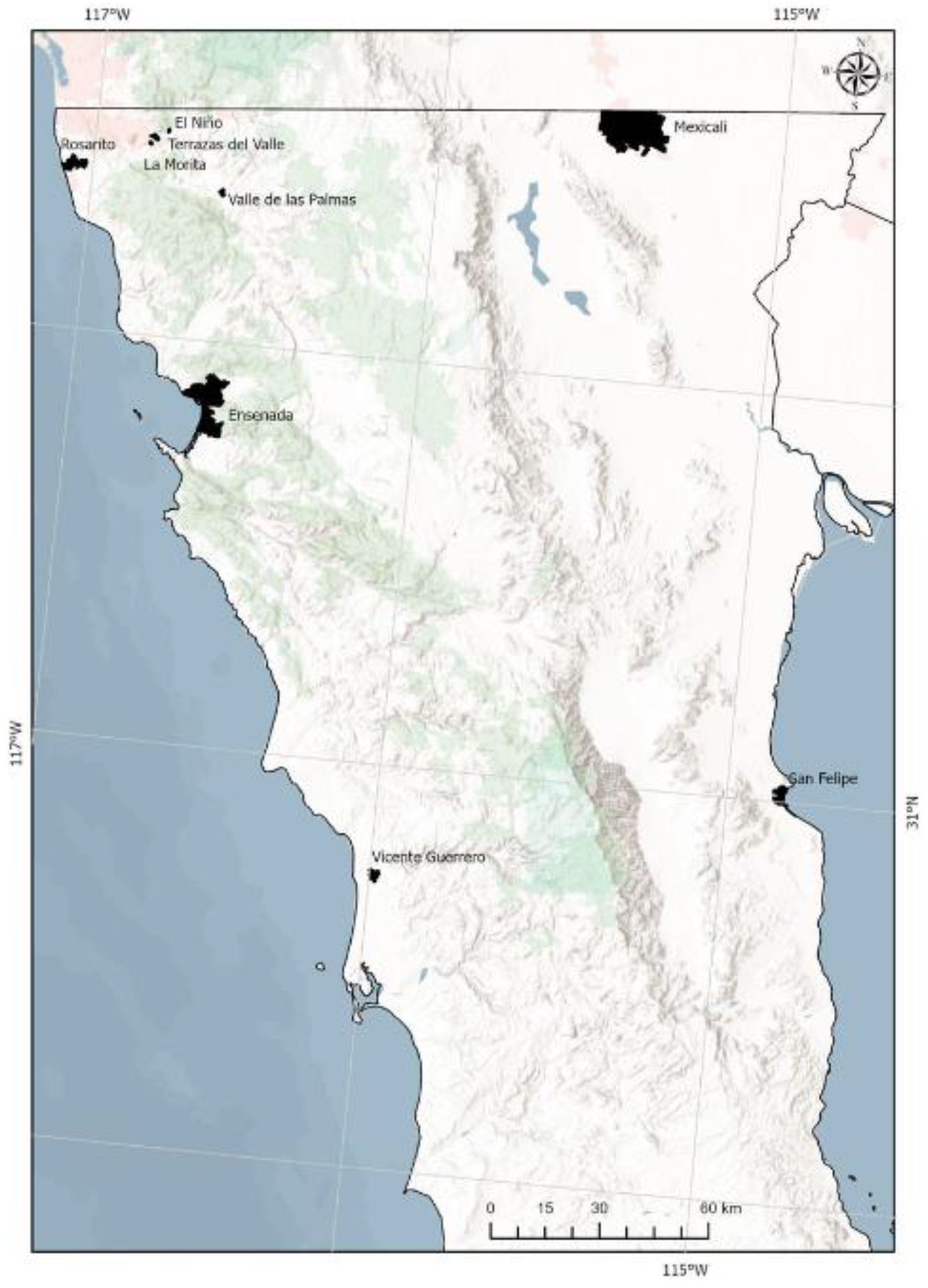
Figure 2.
Coccidioidin-ST+ reaction showing a 36-mm induration.
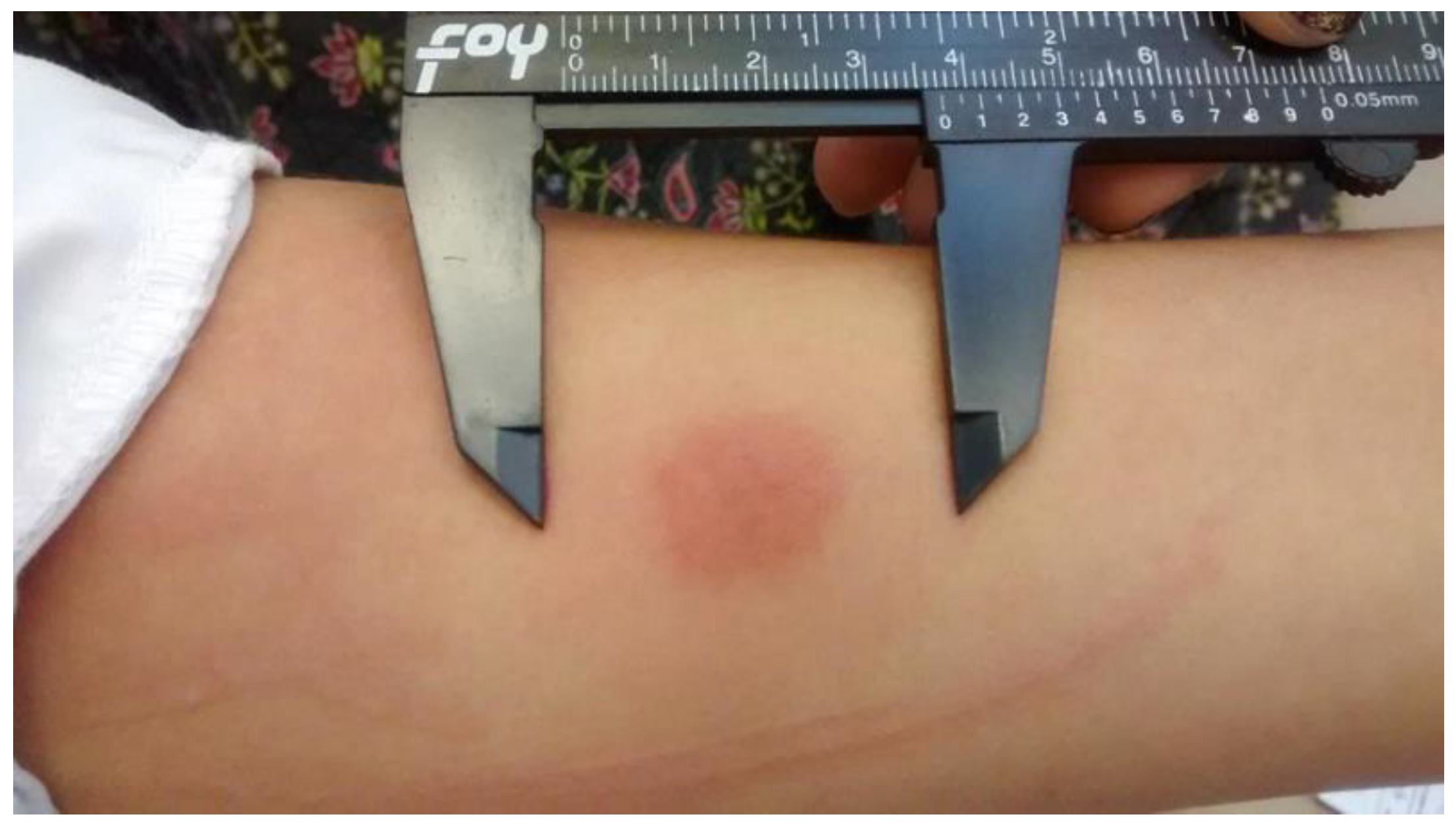
Figure 3.
Distribution of coccidioidin-ST+ and negative results by locality in Baja California, Mexico.
Figure 3.
Distribution of coccidioidin-ST+ and negative results by locality in Baja California, Mexico.
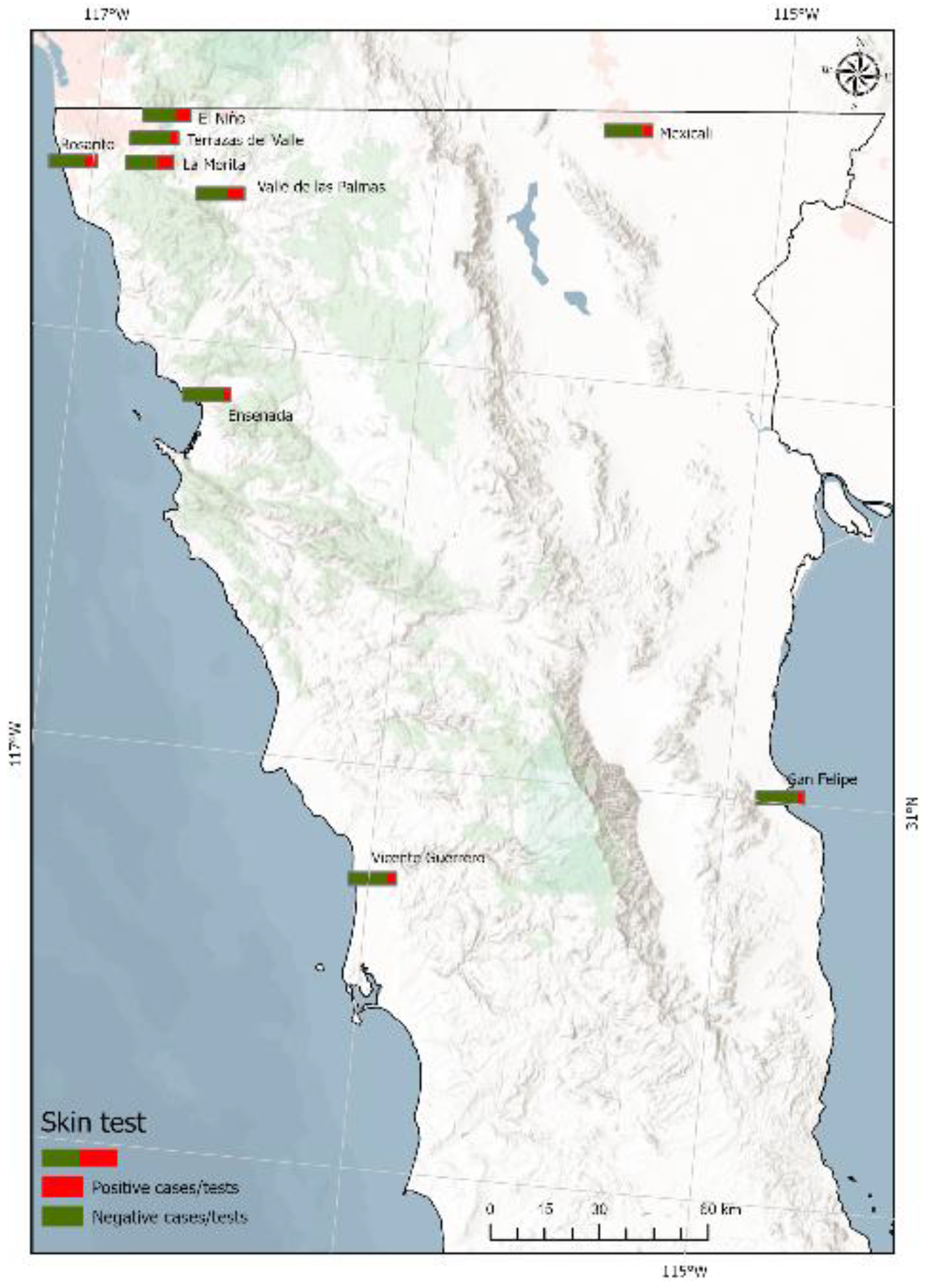
Figure 4.
Spatial distribution of environmental variables significantly associated with coccidioidin-ST+ results in Baja California, Mexico.
Figure 4.
Spatial distribution of environmental variables significantly associated with coccidioidin-ST+ results in Baja California, Mexico.
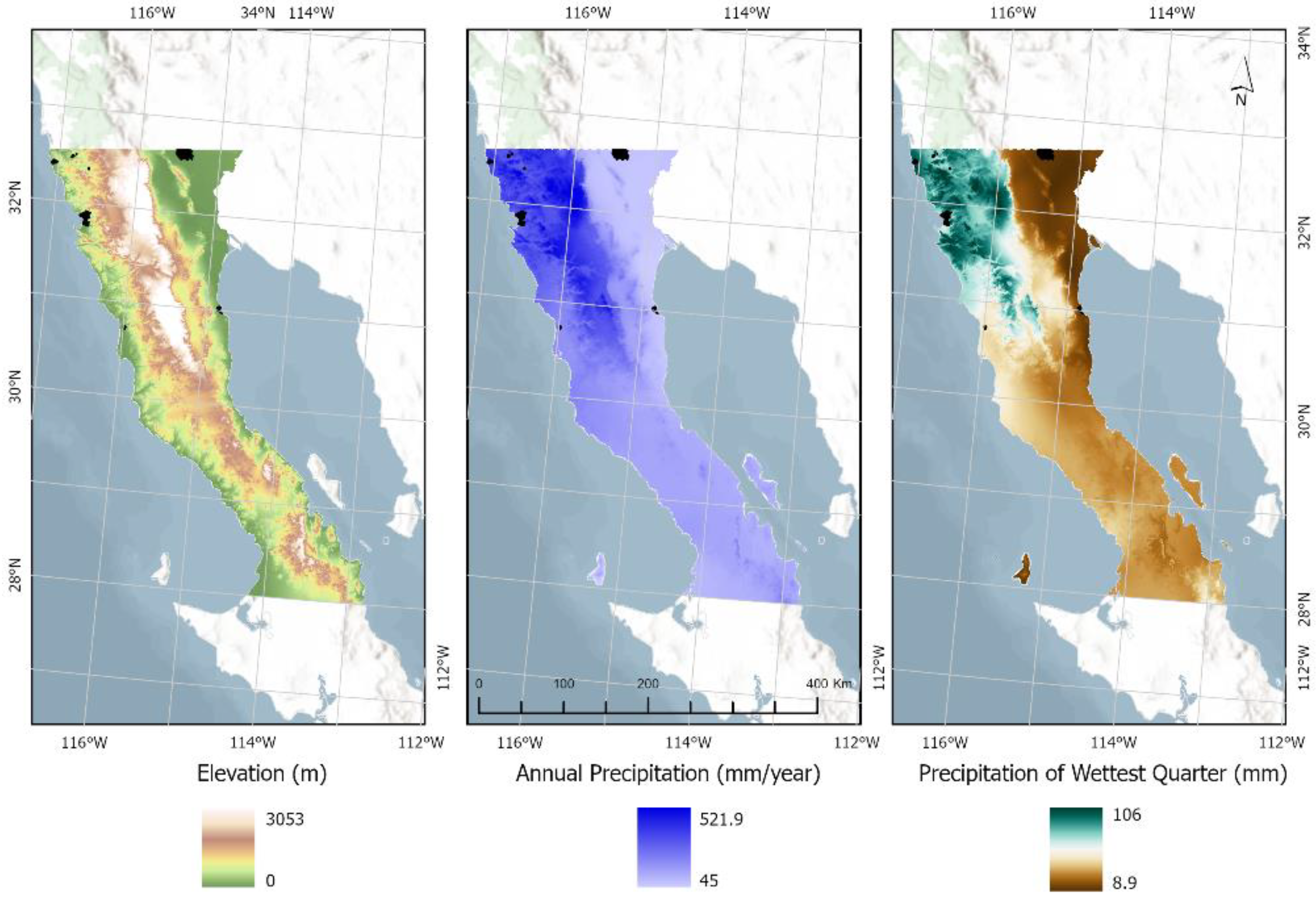

Table 1.
Distribution of sociodemographic and clinical variables according to coccidioidin-ST results in Baja California, Mexico (n = 416).
Table 1.
Distribution of sociodemographic and clinical variables according to coccidioidin-ST results in Baja California, Mexico (n = 416).
| Variable | Category | Total, n (%) | Coccidioidin-ST+, n (%) | p-value |
| Sex | Female | 261 (62.7) | 83 (62.4) | 0.888 |
| Male | 154 (37.0) | 50 (37.6) | ||
| Age group | ≤10 y | 16 (3.8) | 3 (2.3) | 0.066 |
| 11–18 y | 20 (4.8) | 8 (6.0) | ||
| 19–30 y | 106 (25.5) | 27 (20.3) | ||
| 31–40 y | 79 (19.0) | 32 (24.1) | ||
| 41–50 y | 64 (15.4) | 22 (16.5) | ||
| 51–60 y | 55 (13.2) | 24 (18.0) | ||
| >61 y | 30 (7.2) | 6 (4.5) | ||
| No response | 46 (11.0) | 11 (8.3) | ||
| Underlying disease | Yes | 133 (32.0) | 36 (27.1) | 0.233 |
| No | 283 (68.0) | 97 (72.9) | ||
| Respiratory illness <3 months | Yes | 78 (18.8) | 39 (29.3) | 0.507 |
| No | 338 (81.2) | 94 (70.7) | ||
| Immunodeficiency | Yes | 15 (3.6) | 15 (11.3) | — |
| No | 401 (96.4) | 118 (88.7) | ||
| Allergies | Yes | 9 (2.2) | 9 (6.8) | <0.001 |
| No or unknown | 407 (97.8) | 124 (93.2) | ||
| Travel to Sonora/California/Arizona | Yes | 11 (2.6) | 11 (8.3) | 0.273 |
| No | 388 (93.3) | 109 (81.9) | ||
| No response | 17 (4.1) | 13 (9.8) | ||
| Occupation | Homemaker (household work) | 93 (22.4) | 47 (35.3) | 0.001 |
| Education worker | 83 (20.0) | 22 (16.5) | ||
| Agricultural laborer/factory worker | 54 (13.0) | 17 (12.8) | ||
| Office worker | 40 (9.6) | 10 (7.5) | ||
| Health worker | 58 (13.9) | 9 (6.8) | ||
| Retail/commerce worker | 23 (5.5) | 8 (6.0) | ||
| Field work | 9 (2.2) | 2 (1.5) | ||
| No response | 56 (13.5) | 18 (13.5) | ||
| Collection period | 2016 | 10 (2.4) | 6 (4.5) | 0.001 |
| 2017 | 53 (12.7) | 29 (21.8) | ||
| 2018 | 84 (20.2) | 22 (16.5) | ||
| 2019 | 111 (26.6) | 37 (27.8) | ||
| 2020 | 136 (32.7) | 32 (24.1) | ||
| 2021 | 11 (2.6) | 2 (1.5) | ||
| 2022 | 11 (2.6) | 5 (3.8) |
Coccidioidin-ST+ = positive intradermal reaction to coccidioidin; p < 0.05 indicates statistical significance; — = not applicable.
Table 2.
Coccidioidin-ST positivity and associated odds ratios by locality in Baja California, Mexico, 2016–2022 (n = 416).
Table 2.
Coccidioidin-ST positivity and associated odds ratios by locality in Baja California, Mexico, 2016–2022 (n = 416).
| Locality | Total, n (%) | Coccidiodin-ST+, n (%) | OR (95% CI) | p-value | Positivity group |
| San Felipe | 30 (7.21) | 5 (16.67) | Referent | — | Low |
| Ensenada | 11 (2.64) | 2 (18.18) | 1.11 (0.18–6.78) | 0.909 | Low |
| Vicente Guerrero | 74 (17.79) | 17 (22.97) | 1.49 (0.49–4.49) | 0.477 | Low |
| Terrazas del Valle | 47 (11.30) | 10 (21.28) | 1.35 (0.41–4.43) | 0.619 | Low |
| Mexicali | 106 (25.48) | 27 (25.47) | 1.71 (0.60–4.91) | 0.319 | Low |
| Plan Libertador | 37 (8.89) | 12 (32.43) | 2.40 (0.74–7.82) | 0.146 | High |
| Capilla Divino Niño | 11 (2.64) | 5 (45.45) | 4.17 (0.91–19.17) | 0.067 | High |
| La Morita | 37 (8.89) | 20 (54.05) | 5.88 (1.85–18.72) | 0.003 | High |
| Valle de las Palmas | 63 (15.14) | 35 (55.56) | 6.25 (2.12–18.43) | 0.001 | High |
Coccidioidin-ST+ = positive intradermal reaction to coccidioidin; OR = odds ratio; CI = confidence interval; p < 0.05 indicates statistical significance; referent = reference category; — = not applicable. Low-positivity (≤30%) and high-positivity (>30%) groups were defined for comparative purposes based on a prior subnational survey in Mexico [4].
Table 3.
Distribution of abiotic variables across the nine studied locations in Baja California, Mexico.
Table 3.
Distribution of abiotic variables across the nine studied locations in Baja California, Mexico.
| Variable | Capilla Divino Niño | Ensenada | La Morita | Mexicali | Plan Libertador | San Felipe | Terrazas del Valle | Valle de las Palmas | Vicente Guerrero |
| Annual mean temperature (°C) | 17.45 | 16.81 | 17.69 | 22.59 | 17.03 | 22.15 | 17.59 | 17.55 | 16.63 |
| Mean diurnal range (°C) | 13.97 | 11.48 | 12.98 | 16.96 | 10.67 | 13.00 | 13.49 | 15.98 | 12.35 |
| Isothermality (%) | 54.52 | 55.45 | 54.37 | 45.92 | 54.76 | 44.93 | 54.61 | 55.35 | 58.28 |
| Temperature seasonality (SD × 100) | 415.18 | 326.28 | 384.50 | 749.53 | 306.15 | 620.13 | 396.75 | 463.12 | 321.86 |
| Max temperature of warmest month (°C) | 31.77 | 27.45 | 30.60 | 42.47 | 27.24 | 37.42 | 31.09 | 33.82 | 27.19 |
| Min temperature of coldest month (°C) | 6.14 | 6.75 | 6.73 | 5.54 | 7.77 | 8.48 | 6.40 | 4.95 | 6.00 |
| Annual temperature range (°C) | 25.63 | 20.69 | 23.87 | 36.93 | 19.47 | 28.94 | 24.70 | 28.87 | 21.18 |
| Mean temperature of wettest quarter (°C) | 13.42 | 13.46 | 13.71 | 15.19 | 13.87 | 23.10 | 13.49 | 12.76 | 13.36 |
| Mean temperature of driest quarter (°C) | 20.55 | 19.05 | 20.20 | 25.23 | 20.10 | 23.93 | 20.24 | 20.93 | 18.69 |
| Mean temperature of warmest quarter (°C) | 23.29 | 21.25 | 22.89 | 31.87 | 21.23 | 29.89 | 22.97 | 23.75 | 21.02 |
| Mean temperature of coldest quarter (°C) | 13.42 | 13.46 | 13.71 | 14.67 | 13.87 | 15.74 | 13.49 | 12.76 | 13.36 |
| Annual precipitation (mm) | 266.00 | 238.39 | 264.50 | 69.01 | 310.75 | 63.43 | 272.41 | 243.22 | 164.10 |
| Precipitation of the wettest month (mm) | 55.16 | 54.33 | 57.40 | 12.61 | 78.77 | 13.24 | 57.04 | 57.95 | 39.11 |
| Precipitation of driest month (mm) | 1.40 | 0.96 | 1.25 | 0.56 | 0.84 | 0.31 | 1.36 | 1.52 | 0.57 |
| Precipitation seasonality (coefficient of variation) | 90.65 | 97.10 | 93.49 | 57.70 | 100.19 | 76.35 | 92.06 | 91.53 | 97.32 |
| Precipitation of the wettest quarter (mm) | 144.56 | 135.08 | 144.70 | 30.95 | 169.43 | 27.68 | 147.88 | 132.79 | 99.46 |
| Precipitation of driest quarter (mm) | 6.32 | 4.37 | 5.51 | 2.51 | 4.30 | 1.14 | 6.06 | 6.94 | 3.70 |
| Precipitation of the warmest quarter (mm) | 9.89 | 8.58 | 8.69 | 11.85 | 7.49 | 25.44 | 9.57 | 11.72 | 9.93 |
| Precipitation of coldest quarter (mm) | 144.56 | 135.08 | 144.70 | 28.81 | 169.43 | 18.64 | 147.88 | 132.79 | 99.46 |
| Slope (%) | 5.03 | 3.92 | 3.32 | 0.13 | 3.42 | 0.96 | 3.69 | 1.71 | 0.56 |
| Elevation (m) | 237.73 | 52.62 | 153.30 | 4.14 | 125.03 | 23.45 | 199.65 | 276.44 | 32.12 |
| Climate classification | BSks | BSks | BSks | BW(h’)(x’) | BSks | BW(h’)(x’) | BSks | BSks | BSks |
| Soil type | Leptosol | Eutric Fluvisol | Chromic Vertisol | Chromic Vertisol | Chromic Vertisol/ Calcaric Phaeozem | Orthic Solonchak | Chromic Vertisol | Eutric Fluvisol | Eutric Fluvisol |
| Land use/vegetation | Induced grassland | Chaparral | Settlements | Annual irrigated agriculture | Induced grassland | Desert microphyll scrub | Settlements | Secondary chaparral vegetation | Annual irrigated agriculture |
°C = degrees Celsius; % = percentage; SD = standard deviation; mm = millimeters; m = meters; BSks = cold semi-arid climate; BW(h’)(x’) = hot desert climate (Köppen–Geiger classification).
Disclaimer/Publisher’s Note: The statements, opinions and data contained in all publications are solely those of the individual author(s) and contributor(s) and not of MDPI and/or the editor(s). MDPI and/or the editor(s) disclaim responsibility for any injury to people or property resulting from any ideas, methods, instructions or products referred to in the content. |
© 2026 by the authors. Licensee MDPI, Basel, Switzerland. This article is an open access article distributed under the terms and conditions of the Creative Commons Attribution (CC BY) license (http://creativecommons.org/licenses/by/4.0/).
Copyright: This open access article is published under a Creative Commons CC BY 4.0 license, which permit the free download, distribution, and reuse, provided that the author and preprint are cited in any reuse.


