

Submitted:
01 April 2026
Posted:
03 April 2026
You are already at the latest version
Abstract
The construction industry remains one of the largest contributors to global carbon emissions, with ordinary Portland cement (OPC) production accounting for a significant share due to high energy consumption and carbon intensive clinker manufacturing processes. As infrastructure development accelerates worldwide, particularly in rapidly urbanizing regions, the demand for sustainable construction materials has become urgent. In recent decades, alternative cementitious materials (ACMs), including fly ash, ground granulated blast furnace slag (GGBS), silica fume, and rice husk ash, have gained attention as partial replacements for OPC in concrete mixes. This research paper investigates the geotechnical and environmental impacts associated with the use of alternative cementitious materials in concrete, emphasizing real world construction conditions and performance requirements. The study evaluates the influence of ACMs on parameters such as soil–structure interaction, compressive and long term strength development, durability under aggressive environmental exposure, permeability characteristics, and resistance to chemical attack. Environmental performance indicators including carbon footprint reduction, energy savings, industrial waste utilization, and lifecycle sustainability are also assessed. Experimental findings and recent literature indicate that ACM based concrete exhibits reduced permeability, enhanced resistance to sulfate and chloride ingress, and improved long term mechanical performance compared to conventional OPC concrete. These contribute to improved geotechnical behavior in foundations exposed to adverse soil conditions. Furthermore, adopting alternative cementitious materials can reduce greenhouse gas emissions while supporting circular economy principles. The study concludes that integrating ACMs into concrete production is an approach for construction without compromising geotechnical performance or structural reliability.
Keywords:
alternative cementitious materials
; sustainable concrete
; fly ash
; ground granulated blast furnace slag (GGBS)
; carbon emission reduction
; environmental sustainability
; geotechnical performance
; green construction
1. Introduction
The construction industry is one of the largest consumers of raw materials and energy worldwide and remains a dominant contributor to global greenhouse gas emissions. Ordinary Portland cement (OPC), a key constituent of concrete, is responsible for a substantial share of these emissions due to the energy intensive clinker production process and the release of carbon dioxide during limestone calcination. Estimates indicate that cement production alone contributes nearly 7–8% of global CO₂ emissions, highlighting the urgency of transitioning toward more sustainable construction materials. As global demand for infrastructure continues to rise particularly in developing and rapidly urbanizing regions the environmental burden associated with conventional concrete production has intensified. This growing demand has prompted researchers, engineers, and policymakers to seek sustainable alternatives that can reduce environmental impact without compromising structural performance, durability, or safety. Alternative cementitious materials (ACMs) have emerged as a promising solution to address both environmental and geotechnical challenges associated with conventional concrete. Materials such as fly ash, ground granulated blast furnace slag, silica fume, and agricultural ashes are increasingly incorporated into concrete mixes to partially replace OPC. These materials not only reduce cement consumption and associated carbon emissions but also contribute to improved waste utilization, reduced landfill dependency, and enhanced resource efficiency. However, the adoption of ACMs fundamentally alters the physical, chemical, and mechanical behavior of concrete, influencing hydration mechanisms, microstructural development, and bonding characteristics, as illustrated by the microstructural morphology of cementitious materials shown in Figure 1. These changes directly affect the interaction between concrete and surrounding soil, its long term durability, and its performance under environmental exposure conditions. As sustainability becomes a central objective in civil and geotechnical engineering, material selection must be evaluated beyond short term strength criteria. Engineers are now required to consider long term performance, environmental compatibility, and lifecycle impacts when designing concrete structures. The use of ACMs introduces new considerations related to curing behavior, strength development rates, permeability, shrinkage, and resistance to chemical attack, all of which have direct implications for geotechnical applications such as foundations, pavements, retaining structures, underground systems, and marine or coastal infrastructure. Consequently, a comprehensive understanding of the combined geotechnical and environmental impacts of ACM based concrete is essential for ensuring safe, durable, and sustainable infrastructure development over extended service lives.
1.1. Background and Motivation
A concrete technology has prioritized strength, workability, and cost efficiency, with OPC serving as the primary binding material due to its predictable performance and standardized production. While this approach supported rapid industrial growth and large scale infrastructure expansion, it also led to excessive reliance on non renewable raw materials and increased environmental degradation. At the same time, large quantities of industrial by products and agricultural residues accumulated as waste, creating disposal challenges, environmental contamination risks, and economic inefficiencies. Advances in materials science and cement chemistry have demonstrated that many of these by products possess pozzolanic or latent hydraulic properties, making them suitable for use in concrete as alternative cementitious materials. Incorporating ACMs into concrete mixes has been shown to enhance durability, reduce permeability, improve resistance to sulfate attack, and lower the heat of hydration benefits that are particularly valuable in mass concrete and geotechnical applications. These performance improvements are especially relevant where concrete elements are exposed to aggressive soil environments, groundwater interaction, and cyclic loading. The motivation for this study lies in the growing need to evaluate these benefits systematically while addressing concerns related to material variability, standardization, constructability, and long term reliability.
1.2. Problem Statement
An extensive research on individual alternative cementitious materials (ACMs), their practical implementation in large scale construction projects remains limited, inconsistent, and regionally uneven. While numerous laboratory based studies have demonstrated the potential benefits of ACMs, most investigations primarily focus on isolated mechanical properties such as compressive strength, tensile strength, or basic durability indicators. Critical geotechnical performance parameters including stiffness, deformation behavior, load transfer mechanisms, settlement characteristics, and soil–structure interaction are often inadequately addressed, particularly under field scale conditions. In current construction practice, design decisions for foundations and substructures rely heavily on predictable material behavior under varying soil and environmental conditions. However, the performance of ACM based concrete is strongly influenced by factors such as material composition, replacement ratios, curing regimes, exposure conditions, and local availability of industrial or agricultural by products. Variations in these parameters can lead to uncertainty in performance outcomes, discouraging engineers and stakeholders from adopting ACMs in structural and geotechnical applications. The environmental impact assessments are frequently conducted independently of engineering performance evaluations, resulting in fragmented decision making frameworks. Life cycle assessments, carbon footprint analyses, and waste utilization studies are rarely integrated with geotechnical performance metrics in a unified methodology. The absence of standardized evaluation frameworks, harmonized testing protocols, and comprehensive design guidelines further contributes to conservative adoption or complete avoidance of ACMs in real world projects. This gap highlights the urgent need for integrated, performance based research that simultaneously addresses geotechnical behavior, environmental sustainability, regulatory acceptance, and practical implementation challenges within a single analytical framework.
1.3. Proposed Solution
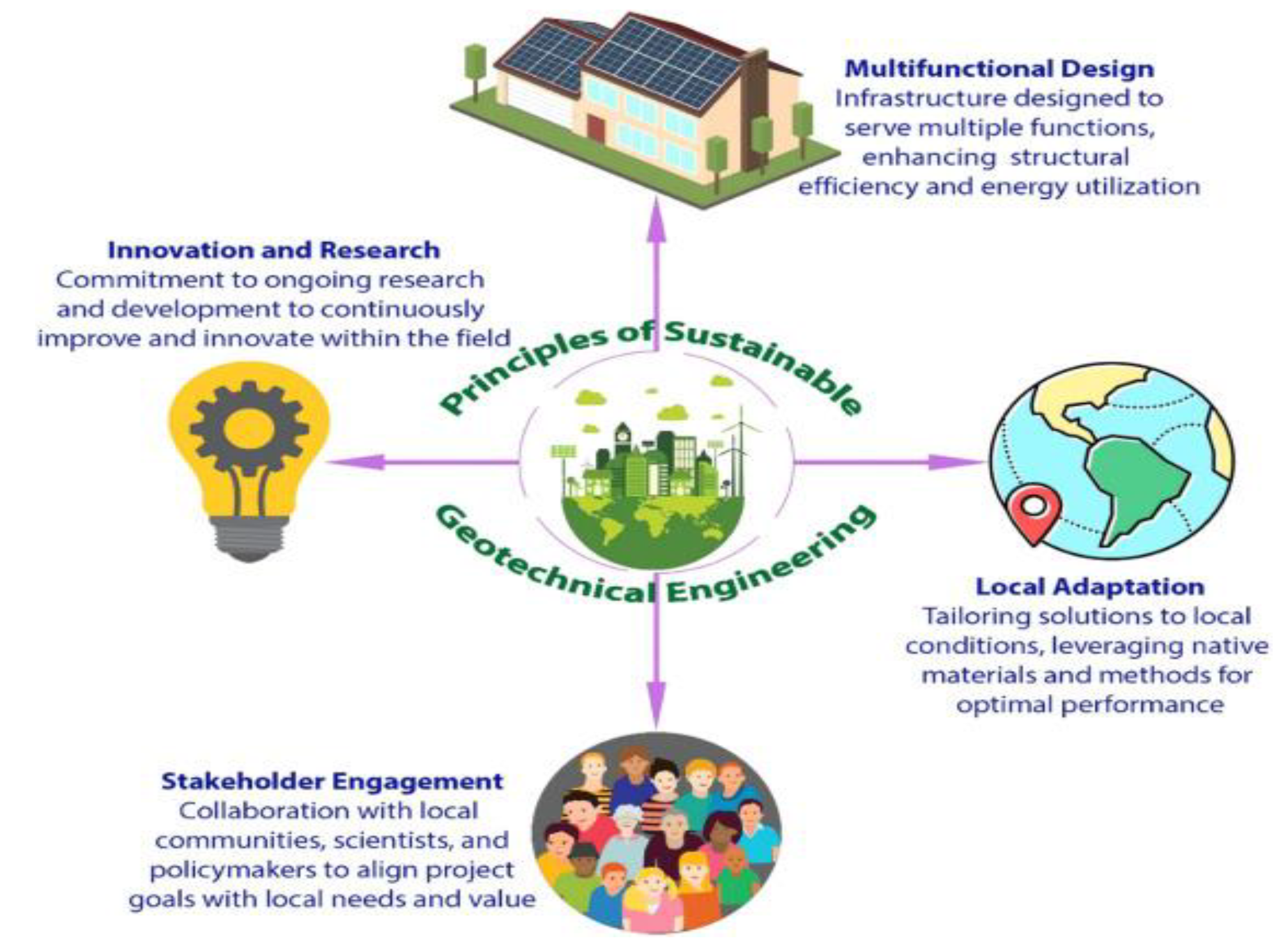
This study proposes an integrated evaluation framework that systematically assesses the geotechnical and environmental impacts of alternative cementitious materials in concrete mixes. The framework combines comprehensive material characterization, mechanical performance evaluation, durability testing, and sustainability assessment to quantify key parameters such as strength development, stiffness, permeability, deformation behavior, long term durability, and overall environmental footprint. Emphasis is placed on capturing the coupled interaction between material behavior and geotechnical performance, which is critical for foundation systems and infrastructure subjected to complex loading and exposure conditions. An examining both short term and long term performance under realistic environmental, chemical, and mechanical loading scenarios, the proposed approach addresses the limitations of conventional laboratory based evaluations. It enables informed decision making in mix design optimization, material selection, and structural application across diverse construction contexts. Furthermore, the framework incorporates lifecycle considerations, including carbon emission reduction potential, energy efficiency, and effective utilization of industrial and agricultural by products. Rather than treating alternative cementitious materials as simple cement replacements, the framework positions ACMs as strategic components of advanced and sustainable concrete systems. The guiding principles of sustainable geotechnical engineering underpinning this framework—such as innovation driven research, multifunctional design, local adaptation, and stakeholder engagement—are conceptually illustrated in Figure 2, which highlights the interrelationship between geotechnical performance, environmental responsibility, and sustainable infrastructure development. This integrated perspective supports the development of resilient, low carbon, and environmentally responsible infrastructure capable of meeting modern sustainability targets, regulatory requirements, and long term performance expectations in contemporary construction practice.
1.4. Contribution
This research makes several important contributions to the field of civil and geotechnical engineering by addressing both technical performance and sustainability challenges associated with modern concrete construction. First, it provides a holistic and integrated assessment of alternative cementitious materials by explicitly linking geotechnical performance parameters such as stiffness, deformation behavior, load transfer efficiency, and soil structure interaction with environmental impact indicators, including carbon emissions, energy consumption, and waste utilization. This integrated approach reflects real world decision making processes in infrastructure design, where structural reliability and sustainability objectives must be achieved simultaneously. Then the study proposes a structured, adaptable, and performance based evaluation framework that can be applied across a wide range of construction scenarios, material sources, and replacement ratios. The framework serves as a practical tool for engineers, researchers, and practitioners to systematically select, design, and optimize ACM based concrete mixes, taking into account local material availability, site specific geotechnical conditions, and exposure environments. This contribution is particularly relevant in the context of increasing regulatory pressure to reduce embodied carbon in construction projects. Then the research bridges the gap between laboratory scale investigations and field scale implementation by emphasizing realistic loading conditions, long term durability behavior, and lifecycle performance. By demonstrating that environmental objectives—such as carbon reduction, resource conservation, and circular economy integration—can be achieved without compromising structural safety, serviceability, or long term performance, the study supports the broader transition toward resilient, low carbon, and environmentally responsible infrastructure aligned with contemporary sustainability goals and engineering practice.
2. Related Work
The body of literature related to the use of alternative cementitious materials (ACMs) in concrete spans multiple interconnected research domains, including sustainable construction materials, advanced concrete technology, geotechnical engineering, durability science, and environmental impact assessment. In the context of global climate change mitigation, infrastructure resilience, and net zero carbon commitments, ACMs have emerged as a central focus of both academic research and industry driven innovation. International climate agreements, national decarbonization roadmaps, and infrastructure sustainability rating systems have accelerated interest in reducing the environmental footprint of concrete, which remains one of the most carbon intensive construction materials [1,2]. While these research streams have developed largely in parallel, recent advances in performance based design and sustainability assessment have emphasized the need for integrated frameworks that link material behavior, geotechnical performance, and environmental impact within a unified evaluation approach [3]. This section reviews and synthesizes key contributions across these domains to establish the theoretical foundation for the present study.
2.1. Alternative Cementitious Materials in Concrete
An early research on alternative cementitious materials primarily focused on their feasibility as partial replacements for ordinary Portland cement (OPC) to reduce cement consumption and associated carbon emissions [4]. Studies on fly ash, ground granulated blast furnace slag (GGBS), silica fume, and agricultural ashes consistently reported improvements in workability, reduced heat of hydration, enhanced long term strength development, and improved resistance to chemical degradation [5,6]. These benefits were largely attributed to pozzolanic and latent hydraulic reactions that refine pore structure, reduce capillary porosity, and enhance matrix densification. More recent studies have expanded toward blended and hybrid binder systems, emphasizing optimization of replacement ratios and synergistic interactions among multiple ACMs to achieve balanced early age and long term performance [7]. Researchers have also explored the use of regionally available industrial and agricultural by products to improve sustainability and supply chain resilience, particularly in regions experiencing reduced availability of conventional supplementary cementitious materials [8]. However, real world challenges such as variability in material quality, chemical composition, and logistical constraints continue to influence practical implementation.
2.2. Mechanical and Durability Performance Evaluation
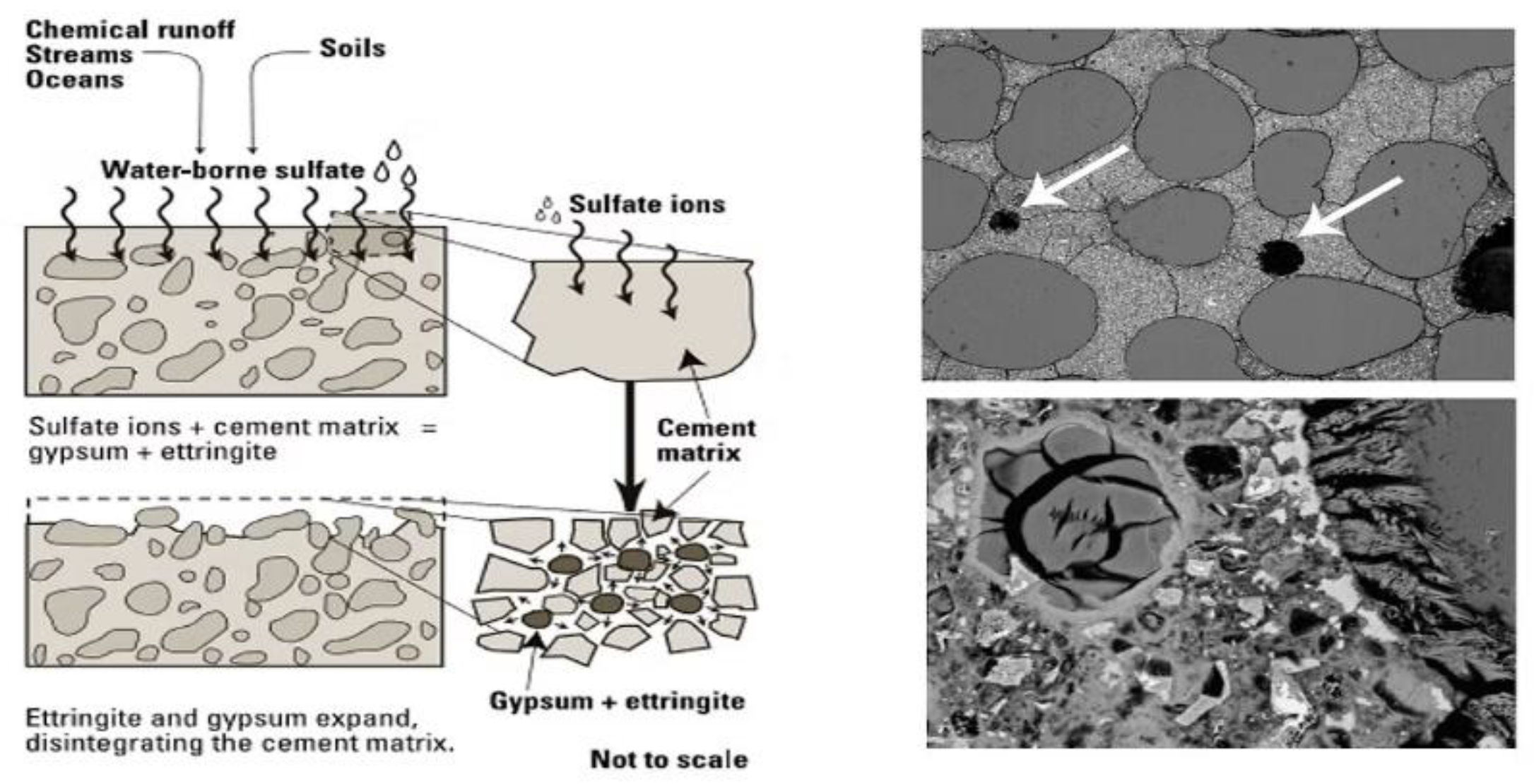
Mechanical performance evaluation of ACM based concrete has traditionally emphasized compressive strength as the primary indicator of structural adequacy [9]. Recent investigations have broadened this focus to include tensile strength, elastic modulus, fracture energy, and stiffness development, recognizing their importance in serviceability driven design and long term structural performance [10]. Time dependent properties such as creep, drying shrinkage, and autogenous shrinkage have also gained increased attention due to their influence on cracking, deformation, and durability. Durability studies increasingly emphasize long term exposure conditions representative of real service environments, including sulfate rich soils, chloride laden groundwater, carbonation prone urban atmospheres, freeze–thaw cycles, and alkali–silica reaction [11,12]. Advanced experimental techniques, transport property evaluation, and microstructural analyses have improved understanding of degradation mechanisms; however, most existing studies remain laboratory based and material centric, offering limited insight into how durability related deterioration affects deformation behavior, stiffness evolution, and load transfer mechanisms in soil–structure systems over extended service lives.
Figure 3.
Sulfate Attack on Concrete in Soil and Water Environments: Mechanisms and Microstructural Effects.
Figure 3.
Sulfate Attack on Concrete in Soil and Water Environments: Mechanisms and Microstructural Effects.
2.3. Geotechnical Performance and Soil–Structure Interaction
Research addressing the geotechnical implications of ACM based concrete remains comparatively limited. Existing studies have examined applications such as soil stabilization, rigid pavements, pile foundations, retaining structures, and ground improvement systems, reporting potential benefits including reduced permeability, improved stiffness, enhanced load distribution, and increased resistance to aggressive ground conditions [13,14]. Despite these promising findings, comprehensive evaluations of settlement behavior, stress–strain response, cyclic loading performance, creep under sustained loads, and interaction with heterogeneous soil profiles are scarce. In particular, the long term influence of ACM modified concrete on soil–structure interaction is not yet fully understood, and the lack of full scale field studies, long term monitoring programs, and validation under realistic geotechnical environments continues to limit confidence in predictive design models and widespread adoption in practice [15].
2.4. Environmental Impact and Sustainability Assessment
Environmental impact assessment of ACM based concrete has largely relied on life cycle assessment (LCA), embodied carbon calculations, and energy consumption metrics [16]. Numerous studies report substantial reductions in greenhouse gas emissions, energy demand, and natural resource consumption through partial replacement of OPC with ACMs [17]. More recent research incorporates circular economy principles, including waste diversion efficiency, material reuse, and regional resource optimization [18]. Despite these advancements, sustainability assessments are often conducted independently of structural and geotechnical performance evaluations, and environmental metrics are frequently reported without direct linkage to engineering reliability, durability, or serviceability requirements, limiting their practical applicability in design decision making [19]. The absence of integrated, performance linked sustainability benchmarks remains a major barrier to broader industry adoption.
2.5. Integrated Performance Based Evaluation Approaches
Recent research trends advocate for integrated, performance based evaluation frameworks that combine mechanical behavior, durability performance, geotechnical response, and environmental impact into a unified assessment approach [20]. Such frameworks align with modern performance based design philosophies, resilience based infrastructure planning, and emerging low carbon construction policies. However, many existing frameworks remain conceptual or material focused and often neglect practical considerations such as constructability, field curing conditions, soil variability, and long term lifecycle performance under realistic service environments. Limited standardization and insufficient validation across diverse geotechnical contexts continue to restrict their application in large scale infrastructure projects [21].
2.6. Research Gap and Synthesis
An extensive research exists on ACM material properties, mechanical behavior, durability performance, and environmental benefits, these research domains remain fragmented. The separation of geotechnical performance analysis from environmental sustainability assessment limits confident and systematic adoption of ACM based concrete in foundation and infrastructure applications. Existing studies frequently evaluate performance indicators in isolation, overlooking their combined influence on long term serviceability, resilience, constructability, and sustainability [3]. This study addresses these gaps by synthesizing material science, geotechnical engineering, durability assessment, and environmental analysis into an integrated, performance driven evaluation framework that supports informed decision making for the design, optimization, and implementation of ACM based concrete in contemporary low carbon and resilient infrastructure systems.
3. Methodology
This study adopts a comprehensive, performance based, and sustainability driven methodology to evaluate the geotechnical and environmental impacts of using alternative cementitious materials (ACMs) in concrete mixes. The methodology integrates experimental investigation, analytical evaluation, and comparative performance assessment within a unified systems oriented framework. Unlike conventional approaches that prioritize short term mechanical strength as the primary design criterion, this methodology emphasizes long term performance, durability under aggressive exposure conditions, soil–structure interaction behavior, and lifecycle environmental impacts. The framework is designed to closely reflect real world construction conditions, where ACM based concrete is subjected to variable soil types, fluctuating moisture regimes, chemical exposure from groundwater and soils, and sustained or cyclic loading over extended service lives. Particular emphasis is placed on capturing performance evolution over time rather than isolated test results. The proposed methodology is scalable and adaptable, allowing its application across different infrastructure typologies such as foundations, pavements, retaining structures, and underground systems, as well as across varying material sources and regional sustainability objectives.
3.1. Research Design and Analytical Approach
The research follows a quantitative, experimental, and analytical research design to ensure objective, repeatable, and scientifically robust evaluation of ACM based concrete performance. A structured analytical approach is employed, combining controlled laboratory experimentation, parametric studies, and comparative analysis across multiple concrete mix designs. Concrete specimens are prepared using varying replacement levels of ACMs to systematically capture the influence of material composition, replacement ratio, and curing regime on performance outcomes. The analytical approach evaluates performance across multiple interrelated dimensions, including material properties, curing conditions, exposure environments, and applied loading scenarios. Mechanical testing is conducted at multiple curing ages to capture early age behavior, rate of strength development, stiffness evolution, and long term performance stabilization. Durability and geotechnical assessments are integrated into the analytical framework to evaluate time dependent degradation mechanisms, transport behavior, and serviceability related performance. This combined focus on material level response and system level behavior enables the identification of critical performance drivers and interactions that govern long term reliability. The approach supports evidence based conclusions regarding the suitability of ACM based concrete for geotechnical applications under realistic service conditions, rather than idealized laboratory environments.
3.2. Geotechnical and Environmental Evaluation System Architecture
To operationalize the analytical framework, an integrated geotechnical and environmental evaluation system architecture is proposed. The architecture establishes a structured and traceable pathway that links raw material selection, experimental assessment, environmental evaluation, and engineering decision making.
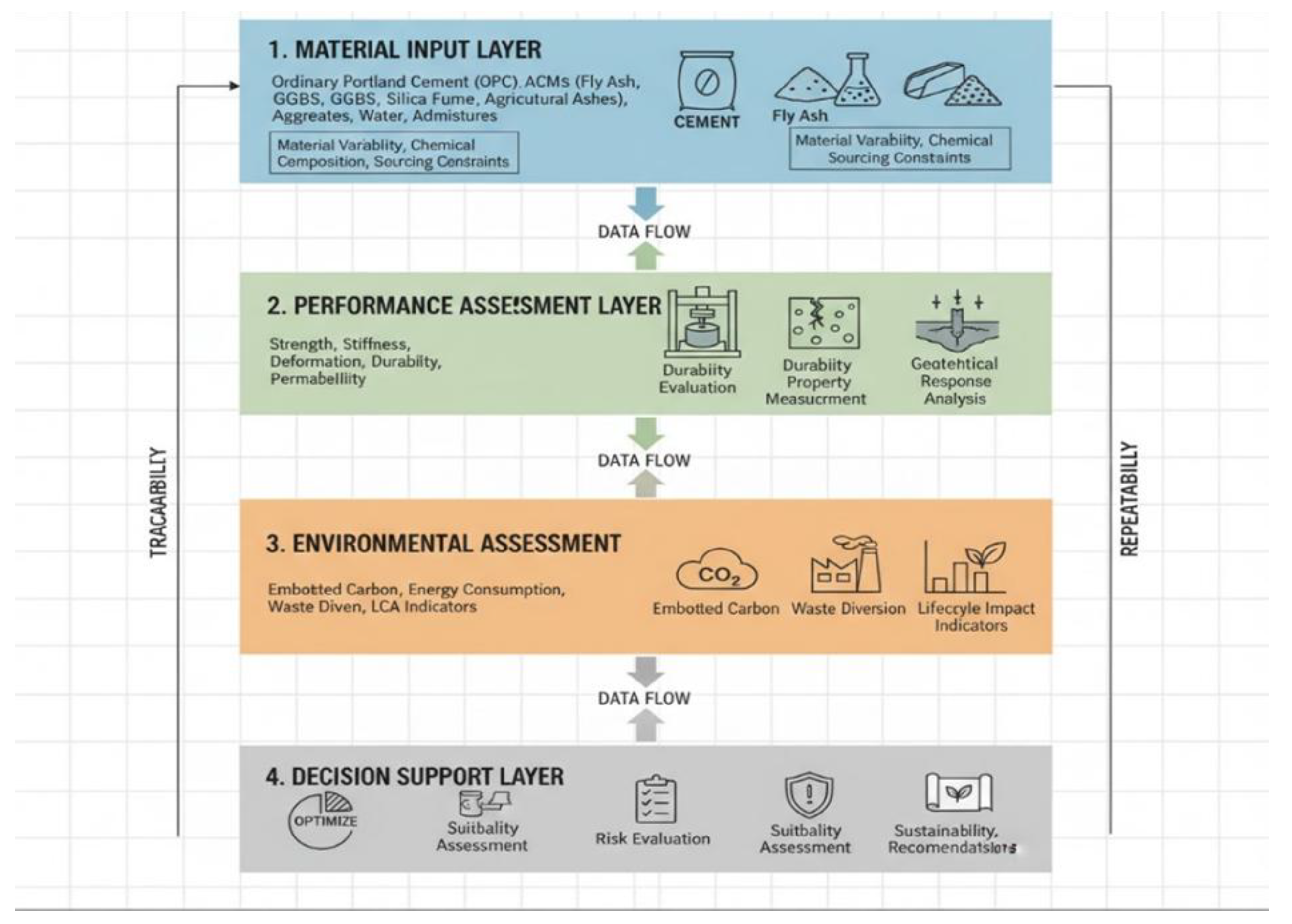
The architecture consists of four interconnected layers:
- Material Input Layer – ordinary Portland cement, ACMs (fly ash, GGBS, silica fume, agricultural ashes), fine and coarse aggregates, water, and chemical admixtures, with explicit consideration of material variability, chemical composition, fineness, and sourcing constraints
- Performance Assessment Layer – mechanical testing, durability evaluation, transport property measurement, and geotechnical response analysis, including stiffness and deformation behavior
- Environmental Assessment Layer – embodied carbon estimation, energy consumption analysis, waste diversion potential, and lifecycle impact indicators based on current sustainability assessment practices
- Decision Support Layer – mix optimization, application specific suitability assessment, risk evaluation, and sustainability informed design recommendations
This layered architecture ensures transparency, repeatability, and consistency in evaluation, enabling engineers and researchers to trace performance outcomes back to material and design decisions.
Figure 4.
Integrated Research Design and Analytical Framework for ACM-Based Sustainable Concrete.
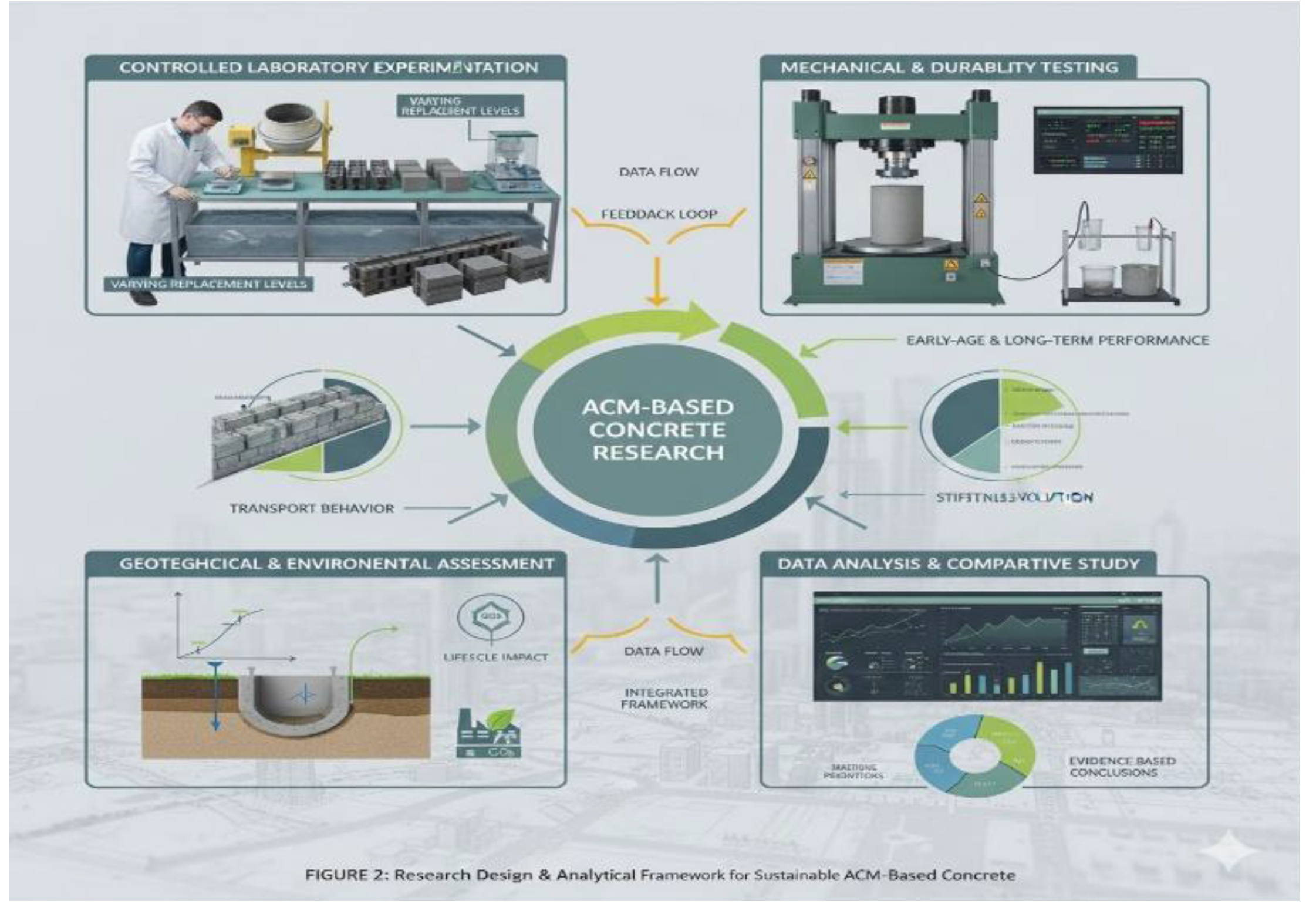
Figure 5.
Layered System Architecture for Geotechnical and Environmental Evaluation of ACM-Based Concrete.
Figure 5.
Layered System Architecture for Geotechnical and Environmental Evaluation of ACM-Based Concrete.
3.3. Data Flow and Performance Evaluation Framework
The methodology incorporates a structured data flow framework to explain how experimental measurements and analytical outputs are converted into meaningful geotechnical and environmental insights. The data flow framework ensures systematic handling of large datasets generated from experimental testing and environmental analysis.
The data flow follows four sequential stages:
- Data Acquisition: collection of raw material properties, mix proportions, curing conditions, mechanical test results, durability indicators, geotechnical parameters, and environmental data from experimental and analytical sources
- Data Processing: validation, normalization, filtering, and classification of datasets to ensure consistency, comparability, and elimination of experimental bias
- Analytical Processing: statistical analysis, trend identification, sensitivity analysis, correlation assessment, and performance benchmarking relative to conventional OPC concrete
- Insight Generation: interpretation of results for application specific performance assessment, sustainability evaluation, risk identification, and design optimization
This framework supports both periodic evaluation and cumulative performance assessment, enabling proactive identification of performance trends, degradation risks, and long term serviceability concerns.
3.4. Implementation Framework for ACM Based Concrete Evaluation
The implementation of the proposed methodology is structured into phased execution to ensure systematic assessment, scalability, and reproducibility across different research and project contexts. Each phase builds upon the outcomes of the preceding stage, enabling progressive refinement of understanding and reduction of uncertainty.

Table 1.
Implementation Phases for Geotechnical and Environmental Evaluation.
| Phase | Analytical Focus | Key Activities | Expected Outcome |
| Phase I | Material Characterization | Physical, chemical, mineralogical, and microstructural analysis | Verified and comparable material properties |
| Phase II | Mechanical Performance | Strength, stiffness, and deformation testing | Structural and serviceability assessment |
| Phase III | Durability Assessment | Chemical resistance, permeability, and transport testing | Long term durability evaluation |
| Phase IV | Geotechnical Performance | Settlement, stiffness compatibility, and soil–structure interaction analysis | Geotechnical serviceability insight |
| Phase V | Environmental Assessment | Carbon footprint, energy demand, and waste utilization analysis | Sustainability performance indicators |
| Phase VI | Integrated Evaluation | Multi criteria comparison and optimization | Application oriented design recommendations |
This phased framework ensures that performance evaluation is comprehensive, progressive, and aligned with real world engineering workflows.
3.5. Analytical Models and Performance Equations
To formalize the evaluation process, analytical models are employed to represent both geotechnical and environmental performance in a quantitative and comparable manner. A composite geotechnical performance index is used to integrate multiple serviceability related parameters into a single evaluative metric:
GP=w1S+w2K+w3D + w4P
where:
GP = geotechnical performance index
S = strength parameter
K = stiffness parameter
D = deformation behavior
P = permeability indicator
w1,w2,w3,w4 = weighting coefficients reflecting design priorities
Environmental performance is quantified using a sustainability index that captures key lifecycle indicators:
EP=αCr+βE8+γWu
where:
EP= environmental performance index
Cr = carbon emission reduction potential
Es = energy savings
Wu = waste utilization efficiency
α,β,γ = sustainability weighting factors
These indices enable integrated comparison of ACM based and conventional concrete mixes under combined geotechnical and environmental performance criteria.
3.6. Evaluation Metrics and Comparative Assessment
The methodology applies a comprehensive set of quantitative evaluation metrics to enable consistent and objective comparison between ACM based concrete mixes and conventional OPC concrete. Metrics are selected to reflect structural adequacy, serviceability performance, durability under aggressive conditions, and environmental sustainability.
Table 2.
Geotechnical and Environmental Evaluation Metrics.
| Dimension | Metric | Description |
| Strength | Compressive Strength | Load bearing capacity |
| Serviceability | Deformation Behavior | Settlement and strain response |
| Durability | Permeability | Resistance to fluid and ion ingress |
| Chemical Resistance | Sulfate/Chloride Resistance | Performance in aggressive environments |
| Environmental | Carbon Reduction | CO₂ emission savings |
| Sustainability | Resource Efficiency | Waste utilization and material efficiency |
| Reliability | Performance Stability | Long term consistency and robustness |
The integrated evaluation of these metrics enables holistic assessment of ACM based concrete performance, supporting informed decision making for sustainable, resilient, and geotechnically reliable infrastructure development under contemporary construction and environmental constraints.
4. Discussion and Results
This section presents and interprets the experimental and analytical outcomes derived from the proposed integrated evaluation framework for alternative cementitious material (ACM)–based concrete. Unlike conventional studies that emphasize isolated material properties or short term laboratory results, the findings discussed here reflect a holistic assessment that integrates mechanical behavior, durability performance, geotechnical response, and environmental sustainability indicators. The results are interpreted in the context of real world construction environments, where concrete structures are subjected to complex loading conditions, aggressive soil chemistry, and long term environmental exposure. The discussion highlights how ACM based concrete compares with conventional ordinary Portland cement (OPC) concrete in terms of long term reliability, serviceability, and environmental performance, thereby supporting performance based and sustainability oriented design decisions. In addition, the results provide insights into how ACM incorporation influences the balance between structural performance and environmental responsibility, which is increasingly critical in modern infrastructure development.
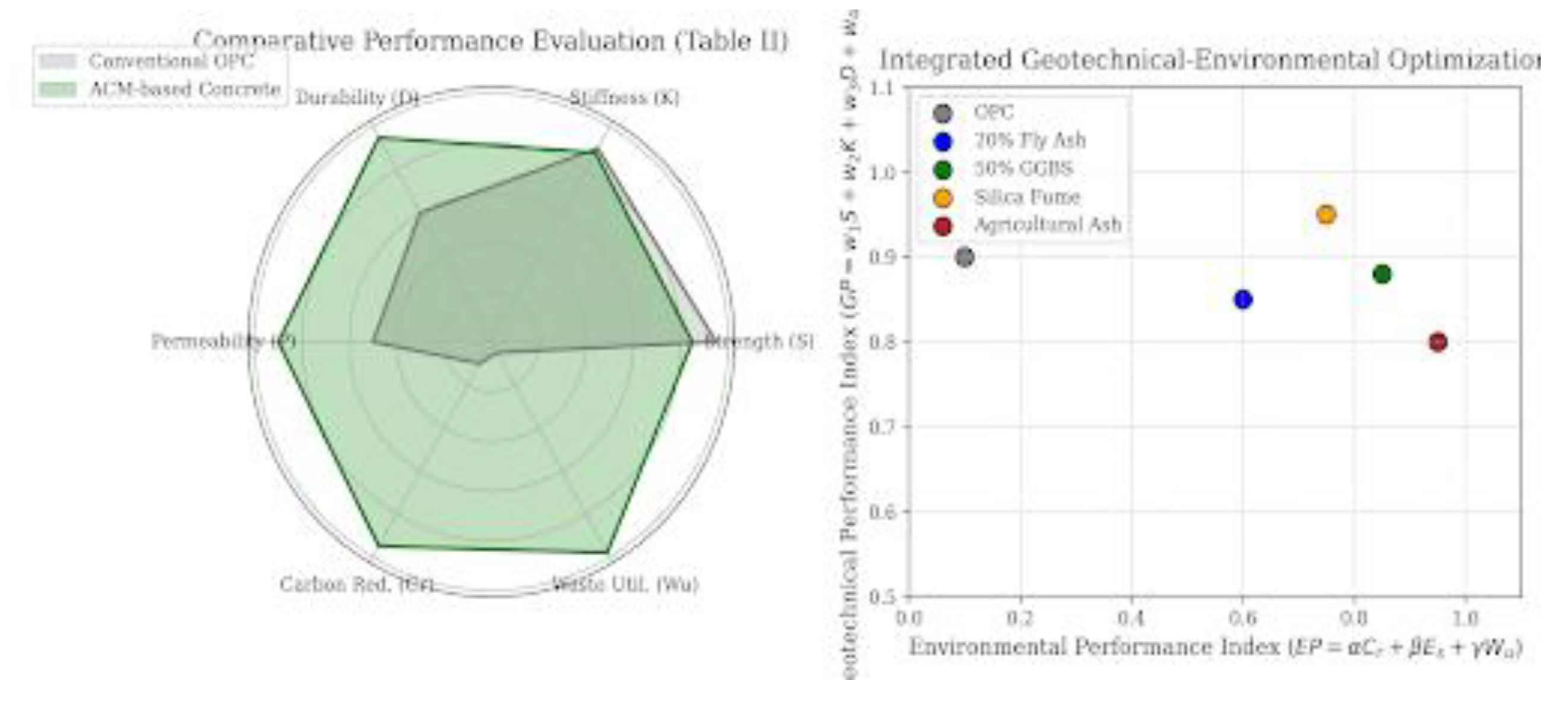
Figure 6.
Comparative Geotechnical and Environmental Performance of Conventional and ACM-Based Concrete Mixes.
Figure 6.
Comparative Geotechnical and Environmental Performance of Conventional and ACM-Based Concrete Mixes.
4.1. Comparative Performance Outcomes of Concrete Mixes
The comparative analysis between conventional OPC concrete and ACM based concrete mixes demonstrates clear differences in both short term and long term performance characteristics. While OPC concrete typically achieves higher early age strength, ACM based concrete exhibits sustained strength development and improved microstructural refinement at later ages. This delayed but continuous strength gain is particularly advantageous for infrastructure systems where long term load bearing capacity and durability are more critical than rapid early age strength, such as foundations, pavements, and underground structures. In addition to mechanical performance, ACM based concrete shows significantly reduced permeability and enhanced resistance to aggressive chemical environments. These improvements contribute to superior geotechnical compatibility, particularly in foundation systems where interaction with moisture sensitive or chemically aggressive soils governs long term performance. From an environmental standpoint, the reduction in cement content directly translates to lower embodied carbon and energy consumption, reinforcing the sustainability advantages of ACM incorporation. The comparative outcomes indicate that ACM based concrete provides a more balanced performance profile when evaluated across structural, geotechnical, and environmental dimensions.
4.2. Performance Evolution and Long Term Behavior
Analysis of performance evolution over time reveals that ACM based concrete exhibits more stable long term behavior than conventional OPC concrete. Strength and stiffness development curves indicate reduced performance fluctuations and improved stabilization at later ages. This behavior is particularly beneficial for geotechnical structures, where long term deformation control and stiffness compatibility with surrounding soils are essential for serviceability and structural integrity. Durability related performance trends further demonstrate that ACM based concrete maintains lower permeability and reduced degradation rates under prolonged exposure to aggressive environments. As a result, load transfer mechanisms at the soil–structure interface remain more consistent over time, reducing the risk of excessive settlement, cracking, or loss of structural integrity. These trends underscore the importance of evaluating concrete performance over extended service periods rather than relying solely on early age test results, which may not accurately reflect long term behavior.
4.3. Discussion of Geotechnical and Environmental Implications
From a geotechnical perspective, the improved durability and reduced permeability of ACM based concrete enhance its suitability for foundation systems, pavements, retaining structures, and underground infrastructure. Improved stiffness compatibility with soil reduces differential settlement and stress concentrations, contributing to improved long term serviceability and structural reliability. These characteristics are particularly relevant in regions with variable soil conditions and aggressive subsurface environments. Environmentally, the reduced reliance on OPC leads to significant reductions in greenhouse gas emissions and promotes the utilization of industrial and agricultural by products. The combined geotechnical and environmental benefits support the alignment of ACM based concrete with modern sustainability frameworks, green building certifications, and low carbon construction policies. These implications are especially relevant in the context of climate resilient infrastructure development and long term asset management.
4.4. Limitations
Despite the comprehensive nature of the study, certain limitations remain. The experimental investigations are conducted under controlled laboratory conditions, which may not fully capture the variability encountered in field environments, such as construction practices, curing variability, and long term exposure fluctuations. The study focuses on selected ACM types and replacement levels; alternative materials, blended systems, or higher replacement ratios may exhibit different performance trends. Additionally, the absence of long term field monitoring limits direct validation of lifecycle performance predictions under real service conditions. These limitations highlight the need for caution when generalizing results and underscore the importance of complementary field based investigations.
5. Conclusions
This research proposed a comprehensive data driven framework for evaluating sales performance using business analytics, addressing the growing limitations of traditional, intuition based sales assessment methods. By systematically integrating descriptive, diagnostic, and predictive analytics, the framework enables organizations to move beyond static performance reporting toward continuous, evidence based evaluation. The proposed approach demonstrates how structured sales data can be transformed into meaningful insights that support both operational decision making and long term strategic planning.The results indicate that analytics driven sales performance evaluation significantly enhances insight depth, forecasting accuracy, and decision reliability compared to conventional evaluation approaches. By analyzing sales performance across multiple dimensions such as time periods, geographic regions, product categories, and customer segments the framework provides a holistic view of sales effectiveness. This multidimensional perspective allows organizations to identify performance drivers, anticipate demand changes, and respond proactively to market dynamics. As a result, sales planning, resource allocation, and target setting become more accurate and adaptable. From a managerial standpoint, the study highlights the strategic importance of embedding business analytics into routine sales management processes. Analytics driven evaluation supports informed managerial judgment rather than replacing it, enabling sales managers and executives to make data backed decisions with greater confidence. The framework also promotes organizational agility by facilitating real time monitoring and early detection of performance deviations, which is critical in highly competitive and uncertain market environments. Although this study adopts an analytical and framework based approach, it offers a scalable foundation applicable across different industries and organizational contexts. Future research may focus on empirical validation using real world sales datasets, the integration of advanced machine learning models, and the application of real time analytics platforms. Overall, this research confirms that data driven sales performance evaluation using business analytics is a key enabler of sustainable competitive advantage and effective sales governance in modern business environments.
References
- Alam, MS (2025, October 21). AI-driven sustainable manufacturing for resource optimization. TechRxiv. [CrossRef]
- Alam, MS (2025, October 21). Data-driven production scheduling for high-mix manufacturing environments. TechRxiv. [CrossRef]
- Ria, S. J. (2025, October 21). Environmental impact assessment of transportation infrastructure in rural Bangladesh. TechRxiv. [CrossRef]
- R Musarrat and U Habiba, Immersive Technologies in ESL Classrooms: Virtual and Augmented Reality for Language Fluency (September 22, 2025). Available at SSRN: https://ssrn.com/abstract=5536098 or http://dx.doi.org/10.2139/ssrn.5536098.
- Akter, E., Bormon, J. C., Saikat, M. H., & Shoag, M. (2025), “AI-Enabled Structural and Façade Health Monitoring for Resilient Cities”, Int. J. Sci. Inno. Eng., vol. 2, no. 10, pp. 1035–1051, Oct. 2025. [CrossRef]
- Haque, S., Al Sany (Oct. 2025), “Impact of Consumer Behavior Analytics on Telecom Sales Strategy”, Int. J. Sci. Inno. Eng., vol. 2, no. 10, pp. 998–1018. [CrossRef]
- Sharan, S. M. M. I (Oct. 2025)., “Integrating Human-Centered Design with Agile Methodologies in Product Lifecycle Management”, Int. J. Sci. Inno. Eng., vol. 2, no. 10, pp. 1019–1034. [CrossRef]
- Alimozzaman, D. M. (2025). Explainable AI for early detection and classification of childhood leukemia using multi-modal medical data. World Journal of Advanced Engineering Technology and Sciences, 17(2), 48–62. [CrossRef]
- Alimozzaman, D. M., Akhter, T., Islam, R., & Hasan, E. (2025). Generative AI for synthetic medical imaging to address data scarcity. World Journal of Advanced Engineering Technology and Sciences, 17(1), 544–558. [CrossRef]
- Zaidi, S. K. A. (2025). Intelligent automation and control systems for electric vertical take-off and landing (eVTOL) drones. World Journal of Advanced Engineering Technology and Sciences, 17(2), 63–75. [CrossRef]
- Islam, K. S. A. (2025). Implementation of safety-integrated SCADA systems for process hazard control in power generation plants. IJSRED – International Journal of Scientific Research and Engineering Development, 8(5), 2321–2331. [CrossRef]
- Islam, K. S. A. (2025). Transformer protection and fault detection through relay automation and machine learning. IJSRED – International Journal of Scientific Research and Engineering Development, 8(5), 2308–2320. [CrossRef]
- Afrin, S. (2025). Cloud-integrated network monitoring dashboards using IoT and edge analytics. IJSRED – International Journal of Scientific Research and Engineering Development, 8(5), 2298–2307. [CrossRef]
- Afrin, S. (2025). Cyber-resilient infrastructure for public internet service providers using automated threat detection. World Journal of Advanced Engineering Technology and Sciences, 17(02), 127-140. Article. [CrossRef]
- Al Sany, S. M. A. (2025). The role of data analytics in optimizing budget allocation and financial efficiency in startups. IJSRED – International Journal of Scientific Research and Engineering Development, 8(5), 2287–2297. [CrossRef]
- Zaman, S. U. (2025). Vulnerability management and automated incident response in corporate networks. IJSRED – International Journal of Scientific Research and Engineering Development, 8(5), 2275–2286. [CrossRef]
- Ria, S. J. (2025, October 7). Sustainable construction materials for rural development projects. SSRN. [CrossRef]
- Razaq, A. (2025, October 15). Design and implementation of renewable energy integration into smart grids. TechRxiv. [CrossRef]
- Musarrat R. (2025). AI-Driven Smart Housekeeping and Service Allocation Systems: Enhancing Hotel Operations Through MIS Integration. In IJSRED - International Journal of Scientific Research and Engineering Development (Vol. 8, Number 6, pp. 898–910). [CrossRef]
- Hossain, M. T. (2025). AI-Augmented Sensor Trace Analysis for Defect Localization in Apparel Production Systems Using OTDR-Inspired Methodology. In IJSRED - International Journal of Scientific Research and Engineering Development (Vol. 8, Number 6, pp. 1029–1040). [CrossRef]
- Rahman M. (2025). Design and Implementation of a Data-Driven Financial Risk Management System for U.S. SMEs Using Federated Learning and Privacy-Preserving AI Techniques. In IJSRED - International Journal of Scientific Research and Engineering Development (Vol. 8, Number 6, pp. 1041–1052). [CrossRef]
- Alam, M. S. (2025). Real-Time Predictive Analytics for Factory Bottleneck Detection Using Edge-Based IIoT Sensors and Machine Learning. In IJSRED - International Journal of Scientific Research and Engineering Development (Vol. 8, Number 6, pp. 1053–1064). [CrossRef]
- Habiba, U., & Musarrat, R. (2025). Student-centered pedagogy in ESL: Shifting from teacher-led to learner-led classrooms. International Journal of Science and Innovation Engineering, 2(11), 1018–1036. [CrossRef]
- Zaidi, S. K. A. (2025). Smart sensor integration for energy-efficient avionics maintenance operations. International Journal of Science and Innovation Engineering, 2(11), 243–261. [CrossRef]
- Farooq, H. (2025). Cross-platform backup and disaster recovery automation in hybrid clouds. International Journal of Science and Innovation Engineering, 2(11), 220–242. [CrossRef]
- Farooq, H. (2025). Resource utilization analytics dashboard for cloud infrastructure management. World Journal of Advanced Engineering Technology and Sciences, 17(02), 141–154. [CrossRef]
- Saeed, H. N. (2025). Hybrid perovskite–CIGS solar cells with machine learning-driven performance prediction. International Journal of Science and Innovation Engineering, 2(11), 262–280. [CrossRef]
- Akter, E. (2025). Community-based disaster risk reduction through infrastructure planning. International Journal of Science and Innovation Engineering, 2(11), 1104–1124. [CrossRef]
- Akter, E. (2025). Green project management framework for infrastructure development. International Journal of Science and Innovation Engineering, 2(11), 1125–1144. [CrossRef]
- Shoag, M. (2025). Integration of lean construction and digital tools for façade project efficiency. International Journal of Science and Innovation Engineering, 2(11), 1145–1164. [CrossRef]
- Akter, E. (2025). Structural Analysis of Low-Cost Bridges Using Sustainable Reinforcement Materials. In IJSRED - International Journal of Scientific Research and Engineering Development (Vol. 8, Number 6, pp. 911–921). [CrossRef]
- Razaq, A. (2025). Optimization of power distribution networks using smart grid technology. World Journal of Advanced Engineering Technology and Sciences, 17(03), 129–146. [CrossRef]
- Zaman, M. T. (2025). Enhancing grid resilience through DMR trunking communication systems. World Journal of Advanced Engineering Technology and Sciences, 17(03), 197–212. [CrossRef]
- Nabil, S. H. (2025). Enhancing wind and solar power forecasting in smart grids using a hybrid CNN-LSTM model for improved grid stability and renewable energy integration. World Journal of Advanced Engineering Technology and Sciences, 17(03), 213–226. [CrossRef]
- Nahar, S. (2025). Optimizing HR management in smart pharmaceutical manufacturing through IIoT and MIS integration. World Journal of Advanced Engineering Technology and Sciences, 17(03), 240–252. [CrossRef]
- Islam, S. (2025). IPSC-derived cardiac organoids: Modeling heart disease mechanism and advancing regenerative therapies. World Journal of Advanced Engineering Technology and Sciences, 17(03), 227–239. [CrossRef]
- Shoag, M. (2025). Structural load distribution and failure analysis in curtain wall systems. IJSRED - International Journal of Scientific Research and Engineering Development, 8(6), 2117–2128. [CrossRef]
- Hasan, E. (2025). Machine learning-based KPI forecasting for finance and operations teams. IJSRED - International Journal of Scientific Research and Engineering Development, 8(6), 2139–2149. [CrossRef]
- Hasan, E. (2025). SQL-driven data quality optimization in multi-source enterprise dashboards. IJSRED - International Journal of Scientific Research and Engineering Development, 8(6), 2150–2160. [CrossRef]
- Hasan, E. (2025). Optimizing SAP-centric financial workloads with AI-enhanced CloudOps in virtualized data centers. IJSRED - International Journal of Scientific Research and Engineering Development, 8(6), 2252–2264. [CrossRef]
- Karim, M. A. (2025). An IoT-enabled exoskeleton architecture for mobility rehabilitation derived from the ExoLimb methodological framework. IJSRED - International Journal of Scientific Research and Engineering Development, 8(6), 2265–2277. [CrossRef]
- Akter, E., Ria, S. J., Khan, M. I., & Shoag, M. D. (2025). Smart & sustainable construction governance for climate-resilient cities. IJSRED - International Journal of Scientific Research and Engineering Development, 8(6), 2278–2291. [CrossRef]
- Zaman, S. U. (2025). Enhancing security in cloud-based IAM systems using real-time anomaly detection. IJSRED - International Journal of Scientific Research and Engineering Development, 8(6), 2292–2304. [CrossRef]
- Hossain, M. T. (2025). Data-driven optimization of apparel supply chain to reduce lead time and improve on-time delivery. World Journal of Advanced Engineering Technology and Sciences, 17(03), 263–277. [CrossRef]
- Rahman, F. (2025). Advanced statistical models for forecasting energy prices. Global Journal of Engineering and Technology Advances, 25(03), 168–182. [CrossRef]
- Karim, F. M. Z. (2025). Integrating quality management systems to strengthen U.S. export-oriented production. Global Journal of Engineering and Technology Advances, 25(03), 183–198. [CrossRef]
- Fazle, A. B. (2025). AI-driven predictive maintenance and process optimization in manufacturing systems using machine learning and Hossainsensor analytics. Global Journal of Engineering and Technology Advances, 25(03), 153–167. [CrossRef]
- Rahman, F. (2025). Data science in power system risk assessment and management. World Journal of Advanced Engineering Technology and Sciences, 17(03), 295–311. [CrossRef]
- Rahman, M. (2025). Predictive maintenance of electric vehicle components using IoT sensors. World Journal of Advanced Engineering Technology and Sciences, 17(03), 312–327. [CrossRef]
- , M. T. (2025). Cost negotiation strategies and their impact on profitability in fashion sourcing: A quantitative analysis. Global Journal of Engineering and Technology Advances, 25(03), 136–152. [CrossRef]
- Jasem, M. M. H. (2025, December 19). An AI-driven system health dashboard prototype for predictive maintenance and infrastructure resilience. Authorea. [CrossRef]
- uz Zaman, M. T. (2025). Photonics-based fault detection and monitoring in energy metering systems. IJSRED – International Journal of Scientific Research and Engineering Development, 8(6), 2359–2371. [CrossRef]
- Shoag, M. D., Khan, M. I., Ria, S. J., & Akter, E. (2025). AI-based risk prediction and quality assurance in mega-infrastructure projects. IJSRED – International Journal of Scientific Research and Engineering Development, 8(6), 2324–2336. [CrossRef]
- Haque, S. (2025). The impact of automation on accounting practices. IJSRED – International Journal of Scientific Research and Engineering Development, 8(6), 2312–2323. [CrossRef]
- Ria, S. J., Shoag, M. D., Akter, E., & Khan, M. I. (2025). Integration of recycled and local materials in low-carbon urban structures. World Journal of Advanced Engineering Technology and Sciences, 17(03), 447–463. [CrossRef]
- Fahim, M. A. I., Sharan, S. M. M. I., & Farooq, H. (2025). AI-enabled cloud-IoT platform for predictive infrastructure automation. World Journal of Advanced Engineering Technology and Sciences, 17(03), 431–446. [CrossRef]
- Karim, F. M. Z. (2025). Strategic Human Resource Systems for Retention and Growth in Manufacturing Enterprises. In IJSRED - International Journal of Scientific Research and Engineering Development (Vol. 8, Number 6, pp. 2547–2559). [CrossRef]
- Rahman, T. (2026). Financial Risk Intelligence: Real-Time Fraud Detection and Threat Monitoring. Zenodo. [CrossRef]
- Rabbi, M. S. (2026). AI-Driven SCADA Grid Intelligence for Predictive Fault Detection, Cyber Health Monitoring, and Grid Reliability Enhancement. Zenodo. [CrossRef]
- Ashraf, M S (2026). Comparative Performance Analysis of AI-Optimized MPPT Algorithms for Grid-Connected Solar PV Systems. Zenodo. [CrossRef]
- Zaman, S. U., Afrin, S., Zaidi, S. K. A., & Islam, K. S. A. (2026). Resilient edge computing framework for autonomous, secure, and energy-aware systems. World Journal of Advanced Engineering Technology and Sciences, 18(01), 105–121. [CrossRef]
- Ali, A. (2026). The impact of packaging design on recycling efficiency in municipal systems. World Journal of Advanced Engineering Technology and Sciences, 18(01), 122–139. [CrossRef]
- Mim, M. A., Sharif, M. M., Rahman, F., & Nahar, S. (2026). Smart IoT infrastructure for workplace efficiency and energy savings. World Journal of Advanced Engineering Technology and Sciences, 18(01), 140–156. [CrossRef]
- Taimun, M. T. Y., Alam, M. S., & Fareed, S. M. (2026). Digital twin-enabled predictive maintenance for textile and mechanical systems. World Journal of Advanced Engineering Technology and Sciences, 18(01), 187–203. [CrossRef]
- Fazle, A. B., Taimun, M. T. Y., Fareed, S. M., & Alam, M. S. (2026). Ergonomic and automation based process redesign in industrial workstations. Global Journal of Engineering and Technology Advances, 26(01), 091–108. [CrossRef]
- Alam, M. S., Fareed, S. M., Fazle, A. B., & Taimun, M. T. Y. (2026). Intelligent material flow optimization using IoT sensors and RFID tracking. Global Journal of Engineering and Technology Advances, 26(01), 109–125. [CrossRef]
- Nahar, S., Rahman, F., & Mim, M. A. (2026). AI-integrated renewable energy and data analytics platform for corporate ESG compliance. World Journal of Advanced Engineering Technology and Sciences, 18(01), 219–235. [CrossRef]
- Rahman, F., Nahar, S., & Mim, M. A. (2026). Cloud-native enterprise resource management for multi-sector operations. Global Journal of Engineering and Technology Advances, 26(01), 126–141. [CrossRef]
- Sharan, S. M. M. I., Fahim, M. A. I., & Farooq, H. (2026). Cloud native fintech analytics platform for IoT enabled retail networks. World Journal of Advanced Engineering Technology and Sciences, 18(01), 089–104. [CrossRef]
- Fahim, M. A. I., Farooq, H., & Sharan, S. M. M. I. (2026). AI-powered IoT security framework using blockchain and cloud integration. Global Journal of Engineering and Technology Advances, 26(01), 168–185. [CrossRef]
- Islam, R. (2026). AI-Integrated Management Information Systems for Manufacturing and Supply Chain Risk Mitigation. Zenodo. [CrossRef]
- Zaidi, S. K. A., Islam, K. S. A., Zaman, S. U., & Afrin, S. (2026). Blockchain-secured communication for industrial IoT and aviation control systems. IJSRED – International Journal of Scientific Research and Engineering Development, 9(1), 234–250. [CrossRef]
- Ali, A., & Rahman, M. (2026). Consumer Awareness and Behavior Towards Sustainable Packaging. Zenodo. [CrossRef]
- Islam, K. S. A., Zaidi, S. K. A., Afrin, S., & Zaman, S. U. (2026). Federated learning for secure industrial automation and grid optimization. Global Journal of Engineering and Technology Advances, 26(01), 025–040. [CrossRef]
- Afrin, S., Zaman, S. U., Islam, K. S. A., & Zaidi, S. K. A. (2026). Distributed edge intelligence for energy and transportation systems. World Journal of Advanced Engineering Technology and Sciences, 18(1), 280–297. [CrossRef]
- Meem, SI (2026). Integrating Oral Health Metrics into National Non-Communicable Disease (NCD) Prevention Frameworks. Figshare. [CrossRef]
- Emon, M. M. H. (2026). An Intelligent Energy Management System for Cost Optimization and Peak Demand Reduction Using Battery-Integrated Smart Dispatch. Zenodo. [CrossRef]
- Kamalanathan, S. (2025). Advanced damage detection and load optimization in hybrid composite structures using multi-scale simulation and machine learning. Saudi Journal of Engineering and Technology, 10(12), 660–673. [CrossRef]
- Dukkipati, S. S. N. C. (2026, February 9). Design and implementation of scalable AI-driven conversational systems for enterprise-level feedback intelligence and decision support. SSRN. https://papers.ssrn.com/sol3/papers.cfm?abstract_id=6263818.
- Karim, M. A., uz Zaman, M. T. ., & Razaq, A. (2026). Integrated Renewable Energy Monitoring and Adaptive Load Optimization Using Smart Grid and Intelligent Control Algorithms. Zenodo. [CrossRef]
- Nahar, S., Rahman, M., Alam, M. S., & Al Sany, S. M. A. (2026). Intelligent data governance and ethical AI framework for enterprise information systems. Zenodo. [CrossRef]
- Khan, M. I., Al Abid, A., Sultana, N., & Avi, S. P. (2026). Sustainable ground improvement using lime-stabilized soils and recycled construction materials: A performance-based evaluation for urban development. Figshare. [CrossRef]
- Mirza, S. B. (2026). Predictive reliability engineering for cloud scale business intelligence platforms through anomaly detection capacity optimization and proactive support automation. Zenodo. [CrossRef]
- Islam. Md A, “Native Scalable Student Information Systems and Admission Test Automation with Peak Load Architecture Database Performance Optimization and Observability Driven Reliability”. Zenodo, Mar. 12, 2026. [CrossRef]
- Mim, M. A. (2026). Cybersecurity risk mitigation in educational and healthcare IT environments. Zenodo. [CrossRef]
- Alam, M. J. (2026). Information systems for legal documentation management and policy analysis in institutional governance. figshare. [CrossRef]
- Alam, M. J. (2026). Digital contract lifecycle management systems for corporate governance and regulatory oversight. Zenodo. [CrossRef]
- Alam, M. J. (n.d.). Policy monitoring platforms for institutional governance and organizational accountability. Social Science Research Network. [CrossRef]
- Alam, M. J. (2026). Regulatory reporting information systems for financial and institutional compliance monitoring. Preprints.org. [CrossRef]
- Musarrat, R., & Habiba, U. (2026, February 25). Applying applied behavior analysis (ABA) in AI-supported ESL classrooms for children with autism spectrum disorder. SSRN. [CrossRef]
- Meem, S. I. (2026). Socioeconomic determinants of oral-systemic health disparities: A public health policy perspective. Zenodo. [CrossRef]
- Dukkipati, S. S. N. C. (2026). Cloud-native big data streaming framework for real-time social media intelligence and large-scale public opinion analytics. Zenodo. [CrossRef]
- Islam, M. A. (2026). Optimizing project management frameworks to reduce cost overruns in U.S. public infrastructure projects. Zenodo. [CrossRef]
- Akter, T. (2026). AI-driven workforce productivity optimization in U.S. service organizations using KPI-based predictive analytics. Zenodo. [CrossRef]
- Fareed, S. M. (2026). AI-driven digital twin framework for safety stock optimization in multi-stage manufacturing systems [Preprint]. Zenodo. [CrossRef]
- Adil, H. M. (2026). Energy-Efficient and Low-Emission Carbon Black Manufacturing through Advanced Process Optimization and Reactor Control. Zenodo. [CrossRef]
- Bhuiyan, M. I. H. (2026). AI-driven customer complaint analytics for systemic risk reduction and consumer protection in the U.S. banking sector. Zenodo. [CrossRef]
- Abid, A. A. (2026). AI-enhanced traffic signal optimization using microscopic simulation models for congestion and emissions reduction in mid-sized U.S. urban corridors. Zenodo. [CrossRef]
Figure 1.
Microstructural characterization of raw cementitious materials: Comparative SEM analysis of particle shape and surface texture for OPC and selected ACMs.
Figure 1.
Microstructural characterization of raw cementitious materials: Comparative SEM analysis of particle shape and surface texture for OPC and selected ACMs.
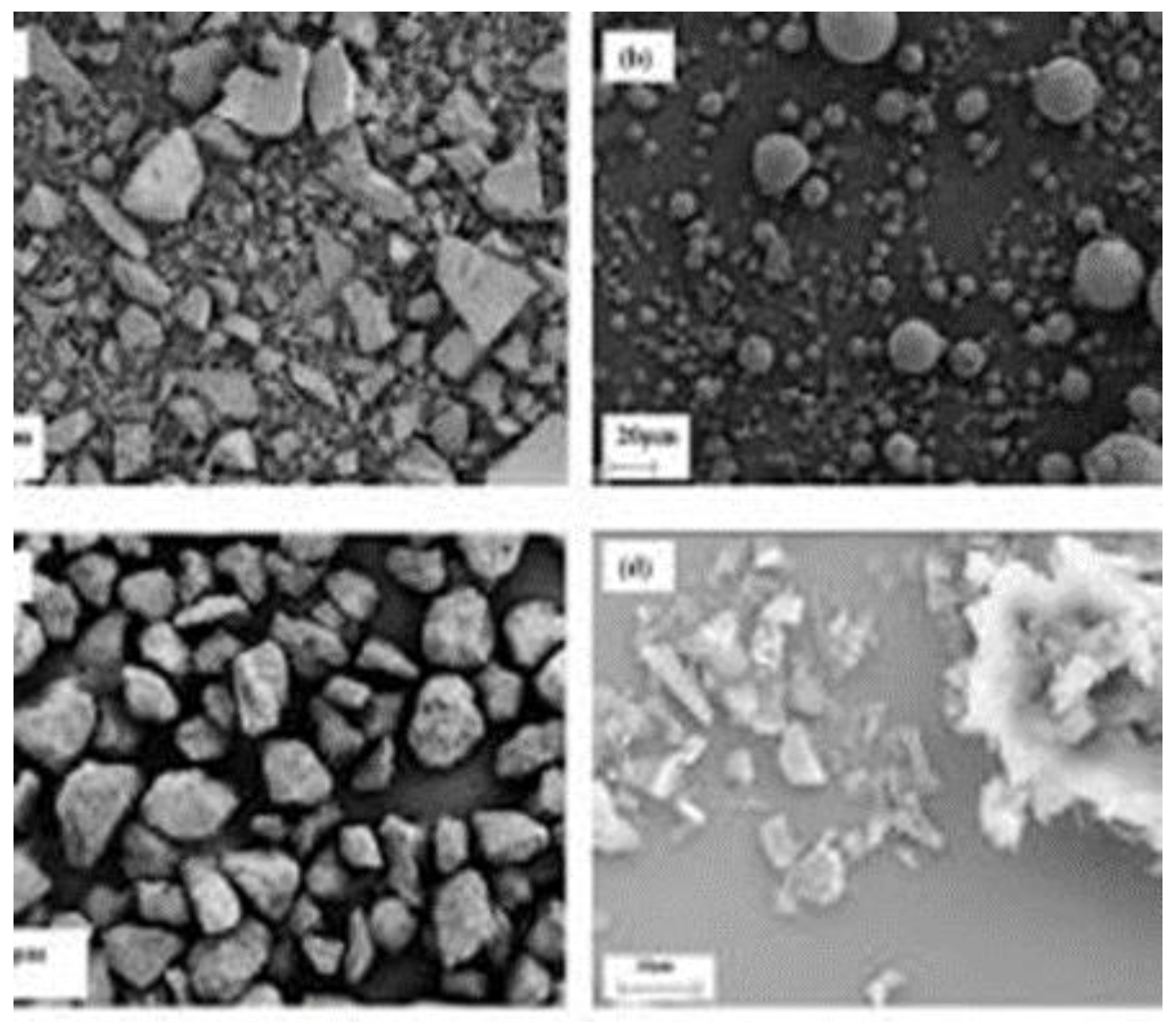
Figure 2.
Integrated Principles of Sustainable Geotechnical Engineering Incorporating Innovation, Local Adaptation, Multifunctional Design, and Stakeholder Engagement.
Figure 2.
Integrated Principles of Sustainable Geotechnical Engineering Incorporating Innovation, Local Adaptation, Multifunctional Design, and Stakeholder Engagement.
Disclaimer/Publisher’s Note: The statements, opinions and data contained in all publications are solely those of the individual author(s) and contributor(s) and not of MDPI and/or the editor(s). MDPI and/or the editor(s) disclaim responsibility for any injury to people or property resulting from any ideas, methods, instructions or products referred to in the content. |
© 2026 by the authors. Licensee MDPI, Basel, Switzerland. This article is an open access article distributed under the terms and conditions of the Creative Commons Attribution (CC BY) license (http://creativecommons.org/licenses/by/4.0/).
Copyright: This open access article is published under a Creative Commons CC BY 4.0 license, which permit the free download, distribution, and reuse, provided that the author and preprint are cited in any reuse.


