

Submitted:
01 April 2026
Posted:
02 April 2026
You are already at the latest version
Abstract
Digital inclusion is increasingly recognized as a key driver of socioeconomic opportunity in rapidly urbanizing African cities, yet empirical evidence on its structural determinants remains limited. This study advances the literature by developing a multidimensional, data-driven framework to assess digital inclusion in Ziguinchor, Senegal. Using a unique household survey, it integrates technological access, service quality, affordability, electricity reliability, mobility constraints, and social capital. Principal Component Analysis (PCA) is used to construct standardized domain indices and a composite Digital Inclusion Index, while regression models quantify the relative influence of each domain, accounting for gender and age differences. The findings provide new empirical evidence that digital inclusion is driven primarily by material and infrastructural conditions, particularly device access, proximity and mobility constraints, and electricity reliability. In contrast, affordability and service quality play smaller roles, challenging dominant policy narratives focused on data costs. The study also reveals persistent gender and generational inequalities in digital access and use. By quantifying the relative weight of multidimensional constraints and linking them to spatial and infrastructural conditions, the research offers a replicable and policy-relevant analytical framework for secondary cities. It demonstrates that digital inclusion is not solely a connectivity issue but a structurally embedded outcome, requiring integrated interventions across infrastructure, mobility, and social equity domains.
Keywords:
digital inclusion
; digital inequality
; secondary cities
; spatial inequality
; CDAS
; DII
; ICT infrastructure
; proximity–mobility
; gender digital divide
; Sub-Saharan Africa
1. Introduction
Digital access has expanded rapidly across African cities over the past decade, with mobile internet penetration in Sub-Saharan Africa rising from 23% in 2015 to 49% in 2023 (GSMA, 2024). This trajectory parallels broader transformations across the Global South, where mobile internet penetration increased from 18% to 43% in South Asia and reached 75% in Southeast Asia over the same period (GSMA, 2024). Yet international policy frameworks consistently stress that inclusion depends on far more than the presence of backbone and radio networks. Foundational analyses distinguish universal access, the broad availability of affordable opportunities to connect, from universal service, defined as household-level subscription and regular use (Kiyindou, 2009; ITU, 2018). The global experience shows that closing the “digital divide” (fracture numérique) requires complementary interventions such as shared-access facilities, universal service obligations, targeted subsidies, and attention to local appropriation practices, not infrastructure deployment alone (World Bank, 2016; Belli & Zingales, 2017). Well-documented examples, including India’s Common Service Centres and Brazil’s telecentros, demonstrate how publicly supported access points can effectively bridge gaps where household connectivity remains unaffordable, especially in secondary urban centres and peri-urban neighbourhoods (Toyama, 2015; Chohan and Hu, 2020). This global evidence motivates our focus on the local ecology of ICT commerce in Ziguinchor rather than relying solely on indicative mobile-coverage maps.
A second strand of work foregrounds the bottom-up appropriation (appropriation par le bas) of digital tools in African cities (Chéneau-Loquay, 2020). The diffusion of smartphones, mobile data bundles, and social media platforms has generated dense but uneven digital practices that are deeply embedded in local economic and mobility systems. Empirical studies illustrate these hybrid forms of digital urbanism: in Dakar, WhatsApp groups coordinate informal transport routes (Ngom, 2014); in Nairobi, mobile money reshapes micro-entrepreneurship and supplier relations (Aker & Mbiti, 2021). Comparable dynamics are documented across Global South, Jakarta’s informal motorcycle taxis appropriating ride-hailing platforms for collective bargaining (Sopranzetti, 2020); Mumbai’s neighbourhood WhatsApp networks supplementing deficient municipal service delivery (Donner & Escobari, 2010); and Lima’s market vendors leveraging Facebook Marketplace to extend informal retail circuits (Tirpak, 2018). These examples underscore that digital practices rarely align neatly with formal infrastructure footprints, reinforcing the need for within-city analysis with fine spatial resolution (Chéneau-Loquay, 2020; Graham & Marvin, 2001).
Despite this growing recognition, empirical evidence on how proximity to ICT access points and local digital service density affect household connectivity remains scarce in both African and broader Global South contexts. Much of the existing literature relies on national surveys that lack neighbourhood-level variation (Gillwald et al., 2018; Bala, 2019; Beuermann et al., 2015) or focuses on capital cities whose digital economies are atypical, more competitive, and often better serviced than secondary cities (Voufo et al. 2025; Porter et al., 2020; Rangaswamy & Cutrell, 2013). Yet secondary cities, home to a rapidly growing share of Africa’s urban population and roughly 40% of urban residents across the Global South, display infrastructural, economic, and spatial configurations distinct from both rural areas and major metropolitan centres (Roberts, 2014; UN-Habitat, 2022). This gap is especially salient in West Africa, where secondary cities are projected to absorb much of the region’s urban growth through 2040 (OECD/SWAC, 2020) but remain understudied from a digital inclusion perspective.
This paper addresses that gap through a geospatially informed, intra-urban analysis of Ziguinchor, a Senegalese secondary city with a heterogeneous ICT service ecosystem. The study integrates household survey data with spatial layers representing the distribution of ICT-related commerce and services, operationalising exposure via nearest-distance and local service density (≤1 km). The study estimates associations with two outcomes, any internet use and use intensity, while controlling for unobserved neighbourhood heterogeneity using quartier/commune fixed effects. In doing so, the study situates Ziguinchor within a comparative landscape that includes secondary cities such as Mwanza (Tanzania), Bhavnagar (India), and Cali (Colombia), contributing to an emerging comparative urbanism of digital inclusion that moves beyond capital-city exceptionalism.
2. Methodology Data and Measures
2.1. Study Areas
Ziguinchor is the principal urban centre of the Casamance region in southern Senegal, with an estimated population of roughly 240,000 residents (Figure 1). As a secondary city, it plays a critical administrative and commercial role in the region while exhibiting infrastructural and socioeconomic conditions distinct from Dakar and other primary urban hubs. The city is characterized by a mixed urban morphology: a dense historic core surrounded by rapidly expanding peri-urban neighbourhoods where service provision, transport connectivity, and economic opportunities remain uneven. This spatial heterogeneity provides a useful setting for analysing multidimensional digital inequalities.
Despite significant investments in national ICT infrastructure, Ziguinchor continues to face persistent service gaps, especially in electricity reliability, mobility infrastructure, and broadband availability. The city’s electricity supply is marked by frequent outages and fluctuating voltage levels, which constrain households’ ability to charge and maintain digital devices. Public and commercial service points, including ICT retailers, mobile money agents, and telecommunication outlets, are heavily concentrated along the west–east commercial corridor, leaving large southern and peripheral districts with limited access. These spatial disparities mirror broader patterns of urban inequality documented across secondary African cities, where basic services and digital markets tend to cluster in commercial and administrative centres.
Socioeconomically, Ziguinchor’s households are young, large, and predominantly informal in their livelihoods, with many residents relying on small-scale trading, service work, or remittances. These characteristics shape both the affordability of digital services and the ways digital technologies are integrated into daily life. While smartphone ownership is widespread, data costs, device quality, and inconsistent network performance continue to limit meaningful digital use. Gendered norms and mobility constraints, especially for women and youth, further influence patterns of access and participation.
Given these intersecting conditions, Ziguinchor provides an analytically rich environment for studying the interaction between structural access (captured through the Composite Digital Access Score) and realized digital behaviour (captured through the Digital Inclusion Index). Its heterogeneous neighbourhoods pronounced infrastructural deficits, and uneven distribution of ICT services create significant within-city variation, enabling robust identification of the spatial, economic, and sociotechnical drivers of digital inclusion.
2.2. Data Sources
2.2.1. Geospatial Layers
The geospatial component of the study is built around a detailed, citywide point inventory of ICT-related commerce and service infrastructure in Ziguinchor. This database includes formal and informal telecom outlets, mobile money agents, Wi-Fi vendors, cybercafés, device repair stalls, accessory shops, and data resellers. All points were geocoded, screened for duplicates, and validated for coordinate plausibility before being projected into a common metric coordinate reference system to ensure consistent spatial measurement.
To characterise the structure of Ziguinchor’s digital service environment and link it to household conditions, three complementary geospatial analyses were undertaken. First, service density mapping using kernel density estimation (KDE) produced continuous heatmaps of ICT service locations and, where GPS coordinates were available, household distributions. These surfaces reveal strong spatial inequalities, including a dense west–east commercial spine and pronounced “cold zones” in the southern belt and far eastern fringe, and provide quartier-level density indicators, with bandwidths calibrated using standard rules of thumb and ±25% sensitivity checks. Second, proximity and accessibility metrics were derived using network-based nearest-distance calculations, capturing the minimum travel distance from each household to the closest ICT service point; these measures directly feed into the Proximity–Mobility Index and quantify neighbourhood-level differences in physical access. Third, an infrastructure gap analysis overlaid household density with ICT service density to identify areas where residential demand outstrips supply. The resulting gap index highlights neighbourhoods with high population concentration but limited digital service coverage, areas that overlap with low-CDAS zones and inform the policy-targeting recommendations presented in Section 5.
All geospatial features, ICT points, households, and diagnostic surfaces, were spatially linked to official quartier/commune boundaries, which serve as the consistent neighborhood unit for fixed-effects estimations, summary statistics, and maps. Where GPS coordinates were missing or invalid, households were assigned to their reported quarter, and the quartier centroid was used for distance and density calculations; these centroid substitutions were flagged and tested through sensitivity checks.
Overall, the geospatial layers provide a spatially explicit representation of Ziguinchor’s digital ecosystem, enrich the construction of the Proximity–Mobility Index, and ensure alignment between micro-level household data and neighbourhood-level fixed-effects models.
2.2.2. Household Surveys
Complementing the geospatial datasets, the household surveys provide the micro-level outcomes and covariates that are spatially linked, via household GPS or reported quartier, to distance, density, and accessibility measures. Each city employs a city-representative design (details in the survey protocol) and elicits: (i) any internet access/use (home or public), (ii) use frequency (later mapped to an intensity index), (iii) smartphone ownership, (iv) demographic characteristics (age or age bands; education), (v) household size, (vi) employment/income proxies (e.g., labor force status, asset indicators), and (vii) utility access (electricity, water The utilities in Ziguinchor are recorded as binary availability with optional outage frequency. Location fields (household GPS were available; otherwise, the reported quarter) enable one-to-one joints with the service-point layers and administrative boundaries. When GPS is missing or fails validation, the respondent is assigned to the quartier centroid for exposure construction; such cases are flagged and tested in robustness checks against the GPS-only subsample. Sampling weights, when provided, are applied to descriptive statistics and used in sensitivity analyses of the regression models. Harmonization follows a documented codebook, preserving Ziguinchor differences where substantively meaningful while aligning constructs needed for the within-city fixed-effects estimation.
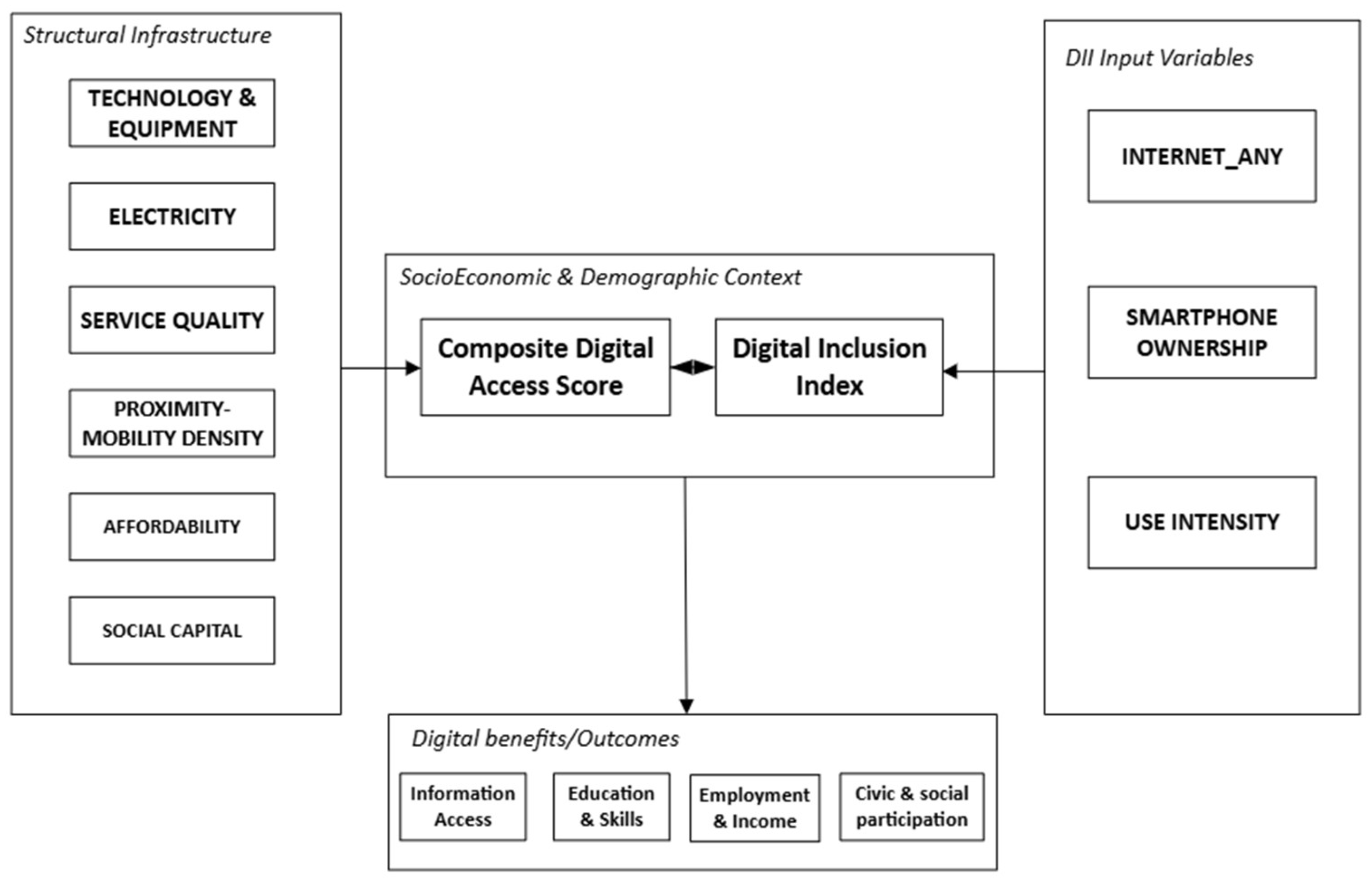
The survey also supplies the inputs to two complementary indices that we use for description and estimation. First, the Digital Inclusion Index (DII) summarizes realized inclusion from three survey components, internet_any, smartphone ownership, and use_intensity. Each component is standardized within city (z-scores), averaged over the observed components (flagging dii_partial = 1 if any component is missing), and linearly rescaled to 0–100. DII therefore captures both the extensive margin (whether households connect) and the intensive margin (how often they use the internet).
Second, the Composite Digital Access Score (CDAS) captures the structural conditions that enable or constrain digital use by aggregating six dimensions: Electricity (E), Affordability (A), Proximity–Mobility–Density (P), Service Quality (S), Technology & Equipment (T), and Social Capital (C). Each pillar is constructed from survey-derived indicators, normalized on a 0–100 scale, and averaged to produce the overall CDAS. The household survey provides the core data underpinning these pillars. In the Ziguinchor case, affordability (A) is derived from reported income or, where unavailable, an asset-based wealth proxy. Electricity (E) reflects access to power and the frequency of outages. Service quality (S) is based on self-reported internet performance, connection type, and operator characteristics. Technology (T) captures access to devices, including smartphone ownership and device condition. Social capital (C) is measured through practices such as sharing data, devices, or participation in collective access arrangements. The Proximity–Mobility–Density (P) pillar explicitly integrates survey and geospatial data. It combines the distance to the nearest ICT service point and the density of services within a 1 km radius with a survey-based indicator of transport access. These components are transformed into a 0–100 score, where proximity is modeled using a log-distance function (capped at 2 km) and density incorporates diminishing returns. When subcomponents were missing, each pillar were computed on the observed parts and rescaled to 0–100, with component_partial = 1. CDAS was computed for observations with data on at least four of the six pillars; observations with fewer were classified as partial (CDAS_partial = 1). For pooled city models the study standardize CDAS to within-city z-scores; for maps and dashboards the study retained the 0–100 scale. Together, DII (usage/capability) and CDAS (enabling environment) allow the study to relate the spatial opportunity structure documented to both realized inclusion and its underlying constraints within neighborhoods.
Figure 2.
Conceptual integration of DII and CDAS.
2.3. Integrated Framework: Linking Realized Digital Inclusion (DII) and the Enabling Environment (CDAS)
Digital participation is not solely a function of having a connection or a device; it emerges at the intersection of capabilities, resources, and opportunities. Building on capability approaches (Sen, 1999; Robeyns, 2005; Kleine, 2013) and multi-level digital divide frameworks (DiMaggio & Hargittai, 2001; van Dijk, 2005; Helsper, 2012), this study distinguishes between realized digital practices and the enabling environment in which those practices are (or are not) enacted.
Within this framework, the Digital Inclusion Index (DII) captures realized digital inclusion at the household level: whether individuals use the internet at all, how intensively they do so, and whether they possess a smartphone as a key gateway device. DII therefore reflects the second-level divide in van Dijk’s terms, variation in actual usage patterns and capabilities once some level of access is present.
By contrast, the Composite Digital Access Score (CDAS) captures the enabling environment: the infrastructural, economic, spatial, and sociotechnical conditions that make digital engagement feasible or constrain it. CDAS aggregates dimensions such as electricity reliability, affordability, proximity and mobility, service quality, device availability, and social capital, aligning with what the literature often labels first-level divides (infrastructure, affordability, geography) and broader supply-side conditions (ITU, 2018; GSMA, 2024). This duality mirrors longstanding distinctions in digital divide theory:

Table 1.
Three Levels of the Digital Divide and Their Operationalization.
| Digital Divide Level | Core Concept | Operationalization in This Study |
|---|---|---|
| First-Level Divide | Connectivity, infrastructure, affordability, and spatial access | CDAS (Composite Digital Access Score) captures structural and environmental enabling conditions, technology, electricity, affordability, proximity–mobility, service quality, and social capital. |
| Second-Level Divide | Skills, usage intensity, digital practices, and behavioural engagement | DII (Digital Inclusion Index) measures realized digital behaviour, including adoption, frequency, and diversity of use. |
| Third-Level Divide | Downstream outcomes: labour opportunities, education gains, empowerment, social participation | Addressed in downstream outcome models in the broader study (e.g., digital labour participation, educational use, mobility benefits). |
By estimating both indices consistently within cities and standardizing components across demographic strata (age × education), the framework reduces compositional confounding and enables meaningful cross-neighbourhood comparison. It provides a robust basis for identifying four distinct profiles of digital inclusion, as shown in Figure 3. First, households with high CDAS and high DII (“Enabled & Realized”) benefit from favourable structural conditions and effectively translate them into digital use. Second, high CDAS but low DII (“Under-utilizers”) indicate contexts where access exists but is not fully converted into meaningful use, pointing to behavioural, skills, or socio-cultural barriers. Third, low CDAS and low DII (“Structurally Excluded”) reflects compounded disadvantage, where limited infrastructure and resources directly constrain digital engagement. Finally, low CDAS but high DII (“Over-achievers”) captures households that, despite structural constraints, manage to achieve relatively high levels of digital use, highlighting adaptive strategies and latent demand. In doing so, the integrated CDAS–DII framework explicitly links structure (opportunity conditions) and agency (realized use), offering a theoretically grounded and operational tool for spatially targeted and group-specific digital policy interventions.
2.3.2. The DII–CDAS Interaction
2.3.2.1. CDAS as the Structural Foundation
The Composite Digital Access Score (CDAS) captures the structural and contextual determinants of digital opportunity within Ziguinchor. Drawing on first-level digital divide theory (van Dijk, 2005; Warschauer, 2004; ITU, 2018; GSMA, 2024), CDAS aggregates six core domains: electricity reliability, affordability, spatial proximity and mobility, telecommunications service quality, device availability, and social capital.
These dimensions operate at both the household level (affordability, devices, skills, etc.) and the neighbourhood level (service density, transport access, outage patterns, etc.) and together define the informational and infrastructural substrate that makes digital participation feasible. In Sen’s capability terminology, CDAS represents the conversion factors, the material, social, and environmental conditions that determine whether a household can transform resources into digital capability.
The household survey provides direct measures for each pillar: outage frequency and fixed-mobile quality assessments, distance to ICT services, perceived affordability, digital expenditure, device condition, and household skill composition. These empirically grounded components allow CDAS to reflect the lived constraints and enablers that shape meaningful digital opportunity in Ziguinchor.
2.3.2.2. DII as Realized Capability
The Digital Inclusion Index (DII) measures ‘realized digital behaviour’, whether households actually use the internet, how intensively they do so, and whether they possess a smartphone as a primary gateway device. In line with second-level digital divide theory (DiMaggio & Hargittai, 2001; van Deursen & Helsper, 2015), DII reflects variation in digital practices conditional on access.
While DII is shaped by the structural conditions captured in CDAS, the relationship is not deterministic. Structural factors such as affordability, proximity, electricity reliability, and device access influence the likelihood and intensity of use, but they do not fully determine behaviour. Deviations arise in two important cases. “Under-utilizers” display low DII despite favourable CDAS, indicating behavioural, cultural, or informational constraints. Conversely, “over-achievers” exhibit high DII under constrained CDAS conditions, suggesting compensatory strategies such as device sharing, reliance on community infrastructure, or support from digitally skilled peers. These patterns highlight that digital inclusion depends not only on access but also on agency and capability conversion.
2.3.2.3. The Framework as a Capability Pipeline
The interaction between CDAS and DII can be conceptualized as a capability pipeline linking structure to outcomes. CDAS defines the enabling environment (opportunity conditions), while DII captures realized digital practices (functionings). Together, they describe the process through which households convert structural conditions into actual digital engagement.
This progression extends to downstream outcomes associated with the third-level digital divide, including access to information, learning opportunities, economic participation, and social inclusion. Importantly, mismatches along this pipeline are analytically informative. High CDAS combined with low DII signals unrealized potential, pointing to non-structural barriers such as norms, skills, or perceptions. In contrast, low CDAS with high DII reflects adaptive behaviour under constraint, revealing latent demand and resilience strategies.
By explicitly linking structural conditions to realized use, the CDAS–DII framework provides a coherent and operational tool for diagnosing both infrastructural inequalities and behavioural dynamics, enabling more targeted and context-sensitive digital policy interventions.
2.4. Analytical Use in the Study
2.4.1. Micro-level Household Analysis
The dual indices, Digital Inclusion Index (DII) and Composite Digital Access Score (CDAS), provide a coherent basis for examining how households convert structural opportunities into actual digital practices. At the micro level, CDAS is used to quantify the enabling environment, while DII captures realized digital behaviour. Together, they allow estimation of how infrastructural, economic, spatial, and sociotechnical factors shape digital uptake. The framework accommodates heterogeneity across demographic and mobility groups (e.g., gender, age, transport constraints), enabling tests of whether differences in digital use persist after conditioning on the structural determinants of access. This distinction is central for identifying whether observed inequalities stem primarily from access deficits or from behavioural and capability-driven factors.
2.4.2. Spatial Inequalities and Exposure Analysis
DII and CDAS are also integrated into the study’s spatial diagnostics. Whereas DII maps the geography of digital participation, CDAS visualizes the distribution of foundational constraints such as electricity reliability, affordability, and service reachability. Combined spatial analysis reveals neighbourhood-level disparities that would remain obscured in non-spatial models. Overlaying the two indices allows the identification of (i) areas where both access and use are limited (“digital deserts”), (ii) areas where structural conditions and digital participation reinforce one another (“emergent digital ecosystems”), and (iii) pockets of resilience where households achieve high digital engagement despite significant constraints. These insights strengthen the study’s ability to interpret spatial exposure metrics and urban inequalities.
2.4.3. Joint DII–CDAS Typologies
To diagnose how structural opportunity aligns with realized digital behaviour, the study combines the Digital Inclusion Index (DII) and the Composite Digital Access Score (CDAS) to classify households into four analytically meaningful categories, as shown in Figure 3. “Enabled & Realized” households (high CDAS, high DII) enjoy favourable access conditions and convert them into active digital engagement. “Under-utilizers” (high CDAS, low DII) benefit from strong enabling environments yet exhibit limited use, suggesting informational, behavioural, or cultural barriers that suppress participation. Conversely, “Over-achievers” (low CDAS, high DII) display high levels of digital activity despite infrastructural or economic deficits, reflecting compensatory strategies or strong intrinsic motivation. Finally, the “Structurally Excluded” group (low CDAS, low DII) faces both constrained access and low usage, marking them as priority targets for policy and investment. This typology provides a powerful diagnostic lens, distinguishing structural from demand-side constraints and enabling more precise targeting of infrastructure upgrades, affordability interventions, behavioural support programmes, and neighbourhood-level digital development strategies.
By jointly deploying the Digital Inclusion Index (DII) and the Composite Digital Access Score (CDAS), the study advances digital inequality research in three important ways. First, it analytically separates realized use from the enabling conditions that make digital participation possible. Whereas most digital divide metrics conflict between access, skills, and usage, this framework disentangles structural determinants (CDAS) from behavioural outcomes (DII), thereby clarifying the mechanisms through which inequalities emerge. Second, the study embeds household microdata within its spatial and infrastructural context by integrating survey responses with geospatial diagnostics. This allows digital inequality to be modelled not merely as a demographic phenomenon but as one fundamentally shaped by neighbourhood-level infrastructure, service density, mobility constraints, and spatial exposure. Third, the introduction of an equity-adjusted index () enables comparisons that explicitly control compositional differences in age, education, utilities, and economic capacity. This adjustment isolates behavioural or capability gaps, instances where realized digital use is higher or lower than expected, offering a refined lens for diagnosing inequity beyond baseline socioeconomic disparities.
2.5. Indices of Inclusion
2.5.1. Digital Inclusion Index
The study operationalizes the Digital Inclusion Index (DII) as a measure of realized digital inclusion, grounded in three core behavioural outcomes: (i) any internet use (internet_any), (ii) intensity of use (use_intensity), and (iii) smartphone ownership (smartphone). This follows the established distinction between access, use, and capability in digital divide research (DiMaggio & Hargittai, 2001; Warschauer, 2004; van Dijk, 2005; ITU, 2018; GSMA, 2024). To enhance comparability across neighborhoods and reduce demographic confounding, several refinements were incorporated in the construction and scaling of the index.
First, each component was standardized within city × demographic strata (defined by age bands and education level). This within-strata normalization improves equity diagnostics by reducing the influence of demographic composition when comparing spatial units (Gelman & Hill, 2007). Second, the study applied post-stratification and household-size adjustments, harmonizing descriptive statistics with population structure and any available survey weights (Gelman & Little, 1997; Lohr, 2019). Third, the index was estimated in two versions: a core inclusion score and an equity-adjusted variant, enabling comparisons between realized digital practices and expected inclusion given structural endowments.
Let denote the z-score computed within city and demographic strata. The core index () is:
with dii_partial = 1 when any component is missing (the index is averaged over available components and flagged accordingly). The MinMax operator rescales the composite to a 0–100 range within each city, following composite-indicator guidance (Saisana & Saltelli, 2008).
To assess inclusion beyond observed endowments, the study estimated an equity-adjusted Digital Inclusion Index (). The core index was residualized on a flexible model of auxiliary variables.
Using spline-augmented OLS or similar semi-parametric methods. Let denotes the fitted value. The equity-adjusted index is:
therefore, summarizes extensive and intensive margins of digital participation, standardized for cross-neighborhood comparability, while identifies areas where realized inclusion is higher or lower than expected given structural conditions. These two indicators align with policy frameworks distinguishing demand-side capabilities from enabling environments (ITU, 2018; GSMA, 2024). The study used for primary descriptive analysis and for sensitivity analysis, quartier comparisons, and equity-gap diagnostics. Both versions integrate seamlessly with the spatial exposure measures and the econometric specifications described above, and both are reported on a 0–100 scale for interpretability.
2.5.2. Composite Digital Access Score
To complement the realized-use perspective of the Digital Inclusion Index (DII), we constructed a Composite Digital Access Score (CDAS) that captures the structural conditions enabling or constraining digital participation. Whereas the DII reflects observed digital behaviours, the CDAS measures households’ potential to engage meaningfully online, based on their infrastructural, economic, spatial, and sociotechnical environment.
The CDAS aggregates six pillars of the enabling digital ecosystem: Electricity (power availability and reliability), Affordability (income, digital expenditure, and perceived data/broadband costs), Proximity–Mobility–Density (distance to ICT hubs, transport access, local service density), Service Quality (mobile and fixed-network performance), Technology & Equipment (device ownership and condition), and Social Capital (data/device sharing, digital skill composition, and informal support networks). Each pillar was constructed as a domain index using harmonized survey items and geospatial measures, z-standardized, and rescaled to a 0–100 range using min–max normalization.
The overall Composite Digital Access Score (CDAS) is then calculated as the simple arithmetic mean of the six rescaled pillars:
CDAS is reported only when ≥4 pillars are available, with missing cases flagged (CDAS_partial = 1). Pillar construction included domain-specific refinements, for example, Affordability integrates objective and subjective cost measures, while Proximity–Mobility–Density combines log-distance, 1-km service density, and transport constraints.
Analytically, CDAS was used in two ways: (1) as a standardized continuous variable in within-city fixed effects regressions (with quartier-clustered standard errors), and (2) as a 0–100 spatial diagnostic layer to map foundational digital access inequalities. This dual implementation ensures coherence between micro-level survey analysis and geospatial diagnostics.
3. Findings
3.1. Descriptive Patterns of Digital Access and Connectivity
The descriptive evidence from Ziguinchor reveals a pronounced gap between the material presence of digital devices and households’ ability to convert this into meaningful digital engagement. Only 28.6% of households report any internet use, despite near-universal smartphone ownership (100%), suggesting that device availability on its own is a poor proxy for inclusion. This pattern mirrors regional evidence from GSMA and others showing that in sub-Saharan Africa the “usage gap” (people covered by mobile broadband but not using it) is now larger than the pure coverage gap, even as smartphone penetration rises (GSMA, 2025). Ziguinchor households are large on average (mean size 8.77) and face uneven basic-service provision: water access is almost universal (91.9%), whereas electricity access is available to fewer than half of households (42.9%), constraining the ability to charge, maintain, and reliably use digital devices (as shown in Table 2).
Figure 4 shows a distribution heavily clustered at low values, with most households scoring below zero on the standardized scale and a relatively long right tail. This left-skewed shape indicates that active digital engagement is limited and highly unequal, with a small minority of “digitally advantaged” households coexisting alongside a large majority with minimal or no use. Such patterns are consistent with work on “digital inequality” that emphasizes differentiated use rather than simple access, showing that early adopters tend to convert connectivity into skills and benefits more effectively than others (DiMaggio et al. 2004). They also echo findings from Donner’s “After Access” and related studies, which document that in many low- and middle-income settings, people may own smartphones but rely on sporadic or highly constrained internet use due to cost, reliability, or contextual barriers (Prasad, 2017).
Figure 5 further clarifies the structure of these constraints by displaying correlations between the domain indices feeding into the DII and the broader enabling-environment pillars. Technology and equipment quality and service reliability exhibit the strongest associations with DII (correlations around 0.5–0.6), indicating that having a functional device and a reasonably dependable connection are the most proximate determinants of realized use in this context. Proximity–mobility and social capital also correlate meaningfully with DII (0.5), underscoring the role of spatial accessibility, transport, and informal support networks in shaping everyday digital practices, an interpretation aligned with capability-oriented accounts that stress the importance of “conversion factors” beyond infrastructure alone (Warschauer, 2004). By contrast, the electricity index has only a weak bivariate correlation with DII (0.17). This does not imply that electricity is unimportant, van Dijk and others highlight reliable power as a foundational resource for digital participation (Van Dijk, 2005), but rather suggests that in Ziguinchor households may partially compensate for poor domestic access (for example, using a power bank, charging phones at work, shops, or neighbours’ homes), or that electricity constraints interact with affordability and mobility in more complex ways than a simple linear correlation can capture.
Taken together, these descriptive patterns both confirm and nuance existing digital-divide debates. Consistent with DiMaggio & Hargittai’s distinction between access and differentiated use and Warschauer’s emphasis on social and infrastructural context (DiMaggio et al, 2004), the Ziguinchor data show that ownership is a necessary but far from sufficient condition for inclusion. At the same time, the relatively modest correlations between some structural pillars and DII suggest that households’ adaptive strategies, social networks, and local constraints produce heterogeneous outcomes even under similar enabling conditions. This motivates the study’s subsequent multivariate and spatial analyses, which jointly model CDAS (structural opportunity) and DII (realized behaviour) to understand where and why digital participation remains constrained.
3.2. PCA Domain Indices and Latent Structure of Digital Access
The distributional patterns showed that most households in Ziguinchor remain at the lower end of digital inclusion despite widespread device ownership. In this subsection, we unpack why by examining the latent structure of the six domain indices that underpin the Composite Digital Access Score (CDAS) and by exploring how these domains aggregate into distinct household profiles.
Principal Component Analysis (PCA) confirms strong internal coherence within each conceptual domain: items load cleanly onto a dominant first component, consistent with multidimensional digital divide theory (van Dijk, 2005; Ragnedda & Muschert, 2013; GSMA, 2024). The Technological Equipment Index is driven by device type, quality, and frequency of use (Warschauer, 2004; ITU, 2018); the Electricity Index by outage frequency and reliability (Mazzoni, 2019); and the Affordability Index by data expenditure and perceived broadband costs (Broadband Commission, 2022). Social capital, shaped by education, occupation, and household youth composition, aligns with literature emphasizing informal skills and household learning environments (DiMaggio & Hargittai, 2001; Robinson et al., 2020). Service quality reflects perceived mobile and fixed-network performance (OECD, 2013). All indices were normalized using z-scores for comparability across domains.
The proximity–mobility domain is where the microdata most clearly intersects with the inequalities across Ziguinchor’s quartiers. The Proximity–Mobility Index is shaped by distance to ICT services, transport options, and neighbourhood service density, and its components can be directly read from the spatial figures. As shown in Figure 6, households located in central quartiers such as Boucotte Centre, Escale, and Santhiaba benefit from shorter distances to ICT service points. In contrast, households in Kandialang (East and West), Djibock, Néma, and the southern peripheries experience significantly greater distances and weaker accessibility. Figure 7 further highlights this pattern through a kernel density map of ICT services. A clear west–east corridor of high service concentration emerges across central and commercially active quartiers (e.g., Boucotte, Escale, Tilène), while “cold spots” are visible in the southern belt (e.g., Djibock, Kandialang) and eastern fringes, where households are present but digital services remain sparse. Figure 8 reinforces this finding: although ICT services tend to cluster in economically active areas, several quartiers with visible commercial activity still show under-provision of ICT services, indicating latent and unmet demand. Taken together, these spatial diagnostics confirm that proximity and mobility are not abstract constraints but are embedded in the uneven urban structure of Ziguinchor, shaping differential access across quartiers.
To understand how these domains combine at the household level, the study applied k-means clustering to the standardized domain indices and visualised the results in PCA space (Figure 9). Three coherent profiles emerge:
- A structurally enabled cluster, concentrated in central quartiers (e.g., Boucotte Centre, Escale), characterized by strong equipment access, better service quality, and favorable spatial positioning.
- A moderately included cluster, distributed across mixed neighborhoods, combining device access with constraints in affordability or service quality.
- A structurally excluded cluster, more prevalent in peripheral quartiers (e.g., Kandialang, Djibock, Néma), where households face compounded disadvantages including unreliable electricity, long distances to services, and weaker device access.
The choice of three clusters is supported by the elbow method (Figure 10), which shows a clear inflection between k = 2 and k = 3, after which improvements in fit diminish. This aligns with literature showing that digital inequalities, especially in low-income urban settings, typically crystallize into a small set of layered configurations rather than a binary divide (van Dijk, 2005; GSMA, 2024).
Overall, the PCA and clustering results deepen the descriptive patterns documented in Section 3.1. They demonstrate that low digital inclusion in Ziguinchor arises from spatially structured, multidimensional constraints, combining deficits in infrastructure, mobility, affordability, and social resources across different quartiers. This empirical structure underpins the design of CDAS and motivates the subsequent multivariate and typology analyses, where these domains are linked to realized digital use and spatial inequalities.
3.3. Composite Digital Inclusion Index
Building on the descriptive patterns in Section 3.1, which showed that most households in Ziguinchor exhibit low realized digital use despite nearly universal smartphone ownership, the joint distribution of CDAS and DII provides a clearer understanding of how structural conditions translate into digital behaviour. Figure 11 plots each household by its Composite Digital Access Score (horizontal axis) and its Digital Inclusion Index (vertical axis). The strong positive slope confirms the expected relationship: households with more favourable enabling conditions tend to achieve higher levels of digital participation. This gradient is also consistent with the distributional stratification observed across CDAS quintiles, where higher-access groups systematically achieve higher DII scores. Spatially, this pattern is consistent with capability-based digital inequality frameworks in which access conditions (conversion factors) shape but do not fully determine achieved digital functionings (van Dijk, 2005; Ragnedda & Muschert, 2013).
However, the scatterplot also reveals meaningful deviations from this average trend. The quadrant typology in Figure 12 categorizes households into four groups based on whether their CDAS and DII scores fall above or below the sample medians, effectively distinguishing households across the lower (Q1–Q2) and upper (Q4–Q5) segments of the CDAS distribution. The structurally excluded group (low CDAS, low DII) forms a substantial cluster, reaffirming Section 3.1’s conclusion that compounded infrastructural, spatial, and affordability constraints strongly depress digital engagement. In contrast, the enabled & realized group (high CDAS, high DII) represents households whose high structural access aligns with high use, serving as the benchmark profile for digital inclusion.
Two smaller but analytically important groups highlight the behavioural heterogeneity behind the left-skewed DII distribution documented earlier. Under-utilizers (high CDAS, low DII), often situated in upper CDAS quintiles (Q4–Q5), possess favourable structural conditions but exhibit low engagement, suggesting latent barriers such as limited digital literacy, low confidence, or weak perceived relevance. Conversely, over-achievers (low CDAS, high DII) demonstrate high levels of digital participation despite structural deficits, pointing to compensatory strategies, stronger intrinsic motivation, or supportive social networks. These misalignment patterns echo findings in digital inequality research showing that structural access is necessary but not sufficient for digital participation, and that motivational, cultural, and skill-based factors play a significant complementary role (DiMaggio & Hargittai, 2001; Helsper, 2021).
Overall, the joint analysis of CDAS and DII, reinforced by quintile-based gradients, indicates that digital exclusion in Ziguinchor arises from intertwined infrastructural and behavioural determinants. The typology provides a nuanced diagnostic tool for policy targeting, identifying priority groups across the distribution, from structurally constrained lower quintiles to behaviourally constrained higher quintiles, for infrastructure investment, digital literacy programming, and community-based support interventions.
Scatterplot with fitted linear and non-parametric smoothing lines. Values represent household-level observations. The strong positive association indicates that structural enabling conditions and realized digital use are correlated, though not perfectly aligned (Pearson and Spearman coefficients reported in the figure).
Four-quadrant typology distinguishing: (i) Enabled & realized (high CDAS, high DII), (ii) Under-utilizers (high CDAS, low DII), (iii) Over-achievers (low CDAS, high DII), and (iv) Structurally excluded (low CDAS, low DII).
Situated within Ziguinchor’s uneven urban landscape, this typology reflects how digital inclusion varies across quartiers with distinct infrastructural and socioeconomic conditions. Households in centrally located and better-served quartiers (e.g., Boucotte Centre, Escale, Santhiaba), where ICT service density, proximity, and infrastructure are stronger, are more likely to fall into the enabled & realized group, effectively translating favourable structural conditions into active digital use. In contrast, peripheral and underserved quartiers (e.g., Kandialang, Djibock, Néma), characterised by longer distances to services, weaker electricity reliability, and lower service density, are disproportionately represented among the structurally excluded, where compounded constraints limit both access and use.
The typology also captures important behavioural deviations from this spatial gradient. Under-utilizers, often located in relatively well-served areas, highlight that access does not automatically translate into use, pointing to barriers such as limited digital skills, gendered norms, or low perceived relevance. Conversely, over-achievers, more common in structurally constrained environments, demonstrate adaptive strategies such as device sharing, reliance on social networks, and strategic mobility to access services.
Overall, the typology illustrates pronounced behavioural heterogeneity across similar structural conditions and identifies groups whose digital practices either align with or diverge from their enabling environment, reinforcing that digital inclusion in Ziguinchor is both spatially structured and shaped by household-level capabilities and agency.
3.4. Inequality Analysis
The inequality patterns observed across socioeconomic, spatial, and demographic groups reinforce and deepen the misalignments identified in the joint DII–CDAS typology (Section 3.3), showing that digital inclusion in Ziguinchor is shaped by layered and mutually reinforcing forms of inequality.
Boxplots by socioeconomic quintile (Figure 13) reveal a steep and monotonic gradient in digital inclusion. Households in the highest income/expenditure quintile achieve Digital Inclusion Index (DII) scores that are approximately three times higher than those in the lowest quintile. This gradient reflects the strong role of economic capacity in enabling households to convert structural access into meaningful use, particularly through the ability to afford data, maintain functional devices, and overcome mobility constraints. Spatially, higher-quintile households are more concentrated in central and better-served quartiers such as Boucotte Centre, Escale, and Santhiaba, while lower-quintile households are overrepresented in peripheral areas such as Kandialang, Djibock, and Néma. This distribution closely mirrors the “enabled & realized” and “structurally excluded” quadrants, confirming that economic inequality is a key mechanism linking spatial advantage to digital outcomes.
Gender disparities further complicate this picture. As shown in Figure 14, women consistently exhibit lower DII scores than men, with distributions shifted downward and exhibiting less representation in the upper tail of digital inclusion. Importantly, this gap persists even within similar structural environments, indicating that gendered differences are not solely a function of access deficits but also reflect disparities in digital skills, autonomy, confidence, and socially mediated usage patterns. In this sense, the gender gap aligns closely with the “under-utilizer” profile identified in Section 3.3, where relatively favourable enabling conditions do not translate into equivalent levels of digital engagement.
Spatial inequalities remain a defining dimension of digital inclusion in Ziguinchor. Neighbourhood-level patterns show a clear clustering of low DII scores in peri-urban and peripheral quartiers, where households face longer distances to ICT service points, lower service density, and weaker infrastructure, particularly in electricity reliability and transport connectivity. These areas correspond to the “cold spots” identified in the kernel density and proximity analyses (Section 3.2), reinforcing the importance of spatial exposure in shaping digital opportunity. By contrast, central quartiers along the west–east commercial corridor exhibit higher and more consistent DII levels, reflecting both better access conditions and stronger integration into the local digital economy.
Taken together, these overlapping socioeconomic, gender, and spatial disparities demonstrate that digital inequality in Ziguinchor is profoundly multidimensional and structurally embedded. While the DII–CDAS typology provides a powerful lens for identifying alignment and misalignment between access and use, the inequality analysis shows that these patterns are further stratified by income, gender, and location. This layered structure underscores that effective digital inclusion policies must address not only infrastructural deficits but also economic constraints and socio-cultural barriers that shape how different groups engage with digital technologies.
3.5. Regression Results
The multivariate regressions, as shown in Table 3, provide a consistent and statistically robust explanation for the descriptive, spatial, and typology patterns documented in Section 3.1, Section 3.2, Section 3.3 and Section 3.4. By jointly accounting for household characteristics and neighbourhood-level conditions (through quartier fixed effects), the results clarify how structural inequalities across Ziguinchor’s urban landscape translate into differences in realized digital use. Technological Equipment emerges as the strongest positive predictor of digital inclusion (p < 0.001), confirming earlier evidence from the PCA and clustering analyses that device quality and functional usability, rather than mere ownership, are the most immediate enablers of digital participation. This is particularly relevant in Ziguinchor, where smartphone ownership is widespread, but device quality varies significantly across quartiers. Households in central and better-served areas such as Boucotte Centre, Escale, and Santhiaba are more likely to possess functional and up-to-date devices, reinforcing their position within the “enabled & realized” group. Electricity reliability also shows a large and highly significant positive effect (p < 0.001), supporting the spatial diagnostics which identified unstable power supply as a defining constraint in peripheral quartiers such as Kandialang, Djibock, and Néma. In these areas, frequent outages directly limit the ability to charge devices and sustain digital engagement, anchoring many households in the “structurally excluded” quadrant despite the nominal presence of connectivity infrastructure.
Proximity–mobility exerts a negative effect through distance to ICT services (p < 0.01), reinforcing the spatial gradients observed across neighbourhoods. Households located farther from ICT service clusters, particularly in the southern and eastern peripheries face higher time and transport costs, which systematically reduce digital use even when devices are available. This finding aligns closely with the kernel density and distance analyses (Section 3.2), which highlighted the concentration of digital services along the west–east commercial corridor and the relative isolation of peripheral quartiers.
Affordability and service quality both contribute positive but more moderate effects (p < 0.05), indicating that while cost and network performance matter, they are not the primary binding constraints in this context. This nuance is important: even in areas where network coverage exists, limited purchasing power and inconsistent service quality can still dampen usage, but these factors operate alongside, rather than in place of, more fundamental infrastructure and spatial barriers.
Social capital also shows a significant positive association (p < 0.01), echoing the typology’s identification of “over-achievers” who achieve relatively high digital use despite constrained structural conditions. In practice, this reflects the importance of informal support systems, device sharing, peer learning, youth-driven digital familiarity, and community knowledge networks, which are particularly salient in lower-access quartiers. These mechanisms help explain why some households in structurally disadvantaged environments are able to partially overcome spatial and infrastructural constraints.
Finally, gender and age effects remain negative and statistically significant even after controlling for all structural variables (p < 0.01). This finding directly complements the inequality analysis in Section 3.4, showing that women and older adults experience lower levels of digital inclusion not only because of poorer access conditions but also due to persistent capability, confidence, and sociocultural barriers. These patterns are especially visible in both central and peripheral quartiers, indicating that demographic inequalities cut across spatial contexts.
Overall, the regression results confirm that Ziguinchor’s digital divide is shaped by interlocking structural, spatial, and demographic determinants. Functional devices, reliable electricity, and physical accessibility to ICT services form the core enabling conditions, strongly influenced by quartier-level infrastructure and service distribution. Affordability, service quality, and social capital provide additional but secondary support mechanisms, while persistent gender and age disparities highlight the limits of infrastructure-only approaches. Together, these findings reinforce the need for integrated interventions that combine spatially targeted infrastructure improvements with capability-building and inclusion-oriented programmes tailored to specific social groups and neighbourhood contexts.
3.6. Policy-Targeting Diagnostics Based on the Digital Inclusion Typology
Figure 16 provides a diagnostic framework for identifying which groups require structural investment, behavioural interventions, or both. The structurally excluded quadrant (low CDAS × low DII) represents the most urgent priority group: these households face compounded constraints, including weak electricity, long distances to ICT services, low device quality, and limited digital skills, which jointly depress digital engagement. Policy strategies for this group must therefore be multi-domain, combining infrastructure upgrades, targeted affordability support, and community-based training initiatives.
Households in the under-utilizer quadrant (high CDAS × low DII) require a different intervention logic. Their environments are structurally supportive, yet digital engagement lags behind expectations. This pattern suggests latent behavioural or informational barriers, such as low digital confidence, limited awareness of online services, or gender- and age-based norms restricting use. Light-touch interventions (e.g., digital literacy programmes, trusted peer-education models, or gender-responsive outreach) are likely to yield disproportionately large returns for this group, because major infrastructural constraints have already been resolved.
Conversely, households in the over-achiever quadrant (low CDAS × high DII) demonstrate digital resilience despite structural disadvantages. These cases indicate strong intrinsic motivation or compensatory practices, such as reliance on shared devices, public access points, social networks, or strategic mobility patterns. While not the primary target for remedial policy, this group reveals community assets that can be leveraged, for example, recruiting digitally resilient residents as peer trainers or community champions.
Finally, the enabled and realized quadrant (high CDAS × high DII) serves as a benchmark for inclusive digital environments. These households benefit from favourable conditions and translate them into meaningful use. Their profiles can guide the design of minimum-service thresholds, defining realistic standards for equipment, electricity reliability, service quality, and proximity, that should be achieved across all neighbourhoods.
Taken together, the typology moves beyond simple “connected versus unconnected” distinctions and offers a granular, evidence-based map of where and how policy resources should be deployed. It highlights that digital inequality in Ziguinchor is both structural and behavioural, and that effective interventions must match the specific configuration of constraints within each quadrant.
4. Discussion
This study demonstrates that digital inclusion in Ziguinchor is shaped by a multidimensional set of infrastructural, economic, spatial, and sociotechnical factors. While smartphone ownership is nearly universal, only a minority of households engage meaningfully online, highlighting that device availability alone is not a sufficient condition for digital participation. The joint interpretation of the Digital Inclusion Index (DII) and the Composite Digital Access Score (CDAS) illustrate this dynamic clearly: realized digital behaviour (DII) diverges sharply from enabling conditions (CDAS), with substantial implications for both theory and policy.
Three central insights emerge. First, the results affirm established digital divide literature by showing that structural constraints, particularly electricity reliability, device quality, affordability, and spatial access, continue to shape the contours of digital engagement in African secondary cities (van Dijk, 2005; GSMA, 2024). The PCA and clustering analyses further reveal that these domains form coherent latent structures, suggesting that digital exclusion in Ziguinchor is not random but reflects systematic patterns of infrastructural and socioeconomic deprivation. Spatial diagnostics confirm these patterns, showing that neighbourhoods with limited ICT service density, poor mobility connections, and weak commercial development are disproportionately represented at the bottom of the inclusion distribution.
Second, the DII–CDAS typology provides an important conceptual extension to the capability-based view of digital inequality. Households with high CDAS but low DII, “under-utilizers”, demonstrate that favourable structural conditions do not always translate into use. Their under-engagement points to behavioural, informational, or cultural barriers, such as low digital confidence or gendered norms, echoing contemporary findings in digital skills research (Helsper, 2021). Conversely, “over-achievers,” who achieve high digital use despite poor enabling conditions, reflect compensatory strategies and digital resilience, underscoring the importance of social networks, shared resources, and household motivation. These mismatches highlight the limits of infrastructure-centric approaches and show that capability formation requires attention to both structural and agency-related determinants.
Third, the regression results provide strong, consistent evidence that the most robust predictors of digital inclusion are technological equipment, electricity reliability, and service quality, while proximity, affordability, and social capital play significant but somewhat smaller roles. Gender and age remain independent and negative predictors of inclusion, even after controlling structural factors, indicating persistent socio-cultural inequalities that infrastructure alone cannot resolve. These persistent gaps reinforce the importance of demand-side and skills-oriented interventions within broader digital development strategies.
Taken together, the findings position digital exclusion in Ziguinchor as a layered and place-based phenomenon. It is shaped by a combination of infrastructural deficits, spatial inequalities, affordability constraints, and socio-demographic vulnerabilities. The evidence also points to latent potential, households with adequate access that nevertheless fail to translate it into meaningful use, highlighting opportunities for targeted interventions that go beyond connectivity provision. These insights underscore the utility of a dual-index framework: DII captures achieved functionings, while CDAS captures conversion factors, enabling a more nuanced diagnosis of where structural or behavioural barriers are most salient.
5. Conclusions
This study contributes to digital inequality research by integrating realized digital behaviour (DII) with a multidimensional measure of enabling conditions (CDAS), offering a more holistic assessment of digital access and use in a secondary African city. The results show that digital inclusion remains low and uneven in Ziguinchor despite widespread smartphone ownership, driven by deficits in electricity reliability, device functionality, proximity to ICT services, affordability constraints, and service quality. Gender and age-based disparities persist independently of these structural factors.
The combined DII–CDAS typology provides a practical diagnostic tool for identifying priority groups for intervention. Structurally excluded households require multisectoral support, including electrification, improved service density, and device access programmes. Under-utilizers benefit more from behavioural and informational interventions, including digital literacy initiatives, gender-responsive outreach, and community training. Over-achievers, despite operating under constraints, demonstrate forms of digital resilience that can be leveraged for peer-learning and community engagement. Enabled and realized households offer a benchmark for minimum conditions that inclusive digital environments should achieve.
The findings indicate that effective digital inclusion policy must be multidomain, combining infrastructure expansion with affordability measures, skills development, and spatially targeted interventions that address within-city inequalities. More broadly, the integrated DII–CDAS framework offers a replicable methodological approach for assessing digital opportunity structures across the Global South, bridging micro-level household data with spatial diagnostics to inform equitable and evidence-based digital development planning.
Future research should extend this approach to longitudinal designs, enabling the study of trajectories of digital inclusion over time, and should incorporate qualitative insights to better understand the behavioural mechanisms that drive under-utilization or resilience. Overall, the study highlights that meaningful digital inclusion emerges from the intersection of structure and agency, and that policy interventions must address both dimensions to ensure equitable digital futures.
Author Contributions
Conceptualization, J.C., P.D.R., and J-C.M.B.; methodology, J-C.M.B.; software, J-C.M.B.; validation, J.C. M.D., DSA., TPM, CSW, MRS., D.S., D.M. and MLN.; formal analysis, J-C.M.B.; investigation, M.D., DSA., TPM, CSW, MRS., D.M., D.S. and MLN.; resources, J.C., M.L.D. and CSW; data curation, D.S.A., and S.C.; writing—original draft preparation, J-C.M.B.; writing—review and editing, J.C., ., P.D.R M.D., DSA., TPM, CSW, MRS., D.M., D.S. and MLN.; visualization, J.-C.M.B.; supervision, J.C., M.D., M.L.D. and CSW.; project administration, J.C., O.G. and J-C.M.B.; funding acquisition, J.C. and O.G. All authors have read and agreed to the published version of the manuscript.
Funding
This project has been funded by Fondation Botnar (www.fondationbotnar.org). Funding reference number REG-22-010.
Institutional Review Board Statement
The study was conducted in accordance with the Declaration of Helsinki and approved in two separate applications by the Institutional Review Board of the Swiss Federal Institute of Technology, Lausanne (protocol code HREC000307, date of approval: 6 February 2023).
Informed Consent Statement
Informed consent was obtained from all subjects involved in the study.
Data Availability Statement
The data presented in this study is available on request from the corresponding author. The data is not publicly available due to privacy restrictions.
Acknowledgments
The research team wishes to thank the research participants in Saint-Louis for their engagement in the research. The research team also extends its thanks to Elhadji Mamadou Ndiaye at the Department of Geography of UGB and Carine Micheloud at EPFL for their support.
Conflicts of Interest
The authors declare no conflicts of interest.
References
- Aker, J.C.; Mbiti, I.M. Mobile Phones and Economic Development in Africa. J. Econ. Perspect. 2010, 24, 207–32. [Google Scholar] [CrossRef]
- Aker, J. C.; Klein, M.; O’Connell, S. International and IntraNational Market Segmentation and Integration in West Africa. Unpublished paper. 2010. [Google Scholar]
- Aker, J.C.; Ksoll, C.; Lybbert, T.J. ABC, 123: Can You Text Me Now? Unpublished paper, Tufts University.
- Akindès, F.; Kouamé, S.Y. L’immixtion « par le bas » des technologies digitales dans la vie urbaine africaine. Afr. Contemp. 2010, 269–270, 87–96. [Google Scholar] [CrossRef]
- Belli, L.; Zingales, N. (Eds.) Platform regulations: How platforms are regulated and how they regulate us; FGV Direito Rio, 2017; Available online: https://hdl.handle.net/10438/19402.
- Beuermann, D.W.; McKelvey, C.; Vakis, R. Mobile phones and economic development in rural Peru (English); World Bank Group: Author accepted manuscript Washington DC, 2012; Available online: http://documents.worldbank.org/curated/en/308751468143976838.
- Broadband Commission. The state of broadband 2022: Accelerating broadband for new realities; ITU & UNESCO, 2022; Available online: https://www.itu.int/pub/S-POL-BROADBAND.26.
- Gelman, A.; Little, T.C. Poststratification into many categories using hierarchical logistic regression. Survey Methodology 1997, 23, 127–135. [Google Scholar]
- Gelman, A.; Hill, J. Data Analysis Using Regression and Multilevel/Hierarchical Models; Cambridge University Press, 2007. [Google Scholar]
- Helsper, E.J. A Corresponding Fields Model for the Links Between Social and Digital Exclusion. Commun. Theory 2012, 22, 403–426. [Google Scholar] [CrossRef]
- Lohr, S. Sampling: Design and Analysis, 2nd ed.; Chapman & Hall/CRC, 2019. [Google Scholar]
- Mazzoni, D. Digitalization for Energy Access in Sub-Saharan Africa: Challenges, Opportunities and Potential Business Models; Working Paper, No.2, 2019; Fondazione Eni Enrico Mattei (FEEM): Milano, 2019. [Google Scholar]
- Mullien, A. Electricity supply reliability and households decision to connect to the grid. fondation pour les études et recherches sur le développement international. Development policies, Working Paper, 2017, 192.
- Cheneau-Loquay, A. Modes d’appropriation innovants du téléphone mobile en Afrique; Union Internationale des Télécommunications (UIT): Genève, 2010; p. 48. [Google Scholar]
- GSMA New insights on mobile internet connectivity in Sub-Saharan Africa. 2025. Available online: https://www.gsma.com/solutions-and-impact/connectivity-for-good/mobile-for-development/blog/new-insights-on-mobile-internet-connectivity-in-sub-saharan-africa.
- DiMaggio, P.; Hargittai, E. From the 'digital divide' to 'digital inequality': Studying Internet use as penetration increases; Working Paper Series; Center for Arts and Cultural Policy Studies, Princeton University, 2001; p. 15. [Google Scholar]
- DiMaggio, P.; Hargittai, E.; Celeste, C.; Shafer, S. Digital Inequality: From Unequal Access to Differentiated Use. In Social Inequality; Neckerman, Kathryn, Ed.; Russell Sage Foundation: New York, 2004; pp. 355–400. [Google Scholar]
- Donner, J.; Escobari, M. A review of evidence on mobile use by micro and small enterprises in developing countries. J. Int. Dev. 2010, 22, 641–658. [Google Scholar] [CrossRef]
- Kleine, D. The capability approach and the ‘medium of choice’: steps towards conceptualising information and communication technologies for development. Ethics Inf Technol 2011, 13, 119–130. [Google Scholar] [CrossRef]
- Warschauer, M. Technology and Social Inclusion: Rethinking the Digital Divide. Can. J. Commun. 2004, 29, 117–118. [Google Scholar] [CrossRef]
- Tirpak, M. Not Your Neighborhood Taco Truck?: Acritical Urban Futures Study Of Mobile Food Vending In Sanantonio, Texas. Doctoral Thesis, Philosophy Faculty of Arts and Social Sciences University of Technology Sydney, 2018. Available online: https://opus.lib.uts.edu.au/bitstream/10453/131942/2/02whole.pdf.
- Gillwald, A.; Mothobi, O. After access 2018: A demand-side view of mobile internet from 10 African countries. Research ICT Africa. Policy Paper Series No. 5 After Access: Paper, 2018, 7. Available online: https://researchictafrica.net/2019_after-access_africa-comparative-report/.
- Graham, S.; Marvin, S. Splintering urbanism: Networked infrastructures, technological mobilities and urban conditions; Routledge, 2001. [Google Scholar]
- GSMA. The mobile economy Sub-Saharan Africa 2023; GSMA Intelligence, 2023. [Google Scholar]
- GSMA. The State of Mobile Internet Connectivity Report 2023; Global System for Mobile Communications Association, 2023. [Google Scholar]
- GSMA. The mobile economy 2024; GSMA Intelligence, 2024. [Google Scholar]
- GSMA. The mobile gender gap report 2024; Global System for Mobile Communications Association, 2024. [Google Scholar]
- Helsper, E. The digital disconnect; SAGE Publications Ltd, 2021. [Google Scholar] [CrossRef]
- ITU. Measuring the information society report 2018; International Telecommunication Union, Statistical reports, 2018; Vol 1. [Google Scholar]
- Bala, P. The Impact of Mobile Broadband and Internet Bandwidth on Human Development—A Comparative Analysis of Developing and Developed Countries. J. Knowl. Econ. 2024, 15, 16419–16453. [Google Scholar] [CrossRef]
- Kiyindou, A. Introduction. Réduire la fracture numérique, une question de justice sociale ? Les Cah. Du Numérique 2009, 5, 11–17. [Google Scholar] [CrossRef]
- Chohan, S. R.; Hu, G. Strengthening digital inclusion through e-government: cohesive ICT training programs to intensify digital competency. Inf. Technol. Dev. 2020, 28, 16–38. [Google Scholar] [CrossRef]
- OECD “Broadband Networks and Open Access”. In OECD Digital Economy Papers, No. 218; OECD Publishing: Paris, 2013. [CrossRef]
- OECD/SWAC Africa's Urbanisation Dynamics 2020: Africapolis, Mapping a New Urban Geography; West African Studies; OECD Publishing: Paris, 2020. [CrossRef]
- Porter, G.; Hampshire, K.; Abane, A.; Munthali, A.; Robson, E.; De Lannoy, A.; Tanle, A.; Owusu, S. Mobile phones, gender, and female empowerment in sub-Saharan Africa: studies with African youth. Inf. Technol. Dev. 2020, 26, 180–193. [Google Scholar] [CrossRef]
- Prasad, R. Book review: After access: Inclusion, development and a more mobile internet. Commun. Public 2017, 2, 103–105, (Original work published 2017). [Google Scholar] [CrossRef]
- Ragnedda, M.; Muschert, G.W. The digital divide: The Internet and social inequality in international perspective; Routledge, 2013. [Google Scholar]
- Rangaswamy, N.; Cutrell, E. Anthropology, development and ICTs: Slums, youth and the mobile Internet in urban India. Inf. Technol. Int. Dev. 2013, 9(2), 51–63. [Google Scholar]
- Roberts. Managing Systems of Secondary Cities; Cities Alliance/UNOPS: Brussels, 2014. [Google Scholar]
- Robinson, L.; Schulz, J.; Blank, G.; Ragnedda, M.; Ono, H.; Hogan, B.; Khilnani, A. Digital inequalities 2.0: Legacy inequalities in the information age. 2020, 25. [Google Scholar] [CrossRef]
- Robeyns, I. The Capability Approach: a theoretical survey. J. Hum. Dev. 2005, 6, 93–117. [Google Scholar] [CrossRef]
- Saisana, M.; Saltelli, A.; Tarantola, S. Uncertainty and sensitivity techniques as tools for the quality assessment of composite indicators. J. R. Stat. Soc. Ser. A 2005, 168, 307–323. [Google Scholar] [CrossRef]
- Sagna, O. La lutte contre la fracture numérique en Afrique: aller au-delà de l'accès aux infrastructures. Hermès La Rev. 2006, 45, 15–24. [Google Scholar] [CrossRef]
- Sen, A. Development as freedom (1999). In The globalization and development reader: Perspectives on development and global change; 2014; p. 525. [Google Scholar]
- Sopranzetti, C. Shifting informalities: Motorcycle taxis, ride-hailing apps, and urban mobility in Bangkok. Geoforum 2022, 136, 293–301. [Google Scholar] [CrossRef]
- Ngom, N. Le capital de mobilité et la question du choix des modes de transport des dakarois. Afrosciences Antiq. Sunu-Xalaat 2019, 1, 197–208. [Google Scholar] [CrossRef]
- Toyama, K. Geek heresy: Rescuing social change from the cult of technology. PublicAffairs; MIT Center for Civic Media, 2015; pp. 279–314. [Google Scholar]
- UN-Habitat. World Cities Report 2022: Envisioning the future of cities. UN-Habitat. 2022. Available online: https://unhabitat.org/world-cities-report-2022-envisaging-the-future-of-cities.
- van Dijk, J.A.G. M. The deepening divide: Inequality in the information society; SAGE Publications, 2005. [Google Scholar] [CrossRef]
- Van Deursen, A.J.A.M.; Helsper, E.J. The third level digital divide: who benefits most from being online? Stud. Media Commun. 2015, 10, 29–53. [Google Scholar]
- Voufo, C.; Gala Priyal, M.; Barron Rodriguez, M.R. Analyzing the Gender Digital Skills Divide in Sub-Saharan Africa: Current State and Contributing Factors. Education Working Paper Series; 2025, 16. © World Bank. 2025. Available online: http://hdl.handle.net/10986/43622. [CrossRef]
- World Bank. World development report 2016: Digital dividends; World Bank, 2016; Available online: https://www.worldbank.org/en/publication/wdr2016.
Figure 1.
Ziguinchor’s study area.
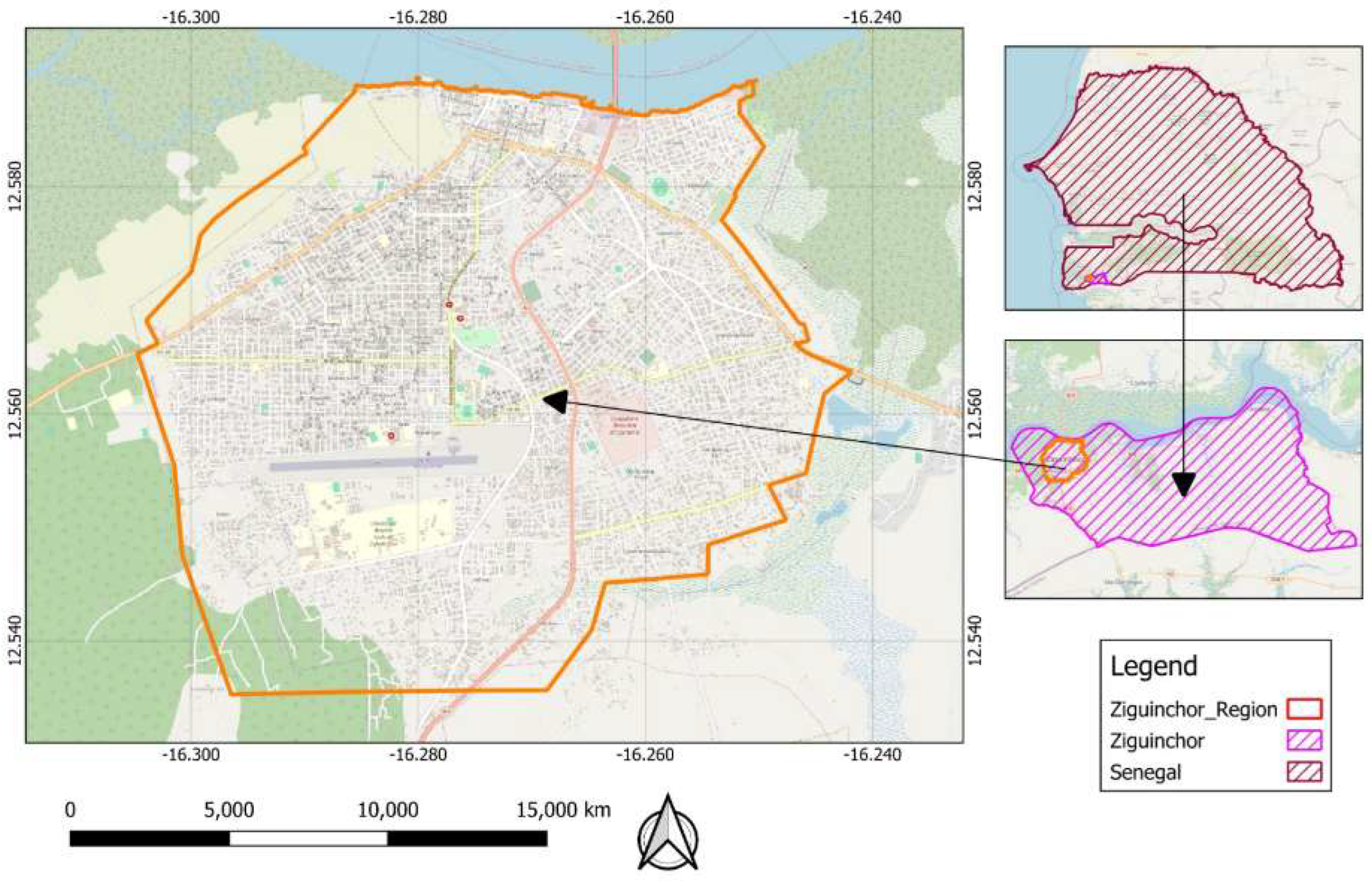
Figure 3.
CDAS–DII Quadrant Framework for Profiling Household Digital Inclusion.
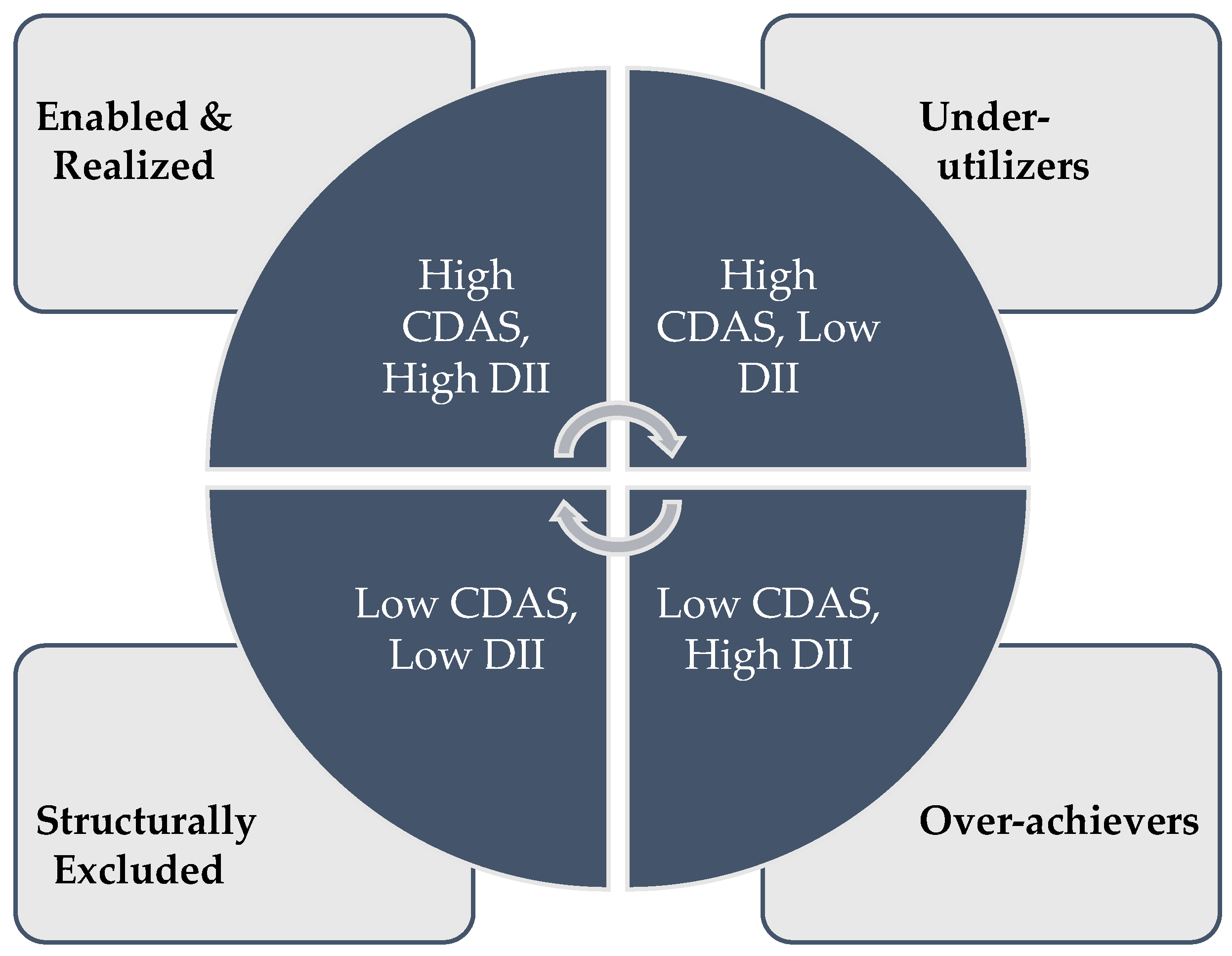
Figure 4.
Distribution of Digital Inclusion Index.
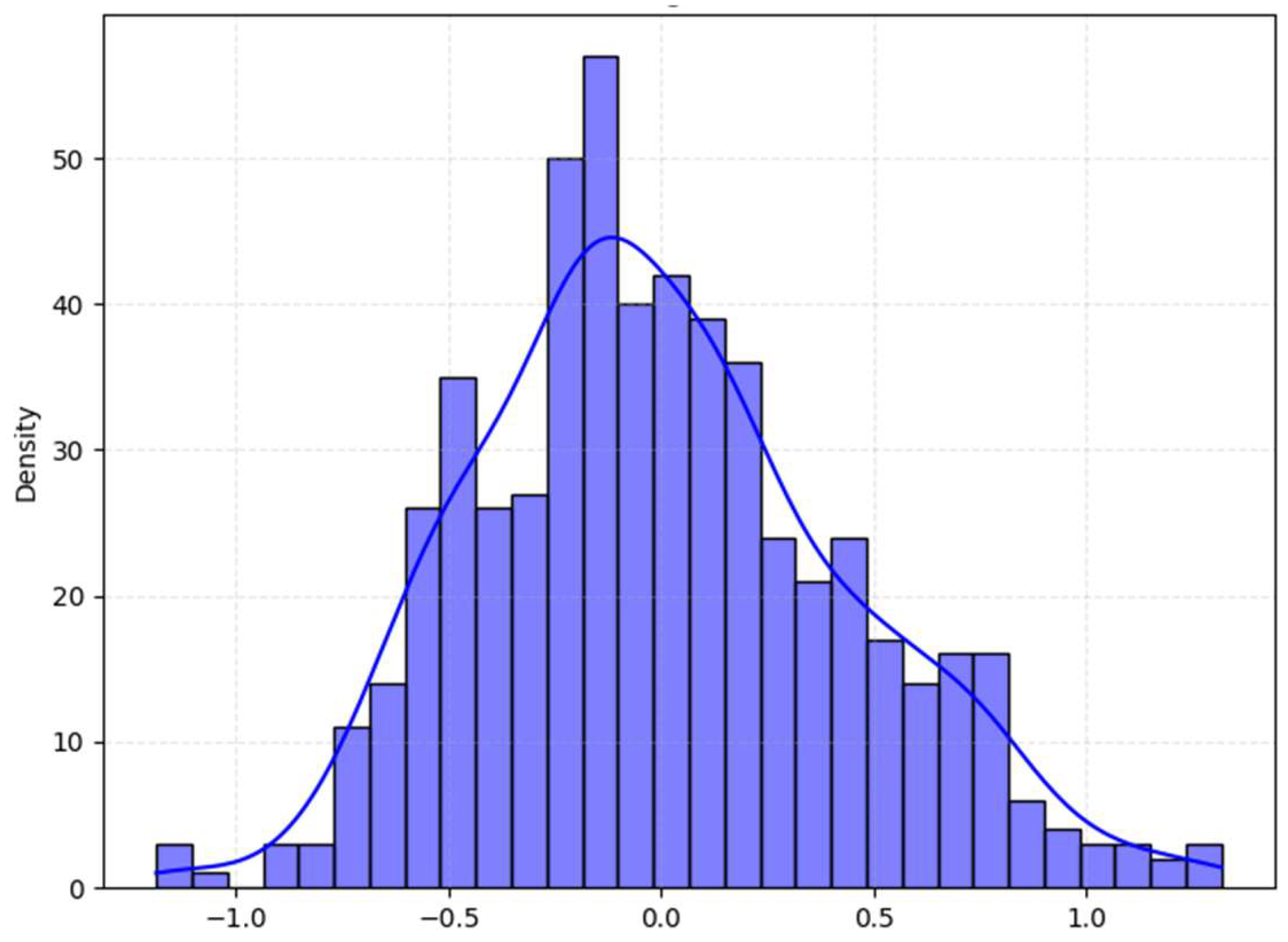
Figure 5.
Correlation Matrix of Digital Inclusion Indices.
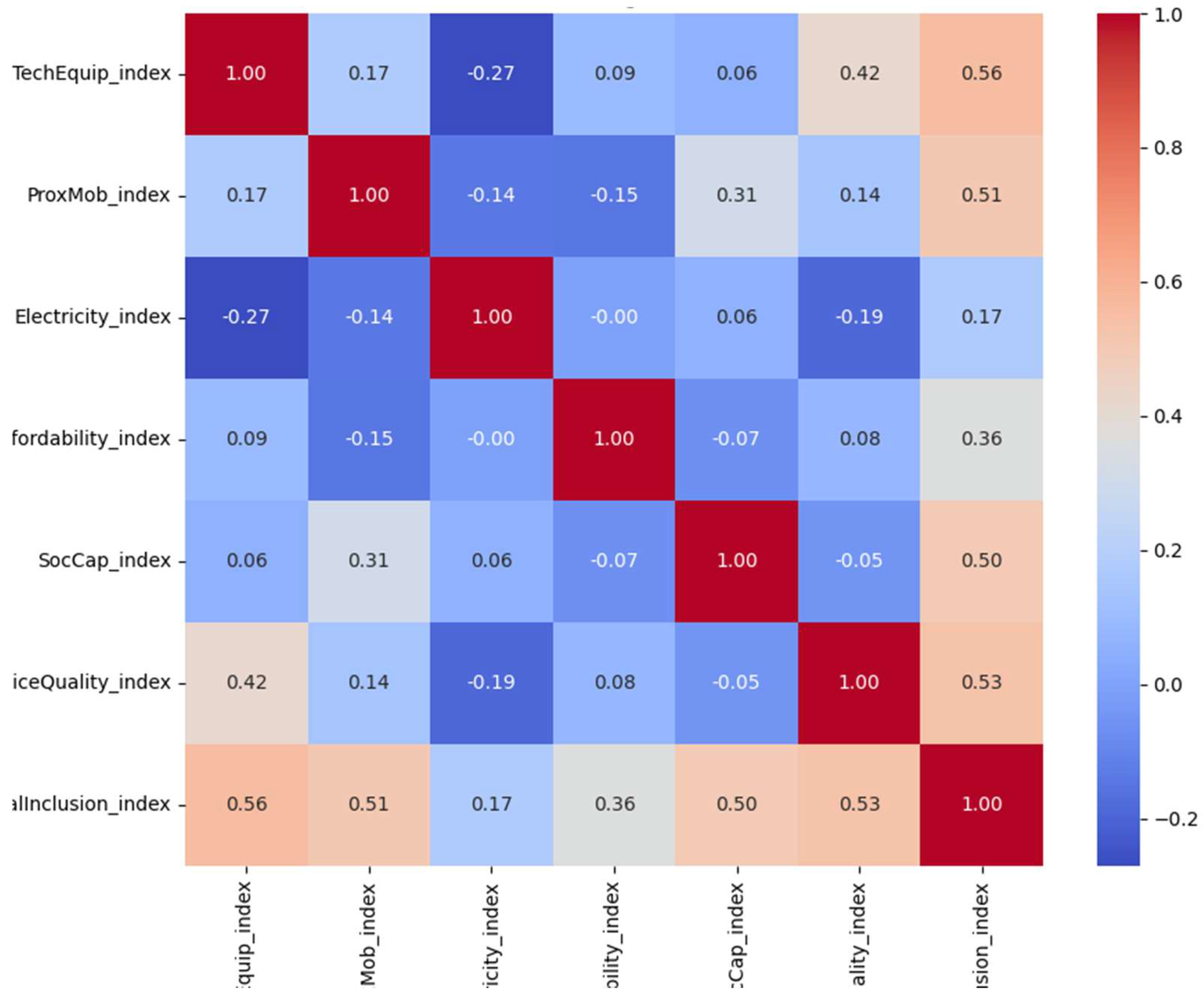
Figure 6.
Distance to Service Points Ziguinchor, Senegal.
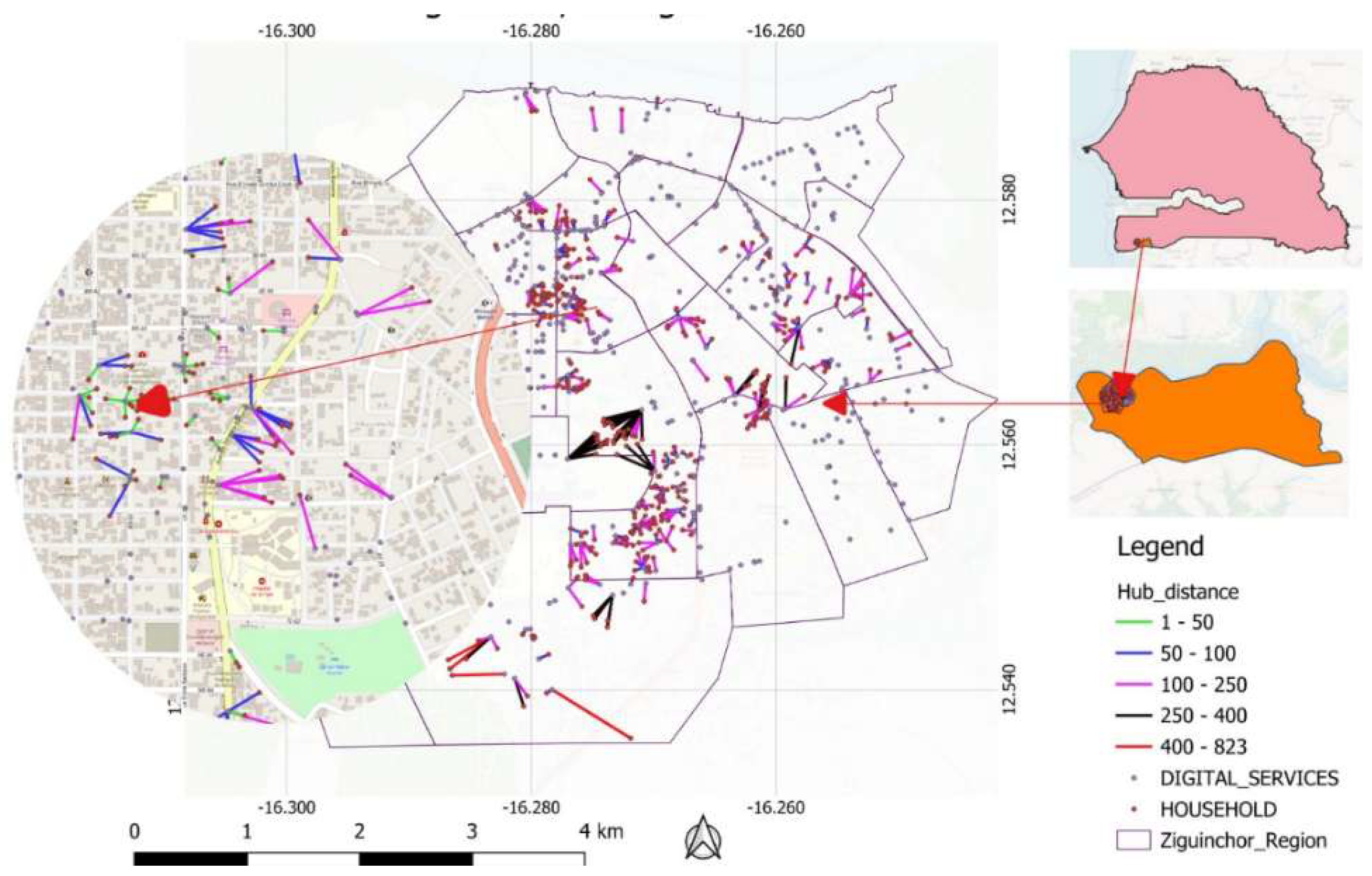
Figure 7.
Heatmap of digital service density in Ziguinchor, Senegal.
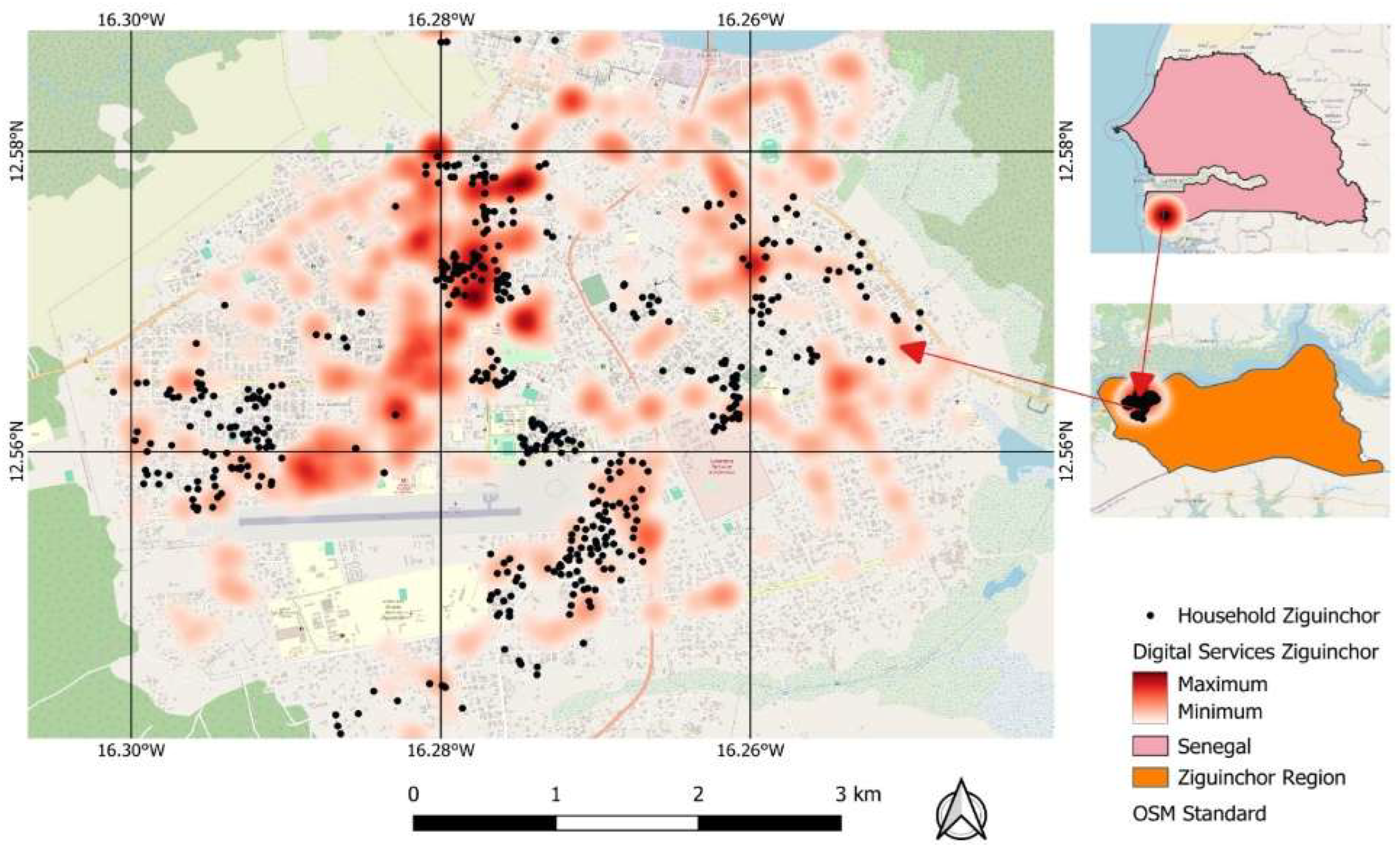
Figure 8.
Business density distribution in Ziguinchor, Senegal.
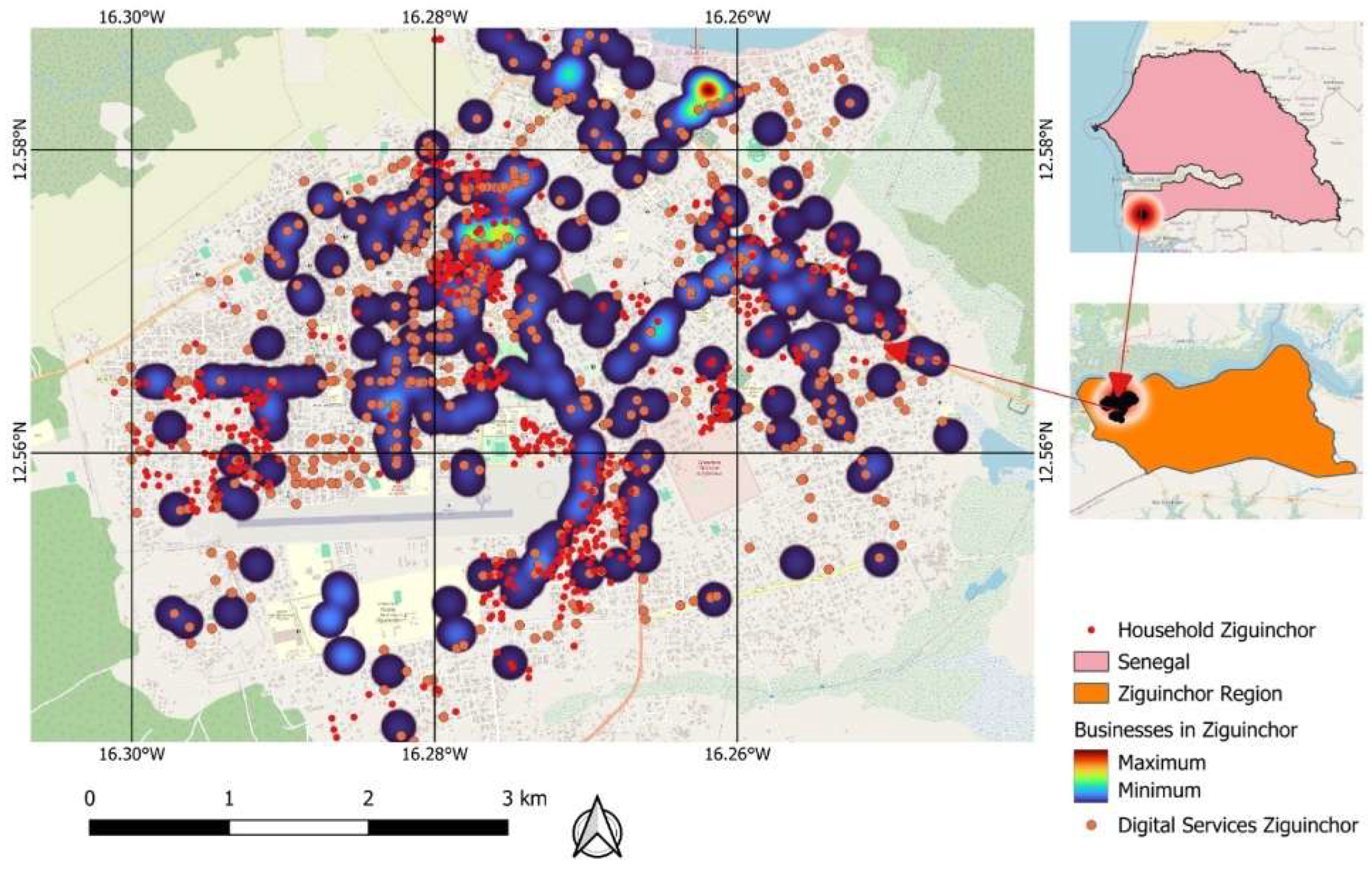
Figure 9.
Cluster Visualization (PCA Projection).
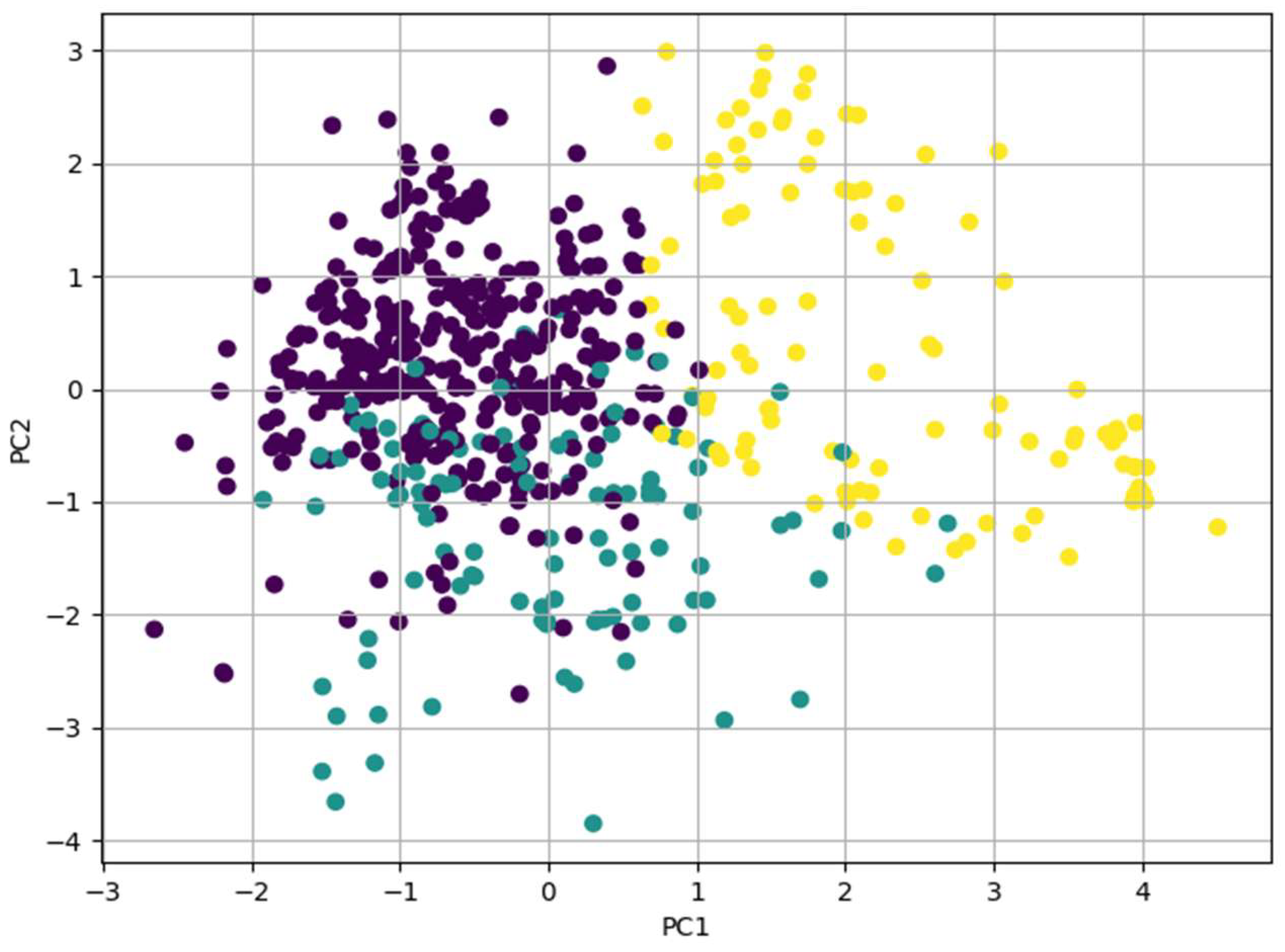
Figure 10.
Elbow Method for Optimal Cluster Selection.
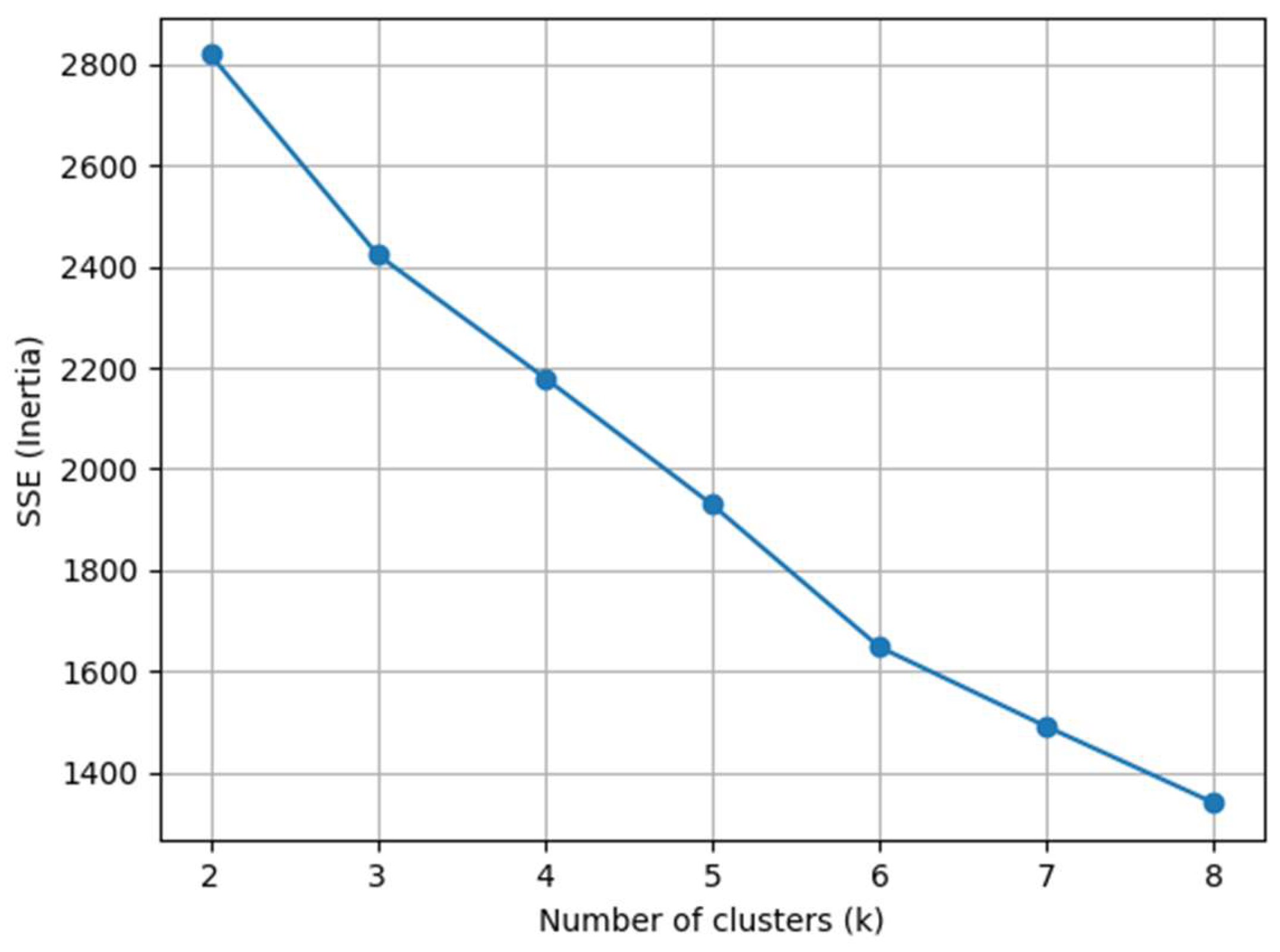
Figure 11.
DII vs CDAS scatter with linear fit and reported Pearson/Spearman ρ.
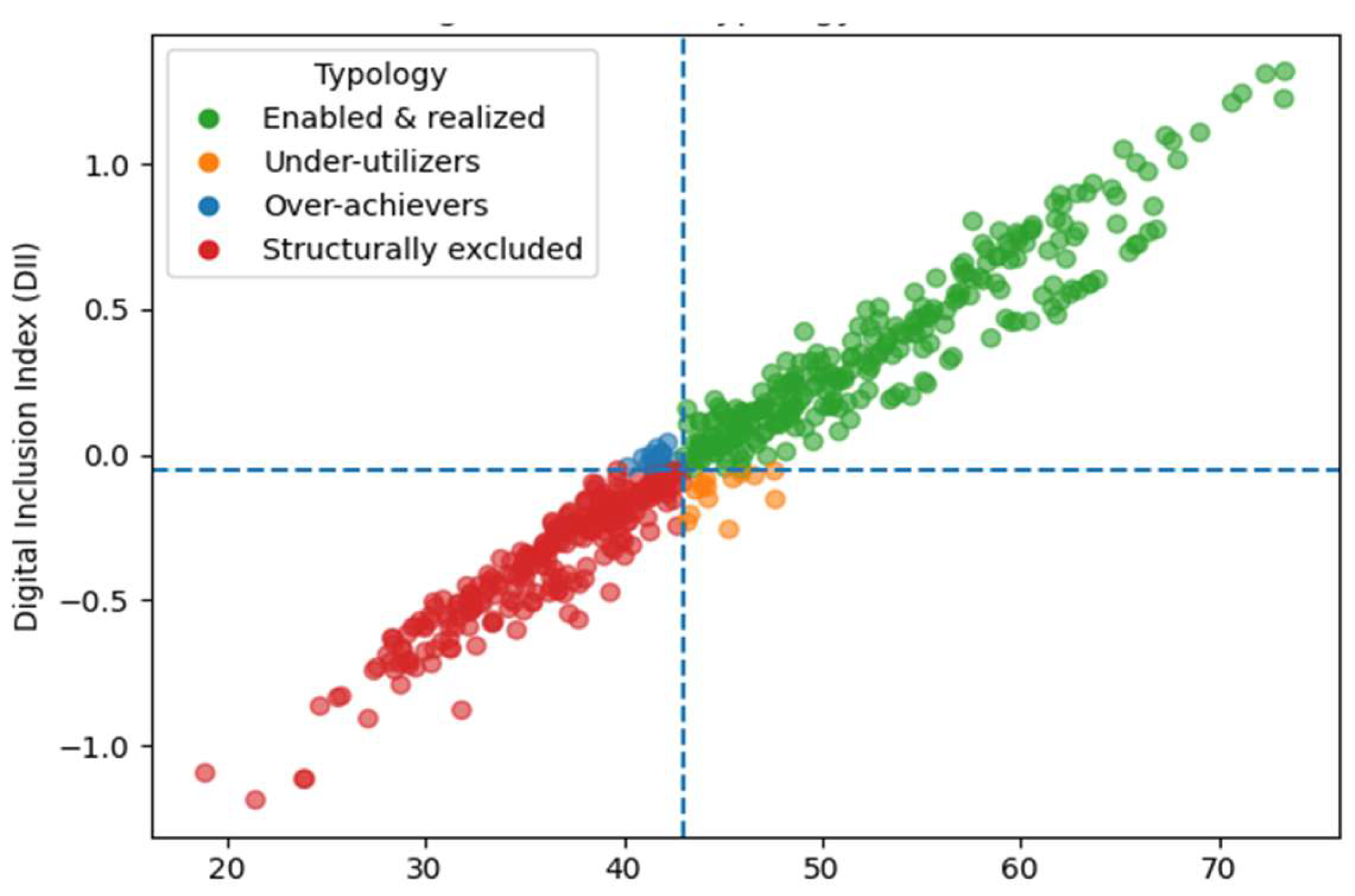
Figure 12.
Digital Inclusion and Access Quadrant Visualization.
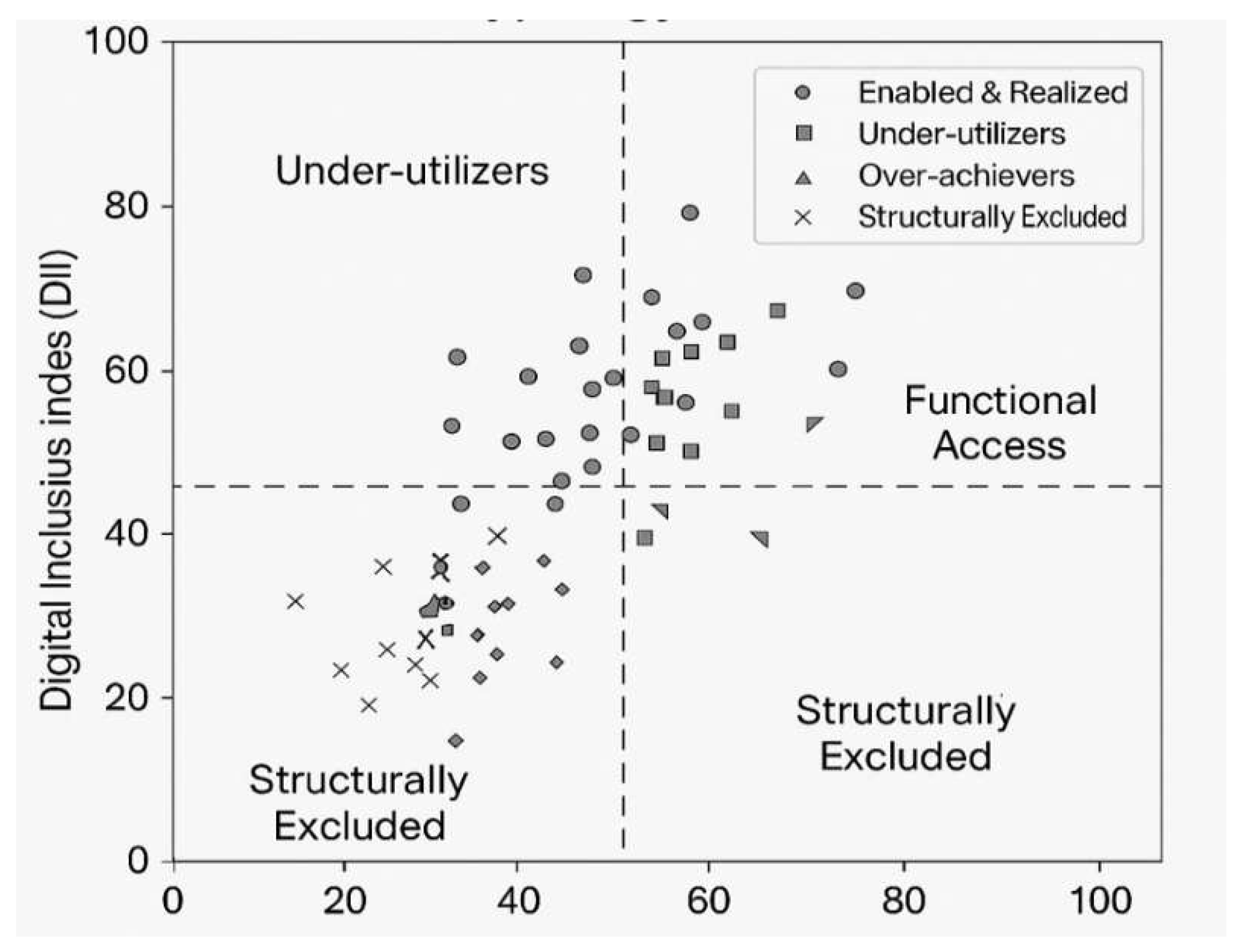
Figure 13.
Digital Inclusion by Quintile.
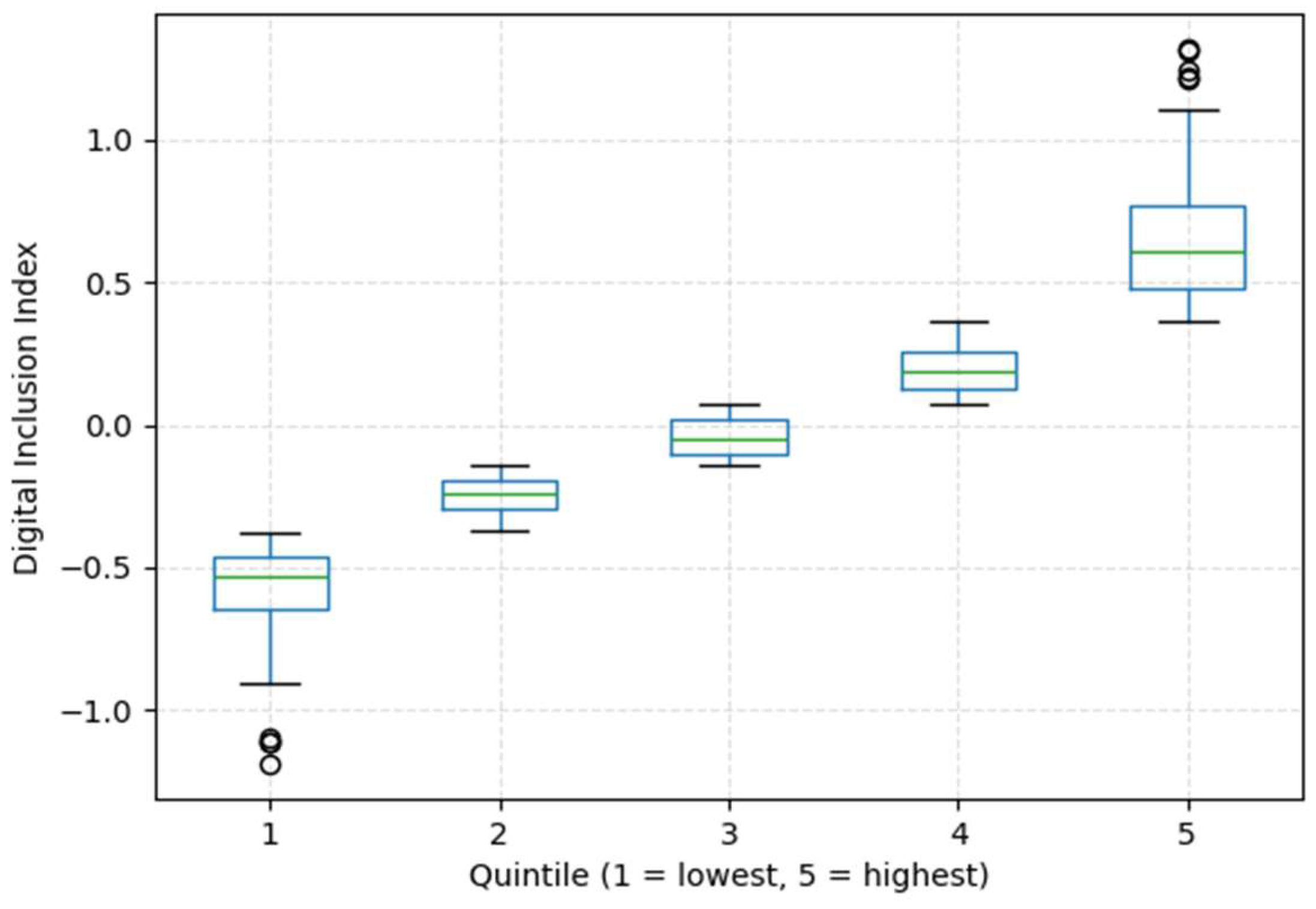
Figure 14.
Digital Inclusion Index by Gender.
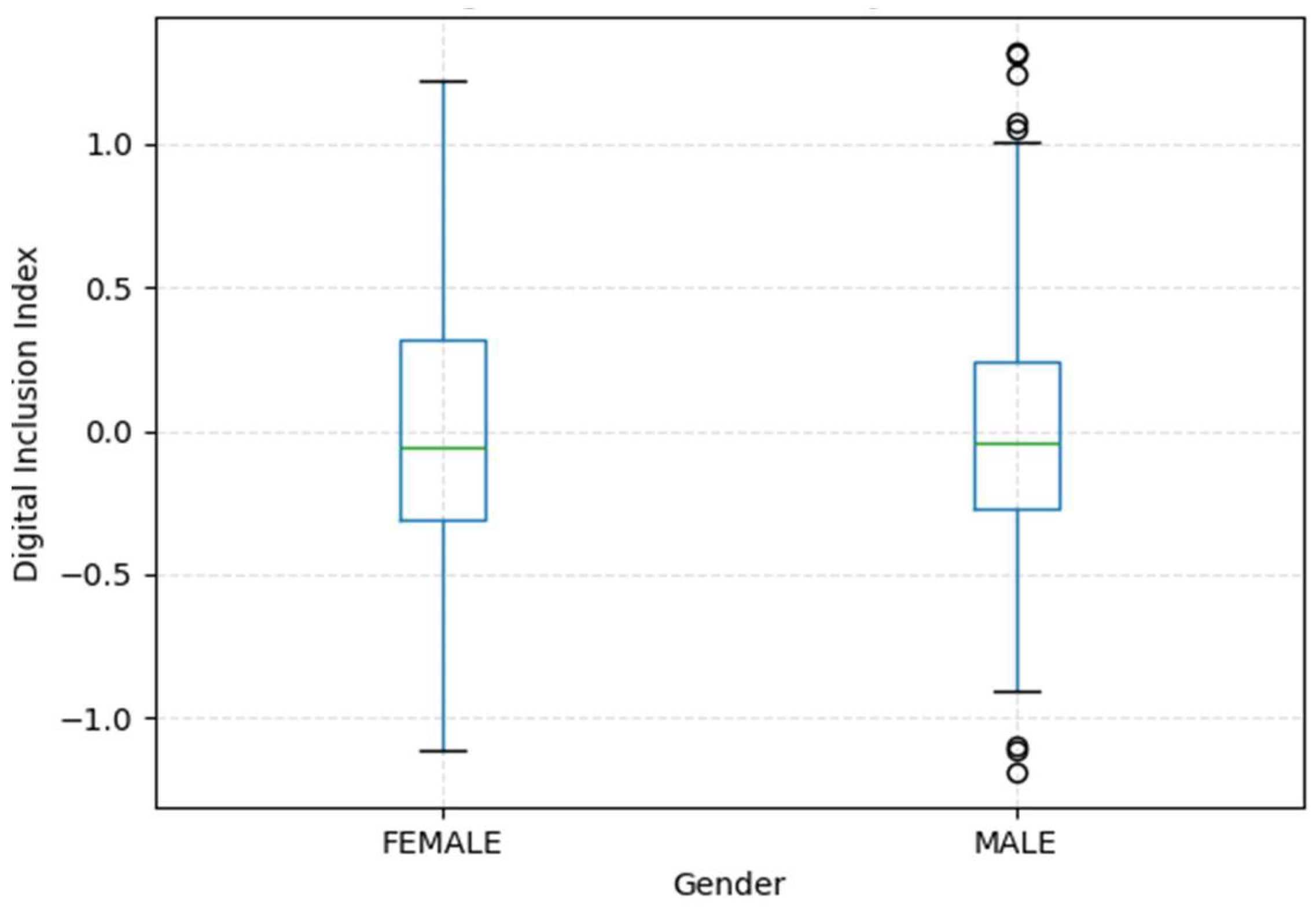
Figure 16.
Identifying Priority Groups via the Digital Inclusion Typology.
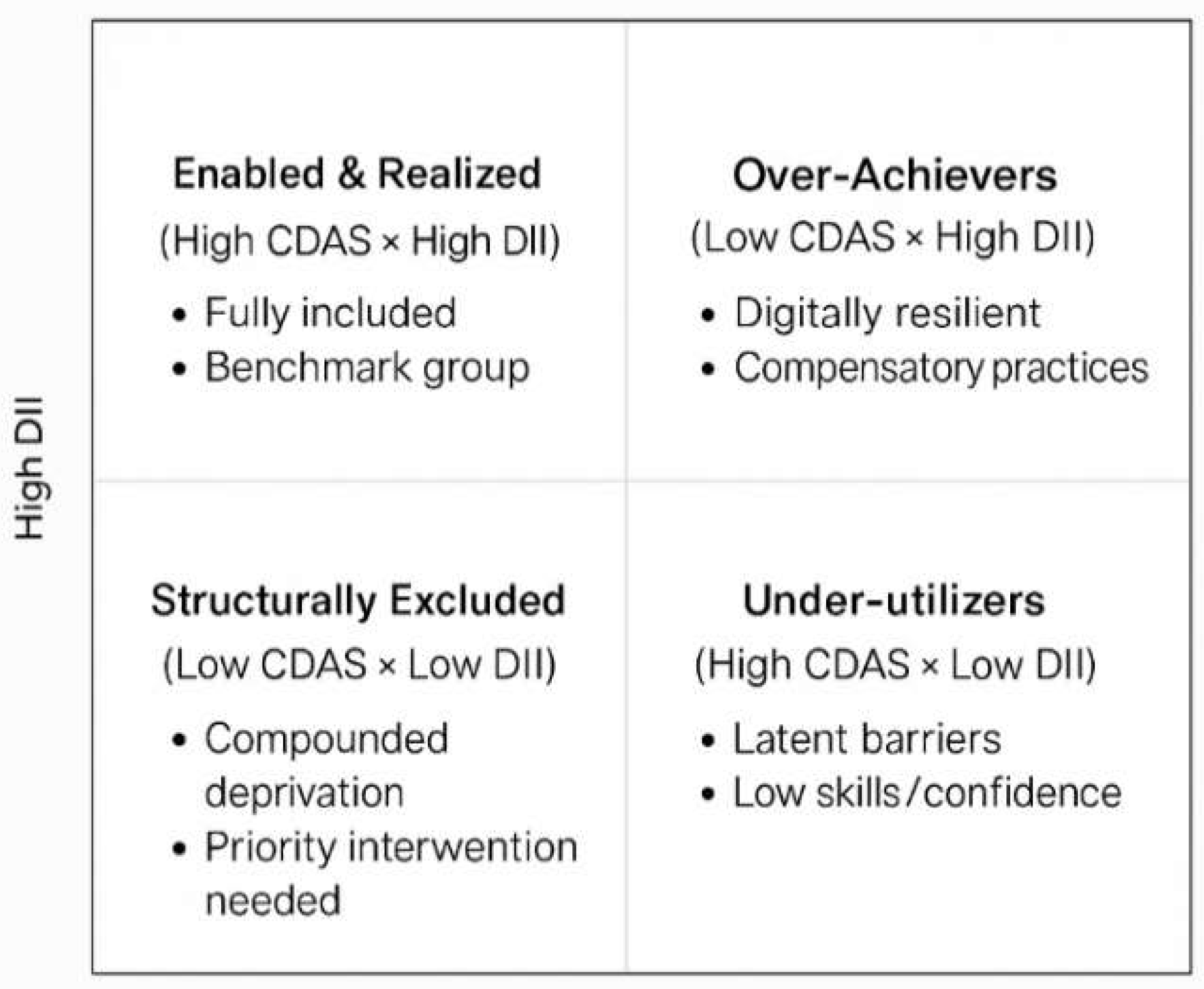
Table 2.
Key outcomes and controls by city.
| City | N | Internet_any (%) | Use_intensity (mean) | Smartphone (%) | HH size (mean) | Age (mean) | Electricity access (%) | Water access (%) |
| Ziguinchor | 566 | 28.6 | — | 100 | 8.77 | 21 | 42.9 | 91.9 |
Table 3.
Regression Predictors and Their Estimated Direction and Significance.
| Predictor | Direction | Significance |
|---|---|---|
| Technological Equipment | Positive | *** |
| Proximity–Mobility | Negative for distance | ** |
| Electricity Reliability | Positive | *** |
| Affordability | Positive | * |
| Service Quality | Positive | * |
| Social Capital | Positive | ** |
| Gender (Female=0) | Negative | ** |
| Age | Negative | ** |
Disclaimer/Publisher’s Note: The statements, opinions and data contained in all publications are solely those of the individual author(s) and contributor(s) and not of MDPI and/or the editor(s). MDPI and/or the editor(s) disclaim responsibility for any injury to people or property resulting from any ideas, methods, instructions or products referred to in the content. |
© 2026 by the authors. Licensee MDPI, Basel, Switzerland. This article is an open access article distributed under the terms and conditions of the Creative Commons Attribution (CC BY) license (http://creativecommons.org/licenses/by/4.0/).
Copyright: This open access article is published under a Creative Commons CC BY 4.0 license, which permit the free download, distribution, and reuse, provided that the author and preprint are cited in any reuse.