

Submitted:
02 April 2026
Posted:
02 April 2026
You are already at the latest version
Abstract
Glutamine is the most abundant amino acid in human plasma and tissues and plays essential roles in cellular metabolism, biosynthesis, and redox homeostasis. Beyond these canonical functions, glutamine availability and utilization have emerged as key regulators of multiple cellular stress responses, including the integrated stress response, endoplasmic reticulum stress, metabolic checkpoint signaling, and autophagy. During viral infection, host glutamine metabolism is frequently reprogrammed to meet the energetic and biosynthetic demands of viral replication, thereby inducing or reshaping glutamine-linked stress pathways. Increasing evidence indicates that these stress responses are not merely secondary consequences of infection but actively influence key stages of the viral life cycle, including viral entry, genome replication, protein synthesis, and host antiviral responses. In this review, we summarize current advances in understanding how glutamine metabolism regulates cellular stress responses in the context of both viral and non-viral infections, and how these pathways, in turn, modulate viral pathogenesis and host defense. We discuss the context-dependent roles of glutamine-linked stress signaling in either promoting viral replication or restricting infection, depending on viral species, host cell type, and metabolic conditions. Finally, we highlight emerging concepts and unresolved questions, including the potential of targeting glutamine metabolism and associated stress pathways as host-directed antiviral strategies. A deeper understanding of the interplay between glutamine metabolism, cellular stress responses, and viral infection may provide new insights into disease mechanisms and inform the development of novel therapeutic approaches.
Keywords:
glutamine metabolism
; integrated stress response (ISR)
; virus-host interactions
; cellular stress response
; ER stress
; autophagy
; oxidative stress
; metabolic stress
; viral replication
; viral entry
1. Introduction
Glutamine is the most abundant free amino acid in human plasma and tissues and plays central roles in cellular metabolism, biosynthesis, and redox homeostasis [1,2,3]. Traditionally classified as a non-essential amino acid, glutamine becomes conditionally essential under conditions of physiological stress, rapid cell proliferation, or nutrient limitation, reflecting its critical importance in maintaining cellular homeostasis [1,3]. As a versatile metabolic substrate, glutamine contributes carbon and nitrogen for nucleotide, amino acid, and lipid biosynthesis, while also supporting mitochondrial metabolism through anaplerotic replenishment of tricarboxylic acid (TCA) cycle intermediates [2,4]. In addition, glutamine-derived glutamate is a key precursor for glutathione (GSH) synthesis, thereby contributing to the maintenance of intracellular redox balance [5].
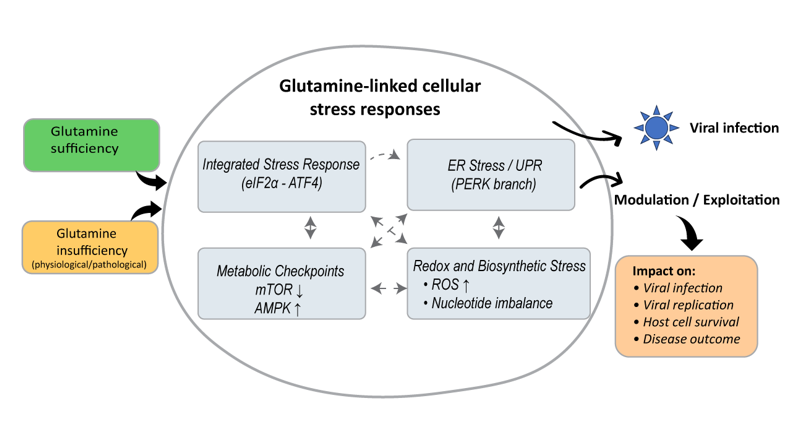
Beyond these canonical metabolic functions, accumulating evidence indicates that glutamine availability is tightly linked to the regulation of cellular stress responses. Fluctuations in glutamine levels can activate multiple stress signaling pathways, including the integrated stress response (ISR), endoplasmic reticulum (ER) stress and unfolded protein response (UPR), metabolic checkpoint signaling mediated by AMP-activated protein kinase (AMPK) and mechanistic target of rapamycin (mTOR), as well as autophagy [6,7,8,9]. These pathways collectively enable cells to adapt to nutrient deprivation, oxidative stress, and biosynthetic imbalance by modulating gene expression, protein synthesis, and metabolic reprogramming [7,10]. Importantly, these stress responses are highly interconnected and function as an integrated network that determines cellular fate under metabolic stress conditions.
Viral infections impose substantial metabolic demands on host cells, requiring efficient production of viral genomes, proteins, and membrane components. To support these processes, many viruses actively reprogram host cellular metabolism, including glutamine uptake and utilization, thereby reshaping intracellular metabolic fluxes [9,11,12]. Such metabolic reprogramming often resembles nutrient stress conditions and can lead to activation of glutamine-linked stress pathways. These stress responses, in turn, may either facilitate viral replication by promoting biosynthetic adaptation or restrict infection through activation of antiviral defense mechanisms [11,13,14,15]. For example, activation of the ISR can modulate host translational control, ER stress can influence protein folding capacity required for viral assembly, and autophagy can either degrade viral components or provide membrane platforms for replication complexes [6,16].
In addition to virus-driven metabolic reprogramming, emerging evidence suggests that pre-existing metabolic stress conditions, such as glutamine insufficiency, hypoxia, or nutrient limitation, can influence cellular susceptibility to viral infection. Under these conditions, stress-induced alterations in host cell physiology, including changes in receptor expression, membrane dynamics, and protein quality control systems, may create a cellular environment that is either permissive or restrictive to viral entry and replication, depending on the balance between adaptive stress responses and antiviral defense mechanisms [8,15,17,18,19]. These observations highlight a bidirectional relationship between glutamine metabolism and viral infection, in which metabolic state and stress signaling not only respond to infection but also actively shape infection outcomes.
Importantly, these stress responses are not merely passive consequences of infection but represent dynamic regulatory networks that can either restrict viral replication or be co-opted by viruses to facilitate distinct stages of their life cycle [9,13,16,20].
In this review, we provide a comprehensive overview of the mechanisms by which glutamine metabolism regulates cellular stress responses and how these pathways are engaged during viral and non-viral infections [9,12]. We further discuss the dual roles of glutamine-linked stress signaling in promoting or restricting viral replication, depending on the cellular and metabolic context. Finally, we highlight emerging concepts and unresolved questions, including the potential of targeting glutamine metabolism and associated stress pathways as host-directed therapeutic strategies.
2. Glutamine Biology as a Regulator of Cellular Stress
2.1. Glutamine Metabolism and Homeostasis
Glutamine homeostasis is tightly regulated through coordinated control of cellular uptake, intracellular synthesis, and metabolic utilization [3,21]. Circulating glutamine is transported into cells primarily via sodium-dependent neutral amino acid transporters, including SLC1A5 (also known as ASCT2) and members of the SLC38 family [21,22]. These transport systems are dynamically regulated according to cellular metabolic demands and are frequently upregulated in rapidly proliferating or metabolically active cells.
Intracellularly, glutamine can be synthesized de novo from glutamate and ammonia by glutamine synthetase (GS), whereas its catabolism is initiated by glutaminase (GLS), which converts glutamine to glutamate [23]. Glutamate is subsequently metabolized to α-ketoglutarate via glutamate dehydrogenase (GLUD1) or aminotransferases, thereby feeding into the TCA cycle [24]. This process, commonly referred to as glutaminolysis, serves as a major anaplerotic pathway that replenishes TCA cycle intermediates and sustains mitochondrial bioenergetics.
Beyond its role in energy production, glutamine contributes to multiple biosynthetic pathways. It provides nitrogen for the synthesis of nucleotides and non-essential amino acids and supports hexosamine biosynthesis, which is important for protein glycosylation and cellular signaling [25]. In addition, glutamine-derived glutamate is a critical precursor for GSH, the major intracellular antioxidant, thereby linking glutamine metabolism to redox homeostasis [5].
The balance between glutamine uptake, synthesis, and utilization is highly sensitive to cellular and environmental conditions. Under physiological states such as tissue growth, differentiation, or limited nutrient supply, glutamine availability may become insufficient, leading to metabolic stress. For example, cells in hypoxic or nutrient-restricted microenvironments, including early developmental tissues, often experience fluctuations in glutamine supply, necessitating adaptive metabolic responses [26]. Thus, glutamine homeostasis is not static but dynamically regulated to match cellular demands and environmental constraints.
2.2. Glutamine Sensing and Activation of Stress Pathways
Cells possess sophisticated mechanisms to sense fluctuations in glutamine availability and translate these changes into adaptive signaling responses. One of the primary sensors of amino acid insufficiency is general control nonderepressible 2 (GCN2), a kinase activated by the accumulation of uncharged transfer RNAs under conditions of amino acid deprivation [8,27]. Activation of GCN2 leads to phosphorylation of the eukaryotic initiation factor 2α (eIF2α), resulting in global attenuation of protein translation while selectively promoting the translation of stress-responsive genes, including activating transcription factor 4 (ATF4). This signaling axis constitutes a central component of the ISR, enabling cells to conserve resources and restore metabolic balance.
In parallel, glutamine availability influences ER homeostasis, and nutrient imbalance can engage UPRsignaling pathways that coordinate proteostasis and metabolic adaptation [7]. Insufficient glutamine can impair protein folding capacity by altering redox conditions and limiting biosynthetic precursors required for proper protein maturation. These perturbations activate the UPR, particularly through the protein kinase RNA-like ER kinase (PERK) pathway, which also converges on eIF2α phosphorylation [7]. This convergence highlights a key point of integration between nutrient sensing and proteostasis.
Glutamine levels additionally regulate metabolic checkpoint signaling mediated by mechanistic target of rapamycin complex 1 (mTORC1) and AMP-activated protein kinase (AMPK) [10,28,29]. Adequate glutamine availability promotes mTORC1 activation, supporting anabolic processes such as protein and lipid synthesis. Conversely, glutamine deprivation suppresses mTORC1 activity and activates AMPK through energy stress signaling, thereby shifting cellular metabolism toward catabolic and energy-conserving pathways [10,28].
Collectively, these sensing mechanisms allow cells to rapidly detect and respond to glutamine fluctuations, coordinating metabolic adaptation with stress signaling. Importantly, these pathways are not independent but form an interconnected network that integrates nutrient availability, energy status, and protein homeostasis.
2.3. Redox and Biosynthetic Stress Induced by Glutamine Imbalance
Disruption of glutamine homeostasis can lead to profound metabolic and redox disturbances. Because glutamine is a major precursor for GSH synthesis, its depletion reduces intracellular GSH levels and compromises the cell’s antioxidant capacity, resulting in the accumulation of reactive oxygen species (ROS) [5,30]. Elevated ROS can damage proteins, lipids, and nucleic acids, thereby exacerbating cellular stress and activating stress-responsive signaling pathways.
In addition to redox imbalance, glutamine deficiency impairs biosynthetic processes. Reduced availability of glutamine-derived nitrogen limits nucleotide synthesis, affecting DNA replication and RNA transcription. Similarly, decreased production of TCA cycle intermediates compromises lipid biosynthesis and other anabolic pathways, leading to a state of biosynthetic insufficiency [2,25]. These combined effects create a metabolic environment characterized by energy limitation, oxidative stress, and impaired macromolecule synthesis.
Importantly, these stress conditions are not merely detrimental but also serve as signals that activate adaptive pathways, including the ISR, UPR, and autophagy [7,8,31]. Through these mechanisms, cells attempt to restore homeostasis by reprogramming metabolism, reducing biosynthetic demand, and enhancing recycling of intracellular components. However, prolonged or severe glutamine deficiency may overwhelm these adaptive responses, resulting in cellular dysfunction or death.
A schematic overview of glutamine metabolism and glutamine-linked cellular stress responses is presented in Figure 1.
The metabolic and redox perturbations induced by glutamine imbalance act as upstream signals that activate a coordinated network of cellular stress pathways. In the following section, we examine in detail how these pathways, including the integrated stress response, ER stress signaling, metabolic checkpoint regulation, and autophagy, are mechanistically engaged and functionally integrated under conditions of glutamine limitation.
3. Glutamine-Linked Cellular Stress Pathways
3.1. Integrated Stress Response
The ISR is a central adaptive signaling pathway that enables cells to respond to nutrient deprivation and other stress conditions [8,27,32,33,34,35]. Glutamine insufficiency represents a potent trigger of the ISR, primarily through activation of the kinase GCN2, which senses amino acid deficiency via accumulation of uncharged transfer RNAs [8,36]. Upon activation, GCN2 phosphorylates the eIF2α, resulting in global attenuation of cap-dependent protein translation while selectively promoting the translation of stress-responsive mRNAs, including the ATF4 [8,27,37].
ATF4 functions as a master regulator of adaptive gene expression, inducing pathways involved in amino acid transport, redox balance, metabolic reprogramming, and stress-adaptive autophagy [27,31,37,38,39]. In the context of glutamine limitation, ATF4-dependent transcription promotes restoration of amino acid homeostasis while simultaneously reducing biosynthetic demand [39,40]. In addition, ISR activation is closely linked to autophagy induction, providing an alternative source of intracellular nutrients through lysosomal degradation of cellular components [31,37].
Importantly, ISR signaling does not operate in isolation but interacts with other stress pathways, including ER stress and metabolic checkpoint signaling. Persistent or excessive ISR activation, however, may lead to apoptotic signaling through downstream effectors such as CHOP, highlighting the dual role of ISR in cell survival, cell death, and virus-host translational control [8,14,27].
3.2. Endoplasmic Reticulum Stress and the Unfolded Protein Response
The ER plays a critical role in protein folding and maturation, processes that are highly sensitive to cellular metabolic status and are tightly coordinated by the UPR [7]. Glutamine deprivation can disrupt ER homeostasis by limiting the availability of biosynthetic precursors and altering intracellular redox balance, thereby promoting the accumulation of misfolded proteins [7].
This condition activates the UPR, a coordinated signaling network mediated by the three principal ER stress sensors PERK, IRE1, and ATF6 [7,41,42]. Among these, PERK is particularly relevant in the context of glutamine-linked stress, as it converges on eIF2α phosphorylation, thereby intersecting with ISR signaling. This convergence integrates nutrient sensing with proteostasis control.
Activation of the UPR leads to transcriptional and translational programs that enhance protein folding capacity, reduce protein synthesis, and promote degradation of misfolded proteins. In addition, ER stress can stimulate autophagy as a mechanism to alleviate proteotoxic stress [7,43]. However, prolonged or unresolved ER stress may trigger apoptotic pathways, contributing to cellular dysfunction.
The interplay between glutamine metabolism and ER stress highlights the importance of metabolic inputs in maintaining proteostasis, particularly under conditions of nutrient limitation.
3.3. Metabolic Stress Signaling: AMPK and mTOR
Cellular energy status is tightly monitored by metabolic checkpoint pathways, primarily mediated by AMP-activated protein kinase (AMPK) and mechanistic target of rapamycin (mTOR). Glutamine deprivation can impair mitochondrial metabolism and reduce ATP production, leading to activation of AMPK [10,28]. Activated AMPK functions as an energy sensor that promotes catabolic pathways while inhibiting anabolic processes, thereby restoring energy balance.
One of the key downstream effects of AMPK activation is inhibition of mTOR complex 1 (mTORC1), a central regulator of cell growth and biosynthesis. mTORC1 activity is highly sensitive to amino acid availability, including glutamine, which contributes to its activation through multiple mechanisms, including regulation of intracellular amino acid pools and signaling through Rag GTPases [28,29,35]. Under glutamine-deficient conditions, suppression of mTORC1 leads to decreased protein synthesis and enhanced autophagy.
The AMPK–mTOR axis therefore serves as a critical link between glutamine metabolism and cellular adaptation, coordinating energy conservation, biosynthetic regulation, and stress responses.
3.4. Autophagy as an Adaptive Response
Autophagy is a conserved cellular process that degrades and recycles intracellular components to maintain metabolic homeostasis [6,44,45]. It is strongly induced under conditions of nutrient deprivation, including glutamine insufficiency [6]. Activation of autophagy is mediated by multiple upstream signals, including AMPK activation and mTORC1 inhibition, as well as contributions from ISR and ER stress pathways [42,43,44,45].
Through the formation of double-membrane autophagosomes, cellular macromolecules and organelles are delivered to lysosomes for degradation, releasing amino acids, lipids, and other metabolites that can be reused for energy production and biosynthesis [6]. In the context of glutamine limitation, autophagy provides an important compensatory mechanism to replenish intracellular nutrient pools.
Beyond its metabolic role, autophagy also participates in cellular quality control by removing damaged organelles, including mitochondria, thereby limiting oxidative stress. However, the functional outcome of autophagy depends on context, as excessive or dysregulated autophagy may contribute to cell death.
3.5. Integration of Stress Networks
Although individual stress pathways are often described separately, they function as an interconnected network that collectively determines cellular responses to metabolic perturbations. Glutamine deprivation simultaneously influences multiple signaling axes, including ISR, ER stress, AMPK–mTOR signaling, redox regulation, and autophagy, creating a coordinated adaptive response.
These pathways are highly integrated at both molecular and functional levels. For example, phosphorylation of eIF2α represents a convergence point between ISR and ER stress signaling, while AMPK activation promotes autophagy and suppresses mTOR-driven anabolic processes. In parallel, oxidative stress can exacerbate ER stress and further activate stress-responsive transcriptional programs [7,8,10].
This networked architecture allows cells to fine-tune their responses to fluctuating metabolic conditions. However, it also creates opportunities for dysregulation, particularly under prolonged or severe stress, where adaptive responses may transition to maladaptive outcomes such as apoptosis or senescence.
Understanding the integration of these pathways is essential for interpreting how glutamine-linked stress responses influence cellular physiology and disease processes, including viral infection.
The glutamine-linked stress pathways described above are frequently engaged during viral infection, either as a consequence of virus-induced metabolic reprogramming or as pre-existing cellular states that influence infection outcomes. In the following section, we examine how viruses exploit and modulate these stress networks to facilitate their replication and persistence.
4. Viral Exploitation of Glutamine-Linked Stress Networks
Viruses are obligate intracellular parasites that depend extensively on host cellular metabolism to support the synthesis of viral genomes, proteins, and membrane structures. Because they lack autonomous metabolic machinery, viruses actively reprogram host metabolic pathways to generate a favorable intracellular environment for replication. Among host nutrients, glutamine has emerged as a critical substrate that supports viral infection through its roles in bioenergetics, biosynthesis, and redox homeostasis [11,12].
Viral infection is frequently accompanied by extensive metabolic remodeling that resembles cellular nutrient stress. The high biosynthetic demand required for viral genome replication, protein synthesis, and membrane biogenesis imposes substantial pressure on host metabolic networks. In response, infected cells often increase glutamine uptake and glutaminolysis, thereby enhancing the production of α-ketoglutarate to sustain TCA cycle activity and anabolic processes [46,47,48]. These metabolic changes not only support viral replication but also perturb cellular homeostasis, leading to activation of glutamine-linked stress pathways, including ISR, ER stress signaling, metabolic checkpoint regulation, and autophagy.
Importantly, these stress responses are not merely passive consequences of infection but represent dynamic regulatory networks that can either restrict viral replication or be co-opted by viruses to facilitate different stages of their life cycle [13,14,16]. In addition, the pre-existing metabolic state of the host cell—including conditions of glutamine insufficiency, hypoxia, or nutrient limitation—may further influence cellular susceptibility to infection and the outcome of virus–host interactions [12,13].
In this section, we first examine the dependence of viral replication on host glutamine metabolism (Section 4.1), followed by a detailed discussion of how viruses interact with specific glutamine-linked stress pathways (Section 4.2, Section 4.3, Section 4.4 and Section 4.5).
4.1. Viral Dependence on Host Glutamine Metabolism
Many viruses exhibit a pronounced dependence on host glutamine metabolism to sustain efficient replication. Glutamine contributes to viral propagation through multiple interconnected mechanisms, including fueling mitochondrial metabolism, supporting nucleotide biosynthesis, and maintaining intracellular redox balance [12,20,46].
A central role of glutamine during viral infection is its function as an anaplerotic substrate. Through glutaminolysis, glutamine is converted to glutamate and subsequently to α-ketoglutarate, replenishing TCA cycle intermediates that are continuously consumed during biosynthetic reactions. This replenishment supports ATP production and provides metabolic precursors required for lipid synthesis and nucleotide generation, both of which are essential for the formation of viral replication complexes and genome synthesis [20,47]. In rapidly replicating RNA viruses, which require efficient and timely production of viral components, this glutamine-dependent metabolic support is particularly critical.
Consistent with this, multiple viruses actively enhance glutamine uptake and utilization. For example, infection with Human cytomegalovirus (HCMV) has been shown to increase glutamine consumption to sustain TCA cycle activity and biosynthetic flux, and inhibition of glutamine metabolism markedly impairs viral replication [47]. Similarly, dengue virus and influenza A virus induce metabolic reprogramming that includes increased glutamine utilization, thereby supporting anabolic pathways required for replication [46,49]. In these contexts, upregulation of glutamine transporters and glutaminase activity further reinforces glutaminolysis and metabolic adaptation.
Beyond its role in bioenergetics and biosynthesis, glutamine metabolism also contributes to maintaining cellular redox homeostasis through the generation of GSH. Viral infection is often associated with increased oxidative stress due to mitochondrial dysfunction and heightened metabolic activity. Adequate glutamine availability supports GSH synthesis, thereby buffering ROS and allowing infected cells to tolerate the metabolic burden imposed by viral replication [5,30]. Conversely, disruption of glutamine metabolism can exacerbate oxidative stress, which may either impair viral replication or trigger stress responses that viruses can exploit.
Collectively, these observations indicate that glutamine metabolism is frequently co-opted by viruses to meet the energetic and biosynthetic demands of infection while maintaining cellular conditions compatible with viral replication. At the same time, perturbations in glutamine availability contribute to the activation of cellular stress pathways described in Section 3, thereby linking metabolic reprogramming to stress signaling. The following sections examine how viruses interact more directly with these glutamine-associated stress pathways and how such interactions influence viral life cycles.
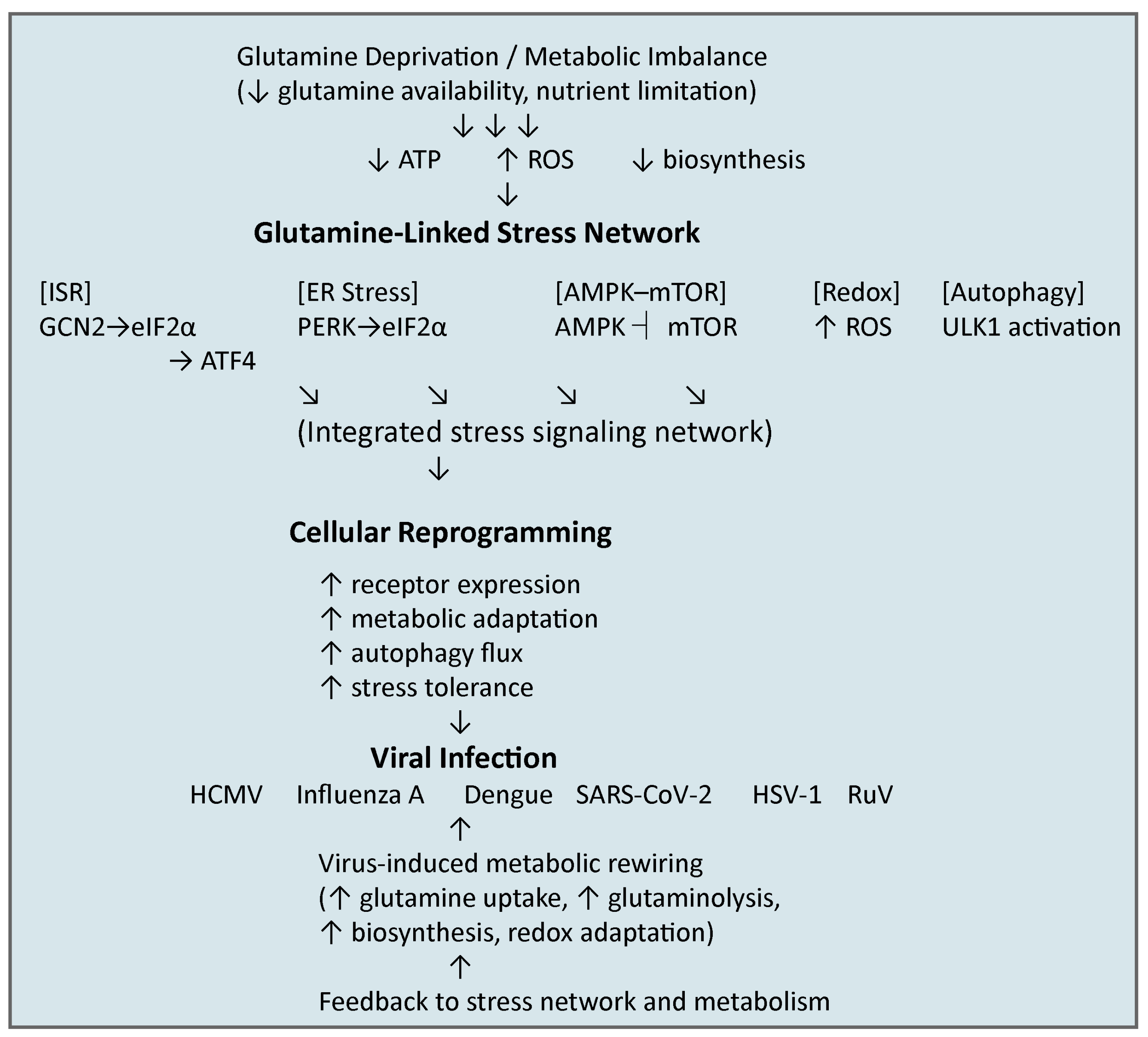
A schematic overview of glutamine deprivation–induced cellular stress networks and their roles in viral infection is presented in Figure 2.
4.2. Integrated Stress Response in Viral Infection
The ISR is a central signaling pathway that links nutrient availability to translational control and cellular adaptation. During viral infection, ISR activation is frequently observed as a consequence of metabolic stress, accumulation of viral RNA, and perturbations in protein homeostasis [8,14,27,33,50]. Glutamine deprivation represents an important upstream trigger of ISR activation, primarily through activation of GCN2, which senses amino acid insufficiency and promotes phosphorylation of eIF2α [8,27].
Phosphorylation of eIF2α leads to global attenuation of cap-dependent protein translation, thereby limiting cellular energy expenditure and reducing biosynthetic demand. At the same time, selective translation of stress-responsive transcripts, including ATF4, is enhanced, promoting adaptive gene expression programs that regulate amino acid metabolism, redox balance, and cellular survival [27,40]. In the context of viral infection, this translational reprogramming has complex and context-dependent consequences.
On one hand, ISR activation can restrict viral replication by suppressing host translational machinery required for viral protein synthesis, while also modulating antiviral signaling pathways [14,50,51]. Many viruses rely heavily on cap-dependent translation, and inhibition of this process can impair viral propagation. In addition, ISR-associated transcriptional programs may enhance cellular stress tolerance and antiviral defenses [14,51]. On the other hand, numerous viruses have evolved strategies to evade, modulate, or exploit ISR signaling, including maintaining translation of viral mRNAs or counteracting eIF2α-mediated translational suppression [14,50].
Glutamine-linked metabolic stress further modulates ISR dynamics during infection. Reduced glutamine availability can amplify ISR activation, thereby altering the balance between host defense and viral replication. In certain contexts, enhanced ISR signaling may favor viral replication by promoting cellular adaptation and survival, enabling sustained viral production. Conversely, excessive or prolonged ISR activation may lead to apoptotic signaling, limiting viral spread.
Notably, ISR signaling is closely interconnected with other stress pathways, including ER stress and autophagy, which are also engaged during viral infection. This integration allows viruses to fine-tune host cellular responses to optimize replication conditions. The outcome of ISR activation therefore depends on multiple factors, including viral species, host cell type, and the metabolic state of the infected cell.
Emerging evidence suggests that metabolic conditions characterized by glutamine insufficiency may influence viral susceptibility through ISR-mediated mechanisms. For instance, stress-induced modulation of translational control and cellular proteostasis may alter the efficiency of viral entry, replication, or protein synthesis. In this context, preliminary observations indicate that glutamine deprivation may enhance viral binding and infection in specific cell types, including trophoblast-derived cells (Pham et al., manuscript in preparation), supporting a potential role for metabolic stress in shaping host–virus interactions.
Collectively, these findings highlight ISR as a key interface between glutamine metabolism and viral infection. By integrating nutrient sensing with translational control, ISR plays a dual role in antiviral defense and viral exploitation, making it a critical determinant of infection outcomes.
4.3. Endoplasmic Reticulum Stress in Viral Infection
ER stress is a common feature of viral infection, reflecting the substantial burden placed on host protein folding and processing machinery during viral protein synthesis [7,14,41,52]. Many viruses rely on the ER for synthesis, folding, and post-translational modification of structural and non-structural proteins, leading to perturbations in ER homeostasis and activation of the UPR [7,14,41].
The UPR is mediated by three principal signaling branches, PERK, IRE1, and ATF6, which collectively function to restore ER homeostasis by attenuating protein synthesis, enhancing protein folding capacity, and promoting degradation of misfolded proteins. Among these, the PERK pathway is particularly relevant in the context of glutamine-linked stress, as it converges with ISR signaling through phosphorylation of eIF2α, thereby integrating nutrient sensing with proteostasis control [7,41]. This convergence enables coordinated regulation of translational attenuation and adaptive gene expression during viral infection.
Glutamine metabolism plays an important role in maintaining ER function. Adequate glutamine availability supports biosynthetic processes required for protein synthesis and contributes to redox balance through GSH production. Under conditions of glutamine deprivation, reduced biosynthetic capacity and impaired redox homeostasis can disrupt protein folding, leading to accumulation of unfolded or misfolded proteins and activation of ER stress signaling. Increased ROS further exacerbate ER stress, reinforcing the link between glutamine metabolism and proteostasis.
During viral infection, ER stress exerts both antiviral and proviral effects. Activation of the UPR can restrict viral replication by limiting protein synthesis and promoting degradation of viral proteins. However, many viruses have evolved mechanisms to selectively modulate UPR signaling to enhance protein folding capacity, lipid biosynthesis, and membrane remodeling required for replication [41,53,54,55,56,57,58]. In addition, modulation of PERK–eIF2α signaling may allow viruses to balance host translational suppression with continued synthesis of viral proteins.
ER stress is also closely interconnected with other glutamine-linked stress pathways. It can promote autophagy as a mechanism to alleviate proteotoxic stress, while also interacting with metabolic checkpoint signaling and redox regulation. These interactions contribute to the formation of an integrated stress network that is dynamically regulated during viral infection [53,59].
Importantly, metabolic conditions associated with nutrient insufficiency may influence ER stress responses prior to or during infection. In such contexts, pre-activation of stress pathways may alter cellular susceptibility to viral entry and replication by affecting protein folding capacity, membrane composition, and receptor processing. For example, metabolic stress induced by glucose limitation has been shown to enhance rubella virus infection in human first-trimester trophoblast-derived cells, highlighting the sensitivity of these cells to nutrient-dependent stress conditions [19]. Although this effect is not specific to glutamine metabolism, it supports the broader concept that nutrient deprivation–induced cellular stress can modulate viral infection outcomes. Given the close interplay between glucose and glutamine metabolism, similar mechanisms may operate under glutamine insufficiency, potentially influencing viral susceptibility through stress-mediated pathways.
Together, these observations highlight ER stress as a key interface between glutamine metabolism and viral infection. Through its integration with ISR, redox signaling, and autophagy, ER stress contributes to the dynamic regulation of host–virus interactions and represents an important determinant of infection outcomes.
4.4. Metabolic Stress Signaling (AMPK–mTOR Axis) in Viral Infection
Cellular energy homeostasis is tightly regulated by the AMPK–mTOR signaling axis, which integrates nutrient availability with metabolic adaptation and biosynthetic control. During viral infection, this pathway plays a central role in coordinating host metabolic responses to the increased energetic and anabolic demands imposed by viral replication. Because glutamine is a key contributor to mitochondrial metabolism and biosynthetic processes, fluctuations in glutamine availability directly influence AMPK–mTOR signaling dynamics.
Glutamine deprivation impairs TCA cycle activity and reduces ATP production, leading to activation of AMPK, a major cellular energy sensor [10,28]. Activated AMPK promotes catabolic processes that restore energy balance while inhibiting anabolic pathways, primarily through suppression of mTOR complex 1 (mTORC1). In parallel, glutamine availability positively regulates mTORC1 activity through amino acid–dependent signaling mechanisms, including modulation of intracellular amino acid pools and lysosomal nutrient sensing pathways [28,29]. Thus, glutamine functions as both a metabolic substrate and a signaling regulator within the AMPK–mTOR axis.
During viral infection, modulation of AMPK–mTOR signaling exerts complex and context-dependent effects on viral replication. Activation of AMPK can restrict viral propagation by limiting biosynthetic capacity and inhibiting protein synthesis required for viral replication [60,61]. Conversely, some viruses exploit AMPK signaling to promote metabolic reprogramming and maintain cellular survival under stress conditions, thereby supporting sustained viral production [12,13,60]. Similarly, mTORC1 activity is frequently manipulated by viruses to enhance translation of viral proteins and support anabolic metabolism. For example, several viruses activate mTOR signaling to facilitate efficient viral protein synthesis and replication, whereas others transiently suppress mTOR to induce autophagy or adapt to nutrient stress conditions [14,29,62].
Glutamine metabolism further modulates these interactions by influencing both energy status and anabolic signaling. Enhanced glutaminolysis can support mTORC1 activation and biosynthetic pathways, thereby promoting viral replication. In contrast, glutamine insufficiency may shift the balance toward AMPK activation, leading to reduced anabolic activity and increased reliance on alternative metabolic pathways such as autophagy. This metabolic shift can either restrict viral replication or, in certain contexts, provide substrates that viruses can exploit.
The AMPK–mTOR axis is also closely integrated with other glutamine-linked stress pathways. AMPK activation promotes autophagy through phosphorylation of ULK1, while mTORC1 inhibition further facilitates autophagic flux. In addition, crosstalk with ISR and ER stress signaling coordinates translational control and metabolic adaptation under conditions of nutrient limitation. These interactions contribute to a highly dynamic regulatory network that is modulated during viral infection [60,62].
Importantly, the metabolic state of host cells prior to infection may influence AMPK–mTOR signaling responses and thereby affect viral susceptibility. Conditions of nutrient limitation, including glutamine insufficiency, can precondition cells toward an energy-conserving state characterized by AMPK activation and reduced mTOR activity. Such states may alter viral entry, replication efficiency, or host cell survival, depending on the specific virus and cellular context.
Collectively, the AMPK–mTOR signaling axis represents a critical interface between glutamine metabolism and viral infection. By integrating energy sensing with anabolic control, this pathway plays a key role in determining whether cellular conditions favor or restrict viral replication.
4.5. Autophagy in Viral Infection
Autophagy is a conserved catabolic process that maintains cellular homeostasis by degrading and recycling intracellular components under conditions of nutrient limitation and stress. Glutamine availability is a key regulator of autophagy through its effects on cellular energy status and redox balance. During viral infection, autophagy represents a critical interface between host adaptive responses and viral exploitation strategies [6,9,16,63].
Glutamine deprivation promotes autophagy primarily through activation of AMPK and inhibition of mTORC1, leading to initiation of autophagosome formation. In addition, reduced glutamine-derived GSH enhances oxidative stress, which further stimulates autophagic signaling. These mechanisms position glutamine metabolism as an upstream regulator of autophagic flux under metabolic stress conditions.
In viral infection, autophagy exerts context-dependent effects. It can contribute to antiviral defense by degrading viral components and supporting immune responses. Conversely, many viruses exploit autophagic machinery to facilitate replication, for example by utilizing autophagic membranes for replication complexes or modulating autophagic flux to support viral assembly [16,63,64].
Glutamine-linked metabolic stress further influences these processes. Increased autophagy under glutamine insufficiency may provide alternative metabolic substrates that support cell survival and, in some cases, viral replication. Alternatively, excessive autophagy may contribute to antiviral restriction or cell death, depending on the cellular context and viral strategy.
Overall, autophagy functions as a downstream effector of glutamine-linked stress networks, integrating metabolic adaptation with host–virus interactions and contributing to the regulation of viral infection outcomes.

Table 1.
Representative viruses exploiting glutamine-linked stress pathways during infection.
| Virus | Viral Type |
Metabolic/Glutamine Reprogramming |
Stress Pathways | Functional Outcome | References |
| HCMV | DNA | ↑ Glutamine uptake; ↑ TCA cycle flux | mTOR; ER stress; autophagy | Supports biosynthesis and replication | [47,62] |
| Dengue virus | RNA | ↑ Glutamine metabolism; ↑ lipid metabolism (lipophagy) | Autophagy; ER stress (PERK); ROS | Enhances replication complex formation | [46,65,66] |
| Influenza A virus | RNA | ↑ metabolic reprogramming (primarily glucose; glutamine supportive) | AMPK; ROS | Supports replication | [49,61,67,68] |
| SARS-CoV-2 | RNA | Altered metabolism; redox imbalance | ER stress; ISR; autophagy; GRP78 | Modulates replication; enhances entry | [52,53,69,70] |
| Hepatitis B virus | DNA | Metabolic reprogramming; ↑ amino acid metabolism (including glutamine) | ER stress (UPR); ROS | Supports replication; promotes viral protein production | [71,72,73,74] |
| Hepatitis C virus | RNA | Reprograms amino acid (including glutamine, indirect) and lipid metabolism | ER stress, autophagy | Promotes replication and assembly | [9,75,76,77] |
| KSHV |
DNA | ↑ Glutamine metabolism (latency/reactivation) | mTOR; redox pathways | Supports persistence and oncogenesis | [20] |
| ASFV | DNA | Redox remodeling; ↑ GSH | ER stress; PERK–eIF2α; ATF6–Ca2⁺; autophagy; ROS | Favors replication environment | [55,56,57,58] |
| Rubella virus | RNA | Nutrient stress sensitivity; redox imbalance | ER stress; ROS; ISR (proposed) | Enhances infection; ↑ susceptibility | [15,19] |
| Rotavirus | RNA | ↑ Glutamine catabolism; ↑ aspartate biosynthesis | ER stress; PERK–eIF2α; ROS; AMPK–Nrf2 | Supports replication; enhances biosynthesis | [78,79,80,81] |
Abbreviations: HCMV, human cytomegalovirus; KSHV, Kaposi’s sarco-ma-associated herpesvirus; ASFV, African swine fever virus.
5. Perspectives and Future Directions
Glutamine metabolism has emerged as a central regulator of cellular stress responses that influence viral infection. As discussed in this review, glutamine availability coordinates multiple interconnected pathways, including ISR, ER stress, AMPK–mTOR signaling, redox regulation, and autophagy [7,8,9,10,33,35]. Increasing evidence indicates that these glutamine-linked stress networks are actively engaged during viral infection and can exert both antiviral and proviral effects depending on the viral species, host cell type, and metabolic context.
Despite significant progress, several important questions remain unresolved. First, the precise mechanisms by which glutamine availability shapes viral entry and early stages of infection are not fully understood. While most studies have focused on viral replication and protein synthesis, emerging observations suggest that metabolic stress conditions may also influence receptor expression, membrane organization, and virus–host interactions at the cell surface. Elucidating these early events will be critical for a comprehensive understanding of how metabolic states regulate viral susceptibility.
Second, the integration of glutamine metabolism with other nutrient-sensing pathways, particularly glucose metabolism, requires further investigation. Cellular metabolism operates as a highly interconnected network, and alterations in one nutrient pathway often affect others. The combined effects of glucose and glutamine availability on stress signaling and viral infection remain insufficiently characterized, especially in physiologically relevant cell types and tissue microenvironments.
Third, the role of physiological metabolic stress in specific developmental and tissue contexts warrants greater attention. Certain cell types, such as first-trimester trophoblasts, naturally experience low oxygen tension and limited nutrient availability. These conditions may predispose cells to a distinct metabolic and stress-response state that influences viral infection outcomes. Understanding how glutamine-linked stress pathways operate under such physiological conditions may provide important insights into tissue-specific susceptibility and disease pathogenesis.
From a translational perspective, targeting glutamine metabolism and associated stress pathways represents a promising strategy for host-directed antiviral therapy [12,50,61]. Pharmacological modulation of glutaminolysis, mTOR signaling, or autophagy has already been explored in other disease contexts, including cancer, and may be repurposed to modulate viral infection. However, given the dual roles of these pathways in both promoting and restricting viral replication, careful consideration of timing, dosage, and cell-type specificity will be essential to avoid unintended effects.
Future studies integrating metabolomics, single-cell analysis, and advanced imaging approaches will be instrumental in dissecting the dynamic interactions between glutamine metabolism and cellular stress responses during viral infection [9,12,33]. In addition, the use of physiologically relevant models, including primary cells and organoid systems, will help bridge the gap between in vitro observations and in vivo relevance.
In conclusion, glutamine-linked cellular stress responses represent a critical interface between host metabolism and viral infection. A deeper understanding of these processes will not only advance our knowledge of viral pathogenesis but also open new avenues for therapeutic intervention.
Author Contributions
Conceptualization, Q.D.T., S.K.-A., and K.Y.; writing-original draft preparation, N.T.K.P. and Q.D.T.; writing-review and editing, N.T.K.P., Q.D.T., H.U., S.K.-A. and K.Y.; supervision, S.K.-A. and K.Y. All authors have read and agreed to the published version of the manuscript.
Funding
This research received no external funding.
Institutional Review Board Statement
Not applicable.
Informed Consent Statement
Not applicable.
Data Availability Statement
No new data were created or analyzed in this study.
Acknowledgments
During the preparation of this manuscript, the authors used ChatGPT (OpenAI, GPT-5.4) for assistance with language editing and drafting of the text. The authors reviewed, edited, and verified all content and take full responsibility for the accuracy and integrity of the publication.
Conflicts of Interest
The authors declare no conflicts of interest.
References
- Newsholme, P.; Procopio, J.; Lima, M.M.; Pithon-Curi, T.C.; Curi, R. Glutamine and glutamate--their central role in cell metabolism and function. Cell Biochem Funct 2003, 21, 1-9. [CrossRef]
- DeBerardinis, R.J.; Cheng, T. Q's next: the diverse functions of glutamine in metabolism, cell biology and cancer. Oncogene 2010, 29, 313-324. [CrossRef]
- Cruzat, V.; Macedo Rogero, M.; Noel Keane, K.; Curi, R.; Newsholme, P. Glutamine: Metabolism and Immune Function, Supplementation and Clinical Translation. Nutrients 2018, 10. [CrossRef]
- Altman, B.J.; Stine, Z.E.; Dang, C.V. From Krebs to clinic: glutamine metabolism to cancer therapy. Nat Rev Cancer 2016, 16, 749; ; Erratum in Nat Rev Cancer 2016, 16, 773, https://doi.org/10.1038/nrc.2016.131. [CrossRef]
- Lu, S.C. Glutathione synthesis. Biochim Biophys Acta 2013, 1830, 3143-3153. [CrossRef]
- Galluzzi, L.; Baehrecke, E.H.; Ballabio, A.; Boya, P.; Bravo-San Pedro, J.M.; Cecconi, F.; Choi, A.M.; Chu, C.T.; Codogno, P.; Colombo, M.I.; et al. Molecular definitions of autophagy and related processes. EMBO J 2017, 36, 1811-1836. [CrossRef] [PubMed]
- Hetz, C.; Zhang, K.; Kaufman, R.J. Mechanisms, regulation and functions of the unfolded protein response. Nat Rev Mol Cell Biol 2020, 21, 421-438. [CrossRef] [PubMed]
- Pakos-Zebrucka, K.; Koryga, I.; Mnich, K.; Ljujic, M.; Samali, A.; Gorman, A.M. The integrated stress response. EMBO Rep 2016, 17, 1374-1395. [CrossRef] [PubMed]
- Munz, C.; Campbell, G.R.; Esclatine, A.; Faure, M.; Labonte, P.; Lussignol, M.; Orvedahl, A.; Altan-Bonnet, N.; Bartenschlager, R.; Beale, R.; et al. Autophagy machinery as exploited by viruses. Autophagy Rep 2025, 4. [CrossRef]
- Saxton, R.A.; Sabatini, D.M. mTOR Signaling in Growth, Metabolism, and Disease. Cell 2017, 168, 960-976. [CrossRef]
- Sanchez, E.L.; Lagunoff, M. Viral activation of cellular metabolism. Virology 2015, 479-480, 609-618. [CrossRef]
- Thaker, S.K.; Ch'ng, J.; Christofk, H.R. Viral hijacking of cellular metabolism. BMC Biol 2019, 17, 59. [CrossRef]
- Goodwin, C.M.; Xu, S.; Munger, J. Stealing the Keys to the Kitchen: Viral Manipulation of the Host Cell Metabolic Network. Trends Microbiol 2015, 23, 789-798. [CrossRef] [PubMed]
- Stern-Ginossar, N.; Thompson, S.R.; Mathews, M.B.; Mohr, I. Translational Control in Virus-Infected Cells. Cold Spring Harb Perspect Biol 2019, 11. [CrossRef]
- Trinh, Q.D.; Takada, K.; Pham, N.T.K.; Takano, C.; Namiki, T.; Ito, S.; Takeda, Y.; Okitsu, S.; Ushijima, H.; Hayakawa, S.; et al. Oxidative Stress Enhances Rubella Virus Infection in Immortalized Human First-Trimester Trophoblasts. Int J Mol Sci 2025, 26. [CrossRef]
- Jackson, W.T. Viruses and the autophagy pathway. Virology 2015, 479-480, 450-456. [CrossRef]
- Codo, A.C.; Davanzo, G.G.; Monteiro, L.B.; de Souza, G.F.; Muraro, S.P.; Virgilio-da-Silva, J.V.; Prodonoff, J.S.; Carregari, V.C.; de Biagi Junior, C.A.O.; Crunfli, F.; et al. Elevated Glucose Levels Favor SARS-CoV-2 Infection and Monocyte Response through a HIF-1alpha/Glycolysis-Dependent Axis. Cell Metab 2020, 32, 437-446 e435. [CrossRef]
- Ke, P.Y. The Multifaceted Roles of Autophagy in Flavivirus-Host Interactions. Int J Mol Sci 2018, 19. [CrossRef]
- Trinh, Q.D.; Takada, K.; Pham, N.T.K.; Takano, C.; Namiki, T.; Ikuta, R.; Hayashida, S.; Okitsu, S.; Ushijima, H.; Komine-Aizawa, S.; et al. Enhancement of Rubella Virus Infection in Immortalized Human First-Trimester Trophoblasts Under Low-Glucose Stress Conditions. Front Microbiol 2022, 13, 904189. [CrossRef] [PubMed]
- Sanchez, E.L.; Pulliam, T.H.; Dimaio, T.A.; Thalhofer, A.B.; Delgado, T.; Lagunoff, M. Glycolysis, Glutaminolysis, and Fatty Acid Synthesis Are Required for Distinct Stages of Kaposi's Sarcoma-Associated Herpesvirus Lytic Replication. J Virol 2017, 91. [CrossRef]
- Scalise, M.; Pochini, L.; Console, L.; Losso, M.A.; Indiveri, C. The Human SLC1A5 (ASCT2) Amino Acid Transporter: From Function to Structure and Role in Cell Biology. Front Cell Dev Biol 2018, 6, 96. [CrossRef]
- Nicklin, P.; Bergman, P.; Zhang, B.; Triantafellow, E.; Wang, H.; Nyfeler, B.; Yang, H.; Hild, M.; Kung, C.; Wilson, C.; et al. Bidirectional transport of amino acids regulates mTOR and autophagy. Cell 2009, 136, 521-534. [CrossRef]
- Labow, B.I.; Souba, W.W.; Abcouwer, S.F. Mechanisms governing the expression of the enzymes of glutamine metabolism--glutaminase and glutamine synthetase. J Nutr 2001, 131, 2467S-2474S; discussion 2486S-2467S. [CrossRef]
- Yang, L.; Venneti, S.; Nagrath, D. Glutaminolysis: A Hallmark of Cancer Metabolism. Annu Rev Biomed Eng 2017, 19, 163-194. [CrossRef] [PubMed]
- Hensley, C.T.; Wasti, A.T.; DeBerardinis, R.J. Glutamine and cancer: cell biology, physiology, and clinical opportunities. J Clin Invest 2013, 123, 3678-3684. [CrossRef]
- Pavlova, N.N.; Thompson, C.B. The Emerging Hallmarks of Cancer Metabolism. Cell Metab 2016, 23, 27-47. [CrossRef]
- Wek, R.C. Role of eIF2alpha Kinases in Translational Control and Adaptation to Cellular Stress. Cold Spring Harb Perspect Biol 2018, 10. [CrossRef] [PubMed]
- Jewell, J.L.; Russell, R.C.; Guan, K.L. Amino acid signalling upstream of mTOR. Nat Rev Mol Cell Biol 2013, 14, 133-139. [CrossRef] [PubMed]
- Jewell, J.L.; Kim, Y.C.; Russell, R.C.; Yu, F.X.; Park, H.W.; Plouffe, S.W.; Tagliabracci, V.S.; Guan, K.L. Metabolism. Differential regulation of mTORC1 by leucine and glutamine. Science 2015, 347, 194-198. [CrossRef]
- Reshi, M.L.; Su, Y.C.; Hong, J.R. RNA Viruses: ROS-Mediated Cell Death. Int J Cell Biol 2014, 2014, 467452. [CrossRef]
- B'Chir, W.; Maurin, A.C.; Carraro, V.; Averous, J.; Jousse, C.; Muranishi, Y.; Parry, L.; Stepien, G.; Fafournoux, P.; Bruhat, A. The eIF2alpha/ATF4 pathway is essential for stress-induced autophagy gene expression. Nucleic Acids Res 2013, 41, 7683-7699. [CrossRef]
- Costa-Mattioli, M.; Walter, P. The integrated stress response: From mechanism to disease. Science 2020, 368. [CrossRef]
- Nandakumar, S.; Grmai, L.; Vasudevan, D. Emerging roles for integrated stress response signaling in homeostasis. FEBS J 2025, 292, 4418-4445. [CrossRef]
- Jeong, J.; Kim, J.; Kim, M.S. Dual Nature of Mitochondrial Integrated Stress Response: Molecular Switches from Protection to Pathology. Genes (Basel) 2025, 16. [CrossRef]
- Ryoo, H.D. The integrated stress response in metabolic adaptation. J Biol Chem 2024, 300, 107151. [CrossRef] [PubMed]
- Zhu, J.; Marciniak, S.J. GCN2 in proteostasis: structural logic, signalling networks and disease. FEBS J 2026. [CrossRef]
- Yuan, J.R.; Tang, J.; Sheng, R. The stress responsive transcription factor ATF4: from molecular structure to disease mechanisms. J Adv Res 2026. [CrossRef]
- Adjibade, P.; Mazroui, R. Regulation of Translation of ATF4 mRNA: A Focus on Translation Initiation Factors and RNA-Binding Proteins. Cells 2026, 15. [CrossRef]
- Yan, X.; Liu, C. The ATF4-glutamine axis: a central node in cancer metabolism, stress adaptation, and therapeutic targeting. Cell Death Discov 2025, 11, 390. [CrossRef]
- Ye, J.; Kumanova, M.; Hart, L.S.; Sloane, K.; Zhang, H.; De Panis, D.N.; Bobrovnikova-Marjon, E.; Diehl, J.A.; Ron, D.; Koumenis, C. The GCN2-ATF4 pathway is critical for tumour cell survival and proliferation in response to nutrient deprivation. EMBO J 2010, 29, 2082-2096. [CrossRef]
- Chan, S.W. Unfolded protein response in hepatitis C virus infection. Front Microbiol 2014, 5, 233. [CrossRef]
- Hetz, C.; Papa, F.R. The Unfolded Protein Response and Cell Fate Control. Mol Cell 2018, 69, 169-181. [CrossRef]
- Kwon, J.; Kim, J.; Kim, K.I. Crosstalk between endoplasmic reticulum stress response and autophagy in human diseases. Anim Cells Syst (Seoul) 2023, 27, 29-37. [CrossRef]
- Kroemer, G.; Marino, G.; Levine, B. Autophagy and the integrated stress response. Mol Cell 2010, 40, 280-293. [CrossRef]
- Dikic, I.; Elazar, Z. Mechanism and medical implications of mammalian autophagy. Nat Rev Mol Cell Biol 2018, 19, 349-364. [CrossRef]
- Fontaine, K.A.; Sanchez, E.L.; Camarda, R.; Lagunoff, M. Dengue virus induces and requires glycolysis for optimal replication. J Virol 2015, 89, 2358-2366. [CrossRef] [PubMed]
- Yu, Y.; Clippinger, A.J.; Alwine, J.C. Viral effects on metabolism: changes in glucose and glutamine utilization during human cytomegalovirus infection. Trends Microbiol 2011, 19, 360-367. [CrossRef] [PubMed]
- Thai, M.; Graham, N.A.; Braas, D.; Nehil, M.; Komisopoulou, E.; Kurdistani, S.K.; McCormick, F.; Graeber, T.G.; Christofk, H.R. Adenovirus E4ORF1-induced MYC activation promotes host cell anabolic glucose metabolism and virus replication. Cell Metab 2014, 19, 694-701. [CrossRef]
- Smallwood, H.S.; Duan, S.; Morfouace, M.; Rezinciuc, S.; Shulkin, B.L.; Shelat, A.; Zink, E.E.; Milasta, S.; Bajracharya, R.; Oluwaseum, A.J.; et al. Targeting Metabolic Reprogramming by Influenza Infection for Therapeutic Intervention. Cell Rep 2017, 19, 1640-1653. [CrossRef]
- Wu, Y.; Zhang, Z.; Li, Y.; Li, Y. The Regulation of Integrated Stress Response Signaling Pathway on Viral Infection and Viral Antagonism. Front Microbiol 2021, 12, 814635. [CrossRef] [PubMed]
- Wang, Q.; Chen, L.; Wang, J.; Chen, Z.; Ma, Z.; Xie, X.; Zeng, X.; Bie, Y.; Wang, Z. The integrated stress response suppresses antiviral RNA interference by autophagy-mediated degradation of the RNA-induced silencing complex. Proc Natl Acad Sci U S A 2025, 122, e2511857122. [CrossRef]
- Shin, W.J.; Ha, D.P.; Machida, K.; Lee, A.S. The stress-inducible ER chaperone GRP78/BiP is upregulated during SARS-CoV-2 infection and acts as a pro-viral protein. Nat Commun 2022, 13, 6551. [CrossRef]
- Fung, T.S.; Liu, D.X. Coronavirus infection, ER stress, apoptosis and innate immunity. Front Microbiol 2014, 5, 296. [CrossRef]
- Ambrose, R.L.; Mackenzie, J.M. West Nile virus differentially modulates the unfolded protein response to facilitate replication and immune evasion. J Virol 2011, 85, 2723-2732. [CrossRef]
- Wang, Y.; Li, J.; Cao, H.; Li, L.F.; Dai, J.; Cao, M.; Deng, H.; Zhong, D.; Luo, Y.; Li, Y.; et al. African swine fever virus modulates the endoplasmic reticulum stress-ATF6-calcium axis to facilitate viral replication. Emerg Microbes Infect 2024, 13, 2399945. [CrossRef]
- Liang, R.; Fu, Y.; Li, G.; Shen, Z.; Guo, F.; Shi, J.; Guo, Y.; Zhang, D.; Wang, Z.; Chen, C.; et al. EP152R-mediated endoplasmic reticulum stress contributes to African swine fever virus infection via the PERK-eIF2alpha pathway. FASEB J 2024, 38, e70187. [CrossRef]
- Gao, H.; Gu, T.; Gao, X.; Song, Z.; Liu, J.; Song, Y.; Zhang, G.; Sun, Y. African swine fever virus enhances viral replication by increasing intracellular reduced glutathione levels, which suppresses stress granule formation. Vet Res 2024, 55, 172. [CrossRef] [PubMed]
- Wang, Q.; Zhou, L.; Wang, J.; Su, D.; Li, D.; Du, Y.; Yang, G.; Zhang, G.; Chu, B. African Swine Fever Virus K205R Induces ER Stress and Consequently Activates Autophagy and the NF-kappaB Signaling Pathway. Viruses 2022, 14. [CrossRef]
- Khaminets, A.; Behl, C.; Dikic, I. Ubiquitin-Dependent And Independent Signals In Selective Autophagy. Trends Cell Biol 2016, 26, 6-16. [CrossRef] [PubMed]
- Mankouri, J.; Harris, M. Viruses and the fuel sensor: the emerging link between AMPK and virus replication. Rev Med Virol 2011, 21, 205-212. [CrossRef]
- Mayer, K.A.; Stockl, J.; Zlabinger, G.J.; Gualdoni, G.A. Hijacking the Supplies: Metabolism as a Novel Facet of Virus-Host Interaction. Front Immunol 2019, 10, 1533. [CrossRef]
- Clippinger, A.J.; Maguire, T.G.; Alwine, J.C. Human cytomegalovirus infection maintains mTOR activity and its perinuclear localization during amino acid deprivation. J Virol 2011, 85, 9369-9376. [CrossRef]
- Paul, P.; Munz, C. Autophagy and Mammalian Viruses: Roles in Immune Response, Viral Replication, and Beyond. Adv Virus Res 2016, 95, 149-195. [CrossRef]
- Deretic, V.; Saitoh, T.; Akira, S. Autophagy in infection, inflammation and immunity. Nat Rev Immunol 2013, 13, 722-737. [CrossRef]
- Datan, E.; Roy, S.G.; Germain, G.; Zali, N.; McLean, J.E.; Golshan, G.; Harbajan, S.; Lockshin, R.A.; Zakeri, Z. Dengue-induced autophagy, virus replication and protection from cell death require ER stress (PERK) pathway activation. Cell Death Dis 2016, 7, e2127. [CrossRef]
- Heaton, N.S.; Randall, G. Dengue virus-induced autophagy regulates lipid metabolism. Cell Host Microbe 2010, 8, 422-432. [CrossRef]
- Kohio, H.P.; Adamson, A.L. Glycolytic control of vacuolar-type ATPase activity: a mechanism to regulate influenza viral infection. Virology 2013, 444, 301-309. [CrossRef]
- Ritter, J.B.; Wahl, A.S.; Freund, S.; Genzel, Y.; Reichl, U. Metabolic effects of influenza virus infection in cultured animal cells: Intra- and extracellular metabolite profiling. BMC Syst Biol 2010, 4, 61. [CrossRef]
- Abedi Dorcheh, F.; Balmeh, N.; Hejazi, S.H.; Allahyari Fard, N. Investigation of the mutated antimicrobial peptides to inhibit ACE2, TMPRSS2 and GRP78 receptors of SARS-CoV-2 and angiotensin II type 1 receptor (AT1R) as well as controlling COVID-19 disease. J Biomol Struct Dyn 2025, 43, 1641-1664. [CrossRef]
- Shin, J.; Toyoda, S.; Fukuhara, A.; Shimomura, I. GRP78, a Novel Host Factor for SARS-CoV-2: The Emerging Roles in COVID-19 Related to Metabolic Risk Factors. Biomedicines 2022, 10. [CrossRef]
- Cheng, L.; Qiang, R.; Song, H.; Zhou, Q.; Lv, X.; Wu, M.; Xu, J.; Xu, P. Hepatitis B virus induces T cell exhaustion by increasing mitochondrial ROS accumulation. Microb Pathog 2026, 212, 108289. [CrossRef]
- Koyaweda, G.W.; Glitscher, M.; Schollmeier, A.; Bender, D.; Hildt, E. Isochlorogenic acid A impairs hepatitis B virus replication by interference with various steps of hepatitis B virus life cycle involving HO-1-mediated ROS modulation. Antiviral Res 2026, 245, 106323. [CrossRef]
- Lin, Y.; Wu, C.; Wang, X.; Liu, S.; Zhao, K.; Kemper, T.; Yu, H.; Li, M.; Zhang, J.; Chen, M.; et al. Glucosamine promotes hepatitis B virus replication through its dual effects in suppressing autophagic degradation and inhibiting MTORC1 signaling. Autophagy 2020, 16, 548-561. [CrossRef]
- Wing, P.A.C.; Liu, P.J.; Harris, J.M.; Magri, A.; Michler, T.; Zhuang, X.; Borrmann, H.; Minisini, R.; Frampton, N.R.; Wettengel, J.M.; et al. Hypoxia inducible factors regulate hepatitis B virus replication by activating the basal core promoter. J Hepatol 2021, 75, 64-73. [CrossRef]
- Levy, P.L.; Duponchel, S.; Eischeid, H.; Molle, J.; Michelet, M.; Diserens, G.; Vermathen, M.; Vermathen, P.; Dufour, J.F.; Dienes, H.P.; et al. Hepatitis C virus infection triggers a tumor-like glutamine metabolism. Hepatology 2017, 65, 789-803. [CrossRef]
- Ke, P.Y.; Yeh, C.T. Functional Role of Hepatitis C Virus NS5A in the Regulation of Autophagy. Pathogens 2024, 13. [CrossRef]
- Lee, J.; Ou, J.J. HCV-induced autophagy and innate immunity. Front Immunol 2024, 15, 1305157. [CrossRef]
- Guerrero, M.; Hernandez, J.; Gomez, L.; Guerrero, C. Oxidative stress enhances rotavirus oncolysis in breast cancer and leukemia, except in melanoma with abundant matrix. Virus Res 2024, 339, 199285. [CrossRef]
- Dong, X.; Wang, Y.; Zhu, X.; Shen, L.; Chen, L.; Niu, L.; Gan, M.; Zhang, S.; Zhang, M.; Jiang, J.; et al. Sodium butyrate protects against rotavirus-induced intestinal epithelial barrier damage by activating AMPK-Nrf2 signaling pathway in IPEC-J2 cells. Int J Biol Macromol 2023, 228, 186-196. [CrossRef]
- Zhao, Y.; Hu, N.; Jiang, Q.; Zhu, L.; Zhang, M.; Jiang, J.; Xiong, M.; Yang, M.; Yang, J.; Shen, L.; et al. Protective effects of sodium butyrate on rotavirus inducing endoplasmic reticulum stress-mediated apoptosis via PERK-eIF2alpha signaling pathway in IPEC-J2 cells. J Anim Sci Biotechnol 2021, 12, 69. [CrossRef]
- Guerrero, C.A.; Acosta, O. Inflammatory and oxidative stress in rotavirus infection. World J Virol 2016, 5, 38-62. [CrossRef] [PubMed]
Figure 1.
Glutamine metabolism and glutamine-linked cellular stress responses. Glutamine is transported into cells primarily via amino acid transporters such as SLC1A5 and serves as a central metabolic substrate supporting multiple cellular processes. Intracellular glutamine is converted to glutamate by glutaminase (GLS), and subsequently to α-ketoglutarate, which enters the TCA cycle to support mitochondrial energy production and biosynthetic pathways. Glutamine-derived metabolites contribute to nucleotide, amino acid, and lipid synthesis, and support redox homeostasis through GSH production. Under conditions of glutamine insufficiency or metabolic imbalance, disruption of these processes leads to reduced TCA cycle activity, decreased ATP production, impaired biosynthesis, and increased ROS accumulation due to compromised GSH metabolism. These metabolic perturbations activate multiple interconnected cellular stress pathways, including the ISR, ER stress and UPR, metabolic checkpoint signaling mediated by AMP-activated protein kinase (AMPK) and mechanistic target of rapamycin (mTOR), as well as autophagy. Collectively, glutamine metabolism functions as a central regulator linking nutrient availability to cellular stress signaling, thereby coordinating metabolic adaptation and cellular homeostasis.
Figure 1.
Glutamine metabolism and glutamine-linked cellular stress responses. Glutamine is transported into cells primarily via amino acid transporters such as SLC1A5 and serves as a central metabolic substrate supporting multiple cellular processes. Intracellular glutamine is converted to glutamate by glutaminase (GLS), and subsequently to α-ketoglutarate, which enters the TCA cycle to support mitochondrial energy production and biosynthetic pathways. Glutamine-derived metabolites contribute to nucleotide, amino acid, and lipid synthesis, and support redox homeostasis through GSH production. Under conditions of glutamine insufficiency or metabolic imbalance, disruption of these processes leads to reduced TCA cycle activity, decreased ATP production, impaired biosynthesis, and increased ROS accumulation due to compromised GSH metabolism. These metabolic perturbations activate multiple interconnected cellular stress pathways, including the ISR, ER stress and UPR, metabolic checkpoint signaling mediated by AMP-activated protein kinase (AMPK) and mechanistic target of rapamycin (mTOR), as well as autophagy. Collectively, glutamine metabolism functions as a central regulator linking nutrient availability to cellular stress signaling, thereby coordinating metabolic adaptation and cellular homeostasis.
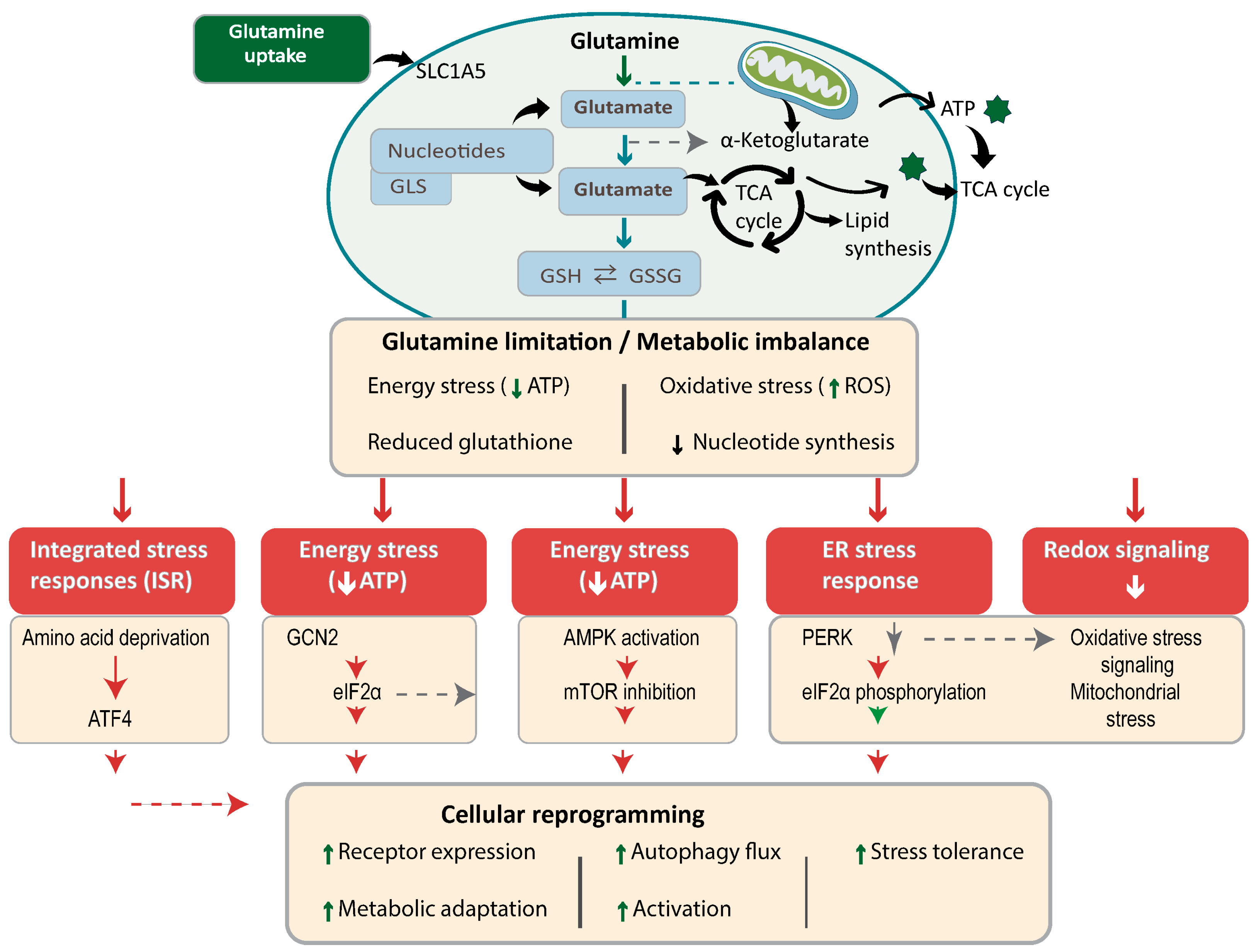
Figure 2.
Glutamine deprivation–induced cellular stress networks and their roles in viral infection. Glutamine availability plays a central role in coordinating cellular metabolism and stress signaling during viral infection. Under conditions of glutamine deprivation or metabolic imbalance, reduced TCA cycle activity, impaired biosynthesis, and increased ROS production collectively induce cellular stress. These perturbations activate multiple interconnected stress pathways, including the ISR, ER stress, metabolic checkpoint signaling mediated by AMPK and mTOR, redox stress responses, and autophagy. Activation of these pathways leads to cellular reprogramming characterized by altered metabolic flux, enhanced stress tolerance, modulation of protein synthesis, and changes in receptor expression and membrane dynamics. These adaptations can create a cellular environment that is either permissive or restrictive to viral infection, depending on the specific virus and host context. Viruses exploit these glutamine-linked stress networks to support their replication. Many viruses enhance glutamine uptake and glutaminolysis to sustain biosynthetic and energetic demands, while also modulating stress signaling pathways to optimize viral protein synthesis, replication complex formation, and evasion of host defenses. This establishes a bidirectional relationship in which glutamine metabolism influences viral infection, and viral infection, in turn, induces metabolic rewiring that feeds back into cellular stress pathways. Representative viruses that interact with these processes include human cytomegalovirus (HCMV), influenza A virus, dengue virus, severe acute respiratory syndrome coronavirus 2 (SARS-CoV-2), herpes simplex virus 1 (HSV-1), and rubella virus (RuV).
Figure 2.
Glutamine deprivation–induced cellular stress networks and their roles in viral infection. Glutamine availability plays a central role in coordinating cellular metabolism and stress signaling during viral infection. Under conditions of glutamine deprivation or metabolic imbalance, reduced TCA cycle activity, impaired biosynthesis, and increased ROS production collectively induce cellular stress. These perturbations activate multiple interconnected stress pathways, including the ISR, ER stress, metabolic checkpoint signaling mediated by AMPK and mTOR, redox stress responses, and autophagy. Activation of these pathways leads to cellular reprogramming characterized by altered metabolic flux, enhanced stress tolerance, modulation of protein synthesis, and changes in receptor expression and membrane dynamics. These adaptations can create a cellular environment that is either permissive or restrictive to viral infection, depending on the specific virus and host context. Viruses exploit these glutamine-linked stress networks to support their replication. Many viruses enhance glutamine uptake and glutaminolysis to sustain biosynthetic and energetic demands, while also modulating stress signaling pathways to optimize viral protein synthesis, replication complex formation, and evasion of host defenses. This establishes a bidirectional relationship in which glutamine metabolism influences viral infection, and viral infection, in turn, induces metabolic rewiring that feeds back into cellular stress pathways. Representative viruses that interact with these processes include human cytomegalovirus (HCMV), influenza A virus, dengue virus, severe acute respiratory syndrome coronavirus 2 (SARS-CoV-2), herpes simplex virus 1 (HSV-1), and rubella virus (RuV).
Disclaimer/Publisher’s Note: The statements, opinions and data contained in all publications are solely those of the individual author(s) and contributor(s) and not of MDPI and/or the editor(s). MDPI and/or the editor(s) disclaim responsibility for any injury to people or property resulting from any ideas, methods, instructions or products referred to in the content. |
© 2026 by the authors. Licensee MDPI, Basel, Switzerland. This article is an open access article distributed under the terms and conditions of the Creative Commons Attribution (CC BY) license (http://creativecommons.org/licenses/by/4.0/).
Copyright: This open access article is published under a Creative Commons CC BY 4.0 license, which permit the free download, distribution, and reuse, provided that the author and preprint are cited in any reuse.


