
Submitted:
01 April 2026
Posted:
02 April 2026
You are already at the latest version
Abstract
In the face of economic disparities, housing as a fundamental right highlights differences and social stratification. From the perspective of complexity, factors such as location, distance from development hubs, and designs that standardize needs accentuate weaknesses in its conception. The new realities of living in housing after the pandemic lead us to rethink new design approaches where housing and work can be combined. This research analyzes the case of the Ciudad Alegría Social Housing Program, located in the city of Loja, Ecuador. The diagnostic method determined that 24% of the homes have commercial projections as a survival strategy. While these spatial patterns reduce the levels of habitability in the homes, they also produce benefits such as proximity between home and work, savings in transportation costs, interaction with neighbors, and mixed uses. These facts reflect gaps in the architectural design process, which fails to consider both service providers and users in decision-making in the design of VIS programs, as well as the need for this phenomenon to be elevated to public policy.
Keywords:
social housing
; commercial dynamics
; housing projections
1. Introduction
According to the United Nations, although cities have expanded rapidly, housing and access to them remain inadequate and unaffordable [1]. Housing as a fundamental right is more than just a physical space where people's basic needs are met; it is a fundamental environment for human development, given that development and human rights are closely linked: “a family with insufficient income, or without decent housing or access to education, cannot live in peace” [2] [p. 20].
In the context of economic inequalities, the use of adequate housing opens the possibility of living and working when it is necessary to satisfy the need for economic development [3]. According to [4], depending on needs and available resources, contemporary housing can be adapted to be a space for teleworking or setting up a studio, but when income is required, housing is the space for a small business, a shop, or a workshop [5]. Therefore, the flexibility of spaces and the adaptability of environments become key strategies for new post-pandemic ways of living and changing technological, cultural, and economic trends [6,7]
Modern architecture and its principles of economy in social housing led to repetition and monotony in social housing projects [8], with spaces planned for exclusive use that have failed to fulfill the social purpose of contemporary housing [9], where housing, in addition to being a unit of consumption, constitutes the space for work and production [3,10]. This has forced users to make changes to their homes to address the shortcomings of the original designs and create new spaces that meet their growing and unmet needs [11]. An example of this are social housing programs (VIS), which aim to meet shelter requirements in minimal construction areas but lack spaces that can accommodate new dynamics beyond the primary ones.
Data on informal and precarious employment in Latin America and the Caribbean reflect a structural problem that has worsened over time. Fifty-five percent of workers in Latin America are employed informally [12], around 30% of the population is engaged in trade-related activities, the percentage of households where women are the main breadwinners is increasing and stood at around 35.5% in 2023, and 24.4% of these households are made up of women who perform domestic chores and unpaid work [13]
In this scenario, it is understandable that families belonging to marginalized social groups and low-income sectors resort to survival strategies to ensure material reproduction from their homes [14] as a process aimed at obtaining the resources to meet basic needs. By establishing small businesses in their homes, increasing the number of family members who generate income, or modifying some aspects of their lifestyle [15]
This study analyzes the phenomenon of interventions in the homes of social housing projects (VIS) to implement business initiatives as a survival strategy. This process is increasingly common and highlights the need to reconsider housing programs from a local economic development perspective, where housing, in addition to its fundamental functions, allows for the incubation of small businesses and combined spaces for economic growth.
The hypothesis of this article is that the adaptations made to social housing programs to implement commercial activities respond to the socioeconomic situation of the users. Consequently, the objective is to analyze the progressive changes in the typology, original use, and image of the homes due to the inclusion of economic initiatives in them, applied to the case of the VIS Ciudad Alegría program, located in the province of Loja, southern Ecuador. Therefore, it is argued that these programs should be planned to consider the real social and economic needs and conditions to which they respond to avoid other phenomena such as overcrowding, insecurity, low levels of habitability, and changes in the urban image, among the most significant. This document is structured as follows, beginning with the theoretical framework, followed by the methodology, and finally the conclusions and recommendations.
Housing and social inequality
Achieving adequate employment and housing reflects social inclusion and constitutes the main objective and sign of success in capitalist societies. However, what prevails today is job insecurity, low wages, informality, and a lack of decent housing. According to [16] housing is a determinant of inequality because its location conditions social marginalization and segregation. Issues such as the shape of cities, the particularities of the territory, and the value of land give rise to territorial differences and the segregation of the most disadvantaged population in the most remote areas and access to services.
To address homelessness, welfare programs have been implemented at the state level through public-private interventions, with poor-quality housing that has led to exclusion, dependency, and serious urban and environmental consequences (see [17]). Consequently, according to [18,19] low-income sectors are subject to certain types of discrimination, such as social and economic discrimination, compounded by institutional discrimination, which reinforces spatial segregation and the confinement of the poorest people [20]. In this way, housing ceases to be a fundamental right and becomes a commodity beyond the reach of those with precarious jobs and low incomes. This adverse scenario has led to a permanent increase in inequality, which has risen particularly since the COVID-19 pandemic.
According to [21] [p.5], “the matrix of social inequality in Latin America is strongly conditioned by its productive matrix, which is characterized by high structural heterogeneity.” This is due to a high concentration of gross domestic products in a few territories and the existence of undiversified, low- productivity productive sectors such as agriculture, informal trade, and unskilled services [12]. These sectors account for most of the employment, offer low wages, and lack social protection. Self-employment and independent work are characterized by a high degree of informality. In this way, the labor market links this productive structure to inequality, which is often reflected in the conditions of their living spaces.
The complexity of housing studies
Cities, neighborhoods, and housing units (at all socioeconomic levels) that make up urban areas function as open systems, interconnected with subsystems such as roads, access points, urban facilities, recreational green spaces, infrastructure, and services, all of which complement, integrate, and define urban life.
In systemic studies, it is very difficult to know how actions and reactions will unfold, so it is impossible to predict how they will work. Systems act in complex ways, with multiple relationships intertwined in indeterminate ways. In contemporary urban studies, complexity theory has made it possible to study phenomena that were previously unknown [22,23]. The systemic approach contributes greatly to the vision of complex thinking, which contrasts with simple and reductionist thinking and extreme analysis, as it is based on the understanding that urban-architectural problems, especially those related to mass housing, must be viewed in a multidisciplinary manner and from the perspective of the interaction between physical creation and social behavior [23]
Currently, the word complexity has evolved in sociology through the thinking of Edgar Morin, who, together with [24], shares an evolutionary vision in which people and societies are constantly changing. This theory opens the way for thinking and reflection, not just from a simple view of things and situations. “Complexity is the dialogical order/disorder/organization” [22] [p.39], is a paradigm under construction, Morin notes, which is enriched by the transdisciplinary contribution of various areas of scientific and social knowledge. In the latter, he questions how the application of identical processes (models) never evolves towards the same end; Culture, freedom of choice for each member of society, economic, natural, and social crises, etc., produce unpredictable bifurcations that escape general, unifying processes.
It should be noted that this position has been questioned, as in the arguments put forward [25]. However, Morin’s thinking remains valid and relevant when studying urban-architectural phenomena.
Contemporary housing
In contemporary times, the principles of modern architecture—functionalism and formalism—persist in a purely technocratic and pragmatic urban-architectural practice [26] where mass housing proposals provide solutions based on numerical data with a simplified view of quantity rather than the quality of housing, ignoring the factors that influence architectural design in terms of its creative complexity and as spaces for living and development [27,28]
From a systemic perspective, weaknesses can be found in several aspects, including conceptual and methodological shortcomings in architectural practice when it comes to responding to the real demands of the population [29], resulting in a mere interpretation of reality and a partial view of the problematic situation of the deficit of affordable and social housing, which can easily be controlled and manipulated by planners. This is the unilateral and simplistic view inherited from modern architecture, which authors such as [30] criticize and propose to relearn and rediscover different ways of understanding the reality of popular housing and housing programs through a comprehensive analysis of ways of living, in which complex thinking contributes both to the understanding of living and to the need for personal and economic growth.
The simplified view of architectural discipline sees the problem of habitat solely as a lack of living space, proposing uniform, repetitive spatial solutions that do not respond to the individualities and determinants of each family, that is, without analyzing the overall situation of the residents. Therefore, it is necessary to view housing as an adaptable [31] and flexible asset.
Therefore, from an open and interdisciplinary systemic approach, other dimensions such as economic, cultural, social, and psychological factors are aspects of the whole that make up human development, added to the habitability of a home. [32] adds to this the knowledge of people's lifestyles, since today and in the past, the real estate sector has failed by ignoring the human dimension in the design process.
Social Housing Programs (VIS)
Access to decent housing is a human right recognized by the United Nations Human Rights Committee. It defines 'habitability' in a complex sense, arising from the interaction of physical, social, psychological, and environmental factors. Building on this, [33] condenses these elements into three key pillars: physical-cultural functionality, climate adaptability, and structural safety. Modern standards, however, now also demand economic and environmental security to ensure residents derive tangible economic benefits.
Since the 1990s, with a hegemonic capitalist model adopted as the production system in Latin America, residential segregation has become evident. The growth of cities under capitalism, population growth, the emergence of new forms of social stratification, and the value of urban land created a scenario that would perpetuate residential segregation under the pattern that most of the low-income population would reside in peripheral areas (areas with fewer job, educational, and cultural opportunities, etc.) [33]
The difficulties faced by middle- and low-income families in accessing urban land, massive urban-rural migration, and to a lesser extent urban-urban migration, have created a growing housing deficit in Latin America and around the world. Between 2010 and 2030, it is estimated that there will be at least 600 million households without access to decent housing [1] . To address this housing deficit problem in Latin America, local and national governments have proposed social housing projects as a strategy to improve the quality of life of their inhabitants. In practice, these programs have served to partially cover the housing deficit but do not contribute to improving quality of life.
Thus, [34] highlight that social housing programs accentuate inequalities because they are located in peripheral, mostly agricultural areas, with very small housing units that are not fully urbanized, lack public transportation connections, and lack amenities (commercial, specialized services, and non-specialized services), creating a scenario of discrimination and social segregation in which poor households suffer further exclusion.
In Chile, according to [35] , state-subsidized social housing projects located in peri-urban areas lacking basic amenities and employment opportunities, and unable to meet minimum needs, have become counterproductive as they increase poverty and make it more evident. In the case of Argentina, [33] mention that the difficulty in covering the cost of transportation and urban mobility is a catalyst for social isolation. The barrier of distance causes the breakdown or disintegration of labor and social networks. In addition, limited access to job opportunities leads to economic and social vulnerability and marginalization of the lowest strata.
This shows a lack of understanding of the complex nature of the socio-spatial requirements of social housing. This has become apparent in the disconnect between users and designers, with projects that are incompatible with the daily dynamics and reality of the social groups that benefit from social housing projects, which are supposed to support the socio-economic growth of the population but appear to be failing.
At this point, the research gap lies in the design of social housing from a systemic and comprehensive, complementary, and interdisciplinary approach. It is striking that the VIS prototypes, all equal distribution and size, are intended for different types of users, and it is the users themselves who modify them. Although these phenomena are studied, the reasons for these changes have not yet been investigated from a multidisciplinary perspective. This knowledge is important for future projects to consider and change the partial approach to architecture.
2. Materials and Methods
This research is non-experimental in nature and is based on analytical, diagnostic, and descriptive theoretical methods. It uses direct observation based on [36], given that the itinerary and route for the inventory of homes with businesses and the measurement of distances at the urban level enable experimentation, observation, and recognition. Tools such as ARC GIS 10.8, AUTO CAD 2023, Excel, and photographic records were used for systematization.
The method for diagnosing the incorporation of commercial spaces within single-family homes and on the ground floors of multi-family buildings in the Ciudad Alegría program is based on cross-referencing the municipal housing registry and its uses through direct observation supplemented by a socioeconomic survey. The analysis is carried out on two scales: the urban scale, with the study of the radio of action and distances to basic services or markets, and the architectural scale, with the observation and counting of dwellings with commercial premises.
The socioeconomic survey and the sampling were carried out according to [37], with a confidence level of 95% and a margin of error of 6%. As a result, 210 surveys were conducted. The structured survey includes both dwellings with and without businesses. It consists of a segment of quantitative information on the head of household, as well as qualitative information such as willingness to establish businesses in dwellings and level of satisfaction with the implementation of businesses in or near their dwellings.
The methodological process was carried out in three stages: information gathering, mapping of baseline information, socioeconomic analysis, and discussion of results (see Figure 1).
3. Results
3.1. Selection of the Case Study
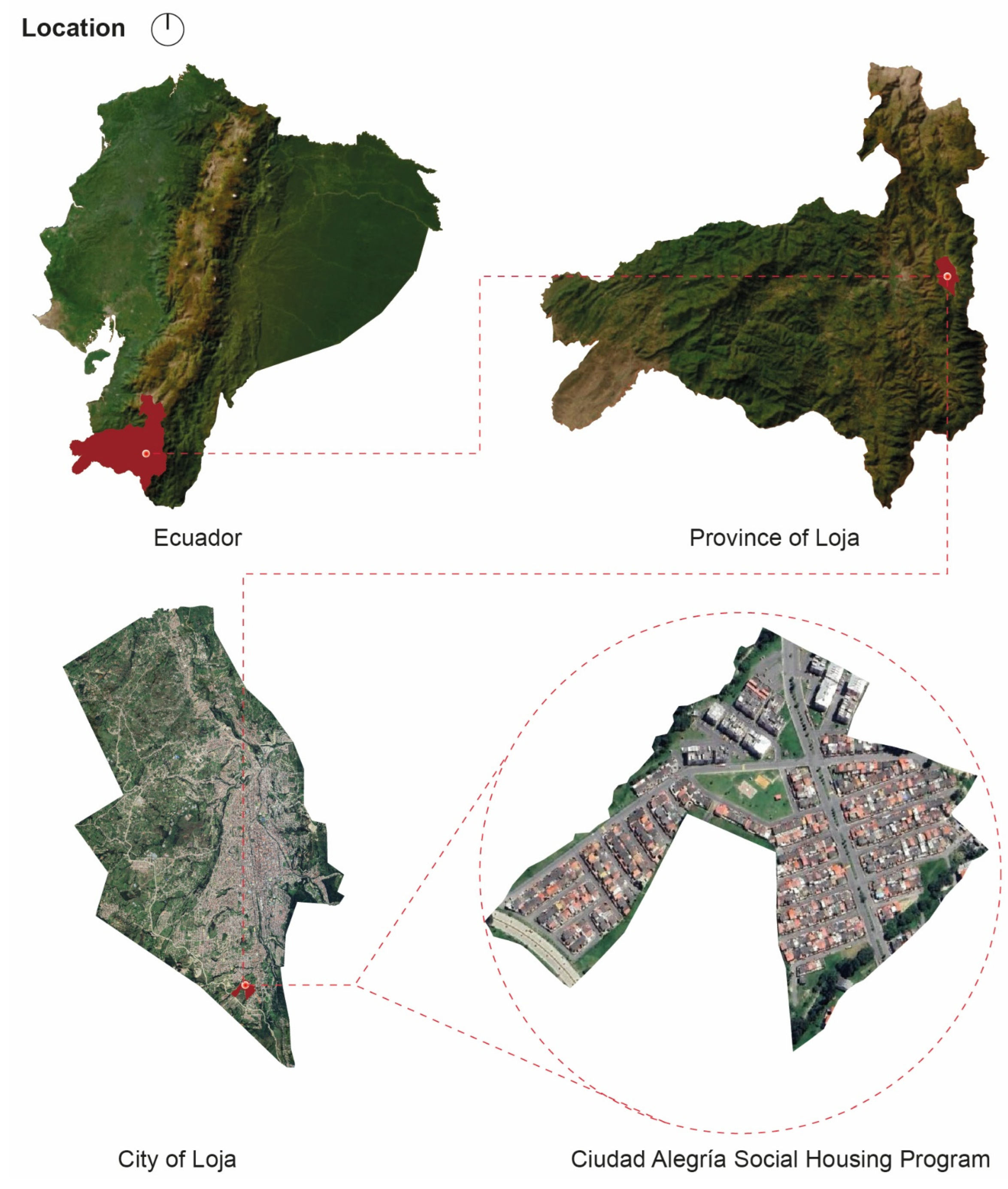
The Ciudad Alegría social housing program is analyzed because it has parameters that identify it as a project with segregated characteristics according to the theory outlined above: it is located on the outskirts of the city of Loja, its inhabitants have a low and medium-low socioeconomic status, and it is a social housing project managed and promoted by the Municipality of Loja, with whom an agreement has been reached to provide information through technicians and managers.
The study focuses on the program's single-family attached houses and apartment blocks, as this phenomenon is also evident in the ground floor apartments of the blocks
3.2. Information Gathering
3.2.1. Census of Dwellings with Commercial Activity
The census of homes with commercial activity was carried out using the base map of the Ciudad Alegría housing program provided by the Municipal Public Housing Company of Loja, Municipality of Loja, which identifies the different business initiatives in each block. The complex is located on 15 hectares of land and has 950 housing solutions, 614 two-story semi-detached single-family homes, and 20 four-story apartment blocks distributed across 336 apartments, of which two blocks of 32 apartments belong to the National Police and are not considered in the study as they have restricted access.
Only the apartments located on the ground floor of the buildings (four apartments per building, 80 in total) are considered in the blocks. Together, the apartments (80) and houses (614) total 694 cases, of which a convenience sample of 210 housing solutions, corresponding to 30%, is established.
3.3. Mapping of Basic Information
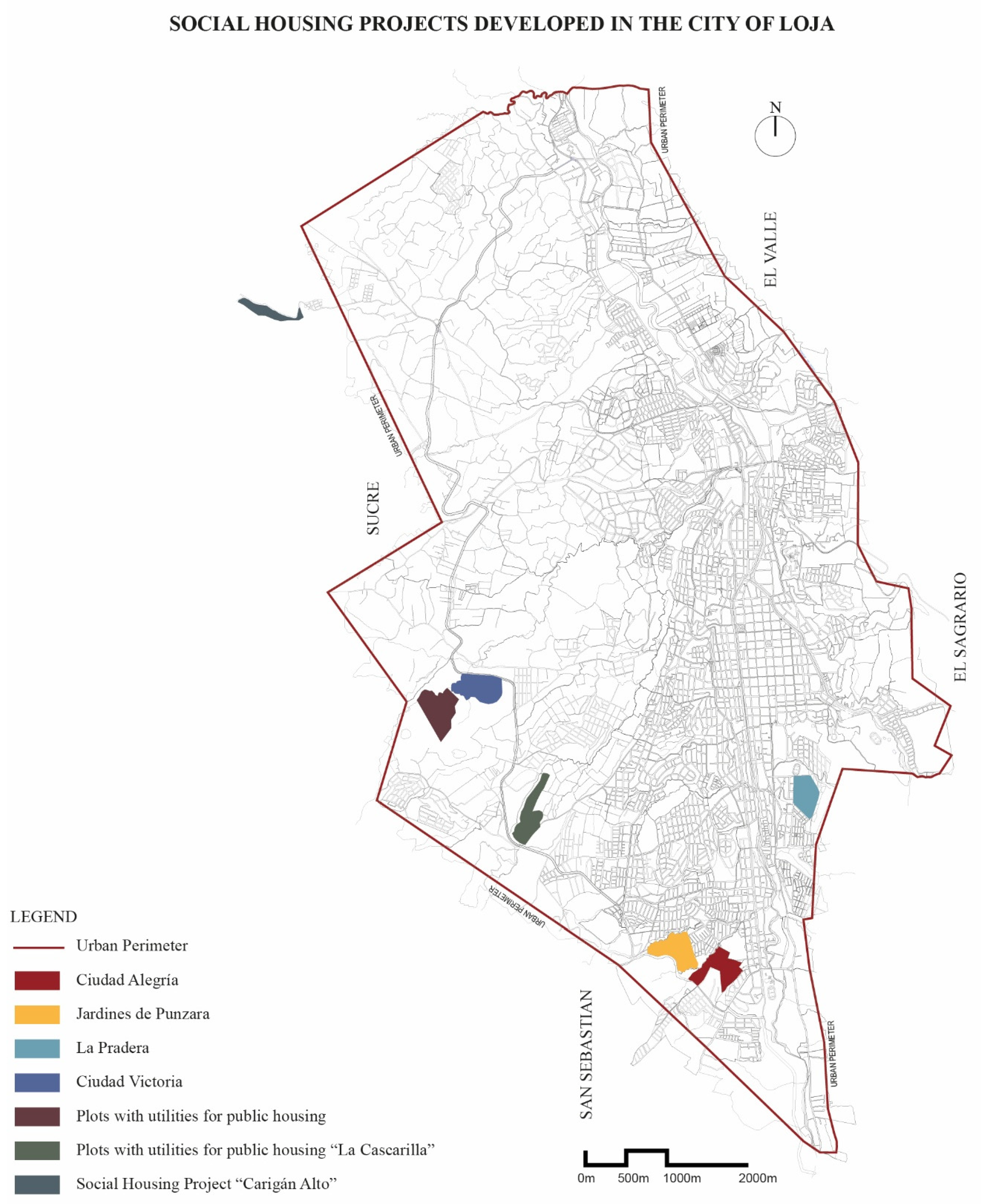
In the city of Loja, social housing plans and programs have been developed in compliance with the Organic Code of Territorial Organization (COOTAD) [38]. Among the most recent projects are: Ciudad Victoria, Jardines de Punzara, La Cascarilla, and Ciudad Alegría (see Map 1), which are mainly located in peripheral areas because they require large plots of public land owned by the local government, although the conditions of the land used do not necessarily meet the physical and environmental requirements for urban development and are located far from urban facilities, access to transportation, and basic services.
Map 1.
Social interest projects in Loja. Note. Prepared by the authors.
The Ciudad Alegría housing project, in its comprehensive planning, has three defined areas: residential, community, and green areas. Within the community area, there is a multipurpose court and a volleyball court, with minimal sanitary facilities that are insufficient for the number of people to be served, next to which a small sales kiosk has been built. There is a lack of commercial facilities and services to meet the food and basic supply needs of the entire population living in the program. In the green areas, there are some playgrounds that can be accessed from the pedestrian walkways.
The apartment blocks have parking areas for each of them, while the blocks with single-family homes have private garages, but the access roads are narrow (7m wide), which makes it difficult to maneuver and circulate in two lanes, as well as to ensure smooth pedestrian and vehicular traffic. The presence of shops and basic services is evident, appearing in a progressive and random manner, which draws attention to it as a case for investigation.
Map 2.
Location of the Ciudad Alegría project. Note. Prepared by the authors.
3.4. Urban Influence Radio
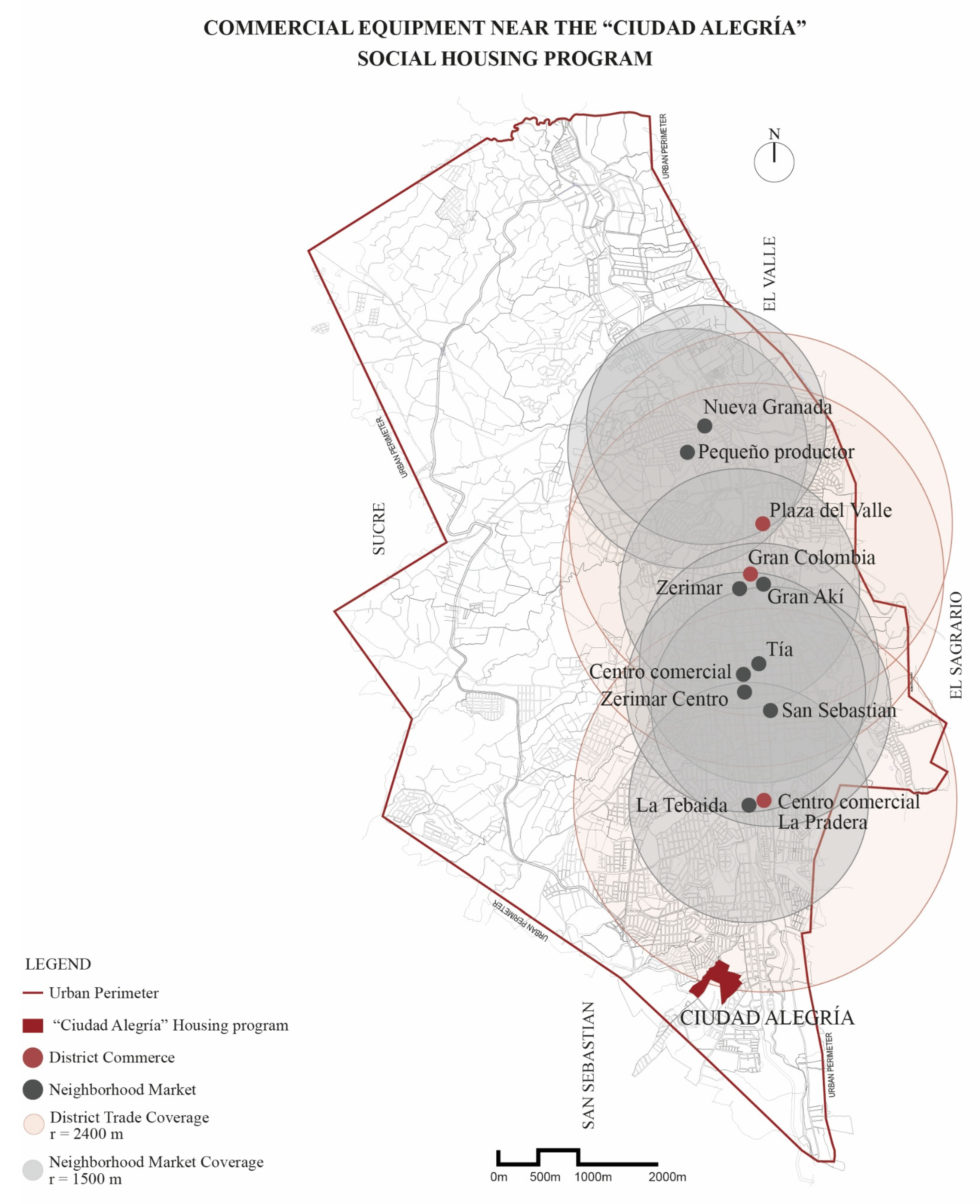
This project is in the southeast of the city of Loja, 5.14 km from the city's management, commercial, and administrative center. As shown in Map 3, La Tebaida Municipal Market is the nearest supply center, located 2.26 km away. In addition, the nearest district commercial center is the “La Pradera” shopping center, which partially supplies the area. From the Ciudad Alegría program and towards the south of the city, there is a clear shortage of goods and services due to the distance from the suppliers.
To verify this, the walking times of the population to and from the nearest supply and service centers were calculated. The observed travel time ranges from 29.4 to 49.7 minutes, with a difference of about 20 minutes depending on the age of the residents. The shortest time corresponds to a person aged 20 to 29, and the longest to a person aged 50 and over. As the facilities become more distant, the time increases and is directly proportional to the age of the users.
Another way to get around is by public or private transportation, but this adds to the cost of travel for families in the program. The trip by public transportation to the nearest market takes an estimated 30.5 minutes, not including waiting time for service and the time it takes to make purchases.
To supply goods and services to citizens, a local development project called “Ferias Libres” (Open Markets) has been established, which involves the sale of fresh food by local producers. Specifically, this program holds two markets per week, allowing them to supply basic perishable goods (meat, fruit, vegetables).
Map 3.
Equipamientos comerciales cerca del VIS. Nota. Elaborado por los autores.
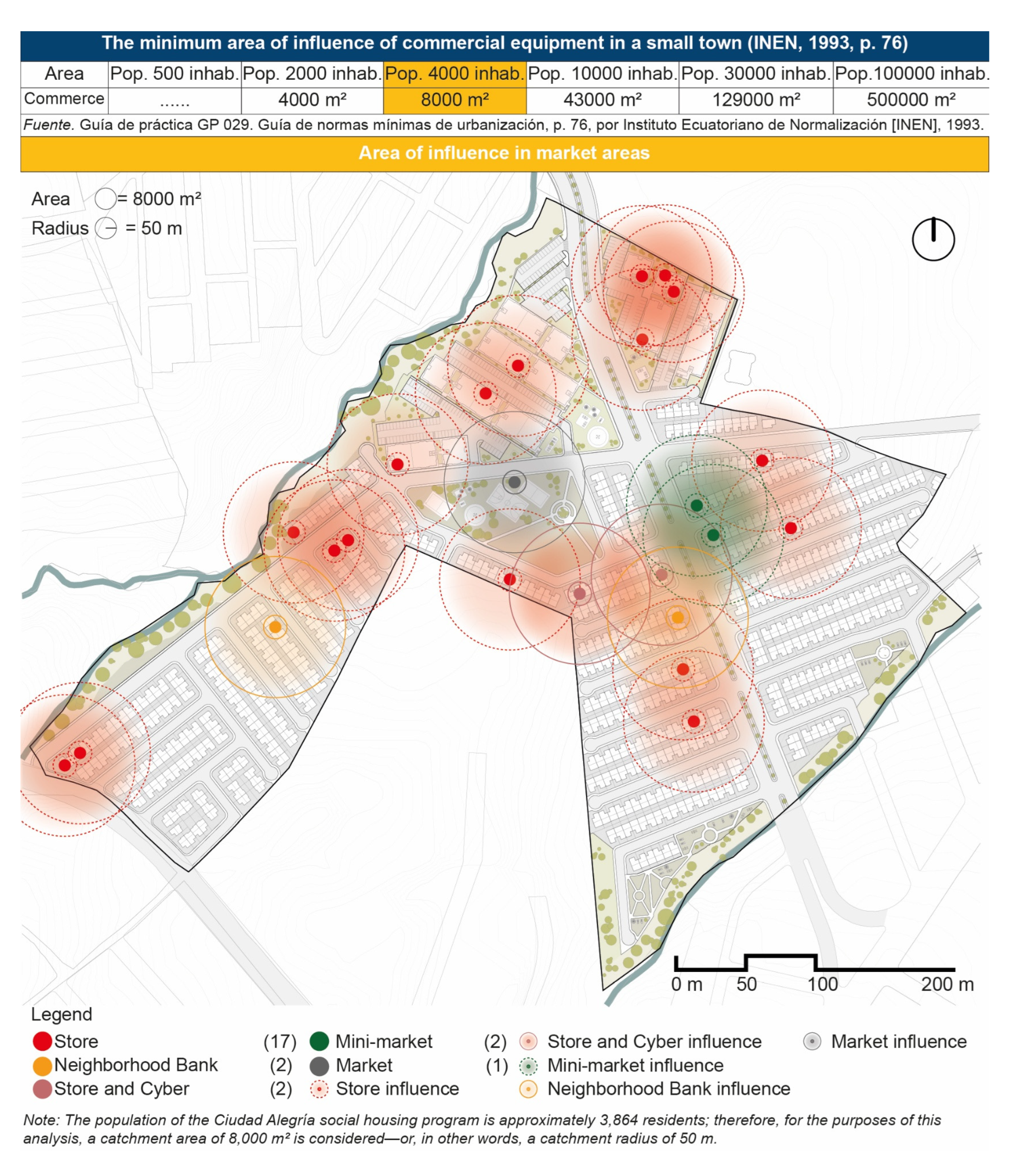
Three visits were made every six months over a year and a half to count the number of businesses, showing that these increased from 32 to 43 and 50 commercial premises on the ground floors, up to the cut-off date of the research, which was October 2023. Therefore, of the sample of ground floor dwellings, totaling 210, there are 50 housing units that share their residential use with commerce and services, i.e., 24%. Of these, 48% are shops and 52% are various services.
Map 4 shows the location of the businesses by block and classifies them by type of commercial activity, their occupation of the dwelling, and who runs the businesses. Of the 50 commercial establishments, 38 are distributed among single-family dwellings, 11 among apartment blocks, and one in the communal area. Furthermore, although they vary in scale, they are all located on the ground floor near the main roads with the highest traffic.
Map 4.
Counting and categorization of businesses. Note: Prepared by the authors.
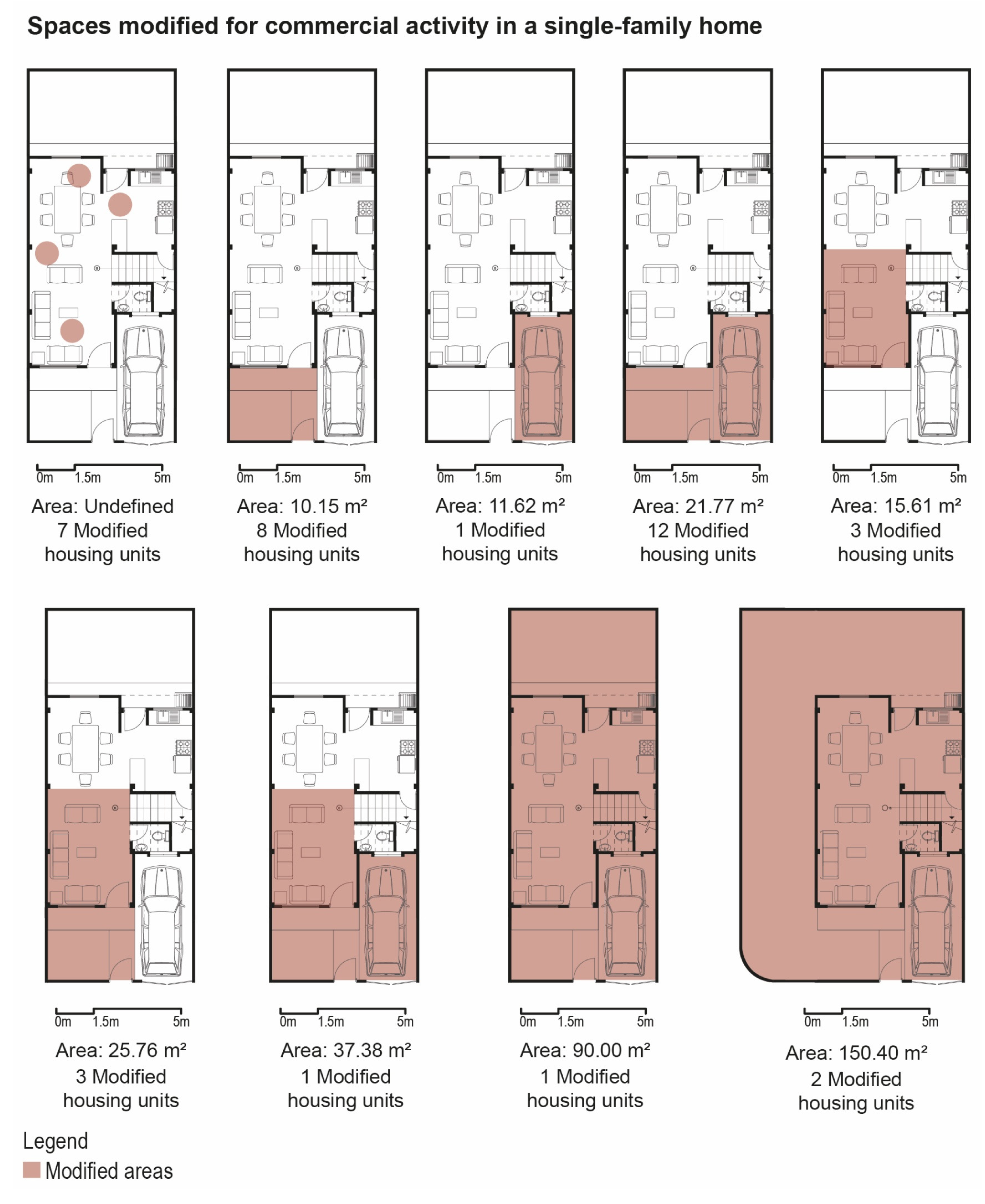
The original layout of the VIS units consists of the following on the ground floor: living room, dining room, kitchen, half bathroom, garage, rear setback (4 meters), and front setback (towards the street) of 3 meters. Their functionality is homogeneous in both apartment blocks and houses (semi-detached and corner houses). What differentiates them is their location: near or on main roads, setbacks, as well as access and layout within the blocks. Under these conditions, people take advantage of their potential and include shops and services, gradually modifying the spaces to give them new uses, adapting their basic needs and those of their businesses. Figure 2 shows the trends in new commercial uses by occupation of ground floor spaces, the remaining distribution, the size of the premises, and the transformations in the overall functionality of the dwellings.
Photo 1.
Shops in houses and apartments in the VIS Ciudad Alegría program. Note: Taken by the authors.
Photo 1.
Shops in houses and apartments in the VIS Ciudad Alegría program. Note: Taken by the authors.
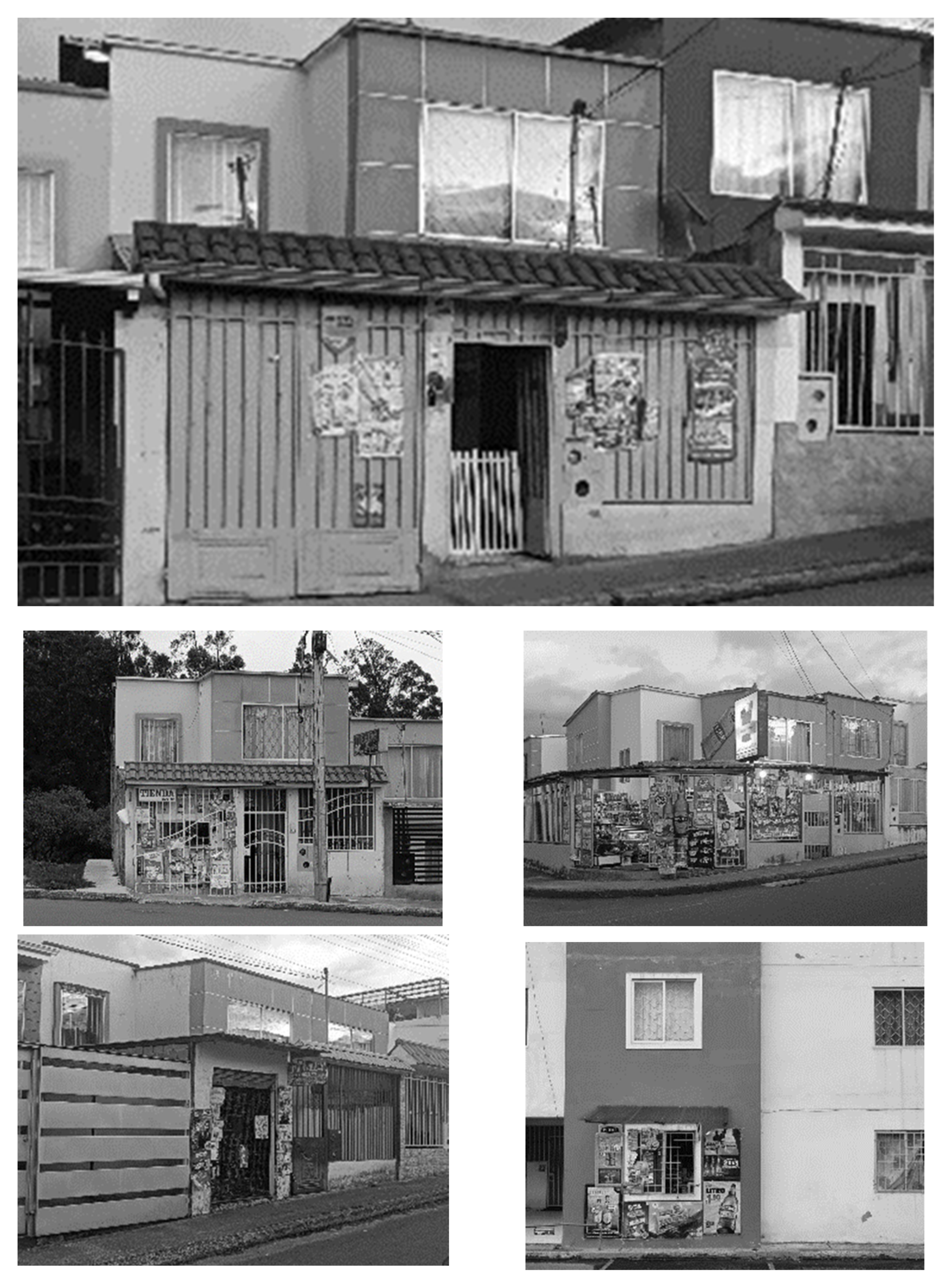
Figure 2 shows nine architectural floor plans. The upper left floor plan shows undefined spaces, also referred to by [3] as spaces that blur the lines between living and economic activity, where skilled and unskilled labor are accommodated in the free spaces of the service provider's home, indicating a need for flexibility in tasks and adequate spaces. In these spaces, owners offer services such as sewing, clothing repair, nursing, electrical and computer equipment repair, among others.
The following plans differ in terms of space occupation, with frequent modifications such as use of front setback and garage, front setback only, garage only, living room only, setback and living room, setback, living room and garage, or the entire ground floor. These patterns were recorded in attached single-family homes. In corner single-family homes, one occupies the entire ground floor. These changes and modifications are in accordance with the type and size of the businesses and services. This shows that the exterior space of the setback is sacrificed in 56% of the interventions, causing a serious problem in the habitability levels of the dwelling, evidenced by qualitative deficits such as: blocking of sunlight, air, and direct lighting. Likewise, internally, unhealthy, uncomfortable, and poorly functional spaces are created when using the living room.
As can be seen, users who modify their single-family homes for commercial purposes do so mainly in spaces facing the outside to achieve direct exchange, using porches and garages, which represents 59%, while the remaining 41% do so inside the home using living rooms, dining rooms, and kitchens, or between these spaces. In the case of apartment buildings, all modifications are made inside the home, as there are no private porches, with service provided from windows facing public.
3.5. Socioeconomic Characteristics
43.3% of households have both a father and mother as heads of household, however, the remaining 56.7% depend solely on the father or mother (22% mother and 33.33% father, 1.4% child). 85.71% of households have at least one child in school, while 14.3% do not. 31.6% of heads of households with businesses do not have formal employment, meaning that their main source of income comes from sales at the business located on the ground floor of their home. On the other hand, 14% of heads of households in homes where no home-based business has been started do not have formal employment. In both cases, there is a clear need for a secure income and better economic conditions.
Most households, with or without businesses in their homes, emphasize that they perceive savings when shopping at commercial establishments located within the VIS complex. Eighty percent of households highlight savings in transportation, convenience, and travel time. For families, the existence of commercial spaces in the housing complex is very important. In addition, 81% of families would be willing to work with the local government to allow changes to be made to their homes so that a business can be set up properly.
4. Discussion
This document analyzes social housing based on the arguments put forward by [39] who maintains that social housing represents the average of numerous variables that do not particularly coincide with those of each family that composes it, a fact that is manifested in the interventions that these families carry out when they move into their homes. According to the case study, as a result of the unexpected commercial implementation on the ground floor, a large part of the family's activity is transferred and relocated to the second floor, This results in a decrease in the habitability of the property, since they have a usable internal area of 78.34 m², with 37.46 m² on the ground floor and 40.88 m² on the upper floor. In addition to being homes with minimal space, the problem is exacerbated by having to superimpose activities that inconvenience users, affecting their living conditions and family life.
These indicators show the need to combine the residential use of VIS programs with activities that generate income for their inhabitants, according to [23,39]. To this end, architectural design must consider new spaces for businesses and adequate levels of habitability without sacrificing the square footage necessary for a normal and healthy life.
The composition of the people living in the homes is diverse. In 65% of cases, four people reside in the home, while in 34% between five and eight people live there, and in 1% up to 12 people. However, in homes with businesses, 61% have four members, and 39% have between five and eight members per household. Although technically an average of four people can live comfortably in a 70m² home, which implies 15m² per inhabitant, it is important to consider that having a business on the ground floor means losing social and family space in the home. This suggests that there may be discomfort and, probably, overcrowding.
This fact stems from the socioeconomic characteristics of families, who lack adequate employment, motivating them to implement survival strategies, as they consider micro-entrepreneurship to be an important driver of economic growth. Additionally, for an entrepreneur, reducing production costs translates into increased economic benefits, since setting up a business in their own homes reduces the fixed cost of renting premises and commuting expenses. Furthermore, for women who are heads of households, this allows them to combine their domestic activities with direct attention to the business.
This study highlights the decisions made by middle- and low-income families living in VIS programs that respond to the need to provide affordable housing to people with low economic resources. The consensus is that those who make up these programs have suffered some expulsions, alluding to the idea of Saskia Sassen (2014), because they are poor, live on the outskirts far from service centers, and lack social infrastructure.
The challenge lies in implementing new ways of learning, devising, and practicing architecture, especially in VIS projects, treating them as complex systems that must be approached in a way that goes beyond the merely technocratic and simplified approach of architecture. This can give way to new forms of design that involve and benefit users. By understanding the problems of VIS and including the needs and preferences of users, it would be possible to generate programs that are more inclusive and consistent with the socioeconomic reality of their inhabitants. Gustavo Romero (2018), one of the leading exponents of participatory design, highlights the importance of designing with and for people, especially those who have been silenced and have become passive subjects in decisions that are vital to their personal progress.
When considering the potential of social housing as an opportunity for comprehensive development, it is essential to give it a productive character, in which, “in addition to the spatial needs required for living, extra space can be provided and the possibility of activities that contribute to the progressive economic growth of the inhabitants can be left open” [40] (p. 53).
In the urban analysis and diagnosis of the VIS Ciudad Alegría program, interesting findings have been made given the commercial dynamics that randomly settled with a certain pattern, For example, near the main collector roads such as Eloy Alfaro Avenue, which connects the north and south of the city passing through Ciudad Alegría, their location is strategic in order to increase sales, as they serve not only the residents of the program but also everyone who travels along this avenue. This creates commercial hubs and centers of concentration near the main avenue, which is the backbone of connectivity between the complex and the city.
This situation generates implementation trends for the design and planning of future businesses in VIS programs, establishing businesses in homes close to the most frequently used roads, with the appropriate access measures and safe urban road designs (boulevards, landscaped avenues, among others). This is because these public spaces tend to become important areas of social cohesion and allow for more rapid development given the high flow of people circulating on sidewalks and roads. In addition to this, public transportation routes also mark a social dynamic, as users take this means of transportation to go to work and return home in the afternoon, passing by businesses to stock up on supplies and enjoy some leisure time.
The advantage of single-family housing over apartment buildings is that it has a direct connection from the sidewalk to the business, allowing immediate accessibility for customers and delivery personnel, while commercial premises in high-rise buildings do not have this facility, as they are in a limited environment. Because of this, the only existing premises are on the ground floor for accessibility reasons. As these are private blocks, public access is restricted, meaning that exchanges must take place through the windows on the ground floor that face the outside.
5. Conclusions
The segregation of social housing projects to the periphery creates an environment in which the implementation of spaces dedicated to commercial activity becomes essential, due to the distance of the neighborhood from the main supply centers and general services. In this context, grocery stores, fast food outlets, and specialized and non-specialized services such as hairdressers, seamstresses, and shoe repair shops emerge, among those present in the case study.
On the other hand, as there was no prior planning of the commercial dynamics in the production of the VIS Ciudad Alegría project, a phenomenon arises in which businesses are placed randomly. Therefore, it is concluded that it is best to diversify strategies and integrate all the basic needs of the population into the urban-architectural design process in order to agree on their location and apply the spheres of influence equitably for all users, creating established poles and axes of development that do not interrupt the desired residential tranquility. Given that most businesses are run by mothers, it is considered that productive work (services: seamstresses, nurses, shoemakers) and commercial work can be complemented by basic household activities, to generate extra income through the insertion of housewives into the labor market.
Despite the housing solutions provided by social welfare programs, there are weaknesses in terms of meeting the real needs of low-income families. Little is done to evaluate how beneficiaries use and have adapted to pre-established housing models, leaving the dynamics that occur within them to chance and completely unattended. With changes, new uses, and additions, VIS gradually lose their function of providing comfortable living spaces, including new ways of living, and their levels of habitability decrease. Added to this are the costs involved in adding furniture and remodeling to include their businesses.
From this perspective, the design of social housing requires a comprehensive approach that encompasses the needs of users and the commercial dynamics that arise in these complexes, as it is a phenomenon that reflects the socio-economic reality of the families living there and represents an opportunity to tackle the real problem, which is poverty, informality, and unemployment. This can be achieved if housing is considered an engine of economic development, as it provides the conditions for comfort and continuity in the family unit by implementing a small business as a survival strategy. To this end, users should not be considered as a number to be solved or “objects,” but as subjects who can contribute to the design of the spaces where they will live and progress.
From this perspective, the design and planning of VIS must provide flexible, adaptable, and progressive spaces that can easily include businesses and provide services, since the presence of small businesses increases the circulation of people in the public spaces of housing complexes, providing greater vitality and neighborhood coexistence. In addition, they generate safe areas, promoting interaction and mutual care.
This is achieved by incorporating new methodological approaches into the architectural design processes of VIS, such as participatory design, which involves different social actors in the creation of their homes, through architectural practices that are socially and spatially feasible and logical in terms of the reality of the users. Finally, it is necessary to elevate these contributions to public policy for the design of new social housing.
Author Contributions
Conceptualization, Alexandra Moncayo and Jessica Ordóñez; Methodology, Alexandra Moncayo, Victor Yanangómez and Jessica Ordóñez; Formal analysis, Alexandra Moncayo and Jessica Ordóñez Investigation, Victor Yanangómez; Resources, Alexandra Moncayo, Victor Yanangómez and Jessica Ordóñez; Data curation, Alexandra Moncayo, Victor Yanangómez and Jessica Ordóñez; Writing—original draft preparation, Alexandra Moncayo, Victor Yanangómez and Jessica Ordóñez; Writing—review and editing, Alexandra Moncayo and Jessica Ordóñez; Supervision, Alexandra Moncayo and Jessica Ordóñez; Project administration, Alexandra Moncayo and Jessica Ordóñez.
Data Availability Statement
None.
Conflicts of Interest
The authors declare no conflicts of interest.
References
- Rana. Amirtahmasebi, Zuzana. Vuova, and E. Olivia. Fox, The New Urban Agenda. United Nations Human Settlements Programme (UN-Habitat), 2020.
- Selima. Jāhāna, Human development report 2016 : human development for everyone. United Nations Publications, 2016.
- F. Alburquerque, El Enfoque del Desarrollo Económico Local. 2004.
- J. Maria. Montaner, Zaida. Muxí, and D. H. . Falagán, Herramientas para habitar el presente : la vivienda del siglo XXI = Tools for inhabiting the present : housing in the 21st century. Máster Laboratorio de la Vivienda del Siglo XXI, 2011.
- Reyes, A.; Reyes-Sanchez, A. Mexico’s mass housing: An underexplored locus of informality. Habitat Int. 2025, vol. 159, 103373. [Google Scholar] [CrossRef]
- De Paris, S. R.; Lopes, C. N. L. Housing flexibility problem: Review of recent limitations and solutions. Frontiers of Architectural Research 2018, vol. 7(no. 1), 80–91. [Google Scholar] [CrossRef]
- Ștefan Bilașco et al., “Assessing Urban Functionality Through the 15-Minutes City Lens: A GIS-Based Spatial Analysis Comparative Study of Two Central European Cities, Cluj–Napoca (Romania) and Pecs (Hungary),”. Urban Science 2026, vol. 10(no. 4), 180. [CrossRef]
- A. Aravena, A. Montero, T. Cortese, E. de la Cerda, and A. Iacobelli, Quinta Monroy. ARQ (Santiago) 2004, no. 57. [CrossRef]
- Harvey, D. “La libertad de la ciudad,” Antípoda. Revista de Antropología y Arqueología 2008, vol. 7, 15–29. [Google Scholar] [CrossRef]
- A. Leandro. Pérez Pérez, Bases para el diseño de la vivienda de interés social : según las necesidades y expectativas de los usuarios. Oficina de Publicaciones, Universidad de La Salle, 2013.
- G. Romero, M. Rosendo, M. Enet, R. Oliveras, and L. García, La participación en el diseño urbano y arquitectónico en la producción social del hábitat. 2004.
- R. P. Pineda, S. Albornoz, C. Aravena, and T. Gálvez, “Empleo informal en América Latina,” 2024.
- CEPALSTAT, “Portal de Datos y Publicaciones Estadísticas.”.
- O. Argüello, “Delimitacion del concepto ‘Estrategias de supervivencia’ y sus vinculos con la investigacion socio-demografica; borrador para discusion,” NU. CEPAL. CELADE, 1980.
- A. Mallick and S. K. Roy, Living in sick tea plantations: socioeconomic and health conditions of indigenous tea garden workers and their survival strategies. In in Indigenous People and Nature; Elsevier, 2022; pp. 217–239. [CrossRef]
- Barreto, M. Á.; Puntel, M. L. Vivienda social y estrategias de sobrevivencia. Soluciones adecuadas a partir de un estudio de caso (Resistencia, Argentina, 2013). Revista INVI 2015, vol. 30(no. 84), 19–57. [Google Scholar] [CrossRef]
- Juárez-Sedano, A. D.; Dolores-Mijangos, M. del R.; Volpi-León, V.; Bigurra-Alzati, C. A. Cartografía de la vivienda. Manifiesto de la desigualdad social. INTER DISCIPLINA 2024, vol. 12(no. 33), 13–37. [Google Scholar] [CrossRef]
- Daniela. Soldano, Pobreza urbana, vivienda y segregación residencial en América Latina. Ediciones UNGS, Universidad Nacional de General Sarmiento, 2018.
- Alicia. Ziccardi and A. Ernesto. González Reynoso, Habitabilidad y política de vivienda en México. Universidad Nacional Autónoma de México, 2015.
- A. Ziccardi and M. Dammert, “Las desigualdades urbanas y el derecho a la ciudad,” pp. 82–91, 2021.
- M. Guerrero Lladós, I. M. M. Robaina, and J. R. Mòdol Ratés, “Spatial Patterns and Indicators of Immigrant Residential Segregation in Catalonia’s Medium-Sized Cities,” Urban Science, vol. 10, no. 4, p. 178, Mar. 2026. [CrossRef]
- CEPAL, “La matriz de la desigualdad social en América Latina,” 2016.
- Emilio. Roger Ciurana, Edgar Morin : introducción al pensamiento complejo. Secretariado de Publicaciones e Intercambio Científico, Universidad de Valladolid, 1997.
- Richard. Sennett, The uses of disorder : personal identity and city life. Verso Books, 2021.
- Y. Maturana, F. Varela, and R. Behncke, El árbol del conocimiento: las bases biológicas del entendimiento humano.
- Christian. Norberg-Schulz, Los principios de la arquitectura moderna. Reverte Ediciones S.A. de C.V., 2014.
- Delgadillo, V. Financiarización de la vivienda y de la (re)producción del espacio urbano. Revista INVI 2021, vol. 36(no. 103), 1–18. [Google Scholar] [CrossRef]
- J. F. Cervantes Borja, “ Cover Image La habitabilidad cero una buena práctica olvidada en la producción industrial de la vivienda social en México ,” in México UNAM, PUEC 2013, 2013, pp. 40–52.
- Muntanyola Saura, D.; Muntañola-Thornberg, J. Building and Dwelling: Ethics for the City. Richard Sennett. London: Allen Lane, 2018, 342 pp. Revista Española de Sociología 2019, vol. 28(no. 3), 565–568. [Google Scholar] [CrossRef]
- Huuhka, S.; Saarimaa, S. Adaptability of mass housing: size modification of flats as a response to segregation. International Journal of Building Pathology and Adaptation 2018, vol. 36(no. 4), 408–426. [Google Scholar] [CrossRef]
- Scuderi, G. Designing Flexibility and Adaptability: The Answer to Integrated Residential Building Retrofit. Designs (Basel). 2019, vol. 3(no. 1), 3. [Google Scholar] [CrossRef]
- Torres Pérez, M. E. Habitabilidad de la vivienda mínima y las ciudades en pandemia mundial: COVID-19 en Mérida, México. Revista INVI 2021, vol. 36(no. 102), 352–383. [Google Scholar] [CrossRef]
- Marengo, M.; Elorza, A. M. Vivienda social en Córdoba, efectos en la segregación residencial y el crecimiento urbano (1991-2008). Revista INVI 2016, vol. 31, 119–144. [Google Scholar] [CrossRef]
- Rasse Figueroa, A.; Robles, M. S.; Sabatini Downey, F.; Cáceres Quiero, G.; Trebilcock, M. P. Desde la segregación a la exclusión residencial ¿Dónde están los nuevos hogares pobres (2000- 2017) de la ciudad de Santiago, Chile? Revista de Urbanismo 2021, no. 44, 39. [Google Scholar] [CrossRef]
- Cáceres-Seguel, C. Vivienda social periurbana en Santiago de Chile: la exclusión a escala regional del trasurbanita de Santiago de Chile. Economía Sociedad y Territorio 2016, 171. [Google Scholar] [CrossRef]
- A. Escobar Ramírez, “Diagnosis urbana: hacia una metodología analítica, sintética y cartográfica,” CONTEXTO. Revista de la Facultad de Arquitectura de la Universidad Autónoma de Nuevo León 2023, vol. 17(no. 26). [CrossRef]
- Levine, D. M..; Krehbiel, T. C..; Berenson, M. L.. Estadística para administración, 6a. ed.; Pearson Educación, 2014. [Google Scholar]
- Asamblea Nacional del Ecuador (2010)., “Código Orgánico de Organización Territorial, Autonomía y Descentralización.Registro Oficial Suplemento 303 de 19-oct-2010 ”.
- Sepúlveda Mellado, O. Vivienda social: caleidoscopio de condiciones, necesidades y soluciones alternativas. Revista invi 2015, vol. 30(no. 84), 9–17. [Google Scholar] [CrossRef]
- Amores Esparza, N. J. Vivienda social, progresivo productiva; vinculado a una plaza comercial en la parroquia de Turubamba; Pontificia Universidad Católica del Ecuador, 2019. [Google Scholar]
Figure 1.
Methodological process.
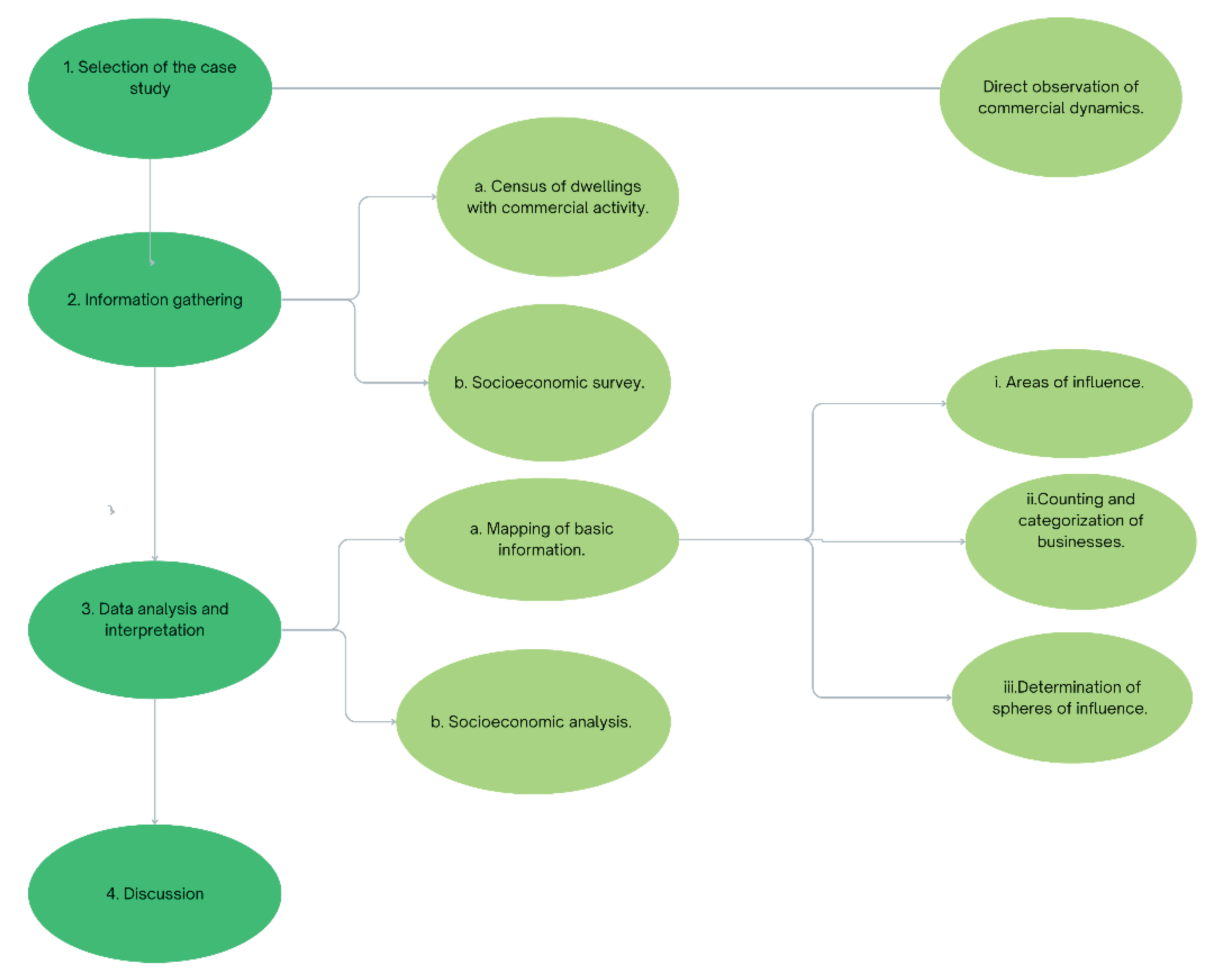
Figure 2.
Changes in housing due to commercial activity. Note. Prepared by the authors.
Disclaimer/Publisher’s Note: The statements, opinions and data contained in all publications are solely those of the individual author(s) and contributor(s) and not of MDPI and/or the editor(s). MDPI and/or the editor(s) disclaim responsibility for any injury to people or property resulting from any ideas, methods, instructions or products referred to in the content. |
© 2026 by the authors. Licensee MDPI, Basel, Switzerland. This article is an open access article distributed under the terms and conditions of the Creative Commons Attribution (CC BY) license.
Copyright: This open access article is published under a Creative Commons CC BY 4.0 license, which permit the free download, distribution, and reuse, provided that the author and preprint are cited in any reuse.


