

Submitted:
01 April 2026
Posted:
02 April 2026
You are already at the latest version
Abstract
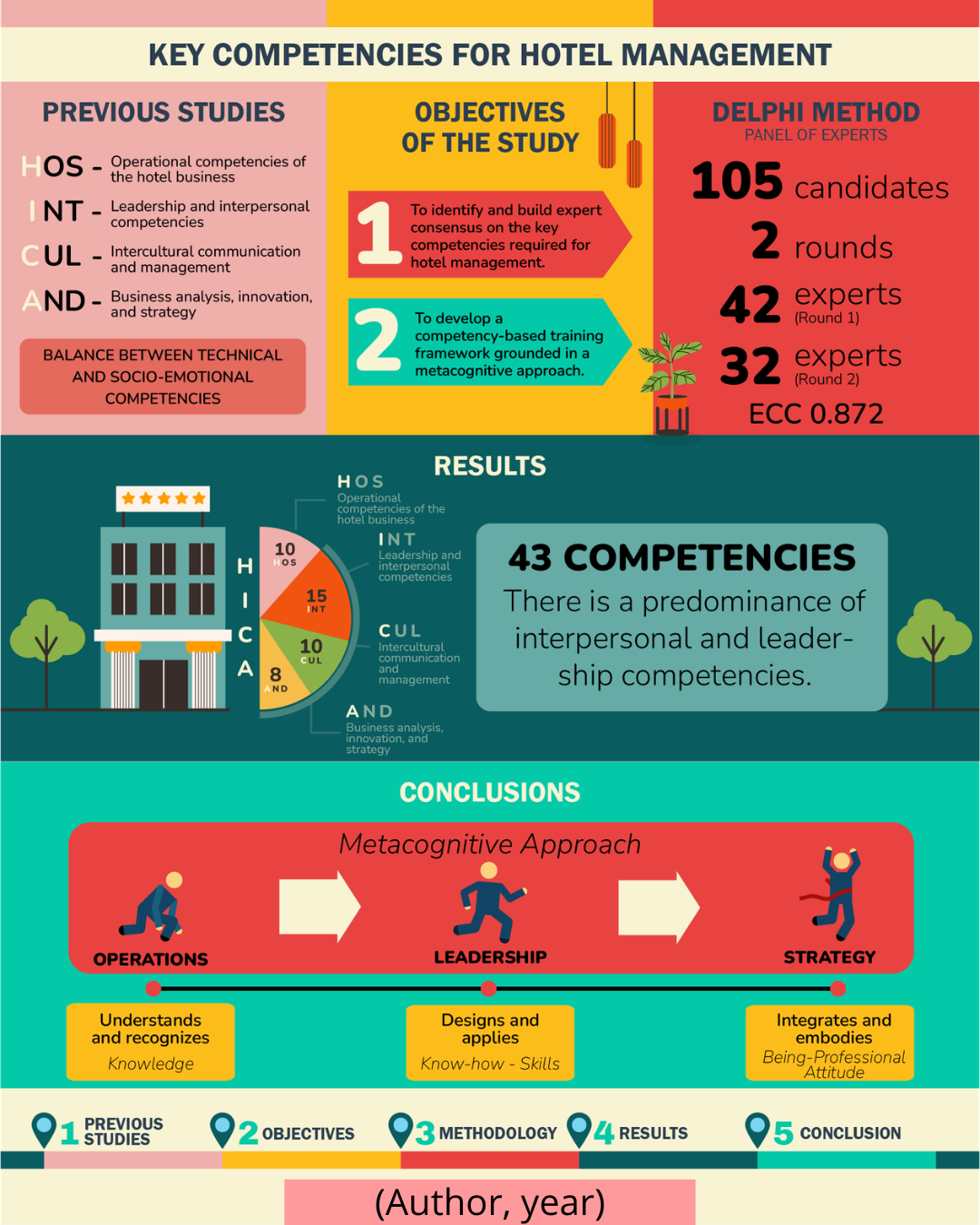
The transformation of the hospitality industry has increased the demand for managerial profiles capable of integrating technical, strategic, and socio-emotional competencies. However, a persistent gap remains between the competencies required by the labor market and those developed through formal education. This study aims to identify and validate the core competencies of hotel management and to translate them into a struc-tured training proposal. A two-round Delphi study was conducted with senior hotel management experts (n = 42 in round 1; n = 32 in round 2), using a competency matrix derived from prior research. Quantitative analysis included frequency distributions, weighted scores, and consensus indicators. The results show a high level of consensus stability (3.1% disagreement), leading to a final matrix of 43 competencies organized into four dimensions: operational, interpersonal, cultural-communicative, and strategic. In-terpersonal and leadership competencies emerged as the most prominent, highlighting their structural role in effective managerial performance. Based on these findings, a pro-gressive training framework is proposed, structured around three domains (operations, leadership, and strategy) and supported by a metacognitive pathway that integrates planning, monitoring, and evaluation processes. The study contributes to the profes-sionalization of hotel management by providing an empirically grounded competency model and a coherent framework for aligning educational programs with industry demands.
Keywords:
management
; competency framework
; metacognition
; leadership
; hospitality education
; curriculum design
; performance evaluation
; hospitality industry
1. Introduction
In recent decades, the hotel industry has undergone significant transformations linked to globalization, the digitization of processes, evolving consumer preferences, and new forms of human capital management. These transformations have had a direct impact on leadership and management models within the sector, demanding professional profiles capable of integrating technical, strategic, and socio-emotional competencies. In this context, the role of hotel management is being redefined not only as an operational and administrative function but as a complex role that demands strategic vision, situational leadership, adaptability, and a deep understanding of organizational functioning in changing contexts (Baum et al., 2016; Li et al., 2025; López et al., 2025; Testa & Sipe, 2012).
When addressing the concept of competence, it is inevitable to encounter some confusion at some point, given the lack of consensus regarding its conceptualization. Competence can be understood as an integrated set of knowledge, skills, attitudes, and personal traits that, when activated in a specific context, enable an individual to act effectively and achieve higher levels of professional performance. From this perspective, competence is not an isolated attribute, but rather a structured combination of cognitive, emotional, and behavioral resources that manifest themselves in action and develop progressively through experience and learning (Boyatzis, 1982; Draganidis & Mentzas, 2006; Le Boterf, 2001; McClelland, 1973; Spencer & Spencer, 1993).
In this study, competence is understood as an individual’s ability to integrate knowledge, skills, attitudes, and personal traits in order to respond effectively to specific professional situations and achieve high levels of performance. From this perspective, competence is not an isolated attribute, but rather a dynamic system of cognitive, emotional, and behavioral resources that manifest in action and are developed through experience, learning, and interaction with the organizational context (Boyatzis, 1982; Draganidis & Mentzas, 2006; Lévy-Leboyer, 1997; López et al., 2025; McClelland, 1973; Salanova et al., 2019; Vogel et al., 2021).
Consequently, the construct of competence can be understood as a person’s ability to achieve a certain level of performance in a specific organizational context. From this integrative perspective, competencies encompass knowledge (“knowing”), skills (“knowing how to do”), attitudes (“knowing how to be”), motivation (“wanting to do”), and aptitudes (“being able to do”), relatively stable elements related to achieving high performance in the exercise of professional responsibilities (Yáñez et al., 2016).
The growing complexity of the organizational environment and the demand for efficiency, innovation, and sustainability in the hotel sector have spurred interest in researching the essential competencies a person must possess to perform effectively as a hotel manager. In the academic sphere, this concern has led to studies focused on the analysis of job postings (Author, year), the forecasting of organizational trends (Baartman & de Bruijn, 2011; Silva et al., 2025; Yi et al., 2026), and the development of competency models that can guide both personnel selection and professional training to meet demands and responses regarding not only knowledge but also know-how and personal qualities— , aptitudes, and traits that enable professionals to maintain a balance in their organizational performance.
However, despite this progress, there remains a persistent gap between the competencies demanded by the labor market and those that typically form the curricular basis of educational programs related to hotel management (Yi et al., 2026). The competency-based approach allows for the articulation of knowledge, skills, and attitudes in relation to expected professional performance in real-world situations. In the case of hotel management, this involves integrating competencies in leadership, operational management, financial analysis, negotiation, conflict resolution, team management, innovation, and digital marketing, among others (Menzala-Peralta et al., 2023). But beyond the list, the key is to understand how these competencies combine and are weighted according to the sector’s contemporary challenges, and how they can be transformed into learning objectives within a training program.
From an educational perspective, this proposal aligns with the principles of competency-based training (Tobón, 2007; Yi et al., 2026), which emphasizes the development of complex, situated, and transferable skills. Within this framework, it is not enough to simply teach content; the goal is to design training experiences aimed at achieving relevant performance outcomes, in line with what the labor market expects and needs. Thus, this study is grounded in a logic of feedback between organizational analysis and educational proposals, recognizing that the quality of vocational training depends on its relevance, that is, its ability to address real-world problems and challenges—requiring a transformation of the hospitality sector (Canco et al., 2026).
Furthermore, within the framework of competency-based training, the construct of metacognition takes on special relevance, understood as the ability of individuals to understand, monitor, and regulate their own cognitive processes during learning and decision-making (Brown, 1987; Li et al., 2025; Schraw & Dennison, 2006). From this perspective, learning involves not only acquiring knowledge or skills in isolation, but also developing the ability to plan, monitor, and evaluate one’s own performance in complex and changing situations. In organizational settings such as the hospitality industry, where operational pressure, real-time decision-making, and the simultaneous management of various variables play crucial roles, metacognition becomes a key component for the effective exercise of the managerial role. Various contemporary approaches to higher education and professional training indicate that competencies only have educational value when individuals are able to reflect on their own learning and transfer it to real-world performance contexts (Baartman & de Bruijn, 2011; Tobón, 2007). In the context of hotel management, this ability is particularly relevant, given that leadership, people management, strategic decision-making, and adaptation to change require not only knowing what to do but also understanding the reasons for acting in a certain way and how to adjust actions in the face of unforeseen scenarios. Thus, integrating metacognition as a cross-cutting theme in the training of future hotel managers would strengthen self-regulated learning and foster the development of professional profiles capable of learning from experience and improving their performance in the long term (Baartman & de Bruijn, 2011; Li et al., 2025; Panadero, 2017; Zimmerman, 2002).
This article lies at the intersection of the organizational and educational fields. Its overall objective is to explore and analyze, through in-depth interviews with experts in the hotel sector, the essential competencies and knowledge required for the role of hotel manager, with the aim of developing a training program aligned with the industry’s current needs and trends. This purpose is broken down into three specific objectives: (1) To validate, using the Delphi technique, the proposed competency matrix for the hotel management position, incorporating the assessment of industry experts regarding the clarity, relevance, and appropriateness of each competency; (2) Identify and analyze the most relevant competencies based on these assessments; and (3) Develop a vocational training proposal that integrates these competencies in a structured and pedagogically viable manner.
2. Materials and Methods
2.1. Design
This study adopted an exploratory methodological approach (identifying specific managerial competencies that can be translated into training proposals) and a descriptive approach (characterizing experts’ assessments regarding the skills, knowledge, and attitudes they consider essential for effective hotel management, aligned with the sector’s contemporary challenges), all using the Delphi methodology. The design was structured longitudinally, as two rounds of expert interviews were conducted between 2021 and 2025, with the aim of reaching a progressive consensus regarding essential competencies. This methodological approach has proven effective in contexts where it is necessary to consolidate scattered or implicit professional and technical criteria, particularly in curriculum planning studies and the definition of professional profiles (Hasson et al., 2000; Skulmoski et al., 2007).
The Delphi technique was used to reach expert consensus on the competencies associated with hotel management. This structured method is based on successive rounds of consultation with specialists, maintaining anonymity among participants and providing controlled feedback between rounds to facilitate the revision of judgments and the convergence of opinions (Dalkey & Helmer, 1963; Hsu & Sandford, 2007; Skulmoski et al., 2007). In the present study, an adapted version of the method was applied, combining structured individual interviews with thematic analysis and coding of the responses. Subsequently, the results were consolidated using frequency and weighting matrices to identify the competencies with the highest level of consensus (Ramírez Chávez & Ramírez Torres, 2024).
The use of the Delphi method helps strengthen the rigor and legitimacy of the competency identification process, as it is based on the informed judgment of a panel of experts and allows for the progressive convergence of viewpoints around common criteria (Hsu & Sandford, 2007; Keeney et al., 2011; Skulmoski et al., 2007). In this regard, this study aligns with research that has employed this methodology to define professional profiles and design training programs in various fields, such as health, education, and organizational management (García-Peñalvo et al., 2020; Lara Garrido et al., 2024; Yáñez et al., 2016).
2.2. Participants
The sample consisted of professionals with proven experience in hotel management. The inclusion criteria for participation in the sample were: (a) having voluntarily completed the initial questionnaire (Author, year), (b) having 10 or more years of professional experience in hotel management positions, and (c) having specific academic training in hotel management or related fields. The 105 experts who had answered the initial questionnaire and expressed interest in participating in future studies (Author, year) were contacted, of whom 42 experts were interviewed in round 1 (response rate of 40.0% ) and 32 experts in round 2 (response rate of 76.2%), all during the 2021–2025 period.
The group of experts consisted of diverse profiles, including general managers, heads of key departments (food and beverage, revenue management, human resources, marketing, operations, etc.), and specialized consultants. This variety of roles enriched the analysis by providing multiple perspectives on hotel management. Specifically, regarding the expert participants in the second round, the average age was 49.31 years (± 7.168 years), with an average of 17.75 years of experience (± 5.775), mostly men (32.8%), primarily holding a Master’s or postgraduate degree (59.4%), and holding positions related to General Manager (31.3%) and Consulting (28.1%).
2.3. Instruments
The HICA model is proposed as an integrative framework for defining the competency profile of hotel management (Author, year). This model is structured into four complementary dimensions: Hospitality/Operations (HOS), which includes technical and operational competencies related to the management of hotel services and resources; Interpersonal/Leadership (INT), which encompasses socio-emotional, relational, and team management competencies; Cultural/Communication (CUL), which refers to communication, multicultural interaction, and contextual awareness; and Business Analysis, Innovation, and Entrepreneurship (AND), which integrates strategic, analytical, and decision-making competencies oriented toward organizational development. The HICA model emerges from the combination and integration of these four dimensions (HOS + INT + CUL + AND), forming a comprehensive competency matrix: Matrix HICA.
Together, these dimensions provide a comprehensive structure for understanding and organizing the competencies required for effective performance in contemporary hotel management. From the study by Author (year), the HICA was obtained, consisting of 80 competencies divided into four dimensions (Table 1).
2.4. Procedure
The following phases of the Delphi Method were followed (Herrera Cárdenas, 2023; Loor-Carvajal et al., 2020):
First phase: problem formulation. To define the problem, the competencies required for hotel management in contemporary contexts were described and analyzed. In previous studies, a comprehensive analysis was conducted of 200 job postings published on 22 specialized portals between 2020 and 2025, from which an initial map of recurring competencies was derived (Author, year).
Second phase: selection of experts: A non-probabilistic, snowball sampling procedure was used. We worked with an initial panel of experts selected based on criteria of professional experience and academic background. These experts had participated in a previous survey-based study and had given their consent to participate in subsequent interviews, which were conducted throughout 2021 and 2025 (Author, year).
Third phase: development and distribution of the questionnaires: Based on the previous matrix (Table 1), a first round was conducted, and participants were asked to select the 5 competencies from each dimension necessary to create the ideal profile of the director. For each competency, participants assigned a value from 1 to 5 based on its importance for the effective exercise of hotel management, which allowed for the weighting of perceived relevance. A second round of questions was conducted using the HICA matrix resulting from the first round, and an open-ended question was asked regarding the competencies per dimension that should constitute the ideal profile of the director. Both rounds were teleologically linked to the need to develop future hotel leaders and propose a training program that schools, universities, and HR departments can support to train these professionals.
The interviews were conducted via video calls on the Google Meet platform, with an average duration of two hours per session. They were recorded with the explicit authorization of each interviewee and subsequently transcribed by the principal investigator. Each interview was coded using an alphanumeric system based on the interviewee’s professional role (e.g., “D” for general management, “F” for food and beverage, “V” for revenue management, “M” for marketing, among others), which allowed the data to be organized without compromising the participants’ identities.
In the first wave, data on the expert agreement coefficients (EAC) of the experts consulted were obtained, following the procedure described by Loor-Carvajal et al. (2020). Additionally, frequencies by competency and weighted frequencies were obtained. Regarding the second wave, the selection frequencies of the competencies by dimension were calculated. The inclusion or exclusion of competencies in each dimension was evaluated using the methodology described in Yañez et al. (2016), eliminating those with a percentage equal to or less than 30% in the weighted total scores from the first wave and the absolute frequencies by dimension from the second wave.
The interpretive analysis led to the development of basic guidelines for a proposed higher education program in hotel management, linking competencies themselves to metacognitive strategies, as presented in numerous studies (Baartman & de Bruijn, 2011; Huang, 2014).
3. Results
All participating experts had an average CCE of 0.872 points (95% CI = 0.848–0.896 points), SD = 0.078 points, median = 0.850 points, minimum = 0.750 points, and maximum = 1.000 points. Therefore, all of them were considered during the first wave (CCE ≥ 0.600 points), while a higher score corresponded to highly competent experts (CCE ≥ 0.800 (n=36) and the rest with experts of average competence (0.600 ≤ CCE < 0.800) (n=6) (p < 0.001), as shown in Figure 1 regarding the percentages associated with the resulting CCE categories among the participating experts (n=42) by Author (year).
In the first wave, after consulting on the inclusion/exclusion of competencies by dimension, a HICA matrix consisting of 64 competencies was obtained, which was used in the second wave. Table 2 presents the quantitative results associated with both rounds. First, it indicates the frequency with which each competency was mentioned during the interview in the first round; and second, the sum of the experts’ ratings for including each competency in both the first and second rounds using a Likert scale where 1 is least important and 5 is most important.
Based on the total scores in Wave 1 and the inclusion frequencies in Wave 2, the following cutoff points (given by the 30th percentiles of each data set) were obtained by dimension and assessment instance (Table 3).
In this regard, the results of the inclusion/exclusion of competencies by dimension using the aforementioned cutoff points (excluding those competencies with values less than or equal to the P30) (and clarifying that, in cases of inconsistency in inclusion across waves, the competencies were excluded), specifically, the following competencies were excluded in HOS (Travel Agents, TTOO; Tourist Destination and Venue; Cleaning—Floor Department—; MICE—Meetings, Incentives, Conferences & Events—; External Services), in INT (Customer Service and Support; Autonomy; Stability; Initiative and Entrepreneurial Spirit; Proactivity—Active/Daring—; Problem Solving; Teamwork), in CUL (Oral and written communication in native language; Expert-level written communication in native language; Computer skills; Networking; PMS, CRM; Social Media) and in AND (Legal and regulatory dimension; Organizational asset dimension –investments–; COVID-19 protocol).
In this regard, considering the total of 64 competencies evaluated, discrepancies were found between waves 1 and 2 in only two cases (3.1%). As a result, a HICA matrix comprising 43 competencies was obtained, distributed by dimension as shown in Table 4.
4. Discussion
The effective participation of experts (42 in round 1 and 32 in round 2) and the increase in response rate (from 40.0% to 76.2%) indicate panel consolidation and progressive convergence, a defining feature of the Delphi method (Dalkey & Helmer, 1963; Hsu & Sandford, 2007). The calculation of the coefficient of expert competence (CCE) and the reporting of descriptive statistics further strengthen the credibility of expert judgment. All participants exceeded the minimum threshold (CCE ≥ 0.600), with an average of 0.872, supporting both panel consistency and the validity of the results in line with methodological standards for Delphi studies in professional competence research (Skulmoski et al., 2007).
A key finding is the high stability of consensus achieved. Of the 64 competencies initially evaluated, discrepancies were observed in only 2 cases (3.1%), resulting in a final matrix of 43 competencies. This low level of disagreement, uncommon in studies of managerial competencies, suggests the identification of a cross-cutting core of competencies relevant to contemporary hotel management.
The final matrix is structured into four dimensions—HOS, INT, CUL, and AND—showing a balanced distribution of competencies across operational, interpersonal, communicative, and strategic domains. Notably, the predominance of interpersonal and leadership competencies (INT) reflects their structural role in managerial performance, rather than a secondary or complementary function. Previous research has consistently highlighted the importance of emotional intelligence, communication, ethics, and team management as key integrative mechanisms enabling effective performance under conditions of uncertainty and operational pressure (Baum et al., 2016; Brown, 1987; Testa & Sipe, 2012). The consensus observed reinforces the idea that these competencies function as transversal enablers of managerial effectiveness.
From an educational perspective, the distribution of competencies (10–15–10–8) underscores that hotel management is not limited to technical-operational expertise but fundamentally involves relational and strategic leadership. This aligns with prior literature emphasizing the centrality of people management in service-intensive environments (Baum et al., 2016; Testa & Sipe, 2012). Moreover, the prominence of competencies related to adaptability, strategic thinking, and decision-making suggests that effective performance relies on complex cognitive processes involving planning, monitoring, and evaluation (Fayyad et al., 2025). In this context, metacognition emerges as a key integrative component, enabling the alignment between knowledge, skills, and professional action (Brown, 1987; Schraw & Dennison, 2006). This perspective is consistent with models of self-regulated learning, which identify planning, monitoring, and evaluation as essential processes in expert performance (Panadero, 2017; Pintrich, 2000; Zimmerman, 2002).
The variation in inclusion thresholds between Delphi rounds, particularly in the CUL dimension, suggests a process of expert recalibration, whereby certain competencies—especially communicative and cultural—are recognized as baseline requirements for managerial performance, even if they are not always perceived as differentiating factors. This interpretation is consistent with current transformations in the hospitality industry, characterized by digitalization, increasing multicultural interaction, and the growing importance of branding and sustainability.
At a more specific level, the results highlight the relevance of competencies such as Finance–Accounting, Adaptation to Change, Organizational Skills, and Mastery of Communication Techniques, which combine high scores and frequency of inclusion. These findings reinforce the need for training programs that integrate business management, leadership, and communication in a balanced and applied manner.
Moving beyond the mere identification of competencies, this study proposes a training framework grounded in competency-based education, where competencies are understood as situated performances integrating knowledge, skills, and attitudes (Baartman & de Bruijn, 2011; Tobón, 2007). Accordingly, training programs should be structured around problem-based and experiential learning contexts—such as case studies, simulations, and real-world projects—allowing learners to demonstrate integrated performance in complex situations.
The distinctive contribution of this proposal lies in the incorporation of metacognition as a cross-cutting regulatory axis of competency development. Metacognition, defined as the knowledge and regulation of one’s own cognitive processes (Brown, 1987; Schraw & Dennison, 2006), enables professionals to plan, monitor, and evaluate their decisions, thereby enhancing adaptive performance in dynamic environments. This aligns with the literature on self-regulated learning and leadership development, which emphasizes reflection and continuous adjustment as key components of professional expertise (Panadero, 2017; Zimmerman, 2002; Baum et al., 2016).
Based on these findings, a progressive training pathway can be proposed, structured into three levels: an operational foundation (HOS and initial CUL), a leadership-focused stage (INT), and a strategic level (AND). This structure reflects the evolution from technical understanding to interpersonal management and to strategic integration and requires assessment systems based on observable performance and metacognitive processes (Baartman & de Bruijn, 2011; Elshaer et al., 2025).
Overall, the identified competency profile reflects the ongoing transformation of the hospitality sector, where managerial roles increasingly demand the integration of technical, strategic, and socio-emotional competencies. In this context, the incorporation of metacognitive strategies into training design facilitates the development of reflective professionals capable of adapting to complex and evolving environments (Arjona-Granados et al., 2025; Menzala-Peralta et al., 2023; Tobón, 2007).
Finally, the HICA model should be understood not as a static list of competencies, but as a progressive framework for competency development articulated across the domains of operations, leadership, and strategy (Baartman & De Bruijn, 2011; Mulder, 2019; Tobón, 2007). Its structure enables translation into higher education through the integration of generic and specific competencies and the use of assessable descriptors aligned with learning outcomes (Jackson, 2015; Mulder, 2019; Tomlinson, 2012). Beyond identifying competencies, the model provides a coherent framework for bridging the gap between academic training and professional performance in hotel management (Baum et al., 2016; Huang, 2014; Testa & Sipe, 2012).
4.1. Block 1. Organization of the Educational Pathway
The competency matrix validated through the Delphi process is organized as a progressive educational pathway structured around three domains of increasing complexity: operations, leadership, and strategy. This sequence is consistent with competency-based education approaches, which understand competency development as a progressive process in which technical mastery provides the basis for the subsequent integration of interpersonal and strategic competencies (Baartman & De Bruijn, 2020; Mulder, 2019).
The proposed metacognitive pathway is not intended to replace classical taxonomies of cognitive complexity, such as those of Bloom or Krathwohl, but rather to complement them from a professional development perspective. In this model, the progression from “knowing” to “knowing how” and “being” should not be interpreted as a rigid cognitive hierarchy, but as a developmental sequence through which disciplinary knowledge is transformed into situated action and into strategic professional performance. Different cognitive levels may be activated within each domain; however, the pathway progressively emphasizes understanding the system, acting effectively with and through others, and integrating performance strategically.
Within this structure, the operational domain, linked primarily to HOS competencies, constitutes the cognitive and metacognitive foundation of later development. Professional learning in this stage is not limited to task execution but involves the active organization of disciplinary knowledge and its regulation in context, which is essential for transfer to novel or complex situations (De León & Zarazúa, 2024; Li et al., 2025; Silva et al., 2025). From this perspective, “knowing” implies not only acquiring knowledge, but also understanding when, how, and why to apply it.
The leadership domain, structured around INT competencies, represents the transition from technical mastery to people management and organizational coordination. At this level, interpersonal and socio-emotional competencies become central to conflict management, responsible decision-making, teamwork, and the regulation of interaction in service-intensive environments. Previous research has shown that emotional and socio-emotional competencies are closely associated with professional effectiveness and organizational performance in complex hospitality contexts (Baum et al., 2016; Draganidis & Mentzas, 2006; Elshaer et al., 2025; Fayyad et al., 2025; Khairy et al., 2023; Kim et al., 2011; Shum et al., 2018; Williams et al., 2020). From this perspective, leadership is conceived not as a fixed trait, but as a developable competency grounded in self-regulation, emotional awareness, and relational capacity.
The strategic domain, associated with the AND block, integrates competencies related to planning, structural analysis, sustainability, innovation, and decision-making in uncertain environments. This level represents the culmination of the pathway, as it requires the integration of prior learning into a systemic vision capable of anticipating scenarios, assessing risks, and guiding organizational action over the medium and long term (Fayyad et al., 2025). In metacognitive terms, such performance depends not only on the mastery of cognitive strategies, but also on conditional knowledge regarding when, how, and why to apply them, which is essential for complex problem-solving and adaptive decision-making (De León & Zarazúa, 2024; Mayor & González, 1993; Seraj, 2025).
Taken together, the operations–leadership–strategy progression reflects a coherent training architecture in which competency development advances from cognitive mastery to interpersonal regulation and finally to strategic integration. In this sense, the HICA model provides a developmental structure for hotel management education that is aligned with contemporary perspectives on competency-based learning, metacognition, and professional performance in complex environments (Elshaer et al., 2025; Mulder, 2019; Panadero, 2017; Zimmerman, 2002).
4.2. Block 2. Translation of the HICA Model into the Higher Education Framework
From the perspective of competency-based higher education, the progressive structure of the HICA model can be coherently translated into the university classification of generic and specific competencies. This distinction goes beyond formal categorization, constituting a curricular architecture oriented toward graduate profiles and employability, where competencies are organized according to their disciplinary specificity and degree of transferability (Mulder, 2019).
Competencies within the leadership domain (INT) correspond primarily to generic competencies, understood as transferable skills that enable effective action across diverse professional contexts. These include decision-making, adaptability, leadership, and emotional intelligence, which are widely recognized as central to employability and professional development in dynamic environments (Elshaer et al., 2025; Jackson, 2015; Yi et al., 2026). Accordingly, the INT dimension should be interpreted not as a complementary “soft” component, but as a core axis of cross-cutting professional competence.
In contrast, competencies associated with the operational and strategic domains (HOS and AND) align with specific competencies, as they are directly linked to the technical and analytical knowledge characteristic of hotel management. These competencies—such as Finance–Accounting, Revenue Management, or Strategy Development—are grounded in contextualized professional knowledge and are developed through situated learning experiences (Baum et al., 2016; Elshaer et al., 2025; Mulder, 2019).
Additionally, competencies within the cultural-communicative domain (CUL) assume a transversal role, connecting different areas of the educational pathway. These competencies facilitate the integration of disciplinary knowledge with diverse professional contexts, promoting coherence between academic learning and workplace practice (Baartman & De Bruijn, 2020; Ghotbi & Dyliaeva, 2025). In contemporary settings, this integrative function is further reinforced by the growing importance of digitalization and technology management in hospitality, which have become essential components of professional performance (Canco et al., 2026).
Therefore, the translation of the HICA model into higher education does not fragment its structure but rather rearticulates it within a curricular logic aligned with competency-based approaches. This reinforces the model’s structural robustness and its capacity to bridge academic training with the evolving demands of the hospitality industry.
4.3. Block 3. System of Descriptors and Competency Assessment
The HICA model not only identifies and classifies competencies but also incorporates a structured system of descriptors that enables their operationalization within the educational context. Each competency is defined through conceptual descriptions, behavioral indicators, and progressive levels of achievement, facilitating its translation into observable and assessable learning outcomes. In competency-based education, alignment between competency definition, learning activities, and assessment constitutes a fundamental curricular principle (Baartman & De Bruijn, 2020; Mulder, 2019). In this sense, the use of explicit descriptors reduces interpretive ambiguity and shifts assessment from a focus on final outcomes to the evaluation of contextualized performance.
The literature on metacognition and self-regulation reinforces this perspective, emphasizing that competency development requires not only knowledge acquisition but also the conscious regulation of performance. In particular, planning, monitoring, and evaluation processes are essential for the transition from technical to strategic knowledge (De León & Zarazúa, 2024; Silva et al., 2025). Consequently, competency descriptors serve both an external evaluative function and an internal reference for learner self-regulation.
The organization of the HICA model into progressive levels of performance, articulated through a metacognitive pathway, enables the identification of different degrees of mastery consistent with contemporary approaches to professional development. In this regard, authentic assessment strategies—such as graded rubrics and performance-based evaluation—have been shown to promote critical thinking, reflective learning, and the transfer of knowledge to real professional contexts (Seraj, 2025; Silva et al., 2025).
Overall, the system of descriptors transforms the HICA matrix into an assessable, transparent, and technically robust model, moving beyond abstract competency lists and providing a solid operational foundation for curriculum design in higher education.
4.4. Metacognition as the Regulatory Axis of the Educational Pathway
The HICA model is complemented by a Metacognitive Pathway conceived as a cross-cutting construct that regulates competency progression from the operational to the strategic level. Rather than constituting an additional competency, this pathway functions as a self-regulatory mechanism that articulates the planning, monitoring, and evaluation of performance across educational stages.
Metacognition, defined as the knowledge and control of one’s own cognitive processes (Schraw & Dennison, 2006), is widely recognized as a key factor in deep learning, self-regulation, and the transfer of knowledge to new situations. Accordingly, its integration into competency-based training enhances strategic thinking and adaptive performance in complex professional contexts. Within this framework, the progression from “knowing” to “knowing how” and “being” reflects the gradual transformation of disciplinary knowledge into situated action and into strategic professional integration. This evolution relies on conditional knowledge—understanding when, how, and why to apply specific strategies—which is a defining feature of expert performance (De León & Zarazúa, 2024).
The explicit incorporation of metacognition also responds to evidence that its absence limits autonomy, reflective capacity, and effective decision-making in complex environments (Panadero, 2017; Pintrich, 2000; Schraw & Dennison, 2006; Zimmerman, 2002). Therefore, metacognition is not a methodological complement but a structuring principle that ensures coherence between competency development, assessment, and professional transfer.
To illustrate this pathway, the competency “Teamwork” (TW), classified as a generic competency within the leadership domain, can be developed progressively from the understanding of collaborative processes to the application of coordination and communication strategies, and finally to the strategic integration of collective performance. This progression exemplifies how metacognitive regulation supports the evolution from basic understanding to complex, context-sensitive professional action.
This framework is not an isolated sequence but a replicable matrix for the set of competencies in the HICA model. Each competency can be accompanied by a metacognitive pathway that outlines the planning, monitoring, and evaluation processes involved in its development, enabling a transition from initial understanding to the strategic integration of professional performance.
In this way, the Metacognitive Pathway not only regulates learning but also configures a structured model of competency development in which each competency unfolds through progressive levels of cognitive, relational, and strategic complexity. This potential for systematic replication reinforces the internal consistency of the HICA model and positions it as a comprehensive educational proposal, capable of articulating professional profile, curriculum design, and self-regulation processes within a coherent framework.
Taken together, the progressive articulation of the HICA model, its curricular translation, its system of assessable descriptors, and the incorporation of the Metacognitive Pathway form an integrated educational architecture. The model not only identifies a consensus-based professional profile but also transforms it into a structured, assessable, and self-regulated curricular proposal, aligned with contemporary approaches to competency-based higher education.
5. Conclusions
This study provides robust empirical evidence for defining a structured competency profile for contemporary hotel management. The application of the Delphi method allowed for the consolidation of a final matrix of 43 competencies from the 64 initially evaluated, with a minimal level of disagreement (3.1%), indicating a relatively stable and cross-cutting core of competencies within the sector. This result strengthens the validity of the proposed profile and helps overcome previous fragmented approaches to identifying managerial competencies (Keeney et al., 2011; Skulmoski et al., 2007).
The predominance of interpersonal and leadership competencies within the final matrix confirms that hotel management cannot be conceived exclusively as a technical-operational function, but rather as a relational and strategic role in contexts of high organizational complexity (Baum et al., 2016; Elshaer et al., 2025; Testa & Sipe, 2012). The simultaneous presence of purposeful competencies—such as finance, revenue, or strategic planning—alongside socio-emotional competencies—such as leadership, emotional intelligence, or the ability to adapt to change—reinforces the idea that effective performance requires the integration of cognitive, emotional, and metacognitive competencies.
The study’s main contribution lies in translating the consensus-based profile into a progressive training framework structured around three domains—operations, leadership, and strategy—consistent with contemporary approaches to competency-based education (Baartman & De Bruijn, 2011; Mulder, 2019). This organization not only allows for the sequencing of competency development from technical mastery toward strategic integration but also facilitates its operationalization through assessable descriptors and observable learning outcomes.
Distinctively, the model incorporates a Metacognitive Pathway as a cross-cutting axis regulating competency development. Metacognition, understood as the knowledge and control of one’s own cognitive processes (Panadero, 2017; Schraw &Dennison, 2006; Zimmerman, 2002), serves as a structuring mechanism that enables the planning, monitoring, and evaluation of professional action. In organizational contexts characterized by uncertainty, operational pressure, and complex decision-making, self-regulation constitutes an essential component of expert performance (Pintrich, 2000). The explicit integration of metacognition into training design promotes the transfer of learning to real-world scenarios, in line with the principles of authentic assessment and competency-based training (Baartman & De Bruijn, 2011). These learning processes result in observable behaviors that can translate into satisfactory job performance to both the client (Arjona-Granados et al., 2025) and the companies (Salanova et al., 2019).
Consequently, the HICA model should not be interpreted solely as a descriptive framework for professional profiles, but rather as a structured proposal for self-regulated competency development, capable of integrating organizational analysis, curriculum design, and performance evaluation into a coherent framework.
First, the use of non-probabilistic sampling, although methodologically appropriate for the application of the Delphi method (Hsu & Sandford, 2007), limits the possibility of statistically generalizing the results to the hotel industry as a whole. Second, the defined competency profile reflects the consensus of a specific panel for the 2021–2025 period, so it may vary depending on the type of establishment, cultural context, or market segment. Third, the study does not include subsequent empirical validation of the proposed model’s curricular implementation, so the educational effectiveness of the pathway must be assessed in applied studies.
Based on the findings, it is recommended that hotel management training programs incorporate authentic assessment systems based on performance evidence—such as simulations, case studies, integrative projects, or portfolios—while avoiding approaches focused exclusively on content delivery (Baartman & De Bruijn, 2011). Likewise, it is essential to integrate explicit metacognitive strategies—planning, monitoring, and reflective evaluation—into each training module as a cross-cutting theme that promotes self-regulation and transfer (Panadero, 2017; Schraw & Dennison, 1994; Zimmerman, 2002). Finally, it is recommended to strengthen the link between universities and industry through supervised professional internships and 360° feedback mechanisms, in line with research recommendations on the tourism workforce (Baum et al., 2016).
As future lines of research, we propose, first, the piloting and longitudinal evaluation of the proposed training pathway, measuring its impact on competency performance, self-regulation, and career progression. Second, replicating the Delphi process across different hotel segments would allow for the analysis of contextual variations in competency profiles. Third, we suggest developing explanatory models that examine the relationship between metacognition, emotional intelligence, and strategic decision-making in contexts of high organizational complexity. Finally, it is pertinent to advance the validation of specific instruments—such as the Metacognitive Awareness Inventory (MAI)—adapted to the field of hotel management (Schraw & Dennison, 1994).
In a sector characterized by volatility and systemic complexity, training hotel managers involves not only imparting knowledge but also developing professionals capable of integrating, regulating, and transforming their own performance. In this regard, the HICA model provides a concrete structure to achieve this, proposing an integrative framework in which competencies, assessment, and metacognition are articulated as a system oriented toward the development of leaders capable of strategically learning from experience in complex organizational environments.
6. Patents
Supplementary Materials
The following supporting information can be downloaded at: Preprints.org, Figure 2: Key competencies for hotel management.
Author Contributions
Conceptualization, Author 1; methodology, Author 1; software, Author 1; validation, Author 1; formal analysis, Author 1; investigation, Author 1; resources, Author 1; data curation, Author 1; writing—original draft preparation, Author 1; writing—review and editing, Author 1 and Author 2; visualization, Author 1; supervision, Author 2; project administration, Author 1. All authors have read and agreed to the published version of the manuscript.
Funding
This research received no external funding.
Institutional Review Board Statement
Ethical review and approval were waived for this study due to the absence of clinical experimentation with human subjects, invasive procedures, or the handling of biological samples, in accordance with Law 14/2007 on Biomedical Research. The study was reviewed by the Research Ethics Committee of Camilo José Cela University (CEI-UCJC), Madrid, Spain (reference code: 19_HICA; report date: November 8, 2021), and was conducted in accordance with institutional ethical guidelines and the principles of the Declaration of Helsinki.
Informed Consent Statement
Informed consent was obtained from all subjects involved in the study.
Data Availability Statement
The data presented in this study are available on request from the corresponding author. The data are not publicly available due to privacy and confidentiality considerations.
Acknowledgments
The authors would like to thank the professionals from the hotel sector who voluntarily participated as members of the Delphi expert panel. Their experience, insights, and collaboration were essential to the development of this study.
Conflicts of Interest
The authors declare no conflicts of interest.
Abbreviations
The following abbreviations are used in this manuscript:
| AND | Business Analysis, Innovation, and Entrepreneurship dimension |
| CCE | Coefficient of Expert Competence |
| CRM | Customer Relationship Management |
| CUL | Cultural / Communication dimension |
| EAC | Expert Agreement Coefficient |
| F&B | Food and Beverage |
| HICA | Matrix / Model: HOS + INT + CUL + AND |
| HOS | Hospitality / Operations dimension |
| HR | Human Resources |
| INT | Interpersonal / Leadership dimension |
| MICE | Meetings, Incentives, Conferences, and Events |
| P30 | 30th percentile (cut-off point used for competency selection) |
| PMS | Property Management System |
| TTOO | Tour Operators |
References
- Author (YEAR). [PubMed]
- Arjona-Granados, M.d.P.; Galván-Vera, A.; Sevilla-Morales, J.Á.; Legarreta-González, M.A. Cross-Cultural Competence in Tourism and Hospitality: A Case Study of Quintana Roo, Mexico. World 2025, 6, 108. [Google Scholar] [CrossRef]
- Baartman, L.K.; de Bruijn, E. Integrating knowledge, skills and attitudes: Conceptualising learning processes towards vocational competence. Educ. Res. Rev. 2011, 6, 125–134. [Google Scholar] [CrossRef]
- Baum, T. Human Resource Management for Tourism, Hospitality, and Leisure: An International Perspective, 2nd ed.; Cengage Learning, 2015. [Google Scholar]
- Baum, T.; Kralj, A.; Robinson, R.N.; Solnet, D.J. Tourism workforce research: A review, taxonomy and agenda. Ann. Tour. Res. 2016, 60, 1–22. [Google Scholar] [CrossRef]
- Boyatzis, R.E. The competent manager: A model for effective performance; John Wiley & Sons, 1982. [Google Scholar]
- Brown, A.L. Metacognition, executive control, self-regulation, and other more mysterious mechanisms. In Metacognition, Motivation, and Understanding; Weinert, F. E., Kluwe, R. H., Eds.; Lawrence Erlbaum, 1987; pp. 65–116. [Google Scholar]
- Canco, I.; Kruja, D.; Kola, F. Digital Skills and Workforce Segmentation in Tourism and Hospitality. Tour. Hosp. 2026, 7, 63. [Google Scholar] [CrossRef]
- Dalkey, N.; Helmer, O. An Experimental Application of the DELPHI Method to the Use of Experts. Manag. Sci. 1963, 9, 458–467. [Google Scholar] [CrossRef]
- Jiménez, S.D.L.; Vilchis, J.L.Z. Procesos MetaCognitivos para el mejoramiento del aprendizaje reflexivo. Eur. Public Soc. Innov. Rev. 2024, 10. [Google Scholar] [CrossRef]
- Draganidis, F.; Mentzas, G. Competency based management: a review of systems and approaches. Inf. Manag. Comput. Secur. 2006, 14, 51–64. [Google Scholar] [CrossRef]
- Elshaer, I.A.; Azazz, A.M.S.; Mohammad, A.A.A.; Fayyad, S. Decoding Success: The Role of E-Learning Readiness in Linking Technological Skills and Employability in Hospitality Management Graduates. Information 2025, 16, 47. [Google Scholar] [CrossRef]
- Fayyad, S.; Elsawy, O.; Wafik, G.M.; A Abotaleb, S.; Abdelrahman, S.A.A.; Moneim, A.A.; Omran, R.; Attia, S.; Mansour, M.A. Leaders’ STARA Competencies and Green Innovation: The Mediating Roles of Challenge and Hindrance Appraisals. Tour. Hosp. 2025, 6, 202. [Google Scholar] [CrossRef]
- Flavell, J.H. Metacognition and cognitive monitoring: A new area of cognitive–developmental inquiry. Am. Psychol. 1979, 34, 906–911. [Google Scholar] [CrossRef]
- García-Peñalvo, F.J.; Corell, A.; Abella-García, V.; Grande, M. La evaluación online en la educación superior en tiempos de la COVID-19. Educ. Knowl. Soc. (EKS) 2020, 21, 26. [Google Scholar] [CrossRef]
- Ghotbi, N.; Dyliaeva, K. Inclusive Tourism: Bridging the Gap Between Education and Accessible Services in Japan. Tour. Hosp. 2025, 6, 235. [Google Scholar] [CrossRef]
- Hasson, F.; Keeney, S.; McKenna, H. Research guidelines for the Delphi survey technique. J. Adv. Nurs. 2000, 32, 1008–1015. [Google Scholar] [CrossRef] [PubMed]
- Herrera Cárdenas, A. Validación de la propuesta de una tesis mediante el método Delphi. [Validation of a thesis proposal using the Delphi Method]. Scientific Journal of the Center for Psychopedagogy and Research in Higher Education 2023, 10, 65–74. [Google Scholar] [CrossRef]
- Hsu, C.C.; Sandford, B.A. The Delphi technique: Making sense of consensus. Practical Assessment, Research, and Evaluation 2007, 12, 1–8. [Google Scholar] [CrossRef]
- Huang, R. Industry engagement with tourism and hospitality education: An examination of the students’ perspective. In The Routledge handbook of tourism and hospitality education; Dredge, D., Airey, D., Gross, M. J., Eds.; Routledge, 2014; pp. 408–421. [Google Scholar]
- Jackson, D. Employability skill development in work-integrated learning: Barriers and best practice. Stud. High. Educ. 2015, 40, 350–367. [Google Scholar] [CrossRef]
- Keeney, S.; Hasson, F.; McKenna, H. The Delphi Technique in Nursing and Health Research; Wiley: Hoboken, NJ, United States, 2010. [Google Scholar]
- Khairy, H.A.; Baquero, A.; Al-Romeedy, B.S. The Effect of Transactional Leadership on Organizational Agility in Tourism and Hospitality Businesses: The Mediating Roles of Organizational Trust and Ambidexterity. Sustainability 2023, 15, 14337. [Google Scholar] [CrossRef]
- Kim, Y.; Kim, S.S.; Seo, J.; Hyun, J. Hotel employees’ competencies and qualifications required according to hotel divisions. Journal of Tourism, Hospitality & Culinary Arts 2011, 3, 1–18. Available online: https://ir.uitm.edu.my/id/eprint/44415/1/44415.pdf.
- Kolb, D.A. Experiential Learning: Experience as the Source of Learning and Development; Prentice Hall, 1984. [Google Scholar]
- Garrido, A.S.L.; Rodríguez-Carrillo, J.; Mérida-Serrano, R.; González-Alfaya, E. Aplicación del método Delphi en el diseño de un perfil competencial para el profesorado de calidad en Educación Infantil. Profesorado-Revista De Curric. Y Form. De Profr. 2024, 28, 25–49. [Google Scholar] [CrossRef]
- Le Boterf, G. Competency Engineering. In Gestión 2000; 2001. [Google Scholar]
- Lévy-Leboyer, C. Competency management; Ediciones Gestión, 2000. [Google Scholar]
- Li, Y.; Marneros, S.; Efstathiades, A.; Papageorgiou, G. A Framework of Core Competencies for Effective Hotel Management in an Era of Turbulent Economic Fluctuations and Digital Transformation: The Case of Shanghai, China. Tour. Hosp. 2025, 6, 130. [Google Scholar] [CrossRef]
- Loor-Carvajal, G.I.; Rezabala-Encalada, Y.A.; Sánchez-Briones, Y.A.; Pozo-Rodríguez, J.M. El método Delphi: Una aproximación a su utilización en la evaluación del desempeño en Ecuador. [The Delphi method: An approach to its use in performance evaluation in Ecuador]. Dominio de las Ciencias 2020, 6, 1462–1483. [Google Scholar] [CrossRef]
- López, S.M.C.; Guerra, I.R.; Barreal, J. Theoretical Framework and Preliminary Evaluation of a Model for Analysing the Qualified Personnel Needing’s in the Hotel Accommodation Sector. Tour. Hosp. 2025, 6, 21. [Google Scholar] [CrossRef]
- Mayor, J.; Suengas, A.; González-Marqués, J. Metacognitive Strategies: Learning to Learn; Síntesis, 1993. [Google Scholar]
- Menzala-Peralta, C.C.; Ortega-Menzala, E. Evaluación basada en competencias en educación superior. [Competency-Based Assessment in Higher Education]. Horizontes, Journal of Research in Educational Sciences 2023, 7, 836–851. [Google Scholar] [CrossRef]
- Mulder, M. Foundations of competence-based vocational education and training. In Handbook of vocational education and training: Developments in the changing world of work; McGrath, S., Mulder, M., Papier, J., Suart, R., Eds.; Springer, 2019; pp. 1–23. [Google Scholar] [CrossRef]
- Panadero, E. A Review of Self-regulated Learning: Six Models and Four Directions for Research. Front. Psychol. 2017, 8, 422. [Google Scholar] [CrossRef]
- Pintrich, P.R. Chapter 14 - the role of goal orientation in self-regulated learning. In Handbook of self-regulation; Boekaerts, M., Pintrich, P.R., Zeidner, M., Eds.; Academic Press, 2000; pp. 451–502. [Google Scholar] [CrossRef]
- Chávez, M.A.R.; Torres, T.Z.R. El método DELPHI como herramienta de investigación. Una revisión. LATAM Rev. Latinoam. de Cienc. Sociales y Humanidades 2024, 5. [Google Scholar] [CrossRef]
- Salanova, M.; Llorens, S.; Martínez, I. Healthy organizations: A positive psychology perspective; Aranzadi, 2019. [Google Scholar]
- Schraw, G.; Dennison, R.S. Assessing Metacognitive Awareness. Contemp. Educ. Psychol. 1994, 19, 460–475. [Google Scholar] [CrossRef]
- Schraw, G.; Crippen, K.J.; Hartley, K. Promoting Self-Regulation in Science Education: Metacognition as Part of a Broader Perspective on Learning. Res. Sci. Educ. 2006, 36, 111–139. [Google Scholar] [CrossRef]
- Seraj, A.H.A.; Hasanein, A.M.; Al-Romeedy, B.S.; Elziny, M.N. Redefining the Digital Frontier: Digital Leadership, AI, and Innovation Driving Next-Generation Tourism and Hospitality. Adm. Sci. 2025, 15, 369. [Google Scholar] [CrossRef]
- Silva, S.; Silva, C.; Oliveira, M. The Value of Skills for a Sustainable Tourism and Hospitality Industry. Tour. Hosp. 2025, 6, 221–236. [Google Scholar] [CrossRef]
- Skulmoski, G.J.; Hartman, F.T.; Krahn, J. The Delphi Method for Graduate Research. J. Inf. Technol. Educ. Res. 2007, 6, 1–21. [Google Scholar] [CrossRef]
- Testa, M.R.; Sipe, L. Service-leadership competencies for hospitality and tourism management. Int. J. Hosp. Manag. 2012, 31, 648–658. [Google Scholar] [CrossRef]
- Tobón, S. El enfoque complejo de las competencias y el diseño curricular por ciclos propedéuticos. [The complex approach to competencies and curriculum design by preparatory cycles]. Acción Pedagógica 2007, 16, 14–28. [Google Scholar]
- Tomlinson, M. Graduate Employability: A Review of Conceptual and Empirical Themes. High. Educ. Policy 2012, 25, 407–431. [Google Scholar] [CrossRef]
- Vogel, D.; Sohn, A.P.; Gomes, K. Analysis of Competencies Models in Culinary Arts Higher Education. J. Culin. Sci. Technol. 2021, 19, 171–186. [Google Scholar] [CrossRef]
- Williams, J.A.; Benjamin, S.; Kitterlin, M.; Jung, E. Developing self-efficacy: does switching to a hospitality major matter? J. Teach. Travel Tour. 2019, 20, 121–134. [Google Scholar] [CrossRef]
- Yañez, M.; Avila, J.; Bermudez, M.; De Miguel, I.; Bellver, V.; Guilabert, M.; Mira, J. Estudio Delphi para identificar las competencias en gestión del directivo de enfermería. Rev. de Calid. Asist. 2016, 31, 113–121. [Google Scholar] [CrossRef] [PubMed]
- Yi, E.; Warokka, A.; Aqmar, A.Z. Bridging the Gap: Competency Alignment in Tourism and Hospitality Education Across South Korea, Singapore, and Hong Kong. Tour. Hosp. 2026, 7, 74. [Google Scholar] [CrossRef]
- Zimmerman, B.J. Becoming a Self-Regulated Learner: An Overview. Theory Into Pr. 2002, 41, 64–70. [Google Scholar] [CrossRef]
Figure 1.
The research theoretical framework HICA Matrix (Author, year). Source: Prepared by the researcher.
Figure 1.
The research theoretical framework HICA Matrix (Author, year). Source: Prepared by the researcher.
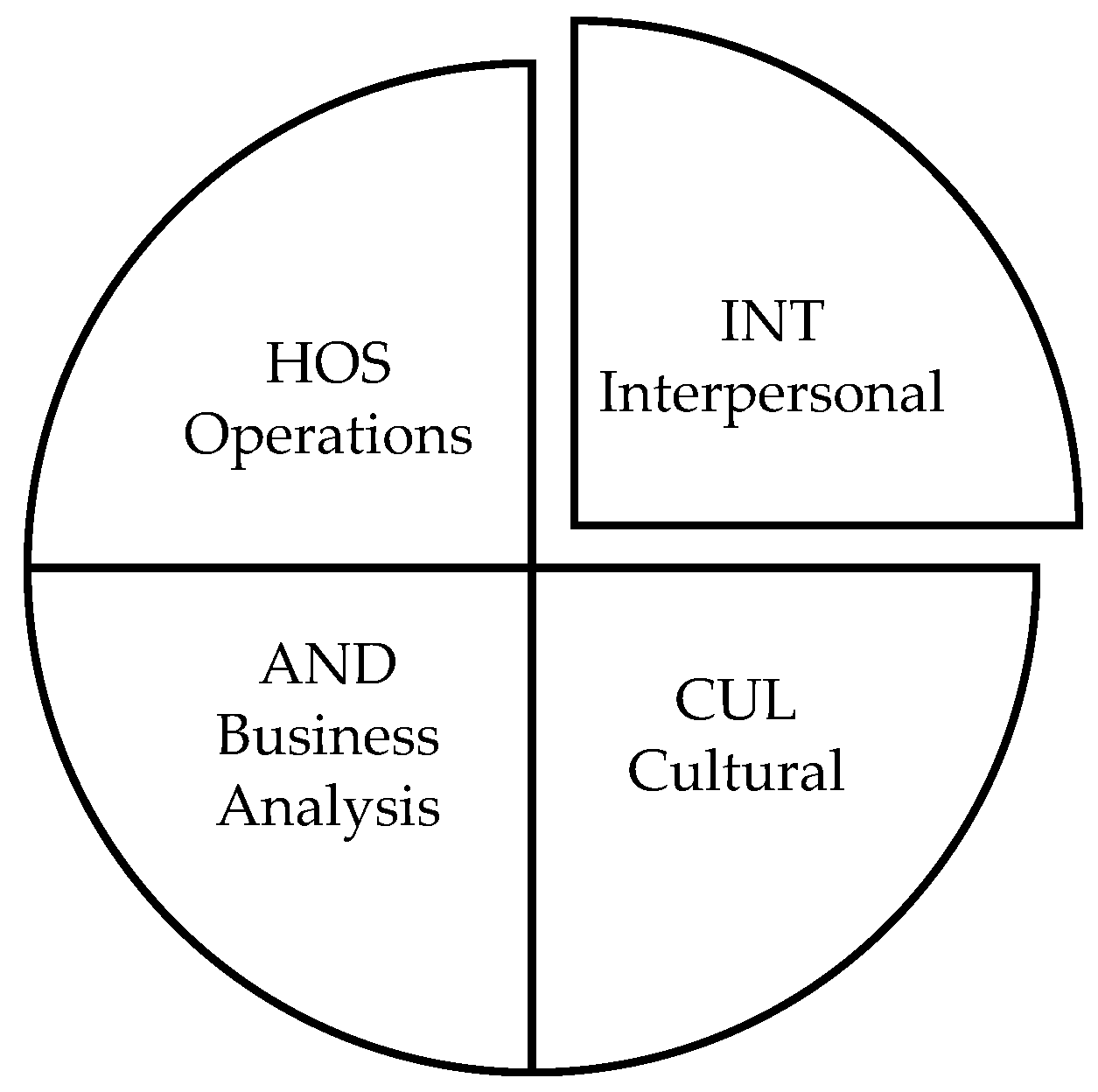

Table 1.
HICA matrix used in the first wave. Source: Prepared by the researcher.
| Dimension | Competencies |
| HOS | F&B (Food & Beverage) Tourism agents, TTOOs (Tour Operators) Openness Quality (evaluation department) Purchasing Concierge Current knowledge and trends Department-specific expertise Space and tourist destination Finance - Accounting Infrastructure and facilities (maintenance) Housekeeping (Housekeeping Department) MICE (Meetings, Incentives, Conferences & Events) Operations and Business Management Front Desk Reservations Revenue Safety and hygiene External services Jobs & Schedules Sales & Marketing |
| INT | Adapting to Change Supporting the team Customer service Autonomy Organizational skills Commitment Creativity Delegate Empathy Stability Ethics Team management Independent Hotels Initiative and entrepreneurial spirit Emotional Intelligence Leadership Motivation Negotiation Business opportunity Focus on achieving goals and results (as a team) Profitability-oriented Strategic thinking Versatility Presence (Body Language) Proactivity (Active / Bold) Public Relations Problem-Solving Frustration and stress tolerance Decision-making Teamwork |
| CUL | Work Environment Oral and written communication in English Oral and written communication in another foreign language Oral and written communication in your native language Expert-level written communication in the native language Willingness to travel Critical analysis of a situation Supplier management Conducting meetings and briefings Mastery of communication techniques Computer skills Local market Networking PMS (Property Management System), CRM (Customer Relationship Management) Luxury products Working in different multicultural (sociocultural) contexts Brand value Social Media |
| AND | Strategy and business plan development |
| Commercial Dimension | |
| HR (Human Resources )Dimension | |
| Economic and Financial Aspect | |
| Legal and Regulatory Dimension | |
| Organizational Asset Dimension (Investments) | |
| Political-Administrative Dimension | |
| Feasibility and operational study | |
| Spatial, social, cultural, political, labor, and economic ontology and epistemology (influential actors) in business | |
| Sustainability Principles | |
| COVID-19 Protocol |
Table 2.
Frequencies and total scores for Wave 1, and frequencies for Wave 2, by competency, according to the HICA matrix dimension. Source: Prepared by the researcher.
Table 2.
Frequencies and total scores for Wave 1, and frequencies for Wave 2, by competency, according to the HICA matrix dimension. Source: Prepared by the researcher.
| Dimension | Competencies | First wave | Second wave | |
| n | Rating (total score) | n | ||
| HOS | F&B | 10 | 44 | 33 |
| Travel agents, TTOO | 1 | 5 | 3 | |
| Quality (evaluation department) | 5 | 20 | 33 | |
| Current knowledge and trends | 6 | 28 | 33 | |
| Department-specific knowledge | 5 | 21 | 33 | |
| Tourism destinations | 2 | 7 | 6 | |
| Finance - Accounting | 11 | 51 | 33 | |
| Infrastructure and Facilities (Maintenance) | 7 | 29 | 32 | |
| Cleaning (Floors Department) | 2 | 9 | 4 | |
| MICE (Meetings, Incentives, Conferences & Events) | 2 | 9 | 5 | |
| Operations and Business Management | 9 | 39 | 33 | |
| Reception | 4 | 19 | 33 | |
| Revenue | 8 | 34 | 33 | |
| External services | 1 | 3 | 0 | |
| Sales & Marketing | 8 | 34 | 33 | |
| INT | Adapting to Change | 10 | 50 | 33 |
| Support and back up the team | 5 | 25 | 33 | |
| Customer service and support | 2 | 10 | 8 | |
| Range | 2 | 10 | 3 | |
| Organizational Skills | 8 | 39 | 33 | |
| Commitment | 3 | 15 | 33 | |
| Creativity | 3 | 14 | 31 | |
| Delegate | 4 | 18 | 32 | |
| Empathy | 5 | 22 | 33 | |
| Stability | 1 | 5 | 2 | |
| Ethics | 4 | 20 | 33 | |
| Team Management | 4 | 19 | 33 | |
| Initiative and entrepreneurial spirit | 2 | 9 | 5 | |
| Emotional Intelligence | 5 | 24 | 33 | |
| Leadership | 6 | 30 | 33 | |
| Profitability Focus | 3 | 15 | 33 | |
| Strategic Thinking | 5 | 25 | 33 | |
| Proactivity (Active / Bold) | 1 | 5 | 3 | |
| Problem Solving | 1 | 5 | 6 | |
| Frustration, tolerance and stress | 3 | 13 | 33 | |
| Decision-making | 2 | 10 | 33 | |
| Teamwork | 1 | 5 | 8 | |
| CUL | Work Environment | 6 | 26 | 32 |
| Oral and Written Communication in English | 4 | 19 | 33 | |
| Oral and written communication in another foreign language | 5 | 23 | 32 | |
| Oral and written communication in their native language | 2 | 10 | 2 | |
| Communicating in writing in one’s native language at an expert level | 1 | 5 | 2 | |
| Critical commentary on a situation | 3 | 14 | 33 | |
| Supplier management | 6 | 28 | 33 | |
| Meeting and Briefing Management | 8 | 38 | 33 | |
| Communication skills | 12 | 53 | 33 | |
| Computer skills | 2 | 8 | 3 | |
| Local market | 4 | 19 | 32 | |
| Networking | 2 | 10 | 5 | |
| PMS, CRM | 1 | 5 | 0 | |
| Working in different multicultural (sociocultural) contexts | 5 | 24 | 33 | |
| Brand value | 5 | 22 | 33 | |
| Social Media | 2 | 8 | 0 | |
| AND | Strategy and business plan development | 15 | 72 | 33 |
| Commercial Dimension | 12 | 54 | 33 | |
| HR Dimension | 9 | 41 | 33 | |
| Economic and Financial Dimension | 12 | 54 | 33 | |
| Legal and Regulatory Dimension | 2 | 8 | 3 | |
| Organizational financial dimension (investments) | 3 | 11 | 1 | |
| Political-administrative dimension | 4 | 15 | 33 | |
| Feasibility and operational study | 11 | 50 | 33 | |
| Spatial, social, cultural, political, labor, and economic ontology and epistemology (influential agents) in business | 4 | 16 | 32 | |
| Principles of Sustainability | 5 | 22 | 33 | |
| COVID-19 Protocol | 1 | 5 | 0 | |
Table 3.
Cut-off points (P30) for total scores by competency dimension for both waves. Source: Prepared by the researcher.
Table 3.
Cut-off points (P30) for total scores by competency dimension for both waves. Source: Prepared by the researcher.
| Dimension | P30 | |
| Wave 1 | Wave 2 | |
| HOS | 9.0 | 5.8 |
| INT | 10.0 | 8.0 |
| CUL | 10.0 | 3.2 |
| AND | 13.4 | 20.4 |
Table 4.
Final HICA matrix resulting from the two rounds of the Delphi study. Source: Prepared by the researcher.
Table 4.
Final HICA matrix resulting from the two rounds of the Delphi study. Source: Prepared by the researcher.
| Dimension | Competencies |
| HOS | F&B |
| Quality (evaluating department) | |
| Current knowledge and trends | |
| Department-specific knowledge | |
| Finance - Accounting | |
| Infrastructure and facilities (maintenance) | |
| Operations and business management | |
| Reception | |
| Revenue | |
| Sales & Marketing | |
| INT | Adapting to Change |
| Supporting and backing the team | |
| Organizational Skills | |
| Commitment | |
| Creativity | |
| Delegating | |
| Empathy | |
| Ethics | |
| Team Management | |
| Emotional Intelligence | |
| Leadership | |
| Profitability Focus | |
| Strategic Thinking | |
| Frustration and Stress Tolerance | |
| Decision-making | |
| CUL | Workplace Environment |
| Oral and written communication in English | |
| Oral and written communication in another foreign language | |
| Critical analysis of a situation | |
| Supplier Management | |
| Conducting meetings and briefings | |
| Mastery of communication techniques | |
| Local market | |
| Working in different multicultural (sociocultural) contexts | |
| Brand value | |
| AND | Development of business strategy and plan |
| Commercial Dimension | |
| HR Dimension | |
| Economic and Financial Dimension | |
| Political and Administrative Aspect | |
| Feasibility and operational study | |
| Spatial, social, cultural, political, labor, and economic ontology and epistemology (influential actors) in business | |
| Principles of Sustainability |
Table 5.
Example of the Metacognitive Pathway with a Generic Competency from the HICA Matrix: Definition and Descriptors. Source: Prepared by the researcher.
Table 5.
Example of the Metacognitive Pathway with a Generic Competency from the HICA Matrix: Definition and Descriptors. Source: Prepared by the researcher.
| Generic Teamwork (TW) Competency |
| Ability to foster, promote, and maintain an environment of collaboration, communication, and trust among team members, participating in the achievement of objectives by promoting a sense of group identity or directly fostering group cohesion. |
| Operational Descriptors (learning outcomes) |
| Observable indicators: This competency involves fostering an atmosphere of trust among team members (assessment criterion 1), as well as maintaining a collaborative environment to achieve group objectives (assessment criterion 2). |
Table 6.
Example of the Metacognitive Pathway with Generic Competency from the HICA Matrix: Progressive Pathway. Source: Prepared by the researcher.
Table 6.
Example of the Metacognitive Pathway with Generic Competency from the HICA Matrix: Progressive Pathway. Source: Prepared by the researcher.
|
Upon completing Operations Education (Knowing) Understands and recognizes |
Upon completing Leadership Education (Know-how) Designs and applies |
Upon completing Education in Strategy (How to Be) Integrates and embodies |
| TW1. Coordinates and energizes work teams in the hospitality industry, fostering cooperation and the achievement of common goals. | TW1. Consciously applies strategies for coordination and team building in real-world work contexts. | TW1. Integrates teamwork as part of their professional identity and as a strategic pillar for organizational success. |
| TW2. Recognizes and understands the fundamentals of team- y work and its impact on the hotel’s operational performance. | TW2. Designs and implements coordination mechanisms that strengthen cooperation and collective performance. | TW2. Adopts a systemic view of the hotel, promoting organizational structures oriented toward collective commitment. |
| TW3. Develops an understanding of how teams function and of one’s own role within them by studying teamwork models, group dynamics, interpersonal communication, and functional roles. | TW3. Facilitates effective meetings, coordinates tasks, resolves internal conflicts, and promotes active participation, fostering group cohesion. | TW3. Positions themselves as a strategic facilitator of the organizational climate, acting as a model of cohesion, collaboration, and commitment to the common good. |
Disclaimer/Publisher’s Note: The statements, opinions and data contained in all publications are solely those of the individual author(s) and contributor(s) and not of MDPI and/or the editor(s). MDPI and/or the editor(s) disclaim responsibility for any injury to people or property resulting from any ideas, methods, instructions or products referred to in the content. |
© 2026 by the authors. Licensee MDPI, Basel, Switzerland. This article is an open access article distributed under the terms and conditions of the Creative Commons Attribution (CC BY) license (http://creativecommons.org/licenses/by/4.0/).
Copyright: This open access article is published under a Creative Commons CC BY 4.0 license, which permit the free download, distribution, and reuse, provided that the author and preprint are cited in any reuse.


