

Submitted:
01 April 2026
Posted:
02 April 2026
You are already at the latest version
Abstract
Atmospheric nitrogen dioxide (NO₂) is an important component of reactive nitrogen and plays a key role in the atmospheric nitrogen cycle outside major emission regions. However, its variability under remote background conditions remains poorly characterized, as most observational studies focus on urban or continental environments. This study investigates the background variability of in situ NO₂ measurements at a remote North Atlantic island (Azores) over the period 2015–2024 and examines its association with large-scale atmospheric transport regimes. Monthly NO₂ concentrations were classified into background Atlantic conditions and months influenced by continental air masses using an objective PM₁₀ percentile-based criterion. Differences between regimes were assessed using non-parametric statistics. Although NO₂ concentrations were systematically higher during months associated with continental transport, the differences did not reach statistical significance. Wind speed analysis for the overlapping period 2018–2024 showed consistently higher values during continental transport months, supporting enhanced large-scale advection during these periods. Overall, the results indicate that background NO₂ levels in this remote insular environment exhibit modest but coherent modulation associated with atmospheric transport regimes. These findings contribute to improving the interpretation of reactive nitrogen variability in remote marine settings and highlight the value of island observatories for studying the atmospheric nitrogen cycle.
Keywords:
reactive nitrogen
; nitrogen dioxide (NO2)
; atmospheric transport regimes
; background atmosphere
; marine boundary layer
; air-mass transport
1. Introduction
Reactive nitrogen (Nr) plays a central role in atmospheric chemistry and in the broader biogeochemical nitrogen cycle. Since the industrial revolution, anthropogenic activities have substantially altered the global nitrogen cycle through fossil fuel combustion, agriculture, and industrial processes, increasing the abundance and reactivity of nitrogen compounds in the atmosphere [1,2]. Among these species, nitrogen dioxide (NO2) is of particular importance as a key component of nitrogen oxides (NOₓ = NO + NO2), influencing ozone formation, oxidative capacity, secondary aerosol production, and nitrogen deposition [3,4,5].
While numerous studies have characterized NO2 in urban and industrialized regions, comparatively less attention has been given to its variability under remote, background conditions. Most long-term analyses of NO2 focus on source-dominated environments where local emissions strongly control observed concentrations [6,7]. In contrast, remote marine and insular environments offer a unique opportunity to investigate the behavior of reactive nitrogen decoupled from strong local sources and dominated instead by large-scale atmospheric transport and background chemistry [8,9,10].
Transport processes exert a fundamental influence on the distribution of reactive nitrogen in the troposphere. Advection of continental air masses, vertical mixing, and synoptic-scale circulation patterns can modulate NO2 concentrations even in regions far removed from primary emission sources [11,12,13]. In marine boundary layer environments, background NO2 levels typically remain low but can exhibit episodic enhancements associated with long-range transport from continental regions [14,15]. These transport-driven variations provide insight into hemispheric-scale redistribution of reactive nitrogen and its role in regional nitrogen budgets.
The North Atlantic region represents a particularly valuable natural laboratory for studying background atmospheric composition. Air masses arriving in this region are influenced by a combination of mid-latitude westerlies, subtropical circulation, and occasional incursions of continental or dust-laden air [16,17]. Remote island stations in the North Atlantic have historically contributed to advancing understanding of background atmospheric composition, including greenhouse gases and trace species [18,19]. However, sustained observational analyses focusing specifically on background NO2 variability in such environments remain limited.
Previous work has highlighted the importance of long-term observations in detecting variability and transport signatures in reactive nitrogen species [2,20]. Non-parametric statistical approaches and percentile-based classification methods are increasingly used to distinguish between background and transport-influenced regimes in atmospheric time series without imposing strong distributional assumptions [21]. Such approaches are particularly appropriate for low-concentration environments where variability is modest and episodic.
In this study, we investigate the background variability of in situ NO2 concentrations measured at a remote North Atlantic island (Azores) over the period 2015–2024. Using an objective percentile-based criterion applied to PM10 as a transport indicator, monthly conditions are classified into background Atlantic and continental-influenced regimes. Differences between regimes are evaluated using non-parametric statistics, and wind speed data are used to support the physical interpretation of transport intensity over the overlapping period 2018–2024. By focusing on a remote insular environment, this work aims to contribute observational evidence to the understanding of how atmospheric transport regimes modulate background reactive nitrogen levels in marine settings.
The following section describes the study area, datasets, and methodological approach used in this work.
2. Materials and Methods
2.1. Study Area
The study was conducted on Faial Island, located in the Azores archipelago in the central North Atlantic Ocean. Owing to its remote oceanic location between Europe and North America, the region is predominantly influenced by marine boundary layer conditions and mid-latitude westerlies (Figure 1).
The island environment is characterized by the absence of major industrial emission sources, making it suitable for investigating background atmospheric composition and transport-driven variability of atmospheric pollutants.
Air quality observations were obtained from the Espalhafatos monitoring station, located in the parish of Ribeirinha (municipality of Horta) at approximately 38.60° N, 28.63° W, at an elevation of about 120 m above sea level (Figure 2).
The station is part of the regional air quality monitoring network of the Azores, and its measurements are integrated into the Portuguese national air quality information system QualAr, operated by the Portuguese Environment Agency. According to the classification criteria established under Directive 2008/50/EC [22], the site is categorized as a rural background monitoring station, meaning that pollutant concentrations measured at this location are minimally influenced by nearby emission sources and are representative of regional atmospheric conditions. Continuous measurements include nitrogen dioxide (NO2), sulfur dioxide (SO2), ozone (O3), and particulate matter (PM10 and PM2.5). In the present study, NO2 and PM10 observations were used to characterize background atmospheric conditions and to identify periods influenced by enhanced atmospheric transport.
Meteorological conditions were characterized using observations from the Alto do Cabouco meteorological station, located on Faial Island at approximately 38.59° N, 28.69° W, at an elevation of about 330 m above sea level (Figure 3).
The station belongs to the regional hydrometeorological monitoring network of the Azores and records standard meteorological variables including wind speed, wind direction, air temperature, relative humidity, atmospheric pressure, and precipitation. In this study, wind speed and wind direction were used to support the interpretation of atmospheric transport conditions influencing the observed variability of NO2 concentrations.
Due to its position in the mid-latitude North Atlantic, the Azores region is frequently influenced by synoptic-scale atmospheric circulation patterns, including westerly flow and episodic continental air-mass transport, which can modulate background trace gas variability. Remote oceanic islands such as the Azores provide valuable observational platforms for studying background atmospheric composition, as they are largely decoupled from strong local emission sources while remaining sensitive to long-range transport processes.
2.2. NO2 and PM10 Observations
Hourly NO2 and PM10 data were obtained from the QualAr air quality monitoring network (Agência Portuguesa do Ambiente) for the period January 2015 to December 2024. All analyses were performed using monthly aggregates derived from hourly observations.
2.2.1. Data Completeness Criterion
To ensure representativeness of monthly statistics, a completeness threshold was applied. For each month m, data completeness was defined as shown in Equation (1):
Cm = (Nv,m / Nt,m) × 100 [1]
where is the number of valid hourly observations in month m and the total expected number of hourly observations in that month. Only months satisfying Equation (2):
Cm ≥ 80% [2]
were retained in subsequent analyses.
The data coverage and completeness of the NO2 observations for the period 2015–2024 are summarized in Table 1.
2.2.2. Monthly Aggregation
Monthly mean NO2 concentrations were computed as presented in Equation (3):
= [3]
where denotes the number of valid hourly observations in month and the corresponding hourly concentration.
Monthly mean PM10 concentrations were calculated analogously.
2.2.3. Transport Regime Classification
Transport regimes were defined using a percentile-based classification applied to monthly mean PM10 concentrations. The 90th percentile of the monthly PM10 distribution over the study period was computed as shown in Equation (4):
= ( ) [4]
where distribution of monthly mean is PM10m.
Months were classified as:
This objective threshold was used to distinguish months influenced by enhanced continental transport from prevailing background Atlantic conditions.
2.3. Wind Data
Hourly wind speed and direction data were obtained from the regional hydrometeorological network for the period 2018–2024. Wind speed values provided in km h−1 were converted to International System units according to Equation (5):
[5]
Monthly mean wind speed was computed as indicated in Equation (6):
[6]
Wind data were used solely to support the physical interpretation of transport regimes over the overlapping period 2018–2024.
2.4. Statistical Analysis
Differences between transport regimes were evaluated using the Mann–Whitney U test, a non-parametric method appropriate for independent samples without assuming normality.
Two samples were defined as:
background
where represents the monthly mean NO2 concentration in month , and the subscripts denote the transport regime classification.
The Mann–Whitney U statistic is given by Equation (7):
[7]
where and denote the sample sizes of the background and continental groups, respectively, and is the sum of ranks assigned to the observations in sample .
A two-sided test was applied with a significance level of .
The magnitude of the regime difference was quantified using the difference in medians, Equation (8):
[8]
where and denote the sample medians of the background and continental regimes, respectively.
An analogous procedure was applied to monthly mean wind speed for the overlapping period 2018–2024.
3. Results
This section presents the main observational results obtained from the analysis of the NO2 time series and associated meteorological conditions at the Faial monitoring station. First, the temporal variability of background NO2 concentrations over the period 2015–2024 is described. Subsequently, differences between background Atlantic conditions and months influenced by continental transport are examined. Finally, wind speed characteristics are analysed for the overlapping period 2018–2024 to support the physical interpretation of the identified transport regimes.
3.1. Temporal Variability of NO2 (2015–2024)
Monthly mean NO2 concentrations measured at the Faial (Espalhafatos) station are shown in Figure 4.
Over the study period, NO2 concentrations remained generally low, consistent with background conditions in a remote North Atlantic environment. The overall mean NO2 concentration was 1.26 µg m−3.
Interannual variability was modest, with no abrupt regime shifts or sustained step changes. Short-term enhancements are visible in several months throughout the record.
3.2. NO2 under Background and Continental Transport Regimes
Months classified as influenced by continental air masses (defined as months with PM10 ≥ P90) are indicated by shaded areas in Figure 5. These periods do not dominate the time series but appear intermittently across multiple years, suggesting episodic large-scale transport influences superimposed on relatively stable background conditions.
To further examine the effect of transport regimes on NO2 variability, monthly mean NO2 concentrations were grouped according to background Atlantic conditions and months influenced by continental air masses. The distributions of NO2 concentrations for both regimes are shown in Figure 6.
The boxplots indicate that NO2 concentrations tend to be higher during months classified as continental transport regimes compared to background conditions. The median NO2 concentration during continental months was 1.60 µg m−3, whereas the median value during background conditions was 1.25 µg m−3, corresponding to a median difference of 0.35 µg m−3.
To assess whether this difference was statistically significant, a Mann–Whitney U test was applied. The test indicated that the difference between the two regimes was not statistically significant (U = 384, p = 0.153). Despite the lack of statistical significance at the conventional 0.05 level, the consistent shift toward higher values during continental transport months suggests a systematic modulation of background NO2 concentrations associated with changes in air-mass origin.
Overall, the distributions indicate that continental transport episodes are associated with modest increases in NO2 concentrations relative to prevailing background conditions, although the magnitude of these differences remains small in the context of the low baseline concentrations observed at this remote site.
To further support the interpretation that these variations are associated with changes in air-mass transport, wind speed characteristics were analysed for the overlapping period 2018–2024.
3.3. Wind Speed Characteristics during Transport Regimes (2018–2024)
Wind speed data were available for the overlapping period 2018–2024 and were used to support the physical interpretation of the transport regimes identified in the NO2 analysis. Monthly mean wind speeds were classified according to the same regime definition applied to NO2 (background vs. continental transport regimes).
The distributions of monthly mean wind speed under background and continental transport regimes are presented in Figure 7. Wind speeds were generally higher during months classified as continental transport regimes compared to background Atlantic conditions. The median wind speed during continental months was 4.27 m s−1, whereas the median value under background conditions was 3.64 m s−1, corresponding to a median difference of 0.63 m s−1.
A Mann–Whitney U test indicated that this difference was not statistically significant (U = 194, p = 0.247). However, the consistent shift toward higher wind speeds during continental months supports enhanced large-scale advection during these periods.
Taken together, the NO2 and wind analyses suggest that background reactive nitrogen levels at this remote site are influenced by changes in air-mass origin and transport intensity, rather than by local emission variability.
4. Discussion
The results presented in this study provide observational insight into the variability of background NO2 concentrations in a remote North Atlantic environment and their association with atmospheric transport regimes. In contrast to coastal environments, where nitrogen pollution is often dominated by local anthropogenic sources and regional emission trends [23], and where NO2 variability reflects a combination of local and regional influences [24], the present study focuses on a remote insular setting where background conditions prevail, and transport-related processes become more evident. The consistently low NO2 concentrations observed at the Faial monitoring station reflect the dominance of marine boundary layer conditions, while modest increases during continental transport months indicate the influence of long-range advection processes.
Despite the overall stability of the time series, NO2 concentrations tended to be higher during months classified as influenced by continental air-mass transport. Although this difference did not reach statistical significance, the direction and consistency of the signal across the dataset suggest that transport-related processes exert a measurable influence on NO2 variability. Previous studies have shown that long-range transport can significantly influence NO2 concentrations, even in regions dominated by local emissions [25], reinforcing the importance of transport processes in shaping atmospheric NO2 variability. Such behavior is consistent with the episodic nature of long-range transport, where enhancements are intermittent and may not produce strong statistical separation when aggregated at monthly time scales.
The use of a percentile-based PM10 threshold provides an objective and reproducible method to identify transport-influenced conditions. While PM10 is not a direct tracer of NO2, it is widely associated with continental and dust-laden air masses, making it a suitable proxy for distinguishing between background and transport regimes in the absence of trajectory analysis. This approach is supported by previous studies conducted in the Azores, where PM10 variability has been shown to be strongly influenced by atmospheric transport processes [26]. The consistency of the NO2 response across these independently defined regimes supports the robustness of the classification approach.
The analysis of wind speed further strengthens the physical interpretation of the results. Months classified as continental transport regimes were systematically associated with higher wind speeds, indicating enhanced atmospheric advection. Although the differences in wind speed were not statistically significant, the agreement between increased wind intensity and elevated NO2 concentrations provides converging evidence for the role of large-scale transport. This coherence between independent variables is particularly relevant in low-variability environments, where individual signals may be weak but physically consistent.
It is important to emphasize that the absence of statistical significance does not preclude the existence of a physically meaningful relationship. In remote marine environments, background concentrations are low and variability is limited, reducing the statistical power of classical hypothesis tests. In such cases, consistent directional changes observed across multiple variables (NO2 and wind speed) can provide meaningful evidence of underlying atmospheric processes.
The Azores region, located between major continental emission regions, is particularly sensitive to long-range transport processes. Air masses reaching the archipelago can carry trace amounts of reactive nitrogen from distant sources, leading to subtle but detectable variations in background NO2 levels. This interpretation is consistent with previous studies conducted in the Azores, which have linked multiscale variability in atmospheric trace gases to large-scale atmospheric forcing [27] and have shown that surface pollutant concentrations, including NO2, can be modulated by synoptic-scale circulation patterns such as the North Atlantic Oscillation [28]. In addition, similar variability has been reported for other atmospheric indicators measured in remote island environments, including ambient gamma radiation, where fluctuations have been associated with meteorological conditions and large-scale transport processes [29]. The results presented here are therefore consistent with the conceptual understanding of the North Atlantic as a transition zone between continental influence and marine background conditions. These findings are also consistent with previous observational studies conducted in remote marine environments, where NOx variability has been linked to large-scale atmospheric transport processes [30], reinforcing the broader applicability of the patterns observed in this study.
Some limitations should be acknowledged. The classification of transport regimes is based on PM10 as a proxy variable and does not explicitly resolve air-mass origin. Wind data were only available for the period 2018–2024, limiting the temporal overlap with the full NO2 record. In addition, the use of monthly averages, while necessary to ensure data completeness and statistical robustness, may smooth short-term variability associated with individual transport events.
Future work could incorporate air-mass trajectory analysis, chemical transport modelling, or higher temporal resolution data to better resolve the mechanisms underlying the observed variability. Such approaches would allow a more direct attribution of NO2 variations to specific source regions and transport pathways.
Overall, the results provide consistent, though not statistically significant, evidence that background NO2 variability at this remote North Atlantic site is influenced by atmospheric transport regimes. These findings contribute to improving the interpretation of reactive nitrogen behavior in marine boundary layer environments and highlight the importance of long-term observational datasets for detecting subtle but physically meaningful atmospheric signals.
5. Conclusions
This study examined the variability of background NO2 concentrations at a remote North Atlantic site (Faial, Azores) over the period 2015–2024. The results indicate that NO2 levels remained consistently low, reflecting the dominance of background marine conditions in this region.
A comparison between background and continental transport regimes revealed a consistent increase in NO2 concentrations during months influenced by continental air masses. Although these differences were not statistically significant, the observed patterns were coherent and physically consistent with transport-related variability.
The combined analysis of NO2 and wind speed suggests that atmospheric transport plays a role in modulating background reactive nitrogen levels at this site. These findings highlight the importance of long-term observations in remote marine environments for identifying subtle atmospheric signals that may not be detectable through statistical tests alone.
Overall, this study contributes to improving the understanding of reactive nitrogen variability in the North Atlantic and reinforces the value of insular monitoring stations for studying background atmospheric composition.
Author Contributions
“Conceptualization, M.G.M.; methodology, M.G.M. and H.C.V.; software, M.G.M.; validation, M.G.M. and H.C.V.; formal analysis, M.G.M.; investigation, M.G.M.; resources, H.C.V.; data curation, M.G.M. and H.C.V.; writing—original draft preparation, M.G.M.; writing—review and editing, M.G.M. and H.C.V.; visualization, H.C.V.; supervision, M.G.M.; project administration, M.G.M. All authors have read and agreed to the published version of the manuscript.”.
Funding
This research received no external funding. The article processing charge (APC) was waived by the publisher.
Data Availability Statement
The air quality data used in this study (NO2 and PM10) are publicly available from the Agência Portuguesa do Ambiente (APA) through the QualAr platform. The datasets were obtained from the Faial background monitoring station (Espalhafatos, Azores) and can be accessed at: https://qualar.apambiente.pt/qualar/dados_horarios.php. Meteorological data (wind speed) were obtained from the Alto do Cabouco station of the Azores Hydrometeorological Network, available at https://redehidro.ambiente.azores.gov.pt/. This data is available upon request from the corresponding regional authorities.
Acknowledgments
The authors acknowledge the Agência Portuguesa do Ambiente (APA) for providing access to air quality data through the QualAr platform, as well as the regional authorities responsible for the Azores Hydrometeorological Network for the provision of meteorological data from the Alto do Cabouco station. The authors also thank all institutions involved in the maintenance and operation of these monitoring networks, whose efforts ensure the availability of high-quality environmental data for scientific research.
Conflicts of Interest
The authors declare no conflicts of interest.
Abbreviations
The following abbreviations are used in this manuscript:
| NO2 | Nitrogen dioxide |
| PM10 | Particulate Matter with an aerodynamic diameter less than or equal to 10 micrometers |
| Nr | Reactive nitrogen |
| NOx | Nitrogen oxides |
| NO | Nitric oxide |
| SO2 | Sulfur dioxide |
| O3 | Ozone |
References
- Galloway, J.N.; Townsend, A.R.; Erisman, J.W.; Bekunda, M.; Cai, Z.; Freney, J.R.; Martinelli, L.A.; Seitzinger, S.P.; Sutton, M.A. Transformation of the nitrogen cycle: Recent trends, questions, and potential solutions. Science 2008, 320, 889–892. [Google Scholar] [CrossRef] [PubMed]
- Fowler, D.; Coyle, M.; Skiba, U.; Sutton, M.A.; Cape, J.N.; Reis, S.; Sheppard, L.J.; Jenkins, A.; Grizzetti, B.; Galloway, J.N.; Vitousek, P.; Leach, A.; Bouwman, A.F.; Butterbach-Bahl, K.; Dentener, F.; Stevenson, D.; Amann, M.; Voss, M. The global nitrogen cycle in the twenty-first century. Philos. Trans. R. Soc. Lond. B Biol. Sci. 2013, 368, 20130164. [Google Scholar] [CrossRef]
- Seinfeld, J.H.; Pandis, S.N. Atmospheric Chemistry and Physics, 3rd ed.; Wiley, 2016. [Google Scholar]
- Cooper, O.R.; Parrish, D.D.; Ziemke, J.; Balashov, N.V.; Cupeiro, M.; Galbally, I.E.; Gilge, S.; Horowitz, L.; Jensen, N.R.; Lamarque, J.-F.; et al. Global distribution and trends of tropospheric ozone: An observation-based review. Elem. Sci. Anth. 2014, 2, 000029. [Google Scholar] [CrossRef]
- Monks, P.S.; Granier, C.; Fuzzi, S.; Stohl, A.; Williams, M.L.; Akimoto, H.; Amann, M.; Baklanov, A.; Baltensperger, U.; Bey, I.; Blake, N.; Blake, R.S.; Carslaw, K.; Cooper, O.R.; Dentener, F.; Fowler, D.; Fragkou, E.; Frost, G.J.; Generoso, S.; Ginoux, P.; Grewe, V.; Guenther, A.; Hansson, H.C.; Henne, S.; Hjorth, J.; Hofzumahaus, A.; Huntrieser, H.; Isaksen, I.S.A.; Jenkin, M.E.; Kaiser, J.; Kanakidou, M.; Klimont, Z.; Kulmala, M.; Laj, P.; Lawrence, M.G.; Lee, J.D.; Liousse, C.; Maione, M.; McFiggans, G.; Metzger, A.; Mieville, A.; Moussiopoulos, N.; Orlando, J.J.; O’Dowd, C.D.; Palmer, P.I.; Parrish, D.D.; Petzold, A.; Platt, U.; Pöschl, U.; Prévôt, A.S.H.; Reeves, C.E.; Reimann, S.; Rudich, Y.; Sellegri, K.; Steinbrecher, R.; Simpson, D.; ten Brink, H.; Theloke, J.; van der Werf, G.R.; Vautard, R.; Vestreng, V.; Vlachokostas, C.; von Glasow, R. Atmospheric composition change—global and regional air quality. Atmos. Environ. 2009, 43, 5268–5350. [Google Scholar] [CrossRef]
- Duncan, B.N.; Lamsal, L.N.; Thompson, A.M.; Yoshida, Y.; Lu, Z.; Streets, D.G.; Hurwitz, M.M.; Pickering, K.E. A space-based, high-resolution view of notable changes in urban NOx pollution around the world (2005–2014). J. Geophys. Res. Atmos. 2016, 121, 976–996. [Google Scholar] [CrossRef]
- Tørseth, K.; Aas, W.; Breivik, K.; Fjaeraa, A.M.; Fiebig, M.; Hjellbrekke, A.G.; Lund Myhre, C.; Solberg, S.; Yttri, K.E. Introduction to the European Monitoring and Evaluation Programme (EMEP). Atmos. Chem. Phys. 2012, 12, 5447–5481. [Google Scholar] [CrossRef]
- Parrish, D.D.; Lamarque, J.-F.; Naik, V.; Horowitz, L.; Shindell, D.T.; Staehelin, J.; Derwent, R.; Cooper, O.R.; Tanimoto, H.; Volz-Thomas, A. Long-term changes in lower tropospheric baseline ozone concentrations at northern mid-latitudes. Atmos. Chem. Phys. 2014, 14, 4723–4738. [Google Scholar] [CrossRef]
- Logan, J.A. Nitrogen oxides in the troposphere: Global and regional budgets. J. Geophys. Res. 1983, 88, 10785–10807. [Google Scholar] [CrossRef]
- Lamarque, J.-F.; et al. Historical and future trends in global tropospheric ozone and nitrogen oxides. Atmos. Chem. Phys. 2010, 10, 7017–7037. [Google Scholar] [CrossRef]
- Stohl, A. Characteristics of atmospheric transport into the Arctic troposphere. J. Geophys. Res. 2006, 111, D11306. [Google Scholar] [CrossRef]
- Huntrieser, H.; et al. Lightning-produced NOx in the tropical troposphere. Atmos. Chem. Phys. 2011, 11, 109–125. [Google Scholar]
- Lelieveld, J.; Dentener, F.J. What controls tropospheric ozone? J. Geophys. Res. 2000, 105, 3531–3551. [Google Scholar] [CrossRef]
- Carpenter, L.J.; et al. Reactive nitrogen in the marine boundary layer. Phil. Trans. R. Soc. A 2012, 370, 1195–1215. [Google Scholar]
- Lee, J.D.; Moller, S.J.; Read, K.A.; Lewis, A.C.; Mendes, L.; Carpenter, L.J. Year-round measurements of nitrogen oxides and ozone in the tropical North Atlantic marine boundary layer. J. Geophys. Res. Atmos. 2009, 114, D21302. [Google Scholar] [CrossRef]
- Hurrell, J.W. Decadal trends in the North Atlantic Oscillation. Science 1995, 269, 676–679. [Google Scholar] [CrossRef]
- Trigo, R.M.; Osborn, T.J.; Corte-Real, J.M. The North Atlantic Oscillation influence on Europe: Climate impacts and associated physical mechanisms. Clim. Res. 2002, 20, 9–17. [Google Scholar] [CrossRef]
- Keeling, C.D.; et al. Atmospheric CO2 variations at Mauna Loa. Tellus 1976, 28, 538–551. [Google Scholar] [CrossRef]
- Carpenter, L.J.; Fleming, Z.L.; Read, K.A.; et al. Seasonal characteristics of tropical marine boundary layer air measured at the Cape Verde Atmospheric Observatory. J. Atmos. Chem. 2010, 67, 87–140. [Google Scholar] [CrossRef]
- Vestreng, V.; et al. Evolution of NOx emissions in Europe. Atmos. Chem. Phys. 2009, 9, 1503–1520. [Google Scholar] [CrossRef]
- Wilcoxon, F. Individual comparisons by ranking methods. Biometrics Bulletin 1945, 1, 80–83. [Google Scholar] [CrossRef]
- European Parliament and Council. Directive 2008/50/EC on ambient air quality and cleaner air for Europe. Off. J. Eur. Union 2008, L152, 1–44. [Google Scholar]
- Howarth, R.W. Coastal nitrogen pollution: A review of sources and trends globally and regionally. Harmful Algae 2008, 8, 14–20. [Google Scholar] [CrossRef]
- Tian, X.-P.; Wang, D.; Wang, Y.-Q.; Gao, Z.-Q.; Tian, C.-G.; Bi, X.-L.; Ning, J.-C. Long-term variations and trends of tropospheric and ground-level NO2 over typical coastal areas. Ecol. Indic. 2024, 164, 112163. [Google Scholar] [CrossRef]
- Graham, A.M.; Pope, R.J.; Chipperfield, M.P.; Dhomse, S.S.; Pimlott, M.; Feng, W.; Singh, V.; Chen, Y.; Wild, O.; Sokhi, R.; Beig, G. Quantifying effects of long-range transport of NO2 over Delhi using back trajectories and satellite data. Atmos. Chem. Phys. 2024, 24, 789–806. [Google Scholar] [CrossRef]
- Meirelles, M.G.; Vasconcelos, H.C. Physical–statistical characterization of PM10 and PM2.5 concentrations and atmospheric transport events in the Azores during 2024. Earth 2025, 6, 54. [Google Scholar] [CrossRef]
- Meirelles, M.G.; Vasconcelos, H.C. Multiscale variability of atmospheric CO2 at the Azores: Detecting seasonal and decadal oscillations. Atmosphere 2025, 16, 1308. [Google Scholar] [CrossRef]
- Vasconcelos, H.C.; Ferreira, A.C.; Meirelles, M.G. Synoptic-scale modulation of surface O3, NO2, and SO2 by the North Atlantic Oscillation in São Miguel Island, Azores (2017–2021). Pollutants 2025, 5, 27. [Google Scholar] [CrossRef]
- Meirelles, M.G.; Vasconcelos, H.C. Ambient gamma radiation as an atmospheric indicator in a remote oceanic island environment: Long-term variability and meteorological controls. Atmosphere 2026, 17, 264. [Google Scholar] [CrossRef]
- Lee, J.D.; Moller, S.J.; Read, K.A.; Lewis, A.C.; Mendes, L.; Carpenter, L.J. Year-round measurements of nitrogen oxides and ozone in the tropical North Atlantic marine boundary layer. J. Geophys. Res. Atmos. 2009, 114, D21302. [Google Scholar] [CrossRef]
Figure 1.
Geographic location of the Azores archipelago in the North Atlantic Ocean, indicating the Western, Central, and Eastern island groups. The positions of the meteorological station and the air quality monitoring station on Faial Island are shown.
Figure 1.
Geographic location of the Azores archipelago in the North Atlantic Ocean, indicating the Western, Central, and Eastern island groups. The positions of the meteorological station and the air quality monitoring station on Faial Island are shown.
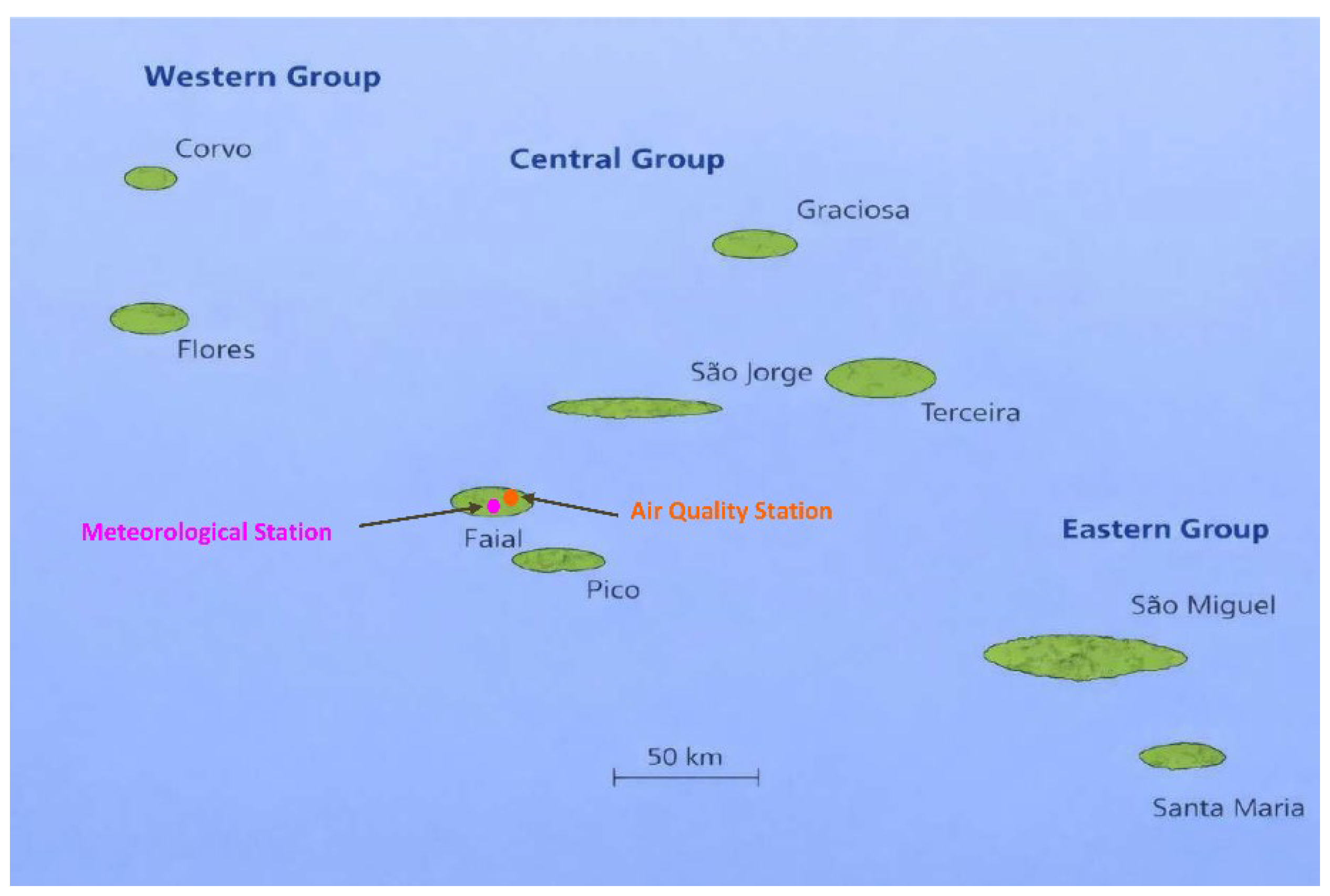
Figure 2.
Location of the Espalhafatos air quality monitoring station on Faial (Azores), used for continuous measurements of NO2 and PM10 under rural background conditions. The station is part of the regional air quality monitoring network and contributes data to the national air quality information system QualAr.
Figure 2.
Location of the Espalhafatos air quality monitoring station on Faial (Azores), used for continuous measurements of NO2 and PM10 under rural background conditions. The station is part of the regional air quality monitoring network and contributes data to the national air quality information system QualAr.
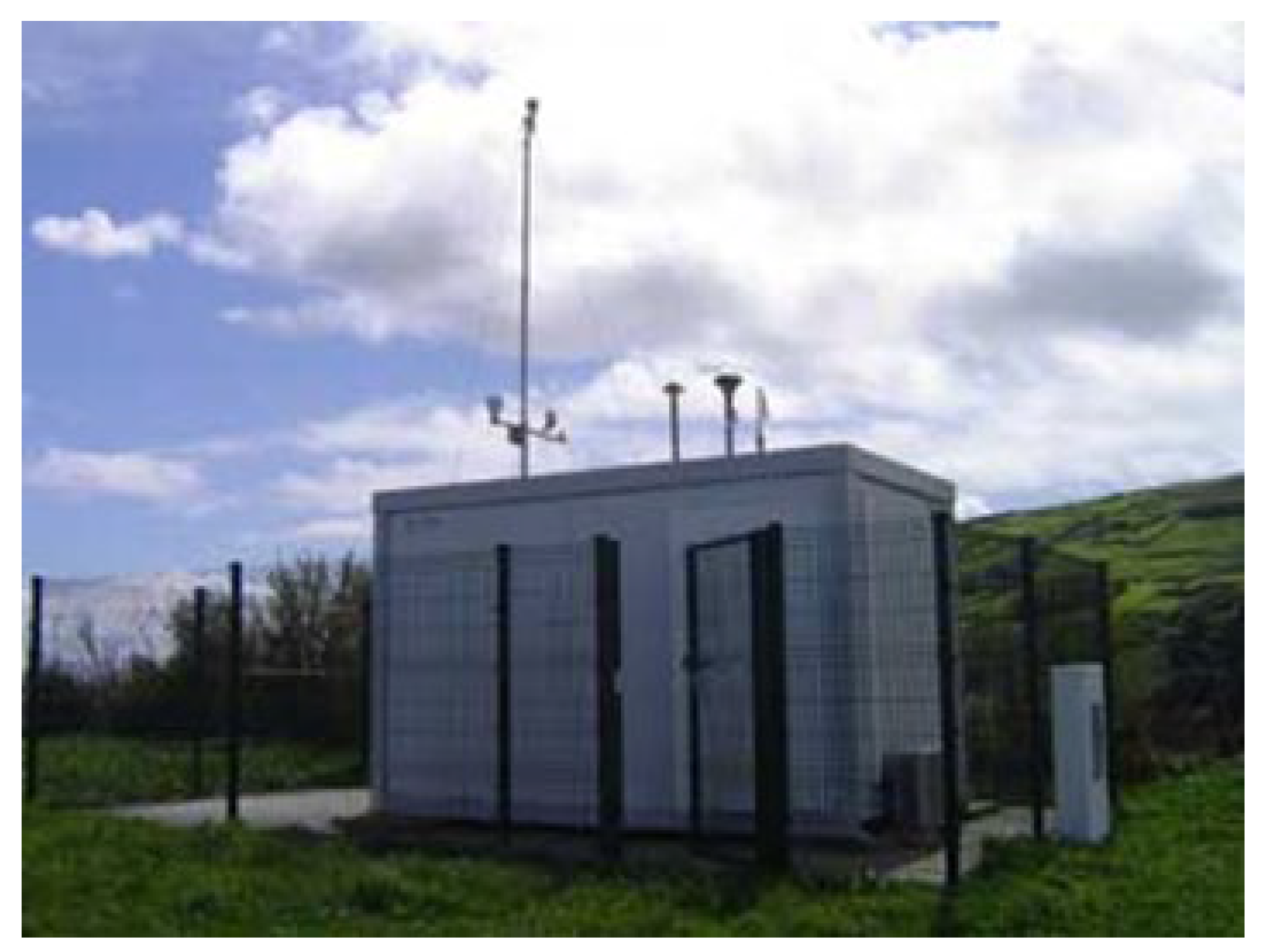
Figure 3.
Alto do Cabouco meteorological station located on Faial (Azores). The station belongs to the regional hydrometeorological monitoring network and provides observations of wind speed and wind direction, which were used to characterize atmospheric transport conditions influencing the variability of NO2 in the study area.
Figure 3.
Alto do Cabouco meteorological station located on Faial (Azores). The station belongs to the regional hydrometeorological monitoring network and provides observations of wind speed and wind direction, which were used to characterize atmospheric transport conditions influencing the variability of NO2 in the study area.
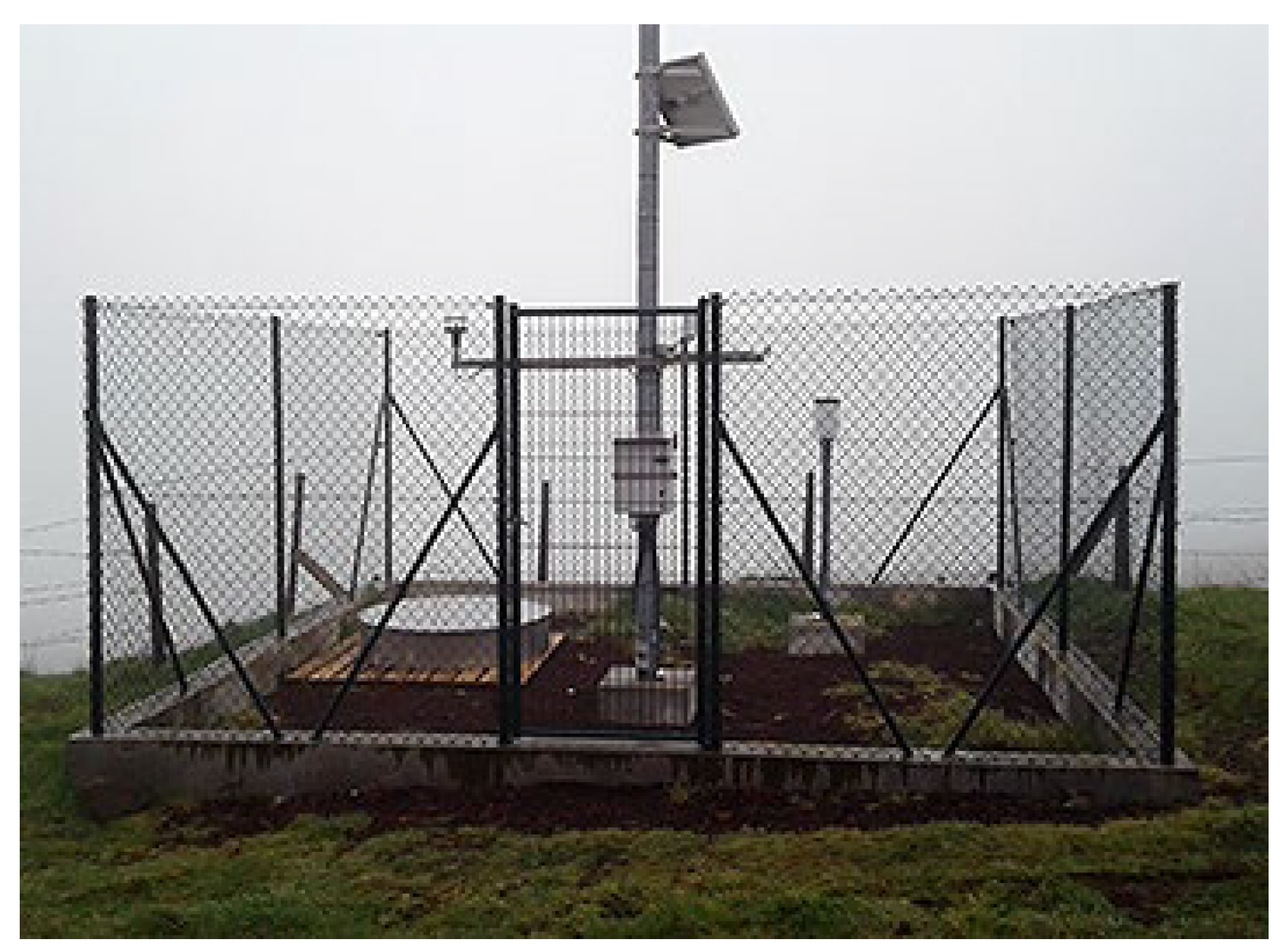
Figure 4.
Monthly mean NO2 concentrations measured at the Espalhafatos air quality monitoring station (Faial Island, Azores) during the period 2015–2024. The dashed horizontal line represents the overall mean NO2 concentration for the study period.
Figure 4.
Monthly mean NO2 concentrations measured at the Espalhafatos air quality monitoring station (Faial Island, Azores) during the period 2015–2024. The dashed horizontal line represents the overall mean NO2 concentration for the study period.
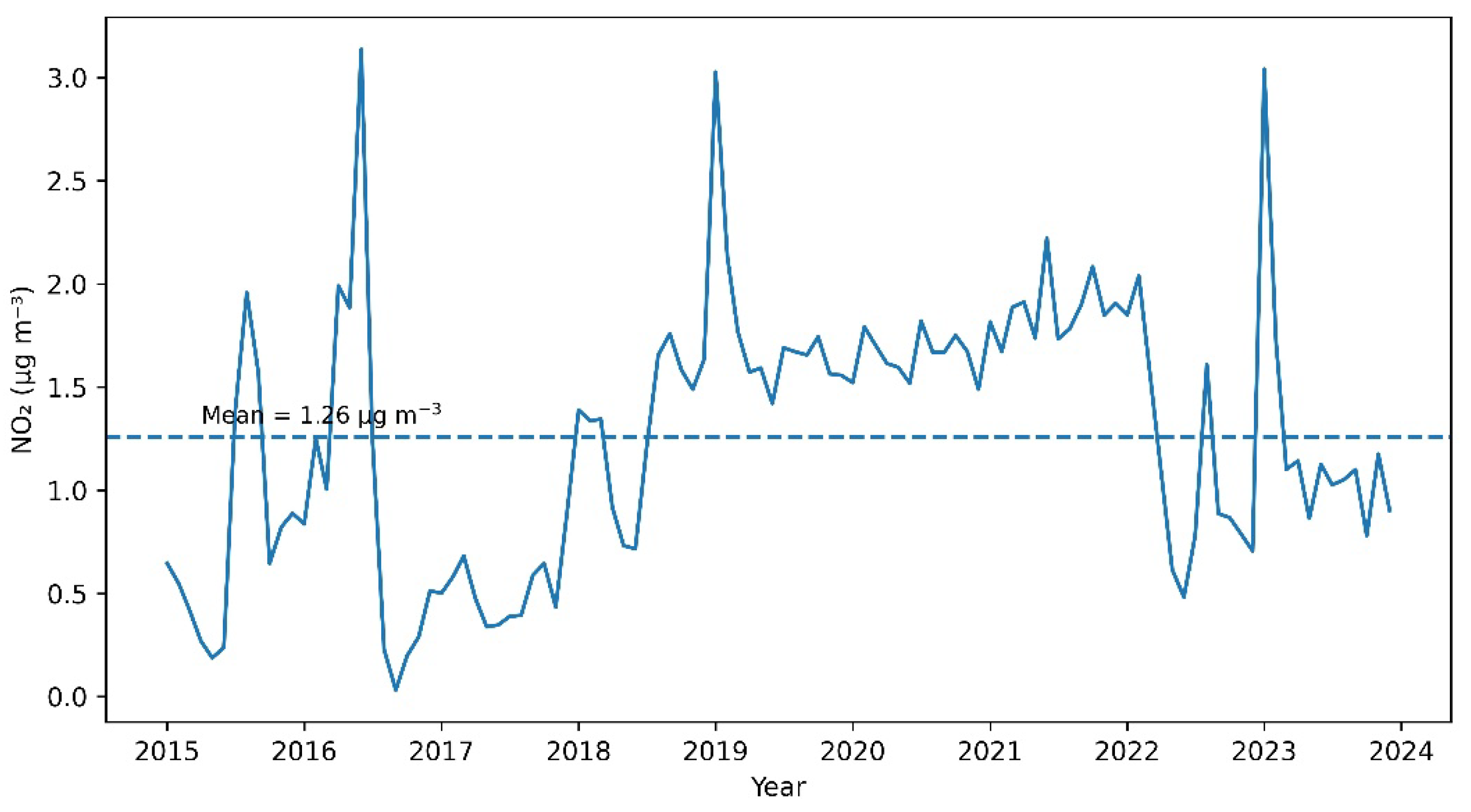
Figure 5.
Monthly mean NO2 concentrations at the Espalhafatos monitoring station (Faial, Azores) for the period 2015–2024. The dashed line indicates the overall mean NO2 level, and shaded areas represent months influenced by continental air-mass transport (PM10 ≥ P90). Only months with ≥80% NO2 data availability were included.
Figure 5.
Monthly mean NO2 concentrations at the Espalhafatos monitoring station (Faial, Azores) for the period 2015–2024. The dashed line indicates the overall mean NO2 level, and shaded areas represent months influenced by continental air-mass transport (PM10 ≥ P90). Only months with ≥80% NO2 data availability were included.
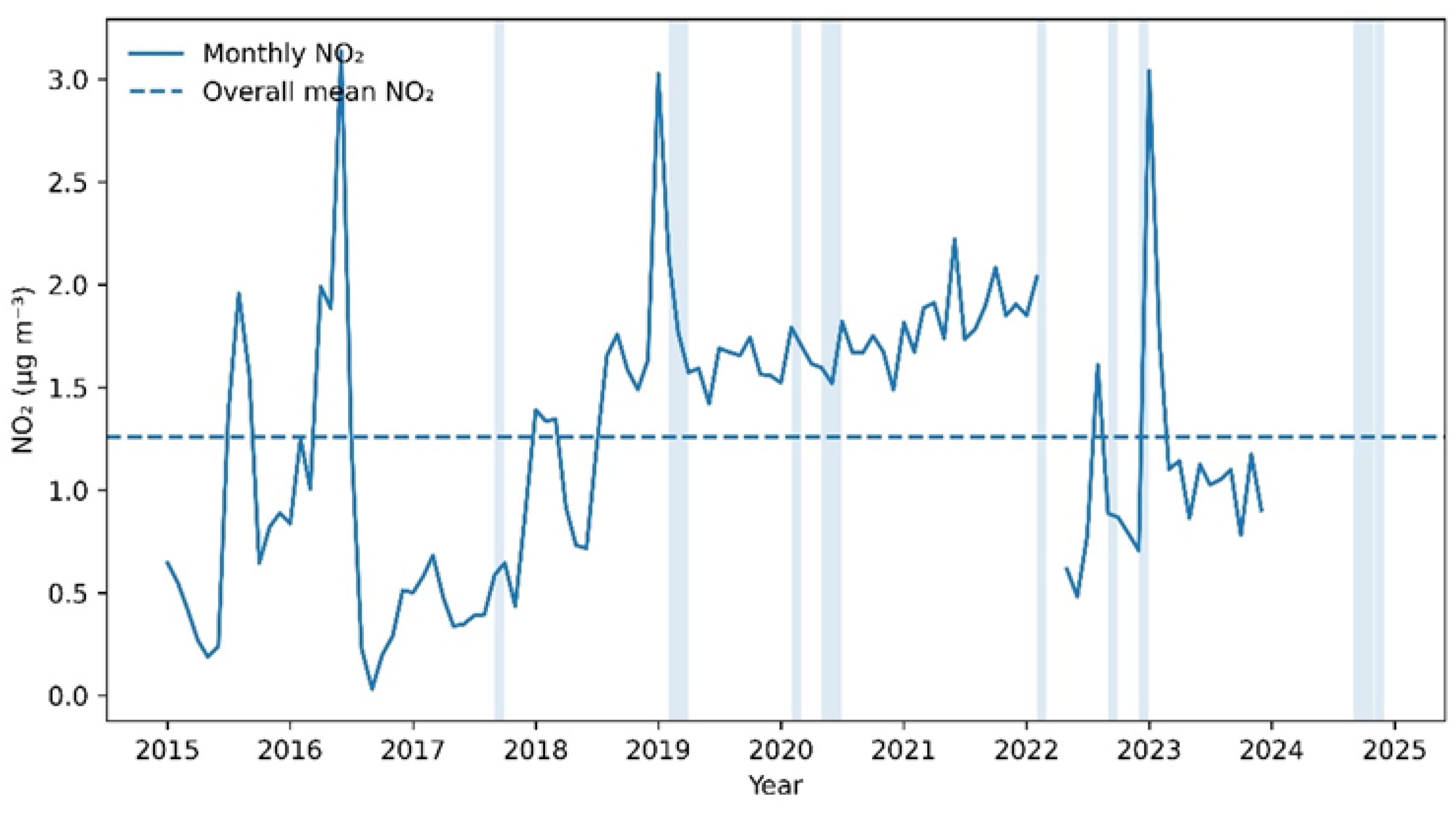
Figure 6.
Distribution of monthly mean NO2 concentrations under background Atlantic conditions and months influenced by continental air-mass transport (PM10 ≥ P90). Boxes represent the interquartile range, the central line indicates the median, and whiskers extend to the minimum and maximum values.
Figure 6.
Distribution of monthly mean NO2 concentrations under background Atlantic conditions and months influenced by continental air-mass transport (PM10 ≥ P90). Boxes represent the interquartile range, the central line indicates the median, and whiskers extend to the minimum and maximum values.
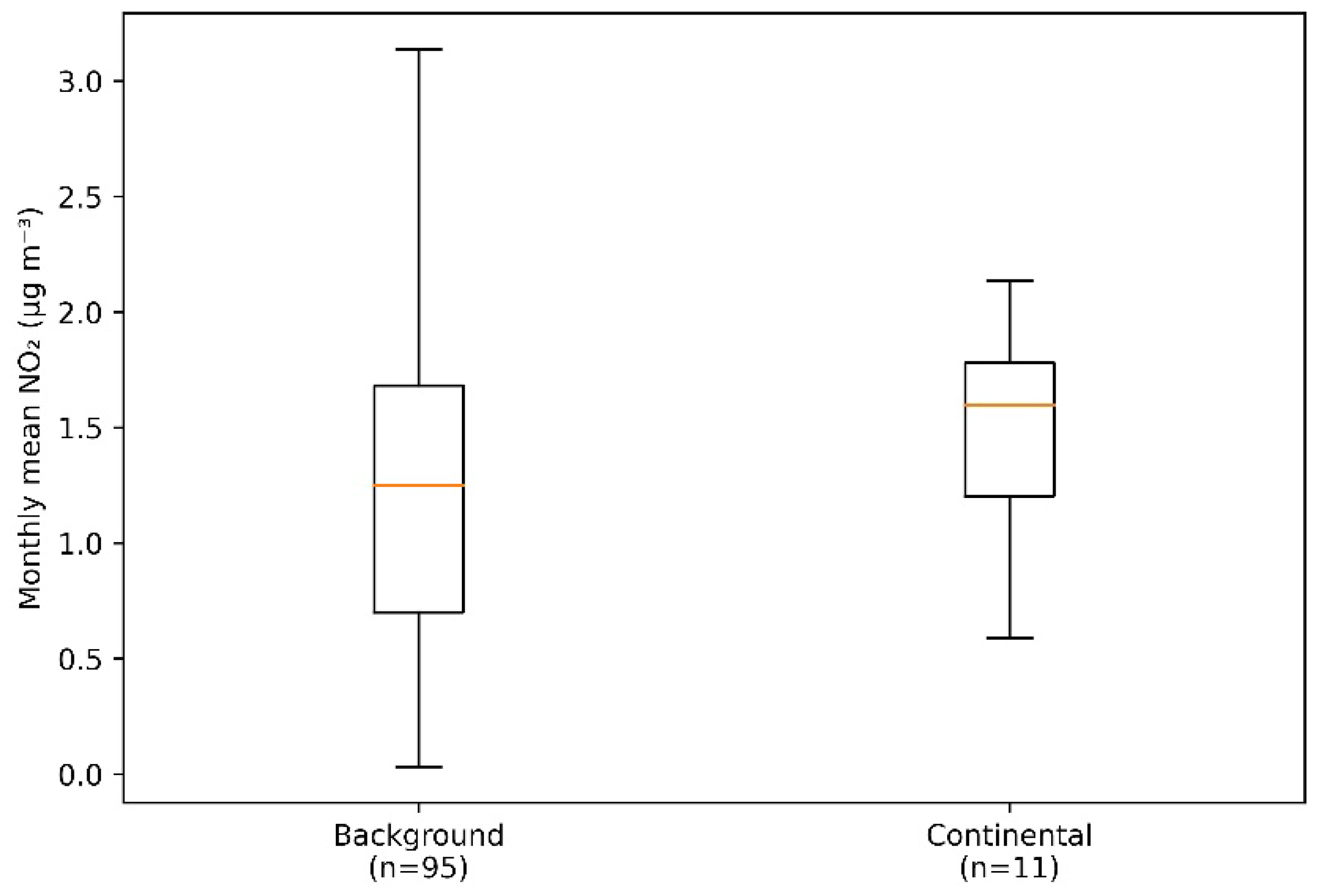
Figure 7.
Distribution of monthly mean wind speed under background Atlantic conditions and months influenced by continental transport (PM10 ≥ P90) for the period 2018–2024.
Figure 7.
Distribution of monthly mean wind speed under background Atlantic conditions and months influenced by continental transport (PM10 ≥ P90) for the period 2018–2024.
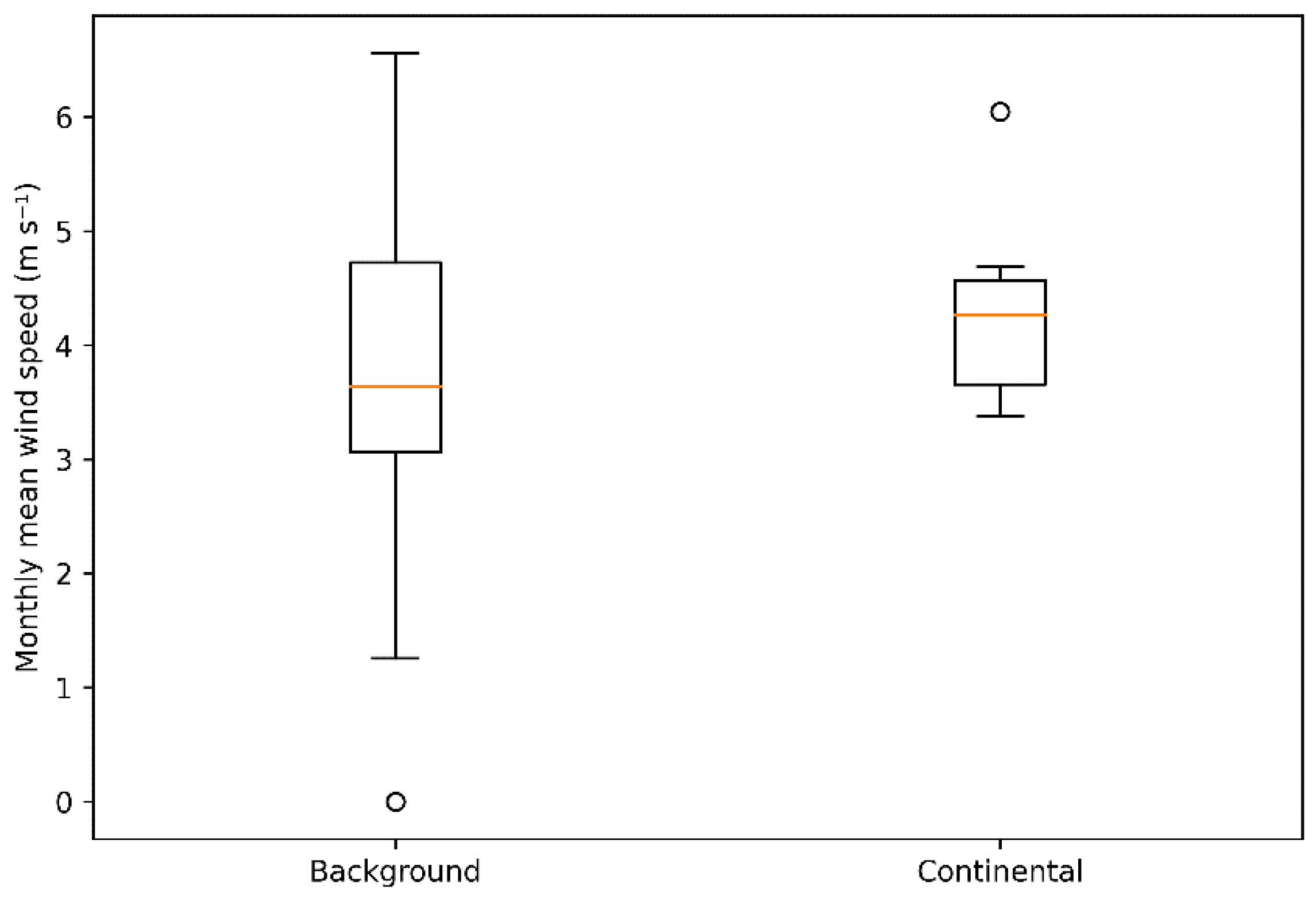

Table 1.
Data coverage and completeness of NO2 observations at the Faial (Espalhafatos) station (2015–2024).
Table 1.
Data coverage and completeness of NO2 observations at the Faial (Espalhafatos) station (2015–2024).
| Year | Valid hours | Total hours | Data completeness (%) |
| 2015 | 8571 | 8760 | 97.84 |
| 2016 | 7504 | 8784 | 85.43 |
| 2017 | 8721 | 8760 | 99.55 |
| 2018 | 8736 | 8760 | 99.73 |
| 2019 | 8732 | 8760 | 99.68 |
| 2020 | 8755 | 8784 | 99.67 |
| 2021 | 8748 | 8760 | 99.86 |
| 2022 | 8729 | 8760 | 99.65 |
| 2023 | 8735 | 8760 | 99.71 |
| 2024 | 8689 | 8784 | 98.89 |
Note: Hourly NO2 measurements were obtained from the QualAr air quality monitoring network (Agência Portuguesa do Ambiente). Data completeness is expressed as the percentage of valid hourly observations relative to the total expected hours per year (8784 in leap years). Monthly averages used in subsequent analyses were calculated only for months with ≥80% data availability.
Disclaimer/Publisher’s Note: The statements, opinions and data contained in all publications are solely those of the individual author(s) and contributor(s) and not of MDPI and/or the editor(s). MDPI and/or the editor(s) disclaim responsibility for any injury to people or property resulting from any ideas, methods, instructions or products referred to in the content. |
© 2026 by the authors. Licensee MDPI, Basel, Switzerland. This article is an open access article distributed under the terms and conditions of the Creative Commons Attribution (CC BY) license (http://creativecommons.org/licenses/by/4.0/).
Copyright: This open access article is published under a Creative Commons CC BY 4.0 license, which permit the free download, distribution, and reuse, provided that the author and preprint are cited in any reuse.


