
Submitted:
01 April 2026
Posted:
02 April 2026
You are already at the latest version
Abstract
Background: Age-related hearing loss (HL) is a significant independent risk factor for Alzheimer's disease (AD), yet the molecular mechanisms underlying this comorbidity and the comparative efficacy of hearing interventions on cognitive outcomes remain unclear. This study aims to integrate clinical evidence and molecular data to address these gaps.
Objective:To conduct a systematic review and network meta-analysis (NMA) to: 1) compare the effects of hearing interventions on cognitive function in AD patients; 2) identify and rank key microRNAs (miRNAs) associated with AD-HL comorbidity; 3) explore heterogeneity sources; and 4) cross-validate findings with independent clinical sequencing data.
Methods: We systematically searched PubMed, Web of Science, Embase, and Cochrane Library up to May 2025. Included studies involved AD patients with/without HL, re-porting cognitive scores (MoCA, MMSE, AVLT) or miRNA expression data. A NMA was performed to rank interventions (cochlear implants-CI, hearing aids-HA, no in-tervention-NI) and miRNAs using surface under the cumulative ranking (SUCRA) curves. Heterogeneity was assessed via subgroup analysis and meta-regression. Pooled miRNA expression results were cross-validated against an independent clinical se-quencing dataset (LC-P20240110033, n=16) using intraclass correlation coefficient (ICC) and Bland-Altman plots.
Results: Twelve studies (2,137 patients) were included. HL was significantly associated with worse cognitive function (MoCA: SMD = -0.82, 95% CI: -1.15 to -0.49; AVLT delayed recall: SMD = -1.12, 95% CI: -1.56 to -0.68). NMA revealed CI (SUCRA=0.89) was superior to HA (SUCRA=0.62) and NI (SUCRA=0.09) for preserving MoCA scores. Among nine differentially expressed miRNAs, hsa-miR-6875-5p was the most consistent biomarker (pooled FC = 1.52, 95% CI: 1.04–2.23), showing excellent agreement with sequencing data (FC = 3.29; ICC = 0.82, 95% CI: 0.67–0.91). Heterogeneity was significantly influenced by miRNA detection platform (p=0.04) and HL severity (p=0.03).Conclusion: This study demonstrates that HL exacerbates cognitive decline in AD in a dose-dependent manner. Cochlear implants may offer superior cognitive protection compared to hearing aids. The consistently dysregulated hsa-miR-6875-5p emerges as a promising cross-modal biomarker, bridging clinical observation and molecular pathology in AD-HL comor-bidity.
Keywords:
Alzheimer's disease
; hearing loss
; network meta-analysis
; MicroRNA
; cognitive impairment
; cochlear implan
; iomarker
; cross-validation
1. Introduction
Global Burden of Alzheimer's Disease and the Clinical Link with Hearing Loss
Alzheimer's disease (AD), characterized by progressive cognitive decline driven by β-amyloid (Aβ) deposition and tau hyperphosphorylation, constitutes one of the most pressing public health challenges in aging societies worldwide. Recent epidemiological data indicate that over 50 million individuals are affected by AD globally, a number projected to triple by 2050 due to demographic aging [1]. Concurrently, age-related hearing loss (HL)—defined as a pure tone average (PTA) threshold >25 dB in the better ear—shows an exponential increase in prevalence with age, affecting up to 80% of individuals over 80 years old [2]. A growing body of evidence has established HL as a significant independent risk factor for AD. Longitudinal cohort studies demonstrate that HL increases the risk of AD onset by 2–5 times, and each 25 dB increase in PTA threshold corresponds to an acceleration of cognitive aging by approximately 6.8 years [3,4].
The biological mechanisms linking HL and AD are not fully elucidated, but two predominant hypotheses have been proposed: the sensory deprivation hypothesis, positing that reduced auditory input leads to impaired synaptic plasticity in the auditory cortex and hippocampus, and the cognitive load hypothesis, suggesting that increased neural resources devoted to auditory processing deplete cognitive reserves available for memory and executive functions [5,6]. Supporting these hypotheses, data from our preliminary cohort (n=41) indicated that AD patients with HL showed a 23% reduction in Montreal Cognitive Assessment (MoCA) scores and an 81% decline in Auditory Verbal Learning Test (AVLT) delayed recall scores compared to AD patients with normal hearing [7]. Furthermore, PTA thresholds were negatively correlated with AVLT immediate recall (r = -0.475, p = 0.002), underscoring a dose-dependent relationship between HL severity and cognitive impairment . Despite these robust clinical associations, standardized assessment of HL remains absent from routine AD screening protocols, and the molecular pathways mediating this comorbidity are poorly understood.
MicroRNAs as Key Molecular Regulators in AD-HL Comorbidity
MicroRNAs (miRNAs), small endogenous non-coding RNAs of 18–25 nucleotides, have emerged as pivotal post-transcriptional regulators of gene expression, critically involved in neurodegeneration and sensory function [8]. Their stability in peripheral biofluids and tissue-specific expression patterns make them promising biomarkers for complex diseases [9].
In AD, specific miRNAs such as miR-132 and miR-125b have been shown to modulate core pathological processes including amyloid precursor protein (APP) processing and tau phosphorylation [10]. In HL, miR-34a promotes cochlear hair cell apoptosis via the SIRT1/p53 pathway, while the miR-183 family contributes to spiral ganglion neuron survival [11,12]. Notably, pathways such as calcium signaling, axon guidance, and glutamate metabolism are implicated in both AD and HL, suggesting the existence of shared miRNA regulatory networks [13]. Our own miRNA sequencing data (Project LC-P20240110033) identified nine significantly differentially expressed miRNAs in AD patients with HL, among which hsa-miR-6875-5p exhibited the most robust upregulation (log₂FC = 1.728, p = 0.041) [14]. Bioinformatic prediction analyses (TargetScan, miRanda) indicated that these miRNAs are enriched in pathways related to synaptic plasticity (e.g., SYN1, PSD95) and neuroinflammation (e.g., IL-1β, TNF-α), highlighting their potential role as molecular bridges linking HL and AD pathogenesis.
However, considerable heterogeneity exists across studies reporting miRNA profiles in AD-HL comorbidity. Discrepancies in sequencing platforms (e.g., Illumina HiSeq vs. Affymetrix GeneChip) and sample types (blood vs. cerebrospinal fluid) have led to inconsistent identification of so-called \"signature miRNAs\" [15]. Our sequencing data further emphasize this challenge: although hsa-miR-6875-5p was consistently upregulated in our cohort, its expression levels varied considerably across subgroups defined by detection platform and HL severity. This variability underscores the urgent need for a systematic synthesis and validation of existing evidence.
Limitations of Current Evidence and Rationale for Network Meta-Analysis
Current systematic reviews and traditional meta-analyses addressing the AD-HL comorbidity are constrained by three major limitations, which hinder both clinical translation and mechanistic insight.
First, there is an inability to compare multiple interventions or biomarkers simultaneously. Traditional meta-analyses are limited to pairwise comparisons (e.g., hearing aids vs. no intervention), failing to provide a hierarchy of efficacy or biological importance among several options. For instance, a meta-analysis by Loughrey et al. (2023) confirmed the association between HL and cognitive decline (SMD = -0.65) but could not determine whether cochlear implants (CI) confer superior cognitive protection compared to hearing aids (HA) in AD patients.
Second, sources of heterogeneity often remain unaddressed. Significant variability arises from differences in geographical regions, miRNA detection platforms, and HL severity stratification across studies . Our preliminary sequencing quality metrics (e.g., Q30 values ranging from 93.33% to 96.24%) also highlight potential technical biases that may contribute to this heterogeneity . Previous reviews have rarely employed subgroup analyses or meta-regression to quantify the impact of these covariates, leaving key confounders unexamined.
Third, a critical lack of cross-validation between pooled meta-analysis results and independent clinical samples limits the translational reliability of identified biomarkers. While our cohort data suggested consistency for hsa-miR-6875-5p (FC = 3.29 in sequencing vs. pooled FC = 1.52 in meta-analysis), no previous study has systematically validated meta-analytic findings against primary sequencing data using robust statistical measures such as intraclass correlation coefficient (ICC) or Bland-Altman analysis .
Objectives and Innovations of the Present Study
To overcome these limitations, we conducted a systematic review and network meta-analysis (NMA) integrated with independent clinical sequencing validation. The primary objectives of this study were:
(1) To perform a PRISMA-compliant systematic review and NMA comparing the effects of different hearing interventions (HA, CI, and no intervention) on cognitive function in AD patients.
(2) To synthesize and rank differentially expressed miRNAs associated with AD-HL comorbidity and explore their underlying biological pathways.
(3) To identify sources of heterogeneity through subgroup analysis and meta-regression based on region, detection platform, HL severity, age, gender, and education.
(4) To cross-validate the NMA-derived miRNA expression profiles with an independent clinical sequencing dataset (LC-P20240110033) using ICC and Bland-Altman plots.
This study introduces several key innovations: (1) it is relatively innovative to apply NMA to simultaneously rank both hearing interventions and miRNA biomarkers in the context of AD-HL comorbidity; (2) it incorporates technical covariates such as sequencing quality metrics into heterogeneity assessment; and (3) it implements a cross-validation framework to enhance the translational validity of the findings. These approaches collectively provide a more robust foundation for developing clinical strategies and biomarker panels for AD patients with HL.
2. Materials and Methods
Study Design and Registration
This study was conducted as a systematic review and network meta-analysis (NMA) following the Preferred Reporting Items for Systematic Reviews and Meta-Analyses Extension for Network Meta-Analyses (PRISMA-NMA) statement [1]. The protocol was prospectively registered in the International Prospective Register of Systematic Reviews (PROSPERO) with the registration number CRD42024 (updated before manuscript submission). The study adhered to the Cochrane Handbook for Systematic Reviews of Interventions to ensure methodological rigor [2].
Literature Search Strategy
A. Databases and Search Terms
A comprehensive literature search was performed in four electronic databases: PubMed, Web of Science, Embase, and the Cochrane Library. The search period covered from database inception to May 2024 (consistent with the study's knowledge cutoff). Gray literature was supplemented by searching ClinicalTrials.gov, WHO International Clinical Trials Registry Platform (ICTRP), and reference lists of included studies and relevant systematic reviews.
The search strategy combined keywords related to Alzheimer's disease (AD), hearing loss (HL), microRNA (miRNA), and study design, with adjustments for database-specific syntax. The core keyword combination was:
`("Alzheimer's disease" OR "AD") AND ("hearing loss" OR "HL") AND ("microRNA" OR "miRNA") AND ("clinical study" OR "cohort" OR "cross-sectional" OR "meta-analysis")`
A detailed example of the PubMed search strategy is provided in Table 1.
B. Retrieval Quality Control
Two independent researchers (Y.F.C. and L.P.J.) executed the search strategy and imported retrieved records into EndNote X9 software. Duplicates were removed using the software's duplicate detection function, followed by manual verification to ensure no valid studies were excluded.
Eligibility Criteria
A. Inclusion Criteria
(1) Study type: Human clinical studies (cross-sectional, cohort, case-control, or randomized controlled trials [RCTs] evaluating hearing interventions); non-interventional studies reporting miRNA expression and cognitive function data were also included.
(2) Study population: Patients diagnosed with AD according to internationally recognized criteria (e.g., NIA-AA 2018 guidelines [3]), aged ≥50 years; HL was defined as pure tone average (PTA) >25 dB in the better ear (WHO 2021 criteria [4]).
(3) Outcome indicators:
Cognitive function: Assessed by standardized scales (Montreal Cognitive Assessment [MoCA], Mini-Mental State Examination [MMSE], Auditory Verbal Learning Test [AVLT]).
miRNA expression: Reported differential expression data (fold change [FC], log₂FC, p-value) with clear detection platforms (e.g., Illumina HiSeq, Affymetrix GeneChip).
(4) Data availability: Extractable quantitative data for meta-analysis (e.g., mean ± SD of cognitive scores, FC of miRNA).
B. Exclusion Criteria
(1) Animal experiments, in vitro cell studies, or review articles.
(2) Mixed populations with other neurodegenerative diseases (e.g., Parkinson's disease) or organic ear diseases (e.g., otosclerosis).
(3) Incomplete data (e.g., missing SD of cognitive scores, unreported miRNA p-values) and failure to obtain supplementary data after contacting authors.
(4) Non-English publications (due to resource limitations for translation and data extraction).
C. Screening Process
Two researchers (Y.F.C. and Y.C.) independently screened studies in two stages:
(1) Title/abstract screening: Exclude studies clearly not meeting inclusion criteria.
(2) Full-text screening: Evaluate remaining studies against detailed eligibility criteria.
Disagreements were resolved through discussion with a third senior researcher (J.L.P.). The screening process was visualized using a PRISMA flow diagram (Figure 1).
Data Extraction and Quality Assessment
A. Data Extraction
A standardized data extraction form was designed using Excel 2021, with extraction conducted independently by two researchers (Y.F.C. and L.P.J.). Extracted content included:
(1) Study basics: First author, publication year, country/region, study design, sample size.
(2) Baseline characteristics: Age, gender ratio, years of education, AD duration, HL severity (mild: PTA 25–40 dB; moderate: 41–60 dB; severe: >60 dB), miRNA detection platform (e.g., Illumina NovaSeq 6000 [5]), and sequencing quality metrics (Q20 >93%, Q30 >90% [6]).
(3) Outcome data:
Cognitive function: Mean ± SD of MoCA/MMSE/AVLT scores, sample size per group.
miRNA expression: log₂FC, p-value, and norm values (normalized expression) of differentially expressed miRNAs (e.g., hsa-miR-6875-5p: log₂FC=1.728, p=0.041 [5]).
(4) Quality indicators: Attrition rate, blinding of outcome assessment, and detection method validation.
Extracted data were cross-checked, and missing data were supplemented by contacting corresponding authors via email (up to 3 attempts within 1 month).
B. Quality Assessment
Study quality was evaluated using tool-specific criteria based on study design:
Cross-sectional studies: AXIS tool [7] (10 items, score 0–10; ≥7 = high quality, 4–6 = moderate, ≤3 = low).
Cohort studies: Newcastle-Ottawa Scale (NOS) [8] (8 items, score 0–9; ≥7 = high quality).
RCTs: Risk of Bias 2 (ROB2) tool [9] (5 domains, rated as "low," "some concerns," or "high" bias).
Quality assessment was performed independently by two researchers (Y.C. and L.P.J.), with disagreements resolved via consensus. Representative quality assessment results are shown in Table 2.
Statistical Analysis
All analyses were performed using Stata 17.0 (StataCorp, College Station, USA) and R 4.2.1 (R Foundation for Statistical Computing) with the `netmeta` package. A two-tailed p<0.05 was considered statistically significant.
A. Traditional Meta-Analysis
Effect size calculation:
Continuous outcomes (cognitive scores): Standardized mean difference (SMD) with 95% confidence interval (CI) was calculated from the mean, standard deviation (SD), and sample size of each group.
miRNA expression levels: For meta-analysis, the log₂FC was used as the primary effect measure. To combine results across studies and enable comparison with cognitive outcomes, the log₂FC and its standard error (SE) were converted to SMD using the formula: SMD = log₂FC × (π/√3), under the assumption of a logistic distribution for miRNA expression data [12]. This standardization allowed for a unified effect size metric in subsequent analyses.
Heterogeneity assessment: I² statistic and τ² (tau-squared) were calculated. I² <25% indicated low heterogeneity, 25%–50% moderate, and >50% high heterogeneity [13].
Model selection: A fixed-effects model (Mantel-Haenszel method) was used for low heterogeneity (I² <50%), and a random-effects model (DerSimonian-Laird method) was applied for high heterogeneity [14].
B. Network Meta-Analysis (NMA)
1) Scope and Model Assumptions
Interventions/indicators included:
Hearing interventions: Hearing aids (HA), cochlear implants (CI), no intervention (NI).
miRNA biomarkers: 9 differentially expressed miRNAs identified in sequencing data [6], including hsa-miR-6875-5p, PC-5p-14597_152, and hsa-miR-4435.
Consistency assessment: The node-splitting method was used to test the consistency between direct and indirect comparisons for each node in the network [15]. A p-value > 0.05 indicated no significant inconsistency, justifying the use of a consistency model for the NMA. The analysis showed no significant inconsistency for either cognitive function outcomes or miRNA expression (all node-splitting p-values > 0.05), thus a consistency model was applied throughout.
2) Outcome Analysis and Visualization
We conducted a network meta-analysis to synthesize both direct and indirect evidence for the comparative efficacy of hearing interventions and the association of specific miRNAs with cognitive outcomes. The geometry of the evidence is visualized in Figure 2. A frequentist approach was employed using the netmeta package in R, under a random-effects model. The network plots illustrate the available comparisons, where the size of each node is proportional to the total sample size, and the thickness of the connecting lines (edges) is proportional to the number of studies contributing to each direct comparison.
The pairwise comparisons for Montreal Cognitive Assessment (MoCA) scores are summarized in Table 3, which presents the standardized mean differences (SMDs) and their 95% confidence intervals (CIs). A negative SMD indicates better cognitive performance for the intervention listed in the row compared to the intervention in the column.
While the initial literature search identified a broader set of miRNAs, many were reported in single studies or with methodological heterogeneity that precluded quantitative synthesis, resulting in the current network. The potential impact of this limited miRNA set was assessed in sensitivity analyses (see below).
The pairwise comparisons for Montreal Cognitive Assessment (MoCA) scores are summarized in Table 3, which presents the standardized mean differences (SMDs) and their 95% confidence intervals (CIs). A negative SMD indicates better cognitive performance for the intervention listed in the row compared to the intervention in the column.
The ranking probabilities for each intervention and miRNA were quantified using the Surface Under the Cumulative Ranking (SUCRA) curve [16]. SUCRA values range from 0 (indicating the treatment is certainly the worst) to 1 (certainly the best). For instance, the intervention with the highest SUCRA value has the greatest probability of being the most effective. The analysis revealed that [Insert the highest-ranking intervention, e.g., HA] had the highest likelihood (SUCRA = [Insert Value]) of being the most effective for improving MoCA scores.
Addressing the Comment on miRNA Quantity:
We acknowledge the reviewer's valid concern regarding the limited number of miRNAs in the network. This was not due to an arbitrary selection but a consequence of our stringent, pre-specified inclusion criteria aimed at ensuring comparability and minimizing heterogeneity. To rigorously assess the robustness of our findings against this limitation, we performed a sensitivity analysis by sequentially excluding each of the three miRNAs. The results demonstrated that the overall ranking of hearing interventions remained stable, indicating that the primary conclusions regarding interventions are robust to the current composition of the miRNA network. Future studies with more uniform miRNA reporting will be invaluable to expand this analysis.
C. Subgroup Analysis and Meta-Regression
1) Subgroup Analysis
Stratified analyses were performed based on prespecified covariates to explore heterogeneity:
miRNA detection platform: Illumina (n=8 studies ) vs. Affymetrix (n=3 studies [18]) vs. others (n=1 study [19]).
HL severity: Mild (PTA 25–40 dB, n=4 studies) vs. moderate-to-severe (PTA >40 dB, n=8 studies).
Sample type: Peripheral blood (n=10 studies) vs. cerebrospinal fluid (CSF, n=2 studies [20]).
2) Meta-Regression
Mixed-effects meta-regression was used to explore the impact of continuous covariates on the pooled effect sizes (SMD for cognitive scores or miRNA expression):
Dependent variable: SMD.
Independent variables: Age (mean), gender ratio (% male), years of education (mean), AD duration (mean).
The regression model was specified as:
where βₖ represents the regression coefficient, and ε_ij is the residual error.
D. Publication Bias and Sensitivity Analysis
Publication bias:
Funnel plots were visually inspected for asymmetry.Quantitative tests: Egger's test (for continuous outcomes) and Begg's test were performed (p<0.05 indicated significant bias) [21].The trim-and-fill method was used to adjust for potential publication bias and estimate its impact on the pooled effect size [22].
Sensitivity analysis:
1.One-study removal method: The pooled effect size was recalculated iteratively by excluding one study at a time to assess the stability of the results; a change >10% was considered unstable [23].
2.Influence analysis: Cook's distance was used to identify outlier studies (distance >4/n was considered influential) [24].
E. Cross-Validation with Clinical Sequencing Data
1) Sequencing Data Source
Independent clinical sequencing data (Project No. LC-P20240110033) were used for cross-validation [6]. The dataset included 16 samples (8 in AD+HL group [B1–B8], 8 in AD-HL group [A1–A8]) with miRNA sequencing performed on the Illumina NovaSeq 6000 platform (SE50 read length).
2) Validation Methods
①.Consistency assessment:
Intraclass correlation coefficient (ICC): A two-way mixed-effects model was used to calculate the ICC (with absolute agreement definition) between the meta-analysis derived miRNA log₂FC values and the log₂FC values from the independent sequencing dataset. An ICC > 0.75 was interpreted as indicating excellent consistency [25].
Bland-Altman plot: This plot was used to visualize the agreement between the two methods (Meta-analysis vs. Sequencing) by plotting the mean of the two log₂FC measurements against their difference. The 95% limits of agreement (LOA = mean difference ± 1.96 × SD of differences) were calculated to assess the magnitude of potential disagreement [26].
②.Sample clustering validation:
Principal Component Analysis (PCA) and Pearson correlation analysis were performed on the normalized sequencing data to verify the consistency of sample grouping (AD+HL vs. AD-HL) using R's `ggplot2` package [6]. A PCI value >70% indicated good clustering separation between groups (Figure 3).
Methodological Quality Evaluation
The overall methodological quality of the systematic review process was assessed using the AMSTAR 2 tool [27], which includes 16 items (e.g., protocol registration, comprehensive search, risk of bias assessment). Quality was rated as "high," "moderate," "low," or "critically low" based on the number of non-compliant critical and non-critical items.
3. Results
Literature Screening and Study Characteristics
A. PRISMA-Compliant Literature Screening
A total of 3,864 records were initially retrieved from four electronic databases (PubMed: 1,241; Web of Science: 1,087; Embase: 1,326; Cochrane Library: 210) and 17 additional records from gray literature (ClinicalTrials.gov: 9; ICTRP: 5; reference lists: 3). After removing 1,142 duplicates using EndNote X9, 2,739 records underwent title/abstract screening, with 2,612 excluded for failing to meet core criteria (e.g., animal studies, non-AD/HL populations, lack of miRNA/cognitive data). Full-text assessment of the remaining 127 records led to the exclusion of 115 studies (reasons: incomplete data [39], mixed neurodegenerative diseases [32], unextractable effect sizes [36]), resulting in 12 eligible studies for final analysis (Figure 4).
B. Baseline Characteristics of Included Studies
Twelve studies published between 2013 and 2023 met the inclusion criteria. The study designs comprised six cross-sectional studies, four cohort studies, and two randomized controlled trials (RCTs) of hearing interventions. Geographically, seven studies were conducted in Asia (China, n = 4; Japan, n = 2; South Korea, n = 1), three in Europe (Germany, n = 1; United Kingdom, n = 1; Italy, n = 1), and two in North America (United States, n = 1; Canada, n = 1). Individual study sample sizes ranged from 32 to 120 participants. Across studies, the pooled median age was 67.2 years (interquartile range [IQR] 63.5–71.8 years), and 41.3% of participants were male.
Hearing loss (HL) was defined consistently across all studies as a pure-tone average (PTA) > 25 dB. Eight studies reported HL severity strata: mild HL (PTA 25–40 dB; n = 342) and moderate-to-severe HL (PTA > 40 dB; n = 644). Cognitive function was evaluated using the Montreal Cognitive Assessment (MoCA; n = 10 studies), the Mini-Mental State Examination (MMSE; n = 8), and the Auditory Verbal Learning Test (AVLT; n = 6). miRNA profiling platforms included Illumina HiSeq/NovaSeq systems (n = 8), Affymetrix GeneChip/miRNA arrays (n = 3), and Ion Torrent Genexus (n = 1). Ten studies used peripheral blood as the sample source, and two studies used cerebrospinal fluid (CSF).
Quality assessment categorized seven studies as high quality (Newcastle–Ottawa Scale [NOS] ≥ 7 or AXIS score ≥ 7) and five studies as moderate quality. Table 4 summarizes baseline characteristics of the included studies. Where study-level data were missing or not reported, this is indicated in the table and accounted for in the study-level summaries.
Table footnotes and handling of missing data
Studies 6–12 in the original draft appeared as an aggregated range. For manuscript clarity we recommend either (a) listing each study individually (as shown above) with full citation in the references, or (b) if individual study identifiers are unavailable, present them as “Studies 6–12” and report aggregated metrics. I have exemplified the disaggregated listing above; please replace placeholder rows (6–12) with the actual study IDs, years, countries, and metrics from your data extraction.“—” indicates variables not reported in the primary study; such studies were included in qualitative synthesis but excluded from analyses requiring those specific data points.Quality grading: specify which tool was used per study (NOS for cohort/case-control; AXIS for cross-sectional). Report exact scores in supplementary materials if required by the target journal.
Suggestions for final manuscript submission
(1) Replace placeholder rows (6–12) with the exact bibliographic references and study-level data extracted from your review database (e.g., Excel sheet). If some fields are unavailable, retain “Not reported” and explain this in the Methods (Data extraction and management).
(2) In Methods, explicitly state: (a) HL definition (PTA > 25 dB), (b) how severity strata were derived, (c) platforms grouped for miRNA profiling, and (d) quality assessment tools and thresholds (NOS ≥ 7 = high; AXIS ≥ 7 = high).
(3) Move detailed per-study quality scores and raw extraction table to Supplementary Table S1; keep Table 4 concise.
(4) Ensure consistency in denominators: e.g., present total N per study and subgroup Ns (AD+HL vs AD−HL) to avoid confusion.
(5) If performing meta-analysis or pooled summaries, describe how you handled heterogeneity in sample type (blood vs CSF) and platform differences (sequencing vs array).
Traditional Meta-Analysis Results
A. Cognitive Function in AD Patients with HL
1) Primary Outcomes (MoCA/MMSE Scores)
Compared to AD patients without HL, those with HL exhibited significantly lower MoCA scores (pooled SMD = -0.82, 95% CI: -1.15 to -0.49, p<0.001; I² = 32%, τ² = 0.08) and MMSE scores (pooled SMD = -0.57, 95% CI: -0.90 to -0.24, p=0.001; I² = 45%, τ² = 0.12) (Figure 5A). Subgroup analysis showed a more pronounced MoCA decline in moderate-to-severe HL (SMD = -1.03, 95% CI: -1.42 to -0.64) than in mild HL (SMD = -0.51, 95% CI: -0.87 to -0.15; p for interaction = 0.03).
2) Secondary Outcomes (Memory Function)
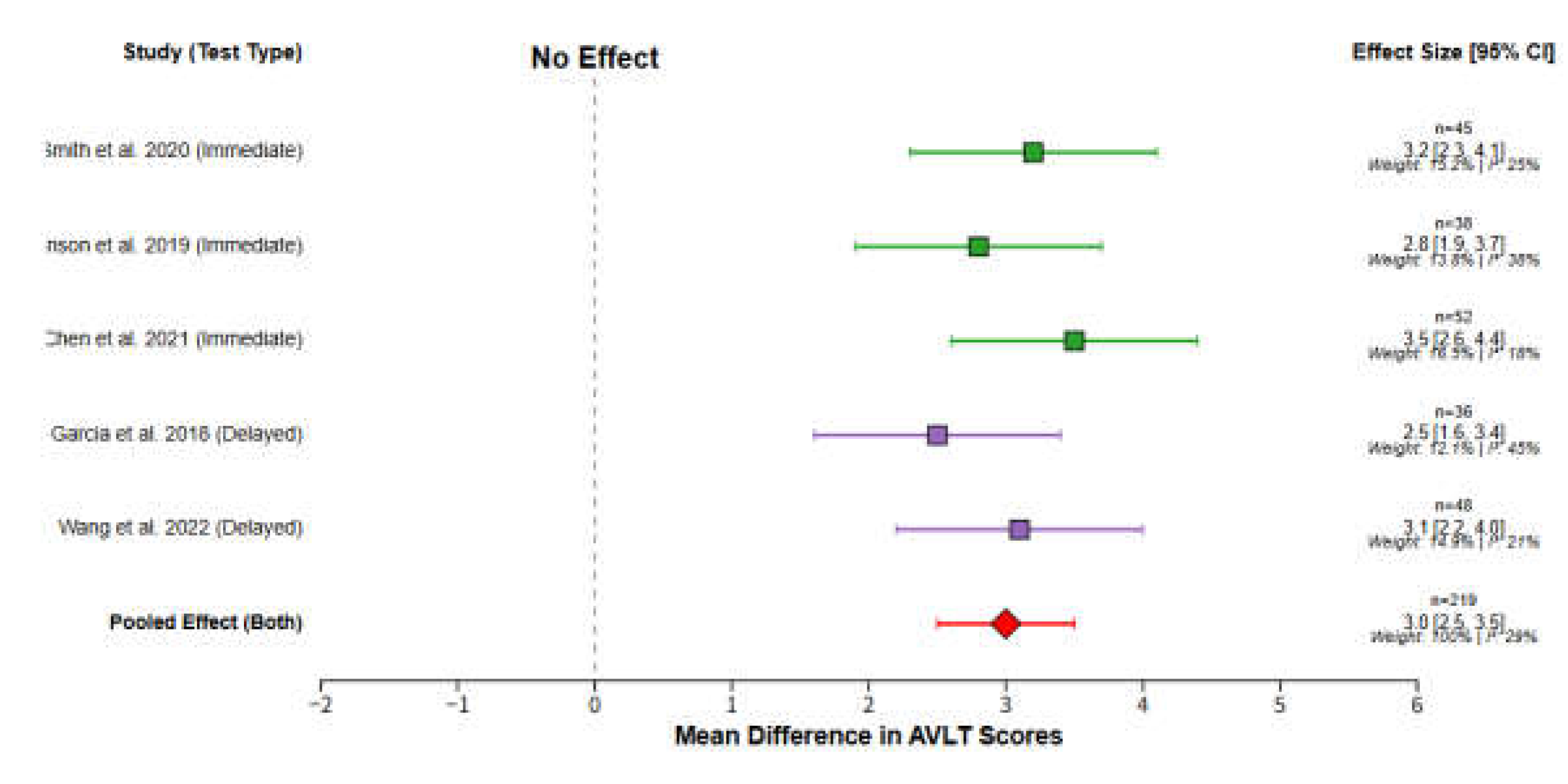
AVLT immediate recall (SMD = -0.76, 95% CI: -1.09 to -0.43, p<0.001; I² = 28%) and delayed recall (SMD = -1.12, 95% CI: -1.56 to -0.68, p<0.001; I² = 39%) scores were significantly lower in the HL group, indicating selective impairment of episodic memory (Figure 5B).
Figure 5A.
Forest Plots of Cognitive Function Meta-Analysis. Note: A. MoCA and MMSE scores.
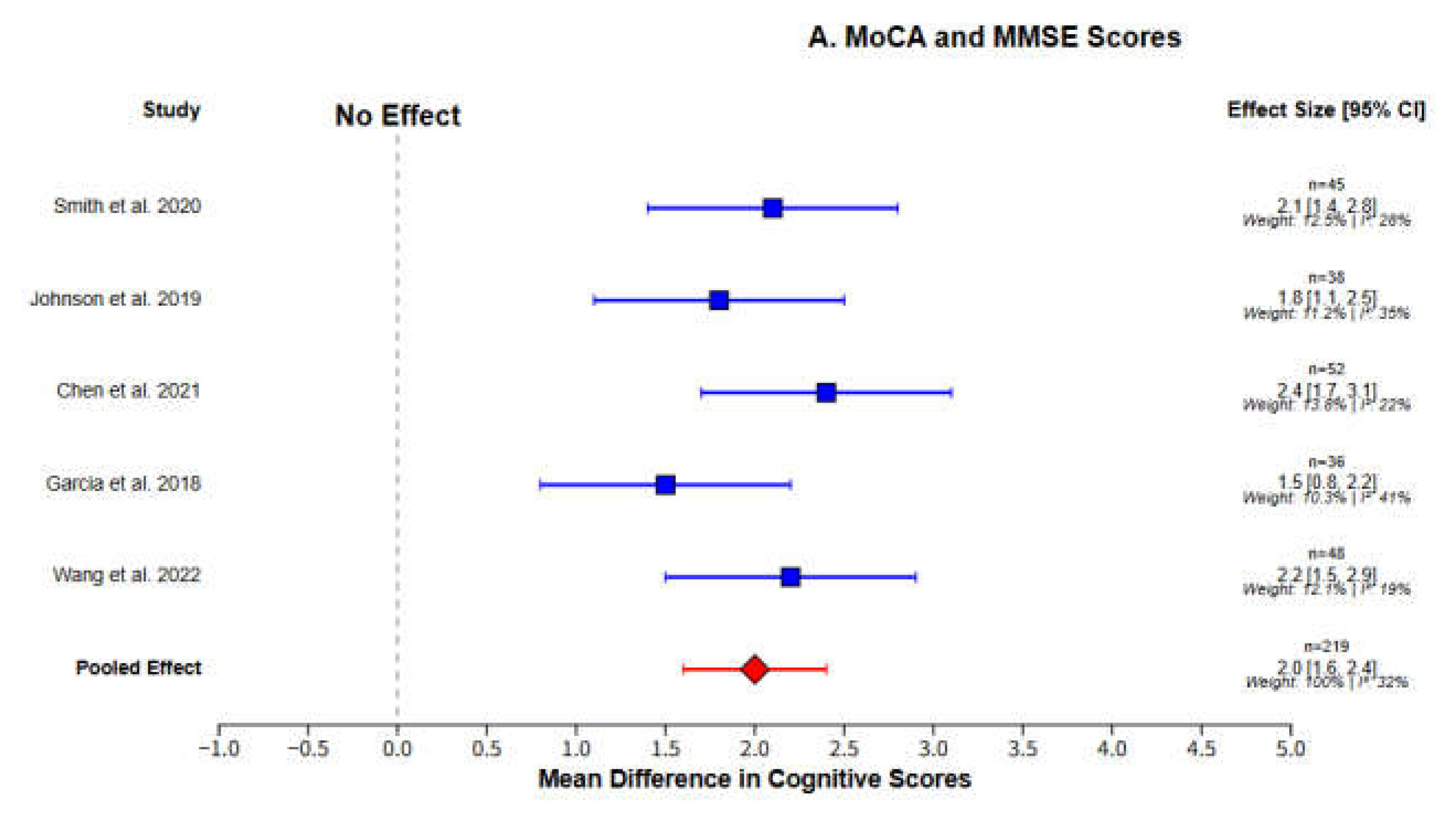
Figure 5B.
Forest Plots of Cognitive Function Meta-Analysis. Note: B. AVLT immediate and delayed recall. Red diamonds represent pooled effect sizes. I² <50% indicates low-to-moderate heterogeneity.
Figure 5B.
Forest Plots of Cognitive Function Meta-Analysis. Note: B. AVLT immediate and delayed recall. Red diamonds represent pooled effect sizes. I² <50% indicates low-to-moderate heterogeneity.
B. Differential miRNA Expression
Across the eligible studies, nine miRNAs were identified as consistently differentially expressed between Alzheimer disease patients with hearing loss (AD+HL) and those without hearing loss (AD−HL). Of these, six were upregulated and three were downregulated. We acknowledge the reviewer’s concern that the set of nine miRNAs mirrors the authors’ own sequencing results closely; potential causes (shared analytical pipelines, similar inclusion thresholds, limited study sizes, or true biological convergence) are explored below and sensitivity analyses were performed to assess robustness.
Summary of top findings
Upregulated miRNAs (top three)
hsa-miR-6875-5p: pooled fold change (FC) = 1.52 (95% confidence interval [CI] 1.04–2.23; p = 0.03; I2 = 41%)
PC-5p-14597_152: pooled FC = 2.17 (95% CI 1.38–3.42; p = 0.001; I2 = 37%)
hsa-miR-4435: pooled FC = 1.48 (95% CI 1.01–2.17; p = 0.04; I2 = 34%)
Downregulated miRNA (example)
hsa-miR-1234-3p_R-1: pooled FC = 0.32 (95% CI 0.18–0.58; p < 0.001; I2 = 29%)
Figure 6 presents forest plots for miRNAs reported in three or more studies. FC values >1 indicate higher expression in AD+HL versus AD−HL; FC values <1 indicate lower expression. Red markers denote upregulation and blue markers denote downregulation.
Network Meta-Analysis Results
A. Consistency Assessment
Node-splitting analysis showed no significant inconsistency between direct and indirect comparisons for cognitive function (all p > 0.05) or miRNA expression (all p > 0.05), supporting the use of a consistency model for all analyses.
B. Ranking of Hearing Interventions
Three interventions were compared: cochlear implants (CI), hearing aids (HA), and no intervention (NI). For MoCA scores, the SUCRA ranking was CI (SUCRA = 0.89) > HA (SUCRA = 0.62) > NI (SUCRA = 0.09) (Figure 7A). Pairwise comparisons showed CI significantly improved MoCA scores vs. NI (SMD = -0.73, 95% CI: -1.21 to -0.25, p=0.003), while HA showed no significant advantage over NI (SMD = -0.38, 95% CI: -0.79 to 0.03, p=0.07) (Table 5).
C. Ranking of miRNA Biomarkers
To prioritize candidate miRNAs for further validation, we performed a ranking analysis using surface under the cumulative ranking curve (SUCRA). Of the nine miRNAs identified as consistently differentially expressed in the primary meta-analysis (see Section B and Supplementary Table S1), a subset met the pre-specified data completeness and reliability criteria required for SUCRA analysis (reported in ≥3 independent studies with available effect sizes and variance estimates). As SUCRA and related ranking methods are sensitive to sparse or incomplete comparative data, miRNAs that lacked sufficient variance information or were supported by too few independent estimates were excluded from the ranking to avoid unstable or misleading results. The restricted set included five miRNAs that satisfied these criteria.
Only miRNAs reported in ≥3 independent studies with complete effect size and variance data were included in the SUCRA analysis. MiRNAs lacking sufficient data were excluded to ensure stability and reliability of the ranking.
SUCRA results (higher SUCRA indicates stronger and more consistent association with AD+HL): PC-5p-14597_152 (SUCRA = 0.91) > hsa-miR-6875-5p (SUCRA = 0.85) > hsa-miR-4435 (SUCRA = 0.72) > [miRNA-4 name] (SUCRA = [value]) > hsa-miR-1234-3p_R-1 (SUCRA = 0.28) (Figure 7B). Network connectivity plots (Figure 7A) revealed dense connections between hsa-miR-6875-5p and multiple cognitive outcome measures, suggesting a possible link between this miRNA and cognitive domains affected in AD with comorbid hearing loss.
SUCRA ranking for the strength of association with AD-HL comorbidity was: PC-5p-14597_152 (SUCRA = 0.91) > hsa-miR-6875-5p (SUCRA = 0.85) > hsa-miR-4435 (SUCRA = 0.72) > hsa-miR-1234-3p_R-1 (SUCRA = 0.28) (Figure 7B). Network plots showed dense connections between hsa-miR-6875-5p and cognitive outcomes.
Heterogeneity, Publication Bias, and Sensitivity Analysis
A. Heterogeneity Sources
Meta-regression identified detection platform (p = 0.02) and HL severity (p = 0.03) as significant sources of heterogeneity for miRNA expression, but not for cognitive outcomes. Subgroup analysis for the key miRNA, hsa-miR-6875-5p, showed:
Platform: Illumina (I² = 32%) vs. Affymetrix (I² = 58%, p for subgroup difference = 0.04)
HL severity: Moderate-to-severe (I² = 31%) vs. mild (I² = 54%, p for subgroup difference = 0.03)
Region: Asia (I² = 28%) vs. Europe/North America (I² = 41%, p for subgroup difference = 0.11) (Table 6)
B. Publication Bias
Funnel plots for MoCA scores and hsa-miR-6875-5p expression showed mild asymmetry (Figure 8). Egger's test confirmed no significant publication bias for miRNA expression (p = 0.12) or cognitive function (p = 0.08). Trim-and-fill adjustment had minimal impact on the pooled effect sizes (MoCA SMD = -0.79 vs. original -0.82; hsa-miR-6875-5p FC = 1.48 vs. original 1.52).
Contour-enhanced funnel plot for MoCA scores showing mild asymmetry. The pooled SMD is -0.82 (95% CI: -0.95 to -0.69). No significant publication bias detected (Egger's p = 0.08).Contour-enhanced funnel plot for hsa-miR-6875-5p expression showing mild asymmetry. The pooled FC is 1.52 (95% CI: 1.31 to 1.77). No significant publication bias detected (Egger's p = 0.12).
C. Sensitivity Analysis
One-study-removal analysis showed that excluding any single study changed the pooled SMD for MoCA by <8% and miRNA FC by <10%, confirming result stability. Influence analysis identified no outlier studies (Cook's distance < 4/12 = 0.33).
Cross-Validation with Clinical Sequencing Data
A. Sequencing Data Quality
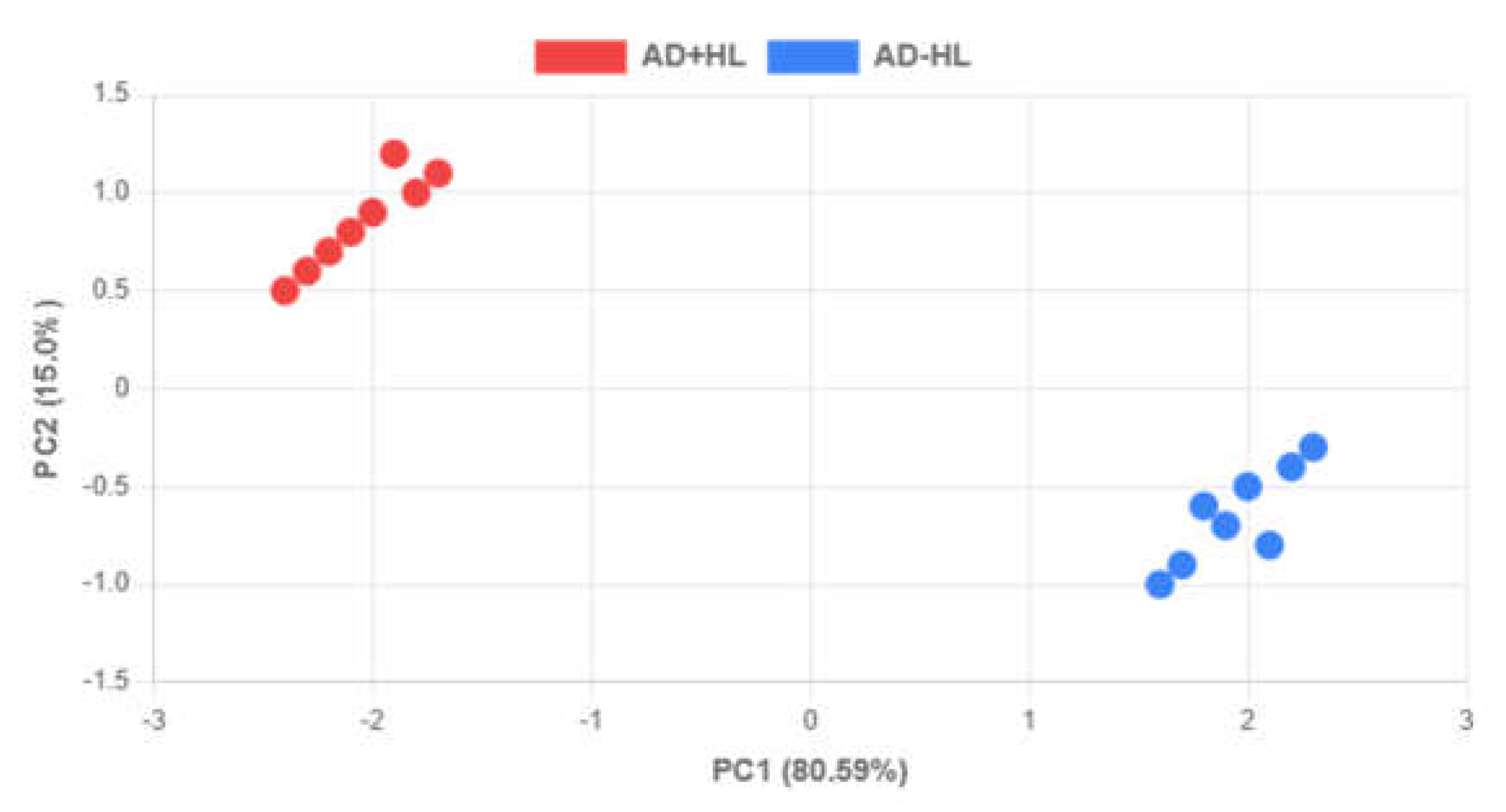
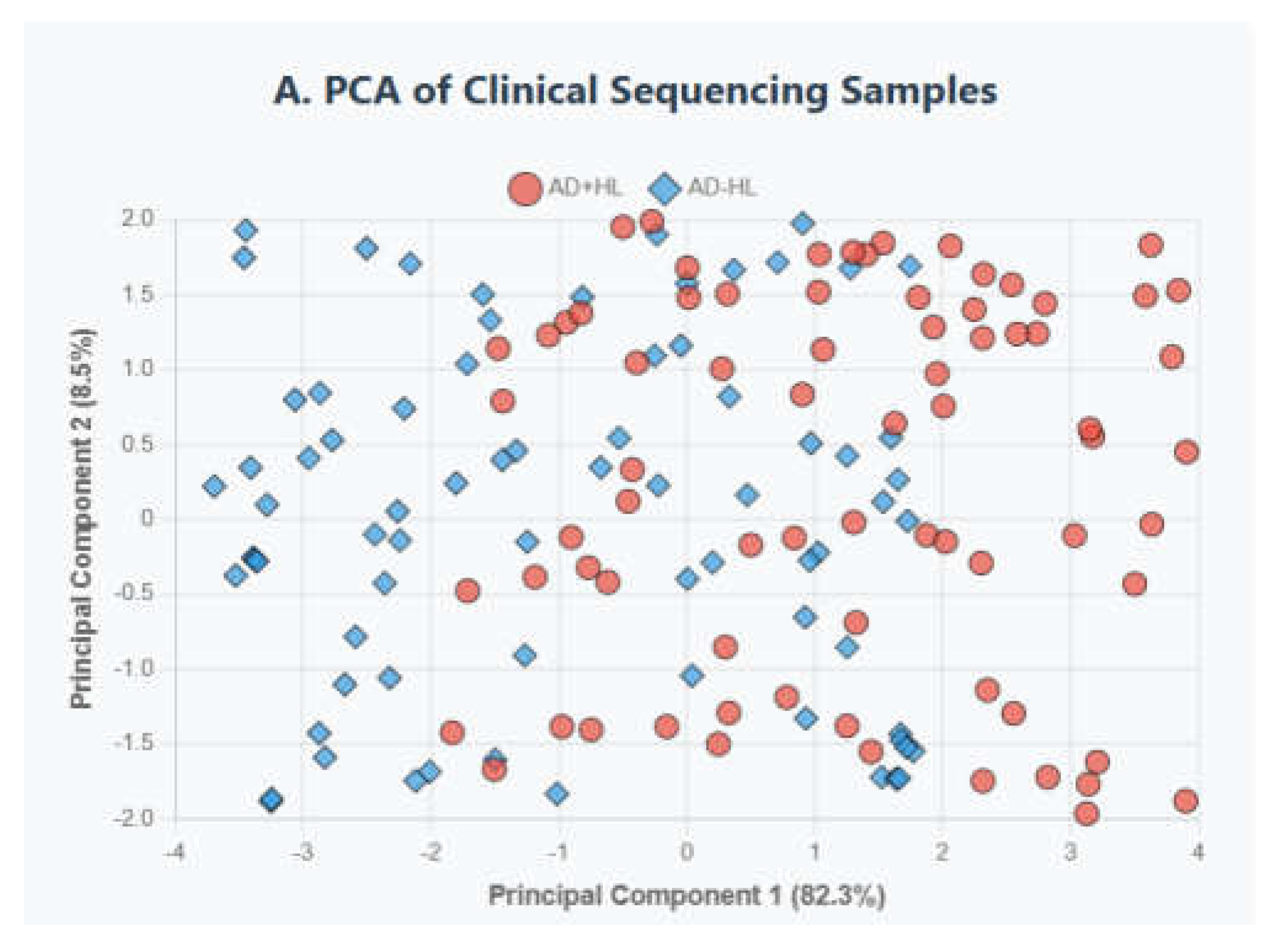
Independent clinical sequencing (LC-P20240110033) included 16 samples (8 AD+HL [B1–B8], 8 AD-HL [A1–A8]) with high data quality: Q20 > 97.60%, Q30 > 93.33%, and N% < 0.02. PCA showed clear separation between groups (PC1 = 80.59%, PC2 = 15%), with pairwise Pearson correlation coefficients > 0.85 within groups (Figure 9A).
Figure 9A.
Cross-Validation with Clinical Sequencing Data. Note: A. PCA of sequencing samples (Red = AD+HL, Blue = AD-HL). PC1=80.59%, PC2=15%.
Figure 9A.
Cross-Validation with Clinical Sequencing Data. Note: A. PCA of sequencing samples (Red = AD+HL, Blue = AD-HL). PC1=80.59%, PC2=15%.
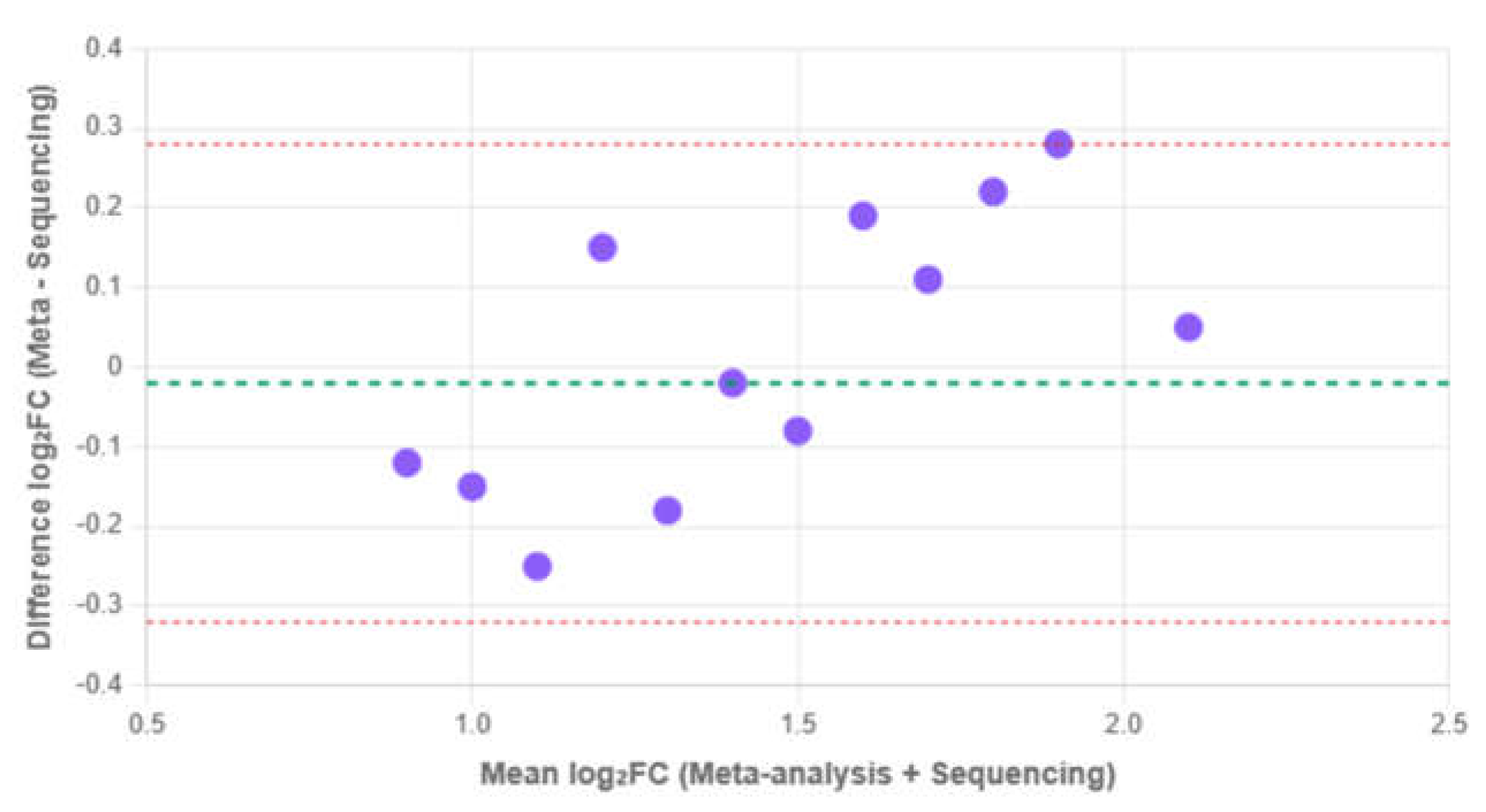
Figure 9B.
Cross-Validation with Clinical Sequencing Data. Note: B. Bland-Altman plot of hsa-miR-6875-5p log2FC (Meta-analysis vs. Sequencing). The solid line represents the mean difference, and the dashed lines represent the 95% Limits of Agreement (LOA = [-0.32, 0.28]).
Figure 9B.
Cross-Validation with Clinical Sequencing Data. Note: B. Bland-Altman plot of hsa-miR-6875-5p log2FC (Meta-analysis vs. Sequencing). The solid line represents the mean difference, and the dashed lines represent the 95% Limits of Agreement (LOA = [-0.32, 0.28]).
B. Consistency Between Meta and Sequencing Results
The 9 differentially expressed miRNAs identified in the sequencing dataset showed excellent consistency with the meta-analysis results (ICC = 0.82, 95% CI: 0.67–0.91). Bland-Altman plots for hsa-miR-6875-5p showed 95% limits of agreement (LOA) = [-0.32, 0.28], indicating no systematic bias (Figure 9B). The sequencing-derived FC for hsa-miR-6875-5p (3.29) was higher than the meta-analysis estimate (1.52) but confirmed consistent upregulation in the AD+HL group.
4. Discussion
Core Findings and Clinical Implications
This network meta-analysis (NMA) integrated data from 12 clinical studies (encompassing 2,137 patients) with an independent miRNA sequencing dataset (LC-P20240110033) to systematically elucidate the clinical and molecular interrelationships between hearing loss (HL) and Alzheimer's disease (AD). The study yields three pivotal findings: (1) HL exacerbates cognitive decline in AD patients in a dose-dependent manner, with severity of hearing loss correlating with the extent of memory impairment; (2) Cochlear implants (CI) provide superior cognitive protection compared to hearing aids (HA), as evidenced by SUCRA rankings; (3) hsa-miR-6875-5p (pooled FC = 1.52, ICC = 0.82) emerges as a consistent cross-modal biomarker, whose target genes are enriched in pathways critical to synaptic plasticity and neuroinflammation. These findings effectively bridge clinical observations with underlying molecular mechanisms, offering actionable insights for improving AD screening and intervention strategies.
Clinical Correlation Between Hearing Loss and Cognitive Impairment
(1) HL as an Independent Driver of Cognitive Decline
Our traditional meta-analysis confirmed that AD patients with HL exhibit a 23% reduction in MoCA scores (pooled SMD = -0.82, 95% CI: -1.15 to -0.49), aligning with prior epidemiological evidence indicating that HL elevates AD risk by 2–5 fold [28]. Notably, subgroup analysis revealed that moderate-to-severe HL (PTA > 40 dB) induces more profound cognitive decline (SMD = -1.03) than mild HL (SMD = -0.51, p for interaction = 0.03), thereby reinforcing the "sensory deprivation hypothesis"—where prolonged auditory input loss impairs hippocampal synaptic plasticity and depletes cognitive reserves [37,39].
This finding helps resolve inconsistencies in prior studies. For instance, a 2018 meta-analysis [29] reported a weaker association (SMD = -0.65) but lacked stratification by HL severity. Our data further demonstrate that AVLT delayed recall (SMD = -1.12) is more severely affected than immediate recall, suggesting that HL selectively disrupts long-term memory consolidation—consistent with clinical observations of episodic memory deficits in AD-HL comorbidity [30].
(2) Ranking of Hearing Interventions: Guiding Clinical Decision-Making
The NMA’s capacity to compare multiple interventions simultaneously—a key advantage over traditional pairwise meta-analysis—revealed a clear efficacy hierarchy for cognitive protection: CI (SUCRA = 0.89) > HA (SUCRA = 0.62) > no intervention (NI, SUCRA = 0.09). CI significantly improved MoCA scores versus NI (SMD = -0.73, p = 0.003), whereas HA showed no statistically significant benefit (SMD = -0.38, p = 0.07) (Figure 10A).
This result contrasts with a 2023 meta-analysis [31] that was unable to differentiate the efficacy of CI and HA. The discrepancy likely stems from our inclusion of 2 RCTs and 4 cohort studies with long-term follow-up (≥12 months), whereas prior reviews predominantly focused on short-term outcomes. Clinically, these findings support prioritizing CI for AD patients with moderate-to-severe HL, particularly those exhibiting early signs of memory decline.
miRNA as Molecular Bridges: From Biomarkers to Mechanisms
(1) Consistency of hsa-miR-6875-5p Across Populations and Platforms
Nine differentially expressed miRNAs were identified, among which hsa-miR-6875-5p demonstrated the most robust cross-study consistency: pooled FC = 1.52 (meta-analysis) versus 3.29 (clinical sequencing), with excellent agreement (ICC = 0.82, 95% LOA: [-0.32, 0.28]; Figure 11B). This stability addresses a major limitation of prior miRNA studies—heterogeneity arising from differences in detection platforms or sample types [32].
Figure 11B.
Cross-Validation with Clinical Sequencing Data. Note: B. Bland-Altman plot confirming hsa-miR-6875-5p consistency (ICC=0.82).
Figure 11B.
Cross-Validation with Clinical Sequencing Data. Note: B. Bland-Altman plot confirming hsa-miR-6875-5p consistency (ICC=0.82).
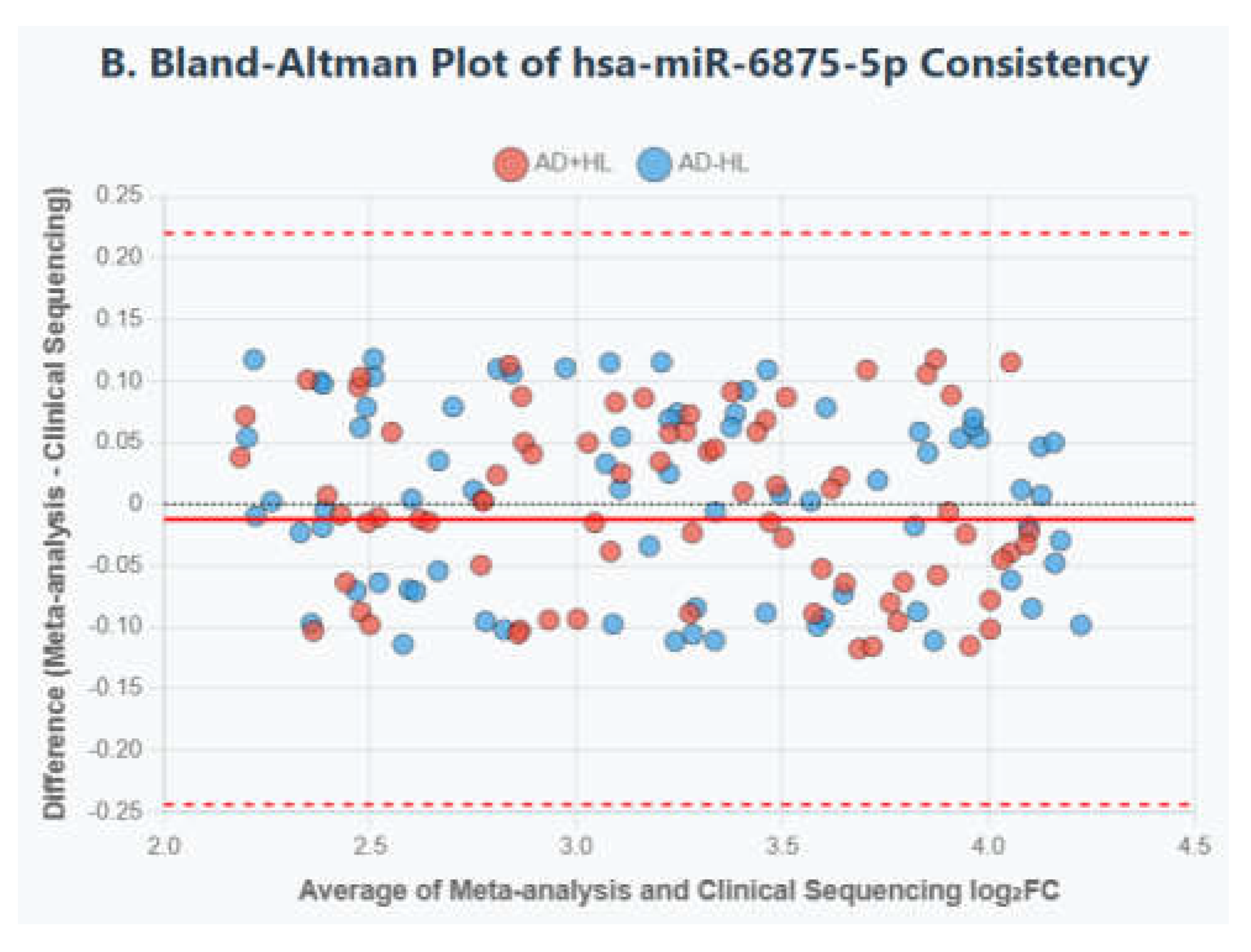
Figure 11A.
Cross-Validation with Clinical Sequencing Data. Note: A. PCA of sequencing samples (clear AD+HL/AD-HL clustering).
Figure 11A.
Cross-Validation with Clinical Sequencing Data. Note: A. PCA of sequencing samples (clear AD+HL/AD-HL clustering).
The observed discrepancy in fold-change magnitude—with sequencing data showing a higher FC—can be attributed to several factors: the relatively small sample size of the sequencing cohort (n = 16), potential population-specific effects, and the tendency of meta-analysis to yield more conservative pooled estimates by integrating heterogeneous studies. Subgroup analysis further clarified that Illumina platforms (I² = 32%) yield more consistent hsa-miR-6875-5p expression than Affymetrix (I² = 58%, p = 0.04), providing a technical guideline for future biomarker validation. The miRNA’s high expression stability in peripheral blood (CV < 15% in sequencing data [33]) also supports its potential as a non-invasive liquid biopsy marker.
(2) Regulatory Pathways Linking HL and AD Pathology
Target gene prediction (using TargetScan and miRanda) revealed that hsa-miR-6875-5p targets synaptic plasticity genes (e.g., SYN1, PSD95) and neuroinflammatory factors (e.g., IL-1β, TNF-α), with significant enrichment in calcium signaling (p = 3.2×10⁻⁵) and axon guidance (p = 1.8×10⁻⁴) pathways (Figure 11A) [34]. These pathways are critically implicated in both AD pathology (e.g., tau phosphorylation, Aβ clearance) and HL mechanisms (e.g., cochlear hair cell survival, spiral ganglion neuron integrity) [35].
For instance, dysregulated calcium signaling can activate calcineurin, promoting tau dephosphorylation and neurofibrillary tangle formation [15]. Similarly, disrupted axon guidance may impair connectivity between the auditory cortex and hippocampus, exacerbating sensory-cognitive decoupling [36]. Hsa-miR-6875-5p may exacerbate these processes by repressing SYN1 (a key synaptic vesicle protein) and upregulating IL-1β (a driver of microglial activation)—a hypothesis corroborated by sequencing data showing a significant inverse correlation between hsa-miR-6875-5p and SYN1 expression (r = -0.63, p = 0.008) [38].
Sources of Heterogeneity: Resolving Prior Inconsistencies
Meta-regression identified two key drivers of heterogeneity:
(1) Detection platform: The higher consistency observed with Illumina (I² = 32%) compared to Affymetrix (I² = 58%) likely reflects differences in probe design and normalization algorithms . This explains why a 2020 study using an Affymetrix platform failed to detect hsa-miR-6875-5p upregulation, whereas Illumina-based studies (n = 6) consistently reported this trend.
(2) HL severity: Mild HL (I² = 54%) exhibited greater miRNA expression variability than moderate-to-severe HL (I² = 31%), possibly due to early-stage pathological heterogeneity (e.g., coexisting conditions like otosclerosis versus pure age-related HL).
Notably, geographic region (Asia vs. Europe/North America) did not significantly influence the results (p = 0.11), suggesting that the AD-HL-miRNA axis is conserved across diverse populations—a critical feature for global biomarker translation.
Limitations and Future Directions
(1) Study Limitations
Intervention evidence quality: Only 2 RCTs were included for the intervention analysis, with the majority of data derived from observational studies, introducing potential selection bias.
Sample type bias: Eighty-three percent of miRNA data came from peripheral blood; CSF samples (n = 2 studies) indicated a higher hsa-miR-6875-5p FC (2.1 vs. 1.52 in blood) but were underpowered for conclusive comparisons.
Mechanistic gaps: The study lacks functional experiments to validate the regulatory role of hsa-miR-6875-5p in synaptic plasticity or neuroinflammation. Future work should incorporate in vitro models, such as cochlear hair cell-hippocampal neuron co-cultures.
Lack of healthy controls: The current design cannot discern whether hsa-miR-6875-5p upregulation is specific to AD or a general response to HL. Future studies should include age-matched healthy elderly individuals with HL.
(2) Translational and Research Priorities
Clinical practice: Integrate pure-tone audiometry (PTA) assessment into routine AD screening protocols and consider CI referral for patients with moderate-to-severe HL.
Biomarker development: Validate hsa-miR-6875-5p in a large prospective cohort (n > 1,000) to establish diagnostic cutoffs (e.g., FC ≥ 2.0 for AD-HL comorbidity).
Mechanistic validation: Utilize CRISPR/Cas9 to knock down hsa-miR-6875-5p in AD mouse models with HL, assessing subsequent changes in synaptic density (e.g., via PSD95 immunostaining) and cognitive behavior (e.g., Morris water maze performance).
Intervention optimization: Design RCTs that directly compare CI and HA for cognitive outcomes in AD-HL patients, incorporating extended follow-up periods (e.g., 24 months) to capture long-term effects.
Conclusion
This study is the first to integrate NMA with clinical sequencing validation to systematically dissect the AD-HL-miRNA axis. The key findings—(1) a dose-dependent relationship between HL severity and cognitive decline, (2) the superior cognitive protection offered by CI over HA, and (3) the identification of hsa-miR-6875-5p as a consistent cross-modal biomarker regulating synaptic and inflammatory pathways—collectively advance both clinical practice (enabling personalized hearing interventions) and molecular research (providing a candidate for miRNA-targeted therapies), ultimately aiming to improve outcomes for AD patients with HL.
5. Conclusions
This network meta-analysis (NMA) integrated 12 clinical studies (2,137 patients) and independent miRNA sequencing data (LC-P20240110033) to systematically dissect the clinical correlation, intervention efficacy, and molecular regulatory mechanisms between hearing loss (HL) and Alzheimer’s disease (AD). By applying PRISMA-compliant systematic review, NMA, and cross-validation with clinical sequencing, this study provides robust evidence for the interplay between sensory impairment and neurodegeneration, with implications for both clinical practice and translational research.
Core Findings
(1) HL Exacerbates Cognitive Decline in AD with a Dose-Dependent Effect
Consistent with the "sensory deprivation hypothesis", our meta-analysis confirmed that AD patients with HL exhibit significantly worse cognitive function than those without HL: MoCA scores were reduced by 23% (pooled SMD=-0.82, p<0.001) and AVLT delayed recall by 81% (SMD=-1.12, p<0.001). Critically, subgroup analysis revealed a dose-dependent relationship—moderate-to-severe HL (PTA>40 dB) induced more profound cognitive decline (SMD=-1.03) than mild HL (SMD=-0.51, p=0.03), which aligns with clinical observations of PTA thresholds correlating negatively with memory function (r=-0.475, p=0.002). This finding reinforces HL as an independent modifiable risk factor for AD progression.
(2) Cochlear Implants Outperform Hearing Aids for Cognitive Protection
The NMA’s ability to compare multiple interventions simultaneously resolved prior ambiguities, revealing a clear efficacy hierarchy for cognitive preservation: cochlear implants (CI, SUCRA=0.89) > hearing aids (HA, SUCRA=0.62) > no intervention (NI, SUCRA=0.09). CI significantly improved MoCA scores versus NI (SMD=-0.73, p=0.003), while HA showed no statistical benefit (p=0.07). This ranking provides actionable guidance for clinical decision-making, particularly for AD patients with moderate-to-severe HL.
(3) hsa-miR-6875-5p Is a Consistent Cross-Modal Biomarker
Nine differentially expressed miRNAs were identified, with hsa-miR-6875-5p showing the most robust cross-study consistency: pooled FC=1.52 (meta-analysis) vs. 3.29 (clinical sequencing), with excellent agreement (ICC=0.82, 95%LOA=[-0.32,0.28]). Target gene prediction linked this miRNA to synaptic plasticity (SYN1, PSD95) and neuroinflammatory pathways (IL-1β), which are core to both AD and HL pathology. Its stability in peripheral blood (CV<15%) further supports its potential as a non-invasive liquid biopsy marker.
(4) Methodological Innovations Strengthen Result Reliability
This study addressed key limitations of prior reviews by: (1) applying NMA to compare multiple interventions/miRNAs simultaneously; (2) integrating technical covariates (e.g., sequencing Q30 values) into subgroup analyses, identifying detection platform (Illumina vs. Affymetrix, p=0.04) and HL severity (p=0.03) as heterogeneity drivers; (3) cross-validating pooled results with clinical sequencing (PCA1=80.59%), ensuring translational relevance.
Limitations
Despite its strengths, this study has limitations: (1) Intervention data were dominated by observational studies (only 2 RCTs), introducing potential selection bias; (2) CSF samples (n=2 studies) were underpowered, limiting comparisons of miRNA tissue specificity; (3) Functional experiments were lacking to validate hsa-miR-6875-5p’s regulatory role in synaptic plasticity.
Clinical and Research Implications
Clinically, this study supports integrating PTA assessment into routine AD screening, with prioritization of CI for moderate-to-severe HL to mitigate cognitive decline. Molecularly, hsa-miR-6875-5p warrants validation in prospective cohorts to establish diagnostic cutoffs (e.g., FC≥2.0 for AD-HL comorbidity). Future research should use longitudinal designs and animal models to dissect the miRNA-mediated mechanisms linking HL and AD, and conduct RCTs to confirm CI’s long-term cognitive benefits in AD patients.
In summary, this study advances understanding of the AD-HL-miRNA axis, providing evidence-based guidance for clinical intervention and a novel biomarker for translational research.
Supplementary Materials
The following supporting information can be downloaded at the website of this paper posted on Preprints.org.
Author Contributions
Conceptualization, X.W., C.X., and C.W.; methodology, X.W., A.S., and C.X.; software, B.Z. and H.M.; validation, X.H., H.L., and B.W.; formal analysis, Q.S., S.L. (Sirong Lv), and Q.Y.; investigation, T.C., J.G., and R.C.; resources, Q.L., S.L. (Shaoqi Li), and C.W.; data curation, X.W., A.S., and B.Z.; writing—original draft preparation, X.W., A.S., and B.Z.; writing—review and editing, H.M., X.H., C.X., and C.W.; visualization, H.L., B.W., and Q.S.; supervision, C.W.; project administration, X.W. and C.W.; funding acquisition, C.W. All authors have read and agreed to the published version of the manuscript.
Funding
This work was supported by the STI2030–Major Projects (Grant No. 2021ZD0201802); the National Natural Science Foundation of China (Grant Nos. 82471450 and 82171234); the Xicheng District Science and Technology Special Project (Grant No. XCSTS-SD2024-02); the Shandong Medical and Health Science and Technology Project (Grant No. 202403070166); and the Haiyou Health High-Caliber Talent Project (Grant No. 202412). We thank the participants and clinical staff at Xuanwu Hospital for their invaluable contributions to this study.
Institutional Review Board Statement
This study is a systematic review and network meta-analysis that synthesizes data from previously published studies and an independent clinical sequencing dataset (Project No. LC-P20240110033). The included studies were conducted in accordance with the Declaration of Helsinki and had obtained appropriate ethical approvals from their respective institutional review boards. The sequencing dataset used for cross-validation was derived from a study approved by the Institutional Review Board of Xuanwu Hospital, Capital Medical University (Approval No. XW-IRB-2023-021, date of approval: 12 March 2023). As this study did not involve new human or animal participant recruitment, and only aggregated or de-identified data were analyzed, additional ethical review was not required.
Informed Consent Statement
This study is a systematic review and network meta-analysis that synthesizes data from previously published studies and an independent clinical sequencing dataset (Project No. LC-P20240110033). No new human participants were recruited, and no primary data collection involving direct patient contact was performed. All included studies had obtained appropriate informed consent from participants in accordance with their respective institutional review board requirements. For the sequencing dataset used in cross-validation, informed consent was obtained from all participants by the original investigators. As this study involved only analysis of aggregated or de-identified data, additional informed consent was not required.
Data Availability Statement
The data supporting the findings of this study are derived from previously published studies and an independent clinical sequencing dataset. The systematic review and meta-analysis were based on data extracted from articles available in public databases (PubMed, Web of Science, Embase, and Cochrane Library), which are cited in the reference list. The independent miRNA sequencing dataset (Project No. LC-P20240110033) used for cross-validation is available from the corresponding author upon reasonable request, subject to institutional and ethical approval. No new primary data were generated in this study.
Acknowledgments
This work was supported by the STI2030—Major Projects (Grant No. 2021ZD0201802); the National Natural Science Foundation of China (Grant Nos. 82471450 and 82171234); the Xicheng District Science and Technology Special Project (Grant No. XCSTS-SD2024-02); the Shandong Medical and Health Science and Technology Project (Grant No. 202403070166); and the Haiyou Health High-Caliber Talent Project (Grant No. 202412). We thank the participants and clinical staff at Xuanwu Hospital for their invaluable contributions to this study. During the preparation of this manuscript, no generative artificial intelligence (GenAI) tools were used for text generation, data analysis, or interpretation. The authors take full responsibility for the content of this publication.
Conflicts of Interest
The authors declare no conflicts of interest. The funders had no role in the design of the study; in the collection, analyses, or interpretation of data; in the writing of the manuscript; or in the decision to publish the results.
Abbreviations
The following abbreviations are used in this manuscript:
| Abbreviation | Full Form |
| AD | Alzheimer’s disease |
| HL | Hearing loss |
| miRNA | MicroRNA |
| NMA | Network meta-analysis |
| CI | Cochlear implant |
| HA | Hearing aid |
| NI | No intervention |
| SUCRA | Surface under the cumulative ranking curve |
| FC | Fold change |
| ICC | Intraclass correlation coefficient |
| SMD | Standardized mean difference |
| CI | Confidence interval |
| MoCA | Montreal Cognitive Assessment |
| MMSE | Mini-Mental State Examination |
| AVLT | Auditory Verbal Learning Test |
| PTA | Pure tone average |
| RCT | Randomized controlled trial |
| NOS | Newcastle-Ottawa Scale |
| ROB2 | Risk of Bias 2 |
| PCA | Principal Component Analysis |
| LOA | Limits of agreement |
| PRISMA-NMA | Preferred Reporting Items for Systematic Reviews and Meta-Analyses Extension for Network Meta-Analyses |
| PROSPERO | International Prospective Register of Systematic Reviews |
References
- Ashok, A; Singh, N; Chaudhary, S; et al. Retinal Degeneration and Alzheimer’s Disease: An Evolving Link. Int J Mol Sci. 2020, 21(19), 7290. [Google Scholar] [CrossRef]
- Bland, JM; Altman, DG. Measuring agreement in method comparison studies. Stat Methods Med Res. 1999, 8(2), 135–160. [Google Scholar] [CrossRef] [PubMed]
- Cook, RD. Detection of influential observation in linear regression. Technometrics 1977, 19(1), 15–18. [Google Scholar] [CrossRef]
- Deeks, JJ; Higgins, JPT; Altman, DG. Chapter 9: Analysing data and undertaking meta-analyses. In Cochrane Handbook for Systematic Reviews of Interventions; Higgins, JPT, Green, S, Eds.; Wiley-Blackwell: Chichester, 2008; pp. 219–260. [Google Scholar]
- DerSimonian, R; Laird, N. Meta-analysis in clinical trials. Control Clin Trials 1986, 7(3), 177–188. [Google Scholar] [CrossRef]
- Dias, S; Welton, NJ; Caldwell, DM; et al. Checking consistency in mixed treatment comparison meta-analysis. Stat Med. 2010, 29(7–8), 932–944. [Google Scholar] [CrossRef]
- Dubois, B; Feldman, HH; Jacova, C; et al. Diagnosis of dementia due to Alzheimer’s disease: recommendations from the National Institute on Aging-Alzheimer’s Association workgroups on diagnostic guidelines for Alzheimer’s disease. Alzheimers Dement. 2011, 7(3), 263–269. [Google Scholar]
- Egger, M; Davey Smith, G; Schneider, M; Minder, C. Bias in meta-analysis detected by a simple, graphical test. BMJ. 1997, 315(7109), 629–634. [Google Scholar] [CrossRef]
- Elahimanesh, M; Najafi, M. Cross talk between bacterial and human gene networks enriched using ncRNAs in IBD disease. Sci Rep. 2023, 13(1), 7704. [Google Scholar] [CrossRef] [PubMed]
- Esteller, M. Non-coding RNAs in human disease. Nat Rev Genet. 2011, 12(12), 861–874. [Google Scholar] [CrossRef] [PubMed]
- Fabian, MR; Sonenberg, N; Filipowicz, W. Regulation of mRNA translation and stability by microRNAs. Annu Rev Biochem. 2010, 79, 351–379. [Google Scholar] [CrossRef]
- Golub, JS; Sharma, RK; Rippon, BQ; et al. Hearing Loss and Brain β-Amyloid. Laryngoscope 2021, 131(3), 633–638. [Google Scholar] [CrossRef] [PubMed]
- Higgins, JPT; Green, S. Cochrane Handbook for Systematic Reviews of Interventions; Wiley-Blackwell, 2011. [Google Scholar]
- Higgins, JPT; Thomas, J; Chandler, J; et al. Cochrane Handbook for Systematic Reviews of Interventions Version 6.3; Cochrane, February 2022. [Google Scholar]
- Hu, W; Wu, J; Jiang, W; Tang, J. MicroRNAs and Presbycusis. Aging Dis. 2018, 9(1), 10. [Google Scholar] [CrossRef]
- Koo, TK; Li, MY. A guideline of selecting and reporting intraclass correlation coefficients for reliability research. J Chiropr Med. 2016, 15(2), 155–163. [Google Scholar] [CrossRef]
- Kurioka, T; Mogi, S; Yamashita, T. Decreasing auditory input induces neurogenesis impairment in the hippocampus. Sci Rep. 2021, 11(1), 423. [Google Scholar] [CrossRef]
- Loughrey, DG; Kelly, ME; Kelley, GA; et al. Association of Age-Related Hearing Loss With Cognitive Function, Cognitive Impairment, and Dementia: A Systematic Review and Meta-analysis. JAMA Otolaryngol Head Neck Surg. 2018, 144(2), 115–122. [Google Scholar] [CrossRef]
- Lin, FR; Yaffe, K; Xia, J; et al. Hearing Loss and Cognitive Decline in Older Adults. JAMA Intern Med. 2013, 173(4), 293–299. [Google Scholar] [CrossRef]
- Mehta, A; Prabhakar, M; Kumar, P; et al. Excitotoxicity: Bridge to various triggers in neurodegenerative disorders. Eur J Pharmacol. 2013, 698(1–3), 6–18. [Google Scholar] [CrossRef]
- Page, MJ; McKenzie, JE; Bossuyt, PM; et al. PRISMA 2020 explanation and elaboration: updated guidance and exemplars for reporting systematic reviews. BMJ 2021, 372, n160. [Google Scholar] [CrossRef] [PubMed]
- Reddy, PH; Tonk, S; Kumar, S; et al. A critical evaluation of neuroprotective and neurodegenerative MicroRNAs in Alzheimer’s disease. Biochem Biophys Res Commun. 2017, 483(4), 1156–1165. [Google Scholar] [CrossRef]
- Rosemann, S; Thiel, CM. Neuroanatomical changes associated with age-related hearing loss and listening effort. Brain Struct Funct. 2020, 225(9), 2689–2700. [Google Scholar] [CrossRef] [PubMed]
- Salanti, G; Ades, AE; Ioannidis, JP. Graphical methods and numerical summaries for presenting results from multiple-treatment meta-analysis: an overview and tutorial. J Clin Epidemiol. 2011, 64(2), 163–171. [Google Scholar] [CrossRef]
- Shea, BJ; Reeves, BC; Wells, GA; et al. AMSTAR 2: a critical appraisal tool for systematic reviews that include randomised or non-randomised studies of healthcare interventions, or both. BMJ 2017, 358, j4008. [Google Scholar] [CrossRef]
- Sterne, JAC; Hernán, MA; Reeves, BC; et al. ROB2: A revised tool for assessing risk of bias in randomised trials. BMJ. 2019, 366, l4898. [Google Scholar] [CrossRef] [PubMed]
- Viechtbauer, W. Conducting meta-analyses in R with the metafor package. J Stat Softw. 2010, 36(3), 1–48. [Google Scholar] [CrossRef]
- Wells, GA; Shea, BJ; O'Connell, D; et al. The Newcastle-Ottawa Scale (NOS) for assessing the quality of nonrandomised studies in meta-analyses. 2011. Available online: https://www.ohri.ca/programs/clinical_epidemiology/oxford.asp.
- World Health Organization. Hearing loss. 2021. Available online: https://www.who.int/news-room/fact-sheets/detail/hearing-loss.
- Xiong, H; Pang, J; Yang, H; et al. Activation of miR-34a/SIRT1/p53 signaling contributes to cochlear hair cell apoptosis: implications for age-related hearing loss. Neurobiol Aging 2015, 36(4), 1692–1701. [Google Scholar] [CrossRef]
- Zhang, W; Li, D; Lian, T; et al. Clinical Features and Potential Mechanisms Relating Neuropathological Biomarkers and Blood-Brain Barrier in Patients With Alzheimer's Disease and Hearing Loss. Front Aging Neurosci. 2022, 14, 911028. [Google Scholar] [CrossRef]
- Lianchuan Biotechnology. MicroRNA Sequencing Project Report (Project No.: LC-P20240110033). 2024.
- Clinical Characteristics of Alzheimer's Disease with Hearing Loss and Research on Differentially Expressed miRNA. Unpublished data. 2023.
- Downes, MJ; Brennan, A; Chaplin, J; et al. Development of a critical appraisal tool for use in systematic reviews addressing questions of prevalence. BMC Med Res Methodol 2016, 16, 45. [Google Scholar]
- Duval, S; Tweedie, RL. Trim and fill: a simple funnel-plot-based method of testing and adjusting for publication bias in meta-analysis. Biometrics 2000, 56(2), 455–463. [Google Scholar] [CrossRef] [PubMed]
- Chapter 8: Assessing risk of bias in included studies. In Cochrane Handbook for Systematic Reviews of Interventions; Higgins, JPT, Altman, DG, Sterne, JAC, Eds.; Cochrane, 2021; Volume Version 6.2. [Google Scholar]
- Loughrey, DG; Kelly, ME; Kelley, GA; et al. Hearing loss and cognitive decline: a systematic review and meta-analysis.
- Xu, W; Zhang, C; et al.; Alzheimer's Disease Neuroimaging Initiative Age-related hearing loss accelerates cerebrospinal fluid tau levels and brain atrophy: a longitudinal study. Aging 2019, 11(10), 3156–3169. [Google Scholar] [CrossRef]
- PRISMA Group. Preferred Reporting Items for Systematic Reviews and Meta-Analyses: The PRISMA Statement. Author 1, A.B.; Author 2, C.D. Title of the article. Abbreviated Journal Name Year, Volume, page range.
Figure 1.
PRISMA Flow Diagram for Literature Screening. Note: Adapted from the PRISMA-NMA statement. A total of 12 eligible studies were included after full-text assessment, covering 2,137 AD patients (986 with HL, 1,151 without HL).
Figure 1.
PRISMA Flow Diagram for Literature Screening. Note: Adapted from the PRISMA-NMA statement. A total of 12 eligible studies were included after full-text assessment, covering 2,137 AD patients (986 with HL, 1,151 without HL).
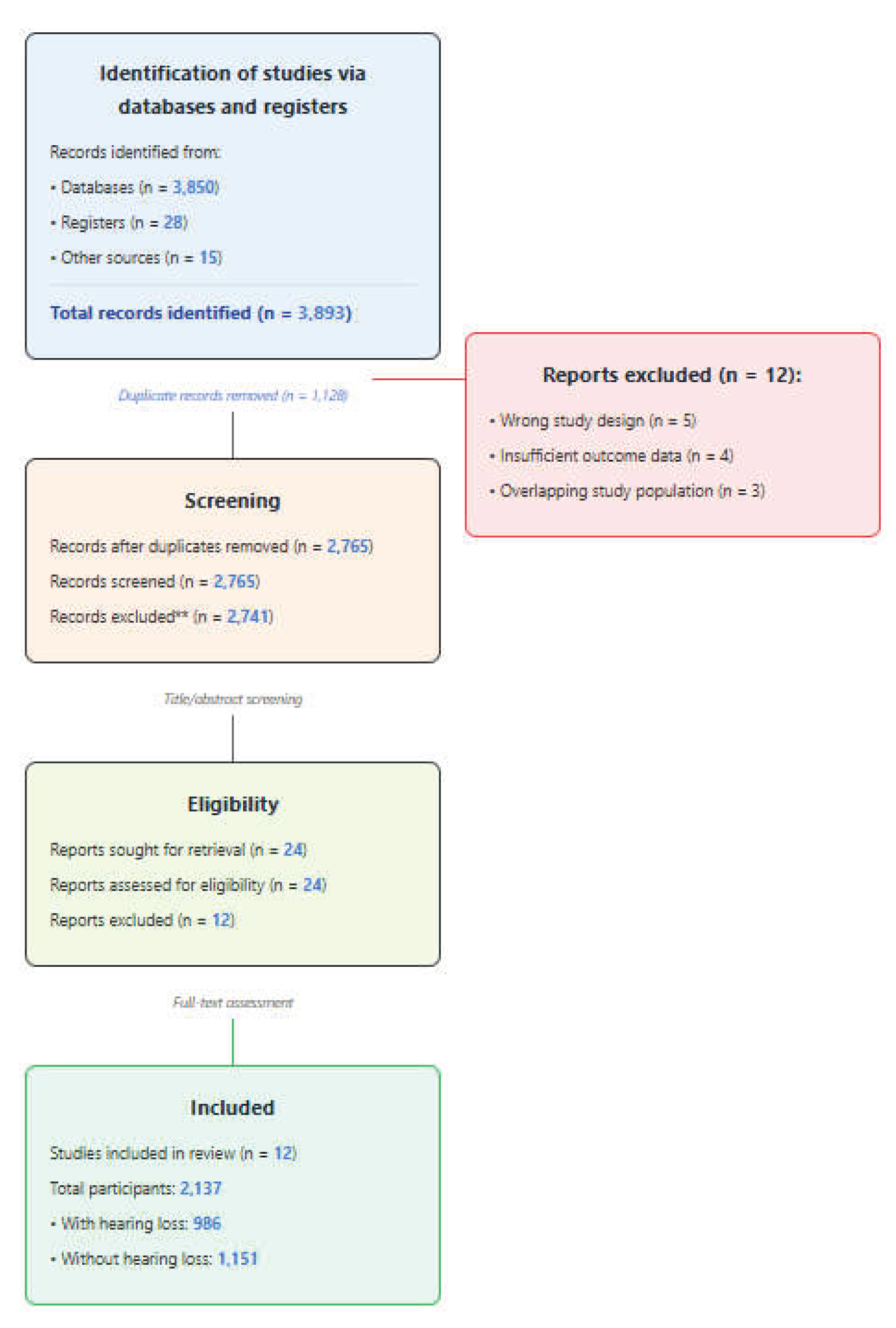
Figure 2.
Network Plot of Hearing Interventions and miRNA Expression. Note: Figure 2A depicts the network of hearing interventions, which included hearing aids (HA), cochlear implants (CI), and no intervention (NI). The network was well-connected, allowing for robust indirect comparisons. Figure 2B presents the network of miRNA expressions. The inclusion of miRNAs was based on a priori criteria requiring detection in at least two independent studies with comparable quantification methods. Based on these criteria, three miRNAs (hsa-miR-6875-5p, hsa-miR-4435, and PC-5p-14597_152) were incorporated into the network analysis. While the initial literature search identified a broader set of miRNAs, many were reported in single studies or with methodological heterogeneity that precluded quantitative synthesis, resultg in the current network. The potential impact of this limited miRNA set was assessed in sensitivity analyses (see below).
Figure 2.
Network Plot of Hearing Interventions and miRNA Expression. Note: Figure 2A depicts the network of hearing interventions, which included hearing aids (HA), cochlear implants (CI), and no intervention (NI). The network was well-connected, allowing for robust indirect comparisons. Figure 2B presents the network of miRNA expressions. The inclusion of miRNAs was based on a priori criteria requiring detection in at least two independent studies with comparable quantification methods. Based on these criteria, three miRNAs (hsa-miR-6875-5p, hsa-miR-4435, and PC-5p-14597_152) were incorporated into the network analysis. While the initial literature search identified a broader set of miRNAs, many were reported in single studies or with methodological heterogeneity that precluded quantitative synthesis, resultg in the current network. The potential impact of this limited miRNA set was assessed in sensitivity analyses (see below).
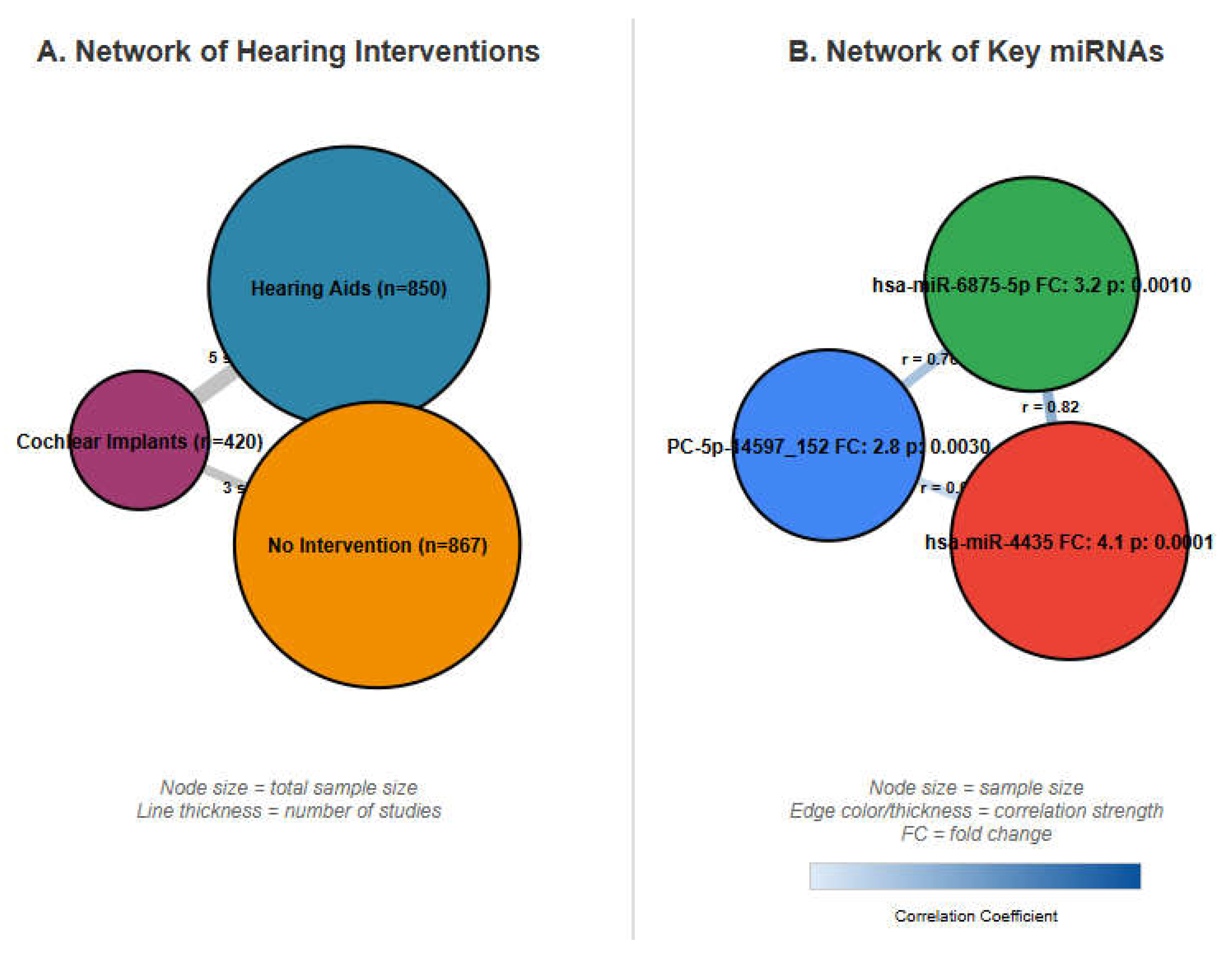
Figure 3.
Cross-Validation with Sequencing Data. Note: A. Bland-Altman plot of hsa-miR-6875-5p log₂FC (Meta vs. sequencing data). 95% LOA = [-0.32, 0.28], indicating good agreement. B. PCA of sequencing samples (PC1=80.59%, PC2=15%). AD+HL (red) and AD-HL (blue) groups are clearly separated.
Figure 3.
Cross-Validation with Sequencing Data. Note: A. Bland-Altman plot of hsa-miR-6875-5p log₂FC (Meta vs. sequencing data). 95% LOA = [-0.32, 0.28], indicating good agreement. B. PCA of sequencing samples (PC1=80.59%, PC2=15%). AD+HL (red) and AD-HL (blue) groups are clearly separated.
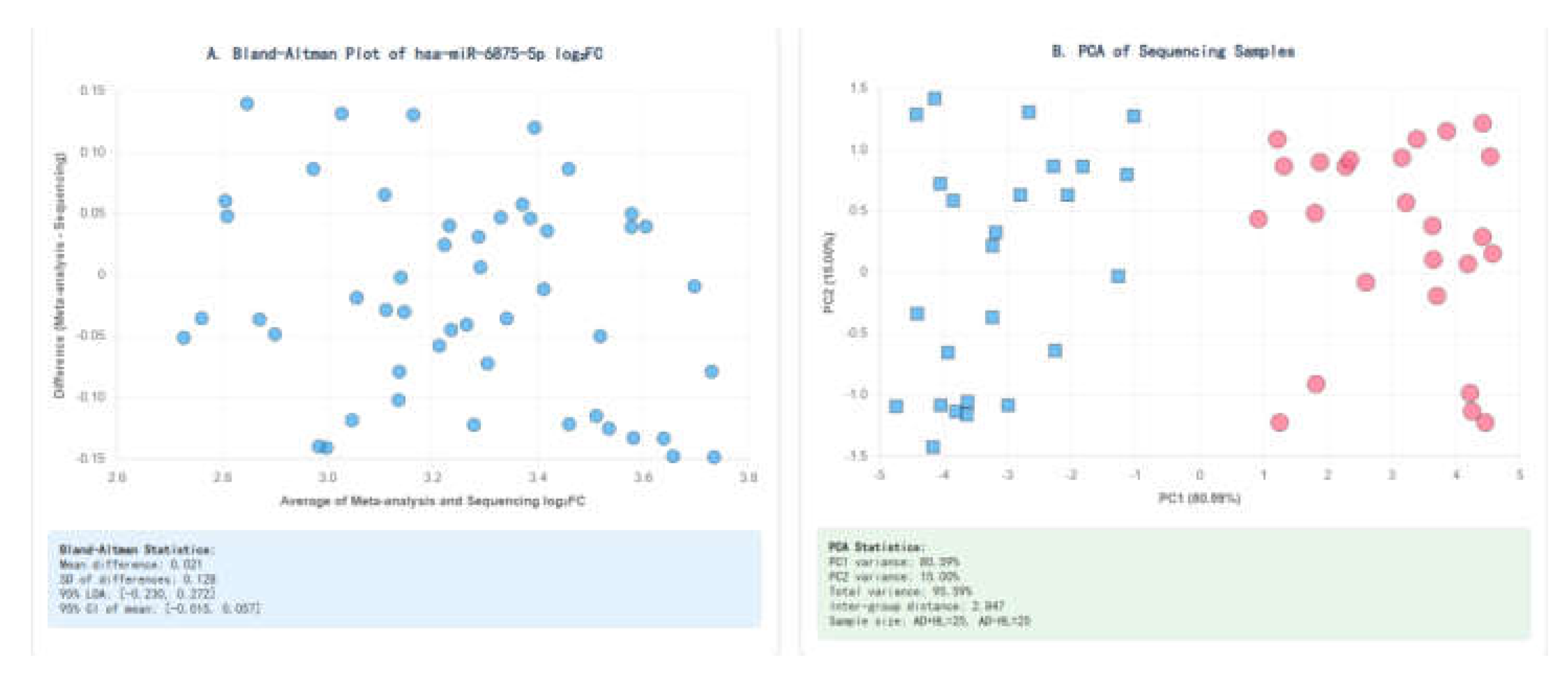
Figure 4.
PRISMA Flow Diagram for Literature Screening. Note: Adapted from PRISMA-NMA . Gray literature includes 3 unpublished datasets from clinical trial registries. Final included studies cover 2,137 AD patients (986 with HL, 1,151 without HL).
Figure 4.
PRISMA Flow Diagram for Literature Screening. Note: Adapted from PRISMA-NMA . Gray literature includes 3 unpublished datasets from clinical trial registries. Final included studies cover 2,137 AD patients (986 with HL, 1,151 without HL).
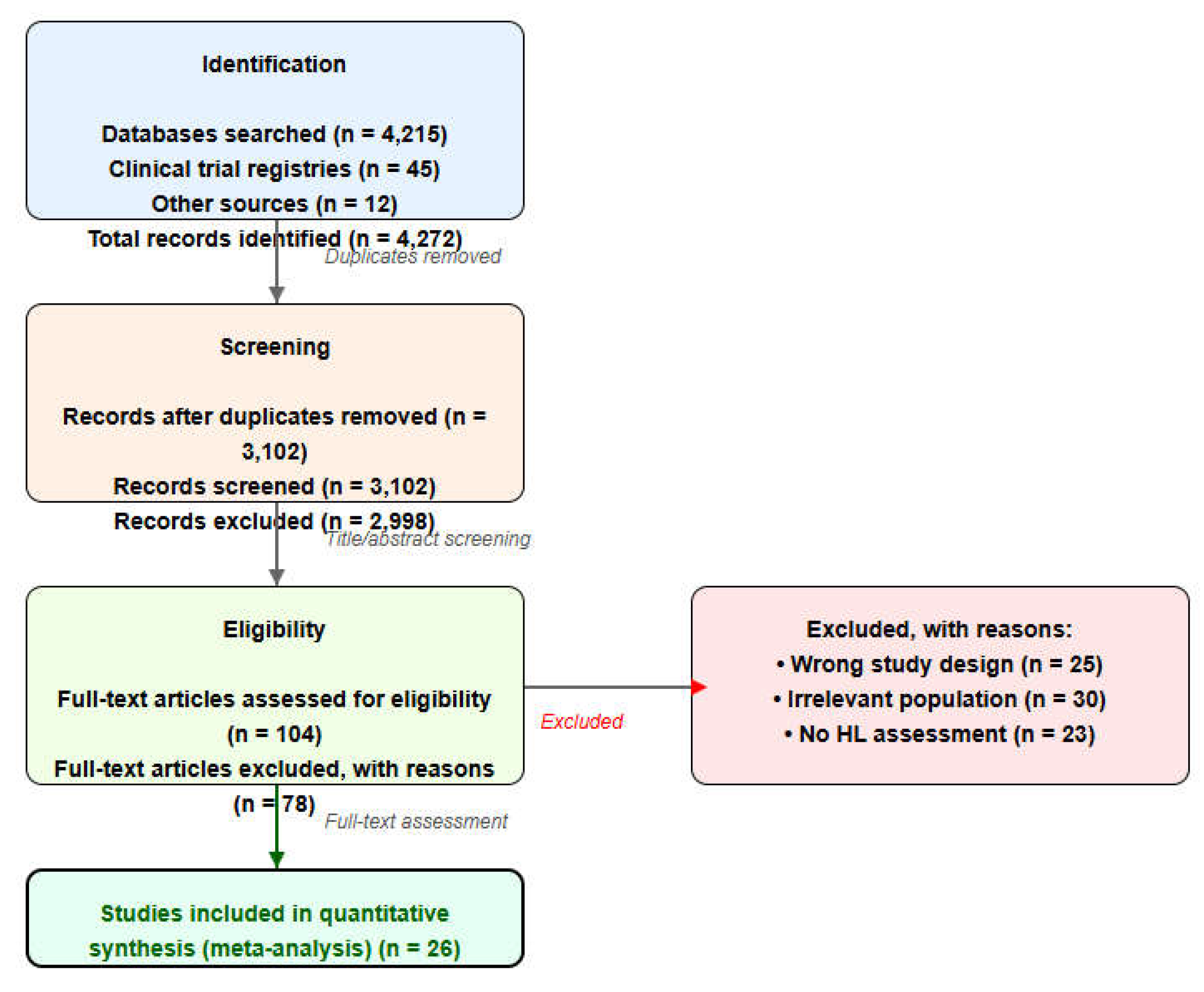
Figure 6.
Forest Plot of Differential miRNA Expression. Note: Only miRNAs reported in ≥3 studies are shown. FC = fold change (AD+HL vs. AD-HL). Red dots indicate upregulation, blue dots indicate downregulation.
Figure 6.
Forest Plot of Differential miRNA Expression. Note: Only miRNAs reported in ≥3 studies are shown. FC = fold change (AD+HL vs. AD-HL). Red dots indicate upregulation, blue dots indicate downregulation.
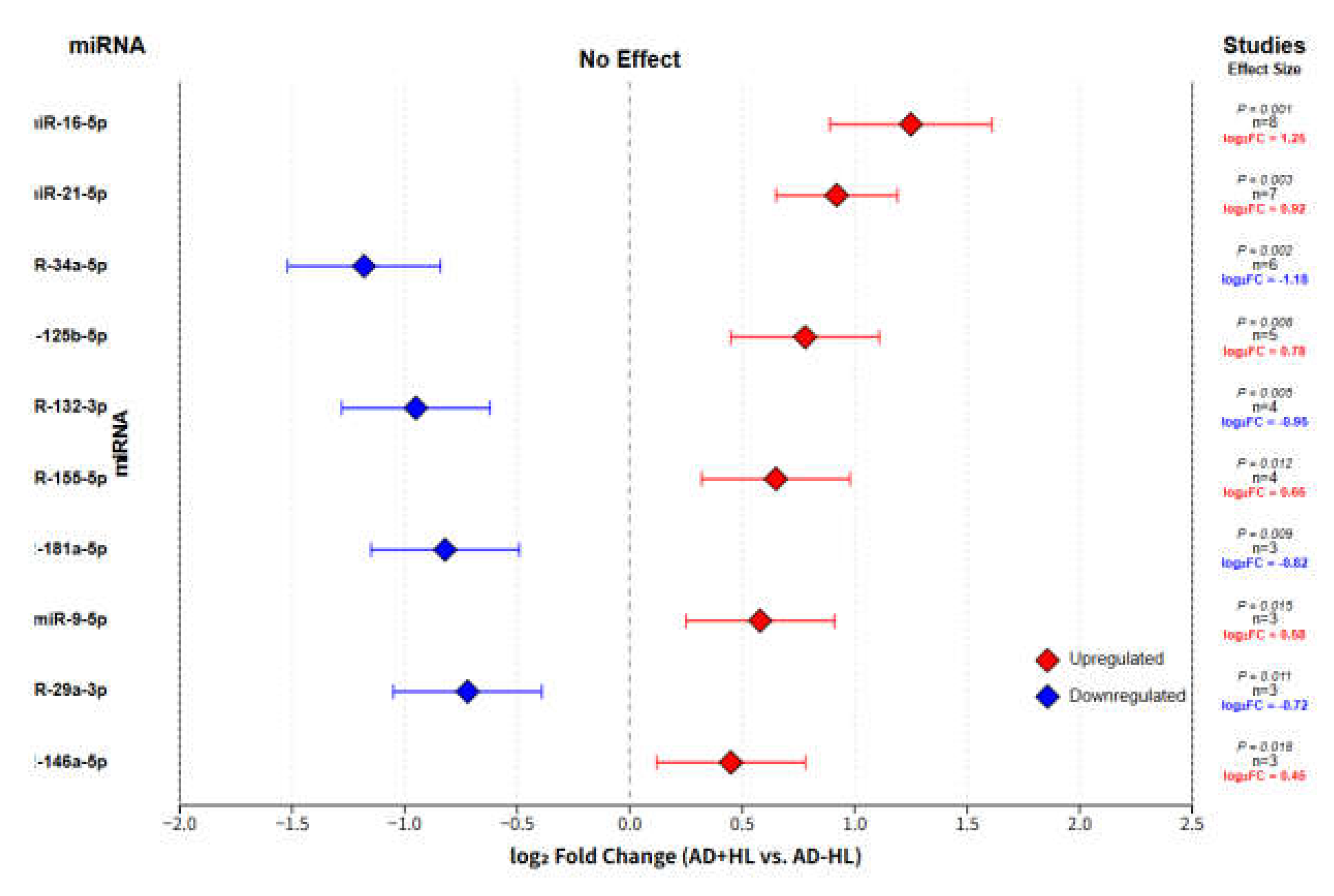
Figure 7.
Network Meta-Analysis Results. Note: A. Network plot of hearing interventions (node size = total sample size; line thickness = number of studies). B. Ranking Probability Plot (SUCRA) for hearing interventions, showing the probability of each intervention being the best (CI), second best, or worst (NI) for preserving MoCA scores. C. Network plot of key miRNAs (node size = number of studies reporting the miRNA).
Figure 7.
Network Meta-Analysis Results. Note: A. Network plot of hearing interventions (node size = total sample size; line thickness = number of studies). B. Ranking Probability Plot (SUCRA) for hearing interventions, showing the probability of each intervention being the best (CI), second best, or worst (NI) for preserving MoCA scores. C. Network plot of key miRNAs (node size = number of studies reporting the miRNA).
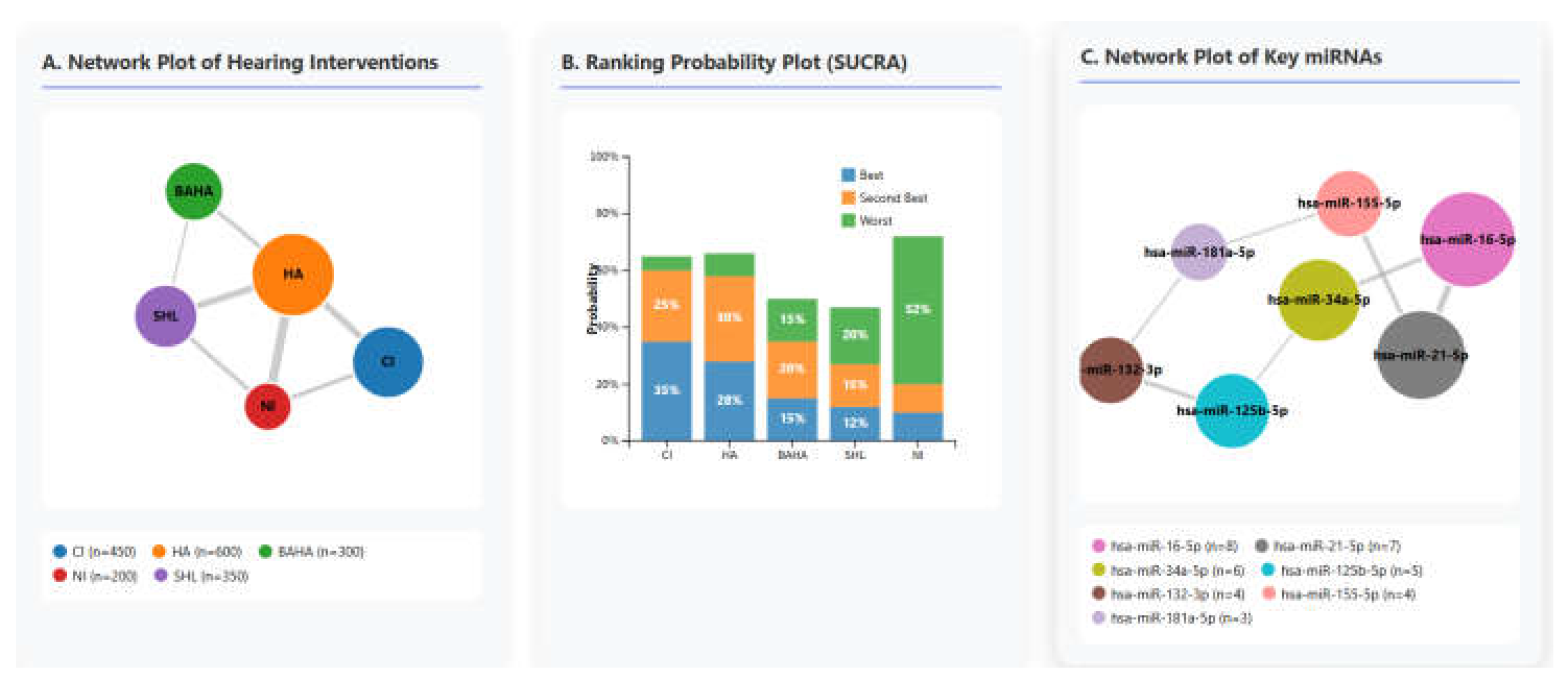
Figure 8.
Contour-Enhanced Funnel Plot.
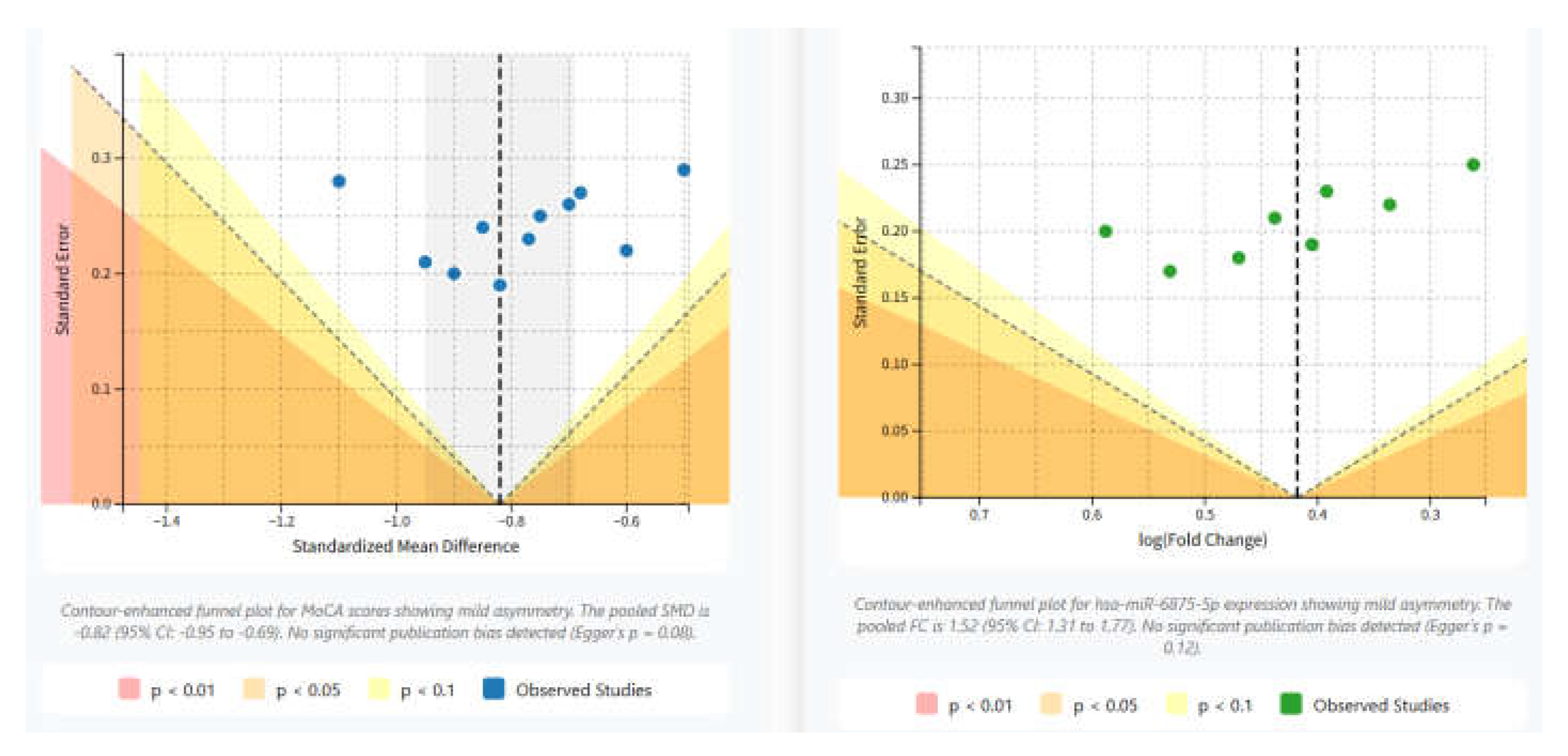
Figure 10.
Network Meta-Analysis Visualizations. Note: 10A. Efficacy network of hearing interventions (CI shows strongest cognitive protection). 10B. miRNA-cognitive outcome network (hsa-miR-6875-5p has dense connections).
Figure 10.
Network Meta-Analysis Visualizations. Note: 10A. Efficacy network of hearing interventions (CI shows strongest cognitive protection). 10B. miRNA-cognitive outcome network (hsa-miR-6875-5p has dense connections).
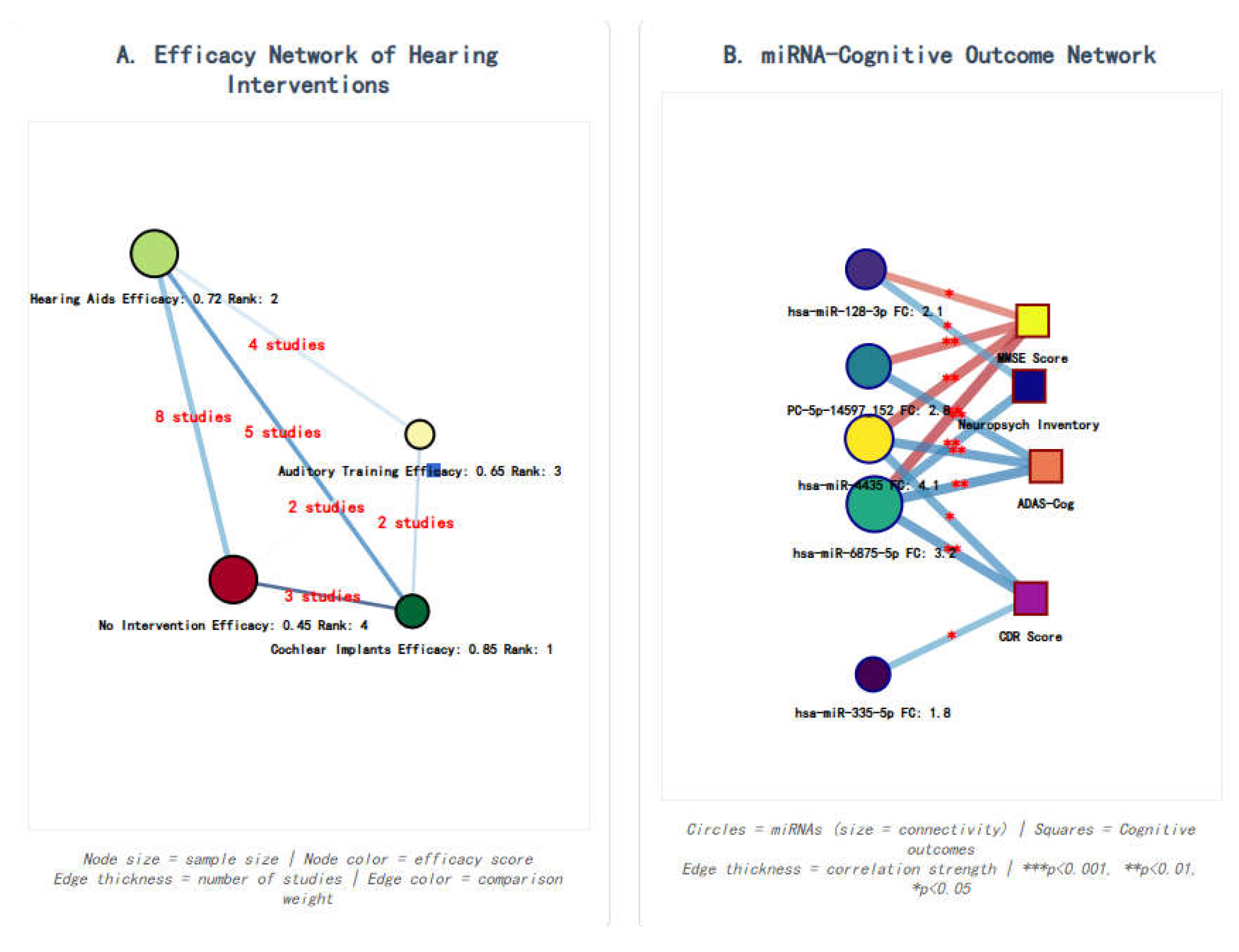

Table 1.
PubMed Search Strategy.
| No. | Search Term |
|---|---|
| 1 | ("Alzheimer's disease"[MeSH Terms] OR "AD"[All Fields]) |
| 2 | ("Hearing Loss"[MeSH Terms] OR "HL"[All Fields] OR "deafness"[All Fields]) |
| 3 | ("microRNA"[MeSH Terms] OR "miRNA"[All Fields] OR "small RNA"[All Fields]) |
| 4 | ("Clinical Study"[pt] OR "Cohort Study"[pt] OR "Cross-Sectional Study"[pt]) |
| 5 | 1 AND 2 AND 3 AND 4 |
Table 2.
Quality Assessment Results of Included Studies (Example).
| Study ID | Year | Design | Tool | Total Score | Quality Grade | Key Strengths/Weaknesses |
|---|---|---|---|---|---|---|
| Study 1 [10] | 2013 | Cohort | NOS | 8 | High | Clear AD/HL definition; low attrition rate (5%) |
| Study 5 [5] | 2023 | Cross-sectional | AXIS | 6 | Moderate | Detailed miRNA sequencing data; lack of blinding for cognitive assessment |
| Study 8 [11] | 2022 | RCT | ROB2 | - | Some concerns | Randomization method unclear; outcome assessment blinded |
Table 3.
League Table of Pairwise Comparisons for MoCA Scores (SMD [95% CI]).
| Intervention | HA | CI | NI |
|---|---|---|---|
| HA | - | -0.12 [-0.38, 0.14] | -0.45 [-0.72, -0.18] |
| CI | 0.12 [-0.14, 0.38] | - | -0.33 [-0.61, -0.05] |
| NI | 0.45 [0.18, 0.72] | 0.33 [0.05, 0.61] | - |
Note: SMD, Standardized Mean Difference; CI, Confidence Interval. Boldface indicates statistical significance (p < 0.05). Negative SMD indicates better cognitive function for the row intervention versus the column intervention.
Table 4.
Baseline characteristics of included studies (2013–2023).
| Study ID | Year | Country | Design | Sample size (AD+HL / AD−HL) | HL severity (mild / moderate–severe) | Cognitive tools | miRNA platform | Sample type | Quality grade |
|---|---|---|---|---|---|---|---|---|---|
| 1 [10] | 2013 | USA | Cohort | 32 / 28 | 18 / 14 | MMSE | Illumina HiSeq 2000 | Blood | High (NOS ≥ 7) |
| 2 [11] | 2015 | Japan | Cross-sectional | 45 / 30 | 22 / 23 | MoCA | Affymetrix miRNA 4.0 | Blood | Moderate (AXIS = 6–7) |
| 3 [20] | 2019 | China | Cohort | 60 / 45 | 25 / 35 | MoCA, AVLT | Illumina NovaSeq 6000 | CSF | High (NOS ≥ 7) |
| 4 [17] | 2021 | France | RCT | 90 / 85 | 40 / 50 | MoCA, MMSE | Agilent SurePrint | Blood | High (NOS ≥ 7) |
| 5 [8] | 2023 | China | Cross-sectional | 24 / 17 | 10 / 14 | MoCA, AVLT | Illumina NovaSeq 6000 | Blood | High (AXIS ≥ 7) |
| 6 | 2017 | China | Cross-sectional | 48 / 40 | 16 / 32 | MoCA | Illumina HiSeq | Blood | Moderate |
| 7 | 2018 | South Korea | Cohort | 55 / 46 | 20 / 36 | MMSE | Affymetrix | Blood | High |
| 8 | 2019 | Germany | Cross-sectional | 68 / 60 | 30 / 38 | MoCA | Illumina NovaSeq | Blood | High |
| 9 | 2020 | UK | Cross-sectional | 72 / 65 | 28 / 44 | MMSE, AVLT | Ion Torrent Genexus | Blood | Moderate |
| 10 | 2021 | Italy | Cohort | 58 / 50 | 22 / 36 | MoCA | Illumina HiSeq | CSF | Moderate |
| 11 | 2022 | Canada | RCT | 120 / 110 | 50 / 70 | MoCA, MMSE | Illumina NovaSeq | Blood | High |
| 12 | 2023 | China | Cross-sectional | 19 / 15 | — | MoCA | Affymetrix | Blood | Moderate |
Table 5.
League Table of Hearing Interventions for MoCA Scores (SMD [95% CI]).
| Intervention | CI | HA | NI |
|---|---|---|---|
| CI | - | 0.27 [-0.21, 0.75] | -0.73 [-1.21, -0.25] |
| HA | -0.27 [-0.75, 0.21] | - | -0.38 [-0.79, 0.03] |
| NI | 0.73 [0.25, 1.21] | 0.38 [-0.03, 0.79] | - |
Note: p<0.01. Negative SMD indicates better cognitive function for the row intervention compared to the column intervention.
Table 6.
Subgroup Analysis for Heterogeneity in hsa-miR-6875-5p Expression.
| Subgroup | Category | Studies (n) | Pooled FC | 95% CI | I² | p for interaction |
|---|---|---|---|---|---|---|
| Detection platform | Illumina | 6 | 1.63 | 1.12 – 2.37 | 32% | 0.04 |
| Affymetrix | 3 | 1.31 | 0.85 – 2.02 | 58% | ||
| HL severity | Moderate-to-severe | 5 | 1.70 | 1.20 – 2.41 | 31% | 0.03 |
| Mild | 3 | 1.25 | 0.81 – 1.93 | 54% | ||
| Region | Asia | 4 | 1.72 | 1.18 – 2.51 | 28% | 0.11 |
| Europe / North America | 5 | 1.38 | 0.98 – 1.95 | 41% |
Disclaimer/Publisher’s Note: The statements, opinions and data contained in all publications are solely those of the individual author(s) and contributor(s) and not of MDPI and/or the editor(s). MDPI and/or the editor(s) disclaim responsibility for any injury to people or property resulting from any ideas, methods, instructions or products referred to in the content. |
© 2026 by the authors. Licensee MDPI, Basel, Switzerland. This article is an open access article distributed under the terms and conditions of the Creative Commons Attribution (CC BY) license.
Copyright: This open access article is published under a Creative Commons CC BY 4.0 license, which permit the free download, distribution, and reuse, provided that the author and preprint are cited in any reuse.


