

Submitted:
01 April 2026
Posted:
01 April 2026
You are already at the latest version
Abstract
Background/Objectives: The aim of the paper is to assess the impact of HPV DNA on the survival and cure rates of patients with newly diagnosed head and neck cancers who underwent surgery and subsequent adjuvant radiotherapy. Methods: The study group consisted of 28 patients (55%) with squamous cell carcinoma of the oral cavity and 23 patients (45%) with squamous cell carcinoma of the oropharynx. All 51 patients underwent primary surgical treatment, extended by adjuvant radiotherapy in 33 patients (65%). Cases with cT2 (n=23; 45%) and cN0 (n=25; 49%) were the most common. Twenty-seven patients (53%) were HPV-positive, including 14 (27%) patients with squamous cell carcinoma of the oral cavity and 13 (25%) with squamous cell carcinoma of the oropharynx. Twenty-one patients (41%) were HPV positive p 16 (+). The Kaplan-Meier method was used to assess 3-year overall survival (OS) and 3-year locoregional control (LRC) in the study group, depending on tumor location and HPV status. Results: The 3-year OS rates in the group of HPV-positive and HPV-negative patients with oral cavity tumors were 80% and 82%, respectively; p=0.965, while in the group of HPV-positive and HPV-negative patients with oropharyngeal cancer, the 3-year OS rates were 100% and 67.5%, respectively; p=0.045. In patients with oropharyngeal cancer, the 3-year LRC rates for HPV-positive and HPV-negative patients were 100% and 59%, respectively; p=0.059. In the group of patients with oral cavity cancer, 3-year LRC rates for HPV-positive and HPV-negative subjects were 55% and 52%, respectively; p=0.771. 3-year OS for HPV-positive p16 (+) and HPV-positive p16 (-) was 88% and 78%, respectively; (p=0.965). In the whole study group, HPV-negative patients were more often offered adjuvant treatment compared to HPV-positive patients. Conclusions: The 3-year OS rates of patients with cancers of the oral cavity and the oropharynx treated with combined therapy in the study group did not differ statistically significantly depending on HPV status. HPV-positive patients with oropharyngeal cancer had better 3-year OS and LRC rates compared to HPV-negative patients. Patients with HPV-dependent oropharyngeal cancer, no statistically significant improvement in 3-year OS was observed compared to patients with HPV p16 (+) vs HPV p 16 (-). However, in the group of patients with oral cavity cancer, HPV status did not show prognostic significance.
Keywords:
head and neck cancer
; oropharyngeal squamous cell carcinoma cancer
; HPV
; 3-year OS rates
; 3-year LRC rates
1. Introduction
Oral cavity and oropharyngeal cancers are the most prevalent types of head and neck cancer [1]. Collectively, they account for nearly 500,000 cases annually, with approximately 200,000 of these cases resulting in death, of which >75% are located in the oral cavity (GLOBOCAN 2020) [1]. The high mortality rate, reaching nearly 50%, is associated with the poor education and limited knowledge of patients and primary care physicians about head and neck cancers, the non-specific symptoms that prompt patients to seek specialist medical attention, and the late diagnosis, often at highly advanced disease stages [2,3,4].
In recent decades, in addition to the well-known risk factors for head and neck cancers, such as tobacco smoking and alcohol abuse, increasing reports have indicated an association between these malignancies and exposure to the human papillomavirus (HPV), mainly genotypes 16 and 18, which particularly concerns oropharyngeal tumors [4]. Furthermore, HPV-related cancers increasingly affect younger individuals—the mean age of onset for HPV-dependent cancers is 54 years, and 58 years for HPV-independent cancers [4]. However, HPV-dependent cancers are associated with a more favorable prognosis, as reflected by LRC and OS rates than HPV-independent cancers due to their greater sensitivity to chemotherapy and radiotherapy [5].
The 3-year OS rates for patients with oropharyngeal cancer treated with primary surgery range from 54.9% to 93.7%, regardless of HPV status [6,7,8,9,10,11,12]. In turn, LRC rates range from 73% to 98.6% [7,11,12,13]. Patients with HPV-dependent oropharyngeal cancer have a significantly better prognosis than those with HPV-independent cancer, and the 3-year OS rates in this group range from 90.9% to 100% vs. 65.7% to 84.3%, respectively [9,10]. Studies of patients with HPV-independent oropharyngeal cancers showed 3-year OS rates ranging from 75.6% to 85.5% [14,15,16].
In patients with oral cavity cancers, 3-year OS rates are significantly worse than in patients with oropharyngeal cancers, ranging from 53.9% to 82.5% [17,18,19,20,21], and LRC rates range from 53% to 87.5% [22,23,24,25,26]. The relationship between HPV infection and OS and/or LRC rates in patients with oral cavity cancer is not so evident. Most studies have not shown any impact of infection on the prognosis of these patients. The 3-year OS rates in patients with HPV-dependent oral cavity cancers compared to HPV-independent cancers were 56.2% and 53.9%, respectively [27], while 5-year OS rates were 45.3%-58.8% and 57.2%-60.3%, respectively [28,29,30].
The aim of the study was to assess the impact of HPV DNA on 3-year OS and LRC rates in the whole study group of patients with newly diagnosed head and neck cancers, as well as in groups classified according to the primary tumor location.
2. Materials and Methods
2.1. Study Population and Specimen Collection
The study included 51 patients with newly diagnosed squamous cell carcinomas of the oral cavity and oropharynx who were treated with surgery and adjuvant radiotherapy at the Department of Otorhinolaryngology and Oncological Laryngology of the Medical University of Silesia in Katowice and the Maria Skłodowska Curie National Research Institute of Oncology in Gliwice between 2016 and 2021.
All participants provided written informed consent before the inclusion in the prospective study. The research protocol was approved by the Bioethics Committee (Institutional Review Board on Medical Ethics, Approval No. KNW/0022/KB1/49/16 and No. KNW/0022/KB1/49/II/16/17). For laboratory processing, fresh tissue specimens were flash-frozen in liquid nitrogen and subsequently stored at −80 ◦C. The entire analytical workflow, including DNA isolation, HPV detection, and genotype determination, was conducted at the Department of Medical and Molecular Biology, Faculty of Medical Sciences in Zabrze, Medical University of Silesia.
Patients with local and/or nodal cancer recurrence who had previously undergone radiotherapy or radiochemotherapy were excluded from the study. The mean age of the study participants was 63 years (range 27–87 years; 12 women and 39 men). Tissue samples were collected during surgery at the Department of Otorhinolaryngology and Oncological Laryngology of the Medical University of Silesia in Katowice and the Maria Skłodowska Curie. Intraoperative tumor biopsy samples were assessed for the presence of human papillomavirus (HPV) genetic material. The stage of cancer advancement was determined after obtaining postoperative histological results, in accordance with the TNM classification (7th and 8th edition of the UICC) [32,33].
2.2. DNA Extraction and Quantification
Tissue samples were homogenized with Lysing Matrix A (MP Biomedicals, Irvine, CA, USA) in Lyse T buffer from the Tissue DNA Purification Kit (Eurx, Gdańsk, Poland) on the FastPrep®-24 instrument (MP Biomedicals, Santa Ana, CA, USA). DNA was extracted from the homogenates using the Tissue DNA Purification Kit (Eurx, Gdańsk, Poland) protocol. Isolated DNA was assessed spectrophotometrically using NanoPhotometer Pearl (Implen, München, Germany), and the samples were stored at -20 °C until further analysis.
2.3. Detection and Genotyping of HPV
The detection and identification of HPV genotypes were conducted using the GenoFlow™ HPV Array Test Kits (DiagCor Bioscience Inc., Kowloon, Hong Kong), according to the manufacturer’s instructions. High-risk subtypes were assessed based on their phylogenetic and epidemiological criteria and the biological niche. Detailed methodological procedures have been described in the previous study [31]. All PCR reactions were performed using the Mastercycler Personal Thermal Cycler (Eppendorf, Hamburg, Germany). The hybridization step was performed using the FT-PRO Flow-through System (DiagCor Bioscience Inc., Kowloon, Hong Kong). The results were obtained using the CapturePRO image capture system (DiagCor Bioscience Inc., Kowloon, Hong Kong).
2.4. Radiotherapy
Adjuvant radiotherapy was usually proposed in case of microscopically involved margins (R1), involved lymph nodes, and more advanced T stage (T3-T4). However, in those cases in which surgery was excision only, adjuvant radiotherapy was applied routinely. The typical dose was 50 Gy with dose per fraction of 2 Gy to low-risk volumes (elective lymph nodes) with dose escalation to 60-66 Gy for intermediate- and high-risk volumes. In case of more advanced stage (≥T4, N+ with ECE) and no contraindications to systemic treatment a concurrent cis-platin based chemotherapy was usually applied during radiotherapy.
2.5. Statystical Analysis
The Kaplan-Meier method was used to assess OS and LRC rates, and the Chi2 test was used to assess the relationship between HPV status and clinical factors. A p-value ≤ 0.05 was considered statistically significant.
3. Results
3.1. Patients Characteristic
In the study group of patients, histological examination showed 28 (55%) squamous cell carcinomas of the oral cavity and 23 (45%) squamous cell carcinomas of the oropharynx. Among patients with oral cavity cancer, the most common location was the tongue (N=24; 86%), including 7 (25%) tumors involving the floor of the mouth. The most common location of oropharyngeal cancers was the palatine tonsil (N=17; 74%), with the remaining tumors located on the soft palate (N=6; 23%). Surgical removal of oral cavity and/or oropharyngeal tumors was performed predominantly using the classic transoral approach (N=38; 74.5%), and less frequently via an extended surgical approach through midline mandibulotomy (N=13; 25%). Thirty-three patients underwent adjuvant treatment, with the largest group consisting of patients receiving adjuvant radiotherapy (N=24; 47%). The group of twenty-four patients after adjuvant radiotherapy consisted of thirteen patients with oropharynx carcinomas and eleven patients with oral cavity carcinomas (Table 1).
The largest group consisted of patients with cT2 stage (N=23; 45%), clinically without nodal metastases (cN0; 49%), and patients with G2 grade (N=24; 47%). HPV-dependent oral cavity or oropharyngeal cancer was diagnosed in 27 (53%) patients. In the study group, HPV-positive p 16 (+) was found in 21 patients, HPV-positive p 51 (+) in 5 patients, and HPV-positive p 73 (+) in 1 patient. (Table 2).
3.2. Association Between HPV Status and Clinical and Morphological Features
The study evaluated the association between HPV status and primary tumor location (oral cavity vs. oropharynx), tumor grade (G), clinical local stage (cT), and/or nodal stage (cN), and the need for adjuvant radio/radiochemotherapy. HPV status did not affect the local (Chi2=0.96; p=0.810) or nodal stage of the disease (Chi2=2.16; p=0.826), nor the tumor grade (Chi2=7.01; p=0.069). In the group of HPV-negative vs HPV-positive patients, HPV-negative patients were offered adjuvant treatment significantly more often than HPV-positive patients (Chi2=4.15; p=0.041) (Table 3).
We also performed an additional analysis including factors characterizing the study group and treatment with respect to overall survival (OS). Due to the small number of patients, we did not further subdivide the group. As none of the factors was significant in the univariate analysis, we did not perform a multivariate analysis (Table 4).
3.3. Overall Survival and Locoregional Control Rates
The 3-year OS rate in the study group was 83%, and the 3-year LRC rate was 68%. No statistically significant difference was found in 3-year OS, depending on the primary tumor location (OS for oral cavity and oropharynx: 80% and 85%, respectively; p=0.339). With regard to 3-year LRC rates, patients with oropharyngeal cancer had a more favorable prognosis than those with oral cavity cancer (LRC for oropharynx and oral cavity: 87% and 53%, respectively; p=0.014). The 3-year OS rates for HPV-positive and HPV-negative patients were 90% and 74%, respectively, p=0.27. The 3-year LRC rates for HPV-positive and HPV-negative patients were 76% and 53%, respectively; p=0.393.
The 3-year OS of patients with oropharyngeal cancer was 85%, and the 3-year LRC rate was 87%. In the group of patients with HPV-dependent oropharyngeal cancer, better 3-year OS and LRC rates were observed compared to subjects with HPV-independent cancer (OS for HPV-positive and HPV-negative: 100% and 67.5%, respectively; p=0.045) (Figure 1); (LRC for HPV-positive and HPV-negative was 100% and 59.5%, respectively; p=0.059) (Figure 2).
The overall 3-year OS rate of patients with oral cavity cancer was 80%, and the 3-year LRC rate was 53%. In the group of patients with HPV-dependent oral cavity cancer, no statistically significant improvement in 3-year OS or LRC rates was observed compared to patients with HPV-independent cancer (OS for HPV-positive and HPV-negative was 80% and 82%, respectively; p=0.965) (Figure 3); (LRC for HPV-positive and HPV-negative was 55% and 52%, respectively; p=0.771) (Figure 4).
In the group of patients with HPV-dependent oropharyngeal cancer, no statistically significant improvement in 3-year OS was observed compared to patients with HPV p16 (+) vs HPV p 16 (-). 3-year OS for HPV-positive p16 (+) and HPV-positive p16 (-) was 88% and 78%, respectively; (p=0.965) (Figure 5).
To conclude, the study showed that HPV status had no prognostic significance for 3-year OS or LRC rates in the entire study group. At the same time, in the group of patients with oropharyngeal cancer, HPV status significantly affected their prognosis, improving it in HPV- positive patients, as opposed to patients with oral cavity cancer in whom HPV status was not significant. The study also showed that HPV-negative patients were more often offered adjuvant treatment compared to HPV-positive patients. The study showed that expression of p16 status had no prognostic significance for 3-year OS rates in the entire study group.
4. Discussion
The aim of the paper was to assess the impact of HPV DNA as a prognostic factor on OS and LRC rates of patients with newly diagnosed head and neck cancers. The 3-year OS of patients with oropharyngeal cancer reported in the literature ranged from 71% to 93.7% [8,9,10,12], regardless of HPV status or a surgical method, and the results of our study are consistent with this trend. Denittis et al. obtained the LRC rate of 73% in their retrospective study of 51 patients treated surgically who also received adjuvant radiotherapy [7]. In our study, most patients presented with T1 and T2 stages, while Denittis et al. assessed only patients with T3 and T4 stages, which may have influenced the difference as compared to our results. Between 1995 and 2007, Kim et al. examined a larger group of 133 patients, including those with oropharyngeal cancer (T1-T4). They obtained the LRC rate of 82.4% [11]. The results obtained by Patel et al. are particularly interesting. They analyzed a cohort of 80 patients with oropharyngeal cancer treated with laser microsurgery followed by adjuvant radiotherapy between 2000 and 2011. Although all study participants were in stage III or IV, they reported a 3-year LRC rate of 98.6% [12]. Moore et al. obtained a 97% LRC rate in a group of 66 patients with oropharyngeal cancer, mainly staged T1–T3, treated with surgery alone [13].
The relationship between HPV infection and oropharyngeal cancer has been well established in many publications for several years. [5,34,35,36,37,38,39,40] Furthermore, an increasing trend in the incidence of this cancer is evident [1,3,4,35]. In the United States alone, a 225% increase in cases of HPV-related oropharyngeal cancer was reported between 1988 and 2004. The proportion of HPV-related cancers also increased in patients with oropharyngeal cancer from 16.3% (1984-1989) to over 70% between 2000 and 2004 [36].
Other studies, including the research of Gillison et al., showed that in Europe and North America, HPV-dependent cancers accounted for 40.5% of oropharyngeal cancers before 2000, and 72.2% after 2005 [39]. Based on 3-year OS rates, we demonstrated a statistically better prognosis in patients with HPV-dependent oropharyngeal cancer compared to HPV-independent cancer (OS for HPV-dependent and HPV-independent was 100% and 67.5%, respectively). In the studies conducted by Saito et al., Hughes et al., and Kelly et al., 3-year OS rates in patients with HPV-dependent oropharyngeal cancer ranged from 90.4% to 94.4% [40,41,42]. In a similar study conducted by Jackson et al. on a cohort of 75 patients (>70 years of age), the 3-year OS was 81.5% [43]. It is lower than in the previously mentioned papers, probably due to the advanced age of the subjects. To compare, in studies on HPV-negative cancers, Yuan et al. and Kelly et al. obtained 3-year OS rates of 75.6%–85.2% [14,15]. In the PREDICTOR-OPC study by Mehanna et al., involving 600 patients treated in the United Kingdom and Poland for oropharyngeal cancer initially with surgery followed by radiotherapy, an attempt was made to determine prognostic groups. The 3-year OS rate in patients with HPV-dependent oropharyngeal cancers ranged from 91.48% to 100% vs. 50% to 85.7% in HPV-negative patients. Their results are comparable to those obtained in our research [44].
Li et al. examined a group of 89 patients with T1 and T2 oropharyngeal cancer initially treated surgically using a surgical robot and obtained the LRC rate of HPV-dependent cancers of 96% compared to HPV-independent cancers (88.9%) [10]. Kim et al. and Wright et al. obtained a 2-year LRC rate of 93.3%–97% in a group of 166 and 53 patients with HPV-dependent oropharyngeal cancer, respectively [45,46]. In a 3-year follow-up study by Shenker et al. involving 377 patients, including those treated with primary radiotherapy or radiochemotherapy, the LRC rate of 89.5% was achieved [46]. These results are consistent with our findings. In patients with HPV-independent oropharyngeal cancers, we achieved significantly worse outcomes in terms of the LRC rate (59.5%). In their study, Parhar et al., who observed only a group of patients with HPV-negative oropharyngeal cancer undergoing robotic surgery, obtained a 3-year LRC rate of 84.4% [16]. The above difference in results is probably due to the use of different surgical techniques by various authors. In patients with oral cavity cancer, the 3-year OS rate in our cohort was 80%, irrespective of HPV status. In a study by Fan et al. involving 92 patients, the 3-year OS rate was 82.5%, which was similar to our results [19]. Similarly, in a study by Shim et al., 86 patients with tongue cancer staged T1 and T2 treated surgically with optional adjuvant radiotherapy were examined, and survival rates of 80.8% were reported [21]. The higher survival rate is probably due to the fact that the study was limited to tongue cancers and T1 and T2 stages. A significantly lower 3-year OS rate than that observed in our study was found in a retrospective analysis by Spiotto et al. involving 4,809 patients with locally advanced oral cancers (staged T3 and T4). The 3-year OS rate was 53.9% [17]. A similar OS rate (56.8%) was reported by Bera et al. in a 3-year follow-up of 287 patients [18]. Undoubtedly, the significantly worse survival was influenced by the inclusion of only patients with clinical stages 3 and 4. In their analysis, Bloebaum et al. reported the 5-year survival rate of only 41% [48]. The large discrepancy in the results, which were almost twice as poor as ours, may have been due to the longer follow-up (5 years), the larger number of patients and, above all, the significantly higher proportion of patients with stage 4 clinical disease (44% of the group) compared with our population.
In our analysis, the LRC rate in patients with oral cavity cancer was 53%, regardless of HPV status. Hoffmann et al. achieved a 5-year LRC of 85% in a group of 75 patients with squamous cell carcinoma treated surgically with adjuvant radiotherapy [22]. In their group of 167 patients with the same tumor location, Mione et al. reported an 85.6% LRC rate in a 2-year follow-up, which is surprising given that 64% of their patients were in clinical stage IV. However, this finding may be attributable to the short follow-up period [23]. Daly et al. examined 37 patients with oral cavity cancer, of whom 30 received postoperative adjuvant radiotherapy and achieved a 67% LRC rate in a 3-year follow-up [24]. Collan et al. examined a group of 102 patients with squamous cell carcinoma of the oral cavity and/or oropharynx treated surgically with adjuvant radiotherapy and obtained a 5-year LRC of 92.2% [25].
While in the case of oropharyngeal cancer the association with HPV is relatively well established, this relationship is far less evident in oral cavity cancers. Similar to our findings, HPV infection did not have prognostic significance as reported by Tangthongkum et al., who reported 3-year OS rates of 56.2% vs. 53.9% (HPV-dependent vs. HPV-independent) [27]. In 5-year follow-up studies by Wang et al., Doll et al., and Nauta et al., OS rates ranged from 45.3% to 58.8% vs. 57.2% to 60.3% (HPV-dependent vs. HPV-independent), and these differences were also statistically insignificant [28,29,30]. Compared with our results, the lower OS rates reported by the above authors may have been due to heterogeneity of patient groups, including the inclusion of patients treated with primary chemoradiotherapy, as well as a longer follow-up period.
Our study showed that expression of p16 status had no prognostic significance for 3-year OS rates in the entire study group. However, it should be remembered that the relatively small size of the study group may have influenced the data. In the PREDICTOR-OPC study by Mehanna et al., obtained a oropharyngeal cancer p16+/HPV+ better 3-year OS rate survival according to p16-/HPV- or p16+/HPV- patients [44]. Their results are comparable to those obtained by other authors [49,50,51,52].
To the best of our knowledge, there are no studies comparing LRC in patients with squamous cell carcinomas of the oral cavity, depending on HPV status. However, in their two papers, Lee et al. achieved 2-year local control (LC) of 80.7% vs. 95.1% (HPV-dependent vs. HPV-independent). At the 5-year follow-up, the rates were 84% vs 86% (HPV-dependent vs. HPV-independent). In both papers, the neck control (NC) was calculated separately and was reported as 80.8% and 86.7% (HPV-dependent and HPV-independent, respectively) in the 2-year follow-up and 86% and 81% (HPV-dependent vs. HPV-independent, respectively) in the 5-year follow-up [34,35].
Our study showed that HPV-negative patients were offered adjuvant treatment more frequently after surgery compared to HPV-positive patients. On the one hand, it is known that HPV-positive patients have a lower clinical stage at diagnosis and have better OS and LRC rates than HPV-negative patients [53,54,55]. The lower clinical stage may have contributed to decisions not to administer adjuvant radiotherapy in the study group, which could explain the results. On the other hand the HPV-negative patients could be offered more often adjuvant radiotherapy even at lower stages because of concerns about a worse prognosis. However, it should be remembered that the relatively small size of the study group may have influenced the data, and the decisions to omit adjuvant radiotherapy in HPV-positive patients should be made with extreme caution, as it may contribute to an increased number of treatment failures in this cohort, as confirmed by other authors [56,57]. We are aware that our group of patients is small and heterogenous in terms of radiotherapy. This facts may have influenced the results obtained, both in OS and LRC outcomes, as well as the finding that HPV-negative patients more frequently received adjuvant treatment.
5. Conclusions
In conclusion, our study demonstrates that the prognostic significance of HPV infection varies when outcomes of combined treatment for oral cavity and oropharyngeal cancers are analyzed. On the one hand, we demonstrated better 3-year OS and LRC rates compared to patients with HPV-independent oropharyngeal cancer. On the other hand, HPV status did not show prognostic significance in the entire study population. At the same time, we demonstrated that HPV-negative patients were given adjuvant treatment after surgery more frequently compared to HPV-positive patients. Nevertheless, continued research in patients with oropharyngeal and oral cavity cancers remains essential to ensure that, alongside advances in surgical techniques and oncological and radiotherapeutic strategies, the most optimal treatment modalities can be offered in the context of steadily increasing incidence rates.6. Patents
Author Contributions
Conceptualization, K.M.; methodology, K.M.,; J.S.; KG.; D.H. and A.S.C.; formal analysis, K.M. and J.S.; investigation, K.M.; Z.B. and J.Ł.; data curation, Z.B.; J.Ł. and A.S.C.; writing—original draft preparation, K.M.; Z.B. and J.Ł.; writing—review and editing, K.M.; J.S.; G.K.; D.H.; A.S.C. and W.M.; visualization, W.M. All authors have read and agreed to the published version of the manuscript.
Funding
This research received no external funding.
Institutional Review Board Statement
The study was conducted according to the guidelines of the Declaration of Helsinki, and approved by the Institutional Review Board on Medical Ethics, No. KNW/0022/KB1/49/16 and No. KNW/0022/KB1/49/II/16/17.
Informed Consent Statement
Informed consent was obtained from all subjects involved in the study.
Data Availability Statement
The data used to support the findings of this research are available upon request.
Acknowledgments
We thank all our patients for their voluntary participation in this study. We wish to thank Arkadiusz Badziński from Faculty of Humanities, University of Silesia, Katowice, Poland for valuable comments, suggestions and linguistic corrections.
Conflicts of Interest
The authors declare no conflicts of interest.
Abbreviations
The following abbreviations are used in this manuscript:
| HPV | Human Papilloma Virus |
| cT stage | clinical Tumor stage |
| cN stage | clinical Nodal stage |
| G | Grading |
| OS | Overall Survival |
| LRC | Locoregional Control |
| ECE | Extracapsular invasion |
| UICC | Union for International Cancer Control |
References
- Sung, H.; Ferlay, J.; Siegel, R.L.; Laversanne, M.; Soerjomataram, I.; Jemal, A.; Bray.; F. Global cancer statistics 2020: GLOBOCAN estimates of incidence and mortality worldwide for 36 cancers in 185 countries. CA Cancer J Clin. 2021, 71, 209- 249. [CrossRef]
- Algudaibi, L.Y.; AlMeaigel, S.; AlQahtani, N.; Shaheen, N.A.; Aboalela, A. Oral and oropharyngeal cancer: Knowledge, attitude and practices among medical and dental practitioners. Cancer Rep (Hoboken). 2021, 4(4):e1349. [CrossRef]
- Moro, JDS.; Maroneze, MC.; Ardenghi, T.M.; Barin, L.M.; Danesi, C.C. Oral and oropharyngeal cancer: epidemiology and survival analysis. Einstein (Sao Paulo). 2018, 16(2):eAO4248. [CrossRef]
- Chi, A.C.; Day, T.A.; Neville, B.W. Oral cavity and oropharyngeal squamous cell carcinoma-an update. CA: A Cancer Journal for Clinicians. 2015, 65, 401-421. [CrossRef]
- You, E.L.; Henry, M.; Zeitouni, A.G. Human papillomavirus-associated oropharyngeal cancer: review of current evidence and management. Curr Oncol. 2019, 26(2), 119-123. [CrossRef]
- Sher, D.J.; Yan, J.; Day, A.; Sumer, B.D.; Pham, N.L.; Khan, S.; Zhu, H. Comparative effectiveness of primary radiotherapy versus surgery in elderly patients with locally advanced oropharyngeal squamous cell carcinoma. Oral Oncol. 2019, 88, 18-26. [CrossRef]
- Denittis, A.S.; Machtay, M.; Rosenthal, D.I.; Sanfilippo, N.J.; Lee, J.H.; Goldfeder, S.; Chalian, A.A.; Weinstein, G.S.; Weber, R.S. Advanced oropharyngeal carcinoma treated with surgery and radiotherapy: oncologic outcome and functional assessment. Am J Otolaryngol. 2001, 22(5), 329-35. [CrossRef]
- Pedro, C.; Mira, B.; Silva, P.; Netto, E.; Pocinho, R.; Mota, A.; Labareda, M.; Magalhães, M.; Esteves, S.; Santos, F. Surgery vs. primary radiotherapy in early-stage oropharyngeal cancer. Clin Transl Radiat Oncol. 2017, 28(9), 18-22. [CrossRef]
- Zhou, P.; Chen, DL.; Lian, C.L.; Wu, S.G.; Zhang, S.Y. The effect of human papillomavirus status on prognosis and local treatment strategies of T1-2N0 oropharyngeal squamous cell cancer. Front Public Health. 2022, 25, 10. [CrossRef]
- Li, H.; Zhang, X.; Chen, W.; Zhang, Q.; Li, Q.; Chen, S.; Yang, Z.; Su, X.; Yan, S.; Yang, A.; Song, M. Analysis of T1-T2 stage oropharyngeal squamous cell carcinoma treated with transoral robotic surgery. Laryngoscope Investig Otolaryngol. 2023, 8(1),103-112. [CrossRef]
- Kim, T.W.; Youm, H.Y.; Byun, H.; Son, Y.I.; Baek, C.H. Treatment Outcomes and Quality of Life in Oropharyngeal Cancer after Surgery-based versus Radiation-based Treatment. Clin Exp Otorhinolaryngol. 2010, 3(3), 153-60. [CrossRef]
- Patel, S.H.; Hinni, M.L.; Hayden, R.E.; Wong, W.W.; Dueck, A.C.; Zarka, M.A.; Curtis, K.K.; Halyard, M.Y. Transoral laser microsurgery followed by radiation therapy for oropharyngeal tumors: the Mayo Clinic Arizona experience. Head Neck. 2014, 36(2), 220-5. [CrossRef]
- Moore, E.J.; Olsen, S.M.; Laborde, R.R.; García, J.J.; Walsh, F.J.; Price, D.L.; Janus, J.R.; Kasperbauer, J.L.; Olsen, K.D. Long-term functional and oncologic results of transoral robotic surgery for oropharyngeal squamous cell carcinoma. Mayo Clin Proc. 2012, 87(3), 219-25. [CrossRef]
- Yuan, Y.; Wang, L.; Li, Q.X.; Zhang, J.Y.; Xu, Z.X.; Guo, C.B. Retrospective study of survival in human papillomavirus-negative oropharyngeal squamous cell carcinoma treated with primary surgery and associated prognostic factors. Onco Targets Ther. 2018, 27(11), 2355-2362. [CrossRef]
- Kelly, J.R.; Park, H.S.; An, Y.; Contessa, J.N.; Yarbrough, W.G.; Burtness, B.A.; Decker, R.; Husain, Z. Comparison of Survival Outcomes Among Human Papillomavirus-Negative cT1-2 N1-2b Patients With Oropharyngeal Squamous Cell Cancer Treated With Upfront Surgery vs Definitive Chemoradiation Therapy: An Observational Study. JAMA Oncol. 2017, 3(8), 1107-1111. [CrossRef]
- Parhar, H.S.; Weinstein, G.S.; O’Malley, B.W.Jr.; Shimunov, D.; Rassekh, C.H.; Chalian, A.A.; Newman, J.G.; Basu, D.; Cannady, S.B.; Rajasekaran, K.; Lin, A.; Lukens, J.N.; Swisher-McClure, S.; Cohen, R.B.; Bauml, J.M.; Aggrawal, C.; Brody, R.M. Oncologic outcomes of transoral robotic surgery for HPV-negative oropharyngeal carcinomas. Head Neck. 2021, 43(10), 2923-2934. [CrossRef]
- Spiotto, M.T.; Jefferson, G.; Wenig, B.; Markiewicz, M.; Weichselbaum, R.R.; Koshy, M. Differences in Survival With Surgery and Postoperative Radiotherapy Compared With Definitive Chemoradiotherapy for Oral Cavity Cancer: A National Cancer Database Analysis. JAMA Otolaryngol Head Neck Surg. 2017, 143(7), 691-699. [CrossRef]
- Bera, RN.; Tripathi R. Survival Outcomes and Factors Affecting Survival in Resectable Locally Advanced Oral Squamous Cell Carcinoma. Indian J Otolaryngol Head Neck Surg. 2023, 75(2), 607-616. [CrossRef]
- Fan, K.H.; Kang, C.J.; Lin, C.Y.; Ng, S.H.; Wang, H.M.; Hsieh, C.H.; Yeh, C.H.; Lin, C.H.; Tsao, C.K.; Huang, S.F.; Fang, K.H.; Wang, Y.C.; Chang, J.T.; Liao, C.T.; Lee, L.Y. Quantitative Measurement of Perineural Invasion for Prognosis Analysis of Oral Cavity Cancer Treated by Radical Surgery With or Without Adjuvant Therapy. Technol Cancer Res Treat. 2023, 22. [CrossRef]
- Hosni, A.; Huang, S.H.; Chiu, K.; Xu, W.; Su, J.; Bayley, A.; Bratman, S.V.; Cho, J.; Giuliani, M.; Kim, J.; O’Sullivan, B.; Ringash, J.; Waldron, J.; Spreafico, A.; Yu, E.; de Almeida, J.R.; Monteiro, E.; Chepeha, D.B.; Irish, J.C.; Goldstein, D.P.; Hope, A. Predictors of Early Recurrence Prior to Planned Postoperative Radiation Therapy for Oral Cavity Squamous Cell Carcinoma and Outcomes Following Salvage Intensified Radiation Therapy. Int J Radiat Oncol Biol Phys. 2019, 103(2), 363-373. [CrossRef]
- Shim, S.J.; Cha, J.; Koom, W.S.; Kim, G.E.; Lee, C.G.; Choi, E.C.; Keum, K.C. Clinical outcomes for T1-2N0-1 oral tongue cancer patients underwent surgery with and without postoperative radiotherapy. Radiat Oncol. 2010, 27(5), 43. [CrossRef]
- Hoffmann, M.; Saleh-Ebrahimi, L.; Zwicker, F.; Haering, P.; Schwahofer, A.; Debus, J.; Huber, PE.; Roeder, F. Long term results of postoperative Intensity-Modulated Radiation Therapy (IMRT) in the treatment of Squamous Cell Carcinoma (SCC) located in the oropharynx or oral cavity. Radiat Oncol. 2015, 4(10), 251. [CrossRef]
- Mione, C.; Casile, M.; Moreau, J.; Miroir, J.; Molnar, I.; Chautard, E.; Bernadach, M.; Kossai, M.; Saroul, N.; Martin, F.; Pham-Dang, N.; Lapeyre, M.; Biau, J. Outcomes among oropharyngeal and oral cavity cancer patients treated with postoperative volumetric modulated arctherapy. Front Oncol. 2023, 31(13), 1272856. [CrossRef]
- Daly, M.E.; Le, Q.T.; Kozak, M.M.; Maxim, P.G.; Murphy, J.D.; Hsu, A.; Loo, B.W.Jr.; Kaplan, M.J.; Fischbein, N.J.; Chang, D.T. Intensity-modulated radiotherapy for oral cavity squamous cell carcinoma: patterns of failure and predictors of local control. Int J Radiat Oncol Biol Phys. 2011, 80(5), 1412-22. [CrossRef]
- Collan, J.; Lundberg, M.; Vaalavirta, L.; Bäck, L.; Kajanti, M.; Mäkitie. A.; Tenhunen, M.; Saarilahti, K. Patterns of relapse following surgery and postoperative intensity modulated radiotherapy for oral and oropharyngeal cancer. Acta Oncol. 2011, 50(7), 1119-1125. [CrossRef]
- Quinlan-Davidson, S.R.; Mohamed, A.S.R.; Myers, J.N.; Gunn, G.B.; Johnson, F.M.; Skinner, H.; Beadle, B.M.; Gillenwater, A.M.; Phan, J.; Frank, S.J.; William, W.N.; Wong, A.J.; Lai, S.Y.; Fuller, C.D.; Morrison, W.H.; Rosenthal, D.I.; Garden, A.S. Outcomes of oral cavity cancer patients treated with surgery followed by postoperative intensity modulated radiation therapy. Oral Oncol. 2017, 72, 90-97. [CrossRef]
- Tangthongkum, M.; Phisalmongkhon, S.; Leelasawatsuk, P.; Supanimitjaroenporn, P.; Kirtsreesakul, V.; Tantipisit, J. Impact of human papillomavirus status on survival in patients with oral cancer. Laryngoscope Investig Otolaryngol. 2024, 9(3), e1294. [CrossRef]
- Wang, F.; Zhang, H.; Xue, Y.; Wen, J.; Zhou, J.; Yang, X.; Wei, J. A systematic investigation of the association between HPV and the clinicopathological parameters and prognosis of oral and oropharyngeal squamous cell carcinomas. Cancer Med, 2017 6(5), 910-917. [CrossRef]
- Doll, C.; Steffen, C.; Beck-Broichsitter, B.; Richter, M.; Neumann, K.; Pohrt, A.; Lohneis, P.; Lehmann, A.; Heiland, M.; Stromberger, C.; Coordes, A.; Johrens, K.; Raguse, J.D. The Prognostic Significance of p16 and its Role as a Surrogate Marker for Human Papilloma Virus in Oral Squamous Cell Carcinoma: An Analysis of 281 Cases. Anticancer Res. 2022, 42(5), 2405-2413. [CrossRef]
- Nauta, I.H.; Heideman, D.A.M.; Brink, A.; van der Steen, B.; Bloemena, E.; Koljenović, S.; Baatenburg, de Jong R.J.; Leemans, C.R.; Brakenhoff, R.H. The unveiled reality of human papillomavirus as risk factor for oral cavity squamous cell carcinoma. Int J Cancer. 2021, 149(2), 420-430. [CrossRef]
- Strzelczyk, J.K.; Biernacki, K.; Gaździcka, J.; Chełmecka, E.; Miśkiewicz-Orczyk, K.; Zięba, N.; Strzelczyk, J.; Misiołek, M. The Prevalence of High- and Low-Risk Types of HPV in Patients with Squamous Cell Carcinoma of the Head and Neck, Patients with Chronic Tonsillitis, and Healthy Individuals Living in Poland. Diagnostics 2021, 11, 2180. [CrossRef]
- Sobin, L.H.; Gospodarowicz, M.K.; Wittekind, C. TNM Classification of Malignant Tumours. 7th ed.Oxford: Wiley-Blackwell; 2009.
- Amin, M.B.; Greene, F.L.; Edge, S.B.; Compton, C.C.; Gershenwald, J.E.; Brookland, R.K.; Meyer, L.; Gress, D.M.; Byrd, D.R.; Winchester, D.P. The Eighth Edition AJCC Cancer Staging Manual: Continuing to build a bridge from a population-based to a more “personalized” approach to cancer staging. CA Cancer J Clin. 2017, 67(2), 93-99. [CrossRef]
- Lee, L.A.; Huang, C.G.; Liao, C.T.; Lee, L.Y.; Hsueh, C.; Chen, T.C.; Lin, C.Y.; Fan, K.H.; Wang, H.M.; Huang, S.F.; Chen, I.H.; Kang, C.J.; Ng, S.H.; Yang, S.L.; Tsao, K.C.; Chang, Y.L.; Yen, T.C. Human papillomavirus-16 infection in advanced oral cavity cancer patients is related to an increased risk of distant metastases and poor survival. PLoS One. 2012, 7(7), e40767. [CrossRef]
- Lee, L.A.; Huang, C.G.; Tsao, K.C.; Liao, C.T.; Kang, C.J.; Chang, K.P.; Huang, S.F.; Chen, I.H.; Fang, T.J.; Li, H.Y.; Yang, S.L.; Lee, L.Y.; Hsueh, C.; Chen, T.C.; Lin, C.Y.; Fan, K.H.; Wang, H.M.; Ng, S.H.; Chang, Y.L.; Lai, C.H.; Shih, S.R.; Yen, T.C. Increasing rates of low-risk human papillomavirus infections in patients with oral cavity squamous cell carcinoma: association with clinical outcomes. J Clin Virol. 2013, 57(4), 331-7. [CrossRef]
- Pytynia, K.B.; Dahlstrom, K.R.; Sturgis, E.M. Epidemiology of HPV-associated oropharyngeal cancer. Oral Oncol. 2014, 50(5), 380-386. [CrossRef]
- Woods, R.Sr.; O’Regan, E.M.; Kennedy, S.; Martin, C.; O’Leary, J.J.; Timon, C. Role of human papillomavirus in oropharyngeal squamous cell carcinoma: A review. World J Clin Cases. 2014, 12(6), 172-93. [CrossRef]
- Martinez, I.; Wang, J.; Hobson, K.F.; Ferris, R.L.; Khan, S.A. Identification of differentially expressed genes in HPV-positive and HPV-negative oropharyngeal squamous cell carcinomas. Eur J Cancer. 2007, 43(2), 415-432. [CrossRef]
- Gillison, M.L.; Chaturvedi, A.K.; Anderson, W.F.; Fakhry, C. Epidemiology of Human Papillomavirus-Positive Head and Neck Squamous Cell Carcinoma. J Clin Oncol. 2015, 33(29), 3235-3242. [CrossRef]
- Saito, Y.; Hayashi, R.; Iida, Y.; Mizumachi, T.; Fujii, T.; Matsumoto, F.; Beppu, T.; Yoshida, M.; Shinomiya, H.; Kamiyama, R.; Kitano, M.; Yokoshima, K.; Fujimoto, Y.; Hama, T.; Yamashita, T.; Okami, K.; Miura, K.; Fujisawa, T.; Sano, D.; Kato, H.; Minami, S.; Sugasawa, M.; Masuda, M.; Ota, I.; Iwae, S.; Kawata, R.; Monden, N.; Imai, T.; Asakage, T.; Okada, M.; Yoshikawa, T.; Tanioka, K.; Kitayama, M.; Doi, M.; Fujii, S.; Fujii, M.; Oridate, N.; Nakamizo, M.; Yoshimoto, S.; Homma, A.; Nibu, KI.; Yane. K. Optimization of therapeutic strategy for p16-positive oropharyngeal squamous cell carcinoma: Multi-institutional observational study based on the national Head and Neck Cancer Registry of Japan. Cancer. 2020, 126(18), 4177-4187. [CrossRef]
- Hughes, RT.; Levine, B.J.; May, N.; Shenker, R.F.; Yang, J.H.; Lanier, C.M.; Frizzell, B.A.; Greven, K.M.; Waltonen, J.D. Survival and Swallowing Function after Primary Radiotherapy versus Transoral Robotic Surgery for Human Papillomavirus-Associated Oropharyngeal Squamous Cell Carcinoma. ORL J Otorhinolaryngol Relat Spec. 2023, 85(5), 284-293. [CrossRef]
- Kelly, J.R.; Park, H.S.; An, Y.; Yarbrough, W.G.; Contessa, J.N.; Decker, R.; Mehra, S.; Judson, B.L.; Burtness, B.; Husain, Z. Upfront surgery versus definitive chemoradiotherapy in patients with human Papillomavirus-associated oropharyngeal squamous cell cancer. Oral Oncol. 2018, 79, 64-70. [CrossRef]
- Jackson, R.S.; Chen. S.; Last, A.; Khan, A.; Kallogjeri, D.; Van Abel, K.M.; Moore, E.J.; Pipkorn, P. Multi-institutional analysis of outcomes following transoral surgery for HPV-positive oropharyngeal squamous cell carcinoma in elderly patients. Head Neck. 2019, 41(11), 3933-3939. [CrossRef]
- Mehanna, H.; Rapozo, D.; von Zeidler, S.V.; Harrington, K.J.; Winter, S.C.; Hartley, A.; Nankivell, P.; Schache, A.G.; Sloan, P.; Odell, E.W.; Thavaraj, S.; Hunter, K.D.; Shah, K.A.; Thomas, G.J.; Long, A.; Amel-Kashipaz, R.; Brown, R.M.; Conn, B.; Hall, G.L.; Matthews, P.; Weir, J.; Yeo, Y.; Pring M.; West, C.M.L.; McCaul, J.; Golusinski, P.; Sitch, A.; Spruce, R.; Batis, N.; Bryant, JL.; Brooks, J.M.; Jones, T.M.; Buffa, F.; Haider, S.; Robinson, M. Developing and Validating a Multivariable Prognostic-Predictive Classifier for Treatment Escalation of Oropharyngeal Squamous Cell Carcinoma: The PREDICTR-OPC Study. Clin Cancer Res. 2024, 30(2), 356-367. [CrossRef]
- Kim, D.Y.; Wu, H.G.; Kim, J.H.; Lee, J.H.; Ahn, S.H.; Chung, E.J.; Eom, K.Y.; Jung, Y.H.; Jeong, W.J.; Kwon, T.K.; Kim, S.; Wee, C.W. Radiotherapy versus Surgery in Early-Stage HPV-Positive Oropharyngeal Cancer. Cancer Res Treat. 2022, 54(2), 406-416. [CrossRef]
- Wright, C.M.; Baron, J.; Lee, D.Y.; Kim, M.; Barsky, A.R.; Teo, B.K.; Lukens, J.N.; Swisher-McClure, S.; Lin, A. Dosimetric Results for Adjuvant Proton Radiation Therapy of HPV-Associated Oropharynx Cancer. Int J Part Ther. 2021, 8(4), 47-54. [CrossRef]
- Shenker, R.F.; May, N.H.; Waltonen, J.D.; Yang, J.P.; O’Neill, S.S.; Frizzell, B.A.; Greven, K.M.; Hughes, R.T. Comparing Outcomes for Patients with Human Papillomavirus (HPV) Type 16 versus Other High-Risk HPV Types in Oropharyngeal Squamous Cell Carcinoma. Head Neck Pathol. 2021, 15(3), 866-874. [CrossRef]
- Bloebaum, M.; Poort, L.; Böckmann, R.; Kessler, P. Survival after curative surgical treatment for primary oral squamous cell carcinoma. J Craniomaxillofac Surg. 2014, 42(8), 1572-6. [CrossRef]
- Kawecki, A. Nowotwory. Journal of Oncology. 2016, 66(1): 70–74doi: 10.5603/NJO.2016.0010.
- Lewis, J.S.; Thorstad, W.L.; Chernock, R.D.; Haughey, B.H.; Yip, J.H.; Zhang, Q.M.S.; El-Mofty, S.K. p16 Positive Oropharyngeal Squamous Cell Carcinoma:An Entity With a Favorable Prognosis Regardless of Tumor HPV Status. Am J of Surg Pathol. 2010, 34(8), 1088-1096. [CrossRef]
- Weinberger, P.M.; Yu, Z.; Haffty, B.G.; Kowalski, D.; Harigopal, M.; Sasaki, C.; Rimm, D.L.; Psyrri, A. Prognostic significance of p16 protein levels in oropharyngeal squamous cell cancer. Clin Cancer Res. 2004, 10(17), 5684-5691. [CrossRef]
- Reimers, N.; Kasper, H.U.; Weissenborn, S.J.; Stützer, H.; Preuss, S.F.; Hoffmann, T.K.; Speel, E.J.M.; Dienes, H.P.; Pfister, H.J.; Guntinas-Lichius, O. Combined analysis of HPV-DNA, p16 and EGFR expression to predict prognosis in oropharyngeal cancer. Int J Cancer. 2007, 120(8), 1731–1738. [CrossRef]
- Gormley, M.; Creaney, G.; Schache, A.; Ingarfield, K.; Conway, D.I. Reviewing the epidemiology of head and neck cancer: Definitions, trends and risk factors. Br Dent J. 2022, 233, 780–786.
- Johnson, D.E.; Burtness, B.; Leemans, C.R.; Lui, V.W.Y.; Bauman, J.E.; Grandis, J.R. Head and neck squamous cell carcinoma. Nat Rev Dis. Primers 2020, 6, 92.
- Shlomo, E.M.; Koyfman, A.; Weiss, J. Personalizing Postoperative Treatment of Head and Neck Cancers. Am Soc Clin Oncol Educ Book, 2018, 515-522. doi: 10.1200/EDBK_20108.
- Fakhry, C.; Westra, W.H.; Cmelak, A.; Ridge, J.A.; Pinto, H.; Forastiere, A., Gillison, M.L. Improved Survival of Patients With Human Papillomavirus–Positive Head and Neck Squamous Cell Carcinoma in a Prospective Clinical Trial. JNCI: Journal of the National Cancer Institute. 2008, 100(4), 261–269. [CrossRef]
- Johnson, D.E.; Burtness, B.C.; Lemans, R.; Liu, V.W.L.; Bauman, J.E.; Grandis, J.R. Head and neck squamous cell carcinoma. Nature Reviews Disease Primers. 6: 2020: 92. [CrossRef]
Figure 1.
Three-year overall survival rates for patients with oropharyngeal cancer treated surgically, depending on HPV status.
Figure 1.
Three-year overall survival rates for patients with oropharyngeal cancer treated surgically, depending on HPV status.
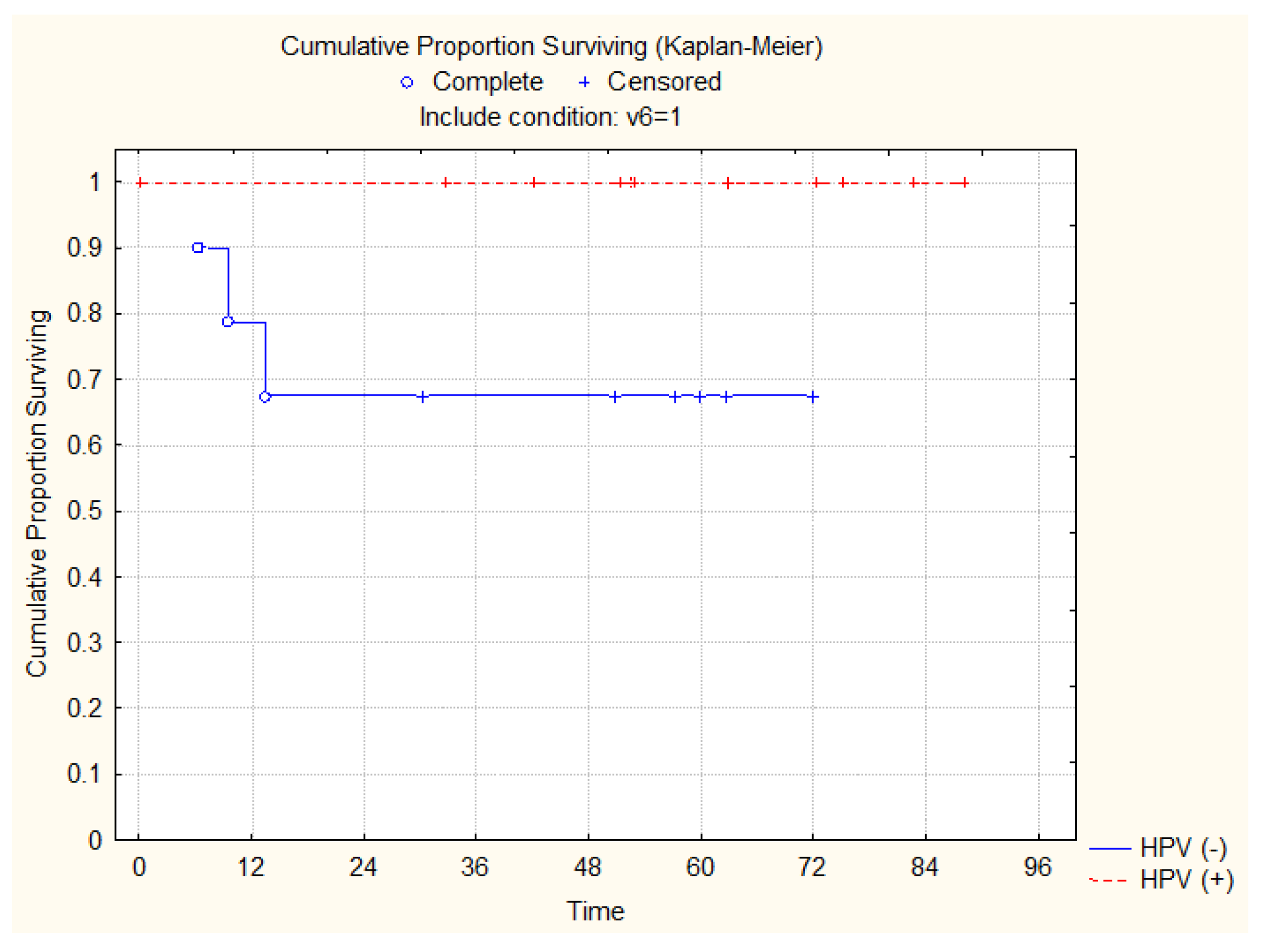
Figure 2.
Three-year locoregional control rates for patients with oropharyngeal cancer treated surgically, depending on HPV status.
Figure 2.
Three-year locoregional control rates for patients with oropharyngeal cancer treated surgically, depending on HPV status.
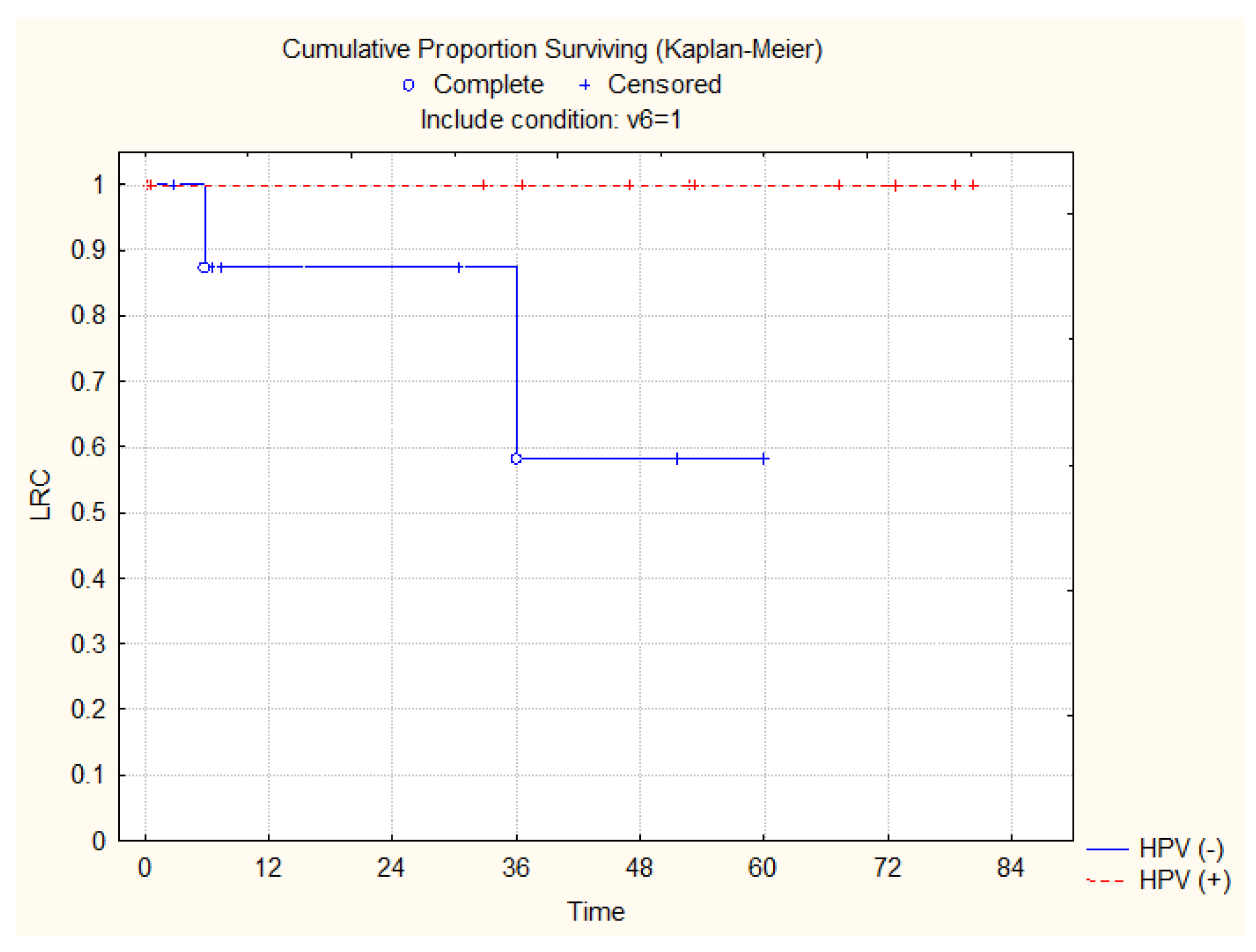
Figure 3.
Three-year overall survival rates for patients with oral cavity cancer treated surgically, depending on HPV status.
Figure 3.
Three-year overall survival rates for patients with oral cavity cancer treated surgically, depending on HPV status.
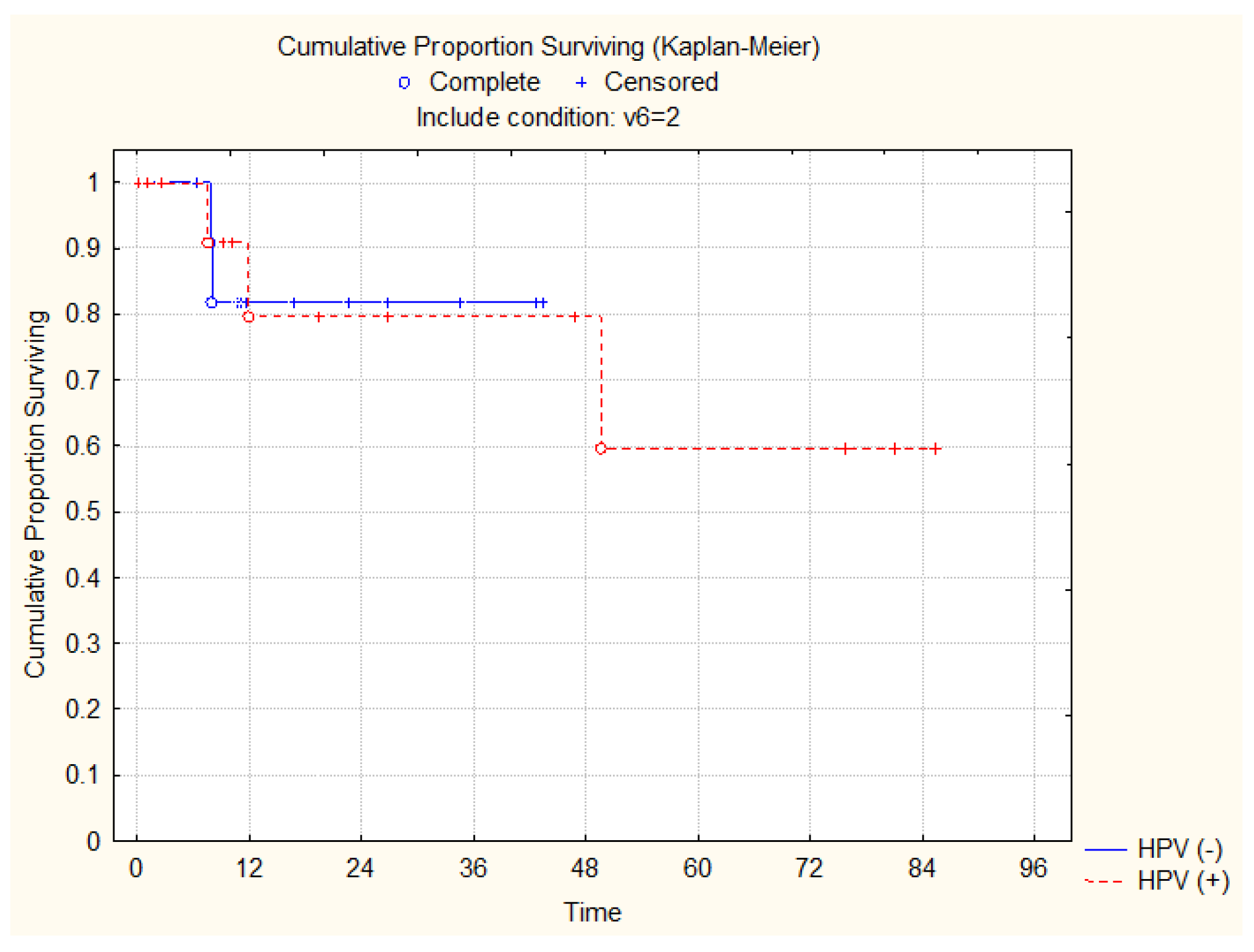
Figure 4.
Three-year locoregional control rates for patients with oral cavity cancer treated surgically, depending on HPV status.
Figure 4.
Three-year locoregional control rates for patients with oral cavity cancer treated surgically, depending on HPV status.
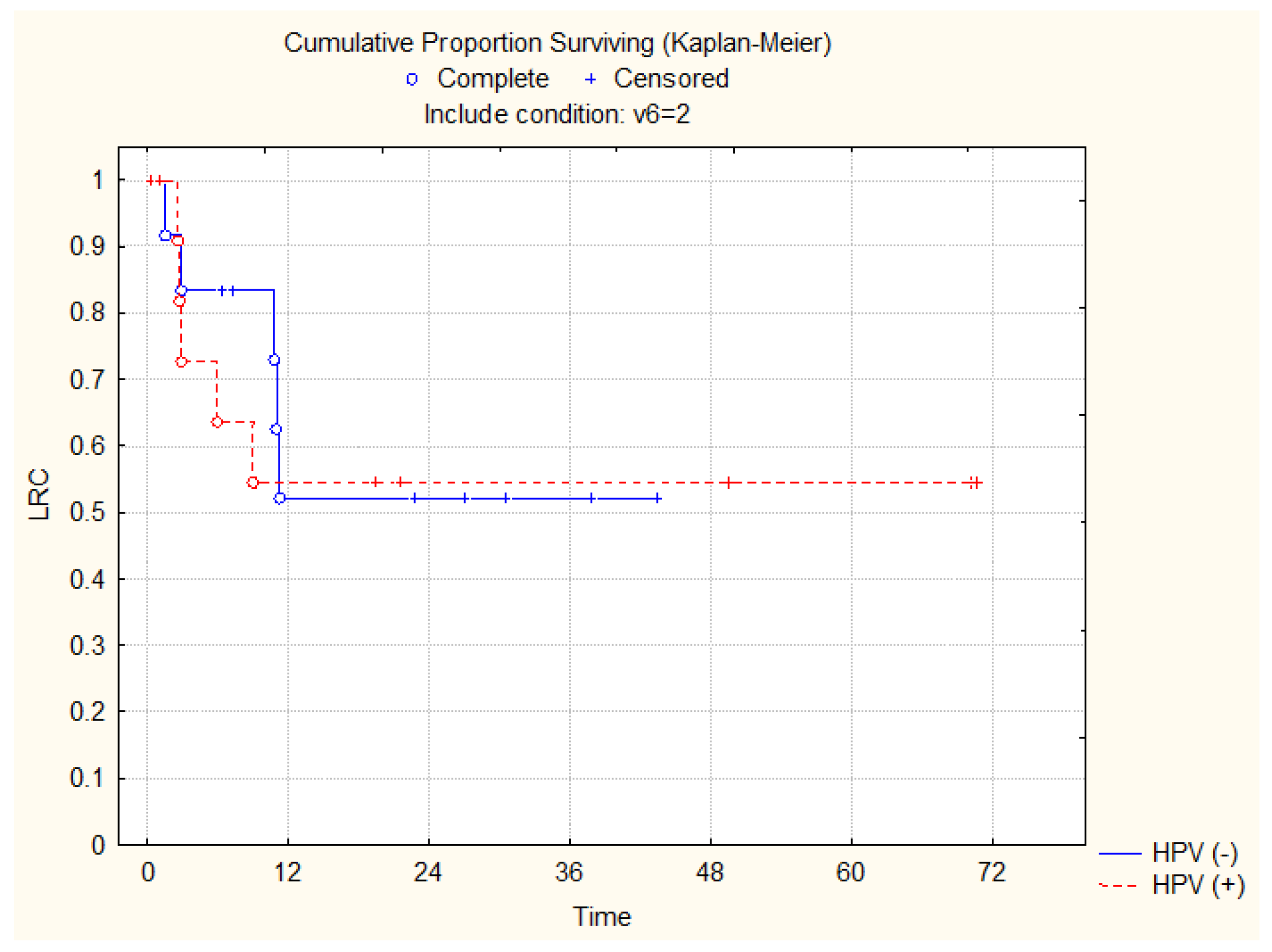
Figure 5.
Three-year overall survival rates for patients with oropharyngeal cancer treated surgically, depending on p16 expression.
Figure 5.
Three-year overall survival rates for patients with oropharyngeal cancer treated surgically, depending on p16 expression.
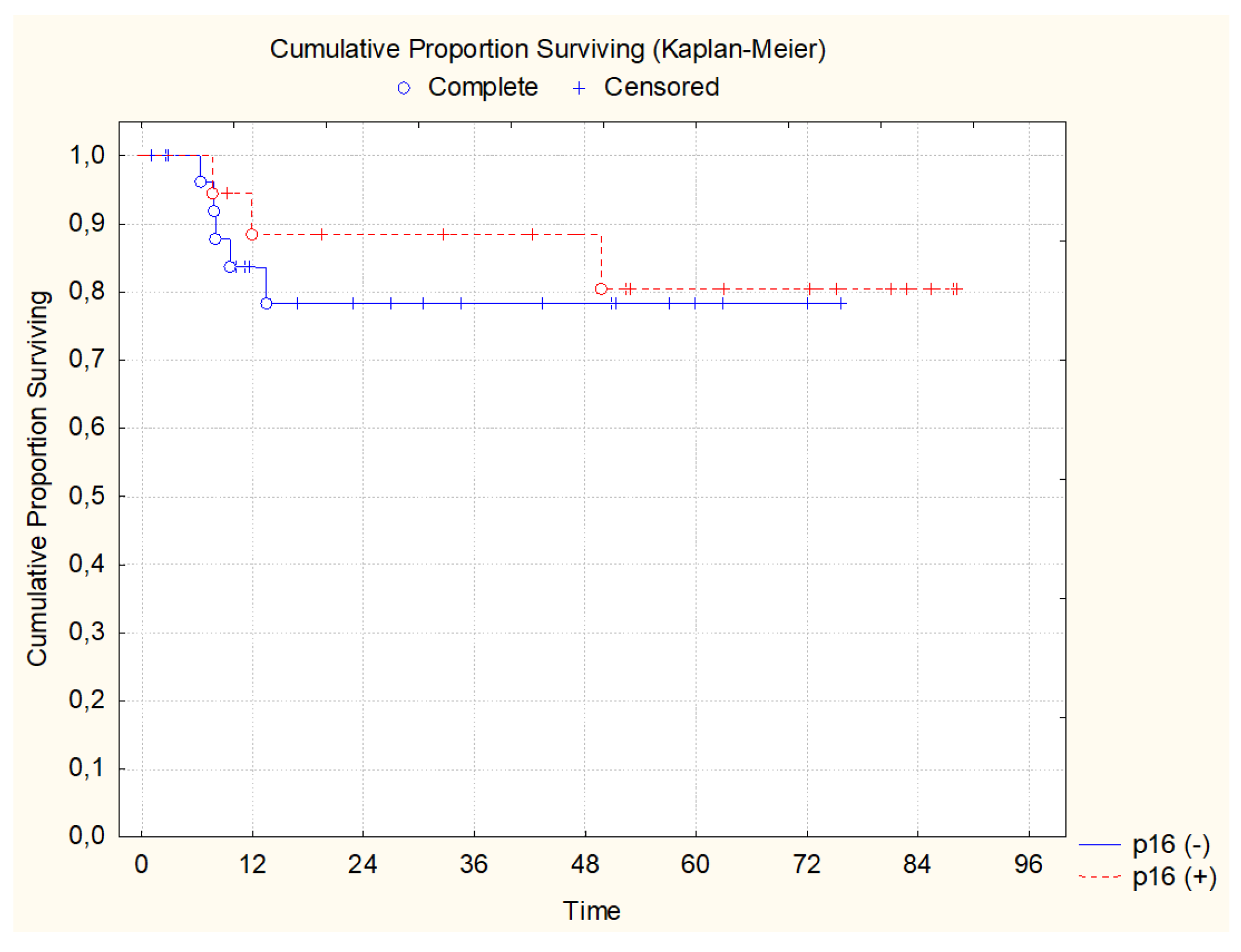

Table 1.
Type of adjuvant treatment in patients with squamous cell carcinoma of the oral cavity and oropharynx (N=51).
Table 1.
Type of adjuvant treatment in patients with squamous cell carcinoma of the oral cavity and oropharynx (N=51).
| Type of adjuvant treatment | N (%) |
| None | 18 (35%) |
| Radiochemotherapy | 6 (12%) |
| Radiotherapy | 24 (47%) |
| Palliative radiotherapy | 2 (4%) |
| Brachytherapy | 1 (2%) |
Table 2.
Clinical and morphological characteristics of patients with squamous cell carcinoma of the oral cavity and oropharynx (N=51).
Table 2.
Clinical and morphological characteristics of patients with squamous cell carcinoma of the oral cavity and oropharynx (N=51).
| Feature | N (%) |
| Location | |
| Oral cavity | 28 (55%) |
| Oropharynx | 23 (45%) |
| cT stage | |
| T1 | 11 (22%) |
| T2 | 23 (45%) |
| T3 | 16 (31%) |
| T4 | 1 (2%) |
| cN stage | |
| N0 | 25 (49%) |
| N1 | 2 (4%) |
| N2a | 3 (6) |
| N2b | 12 (24%) |
| N2c | 6 (12) |
| N3 | 3 (6) |
| Grading | |
| G1 | 9 (18%) |
| G2 | 24 (47%) |
| G3 | 18 (35%) |
| HPV status | |
| HPV-positive | 27 (53%) |
| HPV-negative p16 p16+ p16 - |
24 (47%) 21 (41%) 30 (59%) |
Table 3.
Assessment of HPV status with selected clinical and morphological factors in patients with squamous cell carcinomas of the oral cavity and oropharynx (N=51).
Table 3.
Assessment of HPV status with selected clinical and morphological factors in patients with squamous cell carcinomas of the oral cavity and oropharynx (N=51).
| Feature | HPV-positive | HPV-negative | Chi2; p |
| Location | |||
| Oral cavity | 14 (52%) | 14 (58%) | Chi2=0.216; p=0.642 |
| Oropharynx | 13 (48%) | 10 (42%) | |
| Grading | |||
| G1 | 8 (30%) | 1 (4%) | Chi2=7.01; p=0.069 |
| G2 | 9 (33%) | 15 (62.5%) | |
| G3 | 10 (37%) | 8 (33.5%) | |
| cT stage | |||
| T1 | 6 (22%) | 5 (21%) | Chi2=0.96; p=0.810 |
| T2 | 12 (44%) | 11 (46%) | |
| T3 | 8 (30%) | 8 (33%) | |
| T4 | 1 (4%) | 0 | |
| cN stage | |||
| N0 | 15 (56%) | 10 (42%) | Chi2=2.16; p=0.826 |
| N1 | 1 (4%) | 1 (4%) | |
| N2a | 2 (7%) | 1 (4%) | |
| N2b | 6 (22%) | 6 (25%) | |
| N2c | 2 (7%) | 4 (17%) | |
| N3 | 1 (4%) | 2 (8%) | |
| Adjuvant treatment | |||
| No | 13 (48%) | 5 (21%) | Chi2=4.15; p=0.041 |
| Yes | 14 (52%) | 19 (79%) | |
Table 4.
Univariate analysis of factors characterizing the study group and treatment with respect to overall survival (OS).
Table 4.
Univariate analysis of factors characterizing the study group and treatment with respect to overall survival (OS).
| Factor | Univariate Cox proportional hazard analysis (Wald statistics) | p-value | Kaplan-Meier comparison log-rank test | p-value |
| Gender M vs F |
0.31 | 0.57 | 0.54 | 0.588 |
| Tumor location Oropharynx vs oral cavity |
0.90 | 0.34 | 0.96 | 0.339 |
| T-stage T1-2 vs T3-4 |
0.39 | 0.53 | 0.65 | 0.515 |
| N-stage N0-2a vs N2b+ |
1.06 | 0.30 | 1.06 | 0.285 |
| HPV status Negative vs positive |
1.16 | 0.28 | 1.09 | 0.273 |
| Adjuvant treatment No vs yes |
0.47 | 0.49 | 0.65 | 0.516 |
Table 5.
Survival analyses with log-rank tests of factors characterizing the study group, treatment and HPV status in oral cavity carcinomas.
Table 5.
Survival analyses with log-rank tests of factors characterizing the study group, treatment and HPV status in oral cavity carcinomas.
| Factor | Univariate Cox proportional hazard analysis (Wald statistics) | p-value | Kaplan-Meier comparison log-rank test | p-value |
| Gender M vs F |
0.04 | 0.85 | 0.19 | 0.848 |
| T-stage |
0.14 | 0.71 | 0.38 | 0.706 |
| N-stage N0-2a vs N2b+ |
0.11 | 0.74 | 0.33 | 0.739 |
| HPV status Negative vs positive |
0.00 | 0.96 | 0.04 | 0.965 |
| Adjuvant treatment No vs yes |
0.00 | 0.99 | 0.00 | 0.99 |
Table 6.
Survival analyses with log-rank tests of factors characterizing the study group, treatment and HPV status in oropharynx carcinomas.
Table 6.
Survival analyses with log-rank tests of factors characterizing the study group, treatment and HPV status in oropharynx carcinomas.
| Factor | Univariate Cox proportional hazard analysis (Wald statistics) | p-value | Kaplan-Meier comparison log-rank test | p-value |
| Gender M vs F |
Not estimated* | 0.72 | 0.469 | |
| T-stage T1-2 vs T3-4 |
Not estimated* | 1.37 | 0.169 | |
| N-stage N0-2a vs N2b+ |
Not estimated* | 1.68 | 0.092 | |
| HPV status Negative vs positive |
Not estimated* | 2.00 | 0.045 | |
| Adjuvant treatment No vs yes |
0.52 | 0.48 | 0.64 | 0.522 |
*- not estimated because of no uncensored variables in one subgroup
Disclaimer/Publisher’s Note: The statements, opinions and data contained in all publications are solely those of the individual author(s) and contributor(s) and not of MDPI and/or the editor(s). MDPI and/or the editor(s) disclaim responsibility for any injury to people or property resulting from any ideas, methods, instructions or products referred to in the content. |
© 2026 by the authors. Licensee MDPI, Basel, Switzerland. This article is an open access article distributed under the terms and conditions of the Creative Commons Attribution (CC BY) license (http://creativecommons.org/licenses/by/4.0/).
Copyright: This open access article is published under a Creative Commons CC BY 4.0 license, which permit the free download, distribution, and reuse, provided that the author and preprint are cited in any reuse.


