

Submitted:
31 March 2026
Posted:
01 April 2026
You are already at the latest version
Abstract
Neuroinflammation has emerged as a central mechanism in the pathogenesis of epilepsy, particularly in drug-resistant epilepsy (DRE), where conventional antiseizure medications fail to achieve adequate control. Accumulating evidence indicates that inflammatory processes within the central nervous system contribute not only to seizure initiation but also to their perpetuation and pharmacoresistance. Among the key cellular mediators that play a pivotal role in neuroinflammation is microglia, which are the resident immune cells of the brain. In response to neuronal injury, infection, or recurrent seizures, microglia undergo activation and adopt diverse phenotypes ranging from pro-inflammatory to neuroprotective states. However, sustained or dysregulated microglial activation promotes the release of pro-inflammatory cytokines, chemokines, and reactive oxygen species, thereby exacerbating neuronal hyperexcitability, disrupting synaptic function, and facilitating epileptogenesis. Recent researches have increasingly focused on targeting microglial activation as a therapeutic strategy in DRE. Preclinical and clinical studies have explored a range of anti-inflammatory interventions, including cytokine inhibitors, modulators of microglial signaling pathways such as Toll-like receptor and NF-κB pathways, and repurposed agents like minocycline and corticosteroids. Additionally, emerging therapies aimed at selectively modulating microglial phenotypes, shifting from pro-inflammatory to neuroprotective states, offer promising avenues for intervention. Despite these advances, challenges remain in translating these strategies into routine clinical practice, including issues of specificity, timing of intervention, and potential systemic side effects. Therapeutically, targeting microglial activation holds significant promise for addressing the unmet needs in DRE by not only reducing seizure frequency but also potentially modifying disease progression. A deeper understanding of microglial biology and its interaction with neuronal networks may facilitate the development of precision therapies tailored to inflammatory profiles in epilepsy. This review highlights the evolving landscape of microglia-targeted therapies and underscores their potential as a novel and complementary approach in the management of drug-resistant epilepsy.
Keywords:
drug-resistant epilepsy
; neuroinflammation
; microglai
; cytokines
; HMGB1
; TLR4
; anakinra
; minocycline
; cannabidiol
; glucocorticoids
1. Introduction
Epilepsy is one of the most prevalent and disabling chronic neurological disorders, affecting more than 50 million individuals globally and accounting for a substantial proportion of neurological morbidity and mortality worldwide. The primary features of epilepsy are epileptic seizures, which are characterized by recurrent paroxysmal events marked by stereotyped behavioural alterations reflecting the neural mechanisms involved in the epileptic process [1,2]. Beyond its clinical manifestations, epilepsy causes a considerable socioeconomic burden, particularly in low- and middle-income countries where nearly 80% of affected individuals reside and where gaps in diagnosis, treatment access, and long-term care remain profound. Recent estimates from the Global Burden of Disease study indicate that approximately 51.7 million individuals were living with epilepsy in 2021 [3]. The disorder is increasingly recognized not merely as a condition of recurrent seizures but as a complex spectrum of diseases characterized by diverse etiologies, comorbidities, and long-term neurobiological consequences. Despite significant therapeutic advances, a substantial subset of patients develops drug-resistant epilepsy (DRE), defined by the International League Against Epilepsy (ILAE) as the failure of adequate trials of two appropriately chosen and tolerated antiseizure medications to achieve sustained seizure freedom [4]. Epidemiological studies consistently indicate that approximately 30% of individuals with epilepsy meet criteria for DRE, although this proportion may vary depending on population characteristics and healthcare access [4,5]. Patients with DRE face disproportionately higher risks of cognitive decline, psychiatric comorbidities, reduced quality of life, and sudden unexpected death in epilepsy (SUDEP), underscoring a critical unmet need for more effective and mechanism-based therapies [6,7].
Current anti-seizure medications (ASMs) predominantly exert their effects by modulating neuronal excitability through ion channel regulation or enhancement of inhibitory neurotransmission. While these agents provide symptomatic seizure control in many patients, they largely fail to modify the underlying disease process or prevent epileptogenesis [8]. Furthermore, their effectiveness plateaus in DRE, and their use is often limited by adverse effects, pharmacokinetic variability, drug-drug interactions, and issues of long-term tolerability [9]. These limitations highlight the need to shift beyond neuron-centric paradigms and explore alternative pathophysiological mechanisms that contribute to seizure generation and persistence. In this context, neuroinflammation has emerged as a fundamental and unifying mechanism in epilepsy. A growing body of experimental and clinical evidence demonstrates that seizures, brain injury, infections, and genetic factors can initiate and sustain inflammatory cascades within the central nervous system [10]. These processes involve the activation of innate immune pathways, disruption of the blood–brain barrier, and release of pro-inflammatory cytokines such as interleukin-1β, tumor necrosis factor-α, and high-mobility group box 1 (HMGB1), all of which contribute to increased neuronal excitability and network instability [10]. Importantly, neuroinflammation is now understood to play a bidirectional role, acting both as a consequence of seizures and as a driver of epileptogenesis and pharmacoresistance.
Central to this inflammatory milieu are microglia, the resident immune cells of the brain, which serve as key regulators of neuroimmune interactions. Under physiological conditions, microglia maintain homeostasis through surveillance, synaptic pruning, and neurotrophic support. However, in response to pathological stimuli, they undergo activation and adopt diverse phenotypic states ranging from pro-inflammatory (classically activated) to anti-inflammatory or reparative (alternatively activated) profiles [11]. In epilepsy, persistent microglial activation has been implicated in synaptic remodeling, neuronal injury, and the amplification of excitatory circuits, thereby facilitating seizure initiation and propagation [12]. Moreover, emerging evidence suggests that dysregulated microglial signaling contributes to the development of drug resistance through interactions with astrocytes, neurons, and the neurovascular unit [13]. Given their central role at the interface of inflammation and neuronal function, microglia represent an attractive and potentially transformative therapeutic target. Modulating microglial activation and shifting their functional phenotype toward neuroprotection may offer novel opportunities to interrupt the cycle of inflammation and hyperexcitability that characterizes DRE. Therefore, targeting microglial activation may represent a promising therapeutic strategy for drug-resistant epilepsy.
2. Mechanism of Microglial Activation in Epileptogenesis
Microglial activation represents a central mechanistic link between neuroinflammation and epileptogenesis, integrating molecular signaling pathways that ultimately promote neuronal hyperexcitability, maladaptive synaptic remodeling, and seizure propagation. In response to recurrent seizures, excitotoxic injury, blood-brain barrier (BBB) disruption, and the release of endogenous danger signals, microglia transition from a surveillant to an activated state characterized by dynamic phenotypic polarization and sustained production of inflammatory mediators [10,12,14]. Rather than acting in isolation, microglia engage in bidirectional crosstalk with neurons, astrocytes, and endothelial cells, thereby amplifying inflammatory signaling and reshaping the epileptic microenvironment. Figure 1 below describe the cycle of microglial-induced hyperexcitability.
Among the principal mechanisms underpinning microglial activation in epileptogenesis are pattern recognition receptor activation, purinergic signaling pathways and cytokine-mediated signaling.
2.1. Pattern Recognition Receptors: Toll-Like Receptor 4 (TLR4)
Pattern recognition receptors (PRRs), particularly Toll-like receptor 4 (TLR4), are critical mediators of innate immune activation in the epileptic brain. TLR4 is an innate immune system receptor that is highly expressed on microglia and is activated by endogenous danger-associated molecular patterns (DAMPs), such as high-mobility group box 1 (HMGB1), which are released from stressed or damaged neurons during seizures [10,15]. Following neuronal injury, HMGB1 is released into the extracellular environment which binds to TLR-4 receptor on microglia, forming the HMGB1–TLR4 signaling axis. This interaction initiates microglial activation and promotes the release of pro-inflammatory cytokines, thereby driving neuroinflammatory processes [16]. The HMGB1-TLR4 signaling pathway plays a crucial role in promoting neuronal hyperexcitability by enhancing the phosphorylation of N-methyl-D-aspartate receptors (NMDARs) and increasing calcium channel permeability. This pathway also contributes to the upregulation of P-glycoprotein (Pgp), a blood-brain barrier (BBB) transporter found in drug-resistant epilepsy regions, which actively pumps anti-seizure medications out of the brain [17]. Furthermore, activation of this signaling axis disrupts blood-brain barrier integrity, allowing the infiltration of peripheral immune cells, antibodies, inflammatory mediators, and albumin into the central nervous system, thereby exacerbating inflammation and network instability [15]. In terms of synaptic remodeling, TLR4-mediated signaling promotes structural alterations such as synaptic loss, dendritic retraction, and aberrant axonal sprouting. These changes disrupt normal circuit architecture and favor the emergence of hypersynchronous neuronal networks characteristic of epilepsy [10]. The persistence of TLR4 activation thus establishes a feed-forward loop in which inflammation, neuronal injury, and hyperexcitability mutually reinforce each other, facilitating seizure propagation and chronicity.
2.2. Purinergic Signaling: ATP Release and P2X7 Receptors
Purinergic signaling represents a critical pathway through which neuronal activity is translated into microglial activation. During seizures, excessive neuronal firing and cellular stress lead to the release of large amounts of extracellular adenosine triphosphate (ATP), which acts as a potent signaling molecule within the neurovascular unit. Extracellular ATP is sensed by purinergic receptors expressed on microglia, among which the P2X7 receptor (P2X7R) has attracted most attention because it has the lowest affinity to ATP. P2X7R activation plays a particularly prominent role in microglia activation and proliferation, and the P2X7 receptor (P2X7R) has been identified as a central regulatory component of the inflammasome complex, inducing the release of the pro-inflammatory cytokine IL-1β [18]. Activation of P2X7R induces the opening of non-selective cation channels, allowing the influx of calcium and sodium ions and the efflux of potassium. This ionic flux triggers the assembly of the NLRP3 inflammasome, leading to caspase-1 activation and subsequent maturation and release of IL-1β [18,19]. This establishes a critical link between purinergic signaling and cytokine-mediated neuroinflammation, reinforcing the inflammatory cascade. Beyond its role in cytokine production, P2X7R activation directly contributes to neuronal hyperexcitability by promoting glutamate release from both microglia and astrocytes, while impairing astrocytic glutamate clearance. The resulting accumulation of extracellular glutamate enhances excitatory synaptic transmission and increases the likelihood of synchronized neuronal firing [18]. The sustained ATP-P2X7R signaling contributes to seizure propagation by maintaining a pro-inflammatory microenvironment and facilitating the spread of hypersynchronous activity across neuronal networks. The interplay between ATP release, microglial activation, and cytokine production creates a self-perpetuating cycle that links acute seizure activity to chronic epileptogenesis [19,20]. Table 1 below summarizes the key microglia mediated epileptogenic pathways.
2.3. Proinflammatory Cytokines: IL-1β, TNF-α, and IL-6
Activated microglia are a major source of pro-inflammatory cytokines, notably interleukin-1β (IL-1β), tumor necrosis factor-α (TNF-α), and interleukin-6 (IL-6), which exert profound effects on neuronal excitability and synaptic function [10,14]. In the healthy brain, IL-1β is mainly produced by activated microglia and is typically expressed at low levels. However, in case of brain injury such as that induced by seizures, IL-1β levels rise significantly, promoting acute inflammation and thus contributes to increased neuronal excitability [21]. It enhances excitatory neurotransmission through phosphorylation of NMDA receptor subunits, particularly NR2B, via Src-family kinases, thereby facilitating calcium influx and promoting excitotoxic signaling cascades. It is therefore widely regarded as a key upstream mediator of seizure susceptibility. In parallel, IL-1β disrupts inhibitory GABAergic transmission by reducing GABA-A receptor function and altering chloride homeostasis, effectively shifting the excitation-inhibition balance toward a hyperexcitable state [22,23]. TNF-α is primarily secreted by both activated astrocytes and microglia and contributes to the inflammatory cascade. It promotes the insertion of AMPA-type glutamate receptors into the postsynaptic membrane thereby elevating microglial glutamate release and increasing intracellular calcium levels that enhances excitatory neurotransmission; it also induces GABA-A receptor endocytosis, thereby reducing inhibitory signaling. This dual effect on strengthening excitatory synapses and weakening inhibitory control may exacerbate neuronal hyperexcitability and interfere with antiepileptic drug (AED) efficacy by altering drug targets and reducing binding affinity [24,25]. IL-6 is another pro-inflammatory cytokine that facilitates the secretion of chemokines and adhesion molecules involved in neuronal survival and differentiation. It is a pleiotropic cytokine with both pro- and anti-inflammatory properties, plays a significant role in sustaining chronic neuroinflammation. Elevated IL-6 levels have been associated with increased seizure frequency, gliosis, and neuronal injury [26]. Collectively, these cytokines create a self-amplifying inflammatory network that promotes neuronal hyperexcitability, supports abnormal synaptic remodeling such as dendritic spine loss, mossy fiber sprouting, and circuit reorganization, and reduces the seizure threshold. Their sustained elevation helps stabilize epileptogenic networks and drives the progression from acute seizures to chronic epilepsy [10,14]. Table 1 summarizes microglial mediated epileptogenesis.
3. Microglia-Targeted Therapeutic Strategies
The recognition of microglial activation as a central driver of neuroinflammation and epileptogenesis has catalyzed the development of therapeutic strategies that extend beyond conventional neuron-centric anti-seizure approaches. In drug-resistant epilepsy (DRE), where persistent seizures are sustained by complex neuroimmune interactions, targeting microglia offers a compelling opportunity to intervene at upstream pathogenic mechanisms. These strategies aim not only to suppress excessive inflammatory signaling but also to recalibrate microglial phenotypes, restore homeostatic neuroglial crosstalk, and ultimately disrupt the self-reinforcing cycle of inflammation, synaptic dysfunction, and network hyperexcitability. Current and emerging approaches encompass anti-inflammatory pharmacotherapy, direct microglial modulation, gene-based interventions, and innovative therapies targeting glial–neuronal and neurovascular interactions.
3.1. Anti-Inflammatory Pharmacotherapy
Anti-inflammatory pharmacotherapy represents a paradigm shift in the management of drug-resistant epilepsy, targeting underlying disease mechanisms rather than only suppressing seizures. Targeting pro-inflammatory cytokines represents one of the most rational and clinically translatable strategies in microglia-mediated epileptogenesis. Among the key inflammatory pathways implicated in DRE, the IL-1β/IL-1 receptor type 1 (IL-1R1) axis has been extensively studied. Activation of this pathway enhances excitatory glutamatergic transmission while impairing inhibitory GABAergic signaling, ultimately lowering the seizure threshold [10]. Pharmacological targeting of this pathway has yielded promising results. Similarly, VX-765, a caspase-1 inhibitor that prevents the maturation of IL-1β, has shown a reduction in seizure frequency in early clinical trials, supporting the therapeutic relevance of IL-1β signaling in epilepsy [27]. Furthermore, the purinergic P2X7 receptor, a key regulator of inflammasome activation and IL-1β release, has gained attention as a promising therapeutic target, with antagonists showing anticonvulsant effects in experimental models [18]. Pharmacological inhibition of P2X7R blocks ATP-induced inflammasome activation, thereby preventing caspase-1–mediated maturation and release of IL-1β [19,20]. This intervention disrupts a key feed-forward loop linking neuronal activity to inflammation. P2X7R antagonists have demonstrated efficacy in reducing seizure severity, neuroinflammation, and neuronal damage in preclinical models [18]. Their ability to simultaneously modulate cytokine production and excitatory neurotransmission makes them particularly attractive candidates for DRE.
Another critical pathway is the HMGB1/Toll-like receptor 4 (TLR4) signaling cascade, which is activated following neuronal injury. HMGB1 release into the extracellular space leads to TLR4 activation on microglia, triggering downstream inflammatory responses, BBB dysfunction, and sustained neuronal hyperexcitability [15]. Preclinical studies have demonstrated that inhibition of HMGB1 or TLR4 signaling can reduce seizure frequency and prevent epileptogenesis, highlighting this pathway as a potential therapeutic target [28]. However, clinical application of HMGB1/TLR4 inhibitors remains limited and requires further investigation. Anti-inflammatory antibiotics, particularly tetracycline derivatives such as minocycline and doxycycline, have emerged as potential adjunctive therapies in drug-resistant epilepsy (DRE) due to their ability to modulate neuroinflammation independently of their antimicrobial effects [29]. Thus, these antibiotics are not used for their antimicrobial action in this context but rather for their immunomodulatory and neuroprotective effects [30]. Broad-spectrum anti-inflammatory agents have also been explored in the management of DRE. Corticosteroids, which exert potent immunosuppressive and anti-inflammatory effects, are widely used in autoimmune epilepsies and certain epileptic encephalopathies, although their long-term use is limited by significant adverse effects [31]. Non-steroidal anti-inflammatory drugs (NSAIDs), particularly cyclooxygenase-2 (COX-2) inhibitors such as celecoxib, have demonstrated antiseizure effects in experimental models by reducing prostaglandin-mediated neuroinflammation [32]. In addition, immunomodulatory therapies, including intravenous immunoglobulin (IVIG) and plasma exchange, have shown benefit in selected cases of autoimmune-associated DRE by attenuating pathogenic immune responses [33].
3.2. Microglial Modulation Therapy
Therapeutic strategies aimed at reprogramming microglial polarization from a pro-inflammatory (M1-like) to an anti-inflammatory (M2-like) phenotype are gaining traction. Agents such as peroxisome proliferator-activated receptor gamma (PPAR-γ) agonists enhance anti-inflammatory gene expression and suppress cytokine production, thereby promoting neuroprotection and reducing seizure susceptibility [34]. Additionally, direct targeting of microglial survival and activation pathways provides another therapeutic dimension. Another important target is the colony-stimulating factor 1 receptor (CSF1R), which regulates microglial survival and proliferation. CSF1R inhibitors (e.g., PLX3397, PLX5622) have demonstrated the ability to reduce microglial proliferation and can transiently deplete microglial populations and can reduce neuro-inflammation leading to improved seizure outcomes in experimental models [35]. In epilepsy models, such interventions have been associated with reduced neuroinflammation and seizure burden. However, given the essential physiological roles of microglia in synaptic maintenance and immune surveillance, complete ablation is not desirable. Current strategies therefore focus on selective modulation of microglial activation states rather than indiscriminate suppression.
3.3. Cannabinoid Therapy
Cannabinoid-based therapies have gained significant attention as adjunctive treatments for drug-resistant epilepsy (DRE), largely due to their combined anti-seizure and an-ti-inflammatory properties. Cannabidiol (CBD) has emerged as a multifaceted therapeutic agent with both anticonvulsant and anti-inflammatory properties. Beyond its effects on neuronal ion channels and neurotransmitter systems, CBD modulates microglial activation through CB2 receptor engagement, inhibition of adenosine reuptake, and suppression of intracellular calcium signaling [36]. These actions reduce the release of pro-inflammatory cytokines and promote a shift toward a neuroprotective microglial phenotype. CBD also exerts antioxidant effects and may influence mitochondrial function, further contributing to its neuroprotective profile. Its clinical efficacy in syndromes such as Dravet and Lennox–Gastaut highlights its translational relevance in DRE. Despite these advances, several limitations remain. The precise mechanisms underlying its anti-inflammatory and anti-epileptic effects are not fully elucidated, and its efficacy in broader DRE populations is still under investigation. Additionally, potential drug–drug interactions, particularly via cytochrome P450 enzyme inhibition, require careful monitoring in clinical practice [37]. Nonetheless, cannabinoid therapy represents a promising adjunctive strategy in DRE, with the potential to address both seizure burden and the underlying inflammatory processes contributing to pharmacoresistance.
3.4. Gene Therapy
Gene therapy represents an emerging, disease-modifying strategy in drug-resistant epilepsy (DRE), aiming to directly correct or modulate the molecular and cellular mechanisms underlying epileptogenesis. Unlike conventional anti-seizure medications, which primarily provide symptomatic control, gene therapy targets the glial pathways, the root causes of neuronal hyperexcitability, including neurotransmitter imbalance, ion channel dysfunction, and neuroinflammation [38]. Gene-based approaches offer unprecedented precision in targeting microglial and glial signaling pathways. Viral vectors, particularly adeno-associated viruses (AAVs), are the most commonly used delivery systems due to their relative safety, long-term expression, and neuronal tropism. Advances in vector design and targeting have improved the precision and efficiency of gene delivery to epileptogenic brain regions. The vectors can be engineered to deliver anti-inflammatory genes such as IL-10 or transforming growth factor-β (TGF-β), thereby promoting a neuroprotective microenvironment [38]. More recently, gene-editing technologies such as CRISPR/Cas9 have opened new possibilities for correcting epilepsy-associated genetic mutations, particularly in monogenic epilepsies. Another strategy focuses on modulating neuronal excitability by targeting ion channels; gene delivery aimed at increasing potassium channel expression or reducing sodium channel activity can stabilize neuronal membranes and suppress epileptic discharges [39]. In addition, gene therapy approaches targeting inflammatory pathways are being explored, including the suppression of pro-inflammatory cytokines or modulation of signaling cascades such as IL-1β and HMGB1 pathways, thereby addressing the inflammatory component of DRE [10]. Additionally, epigenetic regulators, including histone deacetylase (HDAC) inhibitors, can modulate gene expression profiles associated with inflammation and microglial activation [40]. Figure 2 below summarizes the engineered AAVs delivering anti-inflammatory genes.
3.5. Stem Cell-Based Therapy
Stem cell-based therapies have emerged as a promising regenerative and immunomodulatory approach in drug-resistant epilepsy (DRE), targeting both neuronal dysfunction and the underlying neuroinflammatory milieu. These therapies aim to restore the balance between excitation and inhibition, promote neuronal repair, and attenuate chronic inflammation that contributes to epileptogenesis and seizure persistence [41]. Among the various stem cell types, mesenchymal stem cells (MSCs) are the most widely studied due to their strong anti-inflammatory and immunomodulatory properties. MSCs exert their effects primarily through paracrine mechanisms, releasing anti-inflammatory cytokines (such as IL-10, TGF-β), growth factors, and extracellular vesicles that suppress microglial activation and reduce the production of pro-inflammatory mediators such as IL-1β and TNF-α [42]. Figure 3 below demonstrates the mechanisms of mesenchymal-based therapy.
Neural stem cells (NSCs) represent another important therapeutic candidate, with the ability to differentiate into neurons, astrocytes, and oligodendrocytes. NSCs can modulate the inflammatory microenvironment and support synaptic reorganization, further contributing to their therapeutic potential. NSCs may contribute to seizure control by replenishing lost inhibitory interneurons, particularly GABAergic neurons, thereby restoring inhibitory tone within epileptic networks [41]. Induced pluripotent stem cells (iPSCs) offer a novel, patient-specific approach, enabling the generation of autologous neural cells for transplantation while minimizing immunological rejection. Beyond cell replacement, iPSC-derived models are also valuable for studying disease mechanisms and screening anti-inflammatory therapies in DRE [43]. Despite encouraging preclinical findings, the clinical translation of stem cell–based therapies faces several challenges, including concerns regarding safety (e.g., tumorigenicity), optimal delivery methods, cell survival, and long-term efficacy. Moreover, standardized protocols and large-scale clinical trials are still lacking. Table 2 below summarizes the emerging microglia-targeted intervention strategies in DRE.
4. Therapeutic Agents Targeting Microglia
The expanding understanding of microglial activation as a central orchestrator of neuroinflammation and epileptogenesis has catalyzed the development of a new class of therapeutic agents aimed at modulating glial biology in drug-resistant epilepsy (DRE). Unlike conventional antiseizure medications that primarily target neuronal excitability, these agents intervene at upstream immunological and molecular pathways that sustain seizure generation and network reorganization. By attenuating microglia driven inflammatory cascades, restoring homeostatic glial neuronal interactions, and modulating synaptic plasticity, these therapies hold promise not only for seizure suppression but also for disease modification. Evidence from preclinical models and emerging clinical studies increasingly supports their translational relevance.
4.1. Anakinra
Anakinra, a recombinant interleukin-1 receptor antagonist (IL-1Ra), directly targets the IL-1β/IL-1R1 signaling axis, a key pathway in microglia-mediated neuroinflammation. By competitively blocking the binding of IL-1β to the IL-1 type I receptor, anakinra prevents activation of downstream signaling cascades such as NF-κB and MAPK, thereby reducing transcription of pro-inflammatory genes [23,44]. This inhibition results in decreased IL-1β-induced phosphorylation of NMDA receptor subunits, reduced calcium influx, attenuation of excitotoxic neuronal injury, and ultimately lowering neuronal hyperexcitability [23]. In experimental epilepsy models, pharmacological or genetic blockade of IL-1 signaling significantly reduces seizure susceptibility, limits hippocampal inflammation, and protects against neuronal degeneration [10]. Anakinra also disrupts the positive feedback loop between microglial activation and cytokine release, thereby dampening sustained neuroinflammation. Clinically, anakinra has shown remarkable efficacy in severe refractory epilepsies with a prominent inflammatory component, such as febrile infection-related epilepsy syndrome (FIRES) and new-onset refractory status epilepticus (NORSE), where it has been associated with substantial reductions in seizure burden and improved neurological outcomes [45]. These findings underscore its role as a targeted immunomodulatory therapy in DRE as it disrupts the amplification loop between microglial activation and cytokine release. Other cytokine-targeting agents, such as canakinumab (anti–IL-1β monoclonal antibody) and tocilizumab (IL-6 receptor antagonist) have demonstrated efficacy in reducing seizure burden in inflammatory epilepsies [14].
4.2. Minocycline
Minocycline has gained prominence as a microglia-modulating agent with well characterized anti-inflammatory and neuroprotective properties. Mechanistically, it suppresses microglial activation by inhibiting key intracellular signaling pathways, including nuclear factor kappa B (NF-κB), p38 mitogen-activated protein kinase (MAPK), and inducible nitric oxide synthase (iNOS), thereby reducing the production of pro-inflammatory cytokines such as IL-1β, TNF-α, IL-6, and reactive oxygen species [30]. Additionally, minocycline attenuates microglial proliferation and migration, limits excitotoxic neuronal damage, and stabilizes mitochondrial function, collectively reducing neurotoxicity [30,46]. In animal models of epilepsy, including kainic acid- and pilocarpine-induced status epilepticus, minocycline has consistently demonstrated a reduction in seizure frequency, delayed epileptogenesis, and attenuation of hippocampal neuronal loss [47]. These effects are accompanied by decreased microgliosis, reduced cytokine expression, and suppression of gliosis, indicating robust anti-inflammatory activity. Furthermore, minocycline has been shown to preserve synaptic integrity and reduce aberrant synaptic remodeling, including mossy fiber sprouting [47]. Although clinical evidence remains limited, preliminary studies and case reports suggest that minocycline may offer adjunctive benefits in refractory epilepsy, particularly in patients with inflammatory phenotypes [48]. Its ability to modulate both inflammatory and apoptotic pathways underscores its potential as an adjunctive therapy in DRE.
4.3. Cannabidiol (CBD)
The most extensively studied agent is Cannabidiol, a non-psychoactive phytocannabinoid derived from Cannabis sativa. Unlike tetrahydrocannabinol (THC), cannabidiol does not produce euphoric effects and has demonstrated a favorable safety profile in clinical use [49]. Cannabidiol (CBD) represents a multifaceted therapeutic agent with both anticonvulsant and immunomodulatory properties. The therapeutic effects of cannabidiol are mediated through multiple ways. Its mechanisms of action extend beyond neuronal ion channel modulation to include direct effects on microglial activation. CBD interacts with CB2 receptors on microglia, modulates intracellular calcium dynamics, inhibits adenosine reuptake, and exerts anti-inflammatory effects by reducing the production of pro-inflammatory cytokines, inhibiting microglial activation, and attenuating oxidative stress, all of which are implicated in epileptogenesis and seizure propagation [36,49]. Additionally, CBD exhibits antioxidant properties and may influence mitochondrial function and cellular metabolism. These properties position cannabinoid therapy as a dual-action approach targeting both neuronal excitability and neuroinflammation. In animal models, CBD has been shown to reduce microglial activation, decrease expression of inflammatory mediators such as TNF-α and COX-2, and attenuate neuroinflammation associated with seizures. It also modulates the NLRP3 inflammasome, thereby reducing IL-1β production and interrupting key inflammatory cascades. These effects translate into reduced seizure severity and improved neuronal survival. Robust clinical evidence supports the efficacy of cannabidiol in specific forms of DRE. Randomized controlled trials have demonstrated significant reductions in seizure frequency in patients with Dravet syndrome and Lennox–Gastaut syndrome, leading to regulatory approval of Epidiolex for these conditions [36,50]. In these studies, cannabidiol was generally well tolerated, with common adverse effects including somnolence, diarrhea, and elevated liver enzymes, particularly when used in combination with other anti-seizure medications.
4.4. Glucocorticoids
Glucocorticoids, such as Prednisolone, Dexamethasone, and Methylprednisolone, exert potent broad-spectrum anti-inflammatory and immunosuppressive effects through both genomic and non-genomic mechanisms. At the molecular level, glucocorticoids bind to intracellular glucocorticoid receptors, leading to translocation of the receptor-ligand complex into the nucleus, where it suppresses the transcription of pro-inflammatory genes while upregulating anti-inflammatory mediators. This process involves inhibition of key signaling pathways, including nuclear factor kappa B (NF-κB) and activator protein-1 (AP-1), which are central regulators of inflammatory responses [51]. In addition, glucocorticoids have rapid non-genomic effects where it may have direct inhibitory actions on many inflammatory and structural cells involved in inflammation. This contributes to stabilization of cellular membranes and modulation of intracellular signaling cascades, further enhancing their anti-inflammatory actions [52]. In the context of drug-resistant epilepsy (DRE), glucocorticoids target critical components of neuroinflammation. They suppress microglial and astrocytic activation, reduce the production of pro-inflammatory cytokines such as interleukin-1β (IL-1β) and tumor necrosis factor-α (TNF-α), and mitigate oxidative stress within the central nervous system [10,31]. Furthermore, glucocorticoids play a crucial role in restoring the integrity of the blood–brain barrier (BBB), which is often disrupted in epilepsy and contributes to the entry of peripheral immune mediators into the brain parenchyma [53,54]. By stabilizing endothelial tight junctions and reducing vascular permeability, these agents help limit the propagation of neuroinflammatory cascades. Clinically, glucocorticoids have demonstrated efficacy in several forms of epilepsy characterized by prominent inflammatory or immune-mediated mechanisms. They are widely used in autoimmune epilepsies, Rasmussen encephalitis, and epileptic encephalopathies such as infantile spasms, where they can significantly reduce seizure frequency and, in some cases, induce remission [33]. Their beneficial effects are thought to extend beyond immunosuppression, as corticosteroids may also indirectly modulate neuronal excitability by reducing cerebral edema, normalizing ionic gradients, and improving synaptic function within epileptogenic networks [10].
4.5. Celecoxib
Celecoxib is a selective cyclooxygenase-2 (COX-2) inhibitor that has attracted interest as a potential adjunctive therapy in drug-resistant epilepsy (DRE) due to its anti-inflammatory and neuro-modulatory properties. COX-2 is an inducible enzyme that is rapidly upregulated in neurons, astrocytes, and microglia following seizures, leading to increased synthesis of pro-inflammatory prostaglandins, particularly prostaglandin E2 (PGE2). These mediators play a critical role in modulating synaptic transmission, enhancing glutamatergic signaling, and facilitating neuronal hyperexcitability, thereby contributing to seizure generation and epileptogenesis [32,54,55]. Pharmacological inhibition of COX-2 by celecoxib reduces prostaglandin production and attenuates downstream inflammatory signaling pathways. This effect has been associated with decreased excitotoxicity, reduced neuronal injury, and modulation of synaptic plasticity in experimental epilepsy models [55]. In addition, COX-2 inhibition may help stabilize the blood–brain barrier (BBB), thereby limiting the entry of peripheral inflammatory mediators into the central nervous system and preventing amplification of neuroinflammation [31]. By dampening these inflammatory cascades, celecoxib may contribute to reduced seizure frequency and inhibition of maladaptive network reorganization. Preclinical studies have demonstrated that celecoxib can reduce seizure severity and delay the progression of epileptogenesis, particularly when administered early in the disease course [56]. Furthermore, its effects on synaptic signaling suggest a role in modulating long-term potentiation and neuronal circuit remodeling, processes that are often dysregulated in DRE [54]. However, clinical evidence supporting its efficacy in human epilepsy remains limited, and its use is largely investigational in this context.
4.6. JNJ-47965567 and Brilliant Blue G
JNJ-47965567 and Brilliant Blue G are selective inhibitors of the purinergic P2X7 receptor (P2X7R), a key regulator of neuroinflammation and a promising therapeutic target in drug-resistant epilepsy (DRE). The P2X7 receptor is an ATP-gated ion channel predominantly expressed on microglia, where it functions as a critical sensor of cellular stress and injury. During seizures, excessive extracellular ATP is released from neurons and glial cells, leading to sustained activation of P2X7R. This activation triggers ionic fluxes, particularly calcium and sodium influx and potassium efflux, which in turn promote the assembly of the NLRP3 inflammasome and activation of caspase-1, culminating in the maturation and release of the pro-inflammatory cytokine interleukin-1β (IL-1β) [19]. Pharmacological inhibition of P2X7R disrupts this upstream inflammatory cascade, thereby attenuating microglial activation and reducing the production of pro-inflammatory mediators. By preventing inflammasome activation, P2X7R antagonists effectively limit neuroinflammation-driven neuronal hyperexcitability and synaptic dysfunction, both of which are central to epileptogenesis and seizure propagation [18]. In addition, blockade of P2X7R has been associated with reduced release of glutamate and other excitatory neurotransmitters, further contributing to its anticonvulsant effects [57]. Extensive preclinical evidence supports the neuroprotective and anti-seizure efficacy of P2X7R antagonists. Agents such as JNJ-47965567 and Brilliant Blue G have been shown to significantly reduce spontaneous seizure frequency, attenuate microgliosis and astrogliosis, and decrease neuronal loss in experimental models of temporal lobe epilepsy [18,57]. Moreover, these compounds have demonstrated the ability to reduce aberrant network synchronization and inhibit maladaptive synaptic remodeling, suggesting potential disease-modifying effects beyond symptomatic seizure control [18]. Importantly, P2X7R inhibition may also contribute to preservation of blood–brain barrier (BBB) integrity by reducing inflammation-induced endothelial dysfunction, thereby limiting the infiltration of peripheral immune mediators into the central nervous system [58]. This adds another layer of therapeutic benefit, as BBB disruption is a well-recognized contributor to seizure recurrence and pharmacoresistance in DRE.
4.7. Glycyrrhizin and Anti-HMGB1 Therapy
Glycyrrhizin is a naturally derived compound (from Glycyrrhiza glabra, licorice root) that has gained attention as a targeted anti-inflammatory agent in drug-resistant epilepsy (DRE) through its inhibitory effects on high-mobility group box 1 (HMGB1). In the epileptic brain, activation of the HMGB1–TLR4 axis contributes to neuronal hyperexcitability by enhancing glutamatergic transmission, facilitating N-methyl-D-aspartate receptor (NMDAR) phosphorylation, and promoting calcium influx, all of which lower seizure threshold and sustain epileptogenic networks [10,14]. Glycyrrhizin exerts its therapeutic effect by directly binding to HMGB1, thereby preventing its interaction with TLR4 receptors and effectively suppressing downstream inflammatory signaling [59]. This upstream inhibition is particularly important, as it targets one of the earliest triggers of seizure-associated neuroinflammation. Extensive preclinical studies support the anticonvulsant and neuroprotective effects of HMGB1 inhibition. In animal models of temporal lobe epilepsy, pharmacological blockade of HMGB1 using glycyrrhizin or neutralizing antibodies has been shown to significantly reduce seizure frequency, delay the onset of spontaneous recurrent seizures, and attenuate microglial and astrocytic activation [10,60]. These interventions are also associated with reduced production of pro-inflammatory cytokines such as IL-1β and TNF-α, preservation of blood–brain barrier (BBB) integrity, and protection against neuronal loss, indicating a broad disease-modifying potential. Clinically, elevated levels of HMGB1 have been detected in both serum and cerebrospinal fluid of patients with epilepsy, with higher concentrations correlating with seizure severity, frequency, and pharmacoresistance [14]. This supports the dual role of HMGB1 as both a biomarker of disease activity and a therapeutic target. Overall, anti-HMGB1 therapy, particularly with glycyrrhizin, represents a compelling upstream approach to modulating neuroinflammation in DRE. By targeting a central mediator that links neuronal injury to immune activation, this strategy holds promise for not only reducing seizure burden but also altering the course of epileptogenesis.
4.8. CSF1R Inhibitors: PLX3397 and PLX5622
PLX3397 and PLX5622 are selective inhibitors of the colony-stimulating factor 1 receptor (CSF1R), a tyrosine kinase receptor that plays a pivotal role in the survival, proliferation, and differentiation of microglia. Given the central role of microglial activation in driving neuroinflammation and epileptogenesis, CSF1R inhibition has emerged as a promising therapeutic strategy in drug-resistant epilepsy (DRE). Activation of CSF1R signaling promotes microglial expansion and sustains the release of pro-inflammatory mediators, including interleukin-1β (IL-1β), tumor necrosis factor-α (TNF-α), and reactive oxygen species, all of which contribute to neuronal hyperexcitability and seizure propagation [35,61]. Pharmacological inhibition of CSF1R with agents such as PLX3397 and PLX5622 leads to a marked reduction in microglial density by impairing their survival and proliferation. In experimental models of epilepsy, these agents have been shown to attenuate microgliosis and astrogliosis, reduce neuroinflammatory signaling, and decrease seizure frequency and severity [35,62]. Beyond their anti-inflammatory effects, CSF1R inhibitors may indirectly influence neuronal excitability by limiting microglia-mediated synaptic pruning and cytokine-driven alterations in neurotransmission. This is particularly relevant in DRE, where persistent microglial activation contributes to maladaptive circuit reorganization and chronic seizure activity [61,63]. However, complete or prolonged depletion of microglia raises important concerns, as these cells also play essential roles in maintaining central nervous system homeostasis, including synaptic support, debris clearance, and neuroprotection. Studies have shown that excessive microglial ablation may impair cognitive function and disrupt normal brain physiology [35]. Consequently, current therapeutic strategies are shifting toward selective modulation of microglial activity rather than total depletion, aiming to suppress harmful pro-inflammatory phenotypes while preserving or enhancing their beneficial functions. Table 3 below compares the therapeutic agents targeting microglia.
5. Challenges and Limitations
Despite increasing interest in microglia-targeted therapies for drug-resistant epilepsy (DRE), several key challenges continue to limit their translation into clinical practice. Foremost among these is the lack of robust, large-scale clinical trials, as most current evidence is derived from preclinical studies, small case series, or investigations in selected inflammatory epilepsies such as FIRES or autoimmune epilepsy, limiting generalizability. Another major challenge lies in the heterogeneity of epilepsy, which encompasses diverse etiologies and pathophysiological mechanisms. Epilepsy is not a single disease but a group of disorders with diverse genetic, structural, metabolic, infectious, and immune causes. This heterogeneity extends to the role of neuroinflammation, which may vary significantly across different epilepsy subtypes. For instance, inflammatory pathways may be central drivers in some forms of epilepsy like autoimmune or post-infectious epilepsy but play a more secondary or modulatory role in others. As a result, therapies targeting microglia may exhibit variable efficacy depending on the underlying disease mechanism. Additionally, the dual role of microglia in the central nervous system presents a major obstacle, as these cells promote neuroinflammation and seizure propagation on one hand, while supporting neuroprotection, synaptic homeostasis, and tissue repair on the other. Consequently, indiscriminate inhibition of microglial activity may disrupt beneficial functions and potentially worsen outcomes. This duality complicates therapeutic targeting and highlights the need for strategies that selectively modulate, rather than completely suppress, microglial activation. The absence of reliable biomarkers to identify patients who are most likely to benefit from microglia-targeted therapies further complicates clinical application. Moreover, long-term safety and systemic effects of immunomodulatory therapies remain a concern. Many microglia-targeted agents, particularly those that broadly suppress inflammation, may increase susceptibility to infections or disrupt normal immune function. Finally, pharmacokinetic challenges such as limited blood-brain barrier penetration highlight the need for more targeted and precisely modulated therapeutic approaches. Collectively, these limitations underscore the necessity for well-designed clinical trials, biomarker-driven strategies, and refined therapeutic modalities to fully realize the potential of microglia-based interventions in DRE.
6. Conclusion
The shift from a neuron-centric to a neuro-immune paradigm marks a pivotal evolution in the management of drug-resistant epilepsy (DRE). As evidenced in this review, microglia are not merely passive responders to seizure activity but are active drivers of the neuroinflammatory cascades that sustain hyperexcitability and pharmacoresistance. Therefore, targeting the microglial activation in DRE offers a mechanistically rational approach to interrupting the vicious cycle of inflammation and epileptogenesis. Ultimately, integrating microglia-targeted strategies with conventional antiseizure medications holds the promise of not just symptomatic relief, but true disease modification for millions living with refractory epilepsy.
References
- Feigin, Valery L; et al. Global, regional, and national burden of neurological disorders, 1990–2016: a systematic analysis for the Global Burden of Disease Study 2016. Lancet Neurol. 2019, 18(May), 459–80. [Google Scholar] [CrossRef]
- Beghi, Ettore; et al. Global, regional, and national burden of epilepsy, 1990–2016: a systematic analysis for the Global Burden of Disease Study 2016. Lancet Neurol. 2019, 18(April), 357–75. [Google Scholar] [CrossRef]
- Valery, L; Feigin, A. Articles Global, regional, and national burden of epilepsy, 1990–2021: a systematic analysis for the Global Burden of Disease Study 2021. Lancet Public Heal. 2025, 10(February), 203–27. [Google Scholar]
- Kwan, P; Arzimanoglou, A; Berg, AT; Brodie, MJ; Perucca, E; Wiebe, S; et al. Definition of drug resistant epilepsy: Consensus proposal by the ad hoc Task Force of the ILAE Commission on Therapeutic Strategies. Epilepsia 2010, 51(6), 1069–77. [Google Scholar] [CrossRef]
- KWAN, P; BRODIE, MJ. EARLY IDENTIFICATION OF REFRACTORY EPILEPSY. N Engl J Med. 2000, 342(5), 314–9. [Google Scholar] [CrossRef]
- Matus, JSM; Suárez, SO; Escalante, RG. Factors not considered in the study of drug- resistant epilepsy: Psychiatric comorbidities, age, and gender. Epilepsia Open. 2022, 7, 81–93. [Google Scholar]
- Rheims, S; Sperling, MR; Ryvlin, P. resistant epilepsy and mortality — Why and when do neuromodulation and epilepsy surgery reduce overall mortality. Epilepsia 2022, 63, 3020–36. [Google Scholar] [CrossRef]
- Khateb, M; Bosak, N; Herskovitz, M. The Effect of Anti-seizure Medications on the Propagation of Epileptic Activity: A Review. Front Neurol. 2021, 12(May), 1–12. [Google Scholar] [CrossRef]
- Perucca, P; Gilliam, FG. Adverse eff ects of antiepileptic drugs. Lancet Neurol. 2012, 11(September), 792–802. [Google Scholar] [CrossRef]
- Vezzani, A; French, J; Bartfai, T; Baram, TZ. The role of inflammation in epilepsy. Nat Publ Gr [Internet] 2010, 7(1), 31–40. [Google Scholar] [CrossRef]
- Salter, MW; Stevens, B. Microglia emerge as central players in brain disease. Nat Med [Internet] 2017, 23(9), 1018–27. [Google Scholar] [CrossRef]
- Eyo, UB; Murugan, M; L jun, Wu. Microglia—Neuron Communication in Epilepsy. Glia 2016, 00(00), 1–14. [Google Scholar]
- Devinsky, O; Vezzani, A; Najjar, S; De Lanerolle, NC; Rogawski, MA. Glia and epilepsy: excitability and inflammation. Trends Neurosci [Internet] 2013, 36(3), 174–84. [Google Scholar] [CrossRef] [PubMed]
- Ravizza, T; Terrone, G; Salamone, A; Frigerio, F; Balosso, S; Antoine, DJ; et al. High Mobility Group Box 1 is a novel pathogenic factor and a mechanistic biomarker for epilepsy. Brain Behav Immun [Internet] 2018, 72, 14–21. [Google Scholar] [CrossRef] [PubMed]
- Maroso, M; Balosso, S; Ravizza, T; Liu, J; Aronica, E; Iyer, AM; et al. Toll-like receptor 4 and high-mobility group box-1 are involved in ictogenesis and can be targeted to reduce seizures. Nat Med [Internet] 2010, 16(4), 413–9. [Google Scholar] [CrossRef] [PubMed]
- White, HS; Galanopoulou, AS; Barker-haliski, ML; Wolfgang, L. Neuroinflammation in epileptogenesis: Insights and translational perspectives from new models of epilepsy. Epilepsia 2017, 58(3), 39–47. [Google Scholar] [CrossRef]
- Balosso, S; Liu, J; Bianchi, ME; Vezzani, A. Disulfide-Containing High Mobility Group Box-1 Promotes N -Methyl- d -Aspartate Receptor Function and Excitotoxicity by Activating Toll-Like Receptor 4-Dependent Signaling in Hippocampal Neurons. Antioxid Redox Signal. 2014, 21(12), 1726–40. [Google Scholar]
- Engel, T. Purinergic signaling-induced neuroinflammation and status epilepticus. Expert Rev Neurother [Internet] 2016, 16(7), 735–7. [Google Scholar] [CrossRef]
- Di, Virgilio F; Ben, DD; Sarti, AC; Giuliani, AL; Falzoni, S. Review The P2X7 Receptor in Infection and Inflammation. Immun Rev [Internet] 2017, 47(1), 15–31. [Google Scholar] [CrossRef]
- Di, Virgilio F; Sarti, AC; Coutinho-silva, R. Purinergic signaling, DAMPs, and inflammation. Am J Physiol Cell Physiol. 2026, 318(26), 832–5. [Google Scholar]
- Rijkers, K; Majoie, HJ; Hoogland, G; Kenis, G; Baets, M; De, *!!! REPLACE !!!*; Vles, JS. The role of interleukin-1 in seizures and epilepsy: A critical review. Exp Neurol [Internet] 2009, 216(2), 258–71. [Google Scholar] [CrossRef] [PubMed]
- Viviani, B; Bartesaghi, S; Gardoni, F; Vezzani, A; Behrens, MM; Bartfai, T; et al. Interleukin-1B Enhances NMDA Receptor-Mediated Intracellular Calcium Increase through Activation of the Src Family of Kinases. J Neurosci. 2003, 23(25), 8692–700. [Google Scholar] [CrossRef] [PubMed]
- Vezzani, A; Viviani, B. Neuropharmacology Neuromodulatory properties of inflammatory cytokines and their impact on neuronal excitability. Neuropharmacology [Internet] 2015, 96, 70–82. [Google Scholar] [CrossRef] [PubMed]
- Mukherjee, S; Arisi, GM; Mims, K; Hollingsworth, G; Neil, KO; Shapiro, LA. Neuroinflammatory mechanisms of post- traumatic epilepsy. J Neuroinflammation 2020, 17(193), 1–11. [Google Scholar] [CrossRef]
- Stellwagen, D; Malenka, RC. Synaptic scaling mediated by glial TNF- a. Nature 2006, 440, 1–6. [Google Scholar] [CrossRef]
- Erta, M; Quintana, A; Hidalgo, J. Interleukin-6, a Major Cytokine in the Central Nervous System. Int J Biol Sci. 2012, 8(9), 1254–66. [Google Scholar] [CrossRef]
- Bialer, M; Johannessen, SI; Levy, RH; Perucca, E; Tomson, T; White, HS. Progress report on new antiepileptic drugs: A summary of the Eleventh Eilat Conference (EILAT XI). Epilepsy Res [Internet] 2013, 103(1), 2–30. [Google Scholar] [CrossRef]
- Aronica, E; Bauer, S; Bozzi, Y; Caleo, M; Dingledine, R; Louboutin, J; pierre; et al. Neuroinflammatory targets and treatments for epilepsy validated in experimental models. Epilepsia 2017, 58(3), 27–38. [Google Scholar] [CrossRef]
- Tikka, T; Keina, R. A tetracycline derivative, minocycline, reduces inflammation and protects against focal cerebral ischemia with a wide therapeutic window. PNAS 1999, 96(23), 13496–13500. [Google Scholar]
- Zarzuelo, A; Gálvez, J. What is behind the non-antibiotic properties of minocycline ? Pharmacol Res [Internet] 2013, 67(1), 18–30. [Google Scholar] [CrossRef]
- Marchi, N; Granata, T; Janigro, D. Inflammatory pathways of seizure disorders. Trends Neurosci [Internet] 2014, 37(2), 55–65. [Google Scholar] [CrossRef] [PubMed]
- Rojas, A; Chen, D; Ganesh, T; Varvel, NH; Dingledine, R. The COX-2 / prostanoid signaling cascades in seizure disorders. Expert Opin Ther Targets 2020, 23(1), 1–13. [Google Scholar]
- Bien, CG; Holtkamp, M. Autoimmune Epilepsy “: Encephalitis With Autoantibodies for Epileptologists. Epilepsy Curr. 2017, 17(3), 134–41. [Google Scholar] [CrossRef] [PubMed]
- Bernardo, A; Minghetti, L. Regulation of Glial Cell Functions by PPAR- γ Natural and Synthetic Agonists. PPAR Res. 2008, 2008, 1–10. [Google Scholar] [CrossRef]
- Elmore, MRP; Najafi, AR; Koike, MA; Nazih, N; Spangenberg, EE; Rice, RA; et al. CSF1 receptor signaling is necessary for microglia viability, which unmasks a cell that rapidly repopulates the microglia- depleted adult brain. Neuron 2015, 82(2), 380–97. [Google Scholar] [CrossRef]
- Devinsky, O; Cilio, MR; Cross, H; Fernandez-Ruiz, J; French, J; Hill, C; et al. Cannabidiol: Pharmacology and potential therapeutic role in epilepsy and other neuropsychiatric disorders. Epilepsia 2016, 55(6), 791–802. [Google Scholar] [CrossRef]
- Gaston, TE; Friedman, D. Pharmacology of cannabinoids in the treatment of epilepsy. Epilepsy Behav [Internet] 2017, 70, 313–8. [Google Scholar] [CrossRef]
- Löscher, W; Potschka, H; Sisodiya, SM; Vezzani, A. Drug Resistance in Epilepsy: Clinical Impact, Potential Mechanisms, and New Innovative Treatment Options. Pharmacol Rev [Internet] 2020, 72(3), 606–38. [Google Scholar] [CrossRef]
- Snowball, A; Chabrol, E; Wykes, RC; Shekh-ahmad, T; Cornford, JH; Lieb, A; et al. Epilepsy Gene Therapy Using an Engineered Potassium Channel. J Neurosci. 2019, 39(16), 3159–69. [Google Scholar]
- Kazantsev, AG; Thompson, LM. Therapeutic application of histone deacetylase inhibitors for central nervous system disorders. Nat Rev. 2008, 7, 854–68. [Google Scholar]
- Hattiangady, B; Kuruba, R; Shuai, B; Grier, R; Shetty, AK. Hippocampal Neural Stem Cell Grafting after Status Epilepticus Alleviates Chronic Epilepsy and Abnormal Plasticity, and Maintains Better Memory and Mood Function. Aging Dis. 2020, 11(6), 1374–94. [Google Scholar] [CrossRef]
- Uccelli, A; Moretta, L; Pistoia, V. Mesenchymal stem cells in health and disease. Nat Rev. 2008, 8(September), 726–36. [Google Scholar] [CrossRef]
- Takahashi, K; Yamanaka, S. Induction of Pluripotent Stem Cells from Mouse Embryonic and Adult Fibroblast Cultures by Defined Factors. Cell. 2006, 2(126), 663–76. [Google Scholar] [CrossRef] [PubMed]
- Dinarello, CA; Simon, A; Meer, JWM; Van, Der. Treating inflammation by blocking interleukin—1 in a broad spectrum of diseases. Nat Rev [Internet] 2012, 11(August), 633–52. [Google Scholar] [CrossRef] [PubMed]
- Kenney-Jung, DL; Kahoud, RJ; Vezzani, A; Lafrance-corey, RG; Ho M lan; Muskardin, TW. Super-refractory status epilepticus and febrile infection-related epilepsy syndrome treated with anakinra. Ann Neurol. 2017, 80(6), 939–45. [Google Scholar] [CrossRef]
- Plane, JM; Shen, Y; Pleasure, DE; Deng, W. Prospects for Minocycline Neuroprotection. Arch Neurol. 2015, 67(12), 1442–8. [Google Scholar] [CrossRef] [PubMed]
- Wang, N; Mi, X; Gao, B; Gu, J; Wang, W; Zhang, Y; et al. MINOCYCLINE INHIBITS BRAIN INFLAMMATION AND ATTENUATES SPONTANEOUS RECURRENT SEIZURES FOLLOWING PILOCARPINE-INDUCED STATUS EPILEPTICUS. Neuroscience 2015, 287, 144–56. [Google Scholar] [CrossRef]
- Abraham, J; Foxa, PD; Condello, C; Bartolinia, A; Koh, S. Minocycline attenuates microglia activation and blocks the long- term epileptogenic effects of early-life seizures. Neurobiol Dis. 2013, 94(3), 242–57. [Google Scholar]
- Devinsky, O; Cross, JH; Laux, L; Marsh, E; Miller, I; Nabbout, R; et al. Trial of Cannabidiol for Drug-Resistant Seizures in the Dravet Syndrome. N Engl J Med. 2017, 376(21), 2011–20. [Google Scholar] [CrossRef]
- Thiele, EA; Marsh, ED; French, JA; Mazurkiewicz-beldzinska, M; Benbadis, SR; Joshi, C; et al. Cannabidiol in patients with seizures associated with Lennox-Gastaut syndrome ( GWPCARE4 ): a randomised, double-blind, placebo-controlled phase 3 trial. Lancet 2018, 391, 1085–96. [Google Scholar] [CrossRef]
- Rhen, T; Cidlowski, JA. Antiinflammatory Action of Glucocorticoids — New Mechanisms for Old Drugs. N Engl J Med. 2005, 353(16), 1711–23. [Google Scholar] [CrossRef] [PubMed]
- Barnes, PJ. Anti-inflammatory actions of glucocorticoids: molecular mechanisms. Clin Sci. 1998, 572, 557–72. [Google Scholar] [CrossRef] [PubMed]
- Abbott, NJ; Patabendige, AAK; Dolman, DEM; Yusof, SR; Begley, DJ. Structure and function of the blood—brain barrier. Neurobiol Dis [Internet] 2010, 37(1), 13–25. [Google Scholar] [CrossRef] [PubMed]
- Vezzani, A; Friedman, A; Dingledine, RJ. The role of in fl ammation in epileptogenesis. Neuropharmacology 2013, 69, 16–24. [Google Scholar] [CrossRef]
- Rojas, A; Jiang, J; Ganesh, T; Yang, M; soon; Lelutiu, N. Cyclooxygenase-2 in epilepsy. Epilepsia 2014, 55(1), 17–25. [Google Scholar] [CrossRef]
- Alsaegh, H; Eweis, H; Kamal, F; Alrafiah, A. Celecoxib Decrease Seizures Susceptibility in a Rat Model of Inflammation by Inhibiting HMGB1 Translocation. Pharmaceuticals [Internet] 2021, 14(4), 1–19. [Google Scholar] [CrossRef]
- Jimenez-pacheco, A; Mesuret, G; Sanz-rodriguez, A; Tanaka, K; Mooney, C; Conroy, R; et al. Increased neocortical expression of the P2X7 receptor after status epilepticus and anticonvulsant effect of P2X7 receptor antagonist A-438079. Epilepsia [Internet] 2013, 54(9), 1551–61. [Google Scholar] [CrossRef]
- Sperlagh, B; Illes, P. P2X7 receptor: an emerging target in central nervous system diseases. Trends Pharmacol Sci. 2014, 35(10), 537–47. [Google Scholar] [CrossRef]
- Mollica, L; Marchis, F; De; Spitaleri, A; Dallacosta, C; Pennacchini, D; Zamai, M; et al. Glycyrrhizin Binds to High-Mobility Group Box 1 Protein and Inhibits Its Cytokine Activities. Chem Biol. 2007, 14(April), 431–41. [Google Scholar] [CrossRef]
- Iori, V; Maroso, M; Rizzi, M; Iyer, AM; Vertemara, R; Carli, M; et al. Receptor for Advanced Glycation Endproducts is upregulated in temporal lobe epilepsy and contributes to experimental seizures. Neurobiol Dis [Internet] 2013, 58, 102–14. [Google Scholar] [CrossRef]
- Vezzani, A; Balosso, S; Ravizza, T. Neuroinflammatory pathways as treatment targets and biomarkers in epilepsy Annamaria. Nat Rev Neurol [Internet]. 2019, pp. 1–14. [CrossRef]
- Srivastava, PK; Van, Eyll J; Godard, P; Mazzuferi, M; Delahaye-duriez, A; Van, Steenwinckel J; et al. A systems-level framework for drug discovery identifies Csf1R as an anti-epileptic drug target Prashant. Nat Commun [Internet]. 2018, pp. 1–15. [CrossRef]
- Paolicelli, RC; Paolicelli, RC; Bolasco, G; Pagani, F; Maggi, L; Scianni, M; et al. Synaptic Pruning by Microglia Is Necessary for Normal Brain Development. Science (80- ) 2011, 333, 1456–8. [Google Scholar] [CrossRef]
Figure 1.
The Feed-Forward Loop of Microglial-Induced Hyperexcitability.
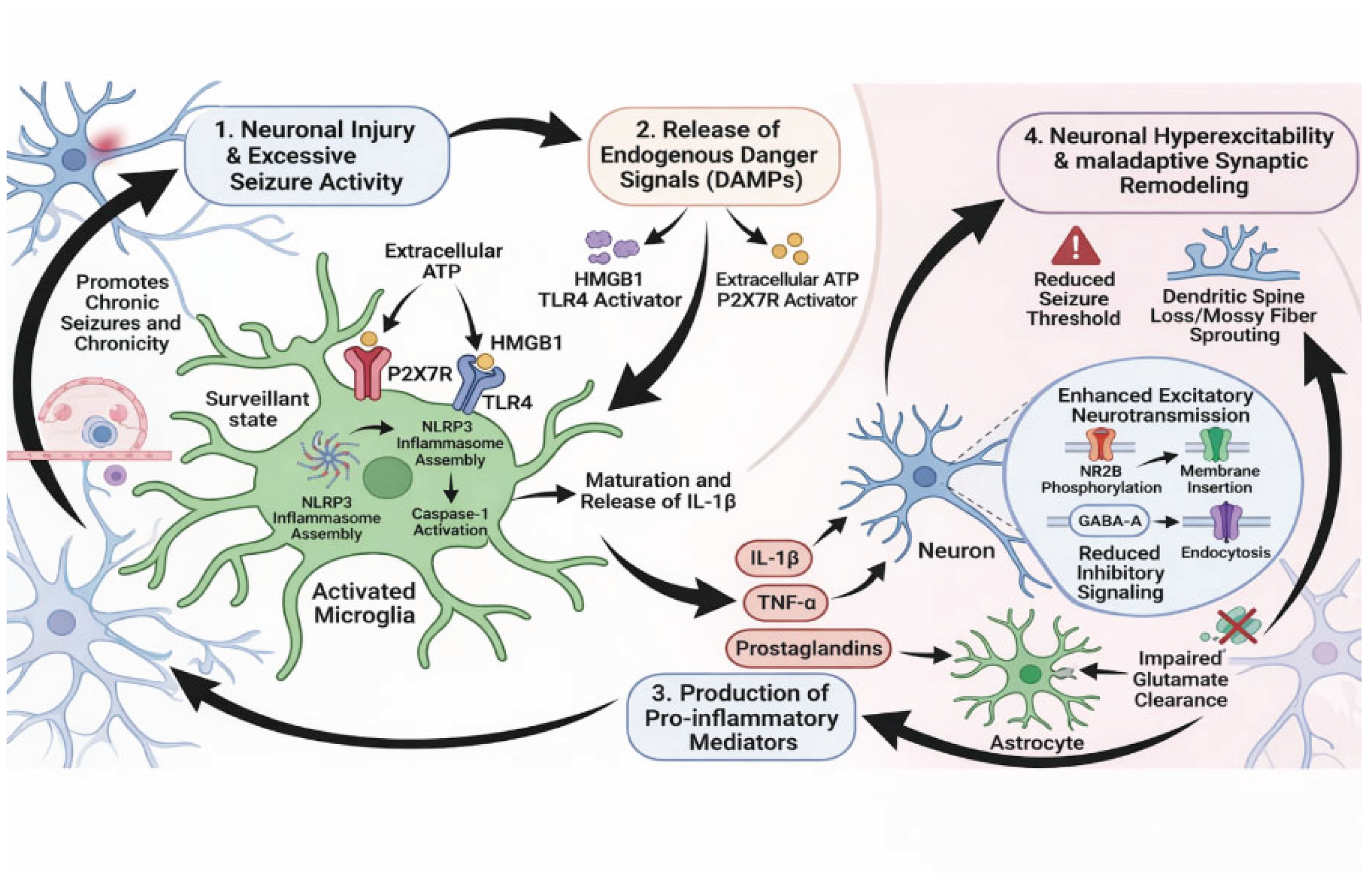
Figure 2.
Cell-Specific AAV Gene Therapy for Microglial Activation in Drug Resistant Epilepsy.
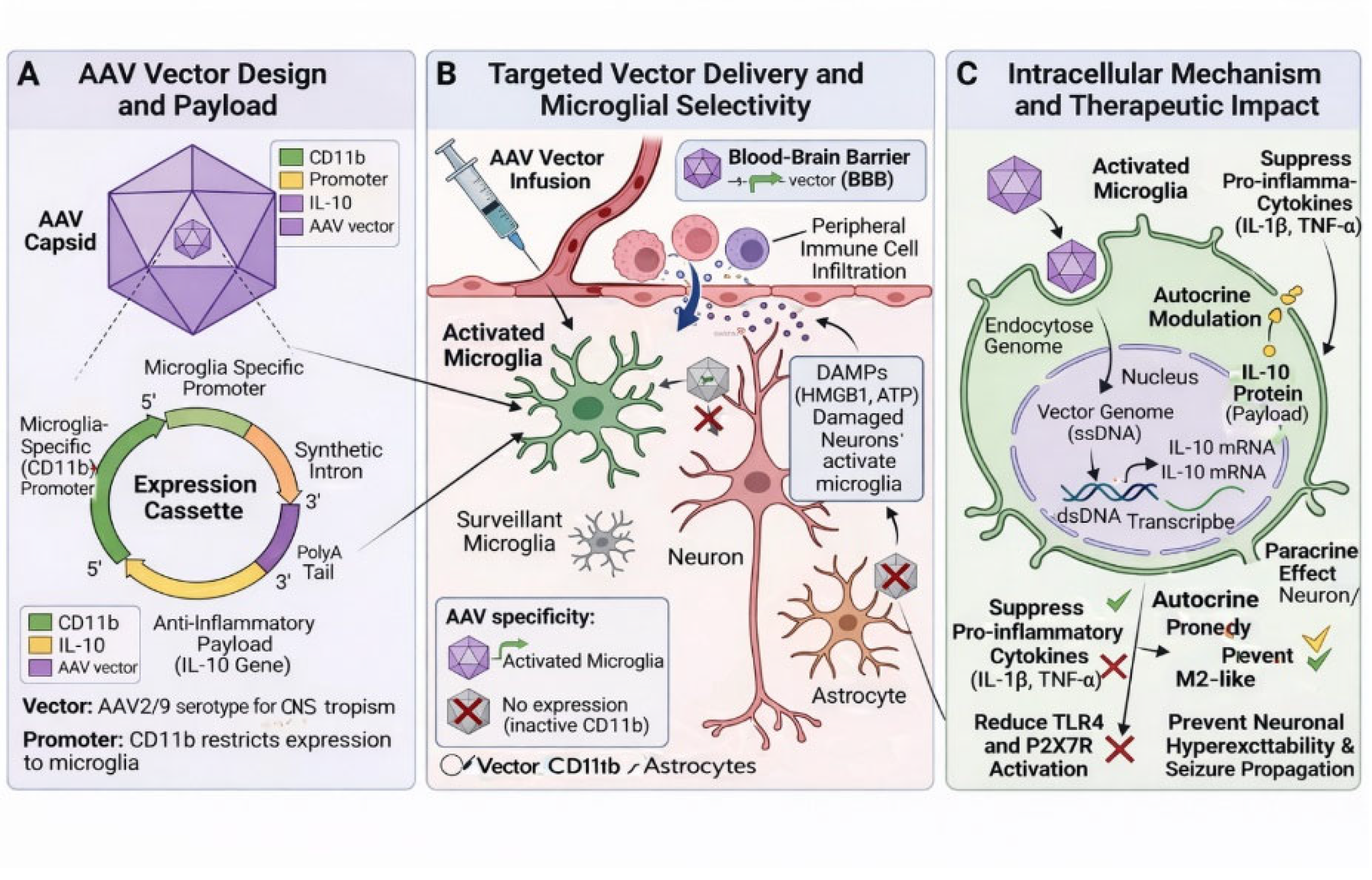
Figure 3.
Mechanism of MSC-Based Immunomodulation in Epilepsy.
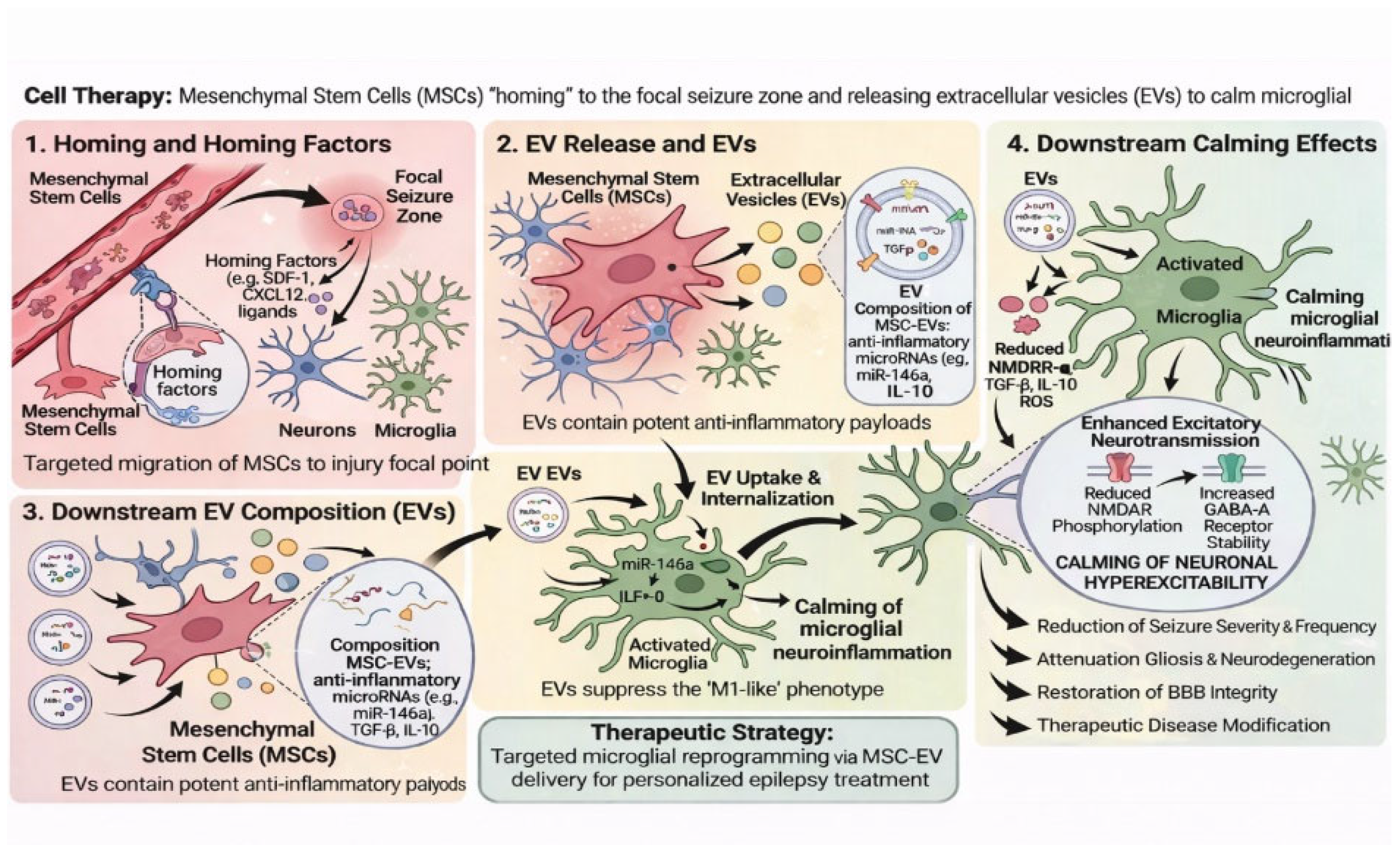

Table 1.
Key Microglia Mediated Epileptogenic Pathways.
| Pathway | Primary Mediators | Effects on Neuronal Network | Impact on Drug Resistance |
|
Pattern Recognition |
HMGB1, TLR4 | Enhances phosphorylation of NMDA receptors; increases calcium channel permeability; disrupts BBB integrity. | Upregulates P-glycoprotein (Pgp) efflux transporters that pumps AEDs out of brain. |
| Purinergic Signaling | ATP, P2X7 Receptor | Triggers NLRP3 inflammasome; releases glutamate. | Sustains a pro-inflammatory microenvironment. |
| Cytokine Signaling | IL-1β, TNF-α, IL-6 | Enhances NMDA current; internalizes GABA-A receptors. | Alters drug target sensitivity; promotes chronic gliosis. |
Table 2.
Emerging Microglia-Targeted Interventions in DRE.
| Strategy | Example Agents | Mechanism of Action | Clinical Status |
|
Anti-Inflammatory Pharmacotherapy: Cytokine Inhibition Purinergic Antagonism Caspase-1 inhibition HMGB1/TLR4 Axis inhibition Anti-inflammatory antibiotics Broad-spectrum anti-inflammatory agents Immunomodulatory therapies |
Anakinra P2X7R Antagonists like BBG VX-765 Glycyrrhizin (HMGB1 inhibition), TAK-242 (TLR4 inhibition). Minocycline Glucocorticoids Immunoglobulins |
Blocks IL-1R1 signaling Blocks NLRP3 inflammasome assembly Prevents the maturation of IL-1β Prevents microglial activation Modulate neuroinflammation Direct anti-inflammatory effects Attenuates pathogenic immune response |
Clinical use in FIRES/NORSE. Preclinical (High potential). Preclinical (High potential). Preclinical (High potential). Preclinical (High potential). Clinical use in Epileptic spasm/Autoimmune epilepsies. Clinical use in FIRES |
| Microglial Modulation | PPAR-γ agonists; CSF1R inhibitors like PLX3397 | Shifts M1 to M2 phenotype; Microglial depletion. | Preclinical; Pilot human studies. |
| Cannabinoid Therapy | Cannabidiol (CBD) | CB2 engagement; reduces intracellular calcium | FDA-approved for specific syndromes like Dravet. |
| Regenerative Medicine | MSCs, iPSCs | Paracrine release of IL-10 and TGF-β. | Early-phase clinical trials. |
| Gene therapy | Viral vectors | Promotes a neuroprotective microenvironment | Early-phase clinical trials. |
Table 3.
Comparing the Therapeutic Agents Targeting Microglia.
| Agent | Molecular Target | Primary Mechanism | Effect on Epileptogenesis | Primary Benefit | Key Limitation |
| Anakinra | IL-1R1 | Blocks IL-1β binding; stops NF-κB/MAPK activation. | Prevents IL-1β induced synaptic changes (NMDAR/ GABA-A). | Potent in acute inflammatory crises (e.g., FIRES). | Short half-life; risk of systemic infections. |
| Minocycline | Multi (iNOS, NF-κB) | Suppresses microglial M1 polarization and ROS. | Attenuates hippocampal neuronal loss and mossy fiber sprouting. | Crosses BBB easily; well-established safety profile. | Primarily effective when given early; limited human data. |
| Cannabidiol | CB2, TRPV1, NLRP3 | Modulates calcium and inhibits adenosine reuptake. |
Pushes microglia toward neuroprotective M2 phenotype. | Dual action: Anticonvulsant + Anti-inflammatory. | Complex drug-drug interactions (CYP450). |
| Glucocorticoids | GC Receptor | Broad genomic/non-genomic immune suppression. | Restores BBB integrity; reduces chronic gliosis. | High efficacy in autoimmune/infantile syndromes. | Serious long-term side effects (metabolic/bone). |
| Celecoxib | COX-2 | Inhibits Prostaglandin E2 (PGE2) synthesis. | Reduces prostaglandin-mediated hyperexcitability. | Synergistic effect when used as an adjunct. | Limited clinical evidence for primary epilepsy control. |
| JNJ-47965567 | P2X7 Receptor | Prevents ATP-driven NLRP3 inflammasome assembly. | Long-lasting reduction in spontaneous seizure frequency. | Targets a very upstream “sensor” of seizure stress. | Mostly preclinical; potential for off-target CNS effects. |
| Glycyrrhizin | HMGB1 | Binds HMGB1 to prevent TLR4 receptor interaction. | Blocks the initial trigger of the inflammatory cascade. | Low toxicity; targets a validated human biomarker. | Potential mineralocorticoid-like side effects (hypertension). |
| PLX5622 | CSF1R | Depletes microglial population by blocking survival signals. | Disrupts the feedback loop between glia and neurons. | Powerful research tool for total inflammatory “reset.” | Complete depletion may impair cognitive/homeostatic repair. |
Disclaimer/Publisher’s Note: The statements, opinions and data contained in all publications are solely those of the individual author(s) and contributor(s) and not of MDPI and/or the editor(s). MDPI and/or the editor(s) disclaim responsibility for any injury to people or property resulting from any ideas, methods, instructions or products referred to in the content. |
© 2026 by the authors. Licensee MDPI, Basel, Switzerland. This article is an open access article distributed under the terms and conditions of the Creative Commons Attribution (CC BY) license (http://creativecommons.org/licenses/by/4.0/).
Copyright: This open access article is published under a Creative Commons CC BY 4.0 license, which permit the free download, distribution, and reuse, provided that the author and preprint are cited in any reuse.


