

Submitted:
31 March 2026
Posted:
01 April 2026
You are already at the latest version
Abstract
Background: Clinical target volume (CTV) delineation in glioblastoma remains debated, particularly in the era of modern chemoradiation and image-guided radiotherapy. Whether reduced CTV margins can preserve oncological outcomes without increasing marginal or out-of-field failures remains uncertain. We evaluated the association of GTV-to-CTV margin with survival, patterns of failure, and its interaction with MGMT promoter methylation status.
Materials and Methods: We retrospectively analyzed a single-center cohort of patients with glioblastoma treated with conventionally fractionated chemoradiation (58–60 Gy in 29–33 fractions). Patients were categorized into two predefined margin groups: < 1.5 cm and equal to 1.5 cm. The primary endpoint was overall survival (OS); secondary endpoints included progression-free survival (PFS) and patterns of failure. Survival was assessed using Kaplan–Meier estimates and Cox regression, including an interaction term with MGMT status.
Results: Among 102 eligible patients, 95 were included in the margin-based OS analysis. Reduced margins (< 1.5 cm) were not associated with worse OS, either overall or within MGMT subgroups. No significant differences were observed in PFS or patterns of failure, with overlapping recurrence distributions and no increase in marginal or out-of-field recurrences. MGMT methylation and gross total resection were independently associated with improved survival, while no interaction between margin and MGMT status was detected.
Conclusions: Reduction of the GTV-to-CTV margin to ≤1.2 cm was not associated with worse survival or unfavorable recurrence patterns, consistently across MGMT subgroups. These findings support the oncological adequacy of margins of approximately 15 mm and provide a rationale for exploring further margin reduction, potentially independent of MGMT status. Prospective validation is warranted.
Keywords:
glioblastoma
; radiotherapy
; clinical target volume
; margin reduction
; target margins
; recurrence patterns
; MGMT promoter methylation
; precision radiotherapy
Introduction
Glioblastoma is the most aggressive primary malignant brain tumor in adults and remains associated with poor prognosis despite multimodal treatment [1]. The current standard of care for newly diagnosed disease consists of maximal safe resection followed by conventionally fractionated radiotherapy with concomitant and adjuvant temozolomide [1]. Although this regimen has remained the therapeutic backbone for nearly two decades, disease progression is common and most patients ultimately relapse [1,3]. MGMT promoter methylation has emerged as one of the most clinically relevant biomarkers in glioblastoma because of both its favorable prognostic value and its association with greater benefit from temozolomide-based therapy [2].
Target volume delineation remains one of the major unresolved issues in glioblastoma radiotherapy. Historically, larger clinical target volume (CTV) margins were intended to account for the infiltrative nature of glioblastoma and for microscopic tumor extension beyond the contrast-enhancing lesion [3]. However, larger CTV expansions inevitably increase the volume of irradiated normal brain and may raise the risk of treatment-related toxicity, including neurocognitive impairment [3,7]. Reflecting the need to balance oncological coverage with normal-tissue sparing, the recent ESTRO-EANO guideline supports a contemporary single-CTV approach based on postoperative contrast-enhanced T1 abnormalities with an isotropic margin of approximately 15 mm, without routine cone-down, together with limited planning target volume margins when image guidance is available [3].
Several retrospective series evaluating limited-margin strategies have reported that most glioblastoma recurrences remain central or in-field, whereas marginal and distant failures are comparatively uncommon [4,5,6,7]. In this context, reduced-margin approaches have not been associated with an increased risk of marginal or distant failure when modern radiotherapy techniques are employed [4,5,6,7]. These findings suggest that current target margins may already be sufficient to encompass clinically relevant microscopic disease extension, raising the question of whether further margin reduction could be feasible without compromising oncological outcomes.
Despite these observations, uncertainty persists regarding the clinical implications of reduced-margin irradiation in routine practice. In particular, it remains unclear whether margin adequacy is influenced by tumor biology [8], particularly MGMT promoter methylation status [9], or whether it is primarily determined by spatial patterns of tumor recurrence. Few real-world studies have jointly assessed survival outcomes, patterns of failure, and the potential modifying role of MGMT in the context of margin reduction strategies [7,8]. Addressing this question is clinically relevant, as a reduced-margin approach is meaningful only if it does not compromise survival or shift recurrence patterns outside the high-dose region.
In the present study, we retrospectively analyzed a single-center cohort of patients with glioblastoma treated with chemoradiation to investigate the association of reduced GTV-to-CTV margins with overall survival, progression-free survival, and patterns of failure, while exploring its interaction with MGMT promoter methylation status. We hypothesized that reduced margins would not adversely affect outcomes or recurrence patterns and that their adequacy might be independent of MGMT status, supporting the rationale for further margin optimization in contemporary radiotherapy.
2. Materials and Methods
2.1. Study Design and Ethics
We conducted a retrospective single-center observational study based on an institutional database of patients with glioblastoma treated with radiotherapy at our institution. The study was designed to assess the association of GTV-to-CTV margin with survival outcomes and patterns of failure in patients undergoing chemoradiation. Particular emphasis was placed on evaluating the consistency between survival endpoints and spatial recurrence patterns. All data were retrospectively retrieved from routinely maintained institutional clinical, radiological, and treatment records. The study was conducted in accordance with the Declaration of Helsinki and was approved by the local Ethics Committee of Azienda Ospedaliera Universitaria Senese, Area Vasta Sud-Est (protocol code: GLIOMARKERSOBS_2025-1; approval date: 6 May 2025).
2.2. Patient Selection
Patients were eligible if they had a diagnosis of glioblastoma and were treated with radiotherapy at our institution. For the primary analysis, we predefined a cohort of patients treated with conventionally fractionated chemoradiation to a total dose of 58-60 Gy delivered in 29-33 fractions, beetwen 1 January 2022 and 31 August 2025. To be included in the primary cohort, patients were required to have available data on radiotherapy start date, total prescribed dose, number of fractions, GTV-to-CTV margin, and overall survival. Patients treated with clearly palliative or markedly hypofractionated regimens outside the predefined dose/fractionation range were excluded from the primary cohort. For the primary exposure analysis, patients were categorized into two prespecified GTV-to-CTV margin groups reflecting the two most clinically distinct approaches represented in our institutional practice: < 1.5 cm and = 1.5 cm. This approach was intended to enable a clearer assessment of whether distinct margin strategies were associated with differences in survival or spatial recurrence behavior. For multivariable analyses, a complete-case approach was used for the selected covariates. For progression-free survival and pattern-of-failure analyses, only patients with available and classifiable data for the respective endpoints were included.
2.3. Treatment and Target Delineation
All patients underwent multidisciplinary evaluation before treatment. Surgical management consisted of biopsy, subtotal resection, or gross total resection, according to neurosurgical judgment and postoperative imaging assessment. After surgery, patients received conventionally fractionated external beam radiotherapy with concurrent temozolomide according to institutional practice and contemporary standard management of glioblastoma [1].
Radiotherapy was delivered using external beam image-guided techniques (VMAT with daily IGRT) according to institutional protocols. Treatment planning was based on postoperative planning CT, co-registered with postoperative brain MRI for target delineation. The gross tumor volume (GTV) was defined based on postoperative T1 contrast-enhancing residual tumor and/or the resection cavity. The clinical target volume (CTV) was generated by isotropic expansion of the GTV, with anatomical editing when required to respect natural barriers to tumor spread.
According to contemporary ESTRO–EANO recommendations, a CTV margin of approximately 15 mm is considered a standard approach [3]. However, in routine clinical practice at our institution, margin selection was individualized and, in selected cases, reduced margins (<1.5 cm) were adopted. Within the reduced-margin group, applied margins ranged from 1.0 to 1.4 cm, reflecting clinician-driven adaptation based on anatomical considerations and treatment planning objectives. No margins below 1 cm were applied. This pragmatic approach was driven by the increasing use of high-quality image guidance, improved MRI co-registration, and the clinical aim of limiting unnecessary irradiation of uninvolved brain tissue, particularly in eloquent or functionally critical regions. As such, the applied margins reflect real-world decision-making rather than a protocol-driven contouring strategy, allowing comparison between reduced and conventional margin approaches within a contemporary treatment framework. A planning target volume (PTV) margin of 3 mm was then added according to immobilization and image-guidance practice. Patients were treated with conventionally fractionated schedules of 58–60 Gy in 29–33 fractions, with concurrent temozolomide administered according to standard practice [1,2].
The key exposure variable of the present study was the recorded GTV-to-CTV margin, expressed in centimeters. For the primary comparison, this variable was prespecified as a binary exposure (<1.5 cm vs =1.5 cm), enabling the evaluation of clinically meaningful differences between reduced and guideline-based margin strategies.
2.4. Molecular and Clinical Variables
Clinical and molecular variables were retrieved from institutional medical, radiological, surgical, and radiotherapy records. Baseline variables included age at diagnosis, sex, Karnofsky Performance Status (KPS), extent of resection, focality, and selected treatment-related variables. Extent of resection was categorized as biopsy, subtotal resection, or gross total resection according to neurosurgical documentation and postoperative radiological assessment. MGMT promoter methylation status was recorded as methylated or unmethylated according to institutional pathology reports and was included both as an independent biomarker and as a potential effect modifier in interaction analyses. The interaction analysis was specifically intended to explore whether the effect of margin strategy differed according to tumor molecular profile. Covariates included in multivariable analyses were selected a priori based on clinical relevance and data availability.
2.5. Endpoints
The primary endpoint was overall survival (OS), defined as the time from histological diagnosis to death from any cause. Patients alive at the time of last follow-up were censored at the date of last clinical contact.
Secondary endpoints were progression-free survival (PFS) and pattern of failure. PFS was defined as the time from histological diagnosis to radiological progression or death, whichever occurred first. Progression status was retrospectively determined from institutional follow-up imaging records and clinical documentation generated during routine neuro-oncological care, with reference to contemporary Response Assessment in Neuro-Oncology (RANO) principles when applicable [10,11]. Patients without sufficiently reliable information to determine progression status were excluded from PFS-specific analyses.
Follow-up consisted of regular clinical and neuroradiological assessments according to institutional practice. Brain MRI was typically performed approximately 4-6 weeks after radiotherapy and then at regular intervals thereafter, unless earlier imaging was clinically indicated. The joint evaluation of survival outcomes and spatial recurrence patterns was considered essential to assess the oncological adequacy of different margin strategies.
2.6. Pattern of Failure Assessment
Pattern-of-failure analysis was performed in the subset of patients with available and classifiable data on first recurrence. Recurrences were retrospectively categorized according to their spatial relationship with the high-dose irradiated volume, using a classification framework commonly adopted in glioblastoma recurrence studies and consistent with the previously published institutional series [7,8,9]. Specifically, recurrences were classified as in-field when at least 80% of the recurrent tumor volume was located within the 95% isodose, as marginal when 20-80% of the recurrent tumor volume was located within the 95% isodose, and as out-of-field when less than 20% of the recurrent tumor volume was located within the 95% isodose. Recurrence classification was performed by retrospective review of imaging and treatment data by the study investigators. Whenever sufficient imaging and treatment data were available, recurrence classification was made by assessing the spatial relationship between the first documented recurrence and the original high-dose treatment volume. Cases lacking sufficient radiological or treatment information for reliable spatial classification were excluded from this endpoint analysis. For exploratory purposes, recurrence patterns were also dichotomized into in-field versus non-in-field recurrences, with the latter category including both marginal and out-of-field failures. This approach was intended to provide a clinically intuitive assessment of whether reduced margins were associated with a shift of recurrence outside the high-dose region.
2.7. Statistical Analysis
Baseline characteristics were summarized descriptively and compared between the two prespecified GTV-to-CTV margin groups (< 1.5 cm vs. =1.5 cm). Continuous variables were reported as mean and standard deviation or median and interquartile range, as appropriate, and were compared using Student’s t-test or the Mann-Whitney U test according to distributional assumptions. Categorical variables were summarized as counts and percentages and were compared using the chi-square test or Fisher’s exact test, as appropriate.
Overall survival (OS) and progression-free survival (PFS) were estimated using the Kaplan-Meier method and compared between groups using the log-rank test. Survival analyses were first performed in the overall cohort and then stratified according to MGMT promoter methylation status.
Multivariable analysis for OS was performed using a Cox proportional hazards regression model. The model included GTV-to-CTV margin group, MGMT promoter methylation status, their interaction term, age, baseline Karnofsky Performance Status (KPS), and extent of resection. These covariates were selected a priori on the basis of established clinical relevance and data availability. The interaction between margin group and MGMT status was analyzed to explore potential effect modification; however, this analysis was considered exploratory and hypothesis-generating. Because concurrent temozolomide was administered in nearly all evaluable patients, this variable showed insufficient variability to provide meaningful information in the final multivariable model and was therefore not retained. Hazard ratios (HRs) with 95% confidence intervals (CIs) were reported. A complete-case approach was used for multivariable analysis. Proportional hazards assumptions were assessed using Schoenfeld residuals.
For recurrence-pattern analyses, Fisher’s exact test was used to compare the distribution of the three recurrence categories between margin groups, given the limited number of marginal and out-of-field events. Fisher’s exact test was also used for the binary comparison between in-field and non-in-field recurrences.
Given the observational design, emphasis was placed on the consistency of findings across multiple endpoints rather than on any single statistical comparison.
All tests were two-sided, and a p-value < 0.05 was considered statistically significant. Statistical analyses were performed in R version 4.5.2 (R Foundation for Statistical Computing, Vienna, Austria). Survival analyses and graphical outputs were generated using standard R packages.
3. Results
3.1. Patient Selection and Baseline Characteristics
A total of 119 patients were identified in the institutional database. Of these, 102 met the predefined criteria for the primary cohort .For the complete-case multivariable Cox analysis, 93 patients were evaluable, with 69 death events observed. The derivation of the analytic cohorts is summarized in Figure 1.
After exclusion of patients with uncomplete data, 95 patients were included in the primary margin-based OS analysis, including 39 treated with a GTV-to-CTV margin <1.5 cm and 56 treated with a margin = 1.5 cm (Baseline characteristics of the complete-case multivariable cohort are summarized in Table 1).
No statistically significant between-group differences were observed in the variables reported. Mean age was 59.2 years in the <1.5 cm group and 62.1 years in the = 1.5 cm group. The proportions of MGMT-methylated tumors were similar across groups, as was the distribution of biopsy, subtotal resection, and gross total resection.
3.2. Overall Survival and Progression-Free-Survival According to CTV Margin
In unadjusted survival analyses, no statistically significant difference in overall survival (OS) was observed between patients treated with a GTV-to-CTV margin <1.5 cm and those treated with a margin =1.5 cm (log-rank p = 0.944; Figure 2).
When the analysis was stratified by MGMT promoter methylation status, no statistically significant difference in OS was observed within either subgroup (MGMT-methylated: log-rank p = 0.926; MGMT-unmethylated: log-rank p = 0.752; Figure 3). Overall, these unadjusted findings did not suggest inferior OS among patients treated with the reduced-margin approach, either in the full cohort or within MGMT-defined subgroups.
Progression-free survival (PFS) was evaluable in 91 patients after exclusion of cases with uncertain progression status. Of these, 39 patients belonged to the GTV-to-CTV margin <1.5 cm group and 52 to the = 1.5 cm group. In unadjusted Kaplan-Meier analysis, no statistically significant difference in PFS was observed between the two margin groups (log-rank p = 0.48; Figure 4).
When the analysis was stratified by MGMT promoter methylation status, no statistically significant difference in PFS was observed in either subgroup (MGMT-methylated: log-rank p = 0.54; MGMT-unmethylated: log-rank p = 0.45; Figure 5). Overall, these unadjusted findings did not suggest inferior PFS among patients treated with the reduced-margin approach, either in the full cohort or within MGMT-defined subgroups.
3.3. Multivariable Analysis
A multivariable Cox proportional hazards model was used to explore whether the association between margin strategy and overall survival (OS) was influenced by MGMT status and major clinical covariates. In this analysis, MGMT promoter methylation was independently associated with improved overall survival (HR 0.23, 95% CI 0.10-0.50; p < 0.001), and gross total resection was also associated with improved survival compared with biopsy (HR 0.30, 95% CI 0.15-0.60; p < 0.001). Baseline KPS was not statistically significant, although higher values were associated with a lower estimated hazard (HR 0.97 per point increase, 95% CI 0.94-1.00; p = 0.051), whereas age was not significantly associated with outcome. Within the MGMT-unmethylated reference group, the model estimated lower hazard for patients treated with a GTV-to-CTV margin =1.5 cm than for those treated with a margin < 1.5 cm (HR 0.45, 95% CI 0.21-0.97; p = 0.043). In contrast, the derived hazard ratio for the same margin comparison in MGMT-methylated tumors was 0.94 (95% CI 0.45-1.99; p = 0.879). However, the interaction between margin group and MGMT promoter methylation was not statistically significant (p = 0.168), and these subgroup-specific estimates should therefore be interpreted with caution. The proportional hazards assumption was not violated, as assessed by Schoenfeld residuals (global test p = 0.284). No significant departures from proportionality were detected for margin group (p = 0.311) or MGMT status (p = 0.452). The results of the multivariable Cox model are summarized in Table 2 and graphically displayed in Figure 6.
3.4. Pattern of Failure Analysis
Pattern-of-failure analysis was available in 68 patients, including 30 in the GTV-to-CTV margin <1.5 cm group and 38 in the = 1.5 cm group. Overall, 52 recurrences were classified as in-field, 7 as marginal, and 9 as out-of-field. The distribution of recurrence patterns did not differ significantly between margin groups (Fisher’s exact test p = 0.913; Figure 7). When recurrence patterns were dichotomized as in-field versus non-in-field, no statistically significant between-group difference was observed (24 vs. 6 in the <1.5 cm group and 28 vs. 10 in the = 1.5 cm group, respectively; Fisher’s exact test p = 0.579). Overall, these analyses did not provide evidence of an increased frequency of recurrences outside the expected high-dose region in the reduced-margin group.
Exploratory analyses stratified by MGMT promoter methylation status were performed in the subset of patients with available molecular data and classifiable recurrence patterns (n = 68; 32 MGMT-methylated and 36 MGMT-unmethylated). Within the MGMT-methylated subgroup, the distribution of recurrence patterns was similar between margin groups (<1.5 cm: 11 in-field, 2 marginal, 3 out-of-field; = 1.5 cm: 12 in-field, 0 marginal, 4 out-of-field; Fisher’s exact test p = 0.525). Likewise, in the MGMT-unmethylated subgroup, no statistically significant difference in recurrence distribution was observed (<1.5 cm: 13 in-field, 1 marginal, 0 out-of-field; = 1.5 cm: 16 in-field, 4 marginal, 2 out-of-field; p = 0.348)(Figure 8) .
Consistent findings were obtained in the binary analysis (in-field vs non-in-field). No significant differences were detected between margin groups in either the MGMT-methylated (p = 1.000) or MGMT-unmethylated subgroup (p = 0.209), although estimates were imprecise due to the limited number of non-in-field events.
Overall, these exploratory subgroup analyses did not identify any signal suggesting an increased risk of marginal or out-of-field recurrence associated with reduced margins, regardless of MGMT promoter methylation status. Across both molecular subgroups, the majority of recurrences remained in-field, with largely overlapping distributions between margin strategies.
4. Discussion
The present study evaluated the association between GTV-to-CTV margin strategy and clinical outcomes in a retrospective single-center cohort of patients with glioblastoma treated with chemoradiation. Across all analyses, reduced GTV-to-CTV margins (<1.5 cm) were not associated with worse overall survival or progression-free survival, nor with an increased proportion of marginal or out-of-field recurrences. Importantly, these findings were consistent across MGMT-defined subgroups, and no significant interaction between margin strategy and MGMT status was observed.
Notably, within the reduced-margin group, applied margins ranged from 1.0 to 1.4 cm. The absence of adverse signals across this range suggests that the observed findings extend below the conventional 15 mm threshold currently recommended by guidelines.
Taken together, these results provide internally consistent evidence that margin reduction does not appear to adversely influence either survival outcomes or spatial patterns of recurrence. In particular, both margin groups showed largely overlapping recurrence distributions, with the vast majority of failures occurring within the high-dose region. This observation supports the concept that glioblastoma recurrence is predominantly driven by intrinsic local disease behavior rather than by insufficient geometric coverage of subclinical spread.
These findings are consistent with prior reports demonstrating that limited-margin strategies do not increase marginal or distant failures when modern radiotherapy techniques are used [4,5,6,7,11]. McDonald et al. and Paulsson et al. reported no excess of marginal recurrences with reduced margins, while Gebhardt et al. similarly observed a low rate of out-of-field failures [4,5,6]. More recently, Minniti et al. suggested that margin reduction may preserve recurrence patterns while reducing unnecessary irradiation of normal brain tissue [7]. In this context, the present results extend previous observations by jointly evaluating survival and spatial recurrence endpoints, reinforcing the biological plausibility of reduced-margin approaches in the contemporary treatment setting.
From a conceptual perspective, our findings suggest that the adequacy of target margins in glioblastoma radiotherapy may be primarily determined by spatial recurrence behavior rather than by tumor molecular characteristics. The absence of a significant interaction with MGMT status supports the hypothesis that margin definition is relatively independent of tumor chemosensitivity and instead reflects the intrinsic pattern of local tumor infiltration. This interpretation is further supported by the consistency observed across survival and recurrence-pattern analyses.
Clinically, these results support the oncological adequacy of margins in the range of approximately 15 mm, as currently recommended by contemporary guidelines [3]. At the same time, the absence of any signal of increased marginal or distant failure in the reduced-margin group—despite margins extending down to 1 cm—suggests that further margin reduction below this threshold may be feasible in selected clinical contexts. This is particularly relevant in the era of modern image-guided radiotherapy, where minimizing irradiation of uninvolved brain tissue may translate into meaningful reductions in neurocognitive toxicity and improved quality of life.
The findings of the multivariable analysis should be interpreted with caution. Although a signal favoring larger margins was observed within the MGMT-unmethylated subgroup, the lack of a statistically significant interaction and the limited precision of subgroup estimates suggest that this observation is likely exploratory and may reflect residual confounding, sample variability, or unmeasured clinical factors rather than a true biological effect. Importantly, no consistent signal of harm associated with reduced margins emerged across the different analytical approaches.
Overall, the strength of the present study lies in the coherence of findings across multiple endpoints, including overall survival, progression-free survival, and spatial recurrence patterns. This internal consistency supports the hypothesis that margin reduction does not fundamentally alter the clinical behavior of glioblastoma and provides a rationale for further investigation of reduced-margin strategies in contemporary practice.
5. Limitations
This study has several limitations. First, its retrospective single-center design makes the analysis inherently susceptible to selection bias and residual confounding. Margin assignment was not randomized and may have been influenced by physician preference, treatment era, anatomical considerations, or imaging features not fully captured in the dataset. Although baseline characteristics were comparable between groups, confounding by indication cannot be excluded.
Second, the sample size was relatively limited, particularly for subgroup and interaction analyses, resulting in reduced statistical power and limited precision of effect estimates. This limitation is especially relevant for the MGMT-stratified and pattern-of-failure analyses, where the number of non-in-field events was small.
Third, the exclusion of intermediate margins increased contrast between exposure groups but reduced sample size and may limit generalizability across the full spectrum of real-world clinical practice. In addition, although reduced margins ranged from 1.0 to 1.4 cm, the study was not designed to formally evaluate margin size as a continuous variable, and therefore cannot define an optimal lower threshold.
Fourth, the multivariable analysis was conducted using a complete-case approach, which may have introduced bias if missing data were not randomly distributed.
Fifth, progression-free survival and recurrence-pattern assessments were based on retrospective review of routine clinical and imaging data, without centralized adjudication or blinded neuroradiological review, potentially introducing misclassification. Pattern-of-failure analysis was available only in a subset of patients, which may have further limited sensitivity to detect small differences between groups.
Finally, the study did not include evaluation of neurocognitive outcomes, treatment-related toxicity, or patient-reported quality of life, which represent key potential benefits of margin reduction and should be systematically addressed in future prospective studies.
Despite these limitations, the consistency of findings across survival and spatial recurrence endpoints strengthens the biological plausibility of the observed results.
6. Conclusions
In this retrospective single-center cohort of patients with glioblastoma treated with chemoradiation, reduction of the GTV-to-CTV margin to <1.5 cm (range 1.0–1.4 cm) was not associated with worse survival outcomes or with unfavorable recurrence patterns, and these findings were consistent across MGMT subgroups.
These results support the oncological adequacy of margins in the range of approximately 15 mm in contemporary practice and suggest that further margin reduction below this threshold may be feasible, potentially independent of MGMT status.
Although not designed as a non-inferiority study, the consistency across survival and spatial recurrence analyses supports the biological plausibility of reduced-margin strategies. Prospective studies are warranted to validate these findings, to better define the lower limits of safe margin reduction, and to establish the optimal balance between tumor control and normal tissue sparing in glioblastoma radiotherapy.
Author Contributions
Conceptualization, PT and FD; methodology, FD; formal analysis, RT; data curation, FD; investigation, GM, SC, GBa, AP, GB, GR, PP, TC, MV, MMA, and AC; visualization, RT and FD; writing—original draft preparation, PT and FD; writing—review and editing, GM, SC, GB, AP, GB, GR, PP, TC, MV, MMA, and AC; supervision, PT and GM. All authors have read and agreed to the published version of the manuscript.
Funding
This research received no external funding.
Institutional Review Board Statement
The study was conducted in accordance with the Declaration of Helsinki and approved by the Ethics Committee of Azienda Ospedaliera Universitaria Senese, Area Vasta Sud-Est (protocol code: GLIOMARKERSOBS_2025-1; date of approval: 6 May 2025).
Informed Consent Statement
Informed consent was obtained from all subjects involved in the study.
Data Availability Statement
The data presented in this study are not publicly available due to privacy and institutional restrictions. De-identified data may be available from the corresponding author on reasonable request and subject to approval by the local Ethics Committee and institutional policies.
Conflicts of Interest
The authors declare no conflicts of interest.
References
- Stupp, R.; Mason, W.P.; van den Bent, M.J.; Weller, M.; Fisher, B.; Taphoorn, M.J.B.; Belanger, K.; Brandes, A.A.; Marosi, C.; Bogdahn, U.; et al. Radiotherapy plus concomitant and adjuvant temozolomide for glioblastoma. N. Engl. J. Med. 2005, 352, 987-996. [CrossRef]
- Hegi, M.E.; Diserens, A.-C.; Gorlia, T.; Hamou, M.-F.; de Tribolet, N.; Weller, M.; Kros, J.M.; Hainfellner, J.A.; Mason, W.; Mariani, L.; et al. MGMT gene silencing and benefit from temozolomide in glioblastoma. N. Engl. J. Med. 2005, 352, 997-1003. [CrossRef]
- Niyazi, M.; Andratschke, N.; Bendszus, M.; Chalmers, A.J.; Erridge, S.C.; Galldiks, N.; Lagerwaard, F.J.; Navarria, P.; Munck Af Rosenschöld, P.; Ricardi, U.; et al. ESTRO-EANO guideline on target delineation and radiotherapy details for glioblastoma. Radiother. Oncol. 2023, 184, 109663. [CrossRef]
- McDonald, M.W.; Shu, H.-K.G.; Curran, W.J., Jr.; Crocker, I.R. Pattern of failure after limited margin radiotherapy and temozolomide for glioblastoma. Int. J. Radiat. Oncol. Biol. Phys. 2011, 79, 130-136. [CrossRef]
- Paulsson, A.K.; McMullen, K.P.; Peiffer, A.M.; Hinson, W.H.; Kearns, W.T.; Johnson, A.J.; Lesser, G.J.; Ellis, T.L.; Tatter, S.B.; Debinski, W.; et al. Limited margins using modern radiotherapy techniques does not increase marginal failure rate of glioblastoma. Am. J. Clin. Oncol. 2014, 37, 177-181. [CrossRef]
- Gebhardt, B.J.; Dobelbower, M.C.; Ennis, W.H.; Bag, A.K.; Markert, J.M.; Fiveash, J.B. Patterns of failure for glioblastoma multiforme following limited-margin radiation and concurrent temozolomide. Radiat. Oncol. 2014, 9, 130. [CrossRef]
- Minniti, G.; Tini, P.; Giraffa, M.; Capone, L.; Raza, G.; Russo, I.; Cinelli, E.; Gentile, P.; Bozzao, A.; Paolini, S.; et al. Feasibility of clinical target volume reduction for glioblastoma treated with standard chemoradiation based on patterns of failure analysis. Radiother. Oncol. 2023, 181, 109435. [CrossRef]
- Tini, P.; Donnini, F.; Marampon, F.; Vannini, M.; Carfagno, T.; Pastina, P.; Rubino, G.; Chibbaro, S.; Cerase, A.; Bagnacci, G.; et al. Biomolecular predictors of recurrence patterns and survival in IDH-wild-type glioblastoma: A retrospective analysis of patients treated with radiotherapy and temozolomide. Brain Sci. 2025, 15, 713. [CrossRef]
- Brandes AA, Tosoni A, Franceschi E, Sotti G, Frezza G, Amistà P, Morandi L, Spagnolli F, Ermani M. Recurrence pattern after temozolomide concomitant with and adjuvant to radiotherapy in newly diagnosed patients with glioblastoma: correlation With MGMT promoter methylation status. J Clin Oncol. 2009 Mar 10;27(8):1275-9. [CrossRef]
- Wen, P.Y.; Macdonald, D.R.; Reardon, D.A.; Cloughesy, T.F.; Sorensen, A.G.; Galanis, E.; DeGroot, J.; Wick, W.; Gilbert, M.R.; Lassman, A.B.; et al. Updated response assessment criteria for high-grade gliomas: Response assessment in neuro-oncology working group. J. Clin. Oncol. 2010, 28, 1963-1972. [CrossRef]
- Leao, D.J.; Craig, P.G.; Godoy, L.F.; Leite, C.D.C.; Policeni, B. Response Assessment in Neuro-Oncology criteria for gliomas: Practical approach using conventional and advanced techniques. AJNR Am. J. Neuroradiol. 2020, 41, 10-20. [CrossRef]
Figure 1.
Flowchart of patient selection and derivation of the analytic cohorts, including the primary cohort, margin-based Kaplan–Meier cohort, and complete-case Cox regression cohort.
Figure 1.
Flowchart of patient selection and derivation of the analytic cohorts, including the primary cohort, margin-based Kaplan–Meier cohort, and complete-case Cox regression cohort.
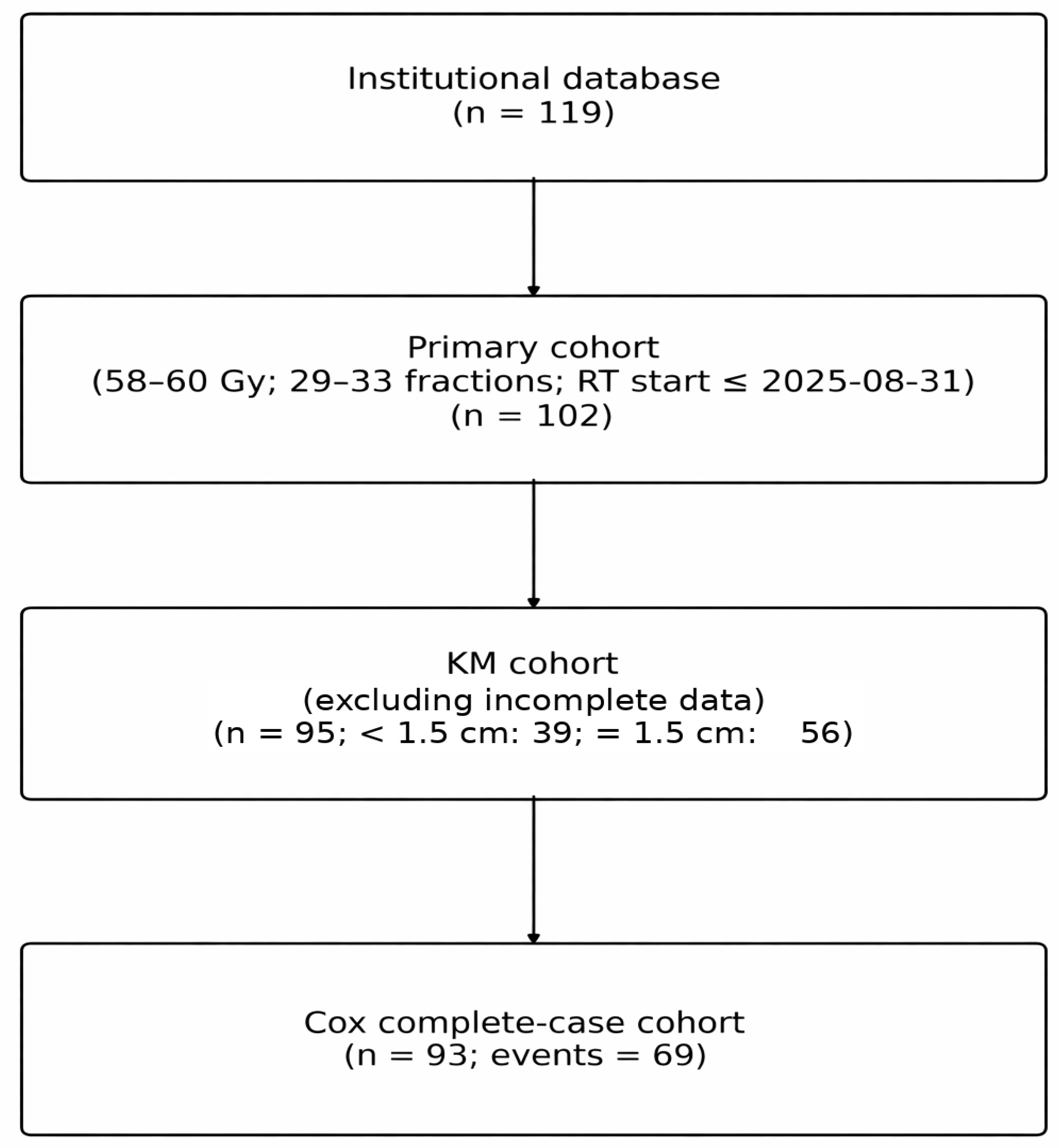
Figure 2.
Kaplan-Meier curves for overall survival according to GTV-to-CTV margin group (≤1.2 cm vs. ≥1.5 cm) in the primary margin-based OS cohort. The p-value was calculated using the log-rank test.
Figure 2.
Kaplan-Meier curves for overall survival according to GTV-to-CTV margin group (≤1.2 cm vs. ≥1.5 cm) in the primary margin-based OS cohort. The p-value was calculated using the log-rank test.
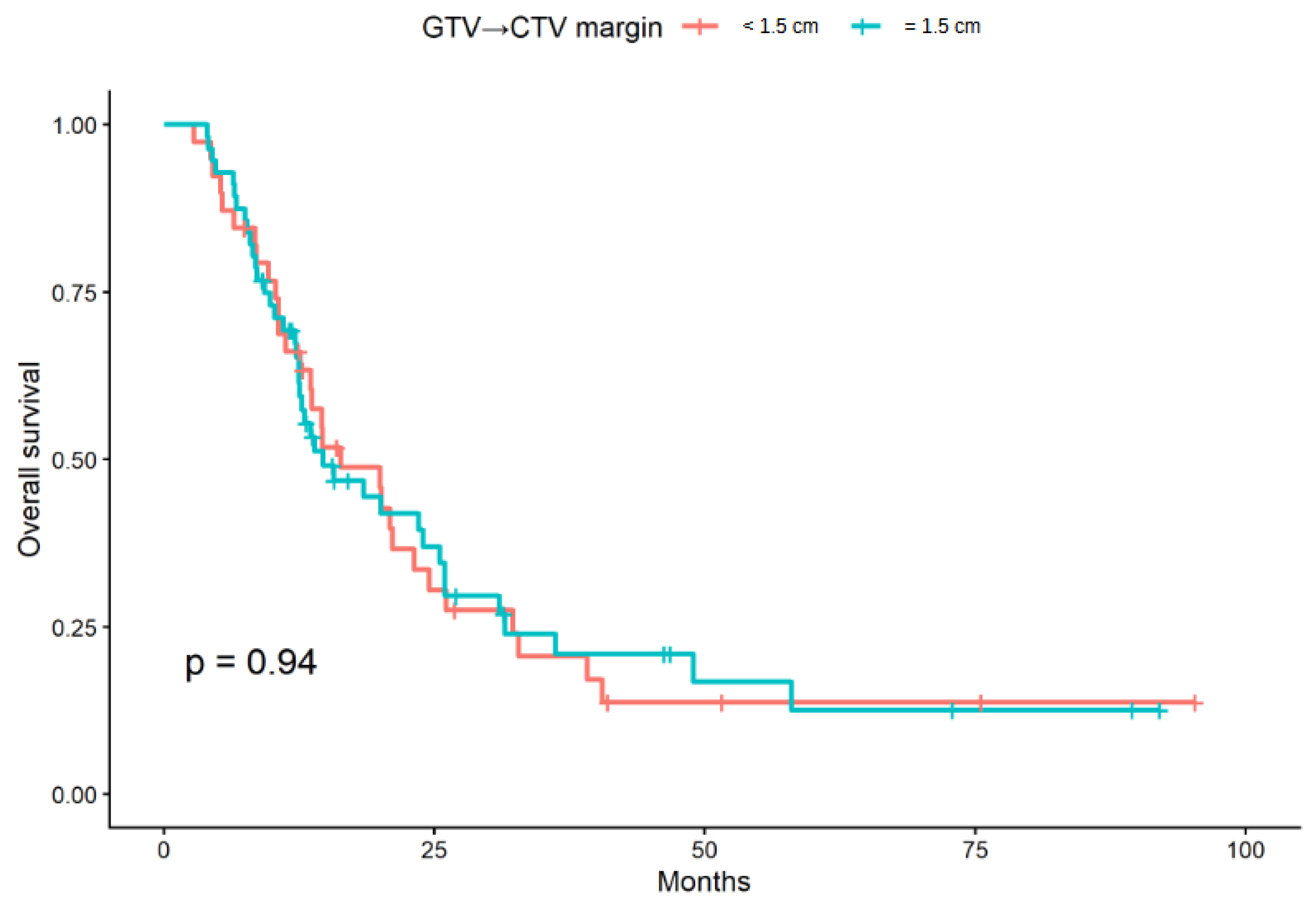
Figure 3.
Kaplan-Meier curves for overall survival according to GTV-to-CTV margin group (≤1.2 cm vs. ≥1.5 cm), shown separately within MGMT-methylated and MGMT-unmethylated subgroups.
Figure 3.
Kaplan-Meier curves for overall survival according to GTV-to-CTV margin group (≤1.2 cm vs. ≥1.5 cm), shown separately within MGMT-methylated and MGMT-unmethylated subgroups.
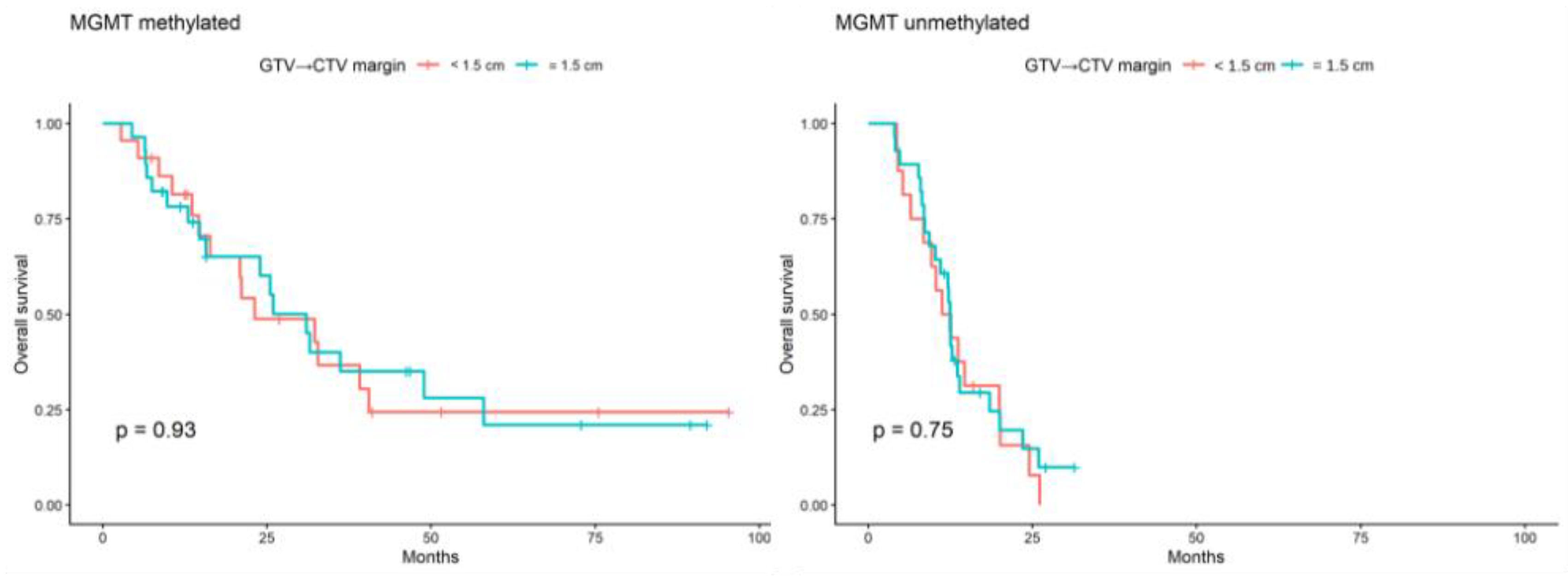
Figure 4.
Kaplan-Meier curves for progression-free survival according to GTV-to-CTV margin group (≤1.2 cm vs. ≥1.5 cm). PFS was calculated from the date of histological diagnosis. The p-value was obtained using the log-rank test.
Figure 4.
Kaplan-Meier curves for progression-free survival according to GTV-to-CTV margin group (≤1.2 cm vs. ≥1.5 cm). PFS was calculated from the date of histological diagnosis. The p-value was obtained using the log-rank test.
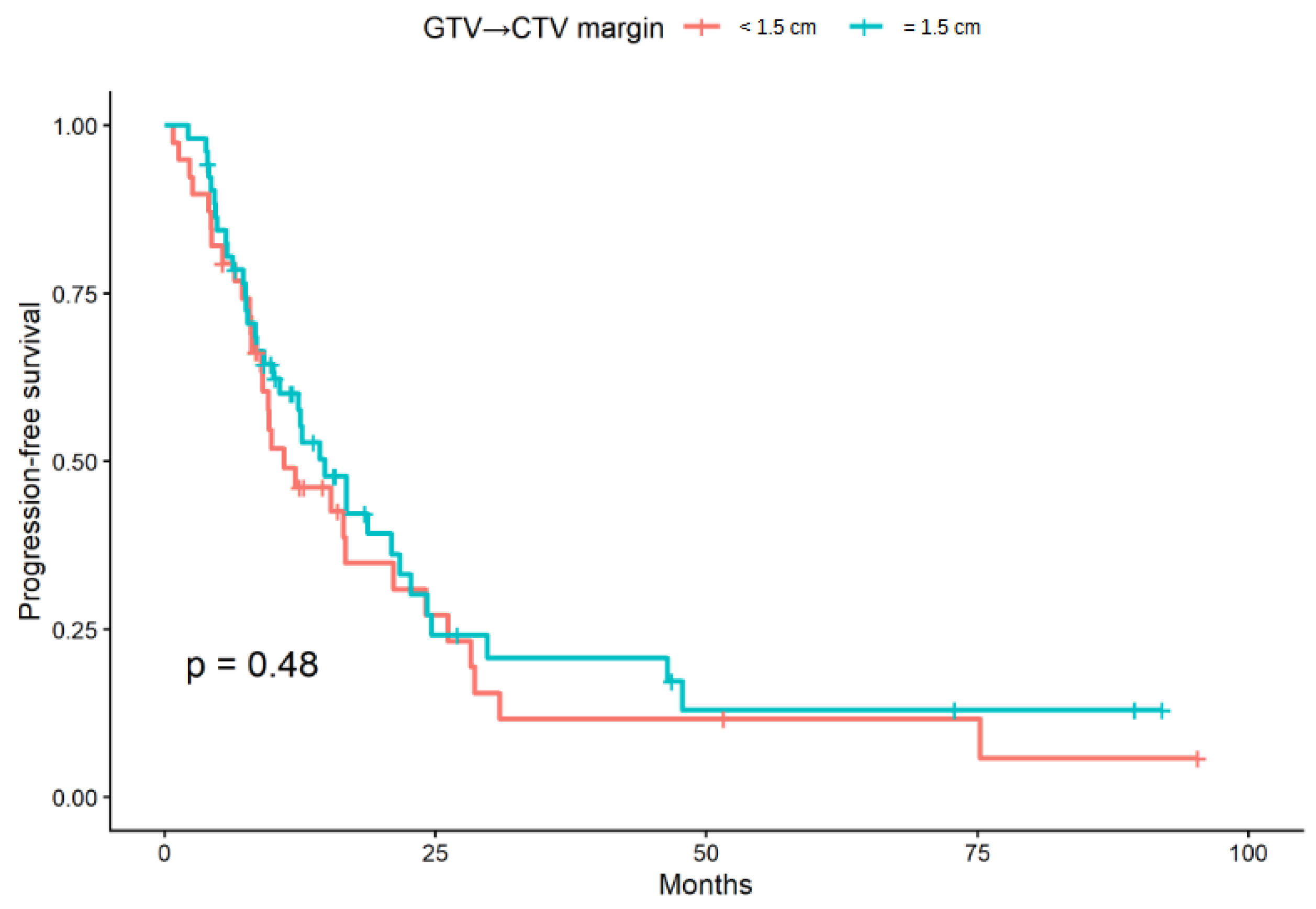
Figure 5.
Kaplan-Meier curves for progression-free survival according to GTV-to-CTV margin group (≤1.2 cm vs. ≥1.5 cm), shown separately within MGMT-methylated and MGMT-unmethylated subgroups.
Figure 5.
Kaplan-Meier curves for progression-free survival according to GTV-to-CTV margin group (≤1.2 cm vs. ≥1.5 cm), shown separately within MGMT-methylated and MGMT-unmethylated subgroups.
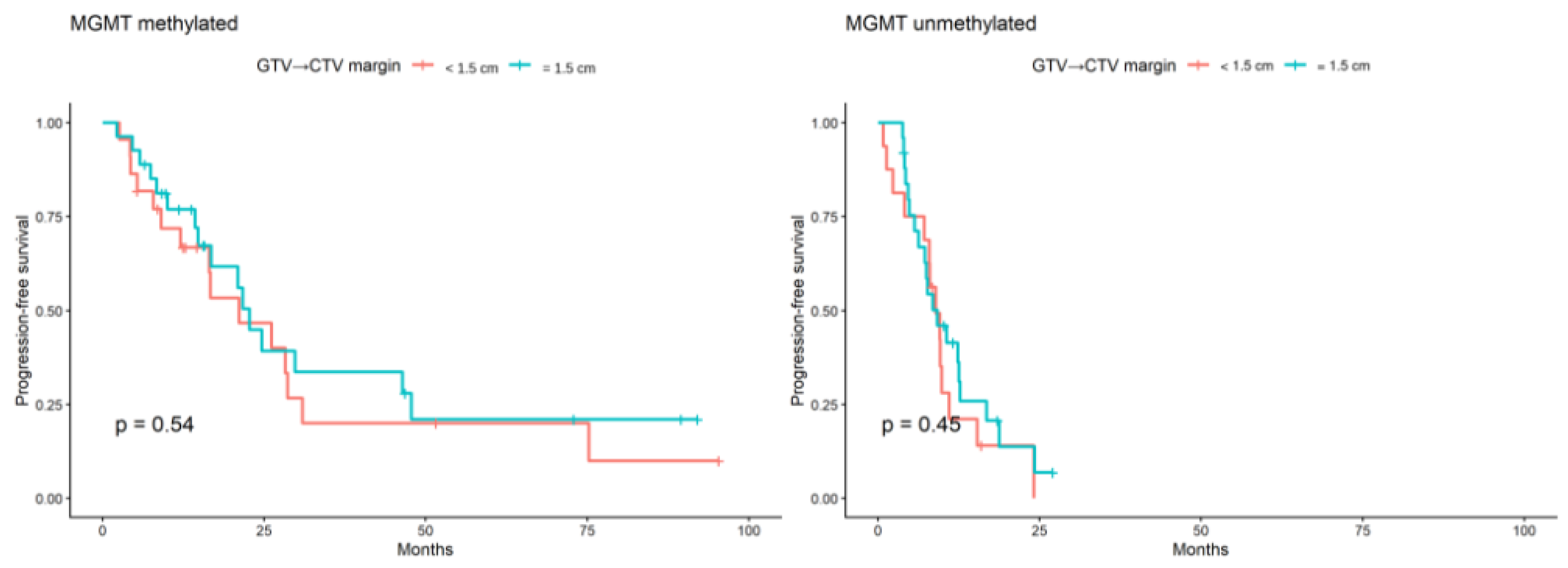
Figure 6.
Forest plot of the multivariable Cox proportional hazards model for overall survival. Forest plot showing hazard ratios and 95% confidence intervals for the covariates included in the complete-case multivariable Cox model. The model included GTV-to-CTV margin group, MGMT promoter methylation status, the interaction between margin group and MGMT status, age, baseline Karnofsky Performance Status, and extent of resection.
Figure 6.
Forest plot of the multivariable Cox proportional hazards model for overall survival. Forest plot showing hazard ratios and 95% confidence intervals for the covariates included in the complete-case multivariable Cox model. The model included GTV-to-CTV margin group, MGMT promoter methylation status, the interaction between margin group and MGMT status, age, baseline Karnofsky Performance Status, and extent of resection.
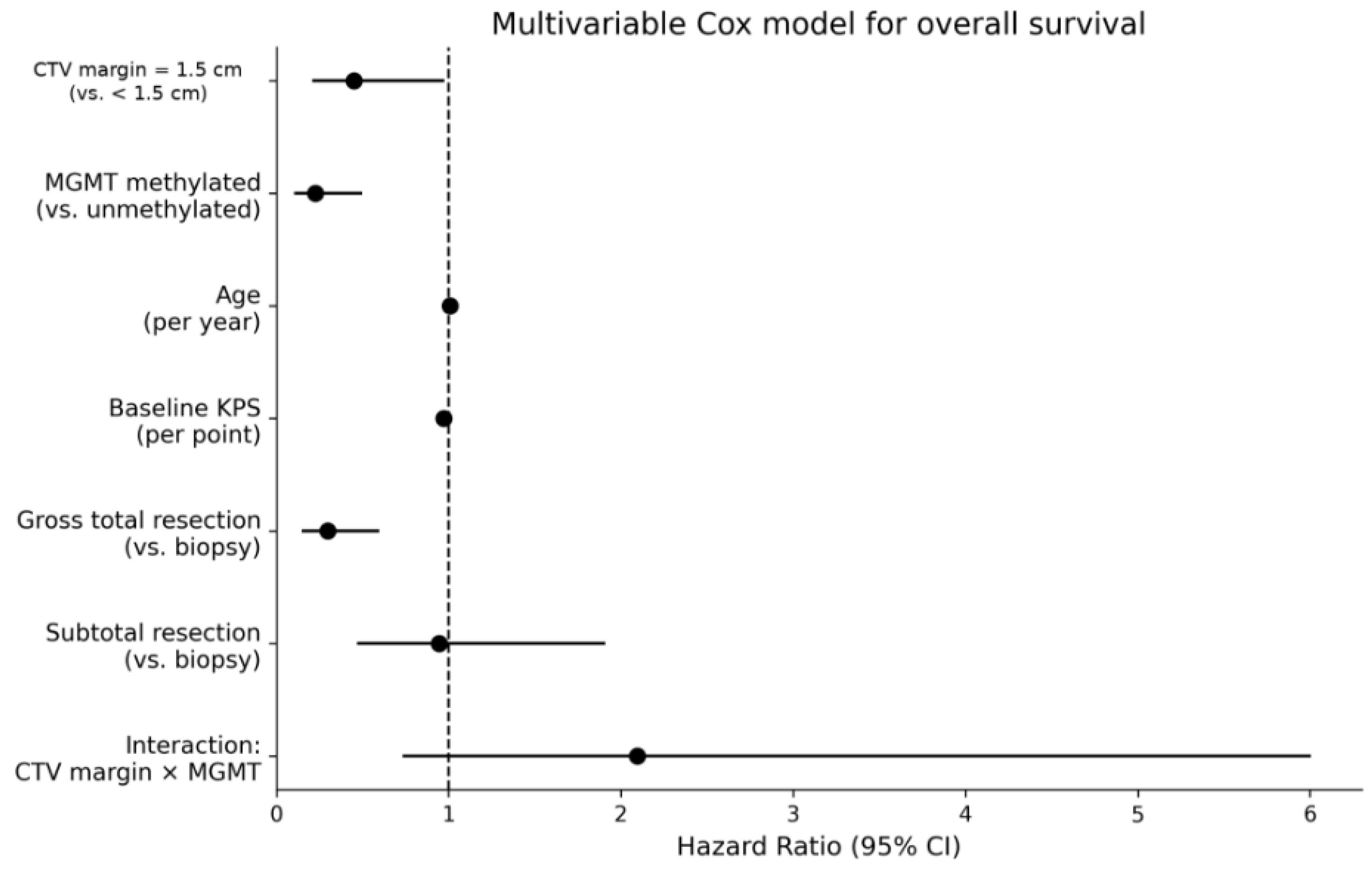
Figure 7.
Distribution of recurrence patterns according to GTV-to-CTV margin group. Stacked bar plot showing the percentage distribution of in-field, marginal, and out-of-field recurrences among patients treated with a GTV-to-CTV margin <1.5 cm versus = 1.5 cm (Fisher’s exact test p = 0.579).
Figure 7.
Distribution of recurrence patterns according to GTV-to-CTV margin group. Stacked bar plot showing the percentage distribution of in-field, marginal, and out-of-field recurrences among patients treated with a GTV-to-CTV margin <1.5 cm versus = 1.5 cm (Fisher’s exact test p = 0.579).
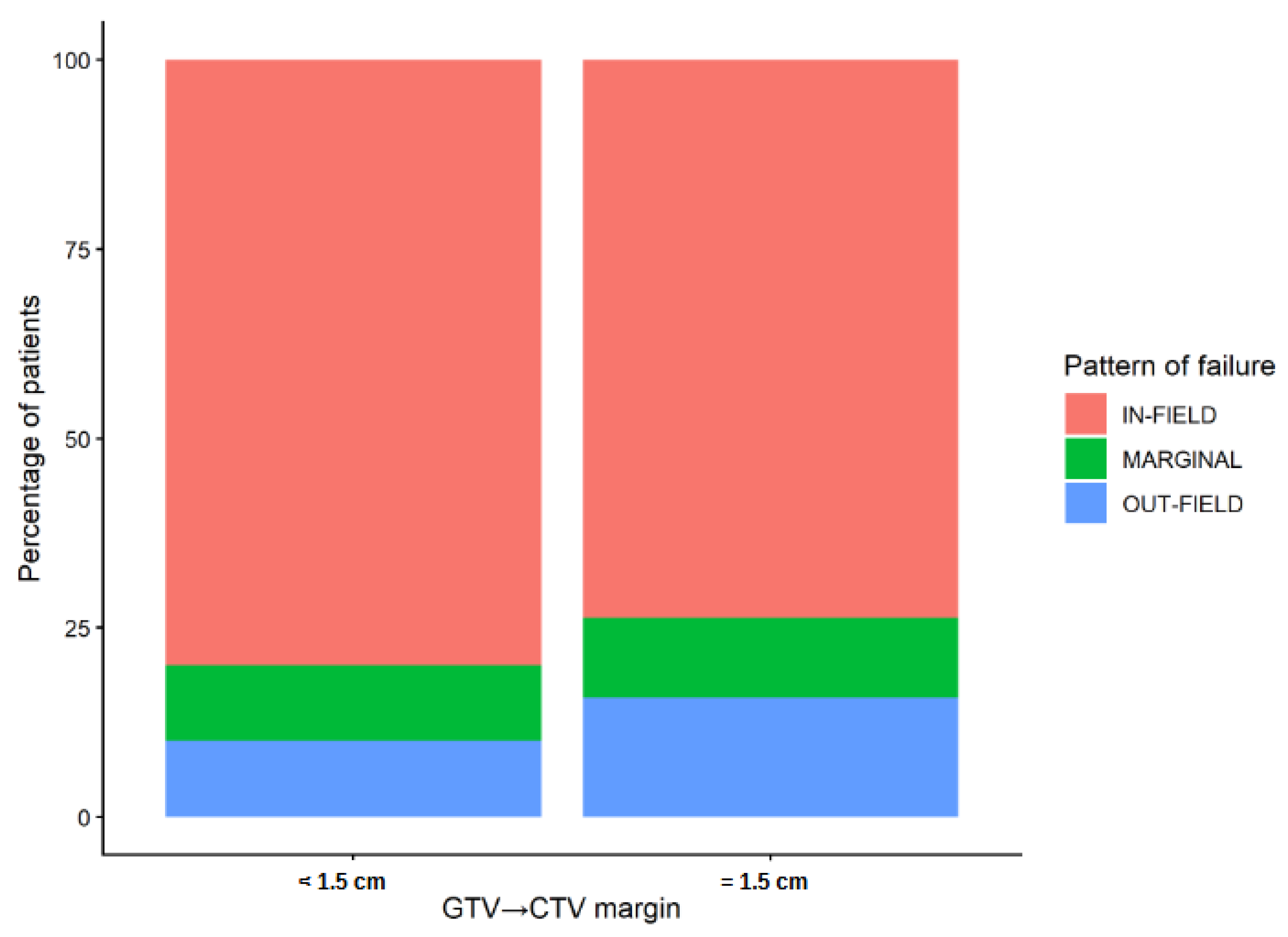
Figure 8.
Distribution of recurrence patterns (in-field, marginal, and out-of-field) according to GTV-to-CTV margin (<1.5 cm vs =1.5 cm), stratified by MGMT promoter methylation status. Percentages are shown within each subgroup. Across both MGMT-methylated and unmethylated cohorts, recurrence patterns were predominantly in-field and showed overlapping distributions between margin groups, with no apparent increase in marginal or out-of-field failures in the reduced-margin group.
Figure 8.
Distribution of recurrence patterns (in-field, marginal, and out-of-field) according to GTV-to-CTV margin (<1.5 cm vs =1.5 cm), stratified by MGMT promoter methylation status. Percentages are shown within each subgroup. Across both MGMT-methylated and unmethylated cohorts, recurrence patterns were predominantly in-field and showed overlapping distributions between margin groups, with no apparent increase in marginal or out-of-field failures in the reduced-margin group.
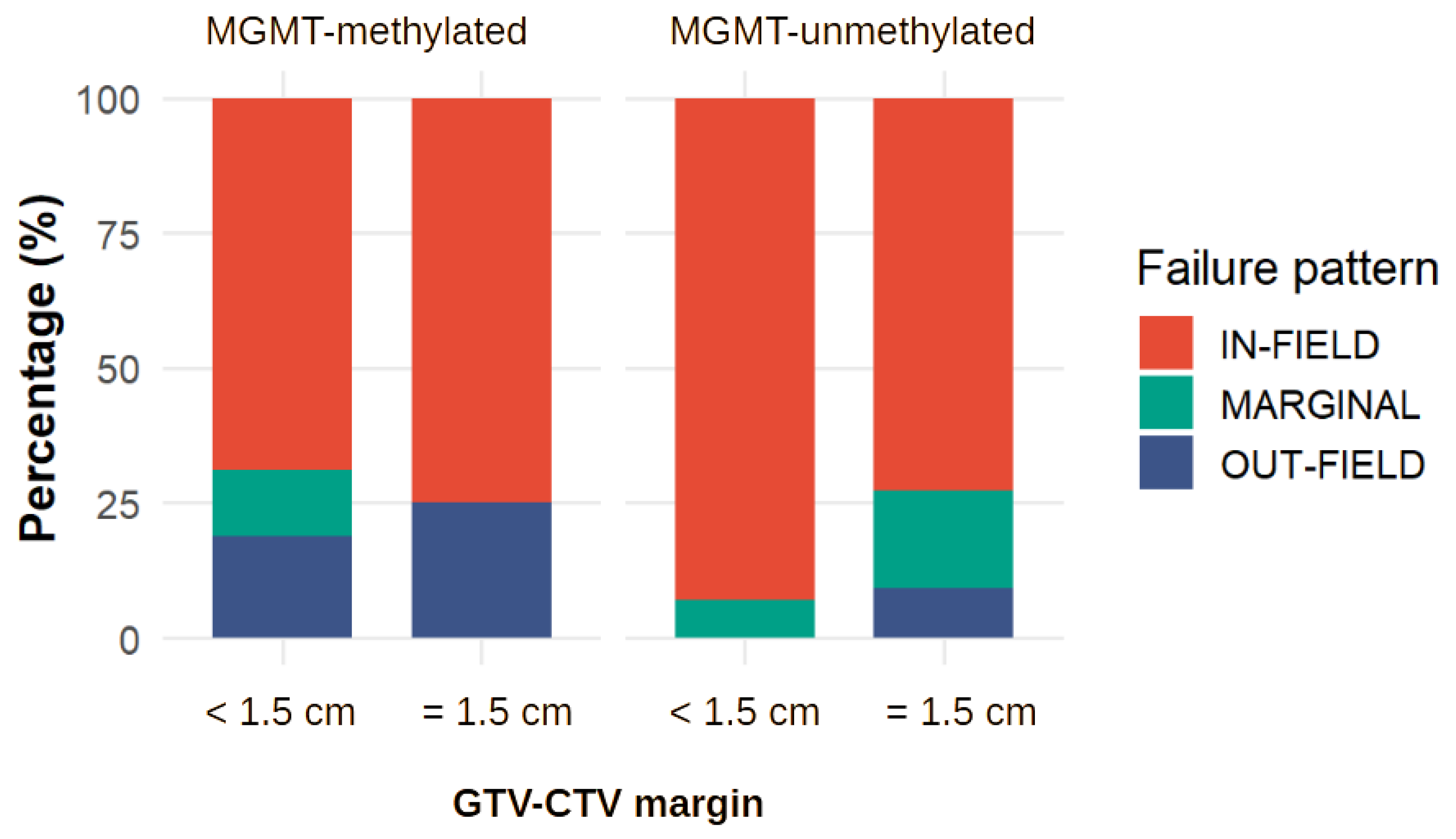

Table 1.
Baseline characteristics of the complete-case cohort. P-values refer to between-group comparisons.
Table 1.
Baseline characteristics of the complete-case cohort. P-values refer to between-group comparisons.
| Variable | CTV margin <1.5 cm (n = 37) | CTV margin = 1.5 cm (n = 56) | p-value | |
| Age, years (mean ± SD) | 59.24 (10.61) | 62.13 (9.91) | 0.184 | |
| Baseline KPS (mean ± SD) | 88.65 (9.76) | 90.00 (8.94) | 0.493 | |
| MGMT promoter methylation status, n (%) | Unmethylated | 16 (43.2) | 28 (50.0) | 0.670 |
| Methylated | 21 (56.8) | 28 (50.0) | ||
| Extent of resection, n (%) | Biopsy | 7 (18.9) | 8 (14.3) | 0.612 |
| Gross total resection | 19 (51.4) | 26 (46.4) | ||
| Subtotal resection | 11 (29.7) | 22 (39.3) |
Table 2.
Multivariable Cox proportional hazards model for overall survival in the complete-case cohort. The main effect for CTV margin represents the margin comparison within the MGMT-unmethylated reference group because the model included an interaction term between CTV margin group and MGMT promoter methylation status. Hazard ratios are reported with 95% confidence intervals.
Table 2.
Multivariable Cox proportional hazards model for overall survival in the complete-case cohort. The main effect for CTV margin represents the margin comparison within the MGMT-unmethylated reference group because the model included an interaction term between CTV margin group and MGMT promoter methylation status. Hazard ratios are reported with 95% confidence intervals.
| Covariate | Hazard Ratio (95% CI) | p-value |
| CTV margin = 1.5 cm (vs. <1.5 cm), within the MGMT-unmethylated reference group | 0.45 (0.208-0.975) | 0.0429 |
| MGMT methylated (vs. unmethylated) | 0.226 (0.103-0.498) | 0.000225 |
| Age, years | 1.007 (0.981-1.034) | 0.583 |
| Baseline KPS, per point | 0.972 (0.944-1) | 0.0514 |
| Gross total resection (vs. biopsy) | 0.299 (0.149-0.598) | 0.000641 |
| Subtotal resection (vs. biopsy) | 0.946 (0.469-1.911) | 0.878 |
| Interaction: CTV margin × MGMT methylation | 2.096 (0.732-6.005) | 0.168 |
| Derived effect: CTV margin = 1.5 cm in MGMT-methylated subgroup | 0.944 (0.449-1.985) | 0.879 |
Disclaimer/Publisher’s Note: The statements, opinions and data contained in all publications are solely those of the individual author(s) and contributor(s) and not of MDPI and/or the editor(s). MDPI and/or the editor(s) disclaim responsibility for any injury to people or property resulting from any ideas, methods, instructions or products referred to in the content. |
© 2026 by the authors. Licensee MDPI, Basel, Switzerland. This article is an open access article distributed under the terms and conditions of the Creative Commons Attribution (CC BY) license (http://creativecommons.org/licenses/by/4.0/).
Copyright: This open access article is published under a Creative Commons CC BY 4.0 license, which permit the free download, distribution, and reuse, provided that the author and preprint are cited in any reuse.


