
Submitted:
31 March 2026
Posted:
01 April 2026
You are already at the latest version
Abstract
Syzygium polyanthum (Indonesian bay leaf) is widely consumed as a culinary spice and is traditionally used for health related purposes, yet chemical standardization of region specific materials remains limited, particularly for nonpolar fractions that contain volatile and semivolatile constituents. This study aimed to generate a baseline chemical fingerprint of the n hexane fraction of S. polyanthum leaves collected in Paniki Bawah, Mapanget District, Manado, Indonesia. Dried leaf powder was macerated with 96% ethanol for six days with daily solvent renewal, the filtrate was concentrated under reduced pressure, redissolved in warm distilled water, and fractionated by liquid liquid partitioning to obtain the n hexane fraction. The fraction was analyzed by GC MS, and peak identities were assigned by spectral library matching. Twenty constituents were tentatively identified, dominated by fatty acids and fatty acid methyl esters, with additional aliphatic ketones and terpene related compounds. Major annotations included decanoic acid, dodecanoic acid, tetradecanoic acid, 2 undecanone, 2 tridecanone, nerolidol, and 6,10,14 trimethyl 2 pentadecanone. The clustering of multiple library hits at identical retention times suggests potential coelution; therefore, the reported profile is best interpreted as a qualitative screening fingerprint rather than definitive quantification. Overall, these findings provide a region specific reference for future marker selection, batch to batch comparison, and integration with targeted bioactivity assays to support quality control development for S. polyanthum based products.
Keywords:
chromatography
; GC MS
; nerolidol
; n hexane fraction
; Syzygium polyanthum
; volatile compounds
1. Introduction
Syzygium polyanthum (Wight) Walp., commonly known in Indonesia as daun salam or Indonesian bay leaf, is a widely used aromatic plant in daily cuisine and in traditional health practices across Southeast Asia. Its frequent household use, broad availability, and long history of consumption make S. polyanthum an important candidate for evidence based development as a functional botanical resource, provided that its chemical constituents can be characterized and standardized across different sources and processing conditions(Anuar et al., 2021).
Interest in food derived bioactives has increased as functional foods and nutraceutical concepts continue to expand from academic research into industrial product development. Recent reviews highlight that plant based ingredients are increasingly explored not only for nutrition, but also for targeted wellness functions, including protection against molecular stressors that contribute to chronic disorders(Vignesh et al., 2024).
One major scientific and public health driver behind this shift is oxidative stress, which is widely recognized as a key contributor to cellular damage and the progression of many noncommunicable diseases. A large body of recent literature emphasizes that oxidative stress occurs when pro oxidant species exceed endogenous protective systems, and that antioxidant compounds can mitigate oxidative stress related chain reactions and downstream biological damage(Pisoschi et al., 2021; Xiang et al., 2023).
The urgency is not limited to health outcomes. Oxidation also directly affects food quality through rancidity, flavor deterioration, and loss of nutritional value, motivating research on natural antioxidants as alternatives or complements to synthetic preservatives. Recent studies and reviews in food systems describe plant derived antioxidants as promising agents for improving oxidative stability and extending shelf life in lipid rich matrices(Liang et al., 2025; Yildiz et al., 2025).
Spices and aromatic leaves are particularly relevant because they can supply both phenolic antioxidants and aroma active constituents. Syzygium as a genus has been repeatedly reviewed as a source of nutritionally relevant and biologically active metabolites, with reported antioxidant, anti-inflammatory, and antihyperglycemic activities linked to diverse phytochemical profiles(de Araújo et al., 2024). Within this genus, S. polyanthum has been strongly associated with metabolic health claims in ethnomedicine, including diabetes related applications. A recent ScienceDirect study using metabolomics emphasized that although antidiabetic activity has been reported, identifying specific bioactive compounds and markers is essential to improve quality control and reproducibility(Syabana et al., 2022).
S. polyanthum has also been explored in other bioactivity directions, reinforcing that its value may extend beyond a single therapeutic theme. For example, ScienceDirect work has shown antibacterial potential when S. polyanthum leaf material is used in green synthesis approaches, reflecting a broader relevance of its phytochemical content in antimicrobial contexts(Khan et al., 2023).
More recently, studies have applied S. polyanthum extracts to non medicinal technological uses, such as corrosion inhibition and functional materials, suggesting that its plant derived molecules can contribute to surface interactions, barrier properties, and protective film formation(Huynh et al., 2024; Nguyen et al., 2025; Sunarsono, Abral, Mahardika, et al., 2025; Sunarsono, Abral, Pratoto, et al., 2025). However, moving from promising activity reports to Scopus level product oriented science requires strong chemical evidence, consistent characterization, and defensible standardization strategies. Recent ScienceDirect frameworks for herbal marker selection and quality control emphasize systematic approaches to prioritize chemical markers, which depend on robust chemical profiling data as an upstream requirement(Amponsah et al., 2025; Srisittiratkul et al., 2025).
A central challenge in botanical research is that chemical composition can shift with extraction method, solvent polarity, harvest conditions, and geographic origin. Recent ScienceDirect studies demonstrate that extraction solvent differences can change measured phenolic content and antioxidant outcomes, while geographic and temporal variability can alter chemical profiles even within the same plant species and extraction family(Ahuayo et al., 2025; Kebede et al., 2025). This variability is also relevant for S. polyanthum specifically. A recent ScienceDirect dataset publication reported LCMS based profiling of an aqueous extract of S. polyanthum leaves and explicitly framed geographic differences as a factor that can influence detected compound profiles and downstream interpretation(Anuar et al., 2021).
Analytically, many recent phytochemical studies emphasize liquid chromatography based profiling for nonvolatile metabolites, which is highly valuable but may underrepresent volatile and semivolatile constituents that contribute to aroma, nonpolar bioactivity, and certain functional applications. This creates a practical need to complement LCMS dominated evidence with methods that better capture volatile and nonpolar fractions, particularly for aromatic leaves used in food(Anuar et al., 2021; Syabana et al., 2022). GCMS is widely described as a powerful approach for identifying volatile organic compounds and profiling plant volatilomes, and recent method oriented studies emphasize its role in reproducible quantification and quality control of volatile signatures(Ferretti et al., 2025; Xi et al., 2024).
For daun salam, nonpolar fractionation is especially relevant because solvents such as n hexane can enrich lipophilic constituents that may be less visible in polar extracts. A 2025 ResearchGate study on extraction optimization for S. polyanthum highlights that extraction strategy influences chemical profiles and antioxidant potential, supporting the rationale for fraction specific profiling rather than relying on a single crude extract report(Najib et al., 2025). Despite growing interest in S. polyanthum, the recent literature still shows a stronger emphasis on polar extracts, metabolomics, and application oriented studies than on detailed GCMS profiling of nonpolar fractions for region specific Indonesian samples. Based on the pattern of recent ScienceDirect publications, comprehensive baseline profiling of the n hexane fraction can strengthen interpretability and support standardization, especially when plant sourcing is explicitly documented.
This gap is particularly important for Scopus standard reporting because reproducibility depends on clear botanical sourcing, extraction traceability, and chemical identity evidence. In the present study, S. polyanthum leaves were collected from Paniki Bawah, Mapanget District, Manado, Indonesia, extracted by maceration using 96% ethanol, and then fractionated by liquid liquid partitioning to obtain an n hexane fraction for GCMS characterization.
2. Materials and Methods
2.1. Study Design and Overall Workflow
This experimental study was designed to obtain a nonpolar fraction from Syzygium polyanthum leaves and characterize its semivolatile constituents using gas chromatography coupled with mass spectrometry. The work comprised four main stages: preparation of dried plant material, ethanolic maceration to obtain a crude extract, liquid liquid partitioning to isolate the n hexane fraction, and GC MS based identification of compounds in the fraction.
To make the methodological sequence transparent and reproducible for readers, a workflow schematic is provided below. The figure helps clarify how each preparation step connects to the analytical step, and it can be used by other researchers as a practical overview when replicating the same fractionation route.
Figure 1.
Workflow for extraction, fractionation, and GC MS analysis of the n hexane fraction from Syzygium polyanthum leaves.
Figure 1.
Workflow for extraction, fractionation, and GC MS analysis of the n hexane fraction from Syzygium polyanthum leaves.
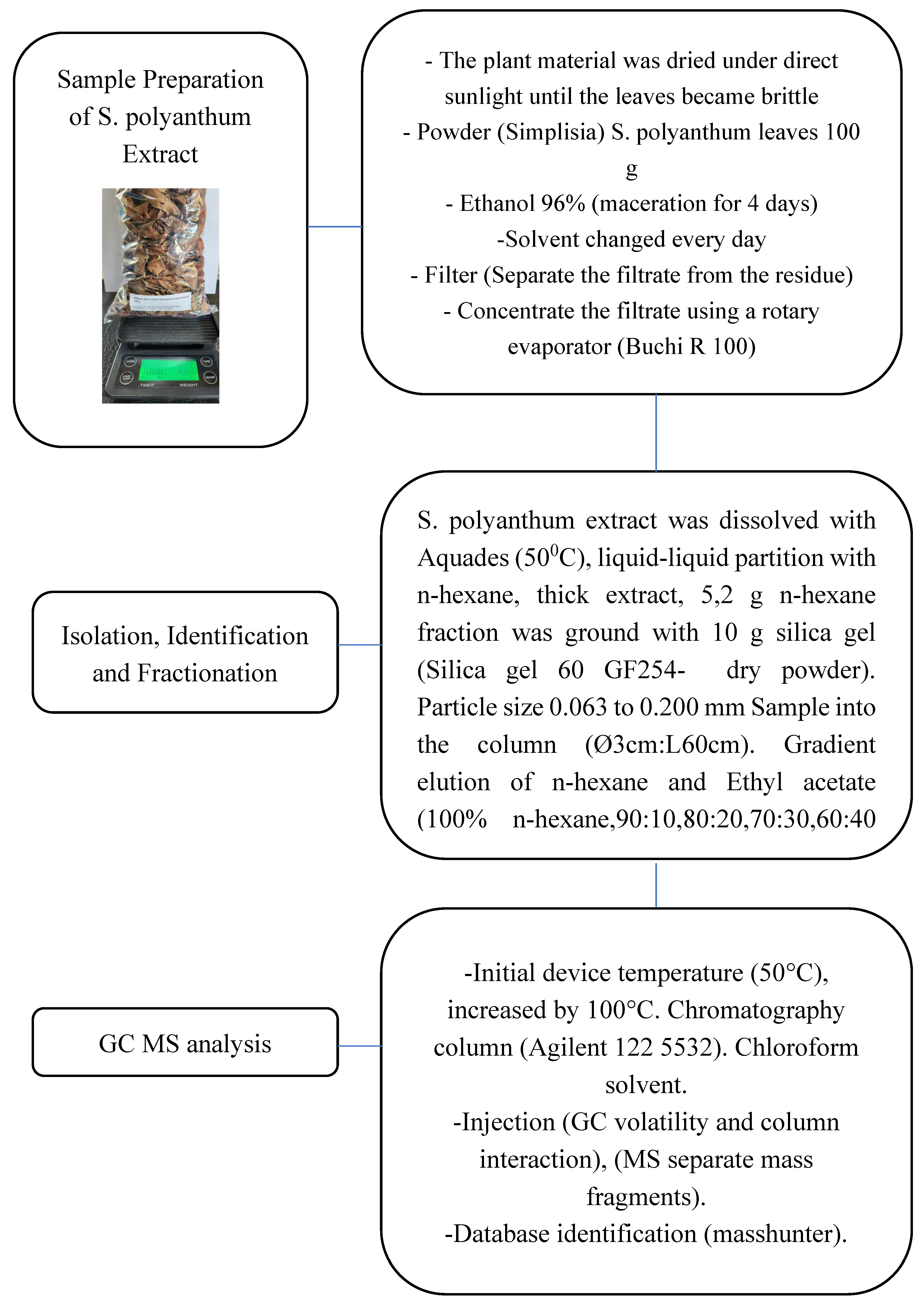
The figure summarizes the full pathway from raw leaves to chromatographic and mass spectral outputs. It also highlights the key decision point of fractionation, where nonpolar metabolites are enriched into the n hexane phase before instrumental analysis.
2.2. Materials, Reagents, and Instruments
All reagents used in extraction and fractionation were routine laboratory grade solvents, chosen to provide clear polarity separation between nonpolar, semi polar, and polar constituents. n Hexane was used to enrich nonpolar metabolites, ethyl acetate was used to capture moderately polar constituents, and distilled water served as the polar phase during partitioning. Silica gel and TLC plates were prepared for chromatographic handling and fraction monitoring.
A summary of the main chemicals and instruments is provided to improve traceability and ensure methodological clarity for journal reviewers. The table is intended as a quick reference for replication and to document the analytical platform used in the study.

Table 1.
Key materials and instruments used in the study.
| Category | Item | Grade or specification | Notes |
|---|---|---|---|
| Plant material | Syzygium polyanthum leaves | Fresh leaves, field collected | Collected in Paniki Bawah, Mapanget, Manado |
| Solvents | Ethanol | 96% technical grade | Used for maceration |
| Solvents | n Hexane | Technical grade | Used for liquid liquid partitioning |
| Solvents | Ethyl acetate | Technical grade | Used for liquid liquid partitioning |
| Solvents | Distilled water | Laboratory grade | Used to dissolve crude extract before partitioning |
| Solvent for GC MS | Chloroform | Laboratory solvent | Used to dissolve samples prior to injection |
| Stationary phase | Silica gel 60 GF254 | Particle size 0.063 to 0.200 mm | Used for dry loading and chromatographic handling |
| TLC plates | Silica gel plates | Commercial plates | Used to monitor fractions when applicable |
| Instrument | GC MS | Shimadzu QP 5050A | Used for compound profiling |
| Instrument | Rotary evaporator | Buchi R 100 | Used to concentrate extracts and fractions |
| Instrument | Oven | Memmert | Used for drying steps as needed |
| Instrument | Analytical balance | Ohaus | Used for accurate weighing |
2.3. Plant Material Collection and Sample Preparation
Fresh S. polyanthum leaves were collected from a cultivation area in Paniki Bawah, Mapanget District, Manado, Indonesia. The leaves were washed with clean running water to remove adhering dust and debris, separated from petioles, and then cut into smaller pieces to improve drying uniformity. The plant material was dried under direct sunlight until the leaves became brittle. After drying, the leaves were ground using a blender to obtain a fine dried leaf powder. The powder was stored in a closed glass container at room conditions to minimize moisture uptake prior to extraction.
2.4. Ethanolic Extraction by Maceration
Dried leaf powder (900 g) was extracted using 96% ethanol by maceration. The powder was placed in an appropriate container and ethanol was added until the material was completely submerged. Maceration was carried out for six days, and the solvent was replaced once every 24 hours to maintain extraction efficiency. After maceration, the combined ethanolic filtrates were concentrated under reduced pressure using a rotary evaporator to obtain a viscous crude ethanol extract. Concentration was performed to remove ethanol without exposing the extract to prolonged high temperatures that may alter thermolabile constituents.
2.5. Liquid Liquid Partitioning and Preparation of the n Hexane Fraction
To enable phase separation of metabolites by polarity, the crude ethanol extract was re dissolved in distilled water that had been warmed to 50 °C. The warm aqueous medium was used to assist dissolution and create a suitable starting phase for partitioning.
Liquid liquid partitioning was then performed sequentially using n hexane and ethyl acetate, producing three fractions: an n hexane fraction, an ethyl acetate fraction, and a remaining aqueous fraction. Each fraction was concentrated to a thick consistency to remove residual solvents. The n hexane fraction was the focus of this study because it is expected to enrich nonpolar and semivolatile constituents that are well suited to GC MS analysis.
2.6. Sample Preparation for Chromatographic Handling Prior to GC MS
To improve handling and allow chromatographic pre separation when needed, a portion of the concentrated n hexane fraction (5.2 g) was mixed thoroughly with silica gel (10 g) until a free flowing dry powder was formed. This step is commonly used to create a dry loaded sample that can be introduced into a silica based chromatographic system with reduced band broadening and improved fraction collection.
If column chromatography and TLC monitoring were applied prior to GC MS, the manuscript should describe the column dimensions, elution scheme, fraction volume, TLC developing solvent system, and visualization method. These details are essential in Scopus indexed journals because they determine reproducibility and help reviewers interpret which sub fractions were selected for instrumental profiling.
2.7. GC MS Analysis and Compound Identification
GC MS measurements were conducted at the Narkobafor Laboratory, North Sulawesi. The sample selected for GC MS profiling was dissolved in chloroform prior to analysis. A capillary column identified as Agilent 122 5532 was used, with a reported length of 30 m and an internal diameter of 250 micrometers.
The oven temperature program began at 50 °C and increased at 10 °C per minute in a programmed ramp. Following chromatographic separation, mass spectra were acquired and compound identities were assigned by matching the spectra with a reference library using MassHunter. The primary outputs were chromatograms and mass spectra, and compounds were reported alongside their retention times as the basis for qualitative identification.
3. Results and Discussion
3.1. GC–MS Chromatographic Profile of the n-Hexane Fraction
GC–MS analysis of the n-hexane fraction was conducted to obtain an initial chemical fingerprint of the nonpolar constituents present in Syzygium polyanthum leaves. The output of this analysis is commonly presented as a total ion chromatogram (TIC), where each peak represents one compound or a group of compounds that elute at a similar retention time. In complex botanical matrices, TIC interpretation is particularly useful to visualize peak density across the run and to identify retention-time regions that contain the most diagnostically relevant peaks, which can then be supported by mass spectral library matching for tentative identification. Challenges such as co-elution are widely recognized in plant extracts and can reduce confidence in single-compound assignments unless supported by additional confirmation steps(Chen et al., 2024; Ferretti et al., 2025; Yenduri et al., 2026).
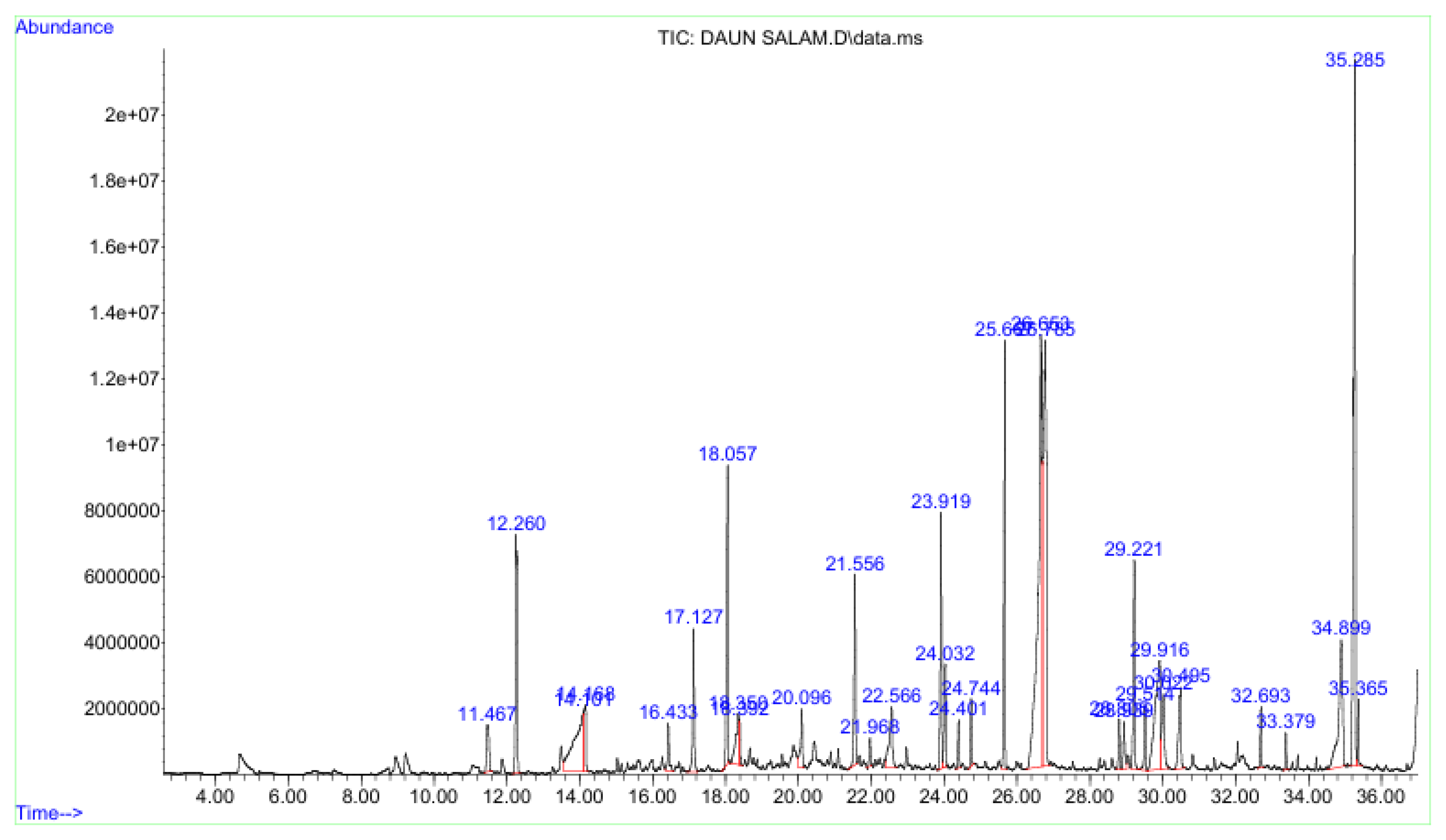
In this study, GC–MS identification was carried out in May 2024 at the Narkobafor laboratory (North Sulawesi), producing a TIC for the n-hexane fraction and a list of 20 detected bioactive constituents used for subsequent interpretation.
The TIC in Figure 2 shows multiple peaks distributed across the chromatographic run, indicating that the n-hexane fraction contains a chemically diverse mixture rather than a single dominant constituent. Several peaks appear in the mid-retention region that corresponds to the identified compounds reported in this work (11.467 to 24.401 min). At the same time, the chromatogram also display which suggests that additional compounds may be present but were not assigned within the 20-compound list under the applied identification criteria. This pattern is consistent with botanical fractions where a subset of peaks can be confidently annotated while other peaks require stricter thresholds, deconvolution, or complementary techniques for reliable assignment(Cain & Synovec, 2024; Chen et al., 2024; Ferretti et al., 2025).
Figure 2.
Total ion chromatogram (TIC).
3.2. Tentative Identification of Volatile and Semi-Volatile Constituents
To convert the chromatographic peaks into chemical meaning, the mass spectra associated with major peaks were matched to a spectral database (MassHunter is mentioned in the research record). The resulting tentative identifications are summarized in Table 2, which reports retention time and compound name for 20-compound from the n-hexane fraction.
Table 2 indicates that the identified constituents are dominated by mid-chain fatty acids and derivatives (free acids and methyl esters), along with ketones and a smaller number of terpenoid-related compounds. This distribution aligns with expectations for a nonpolar fraction, since n-hexane preferentially enriches lipophilic and semi-volatile metabolites, including fatty acids, terpenoids, and other hydrophobic constituents that are frequently reported in GC–MS profiles of plant fractions.Eicosyne
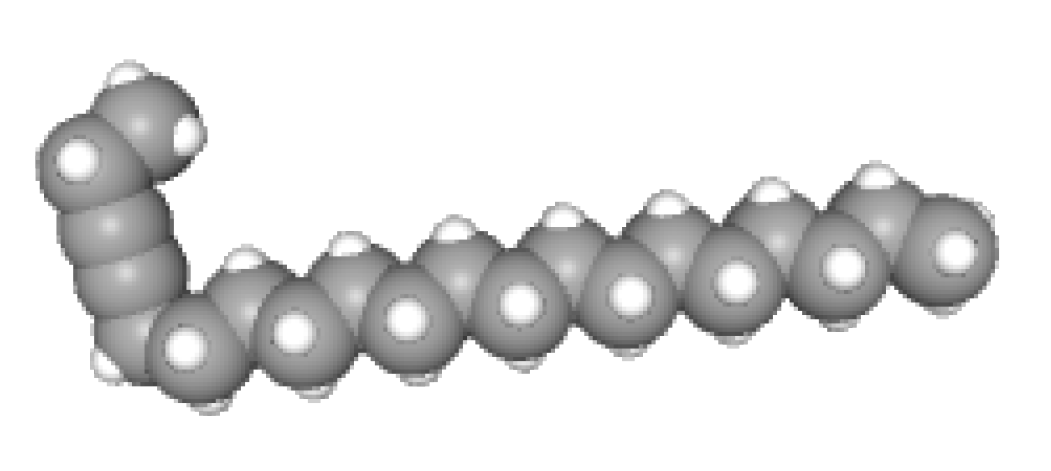
With the molecular formula [C20H38], a molecular weight of 278.5 g/mol is a 20 carbon polyunsaturated fatty acid identified at a retention time of 21.968. Eicosyne as a subcategory of oxylipin functions as an immune and inflammatory response in the field of pharmacology (Figure. 3).
Figure 3.
Eicosyne [C20H38].
Oxylipins are formed from oxidized fatty acid metabolites in plants, in the form of α-linolenic acid and linoleic acid. Oxylipins are an enzymatic defense mechanism in plants via the lipoxygenase pathway. Oxylipins derived from lactic acid play a role in the inflammatory cascade, inhibiting pain perception. (Chiba et al., 2016; Feldstein et al., 2010; Moghaddam et al., 1997; Patwardhan et al., 2010).
Tridecanedial
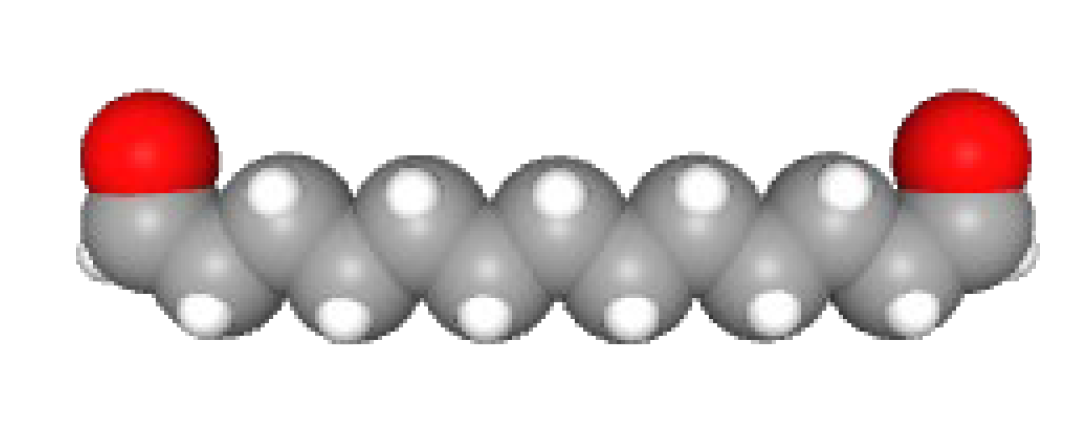
With the molecular formula [C13H24O2] and molecular weight of 212.33 g/mol, it was identified at a retention time of 23.919 as the active ingredient of biopesticide.
Tridecanedial are classified as fungicides and insecticides, depending on their mechanism of action and target pests (Figure. 4).
Figure 4.
Tridecanedial [C13H24O2].
3.3. Chemical-Class Interpretation of the Identified Profile
While Table 2 presents individual assignments, a class-based view helps interpret the fraction’s functional chemistry and its likely bioactivity direction. Therefore, the 20 tentatively identified compounds were grouped into major chemical classes based on their names and functional groups (for example, “acid”, “methyl ester”, “one”, and “ol”). This step does not change the underlying GC–MS identifications, but it provides a clearer basis for connecting the chemical profile to known biological activities reported in the literature.
The most prominent implication of Table 3 is that fatty acids and related esters form the largest portion of the annotated profile. This matters because fatty acids (and their derivatives) are repeatedly linked with antimicrobial and membrane-active effects in many plant-derived extracts, while nonpolar ketones and terpenoid alcohols often contribute to aroma characteristics and may also exhibit biological activity depending on dose and context(Ayyal Salman et al., 2024; Onyedikachi et al., 2024; Parvez et al., 2022). In the specific context of Syzygium polyanthum, contemporary ResearchGate-hosted reviews also emphasize its potential as a natural preservative and antimicrobial source, supporting the relevance of profiling nonpolar constituents that can contribute to these functions(Iskandi et al., 2021; Julizan et al., 2023).
3.4. Discussion of Key Constituents and Bioactivity Relevance
The ketone fraction includes 2-undecanone and 2-tridecanone, which are semi-volatile aliphatic ketones commonly encountered in plant volatilomes. From a functional standpoint, 2-undecanone is frequently discussed in the context of plant bioactivity and has been connected to anti-inflammatory activity in recent ScienceDirect literature examining bioactive volatile components in medicinal plants(Laldinsangi, 2022; Meng et al., 2025; Wei et al., 2024). The detection of these ketones in the n-hexane fraction is consistent with the solvent’s ability to enrich nonpolar volatiles and semi-volatiles that may contribute to both biological activity and sensory attributes.
Fatty acids identified in this fraction include n-decanoic acid, dodecanoic acid (lauric acid), and tetradecanoic acid (myristic acid), alongside multiple methyl ester derivatives. These compounds can be interpreted as part of the plant’s lipophilic metabolite pool, and similar fatty-acid-heavy profiles are commonly reported when GC-MS is applied to nonpolar or moderately nonpolar extracts. Studies focusing on GC-MS profiles and antimicrobial effects often report dodecanoic acid, tetradecanoic acid, and related lipids among notable constituents, reinforcing that these molecules are not unusual findings in bioactive plant fractions(Ayyal Salman et al., 2024; Onyedikachi et al., 2024; Shen et al., 2021). In practical terms, these fatty acids may contribute to membrane perturbation mechanisms that support antibacterial or antifungal outcomes, although confirming such a role requires direct bioassays on the same fraction and concentration range.
A particularly important finding for interpretation is the presence of 1,6,10-dodecatrien-3-ol, 3,7,11-trimethyl, which corresponds to nerolidol, an oxygenated sesquiterpene alcohol. Nerolidol is widely reported for bioactivity, and ScienceDirect sources between 2021 and 2025 describe its anti-inflammatory, antimicrobial, or applied-functional roles in diverse matrices, including formulation and coating applications. Its appearance in the n-hexane fraction strengthens the interpretation that the fraction is not only lipid-rich but also contains terpenoid alcohols that can contribute to biological and functional properties beyond simple lipophilicity.
Another notable constituent is 2-pentadecanone, 6,10,14-trimethyl, also known as hexahydrofarnesyl acetone (phytone). This compound is frequently reported in essential-oil and plant volatile profiles and has been highlighted in recent ScienceDirect studies as a common sesquiterpene-related ketone found in bioactive plant materials(Oladele et al., 2024; Saadellaoui et al., 2024). The detection of phytone-like compounds in nonpolar fractions can be relevant to aroma and potential biological activity, but, as with other constituents, functional claims should be supported with targeted assays performed on the same fraction.
The bicyclo [3.1.1]heptane derivatives indicate the presence of pinane-type terpene hydrocarbons, which are common scaffolds in monoterpene chemistry and frequently appear in GC–MS analyses of aromatic plants. Such monoterpene-like hydrocarbons are often associated with fragrance and may contribute to antimicrobial effects depending on mixture composition. In plant essential-oil research, these terpene hydrocarbons are commonly discussed as part of the volatile blend that supports biological activity, particularly when combined with oxygenated terpenoids(Benkhaira et al., 2023; El Hachlafi et al., 2023).
3.5. Data-Quality Considerations and Confidence of Identification
A key issue in GC–MS annotation of complex extracts is that a single retention time can sometimes yield more than one plausible library hit, especially when peaks co-elute or when spectral similarity is shared across structurally related compounds. In the present dataset, multiple compounds are reported at identical retention times (for example, several entries at 20.096 min and 21.968 min), which suggests either co-elution, a shared peak region, or multi-hit reporting from the matching process. This behavior is well recognized in the analytical literature; recent ScienceDirect work emphasizes that co-elution can mask minor constituents and complicate correct structural identification unless more advanced separation, deconvolution, or orthogonal confirmation is applied.
The appearance of a silylated ester-type name (propanoic acid, methyl(tetramethylene)silyl ester) is also analytically noteworthy because trimethylsilyl and related silyl derivatives are often associated with derivatization workflows or background contributions in some GC–MS contexts. This does not automatically mean the assignment is incorrect, but it indicates that confirmatory steps would strengthen confidence, such as running analytical blanks, checking background signals, and applying confirmation criteria that combine retention behavior with spectral match quality and, ideally, authentic standards.
From a Scopus-journal perspective, the discussion above also highlights what would typically be expected as additions to improve reproducibility and interpretability: reporting library match scores, similarity thresholds, and relative abundance (peak area percentage) for each compound. When available, these parameters enable a more rigorous comparison with published chemical profiles and allow stronger conclusions about which constituents are dominant and therefore most likely to drive bioactivity.
3.6. Positioning Relative to Recent Syzygium polyanthum Literature
Recent ResearchGate-hosted publications and reviews (2021 to 2024) continue to position Syzygium polyanthum as a candidate for antimicrobial applications and natural food preservation, which increases the value of chemical profiling studies that identify nonpolar volatile and semi-volatile constituents linked to these functions(Hasby et al., 2024; Iskandi et al., 2021; Julizan et al., 2023). In parallel, mechanistic and bioactivity-focused studies accessible via ResearchGate also show ongoing interest in isolating and identifying bioactive constituents from S. polyanthum leaf extracts using fractionation strategies(Widyawati et al., 2022). Against this backdrop, the present GC–MS profile contributes additional evidence that the n-hexane fraction contains lipophilic acids, ketones, and terpenoid alcohols, a combination frequently associated with antimicrobial and biofunctional potential in plant-derived mixtures.
4. Conclusion
GC MS profiling of the n hexane fraction obtained from Syzygium polyanthum leaves collected in Paniki Bawah, Mapanget District, Manado, produced a baseline chemical fingerprint of the lipophilic and semivolatile constituents enriched by nonpolar fractionation. Using ethanol maceration followed by liquid liquid partitioning, the resulting n hexane fraction yielded twenty tentatively identified constituents, with the annotated profile dominated by fatty acids and fatty acid methyl esters, alongside aliphatic ketones and terpene related compounds, including nerolidol and 6,10,14 trimethyl 2 pentadecanone. This compositional pattern is consistent with the polarity of the fraction and supports its relevance as a starting point for marker selection and quality evaluation of region specific raw material, especially for applications where nonpolar metabolites may contribute to aroma, stability, or biofunctional effects. At the same time, several entries were associated with identical retention times, indicating possible coelution or multi hit library matching, and the absence of reported match scores, retention indices, replicate runs, and relative abundance values limits the strength of compound level conclusions beyond qualitative screening. Future work should include full reporting of GC MS parameters, blank and replicate analyses, peak deconvolution, retention index calculation, confirmation of major peaks using authentic standards, reporting peak area percentages, and linking the chemically characterized fraction to targeted antioxidant and antimicrobial assays to define robust marker candidates for standardization.
Acknowledgments
Thank you for the funding help from the Sam Ratulangi University’s LPPM 2026.
References
- Ahuayo, M. A. M.; Berasain, M. D. M.; Luckie, R. A. M.; Orozco, D. G. Geographical and temporal variability in the extraction efficiency of bioactive metabolites from Cosmos bipinnatus. Applied Food Research 2025, 5(2), 101098. [Google Scholar] [CrossRef]
- Amponsah, I. K.; Owusu, F. Y.; Sarkodie, J. A.; Nkrumah, D.; Kontoh, E. Q.; Akotey, A. N. A. O.; Baah, K. A. Application of the Herbal Marker Ranking System (Herb MaRS) affords chemical markers for the standardization of medicinal plants used for male vitality herbal products. Phytomedicine Plus 2025, 5(4), 100864. [Google Scholar] [CrossRef]
- Anuar, T. A. F. T.; Ismail, A.; Mohamed Suffian, I. F.; Abdul Hamid, A. A.; Arzmi, M. H.; Omar, M. N. LCMS dataset on compounds in Syzygium polyanthum (Wight) Walp. leaves variant from the East coast of Peninsular Malaysia. Data in Brief 2021, 39, 107485. [Google Scholar] [CrossRef]
- Ayyal Salman, H.; Yaakop, A. S.; Al-Rimawi, F.; Ahmad Makhtar, A. M.; Mousa, M.; Semreen, M. H.; Alharbi, N. S. Ephedra alte extracts’ GC-MS profiles and antimicrobial activity against multidrug-resistant pathogens (MRSA). Heliyon 2024, 10(5), e27051. [Google Scholar] [CrossRef] [PubMed]
- Benkhaira, N.; Zouine, N.; Fadil, M.; Ibnsouda Koraichi, S.; El Hachlafi, N.; Jeddi, M.; Lachkar, M.; Fikri-Benbrahim, K. Application of mixture design for the optimum antibacterial action of chemically-analyzed essential oils and investigation of the antiadhesion ability of their optimal mixtures on 3D printing material. Bioprinting 2023, 34, e00299. [Google Scholar] [CrossRef]
- Cain, C. N.; Synovec, R. E. Enhancing gas chromatography-mass spectrometry resolution and pure analyte discovery using intra-chromatogram elution profile matching. Talanta 2024, 278, 126453. [Google Scholar] [CrossRef]
- Chen, E.; Ma, Z.; Geng, X.; Li, Q.; Zheng, F.; Sun, J.; Sun, B. Comprehensive two-dimensional gas chromatography technique and its applications in fermented food aroma analysis: A review. Food Bioscience 2024, 62, 105473. [Google Scholar] [CrossRef]
- de Araújo, A. N. V.; de Souza, E. L.; Nascimento, D. dos S.; Alves, J. M.; Brito Sampaio, K.; da Silva, S. R. F.; de Brito Alves, J. L.; de Albuquerque, T. M. R. Revisiting the nutritional and functional value and health-promoting potential of Syzygium species. Journal of Functional Foods 2024, 118, 106265. [Google Scholar] [CrossRef]
- El Hachlafi, N.; Benkhaira, N.; Al-Mijalli, S. H.; Mrabti, H. N.; Abdnim, R.; Abdallah, E. M.; Jeddi, M.; Bnouham, M.; Lee, L.-H.; Ardianto, C.; Ming, L. C.; Bouyahya, A.; Fikri-Benbrahim, K. Phytochemical analysis and evaluation of antimicrobial, antioxidant, and antidiabetic activities of essential oils from Moroccan medicinal plants: Mentha suaveolens, Lavandula stoechas, and Ammi visnaga. Biomedicine & Pharmacotherapy 2023, 164, 114937. [Google Scholar] [CrossRef]
- Ferretti, M.; Spiezia, G.; Scalzo, M. Lo; Todeschini, V.; Lingua, G.; Conterosito, E.; Guerrieri, E.; Gianotti, V. Accurate and robust method for plant volatilome analysis by GC-MS. Talanta Open 2025, 12, 100578. [Google Scholar] [CrossRef]
- Hasby, H.; Astuti, L.; Rizali, A. Bioactivities of bay leaf (Syzygium polyanthum) fumigant tablets againts Araecerus fasciculatus (De Geer) (Coleoptera: Anthribidae). Jurnal Entomologi Indonesia 2024, 21, 118–129. [Google Scholar] [CrossRef]
- Huynh, T. L.; Manh, T. D.; Phuong Nguyen, L. T.; Vu, D. T.; Huu Nguyen, K. D.; Duong Ngo, K. L. Corrosion mitigation of carbon steel in sulfuric and hydrochloric acid solutions by Syzygium polyanthum (Wight) Walp. leaf extract. Results in Surfaces and Interfaces 2024, 17, 100318. [Google Scholar] [CrossRef]
- Iskandi, S.; Fauziah, F.; Oktavia, S. Review: Antibacterial Activity of Syzygium polyanthum. International Journal of Pharmaceutical Sciences and Medicine 2021, 6, 182–186. [Google Scholar] [CrossRef]
- Julizan, N.; Ishmayana, S.; Zainuddin, A.; Hùng, P.; Dikdik, K. Potential of Syzygnium polyanthum as Natural Food Preservative: A Review. Foods 2023, 12, 2275. [Google Scholar] [CrossRef]
- Kebede, B. H.; Them, R. L.; Mengistu, B. A. Effects of extraction solvents on phenolic contents, in vitro antioxidant, and antimicrobial activities of roselle (Hibiscus sabdariffa L.) Calyx. Food Chemistry Advances 2025, 9, 101119. [Google Scholar] [CrossRef]
- Khan, S.; Rukayadi, Y.; Jaafar, A. H.; Ahmad, N. H. Antibacterial potential of silver nanoparticles (SP-AgNPs) synthesized from Syzygium polyanthum (Wight) Walp. against selected foodborne pathogens. Heliyon 2023, 9(12), e22771. [Google Scholar] [CrossRef]
- Laldinsangi, C. The therapeutic potential of Houttuynia cordata: A current review. Heliyon 2022, 8(8), e10386. [Google Scholar] [CrossRef] [PubMed]
- Liang, X.; Huang, X.; Li, C.; Kong, B.; Cao, C.; Sun, F.; Zhang, H.; Liu, Q.; Shen, L. Effect of different natural antioxidants on the quality promotion of pork chip snacks during storage as revealed by lipid profiles and volatile flavor compounds. Food Chemistry 2025, 478, 143716. [Google Scholar] [CrossRef]
- Meng, X.-W.; Wang, Q.-Q.; Zhang, N.; Guo, F.-M.; Li, J.-R.; Zhu, Q.; Liu, R.-H.; Zhu, W.-F. Anti-inflammatory mechanisms of flavonoids in Pueraria lobata: Immune cell regulation and molecular mechanisms. Journal of Functional Foods 2025, 131, 106954. [Google Scholar] [CrossRef]
- Najib, A.; Olli, A.; Puspitasari, Y. Optimasi Ekstrak Daun Salam (Syzygium Polyanthum) Menggunakan Metode Konvensional dan Green Extraction Serta Profil Kimia dan Potensi Antioksidannya. Jurnal Mandala Pharmacon Indonesia 2025, 11, 55–65. [Google Scholar] [CrossRef]
- Nguyen, K. D. H.; Manh, T. D.; Nguyen, L. T. P.; Vu, D. T.; Duong Ngo, K. L. Syzygium polyanthum (Wight) Walp. leaf extract as a sustainable corrosion inhibitor for carbon steel in hydrochloric acidic environment. Journal of Industrial and Engineering Chemistry 2025, 143, 468–487. [Google Scholar] [CrossRef]
- Oladele, O. T.; Oladele, J. O.; Ajayi, E. I. O.; Alabi, K. E.; Oyeleke, O. M.; Atolagbe, O. S.; Olowookere, B. D.; Bamigboye, M. O. Bioactive composition and protective properties of Talium triangulare in dextran sodium sulphate-induced ulcerative colitis in rats. Pharmacological Research - Modern Chinese Medicine 2024, 10, 100344. [Google Scholar] [CrossRef]
- Onyedikachi, U. B.; Nkwocha, C. C.; Ejiofor, E.; Nnanna, C. C. Investigation of chemical constituents, antioxidant, anti-inflammatory and nutritional properties of oil of Persea americana (Avocado) seeds. Food Chemistry Advances 2024, 5, 100770. [Google Scholar] [CrossRef]
- Parvez, S.; Karole, A.; Mudavath, S. L. Fabrication, physicochemical characterization and In vitro anticancer activity of nerolidol encapsulated solid lipid nanoparticles in human colorectal cell line. Colloids and Surfaces B: Biointerfaces 2022, 215, 112520. [Google Scholar] [CrossRef]
- Pisoschi, A. M.; Pop, A.; Iordache, F.; Stanca, L.; Predoi, G.; Serban, A. I. Oxidative stress mitigation by antioxidants - An overview on their chemistry and influences on health status. European Journal of Medicinal Chemistry 2021, 209, 112891. [Google Scholar] [CrossRef] [PubMed]
- Saadellaoui, W.; Kahlaoui, S.; Hcini, K.; Haddada, A.; Sleimi, N.; Ascrizzi, R.; Flamini, G.; Harzallah-Skhiri, F.; Stambouli-Essassi, S. Profiles of the Headspace Volatile Organic and Essential Oil Compounds from the Tunisian Cardaria draba (L.) Desv. and Its Leaf and Stem Epidermal Micromorphology. Phyton-International Journal of Experimental Botany 2024, 93(4), 725–744. [Google Scholar] [CrossRef]
- Shen, T.; Chen, L.; Liu, Y.; Shi, S.; Liu, Z.; Cai, K.; Liao, C.; Wang, C. Decanoic acid modification enhances the antibacterial activity of PMAP-23RI-Dec. European Journal of Pharmaceutical Sciences 2021, 157, 105609. [Google Scholar] [CrossRef]
- Srisittiratkul, P.; Limsuvan, S.; Pattanapholkornsakul, S.; Akarasereenont, P. Optimizing herbal drug use through multivariable standardization and precision approaches. Phytomedicine Plus 2025, 5(4), 100907. [Google Scholar] [CrossRef]
- Sunarsono, H.; Abral, H.; Mahardika, M.; Railis, R. M.; Sapuan, S. M.; Azka, M. A.; Rahmad; Arrafi, M. R. Enhancing mechanical properties of durian (Durio ziberthinus murr.) seed starch biopolymer filled with Indonesian bay leaf (Syzygium polyanthum) extract. Biomass and Bioenergy 2025, 202, 108159. [Google Scholar] [CrossRef]
- Sunarsono, H.; Abral, H.; Pratoto, A.; Gulo, E. F.; Arrafi, M. R.; Sibarani, E. I.; Railis, R. M.; Mahardika, M.; Rushdan, A. I.; Wahit, M. U.; Handayani, D.; Sandrawati, N.; Rahmadiawan, D.; Sugiarti, E.; Muslimin, A. N.; Shi, S.-C. Indonesian bay leaf (Syzygium polyanthum Wight) extract as a natural additive for UV and red light-blocking polyvinyl alcohol films with enhanced mechanical properties. Case Studies in Chemical and Environmental Engineering 2025, 11, 101237. [Google Scholar] [CrossRef]
- Syabana, M. A.; Yuliana, N. D.; Batubara, I.; Fardiaz, D. α-glucosidase inhibitors from Syzygium polyanthum (Wight) Walp leaves as revealed by metabolomics and in silico approaches. Journal of Ethnopharmacology 2022, 282, 114618. [Google Scholar] [CrossRef]
- Vignesh, A.; Amal, T. C.; Sarvalingam, A.; Vasanth, K. A review on the influence of nutraceuticals and functional foods on health. Food Chemistry Advances 2024, 5, 100749. [Google Scholar] [CrossRef]
- Wei, P.; Luo, Q.; Hou, Y.; Zhao, F.; Li, F.; Meng, Q. Houttuynia Cordata Thunb.: A comprehensive review of traditional applications, phytochemistry, pharmacology and safety. Phytomedicine 2024, 123, 155195. [Google Scholar] [CrossRef]
- Widyawati, T.; Nor Adlin, Y.; Bello, I.; Abdullah, M.; Ahmad, M. Bioactivity-Guided Fractionation and Identification of Antidiabetic Compound of Syzygium polyanthum (Wight.)’s Leaf Extract in Streptozotocin-Induced Diabetic Rat Model. Molecules 2022, 27, 6814. [Google Scholar] [CrossRef]
- Xi, B.-N.; Zhang, J.-J.; Xu, X.; Li, C.; Shu, Y.; Zhang, Y.; Shi, X.; Shen, Y. Characterization and metabolism pathway of volatile compounds in walnut oil obtained from various ripening stages via HS-GC-IMS and HS-SPME-GC–MS. Food Chemistry 2024, 435, 137547. [Google Scholar] [CrossRef]
- Xiang, X.; Kwame, A. W.; Qing, Y.; Li, S.; Wang, M.; Ren, J. Natural antioxidants inhibit oxidative stress-induced changes in the morphology and motility of cells. Food Bioscience 2023, 52, 102442. [Google Scholar] [CrossRef]
- Yenduri, S.; P, R.; N. P., K. Recent advances in analytical methods and instrumentation for natural antioxidants analysis. Talanta Open 2026, 13, 100602. [Google Scholar] [CrossRef]
- Yildiz, A. Y.; Öztekin, S.; Anaya, K. Effects of plant-derived antioxidants to the oxidative stability of edible oils under thermal and storage conditions: Benefits, challenges and sustainable solutions. Food Chemistry 2025, 479, 143752. [Google Scholar] [CrossRef] [PubMed]
Table 2.
Compounds tentatively identified by GC–MS in Syzygium polyanthum leaf n-hexane fraction.
| No. | Retention time (min) | Tentative compound identification |
|---|---|---|
| 1 | 11.467 | 2-Undecanone |
| 2 | 12.260 | Decanoic acid, methyl ester |
| 3 | 14.101 | n-Decanoic acid |
| 4 | 16.433 | 2-Tridecanone |
| 5 | 17.127 | Dodecanoic acid, methyl ester |
| 6 | 18.057 | 1,6,10-Dodecatrien-3-ol, 3,7,11-trimethyl (nerolidol) |
| 7 | 18.35 | Dodecanoic acid |
| 8 | 20.096 | Heptadecanoic acid, 3-oxo-, methyl ester |
| 9 | 20.096 | Octanoic acid, 3-oxo-, methyl ester |
| 10 | 20.096 | Propanoic acid, methyl(tetramethylene)silyl ester |
| 11 | 21.968 | Cyclohexene, 3-pentyl |
| 12 | 21.968 | 1-Eicosyne |
| 13 | 21.968 | 3-Nonen-2-one |
| 14 | 22.566 | Tetradecanoic acid |
| 15 | 23.919 | Bicyclo [3.1.1]heptane, 2,6,6-trimethyl-, (1α,2β,5α) |
| 16 | 23.919 | Bicyclo [3.1.1]heptane, 2,6,6-trimethyl-, [1R-(1α,2β,5α)] |
| 17 | 23.919 | Tridecanedial |
| 18 | 24.032 | 2-Pentadecanone, 6,10,14-trimethyl (hexahydrofarnesyl acetone, phytone) |
| 19 | 24.401 | Cyclohexanol, 1-ethynyl- |
| 20 | 24.401 | Cyclohexene, 1-(2-methylpropyl)- |
Table 3.
Chemical-class distribution of the 20 tentatively identified GC–MS constituents.
| Chemical class | Count (out of 20) | Examples from Table 2 |
|---|---|---|
| Fatty acid methyl esters | 4 | Decanoic acid, methyl ester; Dodecanoic acid, methyl ester |
| Fatty acids | 3 | n-Decanoic acid; Dodecanoic acid; Tetradecanoic acid |
| Ketones | 3 | 2-Undecanone; 2-Tridecanone; 3-Nonen-2-one |
| Alcohols and terpenoid alcohols | 2 | Nerolidol; Cyclohexanol, 1-ethynyl- |
| Alkene hydrocarbons | 2 | Cyclohexene, 3-pentyl; Cyclohexene, 1-(2-methylpropyl)- |
| Terpene-like hydrocarbons | 2 | Bicyclo [3.1.1]heptane derivatives |
| Aldehydes | 1 | Tridecanedial |
| Alkyne hydrocarbons | 1 | 1-Eicosyne |
| Silylated derivative (possible artifact or derivatization-related hit) | 1 | Propanoic acid, methyl(tetramethylene)silyl ester |
| Other | 1 | Assigned compound at the same retention-time cluster |
Disclaimer/Publisher’s Note: The statements, opinions and data contained in all publications are solely those of the individual author(s) and contributor(s) and not of MDPI and/or the editor(s). MDPI and/or the editor(s) disclaim responsibility for any injury to people or property resulting from any ideas, methods, instructions or products referred to in the content. |
© 2026 by the author. Licensee MDPI, Basel, Switzerland. This article is an open access article distributed under the terms and conditions of the Creative Commons Attribution (CC BY) license.
Copyright: This open access article is published under a Creative Commons CC BY 4.0 license, which permit the free download, distribution, and reuse, provided that the author and preprint are cited in any reuse.


