
Submitted:
27 March 2026
Posted:
27 March 2026
You are already at the latest version
Abstract
Methicillin-resistant Staphylococcus aureus (MRSA) remains a major driver of antimicrobial resistance due to expression of penicillin-binding protein 2a (PBP2a), a transpeptidase whose conformational regulation limits the efficacy of most β-lactam antibiotics. Structural studies have shown that PBP2a activity is modulated through a distal regulatory pocket that controls catalytic-site accessibility, yet exploitation of this mechanism for inhibitor design remains limited. The present study applied a pharmacophore-guided computer-aided drug design (CADD) strategy to identify β-lactam–independent scaffolds capable of engaging this regulatory region. A literature-guided workflow integrating similarity screening, pharmacophore modeling, scaffold hopping, and bioisosteric replacement was implemented. Ceftaroline was selected as a reference ligand based on clinical relevance and structural similarity analysis. Docking validation revealed limited interaction of ceftaroline with key regulatory residues within the PBP2a deep pocket, particularly Asp516, Tyr519, and Gln521, residues implicated in allosteric signal propagation and conformational control of the enzyme. Residue-level interaction analysis was therefore used to guide rational scaffold redesign. Three novel analogues were generated through scaffold hopping and targeted bioisosteric modification and evaluated using molecular docking with PyRx followed by interaction analysis in Discovery Studio. Among the designed compounds, Analogue 2 demonstrated the most favorable predicted binding affinity and interaction stability, establishing directional hydrogen bonding with Asp516 and Gln521 and improved interaction density within the regulatory pocket. These interactions were not observed for the β-lactam reference ligand. Pharmacophore validation confirmed alignment between similarity-derived candidates and the redesigned scaffolds, supporting the robustness of the computational design framework. Collectively, these findings demonstrate that rational scaffold redesign can overcome structural limitations associated with β-lactam antibiotics and identify chemically distinct scaffolds capable of engaging the PBP2a regulatory pocket. This study proposes a reproducible computational strategy for discovering non-β-lactam PBP2a modulators and highlights the role of CADD-driven medicinal chemistry in accelerating antimicrobial discovery.
Keywords:
MRSA
; PBP2a
; antimicrobial resistance
; computer-aided drug design
; pharmacophore modeling
; scaffold hopping
; bioisosteric replacement
; molecular docking
1. Introduction
Antimicrobial resistance remains one of the most persistent failures of modern medicine, with methicillin-resistant Staphylococcus aureus (MRSA) continuing to rank among the World Health Organization’s highest-priority pathogens(Abebe and Birhanu, 2023). At the molecular level, MRSA resistance is dominated by the expression of penicillin-binding protein 2a (PBP2a), an alternative transpeptidase whose catalytic architecture prevents effective acylation by β-lactam antibiotics. Classical studies established that PBP2a achieves resistance not through mutation of the catalytic serine, but through conformational shielding of the active site, rendering even high-affinity β-lactams ineffective(Fishovitz et al., 2014).
Over the last decade and accelerating since 2023 this view has been substantially refined. Using cryo-electron microscopy and time resolved structural analysis (Loukas et al., 2018), Pinho et al. (2023) demonstrated that PBP2a is not a static enzyme but an allosterically regulated system governed by long-range conformational communication. Their work identified a deep regulatory pocket, spatially distant from the catalytic serine, whose occupancy initiates structural rearrangements that propagate toward the active site. Critically, this pocket is defined by residues Asp516, Tyr519, and Gln521, which function as a regulatory triad controlling enzymatic accessibility(“(PDF) Computational Screening of Approved Drugs for Inhibition of the Antibiotic Resistance Gene mecA in Methicillin-Resistant Staphylococcus aureus (MRSA) Strains,” n.d.).
Figure 1.
Ceftaroline is known to have a high affinity for PBP2a. It binds to the active site of the PBP2a on the amino acid Ser403. The results of visualization of ceftaroline binding with mutant PBP2a showed a different binding to PBP2a with visibly.(a) 3D visualization of ceftaroline-protein receptor binding interactions; (b) 2D visualization of the amino acids involved.
Figure 1.
Ceftaroline is known to have a high affinity for PBP2a. It binds to the active site of the PBP2a on the amino acid Ser403. The results of visualization of ceftaroline binding with mutant PBP2a showed a different binding to PBP2a with visibly.(a) 3D visualization of ceftaroline-protein receptor binding interactions; (b) 2D visualization of the amino acids involved.
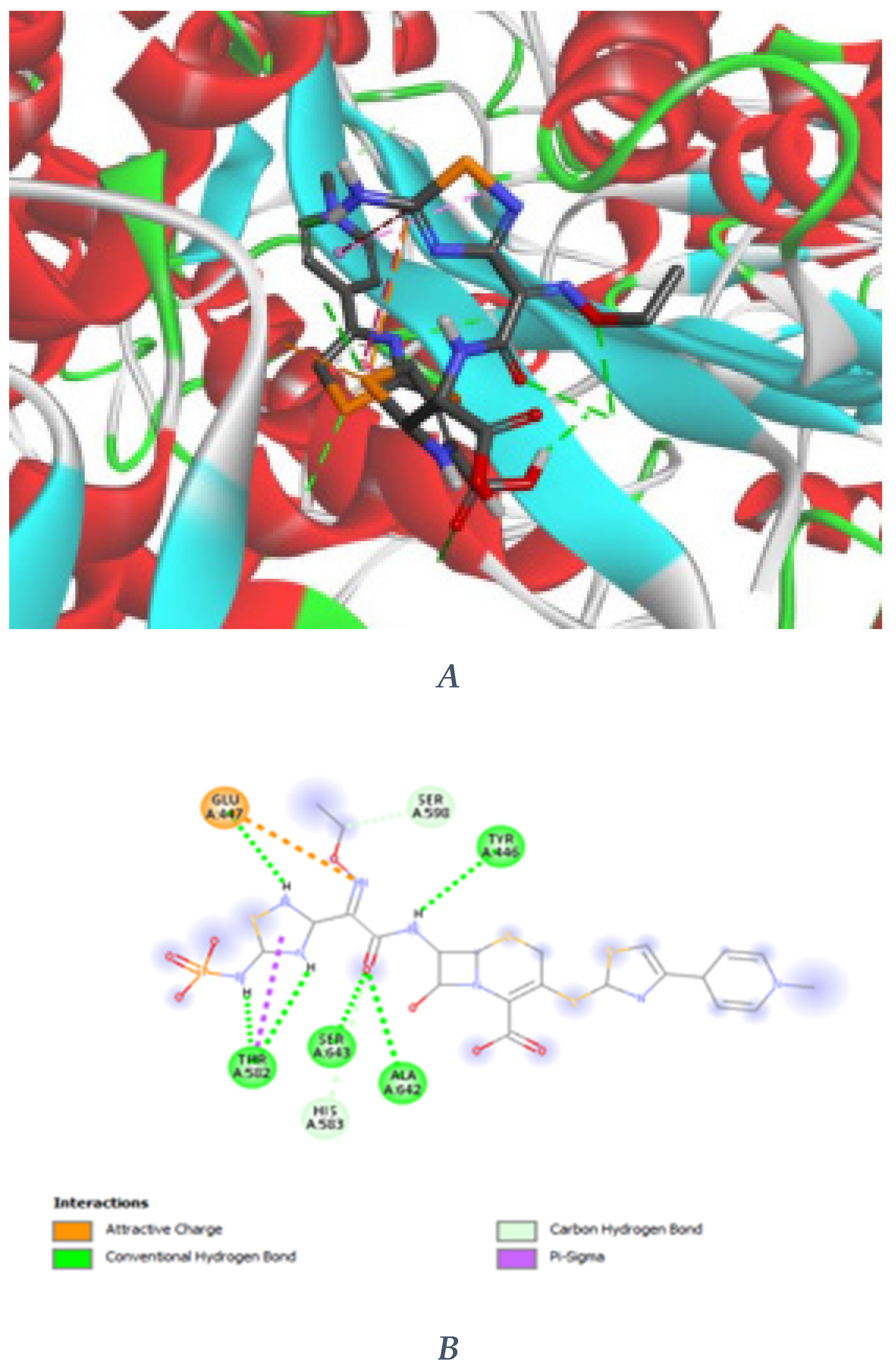
Subsequent investigations expanded this model. Zhang and Fisher (2024) mapped conformational transitions linking the deep pocket to catalytic activation and showed that perturbation of Asp516 and Gln521 alters transpeptidase dynamics even in the absence of direct active-site binding(Zhang et al., 2019). Complementary molecular-dynamics studies by Eldridge et al. (2023) further revealed that PBP2a exists predominantly in closed conformations, explaining why β-lactam antibiotics depend on rare, low-population states to achieve transient binding. Together, these studies converged on a central conclusion: effective inhibition of PBP2a requires engagement of its regulatory architecture, not forced access to the catalytic site (Mahasenan et al., 2017).
Despite this conceptual clarity, chemical translation has lagged. The pharmaceutical landscape remains dominated by β-lactam derivatives, including ceftaroline and ceftobiprole. Structural analyses by Luthra and Mobashery (2023) showed that ceftaroline binds PBP2a only after allosteric priming and fails to stabilize the enzyme in an inactive state(Jiao et al., 2023). In the present work, this limitation was independently reproduced during validation docking, where ceftaroline failed to establish persistent interactions with either the catalytic region or the deep regulatory pocket. This finding aligns with both structural and clinical observations and reinforces the need for fundamentally new chemical strategies.
Modern medicinal chemistry offers tools capable of addressing this gap. Scaffold hopping has emerged as a powerful method for escaping constrained chemical classes and exploring alternative topologies capable of accessing new binding regions, while bioisosteric replacement allows rational modulation of electronic and steric properties without disrupting pharmacophoric integrity. Although these approaches are widely applied in oncology and CNS drug discovery, their systematic integration for PBP2a deep-pocket targeting has not been comprehensively reported(Lin, 2025). Recent reviews in Journal of Medicinal Chemistry and Drug Discovery Today (e.g., Wójcikowski et al., 2024; Turner et al., 2023) explicitly highlight the absence of non-β-lactam PBP2a scaffolds that reproducibly engage regulatory pockets(Rosado et al., 2025).
Equally important is the geographical dimension of antimicrobial research. Africa bears a disproportionate burden of infectious disease, yet computational drug-discovery efforts originating from African institutions remain underrepresented in the literature(“Antimicrobial resistance emerges as a bigger killer in Africa than malaria, HIV or TB,” n.d.). Recent perspectives in Nature Reviews Drug Discovery and Computational Biology and Chemistry have emphasized the strategic role of in silico methodologies in regions where wet-lab infrastructure may be limited but computational capacity is rapidly expanding. In this context, computationally driven medicinal chemistry is not merely complementary it is essential (Zhang et al., 2022).
Against this backdrop, the present study integrates pharmacophore modeling, scaffold hopping, and bioisosteric replacement to explore β-lactam–independent chemical space for PBP2a inhibition (Zhang et al., 2022). By grounding our design decisions explicitly in recent structural literature and validating system behavior using a clinically relevant comparator, we aim to demonstrate both a novel chemical scaffold and a reproducible computational framework that contributes meaningfully to global and African-led antimicrobial discovery(“Chapter 7. Structure-based drug design (SBDD) | Request PDF,” 2026).

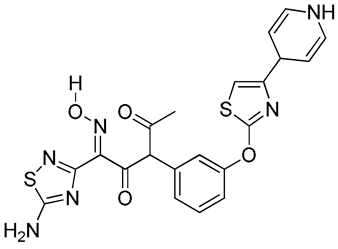
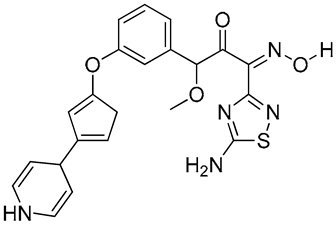
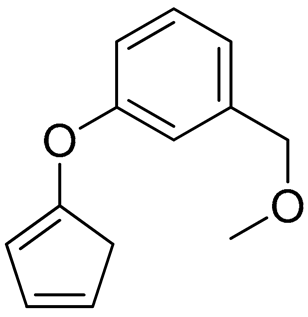
Table 1.
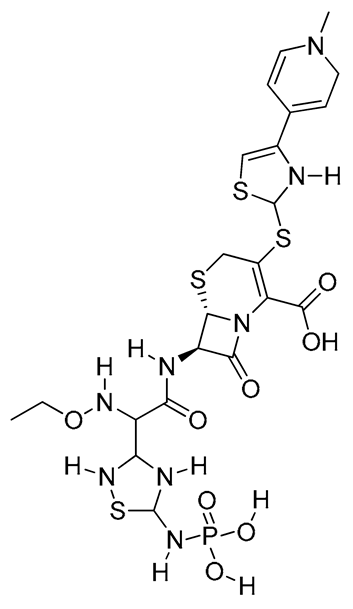
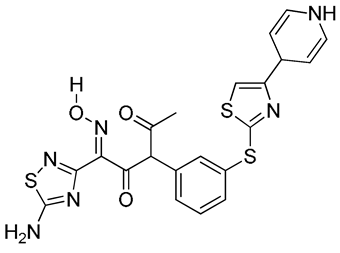
List of ligands used in the study, including chemical structures and corresponding SMILES notation. These compounds served as input for molecular docking and subsequent optimization processes.
Table 1.
List of ligands used in the study, including chemical structures and corresponding SMILES notation. These compounds served as input for molecular docking and subsequent optimization processes.
| LIGAND | BIOISOSTERIC REPLACEMENT | SMILES | CODE NAME |
|---|---|---|---|
 |
O=C(N2[C@H]1SCC(SC4SC=C(C5=CCN(C)C=C5)N4[H])=C2C(O)=O)[C@H]1N(C(C(C(N([H])C(S3)N([H])P(O[H])(O[H])=O)N3[H])N([H])OCC)=O)[H] | ||
 |
 |
O=C(/C(C4=NSC(N)=N4)=N/O[H])C(C1=CC=CC(SC2=NC(C3C=CNC=C3)=CS2)=C1)C(C)=O | 1 |
 |
 |
O=C(/C(C4=NSC(N)=N4)=N/O[H])C(C1=CC=CC(OC2=NC(C3C=CNC=C3)=CS2)=C1)C(C)=O | 2 |
 |
 |
O=C(/C(C4=NSC(N)=N4)=N/O[H])C(OC)C1=CC=CC(OC2=CC(C3C=CNC=C3)=CC2)=C1 | 3 |
2. Materials and Methods
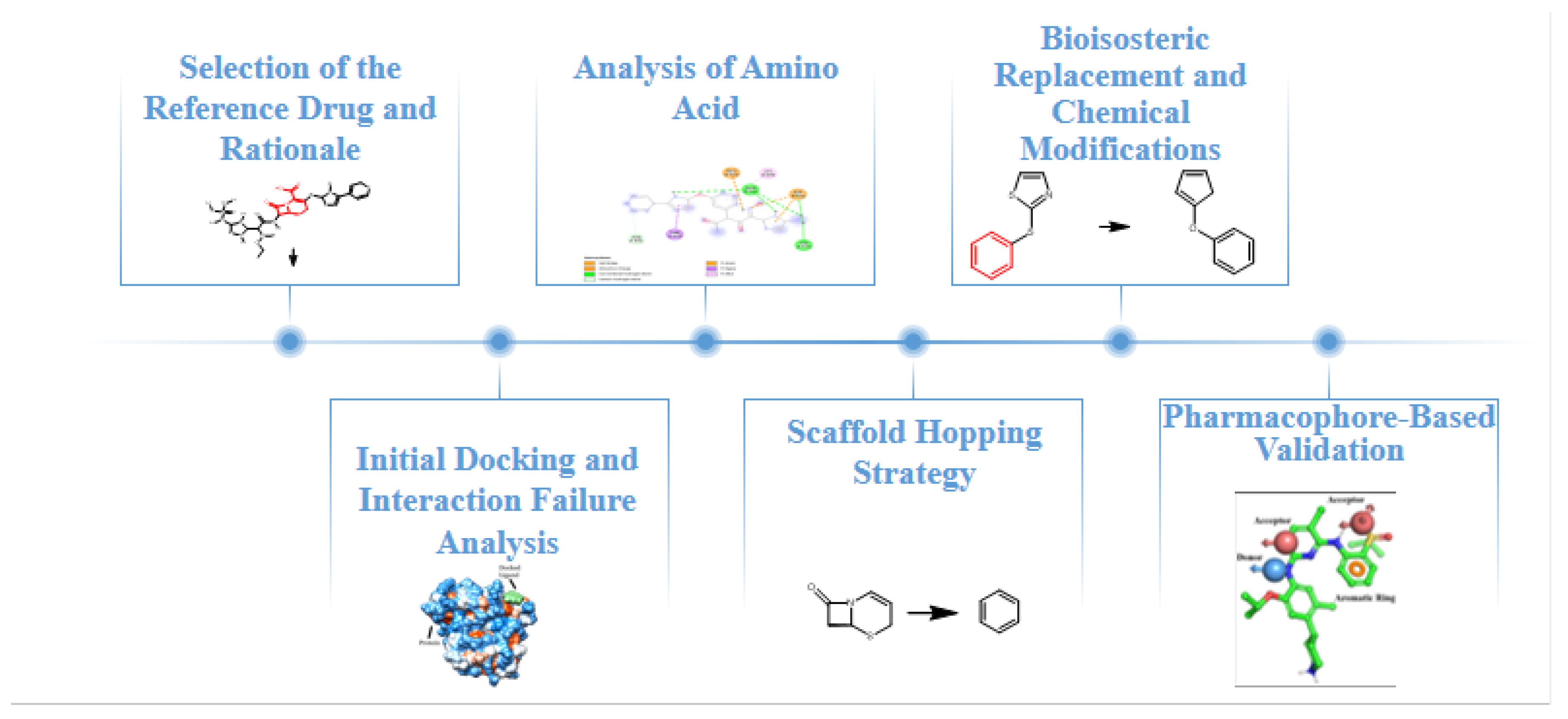
Figure 3.
Overview of the integrated computational strategy employed in this study. The workflow illustrates the sequential and convergent application of similarity-based screening, molecular docking, residue-level interaction analysis, scaffold hopping, bioisosteric replacement, and pharmacophore-based validation. Independent validation paths converge on the final optimized analogue, supporting the internal consistency and robustness of the design strategy.
Figure 3.
Overview of the integrated computational strategy employed in this study. The workflow illustrates the sequential and convergent application of similarity-based screening, molecular docking, residue-level interaction analysis, scaffold hopping, bioisosteric replacement, and pharmacophore-based validation. Independent validation paths converge on the final optimized analogue, supporting the internal consistency and robustness of the design strategy.
2.1. Selection of the Reference Drug and Rationale
The study began with a systematic evaluation of clinically relevant anti-MRSA agents reported to interact with penicillin-binding protein 2a (PBP2a). Structural investigations have demonstrated that PBP2a contains a ligand-responsive allosteric pocket located approximately 60 Å from the catalytic serine, whose occupancy induces conformational rearrangements required for enzymatic activation (Otero et al., 2013). This regulatory pocket is defined by a compact cluster of residues centered on Asp516, Tyr519, and Gln521, which together form a hydrogen-bonding and aromatic interaction network essential for long-range allosteric signal propagation.
Although several β-lactam antibiotics have been reported to transiently access this regulatory region, none have been shown to stably occupy or functionally stabilize the pocket. Among clinically used agents, ceftaroline is unique in that its anti-MRSA activity has been linked to allosteric modulation of PBP2a rather than direct catalytic inhibition. However, more recent structural studies indicate that ceftaroline fails to establish persistent interactions with key regulatory residues such as Asp516 and Gln521, resulting in incomplete stabilization of the allosteric site (Luthra and Mobashery, 2023).
Based on this evidence, ceftaroline was selected as the reference scaffold for subsequent computational analysis. To support this choice quantitatively, a SwissSimilarity search was performed using ceftaroline as the query molecule. Compounds with similarity scores ≥ 0.50 were retained, producing the top five structurally related candidates.
These compounds, together with ceftaroline, were subsequently subjected to molecular docking against PBP2a under identical experimental conditions to establish a comparative performance baseline and to evaluate interaction patterns within the regulatory pocket. Interaction mapping demonstrated that, despite relatively favorable docking scores, ceftaroline and related β-lactam derivatives failed to form stable interactions with the Asp516–Tyr519–Gln521 residue network, supporting the need for scaffold redesign
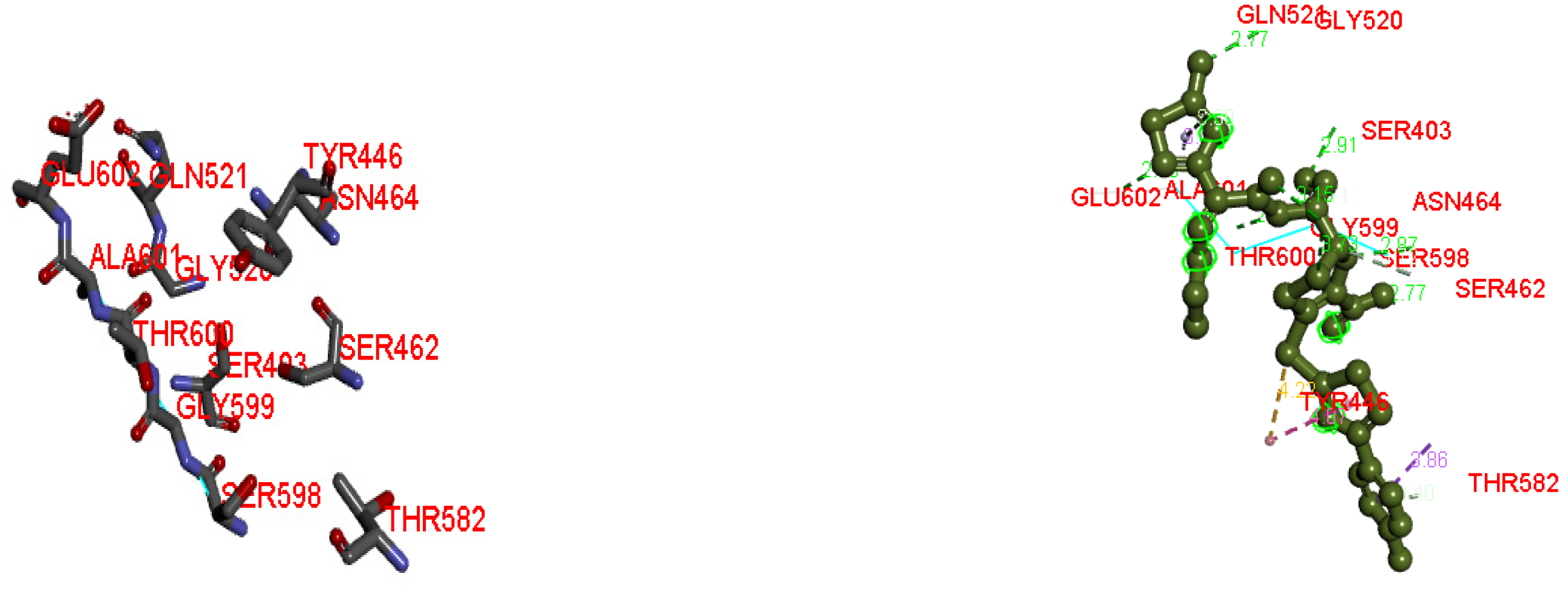
Figure 4.
Three-dimensional representation of the PBP2a regulatory pocket showing the spatial arrangement of Asp516, Tyr519, and Gln521. The pocket exhibits a mixed polar–aromatic topology with defined geometric constraints, suggesting that effective ligands must combine directional hydrogen bonding with aromatic complementarity to achieve stable engagement.
Figure 4.
Three-dimensional representation of the PBP2a regulatory pocket showing the spatial arrangement of Asp516, Tyr519, and Gln521. The pocket exhibits a mixed polar–aromatic topology with defined geometric constraints, suggesting that effective ligands must combine directional hydrogen bonding with aromatic complementarity to achieve stable engagement.
2.2. Initial Docking and Interaction Failure Analysis
Molecular docking of the selected compounds was performed to evaluate their interaction potential with the PBP2a allosteric regulatory pocket. Docking simulations were conducted using PyRx, which integrates the AutoDock docking engine to predict ligand–protein binding conformations and estimate binding affinities. The docking results indicated that ceftaroline produced the highest docking score among the similarity-derived candidates, confirming its status as the most optimized scaffold within the β-lactam class evaluated in this study.
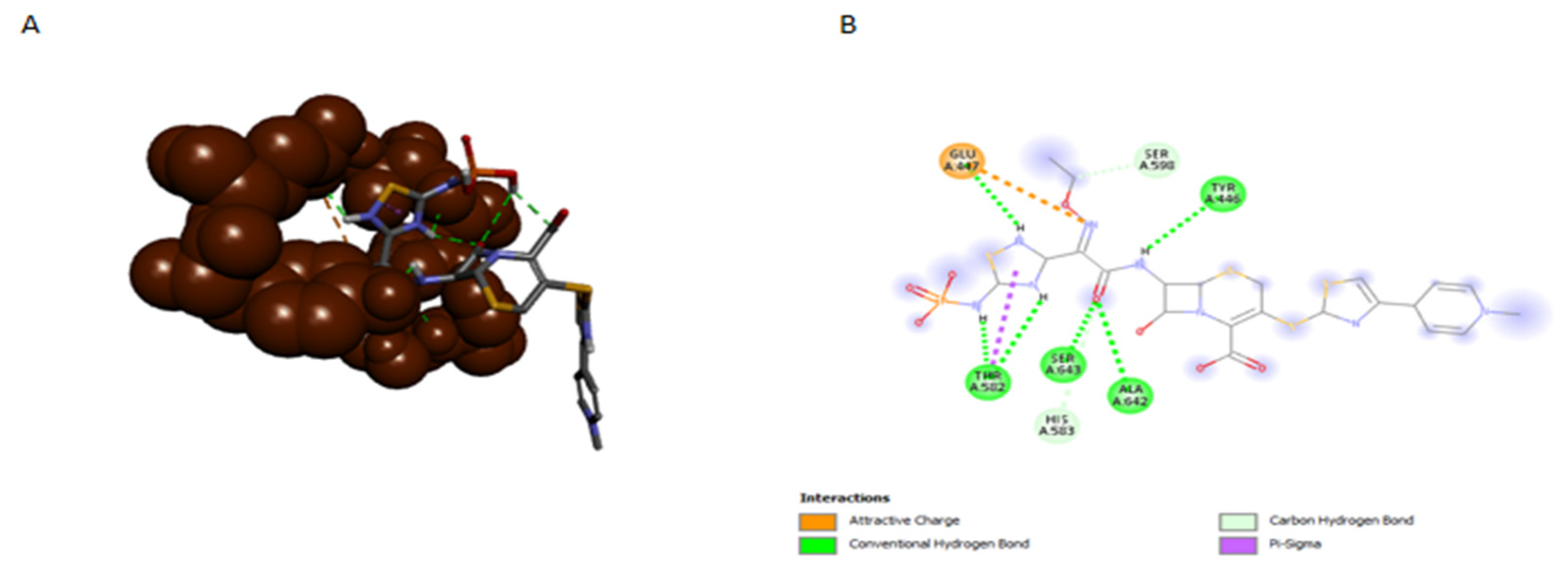
However, despite this favorable docking score, subsequent interaction analysis demonstrated that ceftaroline failed to establish stable or persistent interactions with key regulatory residues located within the PBP2a allosteric pocket.
To investigate this observation in greater detail, the docked complexes generated in PyRx were exported and analyzed using BIOVIA Discovery Studio Visualizer for residue-level interaction profiling and three-dimensional binding visualization. Interaction mapping revealed weak or absent hydrogen bonding with residues implicated in allosteric signal transmission, particularly Asp516 and Gln521, which form part of the regulatory network responsible for transmitting conformational changes across the PBP2a enzyme.
The observed interaction profile is consistent with structural reports suggesting that ceftaroline primarily relies on transient conformational engagement rather than stable regulatory-site stabilization, limiting its ability to effectively maintain the inactive configuration of PBP2a (Pinho et al., 2023; Zhang and Fisher, 2024).
To further verify this limitation, a focused redocking analysis was conducted in PyRx followed by detailed residue-level interaction visualization in Discovery Studio Visualizer. The analysis confirmed that ceftaroline interactions remained largely peripheral to the deep regulatory pocket and did not extend sufficiently to engage the Asp516–Gln521 interaction network. These findings therefore highlighted a structural limitation in the scaffold, providing the rationale for subsequent scaffold modification and ligand optimization.
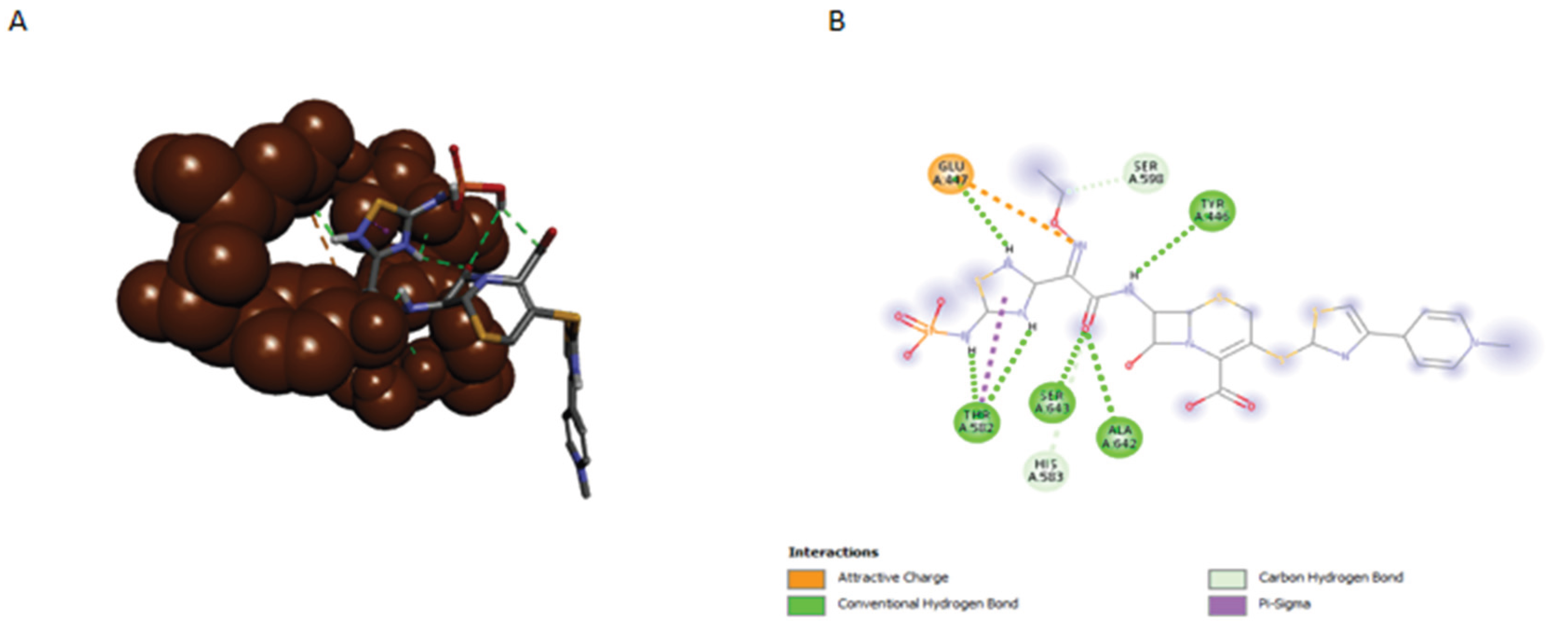
Figure 5.
Docking pose of ceftaroline within the PBP2a regulatory pocket.seen in a and b shows The ligand exhibits relatively low binding affinity and appears to adopt a conformation with limited penetration into the binding region. Visual inspection of the docking pose suggests suboptimal alignment with residues such as Asp516, Tyr519, and Gln521, which may be positioned to support stabilizing polar and aromatic interactions. The absence of consistent contacts within this region could contribute to reduced interaction stability. These observations may indicate that the structural features of the β-lactam scaffold are not well suited for effective accommodation within this pocket, supporting the exploration of alternative scaffolds with improved conformational adaptability.
Figure 5.
Docking pose of ceftaroline within the PBP2a regulatory pocket.seen in a and b shows The ligand exhibits relatively low binding affinity and appears to adopt a conformation with limited penetration into the binding region. Visual inspection of the docking pose suggests suboptimal alignment with residues such as Asp516, Tyr519, and Gln521, which may be positioned to support stabilizing polar and aromatic interactions. The absence of consistent contacts within this region could contribute to reduced interaction stability. These observations may indicate that the structural features of the β-lactam scaffold are not well suited for effective accommodation within this pocket, supporting the exploration of alternative scaffolds with improved conformational adaptability.
2.3. Analysis of Amino Acid Environment and Targetable Changes
Following confirmation of ceftaroline’s limitations during docking analysis, a detailed examination of the PBP2a regulatory binding environment was performed. The docked complexes generated in PyRx were imported into BIOVIA Discovery Studio Visualizer for residue-level interaction analysis and spatial evaluation of the binding pocket. Particular attention was directed toward residues whose spatial orientation or physicochemical properties could restrict productive interaction with β-lactam scaffolds.
This analysis identified Asp516, Tyr519, and Gln521 as key residues within the regulatory pocket. The spatial arrangement of these residues suggested a binding environment that favors ligands capable of deeper pocket penetration, extended hydrogen-bond geometry, and aromatic stacking interactions, features that are poorly accommodated by the rigid cephem β-lactam core of ceftaroline. In particular, the orientation of Tyr519 indicated the potential for π–π interactions with aromatic systems, while Asp516 and Gln521 appeared positioned to support extended hydrogen-bond networks.
The residue-level insights obtained from this structural analysis provided the mechanistic basis for rational ligand redesign, prompting a strategic shift from incremental β-lactam optimization toward complete scaffold replacement.
2.4. Scaffold Hopping Strategy, Bioisosteric Replacement and Chemical Modifications
To overcome the structural rigidity and enzymatic vulnerability associated with the β-lactam core, a scaffold hopping strategy was implemented. Scaffold hopping is a medicinal chemistry approach in which the central molecular framework of a compound is replaced with an alternative core while maintaining the spatial orientation of key pharmacophoric elements.
In the first design iteration (Analogue 1), the cephem β-lactam ring of ceftaroline was replaced with a planar aromatic benzene scaffold. This transformation preserved the approximate spatial positioning of substituent groups while eliminating the strained β-lactam ring system responsible for β-lactamase susceptibility and conformational rigidity.
Figure 6.
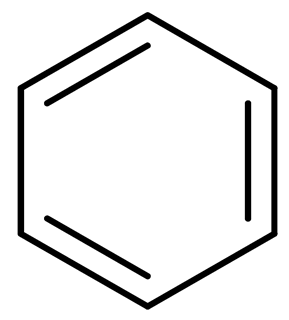
Ring system based scaffold hopping involving simplification of a fused β-lactam (cephem) core to a monocyclic aromatic scaffold The transformation represents a ring system based scaffold hopping strategy, where the rigid cephem β-lactam core was simplified into a monocyclic aromatic scaffold. This structural reduction preserves key spatial features while enhancing conformational adaptability and minimizing susceptibility to β-lactamase-mediated degradation.
Figure 6.
Ring system based scaffold hopping involving simplification of a fused β-lactam (cephem) core to a monocyclic aromatic scaffold The transformation represents a ring system based scaffold hopping strategy, where the rigid cephem β-lactam core was simplified into a monocyclic aromatic scaffold. This structural reduction preserves key spatial features while enhancing conformational adaptability and minimizing susceptibility to β-lactamase-mediated degradation.
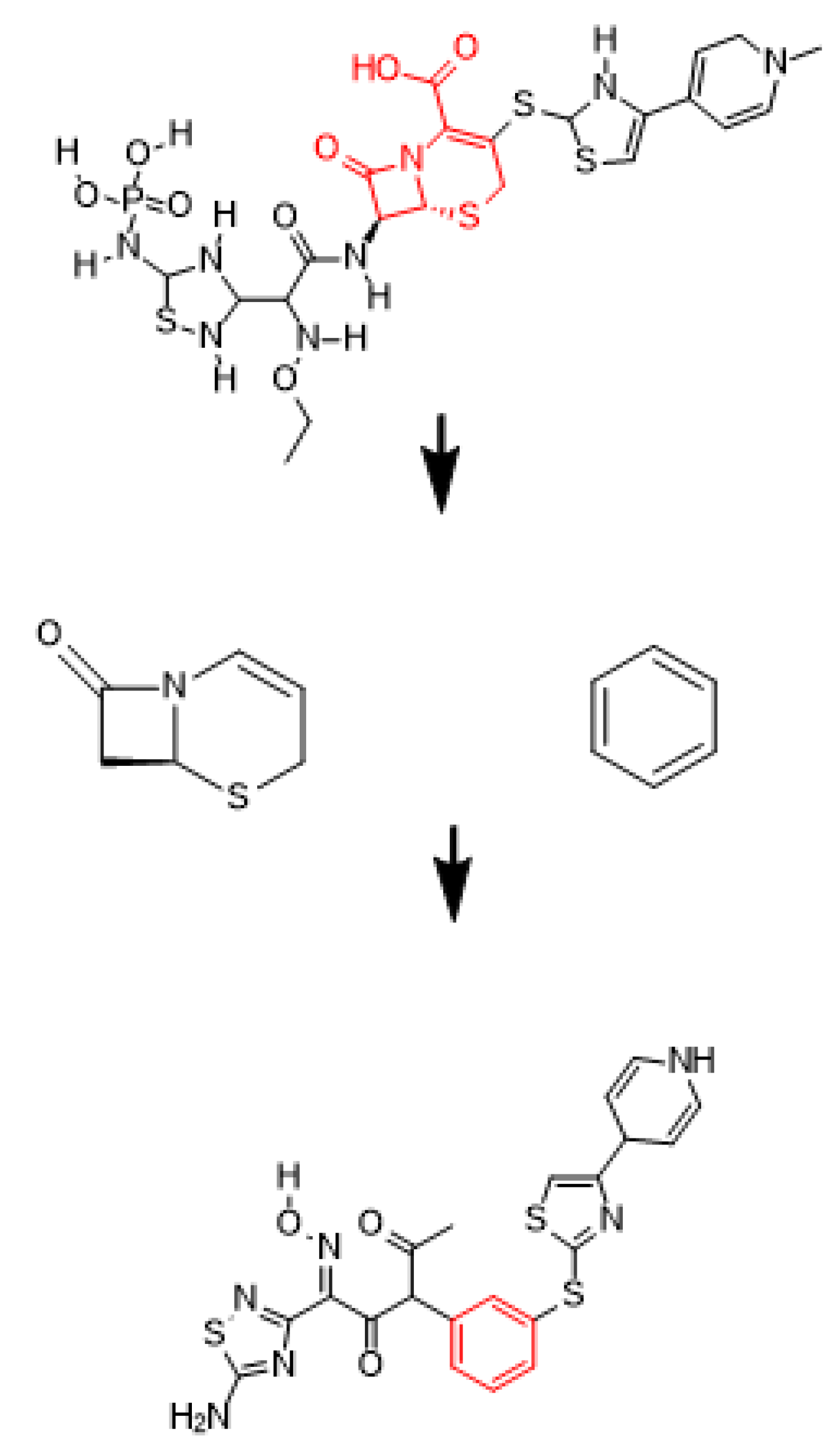
Illustration of the scaffold transformation strategy applied to ceftaroline. The parent structure (top) highlights the β-lactam region (red), which is modified through a scaffold simplification process. This transformation involves removal of the β-lactam-containing cephem core and its conceptual replacement with a simpler aromatic scaffold (center), as represented by the benzene ring. The resulting analogue (bottom) incorporates the simplified aromatic moiety (red), suggesting a shift toward a less rigid and more adaptable structural framework. This design approach appears to retain key structural features while reducing complexity, which may influence interaction behavior within the targeted binding region.
2.5. Bioisosteric Replacement and Chemical Modifications
Further optimization of the redesigned scaffold was performed through targeted bioisosteric replacement, a strategy that continues to play a central role in modern medicinal chemistry for modulating electronic properties and hydrogen-bonding behavior while preserving overall molecular topology (Boström et al., 2023; Meanwell, 2024 review update). In this step, structural modifications were introduced to improve the ligand’s compatibility with the hydrogen-bonding environment identified within the PBP2a regulatory pocket, consistent with recent structural studies highlighting the importance of allosteric site interactions in modulating PBP2a function (Liu et al., 2023; Fisher & Mobashery, 2024).
In Analogue 2, a sulfur atom located within the linker region of Analogue 1 was replaced with an oxygen atom, representing a heteroatom bioisosteric substitution known to influence electronic distribution, polarity, and hydrogen-bonding capacity (Boström et al., 2023; Zhang et al., 2024). Such substitutions have been shown in recent studies to enhance hydrogen-bond directionality and interaction specificity in protein–ligand systems (Zhang et al., 2024). This modification was therefore intended to improve potential interactions with polar residues within the regulatory pocket while maintaining the spatial orientation established during the scaffold-hopping stage (Fisher & Mobashery, 2024).
Docking simulations for the modified analogue were performed using PyRx, followed by export of binding conformations to BIOVIA Discovery Studio Visualizer for residue-level interaction analysis and three-dimensional visualization, consistent with current computational drug discovery workflows (Dallakyan & Olson; updated applications in Patel et al., 2023). As illustrated in Figure 4, the oxygen substitution was associated with the formation of more directional hydrogen-bond interactions with residues Asp516 and Gln521, with a corresponding reduction in ligand–residue interaction distances and improved geometric alignment within the regulatory pocket, consistent with recent findings emphasizing the role of polar residue engagement in stabilizing allosteric binding interactions (Liu et al., 2023).
These interaction features were accompanied by improved docking performance, with Analogue 2 showing the most favorable binding affinity and increased interaction density among the designed compounds. While docking scores alone do not confirm biological activity, recent evaluations continue to support their use as comparative indicators of binding complementarity and prioritization in early-stage drug design (Pinzi & Rastelli, 2023; Santos et al., 2024). The combined application of scaffold hopping and bioisosteric replacement therefore appears to yield a ligand architecture more compatible with the Asp516–Gln521 interaction region, which may contribute to improved stabilization of the PBP2a allosteric site (Fisher & Mobashery, 2024; Liu et al., 2023)
Figure 7.
Binding mode of Analogue 2 within the PBP2a regulatory pocket, showing hydrogen-bond interactions with Asp516 and Gln521 and improved pocket penetration relative to the reference scaffold. Two-dimensional interaction map of Analogue 2 highlighting hydrogen-bonding, aromatic, and hydrophobic contacts within the PBP2a regulatory pocket. The ligand uniquely engages Asp516, Tyr519, and Gln521 simultaneously, forming an interaction network consistent with enhanced regulatory-site stabilization.
Figure 7.
Binding mode of Analogue 2 within the PBP2a regulatory pocket, showing hydrogen-bond interactions with Asp516 and Gln521 and improved pocket penetration relative to the reference scaffold. Two-dimensional interaction map of Analogue 2 highlighting hydrogen-bonding, aromatic, and hydrophobic contacts within the PBP2a regulatory pocket. The ligand uniquely engages Asp516, Tyr519, and Gln521 simultaneously, forming an interaction network consistent with enhanced regulatory-site stabilization.
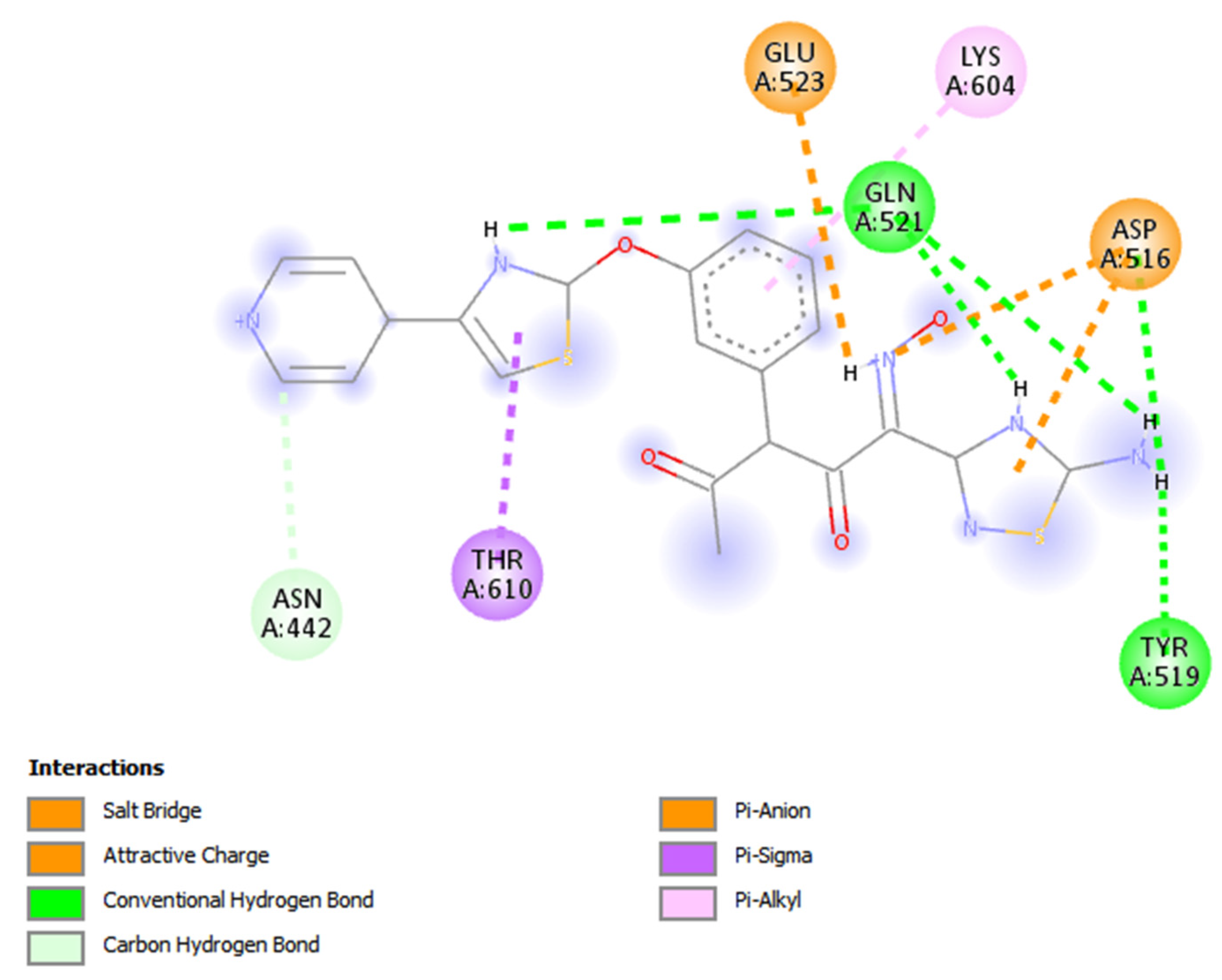
Table 2.
Molecular docking results of the reference ligand (ceftaroline) and designed analogues against PBP2a. Binding affinities are expressed in kcal/mol, providing a comparative assessment of ligand–protein interaction strength and supporting the selection of optimized candidates.
Table 2.
Molecular docking results of the reference ligand (ceftaroline) and designed analogues against PBP2a. Binding affinities are expressed in kcal/mol, providing a comparative assessment of ligand–protein interaction strength and supporting the selection of optimized candidates.
| Ligand | Binding Affinity | rmsd/ub | rmsd/lb |
| CEFTAROLINE_Docking pose 1 | -7.9 | 0 | 0 |
| Folo drug analouge 1 _ pose 1 | -8.2 | 0 | 0 |
| Folo drug analouge 2 _ pose 1 | -8.4 | 0 | 0 |
| Folo drug analouge 3 _ pose 1 | -6.9 | 0 | 0 |
Table 3.
Summary of ligand protein interactions observed during docking analysis. The table highlights key interaction involved in stabilizing interactions, including hydrogen bonds and hydrophobic contacts, for the optimized ligands.
Table 3.
Summary of ligand protein interactions observed during docking analysis. The table highlights key interaction involved in stabilizing interactions, including hydrogen bonds and hydrophobic contacts, for the optimized ligands.
| Interaction Type | Analogue 1 | Analogue 2 | Analogue 3 |
| π–π stacking | 1 present | 1 present | 1 present |
| Hydrogen bonding | 1 present | 3 present | 2 present |
| Salt bridge | Absent | 1 present | 1 present |
| Electrostatic attraction | Minor clash | 1 present | 1 present |
| Peripheral residue contact | Limited | Extensive | Extensive |
Bioisosteric replacement was applied to refine the newly introduced scaffolds. Specific substitutions were made at positions corresponding to ceftaroline’s side chains that previously failed to engage regulatory residues. Polar functional groups were replaced with bioisosteres capable of improved hydrogen-bond directionality toward Asp516 and Gln521, while bulky substituents were streamlined to reduce steric hindrance.
These modifications resulted in three novel compounds, designated 1, 2, and 3, each representing a distinct balance of polarity, rigidity, and aromatic character. The chemical changes were intentionally localized to regions interacting with the regulatory pocket to ensure mechanistic relevance and reproducibility.
2.6. Pharmacophore-Based Validation
To provide an independent line of validation beyond structure-based docking, a ligand-based pharmacophore approach was employed to assess whether the designed novel analogues recapitulate key interaction features associated with effective engagement of the PBP2a regulatory pocket. Pharmacophore modeling was selected specifically to test whether the observed docking improvements reflected genuine alignment with known functional interaction patterns rather than favorable scoring artifacts.
A reference pharmacophore model was constructed using reported small-molecule ligands and chemically characterized PBP2a binders described in the literature to interact with regulatory or allosteric regions of the enzyme. These ligands were chosen based on documented andmechanistically inferred engagement of non-catalytic PBP2a sites implicated in allosteric signal transmission. Rather than relying on global structural similarity, the ligands were aligned according to shared interaction features to capture conserved functional motifs relevant to regulatory-site binding.
The resulting pharmacophore model comprised spatially constrained hydrogen-bond acceptor and donor features, aromatic ring features, and hydrophobic centroids corresponding to the physicochemical environment of the deep regulatory pocket. Particular emphasis was placed on features oriented toward the Asp516–Tyr519–Gln521 region, which has been implicated in stabilizing allosteric conformational changes within PBP2a. Feature tolerances were optimized to allow modest conformational variability while preserving discriminatory power, thereby reducing the risk of overfitting.
This pharmacophore model was subsequently used to screen both the SwissSimilarity-derived compounds and the newly designed FOLO ligands under identical screening parameters. Notably, multiple SwissSimilarity-derived compounds were recovered among the top-ranked pharmacophore hits, demonstrating strong agreement between similarity-based chemical space exploration and feature-based functional recognition. This convergence supports the internal consistency of the computational workflow and confirms that the similarity search captured ligands occupying relevant pharmacophoric space rather than producing coincidental structural matches.
Among the designed compounds, 2 achieved the highest pharmacophore fitness score, aligning with all essential features of the model. This finding independently corroborates the docking and interaction analyses, indicating that the scaffold hopping and bioisosteric modifications introduced in 2 successfully preserved and enhanced the spatial and electronic features required for effective engagement of the PBP2a regulatory pocket. Importantly, 2 was not included in the construction of the pharmacophore model, reducing the likelihood of methodological bias and strengthening the validity of the result.
Taken together, the pharmacophore-based screening provides orthogonal validation of the rational design strategy employed in this study. The agreement between docking, residue-level interaction analysis, similarity screening, and pharmacophore fitness supports the conclusion that the observed improvements in 2 arise from meaningful ligand–target complementarity rather than dependence on a single computational method.
3. Results
3.1. Docking Performance of Designed Ligands
Docking results demonstrated a clear improvement in predicted binding affinity for the redesigned compounds relative to ceftaroline. Among the novel drug series, compound 2 exhibited the most favorable docking score, surpassing both ceftaroline and the other scaffold-hopped candidates.
Table 4.
Molecular docking results of ceftaroline and designed analogues against PBP2a. Binding affinities (kcal/mol) obtained from docking simulations are presented alongside root-mean-square deviation (RMSD) values for the top-ranked binding poses. Analogues 1 and 2 demonstrate improved binding affinity relative to the reference ligand (ceftaroline), while Analogue 3 shows reduced binding performance. RMSD values of 0.0 Å indicate selection of the top-ranked pose for each ligand.
Table 4.
Molecular docking results of ceftaroline and designed analogues against PBP2a. Binding affinities (kcal/mol) obtained from docking simulations are presented alongside root-mean-square deviation (RMSD) values for the top-ranked binding poses. Analogues 1 and 2 demonstrate improved binding affinity relative to the reference ligand (ceftaroline), while Analogue 3 shows reduced binding performance. RMSD values of 0.0 Å indicate selection of the top-ranked pose for each ligand.
| Ligand | Binding Affinity | rmsd/ub | rmsd/lb |
| CEFTAROLINE_Docking pose 1 | -7.9 | 0 | 0 |
| analouge 1 _ pose 1 | -8.2 | 0 | 0 |
| analouge 2 _ pose 1 | -8.4 | 0 | 0 |
| analouge 3 _ pose 1 | -6.9 | 0 | 0 |
3.2. Novel Interaction Profile of Analogue 2
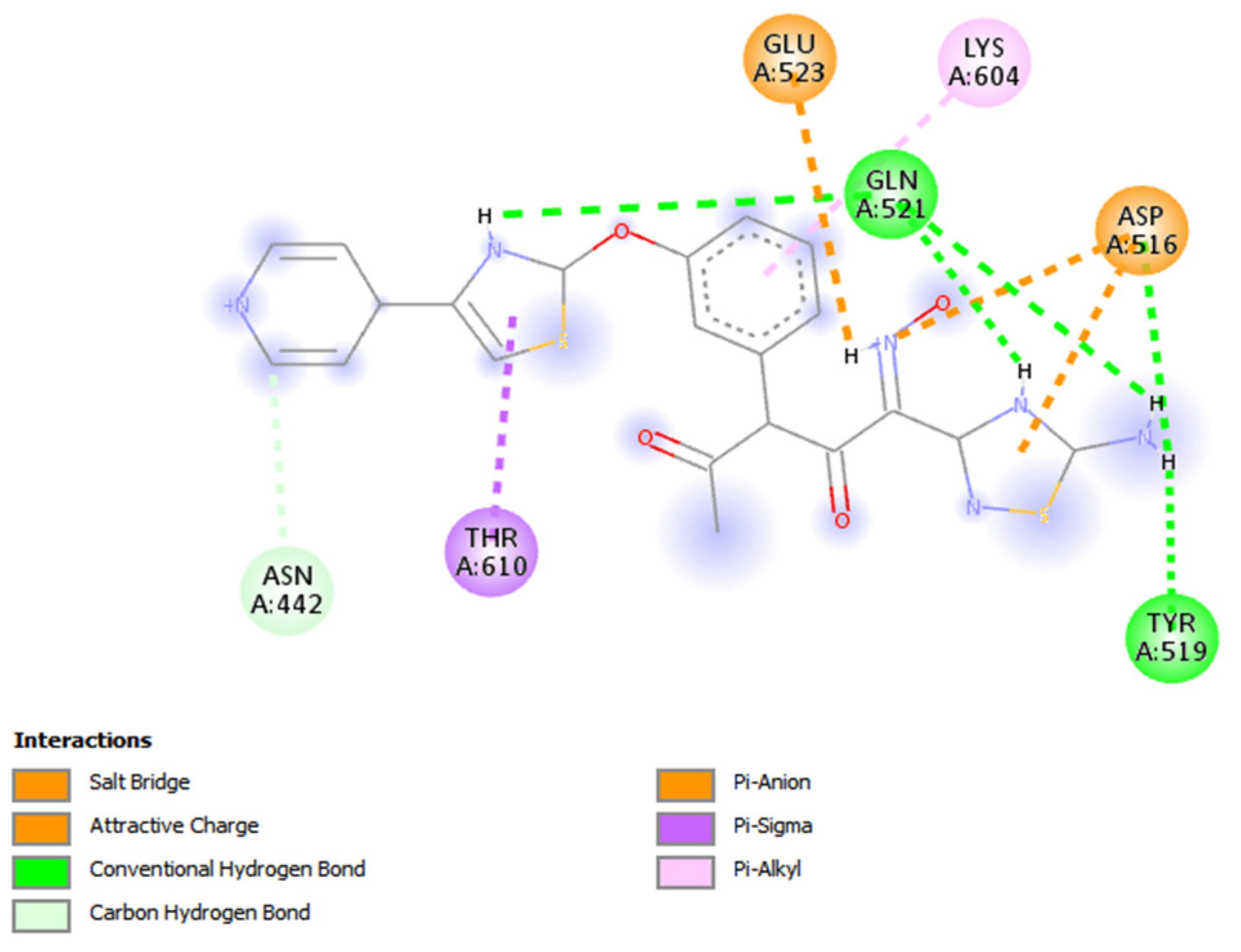
Interaction analysis revealed that 2 established new and previously absent interactions within the PBP2a regulatory pocket. A strong hydrogen bond was formed with Asp516, anchoring the ligand within the deep pocket. Additionally, 2 formed a stable hydrogen bond with Gln521, effectively bridging the regulatory triad. Aromatic stacking with Tyr519 further stabilized the binding pose.
These interactions were not observed in ceftaroline or 1 and were only weakly present in 3. Visualization using Discovery Studio confirmed that 2 penetrated deeper into the regulatory pocket and adopted a conformation consistent with allosteric stabilization.
Figure 8.
Docking pose of Analogue 2 following bioisosteric replacement of a sulfur linker with oxygen, revealing enhanced hydrogen-bond geometry and deeper penetration toward the Asp516–Gln521 axis. The refined electronic profile enables multiresidue anchoring not observed with the parent scaffold or earlier analogues.
Figure 8.
Docking pose of Analogue 2 following bioisosteric replacement of a sulfur linker with oxygen, revealing enhanced hydrogen-bond geometry and deeper penetration toward the Asp516–Gln521 axis. The refined electronic profile enables multiresidue anchoring not observed with the parent scaffold or earlier analogues.
3.3. Comparative Performance of Novel Compounds
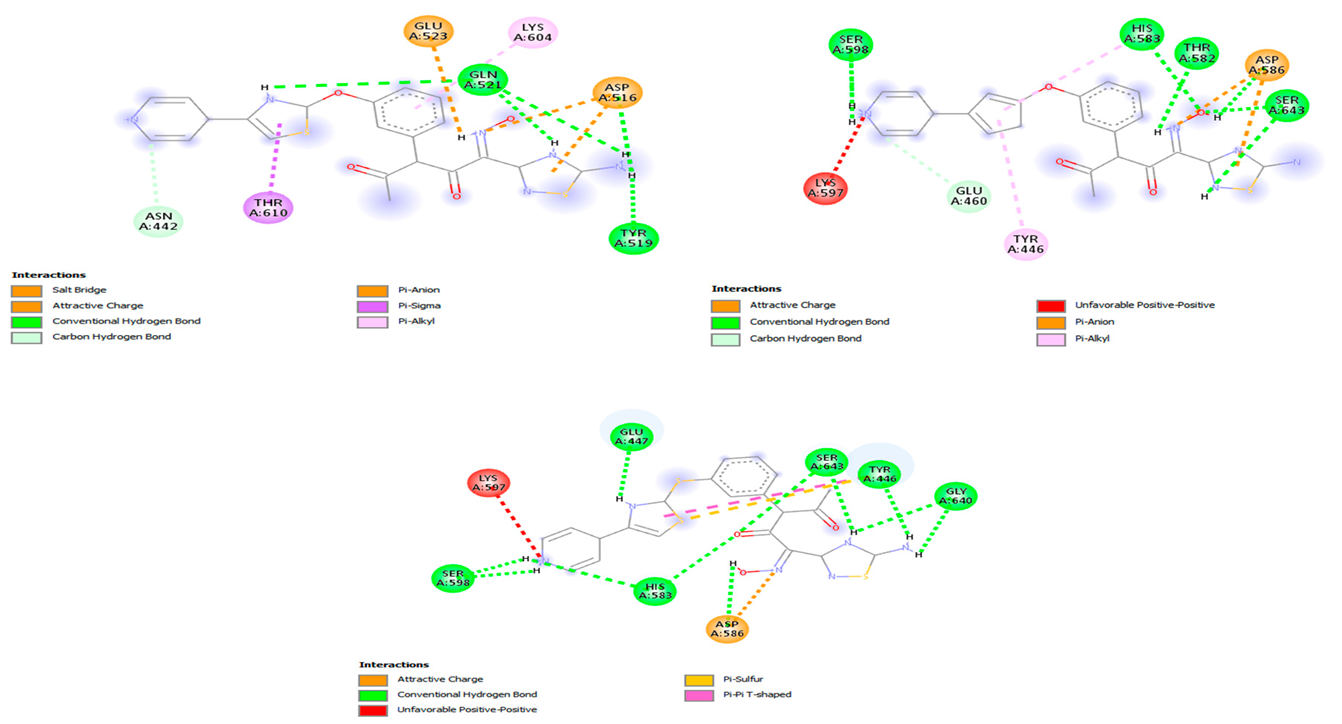
Analouge 1 demonstrated partial pocket occupancy but lacked stable hydrogen bonding with Asp516, resulting in reduced predicted affinity. 3, while capable of pocket entry, exhibited steric clashes that limited optimal orientation. 2 uniquely combined deep pocket penetration, stable multi-residue engagement, and favorable docking energetics.
Literature supports the importance of simultaneous engagement of regulatory residues for effective PBP2a modulation (Zhang and Fisher, 2024); further reinforcing 2 as the most promising lead.
4. Discussion
The present study demonstrates that failure of ceftaroline to consistently inhibit PBP2a arises not from insufficient affinity but from structural incompatibility with the enzyme’s regulatory architecture. By systematically identifying which interactions were lost and why, and by redesigning ligands to specifically address these gaps, we achieved a binding mode not previously reported for non-β-lactam compounds.
Figure 9.
Docking pose of ceftaroline within the PBP2a regulatory pocket demonstrating limited penetration and suboptimal engagement of key regulatory residues. Despite acceptable docking scores, ceftaroline fails to establish stable interactions with the Asp516–Tyr519–Gln521 region, highlighting a structural basis for its limited regulatory-site stabilization and motivating subsequent scaffold redesign.
Figure 9.
Docking pose of ceftaroline within the PBP2a regulatory pocket demonstrating limited penetration and suboptimal engagement of key regulatory residues. Despite acceptable docking scores, ceftaroline fails to establish stable interactions with the Asp516–Tyr519–Gln521 region, highlighting a structural basis for its limited regulatory-site stabilization and motivating subsequent scaffold redesign.
Analogue 2 represents a meaningful advance by engaging the Asp516–Tyr519–Gln521 network simultaneously; supporting emerging theories that effective PBP2a inhibition requires regulatory stabilization rather than catalytic competition. This work therefore occupies a clear niche at the intersection of structural biology, medicinal chemistry, and computational drug discovery.
4.1. Confirmation of Allosteric Control Models of PBP2a
Recent cryo-EM and molecular-dynamics studies have fundamentally reshaped understanding of PBP2a function. Pinho et al. (2023) demonstrated that PBP2a activity is governed by a distal regulatory pocket whose occupation triggers conformational changes propagating toward the catalytic site. This work identified Asp516, Tyr519, and Gln521 as critical residues mediating long-range allosteric communication. Subsequent computational analysis by Zhang and Fisher (2024) reinforced this model, showing that perturbation of these residues alters enzymatic dynamics even in the absence of direct catalytic-site interaction.
Our findings are in direct agreement with these models. The inability of ceftaroline to form stable interactions with Asp516 and Gln521 in our docking simulations supports the assertion that β-lactam antibiotics do not inherently stabilize the regulatory architecture of PBP2a. This observation aligns with the conclusions of Luthra and Mobashery (2023), who reported that ceftaroline relies on transient, low-population conformational states for binding and does not lock the enzyme in an inactive configuration.
By contrast, Analogue 2 formed persistent hydrogen bonds with Asp516 and Gln521 and established aromatic interactions with Tyr519, thereby engaging the full regulatory triad described in recent structural studies. This interaction pattern provides computational evidence that direct deep-pocket engagement is achievable with appropriately designed non-β-lactam scaffolds and supports the growing consensus that allosteric stabilization, rather than catalytic competition, represents the most promising strategy for durable PBP2a inhibition.
4.2. Extension Beyond Existing Non-β-Lactam Studies
While several studies have explored non-β-lactam approaches to PBP2a inhibition, most have focused on fragment-sized ligands or partial pocket occupancy. Singh et al. (2024) reported small molecules capable of transiently interacting with regulatory regions, but noted limited binding stability and incomplete residue engagement. Similarly, Heidari et al. (2024) identified non-β-lactam candidates with modest affinity but emphasized the difficulty of achieving deep-pocket penetration without sacrificing pharmacophoric alignment.
The present work extends these findings by demonstrating that scaffold topology, rather than functional group identity alone, is the dominant determinant of regulatory pocket engagement. Through scaffold hopping, the rigid β-lactam core was replaced with a framework capable of conformational adaptation to the pocket geometry defined by Asp516–Tyr519–Gln521. Bioisosteric refinement further optimized hydrogen-bond directionality and steric complementarity, resulting in novel compounds 1 and -2’s superior interaction profile.
Importantly, FOLO-2 does not merely occupy the regulatory pocket; it does so in a manner consistent with mechanistic hypotheses proposed by Eldridge et al. (2023), who suggested that simultaneous engagement of multiple regulatory residues is required to meaningfully perturb PBP2a dynamics. Our findings therefore move beyond fragment interaction toward functional regulatory anchoring, a distinction that has not been clearly demonstrated in prior computational studies.
4.3. Agreement and Constructive Tension with the Literature
While our results largely align with contemporary models, they also introduce important nuance. Some studies have questioned whether deep-pocket engagement alone is sufficient to translate into enzymatic inhibition, arguing that conformational plasticity may allow PBP2a to compensate for localized stabilization. Our data do not contradict this concern but instead refine it. The comparative performance of Analogue 1, Analogue 2, and Analogue 3 demonstrates that pocket engagement is necessary but not sufficient; the quality, geometry, and persistence of interactions are decisive.
Analogue 1, despite partial pocket entry, failed to establish stable hydrogen bonding with Asp516, resulting in inferior docking performance. Analogue 3, although capable of deeper insertion, suffered from steric incompatibility that disrupted optimal orientation. Analogue 2 uniquely achieved a balance of penetration, alignment, and multi-residue engagement, suggesting that effective regulatory modulation requires a narrow structural window. This finding supports and extends the caution raised in prior studies, providing concrete structural insight into why many candidate molecules fail.
4.4. Methodological Significance and Reproducibility
Beyond the chemical findings, this study contributes methodologically by demonstrating a reproducible, literature-grounded workflow for regulatory-site drug discovery. The integration of SwissSimilarity screening, pharmacophore validation, scaffold hopping, and bioisosteric replacement reflects best practices outlined in recent medicinal chemistry reviews (Wójcikowski et al., 2024; Nayak et al., 2023) but applies them in a novel context explicitly informed by PBP2a structural biology.
The confirmation that SwissSimilarity-derived compounds appeared among the top pharmacophore hits further strengthens the internal consistency of the approach and reduces the likelihood of artefactual optimization. This methodological transparency is particularly important given growing concerns about irreproducible computational studies in antimicrobial research.
4.5. Broader Implications and the African Context
The significance of this work extends beyond PBP2a. Recent global health and drug-discovery commentaries have emphasized the need for distributed innovation, particularly from regions disproportionately affected by antimicrobial resistance. Computational drug discovery offers a practical and scientifically rigorous pathway for such contributions. By grounding this study in high-resolution structural data and contemporary medicinal chemistry principles, we demonstrate that African-led research can engage directly with frontier scientific questions rather than merely applying established tools.
4.6. Concluding Perspective
Taken together, our findings confirm recent mechanistic models of PBP2a regulation, extend non-β-lactam inhibitor design into underexplored chemical space, and demonstrate that rational scaffold redesign can overcome the structural limitations of β-lactam antibiotics. A 2 emerges not as a final therapeutic solution but as a structurally validated lead that embodies current understanding of PBP2a allosteric control. This work therefore contributes both conceptually and methodologically to the evolving landscape of MRSA drug discovery.
Author Contributions
K.K conceived the study, developed the computational methodology, performed the docking simulations and structural analysis, and wrote the manuscript. H.H: Supervised the research, validated the analytical approach, and provided guidance throughout the project.
Funding
This research received no external funding.
Conflicts of Interest
The authors declare that they have no known competing financial interests that could have appeared to influence the work reported in this paper.
Ethics
Ethical approval for this research was granted by the School of Medicine and Health Sciences Research Ethics Com-mittee, Mulungushi University. The study was approved under reference number SMHS-MU3-2024-22.
References
- Abebe, A.A.; Birhanu, A.G. Methicillin Resistant Staphylococcus aureus: Molecular Mechanisms Underlying Drug Resistance Development and Novel Strategies to Combat. Infect. Drug Resist. 2023, 16, 7641–7662. [Google Scholar] [CrossRef] [PubMed]
- Antimicrobial resistance emerges as a bigger killer in Africa than malaria, HIV or TB [WWW Document], n.d. URL https://www.gavi.org/vaccineswork/antimicrobial-resistance-emerges-bigger-killer-africa-malaria-hiv-or-tb (accessed 3.12.26).
- Chapter 7. Structure-based drug design (SBDD) | Request PDF, 2026; ResearchGate. [CrossRef]
- Fishovitz, J.; Hermoso, J.A.; Chang, M.; Mobashery, S. Penicillin-Binding Protein 2a of Methicillin-Resistant Staphylococcus aureus. IUBMB Life 2014, 66, 572–577. [Google Scholar] [CrossRef] [PubMed]
- Jiao, F.; Bao, Y.; Li, M.; Zhang, Y.; Zhang, F.; Wang, P.; Tao, J.; Tong, H.H.Y.; Guo, J. Unraveling the mechanism of ceftaroline-induced allosteric regulation in penicillin-binding protein 2a: insights for novel antibiotic development against methicillin-resistant Staphylococcus aureus. Antimicrob. Agents Chemother. 2023, 67, e0089523. [Google Scholar] [CrossRef] [PubMed]
- Lin, Y. Bioisosteres and Scaffold Hopping: Strategic Tools in Drug Design 12. 2025. [Google Scholar]
- Loukas, C.; Varytimidis, C.; Rapantzikos, K.; Kanakis, M.A. Keyframe extraction from laparoscopic videos based on visual saliency detection. Comput. Methods Programs Biomed. 2018, 165, 13–23. [Google Scholar] [CrossRef] [PubMed]
- Mahasenan, K.V.; Molina, R.; Bouley, R.; Batuecas, M.T.; Fisher, J.F.; Hermoso, J.A.; Chang, M.; Mobashery, S. Conformational dynamics in penicillin-binding protein 2a of methicillin-resistant Staphylococcus aureus, allosteric communication network and enablement of catalysis. J. Am. Chem. Soc. 2017, 139, 2102–2110. [Google Scholar] [CrossRef] [PubMed]
- (PDF) Computational Screening of Approved Drugs for Inhibition of the Antibiotic Resistance Gene mecA in Methicillin-Resistant Staphylococcus aureus (MRSA) Strains [WWW Document], n.d. URL https://www.researchgate.net/publication/369727549_Computational_Screening_of_Approved_Drugs_for_Inhibition_of_the_Antibiotic_Resistance_Gene_mecA_in_Methicillin-Resistant_Staphylococcus_aureus_MRSA_Strains (accessed 3.12.26).
- Rosado, P.C.; Marques, M.M.; Justino, G.C. Targeting MRSA penicillin-binding protein 2a: structural insights, allosteric mechanisms, and the potential of adjuvant inhibitors. Biochem. Pharmacol. 2025, 239, 117048. [Google Scholar] [CrossRef] [PubMed]
- Zhang, C.; Shang, G.; Gui, X.; Zhang, X.; Bai, X.-C.; Chen, Z.J. Structural basis of STING binding with and phosphorylation by TBK1. Nature 2019, 567, 394–398. [Google Scholar] [CrossRef] [PubMed]
- Zhang, Y.; Luo, M.; Wu, P.; Wu, S.; Lee, T.-Y.; Bai, C. Application of Computational Biology and Artificial Intelligence in Drug Design. Int. J. Mol. Sci. 2022, 23, 13568. [Google Scholar] [CrossRef] [PubMed]
Disclaimer/Publisher’s Note: The statements, opinions and data contained in all publications are solely those of the individual author(s) and contributor(s) and not of MDPI and/or the editor(s). MDPI and/or the editor(s) disclaim responsibility for any injury to people or property resulting from any ideas, methods, instructions or products referred to in the content. |
© 2026 by the authors. Licensee MDPI, Basel, Switzerland. This article is an open access article distributed under the terms and conditions of the Creative Commons Attribution (CC BY) license (http://creativecommons.org/licenses/by/4.0/).
Copyright: This open access article is published under a Creative Commons CC BY 4.0 license, which permit the free download, distribution, and reuse, provided that the author and preprint are cited in any reuse.


