

Submitted:
26 March 2026
Posted:
27 March 2026
You are already at the latest version
Abstract
The relationship between microorganisms and human health is inseparable. In today’s increasingly urbanized world, the relationship between indoor microbial communities and human health is particularly close. Studies have shown that the composition of indoor microbial communities is influenced by various factors, including temperature, humidity, and nutrient conditions. However, research on how to alter indoor microbial community structures by adjusting nutrient components to improve human health is still limited. In this work, we constructed synthetic microbial communities composed of common indoor microorganisms, and analyzed the species composition, metabolic capabilities, antibiotic resistance, and virulence of the microbial communities before and after cultivation using metagenomic sequencing technologies and metatranscriptomic sequencing technologie. Then assessed their community characteristics and evolutionary direction under different nutrient conditions. Overall, when the nutrient conditions in the indoor environment were altered and reduced, the evolutionary direction of indoor microbial communities changed significantly. In-depth research in this field can help improve the composition of indoor microbial communities, thereby benefiting human health and public health construction in urbanized environments.
Keywords:
indoor microbial communities
; metagenomics
; metatranscriptomics
; synthetic microbial communities
; microbial ecology
; human health
1. Introduction
In recent years, with the development of sequencing technologies and the reduction in costs, the analysis of microbial communities has grown explosively [1]. However, despite the rapid increase in available metagenomic datasets, natural community analysis still faces significant limitations in answering fundamental ecological and evolutionary questions surrounding natural microbial communities [2]. Consequently, laboratory models for the investigation of microbial ecology have been established. Synthetic microbial communities have simpler compositions, are easier to study, and are more reproducible than natural ecosystems that are complex and hard to control [1,3]. So far, synthetic biological communities have been used to model how microbes interact in different ecological settings, like the gut, marine ecosystems, and systems where plants and microbes interact [4,5,6,7].
Indoor microbiomes have a very close relationship with human health compared to other microbial communities in different ecological environments [8]. An unbalanced indoor microbiome can cause a number of diseases, which is bad for human health [9,10]. Microbes usually have a hard time growing in dry, nutrient-poor indoor environments, but they will still build up and grow into communities as long as the conditions are right [11,12]. Different environmental factors will cause certain species to become dominant. There are many things that affect indoor microbiomes, but human activity is the most important one [13]. Nutritional conditions are one of the most important things that affect how microbes evolve [14]. The microbial patterns seen on different surfaces in different indoor spaces are closely linked to the nutritional conditions [15,16]. Recent research indicates that employing innovative substrates to obstruct microbial organic carbon assimilation, or incorporating genetically modified probiotic spores into substrate materials, can effectively eradicate conditionally pathogenic bacteria within edifices [17,18]. Despite these studies, the succession and competition of indoor microbes under different nutritional conditions remain unclear, and the ecological mechanisms at the molecular level still need to be elucidated. In-depth research in this field will help to increase our understanding of indoor microbiomes and improve public health in an increasingly urbanized world.
At present, common approaches for studying indoor microbiomes include 16S rRNA sequencing, metagenomic analysis, and emerging innovations such as synthetic DNA–based techniques [1,2]. Although these approaches can accurately capture the composition and evolutionary characteristics of indoor microbial communities, several limitations remain—for example, they often cannot quantify the absolute abundance of pathogens, and they have difficulty characterizing community properties and inferring community evolutionary trajectories when microbial biomass on surfaces is extremely low [13,14,23]. These challenges are attributable, in part, to methodological constraints. Thus far, indoor microbiome research has primarily relied on sample collection followed by sequencing and statistical analyses, with limited use of laboratory-constructed synthetic models. To address this gap, we introduced a synthetic microbial community. In contrast to studies that survey natural communities, we maintained the synthetic community over extended cultivation and applied multi-omics strategies to investigate how its evolutionary trajectory changes across conditions.
In this study, building on prior work describing the species composition of indoor microbiota, we constructed a synthetic microbial community representative of common indoor species and cultured the mixed community in media spanning different nutrient concentrations [11,19,24]. We then integrated whole-genome sequencing, metagenomic sequencing, and metatranscriptomic sequencing to obtain robust profiles of individual bacterial populations before and after cultivation. We sought to address the following three questions: (1) How does the direction of succession in indoor microbial communities differ under distinct nutritional conditions? (2) At the molecular level, What pathogenic changes can occur in microorganisms due to changes in environmental nutritional conditions? (3) Under different nutritional conditions, how does the relationship between indoor microbial communities and human health change? By combining bioinformatics analyses with multi-omics datasets, this study aims not only to elucidate how nutritional conditions shape indoor community succession, but also to dissect the molecular mechanisms that drive community shifts, with important implications for improving urban ecological environments and advancing public health.
2. Materials and Methods
2.1. Experimental Reagents and Strains
The main reagents used in the experiment: Luria-Bertani (LB) medium (batch number: 20240514) were purchased from Qingdao Hope Biotechnology Co., Ltd.
All the strains used in this study were obtained from the China Center for Type Culture Collection (CCTCC), including six strains: Bacillus licheniformis (CCTCC AB 91061), Staphylococcus aureus (CCTCC AB 91093), Salmonella typhimurium (CCTCC AB 2014174), Pseudomonas luteola (CCTCC S 2014034), Escherichia coli (CCTCC AB 2017070), and Micrococcus luteus (CCTCC AB 2017026).
2.2. Bacterial Growth Curve Measurement
Activate six strains of bacterial suspensions to be tested, and inoculate them into 1.0×LB and 0.3×LB media when the optical density (OD) at 600 nm reaches 0.9. Add 200μL of bacterial suspension to each prepared medium and mix well, with three parallel samples for each group. After mixing, transfer 100μL of the medium into a 96-well plate and use a microplate reader to measure the OD value of the liquid at 600 nm. Use the blank 1.0×LB medium and 0.3×LB medium as controls, recording the values at 0 hours. Then, place the tubes in a 28°C incubator shaker at 150 rpm, and measure the OD value of the bacterial suspension every two hours with the above method for 20 hours. Then record each OD measurement and plot a growth curve based on the obtained OD values.
2.3. Strain Expansion and Mixed Cultivation
Six strains used in the study were taken, and LB medium was prepared into 0.3×and 1.0×LB medium solutions, which were added into three conical flasks with 200 ml in each. The flasks were then sealed and sterilized by autoclaving. After determining the relative concentration of the bacteria, each strain was expanded in LB medium. Six bacterial strains that had already been inoculated and activated in LB medium were taken, and 200 μl of each was pipetted into a 96-well plate. The absorbance at 600 nm was measured using a BioTek microplate reader. After obtaining an OD value of 0.9, equal amounts of bacterial suspension were added to 1.0×LB medium and 0.3×LB medium, divided into two groups: no culture, and co-culture for two months, with three parallel samples in each group.
2.4. De novo Genome Sequencing
Obtain complete bacterial genome maps using second-generation and third-generation sequencing technologies. Ensure that each sample simultaneously acquires no less than 10×PacBio sequencing data and 100×Illumina sequencing data of the genome. Second-generation sequencing is Illumina sequencing, and third-generation sequencing is single-molecule PacBio sequencing.
Collect and purify genomic DNA, use Covaris to fragment the genomic DNA, and construct a genomic sequencing library; ligate A & B adapters, remove self-ligated fragments, and then screen fragments using agarose gel electrophoresis. Then, denature with sodium hydroxide to generate single-stranded DNA fragments. Perform bridge PCR to amplify DNA molecules, and finally carry out Illumina sequencing.
Use the TBS380 and Nanodrop 2500 to measure the concentration of genomic DNA to ensure that the DNA quality is high enough for subsequent experiments. The standard is that the genomic DNA should be intact, with an OD260/280 of 1.8-2.0 and a total amount of no less than 10μg. Then, fragment the genome using the G-tubes method for single-molecule library construction. After library construction, perform single-molecule PacBio sequencing.
After sequencing is completed, perform quality control on the obtained sequencing data, use the assembly software Unicycler for third-generation sequence assembly, and use the Pilon software for sequence correction. Use Prodigal to predict chromosomal genomes and GeneMarkS to predict plasmid genomes.
2.5. Metagenomic Sequencing
Samples were taken from untrained and mixed culture for two months. After extracting genomic DNA, detection was performed using 1% agarose gel electrophoresis. DNA was fragmented to 350 bp with the Covaris M220 instrument. Paired-end (PE) libraries were constructed by ligating specific adapters to both ends of the DNA fragments, and then selection with magnetic beads and removal of self-ligated adapter fragments were done. The library templates were PCR-amplified for enrichment, and single-stranded DNA fragments were generated through sodium hydroxide denaturation. Bridge PCR was performed to amplify DNA molecules, so that efficiency and accuracy during sequencing can be ensured. Illumina sequencing was conducted as required, determining the sequences of template DNA fragments by collecting fluorescent signals in each cycle. For data analysis, raw sequences were first optimized through splitting, quality trimming, and contamination removal. Sequencing data were assembled using MEGAHIT, and gene prediction was performed on the results using Prodigal. Then, sequence clustering and alignment were carried out using CD-HIT and SOAPaligner soup2.21 release, and quality control was performed on the results with Fastp.
2.6. Metatranscriptome Sequencing
Samples from uncultured and two-month mixed culture were taken, added with ion fragmentation reagent and random primers to fragment the target RNA and allow the random primers to complement the target RNA. Reverse transcription reagents and second-strand synthesis reagents were added to synthesize double-stranded cDNA; the cDNA synthesis products were end-repaired and A-tailed, adapters were ligated, and magnetic beads were used to remove adapter self-ligation fragments. PCR amplification was performed on the library templates for enrichment, and then denaturation with sodium hydroxide to generate single-stranded DNA fragments were done. Bridge PCR was conducted to amplify DNA molecules, followed by Illumina sequencing. Data quality control was performed based on the original sequencing data, trimming low-quality reads and reads containing Ns. Assembly was performed using Trinity, after which rRNA was removed using SortMeRNA, and gene prediction was performed using Prodigal. Subsequently, sequence alignment was done using CD-HIT, gene abundance calculation was performed using RSEM, and final quality control was conducted with Fastp.
2.7. Sequencing Data Annotation
Sequence data were annotated and analyzed based on multiple databases. Non-Redundant Protein Sequence Database (NRDB) was used for species annotation. The non-redundant gene set was compared with the NR database using DIAMOND software (http://ab.inf.uni-tuebingen.de/software/diamond/), and species annotation was obtained through the taxonomy information database corresponding to the NR database [25]. Kyoto Encyclopedia of Genes and Genomes (KEGG) database (http://www.kegg.jp/kegg/kegg1.html) was used for KEGG functional annotation [26,27]. Virulence Factors of Bacterial Pathogens (VFDB) (https://www.mgc.ac.cn/VFs/) was used for predicting virulence genes [28].
2.8. Data Analysis and Visualization Processing
The data were analyzed on the online tool of Hiplot ORG (https://hiplot.org) and Majorbio Cloud Platform (https://www.majorbio.com/tools) [29,30].
3. Results
3.1. Variations in Medium Concentration Markedly Shifted Community Successional Trajectories
From common indoor microorganisms, we selected six species that are representative in both taxonomy and indoor distribution [8], and mixed their pure cultures to assemble a synthetic microbial community (Table 1), designated as pre[31,32]. We performed metagenomic and metatranscriptomic sequencing on the synthetic community, and then split it into two groups that were cultivated in 1.0×and 0.3×LB medium, designated as post 1.0 and post 0.3, with three replicate samples per group. After two months of co-cultivation, high-throughput sequencing was performed again. Based on the gene sequences obtained from sequencing and their relative abundances, we performed NR species annotation on the microbial communities of each group to analyze species abundance and the proportion of each species within the community (Figure 1A).
NR annotation results showed that compared to before cultivation, the species abundance of the bacterial community changed significantly after cultivation. It also exhibited different successional patterns in 1.0×LB medium and 0.3×LB medium. In both post-cultivation groups, dominant species emerged that accounted for more than half of the total abundance, specifically Staphylococcus aureus and Bacillus licheniformis. In addition to the absolute dominant species, Bacillus licheniformis exhibited stronger competitive fitness in the 1.0×LB medium, while Escherichia coli and Salmonella typhimurium showed stronger competitive abilities in the 0.3×LB medium, maintaining a certain population size. The remaining strains accounted for very low proportions in the community and occupied non-dominant positions.
Subsequently, we measured community diversity using the Shannon index (Figure 1B). The community complexity in both post-cultivation groups decreased significantly compared to the initial state, while no significant differences were found between the experimental groups. The results indicate that the species structure of the indoor microbial community, formed by representative species, underwent significant changes under different nutrient concentrations, but the diversity approached convergence. Consistent with these results, the Principal Component Analysis (PCA) clustering plot (Figure 1C) shows the changes in species diversity between the experimental groups relative to the initial state, meaning that the experimental groups clustering far from the control group. Dimensions 1 and 2 described most of the variation, indicating that the proliferation of dominant microbial groups was the main factor causing changes in community structure.
3.2. The Growth Rate of Strains in Synthetic Communities Differs From that in Individual Cultures
After conducting preliminary analysis, we cultured the strains used in the experiment separately and measured their growth curves (Figure 2). It can be observed that bacteria in 1.0×LB medium had higher growth rate and biomass during the stable growth phase compared to strains in 0.3×LB medium. It can also be observed that in both groups, Pseudomonas luteola and Micrococcus luteus had relatively high growth rates, while Staphylococcus aureus grew much faster in 1.0× medium than in 0.3× medium. This explains why Staphylococcus aureus occupies the greatest advantage in the synthetic community cultured in 1.0×LB medium, demonstrating its high growth potential under nutrient-rich conditions. Additionally, we found that Pseudomonas lutrola and Micrococcus luteus, which grow faster when cultured alone, performed poorly in mixed culture, whereas Bacillus licheniformis, which grows slower when cultured alone, had certain advantages in mixed culture. This indicates that in synthetic communities, competition and interaction mechanisms among populations affect the growth rates of strains. These mechanisms may further influence the succession direction of the community and shape the community structure.
3.3. Significant Differences in Nutrient Conditions Markedly Alter Community Functions
In order to further clarify the functional changes and trends of the community, we used transcripts per million (TPM) as the abundance indicator, performed differential expression analysis on the metatranscriptome, and screened genes with expression fold change (FC) greater than twofold. We found that, compared with the control group, in the two post-cultivation communities, the number of genes with downregulated transcript abundance was greater than that of upregulated genes (Figure 3A). This indicates that the microbial community is facing strong selection pressure at this time, which is consistent with the phenomenon in the metagenomic species-abundance analysis that a single species occupies an absolute advantage in the community.
Next, we used the KEGG database to perform functional annotation on the metatranscriptomic sequence data, and conducted inter-group difference tests between the control group and the treatment groups at the pathway level 2 to analyze significant functional differences before and after co-cultivation of the artificial community (Figure 3B). This analysis showed that, in the 1.0×LB medium group, the expression levels of genes related to pathways such as translation, amino acid metabolism, polypeptide metabolism, cofactor and microbial metabolism, polysaccharide synthesis and metabolism, and replication and repair decreased significantly (p<0.05). While the expression levels of genes related to pathways such as the global and overview maps, carbohydrate metabolism, energy metabolism, drug resistance: antimicrobial, lipid metabolism, motility, and organismal environmental adaptation increased significantly (p<0.05). Analysis results indicated that the energy metabolism level of the community increased, the metabolic level of synthetic substances decreased, and the dispersal ability, adaptability, and drug resistance of the community were enhanced to some extent, the competitive ability of the community increased, and it was easier to spread.
In the 0.3×LB medium group, the expression levels of pathway genes related to translation, signal transduction, bacterial infectious diseases, neurodegenerative diseases, cardiovascular diseases, replication and repair, transcription, endocrine system, and organismal environmental adaptation decreased significantly (p<0.05). While the expression levels of genes related to amino acid metabolism, membrane transport, lipid metabolism, and the metabolism of terpenoids and polyketide compounds increased significantly (p<0.05).
The analysis results show that the pathogenicity of the community has decreased, while multiple metabolic capabilities have increased. It also suggests an increase in the synthesis of secondary metabolites in the group . Interestingly, when performing a cross-comparison between the two treatment groups, it was found that communities developed under higher nutrient concentrations exhibited greater dispersal ability and virulence, whereas communities under lower nutrient concentrations had more active metabolic processes and lower pathogenicity. We believe this difference is related to the competitive interactions between the dominant species in the two communities—Staphylococcus aureus and Bacillus licheniformis.
3.4. Obvious Shifts in the Competition Relationship between Antimicrobial Substances and Bacterial Drug Resistance Exist along a Nutrient Concentration Gradient
We performed whole-genome sequencing and de novo assembly for two major strains in the synthetic microbial community: Bacillus licheniformis CCTCC AB 91061 and Staphylococcus aureus CCTCC AB 91093. Then through genome annotation revealed their protein-coding genes, tRNA genes, and rRNA genes (Table 2). Subsequently, through reference-genome annotation we revealed genes in the genome of strain CCTCC AB 91061 that are related to antimicrobial active substances (Table S1), and the obtained gene annotations included nonribosomal peptide synthetases (NRPSs), the antimicrobial peptide LCI, and lactococcin 972. Among them, NRPSs corresponded to the biosynthetic pathways of lichenysin and bacitracin; lichenysin belongs to lipopeptides and has been confirmed to inhibit the adhesion of staphylococci and pseudomonads and biofilm formation, whereas bacitracin has broad-spectrum antimicrobial activity against Gram-positive bacteria [33]. The antimicrobial peptide LCI is a cationic antimicrobial peptide (AMP) with strong antimicrobial activity and broad-spectrum antimicrobial activity; and lactococcin 972 can inhibit bacterial septum formation, thereby inhibiting bacterial binary fission [34,35].
We used metatranscriptomic sequencing data to analyze the differences in antimicrobial substance expression levels under different nutritional conditions. Due to the sequencing precision, it was difficult to analyze genes with small transcript numbers and short lengths, such as peptide LCI and lactococcin 972. Therefore, we conducted abundance analysis using NRPSs-related genes as representatives (Figure 4A). The data shows that, compared to pre-cultivation, the transcript abundance in both post-cultivation 0.3 and 1.0 groups increased. In the 0.3 group, gene expression was significantly upregulated in most categories (p<0.05), and there were also significant differences when compared to the 1.0 group (p<0.05). This indicates that, in the 0.3 group, the expression of antimicrobial substances in Bacillus licheniformis increased significantly compared to the control group, whereas no significant difference was observed in the 1.0 group.
Subsequently, we annotated the whole genome of Staphylococcus aureus CCTCC AB 91093 using the KEGG database, selected key resistance genes related to cationic antimicrobial peptides and bacitracin, and performed a heatmap analysis using the KEGG annotation from the metatranscriptome. We found that, in the cationic antimicrobial peptide resistance heatmap, the transcript numbers of most genes in the 0.3 group decreased, while in the 1.0 group, transcript numbers increased (Figure 4B). This indicates that Staphylococcus aureus in the synthetic microbial community has stronger resistance under nutrient-rich conditions, which partly explains why this strain dominates the community in the 1.0 group. Interestingly, for the bacitracin resistance genes, transcript changes showed different trends. Among them, the transcripts of some genes were unchanged or decreased in the 1.0 group, while some genes were upregulated in the 0.3 group (Figure 4C). We annotated the genome of CCTCC AB 91061 and found that these pathways are related to the secretion of bacitracin and are homologous to resistance genes, which explains this phenomenon. In summary, through whole-genome and metatranscriptomic analysis, we revealed the interplay between antimicrobial substances and bacterial resistance during cultivation, and this competitive mechanism, which fluctuates under different nutritional conditions, significantly altered the community properties.
3.5. Pronounced Differences Exist in Microbial Metabolic Capacity Across the Concentration Gradient
To further explore the shaping mechanisms underlying compositional differences of the synthetic community under different nutritional conditions, we mined the metabolic capacity of the community at the transcriptional level based on KEGG annotation. We constructed a gene set from the KEGG-annotated metatranscriptomic data, and selected six important metabolic domains for investigation: energy metabolism, amino acid metabolism, lipid metabolism, carbohydrate metabolism, nucleotide metabolism, glycan biosynthesis and metabolism. We generated an NR annotation table for this gene set to explore the relationship between species and metabolic functions. In the association analysis between the relative abundances of species and functions (Figure 5A-C), we found that in the pre-cultivation group, Pseudomonas luteola and Escherichia coli had lower metabolic levels, whereas the other four bacteria had similar metabolic levels. In the post-cultivation 0.3 group and 1.0 group, as expected, Bacillus licheniformis and Staphylococcus aureus, which occupied dominant positions in the community, had the highest metabolic levels and occupied an absolute dominant position in the functional composition of the community.
Considering the significant differences in the numbers of different species, we corrected transcript abundance using the species proportions obtained from NR annotation, in order to measure the metabolic capacity of different microorganisms per unit number, and plotted chord diagrams (Figure 5D-F). By analyzing these data, we found that in the pre-cultivation group, Staphylococcus aureus and Micrococcus luteus had the strongest metabolic capacity. In the 0.3 group, Bacillus licheniformis and Micrococcus luteus had the strongest metabolic capacity. Salmonella typhimurium was next, whereas the metabolic capacity of Staphylococcus aureus decreased greatly. In the 1.0 group, the microorganism with the strongest metabolic capacity was still Staphylococcus aureus, followed by Escherichia coli and Salmonella typhimurium, and the metabolic capacity of Micrococcus luteus decreased. Interestingly, the advantage of Staphylococcus aureus in metabolic capacity in the 1.0 group was not significant, showing little difference from that before cultivation, but its metabolic capacity decreased significantly in the 0.3 group. In addition, the metabolic capacity of Bacillus licheniformis in the 0.3 group increased compared with that before cultivation, but the difference between the 1.0 group and pre-cultivation was not obvious.
This indicates that, at the metabolic level, Staphylococcus aureus is more adapted to higher nutritional conditions, while Bacillus licheniformis is more suitable for lower nutritional conditions. Moreover, under competitive disadvantage, Bacillus licheniformis has stronger adaptability. In addition, we can find that in the 1.0 group, the metabolic capacity of Salmonella typhimurium and Escherichia coli increased, marking that high nutritional conditions are overall more suitable for the survival of conditionally pathogenic bacteria in the synthetic community, and may also imply positive interactions between phylogenetically distant conditionally pathogenic bacteria.
3.6. Striking Differences Exist in the Composition of Virulence Factors in Synthetic Microbial Communities under Different Concentrations
Finally, we studied the potential pathogenicity of synthetic communities. We performed VFDB virulence factor annotation on the metagenomic data to explore the potential pathogenicity of different communities. The heatmap displays the abundance indicators of virulence factors under different nutritional conditions (Figure 6A). Most Virulence Factors (VF) categories showed upregulated expression in the post 1.0 group, while in the post 0.3 group, expression was downregulated, unchanged, or slightly upregulated. Only a few factors, such as motility, invasion, adhesion, and effector delivery systems, showed significant downregulation in the post 1.0 group, with expression either unchanged or upregulated in the post 0.3 group. It can be seen that, compared to the high-nutrient community dominated by Staphylococcus aureus, the community dominated by Bacillus licheniformis under lower nutrient conditions had relatively weaker virulence. Combining Linear discriminant analysis Effect Size analysis (LEfSe), we identified characteristic virulence factor types in each group (Figure 6B). For the post 1.0 group, the greatly upregulated virulence factor types included immune modulation, exotoxins, exoenzymes, nutrient metabolism factors, survival stress, and regulation. For the post 0.3 group, characteristic virulence factor types included invasion, exotoxins, regulation, and immune modulation. This shows that the virulence factor profiles of the microbiota differ across different nutrient concentration gradients, and the infection intensity and symptoms may also vary.
To further investigate the primary pathogenic bacteria under different concentration gradients, we annotated species for the top ten virulence factor types by abundance at each concentration and studied the functional contributions of different species. The stacked bar charts quantify the virulence of different species in the pre-cultivation, post 0.3, and post 1.0 groups (Figure 6C-E). It can be observed that in the pre-cultivation community, the virulence of each species was relatively balanced, with Salmonella and Staphylococcus showing relatively higher virulence. After cultivation, the phenomena in both the post 0.3 and post 1.0 groups were as expected, with Bacillus licheniformis and Staphylococcus aureus showing the highest virulence. Interestingly, in the post 0.3 group, Salmonella typhimurium performed above its proportional representation in several indicators. Given that Bacillus licheniformis infections are relatively rare, Salmonella typhimurium is likely the most dangerous potential pathogen in the post 0.3 group. This suggests that under low-nutrient conditions, Bacillus licheniformis has strong antagonistic activity against Staphylococcus aureus, but its antagonism against Salmonella typhimurium is limited. This may be due to Salmonella typhimurium, as a Gram-negative bacterium, being less sensitive to certain antimicrobial peptides and having more virulence factors related to antimicrobial activity and competitive activities.
4. Discussion
By constructing synthetic microbial communities derived from indoor sources with metagenomic and metatranscriptomic approaches, we systematically investigated the effects of different nutritional conditions on the direction of microbial community succession, species competition mechanisms, and their relationship with human health. The results showed that nutrient concentration significantly affected the species composition and functional characteristics of the communities: under nutrient-rich conditions (1.0×LB medium), Staphylococcus aureus were the dominant species, and the community showed higher energy metabolism, antibiotic resistance, and virulence potential. While under low-nutrient conditions (0.3×LB medium), Bacillus licheniformis took the leading role. The community metabolism was active, but its pathogenicity was relatively low. These findings reveal that nutrient conditions acting as a key environmental factor, can drive indoor microbial communities to evolve in different directions by regulating competition among microbes.
More and more studies indicate that interactions within bacterial communities can affect the resistance of strains to antibiotics [36,37]. In addition, environmental antibiotics can also change the composition, adaptive phenotypes, and genotypes of microbial community members [38]. In this study, we found that Bacillus licheniformis significantly upregulated the expression of various antimicrobial substances (such as NRPSs) under low-nutrient conditions. This phenomenon may explain its competitive advantage against opportunistic pathogens such as Staphylococcus aureus and Salmonella typhimurium. However, Staphylococcus aureus upregulated multiple antimicrobial peptide resistance genes under nutrient-rich conditions, enhancing its tolerance to antimicrobial active substances secreted by Bacillus licheniformis. Considering that Staphylococcus aureus exhibits relatively high potential resistance to natural antimicrobial substances under different environmental conditions, this dynamic game between “antimicrobial substances-resistance genes”may be one of the core mechanisms determining the succession direction of the community [39,40].
At the metabolic function level, analysis of metabolic capacity per unit abundance showed that Staphylococcus aureus exhibited stronger metabolic capacity under nutrient-rich conditions, whereas Bacillus licheniformis performed better metabolically under low-nutrient conditions. The results indicated a divergence in their adaptation to nutrient conditions. In addition, in the nutrient-rich group, the metabolic capacity of opportunistic pathogens (such as Salmonella typhimurium and Escherichia coli) was also significantly enhanced, suggesting that high-nutrient environments may synergistically promote the survival of multiple potential pathogens and increase health risks in indoor environments. This conclusion has been strongly supported by field studies [41]. Virulence factor analysis further supported this conclusion. In the nutrient-rich group, the community dominated by Staphylococcus aureus had multiple virulence-related genes, including immune regulation, exotoxins, and nutrient metabolism factors, showing stronger pathogenic potential. In contrast, in the low-nutrient group, although Bacillus licheniformis was dominant, Salmonella typhimurium still showed a prominent contribution in virulence factors. It means that it may still pose a potential threat under low-nutrient conditions. The stealthy transmission and high pathogenicity of Salmonella have already been elucidated [42]. This finding emphasizes that only relying on dominant species to assess community health risks may be insufficient, and comprehensive analysis is required.
A major research focus of the indoor microbiome is to use probiotic microorganisms to reduce multidrug-resistant organisms which are acquired in hospitals and households [43]. Bacillus is a class of traditional probiotics [44], and it has long been used in the fields of medicine, the food industry, and ecosystem restoration [45,46]. Given that Bacillus are common, generally harmless, and capable of producing a variety of antimicrobial compounds, researchers have attempted to introduce Bacillus or its bioproducts onto surfaces prone to microbial growth in order to reduce the pathogenicity and resistance of microbiomes [47,48]. Our study confirmed the antagonistic effect of Bacillus licheniformis against multiple pathogenic bacteria, especially showing its antagonistic ability against Staphylococcus aureus under low-nutrient conditions. This conclusion is consistent with findings from studies in the gut [49]. Bacillus licheniformis gains a competitive advantage in low-nutrient environments by secreting antimicrobial active substances. It is worth further exploring that this antagonistic effect exhibits a certain degree of selectivity. Bacillus licheniformis shows significant inhibitory effects on Staphylococcus aureus, which is also a Gram-positive bacterium, but its inhibitory effect on Gram-negative bacteria such as Salmonella typhimurium is relatively limited, which may be related to the natural barrier effect of the outer membrane structure of Gram-negative bacteria against certain antimicrobial peptides [50,51]. This finding suggests that, in real indoor environments, introducing or enriching probiotic Bacillus licheniformis may inhibit some opportunistic pathogens, and then regulate the indoor microbiome to evolve in a healthier direction.
Indoor microbiome research is at the forefront of environmental science. However, current studies mainly focus on in situ studies and sampling studies of microorganisms in indoor environments [52], and have not established a stable and reproducible laboratory model. Our works innovatively introduced a synthetic microbial community model into indoor microbiome research, and systematically analyzed the driving mechanisms of community succession under different nutrient conditions through multi-omics approaches. Compared with traditional studies based on natural sampling, our model system is controllable and highly reproducible, removes uncontrollable variables, and can more clearly reveal microbial interactions and functional evolution. Moreover, with the proposal and development of the concept of “healthy buildings” in recent years, our study also provides a screening model for selecting beneficial indoor microbial strains and creating a healthier living environment [53,54].
However, our research also has certain limitations. First, the synthetic community only includes six representative strains. Therefore, it cannot fully simulate the complexity and diversity of real indoor microbial communities. Second, the cultivation conditions are a liquid homogeneous system, and this does not consider real factors such as surface attachment, spatial heterogeneity, and desiccation stress. In terms of simulating natural environments, some studies can already serve as references [55,56]. Future studies can further introduce systems with multiple species, multiple substrates, and multiple environmental factors, combined with temporal dynamic analysis and functional validation experiments, so that the evolutionary patterns and health effects of indoor microbial communities will be further revealed.
In summary, the study reveals that nutrient conditions significantly influence the succession direction and functional characteristics of indoor microbial communities by regulating the game between antimicrobial substances and resistance. The results provide a new perspective for understanding the ecological evolution mechanisms of indoor microbiomes. What's more, the results provide a theoretical basis for future interventions to regulate indoor microbial composition and reduce health risks through environmental control.
5. Conclusions
In this study, we constructed a synthetic indoor microbial community and, through integrated metagenomic and metatranscriptomic analyses, systematically investigated the effects of different nutrient conditions on community succession, functional evolution, and pathogenic potential. Our results demonstrate that nutrient availability serves as a key environmental filter that reshapes community structure by modulating the antagonistic interplay between antimicrobial compounds and resistance mechanisms. Under nutrient-rich conditions, Staphylococcus aureus dominated, exhibiting enhanced energy metabolism, antimicrobial resistance, and virulence potential. In contrast, under nutrient-limited conditions, Bacillus licheniformis outcompeted other species through the upregulation of antimicrobial biosynthetic pathways, leading to a community with lower overall pathogenicity. Notably, the competitive advantage of Bacillus licheniformis was partially selective, showing stronger suppression against Gram-positive pathogens than against Gram-negative bacteria such as Salmonella typhimurium. These findings highlight the potential of leveraging probiotic Bacillus species to steer indoor microbiomes toward healthier states, while also underscoring the need for comprehensive risk assessments beyond dominant species. By introducing a reproducible synthetic community model combined with multi-omics approaches, this work provides a controlled experimental framework for deciphering ecological mechanisms in indoor environments and offers theoretical foundations for microbiome-based interventions aimed at improving public health in urban settings.
Supplementary Materials
The following supporting information can be downloaded at the website of this paper posted on Preprints.org, S1: Antimicrobial substances annotated from the genome of Bacillus licheniformis.
Author Contributions
Conceptualization, F.P.; methodology, F.P., X.Z. and L.C.; validation, X.Z. and L.C.; formal analysis, Y.B.; X.Z. and L.C.; data curation, F.P. and X.Z.; writing—original draft preparation, X.Z.; writing—review and editing, X.Z. and L.C.; visualization, X.Z.; supervision, F.P.; project administration, F.P.; funding acquisition, F.P. All authors have read and agreed to the published version of the manuscript.
Funding
This work was supported by the National Science and Technology Fundamental Resources Investigation Program of China (2025FY100504), Major Special Project on Agricultural Microbial Industry Development in Hubei Province (NYWSWZX2025-2027-11), the R&D Infrastructure and Facility Development Program of the Ministry of Science and Technology of the People’s Republic of China (Grant No. NIMR-2025-8).
Institutional Review Board Statement
Not applicable
Informed Consent Statement
Not applicable
Data Availability Statement
The core experimental data supporting this study have been deposited in National Library of Medicine with the primary accession code PRJNA1441380, The sequencing data will be supplemented before formal submission. The other data that support the findings of this study are available from the corresponding author, Fang Peng, upon reasonable request.
Acknowledgments
Thanks to the teachers and graduate students at CCTCC for their assistance.
Conflicts of Interest
The authors declare no conflict of interest.
Abbreviations
The following abbreviations are used in this manuscript:
| AMP | Antimicrobial peptide |
| CCTCC | China Center for Type Culture Collection |
| FC | Fold change |
| KEGG | Kyoto Encyclopedia of Genes and Genomes |
| LB | Luria-Bertani medium |
| NRDB | Non-Redundant Protein Sequence Database |
| NRPSs | Nonribosomal peptide synthetases |
| OD | Optical density |
| PE | Paired-end |
| PCA | Principal Component Analysis |
| TPM | Transcripts per million |
| VFDB | Virulence Factors of Bacterial Pathogens |
References
- Großkopf, T.; Soyer, O.S. Synthetic Microbial Communities. Current Opinion in Microbiology 2014, 18, 72–77. [Google Scholar] [CrossRef]
- Morales, S.E.; Holben, W.E. Linking Bacterial Identities and Ecosystem Processes: Can “omic” Analyses Be More than the Sum of Their Parts? FEMS Microbiol Ecol 2011, 75, 2–16. [Google Scholar] [CrossRef]
- De Roy, K.; Marzorati, M.; Van den Abbeele, P.; Van de Wiele, T.; Boon, N. Synthetic Microbial Ecosystems: An Exciting Tool to Understand and Apply Microbial Communities. Environ Microbiol 2014, 16, 1472–1481. [Google Scholar] [CrossRef] [PubMed]
- Tanouchi, Y.; Smith, R.P.; You, L. Engineering Microbial Systems to Explore Ecological and Evolutionary Dynamics. Curr Opin Biotechnol 2012, 23, 791–797. [Google Scholar] [CrossRef] [PubMed]
- Vrancken, G.; Gregory, A.C.; Huys, G.R.B.; Faust, K.; Raes, J. Synthetic Ecology of the Human Gut Microbiota. Nat Rev Microbiol 2019, 17, 754–763. [Google Scholar] [CrossRef]
- Behrendt, L.; Alcolombri, U.; Hunter, J.E.; Smriga, S.; Mincer, T.; Lowenstein, D.P.; Yawata, Y.; Peaudecerf, F.J.; Fernandez, V.I.; Fredricks, H.F.; et al. Microbial Dietary Preference and Interactions Affect the Export of Lipids to the Deep Ocean. Science 2024, 385, eaab2661. [Google Scholar] [CrossRef]
- Vorholt, J.A.; Vogel, C.; Carlström, C.I.; Müller, D.B. Establishing Causality: Opportunities of Synthetic Communities for Plant Microbiome Research. Cell Host Microbe 2017, 22, 142–155. [Google Scholar] [CrossRef]
- Gilbert, J.A.; Hartmann, E.M. The Indoors Microbiome and Human Health. Nat Rev Microbiol 2024, 22, 742–755. [Google Scholar] [CrossRef]
- Bosch, T.C.G.; Wigley, M.; Colomina, B.; Bohannan, B.; Meggers, F.; Amato, K.R.; Azad, M.B.; Blaser, M.J.; Brown, K.; Dominguez-Bello, M.G.; et al. The Potential Importance of the Built-Environment Microbiome and Its Impact on Human Health. Proc Natl Acad Sci U S A 2024, 121, e2313971121. [Google Scholar] [CrossRef]
- Fakunle, A.G.; Jafta, N.; Okekunle, A.P.; Naidoo, R.N. Indoor Microbiome and Risk of Lower Respiratory Tract Infections among Children Under-Five Years: A Meta-Analysis. Indoor Air 2020, 30, 795–804. [Google Scholar] [CrossRef]
- Lax, S.; Sangwan, N.; Smith, D.; Larsen, P.; Handley, K.M.; Richardson, M.; Guyton, K.; Krezalek, M.; Shogan, B.D.; Defazio, J.; et al. Bacterial Colonization and Succession in a Newly Opened Hospital. Sci Transl Med 2017, 9, eaah6500. [Google Scholar] [CrossRef] [PubMed]
- Gibbons, S.M.; Schwartz, T.; Fouquier, J.; Mitchell, M.; Sangwan, N.; Gilbert, J.A.; Kelley, S.T. Ecological Succession and Viability of Human-Associated Microbiota on Restroom Surfaces. Appl Environ Microbiol 2015, 81, 765–773. [Google Scholar] [CrossRef] [PubMed]
- Prussin, A.J.; Marr, L.C. Sources of Airborne Microorganisms in the Built Environment. Microbiome 2015, 3, 78. [Google Scholar] [CrossRef]
- Kearns, P.J.; Shade, A. Trait-Based Patterns of Microbial Dynamics in Dormancy Potential and Heterotrophic Strategy: Case Studies of Resource-Based and Post-Press Succession. ISME J 2018, 12, 2575–2581. [Google Scholar] [CrossRef]
- Flores, G.E.; Bates, S.T.; Caporaso, J.G.; Lauber, C.L.; Leff, J.W.; Knight, R.; Fierer, N. Diversity, Distribution and Sources of Bacteria in Residential Kitchens. Environ Microbiol 2013, 15, 588–596. [Google Scholar] [CrossRef]
- Jayaprakash, B.; Adams, R.I.; Kirjavainen, P.; Karvonen, A.; Vepsäläinen, A.; Valkonen, M.; Järvi, K.; Sulyok, M.; Pekkanen, J.; Hyvärinen, A.; et al. Indoor Microbiota in Severely Moisture Damaged Homes and the Impact of Interventions. Microbiome 2017, 5, 138. [Google Scholar] [CrossRef]
- Neu, L.; Hammes, F. Feeding the Building Plumbing Microbiome: The Importance of Synthetic Polymeric Materials for Biofilm Formation and Management. Water 2020, 12, 1774. [Google Scholar] [CrossRef]
- González, L.M.; Mukhitov, N.; Voigt, C.A. Resilient Living Materials Built by Printing Bacterial Spores. Nat Chem Biol 2020, 16, 126–133. [Google Scholar] [CrossRef]
- Adams, R.I.; Bateman, A.C.; Bik, H.M.; Meadow, J.F. Microbiota of the Indoor Environment: A Meta-Analysis. Microbiome 2015, 3, 49. [Google Scholar] [CrossRef]
- Hartmann, E.M.; Hickey, R.; Hsu, T.; Betancourt Román, C.M.; Chen, J.; Schwager, R.; Kline, J.; Brown, G.Z.; Halden, R.U.; Huttenhower, C.; et al. Antimicrobial Chemicals Are Associated with Elevated Antibiotic Resistance Genes in the Indoor Dust Microbiome. Environ Sci Technol 2016, 50, 9807–9815. [Google Scholar] [CrossRef]
- Lax, S.; Smith, D.P.; Hampton-Marcell, J.; Owens, S.M.; Handley, K.M.; Scott, N.M.; Gibbons, S.M.; Larsen, P.; Shogan, B.D.; Weiss, S.; et al. Longitudinal Analysis of Microbial Interaction between Humans and the Indoor Environment. Science 2014, 345, 1048–1052. [Google Scholar] [CrossRef]
- Minich, J.J.; Zhu, Q.; Janssen, S.; Hendrickson, R.; Amir, A.; Vetter, R.; Hyde, J.; Doty, M.M.; Stillwell, K.; Benardini, J.; et al. KatharoSeq Enables High-Throughput Microbiome Analysis from Low-Biomass Samples. mSystems 2018, 3, e00218-17. [Google Scholar] [CrossRef] [PubMed]
- Shen, J.; McFarland, A.G.; Blaustein, R.A.; Rose, L.J.; Perry-Dow, K.A.; Moghadam, A.A.; Hayden, M.K.; Young, V.B.; Hartmann, E.M. An Improved Workflow for Accurate and Robust Healthcare Environmental Surveillance Using Metagenomics. Microbiome 2022, 10, 206. [Google Scholar] [CrossRef] [PubMed]
- Ben Maamar, S.; Hu, J.; Hartmann, E.M. Implications of Indoor Microbial Ecology and Evolution on Antibiotic Resistance. J Expo Sci Environ Epidemiol 2020, 30, 1–15. [Google Scholar] [CrossRef] [PubMed]
- Buchfink, B.; Xie, C.; Huson, D.H. Fast and Sensitive Protein Alignment Using DIAMOND. Nat Methods 2015, 12, 59–60. [Google Scholar] [CrossRef]
- Ogata, H.; Goto, S.; Sato, K.; Fujibuchi, W.; Bono, H.; Kanehisa, M. KEGG: Kyoto Encyclopedia of Genes and Genomes. Nucleic Acids Res 1999, 27, 29–34. [Google Scholar] [CrossRef]
- Kanehisa, M.; Sato, Y.; Kawashima, M.; Furumichi, M.; Tanabe, M. KEGG as a Reference Resource for Gene and Protein Annotation. Nucleic Acids Res 2016, 44, D457–462. [Google Scholar] [CrossRef]
- Chen, L.; Yang, J.; Yu, J.; Yao, Z.; Sun, L.; Shen, Y.; Jin, Q. VFDB: A Reference Database for Bacterial Virulence Factors. Nucleic Acids Res 2005, 33, D325–328. [Google Scholar] [CrossRef]
- Han, C.; Shi, C.; Liu, L.; Han, J.; Yang, Q.; Wang, Y.; Li, X.; Fu, W.; Gao, H.; Huang, H.; et al. Majorbio Cloud 2024: Update Single-Cell and Multiomics Workflows. Imeta 2024, 3, e217. [Google Scholar] [CrossRef]
- Li, J.; Miao, B.; Wang, S.; Dong, W.; Xu, H.; Si, C.; Wang, W.; Duan, S.; Lou, J.; Bao, Z.; et al. Hiplot: A Comprehensive and Easy-to-Use Web Service for Boosting Publication-Ready Biomedical Data Visualization. Brief Bioinform 2022, 23, bbac261. [Google Scholar] [CrossRef]
- Di Perri, G.; Ferlazzo, G. Biofilm Development and Approaches to Biofilm Inhibition by Exopolysaccharides. New Microbiol 2022, 45, 227–236. [Google Scholar] [PubMed]
- Mukamolova, G.V.; Murzin, A.G.; Salina, E.G.; Demina, G.R.; Kell, D.B.; Kaprelyants, A.S.; Young, M. Muralytic Activity of Micrococcus Luteus Rpf and Its Relationship to Physiological Activity in Promoting Bacterial Growth and Resuscitation. Mol Microbiol 2006, 59, 84–98. [Google Scholar] [CrossRef]
- Zammuto, V.; Rizzo, M.G.; De Pasquale, C.; Ferlazzo, G.; Caccamo, M.T.; Magazù, S.; Guglielmino, S.P.P.; Gugliandolo, C. Lichenysin-like Polypeptide Production by Bacillus Licheniformis B3-15 and Its Antiadhesive and Antibiofilm Properties. Microorganisms 2023, 11, 1842. [Google Scholar] [CrossRef] [PubMed]
- Gong, W.; Wang, J.; Chen, Z.; Xia, B.; Lu, G. Solution Structure of LCI, a Novel Antimicrobial Peptide from Bacillus Subtilis. Biochemistry 2011, 50, 3621–3627. [Google Scholar] [CrossRef]
- Martı Nez, B.; Rodrı Guez, A.; Suárez, J.E. Lactococcin 972, a Bacteriocin That Inhibits Septum Formation in Lactococci. Microbiology (Reading) 2000, 146 Pt 4, 949–955. [Google Scholar] [CrossRef]
- Bottery, M.J.; Pitchford, J.W.; Friman, V.-P. Ecology and Evolution of Antimicrobial Resistance in Bacterial Communities. ISME J 2021, 15, 939–948. [Google Scholar] [CrossRef]
- Denk-Lobnig, M.; Wood, K.B. Antibiotic Resistance in Bacterial Communities. Curr Opin Microbiol 2023, 74, 102306. [Google Scholar] [CrossRef]
- Aminov, R.I. The Role of Antibiotics and Antibiotic Resistance in Nature. Environ Microbiol 2009, 11, 2970–2988. [Google Scholar] [CrossRef]
- Biswas, L.; Biswas, R.; Schlag, M.; Bertram, R.; Götz, F. Small-Colony Variant Selection as a Survival Strategy for Staphylococcus Aureus in the Presence of Pseudomonas Aeruginosa. Appl Environ Microbiol 2009, 75, 6910–6912. [Google Scholar] [CrossRef]
- Ma, S.; Xu, Y.; Ma, J.; Luo, D.; Huang, Z.; Wang, L.; Xie, W.; Luo, Z.; Zhang, H.; Jiang, J.; et al. Mechanisms of Staphylococcus Aureus Antibiotics Resistance Revealed by Adaptive Laboratory Evolution. Curr Microbiol 2025, 82, 46. [Google Scholar] [CrossRef]
- Borrusso, P.A.; Quinlan, J.J. Prevalence of Pathogens and Indicator Organisms in Home Kitchens and Correlation with Unsafe Food Handling Practices and Conditions. J Food Prot 2017, 80, 590–597. [Google Scholar] [CrossRef]
- Lu, X.; Luo, M.; Wang, M.; Zhou, Z.; Xu, J.; Li, Z.; Peng, Y.; Zhang, Y.; Ding, F.; Jiang, D.; et al. High Carriage and Possible Hidden Spread of Multidrug-Resistant Salmonella among Asymptomatic Workers in Yulin, China. Nat Commun 2024, 15, 10238. [Google Scholar] [CrossRef] [PubMed]
- Gottel, N.R.; Hill, M.S.; Neal, M.J.; Allard, S.M.; Zengler, K.; Gilbert, J.A. Biocontrol in Built Environments to Reduce Pathogen Exposure and Infection Risk. ISME J 2024, 18, wrad024. [Google Scholar] [CrossRef]
- Cutting, S.M. Bacillus Probiotics. Food Microbiol 2011, 28, 214–220. [Google Scholar] [CrossRef]
- Lu, S.; Na, K.; Li, Y.; Zhang, L.; Fang, Y.; Guo, X. Bacillus-Derived Probiotics: Metabolites and Mechanisms Involved in Bacteria-Host Interactions. Crit Rev Food Sci Nutr 2024, 64, 1701–1714. [Google Scholar] [CrossRef]
- Wang, Z.; Li, Z.; Gao, C.; Jiang, Z.; Huang, S.; Li, X.; Yang, H. Bacillus Subtilis as an Excellent Microbial Treatment Agent for Environmental Pollution: A Review. Biotechnol J 2025, 20, e70026. [Google Scholar] [CrossRef]
- Caselli, E.; Arnoldo, L.; Rognoni, C.; D’Accolti, M.; Soffritti, I.; Lanzoni, L.; Bisi, M.; Volta, A.; Tarricone, R.; Brusaferro, S.; et al. Impact of a Probiotic-Based Hospital Sanitation on Antimicrobial Resistance and HAI-Associated Antimicrobial Consumption and Costs: A Multicenter Study. Infect Drug Resist 2019, 12, 501–510. [Google Scholar] [CrossRef]
- Soffritti, I.; D’Accolti, M.; Cason, C.; Lanzoni, L.; Bisi, M.; Volta, A.; Campisciano, G.; Mazzacane, S.; Bini, F.; Mazziga, E.; et al. Introduction of Probiotic-Based Sanitation in the Emergency Ward of a Children’s Hospital During the COVID-19 Pandemic. Infect Drug Resist 2022, 15, 1399–1410. [Google Scholar] [CrossRef]
- Piewngam, P.; Otto, M. Probiotics to Prevent Staphylococcus Aureus Disease? Gut Microbes 2020, 11, 94–101. [Google Scholar] [CrossRef]
- Nuri, R.; Shprung, T.; Shai, Y. Defensive Remodeling: How Bacterial Surface Properties and Biofilm Formation Promote Resistance to Antimicrobial Peptides. Biochim Biophys Acta 2015, 1848, 3089–3100. [Google Scholar] [CrossRef]
- Oliveira Júnior, N.G.; Souza, C.M.; Buccini, D.F.; Cardoso, M.H.; Franco, O.L. Antimicrobial Peptides: Structure, Functions and Translational Applications. Nat Rev Microbiol 2025, 23, 687–700. [Google Scholar] [CrossRef]
- Martin, L.J.; Adams, R.I.; Bateman, A.; Bik, H.M.; Hawks, J.; Hird, S.M.; Hughes, D.; Kembel, S.W.; Kinney, K.; et al.; NESCent Working Group on the Evolutionary Biology of the Built Environment Evolution of the Indoor Biome. Trends Ecol Evol 2015, 30, 223–232. [Google Scholar] [CrossRef]
- Jackson, R.J.; Dannenberg, A.L.; Frumkin, H. Health and the Built Environment: 10 Years After. Am J Public Health 2013, 103, 1542–1544. [Google Scholar] [CrossRef]
- Frumkin, H.; Bratman, G.N.; Breslow, S.J.; Cochran, B.; Kahn, P.H.; Lawler, J.J.; Levin, P.S.; Tandon, P.S.; Varanasi, U.; Wolf, K.L.; et al. Nature Contact and Human Health: A Research Agenda. Environ Health Perspect 2017, 125, 075001. [Google Scholar] [CrossRef]
- Adams, R.I.; Lymperopoulou, D.S.; Misztal, P.K.; De Cassia Pessotti, R.; Behie, S.W.; Tian, Y.; Goldstein, A.H.; Lindow, S.E.; Nazaroff, W.W.; Taylor, J.W.; et al. Microbes and Associated Soluble and Volatile Chemicals on Periodically Wet Household Surfaces. Microbiome 2017, 5, 128. [Google Scholar] [CrossRef]
- Lax, S.; Cardona, C.; Zhao, D.; Winton, V.J.; Goodney, G.; Gao, P.; Gottel, N.; Hartmann, E.M.; Henry, C.; Thomas, P.M.; et al. Microbial and Metabolic Succession on Common Building Materials under High Humidity Conditions. Nat Commun 2019, 10, 1767. [Google Scholar] [CrossRef]
Figure 1.
Analysis of species abundance and diversity in synthetic microbial communities. (A) Species abundance analysis. (B) Alpha diversity analysis conducted using the Shannon index. One-way ANOVA,*p<0.05.(C)Principal Component Analysis.
Figure 1.
Analysis of species abundance and diversity in synthetic microbial communities. (A) Species abundance analysis. (B) Alpha diversity analysis conducted using the Shannon index. One-way ANOVA,*p<0.05.(C)Principal Component Analysis.
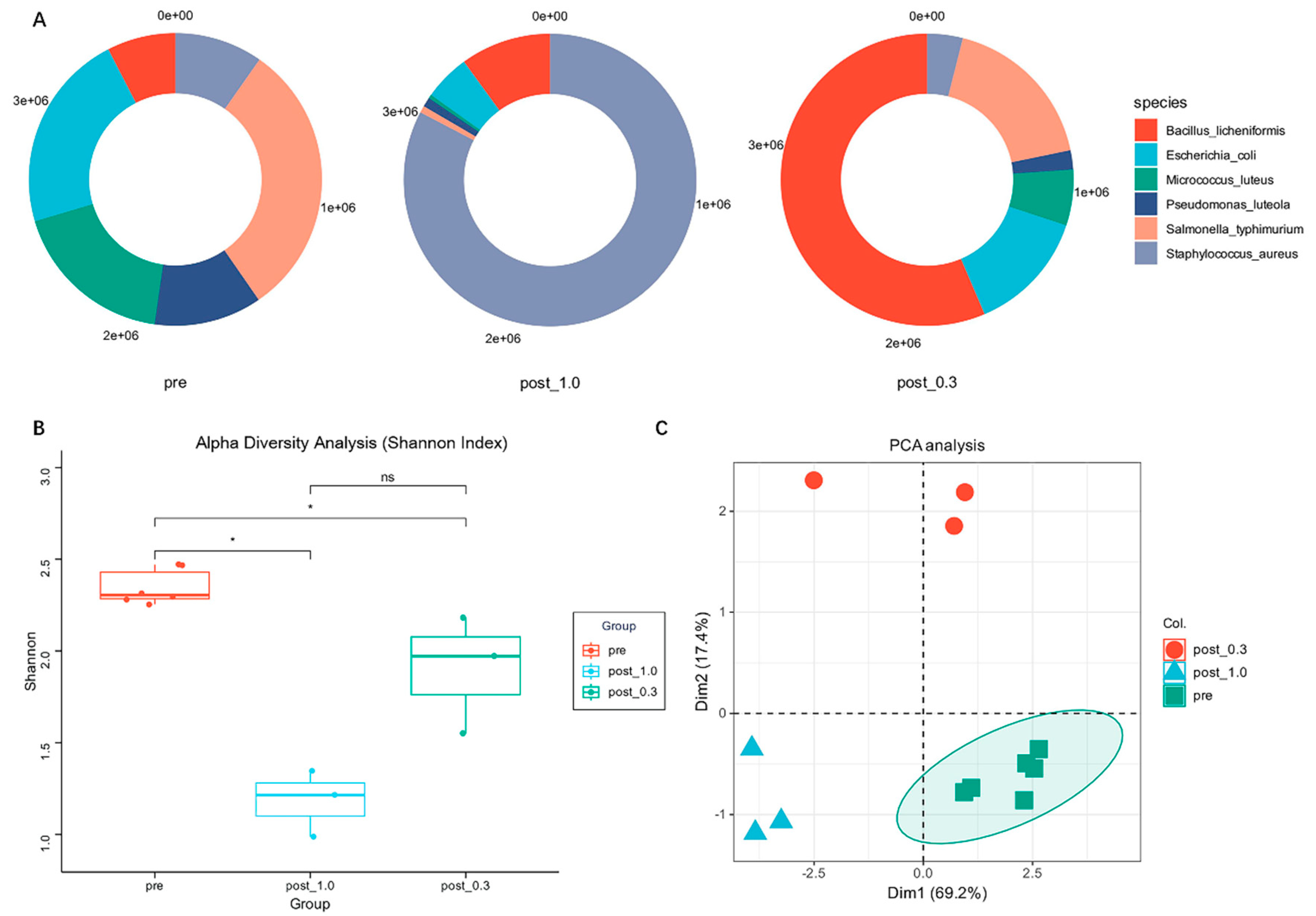
Figure 2.
Growth curve measurement of strains constituting the synthetic community. The left side is cultured in 0.3× LB medium, and the right side is cultured in 1.0× LB medium.
Figure 2.
Growth curve measurement of strains constituting the synthetic community. The left side is cultured in 0.3× LB medium, and the right side is cultured in 1.0× LB medium.
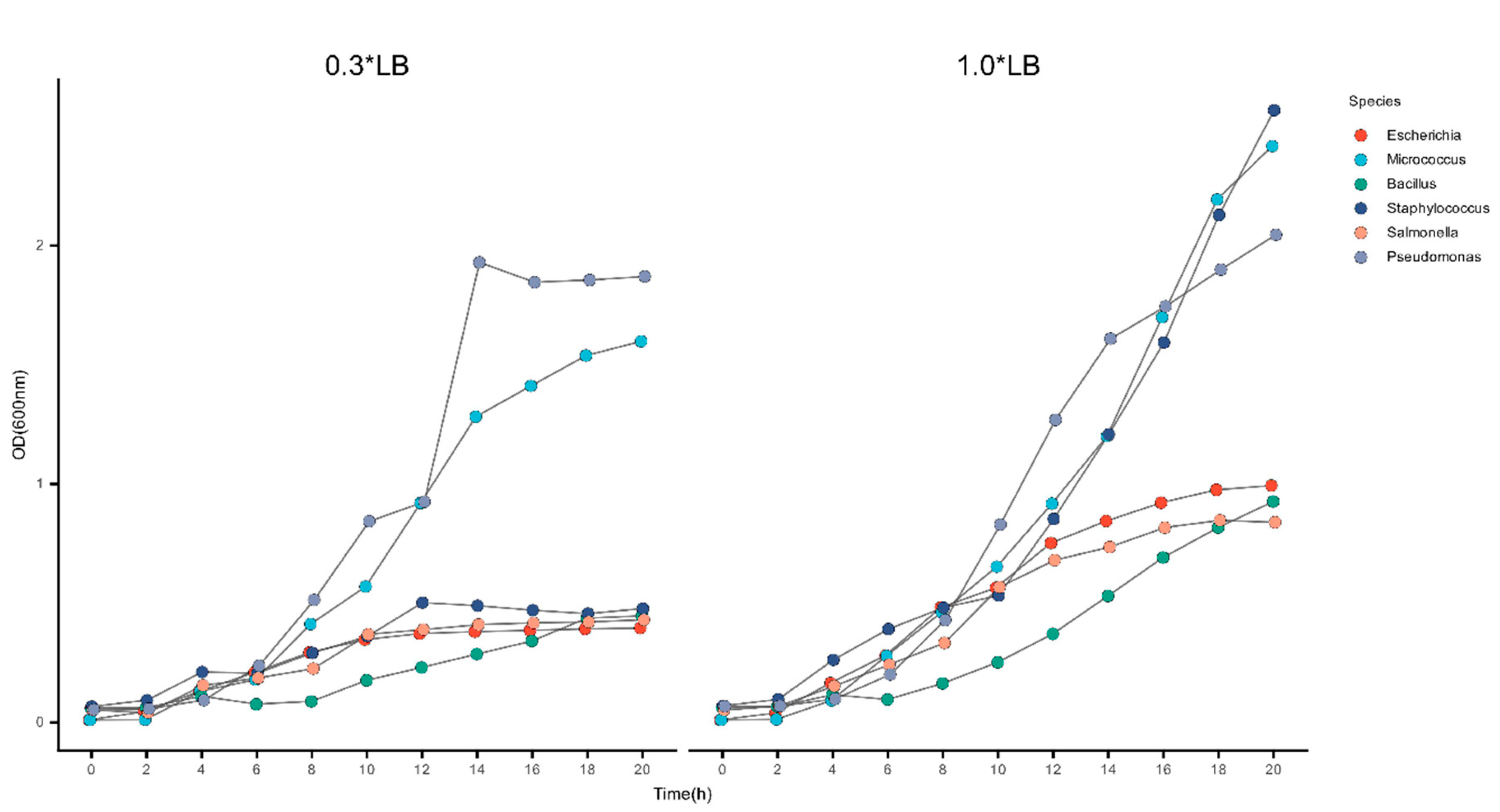
Figure 3.
Transcript abundance and functional analysis of synthetic microbial communities. (A) Differential gene expression analysis. Using TPM as the expression level metric,p<0.05 and |log2FC|≥1. (B) Intergroup functional difference test. Using TPM as the expression level metric, annotated with KEGG Pathway Level 2, Two-sample t-test. 0.01<p<=0.05 * , 0.001< p <=0.01 ** , p<=0.001.
Figure 3.
Transcript abundance and functional analysis of synthetic microbial communities. (A) Differential gene expression analysis. Using TPM as the expression level metric,p<0.05 and |log2FC|≥1. (B) Intergroup functional difference test. Using TPM as the expression level metric, annotated with KEGG Pathway Level 2, Two-sample t-test. 0.01<p<=0.05 * , 0.001< p <=0.01 ** , p<=0.001.
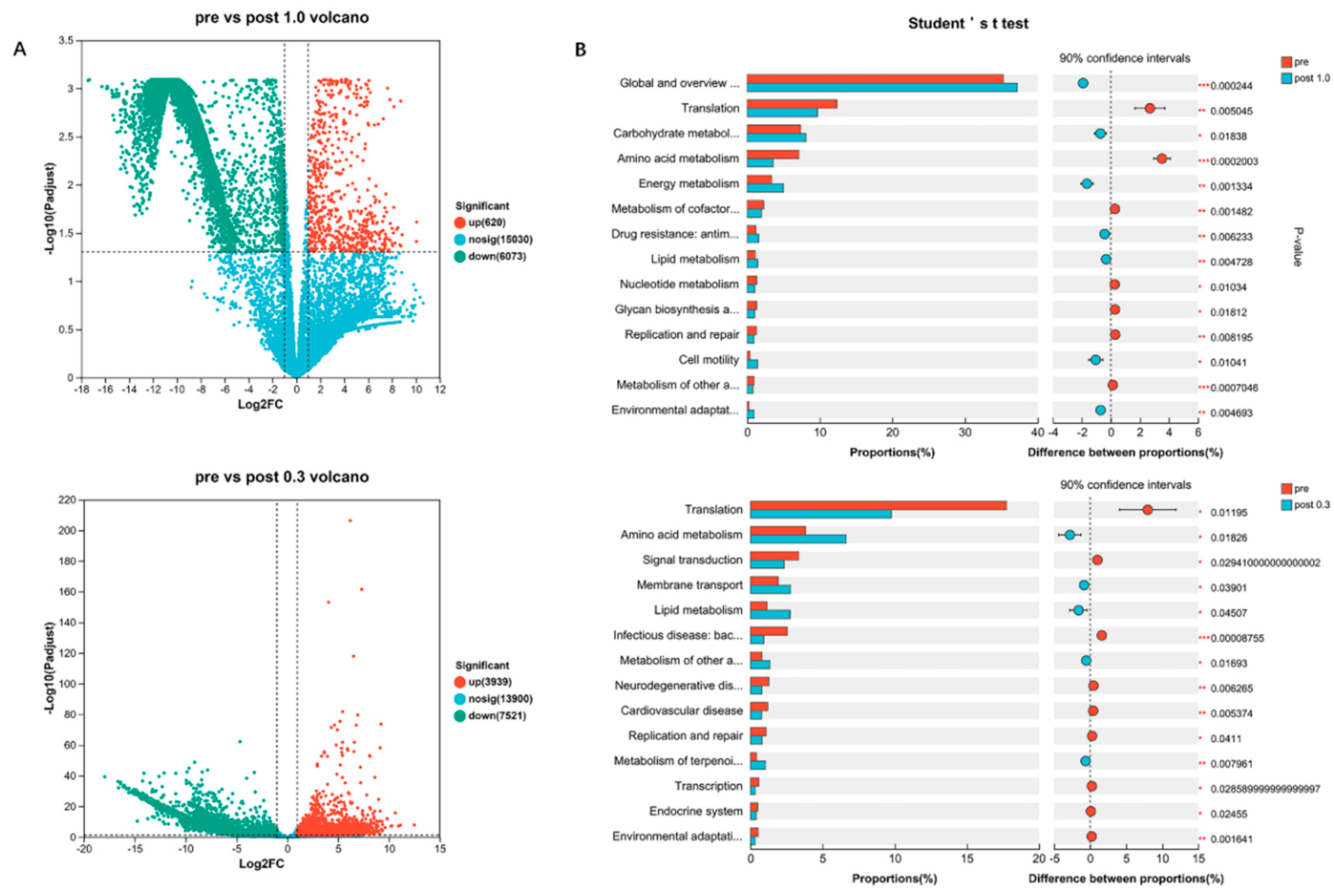
Figure 4.
Analysis of antimicrobial peptide and antibiotic resistance gene expression based on metatranscriptomics. (A) NRPSs Gene expression analysis. Using TPM as the expression level metric, One-Way ANOVA,*p<0.05.(B) Heatmap analysis of cationic antimicrobial peptide resistance gene expression,using transcript reads as a measure of expression.(C) Heatmap analysis of bacitracin resistance genes and efflux gene expression levels,using transcript reads as a measure of expression.
Figure 4.
Analysis of antimicrobial peptide and antibiotic resistance gene expression based on metatranscriptomics. (A) NRPSs Gene expression analysis. Using TPM as the expression level metric, One-Way ANOVA,*p<0.05.(B) Heatmap analysis of cationic antimicrobial peptide resistance gene expression,using transcript reads as a measure of expression.(C) Heatmap analysis of bacitracin resistance genes and efflux gene expression levels,using transcript reads as a measure of expression.
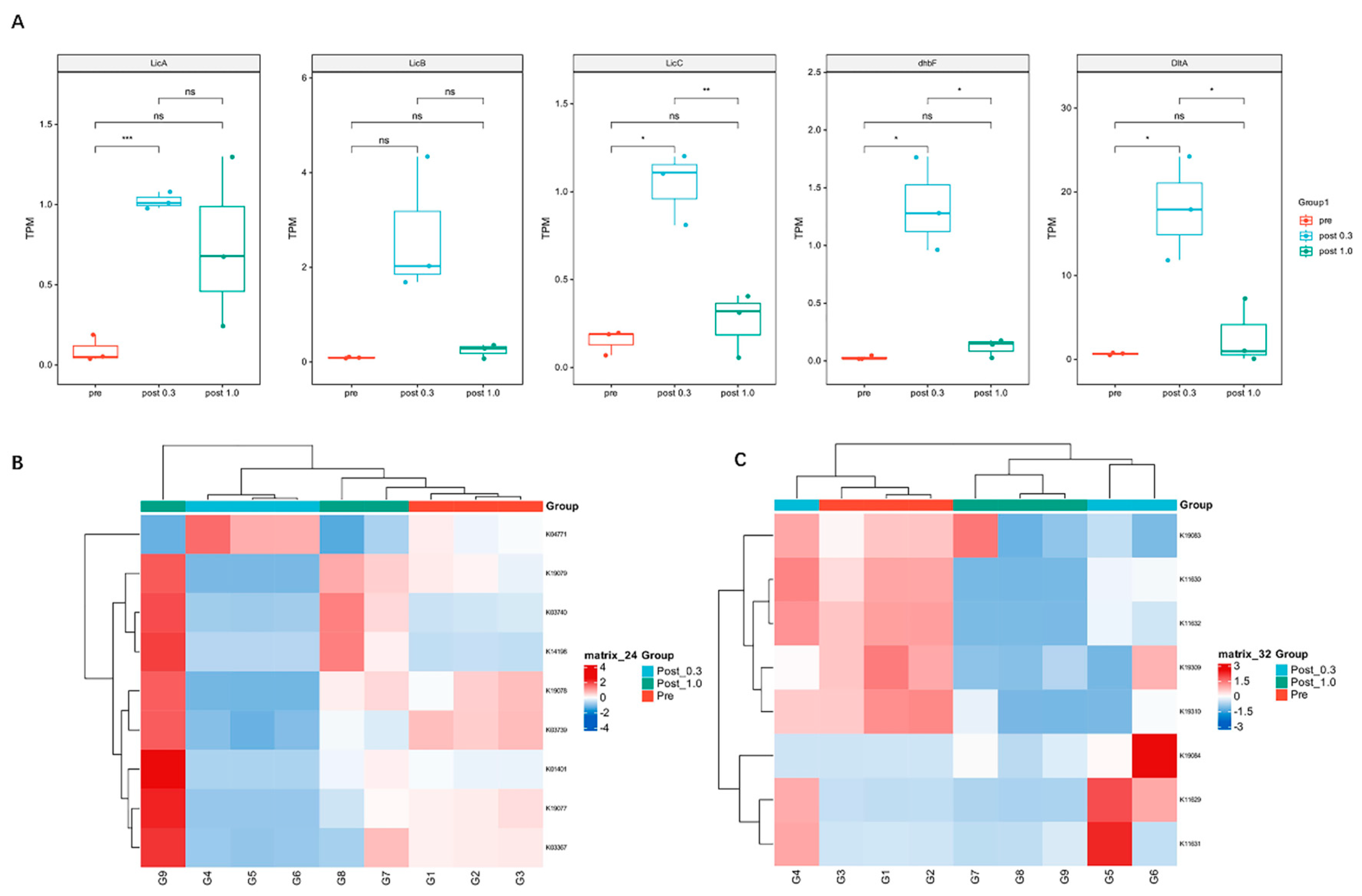
Figure 5.
Analysis of species and metabolic function contributions (A-C) Stacked chart of species metabolic levels,using TPM as the measure of expression levels. (A) pre (B) post 0.3 (C) post 1.0. (D-F) Chord ciagram of species metabolic capability,using TPM as the expression level metric,with TPM correction of each species after NR annotation of metagenomic data,and performing normalization for different species and metabolic functions. (D) pre (E) post 0.3 (F) post 1.0.
Figure 5.
Analysis of species and metabolic function contributions (A-C) Stacked chart of species metabolic levels,using TPM as the measure of expression levels. (A) pre (B) post 0.3 (C) post 1.0. (D-F) Chord ciagram of species metabolic capability,using TPM as the expression level metric,with TPM correction of each species after NR annotation of metagenomic data,and performing normalization for different species and metabolic functions. (D) pre (E) post 0.3 (F) post 1.0.
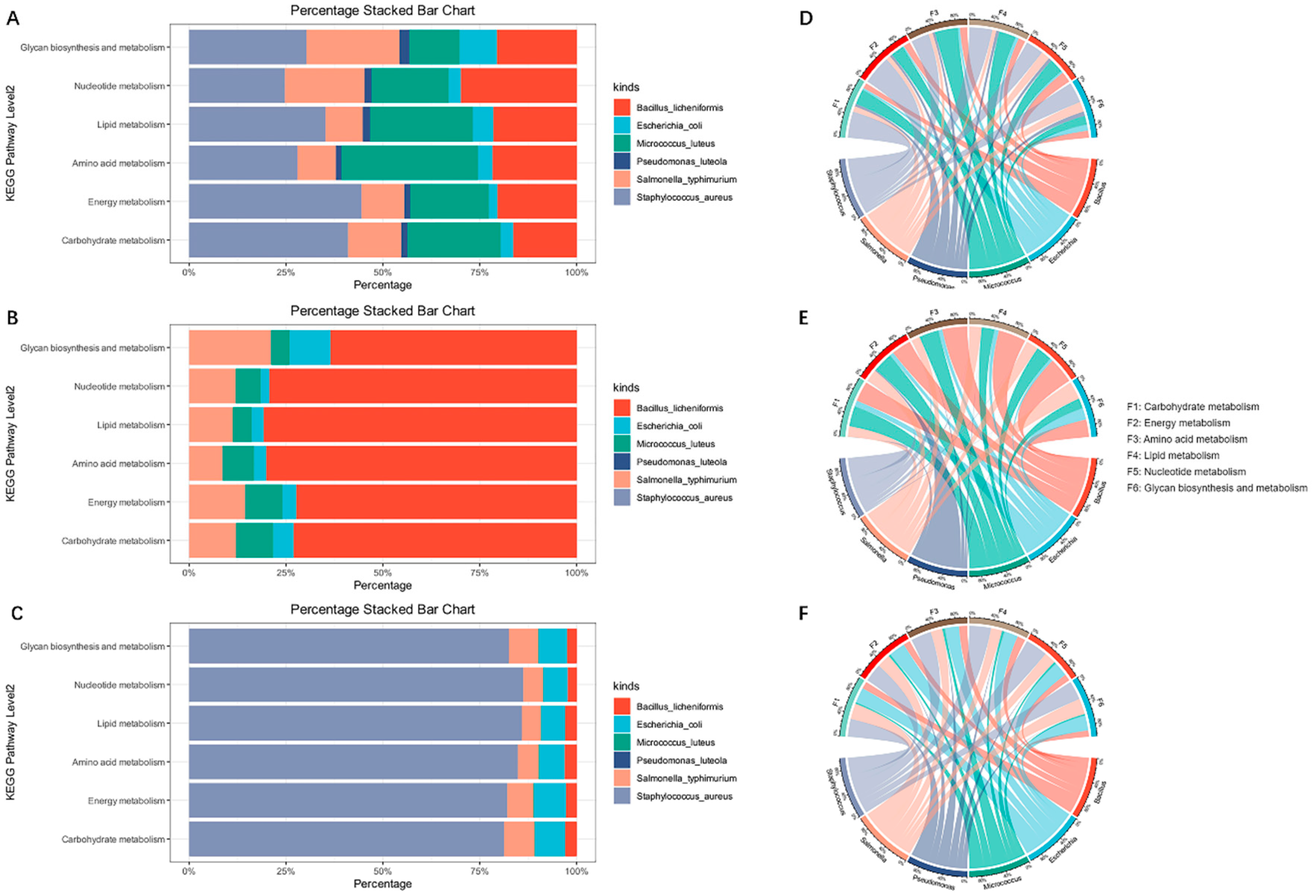
Figure 6.
Analysis of virulence factors in synthetic communities. (A) Heatmap of VF Category.(B) Analysis of LEfSe. Using Reads Number as abundance index, Wilcoxon rank-sum test, *p<0.05. (C)-(E) Stacked chart of species and functional contributions, using TPM as the abundance metric.(C) pre (D) post 0.3 (E) post 1.0
Figure 6.
Analysis of virulence factors in synthetic communities. (A) Heatmap of VF Category.(B) Analysis of LEfSe. Using Reads Number as abundance index, Wilcoxon rank-sum test, *p<0.05. (C)-(E) Stacked chart of species and functional contributions, using TPM as the abundance metric.(C) pre (D) post 0.3 (E) post 1.0
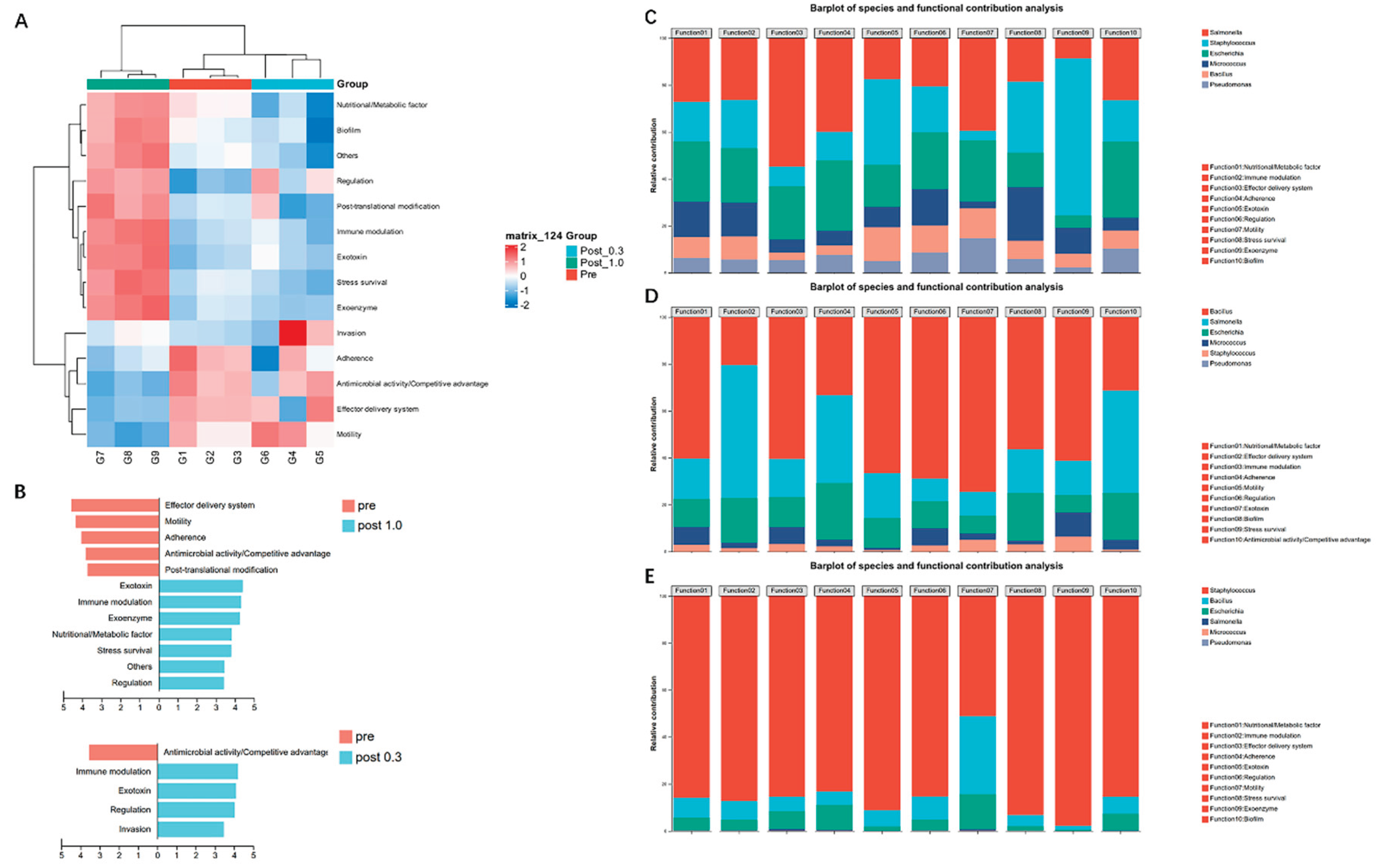

Table 1.
Strains for Creating Synthetic Microbial Communities
| Scientific Name and Strain Identification Number | Indoor distribution | Physiological characteristic | Relationship with human health |
|
Bacillus licheniformis (CCTCC AB 91061) |
The majority of indoor areas | Gram-positive bacteria,can form spores, facultative anaerobic | Probiotics, Can antagonize pathogenic bacteria, disrupt biofilm |
|
Staphylococcus aureus (CCTCC AB 91093) |
Surfaces of the skin, hospitals, bathrooms, and restrooms | Gram-positive bacteria,facultative anaerobic, strong drug resistance | Opportunistic pathogens, likely to cause infections in the skin, tissues, and organs |
|
Salmonella typhimurium (CCTCC AB 2014174) |
Hospital, restroom | Gram negative bacillus,facultative anaerobic,sensitive to heat | Invasive pathogenic bacteria containing multiple endotoxins, highly virulent |
|
Pseudomonas luteola (CCTCC S2014034) |
Soil and waterlogged areas | Gram negative bacillus,aerobes, strong drug resistance | Opportunistic pathogens, sometimes leading to serious infections |
|
Escherichia coli (CCTCC AB 2017070) |
Surfaces of the skin,bathrooms | Gram negative bacillus,facultative anaerobic | Opportunistic pathogens, overbreeding can lead to infection |
|
Micrococcus luteus (CCTCC AB 2017026) |
kitchen | Gram-positive bacteria,aerobes, mesophilic bacteria | rarely causing infections, with only a few cases reported. |
Table 2.
The Genome Attribute CCTCC AB 91061 and CCTCC AB 91093
| Attribute | CCTCC A91061 | CCTCC A91093 |
| Genome size(bp) | 4357622 | 2786253 |
| No. of contigs | 1 | 1 |
| depth | 76.91 | 249.58 |
| % GC content | 45.87 | 32.88 |
| Protein coding genes | 4523 | 2559 |
| tRNA encoding genes | 81 | 56 |
| rRNA encoding genes | 24 | 19 |
Disclaimer/Publisher’s Note: The statements, opinions and data contained in all publications are solely those of the individual author(s) and contributor(s) and not of MDPI and/or the editor(s). MDPI and/or the editor(s) disclaim responsibility for any injury to people or property resulting from any ideas, methods, instructions or products referred to in the content. |
© 2026 by the authors. Licensee MDPI, Basel, Switzerland. This article is an open access article distributed under the terms and conditions of the Creative Commons Attribution (CC BY) license (http://creativecommons.org/licenses/by/4.0/).
Copyright: This open access article is published under a Creative Commons CC BY 4.0 license, which permit the free download, distribution, and reuse, provided that the author and preprint are cited in any reuse.


