

Submitted:
25 March 2026
Posted:
28 March 2026
You are already at the latest version
Abstract
Stray dogs may serve as sentinels of environmental exposure to bacterial taxa of veter-inary and zoonotic relevance, particularly in areas with intense hu-man—animal—environment interactions. In this study, whole-blood DNA from 72 stray dogs sampled in tourist beach sites of Michoacán, Mexico, was analyzed by 16S rRNA gene amplicon sequencing targeting the V3–V4 region. To assess variation among those sites, samples were pooled by location, and bacterial composition and diversity were compared among beach zones. A broad diversity of circulating bacterial DNA was de-tected, comprising 14 phyla, 87 orders, 186 families, and 462 genera based on data-base-supported classification. Several assignments corresponded to genera that include bacteria of veterinary and zoonotic relevance, such as Brucella, Clostridium, Mycobacte-rium, Rickettsia, and Mycoplasma, as well as taxa commonly associated with opportunistic pathogenicity. However, because 16S rRNA sequencing has limited taxonomic resolution and blood is a low-biomass sample type, these findings should be interpreted as taxo-nomic assignments of circulating bacterial DNA rather than evidence of viable bacteria or active infection. Differences among beach zones suggest that local environmental con-ditions may influence detected profiles. Overall, this exploratory study supports the potential of stray dogs as indicators of environmental microbial exposure in coastal Mexico.
Keywords:
16S rRNA gene
; stray dogs
; circulating bacterial DNA
; touristic beaches
; One Health
; Mexico
1. Introduction
Frequent human interactions with stray dogs, particularly in recreational spaces, including touristic beaches or coastal areas, increase the potential for exposure to microorganisms of zoonotic relevance [1]. In Mexico, an estimated 16.1 million stray dogs remain largely unregulated, representing a persistent public health concern in rural and periurban settings [2]. In many communities, stray dogs may also serve functional roles, such as hunting, livestock protection, or household security, rather than functioning exclusively as indoors companion animals [3]. Human: stray dog ratios in rural regions range from 1.7:1 to 4.6:1, placing Mexico among the Hispano American countries with the highest densities of stray canines and underscoring their epidemiological relevance [4,5]. Their abundance and frequent interaction with humans and the environment highlight their potential as sentinels of exposure to bacterial taxa of veterinary and zoonotic importance [6,7]. New generation sequencing approaches, particularly 16S rRNA gene amplicon metabarcoding, have enabled the characterization of bacterial DNA across a wide range of host-associated and environmental samples [8,9]. In animal populations, these approaches have facilitated the detection of DNA of diverse bacterial taxa, including those associated with zoonotic transmission, although taxonomic resolution and biological interpretation remain constrained by methodological limitations [10,11]. In Mexico, recent studies have reported the presence of diverse bacterial DNA in stray dogs, supporting their relevance in studies of environmental microbial exposure and One Health surveillance [12,13].
The detection of bacterial DNA in blood, however, remains a subject of ongoing debate. Blood is traditionally considered a low-biomass biological matrix, and bacterial DNA signals identified through 16S rRNA gene sequencing may reflect a combination of transient DNAemia, environmental exposure, or methodological contamination rather than stable microbial communities [14,15]. Consequently, results derived from such approaches should be interpreted cautiously, particularly when inferring taxonomic identity at fine resolution or linking findings to active infection. Given the high prevalence of stray dogs in Mexico and their close interaction with human and environmental interfaces, exploratory characterization of circulating bacterial DNA may provide useful baseline information for understanding patterns of microbial exposure. Accordingly, the objective of this study was to characterize circulating bacterial DNA in stray dogs from coastal tourist areas in Michoacán, Mexico, using 16S rRNA gene amplicon sequencing, and to compare bacterial composition and diversity across different beach zones.
2. Materials and Methods
2.1. Ethical Approval
All procedures involving stray dogs were conducted in accordance with ethical standards and animal welfare guidelines approved by the Institutional Bioethics Committee of the Michoacán University of San Nicolás de Hidalgo.
2.2. Collection Sites and Stray Dog Blood Sampling
Dogs in this study were sampled from eleven beach locations along the Michoacán coast, encompassing two municipalities; locations were selected for their recorded high tourist densities [16]. In the municipality of Aquila, sampling sites included San Juan de Alima West, San Juan de Alima East, La Placita de Morelos, Maruata, Pichilinguillo, and Barra de Nexpa; in the municipality of Lázaro Cárdenas, sites included Las Guacamayas, Caleta de Ocampo, Lázaro Cárdenas West, and Lázaro Cárdenas East (Figure 1). Dog blood samples were collected between 12 —16 June 2024 from stray dogs located near tourist beach areas along the Michoacán coast. No specific inclusion criteria were established; therefore, blood samples were obtained from all dogs that could be safely approached and handled under field conditions. Each dog was submitted to a brief physical examination to record sex, apparent breed, body condition, presence of dermatological lesions, and ectoparasite infestation. Following the procedures of Mejía-García and collaborators [11], blood was collected by cephalic venipuncture using EDTA-containing Vacutainer tubes; prior to this procedure, the skin over the cephalic vein was shaved and cleaned with 75% ethanol to minimize surface contamination. Each sample was assigned a unique identifier and maintained at 4 °C in a portable ice cooler until laboratory processing.
2.3. DNA Isolation and Sampling Pooling
Genomic DNA was extracted from 200 µL of whole blood using the DNeasy Blood and Tissue Kit (Qiagen, Germany) [10], following the manufacturer’s instructions. Briefly, samples were lysed with proteinase K and the appropriate lysis buffer, incubated at 56 °C, and subsequently applied to silica spin columns for DNA binding. After the recommended wash steps, DNA was eluted in 100 µL of elution buffer and stored at −20 °C until further analysis. DNA quality was assessed by agarose gel electrophoresis, and concentration and purity were evaluated using a NanoDrop spectrophotometer.
To assess variation among sites of circulating bacterial DNA, genomic samples from dogs collected at the same tourist beach were pooled prior to sequencing, resulting in eleven super-pooled samples. These super-pooled samples were used for downstream 16S rRNA gene amplicon sequencing and comparative analyses among sampling locations. Because pooling was performed before sequencing, results were interpreted at the sampling-site level and do not allow individual-level inference. No extraction blanks or negative controls were included during DNA extraction, which should be considered when interpreting results from this low-biomass sample type.
2.4. Amplification by PCR and 16S rRNA Gene Sequencing
DNA libraries were prepared following the Illumina 16S Metagenomic Sequencing Library Preparation protocol (Part #15044223 Rev. B). The V3–V4 region of the 16S rRNA gene was amplified using locus-specific primers with Illumina overhang adapters (Forward: 5′-TCGTCGGCAGCGTCAGATGTGTATAAGAGACAGCCTACGGGNGGCWGCAG-3′; Reverse: 5′-GTCTCGTGGGCTCGGAGATGTGTATAAGAGACAGGACTACHVGGGTATCTAATCC-3′) [11]. PCR reactions (25 µL) were prepared using KAPA HiFi HotStart Ready Mix (2×), with genomic DNA as template and forward and reverse primers at a final concentration of 0.2 µM each. Amplification conditions consisted of an initial denaturation at 95 °C for 3 min, followed by 25 cycles of 95 °C for 30 s, 55 °C for 30 s, and 72 °C for 30 s, with a final extension at 72 °C for 5 min. PCR products were purified using AMPure XP beads (Beckman Coulter Life Sciences) according to the manufacturer’s instructions. A second PCR was performed to attach dual indices and Illumina sequencing adapters using the Nextera XT Index Kit, following the recommended protocol. The final libraries were sequenced using an Illumina platform to generate paired-end reads (2 × 150 bp). Raw sequences were submitted as Bioproject to the NCBI.
2.5. Bioinformatics Sequence Analysis
All sequence processing and downstream analyses were conducted in EZBioCloud using the Microbiome Taxonomic Profiling (MTP) pipeline [17]. Paired-end Illumina reads were merged, and adapter sequences, primers, and low-quality reads (Q < 25) were removed. Chimeric sequences and PCR artifacts were filtered, and high-quality non-redundant reads were clustered into operational taxonomic units (OTUs) at a 97% similarity threshold using an open-reference approach implemented with UCLUST [18] and CD-HIT [19]. Taxonomic assignments were performed against the curated PKSSU5.0 reference database in EZBioCloud [17].
Relative abundance profiles were generated across taxonomic levels, and subsequent analyses were primarily interpreted at higher taxonomic ranks, from phylum to genus, given the limited taxonomic resolution of 16S rRNA gene sequencing. Alpha diversity was assessed using richness estimators (observed OTUs and Chao1) and diversity/evenness indices (Shannon and Simpson). Rarefaction curves were constructed to evaluate sequencing depth and sampling coverage. Beta diversity was calculated using Bray–Curtis dissimilarity and visualized through Principal Coordinates Analysis (PCoA). Differences in community composition between municipalities were evaluated using permutational multivariate analysis of variance (PERMANOVA) [20]. To further explore community structure, ANOSIM [21] and PERMDISP [22] analyses were performed to distinguish between differences in group centroids and dispersion. Pairwise comparisons were conducted using the Wilcoxon rank-sum test (Mann–Whitney U), and multiple comparisons were adjusted using the Benjamini–Hochberg false discovery rate (FDR) [23].
Data visualization included stacked bar plots at the phylum level, heatmaps at the genus level with hierarchical clustering (Euclidean distance), and Venn diagrams of shared taxa generated using InteractiVenn [24]. Final figures were refined in GraphPad Prism v.9.0 (GraphPad Software, USA). Given the low-biomass nature of blood samples and the methodological limitations of 16S rRNA gene sequencing, taxonomic assignments were interpreted conservatively as representations of circulating bacterial DNA rather than definitive identification of viable microorganisms or active infections.
3. Results
A total of 72 dog blood samples were collected from eleven tourist beach sites in Michoacán, Mexico (Figure 1).
In total, 3,874,332 bacterial sequences were obtained before assembly, resulting in 1,204,362 assembled sequences. Table 1 summarizes the number of samples processed per sampling location and municipality, as well as the numbers of assembled, discarded, high-quality, and taxonomically assigned sequences obtained for each pooled sample.
Rarefaction curves approached saturation at approximately 14,126 sequences, indicating adequate sequencing depth for the pooled samples analyzed (Figure 2). Las Guacamayas and Lázaro Cárdenas West showed the highest observed OTU richness, followed by San Juan de Alima East and Caleta de Campos, whereas the remaining sites displayed comparatively lower richness values.
Across the 11 pooled samples, EZBioCloud classified reads into 14 phyla, 87 orders, 186 families, and 462 genera. Community composition was dominated by Pseudomonadota (mean = 90.09%, range = 33.56–99.98%), followed by Mycoplasmatota (mean = 8.9%) and Bacillota (mean = 0.5%). At the order level, the most abundant groups were Enterobacterales (mean = 51.86%), Pseudomonadales (mean = 31.78%), and Mycoplasmatales (mean = 8.91%). At the genus level, the most abundant taxa included Pseudomonas (mean = 22.41%), Eperythrozoon (mean = 8.02%), and Stutzerimonas (mean = 4.35%). Additional genera identified across samples included Pantoea, Klebsiella, Mycoplasma, and other low-abundance taxa.
Alpha diversity varied between municipalities. In Aquila, observed OTUs ranged from 188 in San Juan de Alima West to 411 in Maruata, with Chao1 estimates ranging from 321.1 in La Placita de Morelos to 651.6 in Maruata. Shannon diversity values ranged from 1.49 in El Faro de Bucerías to 2.86 in San Juan de Alima East, while Simpson’s index ranged from 0.09 in San Juan de Alima East to 0.398 in El Faro de Bucerías. In Lázaro Cárdenas, richness was generally higher, with observed OTUs ranging from 284 in Lázaro Cárdenas West to 574 in Las Guacamayas and Chao1 estimates ranging from 477 in Lázaro Cárdenas East to 953.5 in Las Guacamayas. Shannon indices were comparatively narrow (2.47–2.76), and Simpson’s index values remained consistently low (0.144–0.156), indicating greater evenness than in Aquila.
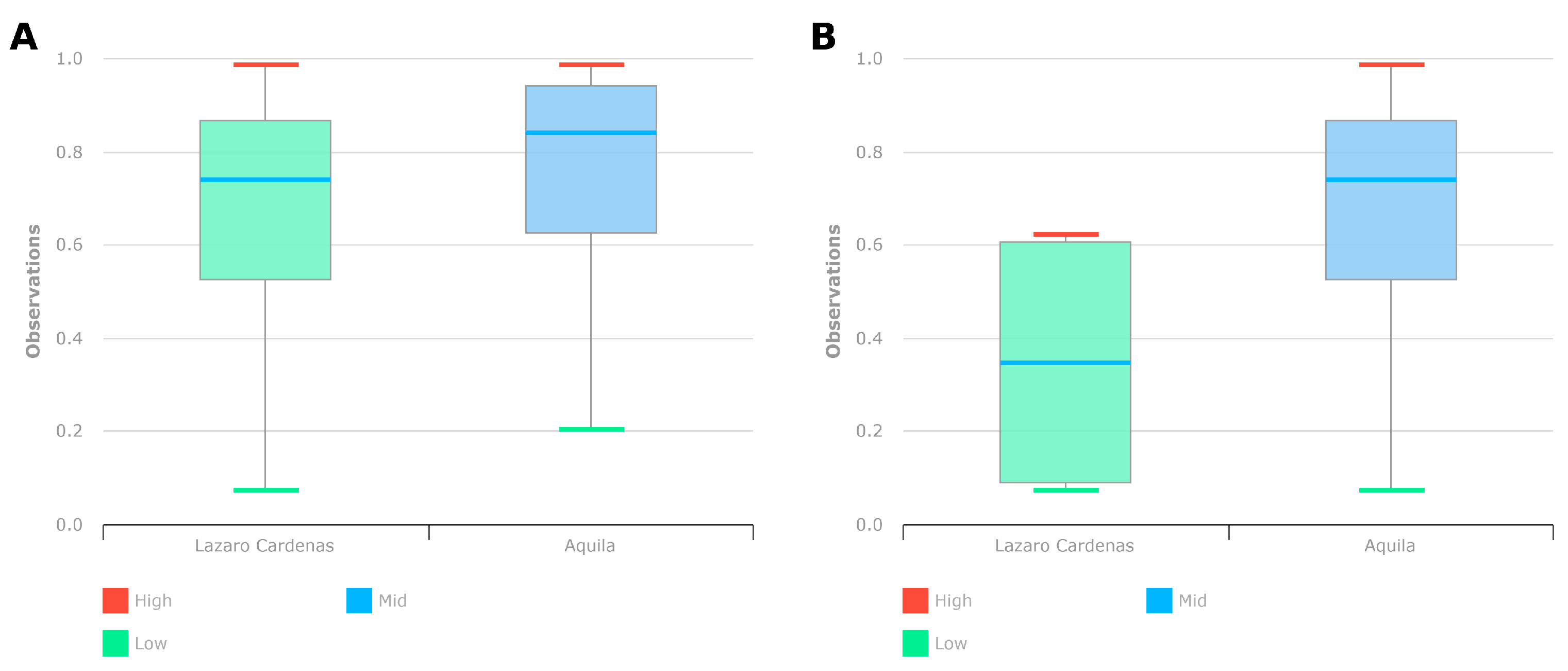
Principal coordinates analysis based on Bray–Curtis dissimilarities at the genus level, excluding unclassified OTUs, showed partial separation between samples from Aquila and Lázaro Cárdenas, with substantial overlap between groups. The first two axes explained 34.9% and 29.2% of the total variance, respectively. Hierarchical clustering using the UPGMA algorithm revealed a similar pattern, suggesting partial grouping by municipality. However, permutational multivariate analysis of variance did not detect statistically significant differences between municipalities (pseudo-F = 1.896, p = 0.095; 999 permutations), indicating no clear compositional separation under the current sampling design. Consistent with these findings, comparative beta-diversity boxplots showed slightly higher central Bray–Curtis distance values in Aquila compared with Lázaro Cárdenas, although interquartile ranges overlapped substantially. Together, these analyses indicate subtle spatial structuring of bacterial communities, with within-municipality variability exceeding between-municipality differences.
Figure 3.
Comparative beta-diversity boxplots illustrating the distribution of Bray–Curtis dissimilarities between samples from Lázaro Cárdenas and Aquila. Panel A shows inter-set Bray–Curtis distances calculated relative to the Lázaro Cárdenas group, whereas Panel B shows distances calculated relative to the Aquila group. Boxplots display the median (horizontal line), interquartile range (box), and minimum and maximum values (whiskers).
Figure 3.
Comparative beta-diversity boxplots illustrating the distribution of Bray–Curtis dissimilarities between samples from Lázaro Cárdenas and Aquila. Panel A shows inter-set Bray–Curtis distances calculated relative to the Lázaro Cárdenas group, whereas Panel B shows distances calculated relative to the Aquila group. Boxplots display the median (horizontal line), interquartile range (box), and minimum and maximum values (whiskers).
Several sequences were assigned to bacterial genera that include taxa of recognized veterinary or zoonotic relevance. These included Brucella, Campylobacter, Clostridium, Corynebacterium, Escherichia, Klebsiella, Leptospira, Listeria, Mycobacterium, Mycoplasma, Pasteurella, Rickettsia, Staphylococcus, Streptococcus, and Vibrio, among others. In addition, genera commonly associated with opportunistic pathogenicity, such as Actinomyces, Fusobacterium, Neisseria, Pseudomonas, Providencia, Trueperella, and Wohlfahrtiimonas, were also identified across pooled samples.
Some genera, including Pseudomonas, Klebsiella, and Stutzerimonas, were detected in all pooled samples, whereas others showed a more variable distribution among locations. Overall, these results suggest heterogeneous patterns of circulating bacterial DNA among sampling sites. However, given the low-biomass nature of blood samples, the use of pooled DNA, and the limited taxonomic resolution of 16S rRNA gene sequencing, these findings should be interpreted as taxonomic assignments of circulating bacterial DNA rather than evidence of active infection or confirmed pathogen carriage at the individual level.

Table 2.
Bacterial genera of veterinary and zoonotic relevance identified in pooled blood samples. Taxonomic assignments are based on 16S rRNA gene sequencing and are interpreted at the genus level due to limited resolution for species-level identification.
Table 2.
Bacterial genera of veterinary and zoonotic relevance identified in pooled blood samples. Taxonomic assignments are based on 16S rRNA gene sequencing and are interpreted at the genus level due to limited resolution for species-level identification.
| Family | Genus | Relevance |
|---|---|---|
| Bacillaceae | Bacillus | Includes species associated with environmental and animal infections. |
| Brucellaceae | Brucella | Includes zoonotic bacteria affecting livestock and humans. |
| Campylobacteraceae | Campylobacter | Includes species associated with gastrointestinal infections. |
| Clostridiaceae | Clostridium | Includes toxin-producing bacteria. |
| Enterobacteriaceae | Escherichia, Klebsiella, Salmonella | Includes opportunistic and enteric bacteria. |
| Mycobacteriaceae | Mycobacterium | Includes species associated with chronic infections. |
| Rickettsiaceae | Rickettsia | Includes vector-borne bacteria of public health relevance. |
| Mycoplasmataceae | Mycoplasma | Includes hemotropic species reported in dogs. |
| Staphylococcaceae | Staphylococcus | Includes opportunistic pathogens. |
| Streptococcaceae | Streptococcus | Includes species affecting humans and animals. |
| Vibrionaceae | Vibrio | Includes marine-associated bacteria. |
4. Discussion
This study provides the first study of an exploratory characterization of circulating bacterial DNA in stray dogs from coastal tourist areas of Michoacán, Mexico, using 16S rRNA gene amplicon sequencing. The results reveal a diverse set of bacterial taxa across pooled samples and suggest varied potential microbial exposures in stray dogs from coastal environments. These findings contribute baseline information within a One Health framework and support the use of stray dogs as indicators of environmental microbial exposure rather than confirmed reservoirs of infection [6].
The predominance of the phylum Pseudomonadota, together with the high representation of the orders Enterobacterales and Pseudomonadales, is consistent with environmental exposure to soil, water, organic waste, and fecal contamination. Coastal tourist areas represent dynamic ecotones characterized by intense human activity, waste accumulation, and interaction between domestic animals, wildlife, and environmental sources. Under these conditions, stray dogs are likely to encounter a wide range of microorganisms, which may be reflected in circulating bacterial DNA signals. Similar compositional patterns have been reported in studies of environmental and host-associated microbiota, where habitat and lifestyle are key determinants of microbial profiles [25].
At the genus level, taxa such as Pseudomonas, Klebsiella, Escherichia, Stutzerimonas, and Mycoplasma were frequently identified across pooled samples. Several of these genera include species known for environmental persistence and opportunistic pathogenicity, particularly under conditions of host stress or immune compromise [26]. Their consistent detection across sampling sites likely reflects widespread environmental exposure rather than localized transmission events. In this context, the observed patterns should be interpreted as indicators of microbial contact rather than direct evidence of infection [27]. At the same time, some detected genera, including Pseudomonas and Stutzerimonas, have also been reported as common contaminants in low-biomass sequencing studies, and this possibility should be considered when interpreting the present findings [28].
Sequences were also assigned to genera that include bacteria of veterinary and zoonotic relevance, such as Brucella, Clostridium, Mycobacterium, Rickettsia, Leptospira, and Campylobacter. These genera have been widely reported in animal and environmental interfaces, particularly in tropical and subtropical regions where close interaction between humans, animals, and environmental reservoirs occurs [29,30,31]. However, given the inherent limitations of 16S rRNA gene sequencing, particularly in low-biomass samples such as blood, these taxonomic assignments should not be interpreted as evidence of viable organisms, active infection, or pathogen carriage. Instead, they likely reflect environmental or vector-related exposure, transient DNAemia, or potential background contamination [32,33].
The detection of genera commonly associated with vector-borne bacteria, including Rickettsia, may reflect exposure to ectoparasites such as ticks in stray dog populations [10,11]. In endemic regions, such exposures are common and may occur in the absence of evident clinical signs [10,11]. Similarly, the identification of multiple genera associated with opportunistic bacteria, including Actinomyces, Fusobacterium, Neisseria, Pseudomonas, Providencia, Trueperella, and Wohlfahrtiimonas, is consistent with previous observations in animal-associated microbiota and may reflect transient translocation from the skin, oral cavity, or gastrointestinal tract rather than systemic infection [34,35].
Patterns of diversity observed in this study suggest modest spatial variation in bacterial community composition. Although alpha diversity metrics indicated some differences in richness and evenness between municipalities, beta diversity analyses showed substantial overlap and no statistically significant clustering. These findings suggest that local environmental conditions, such as waste exposure, vector presence, and human activity, may play a more important role than geographic boundaries in shaping circulating bacterial DNA in these animals.
Several limitations should be considered when interpreting these results. The use of pooled samples prevents individual-level analysis and limits the ability to assess prevalence or host-specific associations. Additionally, blood represents a low-biomass matrix, and contamination from reagents or environmental sources cannot be fully excluded [36]. Furthermore, 16S rRNA gene amplicon sequencing does not provide sufficient resolution for reliable species-level identification and does not allow assessment of microbial viability [37]. Consequently, the results presented here should be interpreted as exploratory and hypothesis-generating.
Overall, this study highlights the diversity of circulating bacterial DNA detectable in stray dogs inhabiting coastal environments and underscores the complexity of microbial exposure at the human—animal—environment interface. These findings support the relevance of incorporating animal populations into environmental surveillance strategies within a One Health framework [38]. Future studies integrating higher-resolution sequencing approaches, targeted molecular assays, and individual-level metadata will be necessary to clarify the ecological and epidemiological significance of these observations. These results should be interpreted as indicators of microbial exposure rather than evidence of pathogen circulation or active infection.
5. Conclusions
This study provides the first exploratory overview of circulating bacterial DNA in stray dogs from coastal tourist areas of Michoacán, Mexico. The detection of diverse bacterial genera, including taxa of veterinary and zoonotic relevance, supports the value of stray dogs as indicators of environmental microbial exposure within a One Health context. Because blood is a low-biomass sample and 16S rRNA gene sequencing does not confirm viability or active infection, these findings should be interpreted cautiously. Future research should incorporate individual-level sampling, targeted molecular confirmation, ectoparasite screening, and higher-resolution sequencing approaches to better define the ecological and epidemiological significance of these bacterial DNA in stray dog populations.
Author Contributions
Conceptualization, I.N.B.-L. and J.A.G.-H.; methodology, R.G.-P., I.N.B.-L., A.R.-M., L.M.J.-S., S.V.L.-T., C.A.R.-A. J.R.A.-G., E.d.J.D.L.-S., E.J.E.-L., A.C.-P., L.V.-C., C.A.-T., E.R.-T., S.V.-M., and J.A.G.-H.; software, R.G.-P.; validation, J.A.G.-H., and E.d.J.D.L.-S.; formal analysis, R.G.-P. I.N.B.-L., A.R.-M., L.J., S.V.L.-T., and J.A.G.-H.; investigation, R.G.-P., I.N.B.-L., A.R.-M., L.M.J.-S., S.V.L.-T., C.A.R.-A. J.R.A.-G., E.d.J.D.L.-S., E.J.E.-L., A.C.-P., L.V.-C., C.A.-T., E.R.-T., S.V.-M., and J.A.G.-H.; resources, I.N.B.-L., E.d.J.D.L.-S.; data curation, R.G.-P., E.J.E.-L.; writing—original draft preparation, J.A.G.-H.; writing—review and editing, R.G.-P., I.N.B.-L., A.R.-M., L.M.J.-S., S.V.L.-T., C.A.R.-A. J.R.A.-G., E.d.J.D.L.-S., E.J.E.-L., A.C.-P., L.V.-C., C.A.-T., E.R.-T., S.V.-M., and J.A.G.-H.; visualization, R.G.-P., I.N.B.-L., A.R.-M., L.M.J.-S., S.V.L.-T., C.A.R.-A. J.R.A.-G., E.d.J.D.L.-S., E.J.E.-L., A.C.-P., L.V.-C., C.A.-T., E.R.-T., S.V.-M., and J.A.G.-H.; supervision, J.A.G.-H.; project administration, J.A.G.-H.; funding acquisition, I.N.B.-L., E.d.J.D.L.-S. All authors have read and agreed to the published version of the manuscript.
Funding
This research was funded by Universidad Autónoma de Ciudad Juárez by PIISO projects (Project No. PIISO23-ICB-01-JAGARZA), also the Secretaría de Ciencia, Humanidades, Tecnología e Innovación (SECIHTI), Mexico, for granting the Ciencia de Frontera project (No. 419-24-23), and by Secretaría de Investigación y Posgrado from Instituto Politécnico Nacional (Grant SIP20250075-2025- 2026), which enabled the completion of this work. RGP also thanks SECIHTI for the support of a doctoral scholarship (Reference 842817).
Informed Consent Statement
Not applicable.
Data Availability Statement
Raw metagenomic sequences data are available in NCBI under BioProject ID: PRJNA1428249; SubmissionID: SUB16024977.
Acknowledgments
We sincerely acknowledge the medical residents and local healthcare personnel from the coastal communities of Michoacán, Mexico, who provided essential logistical support during field sampling activities conducted across the tourist beach areas. Their collaboration, commitment, and assistance in coordinating access, facilitating local communication, and supporting sample collection under challenging environmental conditions were fundamental to the successful completion of this study.
Conflicts of Interest
The authors declare no conflicts of interest.
References
- Langlois, T.; Hurtrez-Boussès, S.; Garine-Wichatitsky, M.D. Pet and stray dogs’ contribution to zoonotic transmission pathways: A bibliometric review. Transbound. Emerg. Dis. 2025, 2025, 5522451. [Google Scholar] [CrossRef] [PubMed]
- Cortez-Aguirre, G.R.; Jiménez-Coello, M.; Gutiérrez-Blanco, E.; Ortega-Pacheco, A. Stray dog population in a city of southern Mexico and its impact on the contamination of public areas. Vet. Med. Int. 2018, 1, 2381583. [Google Scholar] [CrossRef] [PubMed]
- Ruiz-Izaguirre, E.; Van Woersem, A.; Eilers, K.C.H.A.M.; et al. Roaming characteristics and feeding practices of village dogs scavenging sea-turtle nests. Anim. Conserv. 2015, 18, 146–156. [Google Scholar] [CrossRef]
- Mota-Rojas, D.; Calderón-Maldonado, N.; Lezama-García, K.; et al. Abandonment of dogs in Latin America. Vet. World 2021, 14, 2371. [Google Scholar] [CrossRef]
- Ortega-Pacheco, A.; Rodríguez-Buenfil, J.C.; Bolio-González, M.E.; Sauri-Arceo, C.H.; Jiménez-Coello, M.; Forsberg, C.L. A Survey of Dog Populations in Urban and Rural Areas of Yucatán, Mexico. Anthrozoös 2007, 20, 261–274. [Google Scholar] [CrossRef]
- Esposito, M.M.; Turku, S.; Lehrfield, L.; Shoman, A. The Impact of Human Activities on Zoonotic Infection Transmissions. Animals 2023, 13, 1646. [Google Scholar] [CrossRef]
- Flores-Ibarra, M.; Estrella-Valenzuela, G. Canine ecology and socioeconomic factors associated with dogs unvaccinated against rabies in a Mexican city across the US–Mexico border. Prev Vet Med 2004, 62, 79–87. [Google Scholar] [CrossRef]
- Issae, A.R.; Katakweba, A.S.; Kicheleri, R.P.; Chengula, A.A.; van Zwetselaar, M.; Kasanga, C.J. Exploring Pathogenic and Zoonotic Bacteria from Wild Rodents, Dogs, and Humans of the Ngorongoro District in Tanzania Using Metagenomics Next-Generation Sequencing. Zoonotic Dis. 2023, 3, 226–242. [Google Scholar] [CrossRef]
- Scarsella, E.; Meineri, G.; Sandri, M.; Ganz, H.H.; Stefanon, B. Characterization of the Blood Microbiome and Comparison with the Fecal Microbiome in Healthy Dogs and Dogs with Gastrointestinal Disease. Vet. Sci. 2023, 10, 277. [Google Scholar] [CrossRef]
- Beristain-Ruiz, D.M.; Garza-Hernández, J.A.; Figueroa-Millán, J.V.; Lira-Amaya, J.J.; Quezada-Casasola, A.; Ordoñez-López, S.; Laredo-Tiscareño, S.V.; Alvarado-Robles, B.; Castillo-Luna, O.R.; Floriano-López, A.; et al. Possible Association between Selected Tick-Borne Pathogen Prevalence and Rhipicephalus sanguineus sensu lato Infestation in Dogs from Juarez City (Chihuahua), Northwest Mexico–US Border. Pathogens 2022, 11, 552. [Google Scholar] [CrossRef]
- Mejía-García, F.; Barraza-Guerrero, S.I.; García De la Peña, C.; Aguillón Gutiérrez, D.R.; Siller Rodríguez, Q.K.; Meza Herrera, C.A.; Vaca Paniagua, F.; Díaz Velásquez, C.; De la Cruz Montoya, A.; Valenzuela Núñez, L.M. Bacteria in the Blood of Healthy Stray Dogs Infested by Ticks in Northern Mexico. J. Adv. Vet. Anim. Res. 2024, 11, 132–138. [Google Scholar] [CrossRef]
- Caporaso, J.G.; Lauber, C.L.; Walters, W.A.; Berg-Lyons, D.; Lozupone, C.A.; Turnbaugh, P.J.; Fierer, N.; Knight, R. Global Patterns of 16S rRNA Diversity at a Depth of Millions of Sequences per Sample. Proc. Natl. Acad. Sci. USA 2012, 108, 4516–4522. [Google Scholar] [CrossRef] [PubMed]
- Durazzi, F.; Sala, C.; Castellani, G.; Manfreda, G.; Remondini, D.; De Cesare, A. Comparison between 16S rRNA and Shotgun Sequencing Data for the Taxonomic Characterization of the Gut Microbiota. Nat. Sci. Rep. 2021, 11, 3030. [Google Scholar] [CrossRef]
- Cheng, H.S.; Vatanen, T.; O’Donovan, A.; et al. The Blood Microbiome and Health: Current Evidence, Controversies, and Challenges. Int. J. Mol. Sci. 2023, 24, 5633. [Google Scholar] [CrossRef]
- Gosiewski, T.; Ludwig-Galezowska, A.H.; Huminska, K.; Sroka-Oleksiak, A.; Radkowski, P.; Salamon, D.; et al. Comprehensive detection and identification of bacterial DNA in the blood of patients with sepsis and healthy volunteers using next-generation sequencing method: the observation of DNAemia. European Journal of Clinical Microbiology & Infectious Diseases 2017, 36, 329–336. [Google Scholar] [CrossRef]
- Secretaría de Turismo; Gobierno de México. Ocupación hotelera registra 60.9% en 70 destinos turísticos de México durante enero-marzo de 2024. Available online: https://www.gob.mx/sectur/prensa/ocupacion-hotelera-registra-60-9-en-70-destinos-turisticos-de-mexico-durante-enero-marzo-de-2024 (accessed on 23 November 2025).
- Yoon, S.H.; et al. Introducing EzBioCloud: A Taxonomically United Database of 16S rRNA Gene Sequences and Whole-Genome Assemblies. Int. J. Syst. Evol. Microbiol. 2017, 67, 1613–1617. [Google Scholar] [CrossRef]
- Edgar ED, R.C. Search and Clustering Orders of Magnitude Faster Than BLAST. Bioinformatics 2010, 26, 2460–2461. [Google Scholar] [CrossRef]
- Li, W.; Godzik, A. CD-HIT: A Fast Program for Clustering and Comparing Large Sets of Protein or Nucleotide Sequences. Bioinformatics 2006, 22, 1658–1659. [Google Scholar] [CrossRef]
- Anderson, M.J. A New Method for Non-Parametric Multivariate Analysis of Variance. Austral Ecol. 2001, 26, 32–46. [Google Scholar]
- Clarke, K.R. Non-Parametric Multivariate Analyses of Changes in Community Structure. Aust. J. Ecol. 1993, 18, 117–143. [Google Scholar] [CrossRef]
- Anderson, M.J. Distance-Based Tests for Homogeneity of Multivariate Dispersions. Biometrics 2006, 62, 245–253. [Google Scholar] [CrossRef]
- Lee, M.; Choi, Y.; Bayo, J.; Bugenyi, A.W.; Kim, Y.; Heo, J. Effects of Administration of Prebiotics Alone or in Combination with Probiotics on In Vitro Fermentation Kinetics, Malodor Compound Emission and Microbial Community Structure in Swine. Fermentation 2023, 9, 716. [Google Scholar] [CrossRef]
- Heberle, H.; et al. InteractiVenn: A Web-Based Tool for the Analysis of Sets through Venn Diagrams. BMC Bioinform 2015, 16, 169. [Google Scholar] [CrossRef]
- Yarlagadda, K.; Zachwieja, A.J.; De Flamingh, A.; Phungviwatnikul, T.; Rivera-Colón, A.G.; Roseman, C.; Malhi, R.S. Geographically diverse canid sampling provides novel insights into pre-industrial microbiomes. Proc R Soc B Biol Sci 2022, 289, 20220341. [Google Scholar] [CrossRef]
- Diggle, S.P.; Whiteley, M. Microbe Profile: Pseudomonas aeruginosa: opportunistic pathogen and lab rat. Microbiol 2020, 166, 30–33. [Google Scholar] [CrossRef]
- Tan, C.C.S.; Chia, M.; Nagarajan, N.; et al. No evidence for a common blood microbiome based on a population study of 9,770 healthy humans. Nat Microbiol. 2023, 8, 839–849. [Google Scholar] [CrossRef]
- Salter, S.J.; Cox, M.J.; Turek, E.M.; et al. Reagent and laboratory contamination can critically impact sequence-based microbiome analyses. BMC Biol. 2014, 12, 87. [Google Scholar] [CrossRef]
- Wang, Y.; Yang, S.; Han, B.; Du, X.; Sun, H.; Du, Y.; Jiang, R. Single-cell landscape revealed immune characteristics associated with disease phases in brucellosis patients. iMeta 2024, 3, e226. [Google Scholar] [CrossRef] [PubMed]
- Sun, A.H.; Liu, X.X.; Yan, J. Leptospirosis is an invasive infectious and systemic inflammatory disease. Biomed. J 2020, 43, 24–31. [Google Scholar] [CrossRef]
- Atayde-Torres, C.; Laredo-Tiscareño, S.V.; González-Peña, R.; Palomares-Reséndiz, E.G.; de Jesús de Luna-Santillana, E.; Adame-Gallegos, J.R.; Garza-Hernández, J.A. Draft genome sequence of Brucella canis strain isolated from Mexico State, Mexico. Microbiol Resour Announc 2025, 14, e00458-25. [Google Scholar] [CrossRef] [PubMed]
- Janda, J.M.; Abbott, S.L. 16S rRNA Gene Sequencing for Bacterial Identification in the Diagnostic Laboratory: Pluses, Perils, and Pitfalls. J Clin Microbiol 2007, 45, 2761–2764. [Google Scholar] [CrossRef]
- Johnson, J.S.; et al. Evaluation of 16S rRNA Gene Sequencing for Species and Strain-Level Microbiome Analysis. Nat Commun 2019, 10, 5029. [Google Scholar] [CrossRef]
- Portilho, F.V.R.; Nóbrega, J.; de Almeida, B.O.; et al. Microbial Complexity of Oral Cavity of Healthy Dogs Identified by Mass Spectrometry and Next-Generation Sequencing. Animals 2023, 13, 2467. [Google Scholar] [CrossRef]
- Pilla, R.; Suchodolski, J.S. The Role of the Canine Gut Microbiome and Metabolome in Health and Gastrointestinal Disease. Front. Vet. Sci. 2020, 6, 498. [Google Scholar] [CrossRef] [PubMed]
- Huggins, L.G.; Colella, V.; Atapattu, U.; Koehler, A.V.; Traub, R.J. Nanopore sequencing using the full-length 16S rRNA gene for detection of blood-borne bacteria in dogs reveals a novel species of hemotropic Mycoplasma. Microbiol Spectr 2022, 10, e03088-22. [Google Scholar] [CrossRef] [PubMed]
- Kim, J.K.; Moon, H.W.; Hur, M.; Yun, Y.M. Possibilities and limitations of using low biomass samples for urologic disease and microbiome research. Investig Clin Urol. 2022, 63, 617–628. [Google Scholar] [CrossRef]
- Bowser, N.H.; Anderson, N.E. Dogs (Canis familiaris) as Sentinels for Human Infectious Disease and Application to Canadian Populations: A Systematic Review. Vet Sci. 2018, 5, 83. [Google Scholar] [CrossRef] [PubMed]
Figure 1.
Geographic location of the municipalities of Aquila (black dogs) and Lázaro Cárdenas (gray dogs) in Michoacán, Mexico, where blood samples from stray dogs were collected. Numbered collection sites correspond to tourist beaches as follows: (1) San Juan de Alima West, (2) San Juan de Alima East, (3) La Placita de Morelos, (4) Faro de Bucerías, (5) Maruata, (6) Pichilinguillo, (7) Nexpa, (8) Caleta de Campos, (9) Las Guacamayas, (10) Lázaro Cárdenas West, and (11) Lázaro Cárdenas East.
Figure 1.
Geographic location of the municipalities of Aquila (black dogs) and Lázaro Cárdenas (gray dogs) in Michoacán, Mexico, where blood samples from stray dogs were collected. Numbered collection sites correspond to tourist beaches as follows: (1) San Juan de Alima West, (2) San Juan de Alima East, (3) La Placita de Morelos, (4) Faro de Bucerías, (5) Maruata, (6) Pichilinguillo, (7) Nexpa, (8) Caleta de Campos, (9) Las Guacamayas, (10) Lázaro Cárdenas West, and (11) Lázaro Cárdenas East.
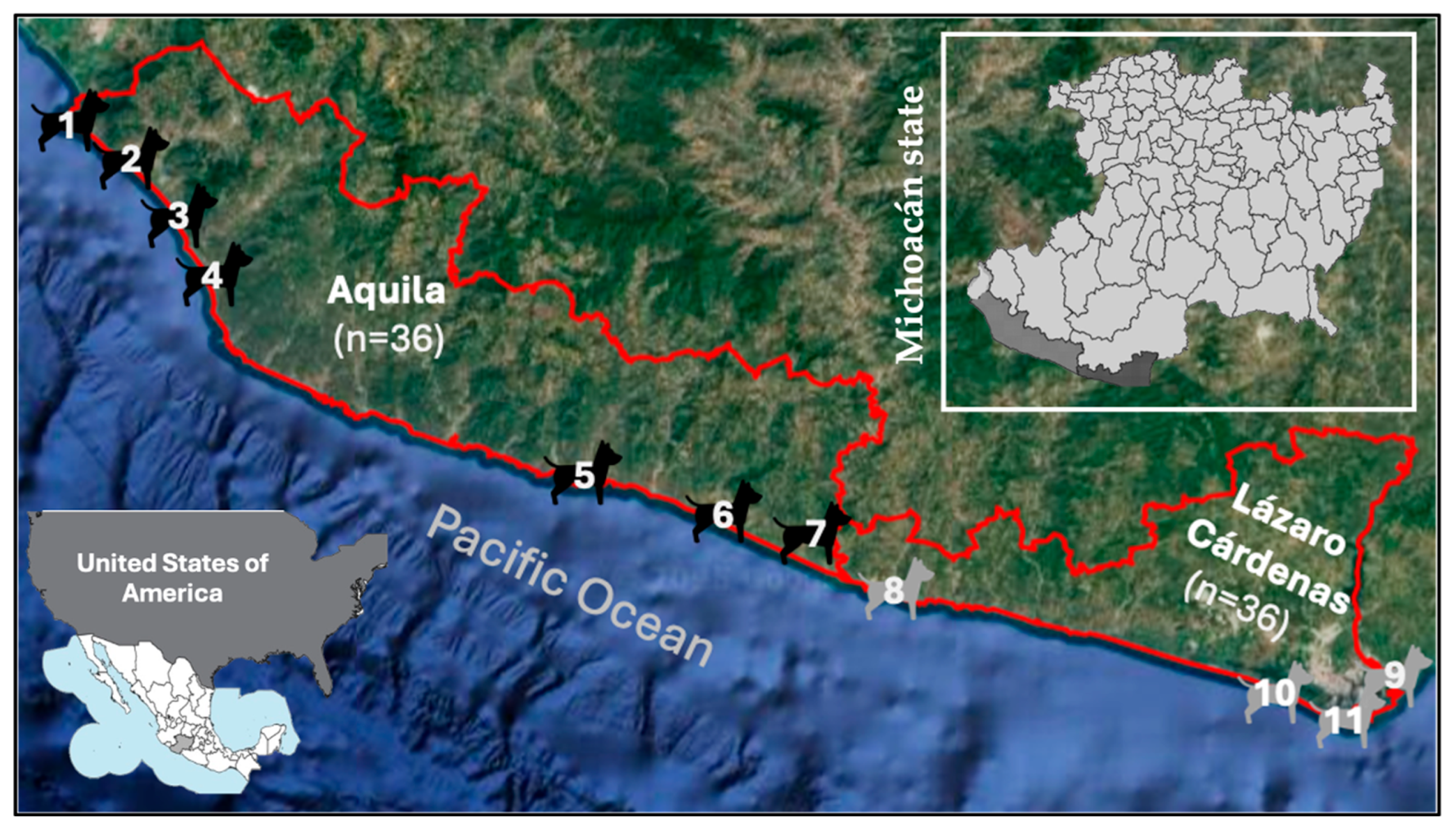
Figure 2.
Rarefaction curves showing sequencing depth coverage of circulating bacterial DNA in stray dogs. The Y-axis represents observed OTUs and the X-axis represents the number of sequences analyzed. Curves approaching a plateau indicate adequate coverage, whereas positively sloped curves suggest additional richness may remain undetected. Lines are colored by sampling site as shown in the legend.
Figure 2.
Rarefaction curves showing sequencing depth coverage of circulating bacterial DNA in stray dogs. The Y-axis represents observed OTUs and the X-axis represents the number of sequences analyzed. Curves approaching a plateau indicate adequate coverage, whereas positively sloped curves suggest additional richness may remain undetected. Lines are colored by sampling site as shown in the legend.
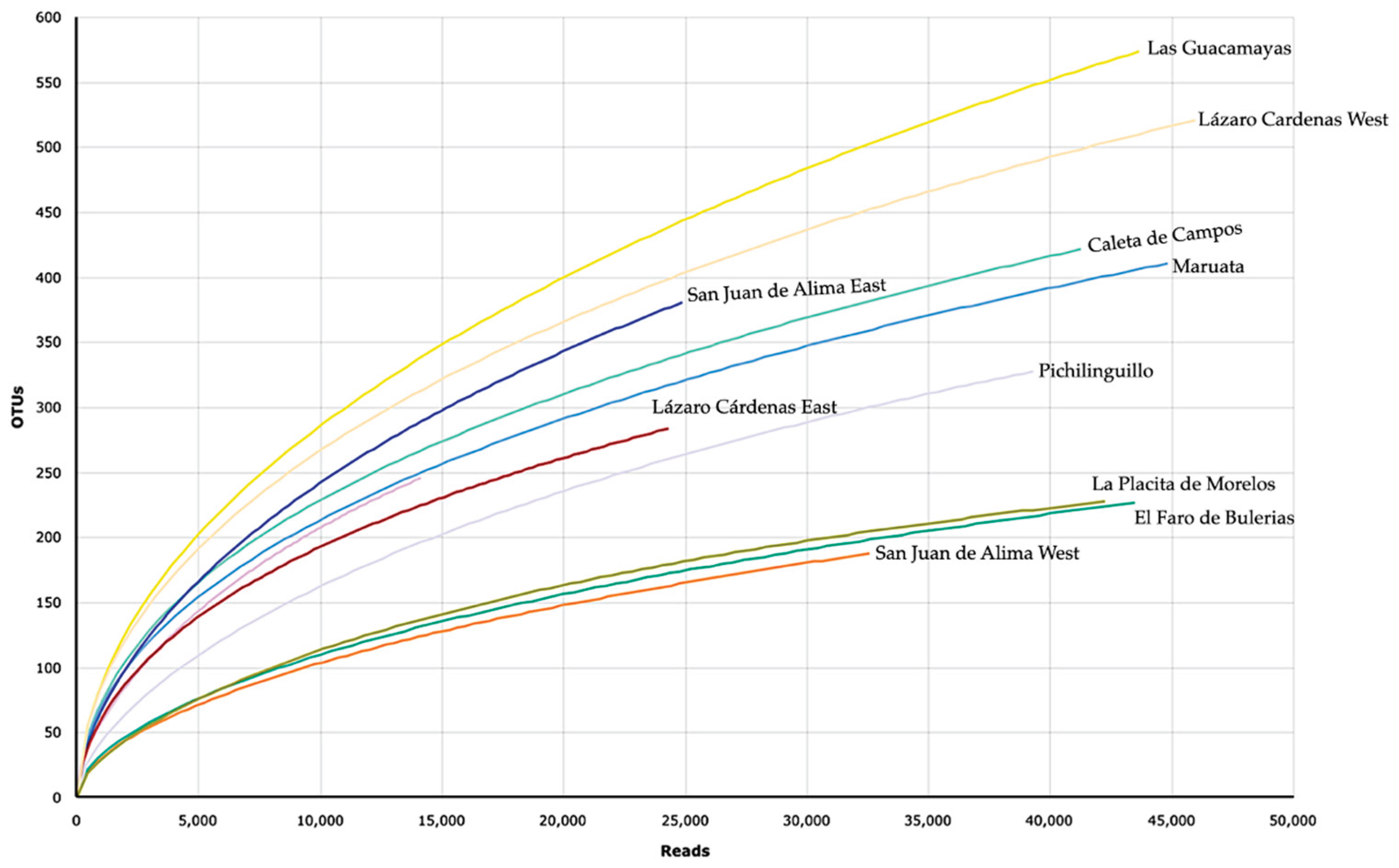
Table 1.
Bacterial sequences obtained from the blood of Canis lupus familiaris collected in coastal tourist areas of Michoacán, Mexico. The table summarizes the number of blood samples processed, assembled and discarded sequences, high-quality sequences retained, and the final bacterial sequences obtained for each sampling location and municipality.
Table 1.
Bacterial sequences obtained from the blood of Canis lupus familiaris collected in coastal tourist areas of Michoacán, Mexico. The table summarizes the number of blood samples processed, assembled and discarded sequences, high-quality sequences retained, and the final bacterial sequences obtained for each sampling location and municipality.
| Sampling location | Municipality | Blood samples | Assembled sequences | Discarded sequences | Total of high-quality sequences | Final bacterial sequences |
|---|---|---|---|---|---|---|
| San Juan de Alima (West) | Aquila | 7 | 50,027 | 17,458 | 50,027 | 32,569 |
| San Juan de Alima (East) | Aquila | 6 | 49,860 | 24,896 | 49,860 | 24,873 |
| La Placita de Morelos | Aquila | 8 | 50, 073 | 7,832 | 50, 073 | 42,241 |
| El Faro de Bucerías | Aquila | 3 | 51,547 | 8,074 | 51,547 | 43,473 |
| Maruata | Aquila | 4 | 52,210 | 7,381 | 52,210 | 44,829 |
| Pichilinguillo | Aquila | 3 | 46,830 | 7,538 | 46,830 | 39,292 |
| Nexpa | Aquila | 5 | 51,070 | 7,426 | 51,070 | 43,644 |
| Las Guacamayas | Lazaro Cardenas | 10 | 33,181 | 19,055 | 33,181 | 14,126 |
| Caleta de Campos | Lazaro Cardenas | 7 | 48,261 | 7,010 | 48,261 | 41,251 |
| Lázaro Cárdenas (West) | Lazaro Cardenas | 10 | 53,203 | 7,250 | 53,203 | 45,953 |
| Lázaro Cárdenas (East) | Lazaro Cardenas | 9 | 44,344 | 20,033 | 44,344 | 24,311 |
Disclaimer/Publisher’s Note: The statements, opinions and data contained in all publications are solely those of the individual author(s) and contributor(s) and not of MDPI and/or the editor(s). MDPI and/or the editor(s) disclaim responsibility for any injury to people or property resulting from any ideas, methods, instructions or products referred to in the content. |
© 2026 by the authors. Licensee MDPI, Basel, Switzerland. This article is an open access article distributed under the terms and conditions of the Creative Commons Attribution (CC BY) license (http://creativecommons.org/licenses/by/4.0/).
Copyright: This open access article is published under a Creative Commons CC BY 4.0 license, which permit the free download, distribution, and reuse, provided that the author and preprint are cited in any reuse.