

Submitted:
25 March 2026
Posted:
26 March 2026
You are already at the latest version
Abstract
Milk quality is crucial for human health, and effective control of the supply chain—including services, processes, and products—is essential to maintain it. This study aimed to compare cholesterol and protein content, phospholipid composition, advanced glycation end products, and somatic cell count in milk from organic and conventional farming systems. Additionally, the impact of short versus long supply chains was evaluated. The results demonstrate that milk from organic farming has a better phos-pholipid and cholesterol composition and also a greater amount of protein than milk derived from traditional farming and that the long supply chain does not significantly change these properties, with the exception of phospholipids. Advanced glycation end products values were significantly higher in long supply chain, both in conventional and biological samples, but the long supply chain had a greater impact especially on the organic product. Finally, somatic cell count results show lower values in organic samples, suggesting particularly effective herd management and animal health protocols in these operations
Keywords:
short supply chain
; long supply chain
; organic milk
; traditional milk
; phospholipids
; advanced glycation end products
1. Introduction
Milk is a complete food for mammals of the same species and provides all the energy and nutrients necessary for the newborn to ensure adequate growth and development (Andreas et al., 2015). In humans it has been demonstrated that breastfeeding for the first months of life plays a central role for an adequate development (Pereira, 2014). In nutrition, when we talk about milk without specifying the species it belongs to, we are referring to cow’s milk, which is an important source of calcium necessary for the maintenance of bone mass, even in adulthood (Ratajczak et al., 2021). There are some controversies about dairy consumption in adulthood, but epidemiological studies confirm the nutritional importance of milk and reinforce its possible role in the prevention of chronic conditions such as cardiovascular diseases (Bazzano et al., 2013), obesity and diabetes (Sousa et al., 2012).
Milk quality is essential for human health and the control of the supply chain, in terms of services, processes and products is relevant for maintaining quality (Bastas and Liyanage, 2018).
Somatic cell counts (SCC) in milk is commonly used as a predictor of inframammary infection, and an elevated SCC in raw milk has a negative influence on its quality. The results of many studies (Kehrli and Shuster, 1994; Anonymous, 2001; Sharma et al., 2011; Ianni et al., 2019) suggest that cows with SCC levels lower than 200,000 have not been infected with major mastitis pathogens (namely, Staphylococcus aureus and Streptococcus agalactiae), while cows with SCC above 300,000 are probably infected. However, about 15% of infected cows have SCC milk levels <200,000 cells/ml, thus behaving as false negative samples. At the same time, a quite relevant percentage (15%) of uninfected milk samples is misclassified according to SCC, indicating the potential occurrence of false positives (Sharma et al., 2011). Both situations could incur considerable economic losses for the farmer and/or inappropriate antibiotic treatments. Regarding organic versus non-organic milk, research has shown that SCC levels can vary between the two production systems. While earlier studies reported that milk from organic farms may exhibit slightly higher SCC values, more recent findings indicate that the gap has narrowed or even reversed, with many organic farms now achieving SCC levels comparable to or lower than conventional systems. Improvements in organic herd health management, increased emphasis on preventive measures, and better animal welfare practices have likely contributed to this trend. Nevertheless, SCC levels in both farm types typically remain within legal limits, and observed differences may also reflect variations in herd management, breed, and environmental factors rather than production system alone.
The short supply chain (SSC) has been a valid alternative to the long supply chain (LSC). The SSC implies a great advantage because the milk is easily perishable and has a short shelf life even considering the potential sources of microbial contamination (Foster et al., 2011).
Furthermore, the SSC has a positive effect on the climate as the transport of products to short distances is limited, causing less pollution (Pradhan et al., 2020).
The aim of this work was to compare the cholesterol and protein content, phospholipid (PL) composition and the advanced glycation end product (AGE) content in the milk from organic farming and traditional farming. Thus, we analyzed milk samples coming from the traditional short supply chain (TSC), the organic short supply chain (OSC), the traditional long supply chain (TLC), and the organic long supply chain (OLC).
2. Materials and Methods
2.1. Experimental Design
Two different types of milk were considered: UHT milk and high quality pasteurized fresh milk. Specifically, these are bulk milk samples (which is milk that comes from multiple cows, put together), and whole milk. Upon arrival at the laboratory, they were stored at refrigeration temperature (0-4 °C) for a standardized period of time (approximately 10 days between packaging and analysis). All data provided by the producers were recorded in a database and all analyses were conducted in triplicate. The content of PLs, cholesterol (Chol), AGEs, proteins and somatic cells count was evaluated.
2.2. Phospholipid Analysis
Lipids were extracted according to Folch (Folch et al., 1957), and total PLs and Chol were quantified as described previously (Albi and Viola-Magni, 2002). Briefly, milk lipid fraction was extracted using 20 volumes of chloroform/methanol (2:1, v/v), followed by filtration and treatment with 0.2 volumes of NaCl 0,5%, and centrifugation to allow phase separation. The total PLs content was subsequently quantified by measuring organic phosphorus. PLs were separated by thin-layer silica gel chromatography (TLC) and PC, PE, PS, PI, and SM were localized with iodine vapor on the basis of standards migration. To evaluate the content of each PL, each spot was scraped and the organic phosphorus was measured (Albi and Viola-Magni, 2002).
2.3. Cholesterol Analysis
Chol was separated by TLC using hexane/diethyl ether/formic acid (80: 20:2, v/v) as the solvent (Albi et al., 2023). The Chol spot was identified using the Chol standard as a reference and exhibited an Rf of 0.24; quantification was performed according to Rudel and Morris (1973).
2.4. Advanced Glycation End Products Assay
The AGEs content was estimated using the AGE ELISA kit (ELK Biotechnology; Denver, CO, USA) with a competitive enzymatic immunoassay, following the producer’s instructions. Milk samples were homogenized in phosphate-buffered saline (PBS), then centrifuged at 2,000 rpm for 30 minutes at 4 °C before being used in the assay. The samples were added to an AGE-coated microtiter plate, followed by the addition of a biotin-conjugated antibody specific to AGEs. Avidin conjugated to horseradish peroxidase was added after incubation; at the end of the latter, 3,3′,5,5′-tetramethylbenzidine (TMB) solution was added to the wells, and the reaction was stopped after 20 minutes by the addition of sulfuric acid, which changed the solution color from yellow to blue. The microplate was then read at 450 nm. The sample concentration was determined by comparing the sample OD to the logarithmich standard curve.
2.5. Protein Quantification
Total protein quantitation was performed by the Bradford method (Bradford, 1976), using the Coomassie® Plus (Bradford) Assay Kit (Thermo Scientific™ Coomassie Plus™ Kit). In brief, a small amount of protein sample was combined with the assay reagent, mixed well and then the absorbance at 595nm was measured. Bovine serum albumin (BSA) was used to construct a calibration standard curve and the protein concentration of the sample was estimated by comparing the absorbances.
2.6. Somatic Cells Count (SCC)
SCCs from mass milk before heat treatment were measured using a DeLaval cell counter according to the manufacturer’s instructions (Cellcounter DCC; DeLaval, Tumba, Sweden). 60 µL of sample were aspirated into a small cassette that contained a DNA-specific fluorescent reagent that bound to the SCC nuclei. The machine counted the fluorescent SCC nuclei in milk using an integrated digital camera.
2.7. Statistical Analysis
Statistical analysis of the data was carried out using StatView 5.0.1 software (SAS Institute, Cary, NC, USA). At first, t-test for unpaired data with a limit of 95% confidence was performed. Analysis of variance (ANOVA) was also performed using Fisher PLSD (protected least significant differences). The graphical display of the results was obtained with Prism 8.4.3 software for Mac OS (GraphPad Software, Boston, MA, USA).
3. Results
Results for SCCs are shown in Table 1. Mass milk SCCs ranged from 93,100 for OSC to 372,200 for TLC, with values of 346,300 for TSC and 127,500 for OLC.
Then, it was essential to analyze whether there were differences among different samples in terms of proteins and PLs. The results showed that the content of proteins was similar in all samples, but slightly higher in the organic ones (Figure 1).
The total PL content was significantly higher in the OSC samples, with a clear difference compared to the OLC samples and the respective traditional samples (Figure 2). However, no changes were found between TSC and TLC.
Therefore, we then analyzed each PL separately. As previously mentioned, the content of each PL was higher in OSC samples but, in particular, the content of phosphatidylserine (PS) plus phosphatidylinositol (PI) and sphingomyelin (SM) was much higher in both organic OSC and OLC samples, compared to the respective traditional samples (Figure 3). Instead, phosphatidylcholine (PC) was similar in all samples. No major differences were found for PC and for PE in TLC and OLC. However, it is interesting to note that the value of PE, in traditional samples, has slightly increased in the long supply chain compared to the short one (Figure 3).
Furthermore, the level of cholesterol (Chol) was also analyzed. The results clearly demonstrated an enrichment in Chol of the OSC compared to all the other samples, thus the long chain had a strong impact in biological samples, while traditional samples show the same values (Figure 4).
Additionally, we wanted to test whether AGEs could increase in the traditional product compared to the organic one or in the LSC compared to SSC. The results showed that the values were significantly higher in the LSC, both in the traditional and organic samples. Interestingly, the LSC had a greater impact on the organic product compared to the traditional one. In fact, OLC had statistically much higher values than OSC, while TLC and OLC values were quite similar (Figure 5).
4. Discussion:
Global milk production is dominated by five animal species: 83% of total milk production comes from cows, followed by buffalo with 13%, goats with 2%, sheep with 1% and camels with 0.4% (Food and Agriculture, 2017). Currently there are different types of cow’s milk on the market: whole, skimmed, semi-skimmed or with added beneficial substances, such as vitamins.
Cow’s milk is typically composed of water (85–87%), fats (3.8–5.5%), proteins (2.9–3.5%) and in small quantities carbohydrates (5%). It is also a natural source of micronutrient and bioactive compounds including vitamins, minerals, biogenic amines, organic acids, nucleotides, oligosaccharides and immunoglobulins (Fox et al., 2015).
Cow’s milk is a rich and cheap source of calcium and phosphorous, so it is a valuable food for bone health (Turck, 2013).
The nutritional quality of milk depends primarily on the diet and state of well-being of the animal of origin and therefore on the type of breeding. The vitamin D content is strongly influenced by the cows’ exposure to the sun and the type of feed they feed (Weir et al., 2017).
Traditional methods require the animals to have little opportunity to move and eat pre-packaged feed during milking. Alternatively, organic farming involves animals living and eating directly on the fields and/or eating products composed of natural substances.
The orientation towards more agro-ecological and low-input farming systems can therefore present benefits for the nutritional properties of milk (Secchi et al., 2023).
For these reasons it is important to evaluate the compositional differences between milk from cows raised in organic farming and traditional farming. Furthermore, the properties of the milk also depend on the treatments after milking and whether the milk is sold by the short or long supply chain. Short supply chain means that the milk is milked and processed for human consumption to be distributed locally; without being stored for long periods and without being transported over long distances. Long supply chain means that the milk, after the milking process, is probably stored for long periods and transported over long distances, even to foreign countries.
In this study we evaluated the differences in nutritional composition between milk samples from organic or traditional farms, and long or short supply chain.
The major milk proteins are casein (α S1 and α S2 -caseins, β-casein and κ-casein) and whey (α-lactalbumin, β-lactoglobulin, lactoferrin and glycol macropeptide), while serum albumin and transferrin are minor proteins. Milk proteins, after hydrolysis, are an excellent source of bioactive peptides and essential amminoacids (Sultan et al., 2018). These bioactive peptides have promising health benefits, including: antioxidant, anti-inflammatory, antihypertensive, antidiabetic, antihypercholesterolemic and anticarcinogenic properties (Bielecka et al., 2022).
In the present study, the comparison of different supply chains showed notable variations in bulk milk SCC. The lowest SCC was found in organic short supply chain (OSC) milk, 93,100 cells/ml, suggesting particularly effective herd management and animal health protocols in these operations. In contrast, traditional long supply chain (TLC) milk showed the highest SCC at 372,200 cells/ml, indicating a greater incidence of subclinical infection or less effective mastitis control measures. Intermediate values were observed for traditional short supply chain (TSC), with SCC at 346,300 cells/ml, and organic long supply chain (OLC), at 127,500 cells/ml. These differences may reflect a combination of factors associated with supply chain type and production system, such as herd size, management intensity, and the ability to implement rapid interventions for udder health at the farm level. The notably lower SCC in OSC highlights the potential for short supply chains—particularly in organic systems—to maintain superior milk quality through closer farmer-consumer connections and tailored herd care.
Moreover, we evaluated the protein content among the four types of milk: TSC, OSC, TLC, and OLC. The protein content is equally distributed in the different types of farming, even if we detected the higher protein content in the OSC (>2 5 mg/g of milk).
AGEs are a series of chemical compounds produced when sugars combine with proteins or fats. They are formed non-enzymatically by condensation between carbonyl groups of reducing sugars and free amino groups of nucleic acids, proteins or lipids and subsequent rearrangements that give rise to stable and irreversible final products. They are involved in numerous pathophysiological processes and diseases: diabetes, cancer, cardiovascular diseases, neurodegenerative diseases and even SARS-CoV-2 virus infection (Twarda-Clapa et al., 2022). From our studies emerged that the samples coming from OSC, TLC and OLC are statistically significant and the milk coming from TLC is the richest in AGEs.
Among the fatty acids constituting cow’s milk we must mention vaccenic acid (VA or 11t-18:1) and rumenic acid (RA or 9c,11t-18:2), an isomer of conjugated linoleic acid (CLA) which appear to show potential beneficial effects on human health (Mendis et al., 2008). Milk is also a source of cholesterol, a sterol found only in animal products, important for human brain function (Paseban et al., 2023). In our studies the cholesterol content is higher in OSC (60 ug/g of milk), followed by TLC, TSC and OLC, in which it is approximately 10 ug/g of milk.
Another important class of lipids that we find in cow’s milk are phospholipids, they are important because constitute the membranes of eukaryotic cells and also in cellular regulation, in membrane trafficking, cell growth, apoptosis, and intracellular signalling (Morita and Ikeda, 2022). The main classes of phospholipids are phosphatidylcholine (PC), phosphatidylserine (PS), phosphatidylinositol (PI), sphingomyelin (SM) and phosphatidylethanolamine (PE). Our analyses showed that the milk sample from the OSC is the richest in phospholipids, with a content > 750 ug/g of milk. Among the phospholipid species we analyzed, the most represented was PC, followed by SM, PI + PS and PE. The content of PS + PI and SM in OLC milk was also statistically significant.
In conclusion, our work demonstrates that milk from organic animals has a better phospholipid and cholesterol composition and also a greater amount of protein than milk derived from traditional farming and that the long supply chain does not significantly change these properties. Instead, the long supply chain strongly influences the AGE content in milk, especially of organic origin.
References
- Albi, E., Mandarano, M., Cataldi, S., Ceccarini, M.R., Fiorani, F., Beccari, T., Sidoni, A., Codini, M., 2023. The Effect of Cholesterol in MCF7 Human Breast Cancer Cells. International Journal of Molecular Sciences 24, 5935.
- Albi, E., Viola-Magni, M.P., 2002. The presence and the role of chromatin cholesterol in rat liver regeneration. Journal of Hepatology 36, 395-400.
- Andreas, N.J., Kampmann, B., Mehring Le-Doare, K., 2015. Human breast milk: a review on its composition and bioactivity. Early Human Development 91, 629-635.
- Anonymous, 2001. National mastitis council recommended mastitis control program. National Mastitis Council.
- Bastas, A., Liyanage, K., 2018. Sustainable supply chain quality management: a systematic review. Journal of Cleaner Production 181, 726-744.
- Bazzano, L.A., Green, T., Harrison, T.N., Reynolds, K., 2013. Dietary approaches to prevent hypertension. Current Hypertension Reports 15, 694-702.
- Bielecka, M., Cichosz, G., Czeczot, H., 2022. Antioxidant, antimicrobial and anticarcinogenic activities of bovine milk proteins and their hydrolysates-a review. International Dairy Journal 127, 105208.
- Bradford, M.M., 1976. A rapid and sensitive method for the quantitation of microgram quantities of protein utilizing the principle of protein-dye binding. Analytical Biochemistry 72, 248-254.
- Folch, J., Lees, M., Sloane Stanley, G.H., 1957. A simple method for the isolation and purification of total lipides from animal tissues. Journal of Biological Chemistry 226, 497-509.
- Food, Agriculture, O., 2017. Gateway to dairy production and products.
- Foster, S.T., Wallin, C., Ogden, J., 2011. Towards a better understanding of supply chain quality management practices. International Journal of Production Research 49, 2285-2300.
- Fox, P.F., Uniacke-Lowe, T., McSweeney, P.L.H., O’Mahony, J.A., 2015. Dairy Chemistry and Biochemistry. Springer International Publishing Cham, Switzerland.
- Ianni, F., Sechi, P., La Mantia, A., Pucciarini, L., Camaioni, E., Cenci-Goga, B., Sardella, R., Natalini, B., 2019. The relationships between somatic cells and isoleucine, leucine and tyrosine content in cow milk. Applied Sciences 9, 349.
- Kehrli, M.E., Shuster, D.E., 1994. Factors Affecting Milk Somatic Cells and Their Role in Health of the Bovine Mammary Gland. Journal of Dairy Science 77, 619-627.
- Mendis, S., Cruz-Hernandez, C., Ratnayake, W.M., 2008. Fatty acid profile of Canadian dairy products with special attention to the trans-octadecenoic acid and conjugated linoleic acid isomers. Journal of AOAC International 91, 811-819.
- Morita, S.Y., Ikeda, Y., 2022. Regulation of membrane phospholipid biosynthesis in mammalian cells. Biochemical Pharmacology 206, 115296.
- Paseban, T., Alavi, M.S., Etemad, L., Roohbakhsh, A., 2023. The role of the ATP-Binding Cassette A1 (ABCA1) in neurological disorders: a mechanistic review. Expert Opinion on Therapeutic Targets 27, 531-552.
- Pereira, P.C., 2014. Milk nutritional composition and its role in human health. Nutrition 30, 619-627.
- Pradhan, P., Kriewald, S., Costa, L., Rybski, D., Benton, T.G., Fischer, G., Kropp, J.P., 2020. Urban food systems: how regionalization can contribute to climate change mitigation. Environmental Science & Technology 54, 10551-10560.
- Ratajczak, A.E., Zawada, A., Rychter, A.M., Dobrowolska, A., Krela-Kaźmierczak, I., 2021. Milk and dairy products: good or bad for human bone? Practical dietary recommendations for the prevention and management of osteoporosis. Nutrients 13, 1329.
- Rudel, L.L., Morris, M.D., 1973. Determination of cholesterol using o-phthalaldehyde. Journal of Lipid Research 14, 364-366.
- Secchi, G., Amalfitano, N., Carafa, I., Franciosi, E., Gallo, L., Schiavon, S., Sturaro, E., Tagliapietra, F., Bittante, G., 2023. Milk metagenomics and cheese-making properties as affected by indoor farming and summer highland grazing. Journal of Dairy Science 106, 96-116.
- Sharma, N., Singh, N.K., Bhadwal, M.S., 2011. Relationship of Somatic Cell Count and Mastitis: An Overview. Asian-Australasian Journal of Animal Sciences 24, 429-438.
- Sousa, G.T., Lira, F.S., Rosa, J.C., De Oliveira, E.P., Oyama, L.M., Santos, R.V., Pimentel, G.D., 2012. Dietary whey protein lessens several risk factors for metabolic diseases: a review. Lipids in Health and Disease 11, 67.
- Sultan, S., Huma, N., Butt, M.S., et al., 2018. Therapeutic potential of dairy bioactive peptides: a contemporary perspective. Critical Reviews in Food Science and Nutrition 58, 105-115.
- Turck, D., 2013. Cow’s milk and goat’s milk. World Review of Nutrition and Dietetics 108, 56-62.
- Twarda-Clapa, A., Olczak, A., Białkowska, A.M., Koziołkiewicz, M., 2022. Advanced Glycation End-Products (AGEs): Formation, Chemistry, Classification, Receptors, and Diseases Related to AGEs. Cells 11, 1312.
- Weir, R.R., Strain, J.J., Johnston, M., Lowis, C., Fearon, A.M., Stewart, S., Pourshahidi, L.K., 2017. Environmental and genetic factors influence the vitamin D content of cows’ milk. Proceedings of the Nutrition Society 76, 76-82.
Figure 1.
Protein content in milk. TSC, traditional short supply chain; OSC, organic short supply chain; TLC, traditional long supply chain; OLC, organic long supply chain. Data are expressed as mean ± SD.
Figure 1.
Protein content in milk. TSC, traditional short supply chain; OSC, organic short supply chain; TLC, traditional long supply chain; OLC, organic long supply chain. Data are expressed as mean ± SD.
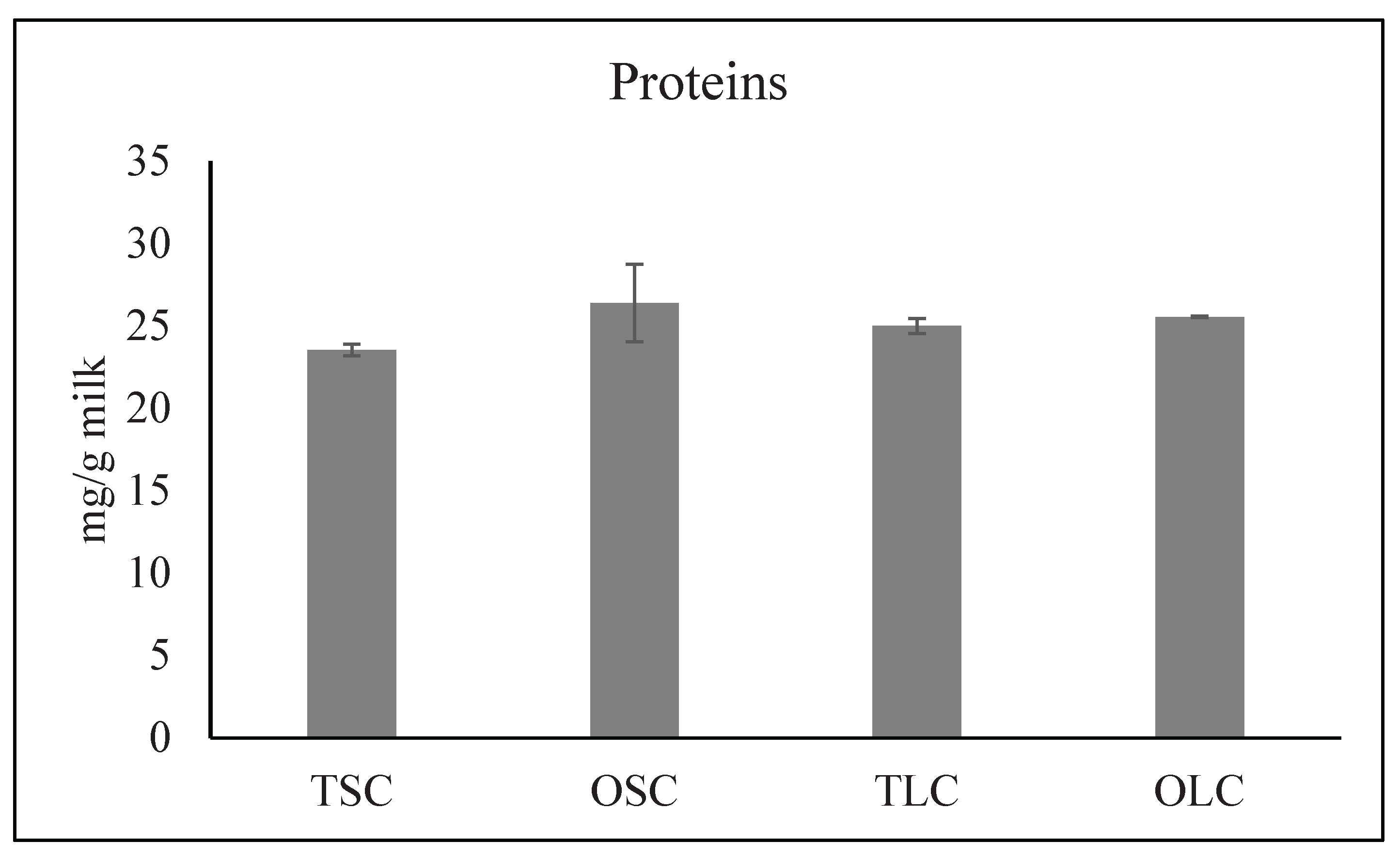
Figure 2.
Total phospholipid content in milk. TSC, traditional short supply chain; OSC, organic short supply chain; TLC, traditional long supply chain; OLC, organic long supply chain. Data are expressed as mean ± SD. *, significance of OSC vs TSC. p < 0.05.
Figure 2.
Total phospholipid content in milk. TSC, traditional short supply chain; OSC, organic short supply chain; TLC, traditional long supply chain; OLC, organic long supply chain. Data are expressed as mean ± SD. *, significance of OSC vs TSC. p < 0.05.
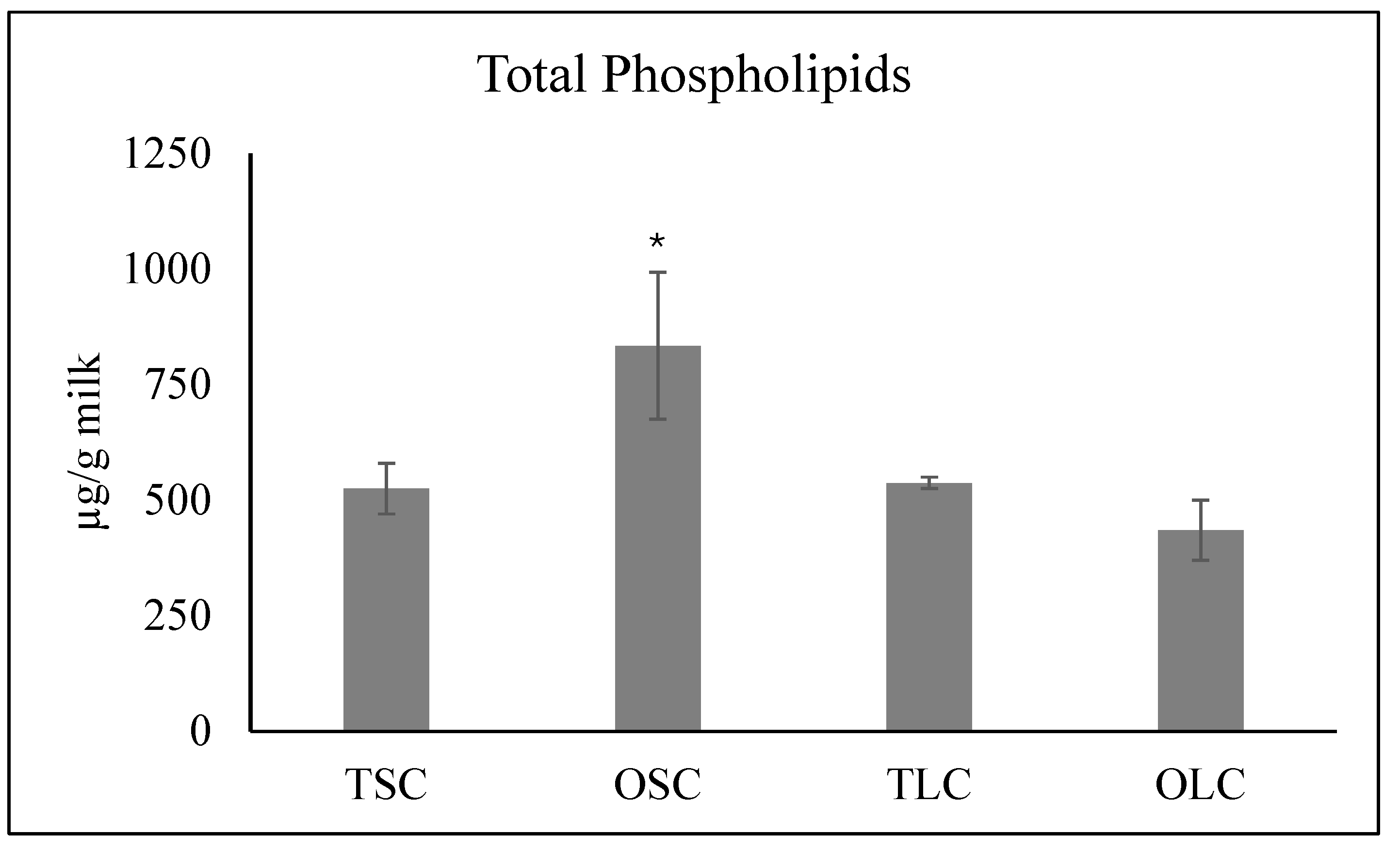
Figure 3.
Lipid composition of milk. TSC, traditional short supply chain; OSC, organic short supply chain; TLC, traditional long supply chain; OLC, organic long supply chain. PS, phosphatidylserine; PI, phosphatidylinositol; SM, sphingomyelin; PC, phosphatidylcholine; PE, phosphatidylethanolamine. Data are expressed as mean ± SD. *, significance of OSC vs TSC and OLC vs TLC; §, TLC vs TSC. p < 0.05.
Figure 3.
Lipid composition of milk. TSC, traditional short supply chain; OSC, organic short supply chain; TLC, traditional long supply chain; OLC, organic long supply chain. PS, phosphatidylserine; PI, phosphatidylinositol; SM, sphingomyelin; PC, phosphatidylcholine; PE, phosphatidylethanolamine. Data are expressed as mean ± SD. *, significance of OSC vs TSC and OLC vs TLC; §, TLC vs TSC. p < 0.05.
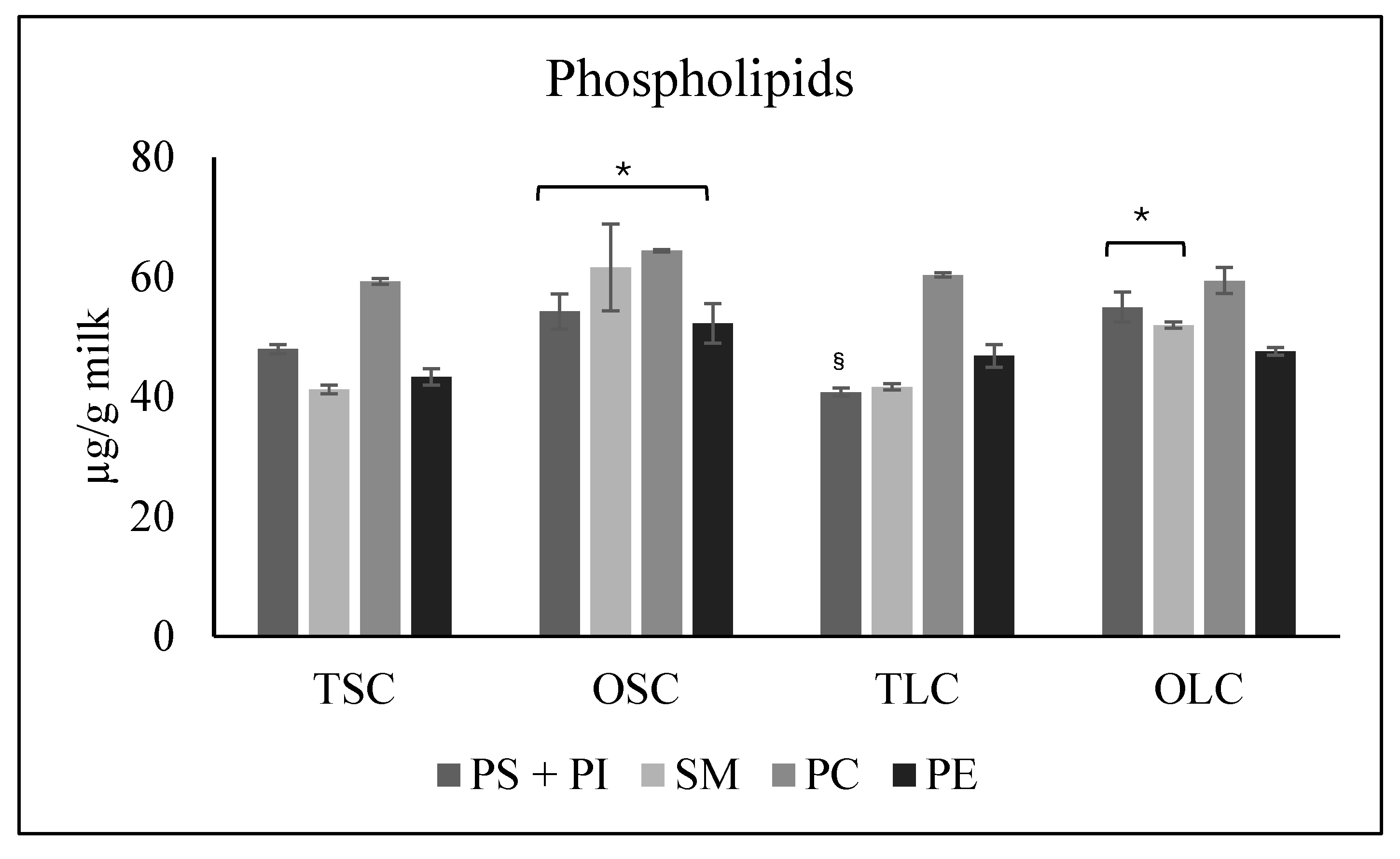
Figure 4.
Cholesterol composition of milk. TSC, traditional short supply chain; OSC, organic short supply chain; TLC, traditional long supply chain; OLC, organic long supply chain. Data are expressed as mean ± SD. *, significance of OSC vs TSC. p < 0.05.
Figure 4.
Cholesterol composition of milk. TSC, traditional short supply chain; OSC, organic short supply chain; TLC, traditional long supply chain; OLC, organic long supply chain. Data are expressed as mean ± SD. *, significance of OSC vs TSC. p < 0.05.
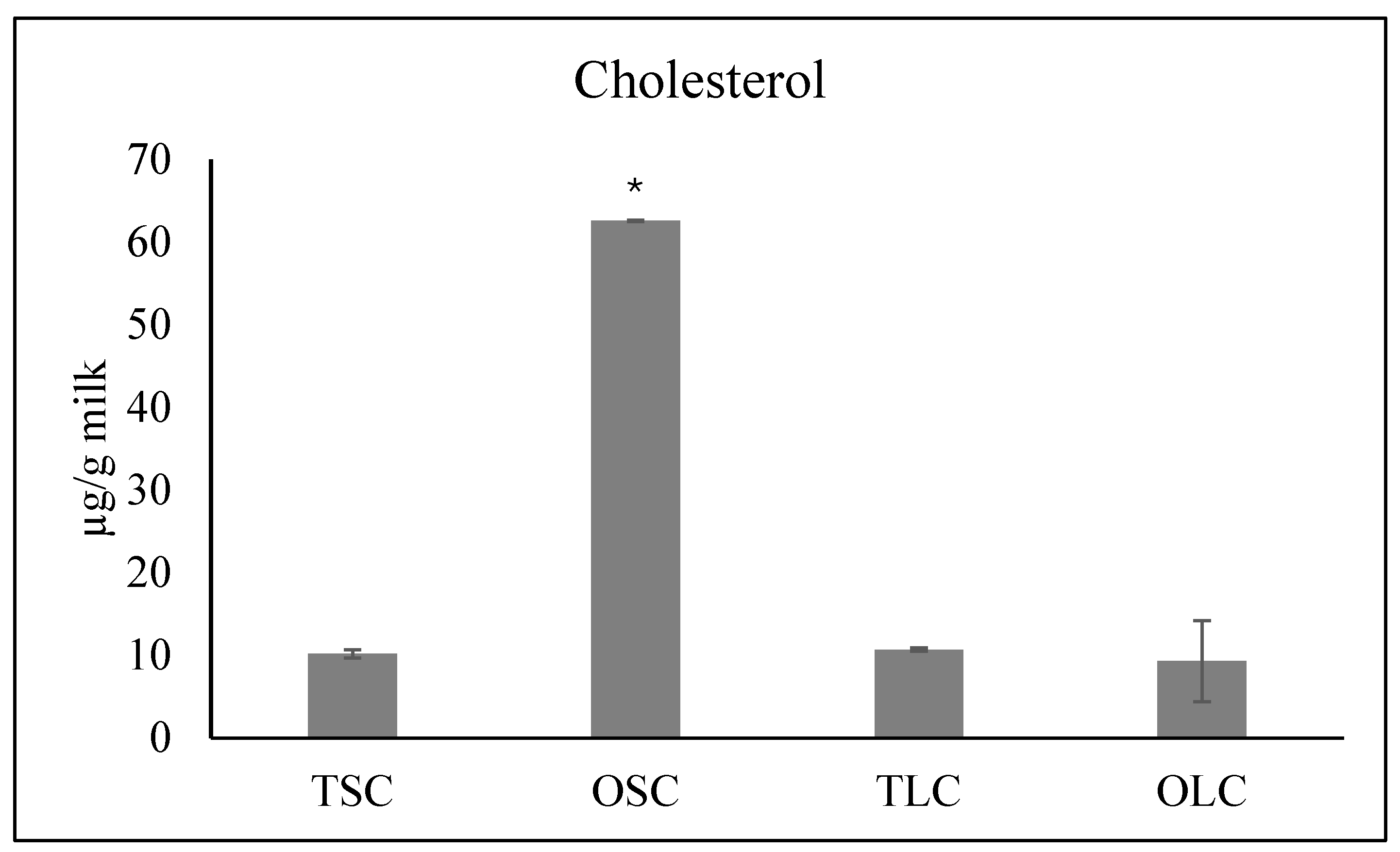
Figure 5.
Advanced glycation end products in milk. TSC, traditional short supply chain; OSC, organic short supply chain; TLC, traditional long supply chain; OLC, organic long supply chain. Data are expressed as mean ± SD. *, significance OSC vs TSC; TLC vs TSC; §, OLC vs OSC. p < 0.05.
Figure 5.
Advanced glycation end products in milk. TSC, traditional short supply chain; OSC, organic short supply chain; TLC, traditional long supply chain; OLC, organic long supply chain. Data are expressed as mean ± SD. *, significance OSC vs TSC; TLC vs TSC; §, OLC vs OSC. p < 0.05.
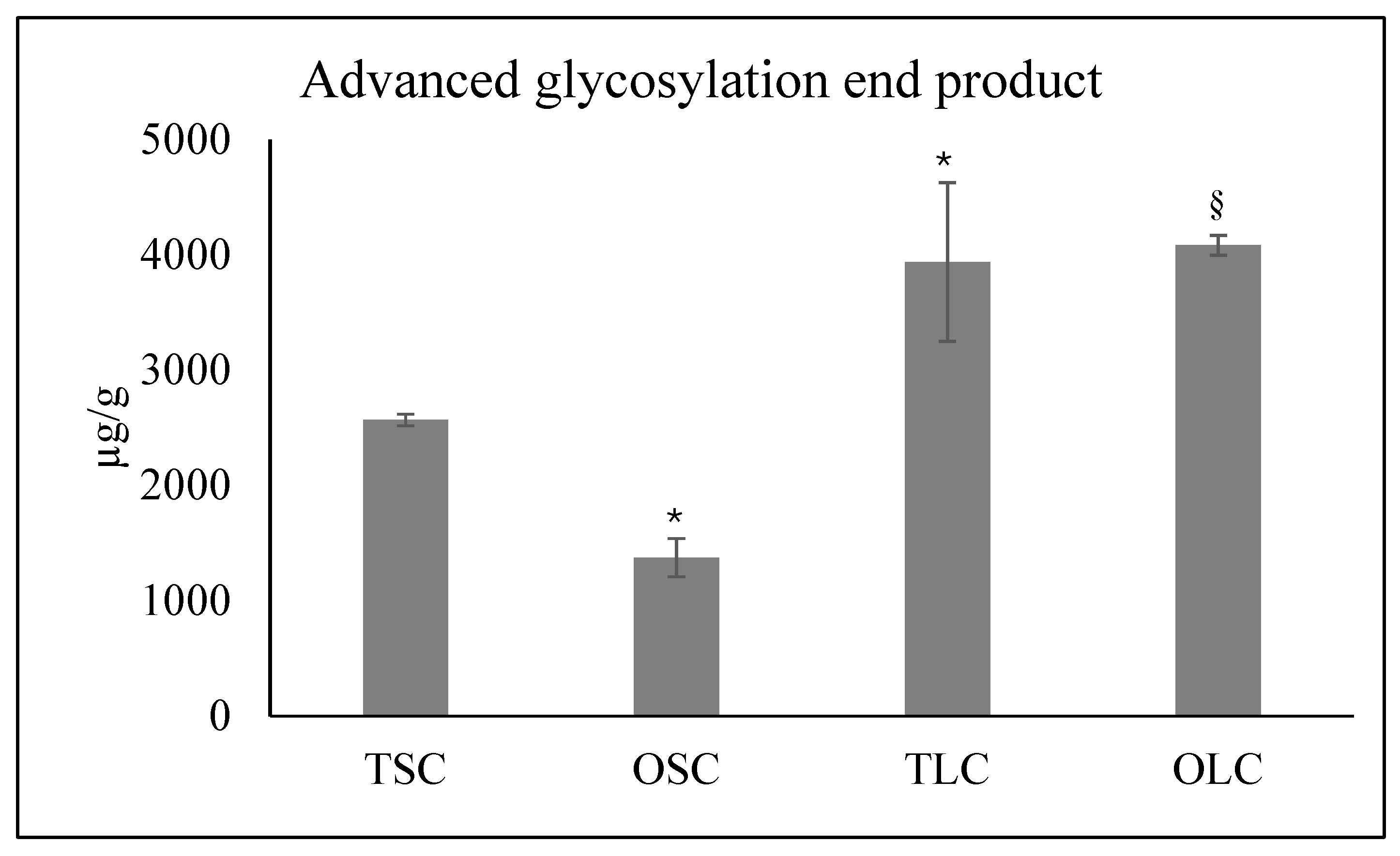

Table 1.
Mass milk somatic cells count (cells ml-1).
| Supply chain | SCC |
| traditional short supply chain (TSC) | 346.3 x 1000 |
| traditional long supply chain (TLC) | 372.2 x 1000 |
| organic long supply chain (OLC) | 127.5 x1000 |
| organic short supply chain (OSC) | 93.1 x 1000 |
Disclaimer/Publisher’s Note: The statements, opinions and data contained in all publications are solely those of the individual author(s) and contributor(s) and not of MDPI and/or the editor(s). MDPI and/or the editor(s) disclaim responsibility for any injury to people or property resulting from any ideas, methods, instructions or products referred to in the content. |
© 2026 by the authors. Licensee MDPI, Basel, Switzerland. This article is an open access article distributed under the terms and conditions of the Creative Commons Attribution (CC BY) license (http://creativecommons.org/licenses/by/4.0/).
Copyright: This open access article is published under a Creative Commons CC BY 4.0 license, which permit the free download, distribution, and reuse, provided that the author and preprint are cited in any reuse.


