

Submitted:
25 March 2026
Posted:
26 March 2026
You are already at the latest version
Abstract
Background: Cephalosporins, widely used β-lactam antibiotics, are becoming significant environmental pollutants primarily due to their high use and persistence. They are released into the environment mainly through wastewater treatment plants, agricultural runoff, and hospital discharge, with particularly high concentrations recorded in effluents. Conventional wastewater treatment methods have inadequate removal efficiency, while advanced treatments, although more efficient, may produce toxic by-products. Recent studies emphasize the importance of improved detection and monitoring techniques and advocate for stricter effluent regulations. Methods: The search strategy used the SCOPUS and PUBMED databases with the keywords “cephalosporin” AND “aquatic environment”, resulting in 341 records. The final review synthesized the findings from 110 papers, highlighting the presence of cephalosporins in various aquatic habitats and laboratory settings. Results: The literature on cephalosporins in aquatic environments has expanded significantly from 1978 to 2025, prompted by concerns about pharmaceutical contamination and antibiotic resistance. Studies from 2016 to 2025 used advanced and multidisciplinary monitoring techniques, revealed key pollution sources such as wastewater treatment plants and hospitals, and correlated antibiotic residues with resistance genes, highlighting the need for continued monitoring and mitigation efforts. Conclusion: The literature has noted an increasing focus on cephalosporins in aquatic environments, with results indicating links between antibiotic residues and resistance genes. Ecotoxicological assessments show negative effects on aquatic organisms, highlighting that degradation processes may lead to the formation of more toxic compounds. This analysis calls for an integrated monitoring approach and further research to address the ecological and health impacts of cephalosporin pollution.
Keywords:
cephalosporin antibiotics
; aquatic environments
; ecotoxicological effects
1. Introduction
The extensive application of antibiotics in human and veterinary medicine has led to their persistent release into natural ecosystems, raising concerns about ecological and public health impacts [1,2,3]. Despite treatment procedures, antibiotics frequently persist in aquatic environments, facilitating the spread of antibiotic resistance genes and altering microbial populations [4,5]. Various pathways lead to environmental pollution, such as effluents from wastewater treatment plants, agricultural runoff, hospital discharges and landfill leachate, underscoring the complex interactions of antibiotics in aquatic environments [6,7,8]. Antibiotics (ABs) primarily enter aquatic habitats via wastewater treatment plants (WWTPs), where traditional treatment techniques are frequently insufficient to completely remove these compounds. As a result, large amounts of unmetabolized ABs and their transformation products are discharged into receiving surface waters via treated effluents, adding to their ongoing presence and potential ecological impact [9].
Other sources include agricultural runoff, hospital effluents, and landfill leachate [10,11,12]. Studies have shown that tertiary processes have varying degrees of success in removing ABs, with manufacturing facilities being a major point source [9]. In some Asian countries, AB concentrations in effluents are several times higher than in surface waters, indicating that manufacturing facilities may be a major point source of ABs [7,9]. These substances can be measured in aquatic habitats, including surface water, wastewater, sediments and aquatic organisms [6,13]. Laboratory studies have been performed to model key processes such as degradation, adsorption, oxidation and sophisticated treatment approaches, with the aim of improving the understanding of the environmental behavior, transformation pathways and final fate of these compounds. These controlled tests provide significant information on the pharmacokinetics, persistence and elimination efficiency of cephalosporins under various environmental and artificial circumstances [14,15].
Cephalosporins, broad-spectrum β-lactam ABs [15,16], are emerging pollutants due to their widespread use and persistence in environmental matrices [14]. Beta-lactam ABs are active against various Gram-positive, Gram-negative and anaerobic organisms, interfering with cell wall synthesis [17]. They represent the second most prescribed class of ABs in Europe [18]. Although broader classes of ABs are receiving more attention [19], β-lactam ABs, including cephalosporins, are often inadequately documented in environmental research due to their intrinsic chemical instability. The β-lactam ring is highly vulnerable to hydrolysis, especially under conditions of neutral to alkaline pH, high temperatures and light. This structural weakness can cause rapid degradation in aquatic environments, as well as during sample collection or storage, resulting in an underestimation of environmental concentrations [6,20]. Cephalosporins were isolated from the fermentation products of Cephalosporium acremonicum [21,22]. The main component is cephalosporin C, an amide with α-aminoadipic acid and 7-aminocephalosporanic acid. Semisynthetic beta-lactam cephalosporin ABs were created by acylation of the amino group with various acid derivatives. There are approximately 25,000 such ABs, of which approximately 100 are used in medicine [16]. Semisynthetic cephalosporins are synthesized by expanding the acid spectrum and internal modifications of the aminocephalosporanic nucleus [22].
To provide a more comprehensive understanding of the classification of cephalosporins in terms of antibacterial activity and range of action, a summary table detailing the main generations of cephalosporins and their main pharmacological characteristics has been created. This classification, based on Vardanyan and Hruby (2006), helps to better understand the structural evolution and therapeutic relevance of cephalosporins over the generations (Table 1) [22].
Thus, due to their broad spectrum of antibiotic activity and their widespread use in human and veterinary medicine, cephalosporins and their metabolites are released into the environment after consumption and are increasingly found in aquatic compartments. Numerous studies have reported their presence in surface waters, wastewater, sediments and, in some cases, drinking water, indicating their significance and persistence in the environment [6]. Concentrations range from ng L-1 in rivers and lakes to mg L-1 near pharmaceutical production facilities [7]. Hospital effluents and agricultural runoff contribute significantly to this phenomenon. Over 50 investigations have reported the presence of cephalosporins, with detection being improved by advances in liquid chromatography-mass spectrometry (LC-MS/MS) and high-performance liquid chromatography (HPLC) [23,24]. Novel extraction approaches, such as solid-phase microextraction, have further increased the sensitivity of detection [25].
Wastewater contains toxic compounds and active pharmaceutical ingredients, which pose a threat to the environment [26]. With reported values ranging from 0.3 ng L-1 to 0.03 mg L-1, cephalosporins, including cephalexin, cefotaxime and ceftriaxone, have been found in surface water, groundwater and influents/effluents [15]. In hospital wastewater, cefepime reached concentrations of up to 540 µg L-1 (fourth generation) [27], compared to ~8.5 µg L⁻¹ in hospital wastewater from Romania [28], indicating marked geographical and usage pattern variability. The removal of cephalosporin ABs is necessary due to increased chemical oxygen demand and the production of cephalosporin-resistant bacteria [14].
Manufacturing facilities in Asia, particularly India and China, report extremely high concentrations of cephalosporins in effluents. Levels of up to mg L-1 have been observed, creating strong foci of selection for resistance genes [7]. These point sources highlight the urgent need for stricter regulation and monitoring of effluents in pharmaceutical manufacturing regions. Conventional WWTPs only partially remove cephalosporins, with removal efficiencies typically below 50% [8]. On the other hand, advanced treatment technologies, including ozonation [29], UV/chlorine, advanced oxidation processes (AOPs), activated carbon adsorption and membrane filtration, achieve higher removal rates. However, these treatment processes can produce harmful intermediate compounds as unintended by-products [8], and current evidence suggests that integrated treatment strategies – combining physical, chemical and biological approaches – offer the most effective and sustainable solution for reducing pharmaceutical contamination.
In aquatic environments, cephalosporins undergo hydrolysis, photolysis and biodegradation [30]. Furthermore, studies on phototransformation reveal half-lives ranging from hours to days and are influenced by organic matter, light and pH. The rate of hydrolysis is faster in alkaline environments. According to Pruden et al. (2006), sediments frequently serve as sorbents, delaying deterioration [31]. A crucial aspect is that transformation products may still be biologically active or more harmful than the parent chemicals, which requires careful monitoring. Analytical chemistry has advanced rapidly, allowing the detection of traces at ng L-1 levels [24]. Modern LC-MS/MS and high-throughput methods allow the simultaneous detection of multiple ABs. Recent innovations also include robust workflows for sample preparation and the application of quality by design principles for method validation [32]. These tools improve the reliability of monitoring programs and regulatory compliance. Policy-oriented studies emphasize risk assessment, mitigation strategies, and “One-Health” frameworks. Recommendations include stricter limits for effluent discharges, systematic monitoring of influent/effluent from WWTPs, and the integration of antimicrobial resistance (AMR) considerations into water quality standards [33]. This study aims to summarize current findings on the occurrence of cephalosporins in aquatic environments.
2. Materials and Methods
The search strategy was designed in SCOPUS and PUBMED using keywords such as “cephalosporin” AND “aquatic environment”. A total of 341 records were identified by the database search (Figure 1). For Scopus, 184 results were found and 97 were selected from the research areas Environmental Science and Pharmacology, Toxicology and Pharmaceuticals. The search was restricted to English. For PubMed, 157 results were found. After removing 39 duplicates between databases, there were 215 unique records for screening titles and abstracts. In the screening stage, records were examined for their relevance to cephalosporins in aquatic environments. Studies that clearly did not meet the inclusion criteria (e.g., non-environmental focus, no mention of cephalosporins) were excluded, 105 in total.
The excluded reports (n = 105) were classified as follows:
- cephalosporins were not specifically investigated (n = 94): research focused on generic ABs, antimicrobial resistance, or other pharmacological substances.
- not related to aquatic environments or treatment studies (n = 11): studies that refer to cephalosporins but do not include environmental, analytical, or aquatic components.
The narrative synthesis presented in this review was based on the final set of 110 papers.
3. Results and Discussion
This section may be divided by subheadings. It should provide a concise and precise description of the experimental results, their interpretation, as well as the experimental conclusions that can be drawn.
The annual scientific output on cephalosporins in aquatic environments has been steadily increasing, indicating a growing global concern about pharmaceutical contamination and antibiotic resistance in water systems. The 110 eligible studies, published between 1978 and 2025, reflect a sustained and evolving research interest in cephalosporins in aquatic and environmental contexts (Figure 2). Early publications from 1978 to 1999 were limited and focused primarily on microbiological and clinical issues with indirect implications for the environment, including patterns of susceptibility and resistance in aquatic isolates. From 2004 to 2009, research increasingly focused on environmental exposure and ecological risks related to antibiotic use, indicating a shift towards greater environmental awareness. Since 2010, there has been a significant increase in the number of publications, in parallel with the growing recognition of pharmaceuticals as emerging environmental contaminants. Between 2010 and 2015, research shifted to antimicrobial resistance in aquatic systems and the environmental consequences of antibiotic use.
Most of the included papers were published between 2016 and 2025, when scientific productivity increased most significantly. This period is distinguished by the widespread monitoring of cephalosporins in surface waters and wastewaters, laboratory investigations of fate and degradation, development of analytical techniques, and evaluation of treatment and removal strategies. The temporal pattern indicates a transition to integrated, multidisciplinary approaches that include environmental chemistry, toxicology, and microbiology.
Overall, the upward trajectory demonstrates a rapidly expanding field of study, with continued scientific interest and increasing identification of cephalosporins as emerging aquatic pollutants requiring ongoing monitoring and mitigation efforts. In parallel, the development and refinement of modern analytical and detection technologies have further accelerated research productivity, allowing the identification of contaminants at ever lower concentrations, and supporting a broader scientific understanding of their behavior in the environment.
The papers included in this review were divided into broad thematic groups, based on the main objective of the study (Figure 3). The largest group consisted of occurrence and monitoring studies, which demonstrated a continuing interest in the detection and quantification of cephalosporins in aquatic environments, such as surface waters, wastewaters, sediments, and biota. These investigations typically used advanced analytical techniques, such as LC-MS/MS, to determine geographic and temporal contamination patterns. Research on the Fate and Degradation of cephalosporins investigated their transformation under environmental and simulated laboratory circumstances, such as photolysis, hydrolysis, and oxidation processes, and frequently identified transformation products and reaction pathways. The Treatment and Removal category included research that evaluated traditional and advanced treatment strategies, such as adsorption, electrochemical degradation, and advanced oxidation processes, to reduce cephalosporin concentrations in water and wastewater matrices.
Ecotoxicity/toxicity studies investigated the biological effects of cephalosporins and their transformation products on aquatic species, reporting consequences at different trophic levels and biological endpoints. A smaller but significant subset of studies has focused on industrial hotspots and pharmaceutical manufacturing, with pharmaceutical effluents identified as key point sources of cephalosporins in aquatic habitats. The Analytical Methods category included studies on the development, optimization, and validation of analytical methodologies for the detection of cephalosporins at trace levels in complex environmental matrices. Finally, Reviews and Meta-Analyses summarized current knowledge on incidence, fate, toxicity, and removal options, while other works focused on developing areas such as antimicrobial resistance genes, interactions with microplastics, and environmental modeling.
3.1. Occurrence and Analytical Assessment of Cephalosporins in Aquatic Environments
Analytical advances have enabled the sensitive detection of cephalosporins and other ABs in a variety of aquatic matrices, with LC-MS/MS and high-resolution mass spectrometry becoming the dominant approaches [23,24]. ABs can be found in surface waters, groundwater, sediments and wastewater at trace or low concentrations (µg L⁻¹), [6,15]. Wastewater treatment plants and hospital effluents are major sources, and inadequate disposal leads to continued discharge into receiving waters [8,28]. Several studies have found strong links between antibiotic residues and antibiotic resistance genes or multidrug-resistant bacteria, highlighting the implications of cephalosporin contamination on the environment and public health [5,31].
Table 2 presents the analytical methodologies and occurrence studies demonstrating the presence of cephalosporins and other ABs in aquatic environments. The studies in this table show the widespread use of advanced chromatographic techniques, in particular solid phase extraction (SPE) coupled with LC-MS/MS and high-resolution mass spectrometry (HRMS), for the detection and quantification of cephalosporins at trace levels [23,24,35]. Environmental matrices investigated include surface waters, groundwater, wastewater influents and effluents, sediments and pond water.
ABs are consistently detected in aquatic systems affected by urban, hospital and industrial activity, with sewage treatment plants being recognized as major sources of environmental pollution. Several studies have also found that ABs are not completely removed during typical wastewater treatment techniques, allowing them to persist in receiving water bodies. In addition, several studies show associations between antibiotic incidence and the availability of antibiotic resistance genes or multidrug-resistant bacteria, highlighting the environmental importance of cephalosporin contamination [7,31]. Overall, the research summarized in Table 2 provides strong evidence of the extensive use of cephalosporins in aquatic ecosystems, emphasizing the importance of rigorous analytical methodologies for environmental monitoring and risk assessment.
3.2. Ecotoxicological Effects of Cephalosporins
The ecotoxicological effects of cephalosporins and their transformation products have been evaluated in a variety of aquatic animals such as invertebrates and fish, and also microorganisms and primary producers, taking into account numerous trophic levels and biological endpoints (Table 3). Several studies have examined acute and chronic toxicity to aquatic invertebrates, particularly Daphnia magna. The ecotoxicity of the veterinary cephalosporins ceftiofur and cefapirin has been studied before and after phototransformation, revealing that the photoproducts may have different toxicity profiles from the parent compounds, with effects on immobilization and growth inhibition in D. magna and Lemna minor [44]. Similarly, chronic exposure of D. magna to cefadroxil and cefradine had detectable impacts on survival, reproduction, and growth, indicating possible long-term ecological concerns at relevant doses [45].
Behavioral endpoints were investigated using rotifers (Brachionus calyciflorus), and exposure to ceftazidime and its photoproducts significantly affected feeding rates and post-exposure recovery, demonstrating that sublethal behavioral changes can serve as sensitive indicators of cephalosporin toxicity [46]. Cephalosporin exposure has also been found to affect primary producers. The green microalga Chlorella vulgaris showed growth suppression and reduced photosynthetic activity when exposed to cephalexin; however, adaptive responses were observed under certain exposure scenarios, implying species-specific tolerance mechanisms [47]. Another work used Chlorella sp. both as a biological therapy agent and as a toxicity receptor, demonstrating that removal of ceftazidime by algae resulted in quantifiable biochemical and physiological stress responses [48].

Table 3.
Ecotoxicological Effects of Cephalosporins on Aquatic Organisms.
| Cephalosporin | Organisms | Effects | Concentration | Exposure | References |
|---|---|---|---|---|---|
| Ceftiofur, Cefapirin |
Daphnia magna, Lemna minor | Immobilization; growth inhibition; altered toxicity after phototransformation. |
µg–mg L⁻¹ range | Acute | [44] |
| Cefadroxil, Cefradine | Daphnia magna, Oryzias latipes | Reduced survival; impaired reproduction and growth. | µg L⁻¹–mg L⁻¹ | Chronic | [45] |
| Ceftazidime | Brachionus calyciflorus | Altered feeding rate; behavioral changes during and after exposure. | µg L⁻¹ | Acute + post-exposure | [46] |
| Cephalexin | Chlorella vulgaris | Growth inhibition; reduced photosynthetic activity; partial adaptive response. |
mg L⁻¹ | Chronic | [47] |
| Cefotaxime | Danio rerio | Increased mobility of β-lactam resistance genes in gut microbiota. | Field-realistic (µg L⁻¹) | Chronic | [49] |
| Multiple cephalosporins (various dissociation forms) | Daphnia magna | Acute toxicity modified by phototransformation products. | µg L⁻¹ | Acute | [50] |
| Cephalosporin C | Daphnia magna | Immobilization following ionizing-radiation degradation. | mg L⁻¹ | Acute | [51] |
| Cefazolin (chlorination byproducts) |
Escherichia coli | DNA damage; genotoxic effects. |
mg L⁻¹ | Short-term | [52] |
| Ceftazidime | Chlorella sp. | Growth inhibition; biological stress during removal process. | mg L⁻¹ | Chronic | [48] |
| Cephalexin (degradation products) | Quantitative Structure-Activity Relationship (QSAR)-based models | Predicted ecotoxicity of hydroxyl-radical byproducts. | Model-based | [52] |
Fish models have provided insights into higher-level biological impacts. A study by Xue et al. (2023) using zebrafish (Danio rerio) demonstrated that environmentally realistic concentrations of cefotaxime increased the mobility of β-lactam resistance genes in the gut microbiota [49]. This highlights indirect ecological risks related to the spread of antimicrobial resistance, rather than classical toxicity endpoints. Effects of chronic exposure have also been observed in medaka fish (Oryzias latipes), including changes in growth and survival after exposure to cefadroxil and cefradine [45]. Several studies have highlighted the importance of transformation mechanisms in the regulation of toxicity. Photochemical degradation of cephalosporins affected their acute toxicity to D. magna, with several photoproducts demonstrating higher or persistent toxicity despite significant elimination of the parent compound [50]. Similarly, ionizing radiation-induced degradation of cephalosporin C produced transformation products with detectable toxicity in immobilization studies with D. magna [50]. At the microbiological level, chlorination of cefazolin produced transformation products capable of triggering DNA damage in Escherichia coli, as demonstrated by genotoxicity studies, raising concerns about disinfection byproducts in treated waters [52].
Finally, computational approaches have complemented experimental studies. A theoretical study by Masmoudi et al. (2022) on hydroxyl radical-triggered degradation of cephalexin suggested that various transformation products could retain or increase ecotoxicological potential, highlighting the importance of evaluating degradation byproducts alongside parent molecules [53].
Overall, these investigations show that cephalosporins can have a variety of biological effects on aquatic organisms, with toxicity being determined by the structure of the compound, duration of exposure, environmental transformation processes, and biological complexity. It is important to note that numerous studies show that degradation or treatment methods do not always eliminate environmental hazards and may, in some situations, result in compounds with altered or increased toxicity.
3.3. Fate, Transformation, and Removal Processes
The selected works cover both natural processes, such as photolysis and interactions with environmental particles, and artificial treatment options, such as photocatalysis, electrochemical degradation, advanced oxidation processes, chlorination and ionizing radiation. Table 4 presents a summary of studies on the degradation, transformation and removal of cephalosporin ABs in aquatic environments. Most experiments were performed in aqueous systems under controlled laboratory conditions, with some studies considering various water matrices to better simulate the complexity of the environment.
During the investigations, the kinetics of degradation, the transformation mechanisms and the creation of intermediate or final products were thoroughly examined. Several studies also examined the residual or modified toxicity after treatment, demonstrating that degradation does not always correspond to complete detoxification. Recent research has also found that aged microplastics can influence the transformation of cephalosporins, acting as reactive surfaces that modify photochemical processes [50,54]. Overall, the research presented in Table 4 provides extensive knowledge about the various processes that influence the fate of cephalosporins in the environment, allowing the development of appropriate treatment and risk assessment strategies.
Table 4.
Studies on the Fate, Degradation and Transformation of Cephalosporins in Aquatic Environments.
Table 4.
Studies on the Fate, Degradation and Transformation of Cephalosporins in Aquatic Environments.
| Type of antibiotic | Process / Treatment | Aquatic Matrix | Outcomes | References |
|---|---|---|---|---|
| Cephalosporins (multiple) | Natural photolysis | Aqueous solutions | Degradation kinetics and identification of photoproducts; photo-modified toxicity observed. |
[50] |
| Ceftriaxone sodium | Photocatalysis (Bi₂WO₆/g-C₃N₄) | Aqueous solution | Efficient degradation under light irradiation; proposed reaction pathways. |
[55] |
| Cephalosporin C | Ionizing radiation | Different water matrices | Degradation kinetics, transformation pathways, and reduced acute toxicity. | [51] |
| Cephalexin | Hydroxyl radical oxidation (theoretical) | Simulated aqueous system | Predicted degradation mechanisms and toxicity of byproducts. | [53] |
| Cefazolin | Chlorination | Aqueous solution | Formation of transformation products; genotoxicity detected. |
[52] |
| Cefazolin | Fe(VI)-loaded clay oxidation | Aqueous solution | Enhanced degradation efficiency; elucidated degradation pathways. |
[56] |
| Ceftazidime | Electrochemical degradation Metal-Organic Frameworks (MOF)-derived CuOx-C electrode | Aqueous solution | Effective removal and kinetic characterization. | [57] |
| Cephalosporins (multiple) | Phototransformation enhanced by aged polystyrene microplastics | Aqueous system with microplastics | Accelerated degradation via interfacial hydrogen bonding. | [58] |
| Cephalosporins (multiple) | Surface-catalyzed degradation on aged Polyvinyl chloride (PVC) microplastics | Aqueous system with microplastics | Structure-dependent catalytic degradation. | [54] |
| β-lactam ABs (incl. cephalosporins) | UV-activated H₂O₂ / persulfate oxidation | Aqueous solution | Rapid degradation; mechanistic insights into radical-driven pathways. | [59] |
3.4. Summary of Review and Meta-Analyses
Other studies included in the analysis were reviews, systematic assessments and meta-analysis-based investigations to provide contextual information on the environmental relevance of cephalosporins and other β-lactam ABs. A thorough critical review synthesized the available evidence on the occurrence, fate, ecotoxicity and removal technologies of cephalosporins in aquatic environments, highlighting their widespread detection in surface waters and wastewaters and identifying major knowledge gaps related to transformation products and long-term ecological risks [15].
Other systematic reviews have expanded the scope to include antibiotic residues from livestock, wastewater, and soils on a global scale, highlighting environmental dissemination pathways and the role of agricultural practices [60]. Studies of β-lactamase-resistant bacteria, such as carbapenemases and extended-spectrum β-lactamase (ESBL)-producing Enterobacteriales, have found resistant strains in food-producing animals, wildlife, aquatic systems, and consumer food products, highlighting the interconnected nature of environmental and human health risks [61,62].
Several studies have adopted a “One Health” approach, integrating environmental monitoring with genomic and microbiological analysis. These studies have identified Escherichia coli, a World Health Organization (WHO) critical priority bacterium, and other resistant bacteria in water systems, aquaculture products, and wastewater-impacted environments, frequently linking environmental exposure to public health concerns [63,64]. Genomic surveillance has revealed insights into the spread of resistance genes, transmission dynamics, and the generation of new β-lactamase variants.
Recent research has examined the influence of treated wastewater on aquatic biofilms, revealing that both abiotic and biotic variables contribute to the formation of environmental resistomes and help identify novel resistance mechanisms [65]. Together, these results highlight the necessity to combine chemical monitoring of cephalosporins with microbiological and genetic techniques to better understand the evolution of resistance and the consequences for environmental health.
3.5. Limitations and Future Perspectives
Despite the growing body of literature on cephalosporins in aquatic environments, several critical knowledge gaps persist, which constrain comprehensive environmental risk assessments and the development of effective management strategies. One of the most significant gaps concerns the limited availability of long-term, field-based monitoring studies. Although many studies have documented the presence of cephalosporins in surface waters, effluents, and sediments, most of these investigations are based on short-term sampling efforts, often limited to regions or seasons. This constrains the comprehension of temporal variability, long-term exposure scenarios, and the impact of climatic variables on the distribution and persistence of cephalosporins [39,66].
Another notable gap concerns the environmental relevance of ecotoxicological assessments. Most toxicity studies have been conducted under controlled laboratory conditions, using concentrations that may exceed those typically observed in natural waters. Although these studies provide valuable mechanistic insights, they may not adequately reflect the chronic low-dose exposure conditions encountered by aquatic organisms in their natural environment. Furthermore, ecotoxicity tests have focused on a small number of model organisms, such as Daphnia magna and microalgae, with little research examining higher trophic levels, community-level effects, or multigenerational consequences [44,45].
Transformation products represent another unexplored aspect of cephalosporin contamination. Emerging research suggests that photolysis, chlorination, and advanced oxidation processes can produce byproducts with different or even higher toxicity than the parent molecules [50,51]. However, most environmental monitoring programs exclude transformation products due to analytical issues and lack of reference standards. Combining non-targeted screening methods with effect-directed analysis could significantly improve the detection and prioritization of hazardous transformation products.
The interaction of cephalosporins with concomitant environmental stressors requires further investigation. Recent studies have shown that microplastics can affect the degradation and toxicity of cephalosporins by providing reactive surfaces and altering photochemical pathways [50]. However, research on the combined impact of ABs, microplastics, metals, and natural organic matter is scarce. Such interactions are anticipated to influence the fate and ecological impact of cephalosporins in aquatic environments.
Technologically, improved treatment procedures hold promise for the removal of cephalosporins, but their broader environmental impacts have not yet been fully assessed. Many studies focus on high removal efficiencies without considering the development of hazardous intermediates or the potential promotion of antibiotic resistance genes during treatment. Future research should utilize integrated assessment frameworks that include chemical analysis, ecotoxicological testing, and resistance-related endpoints to ensure that treatment options reduce risk rather than convert pollutants [49,54].
Finally, addressing cephalosporin pollution in aquatic habitats requires a more comprehensive, “One Health” approach that recognizes the interdependence of environmental, animal, and human health. The presence of cephalosporin and β-lactam resistance drivers in water bodies, aquatic beings, and food chains indicates that environmental reservoirs may contribute to the global epidemic of antimicrobial resistance [49,67]. Coordinated surveillance efforts, coordinated analytical techniques, and cross-sectoral policy frameworks will be essential to minimize long-term hazards and protect both the environment and public health.
4. Conclusions
This review provides a thorough examination of the occurrence, environmental fate, ecotoxicological consequences and removal of cephalosporin ABs in aquatic environments. Cephalosporins have been found in a wide range of surface waters, wastewaters, sediments and aquatic species, particularly in areas influenced by urbanization, healthcare facilities and pharmaceutical manufacture. Their frequent detection highlights the limitations of traditional wastewater treatment techniques, as well as the ongoing presence of these chemicals in aquatic environments.
In aquatic systems, cephalosporins undergo a variety of transformation pathways, which are influenced by both natural processes, such as photolysis, and developed treatment technologies, such as enhanced oxidation, photocatalysis, and electrochemical degradation. Although many of these processes have high removal efficiencies, degradation frequently results in the generation of transformation products with altered physicochemical characteristics and, under certain circumstances, increased toxicity. Therefore, the removal of the parent chemicals does not necessarily imply complete detoxification of the environment.
Ecotoxicological studies show that cephalosporins and their transformation products can induce adverse effects at different trophic levels, affecting aquatic invertebrates, algae, macrophytes, fish and microbial communities. Sublethal effects, including behavioral alterations, growth inhibition and changes in microbial composition, raise concerns about chronic exposure at environmentally relevant concentrations. In addition, increasing evidence links cephalosporin contamination to the dissemination and mobility of β-lactam resistance genes, reinforcing the role of aquatic environments as reservoirs and transmission pathways for antimicrobial resistance.
Advanced analytical techniques and treatment strategies offer promising tools for improved monitoring and mitigation; however, their application must be accompanied by integrated chemical, toxicological, and resistance-related assessments. Future research should prioritize long-term field studies, environmentally realistic exposure scenarios, comprehensive evaluation of transformation products, and the influence of concomitant stressors such as microplastics.
Author Contributions
Conceptualization, R.-A.C. and M.N.N.; methodology, R.-A.C., I.-A.C. and M.N.N.; software, R.-A.C. and G.A.A.; validation, M.N.N., A.S.C. and D.U.; formal analysis, R.-A.C. and I.-A.C.; investigation, R.-A.C., I.-A.C. and G.A.A.; resources, M.N.N., A.S.C. and D.U.; data curation, M.N.N, A.S.C and D.U; writing—original draft preparation, R.A.C and I.-A.C; writing—review and editing, R.-A.C., I.-A.C. and M.N.N.; visualization, M.N.N., A.S.C. and D.U.; supervision, M.N.N., A.S.C. and D.U. All authors have read and agreed to the published version of the manuscript.
Institutional Review Board Statement
Not applicable.
Informed Consent Statement
Not applicable.
Data Availability Statement
No new data were created or analyzed in this study. Data sharing is not applicable to this article.
Acknowledgments
This work was supported by a grant of the Ministry of Research, Innovation and Digitization, CNCS/CCCDI - UEFISCDI, through the project Center of Excellence in water management, materials, by-products and waste valorisation for circular bioeconomy implementation, proposal number PN-IV-P6-6.1-CoEx-2024-0056, contract 6 CoEx/08.01.2026.
Conflicts of Interest
The authors declare no conflicts of interest.
Abbreviations
The following abbreviations are used in this manuscript:
| ABs | Antibiotics |
| WWTPs | Wastewater treatment plants |
| LC-MS/MS | Liquid chromatography-mass spectrometry |
| HPLC | High-performance liquid chromatography |
| AOPs | Advanced oxidation processes |
| AMR | Antimicrobial resistance |
| SPE | Solid phase extraction |
| HRMS | High-resolution mass spectrometry |
| SPE–LC–ESI–MS | Solid Phase Extraction – Liquid Chromatography – Mass Spectrometry |
| ARGs | Antibiotic Resistance Gene |
| UHPLC | Ultra-High-Performance Liquid Chromatography |
| HRMS | High-Resolution Mass Spectrometer |
| SPE–LC–MS/MS | Solid Phase Extraction - Liquid Chromatography-Tandem Mass Spectrometry |
| QSAR | Quantitative Structure-Activity Relationship |
| MOF | Metal-Organic Frameworks |
| PVC | Polyvinyl chloride |
| ESBL | Extended-spectrum β-lactamase |
| WHO | World Health Organization |
References
- Berendonk, T.U.; Manaia, C.M.; Merlin, C.; Fatta-Kassinos, D.; Cytryn, E.; Walsh, F.; Bürgmann, H.; Sørum, H.; Norström, M.; Pons, M.N.; Kreuzinger, N.; Huovinen, P.; Stefani, S.; Schwartz, T.; Kisand, V.; Baquero, F.; Martinez, J.L. Tackling antibiotic resistance: the environmental framework. Nat. Rev. Microbiol. 2015, 13, 310–317. [CrossRef]
- Martinez, J.L. Environmental pollution by antibiotics and by antibiotic resistance determinants. Environ. Pollut. 2009, 157, 2893–2902. [CrossRef]
- Singh, A.; Pratap, S.G.; Raj, A. Occurrence and dissemination of antibiotics and antibiotic resistance in aquatic environment and its ecological implications: a review. Environ. Sci. Pollut. Res. 2024, 31, 47505–47529. [CrossRef]
- Grenni, P.; Ancona, V.; Barra Caracciolo, A. Ecological effects of antibiotics on natural ecosystems: A review. Microchem. J. 2017, 136, 25–39. [CrossRef]
- Hanna, N.; Tamhankar, A.J.; Stålsby Lundborg, C. Antibiotic concentrations and antibiotic resistance in aquatic environments of the WHO Western Pacific and South-East Asia regions: a systematic review and probabilistic environmental hazard assessment. Lancet Planet. Health 2023, 7, e45–e54. [CrossRef]
- Kümmerer, K. Antibiotics in the aquatic environment—a review—part I. Chemosphere 2009, 75, 417–434. [CrossRef]
- Larsson, D.G.; de Pedro, C.; Paxeus, N. Effluent from drug manufactures contains extremely high levels of pharmaceuticals. J. Hazard. Mater. 2007, 148, 751–755. [CrossRef]
- Michael, I.; Rizzo, L.; McArdell, C.S.; Manaia, C.M.; Merlin, C.; Schwartz, T.; Dagot, C.; Fatta-Kassinos, D. Urban wastewater treatment plants as hotspots for the release of antibiotics in the environment: a review. Water Res. 2013, 47, 957–995. [CrossRef]
- Harrower, J.; McNaughtan, M.; Hunter, C.; Hough, R.; Zhang, Z.; Helwig, K. Chemical fate and partitioning behavior of antibiotics in the aquatic environment: a review. Environ. Toxicol. Chem. 2021, 40, 3275–3298. [CrossRef]
- Al-Maadheed, S.; Goktepe, I.; Latiff, A.B.A.; Shomar, B. Antibiotics in hospital effluent and domestic wastewater treatment plants in Doha, Qatar. J. Water Process Eng. 2019, 28, 60–68. [CrossRef]
- Fang, C.; Chen, B.; Zhuang, H.; Mao, H. Antibiotics in leachates from landfills in Northern Zhejiang Province, China. Bull. Environ. Contam. Toxicol. 2020, 105, 36–40. [CrossRef]
- Van Boeckel, T.P.; Brower, C.; Gilbert, M.; Grenfell, B.T.; Levin, S.A.; Robinson, T.P.; Teillant, A.; Laxminarayan, R. Global trends in antimicrobial use in food animals. Proc. Natl. Acad. Sci. U.S.A. 2015, 112, 5649–5654. [CrossRef]
- aus der Beek, T.; Weber, F.A.; Bergmann, A.; Hickmann, S.; Ebert, I.; Hein, A.; Küster, A. Pharmaceuticals in the environment—global occurrences and perspectives. Environ. Toxicol. Chem. 2016, 35, 823–835. [CrossRef]
- Das, N.; Madhavan, J.; Selvi, A.; Das, D. An overview of cephalosporin antibiotics as emerging contaminants: a serious environmental concern. 3 Biotech 2019, 9, 231. [CrossRef]
- Ribeiro, A.R.; Sures, B.; Schmidt, T.C. Cephalosporin antibiotics in the aquatic environment: A critical review of occurrence, fate, ecotoxicity and removal technologies. Environ. Pollut. 2018, 241, 1153–1166. [CrossRef]
- Bush, K.; Bradford, P.A. β-Lactams and β-lactamase inhibitors: An overview. Cold Spring Harb. Perspect. Med. 2016, 6, a025247. [CrossRef]
- Maghsodian, Z.; Sanati, A.M.; Mashifana, T.; Sillanpää, M.; Feng, S.; Nhat, T.; Ramavandi, B. Occurrence and distribution of antibiotics in the water, sediment, and biota of freshwater and marine environments: a review. Antibiotics 2022, 11, 1461. [CrossRef]
- Estrada, A.L.; Li, Y.Y.; Wang, A. Biodegradability enhancement of wastewater containing cefalexin by means of the electro-Fenton oxidation process. J. Hazard. Mater. 2012, 227-228, 41–48. [CrossRef]
- Manaia, C.M.; Aga, D.S.; Cytryn, E.; Gaze, W.H.; Graham, D.W.; Guo, J.; Leonard, A.F.C.; Li, L.; Murray, A.K.; Nunes, O.C.; Rodriguez-Mozaz, S.; Topp, E.; Zhang, T. The complex interplay between antibiotic resistance and pharmaceutical and personal care products in the environment. Environ. Toxicol. Chem. 2024, 43, 637–652. [CrossRef]
- Carvalho, I.T.; Santos, L. Antibiotics in the aquatic environments: A review of the European scenario. Environ. Int. 2016, 94, 736–757. [CrossRef]
- Abraham, E.P.; Newton, G.G. The structure of cephalosporin C. Biochem. J. 1961, 79, 377–393. [CrossRef]
- Vardanyan, R.S.; Hruby, V.J. Synthesis of Essential Drugs; Elsevier: Amsterdam, The Netherlands, 2006; pp. 425–498. [CrossRef]
- Elbalkiny, H.T.; Yehia, A.M.; Riad, S.M.; et al. Removal and tracing of cephalosporins in industrial wastewater by SPE-HPLC: Optimization of adsorption kinetics on mesoporous silica nanoparticles. J. Anal. Sci. Technol. 2019, 10, 21. [CrossRef]
- Gros, M.; Petrović, M.; Barceló, D. Development of a multi-residue analytical methodology based on liquid chromatography-tandem mass spectrometry (LC-MS/MS) for screening and trace level determination of pharmaceuticals in surface and wastewaters. Talanta 2006, 70, 678–690. [CrossRef]
- Liang, N.; Huang, P.; Hou, X.; Li, Z.; Tao, L.; Zhao, L. Solid-phase extraction in combination with dispersive liquid-liquid microextraction and ultra-high performance liquid chromatography-tandem mass spectrometry analysis: The ultra-trace determination of 10 antibiotics in water samples. Anal. Bioanal. Chem. 2016, 408, 1701–1713. [CrossRef]
- Szymańska, U.; Wiergowski, M.; Sołtyszewski, I.; Kuzemko, J.; Wiergowska, G.; Woźniak, M.K. Presence of antibiotics in the aquatic environment in Europe and their analytical monitoring: Recent trends and perspectives. Microchem. J. 2019, 147, 729–740. [CrossRef]
- Yao, S.; Ye, J.; Yang, Q.; Hu, Y.; Zhang, T.; Jiang, L.; Munezero, S.; Lin, K.; Cui, C. Occurrence and removal of antibiotics, antibiotic resistance genes, and bacterial communities in hospital wastewater. Environ. Sci. Pollut. Res. 2021, 28, 57321–57333. [CrossRef]
- Szekeres, E.; Baricz, A.; Chiriac, C.M.; Farkas, A.; Opris, O.; Soran, M.L.; Andrei, A.S.; Rudi, K.; Balcázar, J.L.; Dragos, N.; Coman, C. Abundance of antibiotics, antibiotic resistance genes and bacterial community composition in wastewater effluents from different Romanian hospitals. Environ. Pollut. 2017, 225, 304–315. [CrossRef]
- Huber, M.M.; Göbel, A.; Joss, A.; Hermann, N.; Löffler, D.; McArdell, C.S.; Ried, A.; Siegrist, H.; Ternes, T.A.; von Gunten, U. Oxidation of pharmaceuticals during ozonation of municipal wastewater effluents: A pilot study. Environ. Sci. Technol. 2005, 39, 4290–4299. [CrossRef]
- Rizzo, L.; Manaia, C.; Merlin, C.; Schwartz, T.; Dagot, C.; Ploy, M.C.; Michael, I.; Fatta-Kassinos, D. Urban wastewater treatment plants as hotspots for antibiotic resistant bacteria and genes spread into the environment: A review. Sci. Total Environ. 2013, 447, 345–360. [CrossRef]
- Pruden, A.; Pei, R.; Storteboom, H.; Carlson, K.H. Antibiotic resistance genes as emerging contaminants: Studies in northern Colorado. Environ. Sci. Technol. 2006, 40, 7445–7450. [CrossRef]
- Wang, J.; Mao, D.; Mu, Q.; Luo, Y. Fate and proliferation of typical antibiotic resistance genes in five full-scale pharmaceutical wastewater treatment plants. Sci. Total Environ. 2015, 526, 366–373. [CrossRef]
- WHO. Global Antimicrobial Resistance Surveillance System (GLASS) Report; World Health Organization: Geneva, Switzerland, 2020.
- Page, M.J. et al. The PRISMA 2020 statement: an updated guideline for reporting systematic reviews. BMJ 2021, 372, n71. [CrossRef]
- Wu, J.; Zhang, L.; Yang, Z. A review on the analysis of emerging contaminants in aquatic environment. Crit. Rev. Anal. Chem. 2010, 40, 234–245. [CrossRef]
- Kaddah, M.M.Y.; Al-Dokhmaisy, E.H.; Mansour, B.; Daabees, H.G.; Kamal, M.F. Quantification of 16 cephalosporins in the aquatic environment by liquid chromatography-tandem mass spectrometry. J. Sep. Sci. 2022, 45, 4052–4069. [CrossRef]
- Nageswara Rao, R.; Venkateswarlu, N.; Narsimha, R. Determination of antibiotics in aquatic environment by solid-phase extraction followed by liquid chromatography-electrospray ionization mass spectrometry. J. Chromatogr. A 2008, 1187, 151–164. [CrossRef]
- Mutiyar, P.K.; Mittal, A.K. Occurrences and fate of selected human antibiotics in influents and effluents of sewage treatment plant and effluent-receiving river Yamuna in Delhi (India). Environ. Monit. Assess. 2014, 186, 541–557. [CrossRef]
- Wang, W.; Wang, H.; Zhang, W.; Liang, H.; Gao, D. Occurrence, distribution, and risk assessment of antibiotics in the Songhua River in China. Environ. Sci. Pollut. Res. 2017, 24, 19282–19292. [CrossRef]
- Shams, D.F.; Izaz, M.; Khan, W.; Nayab, S.; Tawab, A.; Baig, S.A. Occurrence of selected antibiotics in urban rivers in northwest Pakistan and assessment of ecotoxicological and antimicrobial resistance risks. Chemosphere 2024, 352, 141357. [CrossRef]
- Goessens, T.; Huysman, S.; De Troyer, N.; Deknock, A.; Goethals, P.; Lens, L.; Vanhaecke, L.; Croubels, S. Multi-class analysis of 46 antimicrobial drug residues in pond water using UHPLC-Orbitrap-HRMS and application to freshwater ponds in Flanders, Belgium. Talanta 2020, 220, 121326. [CrossRef]
- Mirzaei, R.; Yunesian, M.; Nasseri, S.; Gholami, M.; Jalilzadeh, E.; Shoeibi, S.; Bidshahi, H.S.; Mesdaghinia, A. An optimized SPE-LC-MS/MS method for antibiotics residue analysis in ground, surface and treated water samples by response surface methodology-central composite design. J. Environ. Health Sci. Eng. 2017, 15, 21. [CrossRef]
- Ncir, S.; Haenni, M.; Châtre, P.; Drapeau, A.; François, P.; Chaouch, C.; Souguir, M.; Azaiez, S.; Madec, J.Y.; Mansour, W. Occurrence and persistence of multidrug-resistant Enterobacterales isolated from urban, industrial and surface water in Monastir, Tunisia. Sci. Total Environ. 2024, 926, 171562. [CrossRef]
- Ribeiro, A.R.; Sures, B.; Schmidt, T.C. Ecotoxicity of the two veterinarian antibiotics ceftiofur and cefapirin before and after photo-transformation. Sci. Total Environ. 2018, 619-620, 866–873. [CrossRef]
- Kim, B.; Ji, K.; Kho, Y.; Kim, P.G.; Park, K.; Kim, K.; Kim, Y.; Kim, K.T.; Choi, K. Effects of chronic exposure to cefadroxil and cefradine on Daphnia magna and Oryzias latipes. Chemosphere 2017, 185, 844–851. [CrossRef]
- Liu, Y.; Wang, Y.; Zhang, J.; Sun, L.; Zhang, A.; Torres, O.L.; Guo, R.; Chen, J. An integrated assessment of ceftazidime and photoproducts on the feeding behavior of rotifers: From exposure to post-exposure. Ecotoxicol. Environ. Saf. 2017, 144, 245–251. [CrossRef]
- Amirian, V.; Kosari-Nasab, M.; Movafeghi, A. The capacity of the green microalga Chlorella vulgaris in overcoming the detrimental effects of cephalexin contamination. World J. Microbiol. Biotechnol. 2025, 41, 109. [CrossRef]
- Yu, Y.; Zhou, Y.; Wang, Z.; Torres, O.L.; Guo, R.; Chen, J. Investigation of the removal mechanism of antibiotic ceftazidime by green algae and subsequent microbic impact assessment. Sci. Rep. 2017, 7, 4168. [CrossRef]
- Xue, X.; Li, X.; Liu, J.; Zhu, L.; Zhou, L.; Jia, J.; Wang, Z. Field-realistic dose of cefotaxime enhances potential mobility of β-lactam resistance genes in the gut microbiota of zebrafish (Danio rerio). Aquat. Toxicol. 2023, 257, 106459. [CrossRef]
- Ge, L.; Guo, Y.; Xie, Q.; Yang, Y.; Zhang, P.; Wang, J.; Zhu, Y. Aquatic photochemistry for different dissociation forms of cephalosporin antibiotics: Degradation kinetics, products and photo-modified toxicity. Environ. Pollut. 2025, 371, 125926. [CrossRef]
- Chen, X.; Wang, J. Degradation of antibiotic cephalosporin C in different water matrices by ionizing radiation: Degradation kinetics, pathways, and toxicity. Sci. Total Environ. 2021, 791, 148253. [CrossRef]
- Li, L.; Wei, D.; Wei, G.; Du, Y. Transformation of cefazolin during chlorination process: Products, mechanism and genotoxicity assessment. J. Hazard. Mater. 2013, 262, 48–54. [CrossRef]
- Masmoudi, R.; Khettaf, S.; Soltani, A.; Dibi, A.; Messaadia, L.; Benamira, M. Cephalexin degradation initiated by OH radicals: Theoretical prediction of the mechanisms and the toxicity of byproducts. J. Mol. Model. 2022, 28, 141. [CrossRef]
- Wang, C.; Liang, S.; Bai, L.; Gu, X.; Jin, X.; Xian, Z.; Wu, B.; Ok, Y.S.; Li, K.; Wang, R.; Zhong, H.; Gu, C. Structure-dependent surface catalytic degradation of cephalosporin antibiotics on the aged polyvinyl chloride microplastics. Water Res. 2021, 206, 117732. [CrossRef]
- Zhao, Y.; Liang, X.; Wang, Y.; Shi, H.; Liu, E.; Fan, J.; Hu, X. Degradation and removal of ceftriaxone sodium in aquatic environment with Bi₂WO₆/g-C₃N₄ photocatalyst. J. Colloid Interface Sci. 2018, 523, 7–17. [CrossRef]
- Zhou, M.; Zhou, R.; Jiang, P.; Liang, H.; Zhou, Y.; Chen, H.; Wang, B.; Chen, S.; Tu, W.; Yang, Y. Preparation of a novel clay loaded with Fe(VI) for degradation of cefazolin: Performance, pathway, and mechanism. Environ. Sci. Pollut. Res. 2022, 29, 46259–46272. [CrossRef]
- Huang, P.; Lei, J.; Sun, Z.; Hu, X. Fabrication of MOF-derivated CuOx-C electrode for electrochemical degradation of ceftazidime from aqueous solution. Chemosphere 2021, 268, 129157. [CrossRef]
- Bai, L.; Liang, S.; Li, H.; Wang, C.; Wu, X.; Xu, M.; Shi, J.; Zhu, F.; Chen, W.; Gu, C. Aging of polystyrene micro/nanoplastics enhances cephalosporin phototransformation via structure-sensitive interfacial hydrogen bonding. Environ. Sci. Technol. 2025, 59, 1388–1398. [CrossRef]
- He, X.; Mezyk, S.P.; Michael, I.; Fatta-Kassinos, D.; Dionysiou, D.D. Degradation kinetics and mechanism of β-lactam antibiotics by the activation of H₂O₂ and Na₂S₂O₈ under UV-254 nm irradiation. J. Hazard. Mater. 2014, 279, 375–383. [CrossRef]
- Robles-Jimenez, L.E.; Aranda-Aguirre, E.; Castelan-Ortega, O.A.; Shettino-Bermudez, B.S.; Ortiz-Salinas, R.; Miranda, M.; Li, X.; Angeles-Hernandez, J.C.; Vargas-Bello-Pérez, E.; Gonzalez-Ronquillo, M. Worldwide traceability of antibiotic residues from livestock in wastewater and soil: A systematic review. Animals 2022, 12, 60. [CrossRef]
- Bonardi, S.; Pitino, R. Carbapenemase-producing bacteria in food-producing animals, wildlife and environment: A challenge for human health. Ital. J. Food Saf. 2019, 8, 7956. [CrossRef]
- Uhland, F.C.; Li, X.Z.; Mulvey, M.R.; Reid-Smith, R.; Sherk, L.M.; Ziraldo, H.; Jin, G.; Young, K.M.; Reist, M.; Carson, C.A. Extended spectrum β-lactamase-producing Enterobacterales of shrimp and salmon available for purchase by consumers in Canada—a risk profile using the Codex framework. Antibiotics 2023, 12, 1412. [CrossRef]
- Fuga, B.; Sellera, F.P.; Cerdeira, L.; Esposito, F.; Cardoso, B.; Fontana, H.; Moura, Q.; Cardenas-Arias, A.; Sano, E.; Ribas, R.M.; Carvalho, A.C.; Tognim, M.C.B.; de Morais, M.M.C.; Quaresma, A.J.P.G.; Santana, Â.P.; Reis, J.N.; Pilonetto, M.; Vespero, E.C.; Bonelli, R.R.; Cerqueira, A.M.F.; … Lincopan, N. WHO critical priority Escherichia coli as One Health challenge for a post-pandemic scenario: Genomic surveillance and analysis of current trends in Brazil. Microbiol. Spectr. 2022, 10, e0125621. [CrossRef]
- Okeke, E.S.; Egbueri, J.C.; Emmanuel, S.S.; Ezeudoka, B.C.; Nwuche, C.O.; Okeke, V.C.; Enochoghene, A.E. Antibiotics and antibiotics resistance gene in Nigeria water system: A public health concern that requires urgent intervention to attain Sustainable Development Goals (SDGs). Integr. Environ. Assess. Manag. 2025, vjaf143. [CrossRef]
- Attrah, M.; Schärer, M.R.; Esposito, M.; Gionchetta, G.; Bürgmann, H.; Lens, P.N.L.; Fenner, K.; van de Vossenberg, J.; Robinson, S.L. Disentangling abiotic and biotic effects of treated wastewater on stream biofilm resistomes enables the discovery of a new planctomycete beta-lactamase. Microbiome 2024, 12, 164. [CrossRef]
- Fu, C.; Xu, B.; Chen, H.; Zhao, X.; Li, G.; Zheng, Y.; Qiu, W.; Zheng, C.; Duan, L.; Wang, W. Occurrence and distribution of antibiotics in groundwater, surface water, and sediment in Xiong'an New Area, China, and their relationship with antibiotic resistance genes. Sci. Total Environ. 2022, 807, 151011. [CrossRef]
- WHO. No Time to Wait: Securing the Future from Drug-Resistant Infections; World Health Organization: Geneva, Switzerland, 2019.
Figure 1.
Prisma Flow Diagram [34].
Figure 1.
Prisma Flow Diagram [34].
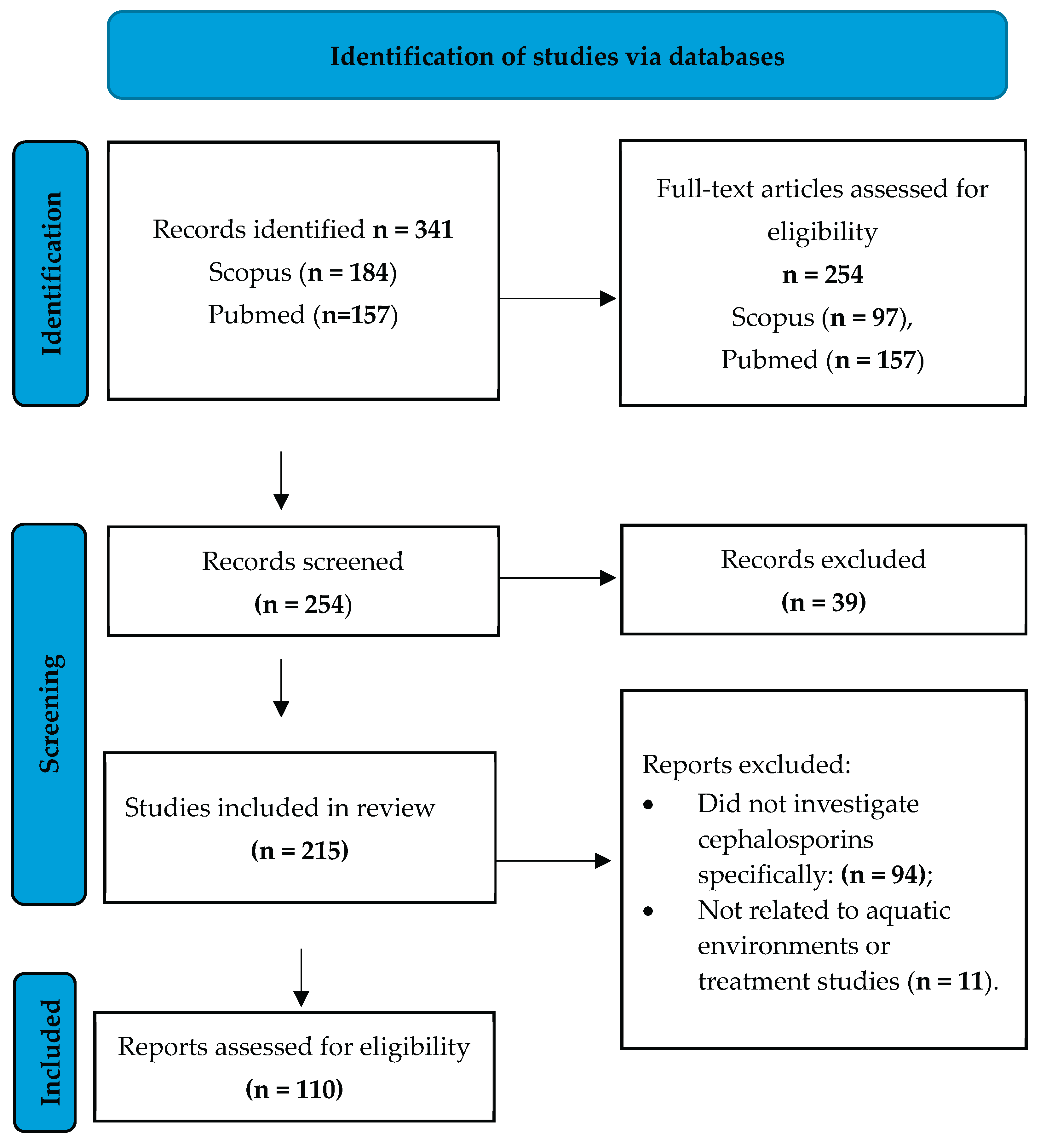
Figure 2.
Annual Scientific Production.
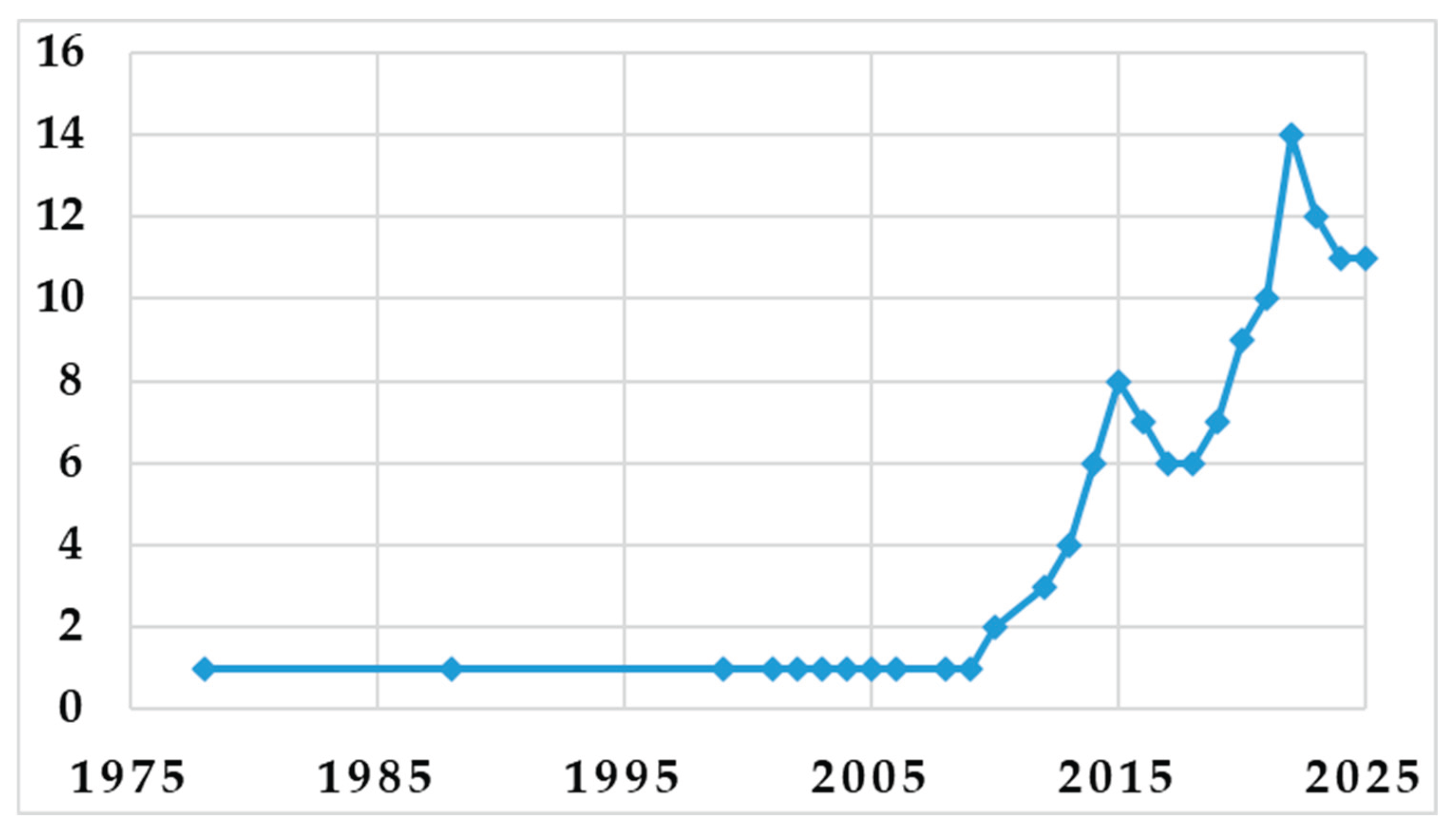
Figure 3.
Thematic Classification of Included Studies (N = 110).
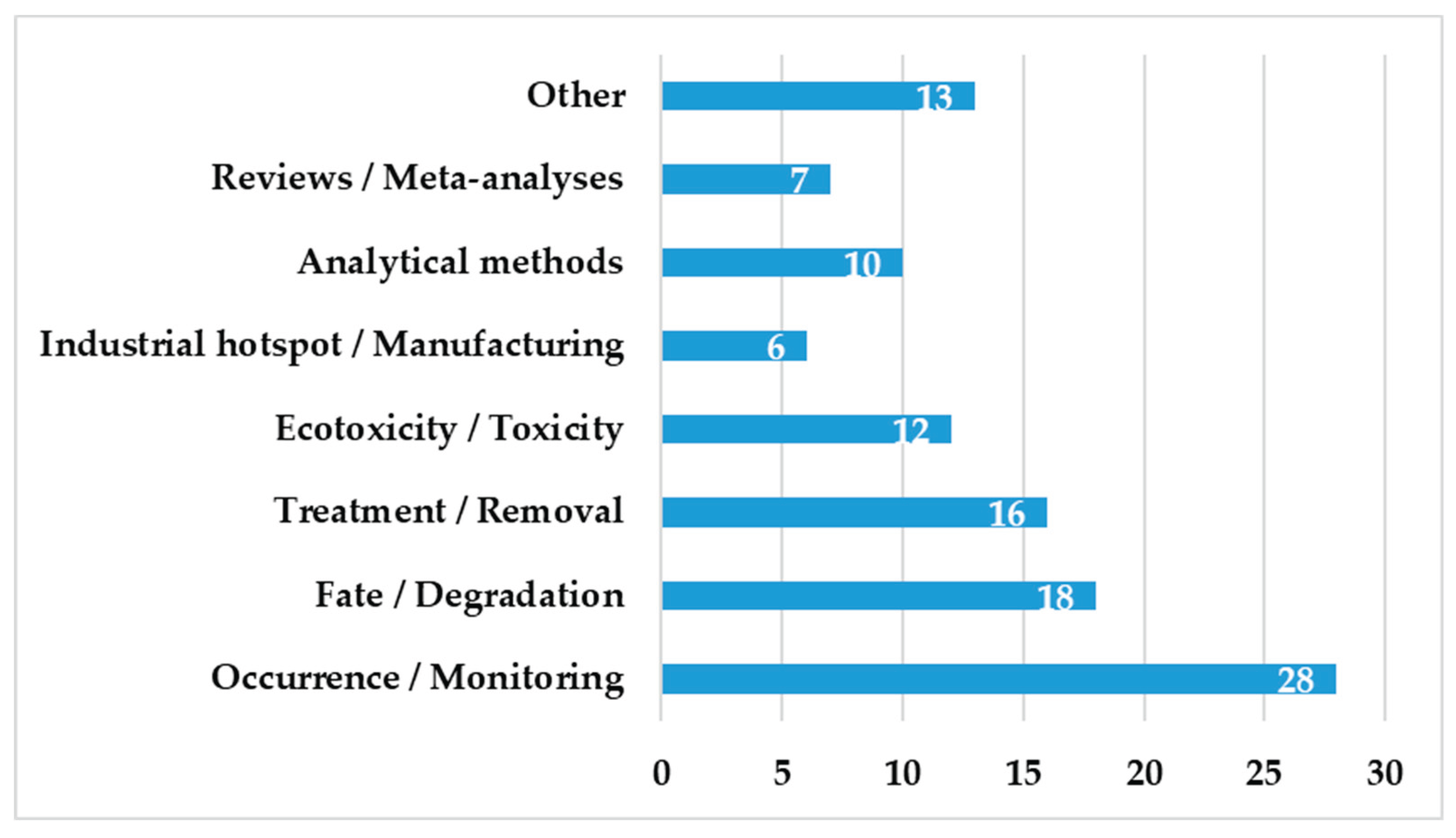
Table 1.
Classification of Cephalosporins [22].
Table 1.
Classification of Cephalosporins [22].
| Cephalosporin(s) | Examples | Activity |
|---|---|---|
| First-generation | Cefalotin, cefaloridin, cephalexin, cephapirin, cefazolin, cefadroxil, cephradine and other. | Staphylococci, streptococci, pneumococci and many types of enterobacteria. |
| Second-generation | Cefuroxime, cefamandole, cefoxitin, cefotetan, cefaclor, and others. | Gram-positive microorganisms resistant to the action of beta-lactamases. |
| Third generation | Cefotaxime, ceftizoxime, ceftriaxone, ceftazidime, cefoperazone, and many others. | Enterobacteria, including those resistant to ABs. Moderately active staphylococci. |
| Fourth generation | Cefepime and cefpirome. | Broad spectrum of Gram-positive and Gram-negative aerobes. |
Table 2.
Analytical Methods and Occurrence of Cephalosporins in Aquatic Environments.
| Study focus | Type of antibiotic | Matrix | Key findings | References |
|---|---|---|---|---|
| Quantification of cephalosporins by LC–MS/MS | 16 cephalosporins | Surface water, wastewater | Sensitive and selective LC-MS/MS method that allows simultaneous quantification of multiple cephalosporins at trace levels. | [36] |
| Determination of multi-class ABs by Solid Phase Extraction - Liquid Chromatography - Electrospray Ionization - Mass Spectrometry (SPE–LC–ESI–MS) |
Broad-spectrum ABs (including cephalosporins) | Surface water | Validated Solid Phase Extraction – Liquid Chromatography – Mass Spectrometry (SPE–LC–MS) method suitable for environmental monitoring of ABs. | [37] |
| Occurrence and distribution of ABs and Antibiotic Resistance Gene (ARGs) | Multiple ABs | Groundwater, surface water, sediment | Widespread detection of ABs with significant correlations to antibiotic resistance genes. | [17] |
| Occurrence and fate in wastewater treatment systems | Human ABs | Influent, effluent, receiving river | Partial removal during treatment; persistence in effluent-receiving river. | [38] |
| Riverine occurrence and ecological risk | Multiple ABs | River water | High detection frequency: ecological risk identified for selected compounds. | [39] |
| Occurrence and risk in urban rivers | Selected ABs | Urban river water | ABs detected at µg L⁻¹ levels; potential ecotoxicological and AMR risks. |
[40] |
| High-resolution multi-class screening | 46 antimicrobial residues | Pond water | Ultra-High-Performance Liquid Chromatography (UHPLC)–Orbitrap– High-Resolution Mass Spectrometer (HRMS) enabled comprehensive screening of antimicrobial residues. | [41] |
| Optimized Solid Phase Extraction - Liquid Chromatography-Tandem Mass Spectrometry (SPE–LC–MS/MS method) | ABs (multi-class) | Groundwater, surface water, treated water | Improved recoveries and low detection limits within water matrices. | [42] |
| Occurrence and removal in hospital wastewater | ABs and ARGs | Hospital wastewater | Incomplete removal of ABs and resistance genes during treatment. | [27] |
| Persistence of multidrug-resistant bacteria | Antibiotic-resistant Enterobacterales | Urban, industrial, surface water | High persistence of resistant bacteria linked to contaminated water bodies. | [43] |
Disclaimer/Publisher’s Note: The statements, opinions and data contained in all publications are solely those of the individual author(s) and contributor(s) and not of MDPI and/or the editor(s). MDPI and/or the editor(s) disclaim responsibility for any injury to people or property resulting from any ideas, methods, instructions or products referred to in the content. |
© 2026 by the authors. Licensee MDPI, Basel, Switzerland. This article is an open access article distributed under the terms and conditions of the Creative Commons Attribution (CC BY) license (http://creativecommons.org/licenses/by/4.0/).
Copyright: This open access article is published under a Creative Commons CC BY 4.0 license, which permit the free download, distribution, and reuse, provided that the author and preprint are cited in any reuse.


