

Submitted:
24 March 2026
Posted:
25 March 2026
You are already at the latest version
Abstract
Background: Haptoglobin (Hp) is an acute-phase protein crucial for neutralizing oxidative damage and eliminating free hemoglobin. However, the effect of Hp polymorphism on the modulation of anthropometric, metabolic, and inflammatory aspects of obesity remains poorly elucidated. Methods: Hp genotypes, glucometabolic and cardiometabolic markers, serum CD163, and pro-inflammatory and anti-inflammatory markers were assessed in conveniently recruited participants with overweight and obesity of the same racial and ethnic backgrounds. Results: A total of 114 participants (75 males, 39 females; mean age 37.32 ± 11.8 years) with overweight or obesity (BMI = 30.41 ± 5.09 kg/m2) were recruited. Participants with Hp2-1 and Hp2-2 genotypes showed significantly higher (P < 0.05) levels of insulin resistance, total cholesterol, LDL-C, and triglycerides than those with the Hp1-1 genotype. In contrast, participants with the Hp1-1 genotype had substantially higher (P < 0.05) serum Hp levels than those with the Hp2-2 genotype. Furthermore, participants with the Hp2-1 genotype expressed significantly higher (P < 0.05) levels of IL-6 and IL-10 than their counterparts with the Hp2-2 genotype. No significant differences were found in anthropometric measures, IGF-1, insulin sensitivity, HDL-C, CD163, and TNF-α. Conclusion: Hp polymorphism is remarkably associated with distinct metabolic and glucoregulatory aspects in individuals with overweight and obesity, with Hp2-1 and Hp2-2 genotypes associated with higher glucometabolic and cardiometabolic risks. The Hp genotype might serve as a predictive marker for diabetes and cardiovascular diseases. Further research is warranted on the clinical implications of Hp genotyping.
Keywords:
haptoglobin polymorphism
; obesity
; inflammation
; CD163
; lipid profile
; precision nutrition
; personalized nutrition
; genomic nutrition
; genomic medicine
Introduction
Obesity is an epidemic metabolic disease that represents a causal factor for the most prevalent chronic diseases worldwide [1]. Recent evidence highlights the complex relationship between obesity and cardiometabolic complications, emphasizing that excess adiposity significantly increases the risk of conditions such as type 2 diabetes, hypertension, and cardiovascular diseases [2,3,4]. Genetic polymorphisms play a crucial role in determining an individual’s susceptibility to these complications by influencing metabolic pathways, inflammatory responses, and fat distribution [5,6]. For instance, variations in genes related to adipogenesis and insulin signaling can modulate how body fat impacts metabolic health, leading to differing degrees of risk among individuals with obesity [7,8]. Moreover, certain genetic markers, such as those associated with haptoglobin (Hp) and other inflammatory mediators, have been linked to worsened insulin resistance and dyslipidemia in obese populations [9,10]. Thus, understanding these genetic influences not only aids in identifying individuals at higher risk for cardiometabolic disorders but also paves the way for personalized treatment strategies, enhancing the management of obesity and its associated complications. As research continues to elucidate the interplay between genetics and environmental factors in obesity, it becomes increasingly clear that a multifaceted approach is essential for effectively addressing the cardiometabolic risks associated with obesity.
Haptoglobin (Hp) is a polymorphic plasma protein that exists in three genotypes: Hp1-1, Hp2-1, and Hp2-2. The best-known function of Hp is binding free hemoglobin (Hb) in circulation, thereby preventing iron loss and kidney damage [11]. In circulation, free Hb is a potent redox-active compound that can participate in the Fenton reaction, generating reactive oxygen species (ROS) and causing tissue damage [12]. Free Hb, however, is immediately captured by Hp, forming a stable hemoglobin-haptoglobin (Hb-Hp) complex that is rapidly cleared from circulation by binding with CD163 receptors on the surface of macrophages and monocytes [13]. The three main Hp genotypes in humans (Hp1-1, Hp2-1, and Hp2-2) are derived from two alleles: Hp1 and Hp2. Several studies have reported that the Hp genotype has a crucial role in the antioxidant and anti-inflammatory response. Hp1-1 genotype individuals were found to be more resistant to oxidative stress (OS) than Hp2-1 and Hp2-2 genotype individuals [14].
The Hp1-1 genotype enhances the stability of the Hp-Hb complex, thereby preventing Hb oxidation and the formation of reactive oxygen species. In contrast, the Hp2 allele (Hp2-1 and Hp2-2) shows lower stability of the Hp-Hb complex, which is associated with higher OS and a pro-inflammatory response. HP2-2 is also considered a risk factor for inflammatory disease [15]. Therefore, Hp1-1 promotes the expression of anti-inflammatory cytokines, whereas the Hp2 allele increases the production of pro-inflammatory cytokines [14,16,17]. Individuals with the Hp2-2 genotype have a higher expression of macrophage activation compared with Hp1-1 individuals [18], which may be because Hp2-2 enhances the inflammatory response and angiogenic activity [19].
Both OS and inflammatory response are implicated in the pathophysiology of obesity [20]. Impaired antioxidant activity and anti-inflammatory macrophage signaling in Hp2-2, compared with other Hp genotypes, may explain the association between the Hp genotype and increased risk of obesity and metabolic disorders. The high economic and societal burden of obesity is attributable to the high cost of medical management of obesity-related comorbidities, such as diabetes, cardiovascular diseases, and cancers. This makes obesity a challenging disease [21].
Based on prior insights, we hypothesized that individuals who were overweight/obese and possessed different HP genotypes would exhibit distinct anthropometric, glucometabolic, and inflammatory profiles. Consequently, this study was designed to elucidate how these genetic variations are reflected in anthropometric measurements, metabolic biomarkers, and inflammatory responses associated with these conditions.
Methods
This cross-sectional observational study, conducted in accordance with the STROBE statement [22], recruited 114 Arab participants from the Arabian Gulf, Iraq, and the Levant at University Hospital Sharjah (UHS), UAE, using convenience sampling. The study, approved by the UHS Research Ethics Committee (Reference no: REC-16-05-11-01) and following the Declaration of Helsinki, involved participants who were either a healthy weight or overweight/obese (BMI > 25 kg/m²)[23]. Recruitment was conducted through personal contact, social media, and institutional email. After providing signed informed consent, participants underwent screening and investigations at UHS. Data, including medical history and demographics, were collected through face-to-face interviews using a self-report questionnaire administered by a trained research assistant. Exclusion criteria included non-Caucasians, diabetes, cardiovascular disease, regular medication use, weight-reducing diets, bariatric surgery within the past nine months, and pregnancy/perimenopause.
Anthropometric and Blood Pressure Assessment
Anthropometric measurements were taken using segmental multi-frequency bioelectrical impedance analysis (DSM-BIA; TANITA, MC-980, Tokyo/Japan). These measurements included body weight (kg), body mass index (BMI; kg/m²), body fat percentage (BFP; %), fat mass (FM; kg), muscle mass (MM; kg), fat-free mass (FFM; kg), visceral fat area (VFA; cm²), total body water (TBW; kg), waist circumference (WC; cm), hip circumference (HC; cm), and total body water (TBW, kg). The DSM-BIA machine measured the visceral fat rating (0-100), and this value was converted to visceral fat surface area by multiplying it by 10, in accordance with the manufacturer’s instructions. Waist circumference, categorized as high or normal based on sex, was an independent variable. Systolic and diastolic blood pressure (SBP, DBP, respectively) were measured using an electronic monitor (General Electric, USA) after a 10-minute rest.
Blood Sampling
Following an 8-hour fast, 10 ml of blood was collected from each participant between 11 am and 1 pm to standardize fasting duration and minimize the influence of time and diet on biochemical parameters. Within one hour of collection, blood samples were centrifuged at 2500 rpm for 15 min. The serum was then aliquoted, coded, and stored at -80 °C until biochemical analysis. A separate sodium fluoride tube was used for glucose measurements.
Chemiluminescence Immunoassay (CLIA)
Fasting glucose, total cholesterol, LDL cholesterol, HDL cholesterol, and triglycerides were quantified using chemiluminescence immunoassay (CLIA) on a fully automated clinical chemistry analyzer (Adaltis, Pchem1, Italy). Insulin resistance was calculated using the Homeostatic Model Assessment for Insulin Resistance (HOMA-IR) formula: (fasting glucose x fasting insulin)/405. Insulin sensitivity was evaluated using the Quantitative Insulin Sensitivity Check Index (QUICKI) and the reciprocal of HOMA-IR (1/HOMA-IR). Blood pressure was measured before blood sampling using a digital monitor (GE, USA) after a 5-minute rest period, with participants seated and upright. Serum insulin-like growth factor-1 (IGF-1), fasting insulin, and CD163 were measured by ELISA (Elabscience, USA) according to the manufacturer’s protocol. Briefly, standards and samples (in duplicate) were added to wells, followed by incubation. After washing, biotinylated detection antibody and avidin-HRP conjugate were added sequentially, with washes in between. A substrate reagent was added, and after further incubation, a stop solution was added. Optical density (OD) was measured at 450 nm using a microplate reader. A four-parameter logistic curve was generated to determine concentrations, accounting for any dilutions.
Multiplex Assay
Pro- and anti-inflammatory cytokines (IL-6, IL-10, TNF-α) were measured using a multiplex assay (Luminex, Bio-Plex Pro™, Human Cytokine Plex Assay). This assay uses capture antibodies coupled to beads that bind to target biomarkers in the sample. After washing, a biotinylated detection antibody and streptavidin-phycoerythrin (SA-PE) conjugate are added to form a detection complex, with phycoerythrin acting as the fluorescent reporter. A Luminex 200 with xPONENT® software was used for analysis. The Luminex 200 was calibrated using the xPONENT® 3.1 compatible calibration kit (EMD Millipore Catalog #40-275) and verified with the performance verification kit (EMD Millipore Catalog #40-276) for magnetic bead assays.
Statistical Analyses
Statistical analyses were performed using Stata version 13.1 (Stata Corp. USA). Normality tests were conducted, and all variables were found to be normally distributed. Data are presented as mean ± SD. Independent-samples t-tests were used to compare men and women. One- and two-way ANOVAs were also employed, with results visualized using GraphPad Prism version 5 (GraphPad Software). Haptoglobin genotypes served as dependent variables, while demographic, anthropometric, metabolic, and inflammatory markers were independent variables. Statistical significance was defined as p < 0.05.
Results
Sex-Based Demographic, Anthropometric, and Blood Pressure Characteristics
As shown in Table 1, a total of 114 participants (75 males, 39 females, aged 37.32±11.8 years) with overweight or obesity (BMI=30.41±5.09 kg/m2) were recruited. The results indicated significant differences between males and females for several key parameters. Males exhibited a significantly (P<0.001) higher average weight (about 93 kg) compared to females (81.3 kg). Notable differences were reported in FM and BFP, where males had lower FM at 25.6 kg than females at 29.5 kg and a BFP of 27.0% compared to 35.7% for females (P<0.001). Furthermore, FFM and MM were significantly higher in males, indicating greater muscle mass compared to females. Regarding total body water (TBW), males averaged 47.8 kg while females averaged 36.2 kg, again highlighting significant differences (P<0.001). Visceral fat area and waist circumference also showed substantial disparities, with males having greater VFA and WC (114.6 cm² and 99.7 cm, respectively) than their female counterparts (65.6 cm² and 91.4 cm). Blood pressure readings revealed that males had higher SBP (125.8 mmHg) than females (118.7 mmHg), and DBP also differed significantly, with males at 74.2 mmHg and females at 66.9 mmHg. The parameters of age and BMI did not reveal any significant differences between the two sexes.
Sex-Based Glucoregulatory and Lipid Profile Markers
No significant differences were observed in fasting insulin, insulin resistance (HOMA-IR), insulin sensitivity expressed as reciprocal of HOMA-IR (1/HOMA-IR), QUICKI insulin sensitivity, and IGF-1 between males and females. Furthermore, higher levels of serum FBG, TC, and TG were reported in males than in females, whereas no such significance was observed for serum LDL-C and HDL-C levels (Table 2).
Hp Genotype-Based Anthropometric and Blood Pressure Measures
No significant differences were observed among the three Hp phenotypes in body mass index (BMI), body fat percentage (BFP), fat mass (FM), fat-free mass (FFM), or muscle mass (MM). Additionally, systolic and diastolic blood pressure, total body water, and visceral fat area did not vary significantly between the Hp genotypes. Furthermore, the results indicated slightly lower waist and hip circumferences in participants with the Hp1-1, Hp2-1, and Hp2-2 genotypes, respectively (Figure 1).
Hp Genotype-Based Glucoregulatory and Lipid Profile Parameters
Glucoregulatory markers based on the Hp genotype are shown in Figure 2 and Figure 3. Participants with the Hp 2-1 genotype had higher insulin resistance (HOMA-IR) than those with the Hp 2-2 genotype (P < 0.014). However, no such significance was observed in fasting blood glucose, fasting insulin, insulin sensitivity (1/HOMA-IR), QUICKI insulin sensitivity, and IGF-1. Serum lipid profile parameters varied across polymorphisms, with participants with the Hp2-1 genotype showing higher TC and TG levels than those with the Hp1-1 and Hp2-2 genotypes, and those with the Hp2-2 genotype showing higher TC and TG levels than those with the Hp1-1 genotype. On the other hand, serum LDL-C levels were significantly higher in Hp2-1 and Hp2-2 participants than in Hp1-1 participants. At the same time, HDL levels didn’t show any significant differences across the Hp polymorphism.
Hp Genotype-Based Serum CD163, Haptoglobin, and Inflammatory Markers
The serum levels of Hp, sCD163, and inflammatory cytokines were measured in obese and overweight participants by Hp genotype, as shown in Figure 4. Participants with Hp 1-1 and Hp 2-1 genotypes had higher serum Hp levels than those with the Hp 2-2 genotype. Further, in the same direction but without significance, participants with Hp 1-1 showed higher serum sCD163 levels than those with the corresponding Hp 2-1 and Hp 2-2 genotypes. Additionally, obese individuals with the Hp2-1 and Hp2-2 genotypes expressed significantly higher IL6 levels than those with the Hp1-1 genotype. Also, Hp2-1 participants show a higher significance of IL-6 to the Hp2-2 genotype. Moreover, levels of IL-10 in participants with the Hp2-1 genotype were significantly higher than levels in Hp1-1 and Hp2-2 individuals (Figure 4).
Discussion
The current work was designed to examine how these genetic variations are reflected in anthropometric measurements, metabolic biomarkers, and inflammatory responses associated with these conditions. It is well established that Hp polymorphism is a genetic factor that affects cardiometabolic c risk factors such as blood cholesterol level [26,27,28]. Our findings were consistent with a previous study that showed a significant association between lower serum Hp in Hp2-2 individuals and higher concentrations of TC, non-HDL-cholesterol, and LDL-cholesterol compared with Hp1-1 individuals [29,30]. Our study found significantly higher TC levels in Hp2-2 than in Hp2-1 and Hp1-1. In addition, we found that LDL cholesterol was substantially higher in Hp2-2 than in Hp2-1 and Hp1-1. Moreover, TG was higher in Hp2-1 than in Hp1-1, but the difference was not significant.
Overall, anthropometric findings underscore the distinct anthropometric profiles present in overweight and obese individuals, influenced by sex, which may have implications for managing and understanding health risks associated with varying haptoglobin genotypes. Our findings were also consistent with studies demonstrating relationships among serum Hp, genotype, and HDL, supporting the hypothesis that HDL is associated with higher concentrations of the Hp-Hb complex [31]. In Hp2-2 patients with diabetes, a lack of CD163 uptake of the Hp-Hb complex was associated with increased binding of the Hp-Hb complex to HDL. The amount of Hp-Hb complex in Hp1-1 individuals was significantly lower than that in Hp2-2 (in both in vitro and in vivo investigations), and the Hb amount associated with Hp2-2 was two-fold higher than in Hp1-1 among patients with diabetes [32]. These findings may explain the cardiovascular risk associated with high HDL cholesterol levels. Our results showed a similar trend toward increased HDL in Hp2-2 and Hp2-1 compared with Hp1-1, although the differences were not significant. However, it is important to note that the study populations differed.
Our study showed a significant change in insulin resistance between Hp1-1 and Hp2-2 and an insignificant change in insulin sensitivity (1/HOMA-IR), which supports the above findings. In addition, we demonstrated that QUICKI insulin sensitivity showed slight but insignificant modifications. Moreover, IGF-1 was higher in Hp1-1 compared with Hp2-1 and Hp2-2, although these differences were not significant.
Serum levels of Hp have been shown to have an independent association with the level of insulin resistance, as quantified by HOMA-IR, which suggests that Hp is a novel marker of hyperinsulinemia; specifically, insulin may directly stimulate Hp production [33]. Similarly, our study showed a positive association between insulin concentration and Hp serum levels, as insulin levels were higher in Hp1-1 individuals than in Hp2-1 and Hp2-2 individuals.
Obesity is associated with glucoregulatory factors such as insulin resistance, insulin sensitivity, and a higher incidence of cardiovascular diseases. It is also associated with higher Hp serum levels, which are related to the development of arterial hypertension and a higher rate of stroke and myocardial infarction [34,35,36]. Therefore, our hypothesis that Hp serum levels and HP genotype play crucial roles in obesity was supported, suggesting they may serve as novel markers and links between obesity and various comorbidities.
On the other hand, the present study found no significant associations between different Hp genotypes and anthropometric parameters. Similar to previous studies [37,38,39]. Essential demographic and anthropometric characteristics measured showed no significant changes in BMI, body fat percentage, fat mass, fat-free mass, or muscle mass across Hp polymorphism. In addition, diastolic and systolic blood pressure, total body water, and visceral fat area showed no significant differences between the Hp genotypes. Our results showed a decrease in waist and hip circumference from Hp1-1 to Hp2-1 to Hp2-2; however, these differences were not statistically significant.
Numerous studies have reported that waist circumference and BMI are strongly positively associated with Hp. [33,40,41,42]. As previously explained, the positive correlation between Hp and waist circumference highlights the role of visceral adiposity in initiating an inflammation response [43,44]. Moreover, given the pro-inflammatory effects of IL-6 and TNF-α and the anti-inflammatory properties of IL-10, our results showed that IL-6 was significantly higher in Hp2-1 and Hp2-2 individuals than in Hp1-1 individuals. Similarly, a previous study involving 276 people with obesity indicated that Hp2-2 was associated with elevated IL-6 and TNF-α compared with Hp2-1 and Hp1-1. [45]. Our study revealed that TNF-α levels were higher in Hp2-1 than in Hp1-1, although this difference was not statistically significant. We also found that IL-10 was significantly lower in Hp2-2 compared with Hp2-1, and a non-significant decrease in Hp1-1 was observed.
Our study demonstrated that the Hp2-2 genotype was associated with elevated TNF-α and IL-6 levels in participants with obesity and lower waist circumference. This finding strongly supports the hypothesis that Hp2-2 recruits macrophages in WAT, thereby enhancing the production of pro-inflammatory cytokines (IL-6 and TNF-α). Similar findings were reported in previous studies, which also showed that greater monocyte recruitment to WAT in individuals with obesity and an Hp2-2 genotype was associated with higher levels of IL-6 and TNF-α. [45,46].
However, Hp may function as an antioxidant and is also regarded as an acute-phase reactant [47]. Hp is associated with pro-inflammatory activity, with higher levels of Hp associated with a higher risk for obesity, type 2 diabetes, and cardiovascular diseases [29,48,49]. Hp is known to be expressed in adipocytes and is also considered to be a marker of adiposity because of the elevated levels of serum Hp associated with higher body weight [40]. In addition, an elevated serum Hp concentration has been positively associated with childhood obesity [50]. Circulating Hp levels are also a predictor of the progression of diabetes, kidney diseases, and macroangiopathy [29,51]. However, many studies have reported that the association between circulating Hp levels and risk for cardiometabolic complications remains unclear [29,52]. Hp expression depends on Hp genotype and the pro-inflammatory cytokines IL-6 and TNF-α (which have a crucial role in Hp concentration), as well as nutrients [40].
This has several limitations that should be acknowledged. Firstly, its cross-sectional design limits the ability to establish causality between Hp genotypes and the observed anthropometric, glucometabolic, and inflammatory profiles. Although 114 participants were included, a larger sample size may be necessary to improve generalizability and better capture variation in Hp genotypes and associated health and metabolic markers. Additionally, the homogeneity of the sample, which may be limited in age, ethnicity, and socioeconomic status, could affect the generalizability of the findings to broader populations. Furthermore, potential confounding factors such as lifestyle, diet, physical activity, and other genetic predispositions were not controlled for, which could influence the metabolic and inflammatory profiles. Without longitudinal data, the long-term implications of the observed associations remain uncertain.
Conclusion
In conclusion, our results suggest that Hp polymorphism significantly influences metabolic and glucoregulatory aspects in individuals with overweight and obesity, with Hp2-1 and Hp2-2 genotypes associated with higher glucometabolic and cardiometabolic risks. The present findings also support the proposed association among Hp genotypes, inflammatory cytokines, serum Hp, and lipid profiles in individuals with overweight/obesity. Hp polymorphism and serum Hp levels might serve as predictive markers for diabetes and cardiovascular diseases. This highlights the need for further research on its clinical implications.
Author Contributions
MM: Conceptualization, Methodology, Software, Validation, Investigation, Data curation, Writing – original draft, Visualization. RH: Conceptualization, Writing – review & editing, Supervision. NS: Conceptualization, Writing – review & editing, Supervision. SA: Conceptualization, Writing–review & editing, Supervision. DA: Software, Formal analysis, Visualization. Dana Abdelrahim: Software, Formal analysis. MF: Conceptualization, Methodology, Software, Validation, Investigation, Resources, Data curation, Writing – original draft, Writing – review & editing, Supervision, Project administration. OH, Writing – review & editing. ME, Writing – review & editing; AA: Writing – review & editing; JT, Writing – review & editing. All authors have read and agreed to the published version of the manuscript.
Funding
This research was funded by the University of Sharjah, grant number VCRG/R1061/2016. The funding source was not involved in the study’s design, collection, analysis, or interpretation.
Institutional Review Board Statement
The study was approved by the Research and Ethics Committee of University of Sharjah (REC-16-05-11-01, 16 November 2015).
Informed Consent Statement
Informed consent was obtained from all subjects involved in the study.
Data Availability Statement
The datasets generated and/or analyzed during the current study are available from the corresponding author upon reasonable request.
Conflicts of Interest
The authors declare no conflict of interest.
References
- Afolabi HA, Zakaria Z, Salleh SM, Ch’ng ES, Nafi SNM, Aziz AABA, et al. Obesity: a prerequisite for major chronic illnesses. Obesity-Recent Insights and Therapeutic Options: IntechOpen; 2023.
- Sarzani R, Landolfo M, Di Pentima C, Ortensi B, Falcioni P, Sabbatini L, et al. Adipocentric origin of the common cardiometabolic complications of obesity in the young up to the very old: pathophysiology and new therapeutic opportunities. Frontiers in Medicine. 2024;11. [CrossRef]
- Powell-Wiley TM, Poirier P, Burke LE, Després JP, Gordon-Larsen P, Lavie CJ, et al. Obesity and Cardiovascular Disease: A Scientific Statement From the American Heart Association. Circulation. 2021;143:e984-e1010.
- Wand H, Moodley J, Reddy T, Vujovich-Dunn C, Naidoo S. Quantifying impact of obesity on cardiometabolic comorbidities and public health implications: Insights from South Africa. Obesity Research & Clinical Practice. 2023;17:122-9. [CrossRef]
- Damanti S, Citterio L, Zagato L, Brioni E, Magnaghi C, Simonini M, et al. DNA polymorphisms in inflammatory and endocrine signals linked to frailty are also associated with obesity: data from the FRASNET cohort. Front Endocrinol (Lausanne). 2024;15:1412160.
- Chang C-S, Lu Y-J, Chang H-H, Hsu S-H, Kuo P-H, Shieh C-C, et al. Role of adiponectin gene variants, adipokines and hydrometry-based percent body fat in metabolically healthy and abnormal obesity. Obesity Research & Clinical Practice. 2018;12:49-61.
- An S-M, Cho S-H, Yoon JC. Adipose tissue and metabolic health. Diabetes & Metabolism Journal. 2023;47:595-611.
- Wen X, Zhang B, Wu B, Xiao H, Li Z, Li R, et al. Signaling pathways in obesity: mechanisms and therapeutic interventions. Signal Transduction and Targeted Therapy. 2022;7:298.
- Rodríguez-Hernández H, Simental-Mendía LE, Rodríguez-Ramírez G, Reyes-Romero MA. Obesity and inflammation: epidemiology, risk factors, and markers of inflammation. Int J Endocrinol. 2013;2013:678159.
- Schleh MW, Ameka MK, Rodriguez AS, Hasty AH. Deficiency of the Hemoglobin-Haptoglobin Receptor, CD163, Worsens Insulin Sensitivity in Obese Male Mice. Diabetes. 2024;73:1990-2002.
- Chintagari NR, Nguyen J, Belcher JD, Vercellotti GM, Alayash AI. Haptoglobin attenuates hemoglobin-induced heme oxygenase-1 in renal proximal tubule cells and kidneys of a mouse model of sickle cell disease. Blood Cells, Molecules, and Diseases. 2015;54:302-6. [CrossRef]
- Agyemang AA, Kvist SV, Brinkman N, Gentinetta T, Illa M, Ortenlöf N, et al. Cell-free oxidized hemoglobin drives reactive oxygen species production and pro-inflammation in an immature primary rat mixed glial cell culture. Journal of Neuroinflammation. 2021;18:1-13.
- Marvasti TB, Moody AR, Singh N, Maraj T, Tyrrell P, Afshin M. Haptoglobin 2-2 genotype is associated with presence and progression of MRI depicted atherosclerotic intraplaque hemorrhage. IJC heart & vasculature. 2018;18:96-100.
- Costacou T, Levy AP. Haptoglobin genotype and its role in diabetic cardiovascular disease. Journal of cardiovascular translational research. 2012;5:423-35.
- Kessel I, Molad M, Nemirovsky R, Lavie-Nevo K, Levy AP, Blum S, et al. Haptoglobin Polymorphism and Morbidity in Children Born Prematurely. American Journal of Pediatrics. 2020;6:73-7.
- Asleh R, Blum S, Kalet-Litman S, Alshiek J, Miller-Lotan R, Asaf R, et al. Correction of HDL dysfunction in individuals with diabetes and the haptoglobin 2-2 genotype. Diabetes. 2008;57:2794-800.
- Mostaza JM, de Dios O, Lahoz C, Arribas M, Arroyo AP, Salinero-Fort MA, et al. Phenotype of haptoglobin and presence of subclinical vascular disease: Population study. Clínica e Investigación en Arteriosclerosis (English Edition). 2020;32:1-7. [CrossRef]
- Nakhoul FM, Miller-Lotan R, Awaad H, Asleh R, Levy AP. Hypothesis—haptoglobin genotype and diabetic nephropathy. Nature clinical practice Nephrology. 2007;3:339-44.
- Maffei M, Funicello M, Vottari T, Gamucci O, Costa M, Lisi S, et al. The obesity and inflammatory marker haptoglobin attracts monocytes via interaction with chemokine (CC motif) receptor 2 (CCR2). BMC biology. 2009;7:1-14. [CrossRef]
- Jin X, Qiu T, Li L, Yu R, Chen X, Li C, et al. Pathophysiology of obesity and its associated diseases. Acta Pharmaceutica Sinica B. 2023;13:2403-24.
- Okunogbe A, Nugent R, Spencer G, Ralston J, Wilding J. Economic impacts of overweight and obesity: current and future estimates for eight countries. BMJ global health. 2021;6:e006351.
- Von Elm E, Altman DG, Egger M, Pocock SJ, Gøtzsche PC, Vandenbroucke JP. The Strengthening the Reporting of Observational Studies in Epidemiology (STROBE) statement: guidelines for reporting observational studies. The Lancet. 2007;370:1453-7.
- Weir CB, Jan A. BMI classification percentile and cut-off points. 2019.
- Madkour MI, Hassan RE, Sherif NM, Awadallah S, Abdelrahim DN, Jahrami HA, et al. Haptoglobin polymorphism modulates cardiometabolic impacts of four consecutive weeks, dawn to sunset Ramadan intermittent fasting among subjects with overweight/obesity. Diabetes Res Clin Pract. 2022;190:110024.
- Laemmli UK. Cleavage of Structural Proteins during the Assembly of the Head of Bacteriophage T4. Nature. 1970;227:680-5.
- Boettger LM, Salem RM, Handsaker RE, Peloso GM, Kathiresan S, Hirschhorn JN, et al. Recurring exon deletions in the HP (haptoglobin) gene contribute to lower blood cholesterol levels. Nature genetics. 2016;48:359-66.
- Guthrie PA, Rodriguez S, Gaunt TR, Lawlor DA, Smith GD, Day IN. Complexity of a complex trait locus: HP, HPR, haemoglobin and cholesterol. Gene. 2012;499:8-13.
- Bjornsson E, Helgason H, Halldorsson G, Helgadottir A, Gylfason A, Kehr B, et al. A rare splice donor mutation in the haptoglobin gene associates with blood lipid levels and coronary artery disease. Human molecular genetics. 2017;26:2364-76.
- Wang S, Wang J, Zhang R, Wang T, Yan D, He Z, et al. Mendelian randomization analysis to assess a causal effect of haptoglobin on macroangiopathy in Chinese type 2 diabetes patients. Cardiovascular diabetology. 2018;17:14. [CrossRef]
- Froguel P, Ndiaye NC, Bonnefond A, Bouatia-Naji N, Dechaume A, Siest G, et al. A genome-wide association study identifies rs2000999 as a strong genetic determinant of circulating haptoglobin levels. PLoS One. 2012;7.
- Soejima M, Munkhtulga L, Furukawa K, Iwamoto S, Koda Y. Serum haptoglobin correlates positively with cholesterol and triglyceride concentrations in an obese Mongolian population. Clinica Chimica Acta. 2020. [CrossRef]
- Asleh R, Blum S, Kalet-Litman S, Alshiek J, Miller-Lotan R, Asaf R, et al. Correction of HDL Dysfunction in Individuals With Diabetes and the Haptoglobin 2-2 Genotype. Diabetes. 2008;57:2794-800.
- De Pergola G, Di Roma P, Paoli G, Guida P, Pannacciulli N, Giorgino R. Haptoglobin serum levels are independently associated with insulinemia in overweight and obese women. Journal of endocrinological investigation. 2007;30:399-403.
- Uchegbu E, Kopelman P. Cardiovascular risks in obesity. Journal of endocrinological investigation. 2002;25:915-8.
- Montani J, Antic V, Yang Z, Dulloo A. Pathways from obesity to hypertension: from the perspective of a vicious triangle. International journal of obesity. 2002;26:S28-S38.
- Engström G, Janzon L, Berglund Gr, Lind P, Stavenow L, Hedblad B, et al. Blood pressure increase and incidence of hypertension in relation to inflammation-sensitive plasma proteins. Arteriosclerosis, thrombosis, and vascular biology. 2002;22:2054-8. [CrossRef]
- Nakagawa T, Muramoto Y, Hori M, Mihara S, Marubayashi T, Nakagawa K. A preliminary investigation of the association between haptoglobin polymorphism, serum ferritin concentration and fatty liver disease. Clinica Chimica Acta. 2008;398:34-8.
- Alvarez-Blasco F, Martínez-García MÁ, Luque-Ramírez M, Parraza N, San Millan JL, Escobar-Morreale HF. Role of haptoglobin in polycystic ovary syndrome (PCOS), obesity and disorders of glucose tolerance in premenopausal women. PLoS One. 2009;4:e5606.
- Braeckman L, De Bacquer D, Delanghe J, Claeys L, De Backer G. Associations between haptoglobin polymorphism, lipids, lipoproteins, and inflammatory variables. Atherosclerosis. 1999;143:383-8.
- Chiellini C, Santini F, Marsili A, Berti P, Bertacca A, Pelosini C, et al. Serum haptoglobin: a novel marker of adiposity in humans. The Journal of Clinical Endocrinology & Metabolism. 2004;89:2678-83. [CrossRef]
- Rodrigues KF, Pietrani NT, Carvalho LML, Bosco AA, Sandrim VC, Ferreira CN, et al. Haptoglobin levels are influenced by Hp1–Hp2 polymorphism, obesity, inflammation, and hypertension in type 2 diabetes mellitus. Endocrinología, Diabetes y Nutrición (English ed). 2019;66:99-107.
- Doumatey AP, Lashley KS, Huang H, Zhou J, Chen G, Amoah A, et al. Relationships among obesity, inflammation, and insulin resistance in African Americans and West Africans. Obesity. 2010;18:598-603.
- Chiellini C, Bertacca A, Novelli SE, Görgün CZ, Ciccarone A, Giordano A, et al. Obesity modulates the expression of haptoglobin in the white adipose tissue via TNFα. Journal of cellular physiology. 2002;190:251-8. [CrossRef]
- Fain JN, Bahouth SW, Madan AK. Haptoglobin release by human adipose tissue in primary culture. Journal of lipid research. 2004;45:536-42.
- Lazalde B, Huerta-Guerrero HM, Simental-Mendía LE, Rodríguez-Morán M, Guerrero-Romero F. Haptoglobin 2-2 genotype is associated with TNF-α and IL-6 levels in subjects with obesity. Disease markers. 2014;2014.
- Weisberg SP, McCann D, Desai M, Rosenbaum M, Leibel RL, Ferrante AW. Obesity is associated with macrophage accumulation in adipose tissue. The Journal of Clinical Investigation. 2003;112:1796-808.
- Oliviero S, Cortese R. The human haptoglobin gene promoter: interleukin-6-responsive elements interact with a DNA-binding protein induced by interleukin-6. The EMBO journal. 1989;8:1145-51.
- MacKellar M, Vigerust DJ. Role of haptoglobin in health and disease: a focus on diabetes. Clinical Diabetes. 2016;34:148-57.
- Graves KL, Vigerust DJ. Hp: an inflammatory indicator in cardiovascular disease. Future cardiology. 2016;12:471-81.
- Mostaza JM, De Dios O, Lahoz C, Arribas M, Pérez Arroyo A, Salinero-Fort MA, et al. Phenotype of haptoglobin and presence of subclinical vascular disease: Population study. Clínica e Investigación en Arteriosclerosis (English Edition). 2020;32:1-7. [CrossRef]
- Liu J-J, Liu S, Wong MD, Gurung RL, Lim SC. Urinary haptoglobin predicts rapid renal function decline in Asians with type 2 diabetes and early kidney disease. The Journal of Clinical Endocrinology & Metabolism. 2016;101:3794-802. [CrossRef]
- Minović I, Eisenga MF, Riphagen IJ, van den Berg E, Kootstra-Ros J, Frenay A-RS, et al. Circulating haptoglobin and metabolic syndrome in renal transplant recipients. Scientific reports. 2017;7:1-9.
Figure 1.
Hp genotype-based anthropometric and blood pressure variables.
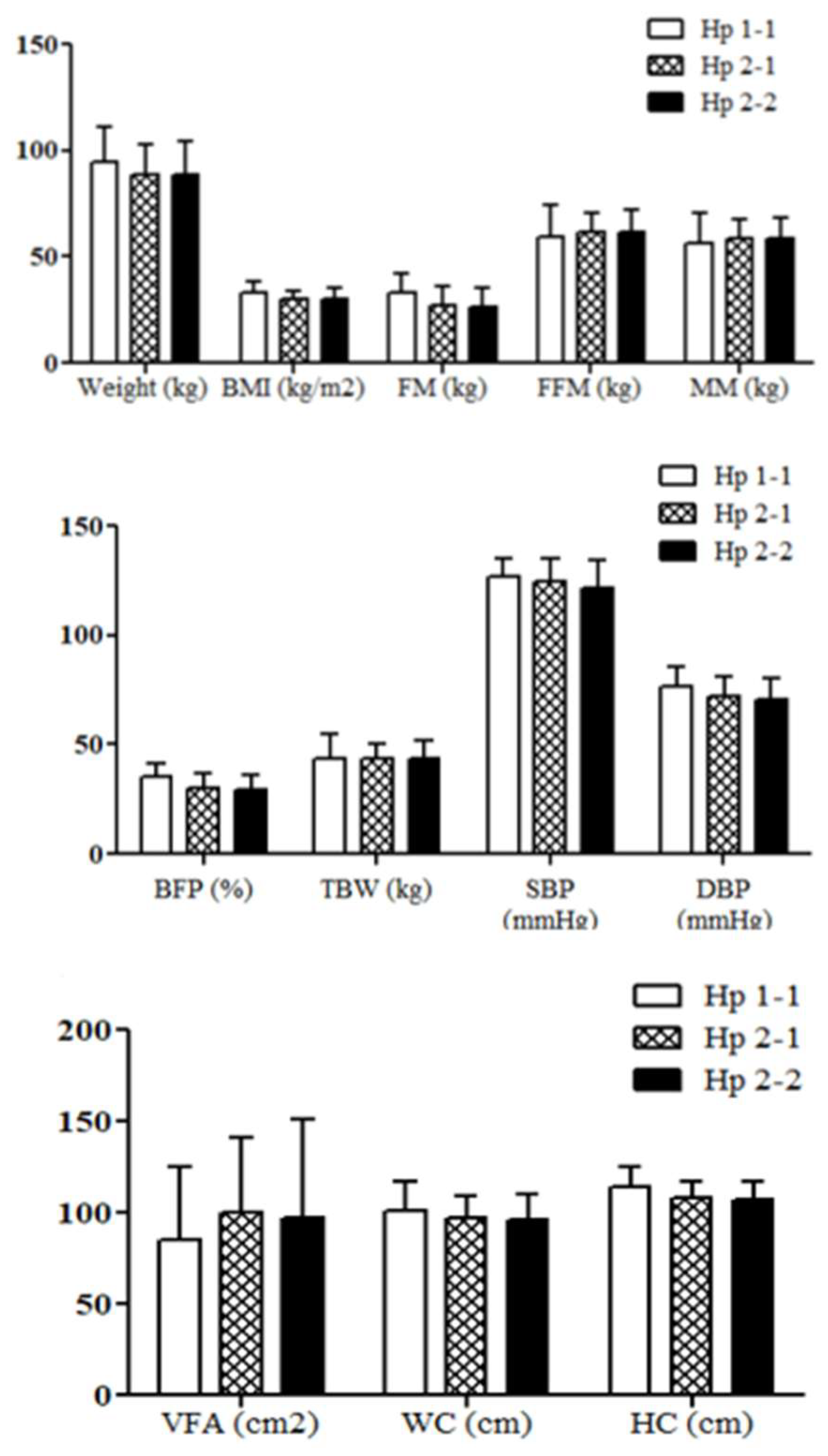
Figure 2.
Hp genotype-based glucose regulatory parameters for all participants. *Significant difference at P<0.05.
Figure 2.
Hp genotype-based glucose regulatory parameters for all participants. *Significant difference at P<0.05.
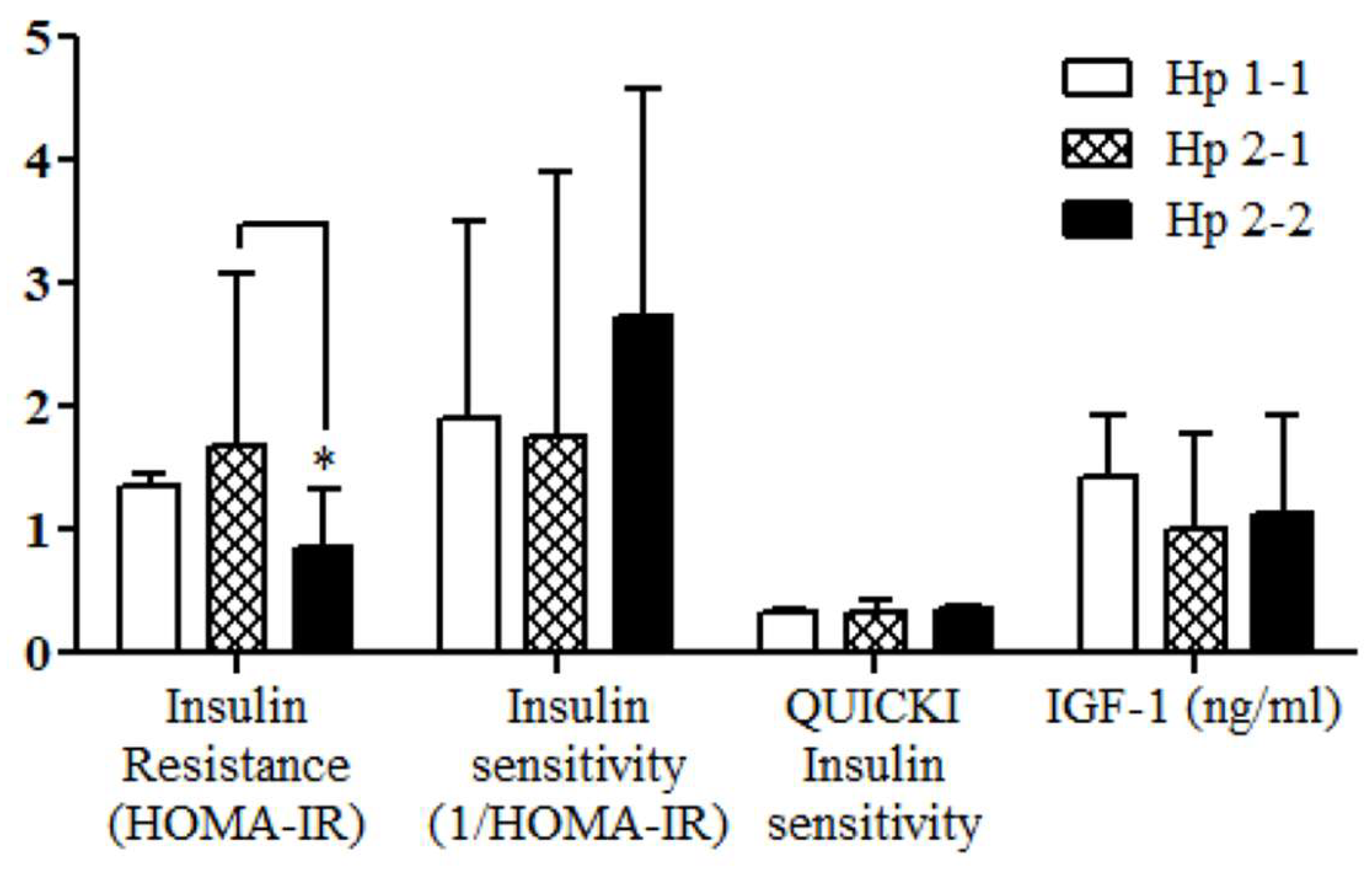
Figure 3.
Hp genotype-based serum fasting glucose and lipid profile parameters of the obese participants. *Significant difference at P<0.05.
Figure 3.
Hp genotype-based serum fasting glucose and lipid profile parameters of the obese participants. *Significant difference at P<0.05.
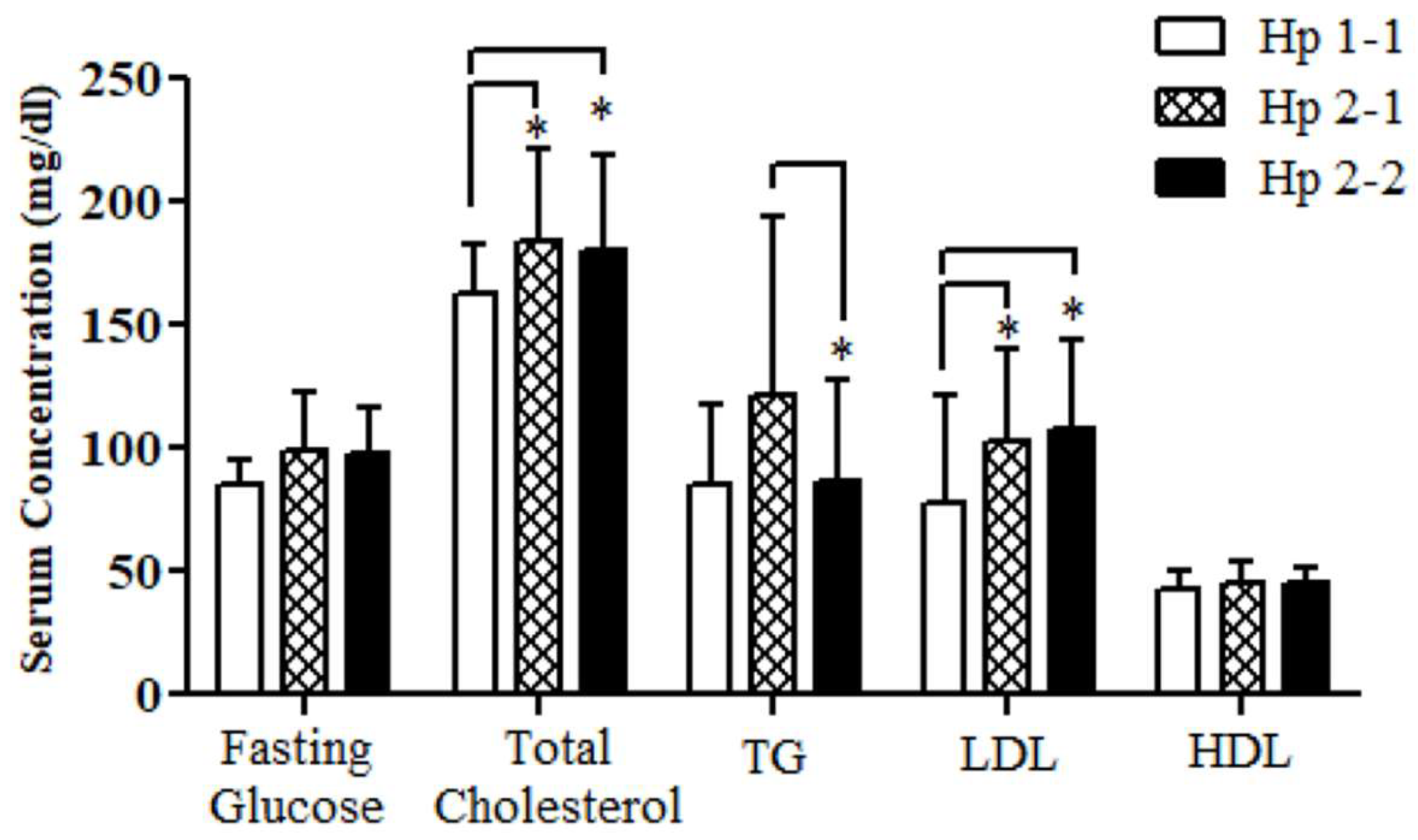
Figure 4.
Hp genotype-based (A) serum Hp and CD163, and (B) inflammatory cytokines. *Significant difference at P<0.05.
Figure 4.
Hp genotype-based (A) serum Hp and CD163, and (B) inflammatory cytokines. *Significant difference at P<0.05.
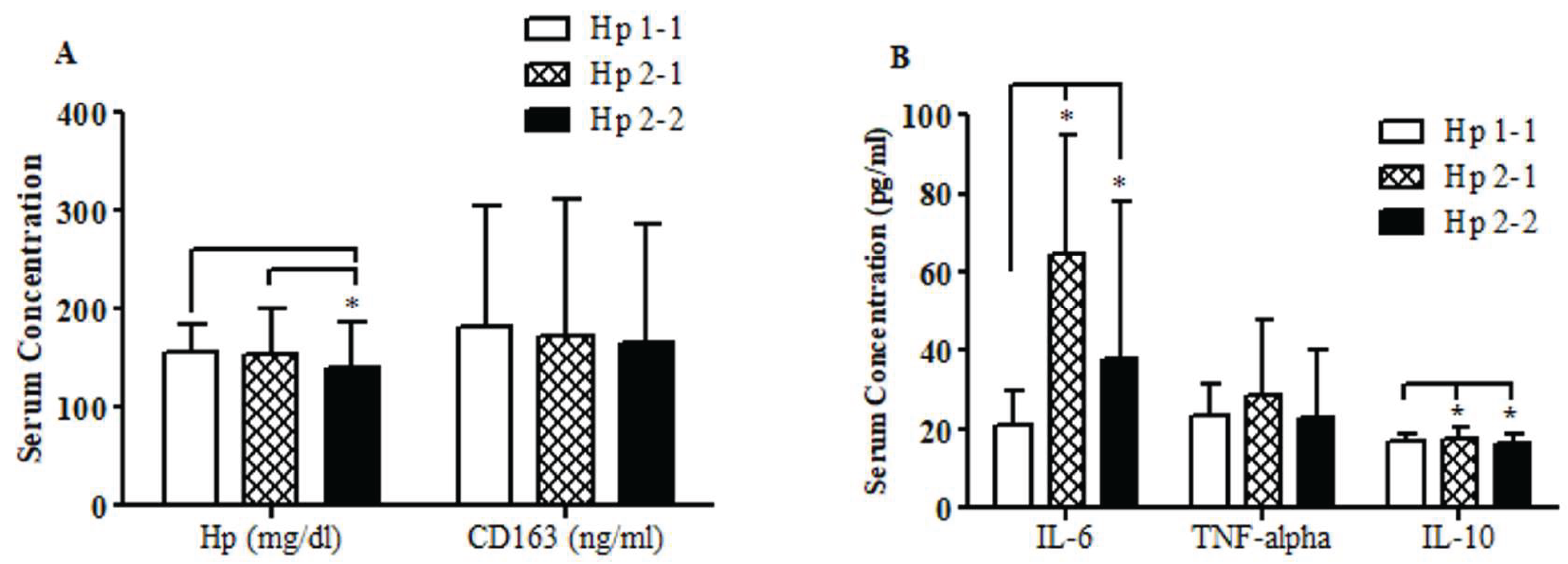

Table 1.
Demographic, anthropometric, and blood pressure characteristics of the study participants and sex differences.
Table 1.
Demographic, anthropometric, and blood pressure characteristics of the study participants and sex differences.
| Parameter | All participants (n=114) | Males (n=75) | Females (n=39) | P-value |
|---|---|---|---|---|
| Age (year) | 37.32± 11.8 | 38.77 ± 11.75 | 34.53 ± 11.64 | NS |
| Weight (kg) | 88.99 ± 15.51 | 92.96 ± 12.44 | 81.34 ± 17.98 | ** |
| BMI (kg/m2) | 30.41± 5.09 | 30.3 ± 3.9 | 30.5 ± 5.5 | NS |
| FM (kg) | 26.94 ± 9.46 | 25.61 ± 7.9 | 29.52 ± 11.56 | * |
| BFP (%) | 29.98 ± 7.02 | 27.01 ± 5.2 | 35.69 ± 6.50 | ** |
| FFM (kg) | 61.41 ± 10.52 | 67.09 ± 6.15 | 50.47 ± 8.29 | ** |
| MM (kg) | 58.34 ± 10.02 | 63.76 ± 5.87 | 47.92 ± 7.88 | ** |
| TBW (kg) | 43.82 ±7.42 | 47.79 ± 4.45 | 36.2 ± 5.88 | ** |
| VFA (cm2) | 97.85 ± 48.0 | 114.6 ± 43.71 | 65.64 ± 38.91 | ** |
| WC (cm) | 96.84 ± 13.48 | 99.68 ± 11.05 | 91.38 ± 16.0 | ** |
| HC (cm) | 108.0 ± 10.14 | 107.56 ± 8.13 | 109 ± 13.27 | NS |
| SBP (mmHg) | 123.43±11.65 | 125.8 ± 10.63 | 118.7 ± 12.18 | ** |
| DBP (mmHg) | 71.73 ± 9.57 | 74.23 ± 9.03 | 66.92 ± 8.82 | ** |
P-value: Difference between males and females. *P<0.05, significant difference. **P<0.001, highly significant difference. NS, an insignificant difference.
Table 2.
Glucoregulatory and lipid profile parameters for the study of male and female participants and sex differences.
Table 2.
Glucoregulatory and lipid profile parameters for the study of male and female participants and sex differences.
| Parameter | All participants (n=114) | Males (n=75) | Females (n=39) | P-value |
|---|---|---|---|---|
| FBG (mg/dl) | 97.97 ± 20.93 | 102.3 ± 22.3 | 89.5 ± 14.72 | ** |
| Fasting insulin (ng/ml) | 14.45 ± 14.17 | 15.85 ± 17.0 | 12.21 ± 7.64 | NS |
| HOMA-IR | 1.24 ± 1.08 | 1.40 ± 1.29 | 0.98 ± 0.54 | NS |
| Insulin sensitivity (1/HOMA-IR) | 2.26 ± 2.02 | 2.0 ± 1.62 | 2.68 ± 2.51 | NS |
| QUICKI Insulin sensitivity | 0.35 ± 0.06 | 0.34 ± 0.06 | 0.36 ± 0.06 | NS |
| IGF-1 (ng/ml) | 1.08 ± 0.79 | 1.18 ± 0.86 | 0.91 ± 0.66 | NS |
| Total cholesterol (mg/dl) | 180.6 ± 37.6 | 186.1 ± 39.3 | 169.9 ± 31.9 | * |
| TG (mg/dl) | 102.3 ± 60.4 | 114.8 ± 62.6 | 78.5 ± 48.3 | ** |
| LDL-C (mg/dl) | 115.1 ± 31.7 | 114.9 ± 32.6 | 115.2 ± 29.8 | NS |
| HDL-C (mg/dl) | 45.1 ± 7.73 | 45.3 ± 7.67 | 44.6 ± 7.93 | NS |
P-value: Difference between males and females. *P<0.05, significant difference. **P<0.001, highly significant difference. NS, an insignificant difference. QUICKI, quantitative insulin sensitivity check index; TG, Triacylglycerol; LDL-C, Low-density lipoprotein cholesterol; HOMA-IR, HDL-C; High-density lipoprotein cholesterol; homeostasis model assessment of insulin resistance; 1/HOMA-IR, reciprocal index of homeostasis model assessment of insulin resistance.
Disclaimer/Publisher’s Note: The statements, opinions and data contained in all publications are solely those of the individual author(s) and contributor(s) and not of MDPI and/or the editor(s). MDPI and/or the editor(s) disclaim responsibility for any injury to people or property resulting from any ideas, methods, instructions or products referred to in the content. |
© 2026 by the authors. Licensee MDPI, Basel, Switzerland. This article is an open access article distributed under the terms and conditions of the Creative Commons Attribution (CC BY) license (http://creativecommons.org/licenses/by/4.0/).
Copyright: This open access article is published under a Creative Commons CC BY 4.0 license, which permit the free download, distribution, and reuse, provided that the author and preprint are cited in any reuse.


