

Submitted:
24 March 2026
Posted:
25 March 2026
You are already at the latest version
Abstract
Weight regain following weight loss represents a major challenge in obesity management and is increasingly recognized as a biologically driven process rather than solely a consequence of behavioral non-adherence. A range of physiological adaptations, including reduced energy expenditure, neuroendocrine alterations in appetite regulation, and adipose tissue remodeling, act synergistically to promote weight restoration.In particular, changes in appetite-regulating hormones, such as decreased leptin and increased ghrelin levels, contribute to increased hunger and reduced satiety following weight loss. Additionally, emerging evidence highlights the role of adipose tissue remodeling and metabolic memory in sustaining susceptibility to weight regain.Nutritional factors may play a critical role in modulating these biological mechanisms. Dietary protein, fiber intake, glycemic responses, and overall dietary patterns have been shown to influence appetite regulation through interactions with gut-derived hormones, postprandial metabolism, and central appetite pathways. These effects suggest that dietary composition, beyond caloric restriction alone, may be a key determinant of long-term weight maintenance.Despite growing evidence, findings remain heterogeneous, and the long-term effectiveness of specific dietary strategies is not fully established. Future approaches should focus on integrating nutritional strategies with individual biological responses, including variability in hormonal regulation, metabolic adaptation, and gut–brain signaling.In conclusion, targeting appetite regulation and metabolic adaptation through personalized and sustainable nutritional strategies may represent a promising approach for reducing weight regain and improving long-term outcomes in obesity management.
Keywords:
weight regain
; appetite regulation
; dietary protein
; dietary fiber
; gut–brain axis
; obesity
1. Introduction
Obesity management has advanced substantially in recent years, driven by the development of pharmacological therapies and structured lifestyle interventions capable of inducing clinically meaningful weight loss (1,2). Despite these advances, sustaining weight loss remains one of the most critical and unresolved challenges in obesity care, even with the increasing use of pharmacological therapies such as GLP-1 receptor agonists (2).
A large proportion of individuals experience partial or complete weight regain following initial weight loss, regardless of the intervention strategy employed (3). This phenomenon is increasingly recognized as a biologically driven process rather than a consequence of poor adherence alone. Weight loss induces persistent neuroendocrine and metabolic adaptations, including increased appetite, reduced satiety, and decreased energy expenditure, all of which promote weight regain (3,4). These adaptations reflect a distinct post-weight loss physiological state characterized by heightened susceptibility to weight regain. Dysregulation of appetite-regulating pathways, including impaired leptin sensitivity, plays a central role in this process (4–6). In addition, structural and functional changes in adipose tissue may persist beyond weight loss, further contributing to metabolic adaptations that favor weight regain (7–9).
Evidence from bariatric surgery cohorts further supports the biological basis of weight regain. Despite substantial initial weight loss, approximately 20–35% of patients experience clinically significant weight regain within 3–7 years following surgery (10,11). These findings reinforce that weight regain reflects underlying physiological adaptations rather than behavioral non-adherence alone. Given the central role of appetite regulation and metabolic adaptation in this process, nutritional strategies may represent a critical yet underexplored component of long-term weight maintenance. Current dietary approaches predominantly emphasize caloric restriction, often neglecting the biological mechanisms that govern hunger, satiety, and energy balance (3,12). Dietary composition—including protein intake, fiber consumption, and overall dietary patterns—may influence neuroendocrine signaling and metabolic responses, thereby modulating weight regain risk.
This review aims to synthesize current evidence on the role of nutrition in modulating weight regain following weight loss, with a particular focus on appetite regulation, adipose tissue remodeling, and metabolic adaptation. By integrating these mechanisms, this review seeks to provide a comprehensive framework for developing more effective and sustainable weight maintenance strategies.
Unlike previous reviews focusing primarily on either physiological or behavioral aspects of weight regain, this review integrates neuroendocrine adaptations, adipose tissue remodeling, and dietary composition into a unified framework to better understand how nutrition may counteract appetite dysregulation following weight loss.
This review provides an integrative perspective by combining neuroendocrine mechanisms, adipose tissue remodeling, and dietary modulation within a unified framework.
2. Literature Search and Study Selection
A narrative literature review was conducted through systematic searches of electronic databases, including PubMed, Scopus, and Google Scholar. The search focused on peer-reviewed studies published between 2015 and 2025 addressing weight regain following weight loss, appetite regulation, dietary composition, and metabolic adaptation in individuals with overweight and obesity.
Randomized controlled trials, observational studies, and relevant review articles were included. Particular emphasis was placed on studies providing mechanistic insights into neuroendocrine regulation, adipose tissue remodeling, and determinants of long-term weight maintenance.
Additional relevant articles were identified through manual screening of reference lists to ensure comprehensive coverage of the literature. No formal quality assessment or meta-analytic procedures were applied, consistent with the narrative nature of this review. Search terms included combinations of “weight regain”, “appetite regulation”, “dietary composition”, “gut–brain axis”, and “metabolic adaptation”.
3. The Biological Pressure Toward Weight Regain
Weight regain following weight loss is increasingly recognized as a biologically driven process rather than solely a consequence of reduced adherence to lifestyle interventions (3,5,6). A range of physiological adaptations occur during and after weight loss that collectively favor the restoration of lost body weight. These adaptations involve coordinated changes in energy expenditure, neuroendocrine regulation of appetite, and adipose tissue biology, creating a metabolic environment that promotes increased energy intake and reduced energy expenditure (3,6).
One of the most consistently observed responses to weight loss is adaptive thermogenesis, defined as a reduction in energy expenditure beyond what would be expected from changes in body composition alone (3,6,9). Both resting metabolic rate and total energy expenditure tend to decline following weight reduction, thereby reducing the energetic cost of maintaining a reduced body weight (3). These metabolic adaptations have been consistently observed across multiple weight loss interventions, including dietary restriction, bariatric surgery, and pharmacological therapies (3,6). Notably, adaptive thermogenesis may persist long after weight stabilization, increasing susceptibility to weight regain (3,6).
In parallel with changes in energy expenditure, weight loss induces substantial alterations in the hormonal regulation of appetite. Circulating concentrations of leptin decline in proportion to reductions in fat mass (10–12), while orexigenic signals such as ghrelin often increase (13). In addition, experimental and clinical evidence suggests that weight loss is accompanied by impaired leptin sensitivity, further limiting the ability to sustain reduced body weight (10,12). Additional changes have also been observed in satiety-related hormones including peptide YY (PYY), glucagon-like peptide-1 (GLP-1), and cholecystokinin (CCK) (4,13). Collectively, these neuroendocrine responses promote increased hunger, reduced satiety, and heightened drive to eat (5,6). These changes may persist for extended periods after weight loss, supporting the view that appetite dysregulation represents a central biological mechanism contributing to weight regain (3,6). Structural and functional changes within adipose tissue may persist beyond active weight reduction, influencing nutrient partitioning, inflammatory signaling, and metabolic flexibility. Such adaptations may predispose individuals to regain weight even under comparable energy intake conditions (7–9).
Beyond neuroendocrine adaptations, structural and functional changes within adipose tissue may also contribute to regain susceptibility. Weight loss induces remodeling of adipose tissue characterized by alterations in adipocyte size, inflammatory signaling, extracellular matrix structure, and lipid storage capacity (7,8). Emerging evidence suggests that these changes may lead to a form of metabolic memory, whereby previous obesity leaves persistent biological imprints that influence subsequent energy balance regulation (8). In this context, adipose tissue may remain metabolically primed to efficiently store energy, thereby facilitating rapid weight regain when energy intake increases (7,8).
Taken together, these metabolic, hormonal, and adipose tissue adaptations create a physiological state that strongly favors weight restoration after weight loss (3,6). Importantly, many of these mechanisms directly influence appetite regulation and energy intake. Understanding how modifiable factors such as dietary composition interact with these biological drivers may therefore represent a critical opportunity for developing effective strategies to mitigate weight regain (1,14).
3.1. Neuroendocrine Regulation of Appetite in Weight Regain
Appetite regulation is governed by complex interactions between peripheral metabolic signals and central nervous system pathways that coordinate hunger, satiety, and energy balance (4,13). These systems are essential for maintaining body weight homeostasis under normal physiological conditions. However, following weight loss, substantial alterations occur in the hormonal signals that regulate appetite, often promoting increased hunger and reduced satiety (3,6). These neuroendocrine adaptations are increasingly recognized as key contributors to the high prevalence of weight regain after weight reduction (3,5).
Among appetite-regulating hormones, leptin plays a central role in energy balance regulation (6,12). Secreted primarily by adipose tissue, leptin acts on hypothalamic pathways to suppress appetite and increase energy expenditure (12). Because circulating leptin levels are proportional to fat mass, weight loss results in a marked decline in leptin concentrations (10–12). This reduction in leptin signaling decreases satiety and enhances hunger, thereby increasing motivation to eat (6,13). Notably, reduced leptin levels may persist even after weight stabilization, suggesting that impaired leptin signaling contributes to long-term susceptibility to weight regain (3,6).
Another key hormone involved in appetite regulation is ghrelin, often referred to as the “hunger hormone” (13). Ghrelin is primarily produced in the stomach and stimulates appetite by activating hypothalamic pathways that promote food intake (4,13). In contrast to leptin, circulating ghrelin levels tend to increase following weight loss (3,5). This elevation enhances hunger signals and may lead to increased energy intake, further contributing to the physiological drive toward weight regain (5,6).
In addition to leptin and ghrelin, several gut-derived satiety hormones contribute to the regulation of appetite and meal termination. Hormones such as glucagon-like peptide-1 (GLP-1), peptide YY (PYY), and cholecystokinin (CCK) are released from the gastrointestinal tract in response to food intake and promote satiety through both peripheral and central mechanisms (4,13). These hormones slow gastric emptying, enhance satiety signaling, and reduce subsequent energy intake (4). Alterations in these pathways following weight loss may further contribute to increased appetite and reduced control of food intake (3,5).
Together, these hormonal adaptations create a neuroendocrine environment that favors increased hunger and reduced satiety following weight loss (3,6). As a result, individuals who have lost weight often experience persistent biological pressures that promote increased energy intake and weight regain. Because these pathways are strongly influenced by nutrient intake and gastrointestinal signaling, dietary composition may play a critical role in modulating appetite regulation and long-term weight stability (1,16).
Understanding how modifiable factors such as dietary composition interact with these biological drivers may therefore represent a critical opportunity for developing effective strategies to mitigate weight regain (Figure 1).
4. Can Nutrition Counteract Appetite Dysregulation?
Despite increasing understanding of biological drivers of weight regain, nutritional strategies targeting the post-weight loss phase remain poorly defined (3,6,14,15,16). Dietary composition appears to influence the restoration of leptin responsiveness and appetite regulation following weight loss, suggesting that nutritional strategies may play a critical role in counteracting the biological drivers of weight regain (1,4,14).
Because appetite-regulating pathways play a central role in energy intake and body weight regulation, dietary composition may substantially influence the risk of weight regain (3,4). Nutrients interact with gastrointestinal sensing mechanisms, gut-derived hormones, and central appetite pathways, thereby influencing hunger, satiety, and subsequent food intake (4,13). Increasing evidence suggests that dietary factors such as protein intake, dietary fiber, glycemic responses, and overall dietary patterns may modulate appetite-regulating signals and contribute to long-term weight stability (14,16). These interactions highlight the potential role of dietary strategies in targeting neuroendocrine pathways involved in weight regain (3,5,6).
4.1. Dietary Protein and Satiety
Dietary protein has been widely recognized for its role in promoting satiety and regulating appetite (9, 16). Compared with carbohydrates and fats, protein-rich meals tend to produce stronger and more sustained satiety signals, which may reduce subsequent energy intake (9). Several physiological mechanisms contribute to these effects. Protein consumption stimulates the release of gut-derived satiety hormones, including glucagon-like peptide-1 (GLP-1), peptide YY (PYY), and cholecystokinin (CCK), which enhance satiety and delay gastric emptying (4,13).
In addition, dietary protein has a higher thermic effect than other macronutrients, meaning that more energy is required for digestion, absorption, and metabolism (9). This increased diet-induced thermogenesis may contribute to improved energy balance following weight loss (9). Protein intake may also support the preservation of fat-free mass during weight reduction, which is particularly important because lean mass is a major determinant of resting energy expenditure (9). Through these combined effects, higher protein intake may support appetite regulation and reduce susceptibility to weight regain (3,15, 16). However, the extent to which increased protein intake translates into sustained weight maintenance remains uncertain, particularly given the heterogeneity of long-term intervention studies.
4.2. Dietary Fiber and the Gut–Brain Axis
Dietary fiber is another key component influencing appetite regulation (13,16, 20). Fiber-rich foods increase gastric distension, delay gastric emptying, and prolong feelings of fullness following meals. These mechanical and physiological effects contribute to enhanced satiety and reduced subsequent energy intake (13, 20).
Beyond these direct gastrointestinal effects, fermentable dietary fibers are metabolized by gut microbiota into short-chain fatty acids (SCFAs), including acetate, propionate, and butyrate. These metabolites interact with enteroendocrine cells in the intestine and stimulate the secretion of appetite-regulating hormones such as GLP-1 and PYY (4, 20). Through these gut–brain signaling pathways, dietary fiber may influence appetite regulation and energy intake (4,13, 20).
Increasing consumption of fiber-rich foods such as whole grains, legumes, fruits, and vegetables may therefore contribute to improved appetite control and long-term weight stability (16, 20). Intervention studies further support the role of dietary fiber in appetite regulation and energy intake. Several randomized and short-term feeding studies have demonstrated that soluble fibers, including β-glucan and other fermentable fibers, can increase satiety and reduce subsequent energy intake. In longer-term interventions, increased dietary fiber intake has also been associated with reductions in body weight and body fat, suggesting a potential role in sustained weight management (20).
Epidemiological evidence further supports the role of dietary fiber in weight regulation. Both cross-sectional and prospective cohort studies have demonstrated an inverse association between dietary fiber intake and body weight outcomes. Analyses from the National Health and Nutrition Examination Survey (NHANES) indicate that higher whole grain consumption is associated with lower body mass index (BMI) and waist circumference. Moreover, long-term prospective studies have shown that individuals with greater increases in dietary fiber intake experience significantly less weight gain over time (20). The gut–brain axis represents a bidirectional communication system between the gastrointestinal tract and central nervous system that plays a critical role in appetite regulation. Through neural, hormonal, and microbial signaling pathways, dietary fiber and its fermentation products can influence central appetite control mechanisms, thereby modulating hunger and satiety (4, 20). However, inconsistencies across studies limit definitive conclusions regarding long-term effects.
4.3. Glycemic Responses and Appetite Regulation
Postprandial glycemic responses may also influence appetite regulation and energy intake (9, 20). Diets characterized by high glycemic index or glycemic load often produce rapid increases in blood glucose and insulin levels followed by subsequent declines that may stimulate hunger (9). In contrast, diets emphasizing low glycemic index carbohydrates tend to produce more gradual postprandial metabolic responses, which may support more stable appetite regulation (9).
Although evidence remains somewhat heterogeneous, some studies suggest that lower glycemic index diets may contribute to improved appetite control and reduced energy intake in individuals attempting to maintain weight loss (9,20). Stabilizing postprandial metabolic responses may therefore represent an additional mechanism through which dietary composition influences susceptibility to weight regain (3,9).
4.4. Dietary Patterns and Appetite Regulation
Beyond individual nutrients, overall dietary patterns may play an important role in appetite regulation and long-term weight maintenance (16, 20). Diets characterized by high consumption of minimally processed foods, including vegetables, fruits, whole grains, legumes, and healthy fats, tend to be associated with lower energy density and greater satiety (20). Such dietary patterns may support appetite regulation through combined effects on nutrient signaling, gut hormone secretion, and gastrointestinal physiology (4, 13).
In contrast, diets rich in ultra-processed and energy-dense foods may promote passive overconsumption by providing high palatability with limited satiety signaling (9, 20). These dietary patterns may therefore increase susceptibility to excessive energy intake and weight regain (3,20). From a clinical perspective, emphasizing dietary patterns that enhance satiety while supporting metabolic health may represent a promising strategy for mitigating weight regain risk (20, 21).
The key nutritional factors and their underlying mechanisms influencing appetite regulation and weight regain are summarized in Table 1.
5. Clinical Evidence of Weight Regain
Evidence from clinical and surgical cohorts provides important insight into the biological basis of weight regain following weight loss (3,6,15). Weight regain has been most extensively characterized in individuals undergoing metabolic and bariatric surgery (MBS), where long-term follow-up studies offer a unique perspective on post-weight-loss physiology (3,6).
Despite substantial initial weight reduction, approximately 20–35% of patients experience clinically significant weight regain within 3–7 years following surgery, although reported prevalence varies depending on definitions and duration of follow-up (17,19). Data from large longitudinal cohorts, including the Longitudinal Assessment of Bariatric Surgery (LABS) study, demonstrate progressive weight regain after achievement of nadir weight, highlighting that relapse occurs even after highly effective surgical intervention (17,19).
Collectively, these findings support the concept that weight regain represents a biologically mediated response to weight loss rather than solely behavioral non-adherence (3,5,15). Notably, recent real-world data indicate a substantial shift in obesity treatment practices, with bariatric surgical procedures declining alongside a marked increase in the use of glucagon-like peptide-1 receptor agonists, underscoring the growing importance of long-term weight maintenance beyond surgical populations (1,2,16).
These observations further emphasize the need for strategies that address the underlying biological drivers of weight regain. In this context, dietary composition may represent a key modifiable factor capable of influencing appetite regulation and long-term weight stability (3,4,16).
6. Clinical Implications for Preventing Weight Regain
The high prevalence of weight regain following weight loss highlights the need for strategies that extend beyond short-term caloric restriction and address the underlying biological drivers of weight regulation. Given the persistent neuroendocrine and metabolic adaptations that favor increased appetite and reduced energy expenditure, long-term weight management should be approached as a chronic condition requiring sustained intervention (3,6,15).
From a nutritional perspective, dietary strategies should prioritize appetite regulation and metabolic stability rather than focusing solely on energy restriction. Higher protein intake may support satiety, preserve fat-free mass, and mitigate declines in resting energy expenditure following weight loss (9). Similarly, increased consumption of dietary fiber may enhance satiety through both mechanical and gut hormone–mediated pathways, including stimulation of GLP-1 and PYY secretion (4,13).
In addition, dietary patterns that promote stable postprandial glycemic responses may contribute to improved appetite control and reduced energy intake. Emphasizing minimally processed foods with lower energy density and higher nutrient quality may further support long-term weight maintenance by reducing passive overconsumption and enhancing satiety signaling (9,20).
Importantly, nutritional strategies should be individualized and integrated with other treatment modalities, including pharmacotherapy and behavioral interventions. The growing use of incretin-based therapies, such as GLP-1 receptor agonists, underscores the importance of combining pharmacological and dietary approaches to optimize long-term outcomes (1,2).
Overall, effective prevention of weight regain requires a shift from short-term weight loss interventions toward sustainable strategies that target appetite regulation, metabolic adaptation, and dietary quality. Integrating these approaches into clinical practice may improve long-term weight stability and reduce the burden of obesity-related complications. Importantly, translating these findings into clinical practice requires consideration of adherence, feasibility, and individual variability.
6.1. Future Research Directions
Despite substantial advances in understanding the biological mechanisms underlying weight regain, several important gaps remain. The long-term effectiveness of specific dietary strategies in counteracting biological drivers of weight regain is not fully established, and individual variability in response to nutritional interventions remains poorly understood. Emerging approaches such as chrononutrition and temporal regulation of feeding may further influence appetite regulation and metabolic adaptation.
Future research should aim to better characterize the long-term interactions between neuroendocrine adaptations, adipose tissue remodeling, and dietary composition following weight loss (3,6,8). One key priority is the development of personalized nutritional strategies that account for individual variability in appetite regulation, metabolic adaptation, and hormonal responses to weight loss. Inter-individual differences in leptin sensitivity, gut hormone responses, and glycemic regulation may influence susceptibility to weight regain and responsiveness to specific dietary interventions (4,10–13).
In addition, further research is needed to clarify the role of dietary composition in modulating post-weight loss physiology. While evidence suggests that higher protein intake, dietary fiber, and lower glycemic load diets may support appetite regulation, findings remain heterogeneous and require confirmation through well-designed long-term randomized controlled trials (9,20).
The interaction between pharmacological treatments and nutritional strategies also represents an important area for future investigation. With the increasing use of incretin-based therapies such as GLP-1 receptor agonists, understanding how diet can complement or enhance pharmacological effects on appetite regulation and weight maintenance is critical (1,2). Future studies should prioritize long-term randomized controlled trials specifically designed to evaluate weight maintenance rather than weight loss alone.
Emerging areas of interest include the role of the gut microbiome, metabolic flexibility, and epigenetic adaptations in shaping long-term weight regulation. In particular, the concept of metabolic memory within adipose tissue warrants further investigation to determine how prior obesity influences future responses to dietary interventions (8).
Overall, advancing the field will require integrative approaches that combine mechanistic research with clinical trials to develop targeted, sustainable, and individualized strategies for preventing weight regain.
7. Limitations
This review has several limitations that should be acknowledged. As a narrative review, the selection of studies may be subject to selection bias, and no formal quality assessment or meta-analytic approach was performed. Additionally, the available evidence on dietary strategies for preventing weight regain is heterogeneous, with considerable variability in study design, population characteristics, and duration of follow-up.
Furthermore, much of the existing literature is based on short- to medium-term interventions, limiting the ability to draw firm conclusions regarding long-term effectiveness. These limitations underscore the need for more standardized, well-designed, and long-term studies to better elucidate the role of nutrition in weight regain and long-term weight maintenance.
8. Conclusion
Weight regain following weight loss is increasingly recognized as a biologically driven process characterized by persistent neuroendocrine, metabolic, and adipose tissue adaptations that promote increased appetite and reduced energy expenditure. These adaptations create a physiological environment that strongly favors weight restoration, highlighting the limitations of approaches based solely on caloric restriction.
Nutritional factors, including dietary protein, fiber intake, glycemic responses, and overall dietary patterns, may play a critical role in modulating these biological mechanisms and supporting long-term weight maintenance. However, current evidence remains heterogeneous, and the long-term effectiveness of specific dietary strategies is not yet fully established.
Future approaches should move beyond one-size-fits-all recommendations and focus on integrating nutritional strategies with individual biological responses. Targeting appetite regulation, metabolic adaptation, and dietary quality through personalized and sustainable interventions may represent a key step toward reducing weight regain and improving long-term outcomes in obesity management.
Addressing appetite dysregulation through targeted nutritional strategies may represent a central and underutilized strategy in long-term obesity management.
Supplementary Materials
The following supporting information can be downloaded at the website of this paper posted on Preprints.org.
Funding
This research received no external funding.
Data Availability Statement
No new data were generated or analyzed in this study. Data sharing is not applicable to this article.
Conflicts of Interest
The author declares no conflict of interest.
References
- Johnson, B.V.; Milstead, M.; Kreider, R.; Jones, R. Dietary supplement considerations during glucagon-like Peptide-1 receptor agonist treatment: A narrative review. Obes. Pillars 2025, 16. [CrossRef]
- Yao, H.; Zhang, A.; Li, D.; Wu, Y.; Wang, C.-Z.; Wan, J.-Y.; Yuan, C.-S. Comparative effectiveness of GLP-1 receptor agonists on glycaemic control, body weight, and lipid profile for type 2 diabetes: systematic review and network meta-analysis. BMJ 2024, 384, e076410. [CrossRef]
- Hall, K.D.; Kahan, S. Maintenance of Lost Weight and Long-Term Management of Obesity. Med Clin. North Am. 2018, 102, 183–197. [CrossRef]
- Liu, J.; Jing, C.; Guo, Y.; Shang, Z.; Zhang, B.; Zhou, X.; Zhang, J.; Lian, G.; Tian, F.; Li, L.; et al. The central signaling pathways related to metabolism-regulating hormones of the gut-brain axis: a review. J. Transl. Med. 2025, 23, 1–18. [CrossRef]
- Melby, C.L.; Paris, H.L.; Foright, R.M.; Peth, J. Attenuating the Biologic Drive for Weight Regain Following Weight Loss: Must What Goes Down Always Go Back Up?. Nutrients 2017, 9, 468. [CrossRef]
- van Baak MA, Mariman ECM. Physiology of Weight Regain after Weight Loss: Latest Insights. Curr Obes Rep. 2025 Mar 31;14(1):28.
- Blüher, M. Understanding Adipose Tissue Dysfunction. J. Obes. Metab. Syndr. 2024, 33, 275–288. [CrossRef]
- Hinte, L.C.; Castellano-Castillo, D.; Ghosh, A.; Melrose, K.; Gasser, E.; Noé, F.; Massier, L.; Dong, H.; Sun, W.; Hoffmann, A.; et al. Adipose tissue retains an epigenetic memory of obesity after weight loss. Nature 2024, 636, 457–465. [CrossRef]
- Hall, K.D.; Guo, J. Obesity Energetics: Body Weight Regulation and the Effects of Diet Composition. Gastroenterology 2017, 152, 1718–1727.e3. [CrossRef]
- Rosenbaum, M.; Nicolson, M.; Hirsch, J.; Murphy, E.; Chu, F.; Leibel, R.L. Effects of Weight Change on Plasma Leptin Concentrations and Energy Expenditure1. J. Clin. Endocrinol. Metab. 1997, 82, 3647–3654. [CrossRef]
- Rosenbaum, M.; Murphy, E.M.; Heymsfield, S.B.; Matthews, D.E.; Leibel, R.L. Low Dose Leptin Administration Reverses Effects of Sustained Weight-Reduction on Energy Expenditure and Circulating Concentrations of Thyroid Hormones. J. Clin. Endocrinol. Metab. 2002, 87, 2391–2394. [CrossRef]
- Montez, J.M.; Soukas, A.; Asilmaz, E.; Fayzikhodjaeva, G.; Fantuzzi, G.; Friedman, J.M. Acute leptin deficiency, leptin resistance, and the physiologic response to leptin withdrawal. Proc. Natl. Acad. Sci. 2005, 102, 2537–2542. [CrossRef]
- Miller, G.D. Appetite Regulation: Hormones, Peptides, and Neurotransmitters and Their Role in Obesity. Am. J. Lifestyle Med. 2017, 13, 586–601. [CrossRef]
- Żurawski, T.; Bartosiewicz, A. Dietary and Behavioral Strategies for Weight Loss and Weight Loss Maintenance: A Narrative Review. Nutrients 2025, 18, 12. [CrossRef]
- MacLean, P.S.; Bergouignan, A.; Cornier, M.-A.; Jackman, M.R. Biology's response to dieting: the impetus for weight regain. Am. J. Physiol. Integr. Comp. Physiol. 2011, 301, R581–R600. [CrossRef]
- Flore, G.; Preti, A.; Carta, M.G.; Deledda, A.; Fosci, M.; Nardi, A.E.; Loviselli, A.; Velluzzi, F. Weight Maintenance after Dietary Weight Loss: Systematic Review and Meta-Analysis on the Effectiveness of Behavioural Intensive Intervention. Nutrients 2022, 14, 1259. [CrossRef]
- Courcoulas, A.P.; King, W.C.; Belle, S.H.; Berk, P.; Flum, D.R.; Garcia, L.; Gourash, W.; Horlick, M.; Mitchell, J.E.; Pomp, A.; et al. Seven-Year Weight Trajectories and Health Outcomes in the Longitudinal Assessment of Bariatric Surgery (LABS) Study. JAMA Surg. 2018, 153, 427–434. [CrossRef]
- Brissman, M.; Beamish, A.J.; Olbers, T.; Marcus, C. Prevalence of insufficient weight loss 5 years after Roux-en-Y gastric bypass: metabolic consequences and prediction estimates: a prospective registry study. BMJ Open 2021, 11, e046407. [CrossRef]
- Al-Ghabeesh, S.; Rayan, A.; Assaf, E.A.; Fawaz, M.; AlBay, A.; Alyami, H. Understanding weight regain: Insights from Saudi patients on factors influencing post-metabolic and bariatric surgery outcomes: A qualitative study. PLOS ONE 2026, 21, e0340120. [CrossRef]
- Akhlaghi, M. The role of dietary fibers in regulating appetite, an overview of mechanisms and weight consequences. Crit. Rev. Food Sci. Nutr. 2022, 64, 3139–3150. [CrossRef]
Figure 1.
Integrated mechanisms linking weight loss, appetite dysregulation, and nutritional modulation of weight regain.
Figure 1.
Integrated mechanisms linking weight loss, appetite dysregulation, and nutritional modulation of weight regain.
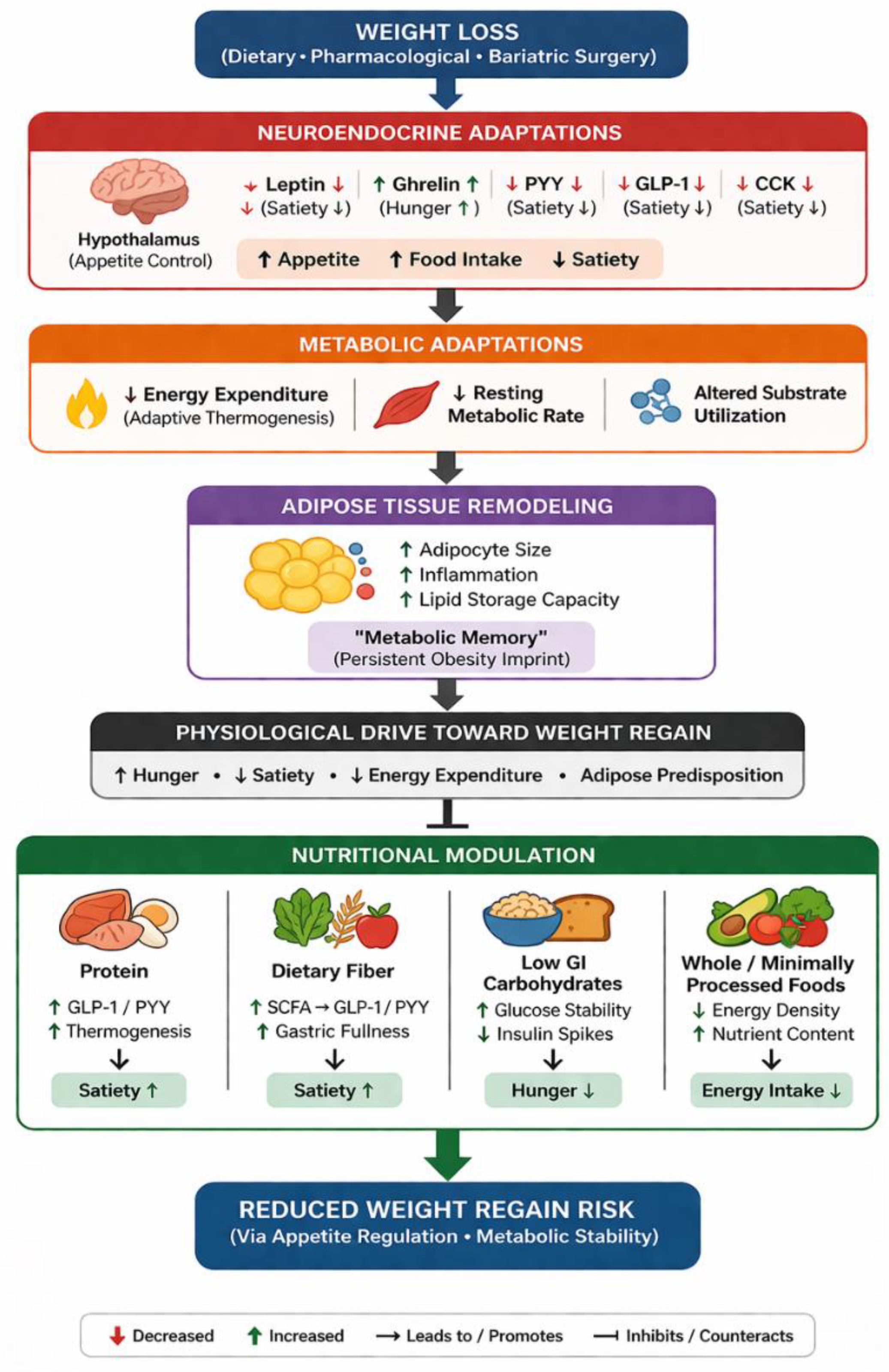

Table 1.
Summary of key nutritional factors, underlying mechanisms, and their implications for appetite regulation and weight regain.
Table 1.
Summary of key nutritional factors, underlying mechanisms, and their implications for appetite regulation and weight regain.
| Nutritional factor | Mechanism | Potential effect |
| Protein | Increased GLP-1 and PYY secretion; higher thermic effect | Increased satiety; reduced energy intake |
| Dietary fiber | SCFA production; modulation of gut microbiota; delayed gastric emptying | Enhanced gut–brain signaling; increased satiety |
| Low glycemic index carbohydrates | Stabilized postprandial glucose and insulin responses | Reduced hunger; improved appetite control |
| Whole / minimally processed foods | Lower energy density; higher nutrient quality | Reduced energy intake; improved weight maintenance |
Disclaimer/Publisher’s Note: The statements, opinions and data contained in all publications are solely those of the individual author(s) and contributor(s) and not of MDPI and/or the editor(s). MDPI and/or the editor(s) disclaim responsibility for any injury to people or property resulting from any ideas, methods, instructions or products referred to in the content. |
© 2026 by the author. Licensee MDPI, Basel, Switzerland. This article is an open access article distributed under the terms and conditions of the Creative Commons Attribution (CC BY) license.
Copyright: This open access article is published under a Creative Commons CC BY 4.0 license, which permit the free download, distribution, and reuse, provided that the author and preprint are cited in any reuse.


