Preprint
Article

This version is not peer-reviewed.

Prenatal PM2.5 Exposure and the Risk of Pediatric Inguinal Hernia or Hydrocele: A Retrospective Cohort Study

A peer-reviewed version of this preprint was published in:
Journal of Clinical Medicine 2026, 15(8), 3089. https://doi.org/10.3390/jcm15083089

Submitted:

24 March 2026

Posted:

25 March 2026

You are already at the latest version

Abstract

Background/Objectives: Inguinal hernia and hydrocele are common pediatric surgical conditions resulting from failed obliteration of the processus vaginalis during fetal development. Although prenatal exposure to fine particulate matter (PM2.5) has been linked to adverse perinatal outcomes and congenital anomalies, its role in structurally defined pediatric surgical diseases remains unclear. We examined the association between maternal PM2.5 exposure during pregnancy and the risk of inguinal hernia or hydrocele in offspring. Methods: We performed a retrospective cohort study of 1,093 mother–offspring pairs delivering at a tertiary referral center (July 2016–June 2019). Monthly residential PM2.5 levels were estimated at geocoded maternal addresses using kriging interpolation from fixed-site monitoring stations. Offspring diagnosed with inguinal hernia or hydrocele through March 2024 were identified using ICD-10 codes. Perinatal characteristics were compared using t-tests and chi-square tests, and multivariable logistic regression assessed trimester-specific PM2.5 exposure and risk. Results: During follow-up, 53 offspring (4.85%) developed inguinal hernia or hydrocele. Male sex (odds ratio [OR], 24.71; 95%CI, 5.95–102.54; p<0.001) and second-trimester PM2.5 exposure (OR, 1.07 per µg/m³; 95%CI, 1.01–1.14; p=0.028) were independent risk factors. A dose–response pattern was observed across quartiles of second-trimester exposure; interquartile range increase was associated with a 64% higher risk (OR, 1.64). The model showed good discrimination (AUC, 0.804). Conclusions: Elevated maternal PM2.5 exposure during the second trimester was independently associated with increased risk of inguinal hernia or hydrocele in offspring. Prenatal air pollution may contribute to persistence of the processus vaginalis and represents a potentially modifiable environmental risk factor.

Keywords: 
;  ;  ;  ;  ;  

1. Introduction

Inguinal hernia is a common indication for surgery in childhood. Reported incidence ranges from approximately 1–5% among term infants and increases substantially in premature populations [1,2,3,4,5]. Hydrocele is likewise prevalent in male infants, affecting approximately 0.5–6% of cases, with many resolving spontaneously during early infancy [6,7]. Despite differences in clinical course, both conditions share a common embryological origin: persistence of the processus vaginalis (PPV).
The processus vaginalis is a transient peritoneal evagination that accompanies testicular descent during fetal development [8]. Under normal physiological conditions, this structure undergoes obliteration after completion of descent. Failure of closure creates a patent peritoneal channel, permitting either herniation of abdominal contents or accumulation of peritoneal fluid, clinically manifesting as an inguinal hernia or hydrocele [9]. While the anatomical sequence leading to PPV has been extensively described, the determinants that modulate this developmental process remain insufficiently understood.
Fine particulate matter with an aerodynamic diameter ≤2.5 μm (PM2.5) constitutes a major component of ambient air pollution. Owing to their small size, these particles can deposit in distal airways, enter systemic circulation, and affect multiple organs [10,11]. Increasing epidemiological evidence has linked maternal exposure to PM2.5 with impaired fetal growth, placental dysfunction, and structural congenital anomalies [12,13,14]. We have previously reported associations between prenatal PM2.5 exposure and congenital anomalies from a surgical perspective [15]. However, whether maternal exposure influences embryological processes governing peritoneal closure has not yet been investigated.
Given the hormonally regulated and temporally sensitive nature of testicular descent and peritoneal remodeling, environmental exposures during pregnancy may plausibly alter PPV regression. Therefore, in this study, we aimed to evaluate the relationship between trimester-specific maternal PM2.5 exposure and the subsequent diagnosis of inguinal hernia or hydrocele in offspring.

2. Materials and Methods

2.1. Study Design and Population

This retrospective birth cohort study included mother–offspring pairs delivering at a university-affiliated tertiary referral center between July 2016 and June 2019. Eligible participants were singleton live births to mothers residing in Daegu Metropolitan City during pregnancy. Multiple gestations, stillbirths, postnatal transfers from outside institutions, and cases lacking complete residential data were excluded.
To minimize confounding from established risk factors for inguinal hernia, the cohort was restricted to term infants (gestational age ≥37 weeks) with a birth weight ≥2,500 g. Offspring with chromosomal abnormalities or major congenital malformations were excluded. Follow-up for outcome ascertainment was conducted through March 2024 using institutional electronic medical records.

2.2. Exposure Assessment

Ambient PM2.5 data were obtained from the national air quality surveillance network (AirKorea, Korea Environment Corporation, Seoul, Korea), which compiles measurements from monitoring stations across South Korea. We extracted PM2.5 measurements from 16 fixed-site monitoring stations operating in Daegu during the study period. Maternal residential addresses documented at delivery were geocoded, and the spatial distribution of maternal residences and monitoring stations within Daegu administrative districts is shown in Figure 1.
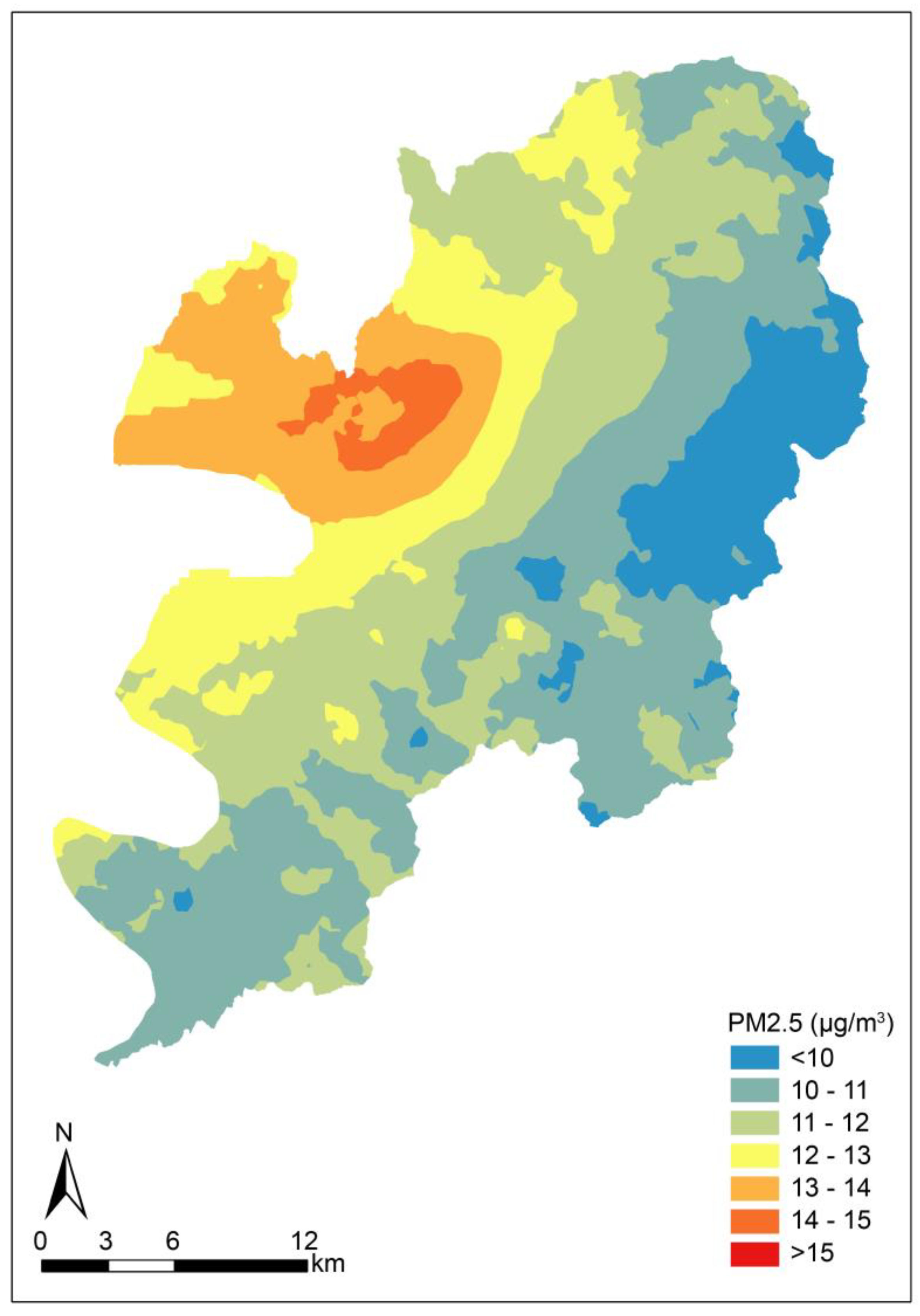
Rather than assigning exposure based solely on the nearest monitoring station (proximity-based assignment), we estimated PM2.5 concentrations at each residential location using a surface-based geostatistical approach. Spatial interpolation was conducted in ArcGIS Pro version 3.2 (Esri Inc., Redlands, CA, USA) using the Geostatistical Wizard. Monthly prediction surfaces were generated using ordinary co-kriging, a variogram-based stochastic method that exploits spatial autocorrelation in PM2.5 and incorporates an auxiliary variable to improve spatial prediction. PM2.5 was modeled as the primary variable, and elevation (derived from topographic data) was included as a secondary variable. The output surface type was set to prediction, and a fixed search neighborhood of 15 neighbors was specified. Prediction surfaces were generated at a spatial resolution of 400 m (cell size=400 m) and restricted to the Daegu administrative boundary by setting the processing extent and clipping the output surface to the city boundary. As an illustrative example of the monthly ordinary co-kriging prediction surfaces, Figure 2 presents the predicted mean PM2.5 concentration (µg/m³) in Daegu for September 2018.
Predicted PM2.5 concentrations were extracted at each geocoded residential location and used to derive pregnancy-period exposure metrics. Compared with proximity-based assignment, this approach may reduce exposure misclassification by incorporating information from multiple monitoring stations and better capturing within-city spatial gradients [16,17,18]. Spatial interpolation methods, including kriging and co-kriging, are widely used in environmental exposure assessment and in environmental and urban planning research to characterize the spatial distribution of particulate matter (PM10 and PM2.5) [19,20,21]. Monthly exposure estimates were aggregated to calculate trimester-specific mean PM2.5 concentrations for each pregnancy.

2.3. Outcome Definition

Offspring were categorized according to the presence or absence of an inguinal hernia or hydrocele diagnosed before March 2024. Diagnoses were identified using International Classification of Diseases, 10th Revision codes:
  • Inguinal hernia: K40.00–K40.90
  • Hydrocele: N43.00–N43.30, P83.5

2.4. Covariates and Statistical Analysis

Maternal variables included age, gestational duration, diabetes mellitus, hypertension, and smoking history. Neonatal variables included sex, gestational age, birth weight, Apgar scores at 1 and 5 min, and the presence of congenital anomalies.
Continuous variables are reported as means ± standard deviations and were compared using independent t-tests. Categorical variables were analyzed using chi-square or Fisher’s exact tests as appropriate.
Multivariable logistic regression was used to estimate adjusted odds ratios (ORs) with 95% confidence intervals (CIs) for associations between trimester-specific PM2.5 exposure and inguinal hernia or hydrocele. Covariates were selected based on clinical relevance and prior literature. Model discrimination was assessed using the area under the receiver operating characteristic curve (AUC). Statistical significance was defined as a two-sided p<0.05.

2.5. Ethics Statement

All data were de-identified prior to analysis. The study protocol was approved by the Institutional Review Board of Keimyung University Dongsan Medical Center (Approval No. 2025-04-061) and conducted in accordance with the Declaration of Helsinki and applicable local regulations. The requirement for informed consent was waived due to the retrospective design and use of anonymized data.

3. Results

A total of 1,093 mother–offspring pairs were included in the analysis. The mean maternal age was 34.1 ± 4.5 years, and the mean gestational age at delivery was 38.6 ± 1.0 weeks. Among the offspring, 574 (52.5%) were male, and 519 (47.5%) were female. The mean birth weight was 3,181 ± 377 g. The mean Apgar scores at 1 and 5 min were 7.8 ± 0.5 and 8.9 ± 0.3, respectively. Maternal comorbidities included diabetes mellitus (118 mothers, 10.8%), hypertension (75 mothers, 6.9%), and a history of smoking (six mothers, 0.5%) (Table 1).
Among the offspring, 53 (4.9%) were diagnosed with either inguinal hernia or hydrocele during follow-up. Comparison between affected and unaffected groups showed a significantly higher proportion of male offspring in the affected group (96.2% vs. 50.3%, p<0.001). Although birth weight was slightly higher in affected offspring, the absolute difference was small and not independently associated with the outcome in multivariable analysis. No significant differences were observed between the groups in gestational age, Apgar scores, maternal age, or maternal comorbidities (Table 2).
Analysis of PM2.5 exposure by trimester showed that second-trimester exposure was significantly higher in the affected group than in the unaffected group (25.4 ± 4.6 µg/m³ vs. 23.9 ± 4.9 µg/m³, p=0.032). No significant differences were observed in the first- or third-trimester exposure between the two groups (Table 3).
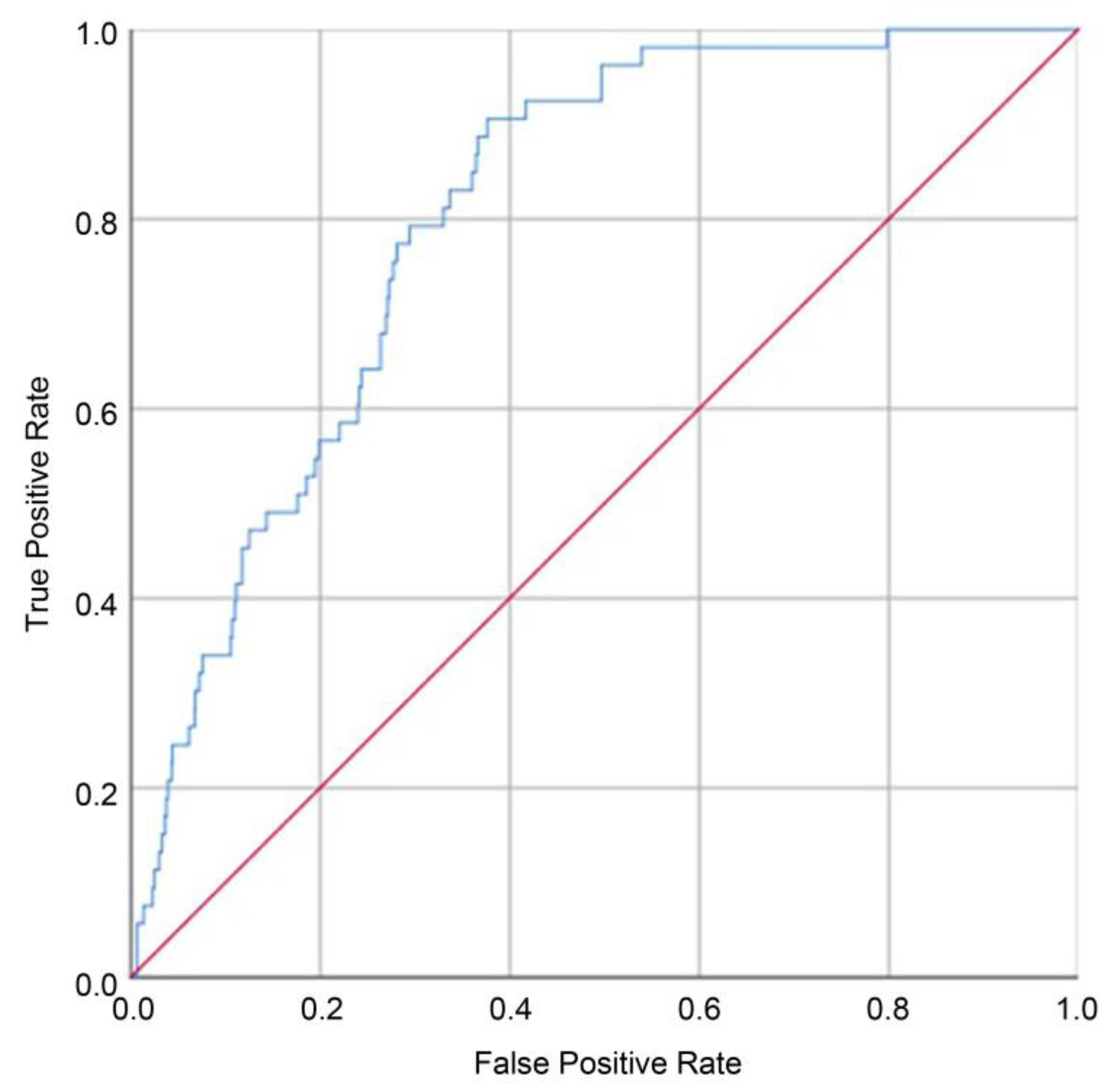
Multivariate logistic regression analysis was performed to identify independent risk factors for the development of inguinal hernia or hydrocele (Table 4). Male sex was strongly associated with the condition (OR, 24.71; 95% CI, 5.95–102.54; p<0.001). Exposure to PM 2.5 during the second trimester was a significant risk factor. Each 1-µg/m³ increase in second-trimester PM2.5 exposure was associated with a 7% increase in odds (adjusted OR, 1.07; 95% CI, 1.01–1.14). Other variables, including birth weight, maternal age, gestational age, maternal diabetes mellitus, maternal hypertension, and smoking history, were not statistically significant. The multivariable model demonstrated good discriminative performance (AUC, 0.804), suggesting acceptable internal predictive validity (Figure 3).
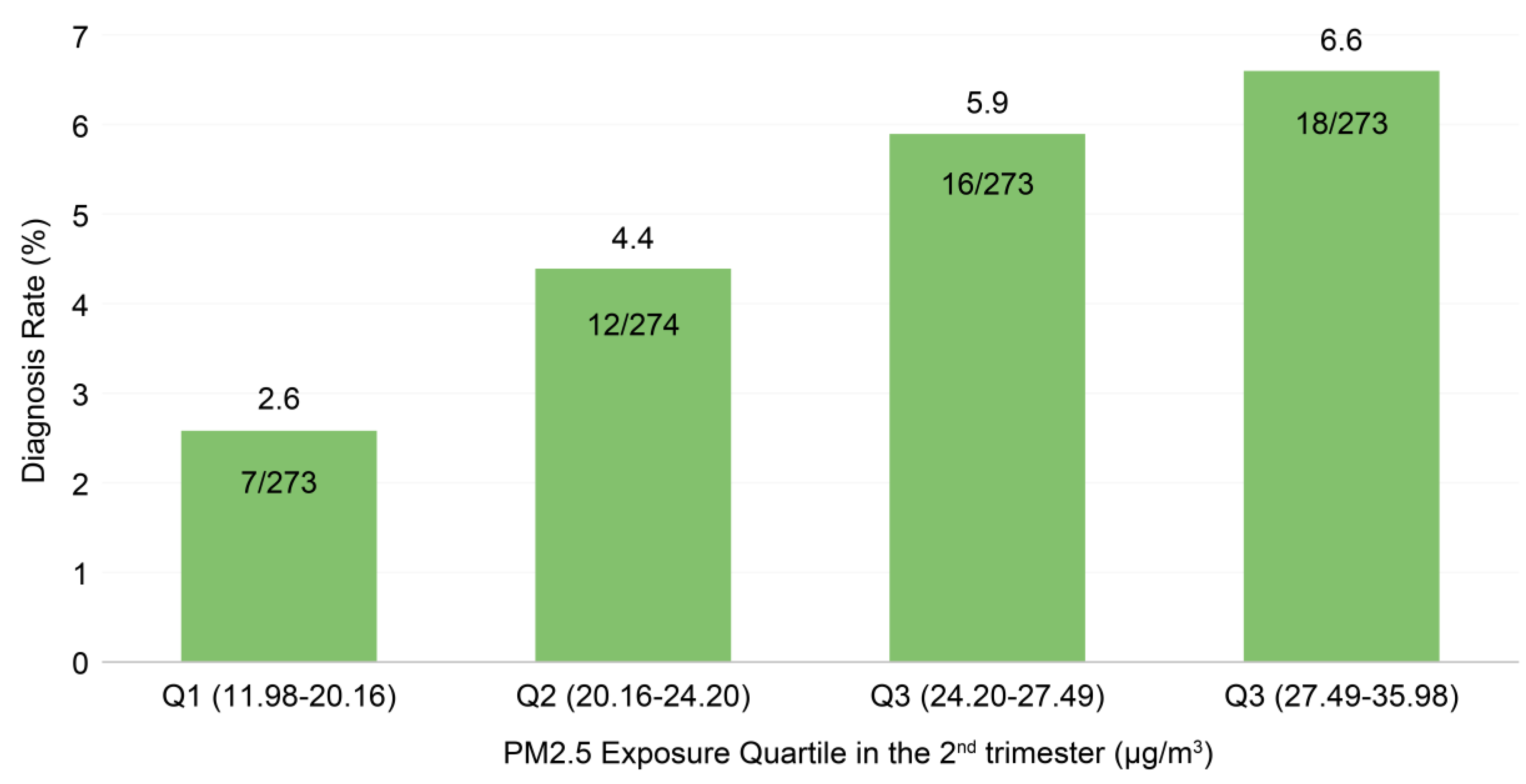
To further explore the relationship between PM2.5 exposure and disease occurrence, second-trimester PM2.5 concentrations were categorized into quartiles. A dose–response trend was observed, with incidence increasing from 2.6% in the lowest quartile to 6.6% in the highest quartile (Figure 4). Quartiles categorization showed a graded increase in incidence, supporting a dose–response relationship.

4. Discussion

In this cohort of 1,093 mother–offspring pairs, maternal exposure to elevated PM2.5 concentrations during the second trimester was independently associated with increased odds of inguinal hernia or hydrocele in offspring. The association persisted after adjustment for relevant perinatal factors and demonstrated a graded exposure–response relationship, supporting the possibility of a sensitive mid-gestational window influencing PPV persistence.
Both inguinal hernia and hydrocele originate from incomplete obliteration of the processus vaginalis [8,22,23]. The inguinoscrotal phase of testicular descent—occurring approximately between gestational weeks 25 and 35—is governed by androgen-mediated signaling, gubernacular differentiation, and coordinated extracellular matrix remodeling [22,23,24,25]. Disruption of these developmental mechanisms may prevent normal peritoneal regression, resulting in a persistent channel that predisposes individuals to postnatal pathology.
Airborne particulate pollutants have been shown to induce systemic oxidative stress, inflammatory activation, and endocrine perturbations during pregnancy [26,27,28]. Experimental and human studies suggest that prenatal exposure to environmental toxicants can impair fetal steroidogenesis and androgen-dependent pathways [29,30,31]. Given that androgen signaling plays a central role in gubernacular development and the timing of peritoneal closure, interference during critical developmental windows may plausibly alter PPV regression.
Previous epidemiologic studies have primarily examined prenatal air pollution in relation to fetal growth restriction, congenital anomalies, or cryptorchidism [12,13,14,15,32,33,34]. However, most investigations have focused on endocrine outcomes or testicular position rather than structural peritoneal persistence. By evaluating clinically confirmed inguinal hernia and hydrocele—conditions directly attributable to PPV—our findings extend environmental epidemiology into the domain of pediatric surgical outcomes.
Male sex was a strong independent predictor, consistent with established anatomical and developmental predispositions to PPV-related disorders. Preterm birth and low birth weight are recognized risk factors for inguinal hernia [35]; to minimize confounding, we restricted the cohort to term infants with a birth weight ≥2,500 g and excluded major congenital anomalies. Although birth weight differed slightly in univariate analysis, it was not independently associated with the outcome in multivariable models, suggesting limited clinical relevance.
The trimester-specific association observed in this study suggests differential susceptibility across gestation. Although final testicular descent occurs later in pregnancy, molecular priming and mesenchymal remodeling begin earlier. Environmental perturbations during mid-gestation may therefore exert downstream anatomical consequences.
The exposure–response gradient further strengthens the interpretability of the finding. While the per-unit effect size was modest, the relatively high baseline incidence of pediatric inguinal hernia implies that even a moderate increase in risk could translate into a meaningful population-level impact.
Several limitations warrant consideration. Exposure estimates were derived from residential locations and did not incorporate indoor pollution, occupational exposures, or maternal mobility patterns. Such misclassification is likely non-differential and may bias the results toward underestimation of the true effects. The single-center design may limit generalizability. Additionally, co-pollutants, socioeconomic factors, and gene–environment interactions were not evaluated.
Nonetheless, this study has several strengths, including a well-characterized birth cohort with extended follow-up, trimester-specific exposure modeling using geospatial methods, clinically validated outcomes, and multivariable adjustment for key confounders. These findings suggest that prenatal air pollution may influence the structural developmental processes underlying pediatric surgical disease.

5. Conclusions

Maternal exposure to higher levels of PM2.5 during mid-gestation was associated with an increased risk of inguinal hernia or hydrocele in offspring. Although causality cannot be established in this observational study, the trimester-specific and dose–response patterns observed support the hypothesis that ambient air pollution may contribute to the PPV. Strategies aimed at reducing prenatal exposure to fine particulate matter may have implications not only for cardiopulmonary and obstetric outcomes, but also for pediatric surgical morbidity. Prospective multicenter studies incorporating individualized exposure assessment and mechanistic biomarkers are warranted.

Author Contributions

Conceptualization, EJ Kim. and E-J Koo.; methodology, EJ Kim and E-j Koo.; software, EJ Kim.; validation, EJ Kim and JG Bae.; formal analysis, E-J Koo.; investigation, JG Bae.; resources, JG Bae.; data curation, EJ Kim.; writing—original draft preparation, EJ Kim. and E-J Koo.; writing—review and editing, E-J Koo.; visualization, E-J Koo.; supervision, E-J Koo.; project administration, EJ Kim.; All authors have read and agreed to the published version of the manuscript.

Funding

This research received no external funding.

Institutional Review Board Statement

This study was approved by the Institutional Review Board of Keimyung University Dongsan Medical Center (Approval No. 2025-04-061). All procedures involving human participants were conducted in accordance with the Declaration of Helsinki and relevant local regulations.

Data Availability Statement

The datasets analyzed during the current study are not publicly available due to institutional regulations, but are available from the corresponding author upon reasonable request and approval from the Institutional Review Board.

Acknowledgments

The authors thank Sumin Son, Jeong Eun Yang, Minseo Son, and Joonhyoung An for organizing the data.

Conflicts of Interest

The authors declare that they have no competing interests.

Abbreviations

AUC Area Under the Curve
ICD-10 International Classification of Diseases, 10th Revision
IQR Interquartile Range
IRB Institutional Review Board
PM2.5 Fine particulate matter ≤2.5 μm in diameter
PPV Persistent Processus Vaginalis
ROC Receiver Operating Characteristic

References

  1. Svenningsson, A.; Hernias, W.T. Pediatric Surgery: Diagnosis and Management; Puri, P., Höllwarth, M.E., Eds.; Springer International Publishing: Cham, 2023; pp. 1001–1014. [Google Scholar]
  2. Raitio, A.; Kalliokoski, N.; Syvänen, J.; Harju, S.; Tauriainen, A.; Hyvärinen, A.; Gissler, M.; Helenius, I.; Sankilampi, U. High incidence of inguinal hernias among patients with congenital abdominal wall defects: a population-based case–control study. Eur J Pediatr 2021, 180, 2693–2698. [Google Scholar] [CrossRef] [PubMed]
  3. Wolf, L.L.; Sonderman, K.A.; Kwon, N.K.; Armstrong, L.B.; Weil, B.R.; Koehlmoos, T.P.; Losina, E.; Ricca, R.L.; Weldon, C.B.; Haider, A.H.; et al. Epidemiology of abdominal wall and groin hernia repairs in children. Pediatr Surg Int 2021, 37, 587–595. [Google Scholar] [CrossRef]
  4. Dolgin, S. Inguinal hernia in girls: a retrospective analysis of over 1000 patients. J Pediatr Surg 2021, 56, 203. [Google Scholar] [CrossRef]
  5. Chang, S.J.; Chen, J.Y.; Hsu, C.K.; Chuang, F.C.; Yang, S.S. The incidence of inguinal hernia and associated risk factors of incarceration in pediatric inguinal hernia: a nation-wide longitudinal population-based study. Hernia 2016, 20, 559–563. [Google Scholar] [CrossRef]
  6. Salari, N.; Beiromvand, M.; Abdollahi, R.; Hemmatabadi, F.K.; Daneshkhah, A.; Ghaderi, A.; Asgari, M.; Mohammadi, M. Global prevalence of hydrocele in infants and children: a systematic review and meta-analysis. BMC Pediatr 2025, 25, 128. [Google Scholar] [CrossRef]
  7. Osifo, O.D.; Osaigbovo, E.O. Congenital hydrocele: prevalence and outcome among male children who underwent neonatal circumcision in Benin City, Nigeria. J Pediatr Urol 2008, 4, 178–182. [Google Scholar] [CrossRef]
  8. Brainwood, M.; Beirne, G.; Fenech, M. Persistence of the processus vaginalis and its related disorders. Australas J Ultrasound Med 2020, 23, 22–29. [Google Scholar] [CrossRef]
  9. Palmer, L.S. Hernias and hydroceles. Pediatr Rev 2013, 34, 457–64; quiz 464. [Google Scholar] [CrossRef]
  10. Alexeeff, S.E.; Liao, N.S.; Liu, X.; Van Den Eeden, S.K.; Sidney, S. Long-term PM2.5 exposure and risks of ischemic heart disease and stroke events: review and meta-analysis. J Am Heart Assoc 2021, 10, e016890. [Google Scholar] [CrossRef] [PubMed]
  11. Thangavel, P.; Park, D.; Lee, Y.C. Recent insights into particulate matter (PM2.5)-mediated toxicity in humans: an overview. Int J Environ Res Public Health 2022, 19, 7507. [Google Scholar] [CrossRef] [PubMed]
  12. Jiao, A.; Reilly, A.N.; Benmarhnia, T.; Sun, Y.; Avila, C.; Chiu, V.; Slezak, J.; Sacks, D.A.; Molitor, J.; Li, M.; et al. Fine particulate matter, its constituents, and spontaneous preterm birth. JAMA Netw Open 2024, 7, e2444593. [Google Scholar] [CrossRef] [PubMed]
  13. Zhao, Y.; Wang, P.; Zhou, Y.; Xia, B.; Zhu, Q.; Ge, W.; Li, J.; Shi, H.; Xiao, X.; Zhang, Y. Prenatal fine particulate matter exposure, placental DNA methylation changes, and fetal growth. Environ Int 2021, 147, 106313. [Google Scholar] [CrossRef] [PubMed]
  14. Zhen, S.; Li, N.; Li, Y.; Li, Q.; Zheng, L.; Yin, Z.; Dou, Y.; Wu, S.; Liu, Y.; Zhang, X.; et al. Maternal exposure to fine particulate matter before and during pregnancy, and the risk of birth defects: a population-based study. Ecotoxicol Environ Saf 2025, 289, 117408. [Google Scholar] [CrossRef] [PubMed]
  15. Koo, E.J.; Bae, J.G.; Kim, E.J.; Cho, Y.H. Correlation between exposure to fine particulate matter (PM2.5) during pregnancy and congenital anomalies: its surgical perspectives. J Korean Med Sci 2021, 36, e236. [Google Scholar] [CrossRef]
  16. Jung, E.M.; Kim, K.N.; Park, H.; Shin, H.H.; Kim, H.S.; Cho, S.J.; Kim, S.T.; Ha, E.H. Association between prenatal exposure to PM2.5 and the increased risk of specified infant mortality in South Korea. Environ Int 2020, 144, 105997. [Google Scholar] [CrossRef]
  17. Michikawa, T.; Morokuma, S.; Fukushima, K.; Kato, K.; Nitta, H.; Yamazaki, S. Maternal exposure to air pollutants during the first trimester and foetal growth in Japanese term infants. Environ Pollut 2017, 230, 387–393. [Google Scholar] [CrossRef]
  18. Ren, S.; Haynes, E.; Hall, E.; Hossain, M.; Chen, A.; Muglia, L.; Lu, L.; DeFranco, E. Periconception exposure to air pollution and risk of congenital malformations. J Pediatr 2018, 193, 76–84.e6. [Google Scholar] [CrossRef]
  19. Morillo, M.C.; Martínez-Cuevas, S.; García-Aranda, C.; Molina, I.; Querol, J.J.; Martínez, E. Spatial analysis of the particulate matter (PM10) an assessment of air pollution in the region of Madrid (Spain): spatial interpolation comparisons and results. Int J Environ Stud 2024, 81, 1501–1511. [Google Scholar] [CrossRef]
  20. Masroor, K.; Fanaei, F.; Yousefi, S.; Raeesi, M.; Abbaslou, H.; Shahsavani, A.; Hadei, M. Spatial modelling of PM2.5 concentrations in Tehran using kriging and inverse distance weighting (IDW) methods. J Air Pollut Health 2020, 5, 115–124. [Google Scholar] [CrossRef]
  21. Nguyen, D.A.; Duong, S.H.; Tran, P.A.; Cao, H.H.; Ho, B.Q. Combination of data-driven models and interpolation technique to develop PM10 map for Hanoi, Vietnam. Sci Rep 2020, 10, 19268. [Google Scholar] [CrossRef]
  22. Canadian Association of Paediatric Surgeons. Inguinal hernias and hydroceles in infancy and childhood: a consensus statement of the Canadian Association of Paediatric Surgeons. Paediatr Child Health 2000, 5, 461–462. [Google Scholar] [CrossRef]
  23. Krishnan, N.; Kakkar, A.; Nag, T.C.; Agarwala, S.; Goel, P.; Dhua, A.K. A comparative study of smooth muscle cell characteristics and myofibroblasts in processus vaginalis of pediatric inguinal hernia, hydrocele and undescended testis. BMC Urol 2024, 24, 115. [Google Scholar] [CrossRef] [PubMed]
  24. Hutson, J.M.; Southwell, B.R.; Li, R.; Lie, G.; Ismail, K.; Harisis, G.; Chen, N. The regulation of testicular descent and the effects of cryptorchidism. Endocr Rev 2013, 34, 725–752. [Google Scholar] [CrossRef]
  25. Favorito, L.A.; Costa, W.S.; Sampaio, F.J. Relationship between the persistence of the processus vaginalis and age in patients with cryptorchidism. Int Braz J Urol 2005, 31, 57–61. [Google Scholar] [CrossRef]
  26. Fussell, J.C.; Jauniaux, E.; Smith, R.B.; Burton, G.J. Ambient air pollution and adverse birth outcomes: a review of underlying mechanisms. BJOG 2024, 131, 538–550. [Google Scholar] [CrossRef]
  27. Parasin, N.; Amnuaylojaroen, T.; Saokaew, S. Prenatal PM2.5 exposure and its association with low birth weight: a systematic review and meta-analysis. Toxics 2024, 12, 446. [Google Scholar] [CrossRef] [PubMed]
  28. Chen, H.; Oliver, B.G.; Pant, A.; Olivera, A.; Poronnik, P.; Pollock, C.A.; Saad, S. Particulate matter, an intrauterine toxin affecting foetal development and beyond. Antioxidants (Basel) 2021, 10, 732. [Google Scholar] [CrossRef] [PubMed]
  29. Kilcoyne, K.R.; Mitchell, R.T. Effect of environmental and pharmaceutical exposures on fetal testis development and function: a systematic review of human experimental data. Hum Reprod Update 2019, 25, 397–421. [Google Scholar] [CrossRef]
  30. Plunk, E.C.; Richards, S.M. Endocrine-disrupting air pollutants and their effects on the hypothalamus–pituitary–gonadal axis. Int J Mol Sci 2020, 21, 8902. [Google Scholar] [CrossRef]
  31. Gaudriault, P.; Mazaud-Guittot, S.; Lavoué, V.; Coiffec, I.; Lesné, L.; Dejucq-Rainsford, N.; Scholze, M.; Kortenkamp, A.; Jégou, B. Endocrine disruption in human fetal testis explants by individual and combined exposures to selected pharmaceuticals, pesticides, and environmental pollutants. Environ Health Perspect 2017, 125, 087004. [Google Scholar] [CrossRef]
  32. Liu, Y.; Chen, Y.L.; Yu, C.J.; Han, R.; Chen, L.; Liu, M.L.; Sun, M.; Zeng, Z.Y.; Wang, Q.; Xu, X.M.; et al. Associations between maternal periconceptional exposure to PM2.5 and the risk of cryptorchidism: a case-control study of 4274. Sci Rep 2024, 14, 29703. [Google Scholar] [CrossRef] [PubMed]
  33. Jensen, M.S.; Toft, G.; Thulstrup, A.M.; Bonde, J.P.; Olsen, J. Cryptorchidism according to maternal gestational smoking. Epidemiology 2007, 18, 220–225. [Google Scholar] [CrossRef]
  34. Gurney, J.K.; McGlynn, K.A.; Stanley, J.; Merriman, T.; Signal, V.; Shaw, C.; Edwards, R.; Richiardi, L.; Hutson, J.; Sarfati, D. Risk factors for cryptorchidism. Nat Rev Urol 2017, 14, 534–548. [Google Scholar] [CrossRef] [PubMed]
  35. Fu, Y.W.; Pan, M.L.; Hsu, Y.J.; Chin, T.W. A nationwide survey of incidence rates and risk factors of inguinal hernia in preterm children. Pediatr Surg Int 2018, 34, 91–95. [Google Scholar] [CrossRef] [PubMed]
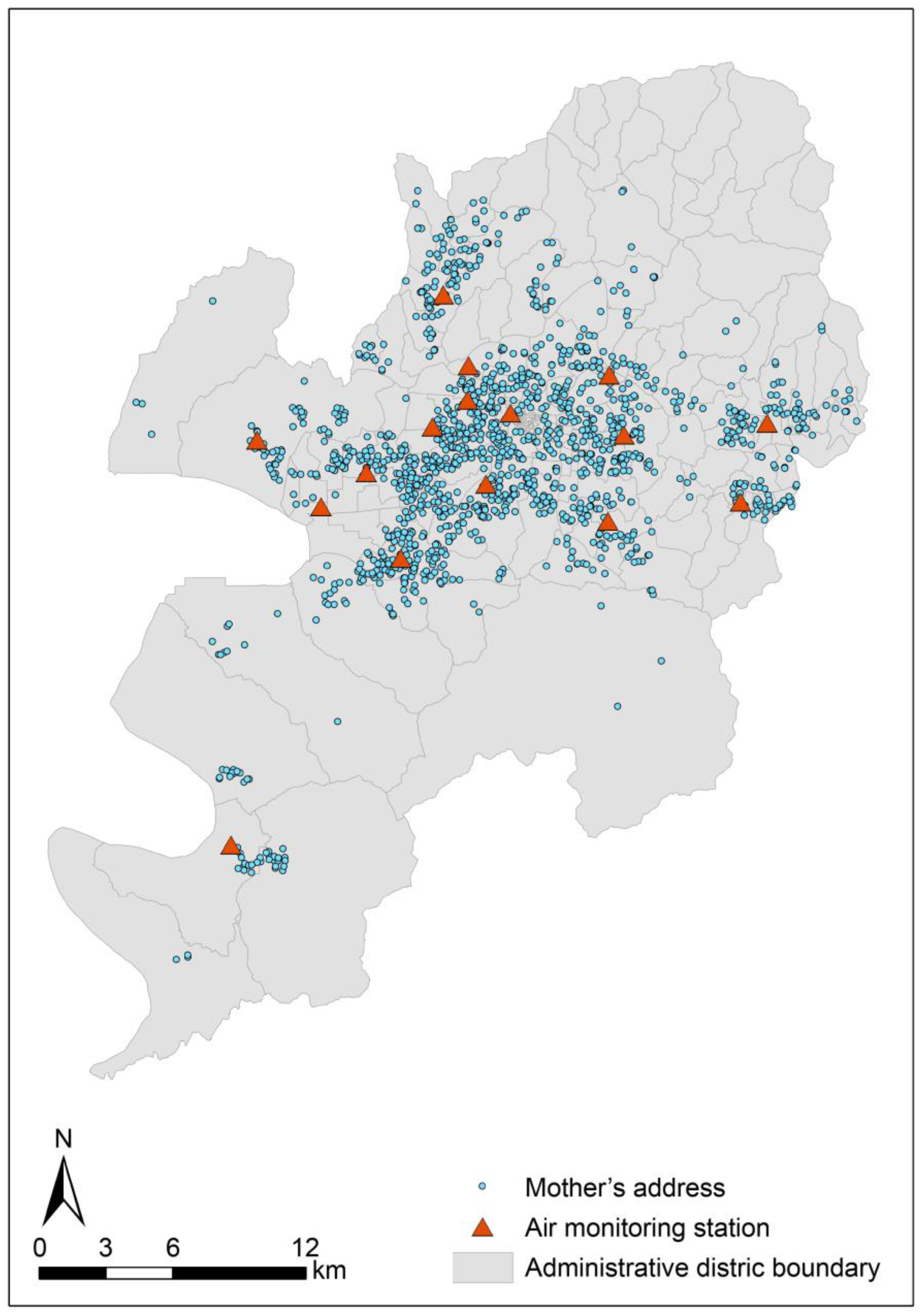
Figure 1. Location of air monitoring stations (N=16) and maternal residences (N=1,093) in Daegu.
Preprints 204798 g001
Figure 2. Predicted Mean PM2.5 (μg/m³) in Daegu, September 2018.
Preprints 204798 g002
Figure 3. Receiver operating characteristic curve for the multivariable model evaluating the risk of inguinal hernia or hydrocele. Area under the curve, 0.804.
Preprints 204798 g003
Figure 4. Incidence of inguinal hernia or hydrocele by quartiles of second-trimester PM2.5 exposure.
Preprints 204798 g004
Table 1. Demographic characteristics of the study population.
Study population Characteristic Values
Mother (n=1,093) Age (years) 34.1 ± 4.5 (18–46)
Diabetes mellitus, n (%) 118 (10.8)
Hypertension, n (%) 75 (6.9)
Smoking history, n (%) 6 (0.5)
Offspring (n=1,093) Gestational age (weeks) 38.6 ± 1.0 (37–42)
Sex, male: female, n (%) 574:519 (52.5:47.5)
Birth weight (g) 3,181 ± 377 (2,060–4,610)
Apgar score (1 min) 7.8 ± 0.5
Apgar score (5 min) 8.9 ± 0.3
Values are presented as means ± standard deviations (ranges) or numbers (%).
Table 2. Comparison of offspring characteristics between those with and without inguinal hernia or hydrocele.
Variable No hernia/hydrocele (N=1,040) Hernia/hydrocele (N=53) p-value
Sex, male: female, n (%) 523:517 (50.3:49.7) 51:2 (96.2:3.8) <0.001
Gestational age (weeks) 38.6 ± 1.0 38.5 ± 0.9 0.352
Birth weight (g) 3,176 ± 377 3,296 ± 375 0.023
Apgar score at 1 min 7.8 ± 0.5 7.8 ± 0.4 0.362
Apgar score at 5 min 8.9 ± 0.3 8.9 ± 0.3 0.857
Maternal age (years) 34.0 ± 4.5 34.8 ± 4.4 0.222
Maternal diabetes mellitus, n (%) 112 (10.8) 6 (11.3) 0.822
Maternal hypertension, n (%) 73 (7.0) 2 (3.8) 0.518
Maternal smoking, n (%) 6 (0.6) 0 (0.0) 1.000
Values are presented as numbers (%) or means ± standard deviations. p-values were calculated using independent t-tests, chi-square tests, or Fisher’s exact tests as appropriate.
Table 3. Comparison of PM2.5 exposure between offspring with and without inguinal hernia or hydrocele by trimester hydrocele.
Trimester No hernia/hydrocele (mean ± SD) Hernia/hydrocele (mean ± SD) p-value
1st trimester 24.9 ± 4.3 24.0 ± 4.9 0.151
2nd trimester 23.9 ± 4.9 25.4 ± 4.6 0.032
3rd trimester 24.0 ± 5.3 24.9 ± 5.0 0.265
Table 4. Multivariate logistic regression analysis of factors associated with inguinal hernia or hydrocele.
Variable Odds ratio (OR) 95% CI p-value
Sex of offspring (male) 24.71 5.95–102.54 <0.001
Birth weight (g) 1.001 1.000–1.001 0.121
PM2.5 in 2nd trimester (µg/m³) 1.070 1.01–1.14 0.028
Gestational age (weeks) 0.783 0.57–1.09 0.143
Maternal age (years) 1.036 0.97–1.11 0.301
Maternal diabetes mellitus 0.781 0.31–1.96 0.599
Maternal hypertension 2.389 0.57–1.09 0.143
Values are presented as odds ratios with 95% confidence intervals. p<0.05 was considered statistically significant.
Disclaimer/Publisher’s Note: The statements, opinions and data contained in all publications are solely those of the individual author(s) and contributor(s) and not of MDPI and/or the editor(s). MDPI and/or the editor(s) disclaim responsibility for any injury to people or property resulting from any ideas, methods, instructions or products referred to in the content.
Copyright: This open access article is published under a Creative Commons CC BY 4.0 license, which permit the free download, distribution, and reuse, provided that the author and preprint are cited in any reuse.
Prerpints.org logo

Preprints.org is a free preprint server supported by MDPI in Basel, Switzerland.

Subscribe

Disclaimer

Terms of Use

Privacy Policy

Privacy Settings

© 2026 MDPI (Basel, Switzerland) unless otherwise stated