
Submitted:
23 March 2026
Posted:
24 March 2026
You are already at the latest version
Abstract
The long-term performance of photovoltaic (PV) modules significantly affects the reliability and economic viability of solar energy systems, as various environmental and operational factors can gradually degrade module efficiency and reduce energy output. This study investigates the long-term performance degradation analysis of 40 outdoor photovoltaic (PV) modules exposed for four years on a five-level building in Mirpur, Dhaka, Bangladesh. Electrical parameters, including voltage, current, power, and fill factor, were measured using a PROVA 1011 PV analyzer under IEC60904-1 standard test conditions were analyzed to evaluate the extent of long-term degradation of PV modules. The image-based analysis identified degradation factors such as dust accumulation, soiling, hotspots, discoloration, microcracks, delamination, and corrosion. All test data were normalized to standard conditions (1000 W/m², 25°C) for consistency. The measured average maximum power output was 9.85 W, with an average fill factor of 0.713 and a standard deviation of 0.939 for the 40 photovoltaic modules with a rated capacity of 10 W each. The dataset provides valuable insights for researchers and industry professionals to assess long-term PV performance, optimize maintenance strategies, and support solar energy deployment in tropical environments. Additionally, it can aid policymakers in developing regulatory frameworks for improving solar infrastructure resilience.
Keywords:
photovoltaic modules
; performance analysis
; outdoor condition
; PV electrical parameters
; tested dataset
; PV system analyzer
; degradation factors
1. Summary
Solar energy, one of the most important forms of renewable energy, has gained significant focus worldwide due to its environmental benefits and the increasing need for sustainable energy sources[1]. However, the degradation of solar module output power is a significant problem that affects the long-term viability and economic efficiency of solar energy systems[2]. Several factors, including natural substance deterioration, temperature variations, and dust and grime formation on the module surface, cause the degradation [3]. The aging and degradation of solar PV modules, analyzing factors such as temperature, humidity, dust, discoloration, cracks, and delamination, their impacts on lifetime, efficiency, material deterioration, overheating, and mismatch[4]. Figure 1 shows the degradation factors of silicon PV modules for the last 10 years. A field study of twenty-two mono-crystalline silicon PV modules installed in northern Ghana for 16 years showed a maximum power (Pmax) degradation of 18.2–38.8%, corresponding to an annual degradation rate of 1.54%, mainly associated with encapsulant discoloration and junction-box adhesive degradation[5]. Another study was an aging assessment of five photovoltaic (PV) systems in desert conditions, which identified degradation modes such as snail trails, delamination, discoloration, hot spots, potential-induced degradation (PID), and micro-cracks through visual inspection, infrared imaging, electroluminescence analysis, and I–V measurements, revealing high degradation rates of up to 2.7% per year[6].
Özkalay et al. investigate the temperature impact of building-integrated photovoltaic (BIPV) modules, which accelerates degradation of polymer components such as encapsulants and back-sheets, leading to current and fill factor losses due to discoloration, damaged cells, and interconnect failures[8]. A field study of 56 mono-crystalline silicon PV modules exposed for 22 years reported a mean peak power degradation of 30.9% and approximately 1.4% per year[9]. Rahman et al. conducted an experimental study on 8-year-old 30 W and 10-year-old 40 W photovoltaic (PV) modules, and found that aging factors such as dust accumulation, discoloration, delamination, and cracks significantly influence degradation[10]. A field study of three PV modules operating for more than 20 years showed noticeable power degradation under continuous outdoor exposure, with reductions in peak power attributed to defects such as discoloration, junction damage, humidity ingress in the junction box, encapsulant delamination, and hot spots[11]. In the study, the aging of a 1.4 kW grid-connected photovoltaic system in Sohar, Oman, over seven years caused the system efficiency to decrease by 6.3% and the production rate to 5.88%, while the mean daily array capture loss and system loss were 6.95% and 6.13%, respectively[12]. Another study identified environmental visual defects, including delamination, encapsulant discoloration, metallization corrosion/discoloration, cell cracks, broken glass, antireflection coating deterioration, snail trails, junction box failures, and soiling, with electrical performance tests conducted to correlate these defects[13]. This study investigated six-cell PV test modules with induced failures such as micro-cracks, cell cracks, glass breakage, and connection defects, natural aging in climate chambers, and outdoor sites. The results showed that mechanical failures had minimal impact on performance, but numerous micro-cracks accelerated degradation, while polymeric encapsulants developed detectable fluorescence after 1 year outdoors[14]. Another study critically reviews recent studies on solar PV performance, reliability, and degradation, highlighting how environmental stress, manufacturing defects, and aging affect modules. A visual inspection found in a different study was glass cracks, discoloration, and corrosion, many defects that reduce the efficiency of a PV module, such as microcracks[15]. Bansal et al. present a seven-year performance analysis of a 5 MW grid-connected crystalline silicon PV plant in Gujarat, India, observing major degradation modes including hot spots, junction box melting, encapsulant discoloration, snail trails, and corrosion from moisture[16] The research is motivated by the need to solve these issues by identifying the environmental conditions that cause power loss in solar modules and investigating practical solutions that reduce their effects. This dataset originated from the need to understand the long-term performance degradation of photovoltaic (PV) modules in real-world outdoor conditions, more specifically in tropical climates such as Bangladesh. The dataset contains power, current, and voltage measurements from modules normalized to maintain the standard test condition (STC) for comparability. In Addition, an image-based analysis was conducted to identify degradation factors visually after a certain period. This dataset was produced to provide data support for the comprehension of PV module degradation processes, guidance for maintenance procedures, sustainability assessments, and policy choices for the implementation of solar energy and the construction of infrastructure.
2. Value of the data and Data Specification Table
The value of the experimental data of the four-year-old PV modules in this paper can briefly be described as follows:
- The dataset includes key electrical parameters of PV modules that are four years old, such as short-circuit current, open-circuit voltage, maximum power point voltage, and maximum power point power
- This dataset is valuable for calculating the performance degradation rate of photovoltaic modules over time in Dhaka, Bangladesh.
- Analyzing this data can aid in developing proactive maintenance strategies for photovoltaic systems, thereby enhancing their lifespan and performance.
- Industry stakeholders and policymakers can utilize this dataset to guide decisions related to infrastructure investments, solar energy deployment, and regulatory frameworks, contributing to the advancement of sustainable energy.
The specifications of the experimental data are shown in Table 1.
3. Method Details
3.1. Experimental Investigation Site
The experimental testing of the photovoltaic modules was conducted at Mirpur, located in Dhaka, the capital city of Bangladesh. The geographical coordinates of the test site are 23.796165° N latitude and 90.356758° E longitude. This location represents a typical urban environment with a tropical monsoon climate characterized by high solar irradiance, elevated temperature, high humidity, and seasonal rainfall. The tested location is shown in Figure 2. These environmental conditions make the site suitable for evaluating the real operating performance and degradation characteristics of photovoltaic (PV) modules under practical field conditions.
3.2. Specification of the Testing Meter and Tested pv panels
Table 2 presents the specifications of the tested PV modules and the commercially available I-V tracer modeled PROVA 1011.
3.3. Experimental Methods
The four-year-old 40 solar panels were collected from an off-grid PV array arrangement on a building rooftop. Each module has a power rating of 10W at new conditions. The full specification of the 10W PV module is shown in Table 02. This experimental study was conducted in two processes: image-based and electrical investigations.
3.3.1. Image-Based Investigation
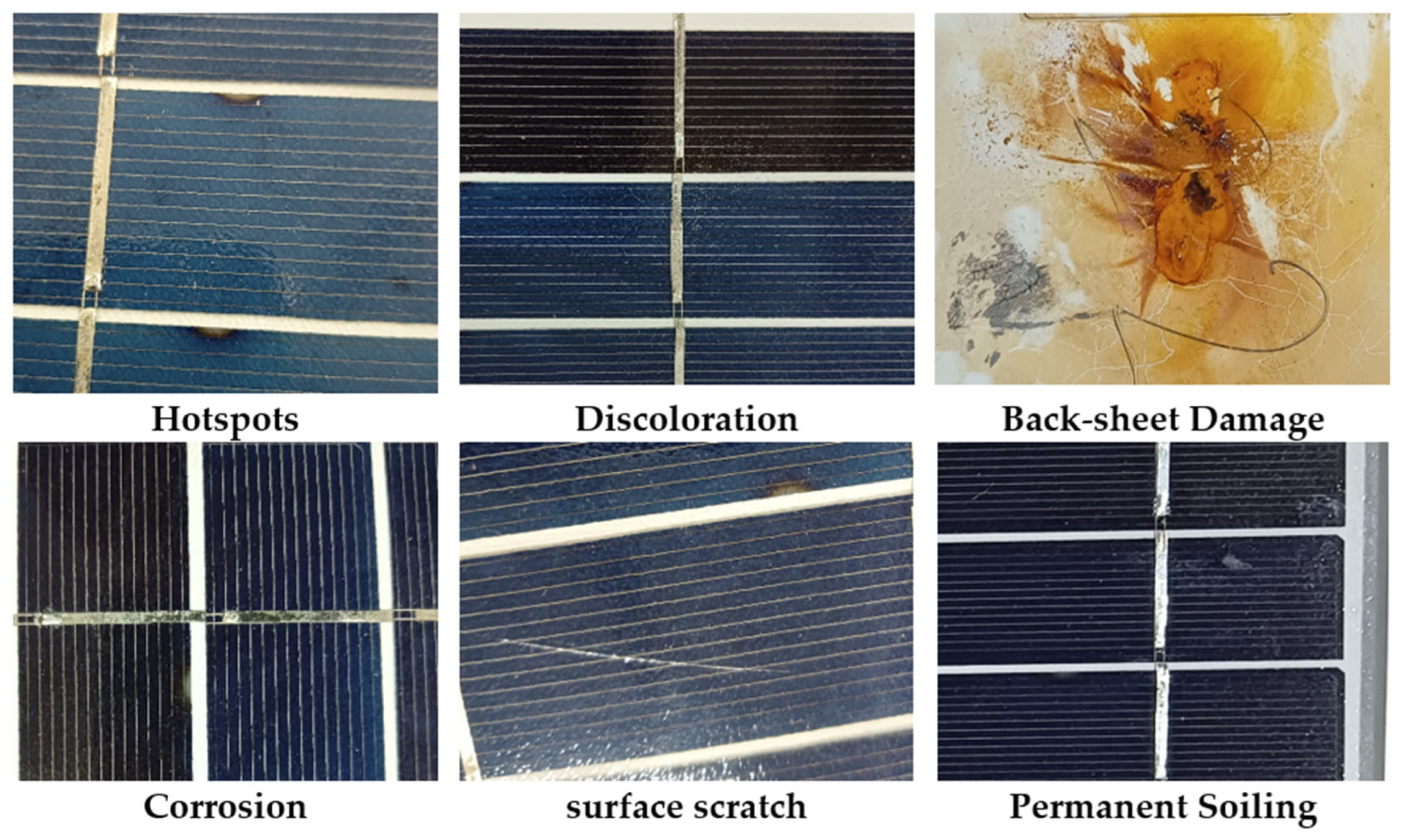
After collecting the four-year-old PV panels from the rooftop array, the panels were cleaned with water on the rooftop of a building at Mirpur in Dhaka . After that, the faults of the PV modules were identified by visual inspection, as shown in Figure 03. The visual faults of all panels were identified individually, and the panels had common faults, which were minor hotspots and discoloration. Some minor faults exist on both the top and bottom sides of the panels: discoloration, hotspots, corrosion, back sheet damage, surface scratches, and permanent soiling. The phone camera shown in Figure 5 captures all faults.
3.3.2. Electrical Investigation
The PV panels were tested in outdoor exposed conditions to analyze the electrical characteristics of the photovoltaic modules. For every individual test, a steel test frame is maintained at a 23-degree angle to the surface of the rooftop. Initially, the collected panels were dusty. The panels were tested after proper cleaning. To observe the electrical characteristics of the PV modules, an I-V tracer PROVA-1011 was used. Because of its remarkable precision and wide range, the I-V tracer PROVA-1011 is a highly versatile tool for investigating the electrical behavior of the photovoltaic panel, such as its substantial heat or the freezing temperatures of a solar panel. The device's lightweight and simplicity make it appropriate for fieldwork and academic use, as shown in Table 2. The I-V tracer can measure current, voltage, irradiance levels, and temperature. The solar panels were set on the test frame simultaneously for the outdoor test at first. An I-V tracer is connected to the panels to analyze the electrical parameters of the solar module. The I-V tracer is mainly sectionalized into two parts: one is the sensor unit, and the other is the central analyzing unit. The sensor unit consists of two sensing parts: one is a temperature sensor, and the other is an irradiance sensor. Temperature sensors sense the temperature of the solar panels, and the irradiance sensor senses the intensity of the sunlight. The temperature sensor was attached to the back side of the panel using thermal glue, and the irradiance sensor was set beside the solar panel on the frame. The sensor unit connects with the central analyzer unit via Bluetooth medium. After that, the I-V tracer was attached to the panels by the flexible wired crocodile clips following the appropriate polarity. After completing the connection procedure, the central unit of the I-V tracer was opened by pressing the auto-scan button. The analyzer displayed the electrical parameters, such as open circuit voltage, short circuit current, maximum power point, etc., with the proper graphical representation. The graph plotted voltage Vs. Current and voltage Vs. Power of the panels. The 40 panels were evaluated in outdoor sunlight-exposed conditions at standard test conditions 25°C, 1000W/m^2, AM 1.5G, maintaining the IEC60904-1 standard. In each of the forty modules, it takes eight to ten seconds to analyze the electrical parameters of an outdoor test. The environment's temperature varied from 36 to 39 degrees Celsius on the testing day. For the store-tested date, press the record button, and the data will be stored in the internal memory of the I-V tracer with a specific record number. The analyzer stored the data in its memory for multiple tested data to maintain the record number's proper sequence with the data value and exact tested time. A USB cable, personal computer, and Solar System Analyzer software were used to extract data from the I-V tracer. Using the computer, the graph and value of the electrical parameter were collected, and Microsoft Excel could access the data. The electrical investigation process is shown in Figure 4.
4. Data Description (Raw Data)
This section includes both image-based analysis and electrical results analysis, as shown below.
4.1. Detected Faults From Old PV Modules by Visual Investigation
Initially, the four years of 40 PV modules were collected from an array on the rooftop of a building. The surface of the panels was dusty, so a water-cleaning process was applied to the surface of the PV panels. For image-based investigation, the detected faults were carefully identified visually, and the faults were captured using a high-resolution camera. This section identified the visual performance degradation factors of old photovoltaic modules. To provide a comprehensive overview of the visual faults detected in various photovoltaic (PV) modules, Table 3 analyzes the different types and quantities of faults found in each panel. The main problems noticed in the above panels are pre-hotspots and minor discoloration. Furthermore, multiple panels contain particular faults that vary from panel to panel, such as corrosion, persistent dust, Surface scratches, and damage to the back sheet. PV modules such as 1612E020002, 1612E020004, 1612E020007, 1612E020014, and 1612E020017 have the most significant number of visual faults, including problems such as pre-hotspots, minor discoloration, back sheet damage, surface scratches, permanent dust, and corrosion.
The different kinds of defects in these panels indicate an increased degradation rate, most likely caused by extended exposure to outside factors or working stress. Consequently, this table summarizes the faults found in each module and a comparative assessment of the panels' overall condition.
Figure 5.
Detected faults on the tested solar panels under old conditions.
4.2. Analysis of Electrical Investigation Data
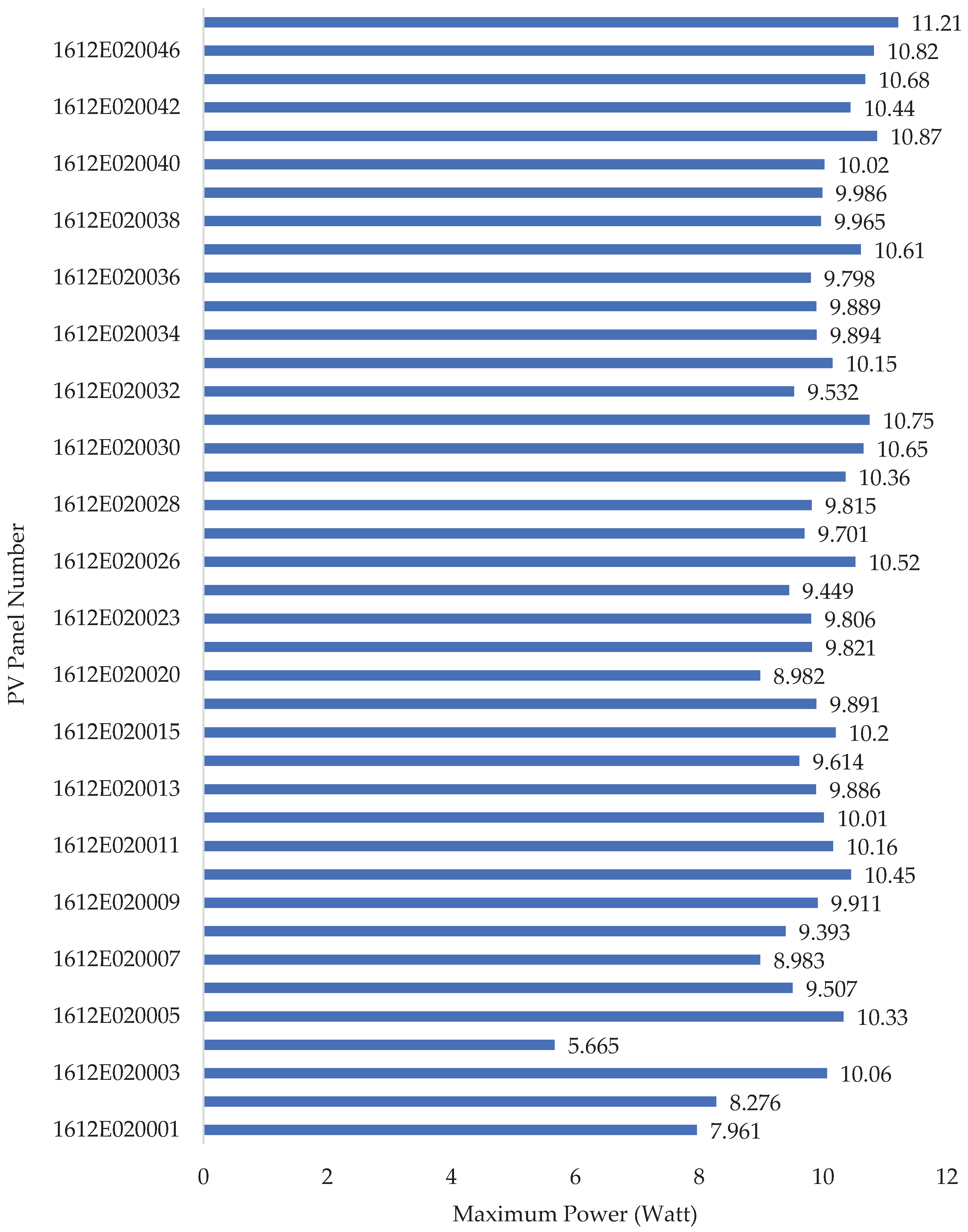
The dataset is acquired from experimentally tested four-year-old PV modules in outdoor exposed conditions at Mirpur in Dhaka, Bangladesh. The datasets were tested experimentally using a commercial I-V tracer called a PV analyzer that maintains the ISO standards for reliable and consistent measurements at Mirpur in Dhaka. The 10W power-rated 40 solar photovoltaic modules are stored in the dataset database. The data file consists of a single Excel sheet. The articles include the test data for 10 W power-rated modules. There are 40 PV modules with 80 parameters on the data sheet. Module number 1612E020004, whose graphical representation is shown in Figure 6, provided the lowest power output among this data set. The module provided a lower voltage and current, 6.01V and 0.942A, respectively, than the other modules. Besides, module 1612E020048 provided the maximum output power with maximum current and voltage of 1.223A and 9.16V, demonstrated in Figure 7. The maximum output voltage and current graph were plotted for the maximum output voltage. Table 4 shows that the output characteristics of a single photovoltaic module include its average open circuit voltage, average short circuit current, average maximum power voltage, average maximum power current, average maximum power, and average fill factor (FF) for forty PV Panels. The standard deviation of the output parameter is also included in Table 4. In this table, the minimum standard deviation is 0.025 for short circuit current, and the maximum is 0.939 for the maximum output power. The fill factor was calculated using equation number 1. The relationship between the FF and the parameters for the module is shown in Figure 10. The output power can also be observed for the performance analysis of the old photovoltaic module. The bar chart shows the output power of the forty 10W PV modules in Figure 12. Figure 12 demonstrates that the maximum number of PV modules provided the output power below it is rated due to the different types of faults on the module surface. For this type of degradation factor, the output power of the PV modules was degraded. Some PV modules provided output power above its rating because of the lower fault quantity on the PV surface. The graph shows the maximum output power supplied by module number 1612E020048 and the minimum power provided by module number 1612E020004.
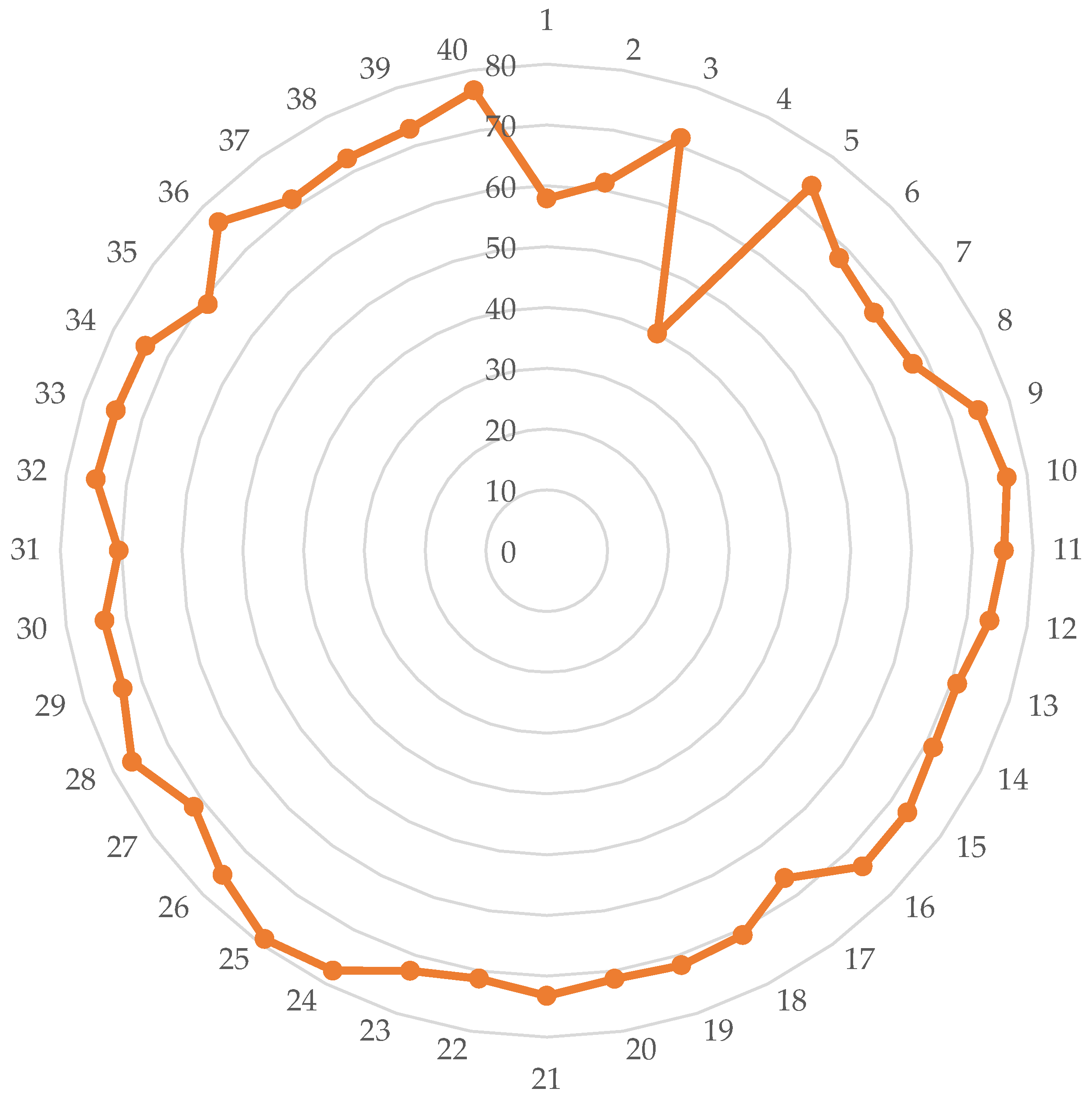
Another graphical representation, Figure 8, shows the maximum power point voltage and open circuit voltage of the forty PV modules. This graph shows that when the maximum power voltage is increased, the open circuit voltage also increases. When the maximum power voltage is decreased, the open circuit voltage also decreases. The module output power is directly proportional to two of these six parameters: Imp and Isc. As a result, Figure 9 plots these two parameters (Imp and Isc) for this dataset of 10 W modules. Figure 11 illustrates a spider diagram to show the fill factor comparison among the forty different datasets of 10 W PV modules. This data analysis can optimize the solar array power, find the degradation rate in specific periods, and identify the degradation factors.
Figure 8.
Maximum power point voltage and open circuit voltage of all the tested modules.
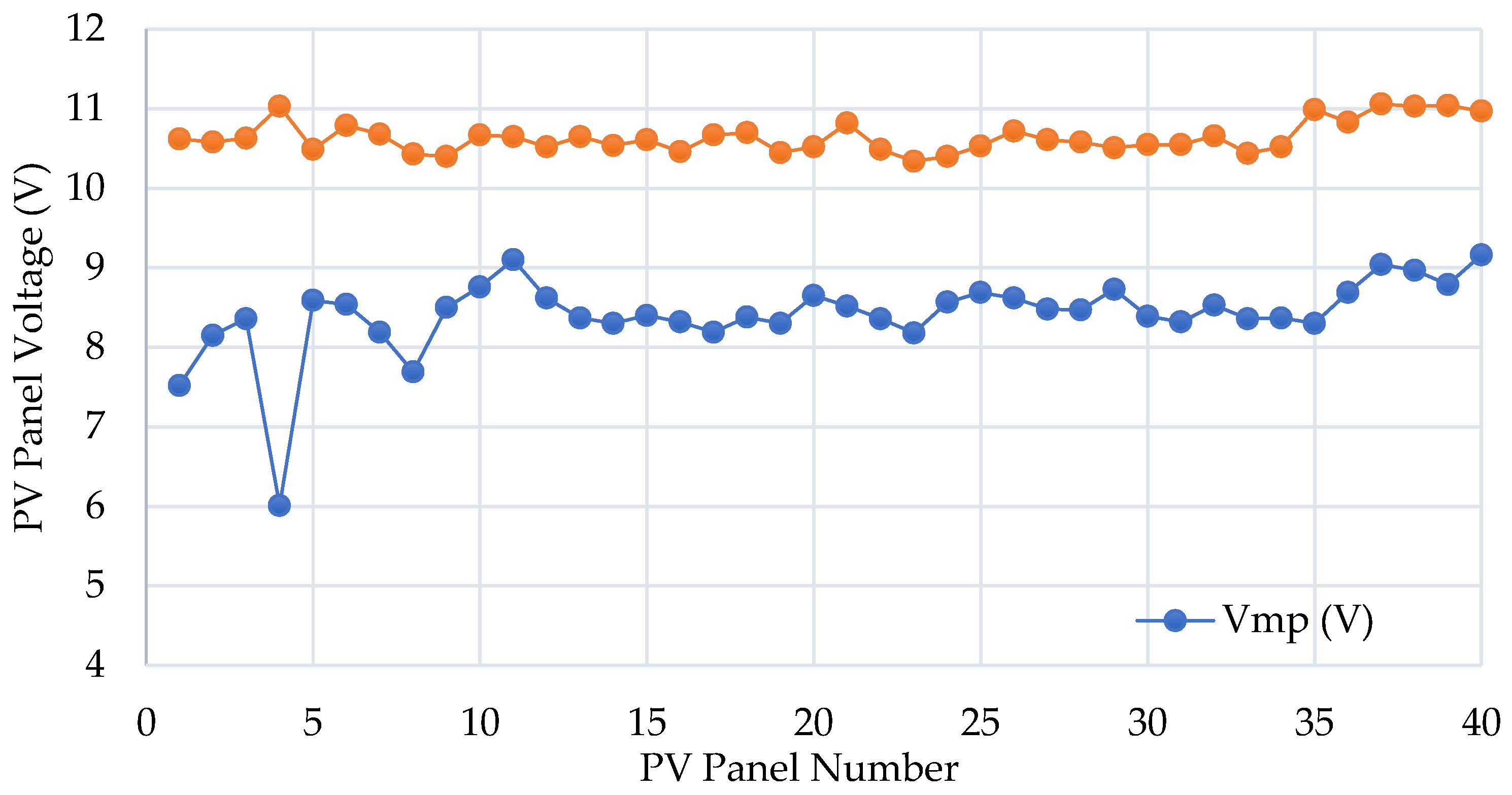
Figure 9.
Maximum power point current and short circuit current of all the tested modules.
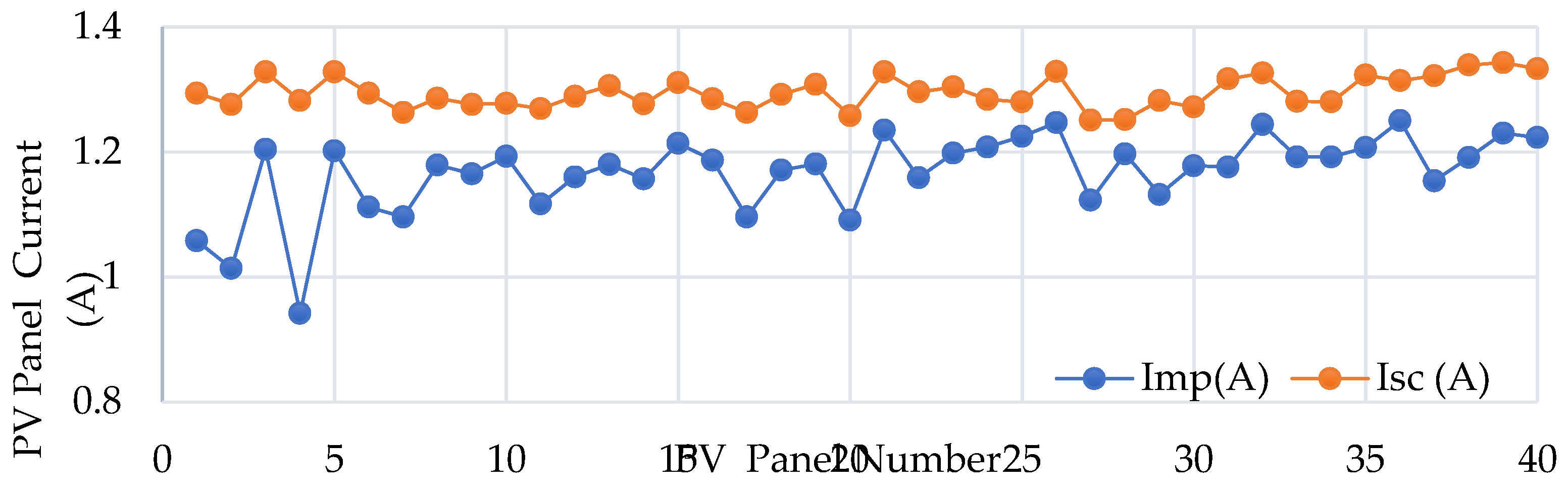
Figure 10.
Fill Factor of PV module [17].
Figure 10.
Fill Factor of PV module [17].
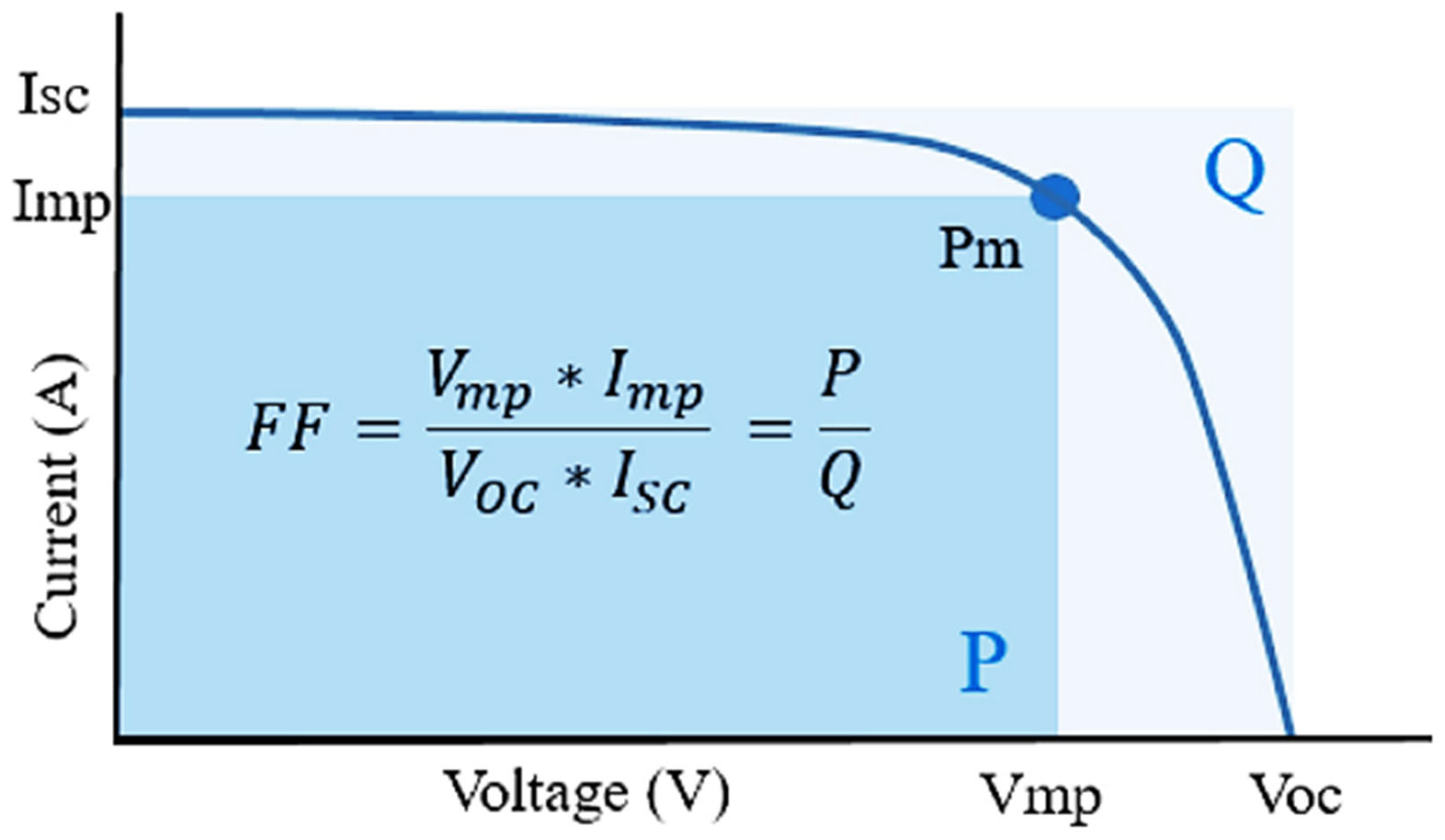
Figure 11.
Comparison of the fill factor of 10W photovoltaic modules.
The dataset contains a single Excel sheet with forty-one separate sheets. The module number renamed the sheet numbers from one to forty. Sheet 1 includes two types of data: STC and OPC. STC standard is used for the standard test condition, and the OPC standard is used for the operation condition. The data was tested at 1000W/m2 of light intensity and 25°C temperature in the standard test conditions. Operation Condition (OPC) maintained the environmental temperature when the PV panel was tested. Additionally, the Excel sheet contains four graphical representations: I-V (current Vs voltage) and P-V (power vs. voltage) for OPC and STC, as well as sheet numbers 02 to 40. Sheet 41 contains the necessary table and graphs, renamed as the graph and 137 table. The table included the PV output's electrical parameters, which are individual and average open circuit voltage, average short circuit current, average maximum power voltage, average maximum power current, average maximum power, and average fill factor (FF) for 40 PV Panels. The data Excel sheet also has a graphical representation of the module output power, a comparison between the open circuit voltage and maximum power voltage, and the individual module's short circuit current and maximum power current. In addition, a graphical representation of the fill factor for individual modules was drawn.
Figure 12.
Comparison of the output power of all tested PV modules under old conditions.
5. Conclusions
This study investigated the long-term performance characteristics of photovoltaic (PV) modules under outdoor environmental conditions. The experimental measurements were conducted using 40 PV modules with a rated capacity of 10 W, and their electrical performance was analyzed through current–voltage (I–V) characterization using a portable solar analyzer. The visual results showed that most of the panels exhibited cell discoloration and pre-hotspots, and the electrical results showed that the average maximum power output of the tested modules was 9.85 W, with an average fill factor of 0.713, indicating a slight reduction relative to the rated capacity. The standard deviation of 0.939 W demonstrates the variation in power output among the modules, which may be attributed to environmental exposure, aging effects, and surface contamination, such as dust accumulation. The experimental setup provided practical insights into PV module performance under typical tropical climatic conditions. The outdoor climate factors play a significant role in influencing PV efficiency and long-term reliability. Overall, the findings highlight the importance of regular monitoring and maintenance, particularly cleaning strategies to maintain optimal PV performance. The dataset and analysis presented in this study can contribute to a better understanding of PV module degradation behavior and support improved design, operation, and maintenance strategies for solar energy systems in similar climatic regions.
Author Contributions
Conceptualization, A.A.M.; methodology, M.S.A., S.A.H., M.I.I., K.I.U.A. and M.F.K.; software, M.S.A., and S.A.H.; formal analysis, M.S.A., and S.A.H.; investigation, A.A.M., M.I.I., K.I.U.A., and M.F.K.; resources, A.A.M., M.S.A., S.A.H., M.I.I., K.I.U.A. and M.F.K.; data curation, M.S.A., and S.A.H.; writing—original draft preparation, A.A.M., M.S.A., S.A.H., M.I.I., K.I.U.A and M.F.K.; writing—review and editing, A.A.M., K.I.U.A., and M.F.K.; supervision, A.A.M., K.I.U.A., and M.F.K.; project administration, K.I.U.A., and M.F.K.; funding acquisition, A.A.M., K.I.U.A., and M.F.K.; All authors have read and agreed to the published version of the manuscript.
Data Availability Statement
Available at https://doi.org/10.7910/DVN/Q56G63 accessed on 21 August 2024.
Conflicts of Interest
The authors declare that they have no known competing financial interests or personal relationships that could have appeared to influence the work reported in this paper.
References
- Maciel, J.N.; Ledesma, J.J.G.; Ando Junior, O.H. Dataset for Machine Learning: Explicit All-Sky Image Features to Enhance Solar Irradiance Prediction. Data 2024, 9, 113. [Google Scholar] [CrossRef]
- Shen, J.; Han, B.-G.; Kim, J.-M.; Choi, S.-M.; Kim, K.-H.; Lee, H.-D.; Tae, D.-H.; Rho, D.-S. Degradation Evaluation Method with a Test Device for Aging Diagnosis in PV Modules. Energies 2022, 15. [Google Scholar] [CrossRef]
- Singh, R.; Sharma, M.; Yadav, K. Degradation and Reliability Analysis of Photovoltaic Modules after Operating for 12 Years: A Case Study with Comparisons. Renewable Energy 2022, 196, 1170–1186. [Google Scholar] [CrossRef]
- Rahman, T.; Mansur, A.A.; Lipu, M.S.H.; Rahman, M.S.; Ashique, R.H.; Houran, M.A.; Elavarasan, R.M.; Hossain, E. Investigation of Degradation of Solar Photovoltaics: A Review of Aging Factors, Impacts, and Future Directions toward Sustainable Energy Management. Energies 2023, 16. [Google Scholar] [CrossRef]
- Quansah, D.A.; Adaramola, M.S. Ageing and Degradation in Solar Photovoltaic Modules Installed in Northern Ghana. Solar Energy 2018, 173, 834–847. [Google Scholar] [CrossRef]
- Bouaichi, A.; Logerais, P.-O.; El Amrani, A.; Ennaoui, A.; Messaoudi, C. Comprehensive Analysis of Aging Mechanisms and Design Solutions for Desert-Resilient Photovoltaic Modules. Solar Energy Materials and Solar Cells 2024, 267, 112707. [Google Scholar] [CrossRef]
- Kim, J.; Rabelo, M.; Padi, S.P.; Yousuf, H.; Cho, E.-C.; Yi, J. A Review of the Degradation of Photovoltaic Modules for Life Expectancy. Energies 2021, 14, 4278. [Google Scholar] [CrossRef]
- Özkalay, E.; Virtuani, A.; Eder, G.; Voronko, Y.; Bonomo, P.; Caccivio, M.; Ballif, C.; Friesen, G. Correlating Long-Term Performance and Aging Behaviour of Building Integrated PV Modules. Energy and Buildings 2024, 316, 114252. [Google Scholar] [CrossRef]
- Lillo-Sánchez, L.; López-Lara, G.; Vera-Medina, J.; Pérez-Aparicio, E.; Lillo-Bravo, I. Degradation Analysis of Photovoltaic Modules after Operating for 22 Years. A Case Study with Comparisons. Solar Energy 2021, 222, 84–94. [Google Scholar] [CrossRef]
- Rahman, T.; Mansur, A.A.; Islam, S.; Islam, Md.I.; Sahin, Md.; Awal, Md.R.; Shihavuddin, A.; Ul Haq, M.A. Effects of Aging Factors on PV Modules Output Power: An Experimental Investigation. In Proceedings of the 2022 4th International Conference on Sustainable Technologies for Industry 4.0 (STI), December 2022; pp. 1–5. [Google Scholar]
- Kaplanis, S.; Kaplani, E. Energy Performance and Degradation over 20 Years Performance of BP C-Si PV Modules. Simulation Modelling Practice and Theory 2011, 19, 1201–1211. [Google Scholar] [CrossRef]
- Kazem, H.A.; Chaichan, M.T.; Al-Waeli, A.H.A.; Sopian, K. Evaluation of Aging and Performance of Grid-Connected Photovoltaic System Northern Oman: Seven Years’ Experimental Study. Solar Energy 2020, 207, 1247–1258. [Google Scholar] [CrossRef]
- Bouraiou, A.; Hamouda, M.; Chaker, A.; Neçaibia, A.; Mostefaoui, M.; Boutasseta, N.; Ziane, A.; Dabou, R.; Sahouane, N.; Lachtar, S. Experimental Investigation of Observed Defects in Crystalline Silicon PV Modules under Outdoor Hot Dry Climatic Conditions in Algeria. Solar Energy 2018, 159, 475–487. [Google Scholar] [CrossRef]
- Eder, G.C.; Voronko, Y.; Hirschl, C.; Ebner, R.; Újvári, G.; Mühleisen, W. Non-Destructive Failure Detection and Visualization of Artificially and Naturally Aged PV Modules. Energies 2018, 11. [Google Scholar] [CrossRef]
- Alimi, O.A.; Meyer, E.L.; Olayiwola, O.I. Solar Photovoltaic Modules’ Performance Reliability and Degradation Analysis—A Review. Energies 2022, 15. [Google Scholar] [CrossRef]
- Bansal, N.; Pany, P.; Singh, G. Visual Degradation and Performance Evaluation of Utility Scale Solar Photovoltaic Power Plant in Hot and Dry Climate in Western India. Case Studies in Thermal Engineering 2021, 26, 101010. [Google Scholar] [CrossRef]
- Al Mansur, A.; Islam, M.I.; Alam, M.S.; Jadin, M.S.; Sultana, Z.; Ali, M.N.; Shihavuddin, A.S.M. Optimizing Photovoltaic Arrays: A Tested Dataset of Newly Manufactured PV Modules for Data-Driven Analysis and Algorithm Development. Data in Brief 2024, 54, 110482. [Google Scholar] [CrossRef] [PubMed]
Figure 1.
Degradation modes of silicon PV modules for the last 10 years[7].
Figure 1.
Degradation modes of silicon PV modules for the last 10 years[7].
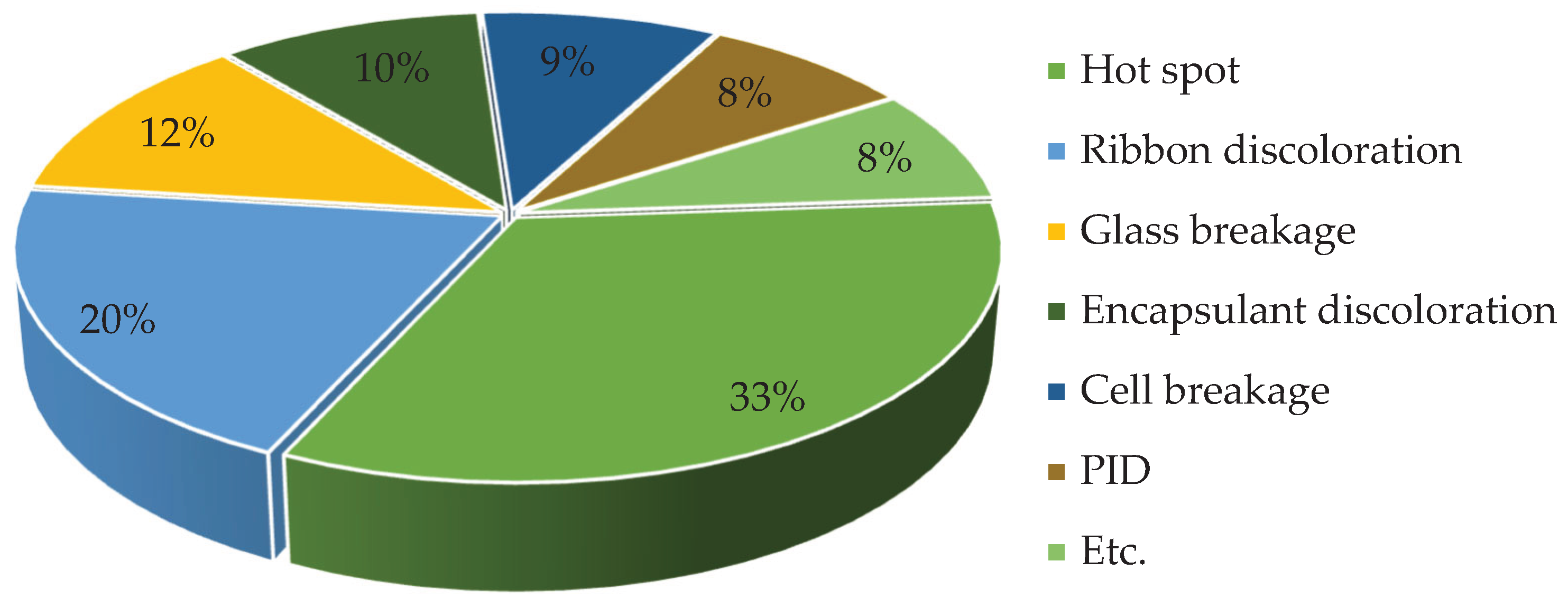
Figure 2.
Experimental investigation location of this study
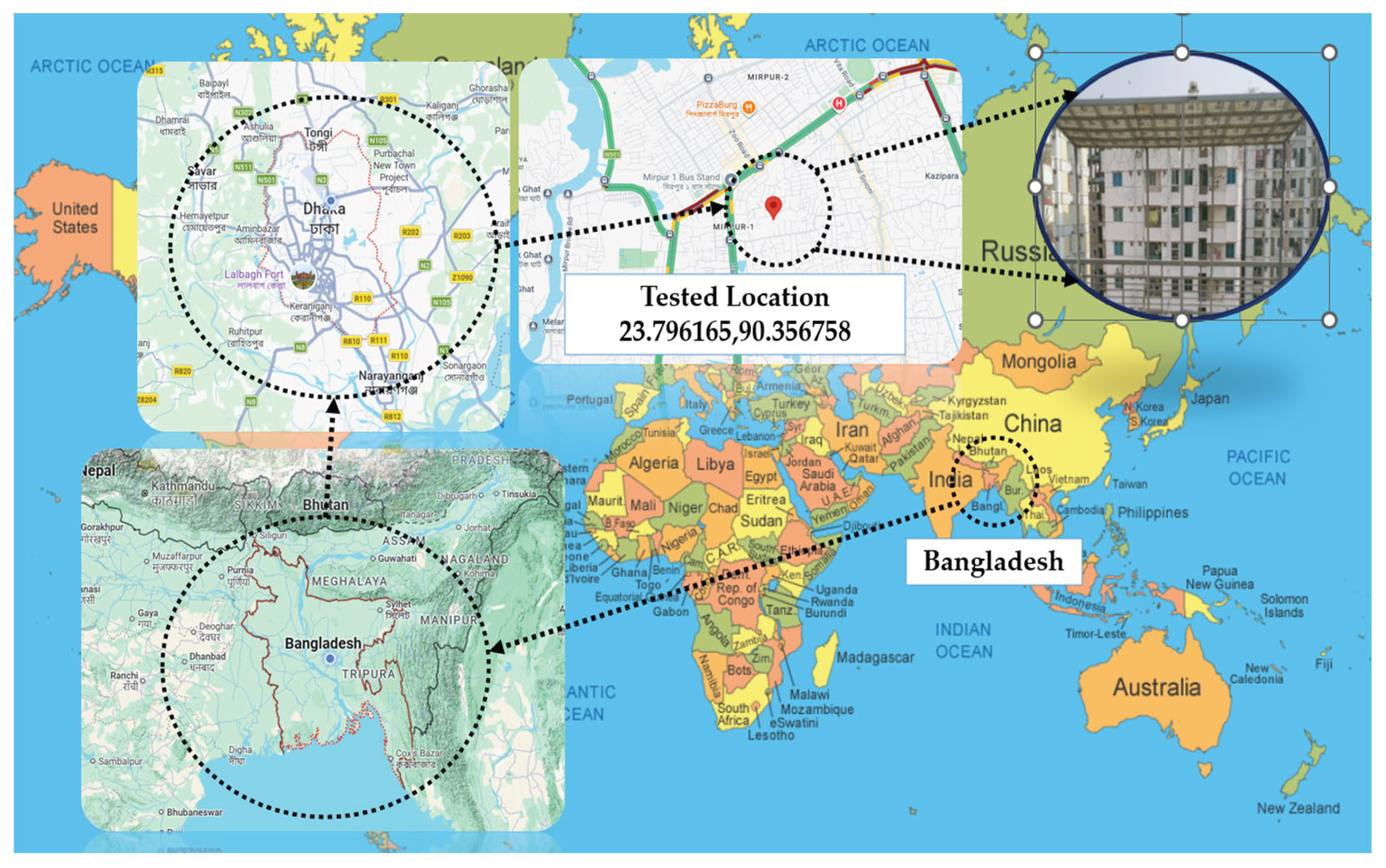
Figure 3.
Graphical representation of the methodological process.
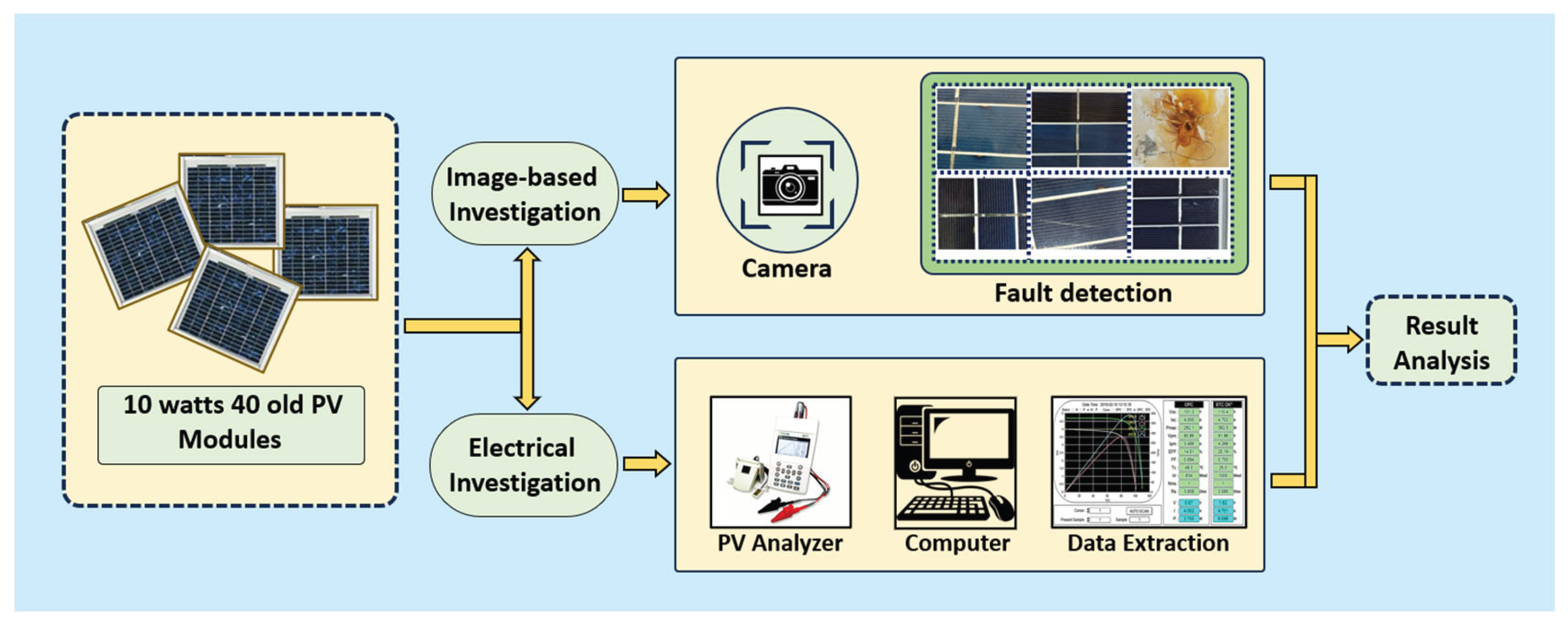
Figure 4.
Experimental setup of electrical data collection using an I-V tracer.
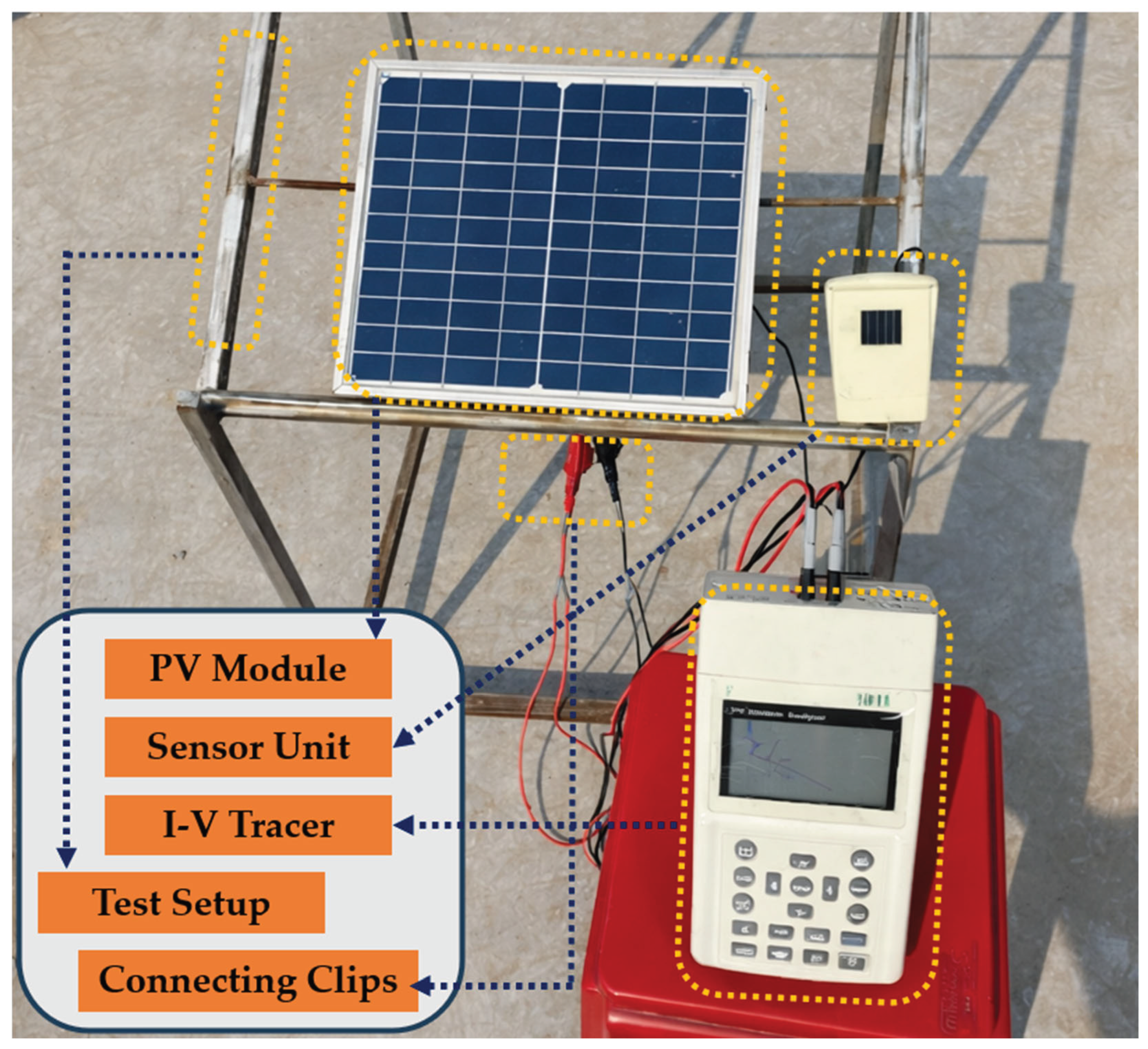
Figure 6.
Electrical characteristics of the mostly degraded panel (1612E020004).
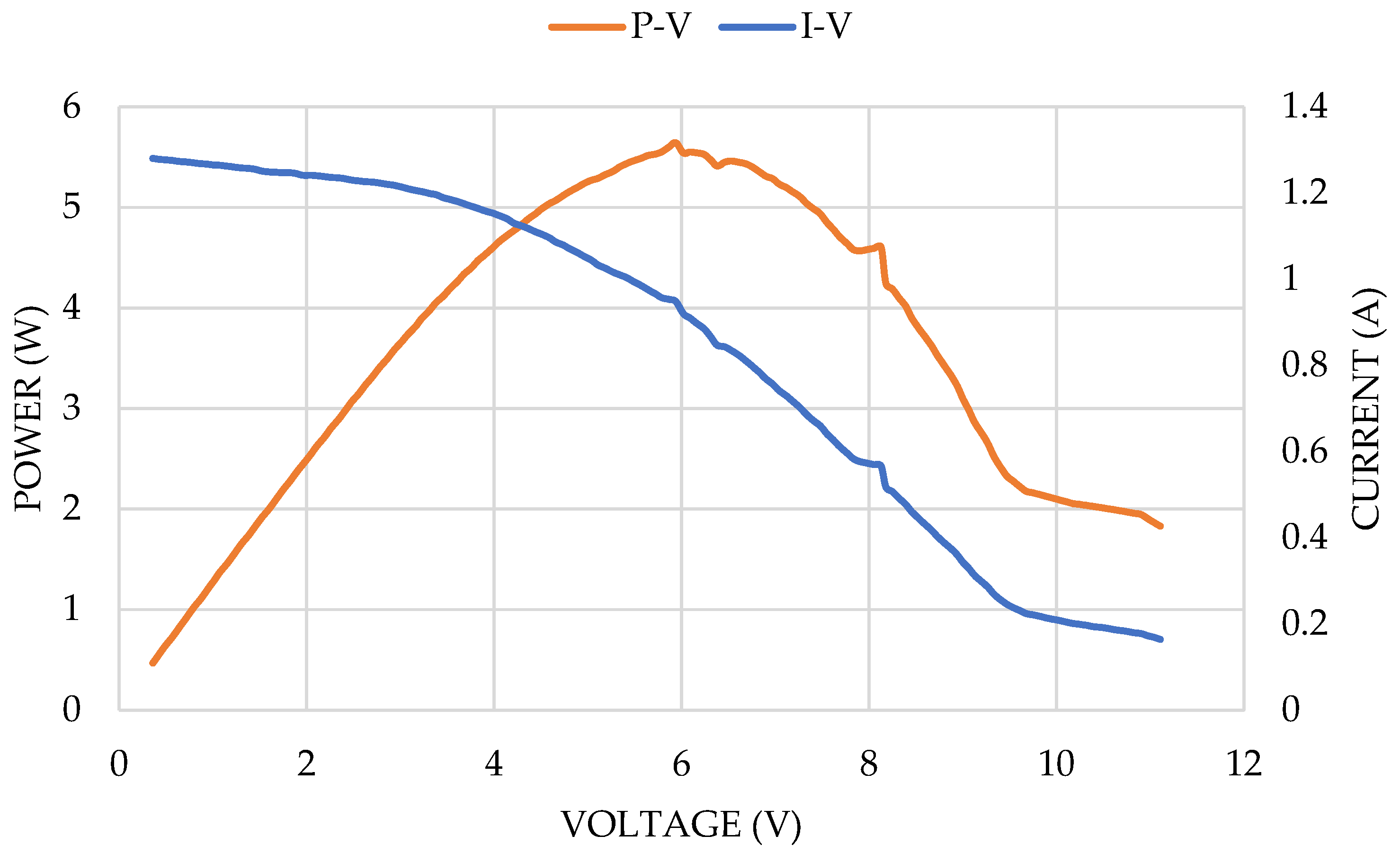
Figure 7.
Electrical characteristics of the less degraded panel (1612E020048).
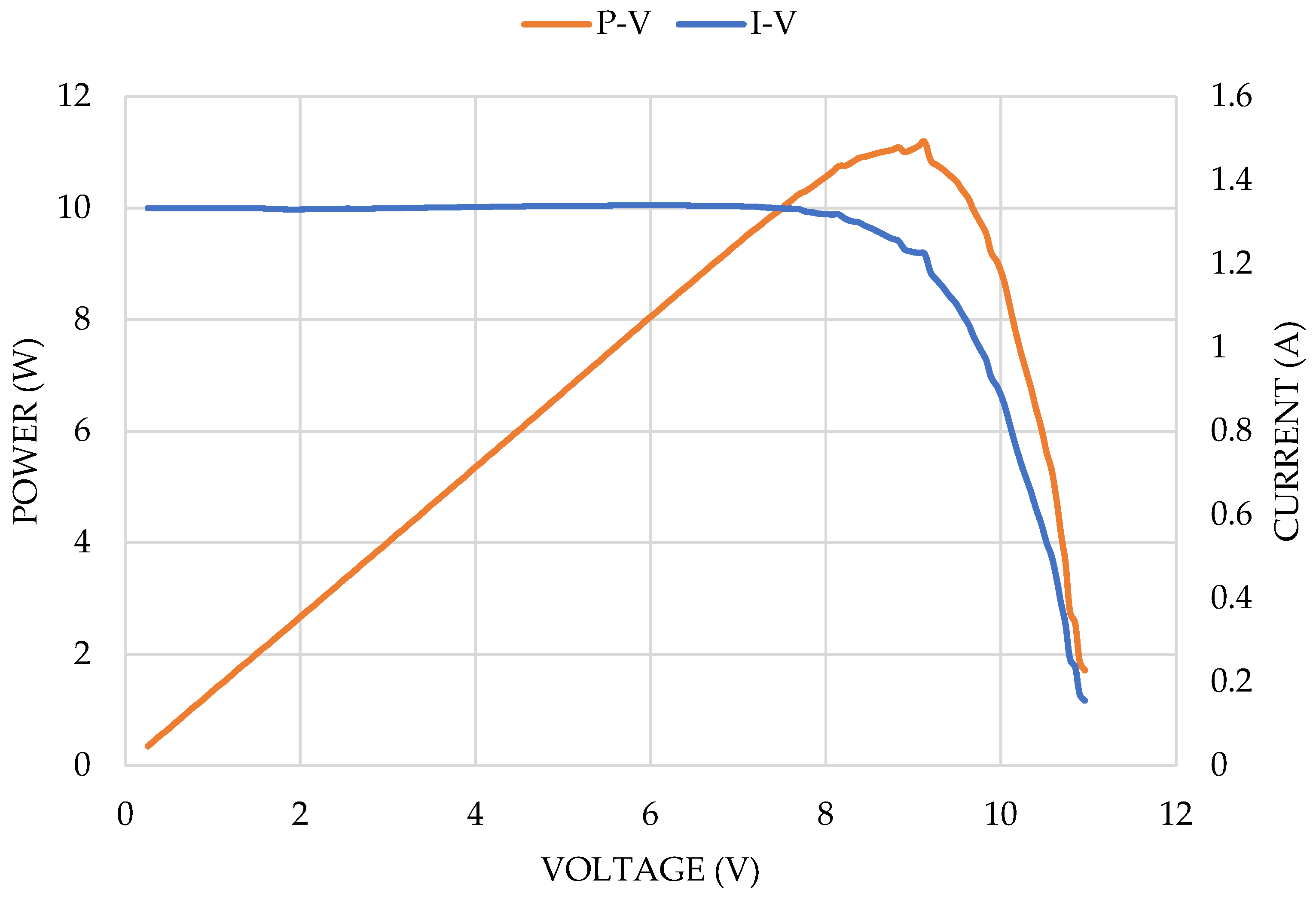

Table 1.
Specifications table of the experimental data.
| Subject | Renewable Energy, Sustainability and the Environment |
| Specific subject area | Solar Photovoltaic System. |
| Type of data | Table, Image, Graph, Figure |
| Data collection | The dataset of polycrystalline PV modules was collected under outdoor test conditions. The modules were installed on the rooftop of a five-level building, where 40 PV modules with 10 watts rated power. Every panel was tested by maintaining the outdoor test standards using an I-V Tracer, PROVA 1011. The electrical characteristics for every photovoltaic module that has been tested include maximum power, maximum voltage, maximum current, open circuit voltage, short circuit current, and fill factor. |
| Data source location | Location: Mirpur City: Dhaka Country: Bangladesh Latitude and longitude: (23.796165,90.356758). |
| Resource availability | Repository name: Harvard Dataverse Data identification number: https://doi.org/10.7910/DVN/Q56G63 Direct URL to data: https://dataverse.harvard.edu/dataset.xhtml?persistentId=doi:10.7910/DVN/Q56G63 |
| Data accessibility | With the article |
Table 2.
Specifications table of the tested PV modules and I-V Tracer.
| Items | Schematic | ||
|---|---|---|---|
| Photovoltaic Module Specification | 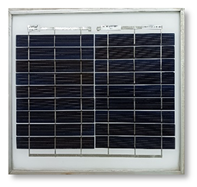 |
||
| Parameters | Short form | Output | |
| Open circuit voltage | Voc(V) | 10.44 | |
| Short circuit current | Isc(A) | 1.34 | |
| Maximum power output (±3%) | Pmax(W) | 10.00 | |
| Voltage at MPP | Vmpp(V) | 8.68 | |
| Current at MPP | Impp(A) | 1.17 | |
| Nominal operating voltage | Vdc(V) | 6.00 | |
| Maximum system voltage | DC(V) | 600 | |
| Commercial I-V Tracer | 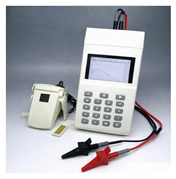 |
||
| Parameters of PV Analyzer, PROVA-1011 | Measurement Range | Measurement Accuracy | |
| Voltage measurement (Volt) | 1 - 1000 | ±1% | |
| Current measurement (Amp) | 0.1 - 12 | ±1% | |
| Irradiance (W/m2) | 0 - 2000 | ±3% | |
| Temperature (°C) | -22 to + 85 | ±1% | |
Table 3.
The image-based fault detection of the 10W 40 Photovoltaic modules over four years.
| Sl. | PV Panel No. | Detected visual faults |
|---|---|---|
| 1 | 1612E020001 | Back sheet damage, Corrosion, Discoloration, and Pre-Hotspots |
| 2 | 1612E020002 | Corrosion, Permanent dust, Back sheet damage, Discoloration, and Pre-Hotspots |
| 3 | 1612E020003 | Corrosion, Discoloration, and Pre-Hotspots |
| 4 | 1612E020004 | Corrosion, Surface scratch, Permanent dust, Discoloration, and Pre-Hotspots |
| 5 | 1612E020005 | Corrosion, Discoloration, and Pre-Hotspots |
| 6 | 1612E020006 | Discoloration and Pre-Hotspots |
| 7 | 1612E020007 | Corrosion, Permanent dust, Back sheet damage, Discoloration, and Pre-Hotspots |
| 8 | 1612E020008 | Discoloration and Pre-Hotspots |
| 9 | 1612E020009 | Back sheet damage, Discoloration, and Pre-Hotspots |
| 10 | 1612E020010 | Permanent dust, Back sheet damage, Discoloration, and Pre-Hotspots |
| 11 | 1612E020011 | Discoloration and Pre-Hotspots |
| 12 | 1612E020012 | Surface scratch, Permanent dust, Discoloration, and Pre-Hotspots |
| 13 | 1612E020013 | Permanent dust, Back sheet damage, Discoloration, and Pre-Hotspots |
| 14 | 1612E020014 | Corrosion, Permanent dust, Back sheet damage, Discoloration, and Pre-Hotspots |
| 15 | 1612E020015 | Discoloration and Pre-Hotspots |
| 16 | 1612E020017 | Corrosion, Permanent dust, Back sheet damage, Discoloration, and Pre-Hotspots |
| 17 | 1612E020020 | Permanent dust, Discoloration, and Pre-Hotspots |
| 18 | 1612E020021 | Permanent dust, Discoloration, and Pre-Hotspots |
| 19 | 1612E020023 | Permanent dust, Discoloration, and Pre-Hotspots |
| 20 | 1612E020025 | Permanent dust, Back sheet damage, Discoloration, and Pre-Hotspots |
| 21 | 1612E020026 | Back sheet damage, Discoloration, and Pre-Hotspots |
| 22 | 1612E020027 | Permanent dust, Discoloration, and Pre-Hotspots |
| 23 | 1612E020028 | Corrosion, Back sheet damage, Discoloration, and Pre-Hotspots |
| 24 | 1612E020029 | Surface scratch, Corrosion, Discoloration, and Pre-Hotspots |
| 25 | 1612E020030 | Back sheet damage, Discoloration, and Pre-Hotspots |
| 26 | 1612E020031 | Discoloration and Pre-Hotspots |
| 27 | 1612E020032 | Discoloration and Pre-Hotspots |
| 28 | 1612E020033 | Discoloration and Pre-Hotspots |
| 29 | 1612E020034 | Back sheet damage, Discoloration, and Pre-Hotspots |
| 30 | 1612E020035 | Permanent dust, Discoloration, and Pre-Hotspots |
| 31 | 1612E020036 | Discoloration and Pre-Hotspots |
| 32 | 1612E020037 | Back sheet damage, Discoloration, and Pre-Hotspots |
| 33 | 1612E020038 | Permanent dust, Discoloration, and Pre-Hotspots |
| 34 | 1612E020039 | Permanent dust, Corrosion, Discoloration, and Pre-Hotspots |
| 35 | 1612E020040 | Surface scratch, Permanent dust, Discoloration, and Pre-Hotspots |
| 36 | 1612E020041 | Permanent dust, Discoloration, and Pre-Hotspots |
| 37 | 1612E020042 | Surface scratch, Permanent dust, Discoloration, and Pre-Hotspots |
| 38 | 1612E020044 | Discoloration and Pre-Hotspots |
| 39 | 1612E020046 | Discoloration, and Pre-Hotspots |
| 40 | 1612E020048 | Discoloration, and Pre-Hotspots |
Table 4.
The average value and standard deviation of output parameters of 10W PV modules.
| Module Rating | Open Circuit Voltage Voc(V) | Short Circuit Current Isc(A) |
Maximum Power Voltage Vmp(V) |
Maximum Power Current Imp(A) |
Maximum Power Pm(W) |
Fill Factor | |
|---|---|---|---|---|---|---|---|
| 10 W | Avg. | 10.643 | 1.295 | 8.412 | 1.167 | 9.850 | 0.713 |
| SD | 0.195 | 0.025 | 0.503 | 0.064 | 0.939 | 0.065 |
Disclaimer/Publisher’s Note: The statements, opinions and data contained in all publications are solely those of the individual author(s) and contributor(s) and not of MDPI and/or the editor(s). MDPI and/or the editor(s) disclaim responsibility for any injury to people or property resulting from any ideas, methods, instructions or products referred to in the content. |
© 2026 by the authors. Licensee MDPI, Basel, Switzerland. This article is an open access article distributed under the terms and conditions of the Creative Commons Attribution (CC BY) license.
Copyright: This open access article is published under a Creative Commons CC BY 4.0 license, which permit the free download, distribution, and reuse, provided that the author and preprint are cited in any reuse.


