

Submitted:
23 March 2026
Posted:
24 March 2026
You are already at the latest version
Abstract
This article addresses a pressing issue—the study of ecological and geodynamic conditions in the southern part of the Karakalpakstan Ustyurt plateau. This region, characterized by its harsh and challenging environment, remains insufficiently and unevenly studied. The article synthesizes and systematizes the findings from both archival and personal research on the current state of ecological and geodynamic conditions. A schematic map of ecological-geodynamic conditions has been developed to assess the manifestation of various processes and their impact on the region's flora and fauna, as well as on engineering and geological conditions relevant to mineral development and human economic activities. The primary criteria for evaluation include the state of the landscape, soil-grounds, and soil-forming rocks. The ecosystem serves as a nutrient base for plants and a fodder base for livestock development. The preservation and fertility of these elements are central to assessing the environmental conditions of the southern part of the Karakalpakstan Ustyurt. This study aims to provide a comprehensive understanding of the region's ecological dynamics, contributing to sustainable development and conservation efforts.
Keywords:
ecologic-geodynamical conditions
; ravines
; erosion
; washouts
; mudflows
; tectonic faults
; plateaus
; berms
; deflection
; artificial reservoirs
; technogenic processes
1. Introduction
Evaluation of engineering-geological conditions and geodynamic activity in the upper section of the southern part of the Karakalpak Ustyurt is helpful in development of this region. Using a framework of geoecology and engineering geology, together with a new scientific direction that lies at the intersection of these fields provides a basis for modern engineering geodynamics. Methodological foundations and technologies for assessing the geoecological state is crucial for rational natural resource management, geological and environmental safety, and the sustainable development of the region, which is rich in mineral reserves, including oil and gas.
Currently, this region has gained significant importance due to the adverse effects of the Aral Sea crisis and global changes in the geoecological situation [22]. The desiccation of the Aral Sea and the resulting degradation of the natural environment in the Aral region are recognized as an ecological disaster. Climate change, landscape transformation, dust and salt storms, and the desertification of vast areas—not only in the Aral region but also in regions far removed from the sea—are just some of the consequences of this disaster [5]. These changes are largely driven by the increasing impact of technogenesis and natural-geological factors. Although the outcomes of natural-geological and anthropogenic phenomena can be devastating, they are to some extent predictable and controllable [2,7].
At this stage, we will examine the influence of geodynamics on the environment. Geodynamics and technogenesis are two powerful modern factors at the regional level that significantly alter the ecological environment of human habitation. In this context, it is highly relevant to study and assess the ecological and geodynamic state of the natural environment. This is particularly important in areas with minimal or no population density, where large-scale geological exploration for oil and gas is planned, alongside the implementation of advanced, technology-intensive projects within investment blocks [2,7].
To date insufficient attention has been given to the assessment of geodynamic activity in studies of geoecological and engineering-geological conditions, both in natural and urbanized areas. This article aims to investigate the engineering-geological and geoecological conditions, as well as natural-technical systems, of the oil and gas-bearing territory in the southern part of the Karakalpak Ustyurt. The goal is to ensure geological and environmental safety during integrated development and rational natural resource management. The research objective is to evaluate the impact of geodynamically active zones on geological, engineering-geological, and geoecological processes under various geological and geomorphological conditions.
2. Research Methodology
Traditional methods, including structural-geological, hydrogeological, geochemical, and geoecological surveys are used to provide a basis for this study. The overarching methodology involves system analysis and mapping of the natural-geological environment and geodynamically active zones. This framework incorporates methodologies developed by leading research institutes, such as Scientific and production company “VSEGINGEO” and “Production and Research Institute for Engineering Surveys in Construction” (JSC “PNIIIS” Moscow, Russian Federation), the Institute of Seismology of the Academy of Sciences of the Republic of Uzbekistan, the Institute “GIDROINGEO,” and the Institute “IGIRNIGM” (Tashkent, Uzbekistan). Additionally, the study adheres to regulatory documents Standards and Rules of Urban planning SRUP (1.01-01-09; 1.02.09-15; 1.02.14-09-15; 1.02.11-15; 2.01.14-98; 1.02.11-15).
The methodology includes the following steps:
- Preparation of field and remote sensing data.
- Visual identification of geoindicators.
- Interpretation of satellite imagery.
- Development of assessment criteria.
- Creation of databases and digital relief models.
- Geodynamic analysis and comparison of data with geological-tectonic, geophysical, and other fields.
- Assessment of the reliability of results.
3. Research Results
The analysis of climatic conditions reveals a significant deficit in precipitation, with the region characterized by a sharply continental and arid climate. The temperature regime is influenced by atmospheric circulation processes and radiation factors. The continentality is evident in the large annual and daily temperature fluctuations. The maximum temperature in June–July ranges between 42–45 °C, while the soil surface can heat up to 70–75 °C. Precipitation constitutes the primary source of surface and groundwater recharge.
In the Karakalpak Ustyurt, precipitation distribution is uneven, with annual precipitation ranging from 200–220 mm in the central and northern parts to 120–140 mm in the southern part. Two precipitation maxima are observed in spring and autumn. Occasionally, depending on atmospheric circulation, monthly precipitation may exceed the average by several times, often falling as heavy showers, accounting for 30–100% of the monthly norm. On average, snowfall constitutes 7–9% to 18–20% of the annual precipitation, with snow cover not exceeding 10–20 cm in winter. The limited snow cover is attributed to strong winds that blow snow into gullies, lowlands, ravines, and other depressions.
A distinctive feature of atmospheric precipitation in the Karakalpak Ustyurt is its composition and mineralization. Precipitation primarily has a chloride-sodium composition, with sulfate salts of relatively low mineralization (up to 0.32 g/l). The salts in atmospheric precipitation originate from wind-blown particles from the dried-up Aral Sea [3,4,8,18].
One of the unique relief features of the Karakalpak Ustyurt is the presence of takyrs. These formations are similar to salt flats and have been mapped in connection with their potential for replenishing groundwater reserves and creating conditions for the artificial formation of fresh groundwater through takyr and subtakyr waters [3,4,5,6,8,12,13,16,17,18,19,20]. Takyrs form under arid conditions, characterized by a slight slope of the relief surface, specific geological processes, deep groundwater levels, and the absence of vegetation. They are typically found in depressions, closed basins, and “blind” valley-like depressions, serving as local runoff bases. Their shapes and sizes vary, ranging from rounded to irregular depressions or basins, often interconnected by furrows and drainage troughs. Takyr sizes range from a few hundred square meters to 6–8 km². According to stock and personal research, the total surface area of takyr runoff is estimated at 19.6 million m³ in an average water year and 10.3 million m³ in a low-water year. Currently, this significant volume of surface water runoff is largely lost to evaporation.
The Central Ustyurt uplift zone divides the northern and southern Ustyurt. A distinctive feature of this area is the elevated position of the Paleozoic structural surface. The southwestern wing descends steeply toward the Assakeaudan trough, while the northwestern side is marked by a fault with an amplitude of 0.5 km, breaking off toward the Allan depression. Key morphotectonic features in the study area include the Shakhpakhtinsky step, the Assakeaudan trough, and the Agynish-Tuarkyr-Kaplankyr uplift (Figure 1).
The Upper Paleozoic sedimentary strata of the Karakalpak Ustyurt, particularly in the southern part of the study area, are complicated by a series of faults that cut through the basement and can be traced into the Lower, Middle, and sometimes Upper Jurassic deposits. These faults may have played a decisive role in the formation of hydrocarbon (HC) deposits within the Jurassic strata. In such cases, the faults serve as migration pathways for hydrocarbons from underlying deposits to overlying ones [Ref]. In the southern part of the Karakalpak Ustyurt, ecological and geodynamic mapping was conducted for the upper layers (with a thickness of the first tens of meters), which were the primary focus of the research. The study aimed to assess the degree of damage to geological and geomorphological elements by various processes and their ecological consequences.
The Karakalpak Ustyurt presents morphological challenges related to the study of the nature of the relief, surface runoff, and the composition, state, and properties of the soil massif, including its ecological and geodynamic indicators. The nature of the relief, combined with soil conditions, facilitates the transformation of climatic and hydrological elements into hydrogeological ones. In field conditions, nearly horizontally lying surface deposits and associated dissections are primarily distinguished, along with features such as gullies, ravines, fracture zones, landslides, collapses, and other processes. Nevertheless, in the southern part of the Karakalpak Ustyurt, belts, types, and forms of relief—both positive and negative—are clearly distinguished, corresponding to gentle anticlinal zones and depressions.
The Barsakelmes drainage basin, covering an area of 5,000 km², has a bottom filled with various types of salts. The eastern perimeter of the basin is marked by a prominent ledge—an internal cliff with a height of 25–40 m. Depending on the geological and structural conditions, weathering, erosion, and collapses are widely developed on these ledges due to desert denudation agents and groundwater activity.
The western perimeter of the Barsakelmes depression features isolated sand massifs. The relief here shows a gradual, and occasionally sharp, increase in absolute elevation from 63 to 122 m. Another prominent feature is the Karabaur Ridge (maximum elevation 284 m), which borders the Aibugir Mountains to the east (maximum elevation 211 m). This area belongs to the Central Ustyurt uplift zone. Further south, the relief of the Karabaur Ridge shows a sharp decrease (30–50 m) toward the Assakeaudan Depression (minimum elevation 32–40 m), which transitions into takyrs, shors, and salt marshes of Sorzha. These features are bounded by the Sarykamysh Basin, which is covered with chemogenic and lacustrine deposits.
The Assakeaudan Depression gradually transitions into a new relief rise, shaped by the structures of the Goklenkuyusinsky Ledge, the Kaplankyr Chink, the dry lake depression, and the Kulantakyr Mountains (maximum elevation 230 m). Each transition in the relief—whether a ledge, gradual rise, or fall—creates the illusion of a mountainous landscape, particularly due to the presence of canyons, rockfalls, and landslide blocks. These features are observed on the Shakhpakhtinsky Ledge, in the Karakolka Tract, the northern sides of the Assakeaudan Depression, the eastern part of the Sarykamysh Basin, and the relatively shallow Sorzha, Akshaymas, and other basins. These processes are widespread and occupy strips 100–500 m wide along the sides of depressions. The entire area is densely dissected by temporary surface watercourses, forming a deeply incised and widely branched gully-ravine network. Additionally, deflationary relief forms, ranging from several tens of meters to 2,000 m in width, are common in some areas. These are represented by weakly fixed sands forming ridge and ridge-cellular forms with elevations of 2.5–5.0 m. Smaller sand massifs are found along the outskirts of all depressions and basins.
The microrelief of the northern slope of the Karabaur Ridge is entirely attributed to karst formation processes. The prevalence of karst processes is due to the widespread development of carbonate Miocene rocks in this area. During geological surveys, we noted cavernousness and fracturing in the Miocene rocks. The cavernousness of these rocks may be both primary and secondary, with leaching processes playing a significant role in their formation. This observation aligns with the studies of G.V. Kulikov, who documented cavernousness and fracturing in the Upper Sarmatian carbonate deposits [8,19,20,21].
The presence of gullies, fractures, and sharp benches on the surface indicates a connection between some karst forms and weakened zones of tectonic disturbances. Analysis of previous studies has revealed that the quantitative aspects of these manifestations and their mapping have not been thoroughly investigated. In this context, the Baimen Karst Valley, located in the northwest of the study area on the upper reaches of the northern slope of the Karabaur Ridge (absolute elevation 205–215 m), is particularly noteworthy. This valley stretches over 70–90 km and coincides with the first bench of the bend and deep zones of the Sonbat, Karabaur, and Barsakelmas faults (Figure 6). The northern boundary of the karst valley is marked by the western outskirts of the Barsakelmas salt marsh. The maximum karst failures in this area occur at depths of 25–30 to 40–45 m [3,4].
Qualitative and quantitative indicators, along with detailed descriptions of their distribution areas, define the ecological and geodynamic conditions of the Karakalpak Ustyurt. Engineering-geological processes refers to processes influenced by geological and other natural factors that affect the state of the geological environment due to human economic activity such as the artificial recharge structures developed in this region (Figure 2 and Figure 2g).
4. Artificial Water Catchment Areas
Artificial water catchment areas are engineering structures designed for water supply to livestock and pastures in the southern part of the Karakalpak Ustyurt. Satellite images from July 12, 2024, reveal several abandoned artificial water intakes in the study area (Figure 2):
a) The upper reaches of the Karabaur Ridge;
b) The area east of the Sorzha Basin;
c) The Gumsa Mountains area;
d) The Yassi Manzir area;
e,f) The area of the geological settlement of Shakhpakhty.
Figure 2g shows an artificial water catchment area for watering wild animals, located east of the Sorzha Basin in the southern part of the Karakalpak Ustyurt. The structure measures 40 x 40 m and has a depth of up to 1.0 m.
5. Discussion of Results
Since 2000, the geological nature of Ustyurt has been interpreted from a fundamentally new tectonic perspective [14]. Proponents of the geodynamic approach to understanding the geological nature of Ustyurt include the studies of A.A. Abidov, Kh.V.G. Kulikov, and many others. The largest Barsakelmas Trough includes the Kulbay and Atorbay Troughs (Figure 1). Its significant depth is attributed to substantial subsidence during the Mesozoic era. To the east of the Sudochi Trough, numerous high-order morphostructures of varying orientations and characteristics are present. A dense network of fault zones creates a complex block pattern across the study area. The Barsakelmas Trough is bounded to the north by the Aktumsuk Uplift, to the south by the Central Ustyurt Uplift Zone, to the west by the Baychagir Ledge, and to the east by the Kuanysh-Koskalynsky Swell. To the northwest, the trough borders the large Kulbay Trough [14].
The Kuanysh-Koskalynsky Swell, located between the Surochy and Barsakelmes Troughs, is dissected by faults into grabens and horsts. The geological structure reveals unconformable bedding of Jurassic and Cretaceous deposits relative to the pre-Jurassic surface and basement. The Assakeaudan Trough, part of the South Ustyurt Syneclise, occupies its eastern portion and borders the Central Ustyurt Uplift System to the north and the Kaplankyr-Tuakyr Uplift System to the south [14]. The northern side of the Assakeaudan Trough includes the Khoskuduk Uplift, the Tasayuk Group of Uplifts, the Shakhpakhtinskaya Step, and the Central Assakeaudan Depression, while the southern side features the Aginysh Uplift. The northern side is steeper and more faulted than the southern side (Figure 1).
The basement within the Southern Ustyurt is relatively consistent in its structure. The most submerged areas are found within the Shakhpakhtinsky Step and the Assakeaudan Trough, while the most elevated areas, reaching up to 5–5.5 km, are located in the extreme south of the territory. The tectonic development of the region has shaped the basement structure of Southern Ustyurt [14]. According to B.B. Tal-Virsky, the region represents a single massif that underwent significant activation during the Hercynian orogeny, forming the upper floor of this massif.
The plate tectonic model of Northern Ustyurt is discussed in the works of V.P. Gavrilov, K.A. Kleshchev, and V.S. Shein, who argue for the antiquity of the Ustyurt basement and the formation of the Turan Plate through the movement of continental crust fragments from the southern latitudes of the Tethys Ocean to the Eurasian (Eastern European) paleocontinent [14].
In many areas of the southern Karakalpak Ustyurt, numerous zones of fracturing with varying degrees of activity have been identified. Within zones of high activity and dense liniments, widespread geological and engineering-geological processes are observed. Under technogenic conditions, their intensity increases, leading to the formation of gullies, which mark the initial stage of gully development [3,4,7,8,9].
The research area, characterized by low precipitation, exhibits hidden geological, hydrogeological, and engineering-geological processes. These are primarily associated with leakage from artificial reservoirs and the suffusion process. Periodic repetition of these processes activates reservoir salinization and gully formation (Figure 2). Takyrs, moderately stable soils found in the central part of the Karakalpak Ustyurt, are often damaged by vehicles used for geological exploration [15,16,18,19]. This has diminished the economic value of takyrs and takyr-like soils, which are widespread in the region. Vehicle tracks often lead to the formation of gullies, reducing the useful area for floodwater accumulation and plant growth. Consequently, studying the development, distribution, and regime of sub-takyr waters, as well as forecasting their use for water supply, is an urgent issue.
According to literary sources, the Sahara Desert in northern Africa receives negligible precipitation, which is irregular and not tied to specific seasons. Yet, the well-being of the population largely depends on rainfall [12,13].
Another critical factor in the development of processes on takyr surfaces is their composition. Takyr surfaces consist of weathered parent rocks, primarily sandy loam-clay materials. The fraction smaller than 0.01 mm constitutes 70–90% of the material. The upper horizon of the takyr, forming a crust, contains varying amounts of clay particles depending on sedimentation time and composition.
The chemical process of salinization is a key stage in soil development, leading to the formation of solonetz soils. Spring precipitation, absorbed into the takyr, becomes enriched with sodium and calcium salts. As moisture evaporates, these salts accumulate on the surface, causing salinization. The periodic repetition of this process results in the dense structuring of the takyr section [18,19,20]. The biological process involves the growth of algae and small shrubs on the moistened takyr surface, enhancing water permeability [2,3].
What stands out about the Karakalpak Ustyurt is its vast area and natural landscape, which transitions from a wormwood-saltwort desert to a clay-gravel desert, rising 150–200 meters above the surrounding plain (Figure 3). In some areas, cliffs appear as isolated peaks or bizarre rock formations. Deflationary processes are widespread, shaping the unique relief of this region.
Thus, the study area, located within the second stage of the desert relief, is characterized by primary processes influenced by its geological and tectonic features. The rocks composing the surface of the Karabaur Ridge, Kaplankyr, Kulan Takyr, Aibugir Mountains, and other areas exhibit an almost horizontal orientation. These regions are marked by relatively weak dissection, with widespread gullies and dry valleys on gently sloping and flat surfaces. However, within the Karakalpak Ustyurt, the northern and southern slopes display distinct relief features, including sharp ledges, ravines at various stages of development, and both positive and negative relief forms corresponding to gentle anticlinal zones and depressions.
The northern slope of the ridge is extensively incised by small, temporary sais (dry riverbeds). Gully formation of the second and third stages is observed in the drylands extending from the central part of the Aktumsuk Ridge to the west and northwest, as well as on the northern slope of the Karabaur Ridge. The slopes are relatively gentle and intersected by temporary streams, which form ravines in certain areas. On the sides of these ravines, beneath a thin layer (0.5–1.5 m) of Quaternary sandy loam deposits containing small to medium-sized, poorly rounded limestone and marly gravel, lie Sarmatian-stage deposits. These deposits consist of fractured, slightly karstified limestones and loose marls. The full thickness of these deposits is not exposed. Physical weathering is observed to a depth of 1.5 m (Figure 4).
From an ecological perspective, these processes are assessed as having a negative impact on quality, as they complicate engineering and geological conditions. On the other hand, they create unique landscapes that serve as special territories for natural geological reserves.
Across the surface of the Karakalpak Ustyurt plateau, steep slopes are marked by ledges of varying heights, ranging from 160 to 210 m in cliffs and 50 to 70 m in closed basins. These ledges are almost entirely incised by deep ravines. In some areas, particularly in the eastern cliff and Shakhpakhty regions, the ravines transition into canyons (Figure 5).
In all cases, clearly expressed erosional forms of relief are observed. These processes are also evident on gently sloping surfaces associated with temporary flows that form after rains and during snowmelt (Figure 4). The depth of these erosional cuts ranges from 1.0 to 2.5 m in some areas. The Ustyurt plateau lacks a hydrographic network of permanent watercourses. In these conditions, intense rains are localized and exhibit spatial variability. However, they are not systematically recorded in the Karakalpak Ustyurt due to the absence of meteorological stations. The environmental consequences of such events are often catastrophic for plants and wildlife. Prolonged rainfall in the study area can trigger mudflows, gully formation, erosion, landslides, and collapses.
Ecological-geodynamic maps are categorized by their content into ecological-geodynamic conditions, ecological-geodynamic zoning, and ecological-geodynamic forecasts. Alongside ecological-geochemical, ecological-resource, and ecological-geophysical maps, they represent a type of ecological-geological map that characterizes the “lithosphere–biota–human” system.
These maps reflect information related to the geological-structural, tectonic, and geomorphological features of the territory. They also indicate the distribution and intensity of natural geological and engineering-geological processes influenced by human activity. A schematic map of the ecological-geodynamic conditions of the southern part of the Karakalpak Ustyurt is typically based on a geological map. Data is mapped onto a topographic base using observation points for specific processes and their corresponding parameters. These parameters are described in methodological manuals for engineering-geological mapping and engineering geodynamics [5,6].
The compiled schematic map of ecological-geodynamic conditions incorporates foundational materials on tectonic-structural features. Importantly, the assessment of ecological consequences and their variability, arising from external factors and leading to the transformation of new features, was conducted for each type of process, with consideration of its contribution to ecological-geodynamic conditions.
The primary principles of ecological-geodynamic mapping for the southern part of the Karakalpak Ustyurt involve identifying homogeneous areas on a topographic map based on the intensity of geological and engineering-geological (anthropogenic or technogenic) processes and their ecological impacts on humans and ecosystems. These units were identified by the uniform state of specific geomorphological elements.
Geological processes are classified into two groups based on their environmental danger:
- Hazardous processes, including catastrophic ones, which pose a threat to human life and biota. Examples include sheet and gully erosion, landslides, avalanches, rockfalls, karst formations, suffusion, and subsidence.
A clear connection has been established between the Paleozoic basement and the structure of the Mesozoic-Cenozoic sedimentary cover. Faults played a significant role in this relationship. The final formation of the study area occurred during active pre-Jurassic dislocations, driven by stress that led to the development of regional compression structures.
As a result, ancient faults of normal and thrust types were reactivated, and new faults emerged. These were particularly intense in the southern part of the Karakalpak Ustyurt, including the Khoskuduk-Tasayuk area, the Shakhpakhtinsky Step, the Sorzha-Aibugir rampart-like uplift, and the Urinsky Saddle. Local geodynamically active zones with a high density of faults caused by tectonic fracturing were identified. The faults in the study area (Figure 6) are categorized as follows:
- Tectonic faults of depressions: Barsakelmes (3), Sudochiy (4), Alibek (5).
- Tectonic faults of ridge uplifts: Sanbat (1), Karabaur (2), Aibugir (6), Sorzha-Sarykamysh (7), Khoskuduk (8), Shakhpakhty (9), Assakeaudan (10), Karashor (11).
- Eopleistocene sands, gypsum, halite, and chemogenic deposits;
- Holocene silty, fine-grained (rarely medium- and coarse-grained) sands with gypsum bedding and plate pebbles from marls;
- Undifferentiated Middle and Upper Quaternary eluvial-deluvial coarse-grained sands, loams, and silty sandy loams;
- Undifferentiated Neogene-Quaternary coarse-grained sands and gravelly rocks from limestones and marls;
- Lower Neogene sands, limestones, marls, and clays with sand interlayers;
- Lower Neogene deposits represented by shell limestones, marls, clays with gypsum interlayers of the Sarmatian stage;
- Paleogene clays and marls;
- Upper Cretaceous deposits;
- Massifs of overgrown sands;
- Finely hummocky sands;
- Takyrs;
- Shores and solonchaks;
- Chemogenic and lacustrine deposits;
- Saxaul bush areas;
- Overgrown cellular sands;
- Fine-hummocky, medium-grained grussy deposit areas;
- Dead saxaul and bushes;
- Reed and reed thickets;
- Cliffs;
- Tectonic faults;
- Tectonic faults of depressions;
- Drying streams and dry valleys;
- Bush areas;
- Absolute elevation marks;
- Buried tectonic faults;
- Landslide and rockfall sections of slopes;
- Cavernousness, b) Karst voids;
- Canyons;
- Cliffs of varying steepness, benches, and areas of intense gully erosion;
- Intense erosion gullies;
- Wells
Thus, the conducted studies have revealed geodynamic processes associated with both natural geological phenomena and human engineering or economic activities. In principle, ecological geodynamics and engineering geodynamics rely on the same geological information to assess the manifestation of these processes. In this context, the ecological and geodynamic situation is evaluated based on the processes’ manifestations and their impact on the conditions necessary for the existence and development of plants and animals, as well as the suitability of engineering and geological conditions for mineral development and human economic needs.
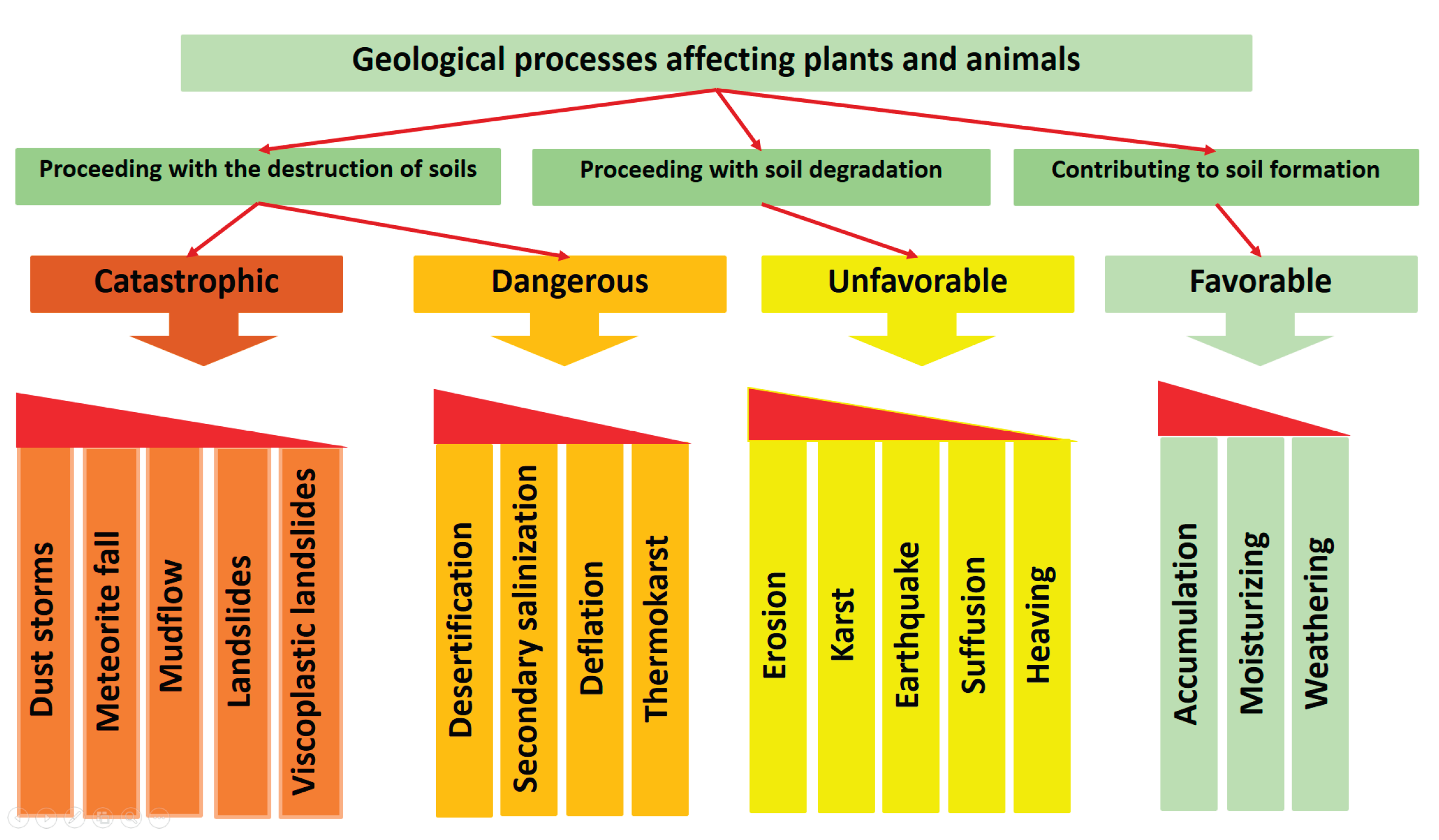
It should be noted that not every manifestation of these processes leads to significant adverse outcomes. In other words, the impact of the same process, with equal power or intensity, can vary depending on the level of economic development, vegetation cover, and wildlife presence in different territories. For some areas, such processes may be catastrophic, while for others, they may be merely unfavorable (Figure 7).
The geological and engineering-geological processes and phenomena identified above are predominantly concentrated in the Karakalpak Ustyurt region, where they occur most frequently and result in the fewest casualties, forming a regional series for this indicator. For example, droughts are typical for Africa, floods for India, hurricanes and typhoons for the coast of North America, volcanic eruptions and tsunamis for the Kuril-Kamchatka coast, and mudflows, landslides, and avalanches for the Caucasus, Ural, and Chatkal-Kuramin mountains, as well as foothill areas. The complexity of conducting an ecological and geodynamic assessment of the study area lies in the fact that one of the primary criteria for identifying catastrophic, hazardous, and unfavorable processes is human casualties and the level of discomfort for human habitation [12,13].
6. Conclusions
The presented results summarize and systematize the findings of archival and personal research on the current state of ecological and geodynamic conditions in the southern part of the Karakalpak Ustyurt. This region is characterized as complex and harsh, with insufficient and unevenly distributed research. Global climate change, the Aral crisis, and the negative impact of anthropogenic factors on the geoecological environment necessitate a comprehensive study of the ecological and geodynamic conditions of the Karakalpak Ustyurt, as well as the development of scientific foundations for its sustainable development and protection.
For the first time, a schematic map of ecological and geodynamic conditions has been compiled, and methodological aspects of a brief outline of these conditions in the southern part of the Karakalpak Ustyurt have been presented. The study evaluates the influence of the density of tectonic faults in depressions and uplifts, the nature of the relief, and surface runoff on geological, geoecological, and engineering-geological processes and phenomena. In turn, the extent of these processes across the studied territory determines the conditions for the existence and development of plants and animals, as well as the suitability of engineering-geological conditions for mineral development and human economic activities.
Funding
This article is supported by the bi-lateral project “FARM - Promoting sustainable groundwater solutions for rural farming communities in Karakalpakstan, Uzbekistan” funded by the German Federal Ministry of Research and Education (BMBF) and the Uzbek Ministry of Higher Education, Science and Innovation (MHESI).
Data Availability Statement
The Data presented in the study are available from the corresponding author upon reasonable request.
Conflicts of Interest
The authors declare no conflicts of interest.
References
- Adilov, B. A.; Rakhimova, T.; Rakhimova, N. K.; Khalilov, A. M. Characteristics of wormwood pastures in Central Kyzylkum (Republic of Uzbekistan). Plant World of Asian Russia 2015, 3(19), 65–71. [Google Scholar]
- Gendel, G. L.; Sokolov, V. I.; Reimov, P. R.; Mavlyanov, N. G. Geoecology of the Ustyurt Plateau, Republic of Uzbekistan; IPK GOU VPO OSU, 2009. [Google Scholar]
- Dzhaksymuratov, K. M.; Yesenbaev, G. R.; Zakirov, M. M.; Begimkulov, D. K.; Khudoyberdiev, T. M. Study by modeling the issue of artificial formation of fresh groundwater reserves in Ustyurt. Bulletin of NU n.d., (3/2), 125–128. [Google Scholar]
- Asamatdinov, A. Hydrogeological conditions of the dried-up bottom of the Aral sea and adjacent territories of the south Aral sea artesian basin. Journal of Science and education in Karakalpakstan 2025, V.3(2), P.114–116. [Google Scholar]
- Zakirov, M. M.; Dzhaksymuratov, K.; Begimkulov, D.; Ochilov, G.; Khudoyberdiev, T. M. Modern hydrogeological research and the role of groundwater in the development of Ustyurt. Bulletin of NUUz 2022, (3/2), 239–242. [Google Scholar]
- Zakirov, M. M.; Dzhaksymuratov, K.; Yesenbaev, G.; Begimkulov, D.; Khudoiberdiev, T. Model of the zone of active water exchange of subtakyr waters in the Uru section of the Karakalpak Ustyurt. Bulletin of NUUz 2022, (3/2/1), 179–183. [Google Scholar]
- Nigmatov, I.; Mirkhasilova, Z. K. On measures to improve the environmental situation of the Aral Sea and the Aral Sea region. In Innovative technologies in agriculture: Proceedings of the I International Scientific Conference; Buki-Vedi: Moscow, 2015; pp. 52–55. [Google Scholar]
- Kulikov, G. V. Ustyurt artesian basin; Fan: Tashkent, 1975. [Google Scholar]
- Kopylov, I. S. Theoretical and applied aspects of the doctrine of geodynamic active zones. Modern Problems of Science and Education 2011, (4), 1–7. Available online: www.science-education.ru/98-4745.
- Kopylov, I. S. Influence of geodynamics and technogenesis on geoecological and engineering-geological processes in the areas of oil and gas fields of Eastern Siberia. Modern Problems of Science and Education 2012, (3), 1–8. Available online: www.science-education.ru/103-6522.
- Kopylov, I. S. Geoecology of oil and gas bearing regions of the southwest Siberian platform; GNU: Perm, 2013. [Google Scholar]
- Kunin, V. N.; Leshchinsky, G. T. Temporary surface runoff and artificial formation of groundwater in the desert; USSR Academy of Sciences: Moscow, 1960. [Google Scholar]
- Leshchinsky, G. T. Use of temporary surface runoff on the Ustyurt plateau to improve water supply. In Proceedings of the Institute of Deserts of the Academy of Sciences of the Turkmen SSR; Ashgabat, 1970; pp. 208–215. [Google Scholar]
- Maslov, V. V. Modern understanding of the tectonic heterogeneity of the eastern Ustyurt in connection with the prospects for oil and gas content of Paleozoic deposits. Geology of Oil and Gas 2020, (4), 7–14. [Google Scholar]
- Turdybaev, K. P.; Ametov, Ya. I.; Matekova, G. A.; Ametova, N. I.; Tleumuratov, S. A. Materials on the birds of the Karakalpak part of the Ustyurt plateau. Universum: Chemistry and Biology 2024, (11), 15–20. [Google Scholar] [CrossRef]
- Djaksimuratov, K. M.; Bauatdinov, S.; Bauatdinov, T.; Khudoyberdiev, F. Agro-ores of glauconite of Karakalpakstan as a multi-purpose mineral raw material. International Journal of Mechanical Engineering 2022, 7(1), 458–462. [Google Scholar]
- Djaksimuratov, K. M.; Kurbanov, A.; Abzatdinov, K.; Urazbayev, A. Study of basalt deposits in the Republic of Karakalpakstan. Science and Education in Karakalpakstan 2021, (3), 116–119. [Google Scholar]
- Zakirov, M. M.; Akimova, A. P.; Djaksimuratov, K. M.; Begimkulov, D. K.; Ochilov, G. E. Engineering-geological zoning taken into account of comprehensive development of the territory of the southern part of Karakalpak Ustyurt. International Journal of Geology, Earth & Environmental Sciences 2024, 14, 131–136. Available online: http://www.cibtech.org/jgee.htm.
- Groundwater of Karakalpak Usturt as a resource for development of the region. (2022). International Journal of Advanced Research in Science, Engineering and Technology 9(6), 3619–3623.
- Zakirov, M. M.; Dzhaksymuratov, K. M.; Begimkulov, D. K.; Ochilov, G. E.; Akimova, A.; Jumabaeva, G. Engineering-geological conditions and interactions of technogenic processes with the environment. E3S Web of Conferences 2024, 548, 08011. [Google Scholar] [CrossRef]
- Asamatdinov, A. New water-keeping soil additives. Journal of Modern Chemistry and Application n.d., 6(7.10), 4172. [Google Scholar] [CrossRef]
- Krapivin, Vladimir F.; Mkrtchyan, Ferdenant A.; Rochon, Gilbert L. Hydrological Model for Sustainable Development in the Aral Sea Region. Journal Hydrology 2019, V.6., P.1–15. [Google Scholar] [CrossRef]
Figure 1.
Schematic map of tectonic zoning of the Karakalpak Ustyurt (scale 1:500 000, 1973, H.H. Inagamov , V.M. Krigel et al.) 1 – major tectonic elements; 2 – internal uplifts and depressions; 3 – deep faults; 4 – regional faults; 5 – other faults; 6 – reference wells; 7 – Northern Ustyurt; 8 – Central Ustyurt; 9 – Southern Ustyurt.
Figure 1.
Schematic map of tectonic zoning of the Karakalpak Ustyurt (scale 1:500 000, 1973, H.H. Inagamov , V.M. Krigel et al.) 1 – major tectonic elements; 2 – internal uplifts and depressions; 3 – deep faults; 4 – regional faults; 5 – other faults; 6 – reference wells; 7 – Northern Ustyurt; 8 – Central Ustyurt; 9 – Southern Ustyurt.
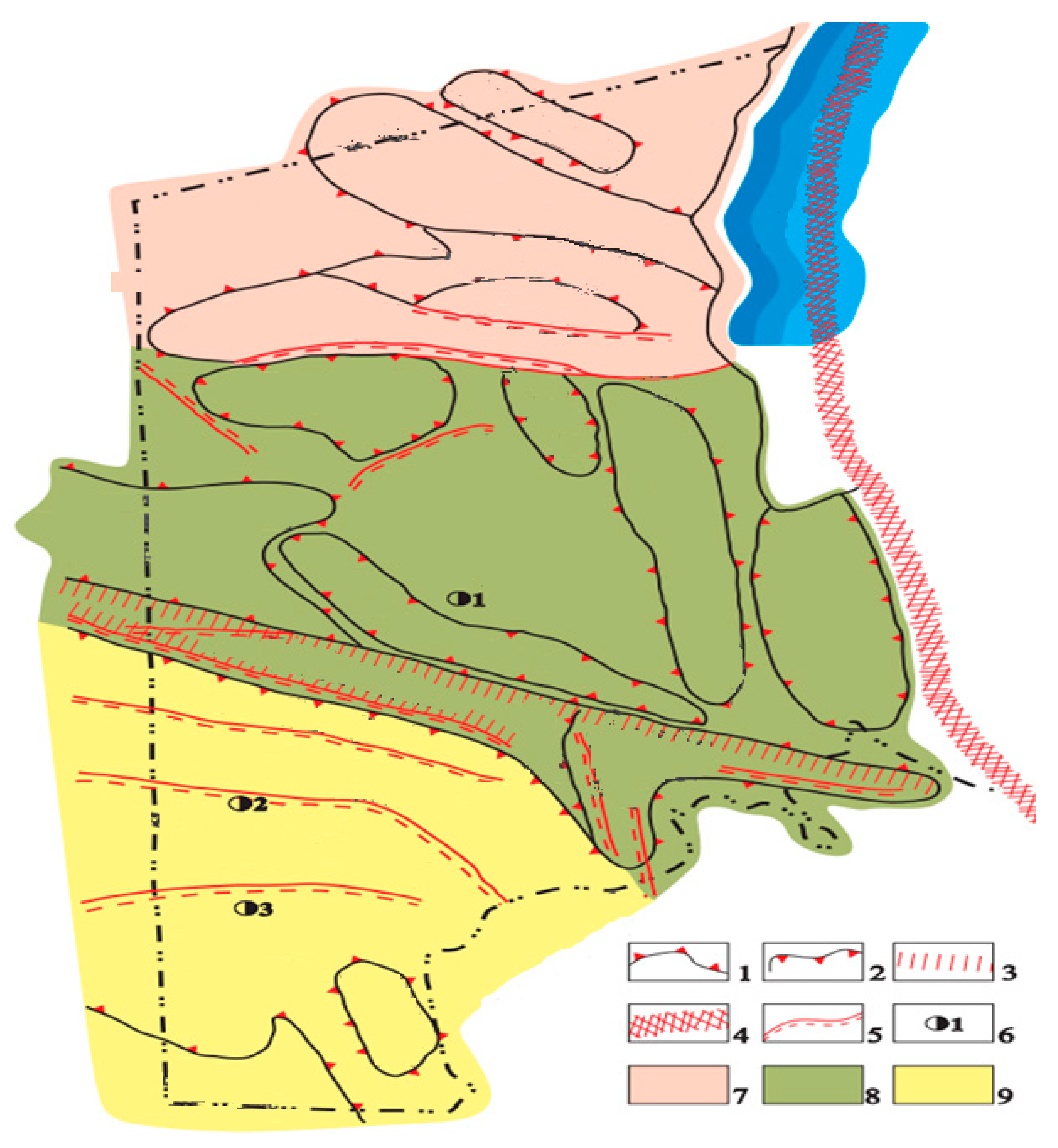
Figure 2.
Artificial catchment areas in the southern part of the Karakalpak Ustyurt ( satellite imagery from 12.07.2024): a – upper reaches of the Karabaur ridge ; b – area east of the Sorzha basin ; c – area of the Gumsa mountains; d – area of Yassi Manzir ; e , f – area of the geological settlement of Shakhpakhty. g. Artificial catchment area to the east of the Sorzha basin in the southern part of the Karakalpak Ustyurt.
Figure 2.
Artificial catchment areas in the southern part of the Karakalpak Ustyurt ( satellite imagery from 12.07.2024): a – upper reaches of the Karabaur ridge ; b – area east of the Sorzha basin ; c – area of the Gumsa mountains; d – area of Yassi Manzir ; e , f – area of the geological settlement of Shakhpakhty. g. Artificial catchment area to the east of the Sorzha basin in the southern part of the Karakalpak Ustyurt.
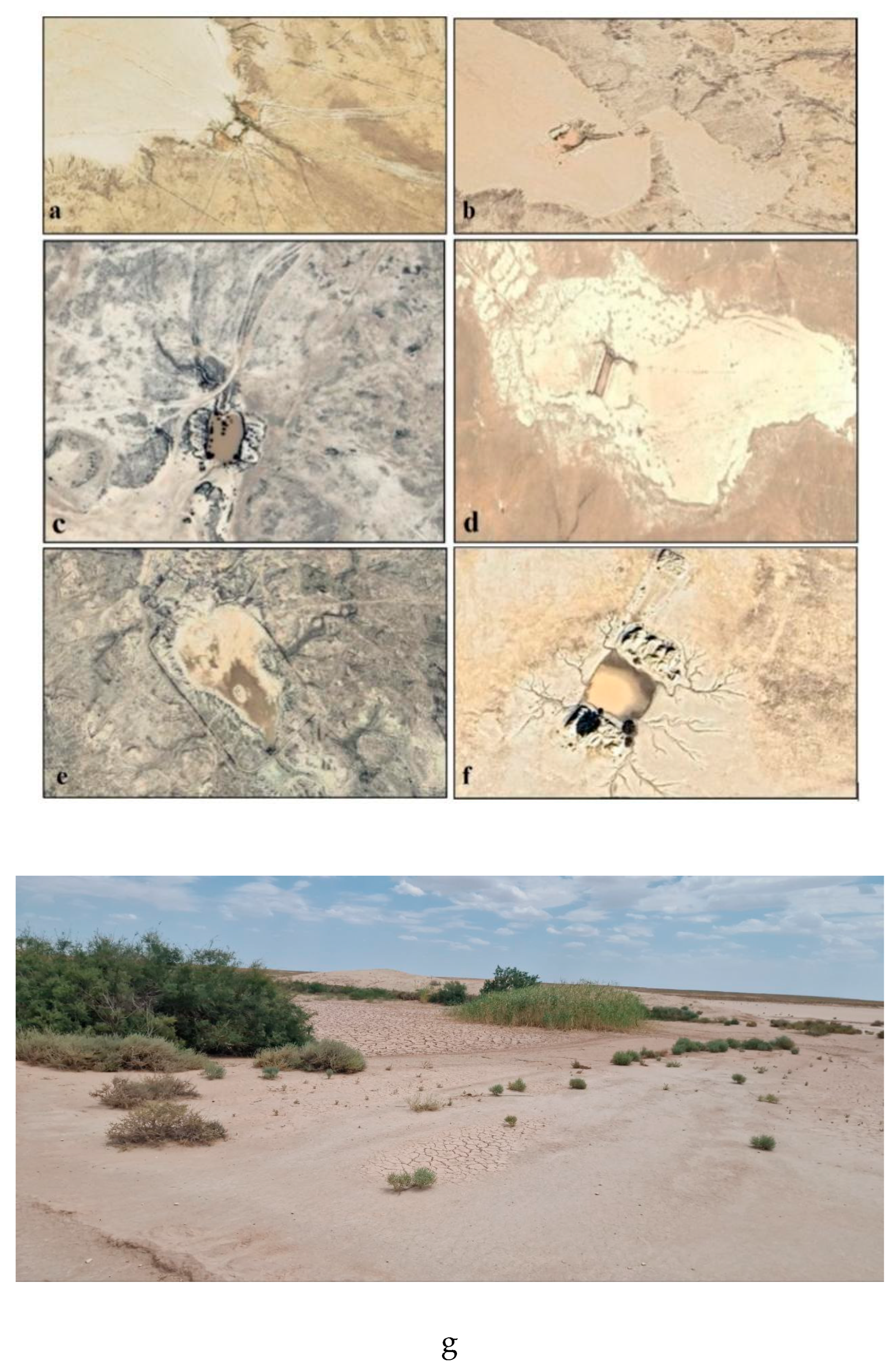
Figure 3.
Chinks in the area of Cape Urga and Lake Sarykamysh (photo by A.P. Akimova , 2023).
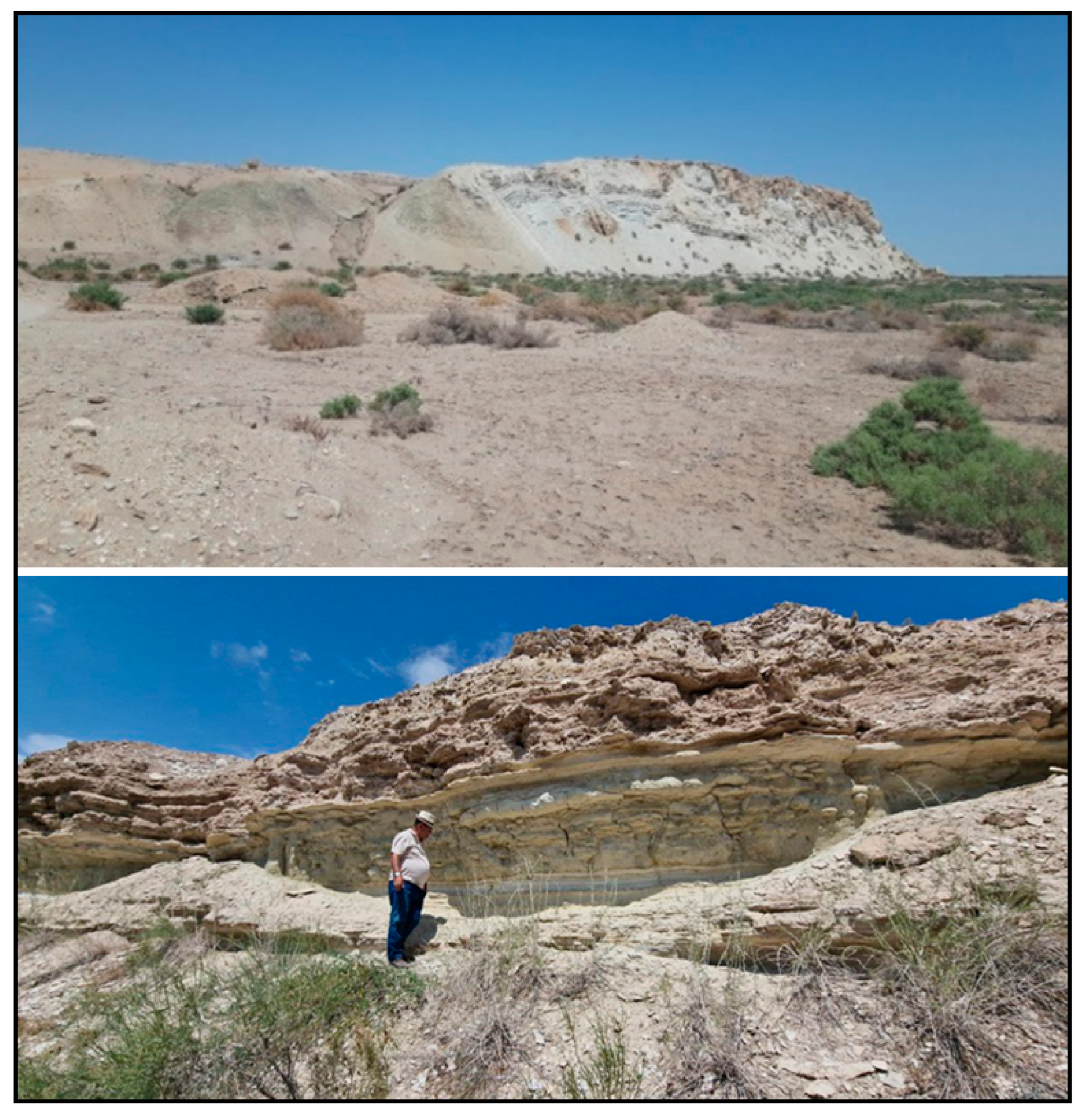
Figure 4.
Erosion cuts a , b ) of ravines of gently sloping surfaces and c ) man-made ravine formation due to the malfunction of the guide water pipeline on the outskirts of the takyr of the Karakalpak Ustyurt (photo by K.M. Dzhaksymuratov , 2022, A.P. Akimova, 2024).
Figure 4.
Erosion cuts a , b ) of ravines of gently sloping surfaces and c ) man-made ravine formation due to the malfunction of the guide water pipeline on the outskirts of the takyr of the Karakalpak Ustyurt (photo by K.M. Dzhaksymuratov , 2022, A.P. Akimova, 2024).
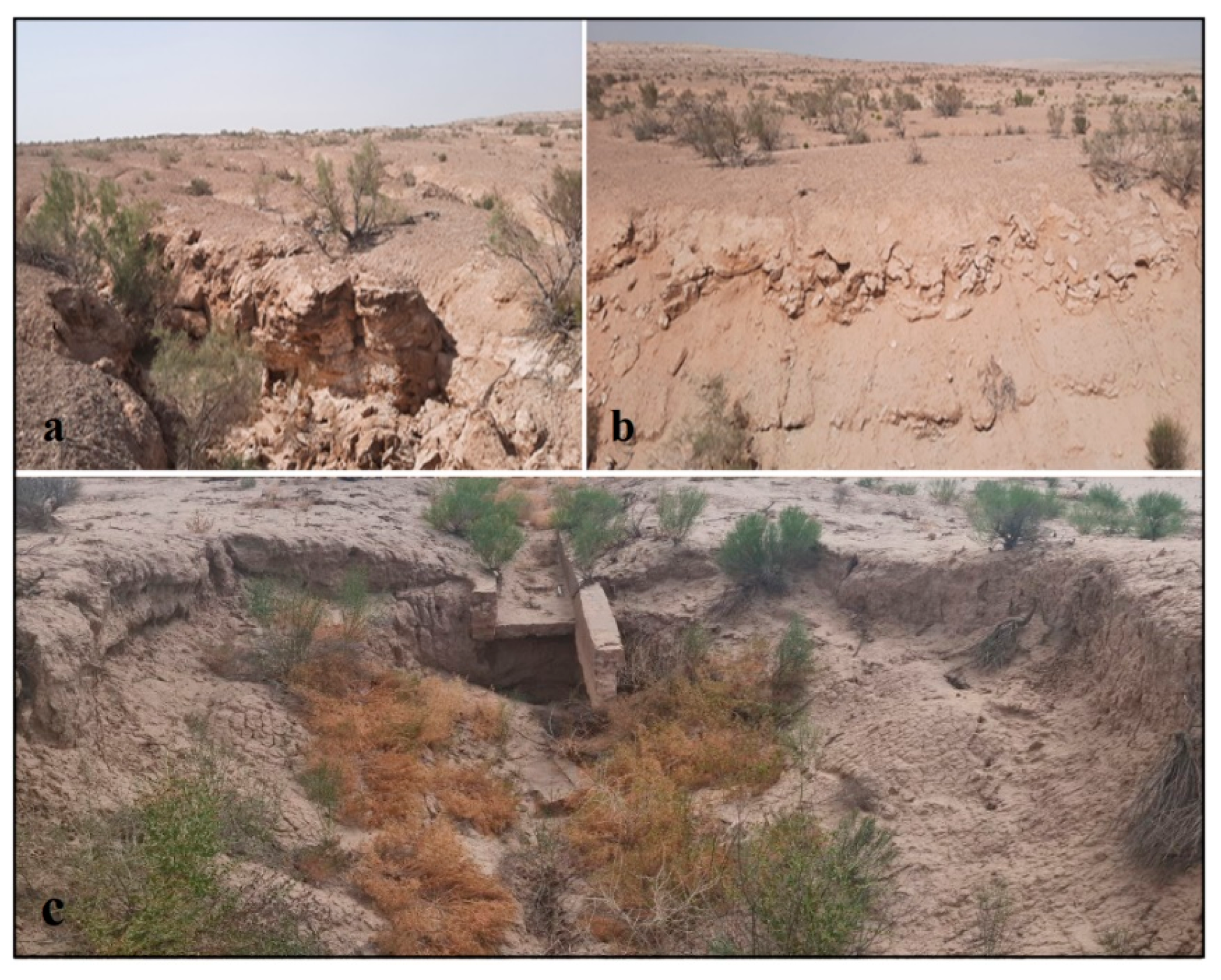
Figure 5.
Canyons on the ledges of the cliff (photo by K.M. Dzhaksymuratov , 2022).
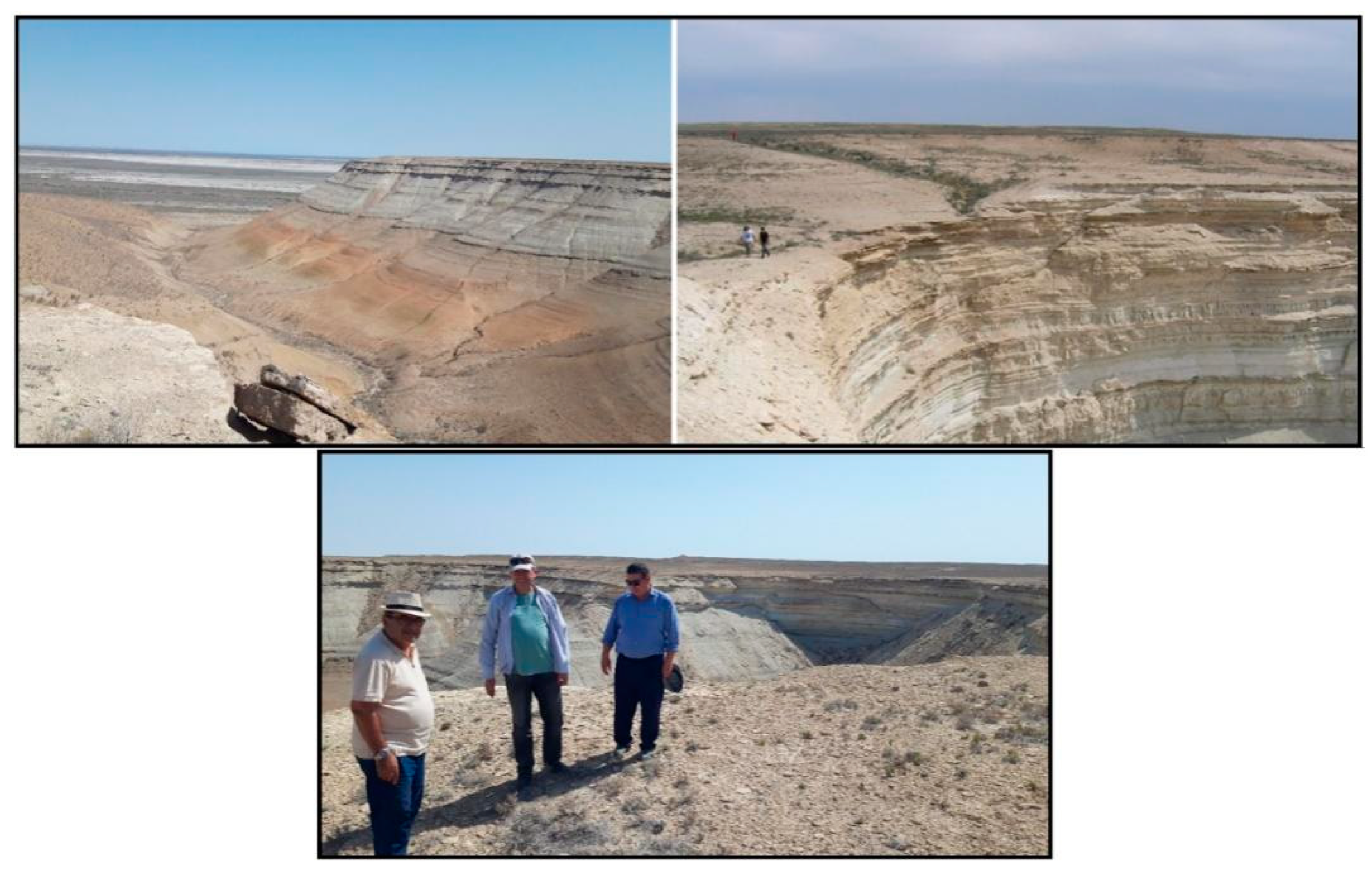
Figure 6.
Schematic map of ecological and geodynamic conditions of the southern part of the Karakalpak Ustyurt at a scale of 1:200,000 (compiled by A.P. Akimova, M.M. Zakirov, K.M. Dzhaksymurtov, D.K. Begimkulov, G.E. Ochilov, T.M. Khudoiberdiev, Zh.G. Zhumabaeva, 2024):.
Figure 6.
Schematic map of ecological and geodynamic conditions of the southern part of the Karakalpak Ustyurt at a scale of 1:200,000 (compiled by A.P. Akimova, M.M. Zakirov, K.M. Dzhaksymurtov, D.K. Begimkulov, G.E. Ochilov, T.M. Khudoiberdiev, Zh.G. Zhumabaeva, 2024):.
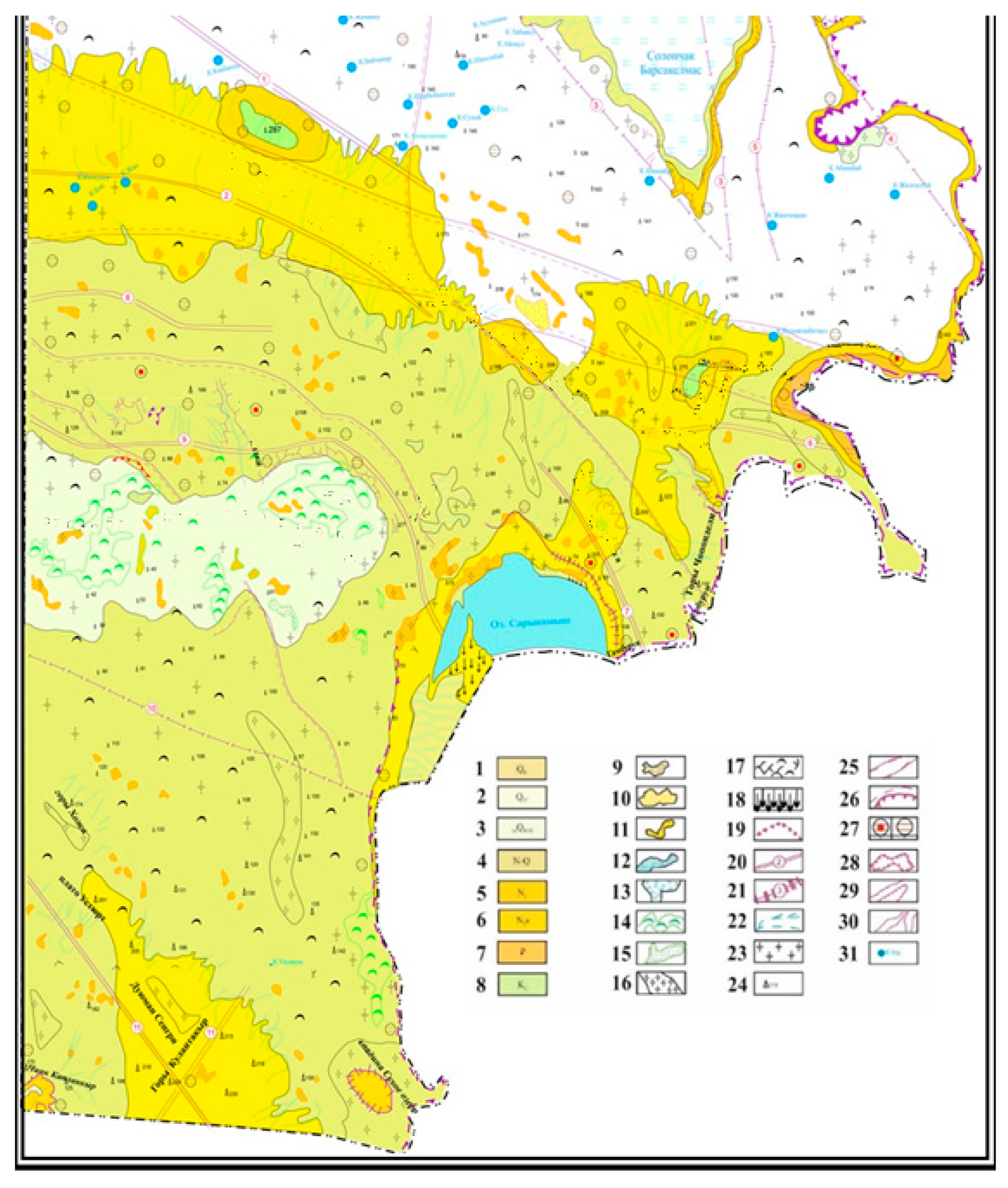
Figure 7.
Systematics of geological processes affecting the conditions of existence of plants and animals, according to M.A. Kharkina, 2008 [13].
Figure 7.
Systematics of geological processes affecting the conditions of existence of plants and animals, according to M.A. Kharkina, 2008 [13].
Disclaimer/Publisher’s Note: The statements, opinions and data contained in all publications are solely those of the individual author(s) and contributor(s) and not of MDPI and/or the editor(s). MDPI and/or the editor(s) disclaim responsibility for any injury to people or property resulting from any ideas, methods, instructions or products referred to in the content. |
© 2026 by the authors. Licensee MDPI, Basel, Switzerland. This article is an open access article distributed under the terms and conditions of the Creative Commons Attribution (CC BY) license (http://creativecommons.org/licenses/by/4.0/).
Copyright: This open access article is published under a Creative Commons CC BY 4.0 license, which permit the free download, distribution, and reuse, provided that the author and preprint are cited in any reuse.