

Submitted:
21 March 2026
Posted:
23 March 2026
Read the latest preprint version here
Abstract
Background/Objectives: Mental health service utilization gaps remain a persistent global public health challenge. Dropout rates from outpatient treatment range from 19.7% to 30.8%, and only 30–60% of individuals with lifetime mental illness are in active recovery at any given time. Existing theoretical frameworks—including Andersen's Behavioral Model, the Health Belief Model, and the COM-B framework—each address isolated phases of the care continuum but offer no unified structure for understanding the complete, sequential journey from first contact through sustained recovery. This article introduces the Access, Initiation, Engagement, Retention, and Recovery (AIERR) model to address this theoretical gap. Methods: A conceptual review was conducted following Hulland's (2020) framework for theory development through narrative synthesis. Literature was identified through targeted searches in PubMed, PsycINFO, and Google Scholar, prioritizing peer-reviewed empirical studies, systematic reviews, and foundational theoretical frameworks. Sources were assigned to AIERR stages using predefined decision rules corresponding to each phase's defining characteristics. Results: AIERR maps five sequential, interconnected stages: Access (structural, cultural, and systemic conditions enabling service reach), Initiation (the transition from provider identification to first appointment attendance), Engagement (active and meaningful treatment participation), Retention (sustained continuity of care), and Recovery (long-term reclamation of life quality and community belonging). For each stage, the framework identifies individual-level and structural-level barriers, facilitating conditions, and targeted intervention points. Three features distinguish the model: client-centeredness, explicit bidirectional individual–structural analysis, and stage-specific intervention mapping. Conclusions: AIERR advances mental health services theory by providing an integrative structure that unifies previously siloed frameworks, establishes stage-specificity as a core theoretical principle, and reorients research and intervention strategy toward the upstream structural conditions that produce downstream utilization failures. The model equips researchers with a unified conceptual vocabulary, offers practitioners a stage-specific roadmap for intervention planning, and enables health systems to identify where specific populations are disproportionately losing contact with care. Implications for health equity research, clinical practice, and health systems design are discussed.
Keywords:
mental health service utilization
; access to care
; client engagement
; treatment retention
; recover
1. Introduction
Mental health service utilization, defined as the process by which individuals’ access, engage with, and sustain participation in care, represents one of the most consequential and least understood determinants of population mental health outcomes. Despite significant investment in treatment development, the gap between need and service use remains substantial across every phase of the care continuum. Dropout rates range from 19.7% to 30.8% among those who seek treatment, with structural hurdles, ineffective treatment, and negative provider interactions among the leading causes (Fernández et al., 2021; Benjet et al., 2022; Swift & Greenberg, 2012). National surveys estimate only 30 to 60% of people with lifetime mental illness are in active recovery at any given time (Salzer et al., 2018; Substance Abuse and Mental Health Services Administration, 2024). These figures reflect not only the difficulty of individual help-seeking but the systematic failure of health systems to support clients through each sequential stage of care. Understanding why utilization breaks down and where targeted intervention can restore or sustain it requires a theoretical framework that spans the full continuum rather than addressing isolated phases.
Despite growing recognition of these challenges, existing frameworks for understanding mental health service utilization often address isolated components rather than the full continuum of care. For instance, Andersen's (1995) Behavioral Model provides robust insights into predisposing factors, enabling resources, and need that drive access, yet it offers limited guidance on sustaining participation once services begin. Similarly, the Health Belief Model (Rosenstock, 1974) explains initial help-seeking decisions but does not extend to the processes of engagement, retention, or long-term recovery. Pescosolido's Network Episode Model (Pescosolido et al., 1998) illuminates the social embeddedness of service initiation, while the Capability, Opportunity, Motivation, and Behavior (COM-B) framework (Michie et al., 2011) helps explain behavior change within treatment, but neither comprehensively addresses the sequential stages clients navigate from first contact through sustained recovery. The Connectedness, Hope, Identity, Meaning, and Empowerment (CHIME) framework (Leamy et al., 2011) and Substance Abuse and Mental Health Services Administration 's (2012) Recovery Model provide valuable perspectives on recovery-oriented care, yet they primarily focus on the final stages rather than the earlier access and initiation hurdles many clients never overcome. While each of these models contributes essential understanding, no single framework currently captures the complete, sequential journey from gaining access to achieving sustained recovery. This gap leaves educators without a unified structure for teaching the full spectrum of service utilization, and it leaves practitioners without a comprehensive roadmap for identifying where interventions are most needed along the care continuum.
To address this gap, this article introduces the Access, Initiation, Engagement, Retention, and Recovery (AIERR) model: a stage-based theory-generating framework, developed by the authors through synthesis of implementation science, health services research, and clinical literature, that maps five distinct yet interconnected stages of mental health service utilization (Figure 1). The AIERR model is a newly proposed framework that has not yet undergone formal empirical validation; this article represents its first full scholarly presentation. By integrating and extending existing single-stage frameworks, AIERR provides researchers, practitioners, and health systems with a unified structure for identifying where utilization breaks down, why it breaks down at each stage, and what conditions support successful progression through the continuum.
The five stages of the AIERR model progress sequentially through the care continuum while acknowledging that clients may cycle through stages non-linearly. Stage 1, Access, addresses whether individuals can realistically reach services given structural, informational, cultural, and systemic barriers. Stage 2, Initiation, captures the transition from identifying a provider to attending a first appointment. Stage 3, Engagement, examines active, meaningful participation in treatment. Stage 4, Retention, examines sustained continuity of care over time. Stage 5, Recovery, addresses the long-term journey toward reclaiming life quality, identity, and community connection beyond symptom reduction. Each stage carries distinct barriers, facilitators, and intervention targets. This review will (1) present the AIERR model and define each stage, (2) synthesize the literature on barriers and facilitators at every phase, (3) demonstrate how AIERR integrates and extends existing frameworks, and (4) identify implications for research, practice, and health systems design.
2. Methodology
This conceptual review follows Hulland’s (2020) framework for theory development through literature synthesis. Hulland distinguishes conceptual reviews from systematic reviews: rather than cataloguing and statistically synthesizing empirical findings, conceptual reviews use existing literature as raw material for constructing or extending theoretical understanding, requiring transparency about synthesizing logic and the future testability of the resulting framework. Consistent with this approach, we reviewed extant knowledge on mental health service utilization, identified tensions and gaps across existing models, and synthesized these insights into the AIERR framework, a reconceptualization that integrates previously disparate theoretical perspectives into a unified, stage-based model.
3. Literature Selection
Relevant literature was identified through targeted searches in databases including PubMed, PsycINFO, and Google Scholar, with additional sources drawn from the bibliographies of key papers and recent reviews. Priority was given to peer-reviewed articles, systematic reviews, conceptual frameworks, and policy documents published in English. The selection emphasized influential models (e.g., the Behavioral Model of Health Service Use, Health Belief Model), foundational reviews, and contemporary research addressing barriers and facilitators to access, retention, and recovery in mental health contexts. Given the conceptual nature of the paper, the goal is not for exhaustive coverage but identifying theoretical relevance and influential contributions to inform framework development.
4. Conceptual Synthesis
We employed a narrative synthesis process. Literature was assigned to AIERR conceptual domains using the following decision rules: (1) studies addressing service availability, geographic reach, financial access, or help-seeking initiation prior to first contact were coded to Access; (2) studies addressing first appointment attendance, intake completion, or the transition from service identification to actual participation were coded to Initiation; (3) studies addressing therapeutic alliance, active treatment participation, and session-to-session involvement were coded to Engagement; (4) studies addressing dropout prevention, continuity of care, and long-term treatment maintenance were coded to Retention; and (5) studies addressing post-treatment outcomes, wellness maintenance, and life domain recovery beyond symptom reduction were coded to Recovery. Where studies spanned multiple stages, they were analyzed under the stage most central to their primary research question. Within each domain, we summarize definitions, determinants, and outcomes, highlighting points of consensus, ongoing debates, and gaps in the literature. We also mapped relationships between concepts and identified recurring themes relevant across models and populations to identify mechanisms and recurring themes across stages.
5. Scope and Limitations
As a conceptual review, this paper does not seek to provide a quantitative summary of effect sizes or intervention outcomes; rather, it aims to clarify constructs, outline theoretical developments, and generate insights to inform research, practice, and policy (Hulland, 2020). A full discussion of the study’s limitations appears in the Limitations and Future Directions section at the end of the paper.
6. Model Characteristics
The AIERR model conceptualizes mental health service utilization through five distinct yet interconnected stages (Figure 1), each representing both a unique phase of the service experience and a potential point for targeted intervention or system improvement. From a health systems perspective, this stage-based structure provides clear targets for quality improvement initiatives, resource allocation decisions, and systematic evaluation of service delivery effectiveness.
The AIERR model is distinguished by three theoretical features. First, it is client-centered: success at each stage is defined by client goals and experiences, not solely by provider or system metrics, making the model applicable across diverse populations and settings. Second, it is explicitly bidirectional between individual and structural levels: barriers at every stage operate simultaneously at the level of the individual (psychological readiness, perceived need, cultural beliefs) and the structural level (system design, insurance architecture, provider availability), and the model requires analysis of both. Third, it is intervention-specific: rather than providing a general account of utilization, AIERR maps distinct intervention targets at each stage, supporting precision in both research design and practice planning. This combination positions the AIERR model as a potentially valuable tool for research and practice, subject to empirical evaluation.
6.1. Stage 1: Access to Services
Access represents the foundational stage where opportunity meets feasibility, which is the point at which individuals can realistically obtain care that meets their needs. Access operates across multiple dimensions simultaneously. Penchansky and Thomas (1981) conceptualize access through six critical domains: availability (sufficient services exist), accessibility (geographic/physical reach), accommodation (service organization fits client life), affordability (cost within means), acceptability (cultural/personal fit), and awareness (knowledge of options). A service may score well on some dimensions while failing critically on others, and a single failure point can block access entirely.
Levesque et al. (2013) deepen this understanding by highlighting the dynamic interaction between health system characteristics and individual abilities. Systems must not only provide approachable, acceptable, available services, but individuals must possess the ability to perceive need, seek help, reach services, pay for care, and engage once there. This bidirectional model reveals why access failures cannot be reduced to either system deficits or individual limitations; rather, both must align. Andersen's (1995) Behavioral Model adds the critical recognition that access depends on the interplay of predisposing factors (demographics, beliefs), enabling resources (insurance, social support, community resources), and need (perceived and evaluated). Together, these frameworks (Figure 2) make clear that access is not a binary state but a complex, multidimensional phenomenon requiring alignment across numerous factors simultaneously.
Figure 2.
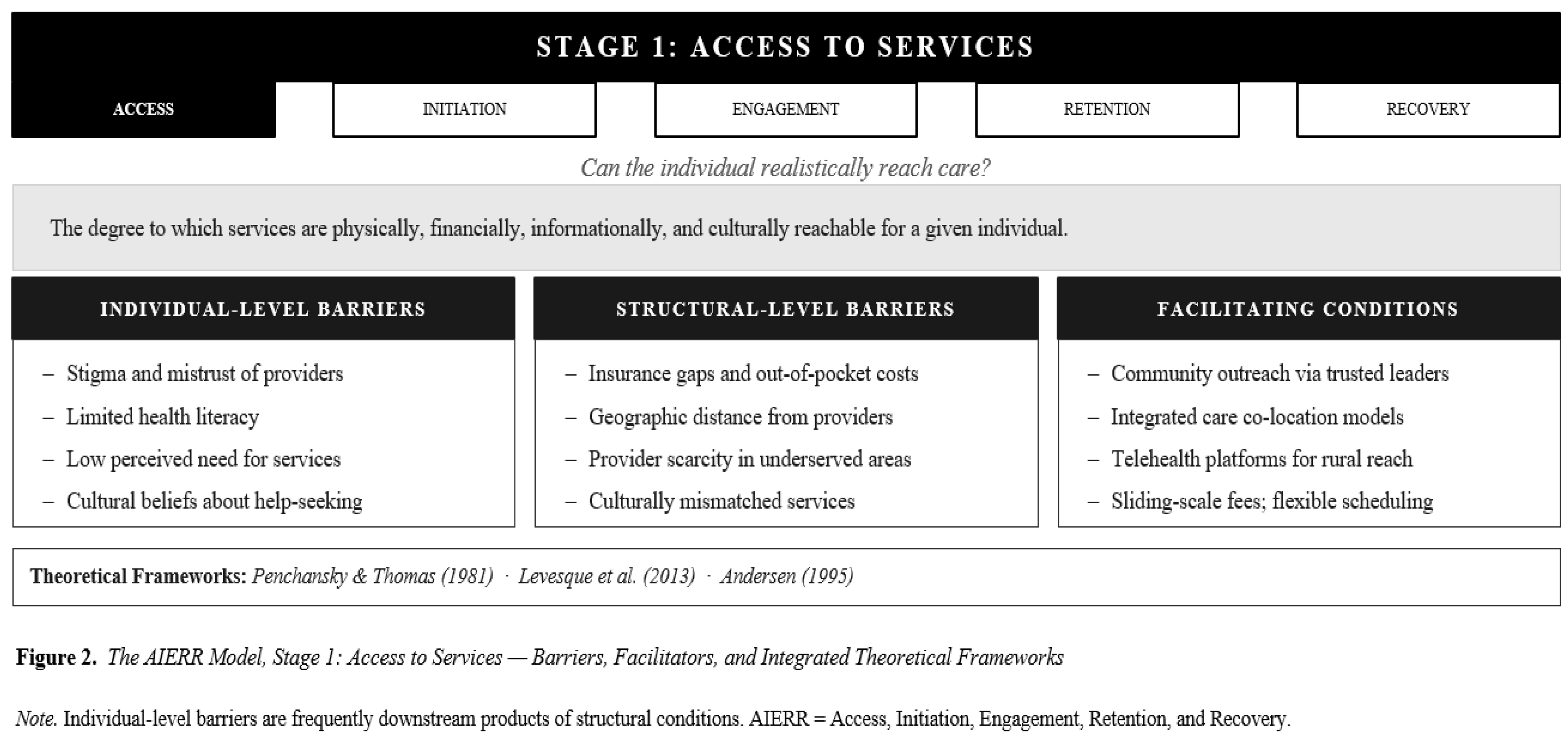
Figure 4.
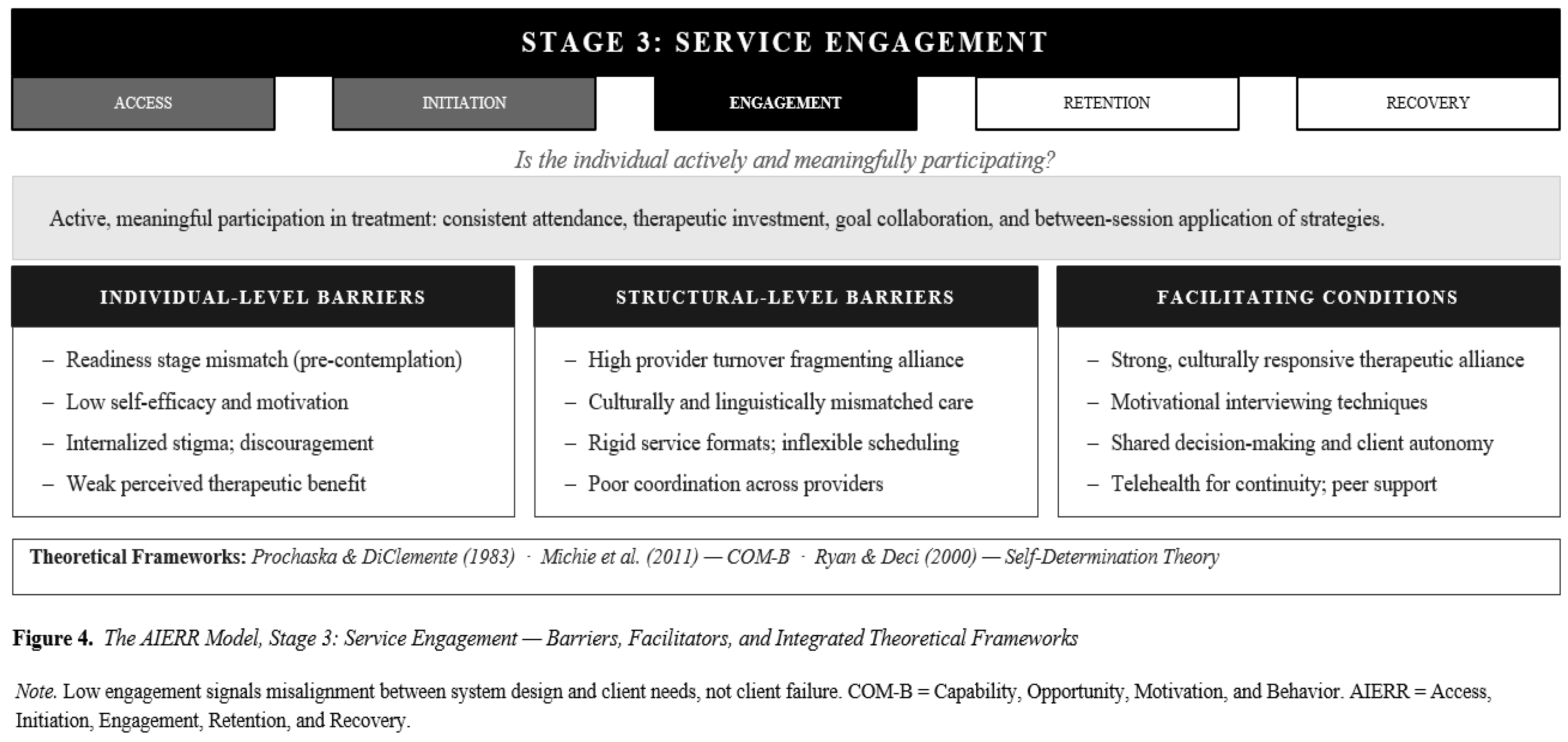
Figure 5.
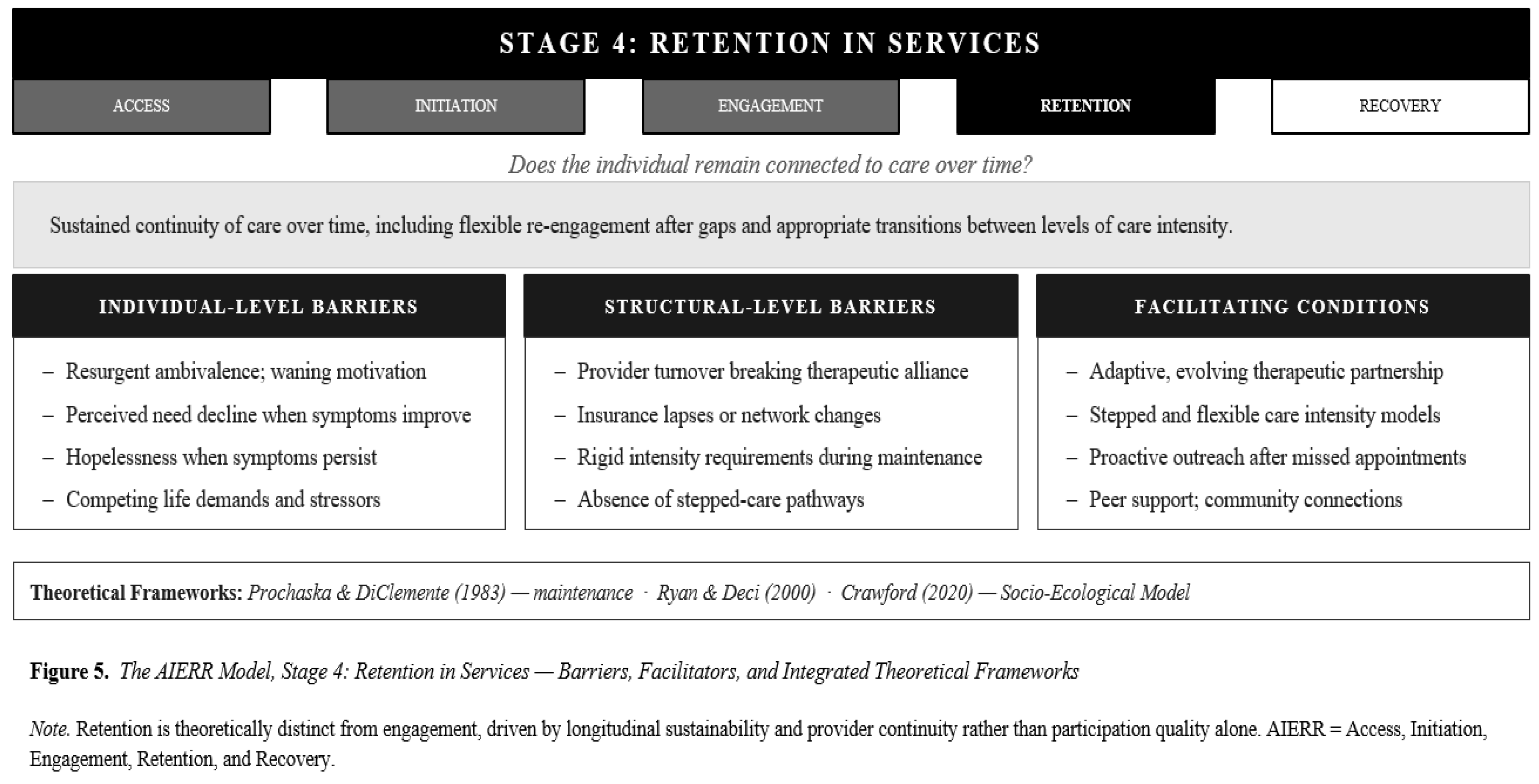
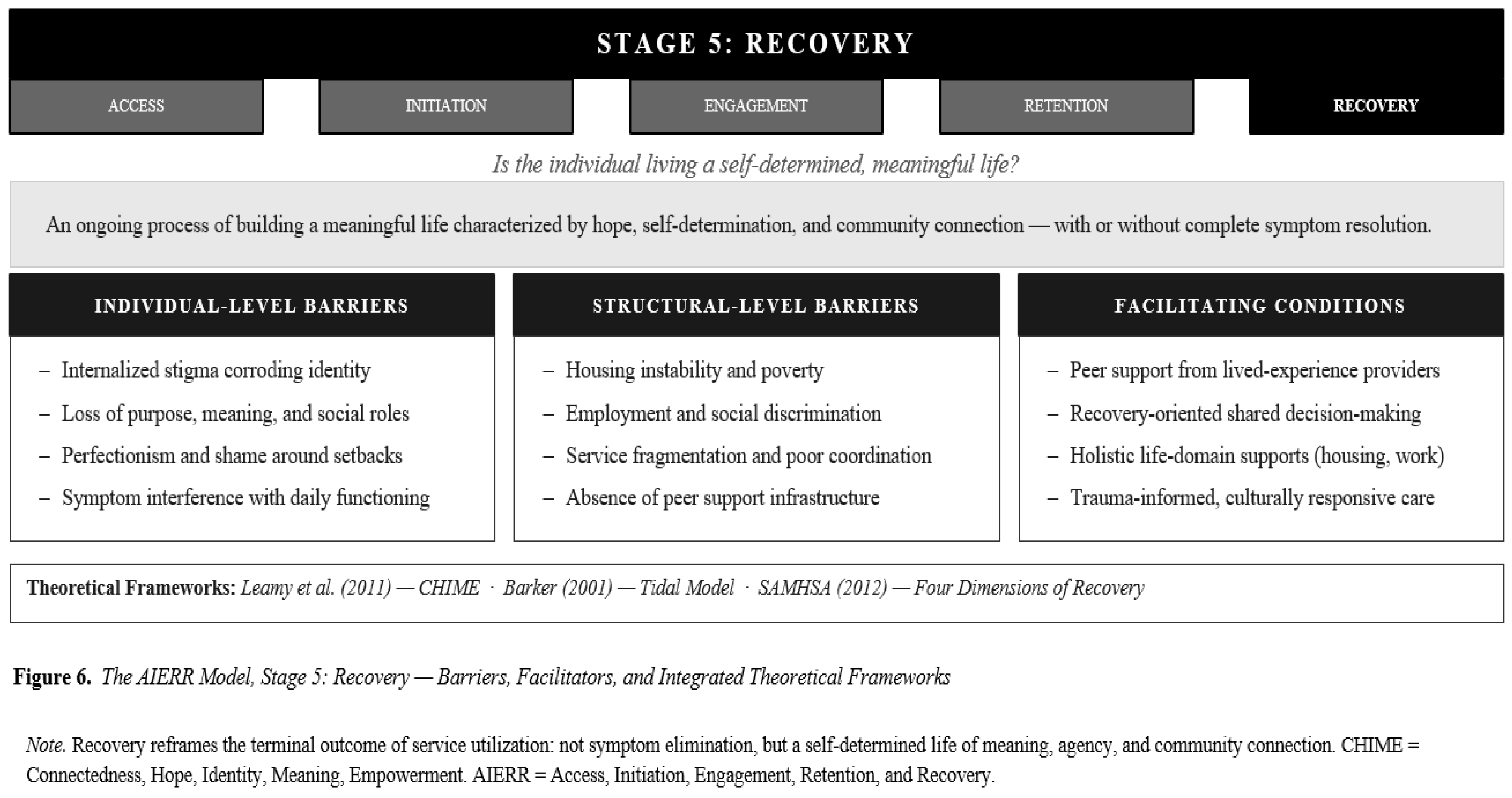
Figure 6.
The barriers that constrain access operate at both individual and structural levels, clustering into four reinforcing domains. At the structural level, transportation difficulties, geographic distance, financial constraints, insurance gaps, and limited service availability prevent physical and economic reach (Dawkins et al., 2021). For many potential clients, structural barriers surface immediately: "I looked up therapists near me and the closest one doesn't take my insurance," or "The office closes at five and I can't leave work before then," or simply, "I don't have a car and the buses don't run out that way." These are not necessarily expressions of disinterest; they are accurate assessments of concrete obstacles that systems have not removed.
Informational barriers include low health literacy, language differences, and limited awareness of available resources. Such barriers operate at both individual and system levels and leave people unable to navigate what exists even when services are theoretically nearby (O’Connell et al., 2015; Pandey et al., 2021). "I didn't even know there was a community mental health center two miles from my house" is a failure of outreach and system design, not of individual effort. Cultural and psychological barriers, including stigma, mistrust, and negative past experiences, deter help-seeking at the individual level, yet these are themselves shaped by structural experiences of racism and historical mistreatment of marginalized communities (Griffith et al., 2021). Clients may ask themselves, "Will they actually understand what it means to be a Black man walking in there?" or "Last time I tried to get help they made me feel like a problem to be managed, not a person," or "What if someone from my neighborhood sees me going in?" These concerns are not irrational; they reflect accumulated individual and community-level experiences with systems that have historically failed or harmed people who look like them. Distinguishing between mistrust rooted in broader community perceptions and distrust arising from direct or vicarious negative experiences matters, because each requires a different intervention response (Curtis et al., 2019; Smirnoff et al., 2018). Finally, systemic design barriers such as rigid appointment scheduling, multi-step intake processes, and culturally mismatched services signal to potential clients that "this place was not built for people like me" (Schwalbe et al., 2026). The experience of calling a clinic and being met with a long hold, a complex intake questionnaire, or a provider who has never heard of your community reinforces that signal powerfully. Addressing access requires simultaneous attention to all four domains; resolving one while leaving others intact rarely produces meaningful improvement.
What works to improve access? Community outreach that deploys trusted local leaders builds both awareness and acceptability, particularly in communities where historical mistreatment has generated legitimate mistrust (Jiao et al., 2022). Integrated care models that embed mental health services in primary care or schools address accommodation and accessibility by meeting people where they already are (Hostutler et al., 2023). Digital health platforms can dramatically improve accessibility for rural populations while offering flexible accommodation for scheduling constraints (Giansanti et al., 2025), though they introduce new barriers for those without reliable internet or digital literacy. Culturally and linguistically tailored services don't just improve acceptability; they signal a fundamental repositioning of who belongs in mental health care, often simultaneously addressing awareness through community networks (Schiaffino et al., 2020). Transportation assistance, sliding-scale fees, walk-in and flexible scheduling, and streamlined intake processes remove concrete obstacles while demonstrating organizational commitment to true accessibility (Alharthy et al., 2024; Tzenios et al., 2019). These evidence-based strategies demonstrate that access barriers, while formidable, are not insurmountable when systems commit to implementing multifaceted solutions that address the diverse needs of the communities they serve.
The access stage reveals a fundamental insight for health systems and researchers: good intentions are insufficient. A system can genuinely want to serve all who need it while remaining systematically inaccessible through the compounding effects of structural design, cultural misalignment, and resource constraints. The client who says, "I tried to get help once and it just didn't work out," has often encountered not one barrier but four or five operating simultaneously, each individually surmountable but collectively overwhelming. For researchers, this means access must be measured across all six dimensions simultaneously; a single access score obscures the specific failure points that interventions need to target. For practitioners and systems, it means that addressing access requires sustained, multi-domain commitment; resolving transportation barriers while leaving cultural acceptability unaddressed leaves substantial populations unable to cross the threshold into care.
6.2. Stage 2: Initiation of Mental Health Services
Access and initiation are not synonymous, though they are often conflated in both research and practice. Having a scheduled first appointment does not ensure a client will attend; knowing how to reach a clinic does not mean someone will walk through the door. Initiation represents the critical transition from having access to actually attending services, which captures the moment when theoretical accessibility becomes actual participation (Geyti et al., 2018). This stage captures the first concrete steps: attending an initial appointment, completing an intake, and beginning treatment. Here, intention meets action, and the gap between them explains much of the attrition in mental health service utilization.
Three theoretical frameworks illuminate why this transition proves so difficult for many. Pescosolido's Network Episode Model reveals initiation as fundamentally social, as it is embedded in relationships with family, friends, and community members who may encourage, discourage, or actively prevent someone from starting care (Pescosolido et al., 1998). A mother whose own family dismisses mental health treatment as weakness faces social headwinds even after identifying a provider. The Health Belief Model (Rosenstock, 1974) explains that initiation requires individuals to perceive both susceptibility and severity ("I have a problem that matters"), recognize benefits ("treatment will help"), believe barriers can be overcome ("I can actually do this"), and encounter a cue to action that catalyzes movement. Ambivalence at any of these points stalls initiation. Andersen's (1995) Behavioral Model adds that even with access achieved, initiation depends on enabling resources, particularly practical supports like childcare, transportation, and time off work, and on how need is perceived and evaluated by both the individual and their social network. These frameworks converge on a crucial insight: initiation is where psychological readiness, social context, and practical capability must align.
The barriers that derail initiation often catch even well-designed access efforts off guard. Someone may complete a screening, receive a referral, and schedule an appointment, only to never arrive. There are several reasons explaining this gap. Why? Psychological barriers including fear of judgment, uncertainty about what to expect, stigma, and ambivalence intensify as the appointment approaches (Corrigan et al., 2014; Stepleman et al., 2015). Previous negative experiences with health systems create anticipatory dread: "They didn't help last time" or "They treated me like I was wasting their time" become powerful deterrents to trying again (Shukla et al., 2025; Thompson & McCabe, 2012). Social barriers emerge when family discourages attendance, cultural beliefs frame mental health care as inappropriate, or concerns about confidentiality within small communities create genuine risk (Shukla et al., 2025). Practical barriers that seemed surmountable during scheduling, such as transportation, childcare, or work conflicts, become insurmountable the morning of the appointment (Shekelle et al., 2022; Sweetman et al., 2021). Process barriers like complicated intake paperwork, long wait times, confusing referral pathways, or inadequate communication about what to expect create friction at the exact moment when motivation is most fragile (Kyle & Frakt, 2021; Barrett et al., 2008). These combined barriers explain why so many individuals who successfully navigate access never complete the critical transition to actual service initiation.
What moves people across the initiation threshold? Proactive outreach, warm welcomes, and clear information about what to expect help transform a daunting step into a manageable one (Dang et al., 2017). Social support from family, friends, or peers who encourage attendance can be decisive, particularly in cultural contexts where individual decisions are family decisions (Stepleman et al., 2015). Streamlined intake, flexible scheduling, reminder systems, and concrete help with transportation or childcare reduce friction (English et al., 2022; Greene et al., 2016). System-level approaches, including integrated care models, warm handoffs where the referring provider personally introduces the client, and centralized intake, all support successful initiation (Isaacs et al., 2023). Together, these supports communicate that the step is not only possible but actively facilitated by the system designed to serve the client.
The initiation stage clarifies a critical theoretical distinction: access and utilization are not equivalent. A person can have complete theoretical access to a service, including insurance, geographic proximity, and cultural acceptability, and still never attend a first appointment. This gap between access and initiation reflects the operation of a distinct set of psychological, social, and practical mechanisms that existing access-focused frameworks do not fully capture. For research, this means initiation requires its own measurement, its own predictors, and its own intervention models. For practice, it means that referral is not enough; the transition from identified need to first contact requires deliberate structural and relational support.
6.3. Stage 3: Service Engagement
Attending an appointment does not mean a client is engaged. Engagement transcends physical presence; it represents active, meaningful participation: showing up consistently, investing in therapeutic activities, collaborating on goals, applying strategies between sessions, allowing vulnerability, and doing the difficult work that change requires (Alegría et al., 2014). This stage captures the difference between showing up and showing up fully. It is the stage where treatment actually happens, making it perhaps the most critical phase for clinical outcomes, yet also the most fragile, as engagement fluctuates constantly based on internal states, external circumstances, and relationship quality.
Understanding engagement requires recognizing its dynamic, multifaceted nature. The Stages of Change model (Prochaska & DiClemente, 1983) positions engagement as movement through readiness phases. Someone may be physically present but still in precontemplation or contemplation, not yet ready for the action stage engagement requires. The COM-B framework (Michie et al., 2011) reveals engagement as the product of three intersecting forces: capability (having the skills and knowledge to participate), opportunity (external circumstances enable participation), and motivation (want and need align to drive participation). When any one element fails, engagement falters. The Patient Health Engagement Model (Graffigna et al., 2015) captures how clients' sense of their own empowerment and agency evolves through engagement; it is not static but a developing capacity that providers must actively cultivate. Self-Determination Theory (Ryan & Deci, 2000) adds the crucial insight that sustained engagement depends on meeting three fundamental psychological needs: autonomy (feeling choice, not coercion), competence (experiencing effectiveness and growth), and relatedness (feeling genuinely connected to the provider). Across all these frameworks, the therapeutic relationship emerges as the engine of engagement, as strong, trusting, culturally responsive connection is what makes active participation possible and sustainable.
Engagement erodes through multiple pathways. Logistical obstacles, including transportation breakdowns, schedule conflicts, and caregiving crises, disrupt participation, and repeated disruptions damage momentum (Fortney et al., 2011; Kashgary et al., 2017). Organizational factors such as high provider turnover, poor service coordination, and inflexible systems further undermine sustained participation (Fitzpatrick, 2023; Tune et al., 2025). Psychological and relational barriers are often most potent: ambivalence, low motivation, internalized stigma, and weak therapeutic alliance, specifically when clients do not feel truly heard or respected, remove the relational foundation that sustains difficult work (Hall, 2011; Holdsworth et al., 2014; Flückiger et al., 2018). A client who says, "I show up because I feel like I have to, but I'm not really there," or "I don't trust that she really gets what my life is like," is naming this relational gap precisely. Cultural mismatches, linguistic barriers, and perceived microaggressions create guardedness rather than the openness engagement requires (De-María et al., 2024). The cumulative effect explains why many clients drift away after a few sessions having attended but never fully engaged.
What sustains engagement through its inevitable fluctuations? The quality of the therapeutic relationship stands paramount (Kornhaber et al., 2016; Audet & Everall, 2010; Anderson et al., 2019). Providers who communicate with genuine empathy, validate client experiences without judgment, maintain cultural humility rather than claiming cultural competence, and consistently demonstrate that they see the client as a person, not a diagnosis or case, build the relational foundation that sustains engagement through difficulty. Clients need to feel they can ask, "Can we try something different?" or say, "This approach isn't working for me," and be met with flexibility rather than rigidity. This relationship does not emerge automatically from professional credentials; it requires ongoing intentional cultivation. Beyond the dyadic relationship, social supports from family, peers, and community organizations reinforce participation and normalize the engagement process (Anindhita et al., 2024). System-level facilitators include flexible scheduling that adapts to life's unpredictability, telehealth options that maintain connection when transportation fails, user-friendly communication methods, and services genuinely tailored to cultural and linguistic needs (Fortney et al., 2011; Clark et al., 2018; Thrower et al., 2024). Treatment approaches that honor client autonomy through shared decision-making, that adapt methods to individual and cultural preferences rather than imposing standardized protocols, and that explicitly recognize and celebrate progress, even incremental gains, communicate respect and build investment (de Jong et al., 2025; Nye et al., 2023). Digital tools for between-session connection, peer support programs, and consistent check-ins when engagement seems to waver demonstrate organizational commitment to sustaining participation.
The engagement stage represents a fundamental reorientation in how utilization is theorized. Traditional utilization models focused on access, specifically whether people entered services, but engagement reveals that entry is necessary but not sufficient. What matters is whether clients are actively and meaningfully participating once inside the system. The AIERR framework reframes low engagement not as client failure but as evidence of misalignment between system design, provider behavior, and client needs. This reframing shifts the research question from "what characteristics predict dropout?" to "what conditions at the provider, organizational, and systems levels support active participation?" and opens new directions for intervention research.
6.4. Stage 4: Retention of Services in Mental Health Care
Engagement and retention, while related, capture different dimensions of service utilization. Where engagement measures the quality of participation, specifically how actively and meaningfully clients invest, retention measures its duration and continuity over time (Barrett et al., 2008; Meier et al., 2006). Someone can be highly engaged during sessions yet drop out after two months. Conversely, clients may remain in services for years with varying levels of engagement. Retention encompasses staying connected long enough to achieve meaningful outcomes, flexibly returning after gaps without penalty, and transitioning to other appropriate supports when intensive services are no longer needed, all while maintaining the thread of connection to care (Chapman et al., 2022; Sung et al., 2024). Understanding retention requires recognizing that sustained connection is not the same as sustained intensity, and that clients navigate ongoing internal questions about whether continued participation remains worthwhile as their circumstances and needs evolve.
Theoretical frameworks reveal retention as fundamentally about sustainability through change. The Stages of Change model addresses maintenance and relapse patterns (Prochaska & DiClemente, 1983); retention is what allows people to consolidate gains and navigate setbacks without complete disengagement. Andersen's (1995) Behavioral Model highlights how enabling resources and perceived needs shift over time; what enabled retention initially may no longer suffice as life circumstances evolve. Self-Determination Theory reminds us that autonomy, competence, and relatedness needs don't get met once and remain satisfied; rather, they require ongoing nurturance through changing contexts (Ryan & Deci, 2000). The Socio-Ecological Model positions retention within nested, dynamic systems, including individual, relational, organizational, community, and policy contexts, all of which fluctuate and continuously reshape the forces supporting or undermining sustained connection (Crawford, 2020). This multi-level, temporal view reveals retention as an active process of adaptation rather than passive inertia.
Why do clients who were successfully engaged nevertheless leave prematurely? Practical obstacles that were manageable initially, such as transportation, childcare, and financial strain, compound over time, particularly if circumstances worsen (Chapman et al., 2022; Sung et al., 2024). Insurance coverage lapses or provider network changes can abruptly sever established therapeutic relationships, leaving clients in the position of saying, "My therapist wasn't in-network anymore. I kept saying I'd find someone new. That was eight months ago" (Kirby et al., 2022; Staiger, 2023). Perceived need shifts: symptom improvement can trigger premature termination, as in the client who reflects, "I stopped going when I started feeling better. I figured I didn't need it anymore. That was a mistake," while persistent symptoms generate hopelessness about continuing (Westmacott & Hunsley, 2010; Tarescavage et al., 2015). It should be noted that clients are within their right to terminate, and brief or single-session interventions are efficacious for some populations (Schleider et al., 2025). Psychosocial factors, including resurgent ambivalence, provider relationship ruptures, and self-criticism around setbacks, further corrode commitment (Ridjic & Mahmutovic, 2025; Miller et al., 2017). For marginalized clients, accumulated microaggressions and cultural disconnection progressively drain the will to return (Mays et al., 2017; Sadusky et al., 2023). Approximately one-fifth of adults drop out before completing the recommended treatment course (Olfson et al., 2009). Understanding why retention fails, and at which mechanism, is prerequisite to designing systems capable of sustaining connection across the full arc of recovery.
What sustains connection through months and years? Fundamentally different strategies than those supporting engagement prove necessary. The therapeutic relationship remains foundational but must evolve; what began as rapport-building must deepen into genuine partnership capable of weathering disagreements, setbacks, and changed circumstances (Bauer et al., 2022). Clients need to feel that their provider asks, "How can we adjust this to fit your life now?" rather than rigidly insisting, "This is how treatment must be done." Provider continuity becomes increasingly important; repeated transitions damage retention by forcing clients to rebuild trust repeatedly. Flexible, responsive care, including stepped care models and assertive community treatment that adapts frequency and format to changing needs (more intensive during crisis, less intensive during stability, with easy pathways to increase again), communicates that retention does not mean rigid adherence to a fixed protocol (Jeitani et al., 2024; Manuel et al., 2011). Practical supports including transportation assistance, flexible scheduling, telehealth options, and financial accommodations remain crucial, but must be sustained over time, not just during the engagement phase (Hodgkinson et al., 2017; Pasman et al., 2022; Madanian et al., 2023). Proactive outreach after missed appointments, robust follow-up systems, and use of technology for between-session connection prevent gaps from becoming permanent departures (Brancewicz et al., 2025). Cultural humility, peer support, and community connections that reinforce belonging counter the isolating forces that drive attrition (Sabety et al., 2020; Rong et al., 2023). Critically, systems must recognize and celebrate progress, not just symptom reduction but life improvements, relationship strengthening, and capacity building, making retention feel worthwhile even when dramatic change isn't apparent (de Jong et al., 2025). These retention-supporting strategies collectively communicate that the treatment relationship can grow and adapt alongside the client's evolving life circumstances, transforming what might otherwise be a rigid, time-limited intervention into a flexible resource clients can draw upon across the various seasons of their recovery journey.
The retention stage challenges a fundamental assumption built into most mental health system design: that care is episodic. Most services are structured around acute episodes, getting people in, stabilizing them, and discharging them, with limited attention to what supports sustained connection over the months and years often required for meaningful outcomes. AIERR positions retention as a theoretically distinct phenomenon from engagement, driven by a different set of mechanisms (longitudinal sustainability, flexible care intensity, provider continuity) that require different research frameworks and different system investments. High retention is not about dependency; it is about systems being dependable enough for clients to maintain connection through the inevitable turbulence of everyday life.
6.5. Stage 5: Recovery
Recovery represents the most misunderstood stage of the AIERR framework, not because the concept is obscure, but because it has been simultaneously medicalized and romanticized in ways that obscure its actual nature. Recovery is not "cured." It is not “symptom-free”. It is not a fixed destination reached and then permanently occupied. Rather, recovery is an ongoing process of building a meaningful life characterized by hope, self-determination, and community participation, with or without complete symptom resolution (Anthony, 1993; Thomsen et al., 2025). This definition, drawn from decades of recovery movement advocacy and research, fundamentally reorients how we conceptualize successful mental health service utilization. The question shifts from whether that illness was illuminated to whether individuals are living a life they find worthwhile. Clients in recovery might ask themselves, "Am I more than my diagnosis?" "Can I build the life I want even if symptoms persist?" "Is it okay that I'm not 'fixed' but I'm happy?"
Contemporary recovery frameworks illuminate this transformation-focused understanding. The CHIME framework identifies five interconnected elements central to personal recovery: Connectedness to others and community; Hope about the future and possibility of change; Identity beyond illness, reclaiming valued roles; Meaning and purpose in life; and Empowerment through personal control and responsibility (Leamy et al., 2011). Notably, symptom severity appears nowhere in this framework, not because symptoms don't matter, but because recovery is defined by life quality, not clinical metrics (Leamy et al., 2011). The Tidal Model centers the client's narrative and lived experience, insisting that recovery must be defined by the person living it, not by professionals observing it (Barker, 2001). The Recovery Star provides practical tools for collaboratively tracking progress across life domains, including relationships, living skills, work, identity, and well-being, making visible the multidimensional nature of recovery (Dickens et al., 2012). The Substance Abuse and Mental Health Services Administration (2012) model organizes recovery around four dimensions: health (managing symptoms), home (safe stable place to live), purpose (meaningful activities), and community (relationships and social connection), all underpinned by person-driven, trauma-informed principles (Table 5). Together, these frameworks make clear that recovery is fundamentally about reclaiming life, not just managing illness.
What constrains recovery? The barriers operate at fundamentally different levels than those impeding earlier stages. Structural inequities, including poverty, homelessness, unemployment, and discrimination, create conditions where merely surviving dominates, leaving little space for the forward-looking work recovery requires (Lin et al., 2024). Social isolation and lack of meaningful relationships undermine the connectedness recovery demands (Caple et al., 2023). Pervasive stigma, both external (others' judgments) and internalized (self-judgment), corrodes hope and identity, making it difficult to envision oneself as more than one's diagnosis (Walmsley, 2025). Recovery falters when clients internalize questions like, "Who would want to hire someone like me?" or "Will I always be defined by my worst moments?" rather than asking, "What kind of life do I want to create?" Service system fragmentation means clients must navigate disconnected providers, repeat their stories endlessly, and manage their own care coordination, which represents exhausting work that drains energy needed for recovery. Internal psychological barriers including perfectionism that frames setbacks as catastrophic failures, shame that prevents reaching out, and fear of the vulnerability necessary for growth all impede recovery's developmental process (Bardone-Cone et al., 2022). These challenges amplify for marginalized populations facing compounded discrimination and reduced access to recovery-supporting resources, revealing how recovery barriers extend far beyond the clinical realm to encompass fundamental questions of identity, belonging, and the right to envision and pursue a meaningful life.
What facilitates recovery? Hope, understood as the belief that change is possible and one’s past does not determine one’s future, is foundational (Long et al., 2025). Peer support from others with lived experience provides this hope through living proof that recovery is real (Repper & Carter, 2011; Patterson et al., 2025). Supportive relationships with family, friends, and community combat isolation and reinforce positive identity (Bjørlykhaug et al., 2021). Recovery-oriented services that practice shared decision-making, honor client expertise, and support self-advocacy position clients as drivers of their own recovery (Slade et al., 2014). Trauma-informed and culturally responsive approaches address barriers unique to marginalized communities shaped by historical and ongoing oppression (Melillo et al., 2025). Holistic supports, including stable housing, meaningful work, and financial stability, recognize that recovery happens in daily life, not only in therapy sessions (Killapsy et al., 2022). Systems that honor each person’s self-defined vision of a meaningful life create space for authentic transformation rather than mere symptom management.
The recovery stage asks a fundamental theoretical question: what does successful utilization actually mean? If the answer is symptom reduction and discharge, then the preceding four stages are sufficient. But recovery-oriented frameworks, including CHIME, SAMHSA, the Tidal Model, converge on a different answer: successful utilization means the client is living a self-determined life with hope, meaning, and community connection, with or without complete symptom resolution. Incorporating recovery as the terminal stage of AIERR reframes the entire framework: the purpose of access, initiation, engagement, and retention is not treatment compliance but the creation of conditions for recovery as the client defines it. This theoretical move has direct implications for how outcomes are measured, how services are conceptualized and designed, and how system success is evaluated.
7. Discussion
The AIERR model makes three theoretical contributions to the mental health service utilization literature. First, it provides integration across previously siloed frameworks. Existing models each illuminate a portion of the care continuum: Andersen's (1995) Behavioral Model explains predisposing, enabling, and need factors that shape access; Rosenstock’s (1974) Health Belief Model explains the cognitive calculus of initial help-seeking; Pescosolido's Network Episode Model illuminates the social embeddedness of initiation; COM-B (Mitchie et al., 2011) explains the capability-opportunity-motivation dynamics of engagement; and CHIME (Leamy et al., 2011) and SAMHSA's (2012) Recovery Model describe the dimensions of sustained recovery. Each is theoretically rigorous but stage-specific. A consistent limitation documented in systematic reviews of utilization frameworks is that single-model approaches produce inconsistent, non-comparable findings precisely because different mechanisms operate at different points in the care continuum (Gliedt et al., 2023). AIERR does not replace these frameworks; it provides the integrative structure that connects them, allowing researchers and practitioners to trace how mechanisms operating at one stage shape the conditions and vulnerabilities that define the next.
Second, AIERR introduces stage-specificity as a theoretical principle. A consistent finding across utilization research is that predictors and interventions that work at one stage do not transfer straightforwardly to others. The factors that predict successful access (insurance coverage, geographic proximity, cultural acceptability) are substantially different from those that predict retention (therapeutic alliance durability, stepped-care flexibility, provider continuity) or recovery (peer support, community belonging, structural stability). Empirical evidence supports this stage-specific logic: studies examining mental health care episodes have demonstrated that barriers at initiation, including perceived need deficits and outreach avoidance, differ mechanically from barriers at dropout, which are driven more by attitudinal factors, insurance disruption, and accumulated cultural disconnection (Green et al., 2020; Bruwer et al., 2012). By mapping these distinct mechanisms explicitly, AIERR provides a theoretical basis for this empirical heterogeneity and suggests that stage-mismatched interventions, such as applying access-focused strategies to a retention problem, may account for a significant portion of intervention inefficacy in the existing literature.
Third, AIERR repositions the individual-structural relationship across the continuum. At every stage, the model requires analysis of both individual-level mechanisms (psychological readiness, perceived need, stigma, motivation) and structural-level mechanisms (system design, insurance architecture, cultural responsiveness, provider availability). Critically, the model also maps how structural conditions produce individual-level barriers, including stigma rooted in historical mistreatment, ambivalence shaped by prior system failures, and recovery constrained by housing and employment discrimination. A central argument in the social determinants literature is that frameworks attributing low utilization primarily to individual characteristics systematically mislocate the causal chain, since individual responses such as low perceived need, treatment ambivalence, and premature dropout are frequently downstream products of structural inequalities rather than independent personal characteristics (Faruque et al., 2025). This bidirectional analysis provides an alternative to deficit-oriented frameworks and reorients both research design and intervention strategy toward the upstream structural conditions that generate the individual-level patterns practitioners observe.
7.1. Implications for Research and Practice
For researchers, the AIERR model generates a structured set of empirical questions. At the stage level, each transition represents a testable prediction: that the predictors of successful initiation differ from those of successful retention, and that stage-targeted interventions are expected to outperform generic service improvement strategies. At the framework level, the model generates predictions about sequential dependencies, including whether access barriers increase initiation vulnerability and whether engagement quality moderates the relationship between retention duration and recovery outcomes. These propositions are testable through longitudinal administrative data, sequential mixed-methods designs, pragmatic trials, and interrupted time series analyses of stage-targeted interventions (Alegría et al., 2018). The model also provides a common conceptual vocabulary that could support cross-study synthesis in a literature currently fragmented by inconsistent stage terminology.
The AIERR model has particular implications for equity research. By mapping both individual-level and structural-level barriers at each stage, the framework provides a structure for examining how race, class, gender, disability, and other social positions shape utilization differentially across the continuum. Existing disparities research often documents that marginalized groups have lower rates of access or retention without specifying the stage-specific processes that produce them (Green et al., 2020). Emerging evidence suggests that racial disparities at initiation, driven largely by perceived need differentials and attitudinal barriers, differ in their causal structure from racial disparities at dropout, which are shaped more heavily by insurance disruption, accumulated microaggressions, and provider relationship failures (Halberg et al., 2025). AIERR suggests that equity gaps are stage-specific and that equity interventions must be correspondingly targeted, since generic quality improvement strategies applied across the full continuum are unlikely to address the distinct mechanisms producing disparities at each transition point.
For practitioners and health systems, the AIERR model offers a framework for precision assessment and intervention planning. Rather than responding to service failures with generic quality improvement efforts, practitioners can systematically assess where in the continuum a client is struggling, identify the stage-specific barriers impeding progress, and select interventions with demonstrated efficacy at that stage. The model reframes dropout not as client failure but as evidence of system failure to adequately support stage-specific transitions, a reframing consistent with social work's person-in-environment perspective and with growing evidence that system-level factors explain more variance in utilization outcomes than individual client characteristics (Alegría et al., 2018). For health systems, the stage structure provides a framework for quality monitoring that goes beyond aggregate utilization rates to identify where in the continuum specific populations are disproportionately losing contact with care, enabling resource allocation decisions that are both more precise and more equitable.
7.2. Limitations
Several limitations must be acknowledged. First, as a conceptual literature review, this work synthesizes broad themes rather than providing systematic methodological rigor or quantitative evidence synthesis. The framework rests on narrative integration of diverse evidence rather than meta-analytic precision. Second, the literature reviewed is predominantly Western, limiting immediate applicability to diverse global contexts where health system infrastructure, cultural factors, and community resources differ markedly. Third, and most significantly, the AIERR model has not been empirically validated. Conceptual frameworks developed through narrative synthesis and iterative design require separate empirical testing before effectiveness claims can be made, and this is a recognized feature of framework development methodology rather than a deficiency unique to AIERR (Barnett et al., 2023). The claims made in this paper about the model's potential value are theoretical and design-based, and systematic empirical testing is the necessary next step. Fourth, the focus on adult mental health services limits direct applicability to pediatric and geriatric populations, where service utilization processes differ due to developmental factors and family involvement patterns. Fifth, while the model comprehensively maps service utilization barriers, the degree to which individual social workers can meaningfully intervene varies considerably. Provider-level barriers such as cultural responsiveness and therapeutic alliance quality are within practitioners' direct control, but structural obstacles like insurance policies, transportation infrastructure, and poverty require advocacy, policy change, and collective action beyond individual practice. Social work educators using the AIERR model should help students distinguish between barriers they can directly address through clinical practice and those requiring macro-level intervention, while emphasizing that practitioners play crucial roles in systems navigation, resource connection, and policy advocacy even when structural barriers cannot be individually eliminated.
7.3. Future Directions
Three priority areas should guide future research on the AIERR model. First, empirical validation of the framework's core theoretical propositions is needed. This includes longitudinal studies testing whether stage-specific predictors differ as proposed by the model, whether stage-targeted interventions produce better outcomes than generic approaches, and whether stage-sequential dependencies hold across populations and settings. Administrative claims data, electronic health record linkage studies, and prospective cohort designs with repeated measures at each stage transition are all appropriate vehicles for this validation work. Longitudinal designs that track the same individuals through multiple transitions are particularly well-suited to generating the causal evidence needed to confirm or revise the model's sequential dependency assumptions. Second, equity-focused research should test whether stage-specific barriers and facilitators differ systematically by race, ethnicity, gender, disability status, and socioeconomic position. If equity gaps are stage-specific, as the model predicts, then equity interventions may need to be correspondingly targeted, and research designs that collapse the continuum into a single utilization outcome may overlook the mechanisms producing disparate outcomes for marginalized populations. Mixed-methods sequential designs that follow the same individuals through multiple stage transitions are particularly well-suited to this research agenda because they can capture both the structural conditions shaping each transition and the subjective experience of navigating them. Third, the AIERR framework should be tested across diverse international and non-Western health system contexts. The current synthesis is predominantly Western, and stage-specific barriers and facilitators will differ substantially across systems with different insurance architectures, community structures, and cultural frameworks for mental health. Comparative work across health system contexts would both test the generalizability of the framework and generate the culturally adaptive modifications needed for broader application, ultimately determining whether AIERR functions as a universal organizing structure or requires meaningful contextual reconfiguration to travel across systems.
Author Contributions
VanHook–formal analysis, methodology, project administration, visualization, writing–original draft, writing–reviewing & editing; Lee-formal analysis, writing–original draft, writing–reviewing & editing; Ringo: formal analysis, writing–original draft; Jones-formal analysis, writing–original draft.
Funding
There is no funding to report.
Data Availability Statement
No supplementary data to report.
Human Subjects
No human subjects were used in the research process.
Financial and Non-Financial Interests
The authors have no relevant financial or non-financial interests to disclose.
Ethics Approval Statement
No IRB was required.
References
- Alegría, M.; Carson, N.; Flores, M.; Li, X.; Shi, P.; Lessios, A.S.; Polo, A.; Allen, M.; Fierro, M.; Interian, A.; et al. Activation, Self-management, Engagement, and Retention in Behavioral Health Care. JAMA Psychiatry 2014, 71, 557–565. [Google Scholar] [CrossRef] [PubMed]
- AlHarthy, S.H.; AL-MoundhrI, M.; Al-Mahmoodi, W.; Ibrahim, R.; Ayaad, O.; Al Baimani, K. Referral Process Enhancement: Innovative Approaches and Best Practices. Asian Pac. J. Cancer Prev. 2024, 25, 1691–1698. [Google Scholar] [CrossRef]
- Andersen, R.M. Revisiting the Behavioral Model and Access to Medical Care: Does it Matter? J. Health Soc. Behav. 1995, 36, 1–10. [Google Scholar] [CrossRef]
- Anderson, K.N.; Bautista, C.L.; Hope, D.A. Therapeutic alliance, cultural competence and minority status in premature termination of psychotherapy. Am. J. Orthopsychiatry 2019, 89, 104–114. [Google Scholar] [CrossRef]
- Anindhita, M.; Haniifah, M.; Putri, A.M.N.; Karnasih, A.; Agiananda, F.; Yani, F.F.; Haya, M.A.N.; Pakasi, T.A.; Widyahening, I.S.; Fuady, A.; et al. Community-based psychosocial support interventions to reduce stigma and improve mental health of people with infectious diseases: a scoping review. Infect. Dis. Poverty 2024, 13, 1–17. [Google Scholar] [CrossRef]
- Anthony, W.A. Recovery from mental illness: The guiding vision of the mental health service system in the 1990s. Psychosoc. Rehabilitation J. 1993, 16, 11–23. [Google Scholar] [CrossRef]
- Audet, C.T.; Everall, R.D. Therapist self-disclosure and the therapeutic relationship: a phenomenological study from the client perspective. Br. J. Guid. Couns. 2010, 38, 327–342. [Google Scholar] [CrossRef]
- Bardone-Cone, A.M.; White, J.P.; Thompson, K.A.; Zucker, N.; Watson, H.J.; Bulik, C.M. Examination of perfectionism and self-concept constructs across stages of eating disorder recovery in men: An exploratory study. Eat. Behav. 2022, 46, 101658–101658. [Google Scholar] [CrossRef]
- Frcn, P.B.P.R. The Tidal Model: developing an empowering, person-centred approach to recovery within psychiatric and mental health nursing. J. Psychiatr. Ment. Heal. Nurs. 2001, 8, 233–240. [Google Scholar] [CrossRef]
- Barrett, M.S.; Chua, W.-J.; Crits-Christoph, P.; Gibbons, M.B.; Casiano, D.; Thompson, D. Early withdrawal from mental health treatment: Implications for psychotherapy practice. Psychotherapy 2008, 45, 247–267. [Google Scholar] [CrossRef] [PubMed]
- Bauer, A.G.; Ruglass, L.M.; Shevorykin, A.; Saraiya, T.C.; Robinson, G.; Cadet, K.; Julien, L.; Chao, T.; Hien, D. Predictors of therapeutic alliance, treatment feedback, and clinical outcomes among African American women in treatment for co-occurring PTSD and SUD. J. Subst. Abus. Treat. 2022, 139, 108766–108766. [Google Scholar] [CrossRef] [PubMed]
- Benjet, C.; Borges, G.; Orozco, R.; Aguilar-Gaxiola, S.; Andrade, L.H.; Cia, A.; Hwang, I.; Kessler, R.C.; Piazza, M.; Posada-Villa, J.; et al. Dropout from treatment for mental disorders in six countries of the Americas: A regional report from the World Mental Health Surveys. J. Affect. Disord. 2022, 303, 168–179. [Google Scholar] [CrossRef]
- Bjørlykhaug, K.I.; Karlsson, B.; Hesook, S.K.; Kleppe, L.C. Social support and recovery from mental health problems: a scoping review. Nord. Soc. Work. Res. 2021, 12, 666–697. [Google Scholar] [CrossRef]
- Brancewicz, M.; Robakowska, M.; Śliwiński, M.; Rystwej, D. SMS and Telephone Communication as Tools to Reduce Missed Medical Appointments. Appl. Sci. 2025, 15, 9773. [Google Scholar] [CrossRef]
- Caple, V.; Maude, P.; Walter, R.; Ross, A. An exploration of loneliness experienced by people living with mental illness and the impact on their recovery journey: An integrative review. J. Psychiatr. Ment. Heal. Nurs. 2023, 30, 1170–1191. [Google Scholar] [CrossRef]
- Chapman, K.A.; Machado, S.S.; van der Merwe, K.; Bryson, A.; Smith, D. Exploring Primary Care Non-Attendance: A Study of Low-Income Patients. J. Prim. Care Community Heal. 2022, 13. [Google Scholar] [CrossRef]
- Clark, D.M.; Canvin, L.; Green, J.; Layard, R.; Pilling, S.; Janecka, M. Transparency about the outcomes of mental health services (IAPT approach): an analysis of public data. Lancet 2018, 391, 679–686. [Google Scholar] [CrossRef]
- Corrigan, P.W.; Druss, B.G.; Perlick, D.A. The Impact of Mental Illness Stigma on Seeking and Participating in Mental Health Care. Psychol. Sci. Public Interes. 2014, 15, 37–70. [Google Scholar] [CrossRef]
- Crawford, M. Ecological Systems Theory: Exploring the Development of the Theoretical Framework as Conceived by Bronfenbrenner. J. Public Heal. Issues Pr. 2020, 4. [Google Scholar] [CrossRef]
- Curtis, E.; Jones, R.; Tipene-Leach, D.; Walker, C.; Loring, B.; Paine, S.-J.; Reid, P. Why cultural safety rather than cultural competency is required to achieve health equity: a literature review and recommended definition. Int. J. Equity Health 2019, 18, 1–17. [Google Scholar] [CrossRef]
- Dang, B.N.; Westbrook, R.A.; Njue, S.M.; Giordano, T.P. Building trust and rapport early in the new doctor-patient relationship: a longitudinal qualitative study. BMC Med Educ. 2017, 17, 1–10. [Google Scholar] [CrossRef]
- Dawkins, B.; Renwick, C.; Ensor, T.; Shinkins, B.; Jayne, D.; Meads, D. What factors affect patients’ ability to access healthcare? An overview of systematic reviews. Trop. Med. Int. Heal. 2021, 26, 1177–1188. [Google Scholar] [CrossRef]
- de Jong, K.; Douglas, S.; Wolpert, M.; Delgadillo, J.; Aas, B.; Bovendeerd, B.; Carlier, I.; Compare, A.; Edbrooke-Childs, J.; Janse, P.; et al. Using Progress Feedback to Enhance Treatment Outcomes: A Narrative Review. Adm. Policy Ment. Heal. Ment. Heal. Serv. Res. 2024, 52, 210–222. [Google Scholar] [CrossRef]
- De-María, B.; Topa, G.; López-González, M.A. Cultural Competence Interventions in European Healthcare: A Scoping Review. Healthcare 2024, 12, 1040. [Google Scholar] [CrossRef]
- De-María, B.; Topa, G.; López-González, M.A. Cultural Competence Interventions in European Healthcare: A Scoping Review. Healthcare 2024, 12, 1040. [Google Scholar] [CrossRef]
- English, W.; Gott, M.; Robinson, J. The meaning of rapport for patients, families, and healthcare professionals: A scoping review. Patient Educ. Couns. 2022, 105, 2–14. [Google Scholar] [CrossRef] [PubMed]
- Fernández, D.; Vigo, D.; Sampson, N.A.; Hwang, I.; Aguilar-Gaxiola, S.; Al-Hamzawi, A.O.; Alonso, J.; Andrade, L.H.; Bromet, E.J.; de Girolamo, G.; et al. Patterns of care and dropout rates from outpatient mental healthcare in low-, middle- and high-income countries from the World Health Organization's World Mental Health Survey Initiative. Psychol. Med. 2020, 51, 2104–2116. [Google Scholar] [CrossRef] [PubMed]
- Fitzpatrick, P.J. Improving health literacy using the power of digital communications to achieve better health outcomes for patients and practitioners. Front. Digit. Heal. 2023, 5, 1264780. [Google Scholar] [CrossRef] [PubMed]
- Flückiger, C.; Del Re, A.C.; Wampold, B.E.; Horvath, A.O. The alliance in adult psychotherapy: A meta-analytic synthesis. Psychotherapy 2018, 55, 316–340. [Google Scholar] [CrossRef]
- Fortney, J.C.; Burgess, J.F.; Bosworth, H.B.; Booth, B.M.; Kaboli, P.J. A Re-conceptualization of Access for 21st Century Healthcare. J. Gen. Intern. Med. 2011, 26, 639–647. [Google Scholar] [CrossRef]
- Geyti, C.; Dalsgaard, E.-M.; Sandbæk, A.; Maindal, H.T.; Christensen, K.S. Initiation and cessation of mental healthcare after mental health screening in primary care: a prospective cohort study. BMC Fam. Pr. 2018, 19, 176. [Google Scholar] [CrossRef]
- Giansanti, D.; Pirrera, A. Integrating AI and Assistive Technologies in Healthcare: Insights from a Narrative Review of Reviews. Healthcare 2025, 13, 556. [Google Scholar] [CrossRef]
- Graffigna, G.; Barello, S.; Bonanomi, A.; Lozza, E. Measuring patient engagement: development and psychometric properties of the Patient Health Engagement (PHE) Scale. Front. Psychol. 2015, 6, 274–274. [Google Scholar] [CrossRef]
- Greene, J.A.; Bina, R.; Gum, A.M. Interventions to Increase Retention in Mental Health Services: A Systematic Review. Psychiatr. Serv. 2016, 67, 485–495. [Google Scholar] [CrossRef]
- Griffith, D.M.; Bergner, E.M.; Fair, A.S.; Wilkins, C.H. Using Mistrust, Distrust, and Low Trust Precisely in Medical Care and Medical Research Advances Health Equity. Am. J. Prev. Med. 2021, 60, 442–445. [Google Scholar] [CrossRef] [PubMed]
- Hall, J.A. Clinicians’ accuracy in perceiving patients: Its relevance for clinical practice and a narrative review of methods and correlates. Patient Educ. Couns. 2011, 84, 319–324. [Google Scholar] [CrossRef] [PubMed]
- Hodgkinson, S.; Godoy, L.; Beers, L.S.; Lewin, A. Improving Mental Health Access for Low-Income Children and Families in the Primary Care Setting. Pediatrics 2017, 139, e20151175. [Google Scholar] [CrossRef]
- Holdsworth, E.; Bowen, E.; Brown, S.; Howat, D. Client engagement in psychotherapeutic treatment and associations with client characteristics, therapist characteristics, and treatment factors. Clin. Psychol. Rev. 2014, 34, 428–450. [Google Scholar] [CrossRef] [PubMed]
- Hostutler, C.; Wolf, N.; Snider, T.; Butz, C.; Kemper, A.R.; Butter, E. Increasing Access to and Utilization of Behavioral Health Care Through Integrated Primary Care. Pediatrics 2023, 152. [Google Scholar] [CrossRef]
- Hulland, J. Conceptual review papers: revisiting existing research to develop and refine theory. AMS Rev. 2020, 10, 27–35. [Google Scholar] [CrossRef]
- Isaacs, A.; Bonsey, A.; Couch, D. Centralized Intake Models and Recommendations for Their Use in Non-Acute Mental Health Services: A Scoping Review. Int. J. Environ. Res. Public Heal. 2023, 20, 5747. [Google Scholar] [CrossRef]
- Jeitani, A.; Fahey, P.P.; Gascoigne, M.; Darnal, A.; Lim, D. Effectiveness of stepped care for mental health disorders: An umbrella review of meta-analyses. Pers. Med. Psychiatry 2024, 47–48, 100140–100140. [Google Scholar] [CrossRef]
- Jiao, S.; Slemon, A.; Guta, A.; Bungay, V. Exploring the conceptualization, operationalization, implementation, and measurement of outreach in community settings with hard-to-reach and hidden populations: A scoping review. Soc. Sci. Med. 2022, 309, 115232. [Google Scholar] [CrossRef]
- Kashgary, A.; Alsolaimani, R.; Mosli, M.; Faraj, S. The role of mobile devices in doctor-patient communication: A systematic review and meta-analysis. J. Telemed. Telecare 2016, 23, 693–700. [Google Scholar] [CrossRef] [PubMed]
- Killaspy, H.; Harvey, C.; Brasier, C.; Brophy, L.; Ennals, P.; Fletcher, J.; Hamilton, B. Community-based social interventions for people with severe mental illness: a systematic review and narrative synthesis of recent evidence. World Psychiatry 2022, 21, 96–123. [Google Scholar] [CrossRef]
- Kirby, J.B.; Nogueira, L.; Zhao, J.; Yabroff, K.R. Do Disruptions in Health Insurance Continue to Affect Access to Care Even After Coverage Is Regained? J. Gen. Intern. Med. 2022, 37, 2579–2581. [Google Scholar] [CrossRef] [PubMed]
- Kornhaber, R.; Walsh, K.; Duff, J.; Walker, K. Enhancing adult therapeutic interpersonal relationships in the acute health care setting: an integrative review. J. Multidiscip. Heal. 2016, ume 9, 537–546. [Google Scholar] [CrossRef]
- Kyle, M.A.; Frakt, A.B. Patient administrative burden in the US health care system. Heal. Serv. Res. 2021, 56, 755–765. [Google Scholar] [CrossRef]
- Leamy, M.; Bird, V.; Le Boutillier, C.; Williams, J.; Slade, M. Conceptual framework for personal recovery in mental health: systematic review and narrative synthesis. Br. J. Psychiatry 2011, 199, 445–452. [Google Scholar] [CrossRef] [PubMed]
- Levesque, J.-F.; Harris, M.F.; Russell, G. Patient-centred access to health care: conceptualising access at the interface of health systems and populations. Int. J. Equity Health 2013, 12, 18. [Google Scholar] [CrossRef]
- Lin, C.; Cousins, S.J.; Zhu, Y.; Clingan, S.E.; Mooney, L.J.; Kan, E.; Wu, F.; Hser, Y.-I. A scoping review of social determinants of health's impact on substance use disorders over the life course. J. Subst. Use Addict. Treat. 2024, 166, 209484. [Google Scholar] [CrossRef] [PubMed]
- Long, L.J.; Fitzgerald, H.E.; Parsons, E.; McSpadden, B.; Cobb, A.; Shumake, J.; Monfils, M.-H.; Telch, M.; Smits, J.A.; Otto, M.W. The Role of Hope in Recovery During Transdiagnostic Exposure-Based Therapy for Anxiety-, Obsessive–Compulsive and Trauma- and Stressor-related Disorders. Behav. Ther. 2025. [Google Scholar] [CrossRef]
- Madanian, S.; Nakarada-Kordic, I.; Reay, S.; Chetty, T. Patients' perspectives on digital health tools. PEC Innov. 2023, 2, 100171. [Google Scholar] [CrossRef]
- Manuel, J.I.; Covell, N.H.; Jackson, C.T.; Essock, S.M. Does Assertive Community Treatment Increase Medication Adherence for People With Co-occurring Psychotic and Substance Use Disorders? J. Am. Psychiatr. Nurses Assoc. 2011, 17, 51–56. [Google Scholar] [CrossRef]
- Mays, V.M.P.; Jones, A.L.; Delany-Brumsey, A.; Coles, C.; Cochran, S.D. Perceived Discrimination in Health Care and Mental Health/Substance Abuse Treatment Among Blacks, Latinos, and Whites. Med Care 2017, 55, 173–181. [Google Scholar] [CrossRef]
- Meier, P.S.; Donmall, M.C.; McElduff, P.; Barrowclough, C.; Heller, R.F. The role of the early therapeutic alliance in predicting drug treatment dropout. Drug Alcohol Depend. 2006, 83, 57–64. [Google Scholar] [CrossRef]
- Melillo, A.; Sansone, N.; Allan, J.; Gill, N.; Herrman, H.; Cano, G.M.; Rodrigues, M.; Savage, M.; Galderisi, S. Recovery-oriented and trauma-informed care for people with mental disorders to promote human rights and quality of mental health care: a scoping review. BMC Psychiatry 2025, 25, 1–22. [Google Scholar] [CrossRef] [PubMed]
- Michie, S.; Van Stralen, M.M.; West, R. The behaviour change wheel: A new method for characterising and designing behaviour change interventions. Implement. Sci. 2011, 6, 42. [Google Scholar] [CrossRef]
- Miller, R.; Hilsenroth, M.J.; Hewitt, P.L. Perfectionism and therapeutic alliance: a review of the clinical research. Res. Psychother. Psychopathol. Process. Outcome 2017, 20. [Google Scholar] [CrossRef]
- Nye, A.; Delgadillo, J.; Barkham, M. Efficacy of personalized psychological interventions: A systematic review and meta-analysis. J. Consult. Clin. Psychol. 2023, 91, 389–397. [Google Scholar] [CrossRef]
- O’cOnnell, T.S.; Bedford, K.J.A.; Thiede, M.; McIntyre, D. Synthesizing qualitative and quantitative evidence on non-financial access barriers: implications for assessment at the district level. Int. J. Equity Heal. 2015, 14, 1–13. [Google Scholar] [CrossRef]
- Olfson, M.; Mojtabai, R.; Sampson, N.A.; Hwang, I.; Druss, B.; Wang, P.S.; Wells, K.B.; Pincus, H.A.; Kessler, R.C. Dropout From Outpatient Mental Health Care in the United States. Psychiatr. Serv. 2009, 60, 898–907. [Google Scholar] [CrossRef]
- O’cOnnell, T.S.; Bedford, K.J.A.; Thiede, M.; McIntyre, D. Synthesizing qualitative and quantitative evidence on non-financial access barriers: implications for assessment at the district level. Int. J. Equity Heal. 2015, 14, 1–13. [Google Scholar] [CrossRef] [PubMed]
- Pandey, M.; Maina, R.G.; Amoyaw, J.; Li, Y.; Kamrul, R.; Michaels, C.R.; Maroof, R. Impacts of English language proficiency on healthcare access, use, and outcomes among immigrants: a qualitative study. BMC Heal. Serv. Res. 2021, 21, 1–13. [Google Scholar] [CrossRef]
- Pasman, E.; Kollin, R.; Broman, M.; Lee, G.; Agius, E.; Lister, J.J.; Brown, S.; Resko, S.M. Cumulative barriers to retention in methadone treatment among adults from rural and small urban communities. Addict. Sci. Clin. Pr. 2022, 17, 1–10. [Google Scholar] [CrossRef] [PubMed]
- Patterson, M.S.; Francis, A.N.; Pew, S.H.; Liu, S.; Kang, Z.; Heinrich, K.M.; Prochnow, T. Exploring support provision for recovery from substance use disorder among members of a sober active community. Sci. Rep. 2025, 15, 1–10. [Google Scholar] [CrossRef]
- Penchansky, R.; Thomas, J.W. The concept of access: Definition and relationship to consumer satisfaction. Med. Care 1981, 19, 127–140. [Google Scholar] [CrossRef] [PubMed]
- Pescosolido, B.A.; Gardner, C.B.; Lubell, K.M. How people get into mental health services: Stories of choice, coercion and “muddling through” from “first-timers”. Soc. Sci. Med. 1998, 46, 275–286. [Google Scholar] [CrossRef]
- Prochaska, J.O.; DiClemente, C.C. Stages and processes of self-change of smoking: Toward an integrative model of change. J. Consult. Clin. Psychol. 1983, 51, 390–395. [Google Scholar] [CrossRef]
- Repper, J.; Carter, T. A review of the literature on peer support in mental health services. J. Ment. Heal. 2011, 20, 392–411. [Google Scholar] [CrossRef]
- Ridjic, D.; Mahmutovic, J. Rupture in the Psychotherapy Relationship Described Through the Prism of Different Psychoterapy Schools: Is There a Unique Place For Creating an Integrative Approach in the Resolution of Psychoterapy Rupture? Med Arch. 2025, 79, 406–406. [Google Scholar] [CrossRef] [PubMed]
- Rong, T.; Ristevski, E.; Carroll, M. Exploring community engagement in place-based approaches in areas of poor health and disadvantage: A scoping review. Heal. Place 2023, 81, 103026. [Google Scholar] [CrossRef] [PubMed]
- Rosenstock, I.M. Why people use health services. The Milbank Quarterly 2005, 83. [Google Scholar] [CrossRef]
- Ryan, R.M.; Deci, E.L. Self-determination theory and the facilitation of intrinsic motivation, social development, and well-being. Am. Psychol. 2000, 55, 68–78. [Google Scholar] [CrossRef]
- Sabety, A.H.; Jena, A.B.; Barnett, M.L. Changes in Health Care Use and Outcomes After Turnover in Primary Care. JAMA Intern. Med. 2020, 181, 186–194. [Google Scholar] [CrossRef] [PubMed]
- Sadusky, A.; Yared, H.; Patrick, P.; Berger, E. A systematic review of client’s perspectives on the cultural and racial awareness and responsiveness of mental health practitioners. Cult. Psychol. 2023, 30, 567–605. [Google Scholar] [CrossRef]
- Salzer, M.S.; Brusilovskiy, E.; Townley, G. National Estimates of Recovery-Remission From Serious Mental Illness. Psychiatr. Serv. 2018, 69, 523–528. [Google Scholar] [CrossRef]
- Schiaffino, M.K.; Ruiz, M.; Yakuta, M.; Contreras, A.; Akhavan, S.; Prince, B.; Weech-Maldonado, R. Culturally and Linguistically Appropriate Hospital Services Reduce Medicare Length of Stay. Ethn. Dis. 2020, 30, 603–610. [Google Scholar] [CrossRef]
- Schleider, J.L.; Zapata, J.P.; Rapoport, A.; Wescott, A.; Ghosh, A.; Kaveladze, B.; Szkody, E.; Ahuvia, I.L. Single-Session Interventions for Mental Health Problems and Service Engagement: Umbrella Review of Systematic Reviews and Meta-Analyses. Annu. Rev. Clin. Psychol. 2025, 21, 279–303. [Google Scholar] [CrossRef]
- Schwalbe, D. M.; Richardt, L.; Sodemann, M.; et al. Absent or not invited? A qualitative study of barriers and enablers of attendance at outpatient appointments in the Region of Southern Denmark. Research Square [Preprint] 2025. [Google Scholar] [CrossRef]
- Shekelle, P.G.; Begashaw, M.M.; Miake-Lye, I.M.; Booth, M.; Myers, B.; Renda, A. Effect of interventions for non-emergent medical transportation: a systematic review and meta-analysis. BMC Public Heal. 2022, 22, 1–12. [Google Scholar] [CrossRef] [PubMed]
- Shukla, M.; Schilt-Solberg, M.; Gibson-Scipio, W. Medical Mistrust: A Concept Analysis. Nurs. Rep. 2025, 15, 103. [Google Scholar] [CrossRef] [PubMed]
- Slade, M.; Amering, M.; Farkas, M.; Hamilton, B.; O'HAgan, M.; Panther, G.; Perkins, R.; Shepherd, G.; Tse, S.; Whitley, R. Uses and abuses of recovery: implementing recovery-oriented practices in mental health systems. World Psychiatry 2014, 13, 12–20. [Google Scholar] [CrossRef]
- Smirnoff, M.; Wilets, I.; Ragin, D.F.; Adams, R.; Holohan, J.; Rhodes, R.; Winkel, G.; Ricci, E.M.; Clesca, C.; Richardson, L.D. A paradigm for understanding trust and mistrust in medical research: The Community VOICES study. AJOB Empir. Bioeth. 2017, 9, 39–47. [Google Scholar] [CrossRef] [PubMed]
- Staiger, B. Disruptions to the Patient-Provider Relationship and Patient Utilization and Outcomes: Evidence from Medicaid Managed Care. J. Heal. Econ. 2021, 81, 102574–102574. [Google Scholar] [CrossRef]
- Stepleman, L.M.; Penwell-Waines, L.; Valvano, A. Integrated care psychologists and their role in patient transition from medical to psychiatric specialty care settings: a conceptual model. Heal. Psychol. Behav. Med. 2015, 3, 154–168. [Google Scholar] [CrossRef]
- Substance Abuse and Mental Health Services Administration. Behavioral health by race and ethnicity: Results from the 2021–2023 National Surveys on Drug Use and Health (SAMHSA Publication No. PEP24-07-022). Center for Behavioral Health Statistics and Quality, Substance Abuse and Mental Health Services Administration: Rockville, MD, 2024. Available online: https://www.samhsa.gov/data/sites/default/files/reports/rpt47097/2023-nsduh-race-eth-companion.pdf.
- Substance Abuse and Mental Health Services Administration. SAMHSA's working definition of recovery. 2012. Available online: https://library.samhsa.gov/product/samhsas-working-definition-recovery/pep12-recdef.
- Sung, B.; O’driscoll, F.; Gregory, A.; Grailey, K.; Franklin, H.; Poon, S.; Lawrence-Jones, A.; Shepherd, L.; McCrudden, C.; Klaber, B.; et al. Identifying barriers to outpatient appointment attendance in patient groups at risk of inequity: a mixed methods study in a London NHS trust. BMC Heal. Serv. Res. 2024, 24, 1–13. [Google Scholar] [CrossRef]
- Sweetman, J.; Knapp, P.; Varley, D.; Woodhouse, R.; McMillan, D.; Coventry, P. Barriers to attending initial psychological therapy service appointments for common mental health problems: A mixed-methods systematic review. J. Affect. Disord. 2021, 284, 44–63. [Google Scholar] [CrossRef]
- Swift, J.K.; Greenberg, R.P. Premature discontinuation in adult psychotherapy: A meta-analysis. J. Consult. Clin. Psychol. 2012, 80, 547–559. [Google Scholar] [CrossRef]
- Tarescavage, A.M.; Finn, J.A.; Marek, R.J.; Ben-Porath, Y.S.; van Dulmen, M.H. Premature termination from psychotherapy and internalizing psychopathology: The role of demoralization. J. Affect. Disord. 2015, 174, 549–555. [Google Scholar] [CrossRef]
- Thomsen, D.K.; Cowan, H.R.; McAdams, D.P. Mental illness and personal recovery: A narrative identity framework. Clin. Psychol. Rev. 2025, 116, 102546. [Google Scholar] [CrossRef] [PubMed]
- Thrower, N.E.; Berry, K.; Johnston, I.; Morris, L. Understanding the Factors That Contribute to Creating a Collaborative Psychological Formulation: A Qualitative Systematic Review. Clin. Psychol. Psychother. 2024, 31, e2998. [Google Scholar] [CrossRef] [PubMed]
- Tune, K.N.; Zachrison, K.S.; Pines, J.M.; Zheng, H.; Hayden, E.M. Estimating the Proportion of Telehealth-Able United States Emergency Department Visits. Ann. Emerg. Med. 2025, 85, 428–435. [Google Scholar] [CrossRef] [PubMed]
- Tzenios, N. The determinants of access to healthcare: A review of individual, structural, and systemic factors. Journal of Humanities and Applied Science Research 2019, 2(1), 1–14. Available online: https://journals.sagescience.org/index.php/JHASR/article/view/23/26.
- Walmsley, I. Coping With the Persistence of Stigma in Recovery: A Qualitative Examination of the Disclosure Experiences of People in Recovery From Problem Drug Use From the Perspective of Modified Labeling Theory. Contemp. Drug Probl. 2025, 53, 160–177. [Google Scholar] [CrossRef]
- Declercq, F.; Vanheule, S.; Deheegher, J. Alexithymia and posttraumatic stress: subscales and symptom clusters. J. Clin. Psychol. 2010, 66, 1076–1089. [Google Scholar] [CrossRef]
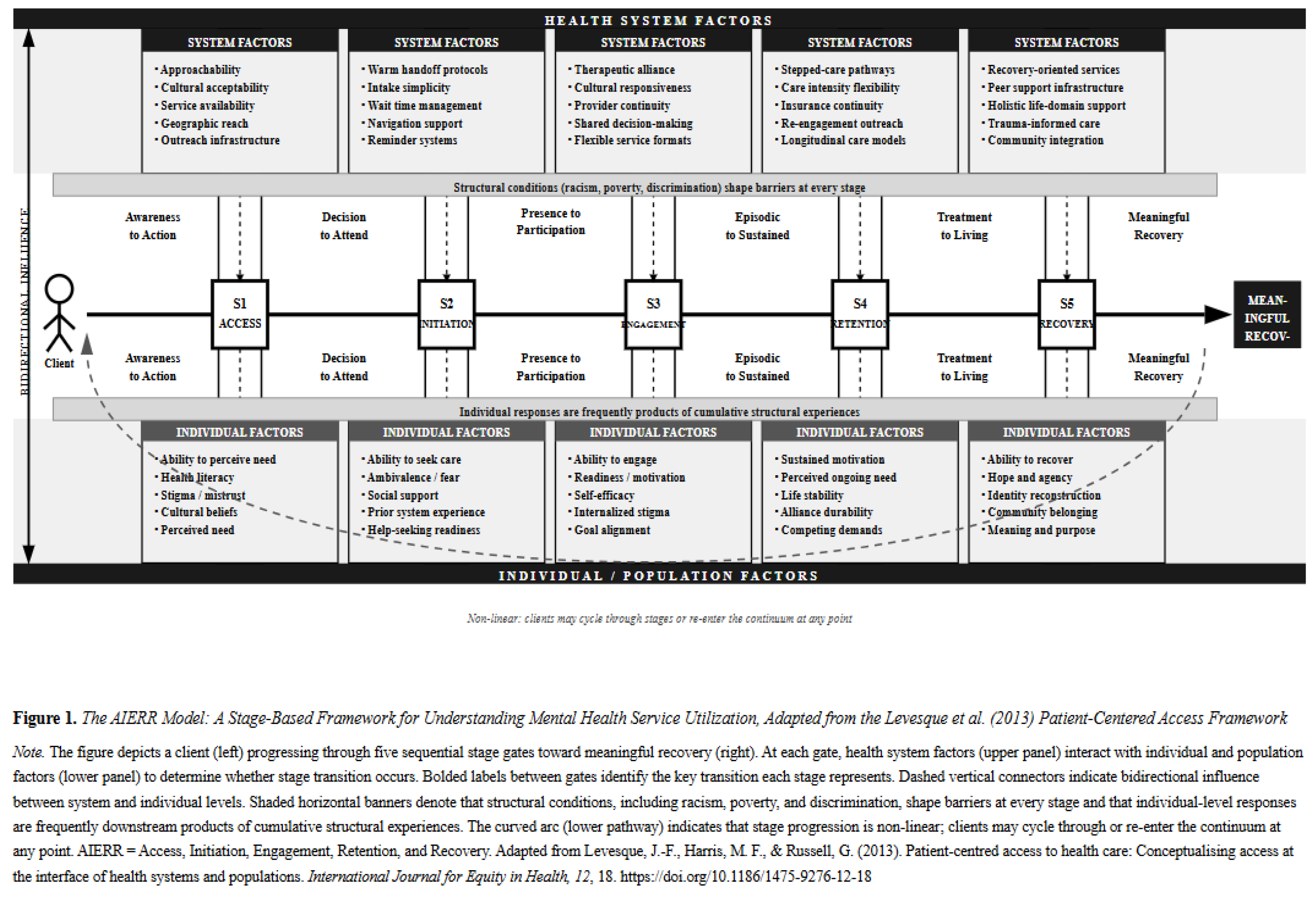
Disclaimer/Publisher’s Note: The statements, opinions and data contained in all publications are solely those of the individual author(s) and contributor(s) and not of MDPI and/or the editor(s). MDPI and/or the editor(s) disclaim responsibility for any injury to people or property resulting from any ideas, methods, instructions or products referred to in the content. |
© 2026 by the authors. Licensee MDPI, Basel, Switzerland. This article is an open access article distributed under the terms and conditions of the Creative Commons Attribution (CC BY) license (http://creativecommons.org/licenses/by/4.0/).
Copyright: This open access article is published under a Creative Commons CC BY 4.0 license, which permit the free download, distribution, and reuse, provided that the author and preprint are cited in any reuse.