

Submitted:
20 March 2026
Posted:
23 March 2026
You are already at the latest version
Abstract
Despite many efforts to curtail drunk driving, alcohol-related traffic fatalities and injuries continue to be a major public health problem in the U.S. and most of the world. Technologies exist that prevent an automobile from starting if the driver’s breath alcohol exceeds 20 mg/dL, but these devices are only fitted to vehicles of individuals who have been convicted of Driving Under the Influence (DUI). A new approach must be taken to reduce the incidence of drunk driving by integrating an alcohol sensor system in vehicles as part of the delivered hardware. The system must be fast, accurate, and contactless--meaning that a forced exhalation is not required to measure the concentration of alcohol on the breath. We report on a novel device, the Driver Alcohol Detection System for Safety (DADSS) Breath Alcohol Sensor System, which uses the mid-infrared region of the electromagnetic spectrum, is designed to concurrently monitor alcohol and expired carbon dioxide (CO2) to accurately quantify the breath alcohol concentration in samples that have been diluted in the atmosphere before being measured. The system was validated in a research laboratory with 70 male and female volunteers in 187 individual study days. Participants were given various doses of alcohol to consume and then breath and blood samples were collected simultaneously. Pearson correlation coefficients between the DADSS Breath Alcohol Sensor system and blood samples indicate a strong correlation between the measures, with an overall Pearson correlation of 0.8875 over an alcohol concentration range of 0 - 220 mg/dL. These results indicate that Incorporating the DADSS system into motor vehicles has the potential to reduce the incidence of drunk driving.
Keywords:
alcohol/ethanol
; automobile
; drunk driving
; impairment
; impaired driving
; breath alcohol concentration
; blood alcohol concentration
; human
1. Introduction
Excessive alcohol consumption is responsible for approximately 178,000 deaths and ~4 million years of potential life lost (YPLL) in the United States each year [1]. Binge drinking (consuming 4 or more drinks per occasion for women; 5 or more drinks per occasion for men) is responsible for more than half of the deaths and two-thirds of the YPLL due to excessive drinking [2] and is associated with many health and social problems, including alcohol-impaired driving, interpersonal violence, risky sexual activity, and unintended pregnancy [3,4]. Most people under age 21 who drink, report binge drinking 2-3 times per week [5,6].
Drunk driving remains the #1 cause of fatalities on U.S. roadways, and in 2022 it claimed 13,524 lives and cost the U.S. approximately $143 billion [7]. With drunk driving fatalities on the rise again, new alcohol detection technology is on the horizon to help reverse this deadly trend. That’s why the world’s leading automakers, through the Automotive Coalition for Traffic Safety, Inc. (ACTS), have joined forces with the U.S. federal government, through the U.S. Department of Transportation’s National Highway Traffic Safety Administration (NHTSA) in a public-private partnership called the Driver Alcohol Detection System for Safety (DADSS) Program. Together, the Program is developing a first-of-its-kind vehicle safety technology to reduce and, hopefully, one day, eliminate drunk driving. Alcohol impairs areas of the brain that are most relevant to operating a motor vehicle and include slowed reaction/braking times, ability to remain in the travel lane, and inability to recognize potentially dangerous or risky situations that are developing in real-time [8,9,10]. Moreover, some individuals display these disruptions at BACs that are below the legal limit of 80 mg/dL. Individuals who display less impulse control and have higher levels of sensation-seeking display more risky driving [11,12], which is exacerbated when individuals are intoxicated.
While the overall rate of driving under the influence has decreased since 2002 [13], the incidence of drunk driving has started to climb since 2019 and remains a serious public health problem [14]. In 2022 there were 13,524 fatalities on the U.S. highways [15] that involved drunk driving; this equates to 37 deaths every day or one person every 39 minutes. Furthermore, alcohol-related crashes resulted in an estimated 497,000 injuries and $68.9 billion in medical expenses in 2019, which makes up 20% of all crash costs [14]. Of those motor vehicle crashes, those with alcohol concentrations above 80 mg/dL or higher account for more than 90% of the economic costs and harm to society [14]. The economic costs encompass lost productivity, hospital and legal costs, rehabilitation services, and property damage. Many of the individuals who contribute to these losses are repeat offenders resulting in either the death of themselves or another individual, serious injury to them, or damage and destruction to property. While the focus is often on the number of deaths attributed to alcohol-impaired driving, the number of injuries and destruction to personal and public property is staggering:
- Alcohol-related fatalities on the highway by state ranged from 19% in Utah to 52% in the District of Columbia [16].
- Of the traffic fatalities among children under the age of 14 years and younger from 2001 - 2010, 20% involved an alcohol-impaired driver [17]
- The overall economic cost of drunk driving in the United States is $199 billion a year [18].
- Drugs other than alcohol (e.g., marijuana, cocaine) are involved in approximately 18% of motor vehicle driver deaths. These other drugs are often used in combination with alcohol [21], but there are no quick methods of determining the blood concentration of these illicit drugs.
A 2022 report from the Traffic Injury Research Foundation [22] noted that U.S. drivers who reported being “very or extremely concerned” about drunk driving fell from 65% in 2021 to 59% in 2022. They further noted that the number of drivers who drove when they thought they were over the legal BAC limit decreased from 22.5% in 2021 to 19.6% in 2022, and of these respondents, 9.3% thought they would not get caught, and 30.7% thought that despite being over the legal limit, they were still okay to drive.
What makes these data even more important is the fact that alcohol-related deaths on the highway are vastly underreported [23] because many states do not require blood alcohol testing on all fatalities. Laboratory and on-road research demonstrate that the vast majority of drivers, even experienced drivers, are significantly impaired at a blood alcohol concentration (BAC) of 80 mg/dL with regard to critical driving tasks such as braking, steering, lane changing, judgment, and divided attention [24,25,26]. Decrements in performance for drivers at a BAC of 80 mg/dL are on the order of 40 - 60% worse than when they are at a BAC of zero. Research studies have revealed that the most crucial aspect of impairment is the reduction in the ability to handle several tasks at once [27,28], a skill that is precisely what operating a motor vehicle requires.
Clearly, the efforts to curtail driving while under the influence have not been universally effective. We report on the development of the Driver Alcohol Detection System for Safety (DADSS) Breath-Alcohol Sensor System, which aims to help prevent impaired driving by accurately and quickly detecting alcohol concentrations in drivers. Auto manufacturers and NHTSA will be responsible for implementing and regulating, respectively, the system and deciding how the automobile will be programmed to respond once alcohol is detected. Furthermore, they will determine the threshold of alcohol concentration that triggers an action. The DADSS system differs from traditional interlock systems in the following important ways: 1) The sensor is unobtrusive; 2) The DADSS system does not require that the driver provide a forced exhalation sample into a mouthpiece—the breath is sampled passively and continuously as soon as the driver enters the vehicle; 3) if the system detects a poor quality breath sample (such as if the driver is wearing a mask), the system may require a brief directed breath sample towards the sensor; 4) processing time is a matter of seconds, resulting in little to no delay in being able to operate the vehicle (assuming the BAC is below the limit).
The system is based on the fundamental principles of breath-based technologies, except that a unique component has been incorporated to concurrently monitor alcohol and expired carbon dioxide (CO2) to accurately quantify the breath alcohol concentration in samples diluted in the atmosphere before being measured (Figure 1A). The breath alcohol sensor system uses the mid-infrared (MIR) region of the electromagnetic spectrum (2.5 - 25 μm). This approach allows the system to remotely analyze alcohol in breath within the vehicle cabin without the driver having to specifically provide a deep-lung breath sample or use a mouthpiece. The working principle of the sensor is to use measurements of expired CO2 as an indication of the degree of dilution of the alcohol in expired air. The normal concentration of CO2 in ambient air is low (~350 - 450 ppm), and the CO2 concentration in alveolar air is known, predictable, and remarkably constant. Humans absorb oxygen from surrounding air and exhale CO2, and the amount that is exhaled is rather constant at about 5%. (50,000 ppm) [29]. When CO2 is exhaled, it is quickly mixed with the surrounding air, but the ratio of ethanol to CO2 remains unchanged. Thus, by simultaneously measuring CO2 and alcohol, the degree of dilution can be compensated for using a mathematical algorithm. According to Hök (2006), the ratio between the measured concentrations of CO2 and alcohol, together with the known value of CO2 in alveolar air, can provide the alveolar air alcohol concentration [30]. The DADSS Breath Alcohol Sensor System uses mid-infrared (MIR) spectroscopy (2.5 - 25 µm) for both alcohol and CO2 (Figure 1B). A major advantage of this approach is that MIR-based sensors are stable over the full product lifetime, eliminating the need for recurrent calibration. The addition of the CO2 monitoring helps ensure that accurate sampling of the expired air has occurred.
Finally, the issue of partition coefficient was addressed in the system’s design. The partition coefficient is the ratio of the concentration of a compound (in this case, ethanol) in a mixture of two immiscible phases while at equilibrium. Thus, this ratio measures the difference in ethanol solubility in the two phases. The two phases are blood and air, as the “Gold Standard” for alcohol determination in the body is venous blood. All breath-based devices measure the ethanol concentration in air and ethanol’s partition coefficient can vary according to anatomical, physiological, and environmental factors. It has been reported that the partition coefficient of ethanol in humans ranges between 1,128:1 and 2,989:1 [31]. The partition coefficient has been adopted in the United States to 2,100 mg ethanol/dL blood per mg ethanol/dL air. Quantitative evidential breath alcohol analyzers are currently factory calibrated in grams of ethanol per 210 Liters of breath, thus equating to a partition coefficient ratio of 2,100:1, which is what the DADSS Breath Alcohol Sensor System uses.
Initial benchtop testing was completed before the sensors were used in the human participant experiments. Sensors were tested at a range of temperatures at breath alcohol (BrAC) levels of 0, 20, and 80 mg/dL using simulated breaths in a chemistry lab setting, but the sensors were not calibrated or adjusted in any way before they were used if they met the standards for proceeding with testing. The only excluded sensors had performance that suggested they had been damaged during transport to the lab.
Once benchtop testing was complete, the sensors were delivered to McLean Hospital for human testing. The goal of the human participant testing was to ensure that the sensors are accurate in a real-world situation. Blood alcohol content (BAC) is the accepted medium among established medical and legal guidelines with 80 mg/dL (0.08%) being the accepted legal limit for operating a motor vehicle in most states in the United States. States have adopted lower limits for commercial drivers while some have adopted zero tolerance for underage individuals. The DADSS Breath Alcohol Sensor System can be tuned to any threshold (e.g., between zero and 80 mg/dL).
2. Materials and Methods
2.1. DADSS Breath Alcohol Sensor System--Hardware
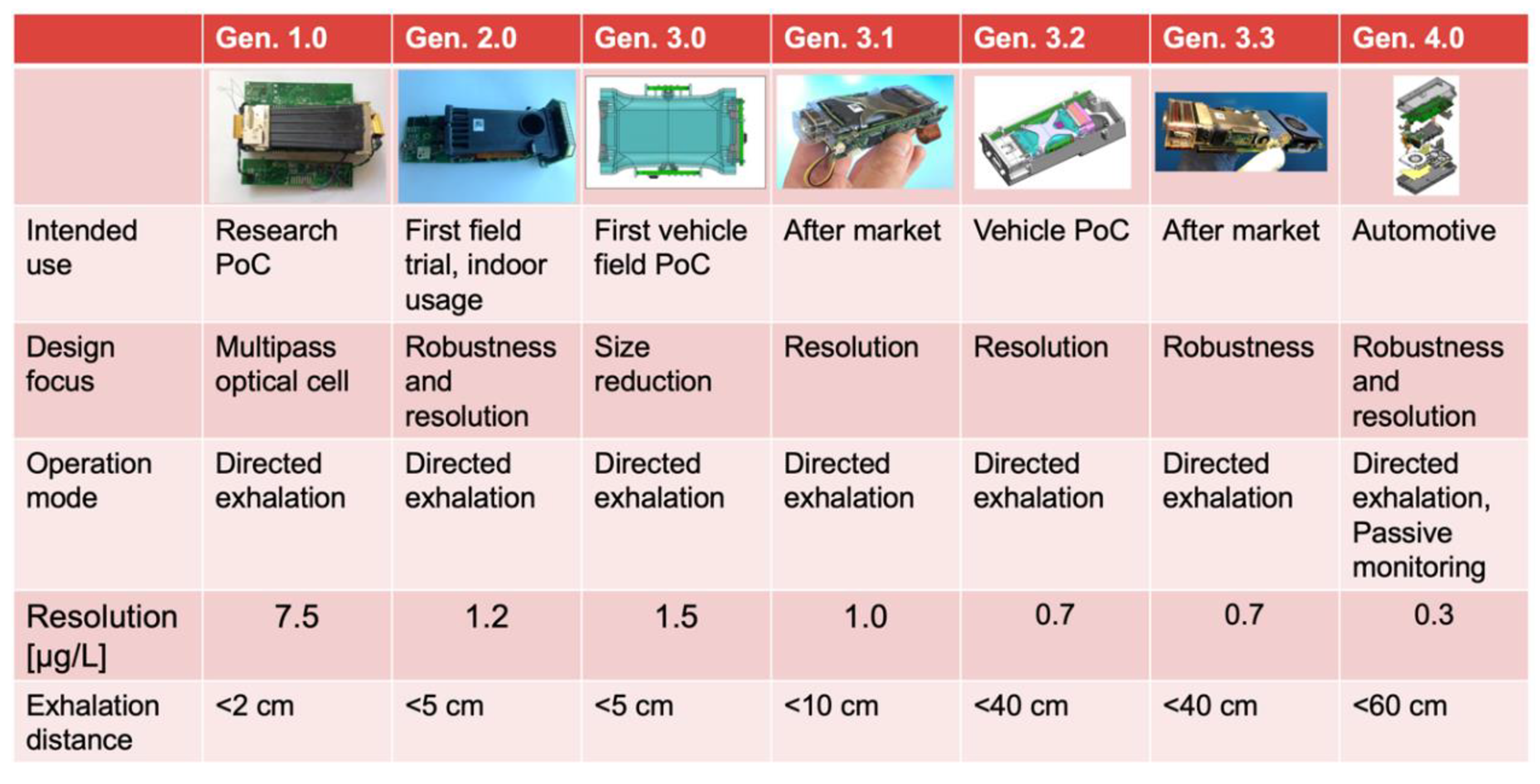
Table 1 Evolution of the various generations of the DADSS Breath Alcohol Sensor System with specifications and key design elements depicts the breath sampling sensor and details each generation of the DADSS Breath Alcohol Sensor System (developed by Senseair AB (“Senseair”)). Human participant testing was conducted only with Generations 3.0 – 3.3; Generation 4.0 is expected to be released in late 2024.
2.2. DADSS Breath Alcohol Sensor System--Software
The Senseair Xpira© software was designed to monitor and collect data from the DADSS Breath Alcohol Sensors during studies. Infrared (IR) signals are collected at 5 Hz, and BrAC results are calculated within moments of the breath sample being collected. If the software detected an unsuccessful breath sample, the participant was instructed to repeat the breath (exhalation). All breath data collected by the DADSS Breath Alcohol Sensor System was de-identified and only referenced by a unique study identifier.
2.3. Participants
A total of 70 healthy adult male and female volunteers between the ages of 21 - 55 were recruited via online advertisements to participate in the studies, for which they were compensated. Most individuals participated in more than one experiment, providing within-participant comparisons. The protocol and informed consent were approved by the Mass General Brigham (MGB) Institutional Review Board (IRB). Individuals received a full physical and psychiatric evaluation before being enrolled in the study that included blood chemistry, liver function tests, EKG, urinalysis, and drug and alcohol screens; all female participants received a pregnancy test that had to be negative in order to continue in the study. Participants could not meet DSM-5 criteria for any psychiatric disorder or substance use disorder. General reasons for exclusion include unstable or uncontrolled medical illness, serious central nervous system disease (e.g., multiple sclerosis or cerebral vascular accident), major depression, bipolar disorder, schizophrenia, psychosis, or organic mental disorder. Informed consent was obtained from all participants involved in the study. These rigorous standards were applied to ensure that it was safe for the volunteers to receive a test dose of ethyl alcohol and have up to 1/2 of a unit of blood withdrawn. On each test day, they received a breath alcohol test (Alco-Sensor FST Intoximeter®), a twelve-panel urine toxicology screen (CliaWaived Inc.® Or AmediCheck®), and a urine pregnancy test if female (QuPID® hCG Pregnancy Test) – all had to be negative before the study could proceed. Starting in 2020, eligible participants also had to provide a COVID-19 antigen test (FlowFlex®), which also had to be negative before proceeding with study activities.
2.4. General Procedure
The overall procedure was conducted as in our prior alcohol administration studies [32,33,34,35,36,37]. Participants were instructed that they could not drink alcohol for 36 hours prior to the scheduled study visit, smoke cigarettes after 10 pm the night before the study visit, or eat food after 8 pm. On the study day, participants arrived at the laboratory (via taxicab, rideshare, or other public transportation) after an overnight fast (no food after 8 pm; only non-caffeinated fluids in the morning before arriving) and were provided with a standardized breakfast (juice and toast). This small amount of food is necessary to eliminate nausea and possible vomiting that occurs after consuming alcohol on an empty stomach. Participants were not permitted to drive themselves to the laboratory but were instead required to take a rideshare or taxicab.
Each study day involved inserting an indwelling intravenous catheter (Dakmed-Kowarski ThromboResistant Catheter) into participants’ arms. The catheter was then attached to an exfusion syringe pump and set to draw blood at a rate of 1 mL/min. Participants were seated in a comfortable recliner chair while a blood sample was collected every 2 or 5 minutes and exhaled normally into the DADSS Breath Alcohol Sensor Systems (Figure 2). A photo of the arrangement showing the placement of the various Senseair units mounted on a microphone stands (Figure 3). Comparable time locked breath samples were also collected via a reference breath sample (Alco-Sensor FST; Intoximeter, Inc. St. Louis, MN). Participants’ vital signs (heart rate, oxygen saturation, skin temperature, respiration, and EKG) were recorded continuously using a patient monitor (Atlas Vital Signs Monitor, Welch-Allyn, Inc.). The testing protocols over time involved simulating a variety of drinking scenarios such as while exercising, eating a snack, eating a full meal, combined with an energy drink, single bolus doses, multiple drinks simulating binge drinking, etc. The data from these scenarios will be presented later as they focus on the biology and drinking patterns of human volunteers. The focus of the present study is on the DADSS Breath Alcohol Sensor System and the parameters under which the hardware and software operate. As such, the drinking scenario type is irrelevant to the data or its interpretation.
At time zero, the participants drank the alcohol beverage (see below), and all measurements continued as before until the end of the study (on average 3 hours). Participants were given a set of questionnaires (Subjective High Assessment Scale (SHAS)) [38] to rate their subjective mood state and degree of intoxication approximately every 20 min. Sample questions included: “On a scale of zero to 10, with zero being ‘not at all’ and 10 being ‘extremely’, how drunk do you feel right now?” Additional questions included items like how “Good,” “Bad,” “Floating,” “Hungry,” “Nauseous,” etc. Two additional questions were added at the end that asked how safe they would feel driving a motor vehicle (on the 0-10 scale) and asked them if they would drive right now, “Yes” or “No”? After the study ended, the i.v. catheter and electrodes were removed, and the participant was escorted to a waiting area and given lunch and nonalcoholic beverages. They were assessed approximately every 20 min and were required to remain in the laboratory until their BrAC dropped to below 50 mg/dL and they were able to pass a field sobriety test.
2.5. Alcohol Dosing
All participants were dosed based on their body weight (0.3 - 0.9 g/kg). Drinks were prepared fresh immediately prior to the experiments and included vodka (40% alcohol content). For a small number of experiments, participants were dosed using light beer (~5% alcohol content), and wine (~12% alcohol content), but the doses were calculated to achieve the same target g/kg dose as with the vodka. When dosing using vodka, drinks were consumed as straight shots or mixed with orange or cranberry juice. Beer and wine drinks were consumed as drinks in 16 oz plastic cups. Participants were provided specific instructions for the rate and volume of the beverage that was consumed (either as a large bolus dose or as three drinks spread out over 90 minutes). Because the focus of these studies was on comparing the BAC to the DADSS breath (BrAC) values, the rate and dose of alcohol administration for each participant were not relevant as we were only interested in comparing the x-y pairs collected at the same time.
2.6. Blood Alcohol Content (BAC)
Blood alcohol concentrations were analyzed in the BPRL laboratory using a previously established method [39,40]. Briefly, each sample was collected at either 2- or 5-minute intervals, transferred to a 6 mL gray-top BD Vacutainer blood collection tube (containing 15 mg sodium fluoride as an antiglycolytic agent and 12 mg of potassium oxalate as an anticoagulant), and then inverted 10 times to ensure proper mixing of the anticoagulant to ensure that a blood sample remained intact. Whole blood was extracted with an internal standard consisting of 1 mL n-propyl alcohol q.s. to 500 mL with 0.66 N sulfuric acid (1.85 mL concentrated H2SO4 to 100 mL deionized water) to yield a concentration of 160 mg/dL and a 10% (w/v) aqueous solution of sodium tungstate was employed to precipitate out the proteins [41,42]. The extractions were mixed thoroughly with a vortex mixer for 20 – 30 s and centrifuged at 4650 rpm for 30 min at 25° C. After centrifugation, the clear supernatant was transferred (100 µL) into autosampler vials with crimp caps for sequential direct injection (0.5 µL) onto the gas chromatograph (GC) (Model 7890A, Agilent Technologies), and analyzed with the use of capillary chromatography and a flame ionization detector (FID) [43,44,45]. Intra-assay CVs were 1.10%, and inter-assay CVs were 1.96%.
2.7. DADSS Breath Alcohol Sensor System Measurements
At designated times (approximately every 2 or 5 min), participants were instructed to exhale towards the DADSS Breath Alcohol Sensor System, capturing a passive breath sample since they do not have to physically blow into a tube. These measurements were timed to occur simultaneously as a blood sample was collected from the participant. Frequent pairings of referential breath samples from the Alco-Sensor FST were also scheduled. Four generations of the DADSS Breath Alcohol Sensor System were tested over seven years and were designated Gen 3.0, 3.1, 3.2, and 3.3. (Table 1).
2.8. Reference Breath Samples
As an added control, breath samples were also collected via a hand-held research-grade device (Alco-Sensor FST®, Intoximeter Corp., St. Louis, MO) at the same time intervals as the other measures. Instructions on providing a proper forced breath sample to the Alco-Sensor FST unit are given to participants by research staff trained in using the instrument. Briefly, participants are asked to take a deep breath and blow directly into the mouthpiece at a steady force for at least 8 seconds. Inadequate flow or too short duration results in an error and the sample was repeated. On the morning of each study, a trained operator checked the unit’s accuracy using an alcohol dry gas standard made by Intoximeter® per the instructions outlined in the manual. The device was calibrated if not within the acceptable error specifications (± 0.002) and checked again for accuracy. A comprehensive log was kept with the date and time of accuracy checks and unit calibrations.
2.9. Data Analysis
Because of the large volume of data points collected from each sensor, the data needed to be aggregated to adopt a more extensive statistical approach to accomplish the study aims. For each participant,, each DADSS sensor BrAC measurement was paired with a BAC measurement taken within three minutes of the breath measure, where possible. Using the aggregated data, the mean, and standard deviation of the DADSS sensor BrAC and BAC measurements were compared. Univariate linear regression modeling examined the association of DADSS sensor BrAC with BAC among the pairs. The Pearson correlation coefficient was computed to examine the strength and direction of the correlation between BrAC and BAC.
3. Results
3.1. Correlation Between Breath- and Blood-Based Alcohol Concentrations
From November 2015 through August 2023, 187 individual study days were conducted with 70 participants. Participants were permitted to participate in multiple different study scenarios as long as the study days were conducted 48 hours apart and they still met the study eligibility requirements. These participants ranged from ages 21 through 55, with a mean age of 29 and 75% under age 32. About two-thirds (64%) of participants were male. Overall, 9,163 DADSS BrAC measurements were paired with a BAC measurement that was taken within three minutes of the breath measure. Fifty-three percent of these pairs (n=4,851) were with generation 3.0 sensors, 15% (n=1,372) with generation 3.1, 25% (n=2,319) with generation 3.2, and 7% (n=621) with generation 3.3.
Initial analyses were performed to compare the alcohol concentrations from each of the four generations of the DADSS Breath Alcohol Sensor System. While small but significant differences among the sensor generations were found in terms of correlations with one another and with blood, the DADSS breath measures were pooled for this analysis. Univariate linear regression of DADSS BrAC as a predictor of BAC revealed a significant (p<0.0001) linear relationship between the two measures (predicted BAC = 9.0191 + 0.8097 * BrAC) and an r-square of 0.7877. A scatterplot of the DADSS BrAC measures (n=9,090) paired with positive BAC measures (73 BAC=0 pairs not included) is presented in Figure 4 and includes the regression line describing the relationship.
Pearson correlation coefficients between the DADSS Breath Alcohol Sensor System and BAC positive samples by generation indicate a strong positive correlation between the measures, with an overall Pearson correlation of 0.8875 (95%CI:0.8831,0.8918). These results demonstrate that the correlation between the DADSS Breath Alcohol Sensor System and the gold standard, blood alcohol, is extremely good, but they also identify a slight offset in the alignment between the two techniques. Therefore, we aligned the values to one another in order to adjust for the slight overestimation of BrAC by the DADSS Breath Alcohol Sensor System.
3.2. Time Course of Alcohol Concentration After Oral Administration
Alcohol is rapidly absorbed from the small intestines, especially when drinking on an empty stomach. Figure 5 depicts the time course of alcohol concentration through the various phases of absorption, distribution, metabolism, and elimination in a cohort of male and female participants. The DADSS Breath Alcohol Sensor System BrAC measurements have been aligned based on the ratio of DADSS BrAC mean versus blood BAC by DADSS sensor generation to account for a systematic overestimation of BrAC when alcohol is present in the blood (BAC>0). Figure 5 illustrates how residual alcohol from buccal (i.e., “mouth alcohol”) can be seen right after dosing, but this dissipates within 15 - 20 minutes after drinking. Once the buccal alcohol has disappeared, the time course of alcohol concentration depicted by the two breath-based systems matches with the blood extremely well.
3.3. Subjective Reports of Intoxication
The participants were asked to complete a series of visual analog scales asking about their degree of intoxication, mood state, and confidence in their driving ability. Results for all questions followed the pattern that has been well documented after acute alcohol consumption. A selected set of questions is depicted in Figure 6. showing that the effects paralleled the rise and fall of alcohol concentration, as depicted in Figure 5. Acute consumption of alcohol resulted in an expected rise in reports of how “Drunk,” “Talkative,” “High,” Slurred Speech,” “Floating,” and “Clumsy” that peaked around 50 minutes after dosing and then declined to baseline ratings. One of the more interesting questions related to the participant’s confidence in their driving and how that related to breath alcohol concentration. Nearly 30% of the participants indicated that they felt “Safe to Drive” a vehicle even though they were legally under the influence of alcohol at 80 mg/dL.
The other questions asked in the SHAS related to how “Nauseated, “Anxious,” “Dizzy,” Uncomfortable,” “Tired,” “Sleepy,” “Bored,” and “Confused” they felt did not change appreciably during the experiment (data not shown).
4. Discussion
4.1. Importance of High Correlations Between Breath and Blood and Direct Applications of the DADSS Breath Alcohol Sensor System
Many prior studies have demonstrated a good correlation between breath and blood alcohol concentrations, but the breath samples have all been collected via a forced exhalation procedure designed to collect a “deep lung sample.” While the commercial products marketed as alcohol “sniffers” that are incorporated into flashlights for law enforcement exist (e.g., the PAS IV Flashlight Passive Alcohol Tester, AlcoPro), these devices are meant to be swept inside a vehicle to detect alcohol on a person’s breath [46]. However, these devices will also pick up alcohol in the atmosphere inside the vehicle, regardless of who was drinking, as well as the alcohol in the air that has escaped from an open container. In contrast, The DADSS Breath Alcohol Sensor System not only has excellent correlations with blood, but it does so in the absence of a mouthpiece and without a deep forced exhalation sample. In essence, it is a “contactless” system that targets the driver of the vehicle. The present approach is novel in that it relies on a well-established relationship between exhaled CO2 as a marker for dilution of passive breathing. This strategy sets this system apart from every other breath-based device in use today, as each exhalation is analyzed for both alcohol and CO2 simultaneously.
4.2. The Physiology of Breath Sampling and Its Relationship to Blood Concentrations and the Associated Engineering Challenges
One of the key aspects of using breath samples as a surrogate for blood alcohol concentrations is the partition coefficient of alcohol in air and water. However, for breath to accurately reflect the concentration in blood, the breath must be sampled from deep lung space, close to the alveolar sacs where the actual exchange takes place. In order to design a system that can function just as accurately from a passive breath sample, the DADSS program developed a system that capitalizes on the concentration of expired CO2 with every passive breath. The concentration of CO2 varies in the environment, but is quite stable in the human body, at approximately 5% [29].
4.3. Correlations Between BAC, Breath AC, and Subjective Ratings of Intoxication.
One key finding of the present study is that individuals still reported that they would operate a motor vehicle even though their breath alcohol concentration was 80 mg/dL or higher. This finding alone justifies the need for a system like DADSS because individuals are not very good at estimating their level of impairment [47]. In addition, individuals who have had a DUI report greater confidence in their ability to drive after drinking [48]. Contrary to popular belief among the lay public and the non-specialist professional, casual observations of an individual are not reliable indicators of the degree of intoxication. Many factors contribute to an individual’s outward appearance after consuming alcohol, and the effects are both dose- and time-dependent. Individuals with a high BAC can often perform relatively simple motor tasks, especially when they are in a familiar situation or are not subjected to challenging scenarios. This concept has two important implications: 1) an intoxicated person will report feeling far more sober than he/she really is, and 2) casual observers will misidentify these individuals as being less intoxicated than they really are. But when an individual is challenged and must perform even a simple task, or their balance is challenged by a small change in the surface or find themselves in a novel environment, then their ability to complete the task or maintain balance is significantly impaired and their performance suffers [27,36].
4.4. DADSS Breath Alcohol Sensor System— In-Vehicle Applications for Research
There are several ways in which the sensor could be integrated into a vehicle for validation and verification activities. The individual unit could be adapted and customized to fit into any cabin of domestic and commercial vehicles (Figure 7). Figure 8 shows some of the research-based integrations that have been conducted thus far on various car models. Some of these integrations are accompanied by LEDs that provide the user with feedback on their breath result. The unobtrusive inlet for the breath sampling sensor is located on top of the steering column, as the red arrow indicates (Figure 8A - 8D).
Because the system is designed to be adapted to all automobile makes and models, each vehicle manufacturer would determine the actual final configuration in the cabin.
5. Conclusions
We report on the performance and human testing of the Driver Alcohol Detection System for Safety (DADSS) Breath Alcohol Sensor System, which is a compact contactless sensor that quantifies breath alcohol concentrations in a matter of seconds and accurately predicts alcohol concentrations in blood. Validations were accomplished via laboratory-based human participant testing protocols during which volunteers consumed various doses of beverage-grade alcohol and then their breath and blood were simultaneously tested for alcohol concentration. The correlation between breath and blood are exceptionally accurate over a broad range of alcohol concentrations from zero to 220 mg/dL. These data also demonstrate that individuals are not aware that they are over the legal limit of 80 mg/dL and often report that they would feel comfortable operating a motor vehicle. The DADSS Breath Alcohol Sensor System is a promising technology that will help reduce the incidence of drunk driving.6. Patents
The technology reported here is covered by ACTS–owned patents and pending patents including:
Canada: 2,920,796; 2,925,806; 2,881,817; 2,881,814; 3,010,352; 2,987,729
China: ZL201280042179.6; ZL201480047728.8; ZL201480055848.2; ZL202010449254.7; ZL201680083149.8; ZL201680086043.3; ZL201680046009.3; ZL20128019106
Europe: 3038865; 2888587; 2888588; 3433611; 3304045; 2683569; 3,994,015
Japan: 6553614; 6656144; 6496244; 6408991; 6954875; 7138047; 6786624; 7028768; 6121916
South Africa: 2016/00797; 2016/01639; 2015/01247
Sweden: 536784; 536782; 544050; 543554; 544897; 545663
U.S: 10,099,554; 11,001,142; 10,710,455; 9,281,658; 11,391,724; 10,151,744; 11,143,646; 10,826,270; 11,104,227; 9,823,237; 11,874,262; 11,072,345; 11,513,070; 11,862,934; 8,479,864
Author Contributions
Conceptualization, Scott Lukas, Tim Allen and Kianna Pirooz; methodology, Scott Lukas and Jane McNeil; software, Senseair and Rebecca Spicer; validation, Kianna Pirooz, Tim Allen and Rebecca Spicer; formal analysis, Rebecca Spicer and Scott Lukas; blood alcohol analyses, Scott Lukas, Jane McNeil and Jing Liu; medical supervision/coverage Gordana Vitaliano; investigation, Kianna Pirooz and Samantha Kalmar; resources, Tim Allen and Scott Lukas; data curation, Rebecca Spicer; writing – original draft preparation, Scott Lukas; writing—review and editing, Kianna Pirooz.; visualization, Rebecca Spicer; supervision, Tim Allen and Scott Lukas; project administration, Tim Allen and Scott Lukas; funding acquisition, Tim Allen and Scott Lukas. All authors have read and agreed to the published version of the manuscript.
Funding
This work was originated and funded by the Driver Alcohol Detection System for Safety (DADSS) Program, a public-private partnership between the Automotive Coalition for Traffic Safety, Inc. (ACTS), a nonprofit organization comprised of motor vehicle manufacturers, and the U.S. Department of Transportation’s National Highway Safety Administration (NHTSA) under contract number 693JJ92350015. KEA received funding for research, engineering, support, and management services provided to the Automotive Coalition for Traffic Safety, Inc. (ACTS) for the Driver Alcohol Detection System for Safety (DADSS) Program, of which this study is a part. KEA engaged McLean Hospital for human participant testing and Impact Research for data analysis activities. Senseair AB received funding for hardware and software development services provided to the Automotive Coalition for Traffic Safety, Inc. (ACTS) for the Driver Alcohol Detection System for Safety (DADSS) Program.
Institutional Review Board Statement
The study was conducted according to the guidelines of the Declaration of Helsinki, and approved by the Mass General Brigham (MGB) Institutional Review Board, (protocol #2014P000130; last annual approval date 6/18/2025).
Informed Consent Statement
Both verbal and written informed consent was obtained from all participants involved in the study.
Data Availability Statement
The original contributions presented in this study are included in the article/supplementary material. Further inquiries can be directed to the corresponding author(s).
Acknowledgments
We would like to thank all participants for their contribution to this research.
Conflicts of Interest
The authors declare no conflict of interest.
Abbreviations
The following abbreviations are used in this manuscript:
| BAC | Blood Alcohol Content |
| BrAC | Breath Alcohol Content |
| CO2 | Carbon Dioxide |
| DADSS | Driver Alcohol Detection System for Safety |
| mg/dL | milligrams per deciliter |
| ppm | parts per million |
References
- CDC Facts About U.S. Deaths from Excessive Alcohol Use. Available online: https://www.cdc.gov/alcohol/facts-stats/index.html (accessed on 14 July 2024).
- Stahre, M. Contribution of Excessive Alcohol Consumption to Deaths and Years of Potential Life Lost in the United States. Prev Chronic Dis 2014, 11. [Google Scholar] [CrossRef] [PubMed]
- Naimi, T.S.; Brewer, R.D.; Mokdad, A.; Denny, C.; Serdula, M.K.; Marks, J.S. Binge Drinking among US Adults. JAMA 2003, 289, 70–75. [Google Scholar] [CrossRef] [PubMed]
- The Healthcare Professional’s Core Resource on Alcohol. Available online: https://www.niaaa.nih.gov/health-professionals-communities/core-resource-on-alcohol/medical-complications-common-alcohol-related-concerns#:~:text=Heavy%20alcohol%20use%20causes%209%2C000,heart%20attack%2C78%20and%20stroke.&text=Current%20research%20indicates%20that%20overall,the%20less%20alcohol%2C%20the%20better. (accessed on 14 July 2024).
- Miller, J.W.; Naimi, T.S.; Brewer, R.D.; Jones, S.E. Binge Drinking and Associated Health Risk Behaviors among High School Students. Pediatrics 2007, 119, 76–85. [Google Scholar] [CrossRef] [PubMed]
- Underage Drinking in the United States (Ages 12 to 20). Available online: https://www.niaaa.nih.gov/alcohols-effects-health/alcohol-topics/alcohol-facts-and-statistics/underage-drinking-united-states-ages-12-20 (accessed on 14 July 2024).
- National Center for Statistics and Analysis Alcohol-Impaired Driving: 2022 Data; Traffic Safety Facts; National Highway Traffic Safety Administration: Washington, DC, 2024; p. 13.
- Liguori, A. Simulator Studies of Drug-Induced Driving Impairment. In Drugs, Driving and Traffic Safety; Verster, J.C., Pandi-Perumal, S.R., Ramaekers, J.G., de Gier, J.J., Eds.; Birkhäuser: Basel, 2009; pp. 75–82. ISBN 978-3-7643-9923-8. [Google Scholar]
- Martin, T.L.; Solbeck, P.A.M.; Mayers, D.J.; Langille, R.M.; Buczek, Y.; Pelletier, M.R. A Review of Alcohol-Impaired Driving: The Role of Blood Alcohol Concentration and Complexity of the Driving Task. J Forensic Sci 2013, 58, 1238–1250. [Google Scholar] [CrossRef]
- Ogden, E.J.D.; Moskowitz, H. Effects of Alcohol and Other Drugs on Driver Performance. Traffic Inj Prev 2004, 5, 185–198. [Google Scholar] [CrossRef]
- Schwebel, D.C.; Severson, J.; Ball, K.K.; Rizzo, M. Individual Difference Factors in Risky Driving: The Roles of Anger/Hostility, Conscientiousness, and Sensation-Seeking. Accid Anal Prev 2006, 38, 801–810. [Google Scholar] [CrossRef]
- Fillmore, M.T.; Blackburn, J.S.; Harrison, E.L.R. Acute Disinhibiting Effects of Alcohol as a Factor in Risky Driving Behavior. Drug Alcohol Depend 2008, 95, 97–106. [Google Scholar] [CrossRef]
- Oh, S.; Vaughn, M.G.; Salas-Wright, C.P.; AbiNader, M.A.; Sanchez, M. Driving under the Influence of Alcohol: Findings from the NSDUH, 2002-2017. Addict Behav 2020, 108, 106439. [Google Scholar] [CrossRef]
- NHTSA: Traffic Crashes Cost America $340 Billion in 2019 | NHTSA. Available online: https://www.nhtsa.gov/press-releases/traffic-crashes-cost-america-billions-2019 (accessed on 23 October 2024).
- Drunk Driving | NHTSA. Available online: https://www.nhtsa.gov/risky-driving/drunk-driving (accessed on 23 October 2024).
- National Center for Statistics and Analysis 2017 Fatal Motor Vehicle Crashes: Overview; Traffic Safety Facts Research Note; National Highway Traffic Safety Administration: Washington, DC, 2018.
- Quinlan, K.; Shults, R.A.; Rudd, R.A. Child Passenger Deaths Involving Alcohol-Impaired Drivers. Pediatrics 2014, 133, 966–972. [Google Scholar] [CrossRef]
- Blincoe, L.J.; Miller, T.R.; Zaloshnja, E.; Lawrence, B.A. The Economic and Societal Impact of Motor Vehicle Crashes, 2010 (Revised); National Highway Traffic Safety Administration: Washington, DC, 2015; pp. 194–196. [Google Scholar]
- FBI Releases 2010 Crime Statistics. Available online: https://ucr.fbi.gov/crime-in-the-u.s/2010/crime-in-the-u.s.-2010/summary (accessed on 23 October 2024).
- Bergen, G.; Shults, R.A.; Rudd, R.A. Vital Signs: Alcohol-Impaired Driving Among Adults — United States, 2010; Morbidity and Mortality Weekly Report; National Center for Injury Prevention and Control, CDC., 2011; pp. 1351–1356. [Google Scholar]
- Jones, A.W.; Andersson, L. Comparison of Ethanol Concentrations in Venous Blood and End-Expired Breath during a Controlled Drinking Study. Forensic Sci Int 2003, 132, 18–25. [Google Scholar] [CrossRef]
- Vanlaar, G.W.; Lyon, C.; Simmons, S.; Wicklund, C.; Robertson, R.D. Road Safety Monitors - National Opinion Polls on Alcohol-Impaired Driving in the United States 2023.
- Castle, I.-J.P.; Yi, H.-Y.; Hingson, R.W.; White, A.M. State Variation in Underreporting of Alcohol Involvement on Death Certificates: Motor Vehicle Traffic Crash Fatalities as an Example. J Stud Alcohol Drugs 2014, 75, 299–312. [Google Scholar] [CrossRef] [PubMed]
- Moskowitz, H.; Burns, M.M.; Williams, A.F. Skills Performance at Low Blood Alcohol Levels. J Stud Alcohol 1985, 46, 482–485. [Google Scholar] [CrossRef] [PubMed]
- Starmer, G. Effects of Low to Moderate Doses of Ethanol on Human Driving-Related Performance. In Human Metabolism of Alcohol; CRC Press: Boca Raton, FL, 1989; Vol. 1, pp. 101–130. [Google Scholar]
- Howat, P.; Sleet, D.; Smith, I. Alcohol and Driving: Is the 0.05% Blood Alcohol Concentration Limit Justified? Drug Alcohol Rev 1991, 10, 151–166. [Google Scholar] [CrossRef] [PubMed]
- Lex, B.W.; Greenwald, N.E.; Lukas, S.E.; Slater, J.P.; Mendelson, J.H. Blood Ethanol Levels, Self-Rated Ethanol Effects and Cognitive-Perceptual Tasks. Pharmacol Biochem Behav 1988, 29, 509–515. [Google Scholar] [CrossRef]
- Freydier, C.; Berthelon, C.; Bastien-Toniazzo, M.; Gineyt, G. Divided Attention in Young Drivers under the Influence of Alcohol. J Safety Res 2014, 49, 13–18. [Google Scholar] [CrossRef]
- Pleil, J.D.; Wallace, M.A.G.; Davis, M.D.; Matty, C.M. The Physics of Human Breathing: Flow, Timing, Volume, and Pressure Parameters for Normal, on-Demand, and Ventilator Respiration. Journal of breath research 2021, 15, 10.1088/1752. [Google Scholar] [CrossRef]
- Hök, B.; Pettersson, H.; Andersson, G. Contactless Measurement of Breath Alcohol. Presented at the Micro Structure Workshop, Västerås, Sweden, 2006. [Google Scholar]
- Labianca, D.A.; Simpson, G. Statistical Analysis of Blood- to Breath-Alcohol Ratio Data in the Logarithm-Transformed and Non-Transformed Modes. Eur J Clin Chem Clin Biochem 1996, 34, 111–117. [Google Scholar] [CrossRef]
- Lukas, S.E.; Mendelson, J.H.; Benedikt, R.A. Instrumental Analysis of Ethanol-Induced Intoxication in Human Males. Psychopharmacology (Berl) 1986, 89, 8–13. [Google Scholar] [CrossRef]
- Lukas, S.E.; Mendelson, J.H.; Benedikt, R.A.; Jones, B. EEG Alpha Activity Increases during Transient Episodes of Ethanol-Induced Euphoria. Pharmacol Biochem Behav 1986, 25, 889–895. [Google Scholar] [CrossRef]
- Lukas, S.E.; Mendelson, J.H. Electroencephalographic Activity and Plasma ACTH during Ethanol-Induced Euphoria. Biol Psychiatry 1988, 23, 141–148. [Google Scholar] [CrossRef] [PubMed]
- Lukas, S.E.; Mendelson, J.H.; Woods, B.T.; Mello, N.K.; Teoh, S.K. Topographic Distribution of EEG Alpha Activity during Ethanol-Induced Intoxication in Women. J Stud Alcohol 1989, 50, 176–185. [Google Scholar] [CrossRef] [PubMed]
- Lukas, S.E.; Lex, B.W.; Slater, J.P.; Greenwald, N.E.; Mendelson, J.H. A Microanalysis of Ethanol-Induced Disruption of Body Sway and Psychomotor Performance in Women. Psychopharmacology (Berl) 1989, 98, 169–175. [Google Scholar] [CrossRef] [PubMed]
- Phipps, W.R.; Lukas, S.E.; Mendelson, J.H.; Ellingboe, J.; Palmieri, S.L.; Schiff, I. Acute Ethanol Administration Enhances Plasma Testosterone Levels Following Gonadotropin Stimulation in Men. Psychoneuroendocrinology 1987, 12, 459–465. [Google Scholar] [CrossRef]
- Morean, M.E.; Corbin, W.R.; Treat, T.A. The Subjective Effects of Alcohol Scale: Development and Psychometric Evaluation of a Novel Assessment Tool for Measuring Subjective Response to Alcohol. Psychol Assess 2013, 25, 780–795. [Google Scholar] [CrossRef]
- Lukas, S.E.; Zaouk, A.; Ryan, E.; McNeil, J.; Shepherd, J.; Willis, M.; Dalal, N.; Schwartz, K. Driver Alcohol Detection System for Safety (DADSS) - Preliminary Human Testing Results; Detroit, Michigan, 5 June 2017. [Google Scholar]
- Penetar, D.M.; McNeil, J.F.; Ryan, E.T.; Lukas, S.E. Comparison among Plasma, Serum, and Whole Blood Ethanol Concentrations: Impact of Storage Conditions and Collection Tubes. J Anal Toxicol 2008, 32, 505–510. [Google Scholar] [CrossRef]
- Berkman, S.; Henry, R.J.; Golub, O.J.; Segalove, M. Tungstic Acid Precipitation of Blood Proteins. J Biol Chem 1954, 206, 937–943. [Google Scholar] [CrossRef]
- Schlatter, J.; Chiadmi, F.; Gandon, V.; Chariot, P. Simultaneous Determination of Methanol, Acetaldehyde, Acetone, and Ethanol in Human Blood by Gas Chromatography with Flame Ionization Detection. Hum Exp Toxicol 2014, 33, 74–80. [Google Scholar] [CrossRef]
- Folin, O.; Wu, H. A SYSTEM OF BLOOD ANALYSIS. Journal of Biological Chemistry 1919, 38, 81–110. [Google Scholar] [CrossRef]
- Tagliaro, F.; Lubli, G.; Ghielmi, S.; Franchi, D.; Marigo, M. Chromatographic Methods for Blood Alcohol Determination. J Chromatogr 1992, 580, 161–190. [Google Scholar] [CrossRef]
- Watts, R.W.E. Determination of Uric Acid in Blood and in Urine. Ann Clin Biochem 1974, 11, 103–111. [Google Scholar] [CrossRef]
- PAS IV Flashlight Passive Alcohol Tester. Available online: https://alcopro.com/product/pas-iv-flashlight/ (accessed on 23 October 2024).
- Köchling, J.; Geis, B.; Chao, C.-M.; Dieks, J.-K.; Wirth, S.; Hensel, K.O. The Hazardous (Mis)Perception of Self-Estimated Alcohol Intoxication and Fitness to drivE—an Avoidable Health Risk: The SAFE Randomised Trial. Harm Reduction Journal 2021, 18, 122. [Google Scholar] [CrossRef]
- Van Dyke, N.; Fillmore, M.T. Alcohol Effects on Simulated Driving Performance and Self-Perceptions of Impairment in DUI Offenders. Exp Clin Psychopharmacol 2014, 22, 484–493. [Google Scholar] [CrossRef]
Figure 1.
Fundamental principles of a breath-based alcohol detection A) Anatomical and physiological components of the exchange of gases between blood and air in the lungs. Gases and volatile compounds move from areas of higher to lower concentrations by diffusing across the membrane that separates capillaries from the alveolar sacs in the lungs. B) Operational principles of the DADSS Breath Alcohol Sensor System to mimic the normal physiological exchange of ethanol and CO2. The beam of a broadband infrared emitter is reflected multiple times and detects the presence of both ethanol and CO2, resulting in an ethanol/CO2 ratio.
Figure 1.
Fundamental principles of a breath-based alcohol detection A) Anatomical and physiological components of the exchange of gases between blood and air in the lungs. Gases and volatile compounds move from areas of higher to lower concentrations by diffusing across the membrane that separates capillaries from the alveolar sacs in the lungs. B) Operational principles of the DADSS Breath Alcohol Sensor System to mimic the normal physiological exchange of ethanol and CO2. The beam of a broadband infrared emitter is reflected multiple times and detects the presence of both ethanol and CO2, resulting in an ethanol/CO2 ratio.
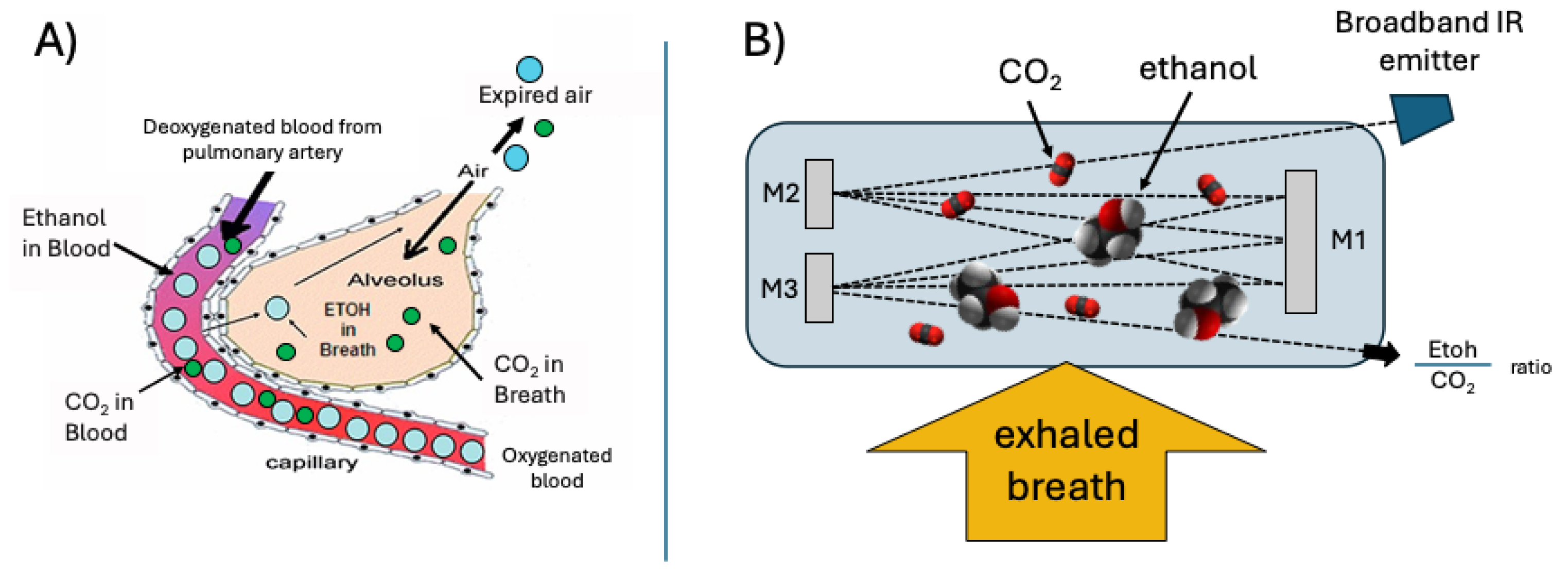
Figure 2.
Layout of the Human Psychopharmacology Research Laboratory where human participant testing was conducted. The various DADSS Breath Alcohol Sensor Systems were mounted on a microphone stand with an “octopus” fitting to allow up to three sensors to be tested simultaneously. All DADSS sensors were controlled using a single laptop running the Senseair Xpira software. Individual’s vital signs were continuously monitored, and blood was sampled via an i.v. catheter outside of the test chamber. Once the study was over, the blood samples were transferred to the Clinical Chemistry Laboratory (one floor below the lab) for blood alcohol concentration quantification.
Figure 2.
Layout of the Human Psychopharmacology Research Laboratory where human participant testing was conducted. The various DADSS Breath Alcohol Sensor Systems were mounted on a microphone stand with an “octopus” fitting to allow up to three sensors to be tested simultaneously. All DADSS sensors were controlled using a single laptop running the Senseair Xpira software. Individual’s vital signs were continuously monitored, and blood was sampled via an i.v. catheter outside of the test chamber. Once the study was over, the blood samples were transferred to the Clinical Chemistry Laboratory (one floor below the lab) for blood alcohol concentration quantification.
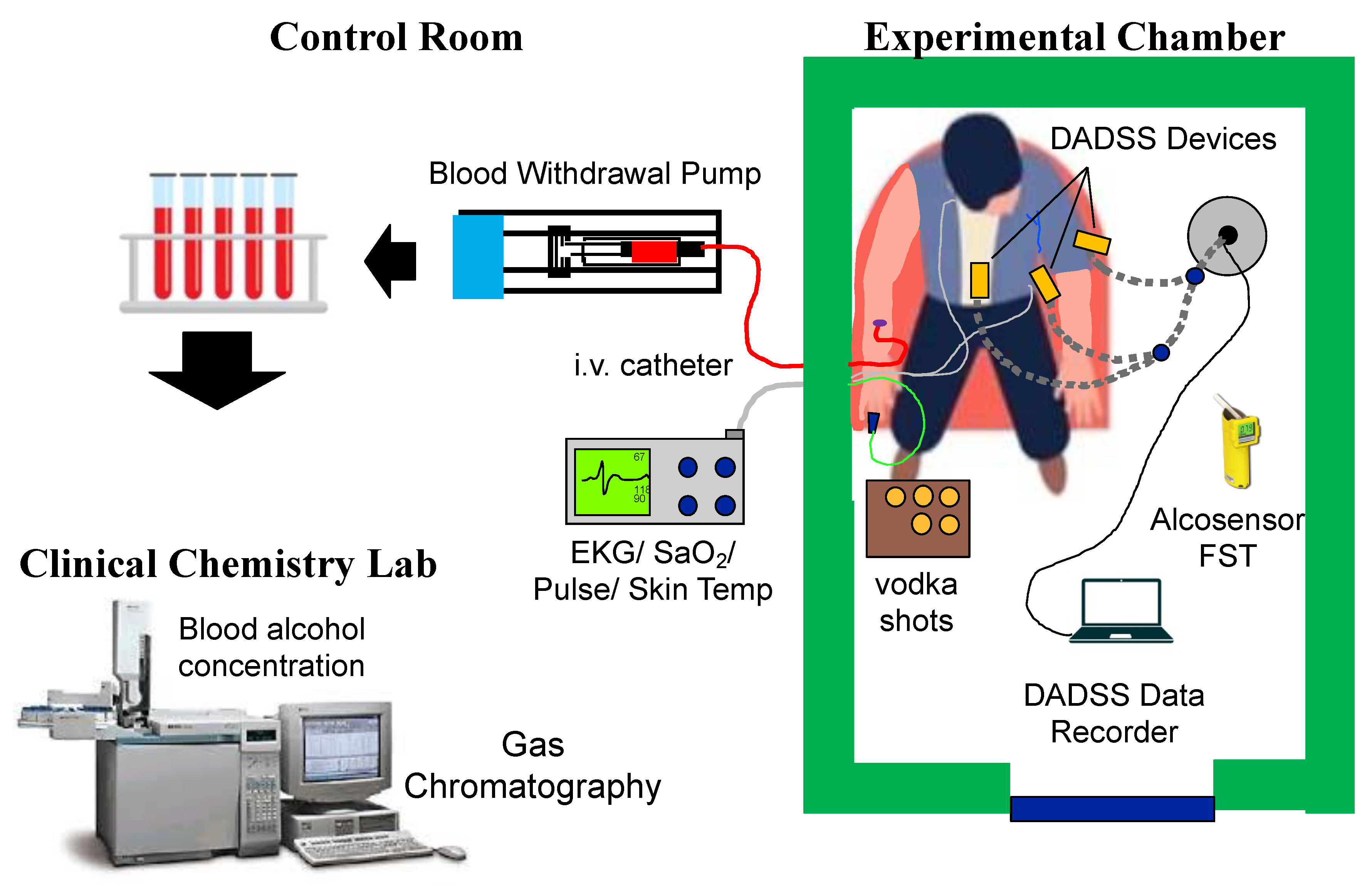
Figure 3.
Photograph of the testing environment with the various generations of the Senseair devices oriented in several locations in front of the participant’s face.
Figure 3.
Photograph of the testing environment with the various generations of the Senseair devices oriented in several locations in front of the participant’s face.
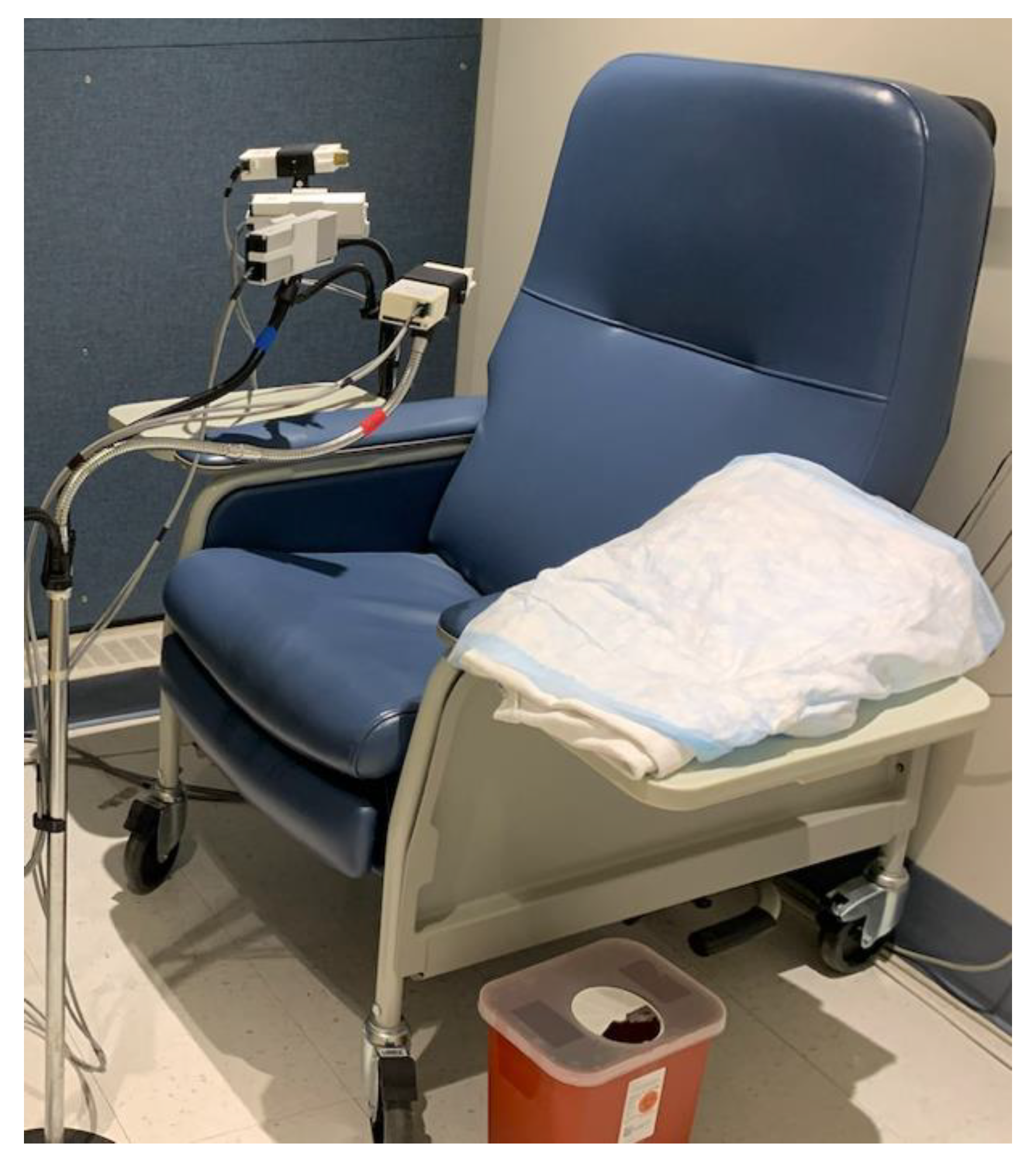
Figure 4.
Linear association of alcohol concentrations as measured with the DADSS Breath Alcohol Sensor System versus blood alcohol as measured via gas chromatography. Univariate linear regression of DADSS BrAC as a predictor of BAC revealed a significant (p<0.0001) linear relationship between the two measures (predicted BAC = 9.0191 + 0.8097 * BrAC) and an r-square of 0.7877. n=9,090.
Figure 4.
Linear association of alcohol concentrations as measured with the DADSS Breath Alcohol Sensor System versus blood alcohol as measured via gas chromatography. Univariate linear regression of DADSS BrAC as a predictor of BAC revealed a significant (p<0.0001) linear relationship between the two measures (predicted BAC = 9.0191 + 0.8097 * BrAC) and an r-square of 0.7877. n=9,090.
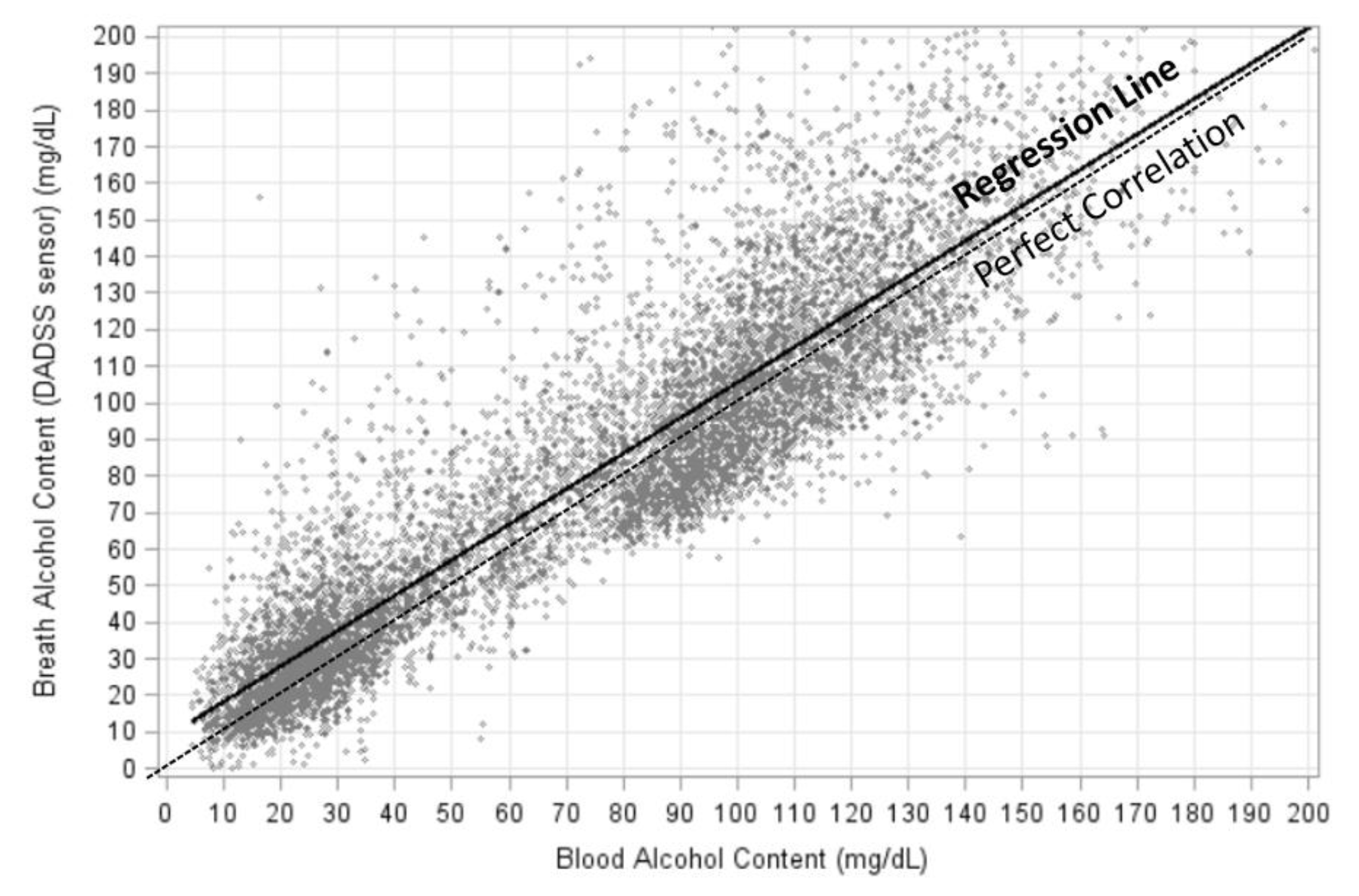
Figure 5.
Time course of alcohol concentration in the DADSS Breath Alcohol Sensor System (DADSS Breath Sensor), blood, and the Alco-Sensor FST in volunteers after consuming 0.3 (A) or 0.9 (B) g/kg of ethyl alcohol. The DADSS breath data are aligned based on the ratio of DADSS BrAC mean versus blood BAC the means by generation (not shown).
Figure 5.
Time course of alcohol concentration in the DADSS Breath Alcohol Sensor System (DADSS Breath Sensor), blood, and the Alco-Sensor FST in volunteers after consuming 0.3 (A) or 0.9 (B) g/kg of ethyl alcohol. The DADSS breath data are aligned based on the ratio of DADSS BrAC mean versus blood BAC the means by generation (not shown).
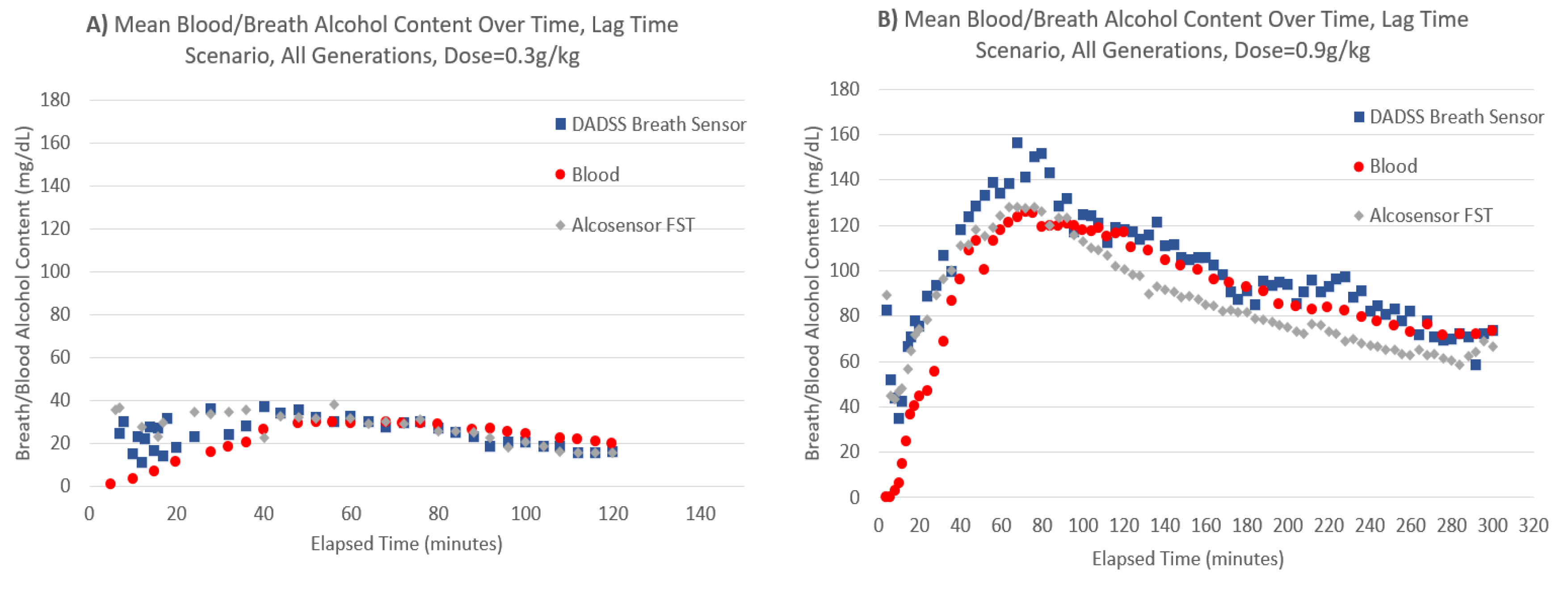
Figure 6.
Subjective reports of mood state and confidence in the ability to drive a motor vehicle as a function of time. Values are mean ± standard error of the mean (sem) from 17 participants who consumed 0.9 g/kg of alcohol over 10 minutes, starting at time zero.
Figure 6.
Subjective reports of mood state and confidence in the ability to drive a motor vehicle as a function of time. Values are mean ± standard error of the mean (sem) from 17 participants who consumed 0.9 g/kg of alcohol over 10 minutes, starting at time zero.
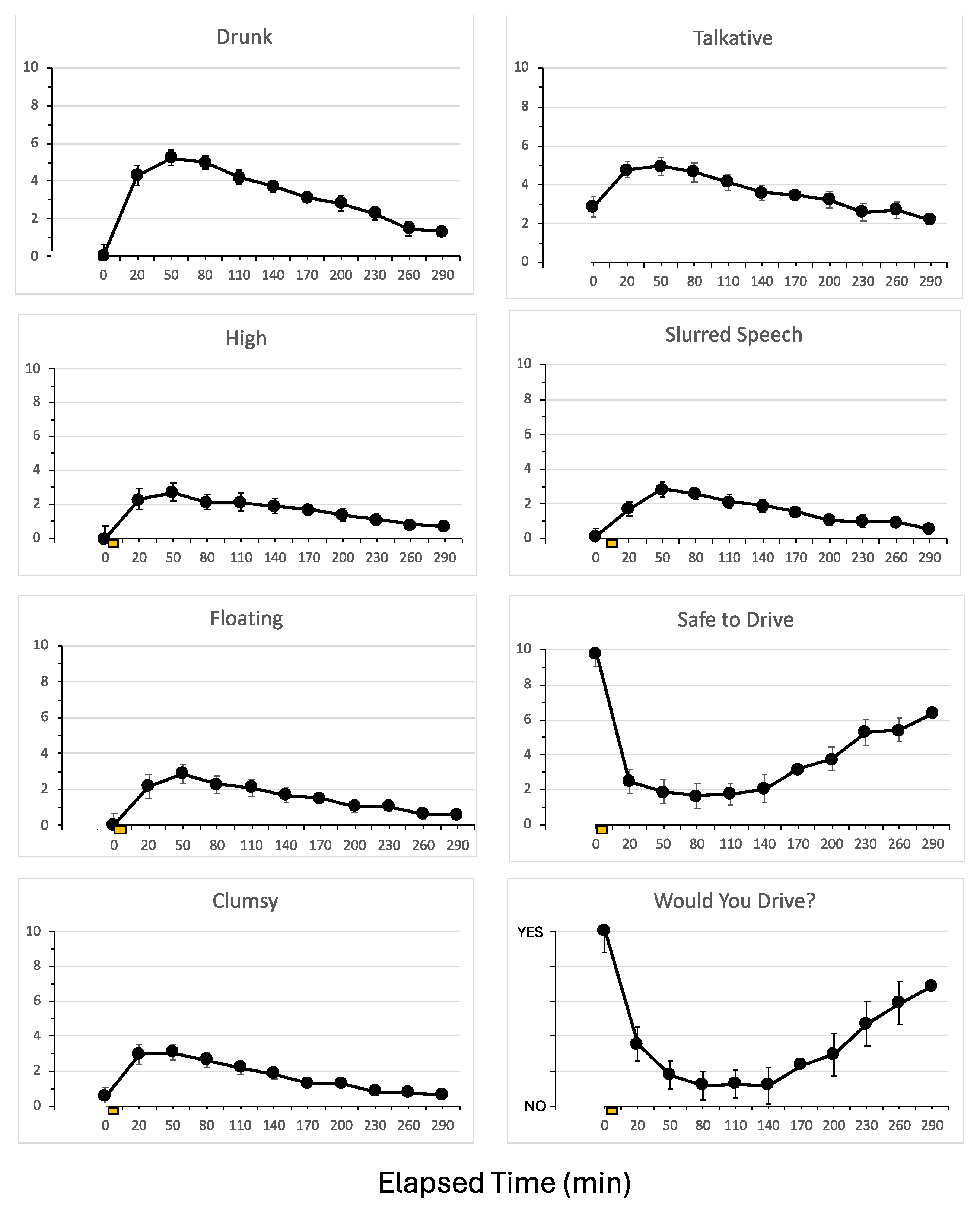
Figure 7.
Alcohol and CO2 detection sensors for placement in motor vehicles.
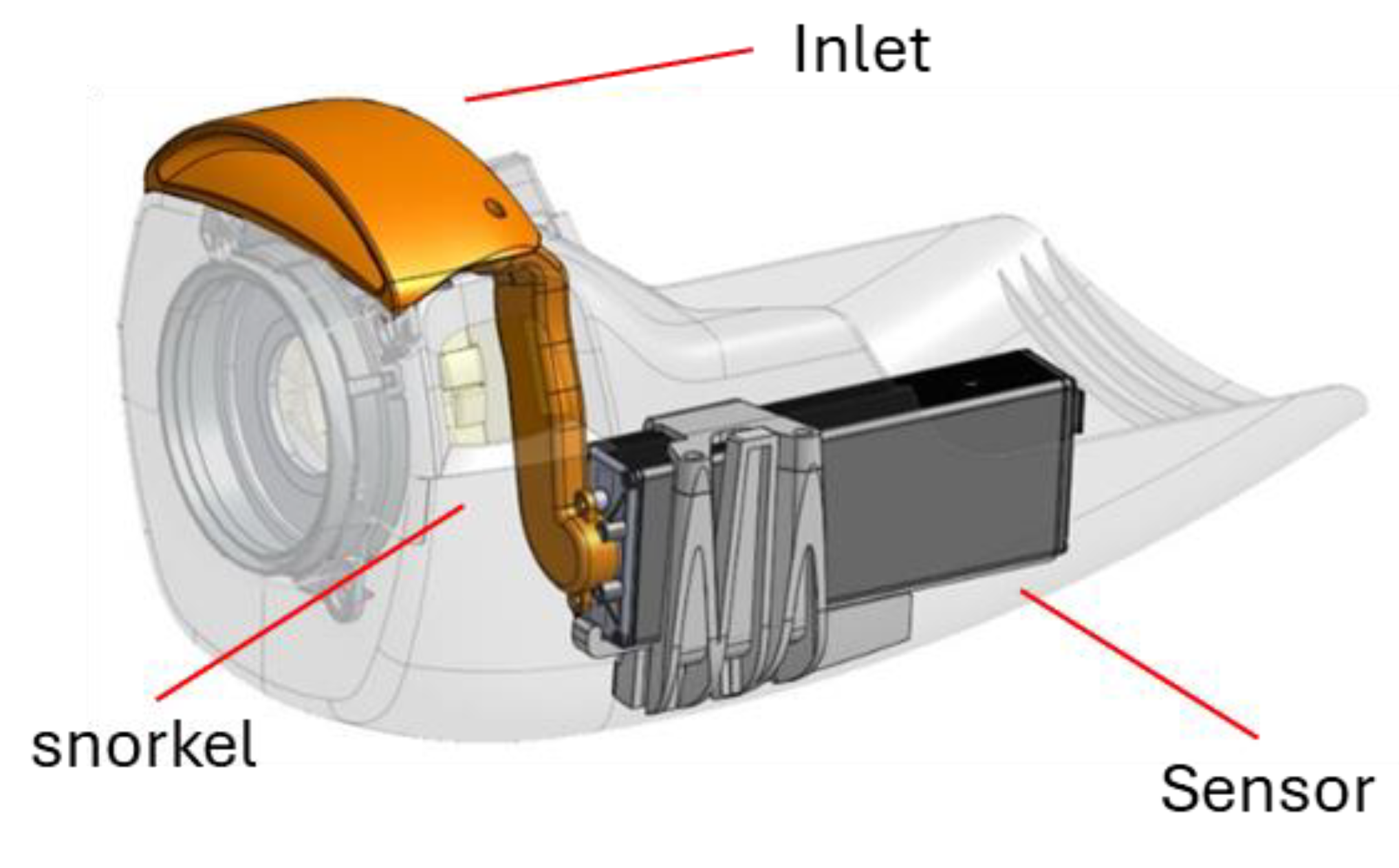
Figure 8.
Alcohol and CO2 detection sensors as integrated into select automobile and truck models (red arrows mark sensor location). A) Steering column sensor in Chevy Malibu, B) Instrument Panel sensor in Ford Mach-E, C) Instrument Panel sensor in Nissan Rogue, and D) Instrument Panel sensor in Ford F-350.
Figure 8.
Alcohol and CO2 detection sensors as integrated into select automobile and truck models (red arrows mark sensor location). A) Steering column sensor in Chevy Malibu, B) Instrument Panel sensor in Ford Mach-E, C) Instrument Panel sensor in Nissan Rogue, and D) Instrument Panel sensor in Ford F-350.
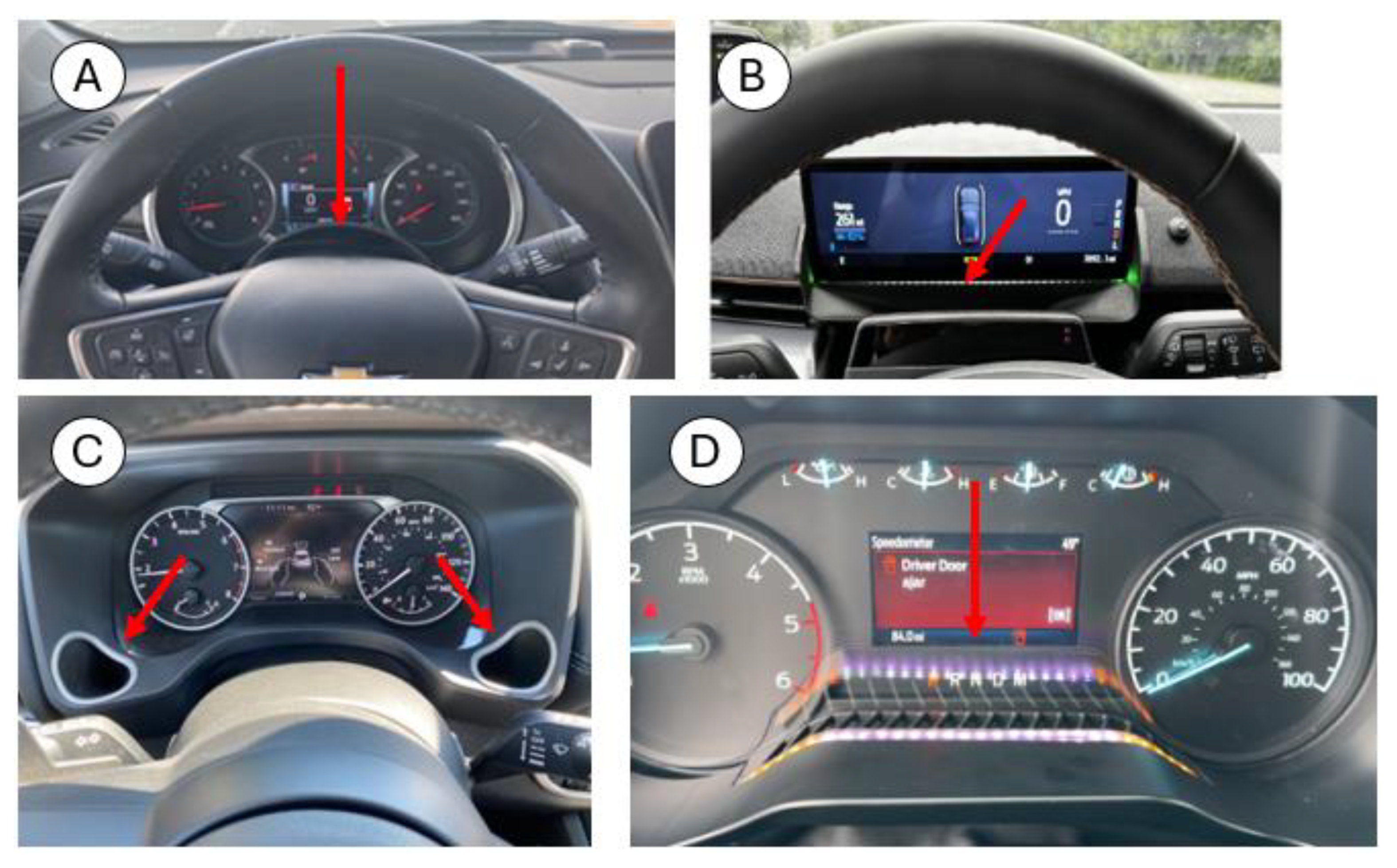

Table 1.
Evolution of the various generations of the DADSS Breath Alcohol Sensor System with specifications and key design elements.
Table 1.
Evolution of the various generations of the DADSS Breath Alcohol Sensor System with specifications and key design elements.
 |
Disclaimer/Publisher’s Note: The statements, opinions and data contained in all publications are solely those of the individual author(s) and contributor(s) and not of MDPI and/or the editor(s). MDPI and/or the editor(s) disclaim responsibility for any injury to people or property resulting from any ideas, methods, instructions or products referred to in the content. |
© 2026 by the authors. Licensee MDPI, Basel, Switzerland. This article is an open access article distributed under the terms and conditions of the Creative Commons Attribution (CC BY) license (http://creativecommons.org/licenses/by/4.0/).
Copyright: This open access article is published under a Creative Commons CC BY 4.0 license, which permit the free download, distribution, and reuse, provided that the author and preprint are cited in any reuse.


