

Submitted:
19 March 2026
Posted:
20 March 2026
You are already at the latest version
Abstract
The widespread adoption of hydrogen fuel cell electric vehicles (FCEVs) is currently hindered by the significant cost and lack of geometric flexibility of conventional Type IV pressure vessels made from carbon fiber reinforced plastic (CFRP). These tanks are difficult to integrate into future vehicle platforms optimized for modular batteries. This study, therefore, presents a novel compressed hydrogen storage system (CHSS) based on a modular assembly of seamless steel cylinders. The objective of this approach is to create a design-flexible and cost-effective alternative that adapts to the limited installation space of modern electric vehicle architectures while offering a sustainability advantage through the high recyclability of steel. The system was specifically designed to meet the stringent requirements of the UNECE R134 regulation and subsequently subjected to rigorous experimental validation. The evaluation included all four test sequences required for component certification: Baseline Tests, Performance Durability Test, On-Road Performance Test and Fire Test. The successful validation demonstrates that the developed modular steel-based CHSS meets all relevant safety and performance requirements. It, therefore, represents a technically and economically promising technology that can make a decisive contribution to accelerating hydrogen mobility through its superior design flexibility and sustainability.
Keywords:
compressed hydrogen storage system
; automotive
; steel
; UNECE R134
; subfloor
1. Introduction
Hydrogen as a fuel presents a compelling strategy for mitigating environmental pollution and addressing the ongoing climate change, primarily owing to its clean utilization properties and renewability [1,2]. Currently, inherent limitations of conventional battery technologies, such as dependence on critical raw materials and substantial system weight, have intensified research into alternative mobile energy carriers, thereby bringing hydrogen to the forefront.
On the other hand, the widespread deployment of hydrogen fuel cell vehicles (FCEVs) is currently impeded by several critical challenges: high manufacturing cost, infrastructure limitations and high material cost of the storage system [3,4]. These include the cost associated with green hydrogen production and the immense investment required to establish a comprehensive refueling infrastructure. Furthermore, the design and implementation of efficient on-board hydrogen storage solutions pose significant engineering hurdles, particularly concerning volumetric and gravimetric energy densities, which often translate into bulky and costly systems. The durability and economic viability of fuel cell stacks themselves also remain key areas requiring further advancement. From a societal perspective, public acceptance represents a non-trivial impediment, largely influenced by persistent safety concerns and a general lack of understanding regarding hydrogen technologies. The successful resolution of these interconnected technical, economic, and societal barriers is paramount for hydrogen to realize its transformative potential in the transportation sector.
2. State of the Art
Hydrogen, as an energy carrier, can be stored through diverse methodologies broadly categorized as physical or chemical. Physical storage approaches encompass compressed gaseous hydrogen (CGH2), cryo-compressed hydrogen (CcH2), and liquid hydrogen (LH2). Chemical storage strategies involve the use of sorbent materials, chemical hydrides, or metal hydrides [5,6,7].
Hydrogen as fuel in mobility application is mostly stored as hydrogen gas at a pressure of 70 MPa to provide sufficient energy density, both in a gravimetric and in a volumetric manner. Commercially available FCEVs utilize expensive, bulky Type IV carbon fiber reinforced plastic (CFRP) tanks [8,9,10]. These tanks lack geometric flexibility and force passenger car manufacturers to either develop a new body-in-white concept or sacrifice significant passenger compartment space [8].
Current CFRP tanks are also incompatible with future Battery Electric Vehicle (BEV) platforms, which prioritize modular battery designs. Their large diameter makes integration into the subfloor where only small, long storage containers fit, nearly impossible with current CFRP technology without incurring even higher costs. Economical CFRP manufacturing requires a 3/4 diameter-to-length ratio, resulting in voluminous cylinders that dictate vehicle design [11].
3. Regulatory Framework
Global Technical Regulation (GTR) accountable for hydrogen fueled vehicle is GTR 13 [12] which is converted on European level into UNECE R134 [13] is the legally required regulation on hydrogen storage systems for hydrogen-fueled vehicles. A CHSS is therefore defined a “a system designed to store compressed hydrogen fuel for a hydrogen-fueled vehicle, composed of a container, container attachments (if any), and all primary closure devices required to isolate the stored hydrogen from the remainder of the fuel system and the environment.” [12] Container is the primary storage volume, which could consist of multiple permanently interconnected chambers. “The primary closure devices shall include the following functions, which may be combined: Thermal Pressure Relief Device (TPRD), Check valve, and Shut-off valve. The primary closure devices shall be mounted directly on or within each container.” [13]
Within these regulations 4 different tests on component level are required. There are so-called baseline tests, which consist of hydraulic burst and hydraulic cyclic test, hydraulic performance durability test on the entire system, on-road performance test, pneumatically on the entire system and a fire test on the entire system filled with hydrogen.
The baseline tests (UNECE R134 5.1) include three hydraulic burst tests and three hydraulic fatigue tests on individual containers. For the hydraulic burst tests, a burst pressure >2.0*NWP (+10%) (Nominal Working Pressure = 70 MPa) must be demonstrated. For the hydraulic fatigue tests containers are cycled from 2 MPa to 87,5 MPa (1,25 * NWP) with a rate of ≤ 10 cycles per minute, the limit is 11,000 cycles in the case of failure by leakage and 22,000 cycles in the case of failure by rupture. According to the state of the art, this distinction applies to tanks with composite materials, where an inter-fiber break and a fiber break are distinguished as failure mechanisms.
The testing sequence for the “Performance durability test (hydraulically)” (UNECE R134 5.2) is shown in Figure 1. The integrity of the tank sample is tested by an initial proof pressure that also is used to identify possible leaks both in the sample and the test setup.
The test starts with a series of drop tests which are defined in the standard. The drop tests are conducted with an empty storage system. This is followed by an artificial surface damage in the form of equidistant pendulum impacts with 30 J at -40 °C on the cylinder surface which are subsequently wetted with different chemicals (battery acid, 25% sodium hydroxide, gasoline, urea solution, and windshield washer fluid) and stored covered for 48 hours. The flaw test described in the standard does not need to be conducted for metal storage systems. Following the required test procedure 6590 cycles between 2 and 87,5 MPa pressure at ambient temperature were applied on the system followed by 10 cycles up to 105 MPa. As a further step according to the procedure high temperature static pressure test is required with 87,5 MPa static pressure at 85°C for 1000 h, subsequently followed by extreme temperature cycles (cold and hot) afterwards: 2200 cycles from 2 to 56 MPa at -40°C and 2200 cycles from 2 to 87,5 MPa at 85°C and 95% humidity. The final step within the “Performance Durability Test” is the so-called residual burst strength test in which the system is pressurized to 180% of the system pressure and held for 4 min. As a second step the system undergoes a hydraulic burst test to verify that the burst pressure is at least 80 per cent of the baseline initial burst pressure.
The testing sequence for the “Expected on-road performance test (pneumatic)” (UNECE R134 5.3) is shown in Figure 2. The integrity of the tank sample is tested by an initial proof pressure that also is used to identify possible leaks both in the sample and the test setup.
UNECE R134 5.3 requires container and primary closure devices as test articles. In total 500 pneumatic cycles were applied with two permeation tests, one after 250 and the second one after 500 cycles. The test is performed with hydrogen gas.
The fire test (UNECE R134 5.4) requires the entire pressurized system to withstand a first phase of localized fire (size 250 x 500 mm) which last for 10 min. In phase 2 the fire is enlarge in one direction to the total size of 1650 x 500 mm (engulfing fire). The system is required to vent through its safety valve to a remaining pressure of 1 MPa within 50 min without burst.
A summary on the required test according to UNECE R134 including the test article is given in Table 1.
4. System Design
A CHSS able to fit in the same installation space as the battery pack of a battery vehicle is the key enabler for hydrogen mobility in passenger cars. To enable such a system multiple interconnected steel cylinders as main component and primary storage volume based on seamless steel tubes were developed.
The steel cylinders are fixed in a rigid steel frame. To mitigate stresses during installation and operation, a concept was developed focusing on secure fixation, load damping, and compensation for various offsets and length changes, particularly addressing thermal expansion and manufacturing tolerances. This concept utilizes a fixed bearing on one side and a loose bearing on the other to prevent loads from being transferred to the piping.
Interconnection between the single cylinders was done by standard piping components and therefore the design and production of the neck was one crucial part. This was achieved through the integration of standard piping lines and t-connections, necessitating a precise and robust neck design for each cylinder. The necks were formed using rotation forming where the tubes were induction heated and pressed into shape with constant rotation. To connect the standard piping components to the cylinder neck a metallic interconnection component [14] was designed to connect the inner threat of the cylinder neck to the standard piping system. Neck formation was performed on both sides of the cylinders, while the interconnection of all cylinders were done on one side. On the opposite side of the cylinder endplugs were used to seal the system. This approach offers great flexibility, allowing for a variable geometry and number of cylinders and adaptable layouts to optimally fill any available box volume within the vehicle. In the current setup 11 interconnected cylinders with a length of 1600 mm, inner diameter 100 mm and a wall thickness of 7 mm were chosen due to the targeted box volume of 1,8m x 1,4m x 17cm.
The overarching design philosophy was to fulfill the requirements given from the regulatory framework as described in chapter 3. The initial verification tests for baseline metrics and performance durability, including hydraulic sequential tests, were fundamental for tailoring material properties and refining the manufacturing process. These tests dictate material selection and fabrication techniques to ensure long-term integrity under harsh conditions. To meet these requirements, the conventional gas cylinder steel grade 34CrMo4 was quenched and tempered resulting in a minimum UTS of 1050 MPa to ensure the 147 MPa burst pressure including leak before burst requirement. In addition, an autofrettage process was performed on each cylinder. Autofrettage is greatly known for increasing the service life and widely used to smoothen the inner surface of seamless tubes. Within the “Performance durability test” (UNECE R134 5.2) a drop test is integrated as described earlier. To meet the requirements of this drop test the system was designed with an enclosure that particularly protects the corners from damage. Pneumatic sequential tests specifically address material behavior in gaseous hydrogen and gas leakage of the interconnection. Achieving these requirements seamless tubes manufactured of same steel grade 34CrMo4 as in conventional gas cylinder for hydrogen gas were chosen as pre-material and standard piping components certified for high pressure hydrogen gas were used. Finally, the verification test for service-terminating performance in fire is paramount for defining the system design and incorporating essential safety features. The requirements of the fire test led to a system design with two TPRDs. One at the same location as the shut-off and check valve and one on the diagonal opposite side of the entire system. In addition the entire system was equipped with a top and bottom cover sheet to insulate the individual cylinders from the fire source. The whole system design is displayed with and without covering sheet in Figure 3.
5. Experimental Evaluation
Experimental evaluation was based on requirements given in [12]. The 4 different tests on component level were described in detail in chapter 3. In the following chapters the results of the experimental testing according to these tests will be discussed.
5.1. Baseline Test
[12] requires performing baseline test on container level. In the given system configuration this means to test 11 interconnected cylinders. Due to fact, that certified piping components were used, and all cylinders have the same geometry and material, baseline tests on individual cylinders, including three hydraulic burst and three hydraulic cycle life tests, were conducted. Burst tests achieved burst pressures between 164,3 and 165,3 MPa.
Hydraulic cycle life tests set limits of 11.000 cycles for leakage failure and 22.000 cycles for rupture, a distinction common for composite tanks. Results showed a range from 14.732 to 17.726 cycles. Two cylinders leaked, exceeding the 11.000-cycle leakage limit. One had a minor gape, not reaching the 22.000-cycle rupture limit. Failure appearance of leakage and rupture are given in Figure 4. Damage analysis of two failed cylinders revealed crack initiation at grooves, not material defects. In the gaping cylinder, multiple crack initiations in one plane formed a long crack, while the leakage failure stemmed from a single primary crack.
Details of the of the results of the baseline test are summarized in Table 2
5.2. Verification Test for Performance Durability
Performance durability test is a sequence of variety of different individual tests as described in chapter 3. The integrity of the tank sample is tested by an initial proof pressure that also is used to identify possible leaks both in the sample and the test setup. The test starts with a series of drop tests conducted with an empty storage system. The drop test can be performed in 4 different ways, horizontal drop, vertical drop with valve location upwards, vertical drop with valve location downwards and 45° tilted drop. All 4 variants were performed on the same system. For the cases horizontal drop and both vertical drops no significant damage occurred to the storage system. In the case with a 45° tilted angle neglectable damage at the covering plates was observed, see Figure 5.
The series of drop tests is followed by an artificial surface damage in the form of equidistant pendulum impacts with 30 J at -40 °C on the cylinder surface. Subsequently, the impact points of the pendulum are each wetted with different chemicals (battery acid, 25% sodium hydroxide, gasoline, urea solution, and windshield washer fluid) and stored covered for 48 hours. Afterwards, 6590 cycles between 2 and 87,5 MPa hydrogen pressure at ambient temperature were applied on the system followed by 10 cycles up to 105 MPa. The next step according to the procedure high temperature static pressure test was performed with 87,5 MPa static pressure at 85°C for 1000 h. Extreme temperature cycles (cold and hot) were performed afterwards: 2200 cycles from 2 to 56 MPa at -40°C and 2200 cycles from 2 to 87,5 MPa at 85°C and 95% humidity. Figure 6 shows the system after high temperature static pressure and extreme temperature cycle testing.
The part of the test determines the residual burst strength. In a first step, the system is pressurized to 180 % of the system pressure and held for 4 min, in the case of the investigated system 126 MPa. As a second step, the system undergoes a hydraulic burst test to verify that the burst pressure is at least 80 per cent of the baseline initial burst pressure: 80 % of 164,95 MPa = 132,8 MPa. The test was stopped at 160,2 MPa due to leakage of the piping.
5.3. Verification Test for Expected on-Road Performance
Verification test for expected on-road performance is a sequence of different pneumatic tests starting with an initial proof pressure test to test the integrity of the sample system and identify possible leaks both in the sample and the test setup (details are described in chapter 3). Given the fact, that the developed system is a so-called conformable tank, described as multiple storage chamber that are interconnected, the test procedure was slightly modified compared to the standard. [13] requires container and primary closure devices as test article. Here only the container, which means, according to the definition given in [13], all cylinders interconnected with pipes including their adapters, endplugs and t-connections, were tested. Primary closure devices were not attached.
Figure 7.
Test setup including tested system within the test chamber at the testing facility.
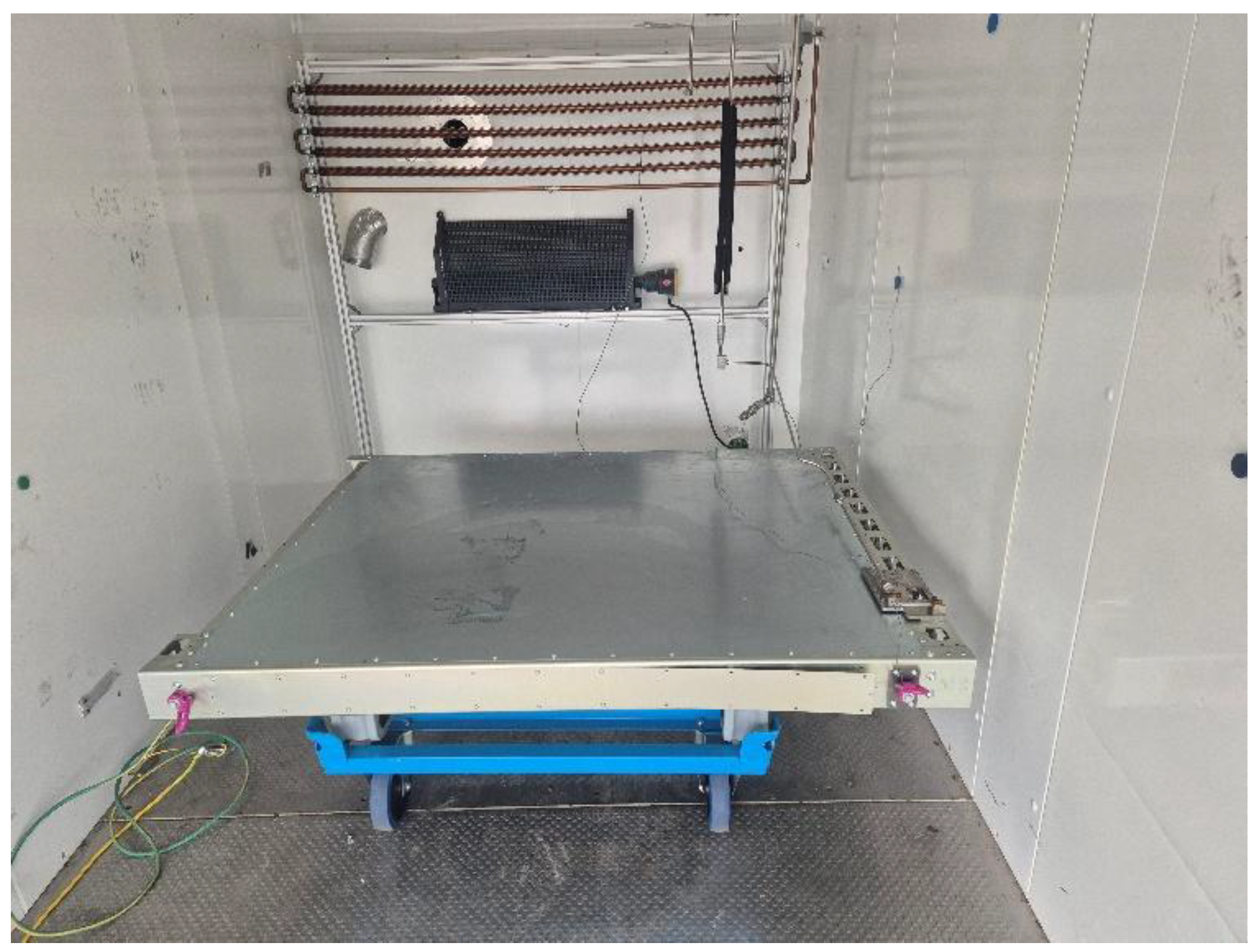
The test was executed as given in [13]. In total, 500 pneumatic cycles were applied with two permeation tests, one after 250 and the second one after 500 cycles. The system did not show any leakage during testing. The result of the first permeation test after 250 cycles was 0,486 NmL/h/WLC and for the second one after 500 cycles was 0,513 NmL/h/WLC.
5.4. Verification Test for Service Terminating Performance in Fire
As described in chapter 3 the fire test consists of two phases, phase one with a localized fire where the system is not allowed to vent and phase two with an engulfing fire and the need to vent. According to the requirements the system was filled to 100 % SOC (State of Charge). Figure 8 shows the test setup with the storage system and the burner arranged at an angle.
During the first test phase (localized fire), no anomalies were observed. In the second test phase with an enlarged burner area, TPRD2 located on the end plug was triggered after 4 minutes, releasing the hydrogen. The hydrogen ignited downwards towards the burner during the release. It took approximately 6 minutes to reach an internal tank pressure of 1 MPa. Both times are within the requirements of the standard. The gas cylinders showed no failure. Figure 9 shows the test setup including the storage system after the fire test.
6. Conclusions
This study successfully designed, manufactured, and rigorously validated a novel compressed hydrogen storage system (CHSS) as a viable alternative to conventional Type IV CFRP tanks. Motivated by the need to overcome the design and packaging limitations that currently hinder the widespread adoption of Fuel Cell Electric Vehicles (FCEVs), the developed system features a modular design of multiple interconnected seamless steel cylinders. This approach provides the geometric flexibility required for integration into future vehicle platforms, particularly those designed around flat, subfloor battery packs.
In addition, there is a strong sustainability benefit of using steel cylinders for hydrogen storage compared to CFK containers due to a superior recyclability. Steel manufacturing and recycling are mature, energy-efficient processes that allow for a closed-loop system, significantly reducing raw material demand for new cylinders. CFK containers are not only more energy-intensive to produce but are also difficult to recycle.
The system's design was meticulously guided by the stringent requirements of the UNECE R134 regulation. The subsequent experimental evaluation demonstrated the success of this approach, as the CHSS passed every mandatory test for component-level certification:
- Baseline Tests: Individual steel cylinders exceeded the required burst pressure and fatigue life standards, confirming the robustness of the core material and manufacturing process.
- Performance Durability: The complete system successfully withstood a demanding sequence of drop tests, chemical exposure, and extensive hydraulic cycling under extreme temperatures, with a final residual burst strength that far surpassed the regulatory minimum.
- On-Road Performance: Pneumatic cycling with hydrogen gas confirmed the system's integrity and leak-proof performance under simulated operational conditions.
- Fire Safety: In the critical fire test, the system performed flawlessly, venting the stored hydrogen safely through its integrated Thermal Pressure Relief Devices (TPRDs) within the specified timeframe, thereby preventing destructive failure.
The successful validation of this Type I steel-based, modular CHSS represents a significant advancement in hydrogen storage technology. By demonstrating full compliance with all relevant safety and performance regulations, this work establishes a clear pathway for producing cost-effective and design-flexible hydrogen storage solutions.
Author Contributions
Conceptualization, Matthias Kuntz and Martina Kagay; Methodology, Matthias Kuntz; Validation, Matthias Kuntz; Writing – original draft, Matthias Kuntz; Writing – review & editing, Martina Kagay; Supervision, Martina Kagay; Project administration, Martina Kagay. All authors have read and agreed to the published version of the manuscript.
Funding
This work was founded by the German Federal Ministry for Digital and Transport No. 03B10112.
Data Availability Statement
The original contributions presented in this study are included in the article. Further inquiries can be directed to the corresponding author(s)..
Conflicts of Interest
The authors declare no conflict of interest.
References
- Ravi, S. S.; Aziz, M. Clean hydrogen for mobility – Quo vadis? International Journal of Hydrogen Energy 2022, 47, 20632–20661. [Google Scholar] [CrossRef]
- Ajanovic, A.; Haas, R. Prospects and impediments for hydrogen and fuel cell vehicles in the transport sector. International Journal of Hydrogen Energy 2021, 46, 10049–10058. [Google Scholar] [CrossRef]
- Sethia, H.; Priyam, A. Review on hydrogen fuel cells as an alternative fuel. Next Energy 2025, 9, 100460. [Google Scholar] [CrossRef]
- Savrun, M. M. Fuel-cell electric vehicle technologies. In Hydrogen and e-Mobility; Elsevier, 2026; pp. 21–32. [Google Scholar] [CrossRef]
- Stetson, N. T.; McWhorter, S.; Ahn, C. C. Introduction to hydrogen storage. In Compendium of Hydrogen Energy; Elsevier, 2016; pp. 3–25. [Google Scholar] [CrossRef]
- Mulky, L. An overview of hydrogen storage technologies – Key challenges and opportunities. Materials Chemistry and Physics 2024, 325, 129710. [Google Scholar] [CrossRef]
- Hassan, A.; Ramadan, H. S.; Saleh, M. A.; Hissel, D. Hydrogen storage technologies for stationary and mobile applications: Review, analysis and perspectives. Renewable and Sustainable Energy Reviews 2021, 149, 111311. [Google Scholar] [CrossRef]
- Olabi, A. G.; Wilberforce, T.; Abdelkareem, M. A. Fuel cell application in the automotive industry and future perspective. Energy 2021, 214, 118955. [Google Scholar] [CrossRef]
- Gómez, J. A.; Santos, D. M. F. The Status of On-Board Hydrogen Storage in Fuel Cell Electric Vehicles. Designs 2023, 7, 97. [Google Scholar] [CrossRef]
- Singh, D. A Review on Hydrogen Powered Fuel Cell Vehicles: The Present Scenario and Prospects for the Future. Curr Sustainable Renewable Energy Rep 2025, 12, 24. [Google Scholar] [CrossRef]
- Gleis, E.; Drexler, J.; Zaremba, S.; Drechsler, K. Comprehensive parameter study and evaluation of a reinforcement concept for conformable CFRP tanks for hydrogen storage. Zeitschrift Kunststofftechnik 2024, 1, 21–49. [Google Scholar] [CrossRef]
- UN Global Technical Regulation No. 13 Hydrogen and Fuel Cell Vehicles’. United Nations, Jul. 17, 2023. Available online: https://unece.org/sites/default/files/2023-07/ECE-TRANS-180-Add.13-Amend1e.pdf.
- UN Regulation No. 134 Hydrogen and Fuel Cells Vehicles’. Working Party on Passive Safety, Aug. 29, 2023. Available online: https://unece.org/sites/default/files/2023-11/ECE-TRANS-WP29-2023-110e.pdf.
- Kuntz, M.; Müller, M.; Hamada, R.; Holz, D. Speichervorrichtung, Brennstoffzellenanordnung, Wasserstoffverbrennungsmotorsystem und wasserstoffbetriebenes Fahrzeug’, DE102022203607 A1.
Figure 1.
Verification test "Performance durability (hydraulically)" according to GTR13 [12] and UNECE R134 [13] 5.2 with a total of 11,000 cycles.
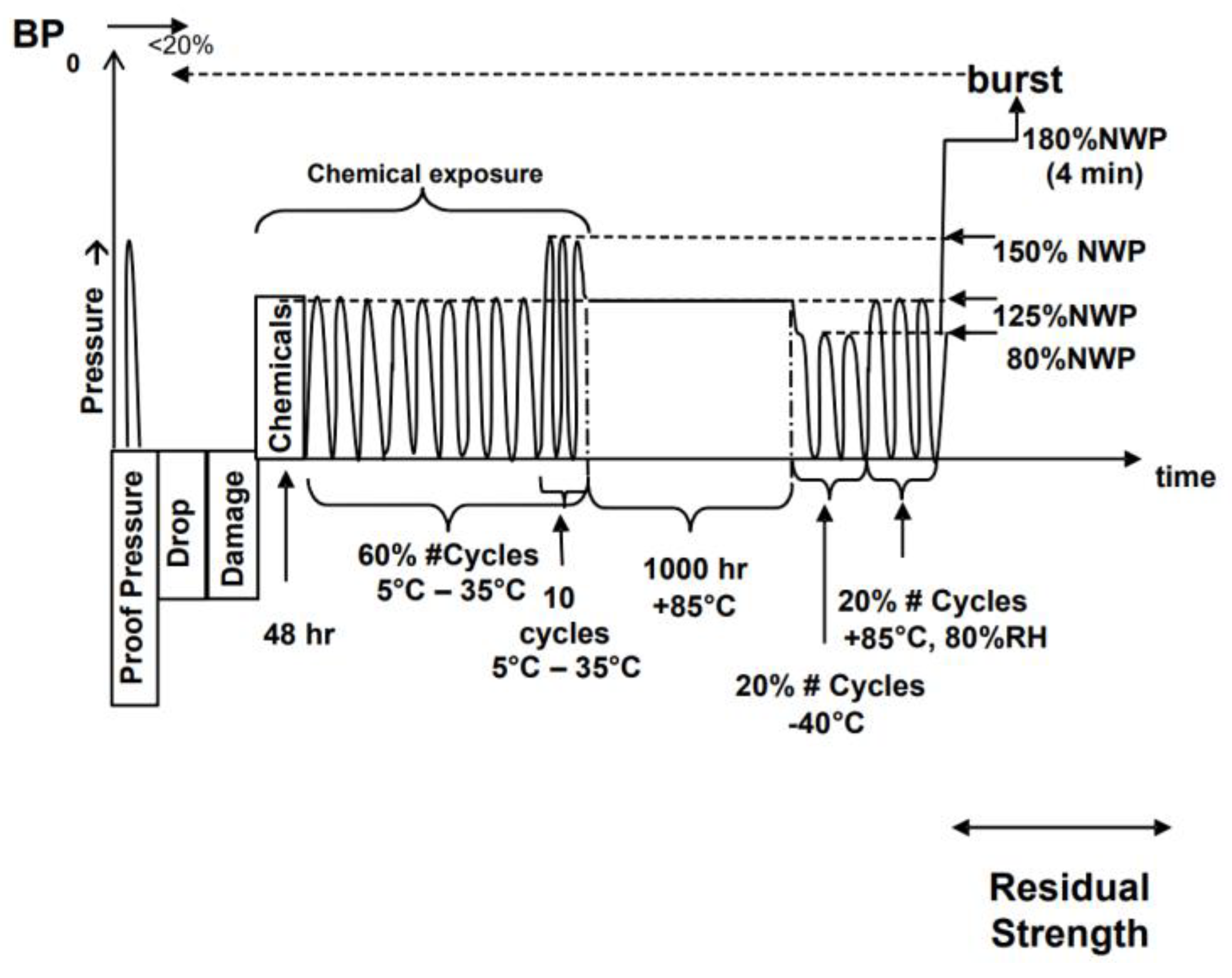
Figure 2.
Verification test "Expected on-road performance (pneumatic)" according to GTR13 [12] and UNECE R134 [13] 5.3 with a total of 500 hydrogen cycles.
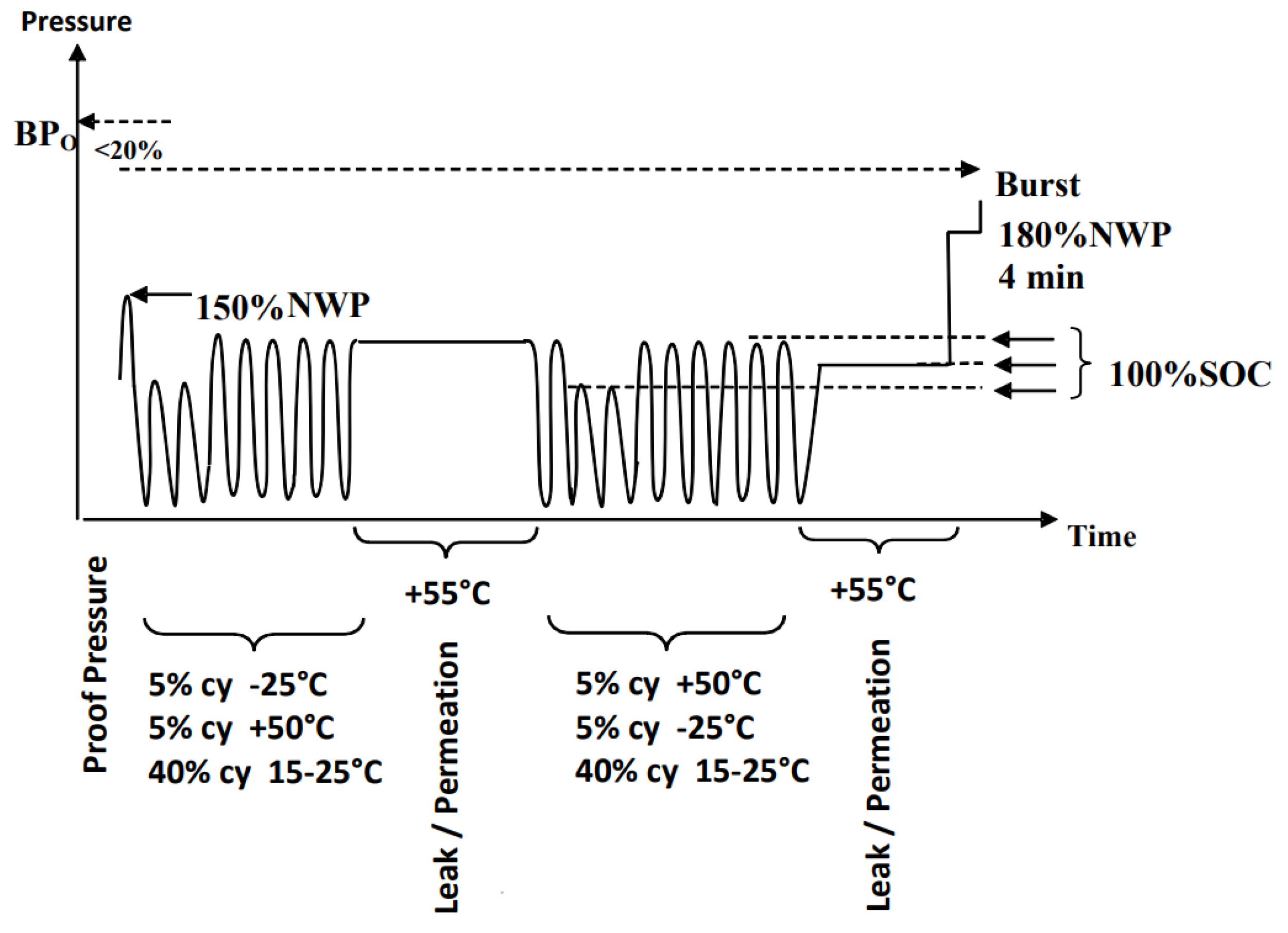
Figure 3.
System design consisting of 11 interconnected single cylinders with (left) and without (right) covering sheet.
Figure 3.
System design consisting of 11 interconnected single cylinders with (left) and without (right) covering sheet.
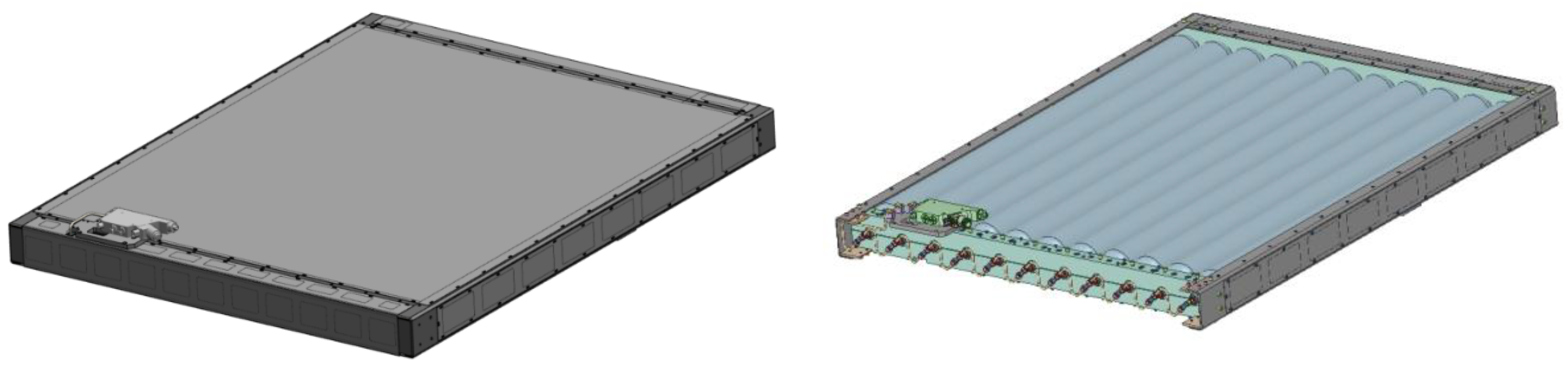
Figure 4.
Failure appearance of the leakage after 14.732 cycles (a) and the rupture after 17.726 cycles (b).
Figure 4.
Failure appearance of the leakage after 14.732 cycles (a) and the rupture after 17.726 cycles (b).
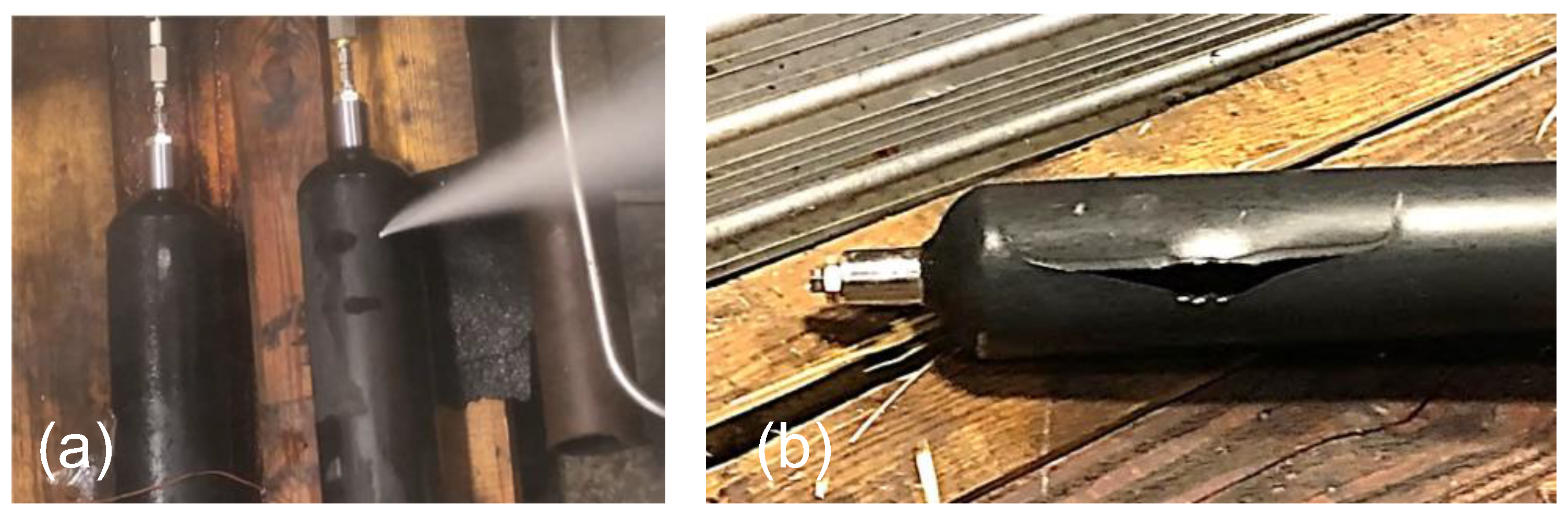
Figure 5.
Execution of the four drop tests ((a) – (d)). Only in case of 45° tilted angle drop (e) neglectable damage at the covering plates occurred.
Figure 5.
Execution of the four drop tests ((a) – (d)). Only in case of 45° tilted angle drop (e) neglectable damage at the covering plates occurred.
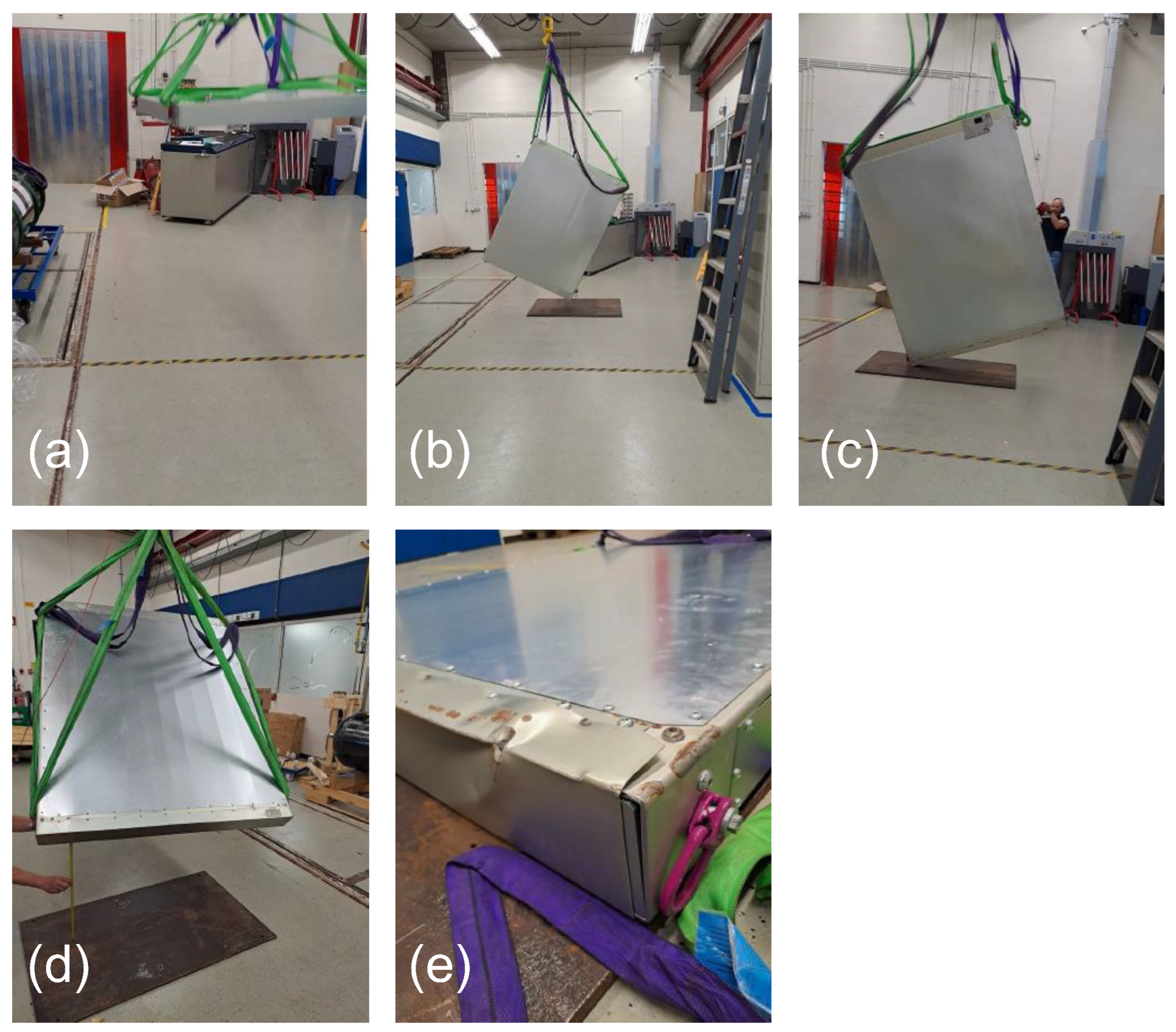
Figure 6.
System after high temperature static pressure and extreme temperature cycle test.
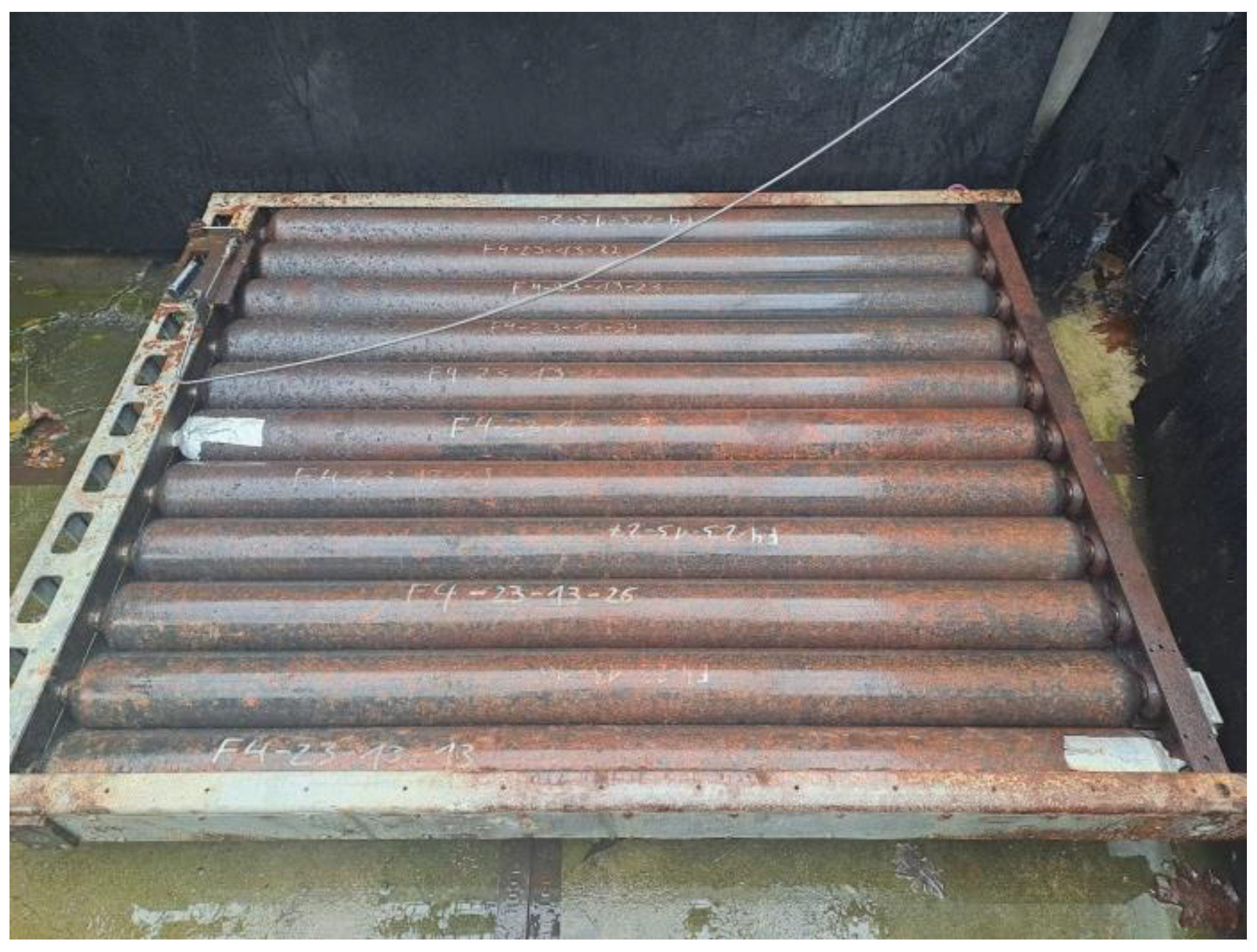
Figure 8.
Test setup for conducting the test for service terminating performance in fire including the positioning of the TPRDs within the system, as well as the arrangement of the system and the burner.
Figure 8.
Test setup for conducting the test for service terminating performance in fire including the positioning of the TPRDs within the system, as well as the arrangement of the system and the burner.
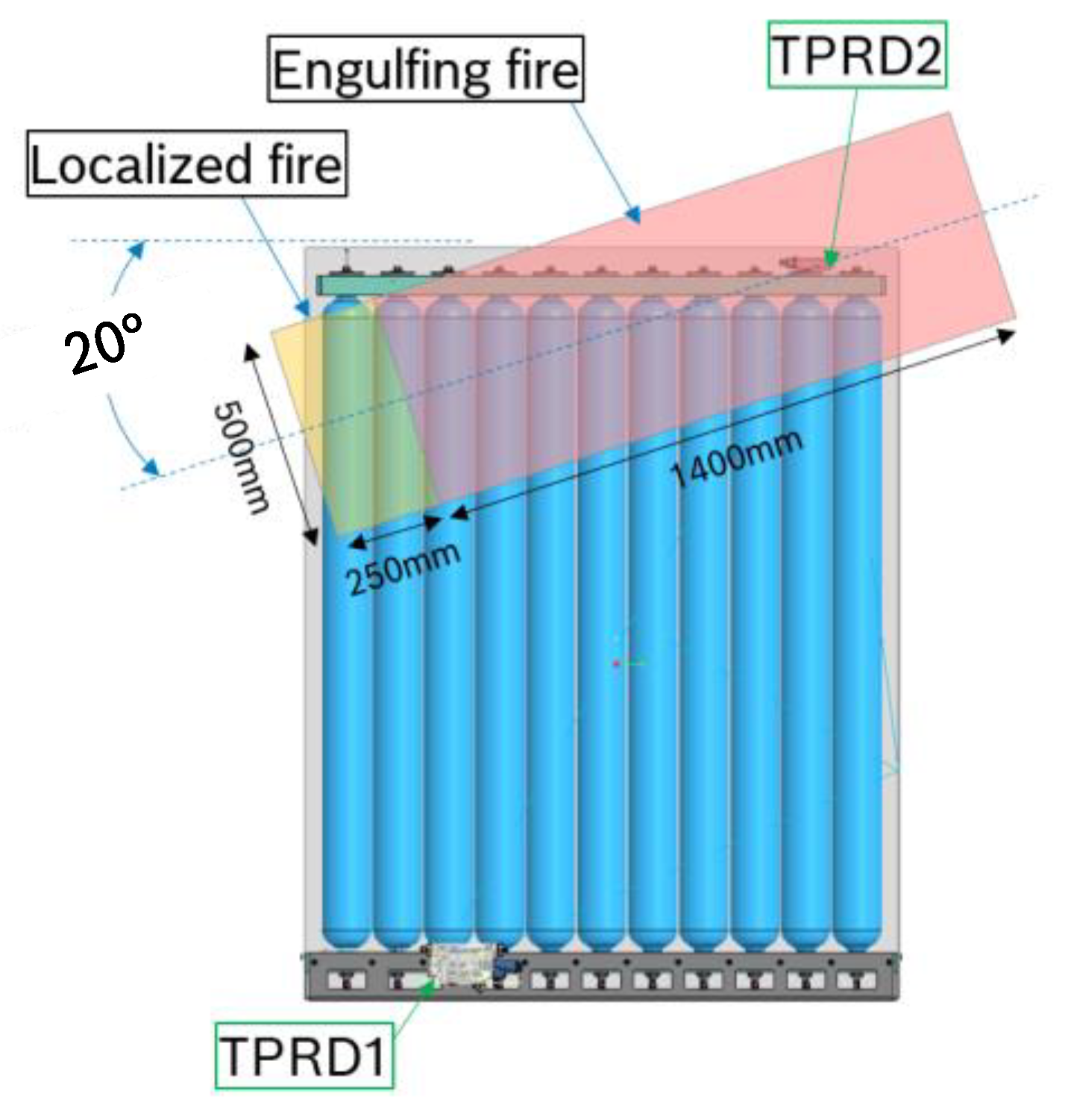
Figure 9.
Condition of the test system on the test bench after the fire test.
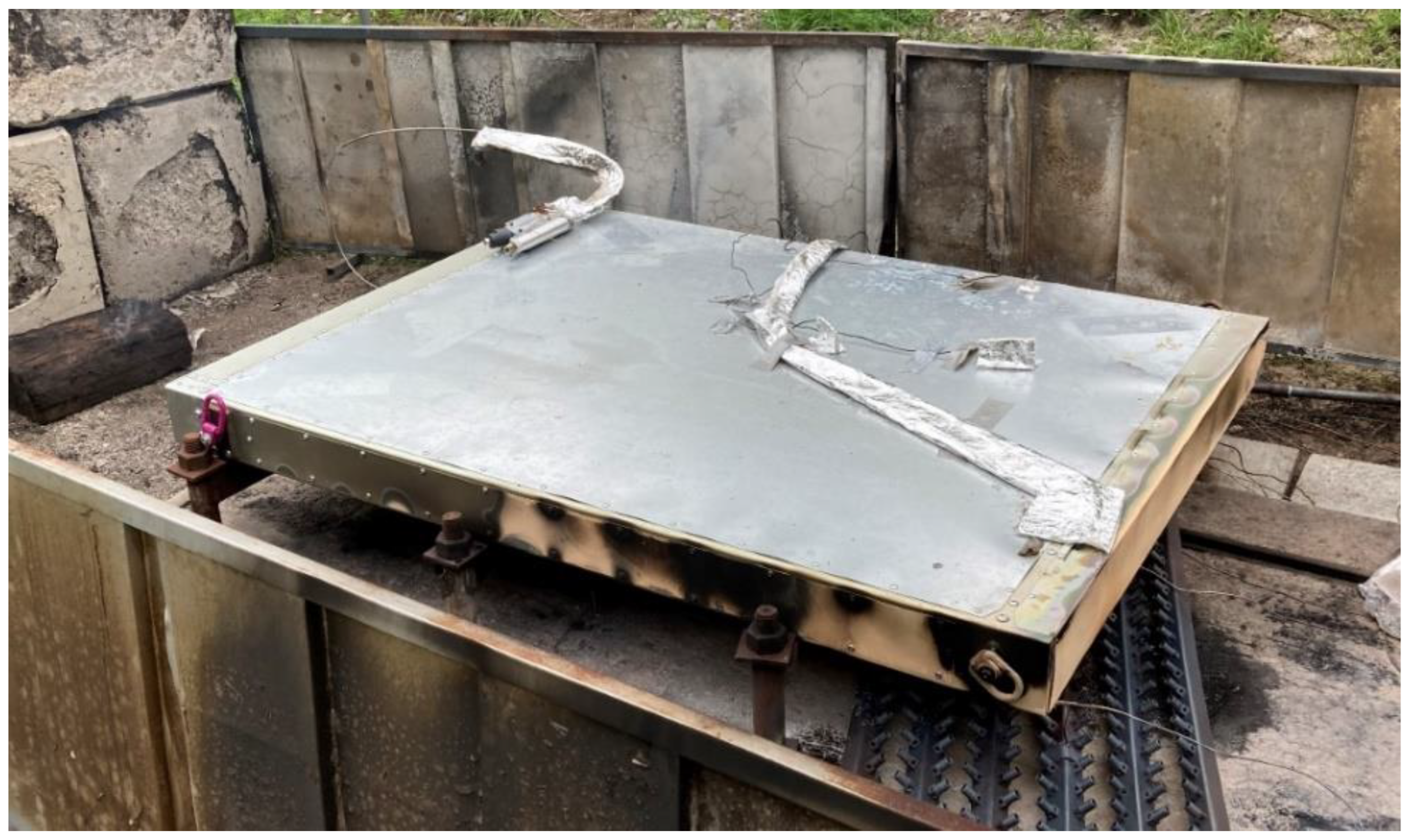

Table 1.
Overview of component test requirements given in GTR13 [12] and UNECE R134 [13] including the required test article.
| Test | Requirement | Test article |
|---|---|---|
| Baseline test | Burst test: 3 container > 147 MPa cycle life test: 3 container 11.000 cycles without leakage / 22.000 without burst |
container plus container attachments, if applicable |
| Verification test for performance durability | Hydraulic sequential including drop and damage as shown in Figure 1 | container plus container attachments, if applicable |
| Verification test for expected on-road performance | Pneumatic sequential tests as shown in Figure 2 | CHSS |
| Verification test for service terminating performance in fire | Fire test: 10 min localized fire without venting followed by engulfing fire and required venting within 50 min | CHSS |
Table 2.
Summary of the results of the baseline tests.
| Test | Result |
|---|---|
| hydraulic burst | burst at p = 165,3 MPa burst at p = 164,3 MPa burst at p = 165,1 MPa |
| Hydraulic cycle life | leakage after 14.732 cycles leakage after 16.285 cycles rupture after 17.726 cycles |
Disclaimer/Publisher’s Note: The statements, opinions and data contained in all publications are solely those of the individual author(s) and contributor(s) and not of MDPI and/or the editor(s). MDPI and/or the editor(s) disclaim responsibility for any injury to people or property resulting from any ideas, methods, instructions or products referred to in the content. |
© 2026 by the authors. Licensee MDPI, Basel, Switzerland. This article is an open access article distributed under the terms and conditions of the Creative Commons Attribution (CC BY) license (http://creativecommons.org/licenses/by/4.0/).
Copyright: This open access article is published under a Creative Commons CC BY 4.0 license, which permit the free download, distribution, and reuse, provided that the author and preprint are cited in any reuse.


