

Submitted:
20 March 2026
Posted:
20 March 2026
You are already at the latest version
Abstract
Climate-related extremes such as floods and droughts have been the main causes of natural disasters in southern Africa in recent years, with noticeable trends in climate extremes being observed. The Limpopo Province in South Africa has been especially prone to these extremes. The extreme weather in Limpopo is mainly caused by a mix of intense tropical weather systems, La Niña conditions, and exacerbated by climate change. Climate change exacerbates current water challenges across the province by affecting rainfall precipitation patterns, distribution, timing and intensity, leading to extreme climate events such as floods and drought. Historical and future trends of precipitation and relevant extreme indices using observed data from the South African Weather Service and CORDEX ensemble model simulations under the RCP4.5 and RCP8.5 scenarios were examined. An analysis of all precipitation data suitable for the study of long-term variability and trend, indicates that most areas underwent drying to various degrees over the last century, especially the central and western parts. Drier conditions over the eastern parts have be-come more prevalent over the last 50 years. Also, more extremes on a sub-seasonal basis were experienced. Regarding future scenarios, three projected time periods were examined: Current climatology (2006 – 2035), near-future (2036 – 2065), and far-future (2066 – 2095), compared to the baseline period (1976-2005). Most areas will experience a further decrease in precipitation under both emission scenarios, especially in the south-east, central and extreme northern parts. In addition, these areas are expected to experience a decrease in the frequency of heavy precipitation days for all periods under both RCP scenarios, mainly due to drying. Consecutive dry days are expected to increase significantly. Transitioning to renewable energy and enhancing natural carbon sinks can reduce emissions, while prioritizing resilience through renewable energy, water management, and climate-smart agriculture will help address climate change challenges in the province.
Keywords:
precipitation
; extreme precipitation indices
; climate trends
; climate projections
; CORDEX
; RCA4
; CMIP5
; RCP
; Limpopo
; South Africa
Introduction
Climate change has become one of the major global challenges, posing a significant threat to ecological, social, and economic systems, mainly by causing extreme weather and climate events. There is overwhelming evidence that climate is rapidly changing at various spatio-temporal scales. According to the Intergovernmental Panel on Climate Change (IPCC) reports, global climate and its extremes are changing, with observations indicating increases in global average air and ocean temperatures, widespread melting of snow and ice, changes in precipitation patterns, as well as rising global average sea level [1,2]. Particularly, Africa is one of the most vulnerable continents to climate change and variability due to its roughly 95% dependence on rain-fed agriculture and natural resources, arid attributes, warmer baseline climates but low climate change adaptive capacity [3,4,5].
The impacts of changing climate and extreme weather events disproportionately affect the socio-ecological systems as these vary in spatial extent, duration, intensity, and frequency. The impacts of most extremes are typically felt at a local or regional scale [6]. Typical regional studies of climate extremes indicate that the East Asian region, characterized by frequent weather and climatic disasters associated with the unique monsoon climate, is highly vulnerable to changes in extreme climate events on various time scales [7]. Similar studies on climatic extremes in North America [8], South America [9] and Australia [10] show the regions’ vulnerability to changes in extreme climate events over the last few decades. The type and pattern of extreme events have shifted over the years, with alternating floods and droughts regimes noted in regions such as Africa [11]. Sub-Saharan Africa (SSA), including South Africa, has been identified by the IPCC as being the most vulnerable region to the increase in extreme events such as storms, floods, droughts, heatwaves, wildfires, and landslides [12].
Climate-related extremes have been the main causes of natural disasters over the past few decades in southern Africa [13,14]. Significant trends in temperature and precipitation extremes were also identified by New et al. [15]. In South Africa, the Limpopo province experiences very high temperatures during the austral summer season (December to February) [16]. Extreme weather events are also common in Limpopo during summertime and often coincide with mature phases of the El Niño Southern Oscillation, which represent the peak intensity of either the El Niño or La Niña phase [17]. Understanding, modelling, and predicting weather and climate extremes are identified as major areas necessitating further progress in climate research [18]. This includes evaluating the drivers and specific processes at local to regional scales, the temporal variability, and the evolution of extreme events.
The Limpopo province is primarily located in the South African portion of the Limpopo River Basin. The majority of the province is characterized by arid to semi-arid conditions, with water availability and accessibility playing a significant role in influencing the socio-economic development and livelihoods in the province [19]. Like many regions in South Africa, water demand in the province has increasingly surpassed the supply over the years due to factors such as climate change, population growth, urbanization, industrial development, and increasing agricultural activities [20]. Ongoing increases in these factors are likely to exacerbate the strain on water resources in Limpopo, with impacts manifested in cross-cutting sectors highly dependent on water, as well as on socially and economically disadvantaged groups who depend directly on these resources for their livelihoods.
Precipitation and its extreme events in Limpopo are mainly influenced by intense tropical weather systems, including summer convective systems, tropical-extratropical cloud bands, tropical low-pressure systems, and cut-off lows [17,21]. Precipitation in the province, as in many parts of southern Africa, is significantly influenced by El Niño-Southern Oscillation (ENSO) [22]. The Agulhas Current system also impacts precipitation in southern Africa through sea surface temperatures (SSTs) and ENSO [23,24].
The characterization of projected future extreme climate events over Limpopo suggests that the region is likely to experience frequent and prolonged temperature and precipitation extremes. These extremes can lead to either floods or droughts, exacerbating current issues of water shortages and increasing the burden on most water-linked sectors [25,26,27,28]. Reliable predictions of extremes are needed on short and long-time scales to inform local and national climate change adaptation plans as well as other policies to reduce potential risks and damage resulting from weather and climate extremes [29]. The aim of this research is to undertake a comprehensive analysis and characterization of future precipitation projections, particularly in terms of extreme precipitation characteristics under the RCP 4.5 and 8.5 emission scenarios in the Limpopo Province. This analysis can be used as a basis to investigate future impacts of extreme precipitation on climate-sensitive sectors. It will also add more knowledge on past climatic variability and provide a platform for understanding the regional impacts of climate change and the development of effective adaptation strategies.
2. Study Area, Data and Methods
2.1. Study Area
The study area covers the Limpopo Province, South Africa’s northernmost province, which borders Mozambique, Zimbabwe, and Botswana (Figure 1a). The province is divided into five district municipalities (Figure 1b): Waterberg, Capricorn, Vhembe, Mopani, and Sekhukhune. The Limpopo Province is categorised as having a hot and semi-arid climate according to South Africa’s temperature and precipitation data classification [30]. According to the Köppen climatic classification, the province falls within the Cwa (summer rain with hot summers) and the BS (Semi-arid) climatic regions [31]. In terms of precipitation, the province is made up of three distinct climatic regions: the Lowveld region characterised by a semi-arid climate, the Middle and Highveld classified as semi-arid, and Escarpment that experiences a sub-humid climate [31]. Precipitation in the province occurs mostly between the months of October to April and ranges from 200 to 300 mm in the hot dry areas to 1500 mm in the high precipitation areas [32]. There is high annual precipitation variability in the province as well as relatively frequent extreme precipitation events [33,34].
2.2. Data and Methods
2.2.1. Historical Precipitation Analysis
Precipitation data from the South African Weather Service (SAWS) database were used for the historical precipitation analysis. The availability of precipitation data was considered in conjunction with the homogeneous rainfall districts (Figure 2). South Africa was divided into a total of 94 homogeneous rainfall districts by SAWS (then the South African Weather Bureau [35]). The delineation of these districts was mainly done according to the annual march of maximum rainfall, and the boundaries between the winter, whole year and summer rainfall regions. A daily district rainfall total is calculated as the average of the daily values available in the district. Therefore, it follows that the particular stations used in the calculation of district rainfall values vary through time, more so for those districts with a relatively denser network of stations [36]. However, due to the large number of stations per district and the relative homogeneity of rainfall within districts, the use of the district data sets is arguably more suitable for climate change studies than simply gridded data sets. Long-term daily rainfall stations with relatively long precipitation data sets, i.e. at least since 1921, is shown in Table 1 for the Limpopo Province. The names of the stations and positions are listed per rainfall district.
2.2.2. Future Projections of Precipitation
The spatial resolution of Global Climate Models (GCMs) grid squares is relatively low, especially when applied to produce South African provincial scale climate change projections. Therefore, to address the spatial scale limitations posed by the GCM fields, the Coordinated Regional Downscaling Experiment (CORDEX) dynamically downscaled simulations over the African domain to a grid spatial resolution of 0.44°x 0.44° was used. The Rossby Centre regional model (RCA4), forced across its lateral boundaries by the Global Circulation Models (GCMs) (Table 2) of the 5th phase of the Coupled Model Intercomparison Project (CMIP5) [37] was used. Rossby Centre Regional Climate Model version 4 (RCA4) was the version used in the downscaling of CMIP5 simulations for CORDEX and with predefined regions, grids, experiment protocols, output variables and output format facilitating easier analysis of possible future regional climate changes, not only by the scientific community but also by end-user communities at regional and local levels [38]. The RCA4 is a coupled ocean-atmosphere Regional Climate Model (RCM) based on the Numerical Weather Prediction (NWP) model HARLAM [39]. For the climate change projections, outputs from the historical or reference period (1976-2005), and three projected time intervals, spanning the current climate from 2006 – 2035; the near-future, defined as the period starting from 2036 – 2065; and the distant future, spanning from 2066 – 2095 were considered. The CORDEX-Africa model simulations under the Representative Concentration Pathway (RCP) 4.5 and RCP8.5 scenarios across the selected time intervals were used for the climate change projections.
Multi-model ensembles, i.e., models produced by combining multiple model ensemble members, are often described as “ensembles of opportunity” [40]. This is attributed to the way they are created, which involves the combination of information from all participating models [41]. Multi-model ensembles are believed to increase the skill, reliability, and consistency of output [42], and are often found to out-perform single-models [43,44]. In this study, multi-model ensembles refer to a set of model simulations from eight different CORDEX-Africa models (Table 2). These model ensembles were created by using the Simple Multi-model Averaging (SMA) technique [45]. The SMA approach can be described as:
where is the multi-model precipitation simulations from CORDEX-Africa models derived using SMA at time t, corresponds to the ith model precipitation simulation for time t, is the time average of the ith model precipitation simulation, corresponds to the observed average precipitation and N represents the number of models under consideration.

Table 2.
List of the Global Circulation Models (GCMs) used in the study.
| Model name | Country | Resolution | Literature |
|---|---|---|---|
| CanESM2m | Canada | 2.8° x 2.8° | [46] |
| CNRM-CM5 | France | 1.4° x 1.4° | [47] |
| CSIRO-Mk3 | Australia | 1.9° x 1.9° | [48] |
| IPSL-CM5A-MR | France | 1.9° x 3.8° | [49] |
| MIROC5 | Japan | 1.4° x 1.4° | [50] |
| MPI-ESM-LR | Germany | 1.9° x 1.9° | [51] |
| NorESMI-M | Norway | 1.9° x 2.5° | [52] |
| GFDL-ESM2M | USA | 2.0° x 2.5° | [53] |
2.2.3. Precipitation Extreme Indices
In this study, selected precipitation extreme indices from the original 27 core climate indices developed by the Expert Team (ET) on Climate Change Detection and Indices (ETCCDI) [54] were analysed. These precipitation indices were selected based on their relevance to the climatology and hydrology of the Limpopo Province and are presented in Table 3. Eight precipitation extreme indices were analysed to assess the projected changes in precipitation in the province. For the historical analysis trend magnitudes were determined with Sen’s slope and the statistical significance with the Mann-Kendall (MK) test at the 5% level of significance (p < 0.05).
The non-parametric MK monotonic trend test was used to detect the increasing or decreasing trends in the time series precipitation data [36,55]. The MK test is given by
where xj and xk represent a precipitation variable, and k is the total number of data points available in the time series for analysis.
Sen’s non-parametric estimator method has been used for predicting the magnitude (true slope) of precipitation time series data. The Sen’s slope estimator method uses a linear model for trend analysis and is computed using the following:
where Q is the slope estimate; Yi and Yj are the values at times i and j, where i is greater than j; N’ is all data pairs for which i is greater than j. Positive values for Sen’s slope indicates an increasing trend, and a negative indicates a decreasing trend over a given time.
Since the station data selected are stations that did not undergo any moves throughout their recording periods, no bias correction was deemed necessary.
For the climate change projections, precipitation extreme indices were calculated from daily precipitation CORDEX ensemble data using the Climate Data Operator (CDO). For detailed information on the calculation of climate extreme indices, the reader is referred to the following website: http://etccdi.pacificclimate.org/list_27_indices.shtml. The climate change indices relating to precipitation were used based on both the historical datasets and the projections across the three-time intervals. The results were then inter-compared with the reference period to assess the projected change in precipitation extremes over time, in relation to the historical period. This comparison method overcomes biases in precipitation frequency and intensity, using raw model outputs for extreme indices like R20mm or Rx1day, which can lead to inaccurate projections Figure 3 presents a flowchart diagram depicting the data and methods used in this study.
3. Results and Discussion
3.1. Historical Trends
The extreme precipitation indices were assessed for each rainfall district using the station data specified in Table 1. However, the analysis presented in this section focuses on trends in the extreme precipitation indices for stations with very long time series (i.e., 1921 – 2021, as listed in Table 1) for ease of reference. Figure 4 displays the trends in annual total precipitation (prcptot) based on wet days (daily precipitation >= 1 mm). Out of the 15 stations with sufficient data, 10 exhibit negative trends, while five show positive trends. Among the stations with negative trends, six are statistically significant, whereas none of the stations with positive trends are significant. Therefore, a noticeable long-term drying trend is apparent in large parts of the province. The annual maximum 1-day precipitation, rx1day, is significant as it can signal a potential shift in the maximum daily precipitation expected annually or over specific return periods. Figure 5 illustrates the trends in rx1day, with most stations showing negative trends (12 stations decreasing vs. 3 stations increasing), indicating mostly a decrease in the highest daily precipitation per year, with only one station showing a significantly positive increase.
The trends in r10mm and r20mm are presented in Figure 6 and Figure 7, respectively. Most stations (11 out of 15) exhibited negative trends in r10mm, with seven being significantly negative. This reflects the overall decrease in precipitation across most areas of the province. In the case of r20mm, the number of stations showing significantly positive trends has risen from one to three, although the majority still display negative trends. In climate regions which become drier, it is expected that the number of days with precipitation above lower thresholds will decrease. However, if the precipitation climate is becoming more extreme, the number of days with precipitation exceeding higher thresholds can either increase or decrease.
The SDII, the Simple Daily Intensity Index, defined as the annual mean daily precipitation intensity is shown in Figure 8. The trends in SDII indicate that precipitation is becoming more extreme (eight exhibit significant positive trends).
The data in Figure 9 shows the trend in the annual maximum number of consecutive days with precipitation equal to or greater than 1 mm (CWD). The results of the CWD trend confirm a drying climate in the province. Out of the 15 stations, 12 show negative trends with nine being statistically significant. Consistent with previous findings, the trends in CDD index defined as the maximum number of consecutive days with less than 1 mm of precipitation, also indicate a drying climate, with 11 stations showing longer annual maximum dry spell lengths (six stations with statistically significant trends) (Figure 10). It is worth noting that stations in the east, where negative trends are observed (though not statistically significant), may suggest that the drying trend is less pronounced near the eastern escarpment compared to the rest of the province. The Limpopo Province falls in the summer rainfall region of South Africa and therefore the longest dry period is usually experienced in winter. During this time, very little precipitation is received, with almost no precipitation occurring in the central and western parts of the province.
The r95p index is defined as the annual total precipitation from daily precipitation greater than the 95th percentile (Figure 11). In a drying climate, as indicated by historical precipitation trends across the province, a decrease would be expected if precipitation is not becoming more extreme overall. However, this is not the case, as there are clear signals of more extreme precipitation, especially in the analysis of r95p (Figure 11). Out of the 15 stations, nine stations exhibit positive trends (seven of which are significant), while six stations show negative trends (two of which are significant).
3.2. Projected Trends
3.2.1. Historical and Projected CORDEX Precipitation
The average historical CORDEX ensemble mean annual precipitation (MAP) for the reference period (1976-2005) is presented in Figure 12. The MAP varied from a minimum of 300 mm to a maximum of 1500 mm for some parts of the province with mean MAP of 740 mm during the reference period. As shown in Figure 11, very high annual total precipitation (> 1200 mm) was observed for the southern (south-eastern Sekhukhune), central (south-eastern Capricorn, western Mopane and central Waterberg), as well as the northern (central Vhembe) parts of the province. Projected changes in MAP (mm) for Limpopo Province with reference to the baseline period (1976-2005) for the three projection time periods under RCP4.5 and RCP8.5 scenarios are depicted in Figure 13. Overall, the results indicate that MAP (mm) is projected mostly to decrease over the province for all the projection periods under both RCPs 4.5 and 8.5. Under the RCP 4.5 scenario, a maximum decrease of 210 mm (2006-2035) to 335 mm (2066-2095) was noted, with mean projected decline of 17 mm (2006-2035), 36 mm (2036-2065), and 54 mm (2065-2099) for the province (Figure 13a, c, and e). These projected highest reductions in MAP are more pronounced for the areas which receive higher annual precipitation (Figure 12), including the southern (south-eastern Sekhukhune), central (south-eastern Capricorn, western Mopane and central Waterberg), and northern (central Vhembe) parts of the province. However, MAP is projected to increase slightly (40 mm) for the south-western part (western Waterberg) of the province under RCP 4.5 scenario.
For the RCP 8.5 scenario, MAP is also projected to decrease with higher magnitude in the near to far future periods over most parts of the province compared to RCP 4.5 (Figure 13). A maximum projected decline in MAP of 350 mm (2036-2065) to 510 mm (2066-2095) were observed under this RCP, with mean projected decreases of 19 mm (2006-2035), 54 mm (2036-2065), and 85 mm (2065-2099) for the province (Figure 13b, d, and f). Similarly, highest reductions in MAP are more pronounced for the southern (south-eastern Sekhukhune), central (south-eastern Capricorn, western Mopane and central Waterberg) parts of the province (Figure 13d and f).
3.2.2. Extreme Precipitation Indices
The highest one-day precipitation amount per time period (rx1day) projections are presented in Figure 14 for the Limpopo Province under both RCP 4.5 and 8.5 scenarios. The maximum rx1day is projected to increase under RCP 4.5, with a mean increase of 43 mm for the period 2066-2095 (Figure14e) compared to the reference period. For RCP 8.5, rx1day projections ranged from a minimum of 20 mm to a maximum of 90 mm (Figure14b, d, and f). As shown in Figure14, the north and eastern parts of the province are projected to receive the highest 1-day precipitation under both RCP4.5 and 8.5 scenarios for all periods including some central parts (south-eastern Capricorn, western Mopane and central Waterberg) in 2036-2065 (Figure14d) and 2066-2095 (Figure14f).
The projected changes in the number of heavy precipitation days index per time period (r10mm) under RCP 4.5 and 8.5 for Limpopo province are presented in Figure 15. The r10 mm is projected to decrease for most parts of the province for all projection periods under both RCP4.5 and 8.5 scenarios. These results indicate that areas which receive higher amount of precipitation in the province are projected to have a maximum decline in r10mm (750 days) over the far future period (2066-2095) under RCP 8.5 (Figure15f). However, a slight increase in r10mm (40 – 70 days) is projected for some areas in the south-western parts of the province (south and western Waterberg) as shown in Figure 15.
The projected changes in the number of heavy precipitation days index per time period (r20mm) under RCP 4.5 and 8.5 scenarios for Limpopo province are presented in Figure 16. As shown in Figure 16, r20mm is also projected to decrease for most parts of the province for all projection periods under both RCP4.5 and 8.5 scenarios. Some areas which receive higher amount of precipitation in the province are projected to have a maximum decline in r20mm (260 days) for the near and far future periods under RCP 8.5. However, a slight increase in r20mm (2 – 20 days) is projected for some areas in the south-western parts of the province (south and western Waterberg and Sekhukhune) as shown in Figure 16.
Simple daily intensity index (SDII) values for the Limpopo Province for the three projection periods are shown in Figure17. As shown in Figure 17, the northern (Vhembe), central (south-eastern Capricorn and western Mopane), western (central Waterberg), and the southern (south-eastern Sekhukhune) parts of the province have higher SDII values. The SDII values ranged from a minimum of 2.68 to a maximum of 9.74 for the province, with mean values ranging from 4.15 to 4.29 for all three projection periods under both RCPs 4.5 and 8.5 scenarios (Figure 17). There is no significant difference in SDII between the reference period and the three projection periods under both RCPs 4.5 and 8.5, however, mean SDII for the province is projected to decrease slightly (<0.1) under both RCP4.5 and 8.5 for all three projection periods (Figure 17).
Projected changes in the number of consecutive wet days index (CWD) per time period with reference to the baseline period (1976-2005) for the Limpopo Province under RCP4.5 and RCP8.5 scenarios are shown in Figure 18. The projections indicate a decrease in CWD for most parts of the province as shown in Figure 18. A maximum decline in the number of CWD (70 days) is noticed for the southern and northern parts of the province under RCP 8.5 for the far future period (Figure 18).
The projected changes in consecutive dry days index per time period (CDD) are shown in Figure 19 for Limpopo Province. CDD is projected to increase for most parts of the Limpopo Province except for the western (parts of Waterberg district) and the north-eastern (Vhembe and Mopani) parts of the province under both RCPs 4.5 and 8.5 (Figure 19). The projected CDD for the province is likely to increase by a maximum of 45 to 85 days under both RCP4.5 and RCP8.5 compared to the reference period.
The projections for the very wet days with respect to the 95th percentile of reference period (R95p) under RCP4.5 and RCP8.5 for Limpopo Province are shown in Figure 20. The percentage of wet days where the daily precipitation amount is greater than the 95th percentile of the daily precipitation amount at wet days for the reference period (R95p) varied between 4 to 10 under RCP 4.5 as shown in Figure 20a, c, and e. Similarly, the range of R95p values for Limpopo province under RCP8.5 were between 3 and 11 for all projection periods (Figure 20b, d, and f). The highest percentage increase in R95p is noticed for some areas of the northern (north-western Vhembe), western (western Waterberg), and southern (southern Sekhukhune) parts of the province.
4. Discussion and Conclusions
The analysis of long-term daily precipitation provides a comprehensive overview of historical trends in precipitation in the Limpopo Province. Most extreme indices indicate a positive trend based on data from individual stations. For example, annual precipitation amounts from very wet days, which are in the top 5% of daily rain totals historically, have increased significantly for most stations with long-term data since 1921. However, the province has experienced a general drying trend, leading to longer periods without precipitation each year, less days with significant or heavy precipitation, and shorter maximum wet spells per year. Overall, the climate in the Limpopo Province has become drier to varying degrees, with increased sub-seasonal extremes in daily precipitation indices.
The province is expected to experience a decrease in precipitation across the three projection time periods under both RCP4.5 and RCP8.5. Reductions are more notable in the south-eastern parts of Sekhukhune district municipality, the central (south-eastern Capricorn, western Mopane, and central Waterberg), and northern (central Vhembe) parts of the province. Increased precipitation is also expected in the south-western part (western Waterberg) of the province under the RCP 4.5 scenario. Localised spatial variations are observed across the analysed precipitation extreme indices over the projected periods. The numbers of heavy (and very heavy) precipitation days are likely to decrease for most parts of the province for all projection periods under both RCP scenarios. The maximum number of consecutive wet days (CWD) is projected to decline in the southern and northern parts and increase in the southwestern parts of the province. Consecutive dry days and the maximum number of consecutive dry days (CDD periods) are projected to significantly increase during the analysed periods under both RCP4.5 and RCP8.5 scenarios.
Other studies on climate indices using various climate change scenarios based on GCM and RCM ensembles show a consistent trend towards hotter and drier conditions across all subregions in Africa [56,57]. These findings align with previous studies that have also projected changes in daily precipitation patterns in southern Africa [26,58] and extreme climate events in East Africa [59]. Future trends in extreme precipitation events across the South America region also suggest an increase in severity, frequency, and duration [60,61]. The Reboita et al. study [61] investigated the impact of key atmospheric teleconnection patterns, such as ENSO, on a region in South America with a Köppen climatic classification similar to the Limpopo province. Their study demonstrated how these global drivers alter local circulation, leading to extreme weather events such as droughts and floods in the Gran Chaco region of central South America [62]. Future trends in extreme precipitation events across the South America region also suggest an increase in severity, frequency, and duration [60,61] as well as in China [63].
This study uses the RCA4 regional model driven by various GCMs. Relying on a single RCM is a limitation as it overlooks model structural uncertainty and the differences in how various RCMs like CCLM (COSMO-CLM) and RACMO2 replicate regional physics. A multi-RCM ensemble would have provided more dependable results, and future research should take this into consideration. The RCA4 data used in this study, like most RCMs, have systematic errors (biases) in their output. Bias correction was not applied to the daily precipitation used in the analysis of precipitation indices in this study. The difference between the projection periods for RCP 4.5 and RCP 8.5 relative to the reference period was used to overcome the biases. In addition, multi-model ensembles of the individual RCMs were used, which are believed to increase the skill, reliability, and consistency of output and are often found to outperform single-models [64,65]. Furthermore, Teng et al. [66] noted that bias correction methods cannot overcome limitations of the RCM in simulating precipitation sequence, it can introduce additional uncertainty to change signals in high precipitation amounts. Therefore it was suggested that future climate change impact studies need to take this into account when deciding whether to use raw or bias corrected RCM data, and projections derived from bias corrected climate input should therefore be interpreted with caution and should be combined with other process-based approaches.
Climate change is expected to significantly impact annual variations in precipitation in the Limpopo Province, leading to more frequent droughts and floods. Projections suggest that precipitation will decrease, while extreme precipitation events will become more common and severe. These changes are likely to have adverse effects on water resources, agriculture, and ecosystems. Potential consequences include reduced water quality, increased risk of flooding and drought, decreased water availability, crop damage, soil erosion, loss of soil fertility, reduced hydropower potential, migration, higher energy demand, declining wildlife populations, loss of biodiversity, decreased tourism revenue, increased poverty and food insecurity, disruption of settlements, and increased costs for disaster response. These factors will particularly affect the development of several rural communities in the province that heavily rely on natural resources. Adaptation measures should focus on reducing the vulnerability of rural communities by promoting agricultural resilience through crop diversification and selection, implementing water resource management and security initiatives, establishing early warning systems, and encouraging livelihood diversification. Mitigation efforts should prioritize promoting renewable energy, reducing deforestation, and implementing sustainable land use practices.
The findings of this study can help support provincial initiatives to effectively plan and manage water resources in response to the changing climate. Additionally, the findings may also contribute towards enhancing the ability of farmers, catchment management agencies, and extension services in the province in developing sustainable adaptation strategies to mitigate the effects of climate change.
Acknowledgments
The research presented in this paper is part of a project funded by the Water Research Commission of South Africa titled “Scenario Building for Future Water Management in Limpopo Province, South Africa”. We appreciate the funding provided by the Water Research Commission for this research, under project number C2021/2023-00557. Our gratitude also goes to the research project team and reference group members for their assistance and input.
References
- Allen, M., Dube, O.P., Solecki, W., Aragón-Durand, F., Cramer, W., Humphreys, S. and Kainuma, M., 2018. Special report: Global warming of 1.5 C. Intergovernmental Panel on Climate Change (IPCC), 677, p.393.
- Zhai, P., Pörtner, H.O., Roberts, D., Skea, J., Shukla, P.R., Pirani, A., Moufouma-Okia, W., Péan, C., Pidcock, R., Connors, S. and Matthews, J.B.R., 2018. Global Warming of 1.5 C. An IPCC Special Report on the impacts of global warming of 1.5 C above pre-industrial levels and related global greenhouse gas emission pathways, in the context of strengthening the global response to the threat of climate change, sustainable development, and efforts to eradicate poverty. Sustainable Development, and Efforts to Eradicate Poverty, p.32.
- Kurukulasuriya, P. and Mendelsohn, R.O., 2008. How will climate change shift agro-ecological zones and impact African agriculture?. World Bank Policy Research Working Paper, (4717).
- Hassan, R.M. and Nhemachena, C., 2008. Determinants of African farmers’ strategies for adapting to climate change: Multinomial choice analysis. African Journal of Agricultural and Resource Economics, 2(1), pp.83-104. [CrossRef]
- Thornton, P.K., Jones, P.G., Owiyo, T., Kruska, R.L., Herrero, M., Orindi, V., Bhadwal, S., Kristjanson, P., Notenbaert, A., Bekele, N. and Omolo, A., 2008. Climate change and poverty in Africa: Mapping hotspots of vulnerability. African Journal of Agricultural and Resource Economics, 2(1), pp.24-44. [CrossRef]
- Alexander, L.V., Tapper, N., Zhang, X., Fowler, H.J., Tebaldi, C. and Lynch, A., 2009. Climate extremes: progress and future directions. International Journal of Climatology: A Journal of the Royal Meteorological Society, 29(3), pp.317-319. [CrossRef]
- Ren, G., Chan, J.C., Kubota, H., Zhang, Z., Li, J., Zhang, Y., Zhang, Y., Yang, Y., Ren, Y., Sun, X. and Su, Y., 2021. Historical and recent change in extreme climate over East Asia. Climatic Change, 168(3), p.22. [CrossRef]
- Peterson, T.C., Zhang, X., Brunet-India, M. and Vázquez-Aguirre, J.L., 2008. Changes in North American extremes derived from daily weather data. Journal of Geophysical Research: Atmospheres, 113(D7). [CrossRef]
- Ferreira, V., Bonfim, O.T., Maroneze, R., Mortarini, L., Valdes, R.H. and Costa, F.D., 2024. Precipitation Extremes and Trends over the Uruguay River Basin in Southern South America. Climate, 12(6), p.77. [CrossRef]
- Trewin, B. and Vermont, H., 2010. Changes in the frequency of record temperatures in Australia, 1957-2009. Australian Meteorological and Oceanographic Journal, 60(2), pp.113-119. [CrossRef]
- Ebi, K.L. and Bowen, K., 2016. Extreme events as sources of health vulnerability: Drought as an example. Weather and climate extremes, 11, pp.95-102. [CrossRef]
- CDKN, O., 2014. The IPCC’s Fifth Assessment Report: What’s in It for Africa? CDKN: London, UK, 1, pp.1-73.
- Shongwe, M.E., Van Oldenborgh, G.J., Van Den Hurk, B.J.J.M., De Boer, B., Coelho, C.A.S. and Van Aalst, M.K., 2009. Projected changes in mean and extreme precipitation in Africa under global warming. Part I: Southern Africa. Journal of climate, 22(13), pp.3819-3837. [CrossRef]
- Scholes, R. and Engelbrecht, F., 2021. Climate impacts in southern Africa during the 21st Century. Report for Earthjustice and the Centre for Envrionmental Rights. Global Change Instiute, University of Witwatersrand.
- New, M., Hewitson, B., Stephenson, D.B., Tsiga, A., Kruger, A., Manhique, A., Gomez, B., Coelho, C.A., Masisi, D.N., Kululanga, E. and Mbambalala, E., 2006. Evidence of trends in daily climate extremes over southern and west Africa. Journal of Geophysical Research: Atmospheres, 111(D14). [CrossRef]
- Kruger, A.C. and Shongwe, S., 2004. Temperature trends in South Africa: 1960-2003. International journal of Climatology, 24(15), pp.1929-1945. [CrossRef]
- Sikhwari, T., Nethengwe, N., Sigauke, C. and Chikoore, H., 2022. Modelling of extremely high rainfall in Limpopo Province of South Africa. Climate, 10(3), p.33. [CrossRef]
- Sillmann, J., Thorarinsdottir, T., Keenlyside, N., Schaller, N., Alexander, L.V., Hegerl, G., Seneviratne, S.I., Vautard, R., Zhang, X. and Zwiers, F.W., 2017. Understanding, modeling and predicting weather and climate extremes: Challenges and opportunities. Weather and climate extremes, 18, pp.65-74. [CrossRef]
- Limpopo Basin Permanent Technical Committee (LBPTC), 2010. Joint Limpopo River Study Scoping Phase Final Report; BIGCON Consortium: Maputo, Mozambique.
- Van der Zaag, P., Juizo, D., Vilanculos, A., Bolding, A. and Uiterweer, N.P., 2010. Does the Limpopo River Basin have sufficient water for massive irrigation development in the plains of Mozambique?. Physics and Chemistry of the Earth, Parts A/B/C, 35(13-14), pp.832-837. [CrossRef]
- Rapolaki, R.S., Blamey, R.C., Hermes, J.C. and Reason, C.J., 2019. A classification of synoptic weather patterns linked to extreme rainfall over the Limpopo River Basin in southern Africa. Climate Dynamics, 53(3), pp.2265-2279. [CrossRef]
- Reason, C.J.C., Allan, R.J., Lindesay, J.A. and Ansell, T.J., 2000. ENSO and climatic signals across the Indian Ocean basin in the global context: Part I, Interannual composite patterns. International Journal of Climatology: A Journal of the Royal Meteorological Society, 20(11), pp.1285-1327. [CrossRef]
- Jury, M.R., 2015. Passive suppression of South African rainfall by the Agulhas Current. Earth Interactions, 19(13), pp.1-14. [CrossRef]
- Reason, C.J.C., 2001. Evidence for the influence of the Agulhas Current on regional atmospheric circulation patterns. Journal of Climate, 14(12), pp.2769-2778. [CrossRef]
- Thompson, A.A., Matamale, L. and Kharidza, S.D., 2012. Impact of climate change on children’s health in Limpopo Province, South Africa. International Journal of Environmental Research and Public Health, 9(3), pp.831-854. [CrossRef]
- Botai, C.M., Botai, J.O., Zwane, N.N., Hayombe, P., Wamiti, E.K., Makgoale, T., Murambadoro, M.D., Adeola, A.M., Ncongwane, K.P., De Wit, J.P. and Mengistu, M.G., 2020. Hydroclimatic extremes in the Limpopo River Basin, South Africa, under changing climate. Water, 12(12), p.3299. [CrossRef]
- Botai, J., Muthoni, M., Wamiti, E., Botai, C., Ncongwane, K., Murambadoro, M., Mengistu, M., Tazvinga, H., Adeola, A., Makgoale, T. and Zwane, N., 2023. Climate change and water security: developmental perspectives for water-linked sectors in a future climate for Africa. WRC Report No. 3068/1/23. ISBN 978-0-6392-0387-4.
- Shoko Kori, D., Musakwa, W. and Kelso, C., 2024. Understanding the local implications of climate change: Unpacking the experiences of smallholder farmers in Thulamela Municipality, Vhembe District, Limpopo Province, South Africa. PLOS climate, 3(10), p.e0000500. [CrossRef]
- Field, C.B., V. Barros, T.F. Stocker, D. Qin, D.J. Dokken, K.L. Ebi, M.D. Mastrandrea, K.J. Mach, G.-K. Plattner, S.K. Allen, M. Tignor, and P.M. Midgley ed., 2012. Managing the risks of extreme events and disasters to advance climate change adaptation: special report of the intergovernmental panel on climate change. Cambridge University Press.
- Blignaut, J., Ueckermann, L. and Aronson, J., 2009. Agriculture production’s sensitivity to changes in climate in South Africa. South African Journal of Science, 105(1), pp.61-68. [CrossRef]
- Kruger, A.C., 2004. Climate of South Africa: climate regions. WS45. South African Weather Service. ISBN 0-9584463-3-4.
- Kephe, P.N., Ayisi, K.K. and Petja, B.M., 2020. A decision support system for institutional support to farmers in the face of climate change challenges in Limpopo province. Heliyon, 6(11). [CrossRef]
- Tennant, W.J. and Hewitson, B.C., 2002. Intra-seasonal rainfall characteristics and their importance to the seasonal prediction problem. International Journal of Climatology: A Journal of the Royal Meteorological Society, 22(9), pp.1033-1048. [CrossRef]
- Cook, C., Reason, C.J. and Hewitson, B.C., 2004. Wet and dry spells within particularly wet and dry summers in the South African summer rainfall region. Climate Research, 26(1), pp.17-31. [CrossRef]
- SAWB (South African Weather Bureau), 1972. WB35. Climate of South Africa. Part 10. District rainfall for South Africa and the annual march of rainfall over southern Africa. South African Weather Bureau, Pretoria.
- Kruger, A.C. and Nxumalo, M.P., 2017. Historical rainfall trends in South Africa: 1921–2015. Water Sa, 43(2), pp.285-297. [CrossRef]
- Taylor, K.E., Stouffer, R.J. and Meehl, G.A., 2012. An overview of CMIP5 and the experiment design. Bulletin of the American meteorological Society, 93(4), pp.485-498. [CrossRef]
- Giorgi, F., Jones, C. and Asrar, G.R., 2009. Addressing climate information needs at the regional level: the CORDEX framework. World Meteorological Organization (WMO) Bulletin, 58(3), p.175.
- Undén, P., Rontu, L., Jarvinen, H., Lynch, P., Calvo Sánchez, F.J., Cats, G., Cuxart, J., Eerola, K., Fortelius, C., García-Moya, J.A. and Jones, C., 2002. HIRLAM-5 scientific documentation.
- Tebaldi, C. and Knutti, R., 2007. The use of the multi-model ensemble in probabilistic climate projections. Philosophical transactions of the royal society A: mathematical, physical and engineering sciences, 365(1857), pp.2053-2075. [CrossRef]
- Pincus, R., Batstone, C.P., Hofmann, R.J.P., Taylor, K.E. and Glecker, P.J., 2008. Evaluating the present-day simulation of clouds, precipitation, and radiation in climate models. Journal of Geophysical Research: Atmospheres, 113(D14). [CrossRef]
- Cantelaube, P. and Terres, J.M., 2005. Seasonal weather forecasts for crop yield modelling in Europe. Tellus A: Dynamic Meteorology and Oceanography, 57(3), pp.476-487. [CrossRef]
- Duan, Q. and Phillips, T.J., 2010. Bayesian estimation of local signal and noise in multimodel simulations of climate change. Journal of Geophysical Research: Atmospheres, 115(D18). [CrossRef]
- Miao, C., Duan, Q., Yang, L. and Borthwick, A.G., 2012. On the applicability of temperature and precipitation data from CMIP3 for China. [CrossRef]
- Georgakakos, K.P., Seo, D.J., Gupta, H., Schaake, J. and Butts, M.B., 2004. Towards the characterization of streamflow simulation uncertainty through multimodel ensembles. Journal of hydrology, 298(1-4), pp.222-241. [CrossRef]
- Arora, V.K., Scinocca, J.F., Boer, G.J., Christian, J.R., Denman, K.L., Flato, G.M., Kharin, V.V., Lee, W.G. and Merryfield, W.J., 2011. Carbon emission limits required to satisfy future representative concentration pathways of greenhouse gases. Geophysical Research Letters, 38(5). [CrossRef]
- Voldoire, A., Sanchez-Gomez, E., Salas y Mélia, D., Decharme, B., Cassou, C., Sénési, S., Valcke, S., Beau, I., Alias, A., Chevallier, M. and Déqué, M., 2013. The CNRM-CM5. 1 global climate model: description and basic evaluation. Climate dynamics, 40(9), pp.2091-2121. [CrossRef]
- Jeffrey, S., Rotstayn, L., Collier, M., Dravitzki, S., Hamalainen, C., Moeseneder, C., Wong, K. and Syktus, J., 2013. Australia’s CMIP5 submission usingthe CSIRO-Mk3. 6 model. Australian Meteorological and Oceanographic Journal, 63(1), pp.1-13.
- Hourdin, F., Foujols, M.A., Codron, F., Guemas, V., Dufresne, J.L., Bony, S., Denvil, S., Guez, L., Lott, F., Ghattas, J. and Braconnot, P., 2013. Impact of the LMDZ atmospheric grid configuration on the climate and sensitivity of the IPSL-CM5A coupled model. Climate Dynamics, 40(9), pp.2167-2192. [CrossRef]
- Watanabe, S., Hajima, T., Sudo, K., Nagashima, T., Takemura, T., Okajima, H., Nozawa, T., Kawase, H., Abe, M., Yokohata, T.J.G.M.D. and Ise, T., 2011. MIROC-ESM 2010: Model description and basic results of CMIP5-20c3m experiments. Geoscientific Model Development, 4(4), pp.845-872. [CrossRef]
- Giorgetta, M.A., Jungclaus, J., Reick, C.H., Legutke, S., Bader, J., Böttinger, M., Brovkin, V., Crueger, T., Esch, M., Fieg, K. and Glushak, K., 2013. Climate and carbon cycle changes from 1850 to 2100 in MPI-ESM simulations for the Coupled Model Intercomparison Project phase 5. Journal of Advances in Modeling Earth Systems, 5(3), pp.572-597. [CrossRef]
- Tjiputra, J.F., Roelandt, C., Bentsen, M., Lawrence, D.M., Lorentzen, T., Schwinger, J., Seland, Ø. and Heinze, C., 2012. Evaluation of the carbon cycle components in the Norwegian Earth System Model (NorESM). Geoscientific Model Development Discussions, 5(4), pp.3035-3087. [CrossRef]
- Dunne, J.P., John, J.G., Adcroft, A.J., Griffies, S.M., Hallberg, R.W., Shevliakova, E., Stouffer, R.J., Cooke, W., Dunne, K.A., Harrison, M.J. and Krasting, J.P., 2012. GFDL’s ESM2 global coupled climate–carbon earth system models. Part I: Physical formulation and baseline simulation characteristics. Journal of climate, 25(19), pp.6646-6665. [CrossRef]
- Peterson, T.C., 2005. Climate change indices. World Meteorological Organization Bulletin, 54(2), p.83.
- Shah, S.A. and Kiran, M., Mann-Kendall test: trend analysis of temperature, rainfall, and discharge of Ghotki feeder canal in district Ghotki, Sindh, Pakistan, Enviorn. Eco. Sci. 5 (2021) 137–142. [CrossRef]
- Dosio, A., Jury, M.W., Almazroui, M., Ashfaq, M., Diallo, I., Engelbrecht, F.A., Klutse, N.A., Lennard, C., Pinto, I., Sylla, M.B. and Tamoffo, A.T., 2021. Projected future daily characteristics of African precipitation based on global (CMIP5, CMIP6) and regional (CORDEX, CORDEX-CORE) climate models. Climate Dynamics, 57(11), pp.3135-3158. [CrossRef]
- Ziegler, K., Abel, D., Weber, T. and Paeth, H., 2024. Development of climate indices relevant for agriculture in Africa under different climate change scenarios based on GCM and RCM ensembles. Environmental Research: Climate, 3(4), p.045027. [CrossRef]
- Samuel, S., Dosio, A., Mphale, K., Faka, D.N. and Wiston, M., 2023. Comparison of multi-model ensembles of global and regional climate model projections for daily characteristics of precipitation over four major river basins in southern Africa. Part II: Future changes under 1.5 C, 2.0 C and 3.0 C warming levels. Atmospheric Research, 293, p.106921. [CrossRef]
- Gebrechorkos, S.H., Taye, M.T., Birhanu, B., Solomon, D. and Demissie, T., 2023. Future changes in climate and hydroclimate extremes in East Africa. Earth’s Future, 11(2), p.e2022EF003011. [CrossRef]
- de Medeiros, F.J., de Oliveira, C.P. and Avila-Diaz, A., 2022. Evaluation of extreme precipitation climate indices and their projected changes for Brazil: From CMIP3 to CMIP6. Weather and Climate Extremes, 38, p.100511. [CrossRef]
- Reboita, M.S., da Rocha, R.P., Souza, C.A.D., Baldoni, T.C., Silva, P.L.L.D.S. and Ferreira, G.W.S., 2022. Future projections of extreme precipitation climate indices over South America based on CORDEX-CORE multimodel ensemble. Atmosphere, 13(9), p.1463. [CrossRef]
- Rozante, J.R., Rozante, G. and Cavalcanti, I.F.D.A., 2025. Long-Term Temperature and Precipitation Trends Across South America, Urban Centers, and Brazilian Biomes. Atmosphere, 16(12), p.1332. [CrossRef]
- Niu, Z., Feng, L., Chen, X. and Yi, X., 2021. Evaluation and future projection of extreme climate events in the Yellow River Basin and Yangtze River Basin in China using ensembled CMIP5 models data. International Journal of Environmental Research and Public Health, 18(11), p.6029. [CrossRef]
- Duan, Q. and Phillips, T.J., 2010. Bayesian estimation of local signal and noise in multimodel simulations of climate change. Journal of Geophysical Research: Atmospheres, 115(D18). [CrossRef]
- Miao, C., Duan, Q., Yang, L. and Borthwick, A.G., 2012. On the applicability of temperature and precipitation data from CMIP3 for China. [CrossRef]
- Teng, J., Potter, N.J., Chiew, F.H.S., Zhang, L., Wang, B., Vaze, J. and Evans, J.P., 2015. How does bias correction of regional climate model precipitation affect modelled runoff?. Hydrology and Earth System Sciences, 19(2), pp.711-728. [CrossRef]
Figure 1.
Geographical location of the Limpopo Province (a), with its district municipalities (b). (Source: https://municipalities.co.za/provinces/view/5/limpopo).
Figure 1.
Geographical location of the Limpopo Province (a), with its district municipalities (b). (Source: https://municipalities.co.za/provinces/view/5/limpopo).
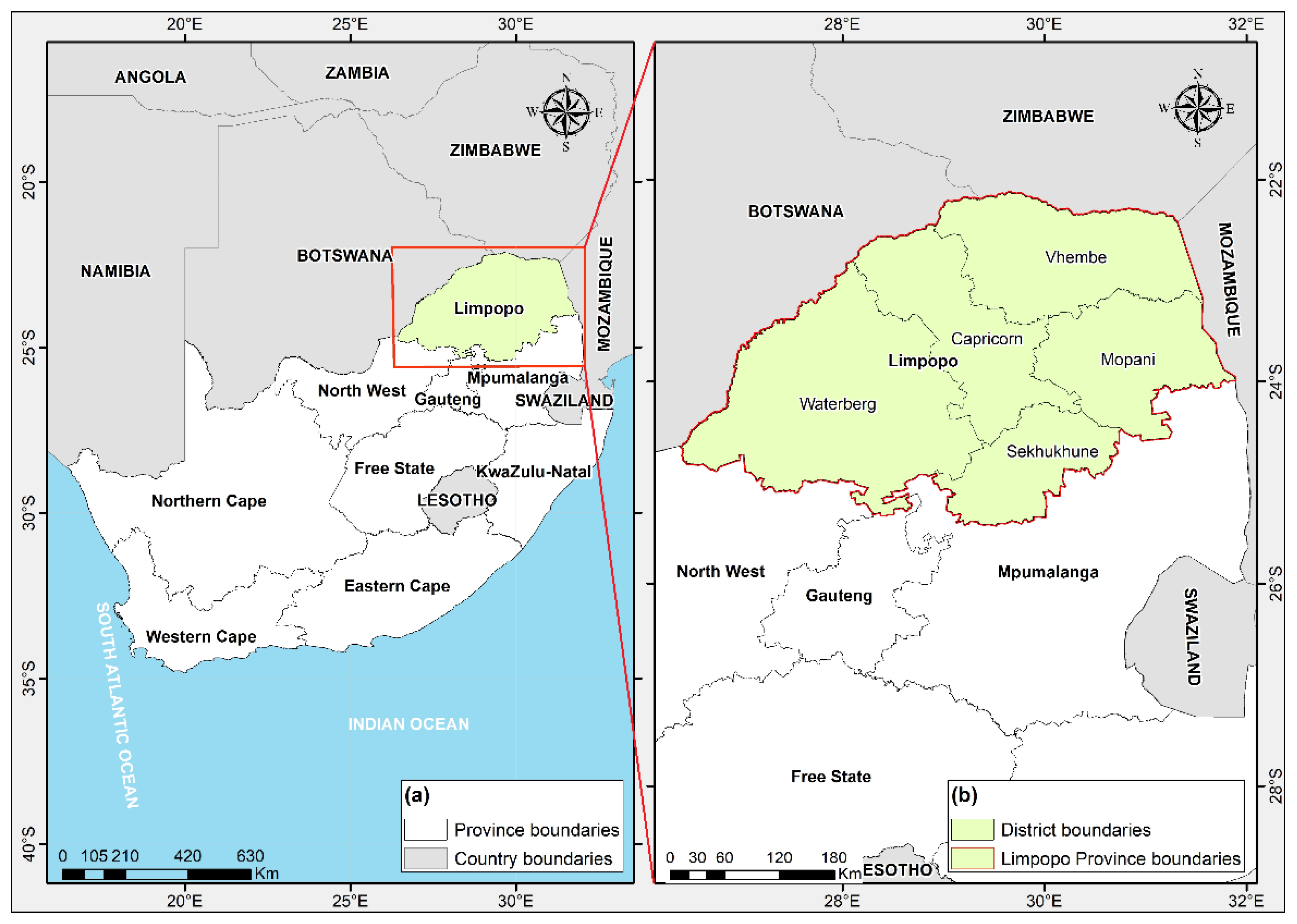
Figure 2.
The 94 homogeneous rainfall districts in South Africa [35]. The highlighted districts covering Limpopo were used for the historical precipitation analysis. Provincial boundaries in red.
Figure 2.
The 94 homogeneous rainfall districts in South Africa [35]. The highlighted districts covering Limpopo were used for the historical precipitation analysis. Provincial boundaries in red.
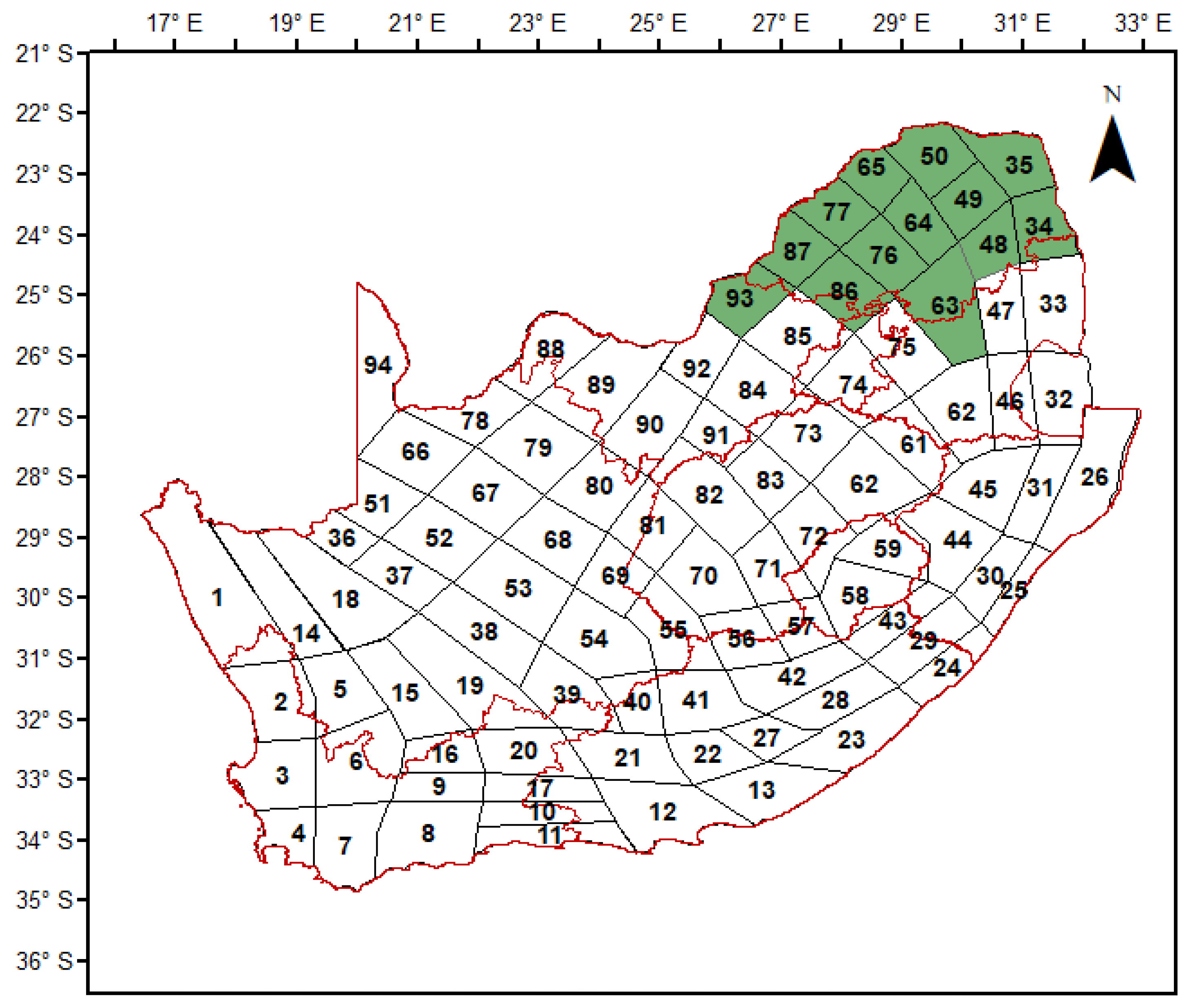
Figure 3.
Flow chart diagram illustrating the data and methods used in this study.
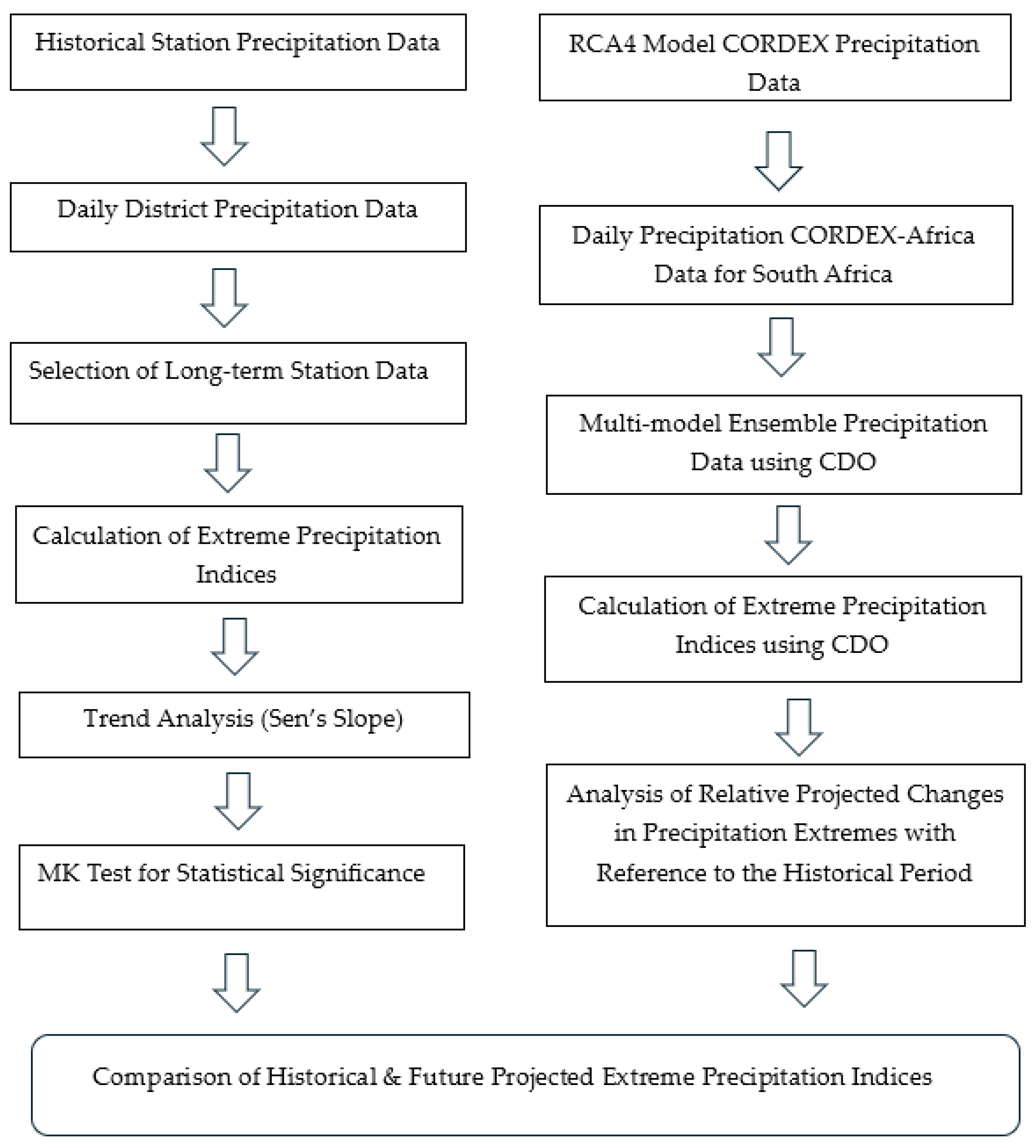
Figure 4.
Trend in annual total precipitation (prcptot) for 15 very long-term rainfall stations (1921 – 2021) in Limpopo Province. Filled dots indicate significant trends at the 5% level (p < 0.05).
Figure 4.
Trend in annual total precipitation (prcptot) for 15 very long-term rainfall stations (1921 – 2021) in Limpopo Province. Filled dots indicate significant trends at the 5% level (p < 0.05).
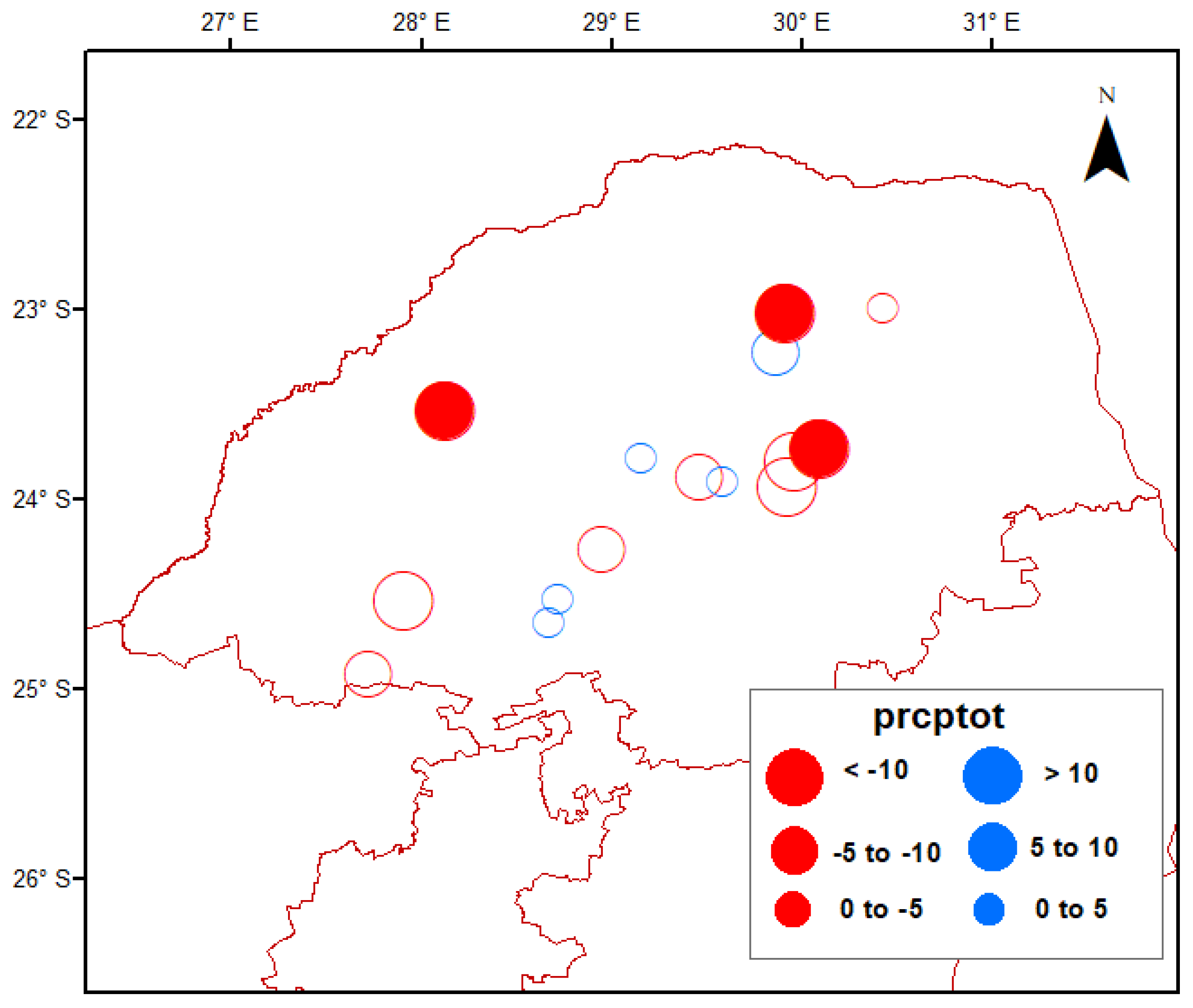
Figure 5.
Trend in rx1day for 15 very long-term rainfall stations (1921 – 2021) in Limpopo Province. Filled dots indicate significant trends at the 5% level (p < 0.05).
Figure 5.
Trend in rx1day for 15 very long-term rainfall stations (1921 – 2021) in Limpopo Province. Filled dots indicate significant trends at the 5% level (p < 0.05).
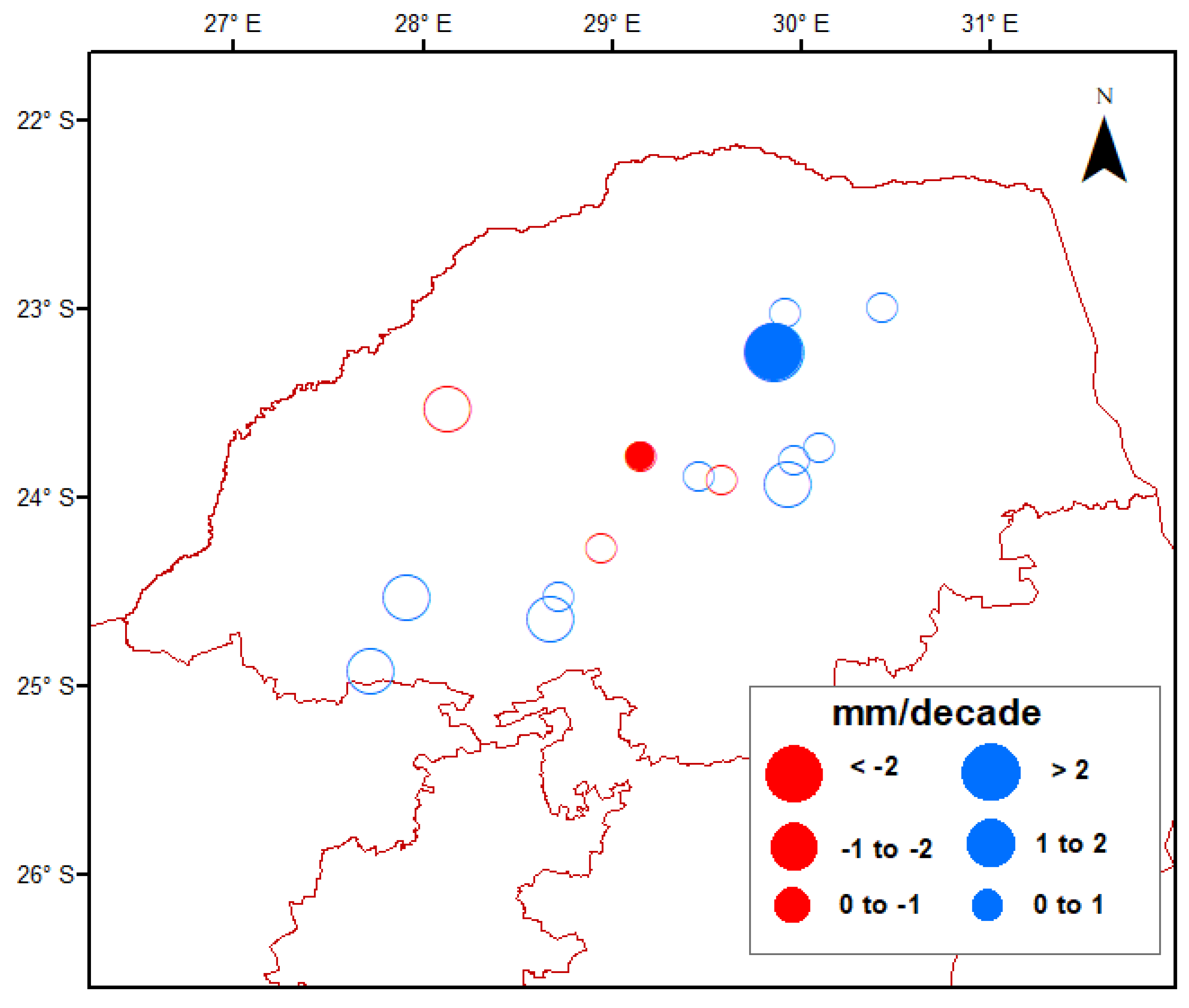
Figure 6.
Trend in r10mm for 15 very long-term rainfall stations (1921 – 2021) in Limpopo Province. Filled dots indicate significant trends at the 5% level (p < 0.05).
Figure 6.
Trend in r10mm for 15 very long-term rainfall stations (1921 – 2021) in Limpopo Province. Filled dots indicate significant trends at the 5% level (p < 0.05).
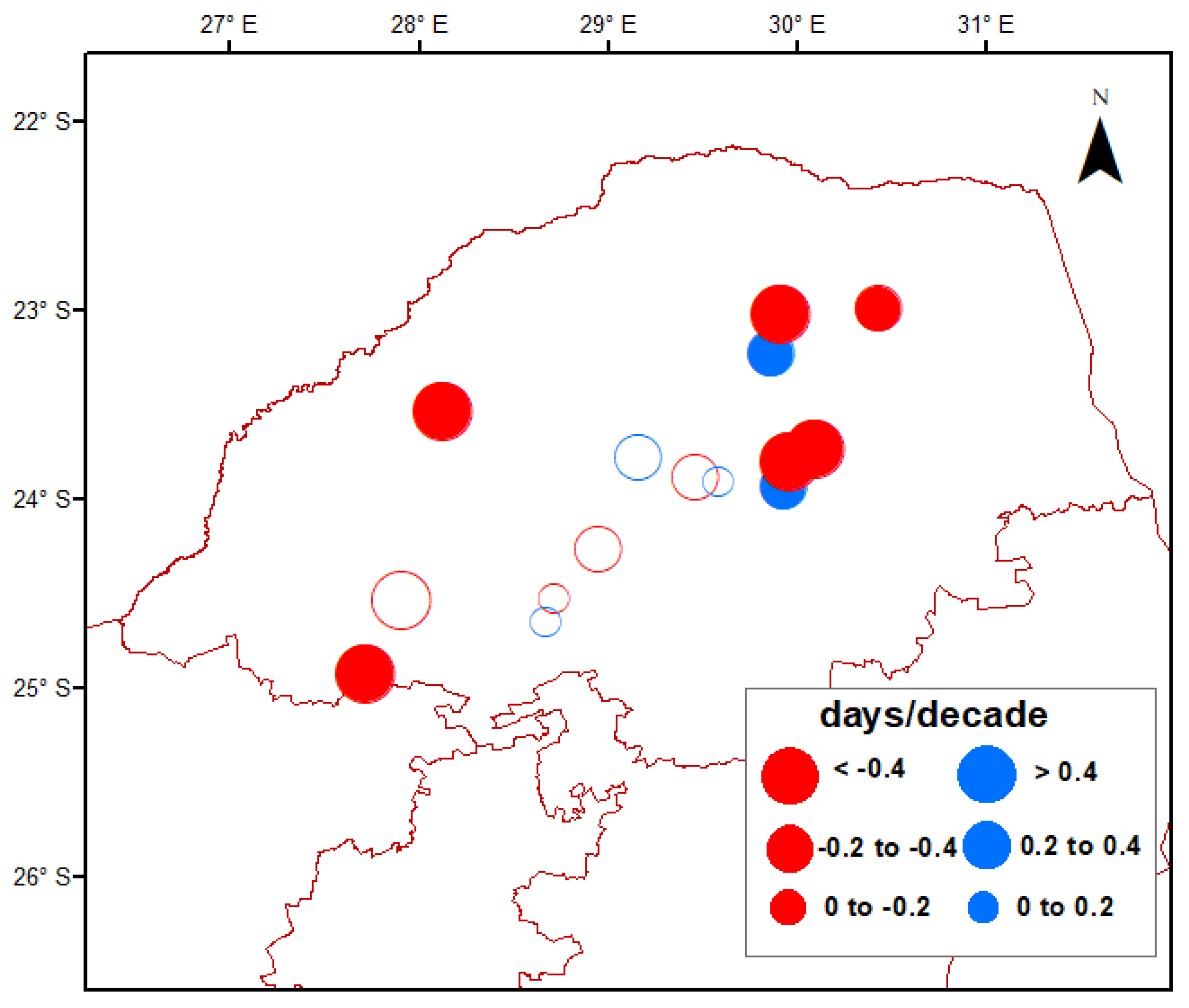
Figure 7.
Trend in r20mm for 15 very long-term rainfall stations (1921 – 2021) in Limpopo Province. Filled dots indicate significant trends at the 5% level (p < 0.05).
Figure 7.
Trend in r20mm for 15 very long-term rainfall stations (1921 – 2021) in Limpopo Province. Filled dots indicate significant trends at the 5% level (p < 0.05).
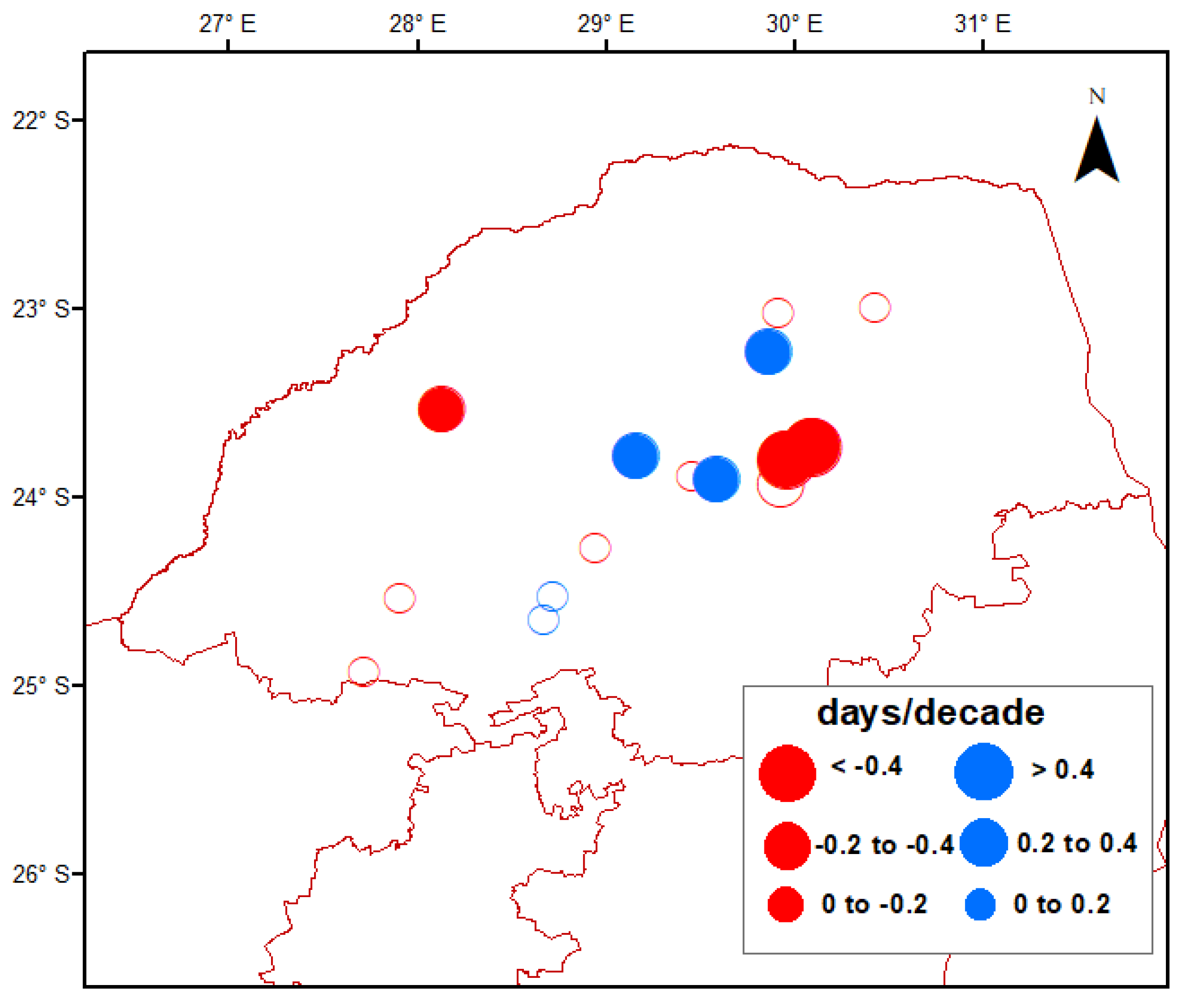
Figure 8.
Trend in SDII for 15 very long-term rainfall stations (1921 – 2021) in Limpopo Province. Filled dots indicate significant trends at the 5% level (p < 0.05).
Figure 8.
Trend in SDII for 15 very long-term rainfall stations (1921 – 2021) in Limpopo Province. Filled dots indicate significant trends at the 5% level (p < 0.05).
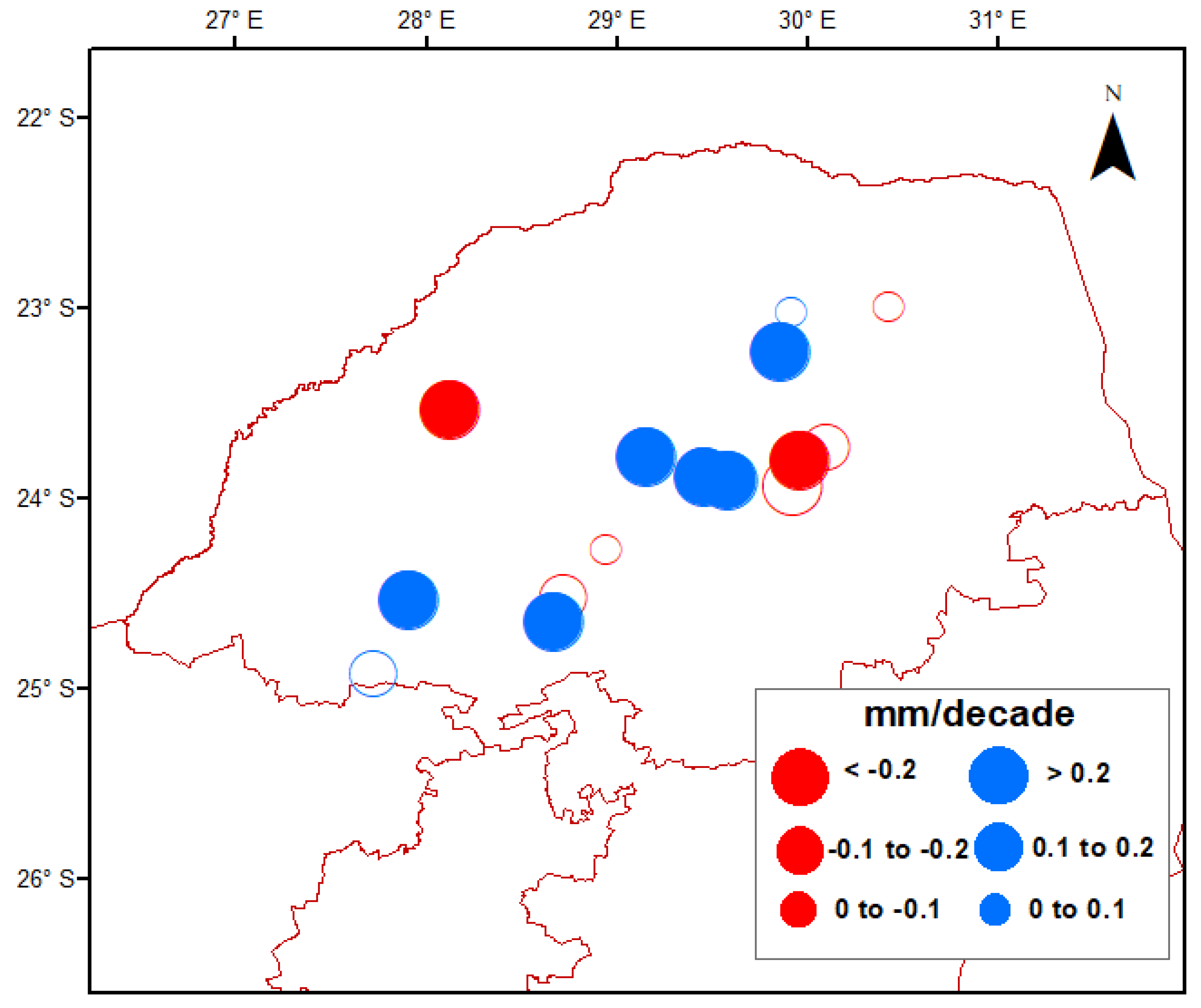
Figure 9.
Trend in CWD for 15 very long-term rainfall stations (1921 – 2021) in Limpopo Province. Filled dots indicate significant trends at the 5% level (p < 0.05).
Figure 9.
Trend in CWD for 15 very long-term rainfall stations (1921 – 2021) in Limpopo Province. Filled dots indicate significant trends at the 5% level (p < 0.05).
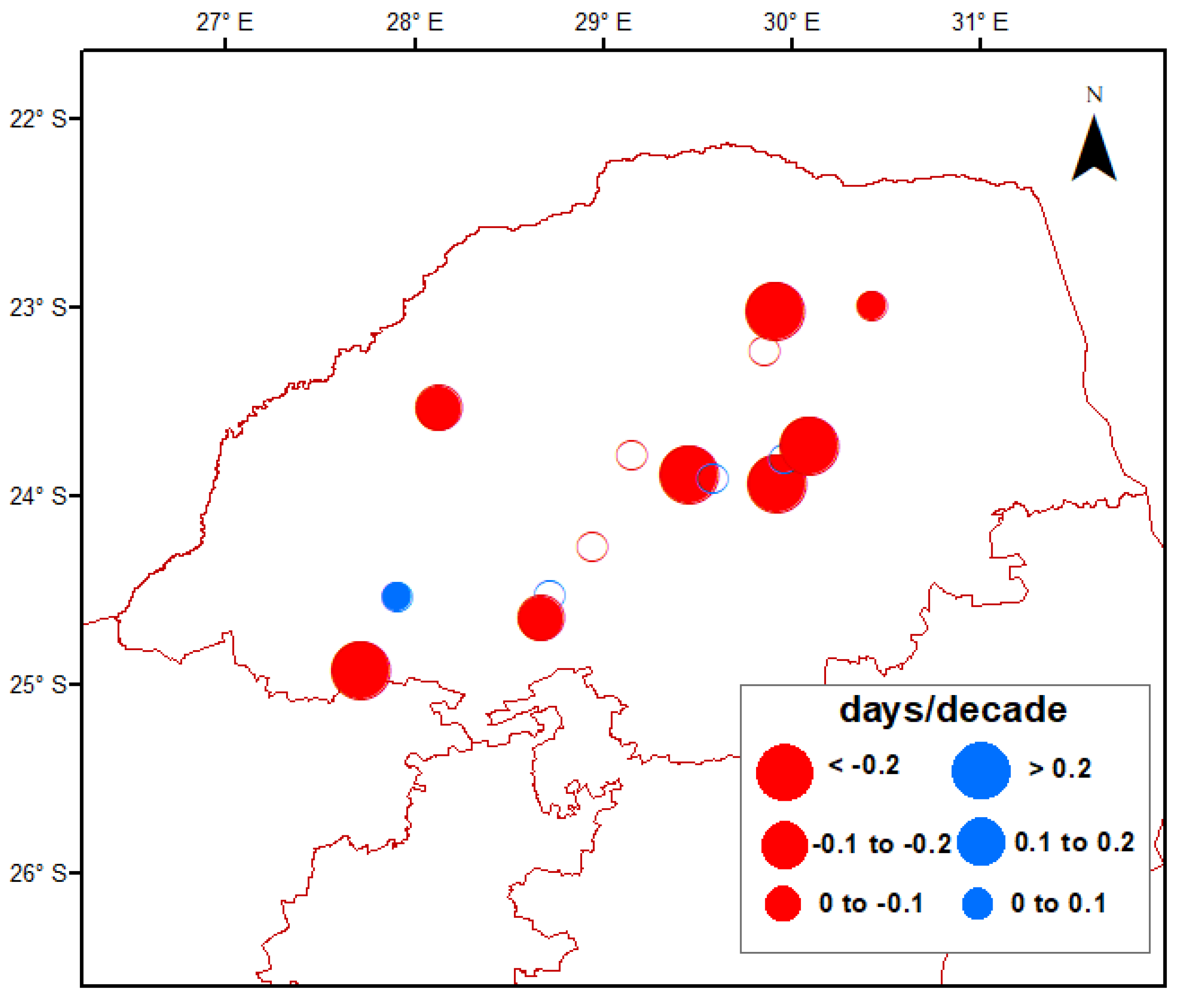
Figure 10.
Trend in CDD for 15 very long-term rainfall stations (1921 – 2021) in Limpopo Province. Filled dots indicate significant trends at the 5% level (p < 0.05).
Figure 10.
Trend in CDD for 15 very long-term rainfall stations (1921 – 2021) in Limpopo Province. Filled dots indicate significant trends at the 5% level (p < 0.05).
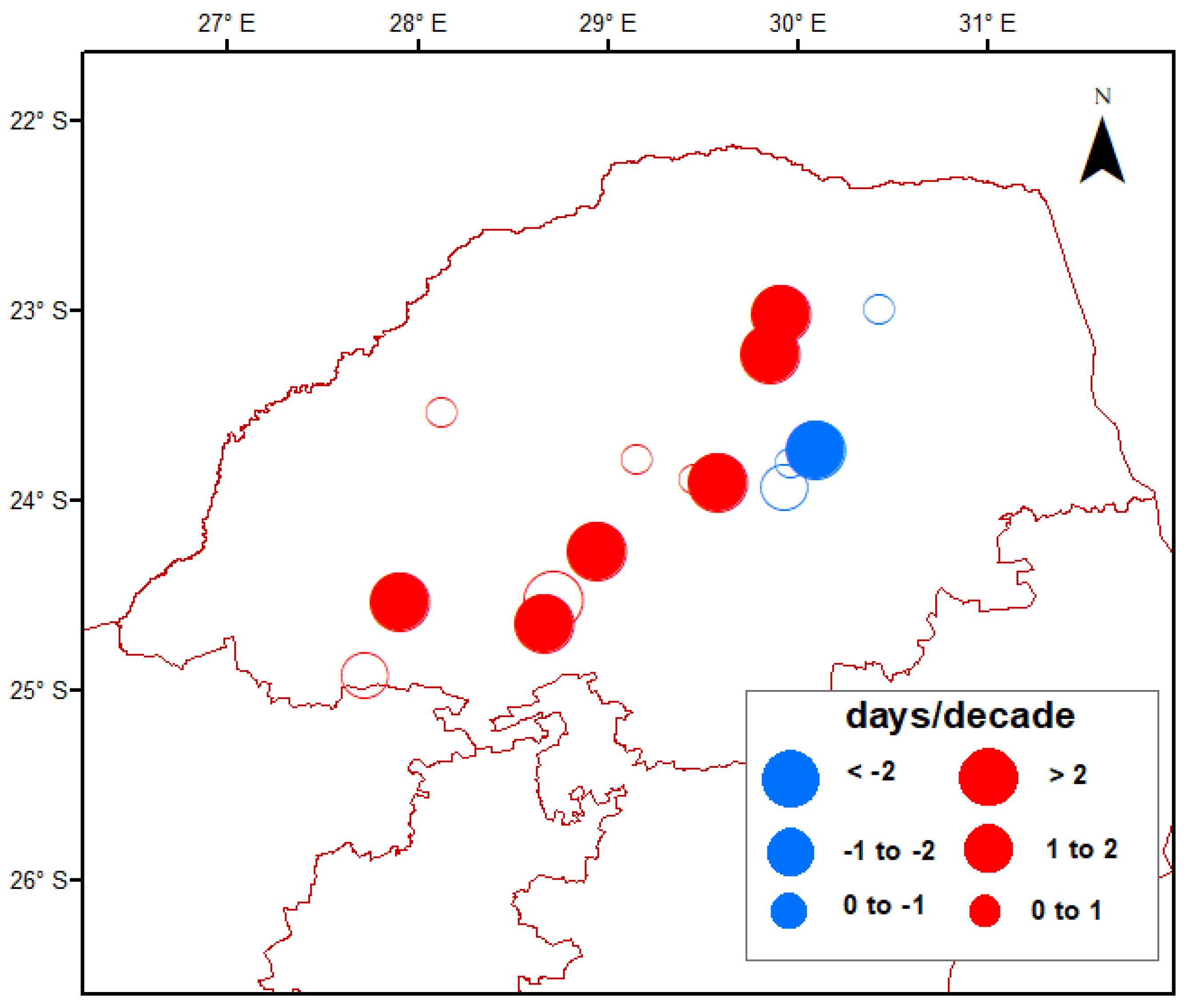
Figure 11.
Trend in r95p for 15 very long-term rainfall stations (1921 – 2021) in Limpopo Province. Filled dots indicate significant trends at the 5% level (p < 0.05).
Figure 11.
Trend in r95p for 15 very long-term rainfall stations (1921 – 2021) in Limpopo Province. Filled dots indicate significant trends at the 5% level (p < 0.05).
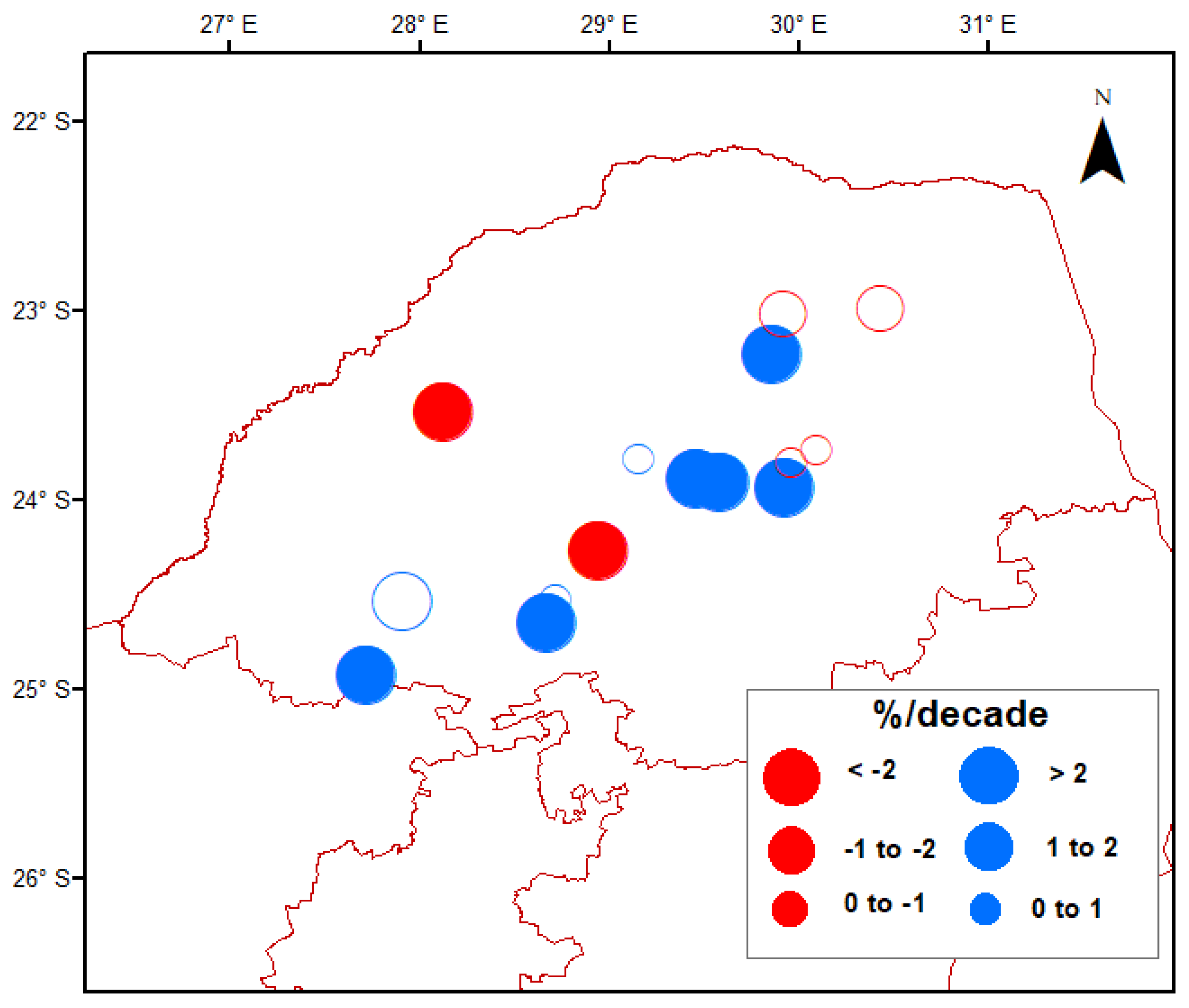
Figure 12.
Average historical CORDEX ensemble mean annual precipitation (MAP) in mm for the Limpopo Province (1976-2005).
Figure 12.
Average historical CORDEX ensemble mean annual precipitation (MAP) in mm for the Limpopo Province (1976-2005).
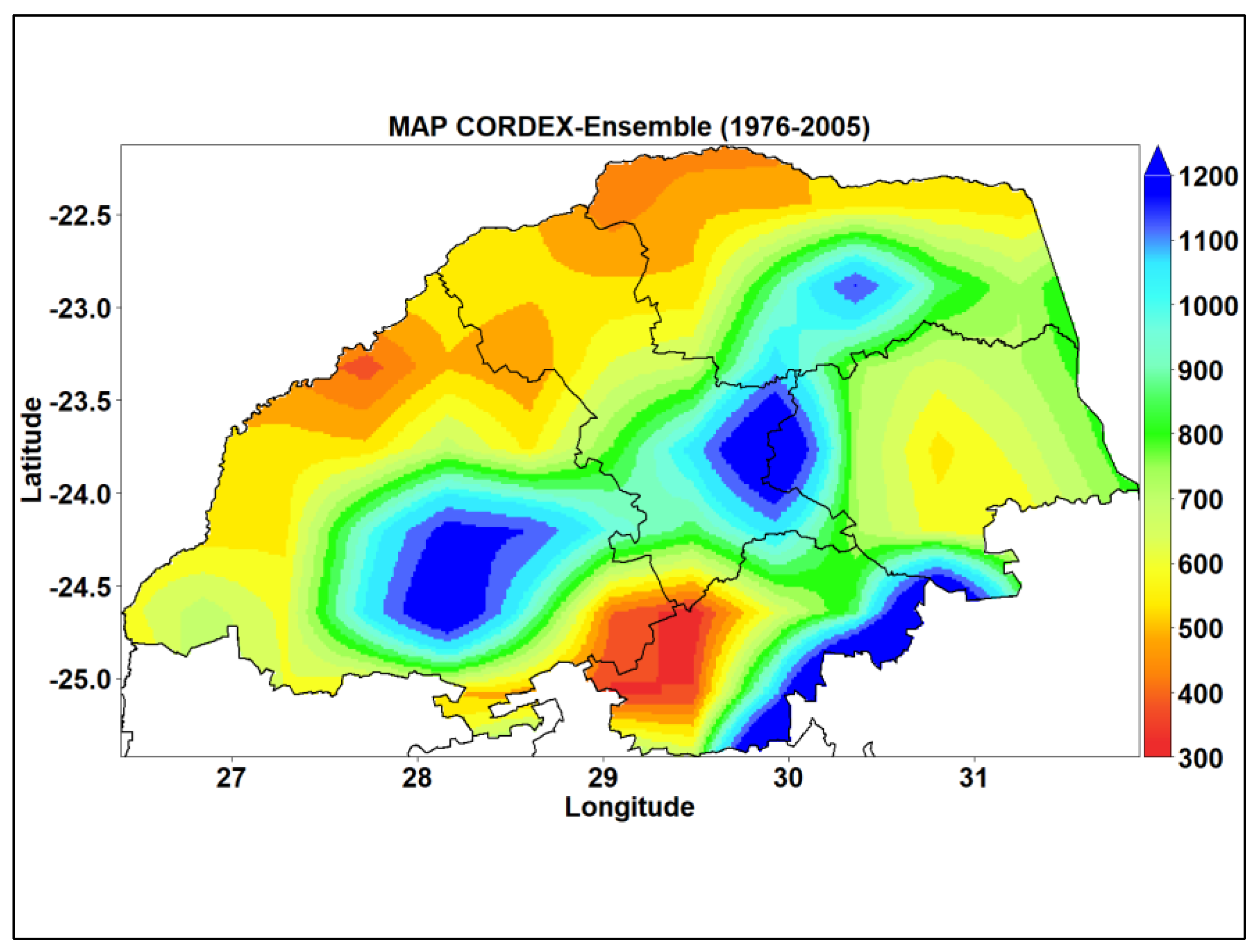
Figure 13.
Projected changes in mean annual precipitation (MAP) in mm for Limpopo Province with reference to 1976-2005 for three projection time periods, based on RCP4.5 (a, c and e) and RCP8.5 (b, d and f) scenarios.
Figure 13.
Projected changes in mean annual precipitation (MAP) in mm for Limpopo Province with reference to 1976-2005 for three projection time periods, based on RCP4.5 (a, c and e) and RCP8.5 (b, d and f) scenarios.
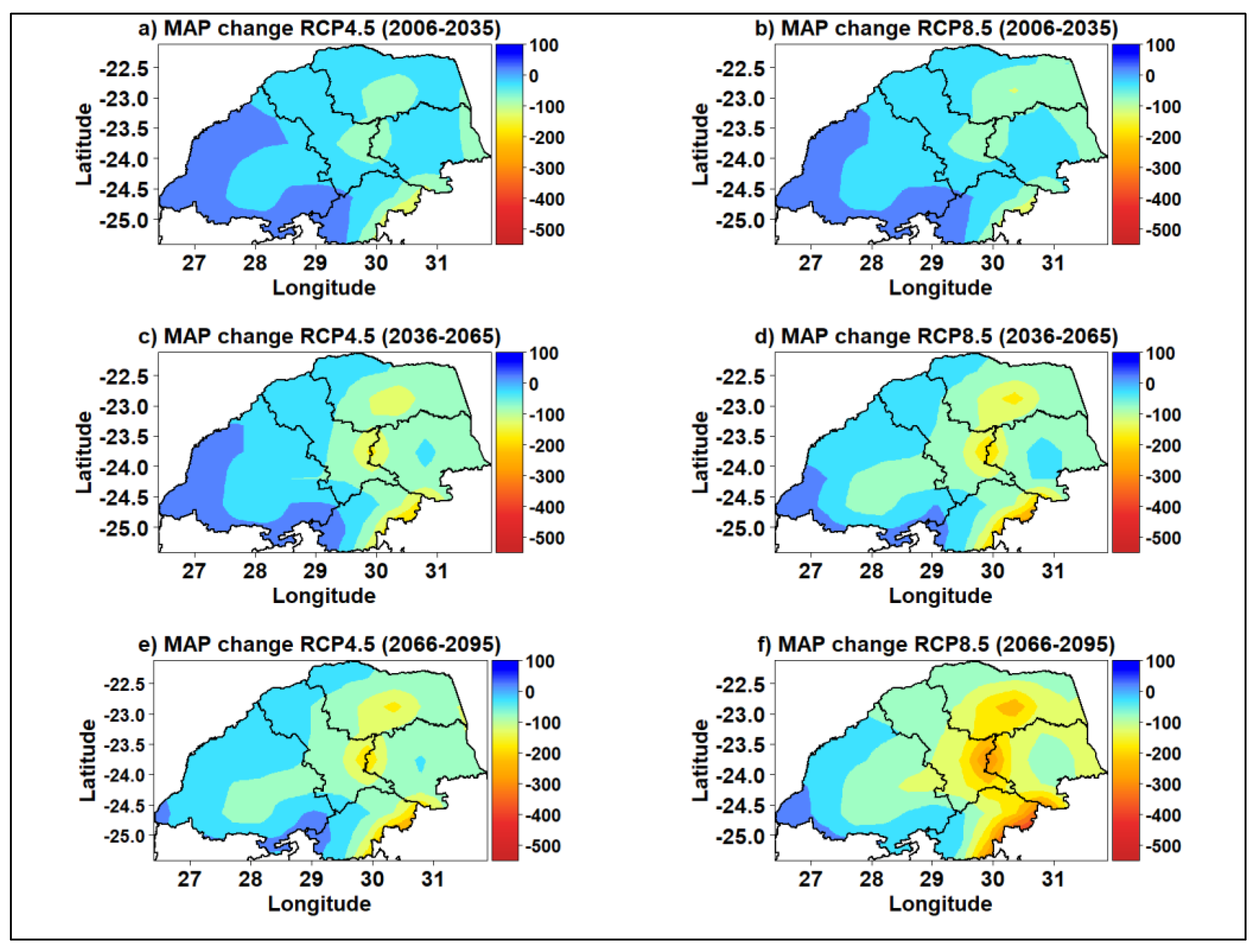
Figure 14.
Highest 1-day precipitation (rx1day, mm) for the three projection time periods under RCP4.5 (a, c and e) and RCP8.5 (b, d and f) scenarios for Limpopo Province.
Figure 14.
Highest 1-day precipitation (rx1day, mm) for the three projection time periods under RCP4.5 (a, c and e) and RCP8.5 (b, d and f) scenarios for Limpopo Province.
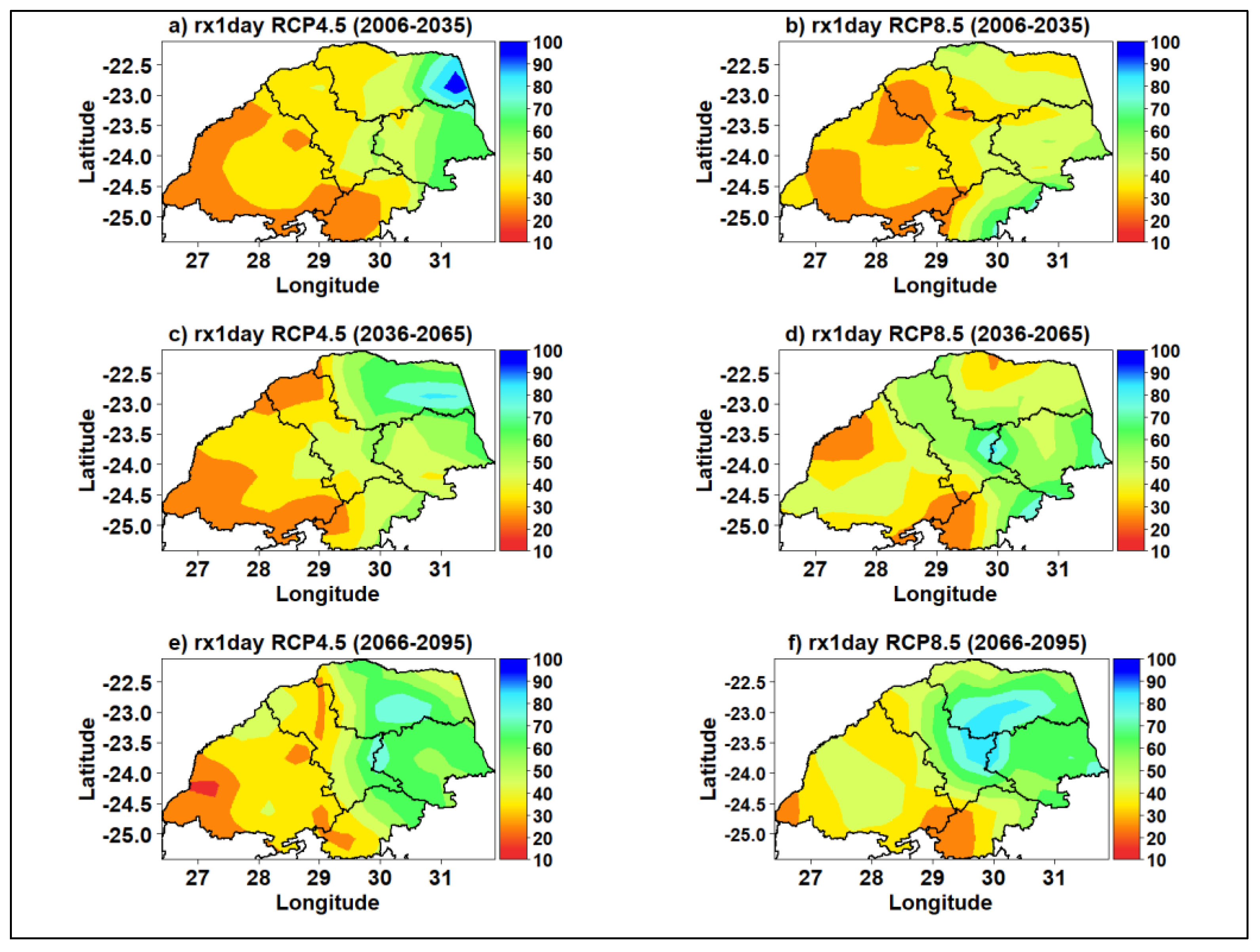
Figure 15.
Projected changes in the number heavy precipitation days index per time period (r10mm) for the three projection time periods with reference to the 1976-2005 period under RCP4.5 (a, c and e) and RCP8.5 (b, d and f) scenarios for Limpopo Province.
Figure 15.
Projected changes in the number heavy precipitation days index per time period (r10mm) for the three projection time periods with reference to the 1976-2005 period under RCP4.5 (a, c and e) and RCP8.5 (b, d and f) scenarios for Limpopo Province.
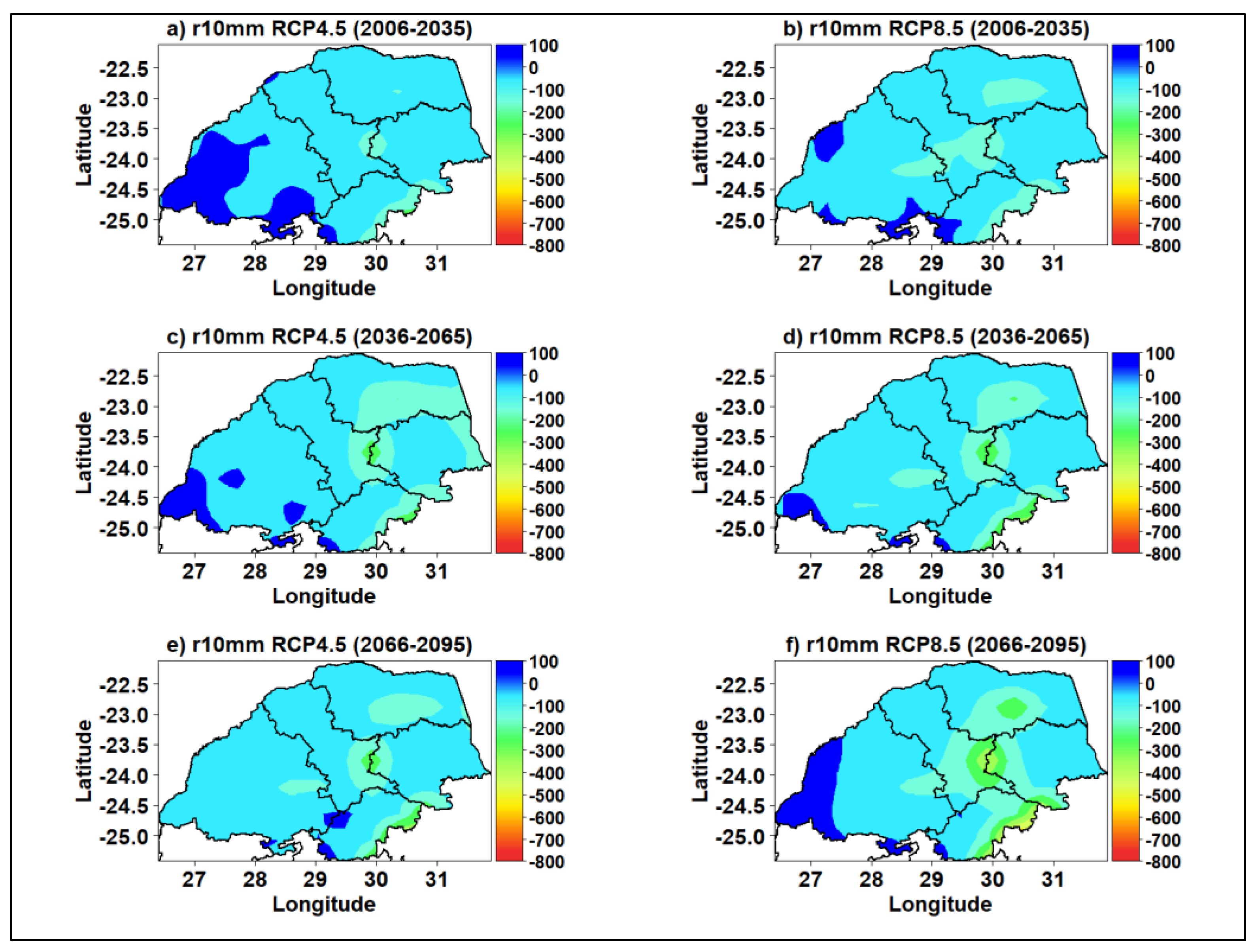
Figure 16.
Projected changes in the number of very heavy precipitation days index per time period (r20mm) for the three projection time periods with reference to the 1976-2005 period under RCP4.5 (a, c and e) and RCP8.5 (b, d and f) scenarios for Limpopo Province.
Figure 16.
Projected changes in the number of very heavy precipitation days index per time period (r20mm) for the three projection time periods with reference to the 1976-2005 period under RCP4.5 (a, c and e) and RCP8.5 (b, d and f) scenarios for Limpopo Province.
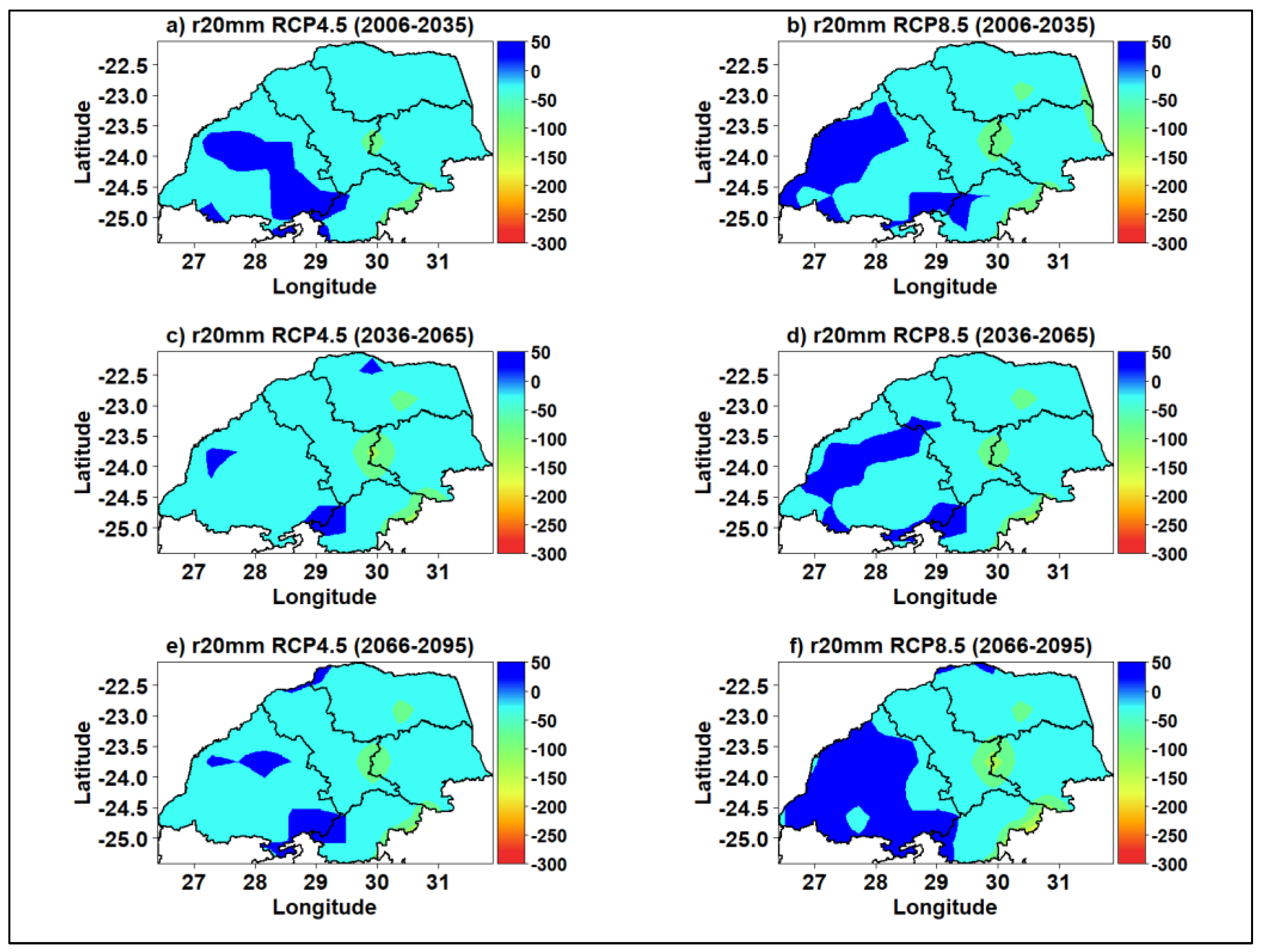
Figure 17.
Simple Daily Intensity Index (SDII) for the three projection time periods under RCP4.5 (a, c and e) and RCP8.5 (b, d and f) scenarios for Limpopo Province.
Figure 17.
Simple Daily Intensity Index (SDII) for the three projection time periods under RCP4.5 (a, c and e) and RCP8.5 (b, d and f) scenarios for Limpopo Province.
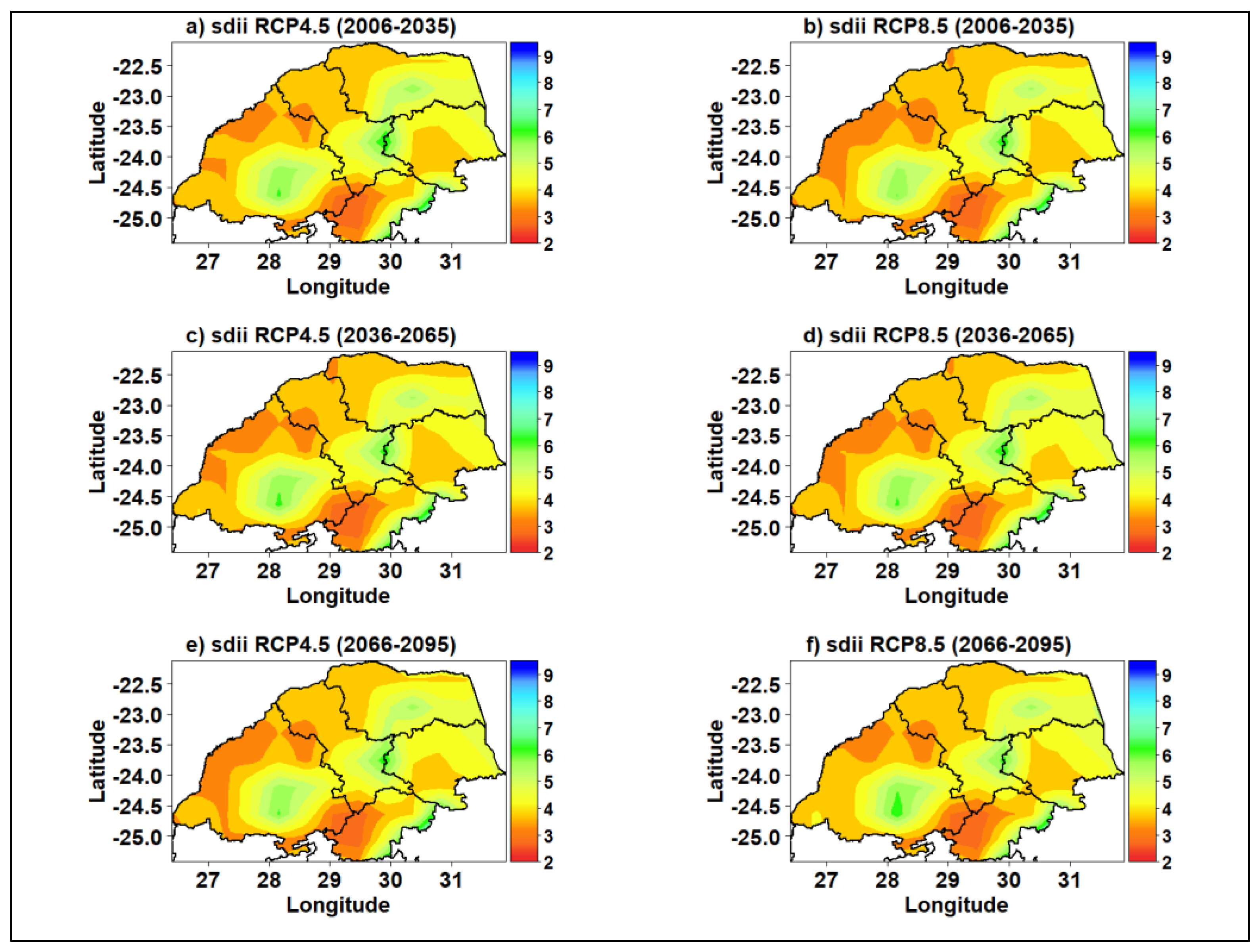
Figure 18.
Projected changes in the number consecutive wet days index per time period (CWD) for the three projection time periods with reference to the 1976-2005 period under RCP4.5 (a, c and e) and RCP8.5 (b, d and f) scenarios for Limpopo Province.
Figure 18.
Projected changes in the number consecutive wet days index per time period (CWD) for the three projection time periods with reference to the 1976-2005 period under RCP4.5 (a, c and e) and RCP8.5 (b, d and f) scenarios for Limpopo Province.
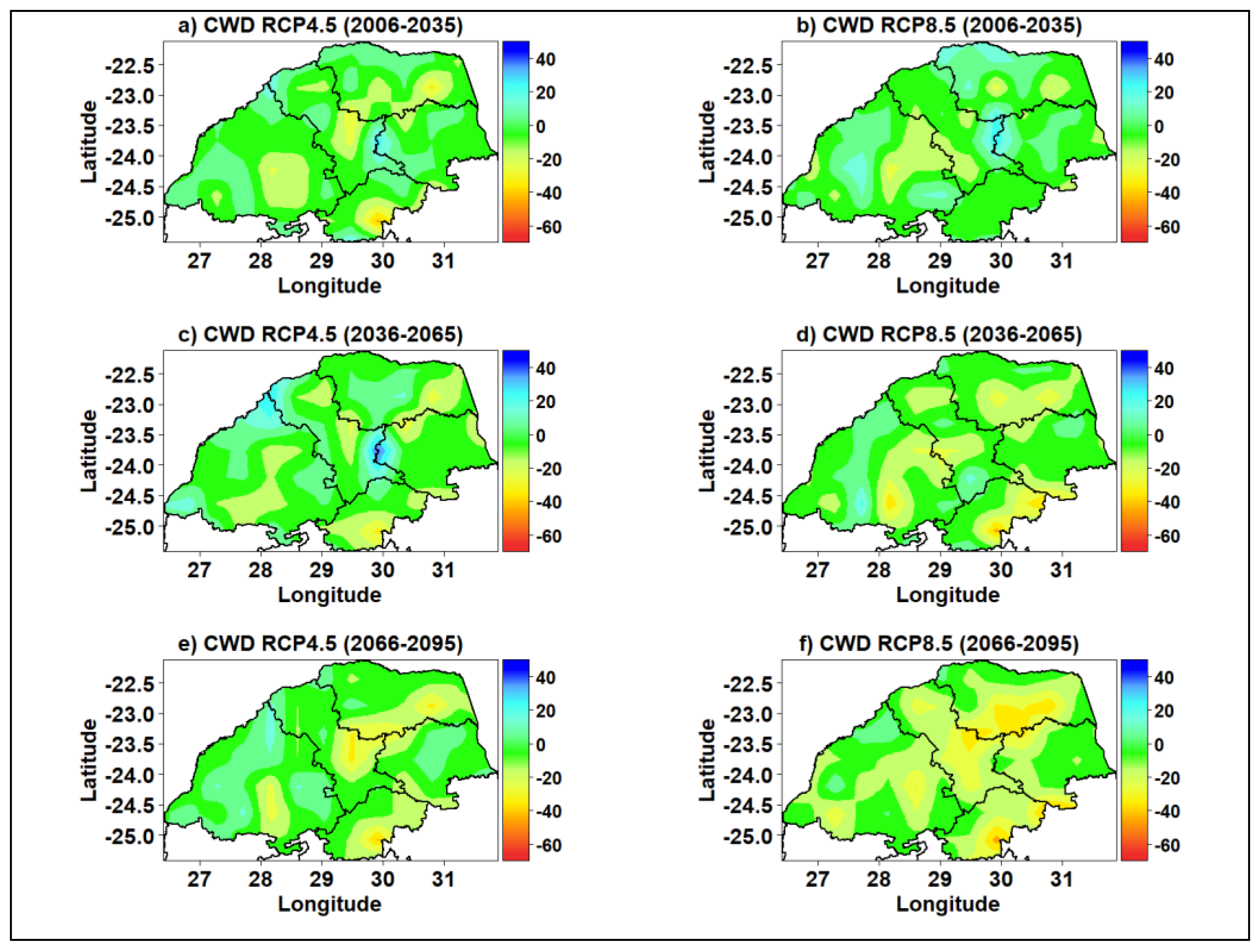
Figure 19.
Consecutive dry days index (CDD) for Limpopo Province. a) Number of consecutive dry days (CDD) per time period for the reference period (1976-2005), and b) Number of CDD periods with more than 5days per time period for the reference period (1976-2005).
Figure 19.
Consecutive dry days index (CDD) for Limpopo Province. a) Number of consecutive dry days (CDD) per time period for the reference period (1976-2005), and b) Number of CDD periods with more than 5days per time period for the reference period (1976-2005).
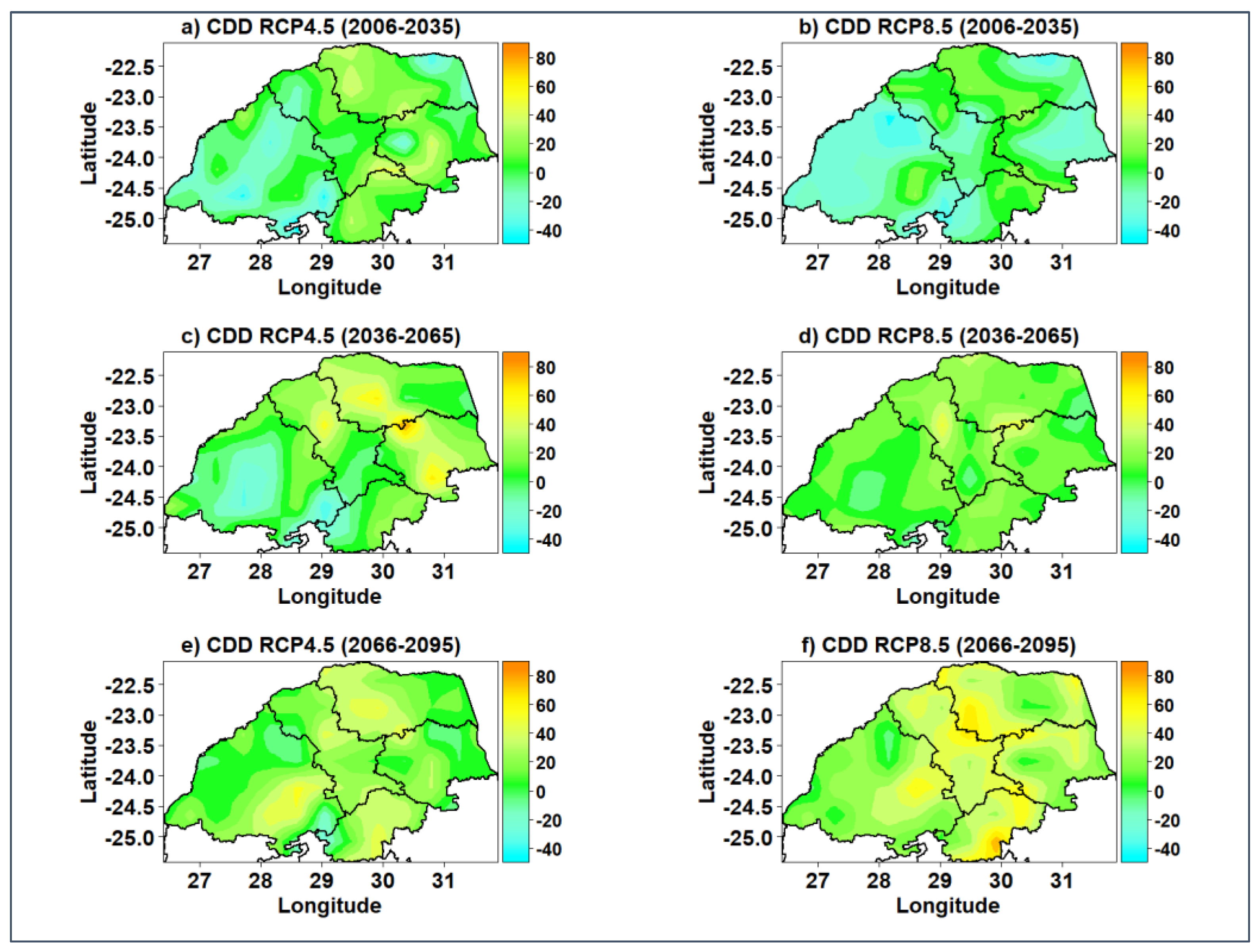
Figure 20.
Projected changes in very wet days (R95p) for the three projection time periods with reference to the 1976-2005 period under RCP4.5 (a, c and e) and RCP8.5 (b, d and f) scenarios for Limpopo Province.
Figure 20.
Projected changes in very wet days (R95p) for the three projection time periods with reference to the 1976-2005 period under RCP4.5 (a, c and e) and RCP8.5 (b, d and f) scenarios for Limpopo Province.
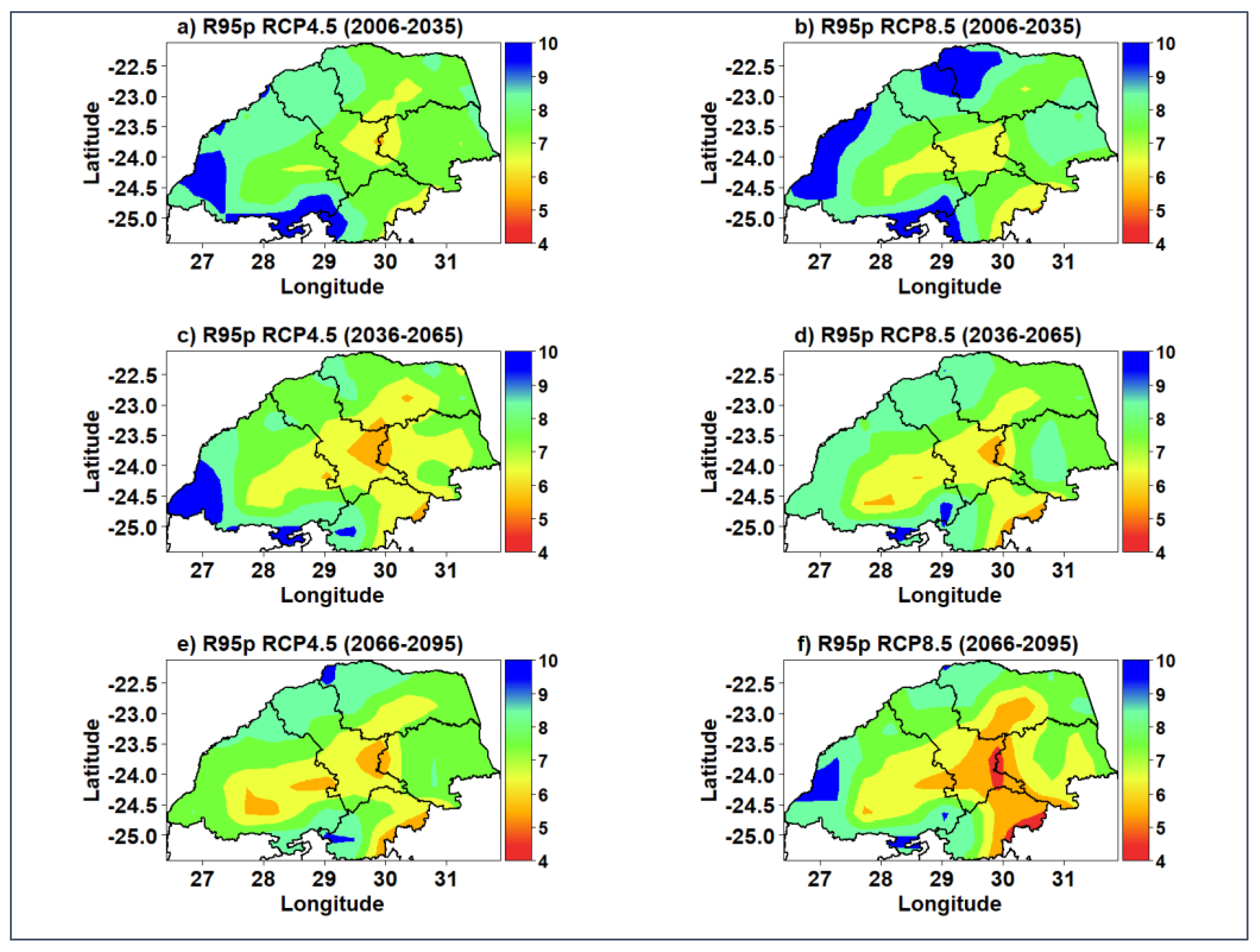
Table 1.
Long-term daily precipitation data in Limpopo Province according to rainfall districts.
| Rainfall District | Station Name | Latitude | Longitude |
|---|---|---|---|
| 49 | Haenertsburg | 23° 55’ 48’’ S | 29° 55’ 48’’ E |
| Wood Bush | 23° 48’ 00’’ S | 29° 58’ 12’’ E | |
| Letaba District | 23° 43’ 48’’ S | 30° 06’ 00’’ E | |
| Zwartrantjes | 23° 13’ 48’’ S | 29° 51’ 36’’ E | |
| Palmaryville | 22° 59’ 24’’ S | 30° 25’ 48’’ E | |
| 50 | Hanglip | 23° 01’ 12’’ S | 29° 55’ 12’’ E |
| 64 | Bergzicht | 23° 46’ 48’’ S | 29° 9’ 36’’ E |
| Pietersburg-Hosp | 23° 53’ 24’’ S | 29° 27’ 36’’ E | |
| Kalkfontein | 23° 53’ 60’’ S | 29° 34’ 48’’ E | |
| 76 | Naboomspruit | 24° 31’ 12’’ S | 28° 43’ 12’’ E |
| Nylsvley | 24° 38’ 60’’ S | 28° 40’ 12’’ E | |
| Moorddrift | 24° 16’ 12’’ S | 28° 56’ 60’’ E | |
| 77 | Villa Nora-Pol | 23° 31’ 48’’ S | 28° 07’ 48’’ E |
| 86 | Leeupoort-Mun | 24° 55’ 12’’ S | 27° 43’ 12’’ E |
| Rankins Pass-Pol | 24° 31’ 48’’ S | 27° 54’ 36’’ E |
Table 3.
Selected precipitation extreme indices used in this study.
| Precipitation Extreme Indices | ||
|---|---|---|
| Rx1day | Maximum 1-day precipitation amount | Maximum 1-day precipitation amount |
| Rx5day | Maximum 5-day precipitation amount | Maximum consecutive 5-day precipitation amount |
| SDII | Simple Daily Intensity Index | Total precipitation divided by the number of wet days |
| CDD | Consecutive Dry Days | Maximum number of consecutive days with daily precipitation amount < 1 mm |
| CWD | Consecutive Wet Days | Maximum number of consecutive days with daily precipitation amount ≥ 1 mm |
| R10mm | Number of heavy precipitation days | The annual count of days when daily precipitation amount ≥ 10 mm |
| R20mm | Number of very heavy precipitation days | The annual count of days when daily precipitation amount ≥ 20 mm |
| R95p | Very wet days | Annual total precipitation when precipitation amount > 95th percentile |
Disclaimer/Publisher’s Note: The statements, opinions and data contained in all publications are solely those of the individual author(s) and contributor(s) and not of MDPI and/or the editor(s). MDPI and/or the editor(s) disclaim responsibility for any injury to people or property resulting from any ideas, methods, instructions or products referred to in the content. |
© 2026 by the authors. Licensee MDPI, Basel, Switzerland. This article is an open access article distributed under the terms and conditions of the Creative Commons Attribution (CC BY) license (http://creativecommons.org/licenses/by/4.0/).
Copyright: This open access article is published under a Creative Commons CC BY 4.0 license, which permit the free download, distribution, and reuse, provided that the author and preprint are cited in any reuse.


