

Submitted:
19 March 2026
Posted:
20 March 2026
You are already at the latest version
Abstract
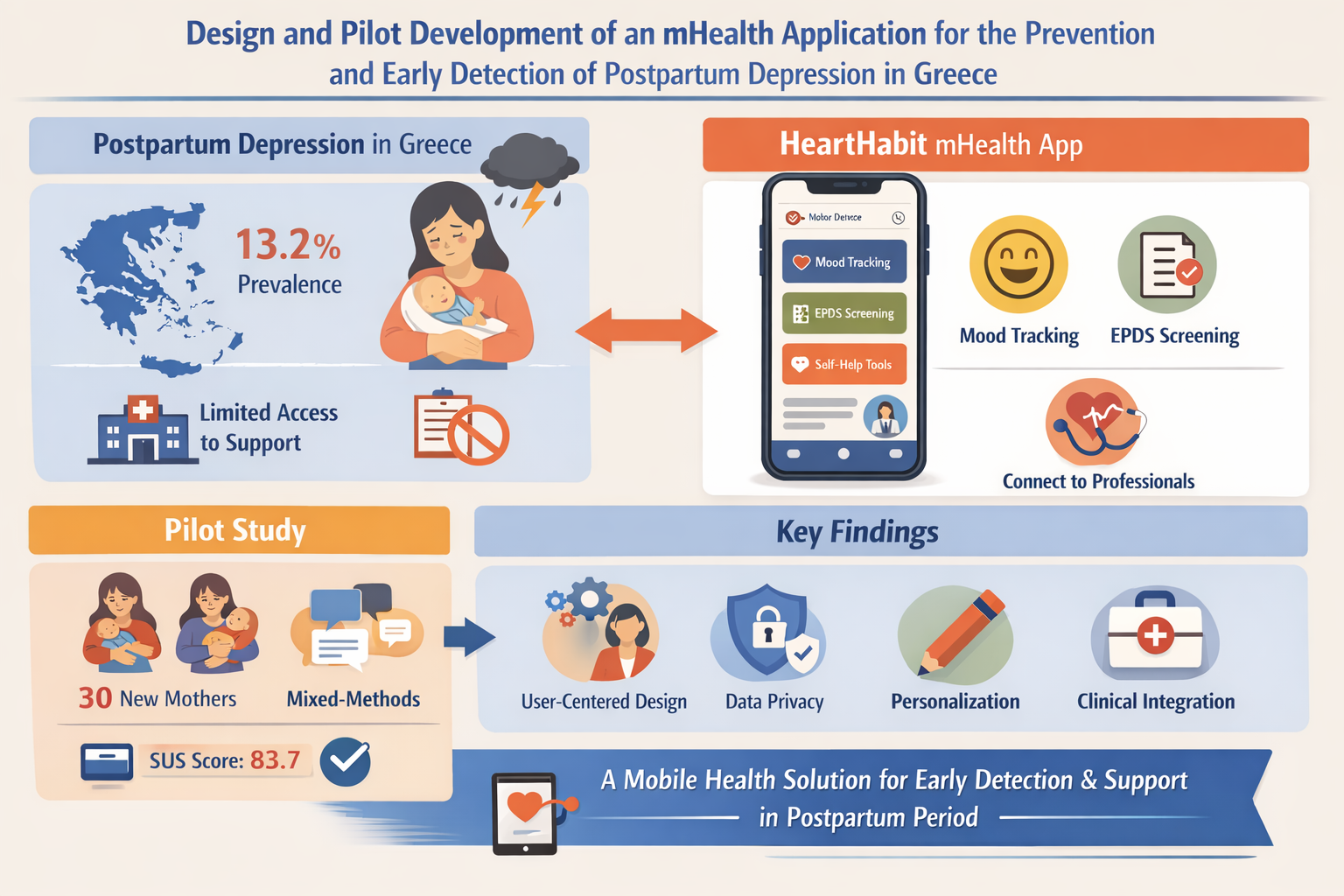
Postpartum depression (PPD) affects a substantial proportion of women globally and is often underdiagnosed due to barriers in screening, stigma, and limited treatment access. This study presents the design and pilot evaluation of a mHealth application (“HeartHabit”) for the prevention and early detection of PPD among Greek-speaking mothers. An alpha version of the application was evaluated through an online survey with 30 women within the first postpartum year, during which a walkthrough video of the app was presented. Usability and app quality were assessed via the System Usability Scale (SUS) and a qualitative version of the user Mobile Application Rating Scale (uMARS) respectively, adopting a mixed-methods approach. Demographics, and mood and stress screening data were also captured. Quantitative data were analysed via descriptive statistics and qualitative responses via Framework Analysis. Results indicated high perceived usability (mean SUS = 83.7/100). Qualitative findings highlighted the importance of practical usability, self-regulation tools, personalisation, and connectivity with healthcare professionals. Privacy, data transparency, and user control over personal data were perceived as critical for trust. The assistive use of the application combined with formal care, or as at-home support for when treatment access is limited, was suggested. Larger, controlled trials, clinical implementation protocols and clinicians’ training are needed to promote the app’s safe integration into formal care. This mixed-methods evaluation, incorporating usability assessment and patient involvement, may offer a useful paradigm for early-stage, digital mental health intervention development.
Keywords:
postpartum depression
; mHealth
; digital mental health
; usability
; acceptability
1. Introduction
Postpartum depression (PPD) is a common public health issue worldwide, with global prevalence estimated at 15%-20% (Wang et al., 2021; Liu et al., 2022; Tenaw et al., 2024). For developing countries, this percentage is typically increased (Wang et al., 2021; Liu et al., 2022; Tenaw et al., 2024). In Europe, reported rates range from 10-15%; in Greece specifically, the figure reaches 13.2% (Galletta et al., 2026; Panagiotakos & Kouvari, 2023). PPD is classified as a Major Depressive Episode with onset within four weeks of delivery (American Psychiatric Association, 2013; Anokye et al., 2018; O’Hara & McCabe, 2013). It does not constitute a stand-alone diagnosis in the Diagnostic and Statistical of Manual of Mental Disorders, Fifth Edition (DSM-5), but it links to non-psychotic, depressive symptoms such as persistent low mood and functional impairment, distinguishing it from brief “baby blues” (American Psychiatric Association, 2013). Other common symptoms may include sleep and appetite disturbance, fatigue, irritability or anxiety, feelings of worthlessness or guilt, poor concentration, and even suicidal thoughts (American Psychiatric Association, 2013).
Clinical evidence suggests that symptomology may appear anytime within the first year after childbirth (Anokye et al., 2018; Galletta et al., 2026). Risk factors span personal, medical and psychosocial levels. Demographics such as young maternal age, low socioeconomic status or education, multiple children, and being a single parent increase PPD odds (Galletta et al., 2026). Poor diet and lack of exercise, prior history of mood disorders, and pregnancy-related stress such as complications, high-risk pregnancy or birth trauma also correlate with PPD occurrence (Panagiotakos & Kouvari, 2023; Biaggi et al., 2016). From a psychosocial perspective, low social support, marital conflict, financial strain, and stressful life events increase PPD risk, with domestic violence and intimate partner abuse to dramatically elevate it (Galletta et al., 2026; Stewart & Vigod, 2019). This multi-faceted risk of PPD and likelihood of later onset may impede early detection.
Timely diagnosis and early treatment are proven to mitigate PPD’s harm (Galletta et al., 2026; Kendall-Tackett, 2024). In contrast, untreated PPD is strongly associated with mothers’ poorer physical health, relationship difficulties, persistent depression, substance use, and suicide (Stewart & Vigod, 2016; Slomian et al., 2019). Infants of depressed mothers are also at higher risk for poor cognitive, emotional and social development, behavioral problems, and even medical disorders in adolescence (Slomian et al., 2019). Relevant literature indicates that 50% of PPD cases would be undiagnosed and of those clinically diagnosed around 50% will remain undertreated (Amer et al., 2024; World Health Organization, 2022). Lack of structured screening methods, of follow-up protocols and stigma attribute to this (Kendall-Tackett, 2024; World Health Organization, 2022). It is, thus, critical that flexible screening and follow-up methods are offered throughout the first year of delivery. Increased privacy and easy access should be at the core of such interventions.
Improving access to mental health care through innovative and scalable screening and treatment approaches is a core priority of the World Health Organization (WHO), as outlined in the Comprehensive Mental Health Action Plan 2013–2030 (WHO, 2021), and of the European Commission through its Comprehensive Approach to Mental Health (European Commission, 2023). In alignment with these frameworks, Greece in collaboration with WHO -supported by the National Recovery and Resilience Plan Greece 2.0 - has initiated the reform of its mental health services by accelerating the digital transformation of its healthcare system (WHO, 2023).
To address this, health-focused mobile applications (mHealth apps) can serve as promising, digital tools for screening and follow-up, while simultaneously offering the advantages of privacy and easy access through smartphones. MHealth applications have been developed for a wide range of mental health disorders, providing self-help resources, facilitating referrals to specialized professionals, and supporting timely diagnosis, prevention, and treatment (Deniz-Garcia et al., 2023).
The usability of mHealth apps for PPD has been investigated by a few studies worldwide, showing promise on their effectiveness (Yan et al., 2024; Lewkowitz et al., 2024; Mustafina et al., 2025). Technical features proven to increase their effectiveness were the option for a referral to a clinician at the user’s area, voice narration through the use of an avatar, the option to complete a questionnaire at a later time, summaries of guidance and advice, and the ability to chat with clinicians via a chat asynchronously (Yan et al., 2024; Lewkowitz et al., 2024; Mustafina et al., 2025). Gamification in smartphone apps for depression is further linked to increased user engagement and effectiveness (Dias et al., 2018).
Ultimately, the objective of the current study was to design and evaluate, via an online survey with women within the first postpartum year, a culturally adapted, alpha version of an mHealth app for the prevention and diagnosis of PPD in Greece. To date, no such applications exist in Greek. This study is part of a larger project currently under publication; earlier findings revealed that Greek women with PPD expressed willingness to use an mHealth application for support, should one be available (). The methodological approach for designing, developing and evaluating key features of the application is presented below.
2. Materials and Methods
2.1. Smartphone Application “HeartHabit” – Alpha Version
A collaboration of the departments of computer science, psychology and social work of two, Greek institutions was established to develop this alpha version of the “HeartHabit” application. The development process was based on the agile methodology framework (Beck et al., 2001), the Patient and Public Involvement and Engagement (PPIE - Bensenor et al., 2022) approach and on relevant literature about the efficiency of mHealth applications.
More specifically, validated, diagnostic questionnaires and suggestions for prevention tools were provided by the psychologists’ and social workers’ team to the software developers’ team for digital implementation. In parallel, optimal features of mHealth apps were identified in relevant literature. Following iterative meetings for requirements gathering as per the agile methodology (Beck et al., 2001), most key features of the alpha version of the app were determined. Implementation of most key features was also based on agile development principles (Beck et al., 2001), with the developers’ team to build parts of the app in cycles and at the end of each iteration to capture the psychologists’ and social workers’ teams feedback.
Due to limited evidence about Greek mHealth applications, we combined the agile evaluation framework (Beck et al., 2001) with the PPIE one, involving the end users mid-development via the current study. The reported pilot evaluation will shape main features of the app while capturing feedback on what is currently implemented.
Main features of the “HeartHabit” app include integration of validated diagnostic questionnaires in a gamified format, such as the “Blues Quiz” based on the Edinburgh Postnatal Depression Scale – EPDS (Cox et al., 1978), connection with health professionals, breastfeeding and mood tracking modules and an AI-based advisory chatbot (“MySci Guide”). Register and login options are provided. A health professional profile is also implemented, for connected health professionals to receive patient information and notifications about their progress and intervene accordingly in real life.
The system architecture prioritizes security and General Data Protection Regulation (GDPR) compliance (General Data Protection Regulation, 2016), using cloud-based encrypted data storage. For the register and login for both profiles (mother and health professional), email verification is required, allowing additional security via 2-factor authentication.
The colour palette of the application was chosen based on literature reviews, colour theory and WCAG guidelines (World Wide Web Consortium, 2016). The app colours are seen to strongly impact user appeal, engagement and tool acceptance (Chan et al., 2023; Lazard et al., 2021). Light blue and light green were selected, linking to increased visibility of all screen elements and a stress-release effect on the user (Pakhale & Kashyap, 2023). This combination aligns with colour theory principles about pastel colours inducing calmness and colour harmony, promoting visual consistency and focus (Wen, 2021). As per the WCAG guidelines (World Wide Web Consortium, 2016), the text-to-background contrast ratio requirements were also met for both normal and large text, ensuring accessibility.
For the online evaluation of the app, a 4-minute walk-through video was recorded, showcasing in detail the main features app, including those that are still under development. The video included the register and login functionalities, completing the gamified EPDS - “Blues Quiz”, showcasing the award system for regular completion and motivating feedback, exploring the breastfeeding and mood trackers, and the AI-based advisory chatbot “MySci Guide”. The functionality of connecting with a health professional was also showcased, including showing the professional’s profile with the patient notification and information they would receive.
2.2. Software and Equipment
The mHealth App was developed using React Native (v0.76.9) and Expo (v52.0.47) in Visual Studio Code (v1.95) and Android Studio (Giraffe | 2022.3.1), with backend services powered by Supabase (v2.47.0). The walk-through video was recorded using OBS Studio (v30.2.3). Participants used their own, personal devices with internet access, to view the walk-through video for the purposes of this evaluation.
2.3. Sample and Recruitment
Participants were recruited via purposive and convenience sampling. The inclusion criteria for participating in the online survey were (1) to be 18 years old or older and (2) to have given birth within the past year. The study was advertised on social media accounts of the researchers’ institutions and an internal study advertising platform. The advertising text asked for voluntary participation in a survey about the evaluation of a smartphone app for the prevention and diagnosis of PPD. Individuals who were interested in taking part clicked on the link provided to open the survey.
Of the potential participants, 34 provided consent to complete the study and started to provide data. Of the 34 participants, 4 withdrew at some point during the survey and 30 completed the survey.
2.4. Procedure of Pilot Evaluation
Potential participants were first presented with the study information sheet before confirming eligibility and providing informed consent. Participants were asked to complete the survey in one sitting. The survey software did not allow participants to proceed if they did not complete main items of the survey (except the ones being sensitive – such as items of psychometric evaluations and mental health background). The survey required approximately 20 min to complete. Collection of data was anonymous.
The survey was divided into five parts and was administered in Greek for cultural relevance. Parts 3, 4 and 5 constitute the core app assessment. The app evaluation was based on two conceptual aspects – system usability and app quality – ensuring an holistic assessment and perceived acceptance of the “HeartHabit” mHealth app. To achieve this, the System Usability Scale – SUS (Brooke, 1996) was employed for measuring usability and the Mobile App Rating Scale – MARS (Stoyanov et al., 2015) for assessing app quality specifically for mHealth apps.
Part 1: Demographic characteristics
The first part was collection of demographic information such as gender, age, delivery information, mental health background, access to social support, internet access, and familiarity with mHealth apps and technology.
Part 2: Mood and Stress Evaluation
The second part was focused on assessing the mood and stress states of participants at the period of taking the survey (in the past 1 to 2 weeks). Mood was evaluated via the validated, Greek version of the EPDS (Leonardou et al., 2009). The EPDS was developed by Cox et al. (1978) to identify women who may experience PPD. It consists of 10 items relating to the past 7 days and each answer is given a score of 0-3. The maximum score is 30 with cut-off values of 10 and above.
Stress was evaluated via the validated, Greek version of the General Anxiety Disorder-7 (GAD-7) scale (Vogazianos et al., 2022). The GAD-7 (Spitzer et al., 2006) was designed to measure anxiety severity in the last 2 weeks, and it consists of 7 items tracking the frequency of stress-related symptoms (likert scales of 0-not at all to 3-nearly every day). Scores are categorized as 0–4: minimal anxiety, 5–9: mild anxiety, 10–14: moderate anxiety and15–21: severe anxiety.
Part 3: Usability Evaluation
In the third part of the survey, participants were asked to watch the walk-through video of the app in their personal devices, as many times as they wished. The video was provided through a link embodied in the survey. In the next step, a validated, Greek version of the SUS (Katsanos et al., 2012) was used for participants to assess the app usability. SUS (Brooke, 1996) was developed to evaluate the usability of electronic office systems and is widely employed in usability engineering. It consists of 10 items about usability attitudes, each with a Likert-scale answer scoring from 1-“strongly disagree” to 5-“strongly agree”.
Part 4: Quality and User Experience Evaluation
The fourth part consisted of both quantitative and qualitative measures. First, participants were asked to complete a stand-alone section (section E: App Subjective Quality) of the validated, Greek version of the user Mobile Application Rating Scale – uMARS (Chasiotis et al., 2023). The uMARS was developed to assess the quality of mHealth apps (Stoyanov et al., 2016). It consists of 6 sections (Engagement, Functionality, Aesthetics, Information, App Subjective Quality and Perceived Impact), each with a group of Likert-scale items, scoring from 1-negative attitudes/strong disagreement to 5-positive attitudes/strong agreement. The sections about Engagement, Functionality, Aesthetics and Information were adapted into open-ended questions, including a custom part about participants’ desired features to be implemented, in order to capture rich feedback about the app’s features and drastically shape its design.
Part 5: Participant Closing Statements
The fifth part was focused on participants answering three open-ended questions about their overall perception of the app, whether they would recommend it to other mothers and why/why not, and any other comments or suggestions they wish to add.
Finally, a list of local sources of support was provided, including contact information, should participants felt distressed or required additional help at the end of the survey.
The survey guide can be found in the supplementary material.
2.5. Data Analysis
Quantitative analysis of the study was conducted in SPSS, version 29.0.2.0.
For the demographics, descriptive statistics were conducted to present an overview of participant characteristics. EPDS (Leonardou et al., 2009), GAD-7, SUS (Katsanos et al., 2012) and section E of the Umars (Chasiotis et al., 2023) questionnaire were analysed as per the scoring guidelines for each questionnaire. Descriptive statistics were used to provide mean scores per questionnaire, and results were interpreted using established cut-off thresholds. Given the exploratory nature of the study and the modest sample size (n= 30), analyses were primarily descriptive.
Qualitative analysis was conducted by the first author using Microsoft Excel spreadsheets. Open-ended responses from Parts 4 and 5 of the survey were analysed using Framework Analysis (Ritchie & Spencer, 1994). This structured approach was selected due to its suitability for applied health research and its compatibility with both deductive and inductive analysis. The process involved familiarisation with the data, development of an analytical framework, systematic coding of responses, and charting data into a thematic matrix to facilitate comparison across participants. Initial coding was deductively guided by the predefined uMARS domains (Chasiotis et al., 2023) as seen in Table 1; however, there was substantial conceptual overlap between the engagement, aesthetics, and functionality domains. Themes were therefore restructured to better reflect participants’ integrated user experiences. In addition, inductively derived subthemes were incorporated to capture insights emerging directly from the data.
To enhance analytical rigour, coding decisions were reviewed and refined iteratively by another researcher of the team, and an audit trail of framework development was maintained. Data saturation occurred after the 16th participant’s input was coded. The matrix produced by the analysis included the original quotations in Greek. For reporting purposes, quotations were also translated from Greek into English by the first author and reviewed by the rest of the team for accuracy.
Where applicable, qualitative patterns were explored in relation to depression and stress severity, and usability ratings of each participant, to support an integrated approach. No formal inferential comparisons were conducted due to the exploratory design of the study.
2.6. Ethical Approval
Ethical approval for the study was granted by the Metropolitan College Research Ethics Committee (Ref.: 2020-8466-17087).
3. Results
3.1. Participants’ Characteristics
A total of 30 participants completed the survey. The sample consisted primarily of Greek women (90%, n = 27) residing in urban areas (73.3%, n = 22), with a mean age of 31 years. All participants (100%, n=30) reported speaking Greek fluently and were able to complete the survey in Greek. Infants’ ages of participants (and, subsequently, time since delivery) were evenly distributed across the first postpartum year. Slightly more than half of participants (≈57%, n = 17) were multiparous.
Most participants reported high familiarity with mobile applications (≈73%), although 70% had no prior experience using a mental health app. The majority typically accesses the internet via Android devices (≈83%, n=25).
Psychological screening indicated that, while mean depressive symptoms (M = 7.5, SD = 3.9) were below the clinical cut-off on the EPDS, one-third of participants (≈33%, n=10) reported elevated depressive symptoms (≥10). In contrast, anxiety levels assessed using the Generalized Anxiety Disorder 7-item scale were notably high, with approximately 83% of participants (n=25) scoring within the clinically significant range (≥10), suggesting that anxiety symptoms were prominent within the sample and potential Generalized Anxiety Disorder.
3.2. Usability Evaluation
System Usability Scale (SUS)
The mean SUS score was 83.7 (SD = 4.8), with scores ranging from 75 to 93, indicating overall good to excellent usability. Based on established SUS grading thresholds, 63.3% of participants rated the app within the “Excellent” range (>80.3), while 36.7% rated it as “Good” (68–80.3). No participants rated the app below the acceptable usability threshold (68), indicating consistently high perceived usability across the sample.
3.3. Quality and User Experience Evaluation
The mean score of the App Subjective Quality variables for the “HeartHabit” as seen in section E of the validated, Greek version of the uMARS (Chasiotis et al., 2023) was 8.5 (SD=1.1) out of 10, with a minimum of 5 and a maximum of 10.
Further qualitative assessment of the app, via Framework Analysis (Ritchie & Spencer, 1994) revealed four main themes; the first three directly associated with the uMARS domains (Chasiotis et al., 2023) and the fourth inductively emerged from the data (including part 5 of the survey). The themes mapped to (1) Engagement and Functionality, (2) Aesthetics, (3) Information Quality, and (4) Privacy and Data Protection. Each theme was further linked to inductively derived subthemes, as seen in Table 5 where the final framework is presented.
3.3.1. Engagement and Functionality
Practical Usability
Practicality in use, including easy navigation and intuitive structure, was identified as a core advantage of the application by most participants. “Many mothers need something immediate and easy. I consider it a good tool so you’re not left alone with your thoughts…I found it practical for everyday use.” (P5, 37 years old; minimal depressive symptoms; severe anxiety), “The navigation was quite smooth. It didn’t take much time, and that’s important.” (P8, 31 years old; minimal depressive symptoms; mild anxiety). It was particularly reported to promote daily uptake, even in uncomfortable settings, such as a mother holding their baby while navigating the application, “It was practical, especially when I’m with the baby.” (P1, 31 years old; minimal depressive symptoms; moderate anxiety), or when using the application being extremely tired, “It gives the impression that I can use it even when I’m tired.” (P23, 30 years old; possible depressive symptoms; moderate anxiety). Quick register was considered as another practical functionality.
Suggestions related to enhancing usability related to clearer menu labels and access to content on demand. For example, the addition of a search function was proposed to improve efficiency. “There should be a search function so I can quickly find sections.” (P9, 38 years old; minimal depressive symptoms; moderate anxiety). Advancing the feature of the AI-agent (“MySci guide”) to facilitate chat sessions for educative purposes was also perceived practical and time-saving. “I would like it if it offered practical suggestions.” (P28, 31 years old; minimal depressive symptoms; moderate anxiety), “I’m interested, especially if it remembers my preferences.” (P11, 29 years old; possible depressive symptoms; severe anxiety). An introductory tutorial at first use was also proposed by a few participants to assist with the familiarization with the app. “A very short tutorial at the beginning would be helpful.” (P27, 34 years old; possible depressive symptoms; severe anxiety).
Overall, the support the “HeartHabit” app could offer was seen as time-effective and flexible (accessed easily at home), especially when formal support would be hard to receive timewise. “…especially for those who don’t have time to seek help immediately. It’s something you can do from home when your schedule is demanding.” (P17, 31 years old; minimal depressive symptoms; moderate anxiety).
Personalisation Features
Personalisation was perceived as important for sustained engagement. Most participants acknowledged the value of adaptive reminders and notifications about their progress, tasks and goals. “I would like to be able to customize the notification times and frequency.” (P4, 36 years old; minimal depressive symptoms; moderate anxiety), “(Personalisation is)…quite useful, especially for reminders and goals.” (P9, 38 years old; minimal depressive symptoms; moderate anxiety). Personalising the content was perceived necessary as postpartum needs vary over time, which was thought to be partially facilitated by the feature of the AI chatbot.
Connectivity and Integration
Connectivity was another functionality perceived critical for the app. More specifically, connection with a health professional was endorsed by most participants due to its potential to offer tailored support and medical supervision. “The fact that I will have an overview (of current mental health state), as well as my doctor.” (P23, 30 years old; possible depressive symptoms; moderate anxiety). It was, however, discussed by a few participants that it should be clear that it does not replace formal, in-person support.
Functionalities such as forums and chat functionalities with other mothers using the app, and an SOS emergency call button accompanied by contact details of relevant helplines were additional suggestions to enhance the connectivity of the app.
Self-Regulation and Coping Support
Self-regulation tools were particularly valued. Mood evaluation and progress visualisation were described as motivating by most participants, “I liked it — what won me over was the ability to track my progress, as it reduced my anxiety in that moment.” (P9, 38 years old; minimal depressive symptoms; moderate anxiety). They were further reported to increase awareness by helping users to identify mental and emotional issues. “…connection with my mental health and the new emotions I’m experiencing.” (P26, 33 years old; minimal depressive symptoms; moderate anxiety).
Most participants underscored that the app would be an important tool for providing support. “I would see it as an ally in everyday life.” (P25, 21 years old; minimal depressive symptoms; mild anxiety). A few participants proposed that it could function as a first point of access to support. “It can also function as a first step before seeking help.” (P30, 38 years old; minimal depressive symptoms; moderate anxiety). Several participants suggested that it could operate as adjunctive to formal therapy schemes. “I would recommend it as a complementary tool alongside professional support.” (P20, 36 years old; probable depression; severe anxiety).
Relaxation exercises and guided coping strategies were viewed as beneficial additions by some participants. Mood logging was though to operate as a release mechanism and a desirable feature to implement further. Overall, engagement was closely tied to functional clarity and psychological support features.
3.3.2. Aesthetics
Soothing Visuals
The app’s visual design was widely perceived as calming and emotionally supportive. Most participants frequently referred to the use of soft colours and a balanced, calming layout. One participant commented, “I liked the colours; they were calm and clean.” (P5, 37 years old; minimal depressive symptoms; severe anxiety), linking aesthetics to emotional comfort.
User-Friendliness
The layout was described as simple and pleasant by the majority of participants, contributing to user-friendliness. “The design was user-friendly and not tiring to look at.” (P16, 25 years old; possible depressive symptoms; severe anxiety). The fonts throughout the app were additionally endorsed by most participants, being nice and matching with the app’s scope. A few participants suggested that would like more contrast on the buttons’ colours in relation to the app’s background, increasing visual clarity. “I would like a bit more contrast on some buttons.” (P10, 33 years old; minimal depressive symptoms; mild anxiety). A few participants also noted that they would prefer more spaces in between text in the quiz for a more balanced layout. Finally, several participants noted that the tone in wording and the presentation of information were user-friendly and non-judgemental, being well-suited for an mHealth app. “(The app was…) Very positive overall — simple, user-friendly, and meaningful.” (P12, 31 years old; possible depressive symptoms; moderate anxiety).
Professional Design
The app’s design was described as professional by some participants, stating also that this reinforced trust in the app’s purpose. “”(The app was…) Professional yet warm.” (P13, 25 years old; possible depressive symptoms; moderate anxiety). The organised content and simplicity in the visuals were aspects, as mentioned by a few participants, that contributed to the credibility and professional look of the app.
3.3.3. Information Quality
Clarity of Information
A large proportion of participants found the information clear and accessible. As one noted, “Almost everything was understandable.” (P15, 28 years old; probable depression; severe anxiety). Content was described as written in simple language, without unnecessary complexity.
Graphs for a depictive presentation and clear overview of mood logs and clear data safekeeping guidelines were aspects a few participants reported as necessary to implement in the future.
Relevance of Content
Relevance was perceived by a great part of participants as another critical factor of the app’s information quality. More specifically, they commented on the content being relevant to lived postpartum experiences to a great degree, speaking to both mental and emotional needs of a new mother. One participant stated, “(The content was…) Very useful, as needs change from day to day.” (P4, 36 years old; minimal depressive symptoms; moderate anxiety). A minority highlighted that mood evaluation could induce feelings of stress and guilt due to addressing very relevant points regarding mental health states.
A few participants suggested expanding content variety, such as sleep routine suggestions for baby, or including additional features such as the AI chatbot.
Perceived Credibility
Perceived credibility was linked to the app’s professional tone and its apparent grounding in evidence-based knowledge. Connection with medical professionals was unanimously believed to increase the app’s credibility. The academic reference included in the mood evaluation quiz was considered to increase trustworthiness by several participants. “It seemed trustworthy, especially if it clearly states who developed it.” (P11, 29 years old; possible depressive symptoms; severe anxiety). Some participants also suggested that they would like to see such academic references in all the app’s content, ranging from quizzes to parental tips. App licenses and certificates was another aspect thought essential to be mentioned by a few participants. Finally, auditing of the forum, if implemented, and transparent data policy and safety procedures, such as email confirmation during registration or data encryption, were further deemed necessary and factors of credibility. “(Factors are…) Certifications, collaboration with healthcare professionals, and transparency.” (P1, 31 years old; minimal depressive symptoms; moderate anxiety).
3.3.4. Privacy and Data Protection
Transparency and Data Governance
Privacy emerged as a critical theme influencing trust and acceptability. Several participants stressed the importance of transparency in data handling. One participant stated, “There should be clear information about who has access (…to data).” (P19, 34 years old; minimal depressive symptoms; moderate anxiety), in line with the perceived concerns of some participants about data governance. Transparency in data safekeeping by clear statements within the app was also considered essential by a few participants. “It should explain in simple terms how the data are protected.” (P9, 38 years old; minimal depressive symptoms; moderate anxiety).
User Control and Data Autonomy
User control was strongly emphasised. The majority of participants viewed the ability to delete personal data as essential: “I want to be able to delete my data whenever I choose.” (P16, 25 years old; possible depressive symptoms; severe anxiety). Full account deletion options were also considered important for autonomy by a few participants.
Anonymity and Identity Protection
Anonymity was linked to emotional safety, particularly when discussing sensitive mental health concerns, as noted by some participants. A few participants also claimed that they would like to be ensured that the app was in compliance with the GDPR guidelines (General Data Protection Regulation, 2016) and that their identity was protected. “Clear terms and conditions, GDPR compliance.” (P3, 25 years old; minimal depressive symptoms; moderate anxiety). Data encryption and minimisation were additional elements most participants considered important for protection of their identity. “It should not request more information than necessary.” (P15, 28 years old; probable depression; severe anxiety).
4. Discussion
This pilot evaluation examined the acceptability of the alpha version of a mHealth application (“HeartHabit”) for the prevention and early detection of PPD among 30 mothers in Greece (being within the first postpartum year). Overall, usability ratings were very high (mean SUS = 83.7), and qualitative feedback emphasised the app’s potential as a practical, emotionally supportive adjunct to care. At the same time, nearly one-third of participants reported elevated depressive symptoms (EPDS ≥ 10) and a large majority exhibited clinically significant anxiety (GAD-7 ≥ 10), highlighting both the clinical relevance of this user group and the need for a validated, safe app design, distress protocols and referral pathways.
Indeed, relevant research suggests the careful assessment and integration of mHealth apps into clinical care settings, with end users actively involved (Chan et al., 2022; Torous et al., 2019), justifying our iterative, design and evaluation methodology of the “HeartHabit” app with real-world users and validated, acceptability instruments. Our mixed-methods design ensured that both quantitative, usability data and qualitative insights were captured for this population, feeding directly into its development in an iterative and inclusive manner as per agile and PPIE principles (Bensenor et al., 2022; Beck et al., 2001).
Practical usability and user-friendliness were among the dominant sub-themes of the qualitative analysis, underscoring the importance of smooth navigation, time-effectiveness and overall practicality during mHealth app use in PPD samples. Our findings aligned with prior mHealth research indicating that well-designed, easy-to-use digital tools can achieve high levels of acceptability among postpartum women and support engagement with mental health self-care (Baumel et al., 2019; Chan et al., 2022).
Participants also repeatedly described the app as an “ally” for everyday life, valuing features such as mood assessment and progress tracking. Connection with a healthcare professional has additionally emerged as a key feature, increasing the app’s credibility and ensuring supervision. These functionalities contributed to the majority of participants recommending the app as a relevant, assistive tool to formal care or as at-home support when access to treatment would not be possible. These findings are consistent with previous studies showing that self-monitoring and micro-interventions delivered through mobile technologies can reduce barriers to care, enhance emotional awareness, and facilitate symptom self-management in perinatal populations (Loughnan et al., 2019; Baumel et al., 2019; Chan et al., 2022).
Privacy and data protection emerged as another major domain in the qualitative results. Participants repeatedly requested clear data governance, the ability to erase personal data or accounts, data minimisation and assurances regarding compliance with the GDPR (General Data Protection Regulation, 2016). Such concerns are consistent with existing literature, indicating that privacy, transparency, and data control are central determinants of user trust and engagement with digital mental health tools (Huckvale et al., 2019; O’Loughlin et al., 2019; Torous et al., 2019). For mental health applications addressing sensitive postpartum experiences, these considerations should be treated as core design requirements rather than optional features, ensuring responsible implementation.
Another important finding is the mismatch between depressive and anxiety burden in this sample; while most EPDS scores were below clinical screening thresholds, anxiety symptoms were frequent and often moderate to severe. This highlights the need for PPD interventions to address anxiety, too, with targeted content and referral pathways. Moreover, the high-anxiety prevalence may influence usability perceptions (e.g., preference for calming visuals and non-judgmental logging), underscoring the need for emotionally safe interfaces.
Strengths and Limitations
The overall methodology of this study demonstrated efficiency in iteratively assessing an mHealth app, promoting user involvement throughout the implementation. This innovative approach could form a reproducible paradigm for use at any stage of the evaluation cycle of mHealth apps. The use of established and validated measures, including the System Usability Scale and standardised mental health screening instruments, strengthens the reliability of the findings. In addition, the Framework Analysis (Ritchie & Spencer, 1994) allowed for systematic exploration of participants’ experiences and priorities, offering detailed insights into the design features that may support engagement with digital mental health tools in the postpartum period. Finally, the inclusion of women with varying levels of depressive and anxiety symptoms enhances the clinical relevance of the findings.
While the findings of this study and the priorities emerged could inform the implementation of similar, mHealth apps, certain limitations should be acknowledged. First, the sample size was relatively small (n = 30) and participants were recruited through convenience sampling, which may limit the generalisability of the results. The majority of participants also reported high familiarity with mobile applications, suggesting that usability ratings may be inflated due to the high digital literacy of the sample. Second, the evaluation relied on a prototype walkthrough rather than prolonged real-world use of the application, which may have influenced perceptions of usability and engagement. Third, mental health outcomes were assessed using screening tools rather than clinical diagnostic interviews; therefore, the reported levels of depressive and anxiety symptoms should be interpreted as indicative rather than diagnostic. Finally, this pilot evaluation prevents conclusions about sustained engagement, behavioural change, clinical effectiveness or treatment uptake.
Future research should involve larger and more diverse samples, longitudinal evaluation, and real-world implementation to assess the app’s effectiveness and long-term impact on PPD. The inclusion of partners and healthcare professionals to assess multi-stakeholder utility and design for shared caregiving features could also be explored. Clinical integration pathways should also be implemented further, in alignment with national and international digital mental health strategies, and by producing robust integration protocols and supportive material (including training resources) for clinicians.
5. Conclusions
This pilot study suggested the potential of a mHealth app (“HeartHabit”), culturally adapted to Greek-speaking mothers, to prevent and assist early diagnosis of PPD. Emotional and self-regulation tools, practicality in use, soothing visuals, content credibility assurances, connection with healthcare professionals, and privacy and data protection safeguards were elements identified as important for the app’s acceptability and future effectiveness. Its use as adjunctive to formal care or at-home support when treatment access would be challenging was recommended by participants. The mixed-methods, evaluation approach adopted in this study—combining usability assessment, qualitative insights, and PPIE principles—may offer a useful paradigm for the early-stage, iterative assessment of digital mental health interventions. With continued iterative development, larger-scale evaluation, and robust, clinical integration protocols and training, such tools have the potential to complement existing perinatal services and help address persistent gaps in access to timely mental health support for new mothers.
Supplementary Materials
The following supporting information can be found at the website of this paper posted on Preprints.org (uploaded as PDF during submission), Survey instrument in Greek.pdf.
Author Contributions
Conceptualization: Maria Eleni Fofila, Rigina Skeva, Dimitra Sifaki-Pistolla; Methodology: Rigina Skeva, Maria Eleni Fofila, Emmanouil Androulakis, Anna Koraka, Dimitra Sifaki-Pistolla; Software: Emmanouil Androulakis, Anna Koraka; Data curation: Rigina Skeva, Dimitra Sifaki-Pistolla; Formal analysis: Rigina Skeva, Dimitra Sifaki-Pistolla; Investigation: Maria Eleni Fofila, Anna Koraka, Emmanouil Androulakis, Vasiliki Eirini Chatzea; Writing—original draft preparation: Rigina Skeva; Writing—review and editing: Rigina Skeva, Dimitra Sifaki-Pistolla, Vasiliki Eirini Chatzea; Supervision: Dimitra Sifaki-Pistolla, Rigina Skeva. All authors have read and agreed to the published version of the manuscript.
Funding
This research received no external funding.
Institutional Review Board Statement
The study was conducted in accordance with the Declaration of Helsinki, and approved by the by the Metropolitan College Research Ethics Committee (Ref.: 2020-8466-17087).
Informed Consent Statement
Informed consent was obtained from all subjects involved in the study.
Data Availability Statement
The raw data supporting the conclusions of this article will be made available by the authors on request.
Conflicts of Interest
The authors declare no conflicts of interest.
References
- Amer, S. A.; Zaitoun, N. A.; Abdelsalam, H. A.; et al. Exploring predictors and prevalence of postpartum depression among mothers: Multinational study. BMC Public Health 2024, 24, 1308. [Google Scholar] [CrossRef]
- American Psychiatric Association. Diagnostic and statistical manual of mental disorders, 5th ed.; American Psychiatric Publishing, 2013. [Google Scholar]
- Anokye, R.; Acheampong, E.; Budu-Ainooson, A.; Obeng, E. I.; Akwasi, A. G. Prevalence of postpartum depression and interventions utilized for its management. Annals of General Psychiatry 2018, 17, 18. [Google Scholar] [CrossRef]
- Baumel, A.; Muench, F.; Edan, S.; Kane, J. M. Objective user engagement with mental health apps: Systematic search and panel-based usage analysis. Journal of Medical Internet Research 2019, 21(9), e14567. [Google Scholar] [CrossRef]
- Beck, K.; Beedle, M.; van Bennekum, A.; Cockburn, A.; Cunningham, W.; Fowler, M.; Grenning, J.; Highsmith, J.; Hunt, A.; Jeffries, R.; Kern, J.; Marick, B.; Martin, R. C.; Mellor, S.; Schwaber, K.; Sutherland, J.; Thomas, D. Manifesto for agile software development. 2001. https://agilemanifesto.org/.
- Bensenor, I. M.; Goulart, A. C.; Thomas, G. N.; Lip, G. Y. H.; NIHR Global Health Research Group on Atrial Fibrillation Management. Patient and public involvement and engagement (PPIE): First steps in the process of engagement in research projects in Brazil. Brazilian Journal of Medical and Biological Research 2022, 55, e12369. [Google Scholar] [CrossRef] [PubMed]
- Brooke, J. SUS: A “quick and dirty” usability scale. In Usability evaluation in industry; Jordan, P. W., Thomas, B., McClelland, I. L., Weerdmeester, B., Eds.; Taylor & Francis, 1996; pp. 189–194. [Google Scholar]
- Chan, G.; Alslaity, A.; Wilson, R.; Orji, R. Feeling Moodie: Insights from a usability evaluation to improve the design of mHealth apps. International Journal of Human–Computer Interaction 2023. [Google Scholar] [CrossRef]
- Chasiotis, G.; Stoyanov, S. R.; Karatzas, A.; Gravas, S. Greek validation of the user version of the Mobile Application Rating Scale (uMARS). Journal of International Medical Research 2023, 51(3), 03000605231161213. [Google Scholar] [CrossRef] [PubMed]
- Cox, J. L.; Holden, J. M.; Sagovsky, R. Detection of postnatal depression: Development of the 10-item Edinburgh Postnatal Depression Scale. British Journal of Psychiatry 1987, 150(6), 782–786. [Google Scholar] [CrossRef]
- Davis, F. D. Perceived usefulness, perceived ease of use, and user acceptance of information technology. MIS Quarterly 1989, 13(3), 319–340. [Google Scholar] [CrossRef]
- Deniz-Garcia, A.; Fabelo, H.; Rodriguez-Almeida, A.; Zamora-Zamorano, G.; Castro-Fernandez, M.; Alberiche Ruano, M.; Solvoll, T.; Granja, C.; Schopf, T.; Callico, G.; Soguero-Ruiz, C.; Wägner, A.; WARIFA Consortium. Quality, usability, and effectiveness of mHealth apps and the role of artificial intelligence: Current scenario and challenges. Journal of Medical Internet Research 2023, 25, e44030. [Google Scholar] [CrossRef]
- European Commission. Communication on a comprehensive approach to mental health (COM(2023) 298 final). 2023. https://health.ec.europa.eu/document/download/cef45b6d-a871-44d5-9d62-3cecc47eda89_en.
- Galletta, M. A. K.; Hashimoto, A. S.; de Almeida Estrambk, G.; Verardo, I. P. S.; Cantagalli, M. H. I.; Peres, S. V.; Francisco, R. P. V. Prevalence of postpartum depression in the COVID-19 pandemic and associated factors: Systematic review and meta-analysis. BMC Pregnancy and Childbirth 2026, 26(1), 157. [Google Scholar] [CrossRef]
- Regulation, General Data Protection. Regulation (EU) 2016/679 of the European Parliament and of the Council of 27 April 2016 on the protection of natural persons with regard to the processing of personal data and on the free movement of such data. Official Journal of the European Union. 2016. https://eur-lex.europa.eu/eli/reg/2016/679/oj.
- Huckvale, K.; Torous, J.; Larsen, M. E. Assessment of the data sharing and privacy practices of smartphone apps for depression and smoking cessation. JAMA Network Open 2019, 2(4), e192542. [Google Scholar] [CrossRef]
- Katsanos, C.; Tselios, N.; Xenos, M. Perceived usability evaluation of learning management systems: A first step towards standardization of the System Usability Scale in Greek. In Proceedings of the 16th Panhellenic Conference on Informatics, 2012; IEEE; pp. 302–307. [Google Scholar]
- Kendall-Tackett, K. A. Screening for perinatal depression: Barriers, guidelines, and measurement scales. Journal of Clinical Medicine 2024, 13(21), 6511. [Google Scholar] [CrossRef]
- Lazard, A. J.; Babwah Brennen, J.; Belina, S. App designs and interactive features to increase mHealth adoption: User expectation survey and experiment. JMIR mHealth and uHealth 2021, 9(11), e29815. [Google Scholar] [CrossRef]
- Leonardou, A.; Zervas, Y.; Papageorgiou, C.; Marks, M. N.; Tsartsara, E.; Antsaklis, A.; Christodoulou, G. N. Validation of the Edinburgh Postnatal Depression Scale and prevalence of postnatal depression at two months postpartum in a sample of Greek mothers. Journal of Reproductive and Infant Psychology 2009, 27(1), 28–39. [Google Scholar] [CrossRef]
- Lewkowitz, A.; Guillen, M.; Ursino, K.; Baker, R.; Lum, L.; Battle, C.; Ware, C.; Ayala, N.; Clark, M.; Ranney, M.; Miller, E.; Guthrie, K. Optimizing a novel smartphone app to prevent postpartum depression adapted from an evidence-based cognitive behavioral therapy program: Qualitative study. JMIR Human Factors 2024, 11, e63143. [Google Scholar] [CrossRef] [PubMed]
- Liu, X.; Wang, S.; Wang, G. Prevalence and risk factors of postpartum depression in women: A systematic review and meta-analysis. Journal of Clinical Nursing 2022, 31, 2665–2677. [Google Scholar] [CrossRef]
- Loughnan, S. A.; Butler, C.; Sie, A. A.; Grierson, A. B.; Chen, A. Z.; Hobbs, M. J.; Joubert, A. E.; Haskelberg, H.; Mahoney, A.; Holt, C.; Gemmill, A. W.; Milgrom, J.; Austin, M. P.; Andrews, G.; Newby, J. M. A randomised controlled trial of “MUMentum postnatal”: Internet-delivered cognitive behavioural therapy for anxiety and depression in postpartum women. Behaviour Research and Therapy 2019, 116, 94–103. [Google Scholar] [CrossRef]
- Mustafina, S. N.; Islam, M. N.; Mahjabin, M. R.; et al. Identifying key indicators to develop a novel mobile application for early screening of postpartum depression in developing countries. BMC Health Services Research 2025, 25, 287. [Google Scholar] [CrossRef] [PubMed]
- Panagiotakos, D. B.; Kouvari, M. Postpartum depression is associated with maternal sociodemographic and anthropometric characteristics, perinatal outcomes, breastfeeding practices, and Mediterranean diet adherence. Nutrients 2023, 15(17), 3853. [Google Scholar] [CrossRef] [PubMed]
- Slomian, J.; Honvo, G.; Emonts, P.; Reginster, J. Y.; Bruyère, O. Consequences of maternal postpartum depression: A systematic review of maternal and infant outcomes. Women’s Health 2019, 15, 1745506519844044. [Google Scholar] [CrossRef]
- Spitzer, R. L.; Kroenke, K.; Williams, J. B. W.; Löwe, B. A brief measure for assessing generalized anxiety disorder: The GAD-7. Archives of Internal Medicine 2006, 166(10), 1092–1097. [Google Scholar] [CrossRef]
- Stewart, D. E.; Vigod, S. N. Postpartum depression: Pathophysiology, treatment, and emerging therapeutics. Annual Review of Medicine 2019, 70, 183–196. [Google Scholar] [CrossRef] [PubMed]
- Stoyanov, S. R.; Hides, L.; Kavanagh, D. J.; Wilson, H.; et al. Development and validation of the user version of the Mobile Application Rating Scale (uMARS). JMIR mHealth and uHealth 2016, 4(2), e72. [Google Scholar] [CrossRef] [PubMed]
- Stoyanov, S. R.; Hides, L.; Kavanagh, D. J.; Zelenko, O.; Tjondronegoro, D.; Mani, M. Mobile App Rating Scale: A new tool for assessing the quality of health mobile apps. JMIR mHealth and uHealth 2015, 3(1), e27. [Google Scholar] [CrossRef] [PubMed]
- Tenaw, L. A.; Ngai, F. W.; Bessie, C. Effectiveness of psychosocial interventions in preventing postpartum depression among teenage mothers: Systematic review and meta-analysis of randomized controlled trials. Prevention Science 2024, 25, 1091–1103. [Google Scholar] [CrossRef]
- Torous, J.; Nicholas, J.; Larsen, M. E.; Firth, J.; Christensen, H. Clinical review of user engagement with mental health smartphone apps: Evidence, theory and improvements. Evidence-Based Mental Health 2018, 21(3), 116–119. [Google Scholar] [CrossRef]
- Vogazianos, P.; Motrico, E.; Domínguez-Salas, S.; Christoforou, A.; Hadjigeorgiou, E. Validation of the Generalized Anxiety Disorder Screener (GAD-7) in Cypriot pregnant and postpartum women. BMC Pregnancy and Childbirth 2022, 22, 841. [Google Scholar] [CrossRef]
- Wang, Z.; Liu, J.; Shuai, H.; Cai, Z.; Fu, X.; Liu, Y.; Xiao, X.; Zhang, W.; Krabbendam, E.; Liu, S.; Liu, Z.; Li, Z.; Yang, B. X. Mapping global prevalence of depression among postpartum women. Translational Psychiatry 2021, 11, 543. [Google Scholar] [CrossRef]
- World Health Organization. Comprehensive mental health action plan 2013–2030. 2021. https://www.who.int/publications/i/item/9789240031029.
- World Health Organization. Guide for integration of perinatal mental health in maternal and child health services. World Health Organization. 2022; https://www.who.int/publications/i/item/9789240057142.
- World Health Organization. Greece introduces a new 10-year national action plan for mental health to reform the provision of mental health services. European Observatory on Health Systems and Policies. 2023. https://eurohealthobservatory.who.int.
- World Wide Web Consortium. Understanding success criterion 1.4.3: Contrast (minimum). 2016. https://www.w3.org/TR/UNDERSTANDING-WCAG20/visual-audio-contrast-contrast.html.
Figure 1.
– HeartHabit login and register screen (user: mothers).
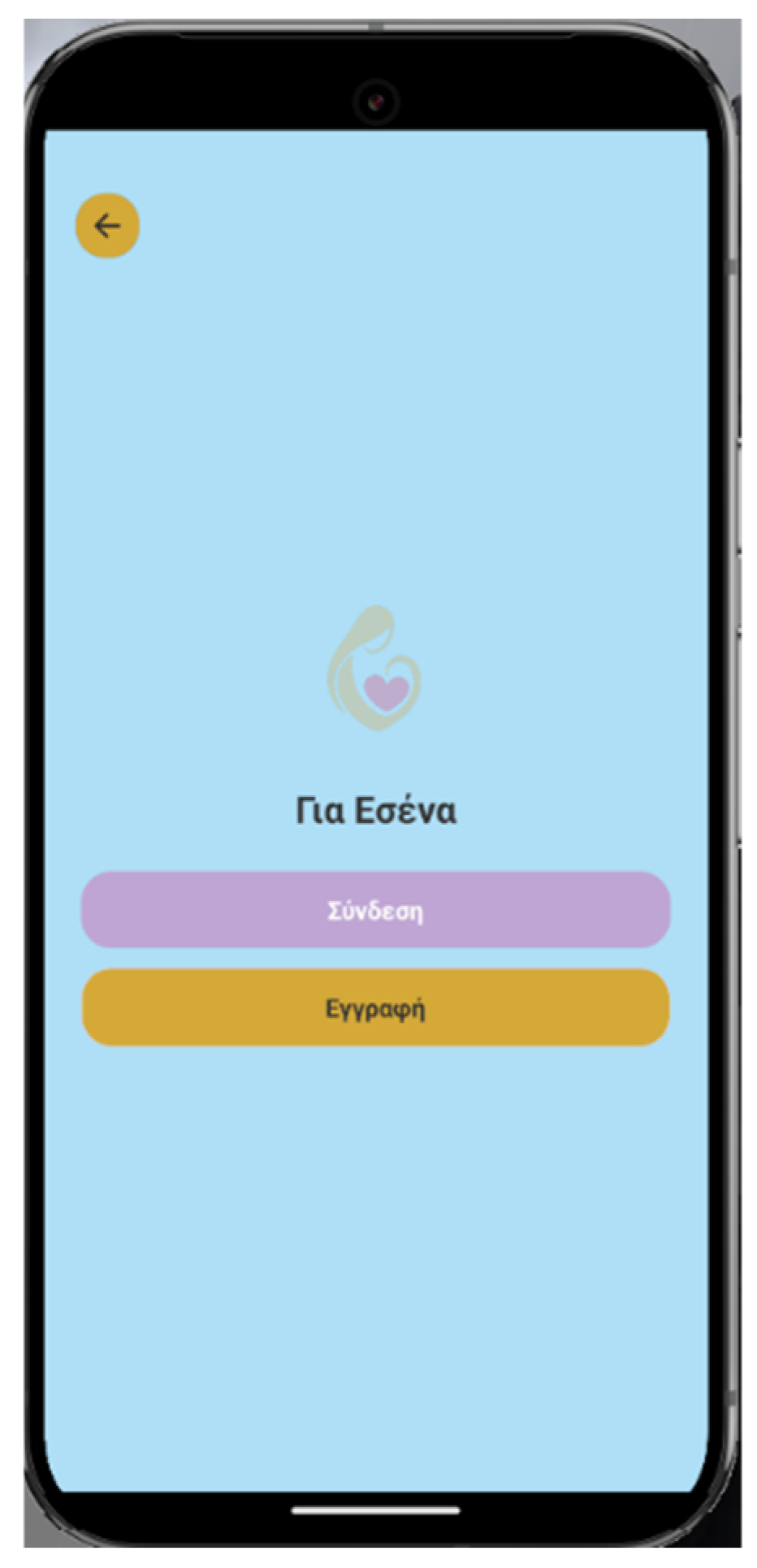
Figure 2.
- HeartHabit home screen (user: mothers).
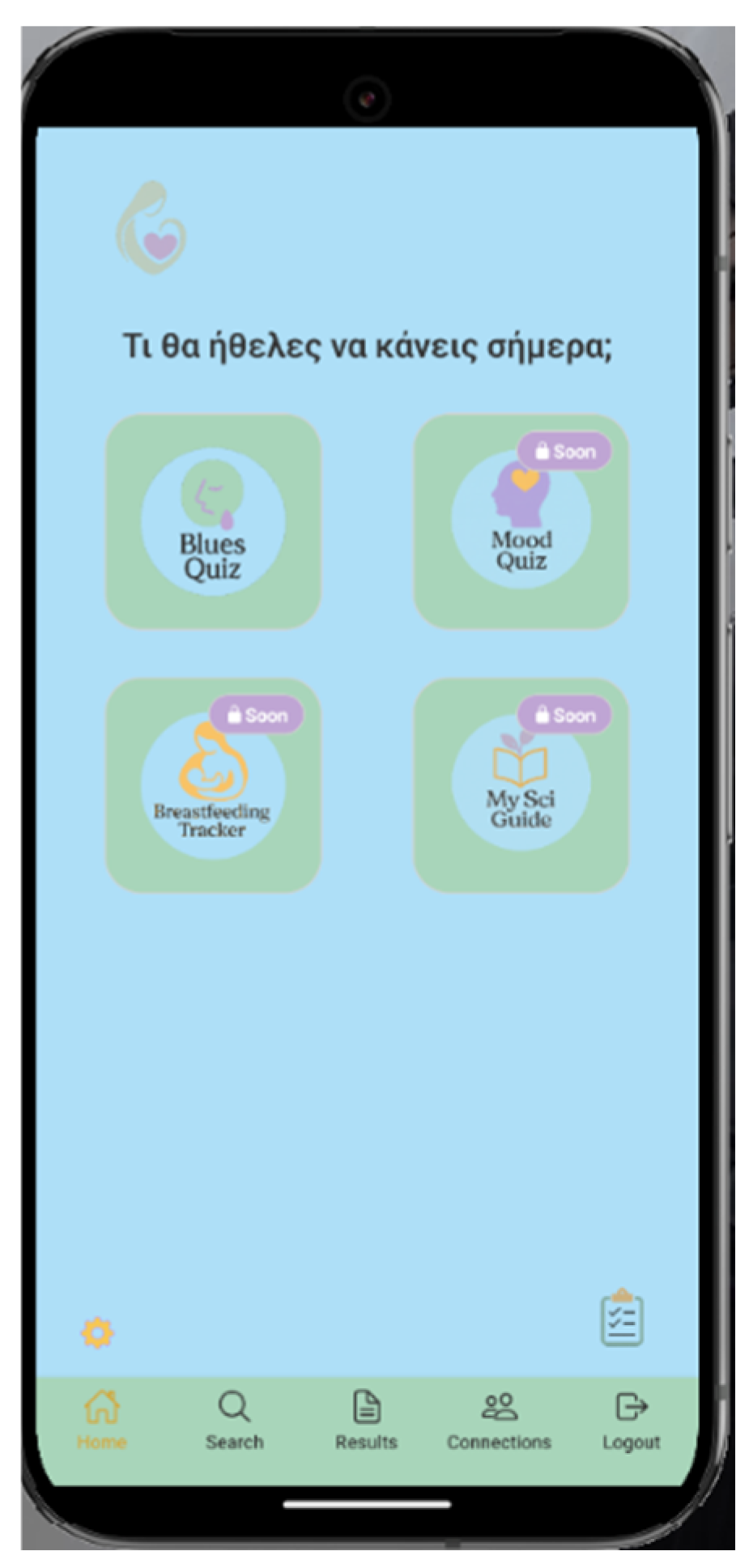
Figure 3.
- Blues quiz start screen.
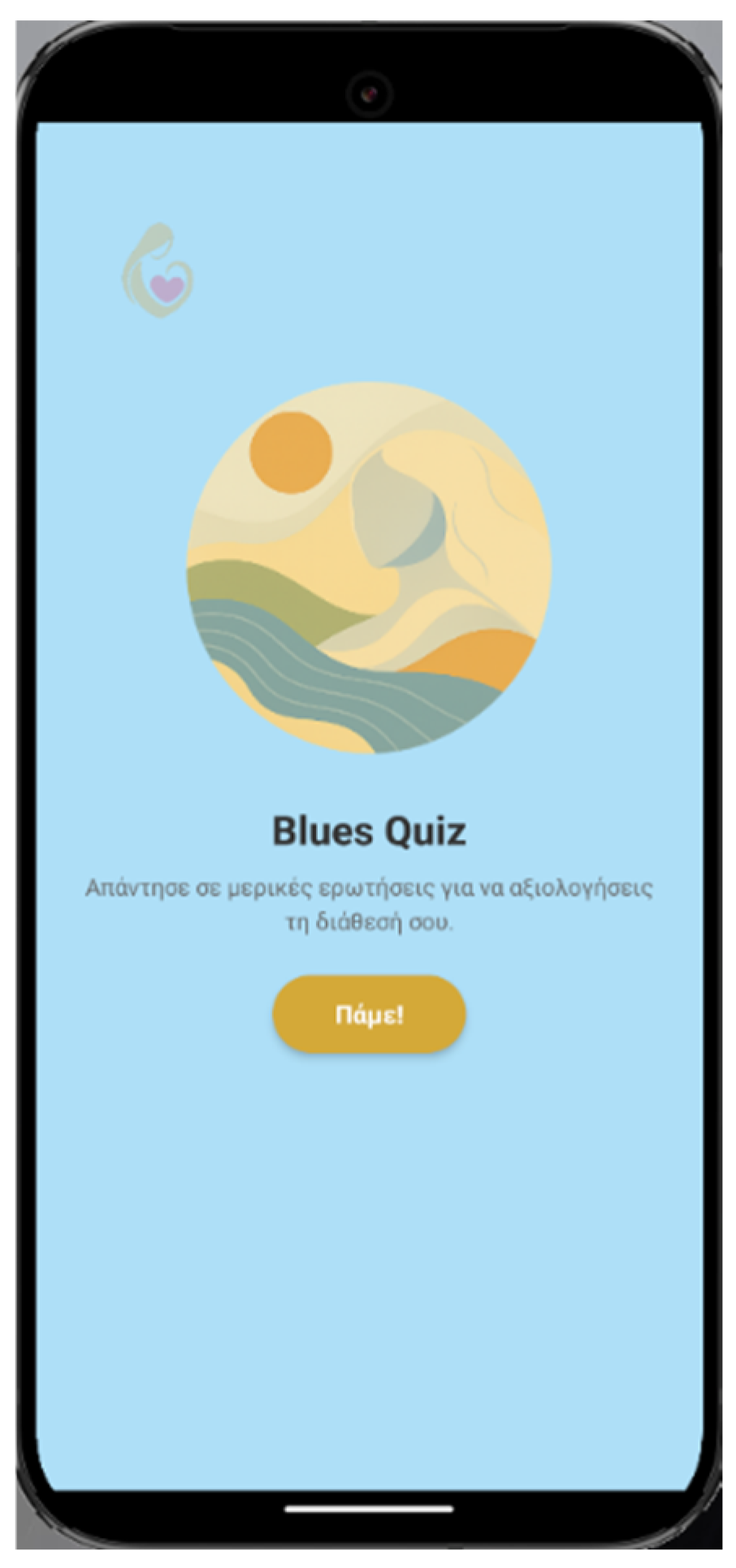
Figure 4.
- Question screen of the Blues Quiz.
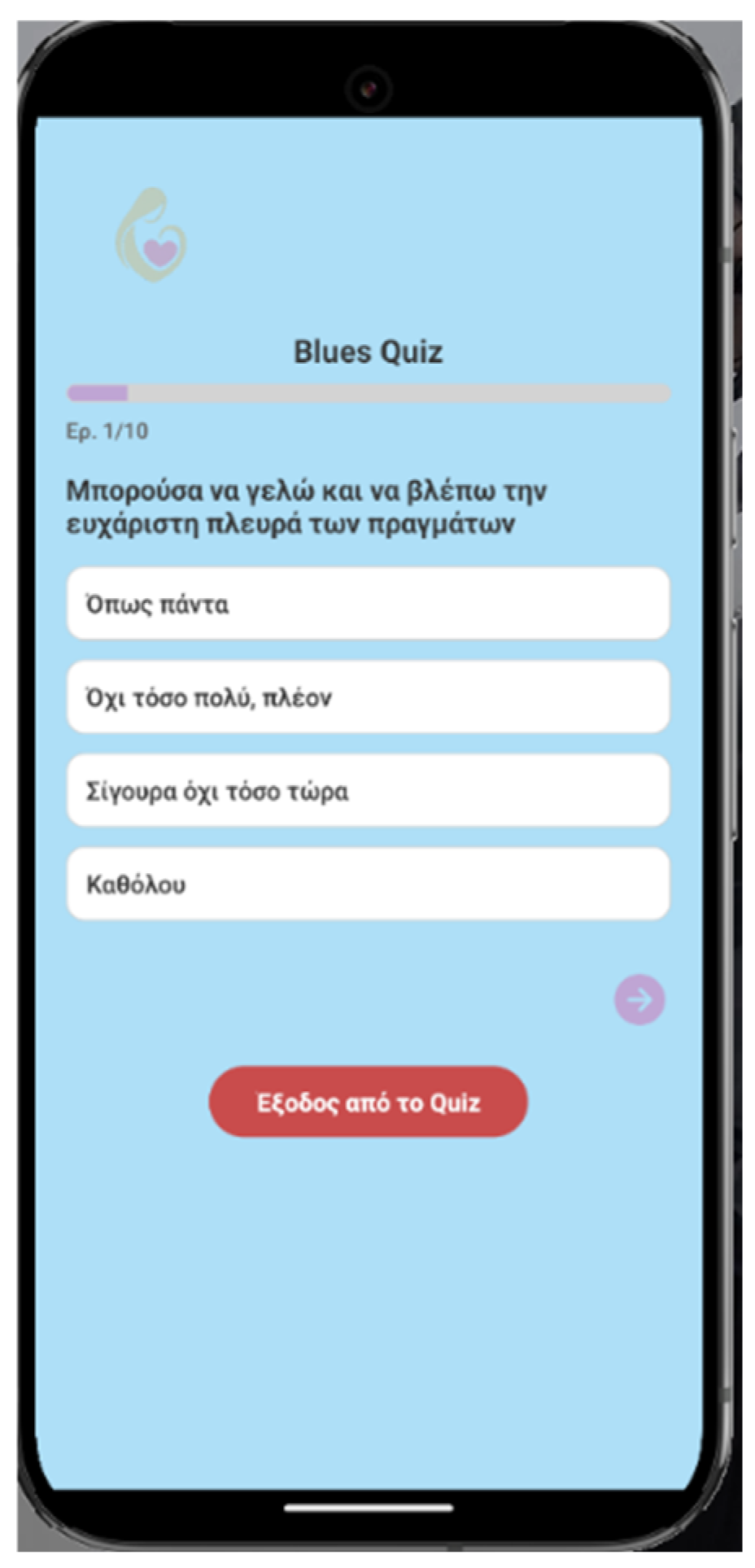
Figure 5.
- Results screen of the Blues Quiz.
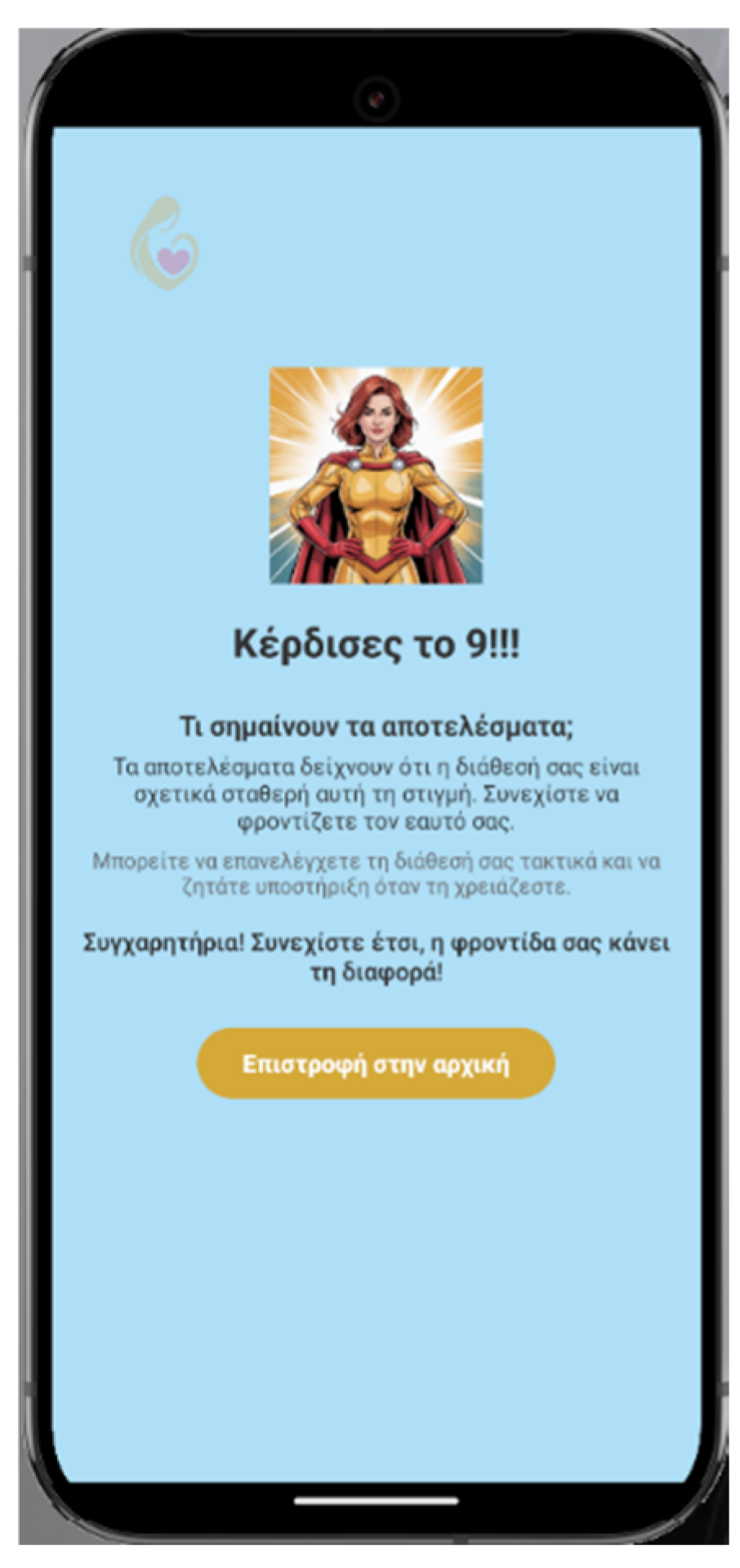
Figure 6.
- Code generation (to provide patients with) screen of healthcare professionals.
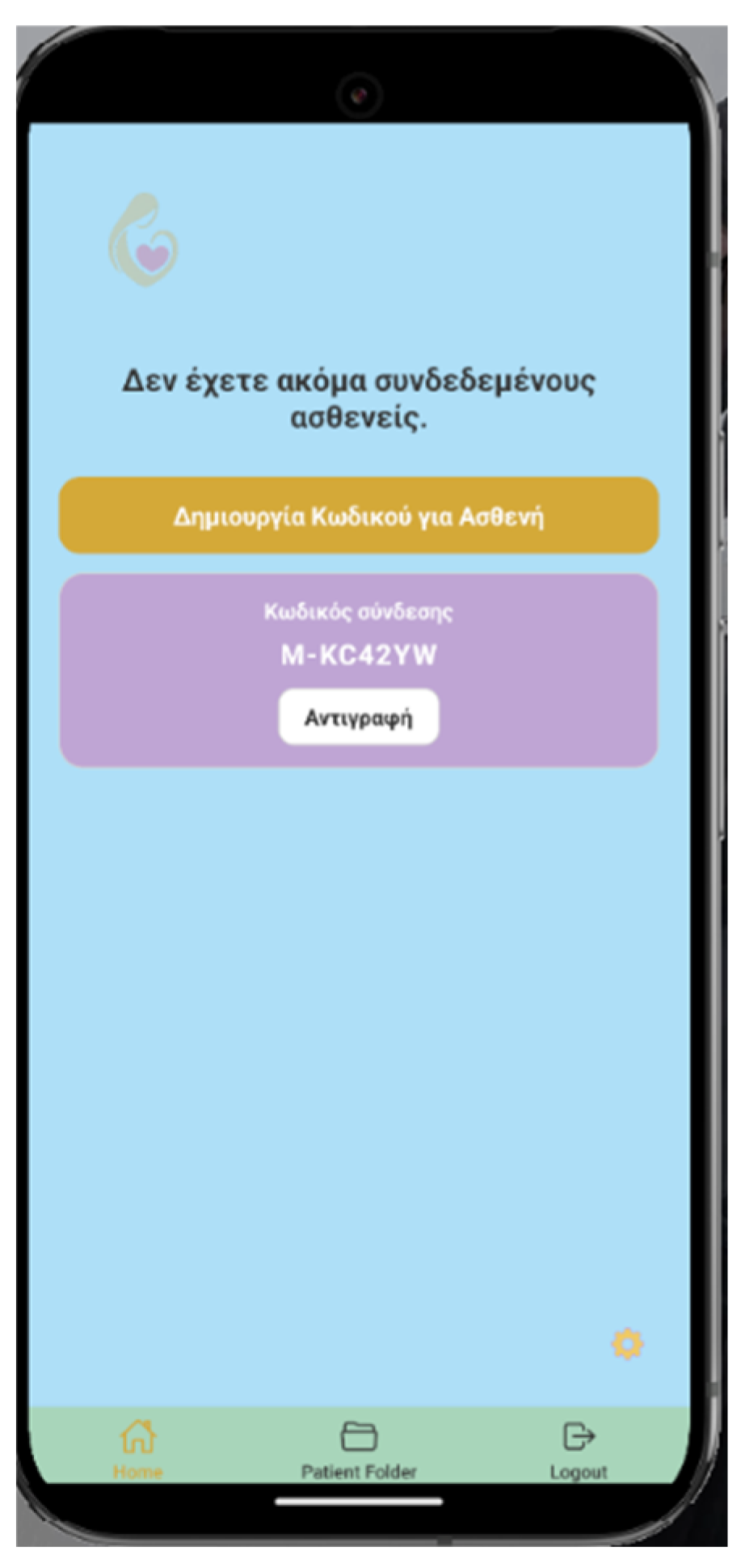
Figure 7.
- Health professionals search screen of mothers.
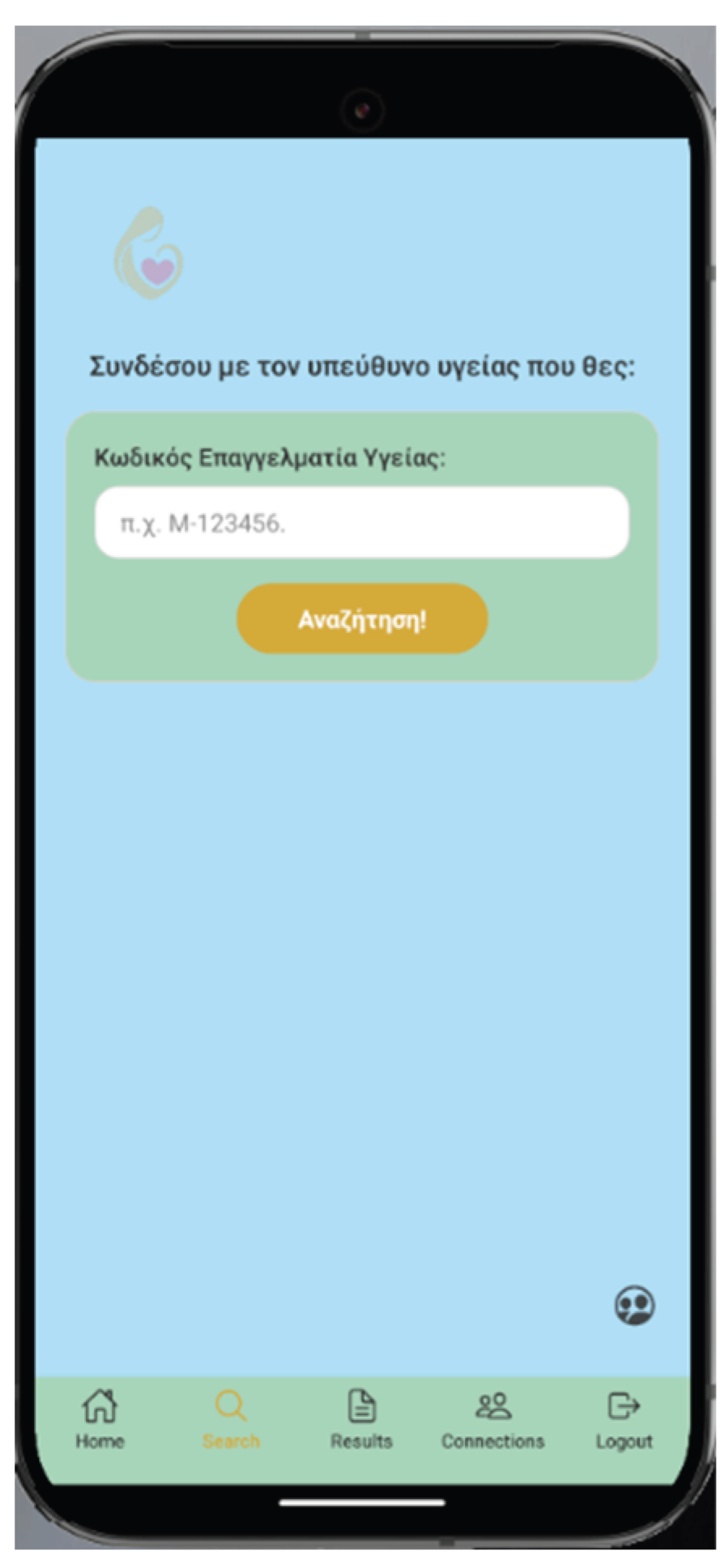

Table 1.
Domains of the user Mobile Application Rating Scale.
| MARS Domain | Description |
| Engagement | Measures how well the app captures and maintains user interest, including entertainment value, interactivity, customization, and appropriateness for the target group. |
| Functionality | Evaluates how well the app works technically, including performance, ease of use, navigation, and gestural design. |
| Aesthetics | Assesses the visual design and appearance of the app, including layout, graphics, and overall visual appeal. |
| Information Quality | Evaluates the quality and credibility of the information provided, including accuracy, quality and quantity of content, and evidence base. |
Table 2.
Descriptive data of participants.
| Characteristic | n | % |
| Age (years) | ||
| Mean (SD) | 31 (4.3) | |
| Range | 21–38 | |
| Nationality | ||
| Greek | 27 | 90 |
| Romanian | 2 | ≈7 |
| Albanian | 1 | ≈3 |
| Area of residence | ||
| Urban | 22 | ≈73 |
| Semi-urban | 5 | ≈17 |
| Rural | 3 | 10 |
| Mode of delivery | ||
| Caesarean section | 18 | 60 |
| Vaginal birth | 12 | 40 |
| Breastfeeding status | ||
| Mixed feeding | 11 | ≈37 |
| Exclusive breastfeeding | 11 | ≈37 |
| Marital status | ||
| Married | 25 | ≈83 |
| Civil partnership | 3 | 10 |
| Divorced | 2 | ≈7 |
| Infant age (months) | ||
| Range | 1–12 | |
| 0–3 months | 8 | ≈27 |
| 4–6 months | 8 | ≈27 |
| 7–9 months | 7 | ≈23 |
| 10–12 months | 7 | ≈23 |
| Number of children | ||
| 1 | 13 | ≈43 |
| 2 | 11 | ≈37 |
| 3 | 4 | ≈13 |
| 4 | 2 | ≈7 |
| Familiarity with mobile apps | ||
| High | 22 | ≈73 |
| Moderate | 5 | ≈17 |
| Low | 3 | 10 |
| Prior experience with mental health apps | ||
| Yes | 9 | 30 |
| No | 21 | 70 |
| Device used | ||
| Android (incl. tablet) | 25 | ≈83 |
| iOS | 4 | ≈14 |
| Tablet only | 1 | ≈3 |
Table 3.
Edinburgh Postnatal Depression Scale results of participants’ mood evaluation.
| EPDS Severity Category | n | % |
| 0–9 Low likelihood | 20 | ≈67 |
| 10–12 Possible (mild) | 7 | ≈23 |
| 13–14 Probable (moderate) | 1 | ≈3 |
| 15+ Severe | 2 | ≈7 |
| Total | 30 | 100 |
Table 4.
General Anxiety Disorder 7-iten scale results of participants’ stress evaluation.
| GAD-7 Severity Category | n | % |
| 5–9 Mild | 5 | ≈17 |
| 10–14 Moderate | 19 | ≈63 |
| 15–21 Severe | 6 | 20 |
| Total | 30 | 100 |
Table 5.
Framework of analysis with themes and subthemes.
|
Theme 1: Engagement and Functionality | |
| Subthemes: | Practical usability Personalisation features Connectivity and integration Self-regulation and coping support |
|
Theme 2: Aesthetics | |
| Subthemes: | Soothing visuals User-friendliness Professional design |
|
Theme 3: Information Quality | |
| Subthemes: | Clarity of information Relevance of content Perceived credibility |
| Theme 4: Privacy and Data Protection | |
| Subthemes: | Transparency and data governance User control and data autonomy Anonymity and identity protection |
Disclaimer/Publisher’s Note: The statements, opinions and data contained in all publications are solely those of the individual author(s) and contributor(s) and not of MDPI and/or the editor(s). MDPI and/or the editor(s) disclaim responsibility for any injury to people or property resulting from any ideas, methods, instructions or products referred to in the content. |
© 2026 by the authors. Licensee MDPI, Basel, Switzerland. This article is an open access article distributed under the terms and conditions of the Creative Commons Attribution (CC BY) license (http://creativecommons.org/licenses/by/4.0/).
Copyright: This open access article is published under a Creative Commons CC BY 4.0 license, which permit the free download, distribution, and reuse, provided that the author and preprint are cited in any reuse.