

Submitted:
18 March 2026
Posted:
23 March 2026
You are already at the latest version
Abstract
One of the most debated scientific topics in recent years is the role of noninvasive respiratory support techniques in the treatment of de novo acute hypoxemic respiratory failure. Until pre-COVID-19, the most accredited guidelines did not make recommendations for or against the use of these techniques in this clinical condition, and the increased risk of adverse events for patients who failed the noninvasive approach was widely reported in the literature. In recent years, in addition to the pandemic experience, we have seen the widespread use of high-flow nasal cannulas (HFNC) in the emergency department, as well as the production of numerous studies comparing them to the more established techniques of noninvasive ventilation and continuous positive airway pressure (NIV, CPAP), as well as to conventional oxygen therapy (COT). The most recent guidelines recommend the use of HFNC as a first-line technique in the treatment of de novo acute hypoxemic respiratory failure to avoid the need for tracheal intubation. However, the strength of these recommendations remains weak, the quality of the underlying evidence is poor, and their usefulness in deciding which technique to apply to an individual patient is questionable. The progressive establishment of the pathophysiological concept of Patient's Self-Inflicted Lung Injury (P-SILI), a potential risk of additional lung damage in spontaneously breathing patients, has highlighted the importance of assessing each patient's risk of developing this complication, individualizing treatment to the patient's specific needs, and monitoring the patient during treatment. This brief narrative review will illustrate the most recent literature on these topics.
Keywords:
“de novo” respiratory failure
; non-invasive ventilation
; continuous positive ayrway pressure
; high flow nasal cannula
; patient’s self-inflicted lung injury
Introduction
In this short narrative review, we will discuss a topic that has been widely debated in emergency medicine and critical care medicine in recent years: the role of noninvasive respiratory support techniques in the treatment of acute respiratory failure secondary to pneumonia. Let’s start by presenting a clinical case. Imagine a young man presents to your Emergency Department with fever and worsening dyspnea. His medical history is unremarkable. On examination, the patient appears alert and cooperative, but has reduced breath sounds and crackles in the right lower field with mottled skin.
These are the vital signs: Arterial Pressure 100/55; Respiratory Rate 38/min; Heart Rate 120/min; GCS 15/15; Body Temperature 39°C and this is the blood gas analysis: pH 7.28; PaO2 45; PaCO2 38; HCO3- 17; Lactate 4.1
With which respiratory support technique would you begin treatment: Endotracheal intubation? Conventional oxygen therapy? High-flow nasal cannulas or NIV? Regarding the use of non-invasive support methods, the most widely used guidelines until a few years ago, those of the ATS/ERS of 2017, did not make recommendations for certain clinical conditions, including "de novo" acute respiratory failure, acute asthma and pandemic viral infections [1] What happened next? Many things, each of which has contributed in some way to changing our approach to de novo acute respiratory failure and fueling the debate surrounding the possible use of noninvasive respiratory support techniques. These include: the more or less shared adoption of a unified definition of acute hypoxemic respiratory failure or "de novo" respiratory failure; the widespread use of high-flow nasal cannulas; the COVID-19 pandemic; the production of new RCTs; the drafting of the resulting guidelines; the consolidation of the pathophysiological concept of P-SILI; and finally, the growing notion that the approach must be individualized based on the needs of each individual patient. In this paper we will develop these topics in succession.
Acute hypoxemic “de novo” respiratory failure. Regarding the definition, the joint guidelines of the French-speaking Society of Resuscitators and the French Emergency Medicine Society on oxygen therapy in acute respiratory failure define acute hypoxemic respiratory failure type 1 as a condition in which the lung is unable to oxygenate mixed venous blood that has occurred “de novo”, thus excluding hypoxemia during acute cardiogenic pulmonary edema and exacerbations of chronic lung disease [2]. In the majority of cases, the cause of this condition is pneumonia.
The oximetric ranges within which we define hypoxemic respiratory failure type 1 are the following: PaO2: < 60 mmHg and/or SpO < 90% breathing room air or a PaO2/FiO2 ratio lower than 300 mmHg, while the clinical signs associated with this condition are represented by a respiratory rate above 25/minute with accessory respiratory muscle activation, abdominal paradox, cyanosis and dyspnea.
The treatment of hypoxemia per se consists of oxygen administration, while the treatment of hypoxemia associated with clinical signs of respiratory distress consists of the application of a noninvasive respiratory support method.
Although the above definition has been in practice for years, it should be emphasized that many studies have yielded inconsistent results because the case studies included significant percentages of patients with hypoxemia secondary to heart failure or exacerbations of chronic obstructive pulmonary disease [3]. Hence the importance of providing a single definition of the pathology we are dealing with.
The increasing use of high-flow nasal cannulas (HFNC). As mentioned at the beginning, recent years have seen the emergence of HFNC as a noninvasive respiratory support technique. In most cases, it relies on devices capable of delivering high flows of preheated and humidified air-oxygen mixture through a nasal interface. A series of physiological studies conducted approximately ten years ago demonstrated that, thanks to the high flow rates generated, this method can provide patients with an FiO2 that is not influenced by their breathing pattern. Furthermore, by humidifying and preheating the air-oxygen mixture, it reduces airway resistance. Finally, thanks to the high flow rates, it achieves a modest PEEP effect, but, above all, it ensures excellent dead space washout. Consequently, various studies have demonstrated that the use of HFNC in patients with acute hypoxemic respiratory failure, while offering an oxygenation capacity comparable to that of positive pressure, has a marked ability to reduce inspiratory effort and improve patient comfort [4,5,6,7,8].
Clinically, the study that has most influenced clinical practice is Frat's, published in 2015. Its results demonstrated substantially equal efficacy of HFNC compared to COT and NIV in preventing endotracheal intubation and 28-day mortality [9]. Interestingly, 90-day mortality was better with HFNC, but more importantly, a sub-analysis of the most severely ill patients, i.e., those with a PaO2/FiO2 ratio less than 200 mmHg, demonstrated that in this patient category, HFNC was more effective than the other two methods in preventing intubation within 28 days. Interestingly, the patients who demonstrated a worse outcome were those who, despite respiratory support, maintained a high tidal volume, demonstrating persistent high inspiratory effort, as we will discuss later.
Regarding the use of noninvasive respiratory support methods, there is no doubt that the Covid-19 pandemic has had a significant impact. During the pandemic, there was an increase in the use of all these techniques, and HFNC in particular [10]. However, their use was often driven by the need to match available resources to the enormous growth in demand and the resulting shortage of intensive care beds, rather than by a rational indication. During this phase, numerous studies were produced that were of poor quality and, in any case, difficult to compare in terms of the methods used, organizational settings, and patient populations studied [11].
Non-invasive respiratory support: clical trials and guidelines. A fair number of randomized, controlled clinical trials have been conducted in parallel or following Frat's work. Although there is some heterogeneity among the various studies, especially in terms of method and populations studied, as some of them were dedicated to COVID-19 patients, others to immunosuppressed patients, we can summarize their results as follows. HFNC has proven more effective than COT in preventing endotracheal intubation, while no benefit was observed with respect to in-hospital mortality. These data do not change with COVID-19 status or immunosuppression [9,12,13,14,15,16,17]. There are no significant differences in terms of intubation or mortality between CPAP/NIV and COT [9,18,19,20]; in one study, CPAP proved more effective in preventing intubation in COVID-19 patients12. No significant differences in terms of intubation or mortality were observed between HFNC and NIV [9,21,22]; in one study, helmet NIV with higher PEEP was more effective than HFNC in preventing intubation in COVID-19 patients [23]. Even the recent RENOVATE study, which enrolled approximately 1,800 patients at 33 hospitals in Brazil and aimed to demonstrate the non-inferiority of HFNC to NIV with respect to the primary outcome of intubation/seven-day mortality and a series of other secondary and tertiary outcomes, including patient comfort, showed no significant differences between the two methods in non-immunosuppressed patients with AHRF and in hypoxemic COVID-19 patients in the primary analysis and sensitivity analysis. Interestingly, among the tertiary outcomes, HFNC was superior to NIV with respect to comfort [24] (Table 1).
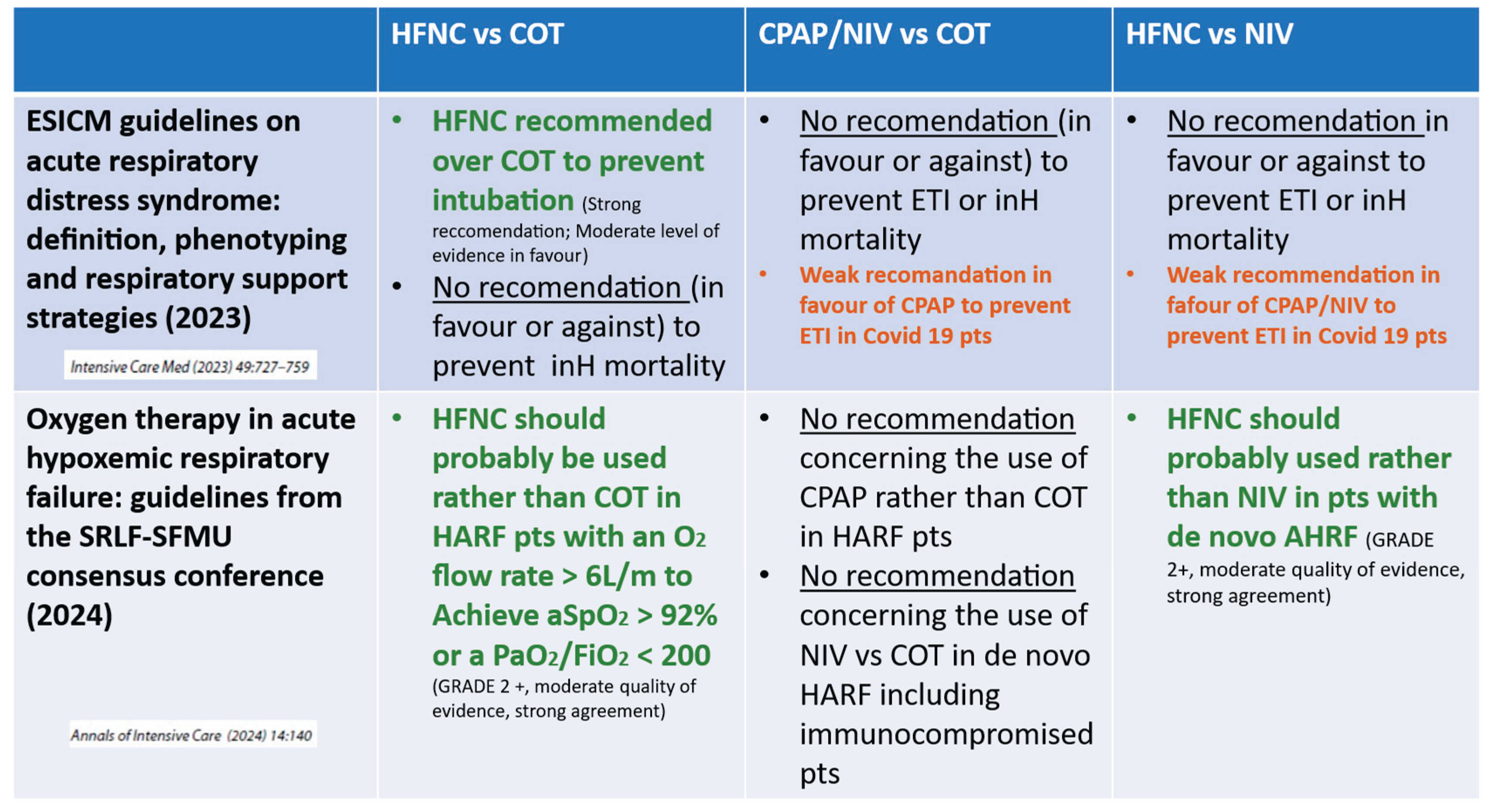
Based on this evidence, a series of guidelines have been produced by various scientific societies. Due to their importance, We cite here the document produced by the European Society of Intensive and Critical care Medicine (ESICM) and the joint guidelines of the French-speaking Society of Intensive Care Physicians and the French Society of Emergency Physicians [2,25]. As can be expected, there are differences in the recommendations, but in summary, both recommend the use of HFNC rather than COT to prevent intubation, without providing any indication regarding mortality. There are no recommendations regarding the use of CPAP/NIV rather than COT with respect to either intubation or mortality; the ESICM guidelines provide a weak recommendation in favor of CPAP to prevent intubation in COVID-19 patients. ESICM does not provide recommendations on the use of NIV rather than HFNC with respect to either intubation or mortality, but does provide a weak recommendation in favor of NIV to prevent intubation in COVID-19 patients. The French guidelines, however, consider that HFNC should be used instead of NIV in the AHRF.
The available guidelines are based on a series of rather heterogeneous studies and are expected to provide somewhat contradictory indications that are not very useful when applied to individual patients. However, one aspect on which there is unanimous agreement is the fact that delaying a needed intubation increases mortality [11] (Table 2).
Patient Self Inflicted Lung Injury. And this brings us to the topic of Patient Self-Inflicted Lung Injury (P-SILI), a pathophysiological concept that has been developing over the past few years. There is no doubt that preserving spontaneous breathing offers significant advantages, primarily related to the possibility of avoiding the side effects of mechanical ventilation and the associated need for deep sedation. A significant aspect is the ability to maintain greater aeration of the dependent areas of the lung through spontaneous breathing [26]. However, maintaining spontaneous breathing can be associated with dysregulated inspiratory effort, resulting in tachypnea and excessive tidal volumes. This leads to increased pulmonary stress and strain, as well as to the uneven distribution of the force produced by the diaphragm within the lung due to the uneven distribution of the damage, resulting in the so-called pendelluft effect. Furthermore, increased transmural pressure in the pulmonary capillaries can lead to pulmonary edema, and ultimately, the contractile action of the diaphragm becomes uneven, having to act on lung regions with different compliance, leading to myotrauma and diaphragmatic weakness [26]. This mechanicism has been descibed as a vicious cycle process in which lung damage evokes an increase in respiratory drive, which in turn generates further lung damage, and so on [27,28,29,30,31]. It is also clear that positive pressures, synchronizing with the increased respiratory drive, can contribute to an increase in tidal volumes and consequently to pulmonary stress and strain [32]. Finally, it is clear that several studies indicate a relationship between the severity of the underlying lung disease and the intensity of inspiratory effort and vice versa, explaining the extreme variability of this phenomenon in different patients [33]. It is then possible that the presence or absence of this dysregulation of inspiratory effort determines the response to noninvasive respiratory support techniques and the possibility of an unfavorable outcome in predisposed patients [34,35].
One of the major determinants of pulmonary stress and strain, which causes increased tidal volumes, is transpulmonary pressure, which is the pressure that maintains lung distension and is the algebraic sum of intrapleural and intraveolar pressures. Now, applying pressure support increases intraalveolar pressure, but if this method is unable to reduce intrapleural pressure in the presence of increased respiratory distress, the transpulmonary pressure can only increase further, exposing the patient to an increased risk of P-SILI. HFNC has been shown to negligibly increase intraalveolar pressure, while in some patients it may reduce the intensity of inspiratory effort and therefore intrapleural pressure [26]. This may explain why HFNC may be more effective than NIV in some patients.
While numerous experimental studies demonstrate the validity of the P-SILI concept, many clinical studies provide indirect validation [36]. As already mentioned, in Frat's study, patients who maintained high tidal volumes had the worst outcomes in terms of intubation and mortality, while other studies demonstrated that persistent high inspiratory effort despite noninvasive support increased the risk of failure [9]. Finally, as already mentioned, Yoshida and coworkers demonstrated a one-to-one relationship between clinical severity and intensity of inspiratory effort and consequently exposure to the risk of P-SILI [33].
Tayloring intervention to patient’s needs. Therefore, the intensity of inspiratory drive and effort becomes the most important determinant of the success of noninvasive support methods in each individual patient, hence the need to monitor it and, if possible, modulate it with an approach we might define as a tailoring intervention to the patient's needs [11,36,37,38]. The decision on which technique to apply and the duration of the attempt must therefore be made considering the severity of the underlying condition, including the compromised oxygen exchange and the patient's neurological and hemodynamic status. This must be followed by monitoring gas exchange, as well as inspiratory effort, using tidal volumes where available, esophageal manometry, or its surrogates such as nasal pressure, central venous pressure swings, or clinical indices of respiratory distress, or diaphragmatic ultrasound, composite scores, or diaphragmatic impedance analysis, depending on the patient's intensity and organizational setting.
Given the need to monitor a patient's inspiratory drive and effort, it is important to understand the advantages and limitations of each method, as this also affects the type of patient treated in different organizational settings. Clinical signs of distress are easily accessible and can even be assessed semi-quantitatively, but they are difficult to standardize and can yield misleading results. During non-invasive respiratory support, the best way for monitoring respiratory drive is measurement of diaphragmatic electrical activity (EAdi) [39], a reliable measure of respiratory drive, which individual changing over time provide more information than static measurements; however, this technique is invasive, expensive, and without validated reference values. Alterantive methods for assesing respiratory drive during spontaneous breathing are the mean inspirartory flow (Vt/Ti) [40], which reflects the speed of lung expansion and therefore the balance between neuromuscular drive and the mechanical properties of the respiratory system, but which could understimate in subjects with muscolare weakness [38], and respiratory muscle surface electromyography (sEMG) which consists of the transcutaneous measurement of the activity of the respiratory muscles, but it is mainly limitatied by the difficulty in ensuring that the recorded signal comes specifically from the diaphragm [41]. The gold standard for monitoring inspiratory effort is represented by esophageal manometry and in particular by its derivative Pmusc which also takes into account the elastic and resistive load of the chest wall and whose variations between respiratory acts could reliably reflect the variations of inspiratory effort, but it is an expensive and invasive technique [38,42]. Nasal Pressure Swing (ΔPnose) is one of the most promising surrogate techniques for monitoring inspiratory effort which, through a pressure transducer inserted in the nostril, reflects the variations in alveolar pressure and correlates well with variations in transesophageal pressure; the main advantage is that it can be easily measured in spontaneously breathing patients, both during NIV and HFNC, but its main limitation is that the patient must breathe with their mouth closed [43]. The measurement of the diaphragm thickening fraction (Tfdi) using diaphragm ultrasound (USdi) is certainly the surrogate method for monitoring diaphragm effort over time that is most easily performed at the bedside in spontaneously breathing patients; however, its main limitations are that it provides a one-dimensional study of the diaphragm and that its measurement could be distorted by passive displacement of the diaphragm during the application of positive pressures [38,44]. In patients who have had a central venous catheter placed, measuring changes in central venous pressure can be a good alternative method for monitoring diaphragmatic effort, provided that the patient's intravascular volume and cardiac function are taken into account [45] (Figure 1)
In addition to these innovative techniques, it is important to remember that more 'traditional' parameters can also provide valuable information for monitoring the drive and inspiratory effort. The first of these is represented by tidal volume. A high tidal volume generally corresponds to a high inspiratory effort, so a reduction in tidal volume can be a sign of decreased inspiratory effort. Conversely, an increase in tidal volume may have been caused by excessive support pressures [38]. Additionally, variations in tidal volume in response to the application of positive pressures allow us to distinguish between patients with an active breathing pattern, who therefore benefit from increasing support pressures, and patients with a passive pattern, in whom the application of excessive support pressures can generate excessive increases in transpulmonary pressure [46]. Also changes in the severity of dyspnea and the extent of respiratory rate are also useful parameters to include in the monitoring of patients with acute de novo respiratory failure [38]. Finally, in addition to the trend over time of the well-known PF ratio, the presence of hypocapnia and its trend in response to the application of respiratory support can also be useful to understand whether the patient's respiratory effort is decreasing. It is well known that hypocapnia reflects a state of hyperventilation, both in terms of respiratory rate and depth, and it has been shown that patients with de novo acute respiratory failure who are hypocapnic benefit from the application of support pressures compared to non-hypocapnic patients [47] and that hypocapnia can predict the severity of de novo respiratory failure in certain categories of patients, such as COVID patients [48].
Following these concepts and, above all, the need to individualize patient intervention, some authors have proposed the concept of "lung protective noninvasive respiratory support," which involves a multidimensional approach. It involves monitoring patient discomfort with appropriate tools, the extent of inspiratory effort with the tools we just discussed, and the application of nonpharmacological or pharmacological strategies aimed at achieving respiratory drive control and conscious sedation [37].
This phase is followed by the selection of the most appropriate respiratory support device for the individual patient. A recent systematic review of all studies analyzing the physiological effects of different noninvasive respiratory support techniques (COT, HFNC, CPAP, NIV) found that HFNC has the least impact on transpulmonary pressure compared to other techniques, and is therefore less likely to cause lung injury from spontaneous breathing [49]. On the other hand, in the presence of dysregulated and excessive respiratory drive, this technique may be insufficient to relieve the patient from respiratory distress and the consequent onset of P-SILI. Conversely, NIV is the technique that most reduces the work of breathing, despite having a significant impact on transpulmonary pressure. It may therefore reduce inspiratory effort where this is excessive, but it may also increase the severity of lung injury if not adequately controlled.
Following these concepts, some authors propose a systematic approach to the patient with "de novo" hypoxemic acute respiratory failure potentially eligible for treatment with non-invasive respiratory support [50,51]: 1. Evaluate the patient's severity by considering the value of the PaO2/FiO2 ratio, the overall disease severity, possibly using scores such as the SOFA or MEWS, the state of consciousness, the need for vasopressors; 2. On the basis of this information, evaluate the risk of failure of the method. Numerous data in the literature correlate the risk of failure with the severity of the PaO2/FiO2 ratio and the patient's clinical conditions, including comorbidities [23,52,53]. If the PaO2/FiO2 ratio is less than 100 mm Hg and the patient's severity indicates a high probability of failure, do not start any non-invasive treatment as the patient will have to be intubated and mechanically ventilated; If, despite the severity of hypoxemia, the clinical picture suggests a low probability of failure, it is advisable to proceed with a brief attempt with a non-invasive method, lasting a maximum of 1 or 2 hours. It is advisable to initiate non-invasive treatment with a patient with a PaO2/FiO2 ratio of at least 150 mmHg, adjusting the duration of the trial according to the severity of the organ compromise (1-2 hours if high, 3-6 hours in milder conditions). 3. The subsequent choice of method again depends on the patient's condition: in the presence of a PaO2/FiO2 less than 200 and the patient's inspiratory effort is significant, the preferred technique is Helmet NIV; in patients with a PaO2/FiO2 greater than 200, in whom respiratory distress appears moderate according to detection techniques, it is possible to begin with HFNC [49]. 4. The next phase is monitoring. During this phase, it is essential to detect changes in clinical appearance, gas exchange, and diaphragmatic effort to prevent the masking effect induced by a transient and ephemeral improvement in oxygenation from dangerously delaying necessary intubation [54].
Conclusions
In conclusion, current guidelines do not provide clear indications on what is the best non-invasive respiratory support in patients with acute de novo respiratory failure. While recommending the preferential use of HFNC, they do not provide clear indications on how to support more serious patients. However, in daily clinical practice we often try to support these patients with positive pressure in a non-invasive way in order to avoid intubation. This lack of clear indications derives, in fact, from the lack of solid data in the literature. At the same time, there is increasing awareness of the existence of P-SILI and how we can understand which of these patients are at risk or are developing such self-induced lung damage. To this end, an ever-increasing number of useful methods have been proposed and attempts are being made to monitor both drive and respiratory effort in spontaneously breathing patients. At the current state, the most correct approach in patients with acute de novo respiratory failure would seem to be to first evaluate the initial severity of the patient and to understand what the objective and the best program are for the patient we are treating. Taking these two elements into account, the most important aspect is to closely monitor the patient by implementing all the methods at our disposal and with which we are most familiar. Is the time trend of the monitoring parameters that we have chosen and the integration of the information that each single parameter can give us the best way to understand if we are effectively supporting our patient's respiratory effort or if our respiratory support is failing. All this while always keeping in mind not to delay intubation in patients in whom we are failing and who need it, because one of the fundamental points most against the use of positive pressures in spontaneous breathing is given by the fact that delaying intubation in these patients can mean negatively marking the prognosis.
Author Contributions
Paolo Groff conceived the work and extended the first version; Stefano De vuono revised it and added some paragraphs; both Authors approve the submitted version of this of this paper. Both Authors agree to be personally accountable for the author’s own contributions and for ensuring that questions related to the accuracy or integrity of any part of the work, even ones in which the author was not personally involved, are appropriately investigated, resolved, and documented in the literature.
Funding
This paper did not receive any external funding.
Conflicts of Interest
Both Authors declare no conflict of interest.
References
- Rochwerg B, Brochard L, Elliott MW et al (2017) Official ERS/ATS clinical practice guidelines: noninvasive ventilation for acute respiratory failure. Eur Respir J. [CrossRef]
- Helms J, Catoire P, Abensur Vuillaume L, Bannelier H, Douillet D, Dupuis C, et al. Oxygen therapy in acute hypoxemic respiratory failure: guidelines from the SRLF-SFMU consensus conference. Ann Intensiv Care. 2024;14(1):140. PubMed PMID: 39235690. Pubmed Central PMCID: PMC11377397. Epub 2024/09/05.
- Thille AW, Balen F, Carteaux G, Chouihed T, Frat JP, Girault G, L’Her E et al. Oxygen therapy and noninvasive respiratory supports in acute hypoxemic respiratory failure: a narrative review. Annals of Intensive Care (2024) 14:158. [CrossRef]
- Itagaki T, Okuda N, Tsunano Y, Kohata H, Nakataki E et al. Effect of high-flow nasal cannula on thoraco-abdominal synchrony in adult critically ill patients. Respir Care. 2014; 59(1):70-4. [CrossRef]
- Schwabbauer N, Berg B, Blumenstock G, HaapM et al. Nasal high-flow oxygen therapy in patients with hypoxic respiratory failure: effect on functional and subjective respiratory parameters compared to conventional oxygen therapy and non-invasive ventilation (NIV). BMC Anesthesiol. 2014:14:66. [CrossRef]
- Vargas F, Saint-Leger M, Boyer A, Bui NH, Hilbert G. Physiologic Effects of High-Flow Nasal Cannula Oxygen in Critical Care Subjects. Respir Care. 2015;60(10):1369-76. [CrossRef]
- Mauri T, Turrini C, Eronia N, Grasselli G, Volta CA, Bellani G, Pesenti A. Physiologic Effects of High-Flow Nasal Cannula in Acute Hypoxemic Respiratory Failure. Am J Respir Crit Care Med. 2017;195(9):1207-1215. [CrossRef]
- Delorme M, Bouchard PA, Simon M, Simard S, Lellouche F. Effects of High-Flow Nasal Cannula on the Work of Breathing in Patients Recovering From Acute Respiratory Failure. Crit Care Med. 2017 Dec;45(12):1981-1988. [CrossRef]
- Frat J-P, Thille AW, Mercat A et al (2015) High-flow oxygen through nasal cannula in acute hypoxemic respiratory failure. N Engl J Med 372:2185–2196. [CrossRef]
- Franco C, Facciolongo N, Tonelli R et al. Feasibility and clinical impact of out-of-ICU noninvasive respiratory support in patients with COVID-19-related pneumonia. Eur Respir J (2020) 56:2002130. [CrossRef]
- Vega Pittao ML, Nava S, Hill NS, Pisani L. Tailoring non-invasive respiratory supports in acute hypoxemic respiratory failure: A practical approach for clinicians. Eur J Intern Med. 2025 :137:21-32. [CrossRef]
- Perkins GD, Ji C, Connolly BA et al (2022) Effect of noninvasive respiratory strategies on intubation or mortality among patients with acute hypoxemic respiratory failure and COVID-19: the RECOVERY-RS randomized clinical trial. JAMA 327:546–558. [CrossRef]
- Azoulay E, Lemiale V, Mokart D et al (2018) Effect of high-flow nasal oxygen vs standard oxygen on 28-day mortality in immunocompromised patients with acute respiratory failure: the HIGH randomized clinical trial. JAMA 320:2099–2107. [CrossRef]
- Ospina-Tascón GA, Calderón-Tapia LE, García AF et al (2021) Effect of high-flow oxygen therapy vs conventional oxygen therapy on invasive mechanical ventilation and clinical recovery in patients with severe COVID-19: a randomized clinical trial. JAMA 326:2161–2171. [CrossRef]
- Frat J-P, Quenot J-P, Badie J et al (2022) Effect of high-flow nasal cannula oxygen vs standard oxygen therapy on mortality in patients with respiratory failure due to COVID-19: the SOHO-COVID randomized clinical trial. JAMA 328:1212–1222. [CrossRef]
- Alptekinoğlu Mendil N, Temel Ş, Yüksel RC et al (2021) The use of high-flow nasal oxygen vs. standard oxygen therapy in hematological malignancy patients with acute respiratory failure in hematology wards. Turk J Med Sci 51:1756–1763. [CrossRef]
- Bouadma L, Mekontso-Dessap A, Burdet C et al (2022) High-dose dexamethasone and oxygen support strategies in intensive care unit patients with severe COVID-19 acute hypoxemic respiratory failure: the COVIDICUS randomized clinical trial. JAMA Intern Med 182:906–916. [CrossRef]
- Brambilla AM, Aliberti S, Prina E et al (2014) Helmet CPAP vs. oxygen therapy in severe hypoxemic respiratory failure due to pneumonia. Intensive Care Med 40:942–949. [CrossRef]
- Lemiale V, Mokart D, Resche-Rigon M et al (2015) Effect of noninvasive ventilation vs oxygen therapy on mortality among immunocompromised patients with acute respiratory failure: a randomized clinical trial. JAMA 314:1711–1719. [CrossRef]
- He H, Sun B, Liang L et al (2019) A multicenter RCT of noninvasive ventilation in pneumonia-induced early mild acute respiratory distress syndrome. Crit Care 23:300. [CrossRef]
- Nair PR, Haritha D, Behera S et al (2021) Comparison of high-flow nasal cannula and noninvasive ventilation in acute hypoxemic respiratory failure due to severe COVID-19 pneumonia. Respir Care 66:1824–1830. [CrossRef]
- Coudroy R, Frat J-P, Ehrmann S et al (2022) High-flow nasal oxygen alone or alternating with non-invasive ventilation in critically ill immunocompromised patients with acute respiratory failure: a randomised controlled trial. Lancet Respir Med 10:641–649. [CrossRef]
- Grieco DL, Menga LS, Cesarano M et al (2021) Effect of helmet noninvasive ventilation vs high-flow nasal oxygen on days free of respiratory support in patients with COVID-19 and moderate to severe hypoxemic respiratory failure: the HENIVOT randomized clinical trial. JAMA 325:1731–1743. [CrossRef]
- Maia IS, Kawano-Dourado L, Tramujas L et al for the RENOVATE investigators and BRICnet Authors. High-Flow Nasal Oxygen vs Noninvasive Ventilation in Patients With Acute Respiratory Failure: The RENOVATE Randomized Clinical Trial. JAMA. 2025 ;333(10):875-890. [CrossRef]
- Grasselli G, Calfee CS, Camporota L et al. ESICM guidelines on acute respiratory distress syndrome: definition, phenotyping and respiratory support strategies. Intensive Care Med (2023) 49:727–759. [CrossRef]
- Grieco DL, Maggiore SM, Roca O et al. Non invasive ventilatory support and high flow nasal oxygen as first line treatment of acute hypoxemic respiratory failure and ARDS. Intensive Care Med (2021) 47:851–866. [CrossRef]
- Frat J-P, Ragot S, Coudroy R et al (2018) Predictors of intubation in patients with acute hypoxemic respiratory failure treated with a noninvasive oxygenation strategy. Crit Care Med 46:208–215. [CrossRef]
- Yoshida T, Fujino Y, Amato MBP, Kavanagh BP (2017) Fifty years of research in ARDS. Spontaneous breathing during mechanical ventilation. Risks, mechanisms, and management. Am J Respir Crit Care Med 195:985–992. [CrossRef]
- Yoshida T, Torsani V, Gomes S et al (2013) Spontaneous effort causes occult pendelluft during mechanical ventilation. Am J Respir Crit Care Med 188:1420–1427. [CrossRef]
- Bhattacharya M, Kallet RH, Ware LB, Matthay MA (2016) Negative-pressure pulmonary edema. Chest 150:927–933. [CrossRef]
- Goligher EC, Brochard LJ, Reid WD et al. Diaphragmatic myotrauma: a mediator of prolonged ventilation and poor patient outcomes in acute respiratory failure. Lancet Respir Med (2019) 7:90–98. [CrossRef]
- Carteaux G, Millán-Guilarte T, De Prost N et al (2016) Failure of noninvasive ventilation for de novo acute hypoxemic respiratory failure: role of tidal volume. Crit Care Med 44:282–290. [CrossRef]
- Yoshida T, Uchiyama A, Matsuura N et al (2013) The comparison of spontaneous breathing and muscle paralysis in two different severities of experimental lung injury. Crit Care Med 41:536–545. [CrossRef]
- Demoule A, Girou E, Richard J-C et al (2006) Benefits and risks of success or failure of noninvasive ventilation. Intensive Care Med 32:1756–1765. [CrossRef]
- Carrillo A, Gonzalez-Diaz G, Ferrer M et al (2012) Non-invasive ventilation in community-acquired pneumonia and severe acute respiratory failure. Intensive Care Med 38:458–466. [CrossRef]
- Marongiu I, Slobod D, Leali M et al. Clinical and Experimental Evidence for Patient Self-Inflicted Lung Injury (P-SILI) and Bedside Monitoring. J. Clin. Med. 2024, 13, 4018. [CrossRef]
- Mocellin A, Guidotti F, Rizzato S et al. Monitoring and modulation of respiratory drive in patients with acute hypoxemic respiratory failure in spontaneous breathing. Internal and Emergency Medicine (2024) 19:2105–2119. [CrossRef]
- Roberto Tonelli, Alessandro Protti, Elena Spinelli et al. Assessing inspiratory drive and effort in critically ill patients at the bedside. Crit Care. 2025 Jul 31;29(1):339. [CrossRef]
- Vaporidi K, Akoumianaki E, Telias I, Goligher EC, Brochard L, Georgopoulos D. Respiratory drive in critically ill patients. Pathophysiology and clinical implications. Am J Respir Crit Care Med. 2020;201(1):20–32.
- Dargent A, Hombreux A, Roccia H, Argaud L, Cour M, Guérin C. Feasibility of non-invasive respiratory drive and breathing pattern evaluation using CPAPin COVID-19 patients. J Crit Care. 2022;69:154020.
- Bellani G, Bronco A, Arrigoni Marocco S, et al. Measurement of diaphragmatic electrical activity by surface electromyography in intubated subjects and its relationship with inspiratory effort. Respir Care. 2018;63(11):1341–9.
- Akoumianaki E, Maggiore SM, Valenza F, et al. The application of esophageal pressure measurement in patients with respiratory failure. Am J Respir Crit Care Med. 2014;189(5):520–31.
- Roberto Tonelli, Andrea Cortegiani, Alessandro Marchioni et al. , Nasal pressure swings as the measure of inspiratory effort in spontaneously breathing patients with de novo acute respiratory failure. Crit Care. 2022 Mar 24;26(1):70. [CrossRef]
- Franco A Laghi Jr, Marina Saad, Hameeda Shaikh. Ultrasound and non-ultrasound imaging techniques in the assessment of diaphragmatic dysfunction. BMC Pulm Med. 2021 Mar 15;21(1):85. [CrossRef]
- Umbrello M, Cereghini S, Muttini S. Respiratory variations of central venous pressure as indices of pleural pressure swings: A narrative review. Diagnostics. 2023;13(6):1022.
- Docci M, Rezoagli E, Teggia-Droghi M, et al. Individual response in patient’s effort and driving pressure to variations in assistance during pressure support ventilation. Ann Intensive Care. 2023;13(1):132.
- Grieco DL, Menga LS, Cesarano M, Ros a T, Spadaro S, Bitondo MM, et al.; COVID-ICU Gemelli Study Group. Effect of helmet noninvasive ventilation vs high-flow nasal oxygen on days free of respiratory support in patients with COVID-19 and moderate to severe hypoxemic respiratory failure: the HENIVOT randomized clinical trial. JAMA 2021; 325:1731–1743.
- De Vuono S, Cianci P, Berisha S, Pierini P, Baccarini G, Balducci F, Lignani A, Settimi L, Taliani MR, Groff P. The PaCO2/FiO2 ratio as outcome predictor in SARS-COV-2 related pneumonia: a retrospective study. Acta Biomed. 2022 Oct 26;93(5):e2022256. [CrossRef]
- Menga LS, Balzani E, Gelormini C, et al. Physiological effects of noninvasive respiratory support strategies in adults with acute hypoxemic respiratory failure: a systematic review and network metaanalysis. Critical Care (2025) 29:456. [CrossRef]
- Grieco DL, Munshi L, Piquilloud L. Personalized noninvasive respiratory support for acute hypoxemic respiratory failure. Intensive Care Med (2023) 49:840–843. [CrossRef]
- Perez J, Brandan L, Telias I. Monitoring patients with acute respiratory failure during non invasive respiratory support to minimize harm and identify treatment failure. Critical Care (2025) 29:147. [CrossRef]
- Grieco DL, Menga LS, Raggi V et al. Physiological comparison of high-flow nasal cannula and helmet noninvasive ventilation in acute hypoxemic respiratory failure. Am J Respir Crit Care Med (2020) 201:303–312. [CrossRef]
- Bellani G, Laffey JG, Pham T et al. Noninvasive ventilation of patients with acute respiratory distress syndrome. Insights from the LUNG SAFE Study. Am J Respir Crit Care Med (2017) 195:67–77. [CrossRef]
- Kangelaris KN, Ware LB, Wang CY et al. Timing of intubation and clinical outcomes in adults with acute respiratory distress syndrome. Crit Care Med (2016) 44:120–129. [CrossRef]
Figure 1.
Dynamic Monitoring of drive and respiratory effort.
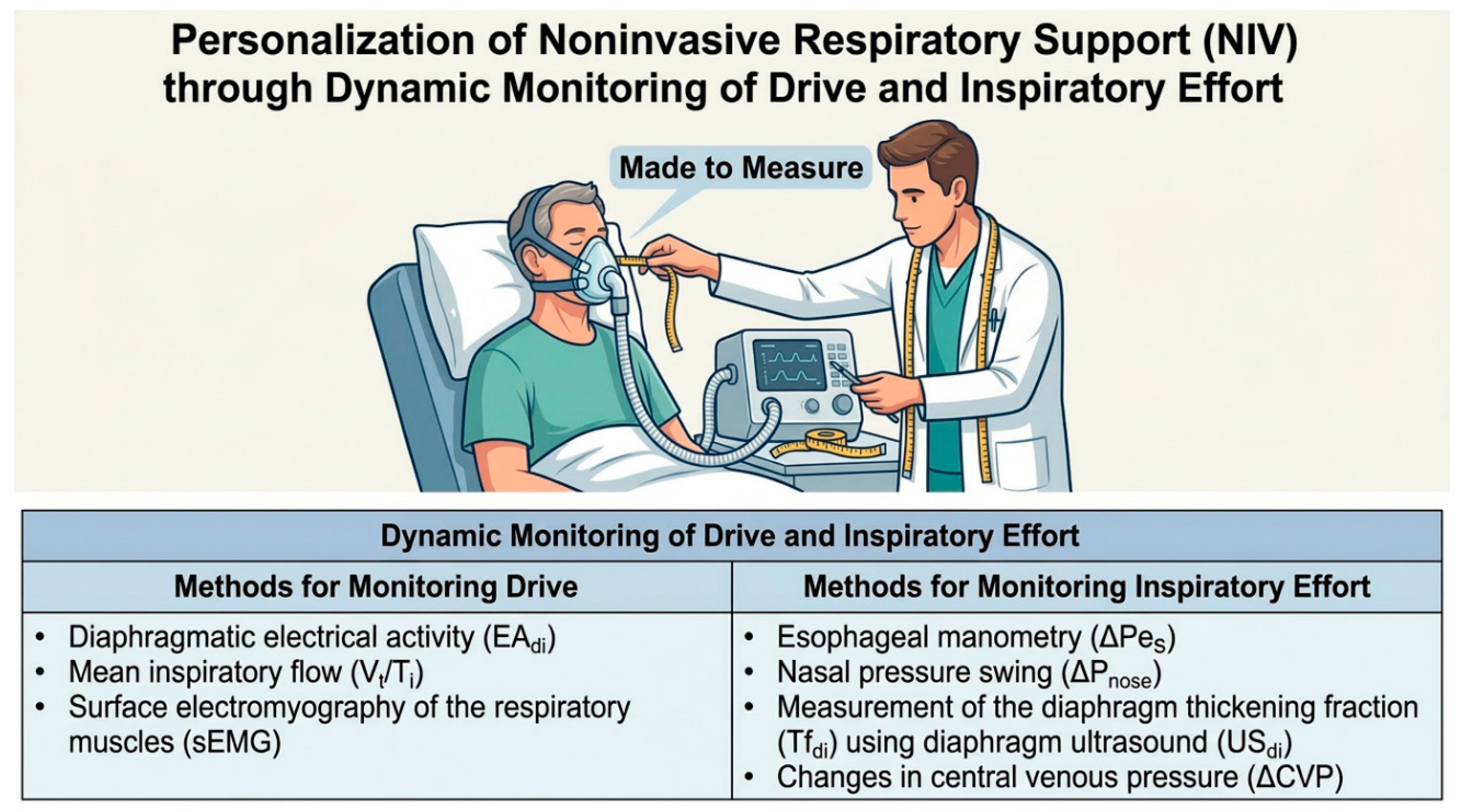

Table 1.
Synthesis of the main randomized controlled trials comparing conventional oxygen therapy and the three non-invasive respiratory support techniques as to the ability to prevent endotracheal intubation or in-hospital death in acute hypoxemic “de novo” respiratory failure.
Table 1.
Synthesis of the main randomized controlled trials comparing conventional oxygen therapy and the three non-invasive respiratory support techniques as to the ability to prevent endotracheal intubation or in-hospital death in acute hypoxemic “de novo” respiratory failure.
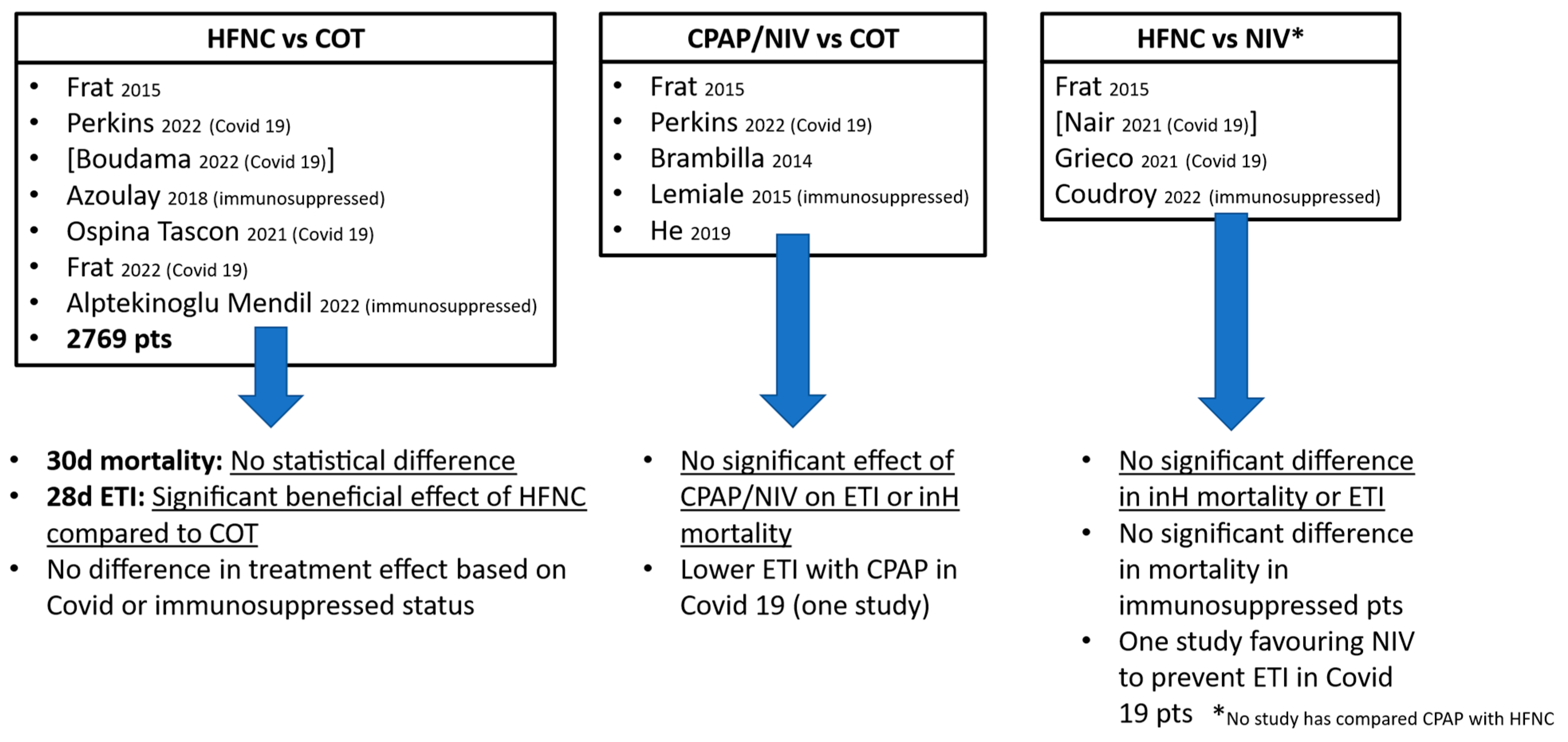
Table 2.
Synthesis of the reccomandations of the ESICM and the SRLF-SFMU guidelines.
Disclaimer/Publisher’s Note: The statements, opinions and data contained in all publications are solely those of the individual author(s) and contributor(s) and not of MDPI and/or the editor(s). MDPI and/or the editor(s) disclaim responsibility for any injury to people or property resulting from any ideas, methods, instructions or products referred to in the content. |
© 2026 by the authors. Licensee MDPI, Basel, Switzerland. This article is an open access article distributed under the terms and conditions of the Creative Commons Attribution (CC BY) license (http://creativecommons.org/licenses/by/4.0/).
Copyright: This open access article is published under a Creative Commons CC BY 4.0 license, which permit the free download, distribution, and reuse, provided that the author and preprint are cited in any reuse.


