

Submitted:
18 March 2026
Posted:
18 March 2026
You are already at the latest version
Abstract
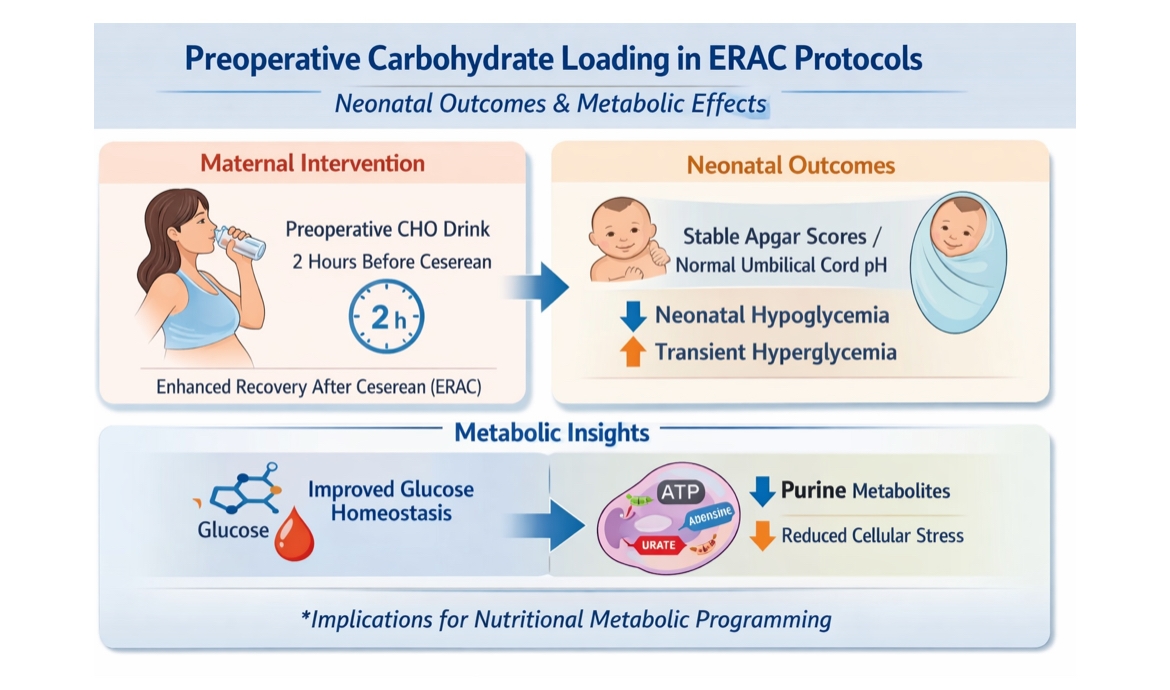
Background: Enhanced Recovery After Cesarean (ERAC) protocols increasingly incorporate preoperative carbohydrate (CHO) loading to mitigate surgical stress and improve maternal recovery. However, concerns persist regarding its potential impact on neonatal metabolic and acid–base status. Methods: A narrative review of randomized controlled trials, observational studies, and meta-analyses published between 2019 and 2025 was conducted, focusing on neonatal outcomes following maternal preoperative CHO loading before elective cesarean delivery. Primary outcomes included Apgar scores and umbilical cord arterial pH, while secondary outcomes addressed neonatal glucose homeostasis and metabolic biomarkers. Results: Across available studies, preoperative CHO loading was not associated with adverse Apgar scores or clinically relevant neonatal acidosis. Minor statistically significant differences in umbilical cord pH reported in some cohorts remained within physiological ranges. Conversely, CHO loading consistently reduced the incidence of neonatal hypoglycemia, albeit with an increased rate of transient, clinically benign hyperglycemia. Emerging evidence also suggests reduced neonatal metabolic stress at a cellular level, reflected by lower purine degradation products in umbilical cord blood. Conclusions: Preoperative CHO loading within ERAC protocols appears metabolically safe for the neonate and confers clinically meaningful protection against neonatal hypoglycemia. While its superiority over liberal clear-fluid strategies for maternal comfort remains debated, its metabolic benefits support its role as a targeted nutritional intervention in elective cesarean delivery.
Keywords:
maternal nutrition
; perioperative nutrition
; neonatal metabolic stress
; Apgar score
; obstetric anesthesia
; perinatal metabolism
1. Introduction
The landscape of surgical care has been profoundly reshaped by the adoption of Enhanced Recovery After Surgery (ERAS) protocols.Multimodal, evidence-based frameworks aim to standardize perioperative management, mitigate the physiological stress of surgery, and accelerate patient recovery. With cesarean delivery (CD) ranking as one of the most common surgical procedures globally, the application of these principles in obstetrics—termed Enhanced Recovery After Cesarean (ERAC)—has become a critical focus for improving maternal and neonatal health. ERAC protocols encompass a suite of spanning the preoperative, intraoperative, and postoperative phases, designed to optimize outcomes, reduce hospital stays, and enhance the overall patient experience [1,2]
A cornerstone of many ERAS pathways, yet one of the most debated components within ERAC, is the practice of preoperative carbohydrate (CHO) loading. This intervention directly challenges the long-held tradition of prolonged preoperative fasting (“nil per os” or NPO from midnight), a practice originally instituted to minimize the risk of pulmonary aspiration during anesthesia. Modern evidence, however, suggests that prolonged fasting can induce a catabolic state characterized by dehydration, patient discomfort, and insulin resistance, which may hinder recovery [2]. CHO loading, typically involving a clear, carbohydrate-rich drink consumed two hours before surgery, aims to transition the patient from a fasted to a fed metabolic state, thereby attenuating these adverse effects. [3]
While the maternal benefits of CHO loading—such as reduced hunger, thirst, and anxiety—are increasingly well-documented, its impact on the neonate remains a subject of intense scrutiny and evolving research. The transplacental passage of glucose means that maternal metabolic interventions can directly influence the fetal environment. This raises a pivotal question: Does preoperative CHO loading for elective cesarean delivery affect key indicators of neonatal well-being at birth? This review seeks to critically analyze the existing scientific literature to address this question, with a specific focus on two of the most fundamental and widely used markers of neonatal health: umbilical cord arterial pH and Apgar scores. By synthesizing data from recent randomized controlled trials and meta-analyses, we will explore whether this practice is not only beneficial for the mother but also safe, and potentially advantageous, for the newborn. [4]
2. The Rationale for Carbohydrate Loading: More Than Just a Drink [5]
The shift from prolonged fasting to preoperative carbohydrate loading is rooted in a deeper understanding of perioperative physiology and patient psychology. The traditional “NPO from midnight” mandate, while intended to ensure patient safety, often subjects parturients to extended periods without caloric intake, a state particularly taxing during the third trimester of pregnancy. This period is characterized by “accelerated starvation,” where maternal glycogen stores are rapidly depleted to meet the metabolic demands of the feto-placental unit, leading to increased fatty acid mobilization and ketogenesis. CHO loading is designed to counteract this process, serving as a metabolic bridge that maintains an anabolic state, improves patient comfort, and enhances physiological resilience to surgical stress. [5,6] Table 1

Table 1.
Clinical effects of preoperative carbohydrate loading.
| Domain | Effect of CHO loading | Strength of evidence | Clinical implication |
|---|---|---|---|
| Apgar score | No significant change | High | Confirms immediate neonatal safety |
| Umbilical cord arterial pH | Minimal differences within physiological range | Moderate | No risk of clinically relevant acidosis |
| Neonatal hypoglycemia | Significant reduction | High | Main clinical benefit |
| Neonatal hyperglycemia | Increased transient episodes | Moderate | Benign, self-limiting |
| Cellular metabolic stress | Reduced purinergic metabolites | Emerging | Suggests improved neonatal energy balance |
| Maternal comfort | Improved vs fasting | High | Better perioperative experience |
| Comparison with liberal fluids (STS) | Limited additional comfort benefit | Moderate | Organizational decision depends on metabolic priorities |
Table 2.
Key studies included in the review.
| Study (Year) | Design | Population | Intervention | Main neonatal outcomes | Key findings |
|---|---|---|---|---|---|
| Kotfis et al. (2023) | Randomized controlled trial | Elective cesarean delivery | CHO drink 2 h pre-op | Apgar, cord pH, neonatal glucose | No differences in Apgar or pH; reduced hypoglycemia |
| Shi et al. (2024) | Meta-analysis | Elective CD | CHO vs fasting/placebo | Apgar, maternal comfort | No adverse neonatal effects |
| Ding et al. (2022) | Randomized controlled trial | Women undergoing CD | Carbohydrate-rich beverage | Neonatal hypoglycemia | Significant reduction in hypoglycemia (RR 0.45) |
| Zhou et al. (2024) | Prospective study | Gestational diabetes | ERAC with CHO loading | Neonatal glucose homeostasis | Marked reduction in hypoglycemia |
| Sadiq et al. (2025) | Randomized controlled trial | Elective CD | CHO vs Sip-til-Send | Maternal comfort, nausea | Metabolic benefits but higher intraoperative nausea |
3. Maternal Benefits (Concise Overview)
The advantages of preoperative CHO loading for the mother are multifaceted and consistently reported across numerous studies. These benefits can be broadly categorized into improvements in patient comfort and metabolic stability. [7,8]
Improved Patient Comfort
One of the most immediate and appreciated effects of CHO loading is the significant enhancement of the preoperative patient experience. Multiple meta-analyses and randomized controlled trials (RCTs) have demonstrated that, compared to standard fasting, consuming a CHO drink significantly reduces subjective feelings of thirst, hunger, and anxiety. [9,10]
4. Maternal Comfort: CHO Loading vs. Fasting
Beyond comfort, CHO loading induces a favorable metabolic shift [15,16]. By providing an exogenous glucose source, it stimulates endogenous insulin release, effectively switching off the catabolic state induced by overnight fasting. This has several measurable biochemical benefits: [17,18]
Reduced Insulin Resistance: Surgical stress is known to induce postoperative insulin resistance. Several studies and meta-analyses confirm that preoperative CHO loading significantly attenuates this response, as measured by lower Homeostatic Model Assessment of Insulin Resistance (HOMA-IR) index values postoperatively. This is crucial as improved insulin sensitivity is linked to better postoperative recovery. [18,19]
Decreased Ketosis: Fasting leads to the production of ketone bodies as an alternative fuel source. CHO loading effectively prevents this. Studies using urinary ketone analysis have shown a dramatically lower incidence of ketonuria in CHO groups compared to fasting groups (e.g., 18.1% vs. 61.1% in one study).
Other research using more sensitive biomarkers like plasma (a marker of oxidative stress associated with ketosis) also found significantly lower [20] levels in mothers who received CHO drinks. [21]
Safety Profile
The primary historical concern with any preoperative oral intake has been the risk of pulmonary aspiration of gastric contents. However, a growing body of evidence robustly supports the safety of modern CHO loading protocols. Gastric emptying studies have shown that clear, non-particulate carbohydrate drinks (typically 200-400 mL) are safely emptied from the stomach within the recommended 2-hour window before anesthesia. [22,23]
Furthermore, clinical trials involving thousands of patients have consistently reported no instances of aspiration in either CHO or control groups, solidifying the safety of this practice when guidelines are followed. [24]
Key Takeaways
Preoperative carbohydrate loading is not merely a comfort measure. It is a targeted metabolic intervention designed to counteract the detrimental effects of surgical fasting. By improving maternal well-being, reducing anxiety, and creating a [25,26]
more stable metabolic environment (less insulin resistance and ketosis), it prepares the mother’s body to better withstand the physiological stress of cesarean delivery all while strong safety profile against aspiration risk. [27]
Direct Impact on Neonatal Well-being: Apgar Scores and Umbilical Cord pH
While the maternal benefits of CHO loading are well-established, the ultimate litmus test for any intervention in obstetrics is its impact on the neonate. The two most immediate and universally accepted measures of a newborn’s condition at birth are the Apgar score and the analysis of umbilical cord arterial blood gases, particularly the pH value. This section dissects the evidence to determine if maternal CHO loading influences these critical neonatal outcomes. [28,29]
5. Analysis of Apgar Scores
The Apgar score, assessed at 1 and 5 minutes after birth, provides a rapid, standardized evaluation of a newborn’s cardiorespiratory and neurological status. It evaluates five criteria: Appearance (skin color), Pulse (heart rate), Grimace (reflex irritability), Activity (muscle tone), and Respiration. A score of 7 or above is generally considered normal.[30,31]
Across the available literature, there is a strong and consistent consensus: preoperative carbohydrate loading does not adversely affect Apgar scores. Numerous RCTs and meta-analyses have compared Apgar scores between neonates born to mothers in CHO loading groups and those in control (fasting or water/placebo) groups. The findings are uniformly reassuring: [32]
• A 2024 meta-analysis by Shi et al. reviewed two studies that reported on Apgar scores and found no negative impact. One study noted no Apgar scores below 7 at 5 minutes, while another reported that all neonates in both CHO and control groups had 1-minute Apgar scores of 10. [33]
The prospective RCT by Kotfis et al. (2023), which involved 148 patients, found comparable Apgar scores at 1, 5, and 10 minutes between the CHO and standard. fasting groups, with no significant differences noted. [34,35]
Similarly, a large observational cohort study by Özdemir et al. (2025) comparing an ERAC protocol (which included CHO loading) to standard care found no significant differences in 1- and 5-minute Apgar scores between the two groups. [36]
This consistent lack of a negative effect demonstrates that from the perspective of the Apgar score, CHO loading is a safe procedure for the neonate. It does not appear to cause any immediate depression of vital functions at birth. [37]
6. Deep Dive into Umbilical Cord Arterial pH
Umbilical cord arterial pH is a more objective and sensitive marker of the fetal metabolic state at the moment of birth than the Apgar score. It directly reflects the acid-base balance of the fetus, providing a snapshot of oxygenation and perfusion during the final stages of labor and delivery. A low pH (acidemia), particularly a pH below 7.20, is associated with fetal hypoxia and an increased risk of adverse neonatal outcomes. Therefore, any potential impact of CHO loading on this value is of paramount clinical importance. [38,39]
6.1. The Nuance of “Significance”
The evidence regarding CHO loading and umbilical cord pH is more nuanced than that for Apgar scores and requires careful interpretation to distinguish between statistical significance and clinical relevance. Some studies have reported statistically significant differences in mean pH values, while others have found none. The key lies in examining the absolute values and their relation to the clinical threshold for acidosis. [40,41]
A notable finding comes from the 2025 study by Özdemir et al., which compared 154 neonates in an ERAS group (receiving CHO) with 312 in a control group. They reported a statistically significant lower mean umbilical cord pH in the ERAS group (7.29 ± 0.08) compared to the control group (7.31 ± 0.06) (p < 0.001). While this result might initially raise concern, it is crucial to place it in clinical context [41,42]. Both mean values are comfortably within the normal physiological range and well above the widely accepted threshold for neonatal acidosis (typically pH < 7.20). This highlights a Critical distinction:a change can be mathematically significant without being clinically meaningful or harmful. [43]
Umbilical Cord pH: Statistical vs. Clinical Significance [44]
In contrast, other robust studies have found no significant difference. For instance, the RCT by Kotfis et al. (2023) collected umbilical cord blood to measure pH but did not report a significant difference between the CHO and standard fasting groups in their primary or secondary analyses (Kotfis et al., 2023). [45,46]
6.2. Exploring Confounding Factors
The slight variations in pH observed in some studies are likely influenced by a host of powerful confounding variables that have a much more direct impact on fetal acid-base status than maternal glucose intake. The literature points to several such factors: [47,48]
• Anesthesia and Vasopressors: Spinal anesthesia, the standard for elective CD, can cause maternal hypotension, which, if not managed promptly, can reduce [49]
uteroplacental blood flow and lead to fetal acidosis. The choice and dose of vasopressors used to treat this hypotension are critical. Özdemir et al. (2025) themselves speculate that the use of ephedrine, which was used to manage hypotension in their study, could have contributed to the lower pH values, as ephedrine is known to cross the placenta and can affect fetal metabolic rate. [50,51]
• Surgical Duration: The time from uterine incision to delivery is a well-known factor influencing neonatal pH. Prolonged intervals can increase the risk of acidosis. [51]
Intrapartum Events: In studies that include women who have undergone a trial of labor before an unplanned CD, factors like prolonged labor and meconium-stained amniotic fluid are strong predictors of low umbilical cord pH, far outweighing the potential influence of a preoperative drink.
6.3. Overall Conclusion on pH
When synthesized, the current body of evidence does not support the conclusion that preoperative CHO loading causes clinically significant neonatal acidosis. While one study reported a statistically lower mean pH, the value remained well within the safe, normal range. The absence of this finding in other trials, combined with the powerful influence of confounding factors like anesthesia management and surgical technique, suggests that the effect of CHO loading on umbilical cord pH is, at most, minimal and not clinically detrimental. The practice appears safe from the perspective of fetal acid-base balance.
7. Key Takeaways
The evidence regarding immediate neonatal well-being is reassuring. Preoperative carbohydrate loading shows no negative impact on Apgar scores. While minor statistical fluctuations in umbilical cord pH have been noted in some research, these changes do not approach the threshold for clinical acidosis and are likely overshadowed by more potent intraoperative variables. Therefore, current data indicate that CHO loading is a safe intervention concerning these two primary markers of neonatal health at birth.
8. Beyond Apgar and pH: The Broader Metabolic Picture for the Neonate
While Apgar scores and umbilical cord pH provide a critical snapshot of the neonate’s condition at the moment of birth, they do not tell the whole story. The metabolic environment established by maternal preoperative nutrition has broader and more lasting implications for the newborn’s transition to extrauterine life. Examining neonatal glucose homeostasis and deeper metabolic markers provides a more complete understanding of the true impact of carbohydrate loading.
9. Neonatal Glucose Homeostasis: The Key Trade-Off
Perhaps the most significant and consistently reported neonatal effect of maternal CHO loading is its influence on the newborn’s blood glucose levels. This presents a clear trade-off: a marked reduction in the risk of harmful hypoglycemia at the cost of a higher incidence of benign, transient hyperglycemia.
9.1. Reducing Neonatal Hypoglycemia: A Major Clinical Benefit
Neonatal hypoglycemia (low blood sugar) is a serious concern, as glucose is the primary fuel for the neonatal brain. Prolonged or severe hypoglycemia can lead to irreversible neurological damage. Cesarean delivery itself is a risk factor for this condition. The evidence is compelling that maternal CHO loading serves as a powerful protective measure against this risk.
• A large RCT by Ding et al. (2022) found that the incidence of neonatal hypoglycemia was significantly lower in the carbohydrate-rich beverage group compared to the low-carbohydrate group [52].
• A study by Zhou et al. (2024) focusing on patients with Gestational Diabetes Mellitus (GDM) found that an ERAS protocol with CHO loading dramatically reduced the rate of neonatal hypoglycemia from 50.63% in the control group to just 8.54% in the ERAS group. [53]
• In a study by Kotfis et al. (2023), no newborns in the CHO group required oral glucose for hypoglycemia, whereas six newborns in the standard fasting group did (p < 0.05) [54].
These findings suggest that by ensuring the mother is in an anabolic state, CHO loading provides the fetus with adequate glucose reserves, smoothing the transition at birth when the placental glucose supply is abruptly cut off.
9.2. The Risk of Transient Hyperglycemia
The inevitable flip side of providing more glucose is a higher incidence of neonatal hyperglycemia (high blood sugar). The same studies that report a decrease in hypoglycemia also note a corresponding increase in hyperglycemia. For example, Ding et al. (2022) observed a higher rate in the CHO group (9.2%) compared to the low-CHO group (5.8%). However, the clinical significance of this finding appears to be minimal. The study authors explicitly state that none of the hyperglycemic episodes in either mothers or neonates required special treatment, and all elevated blood glucose levels in newborns returned to normal in subsequent tests without intervention. This suggests that the hyperglycemia is a transient physiological response to the maternal glucose load and is well-tolerated by healthy term infants.These findings support the hypothesis that maternal preoperative nutritional status may influence early neonatal metabolic programming, potentially affecting the neonatal transition to extrauterine life.
10. Deeper Metabolic Insights: The Purinergic Pathway
Recent research has begun to explore more sophisticated biomarkers to understand the cellular-level effects of CHO loading. A groundbreaking secondary analysis [53] investigated the impact on the purinergic pathway by measuring metabolites in maternal and umbilical cord blood. This pathway is central to energy metabolism; during periods of metabolic stress and glucose deprivation (like fasting),
ATP (the cell’s primary energy currency) is degraded into byproducts like hypoxanthine and xanthine.
The study’s findings were striking. Both mothers and neonates in the CHO loading group had significantly lower plasma concentrations of hypoxanthine and xanthine compared to the standard fasting group. Specifically, in umbilical cord blood, the median hypoxanthine level was 10.6 µmol/l in the CHO group versus 13.9 µmol/l in the fasting group (p = Data from Kotfis et al. CHO = Carbohydrate Group, 0.035). SF = Standard Fasting.
The interpretation of this is profound:
lower levels of these degradation products suggest that less ATP is being broken down. This provides direct biochemical evidence that maternal CHO loading mitigates metabolic stress at the cellular level for the neonate. By providing a steady supply of glucose, the fetus is not forced to enter a catabolic state, thereby preserving its cellular energy reserves during the physiologically demanding process of birth. This finding moves the conversation beyond simple glucose levels and offers a mechanistic explanation for why CHO loading creates a more favorable metabolic environment for the newborn.
11. Key Takeaways
The broader metabolic impact of CHO loading on the neonate is largely positive. The primary clinical benefit is a significant reduction in the incidence of dangerous neonatal hypoglycemia. While this comes with a trade-off of increased transient and benign hyperglycemia, the net effect is favorable. Furthermore, novel biomarker research into the purinergic pathway suggests that CHO loading reduces fetal metabolic stress at a cellular level, providing a more stable energetic foundation for the transition to life outside the womb. Table 1
12. The Evolving Landscape: Controversies, Gaps, and Future Directions
Despite the accumulating evidence of maternal and neonatal benefits, the role of preoperative carbohydrate loading within ERAC protocols is not yet settled science. The practice exists in a dynamic landscape of evolving guidelines, competing protocols, and recognized research gaps. A critical evaluation reveals a field characterized by cautious optimism tempered by a call for more definitive evidence.
One of the most pertinent current debates is whether the specific metabolic benefits of a carbohydrate drink are clinically superior to a more liberal clear fluid policy, often termed “Sip ’til Send” (STS). The STS protocol allows patients to drink clear fluids like water up until they are called to the operating theater, which also significantly improves comfort compared to traditional fasting.
A pivotal 2025 RCT by Sadiq et al. directly compared CHO loading to an STS protocol in women undergoing elective CD [55]. Their findings challenge the assumption that CHO loading is unequivocally superior:
• Limited Added Comfort: While CHO loading was better than STS at reducing preoperative anxiety and ketonuria (a metabolic marker), it showed no significant improvement in other key patient-reported outcomes like hunger, thirst, dizziness, or overall comfort [54].
• Increased Intraoperative Nausea: Perhaps most surprisingly, the study found that the CHO group reported a significantly higher incidence of intraoperative nausea compared to the STS group (44% vs. 16%, p = 0.002). The authors speculate this could be related to the greater fluid volume or specific drink composition.
These results raise a critical question of cost-effectiveness and clinical utility. If a simple, inexpensive STS protocol can achieve most of the patient comfort benefits without the added cost of specialized CHO drinks and potentially with a lower risk of nausea, its widespread adoption might be a more pragmatic approach. This suggests that the primary justification for CHO loading may hinge more on its specific metabolic benefits (e.g., reducing neonatal hypoglycemia) rather than on maternal comfort alone, where STS is a strong competitor.
13. Research Limitations and Future Needs
The current body of evidence, while promising, is hampered by several methodological limitations that contribute to the “weak” recommendation from guideline committees. Many of the existing studies are characterized by:
• Single-Center Designs: The majority of studies are conducted at a single institution, which may limit the generalizability of their findings to different patient populations and healthcare systems. [52,53]
• Lack of Placebo Control: Blinding is often difficult. While some studies use water as a placebo, others compare CHO loading directly to fasting, making it hard to disentangle the effects of hydration from the effects of carbohydrate metabolism. The use of artificial sweeteners as a true placebo is challenging due to potential biochemical effects [51,52,53].
To move the field forward and provide definitive guidance, there is a clear and urgent need for future research to address these gaps. The consensus in the literature calls for:
1. Large, Multicenter RCTs: Well-designed, adequately powered trials across multiple centers are essential to confirm the benefits and risks of CHO loading and to ensure the results are broadly applicable.
2. Robust Outcome Measures: Future studies should incorporate a comprehensive suite of outcomes, including not only biochemical markers but also robust, validated patient-reported outcome measures (PROMs) like the Obstetric Quality of Recovery (ObsQoR) score, as well as longer-term neonatal follow-up [51].
3. Research in Special Populations: The impact of CHO loading may differ in specific patient groups. More research is needed to develop personalized protocols, particularly for women with Gestational Diabetes Mellitus (GDM). While early results suggest low-dose CHO loading is safe and beneficial in well-controlled GDM, further studies are required to optimize dosage and confirm safety [54].
14. Conclusion: A Balanced Verdict on Carbohydrate Loading for Cesarean Delivery
After a comprehensive review of the current evidence, a balanced and nuanced picture emerges regarding the use of preoperative carbohydrate loading within ERAC protocols for elective cesarean delivery. The practice represents a significant departure from traditional fasting, offering clear benefits but also presenting unresolved questions and controversies. The decision to implement CHO loading requires a careful weighing of its effects on both the mother and the neonate.
The evidence synthesized in this review points to a clear dichotomy of outcomes. On one hand, the practice is demonstrably safe for the neonate in terms of the most immediate and critical markers of well-being. There is no evidence that CHO loading negatively impacts Apgar scores or causes clinically significant neonatal acidosis, as measured by umbilical cord pH. The minor statistical variations in pH reported in some studies are overshadowed by more potent intraoperative factors and do not cross the threshold of clinical concern.
The primary benefits can be summarized as follows:
For the Mother: Compared to traditional fasting, CHO loading unequivocally improves the preoperative experience by significantly reducing hunger, thirst, and anxiety. It also creates a more favorable metabolic state by attenuating surgical stress-induced insulin resistance and preventing ketosis.
For the Neonate: The most compelling clinical benefit is a robust and significant reduction in the incidence of neonatal hypoglycemia. This is a crucial advantage, given the potential for neurodevelopmental harm from low blood sugar in newborns. Furthermore, advanced metabolic studies suggest CHO loading reduces fetal metabolic stress at a cellular level, as evidenced by lower levels of ATP degradation byproducts in umbilical cord blood.
However, these benefits must be weighed against the identified drawbacks and unresolved issues:
Maternal Drawbacks: The superiority of CHO loading over simpler, cheaper liberal fluid protocols like “Sip ‘til Send” (STS) is not established for maternal comfort.
Moreover, some evidence suggests CHO loading may be associated with a higher incidence of intraoperative nausea compared to STS. [55,56]
Neonatal Trade-Off: The reduction in hypoglycemia comes at the cost of an increased incidence of transient neonatal hyperglycemia. While this appears to be benign and self-resolving in healthy term infants, it remains a physiological deviation that warrants consideration.
From a nutritional physiology perspective, carbohydrate loading should be viewed not merely as a comfort strategy, but as a short-term metabolic intervention aimed at preserving maternal–fetal energy homeostasis. Table 2
15. Final Clinical Takeaway
Preoperative carbohydrate loading is a valuable and safe tool in the modern ERAC toolkit. Its ability to enhance maternal comfort compared to fasting and, most importantly, to protect the neonate from the significant risk of hypoglycemia, makes it a compelling intervention. The biochemical evidence of reduced metabolic stress for both mother and baby further strengthens its rationale.
However, it is not a panacea, and its routine implementation should be a carefully considered, patient-centered decision. For institutions already practicing a liberal “Sip ‘til Send” fluid policy, the additional benefits of CHO loading on maternal comfort may be marginal. In this context, the decision to adopt CHO loading may hinge primarily on the desire to leverage its specific metabolic advantages, particularly the robust protection against neonatal hypoglycemia.
Ultimately, while the current evidence is strong enough to support its use, it is not yet definitive enough to mandate it universally over other liberal fasting protocols. The “weak” recommendation from professional societies is appropriate, reflecting the need for larger, more comprehensive multicenter trials. Until such evidence emerges, clinicians should weigh the established benefits—especially the reduction of neonatal hypoglycemia—against the potential for increased nausea and the logistical considerations of implementation, tailoring the preoperative fasting strategy to individual patient needs and institutional resources.
In conclusion, preoperative carbohydrate loading represents a metabolically sound component of ERAC protocols. Current evidence indicates no detrimental effects on early neonatal clinical status, while demonstrating a consistent reduction in neonatal hypoglycemia and biochemical markers of metabolic stress. Future research should focus on defining optimal carbohydrate composition and dosing, particularly in metabolically vulnerable populations, to fully integrate this strategy into precision obstetric nutrition.
Author Contributions
Conceptualization, M.S, R.M, E.M.; methodology M.S, R.M, E.M. N.M, R.S; software,M.S, R.M, E.M.G.M.P.; validationM.S, R.M, E.M.G.M.P, E.D.; formal analysis,.M.S, R.M, E.M, L.A; investigation L.A,M.S, R.M, E.M.,resources, G.M.P M.S, R.M, E.M.; data curation, E.D, M.S, R.M, E.M.; writing—original draft preparation, M.S, R.M, E.M, A.F.; writing—review and editing, M.S, R.M, E.M, A.F.; visualization,M.S, R.M, E.M, A.F.; supervision,M.S, R.M, E.M, A.F.; project administration,M.S, R.M, E.M,; funding acquisition none. All authors have read and agreed to the published version of the manuscript.
Funding
This research received no external funding.
Institutional Review Board Statement
Not applicable.
Informed Consent Statement
Not applicable.
Data Availability Statement
No new data were created or analyzed in this study. Data sharing is not applicable to this article.
Conflicts of Interest
The authors declare no conflict of interest.
References
- Patel K, Zakowski M. Enhanced recovery after cesarean: Current and emerging trends. Curr Anesthesiol Rep 2021;11:136–44. [CrossRef]
- Brown JK, Singh K, Dumitru R, Chan E, Kim MP. The benefits of enhanced recovery after surgery programs and their application in cardiothoracic surgery. Methodist Debakey Cardiovasc J 2018;14:77–88. [CrossRef]
- Betran AP, Ye J, Moller AB, Souza JP, Zhang J. Trends and projections of caesarean section rates: global and regional estimates. BMJ Glob Health 2021;6:e005671. [CrossRef]
- Chien P. Global rising rates of caesarean sections. BJOG 2021;128:781–2. [CrossRef]
- Echeverria-Villalobos M, Stoicea N, Todeschini AB, Fiorda-Diaz J, Uribe AA, Weaver T, et al. Enhanced Recovery After Surgery (ERAS): postoperative pain management and opioid crisis. Clin J Pain 2020;36:219–26.
- De Simone B, Sartelli M, Coccolini F, Ball CG, Brambillasca P, Chiarugi M, et al. Intraoperative surgical site infection control. World J Emerg Surg 2020;15:10.
- Peahl AF, Smith R, Johnson TRB, Morgan DM, Pearlman MD. Why obstetricians must implement enhanced recovery after cesarean. Am J Obstet Gynecol 2019;221:117.e1–7. [CrossRef]
- Page MJ, McKenzie JE, Bossuyt PM, Boutron I, Hoffmann TC, Mulrow CD, et al. PRISMA 2020 statement. BMJ 2021;372:n71.
- Umar TP, Samudra MG, Nashor KMN, Agustini D, Syakurah RA. Volunteering during COVID-19: systematic review. Front Med 2022;9:797153.
- Ouzzani M, Hammady H, Fedorowicz Z, Elmagarmid A. Rayyan app for systematic reviews. Syst Rev 2016;5:210.
- Liana P, Liberty IA, Murti K, Hafy Z, Salim EM, Zulkarnain M, et al. NETs in COVID-19: systematic review. Immunol Res 2022;70:449–60.
- Sterne JAC, Savović J, Page MJ, Elbers RG, Blencowe NS, Boutron I, et al. RoB 2 tool. BMJ 2019;366:l4898.
- Sterne JAC, Sutton AJ, Ioannidis JPA, Terrin N, Jones DR, Lau J, et al. Funnel plot asymmetry. BMJ 2011;343:d4002. [CrossRef]
- Wan X, Wang W, Liu J, Tong T. Estimating mean and SD. BMC Med Res Methodol 2014;14:135.
- Higgins JPT, Thompson SG, Deeks JJ, Altman DG. Inconsistency in meta-analyses. BMJ 2003;327:557–60. [CrossRef]
- Birchall CL, Maines JL, Kunselman AR, Stetter CM, Pauli JM. Enhanced recovery for cesarean delivery. J Matern Neonatal Med 2022;35:10253–61. [CrossRef]
- Felder L, Cao CD, Konys C, Weerasooriya N, Mercier R, Berghella V, et al. ERAS and disparities in pain management. Am J Perinatol 2022;39:1375–82.
- Mangala JK, Remadevi C, Loganathan P, R S, Gopukrishnan, Vasudevan A. ERAS in COVID era. J Obstet Gynaecol India 2021;71(Suppl 1):12–7.
- McCoy JA, Gutman S, Hamm RF, Srinivas SK. ERAC pathway and opioid use. Am J Perinatol 2021;38:1341–7.
- Mullman L, Hilden P, Goral J, Gwacham N, Tauro C, Spinola K, et al. Improved outcomes with ERAC. Obstet Gynecol 2020;136:685–91.
- Shinnick JK, Ruhotina M, Has P, Kelly BJ, Brousseau EC, O’Brien J, et al. ERAS and LOS reduction. Am J Perinatol 2021;38(S01):e215–23.
- Sordia Pineyro MO, Villegas-Cruz C, Hernandez-Bazaldua M, Pineyro-Cantu A, Gaston-Locsin T, Sordia-Hernandez LH. ERAS elective cesarean. Ginekol Pol 2023;94:141–5.
- Tamang T, Wangchuk T, Zangmo C, Wangmo T, Tshomo K. ERAS in Bhutan. BMC Pregnancy Childbirth 2021;21:637.
- Tanner LD, Chen HY, Chauhan SP, Sibai BM, Ghebremichael SJ. ERAS pre-post study. J Matern Fetal Neonatal Med 2022;35:9170–7.
- Tepper JL, Harris OM, Triebwasser JE, Ewing SH, Mehta AD, Delaney EJ, et al. ERAS and opioid reduction. Am J Perinatol 2023;40:945–52.
- Uyanıklar ÖÖ, Türk P, Aslan K, Aslan EK, Özden O, Gürlüer J, et al. HERMES study. Int J Gynaecol Obstet 2023;161:168–74. [CrossRef]
- Chiao SS, Razzaq KK, Sheeran JS, Forkin KT, Spangler SN, Knio ZO, et al. ERAS and neonatal outcomes. J Perinatol 2022;42:1283–7.
- Combs CA, Robinson T, Mekis C, Cooper M, Adie E, Ladwig-Scott E, et al. ERAC impact on opioid use. Am J Obstet Gynecol 2021;224:237–9.
- Grasch JL, Rojas JC, Sharifi M, McLaughlin MM, Bhamidipalli SS, Haas DM. ERAS and postoperative pain. AJOG Glob Rep 2023;3:100169.
- Gupta S, Gupta A, Baghel AS, Sharma K, Choudhary S, Choudhary V. ERAS vs traditional protocol. J Obstet Anaesth Crit Care 2022;12:28–33.
- Hedderson M, Lee D, Hunt E, Lee K, Xu F, Mustille A, et al. ERAS quality improvement. Obstet Gynecol 2019;134:511–9.
- Kleiman AM, Chisholm CA, Dixon AJ, Sariosek BM, Thiele RH, Hedrick TL, et al. Maternal outcomes after ERAS. Int J Obstet Anesth 2020;43:39–46.
- Lester SA, Kim B, Tubinis MD, Morgan CJ, Powell MF. ERAS and opioid use. Int J Obstet Anesth 2020;43:47–55.
- MacGregor CA, Neerhof M, Sperling MJ, Alspach D, Plunkett BA, Choi A, et al. Post-cesarean opioid use. Am J Perinatol 2021;38:637–42. [CrossRef]
- Baluku M, Bajunirwe F, Ngonzi J, Kiwanuka J, Ttendo S. ERAS vs standard care. Anesth Analg 2020;130:769–76.
- Klangprapan N, Narkwichean A, Luanpholcharoenchai J, Laosooksathit W. ERAS RCT. Thai J Obstet Gynaecol 2022;30:393–402.
- Pan J, Hei Z, Li L, Zhu D, Hou H, Wu H, et al. ERAS and acute pain. Ther Clin Risk Manag 2020;16:369–78.
- Teigen NC, Sahasrabudhe N, Doulaveris G, Xie X, Negassa A, Bernstein J, et al. ERAS and LOS RCT. Am J Obstet Gynecol 2020;222:372.e1–10.
- Macones GA, Caughey AB, Wood SL, Wrench IJ, Huang J, Norman M, et al. ERAS Society recommendations. Am J Obstet Gynecol 2019;221:247.e1–9.
- Chandra S, Nugroho AM, Agus H, Susilo AP. Low-dose bupivacaine trial. Anesthesiol Pain Med 2019;9:e91275.
- Liu ZQ, Du WJ, Yao SL. ERAS challenges for anesthesiologists. Chin Med J 2020;133:590–6.
- Ituk U, Habib AS. Enhanced recovery after cesarean delivery. F1000Research 2018;7:513. [CrossRef]
- Zangouei A, Zahraei SAH, Sabertanha A, Nademi A, Golafshan Z, Zangoue M. Ketamine and post-spinal headache. Anesthesiol Pain Med 2019;9:e97249.
- Meng X, Chen K, Yang C, Li H, Wang X. ERAS systematic review and meta-analysis. Front Med 2021;8:694385.
- Fay EE, Hitti JE, Delgado CM, Savitsky LM, Mills EB, Slater JL, et al. ERAS reduces stay and cost. Am J Obstet Gynecol 2019;221:349.e1–9.
- Supattanarungsi W, Chullapram T. Early vs delayed oral feeding. Thai J Obstet Gynaecol 2021;29:92–9.
- Ogbadua AO, Agida TE, Akaba GO, Akitoye OA, Ekele BA. Early oral feeding RCT. Niger J Surg 2018;24:6–11.
- Saad AF, Saoud F, Diken ZM, Hegde S, Kuhlmann MJ, Wen TS, et al. Early vs late feeding. Am J Perinatol 2016;33:415–9.
- Chiu AS, Jean RA, Hoag JR, Freedman-Weiss M, Healy JM, Pei KY. Opioid prescribing defaults. JAMA Surg 2018;153:1012–9.
- Dowell D, Ragan KR, Jones CM, Baldwin GT, Chou R. CDC opioid guideline. MMWR Recomm Rep 2022;71:1–95.
- Sultan P, Sharawi N, Blake L, Habib AS, Brookfield KF, Carvalho B. ERAC meta-analysis. Anaesth Crit Care Pain Med 2021;40:100935.
- Ting Ding1†, Chun-Mei Deng1†, Xiao-Feng Shen2, Yao-Wu Bai3, Xiao-Lan Zhang4, Ji-Ping Liu5, Li-Juan Yang6, Hai-Tao Yu7, Lei Xie8, Hong Chen9, Dong-Liang Mu1, Yuan Qu1, Hui-Xia Yang10, Ai-Rong Bao10, Sai-Nan Zhu11 and Dong-Xin Wang1,12. Effect of a carbohydrate-rich beverage on rate of cesarean delivery in primigravidae with epidural labor analgesia: a multicenter randomized trial.BMC Pregnancy and Childbirth (2022) 22:339. [CrossRef]
- Jin Zhou, Peizhen Zhang, Zhangmin Tan, Chuo Li, Lin Yao, Tiantian He, Hongyin Hou and Yuzhu YinEnhanced recovery after surgery in elective cesarean section patients with gestational diabetes mellitus does notlead to glucose-related maternal and neonatal complications.Front. Endocrinol. 15:1403754. [CrossRef]
- Katarzyna Kotfis, Arleta Wojciechowska, Małgorzata Zimny, Dominika Jamioł-Milc, Aleksandra Szylin ́ska, Sebastian Kwiatkowski, Karolina Kaim, Barbara Dołe ̨gowska, Ewa Stachowska, Maciej Zukowski, Maria Pankowiak, Andrzej Torbé and Paul Wischmeyer Preoperative Oral Carbohydrate (CHO) Supplementation Is Beneficial for Clinical and Biochemical Outcomes in Patients Undergoing Elective Cesarean Delivery under Spinal Anaesthesia—A Randomized Controlled TrialJ. Clin. Med. 2023, 12, 4978. [CrossRef]
- Rana Shoaib Sadiq, Cathriona Murphy and Thomas Drew, A carbohydrate loading fasting protocol versus ‘Sip til Send’: a randomised trial of two different fasting protocols at elective caesarean delivery. BMC Anesthesiology (2025) 25:495. [CrossRef]
- Katarzyna Kotfis, Dominika Jamioł-Milc, Arleta Wojciechowska, Aleksandra Szylińska, Arleta Drozd, Małgorzata Zimny, Barbara Dołęgowska, Sebastian Kwiatkowski, Violetta Dziedziejko and Krzysztof Safranow. Maternal and umbilical cord plasma purine concentrations after oral carbohydrate loading prior to elective Cesarean delivery under spinal anesthesia: a randomized controlled trial. BMC Pregnancy and Childbirth (2025) 25:556 . [CrossRef]
Disclaimer/Publisher’s Note: The statements, opinions and data contained in all publications are solely those of the individual author(s) and contributor(s) and not of MDPI and/or the editor(s). MDPI and/or the editor(s) disclaim responsibility for any injury to people or property resulting from any ideas, methods, instructions or products referred to in the content. |
© 2026 by the authors. Licensee MDPI, Basel, Switzerland. This article is an open access article distributed under the terms and conditions of the Creative Commons Attribution (CC BY) license (http://creativecommons.org/licenses/by/4.0/).
Copyright: This open access article is published under a Creative Commons CC BY 4.0 license, which permit the free download, distribution, and reuse, provided that the author and preprint are cited in any reuse.


