

Submitted:
17 March 2026
Posted:
18 March 2026
You are already at the latest version
Abstract
Eutrophication caused by excessive nitrogen and phosphorus input remains the most severe environmental threat of the Baltic Sea. While nutrient sources in general are widely studied and regulated, the relative importance of maritime nutrient inputs and their regulatory treatment remain insufficiently integrated into land-based nutrient assessments. This study applies a load‑based source apportionment approach and quantifies the significance of maritime‑ and port‑related nutrient inputs to a Baltic Sea coastal sys-tem, in relation to other nutrient contributors (e.g. agriculture, municipal, and indus-trial sources). Additionally, the stringency of the regulatory frameworks governing each source is assessed using a qualitative regulatory classification scale and com-pared to the proportion of each nutrient source. The results show that riverine inputs dominate total nutrient loading, accounting for over 90% of both nitrogen and phosphorus. Maritime sources contribute only a small share overall. However, fertilizer cargo handling constitutes the largest nitrogen point source, while ship wastewater inputs are negligible. In contrast, ship wastewater is subject to the strictest regulatory controls, whereas fertilizer handling operates under permits lacking explicit nutrient discharge limits. The findings reveal a governance mismatch between nutrient pressures and regulatory focus and highlight the need to better align nutrient management priorities with actual environmental pressures in semi‑enclosed seas.
Keywords:
eutrophication
; nitrogen
; phosphorus
; governance
; environmental permit
; fertilizers
; catchment
; point source
; sewage
; grey water
; nutrient
; regulations
1. Introduction
1.1. State of the Baltic Sea
The Baltic Sea is a shallow, semi-enclosed sea in northern Europe with limited exchange with the World Ocean and minimal tides. Situated between maritime and continental climate zones and influenced by the North Atlantic and Arctic, it exhibits strong climatic variability. Large river inflows from its extensive catchment create a pronounced salinity gradient, from about 20 in the Danish Straits to less than 2 in the northern and eastern areas, resulting in brackish conditions with marine species dominating in the southwest and freshwater species in the northeast [1].
The catchment area is roughly four times larger than the sea itself, covering nearly 20% of Europe and spanning from temperate, densely populated regions to subarctic areas. It encompasses parts of 14 countries and is home to approximately 85 million people [1]. It is one of the most intensively trafficked maritime regions worldwide with approximately 3,500–5,500 ships sailing its waters each month [2].
The Baltic Sea Region has experienced prolonged periods of excessive fertilizer application, particularly from the 1950s to the 1990s, alongside substantial urban nutrient inputs [3]. As a densely populated and highly utilized marine area, the sea is strongly influenced by human activities, including agriculture, aquaculture, fisheries, river regulation, chemical pollution, tourism, and coastal management [4].
High external nutrient loads have resulted in widespread eutrophication, including recurrent phytoplankton and cyanobacterial blooms, reduced water clarity, and oxygen depletion (hypoxia) in bottom waters [5]. These impacts are amplified by the long residence time: because the Baltic Sea is connected to the Atlantic Ocean only through the narrow Danish Straits, complete water exchange takes around 30 years [6], slowing recovery once nutrients accumulate.
1.2. Nutrient Sources
The majority of nutrient inputs to the Baltic Sea originate from the surrounding catchment. Approximately 75% of nitrogen and at least 95% of phosphorus loads reach the sea via riverine inflows or direct waterborne discharges. Agriculture constitutes the dominant source, while additional contributions arise from upstream point sources, municipalities, wastewater treatment plants, industry, and transport [7]. Eutrophication is currently considered the most serious environmental pressure affecting the Baltic Sea [7].
Model-based estimates indicate that shipping accounts for about 1.25–3.3% of total nitrogen and 0.3% of total phosphorus inputs [8]. However, the modeling only includes shipping-related waste streams and atmospheric depositions originating from the ship emissions. Systematic data on nutrient load from ships’ cargo activities is not available. Potential nutrient sources associated with maritime activities include fertilizers and other nutrient-containing cargoes handling in ports, food waste, grey and black water, and possibly bilge, scrubber, and treated ballast water [9]. Fertilizer cargo operations represent the largest port- and shipping-related contribution [10]. Annually, more than 45 million tons of agricultural fertilizers are handled in Baltic ports [11]. In 2020, ship-generated black water discharges totaled 0.98 million m³, corresponding to 364 tons of nitrogen, while greywater discharges were estimated at 3.4 million m³, predominantly from passenger vessels [12].
1.3. Regulatory Context
Nutrient inputs to the marine environment are governed through multiple regulatory layers. Marine-source discharges are primarily regulated through international conventions, which is implemented to and complemented by national legislation. Land-based nutrient discharges are regulated through European Union directives and national legislation, and major point sources are controlled through environmental permits that specify monitoring and reporting obligations. Ports are affected by both maritime and shore regulations. In addition, nutrient sources are subject to Baltic Sea wide regional requirements.
Ship-generated sewage (black water) is regulated internationally under MARPOL Annex IV [13] and, in certain areas, by additional national requirements. In the studied Finnish coastal waters, the discharge of sewage—including treated effluent—is prohibited under the Maritime Environmental Protection Act since 1 July 2025 [14]. Greywater is not regulated internationally under MARPOL Annex IV, but national rules may apply; in Finnish territorial waters, discharge of greywater will be prohibited from 1 January 2030 [14]. Operational discharges and wastes beyond wastewater are regulated mainly under MARPOL Annex V (garbage), including provisions for food waste and cargo residues [13]. Cargo residues that are not classified as harmful to the Marine Environment (HME) can be discharged to the Baltic Sea under certain conditions. Fertilizers are not classified as HME despite their well-known potential to contribute to eutrophication. Consequently, fertilizer residues can be discharged at sea when regulatory distance and operational requirements are met [13].
Land-based nutrient inputs are addressed through European Union and national water and agriculture policy. The EU Nitrates Directive constrains nitrogen and phosphorus use and management on agricultural land [15], and the EU Water Framework Directive [16] establishes objectives and programmes of measures for achieving good ecological status in surface waters through coordinated monitoring, planning, and programmes of measures implemented at the river basin level.
Implementation of these directives occurs through national legislation and policy in-struments. In Finland, agricultural nutrient management measures include restrictions on fertilizer use, phospohorus balance requirements for cultivated fields, and other agri-environmental measures designed to limit nutrient losses from agrictultural land to rivers and ultimately to coastal waters such as the Baltic Sea. In 2023, the Finnish national legislation governing the use of phosphorus-containing fertilizers in agriculture was tightened [17]. The regulation imposes stricter limits on the application of mineral phosphorus fertilizers to reduce the risk of phosphorus runoff into watercourses.
In Finland, municipal wastewater treatment plants and industrial facilities that discharge to water operate under environmental permits. These permits typically specify numeric limits for nitrogen and phosphorus, require routine monitoring, and oblige operators to report results to the competent authority [18].
In addition to EU and national measures, the Baltic Sea coastal states cooperate through the Baltic Marine Environment Protection Commission (Helsinki Commission, HELCOM) to achieve a good environmental status of the Baltic Sea. HELCOM regulates nutrient input mainly by giving recommendations, setting regional reduction targets, coordinating policies among Baltic countries, monitoring pollution levels, and promoting best practices [7].
HELCOM’s nutrient reduction approach defines Maximum Allowable Inputs (MAI) and allocates reduction responsibilities among countries. For the Gulf of Finland, the MAI is 101,800 t of nitrogen and 3600 t of phosphorus annually [19]. In 2022, total nitrogen input to the Gulf of Finland was 126% of the MAI, and total phosphorus was 137% of the MAI [20]. According to HELCOM, the required annual reductions of nutrient inputs to the Gulf of Finland are 6,000 tons of nitrogen and 200 tons of phosphorus The Country-Allocated Reduction Target (CART) for the Gulf of Finland is 1199 t of nitrogen and 146 t of phosphorus per year [21].
Beyond regulatory programmes, non-governmental initiatives support practical nutrient reduction measures. For example, Baltic Sea Action Group (BSAG) [22], the John Nurminen Foundation [23], and Race for the Baltic [24] coordinate projects and voluntary commitments that target hotspots such as wastewater treatment upgrades, manure and nutrient recycling solutions, and catchment restoration measures, complementing public policy and accelerating implementation.
1.4. Research Gap and Rationale
A comprehensive, source-to-sea assessment of nutrient inputs to coastal waters is currently lacking. In particular, port- and shipping-related discharges are seldom evaluated alongside traditional land-based sources in a unified framework. Fertilizer-and other nutrient-contributing cargo handling discharges are typically absent from published nutrient load assessments and official discharge databases, despite evidence that they can be locally important inputs.
Different nutrient sources are regulated by separate regulatory frameworks and layers and monitored by separate authorities. A systematic mapping of regulatory overlaps and gaps is therefore needed to understand how differing regimes influence nutrient inputs.
1.5. What We Study
The case study focuses on the Hamina–Kotka–Pyhtää coastal waters on the Finnish coast of the eastern Gulf of Finland. The area receives nutrient inputs from the Kymi River (via several branches) and from smaller local rivers, as well as direct coastal discharges from municipal and industrial point sources. In addition, the area hosts intensive maritime activities associated with the Port of HaminaKotka, one of the largest ports in Finland, which represents a potential source of nutrient inputs related to shipping operations and cargo handling.
The Figure 1 shows the studied nutrient sources: red dot marks a riverine diffuse source, orange dot marks maritime diffuse sources, purple square marks a land-based point source, orange square marks port point source. Rivers (red dots) from west to east are Taasia, Kymi/Ahvenkoski, Kymi/Pyhtää, Kymi/Koivukoski, Kymi/Korkeakoski, Summa, Vehka. The point sources (purple and orange squares) from north to south are Sunilan Puhdistamo Oy, Kotkamills Oy, Mussalo Wastawater treatment plant, fertilizer berth at the Port of HaminaKotka Oy.
The Port of HaminaKotka is the biggest general port in Finland with annual cargo throughput of 12-18 million tons [25]. Its berths are distributed in Hamina-Kotka region and it hosts about 2500 ship calls annually. Around 2-3 million tons of fertilizers are loaded to ships in Mussalo annually [25,26], most of them being nitrogen fertilizers such as urea.
Mussalo Wastewater Treatment Plant collects and treats wastewaters from the cities and counties of Kotka, Kouvola, Pyhtää and Hamina with 156 000 habitants [27] and in addition several industrial facilities [28]. It is the fourth biggest wastewater treatment plant in Finland treating over 10 million cubic meters of water annually [29]. Other industrial nutrient point-source contributors are Sunilan Puhdistamo Oy, which handles the wastewaters of the former pulp factory Sunila Oy, and paper and cardboard factory Kotkamills Oy [30].
This study (i) quantifies total nitrogen and phosphorus inputs to the Hamina–Kotka–Pyhtää coastal waters in 2021 and apportions them among riverine inputs, land-based point sources, port cargo handling, and ship operations; (ii) maps the regulatory instruments and permits governing each source category; and (iii) identifies potential governance gaps where loads are substantial but controls or monitoring are weak or where loads are negligible but controls are strict. The main focus is on the maritime related nutrient sources.
Our research questions are as follows:
- What are the shares of maritime and port activities in relation to total nutrient input
- Which regulations and permits control each studied nutrient source and how
- Based on the results, are there regulatory gaps related to the discharges?
To find the answers to these questions, we evaluated nutrient discharges from identified maritime and shore sources using previous studies and measurements, surveyed the related regulations and compared the nutrient load sources to related regulations to identify overlaps and potential gaps.
This paper is structured as follows: Section 1 provides an introduction, giving an overview of this study and outlining the research questions. It also presents the background of this topic based on a literature review. Section 2 describes the methodology used to assess the total nutrient input and the contribution of shipping and port activities. The results are presented in Section 3. Section 4 discusses the results and compares them with the results of other studies. Finally, Section 5 presents the conclusions and recommendations for future actions and research.
2. Materials and Methods
2.1. Study Area and Scope of the Assessment
This case study focuses on nutrient inputs in the Hamina–Kotka–Pyhtää coastal waters during the year 2021 and compare annual nitrogen and phosphorus loads from three main source categories:
- (i)
- riverine inputs (representing combined diffuse and upstream point sources),
- (ii)
- local land-based point sources (municipal wastewater treatment and industrial facilities), and
- (iii)
- maritime-related sources, separating diffuse ship waste waters from fertilizer cargo handling point source at port terminals.
The analysis was limited to the most significant and quantifiable nutrient sources. Minor or poorly quantifiable sources, such as food waste from ships and solid cargo residues, were excluded. It is nevertheless acknowledged that fertilizer residues deposited on ship decks during loading and unloading operations may constitute a locally relevant nutrient source; however, reliable quantitative estimates for this pathway are currently unavailable.
Nutrient discharges from industries, municipalities, and agricultural activities located in the lower reaches of the river catchments were included in the riverine input category, as their discharges reach the coastal waters indirectly via river transport. In contrast, industries and municipalities discharging treated effluents directly into the coastal waters were assessed separately as land-based point sources. Wastewaters generated on board cargo ships were included in the analysis even though they are not necessarily discharged in the immediate vicinity of the study area. These loads were considered to illustrate the potential theoretical maximum nutrient input associated with all cargo vessels visiting the ports within the study area.
In addition to quantifying nutrient loads, the study examines the regulatory context governing each identified nutrient source. This includes: (iv) international, regional, and national regulatory frameworks applicable to the different source categories; and (v) environmental permits.
2.2. Data Sources
The assessment integrates multiple complementary data sources to quantify nutrient inputs and to support the regulatory analysis. The data sources comprise: (i) regional nutrient load data produced by environmental authorities [31]; (ii) environmental monitoring reports [28,32,33]; (iii) peer-reviewed scientific literature on maritime nutrient discharges and mitigation measures, including the authors’ previous studies [10,34]; (iv) European Union, international, and national legislation governing nutrient discharges from both land-based and maritime activities [13,14,15,16,17]; and (v) environmental permits of operators located in the study area [35,36,37,38].
2.3. Analytical Approach
The analysis applied a load-based nutrient source apportionment approach consistent with the HELCOM Pollution Load Compilation (PLC) methodology. Annual nitrogen and phosphorus loads from riverine, land-based point, and maritime-related sources were compiled from monitoring data, operator reports, and previous studies, harmonised to comparable units, and assessed using a comparative load assessment. This approach enables a transparent comparison of the relative magnitude of nutrient inputs from different source categories without modelling nutrient transport or ecological responses.
The compiled nutrient loads were further benchmarked against HELCOM Country-Allocated Reductions Targets (CART) to contextualize their relative significance with respect to regional eutrophication reduction targets in the Gulf of Finland set to Finland. This comparison provides a policy-relevant reference for assessing the contribution of local nutrient sources in relation to basin-scale environmental objectives.
In parallel, the regulatory analysis was informed by the DPSIR (Drivers–Pressures–State–Impact–Response) framework, focusing on the linkage between nutrient pressures and regulatory responses. To compare the relative stringency of regulatory control applied to different nutrient sources, a qualitative regulatory classification scale ranging from 0 to 4 was developed for this study. The scale reflects the type and strength of regulatory instruments governing nutrient discharges, ranging from the absence of direct controls to explicit discharge prohibitions (Table 1). Level 0 depicts that there are no regulatory instruments directly addressing nutrient releases from the source category. Level 1 implies that environmental requirements focus on operational practices or preventive measures (e.g., cargo handling procedures, stormwater management), without numeric nutrient discharge limits. Level 2 indicates that nutrient discharges are addressed through broader policy instruments or management programmes (e.g., catchment-level water protection programmes or agricultural nutrient management rules). Numeric limits exist based on the rules but specific environmental permit is not required. Level 3 signals that environmental permits establish source-specific numeric discharge limits for nitrogen and/or phosphorus, combined with monitoring, reporting, and regulatory oversight; and
Level 4 that regulatory frameworks include explicit discharge prohibitions or highly restrictive rules governing discharges.
3. Results
3.1. Nutrient Load Quantification
The total input of nitrogen was 7035 tons and the input of phosphorus was 225 tons in 2021. Across all assessed sources, riverine inputs dominated total nutrient loading to the Hamina–Kotka–Pyhtää coastal waters in 2021 (93.7% of nitrogen and 91.7% of phosphorus). Local land-based point sources contributed 2.4% of nitrogen and 8.1% of phosphorus. Maritime-related sources accounted for the remaining small fraction: port activities contributed 3.9% of nitrogen and 0.1% of phosphorus, whereas ship wastewaters contributed <0.1% of both nutrients (Table 2; Figure 2 and Figure 3).
Figure 2 illustrates that the largest branches of the Kymi River are by far the dominant sources of nitrogen discharge. However, one point source—fertilizer cargo loading—is among the riverine sources in terms of magnitude. Ship wastewater contributes only a very small share compared to the other sources. Figure 3 shows that, in addition to the largest branches of the Kymi River, the smaller Taasia River is also a major contributor to phosphorus loading. Similar to the nitrogen loads, ship wastewater represents only a very minor share of the total phosphorus load.
3.2. Regulatory Mapping
The regulatory mapping revealed substantial differences in how nutrient discharges from the assessed source categories are governed. To compare the relative stringency of regulatory control applied to different nutrient sources, a qualitative regulatory classification scale (0–4) was developed for this study (see Chapter 2). The scale reflects the type and strength of regulatory instruments governing nutrient discharges, ranging from the absence of specific regulation (0) to strict regulatory control with explicit discharge prohibitions (4).
Riverine nutrient loads entering the Hamina–Kotka–Pyhtää coastal area originate from both point sources and diffuse agricultural sources within the catchment area. Upstream municipal wastewater treatment plants and industrial facilities discharging into rivers operate under environmental permits that establish facility-specific limits for nitrogen and phosphorus discharges. In contrast, diffuse agricultural discharges within the catchment are regulated primarily through nutrient management requirements, such as restrictions on fertilizer application. These measures regulate agricultural practices rather than establishing quantified discharge limits for nutrient emissions. Consequently, riverine nutrient loads entering coastal waters are controlled indirectly through catchment-level management measures rather than through direct limits on total riverine nutrient inputs. Because riverine nutrient loads originate from a combination of sources subject to both numerical permit limits and more general practice-based regulations, this source category was assigned a score of 2 on the regulatory scale.
Three major point sources (Mussalo wastewater treatment plant, Sunilan puhdistamo Oy and Kotkamills Oy) discharging directly into coastal waters are regulated through environmental permits issued by Finnish environmental authorities. These permits include explicit numeric limits for nitrogen and phosphorus discharges and may require advanced nutrient removal technologies. Permit conditions also include monitoring and reporting requirements that enable regulatory authorities to verify compliance. Compared with other nutrient sources in the study area, these sources are therefore subject to direct and quantifiable regulatory control. Accordingly, these point sources were assigned a score of 3 on the regulatory scale.
Fertilizer handling at port constitutes another point source of potential nutrient input. This activity is regulated through environmental permit governing port and terminal operations. The permit focuses primarily on preventing losses of cargo materials during loading, unloading, and storage. Unlike wastewater discharges from other point sources, this permit doesn’t establish explicit numerical limits for nitrogen or phosphorus discharges. Consequently, this source category was assigned a regulatory score of 1.
Ship-generated wastewater is regulated through a multi-level framework consisting of international maritime conventions and national implementation measures. MARPOL Annex IV restricts the discharge of sewage but does not regulate grey water. From the perspective of international regulation alone, grey water discharges would therefore correspond to level 0 on the regulatory scale. However, national regulations in Finland impose stricter requirements: the discharge of sewage from ships is prohibited in Finnish coastal waters, and the discharge of grey water is scheduled to be prohibited from 2030 onwards. Considering this stricter national regulatory framework, ship-generated wastewater was assigned the highest regulatory score of 4.
Table 3 summarizes the main regulatory frameworks governing nutrient discharges from the different source categories analyzed in this study.
Figure 4 illustrates that rivers and fertilizer handling represent the largest sources of nitrogen input in the studied coastal area. In contrast, ship-generated wastewater is subject to the most stringent regulatory control, particularly when accounting for the forthcoming prohibition of grey water discharges in Finnish territorial waters. Figure 5 demonstrates a similar pattern for phosphorus inputs, where sources contributing relatively small nutrient loads are regulated more strictly than larger contributors.
Figure 6 highlights a mismatch between nutrient load apportionment and regulatory stringency regarding the point sources. Fertilizer handling accounts for a larger share of nitrogen input than the other assessed point sources combined, yet it is subject to a lower level of regulatory control compared with others. In contrast, Figure 7 indicates that for phosphorus inputs the distribution of loads is more closely aligned with the regulatory level applied to each point source.
4. Discussion
4.1. Apportionment of the Maritime Discharges
Nutrient inputs to the Hamina–Kotka–Pyhtää coastal waters are dominated by the river system. In 2021, the local rivers contributed about 6592 t of nitrogen and 207 t of phosphorus, corresponding to approximately 93,7 % of nitrogen and 91,7 % of phosphorus inputs to the coastal area. Although the water quality of the Kymi River has improved in recent years, riverine loading originating remains the principal driver of eutrophication pressure in the coastal zone. Against this background, maritime sources are minor in total mass. For example, a local, small Taasia River surrounded by agricultural activities contributes 25,86 tons of phosphorus discharges while all maritime and port cargo loading sources together contribute 0,33 tons. In addition, maritime discharges are not fully focused on the coastal area but distributed more evenly in the Baltic Sea.
4.2. Regulatory Implications
The study indicates that regulatory stringency in the Hamina–Kotka–Pyhtää coastal area is not fully aligned with the actual magnitude of nutrient pressures. Ship wastewater is subject to strict regulation despite its negligible contribution to overall nutrient loads, while fertilizer cargo handling in ports represents a major nitrogen point source but is comparatively weakly regulated. This imbalance reflects a broader governance mismatch in which port-based and land–sea interface activities lack clear regulatory requirements and consistent performance standards. The study also highlights limitations in agricultural regulation: Finland’s Phosphorus Decree tightened restrictions on mineral phosphorus fertilizers but allows higher phosphorus application to cultivated fields through manure under certain conditions, raising concerns about its effectiveness in preventing long-term phosphorus accumulation in soils and subsequent runoff.
4.3. Fertilizer Cargo Handling: An Overlooked but Manageable Source
Port fertilizer handling discharges are the dominant maritime nutrient source and the largest identified nitrogen point source in this region. Despite their localized environmental impact, these discharges are currently not restricted by a numeric discharge limit under environmental permits for port operations. This regulatory gap means that even though efficient technical and operational solutions exist—such as covered storage, enclosed conveyors, containment barriers, and advanced stormwater management systems—their implementation remains inconsistent. Strengthening port environmental permits—through explicit nutrient discharge limits, systematic monitoring, and mandatory implementation of best available techniques—would help address this gap. Updating permit conditions to include nutrient load monitoring, discharge caps, and mandatory containment measures would align well with Finland’s obligations under the Marine Strategy Framework Directive and HELCOM Baltic Sea Action Plan.
4.4. Inefficiency of Additional Ship Wastewater Restrictions
In our previous study, we calculated the theoretical maximum quantities of nitrogen and phosphorus deposited in the Baltic Sea by the cargo vessels visiting the case study port over one year. The results indicate that the contribution of cargo ships’ wastewaters to the total nutrient load is minimal. While the total nutrient discharges from various sources in the coastal area amounted to 7035 tons of nitrogen and 225 tons of phosphorus, the load from cargo ships’ wastewaters was only 0.781 tons of nitrogen and 0.134 tons of phosphorus. This means phosphorus discharges from cargo ships’ wastewaters account for just 0.06% of the total, and nitrogen discharges represent only 0.01%. Additionally, it should be noted that while the loads from fertilizer application, municipal wastewater treatment plants, and industry are localized point sources, the nutrient load from ships’ wastewaters is dispersed throughout the open waters of the Baltic Sea during their voyages. Given the minor contribution of ship wastewaters to the overall nutrient load, strict regulations do not support the nutrient reduction in the area.
Since 2025, sewage discharges from shipping have been prohibited in the studied area, further reducing the already small ship-borne contribution. From 1 January 2030, also the discharge of grey water will be prohibited in Finnish territorial waters under the Maritime Environmental Protection Act. However, the legislation does not impose a corresponding obligation on ports to provide reception facilities for grey water or to include it within the Baltic Sea “no-special-fee” system. As a result, ships will face stricter discharge restrictions without a parallel expansion of port infrastructure for receiving these waste streams.
4.5. Alignment with HELCOM Targets
According the HELCOM country allocated reduction target (CART), Finland should reduce the input of nitrogen by 1199 tons and the input of phosphorus by 146 tons per year in the Gulf of Finland in order to reach good environmental status of the sea. In the studied area, achieving these targets relies mainly on reductions from agriculture and other catchment sources, complemented by improved targeted controls for locally important point sources.
The importance of local contributions is illustrated by the Taasia River, a small catchment that alone contributed to nearly 18% of the total phosphorus CART for the whole Gulf of Finland. For nitrogen, fertilizer cargo loading at a port accounts for approximately 23% of the nitrogen CART for the Gulf of Finland.
It is notable that a reduction of only 17% in total nitrogen inputs within the Hamina–Kotka–Pyhtää area would be sufficient to meet the entire nitrogen CART for the Gulf of Finland. In contrast, achieving the phosphorus reduction target would require a substantially larger reduction of approximately 65% in phosphorus inputs from the studied area. This indicates that, in addition to local measures, significant phosphorus load reductions from other coastal and catchment areas within the Gulf of Finland are also necessary.
The significance of this study lies in combining quantified source apportionment of nitrogen and phosphorus inputs with a structured mapping of the regulatory instru-ments and permits that govern each source. This integrated perspective highlights where additional controls are most likely to deliver meaningful environmental benefits and provides a transferable approach for other port–river coastal systems facing similar governance questions.
Limitations
This study is based on direct measurements, calculations and estimations. There may be inaccuracies due to a limited number of samples or generic data that were used as a source for calculations. The study does not consider the water input quantities of the different sources, focus is only in the nutrient amounts. The study does not assess any other potentially harmful substances discharged by the identified sources.
5. Conclusions
This study quantified the relative contribution of maritime- and port-related nutrient sources to total nitrogen and phosphorus inputs in the Hamina–Kotka–Pyhtää coastal waters and mapped the regulatory regime governing each source category. Riverine inputs dominated total loading in 2021, while maritime sources were minor overall; however, fertilizer cargo handling and associated stormwater runoff formed the primary maritime-related pathway and the largest identified nitrogen point source. In regulatory terms, shipborne wastewaters are subject to stringent controls (including discharge prohibitions in the studied area), and municipal and industrial point sources operate under permits with numeric limits and monitoring. In contrast, excess amount of manure can be inserted into cultivated fields due to the manure exception in the phosphorus degree, and fertilizer terminal discharges can lack explicit nutrient limits, indicating a governance gap. Catchment-scale measures remain essential for achieving HELCOM CART objectives, and targeted permit updates for fertilizer terminals offer a practical local opportunity for additional reductions.
Future research should refine discharge factors for fertilizer handling under different operational and precipitation conditions, quantify uncertainty, and evaluate the cost-effectiveness of terminal-scale mitigation options relative to catchment measures.
Author Contributions
Conceptualization, S.L.; methodology, S.L., D.A.; validation, S.L., J.K., and U.T.; formal analysis, S.L., J.K. and U.T.; investigation, S.L., J.K. and D.A.; data curation, S.L., J.K., D.A. and U.T.; writing—original draft preparation, S.L., J.K., D.A.; writing—review and editing, S.L., J.K., D.A., U.T.; visualization, S.L.; supervision, J.K., U.T.; project administration, S.L. All authors have read and agreed to the published version of the manuscript.
Funding
This research received no external funding.
Institutional Review Board Statement
Not applicable.
Informed Consent Statement
Not applicable.
Data Availability Statement
The data used in this study is available from public sources.
Conflicts of Interest
The authors declare no conflicts of interest, or interpretation of data; in the writing of the manuscript; or in the decision to publish the results”.
References
- Meier, H.E.M.; Reckermann, M.; Langner, J.; Smith, B.; Didenkulova, I. Overview: The Baltic Earth Assessment Reports (BEAR). Earth Syst. Dynam 2023, 14, 519–531. [Google Scholar] [CrossRef]
- Helsinki Commission (HELCOM). Reinforcing Oil Spill Response Capacity in the Baltic; Baltic Marine Environment Protection Commission: Helsinki, Finland, 2009. [Google Scholar]
- Rosemarin, A.; Macura, B.; et al. Circular nutrient solutions for agriculture and wastewater—A review of technologies and practices. Curr. Opin. Environ. Sustain. 2020, 45, 27–35. [Google Scholar] [CrossRef]
- Reckermann, M.; Omstedt, A.; Soomere, T.; Aigars, J.; Akhtar, N.; Bełdowska, M.; Bełdowski, J.; Cronin, T.; Czub, M.; Eero, M.; et al. Human impacts and their interactions in the Baltic Sea region. Earth Syst. Dynam 2022, 13, 1–80. [Google Scholar] [CrossRef]
- Conley, D.J. Save the Baltic Sea. Nature 2012, 486, 463–464. [Google Scholar] [CrossRef] [PubMed]
- Nellesen, T.; Broeg, K.; Dorgeloh, E.; Joswig, M.; Heitmüller, S. A Technical Guidance for the Handling of Wastewater in Ports of the Baltic Sea Special Area under MARPOL Annex IV; Helsinki Commission—HELCOM: Helsinki, Finland, 2020. [Google Scholar]
- Helsinki Commission (HELCOM). Baltic Sea Action Plan 2021 Update; HELCOM: Helsinki, Finland, 2021. [Google Scholar]
- Raudsepp, U.; Maljutenko, I.; Kõuts, M.; Granhag, L.; Wilewska-Bien, M.; Hassellöv, I.-M.; Eriksson, K.M.; Johansson, L.; Jalkanen, J.-P.; Karl, M.; et al. Shipborne nutrient dynamics and impact on the eutrophication in the Baltic Sea. Sci. Total Environ. 2019, 671, 189–207. [Google Scholar] [CrossRef] [PubMed]
- Jalkanen, J.-P.; Johansson, L.; Wilewska-Bien, M.; Granhag, L.; Ytreberg, E.; Eriksson, K.M.; Yngsell, D.; Hassellöv, I.-M.; Magnusson, K.; Raudsepp, U.; et al. Modeling of discharges from Baltic Sea shipping. Ocean Sci. 2021, 17, 699–728. [Google Scholar] [CrossRef]
- Lappalainen, S.-T.; Kotta, J.; Tombak, M.-L.; Tapaninen, U. Using machine learning methodology to model nutrient discharges from ports: A case study of a fertilizer terminal. J. Mar. Sci. Eng. 2024, 12, 143. [Google Scholar] [CrossRef]
- John Nurminen Foundation. Fertiliser ports have the potential to make major reduction in nutrient discharges. News and Events. Available online: https://johnnurmisensaatio.fi/en/news-and-events/news/fertiliser-ports-have-the-potential-to-make-major-emission-reductions/ (accessed on 20 February 2026).
- Jalkanen, J.-P.; Johansson, L.; Wilewska-Bien, M.; Granhag, L.; Ytreberg, E.; Eriksson, K.M.; Yngsell, D.; Hassellöv, I.-M.; Magnusson, K.; Raudsepp, U.; et al. Modelling of discharges from Baltic Sea shipping. Ocean Sci. 2021, 17, 699–728. [Google Scholar] [CrossRef]
- International Maritime Organization (IMO). International Convention for the Prevention of Pollution from Ships (MARPOL), 1973/1978; IMO: London, UK, 1978. [Google Scholar]
- Ministry of the Environment. Maritime Environmental Protection Act (1672/2009); Government of Finland: Helsinki, Finland, 2009. [Google Scholar]
- European Union. Council Directive 91/676/EEC concerning the protection of waters against pollution caused by nitrates from agricultural sources. Available online: https://eur-lex.europa.eu/eli/dir/1991/676/oj/eng (accessed on 3 March 2026).
- European Union. Directive 2000/60/EC establishing a framework for Community action in the field of water policy. Available online: https://eur-lex.europa.eu/eli/dir/2000/60/oj (accessed on 3 March 2026).
- Government of Finland. Government Decree on the Use of Phosphorus-Containing Fertilising Products and Manure (64/2023); Helsinki, Finland, 2023. [Google Scholar]
- Finland’s Environmental Administration. Environmental permits. Available online: https://www.ymparisto.fi/fi/luvat-ja-velvoitteet/ymparistolupa (accessed on 3 March 2026).
- Helsinki Commission (HELCOM). Baltic Sea Action Plan—Nutrient Reduction Scheme. Available online: https://helcom.fi/baltic-sea-action-plan/nutrient-reduction-scheme/ (accessed on 3 March 2026).
- Helsinki Commission (HELCOM). Inputs of nutrients (nitrogen and phosphorus) to the sub-basins 1995–2022. Available online: https://indicators.helcom.fi/indicator/inputs-of-nutrients/ (accessed on 3 March 2026).
- Helsinki Commission (HELCOM). Summary report on revised Maximum Allowable Inputs (MAI) and updated Country Allocated Reduction Targets (CART). Available online: https://helcom.fi/baltic-sea-action-plan/nutrient-reduction-scheme/ (accessed on 3 March 2026).
- Baltic Sea Action Group. Available online: https://www.bsag.fi/en/about/ (accessed on 5 March 2026).
- John Nurminen Foundation. Available online: https://johnnurmisensaatio.fi/en/ (accessed on 5 March 2026).
- Race for the Baltic. Available online: https://www.raceforthebaltic.com/ (accessed on 5 March 2026).
- Port, HaminaKotka. Traffic statistics 2014–2025. Available online: https://www.haminakotka.com/fi/tietoa-satamasta/haminakotka-satama-oy/liikennetilastot (accessed on 8 March 2026).
- Statistics Finland. Loaded fertilizer quantities in the port of HaminaKotka 2021–2025. Available online: https://pxdata.stat.fi/ (accessed on 8 March 2026).
- Statistics Finland. Population of Hamina–Kotka–Kouvola–Pyhtää in 2021. Available online: https://pxdata.stat.fi/ (accessed on 8 March 2026).
- Nakari, H.; Anttila-Huhtinen, M. Monitoring Report of Waters at Pyhtää–Kotka–Hamina Sea Area; Report No. 311/2022; Water and Environment Association of the River Kymijoki: Tampere, Finland, 2022. [Google Scholar]
- Mussalo Wastewater Treatment Plant. Wastewaters. Available online: https://kymenvesi.fi/toiminta/jatevedet/ (accessed on 13 March 2026).
- Kotka Mills Oy. Available online: https://mm.group/locations/mm-kotkamills/#product (accessed on 13 March 2026).
- Holmberg, J.; Raunio, J. Joint Monitoring of Water Quality in the Lower Part of the Kymijoki River in 2021; Research Report No. 309/2022; Water and Environment Association of the River Kymijoki: Tampere, Finland, 2022. [Google Scholar]
- Mäkitalo, J.; Ukko, E.-M. Quarterly Compliance Monitoring Summaries of the Mussalo Wastewater Treatment Plant, 2021; Kymen Vesi Oy: Kotka, Finland, 2021. [Google Scholar]
- Stora Enso Oy. Sunila Mill—Compliance Monitoring Reports 1–12/2021; Stora Enso Oy: Helsinki, Finland, 2021. [Google Scholar]
- Lappalainen, S.-T.; Tapaninen, U.; Kotta, J. Nitrogen and phosphorus discharges from cargo ships’ black and grey waters—A case study of a Baltic Sea port. Oceans 2024, 5, 560–570. [Google Scholar] [CrossRef]
- Regional Administrative Agency. Environmental Permit of the Port of HaminaKotka / Mussalo Port; ESAVI/288/04.08/2013. 2015. [Google Scholar]
- Regional Administrative Agency. ESAVI/10733/2015; Environmental Permit of KotkaMills Oy. 2016.
- Regional Administrative Agency. ESAVI/11525/2014; Environmental Permit of Mussalo Wastewater Treatment Plant. 2016.
- Regional Administrative Agency. ESAVI/846/2016; Environmental Permit of Sunilan Puhdistamo Oy. 2017.
Figure 1.
Nutrient sources in the Pyhtää-Kotka-Hamina region in 2021.
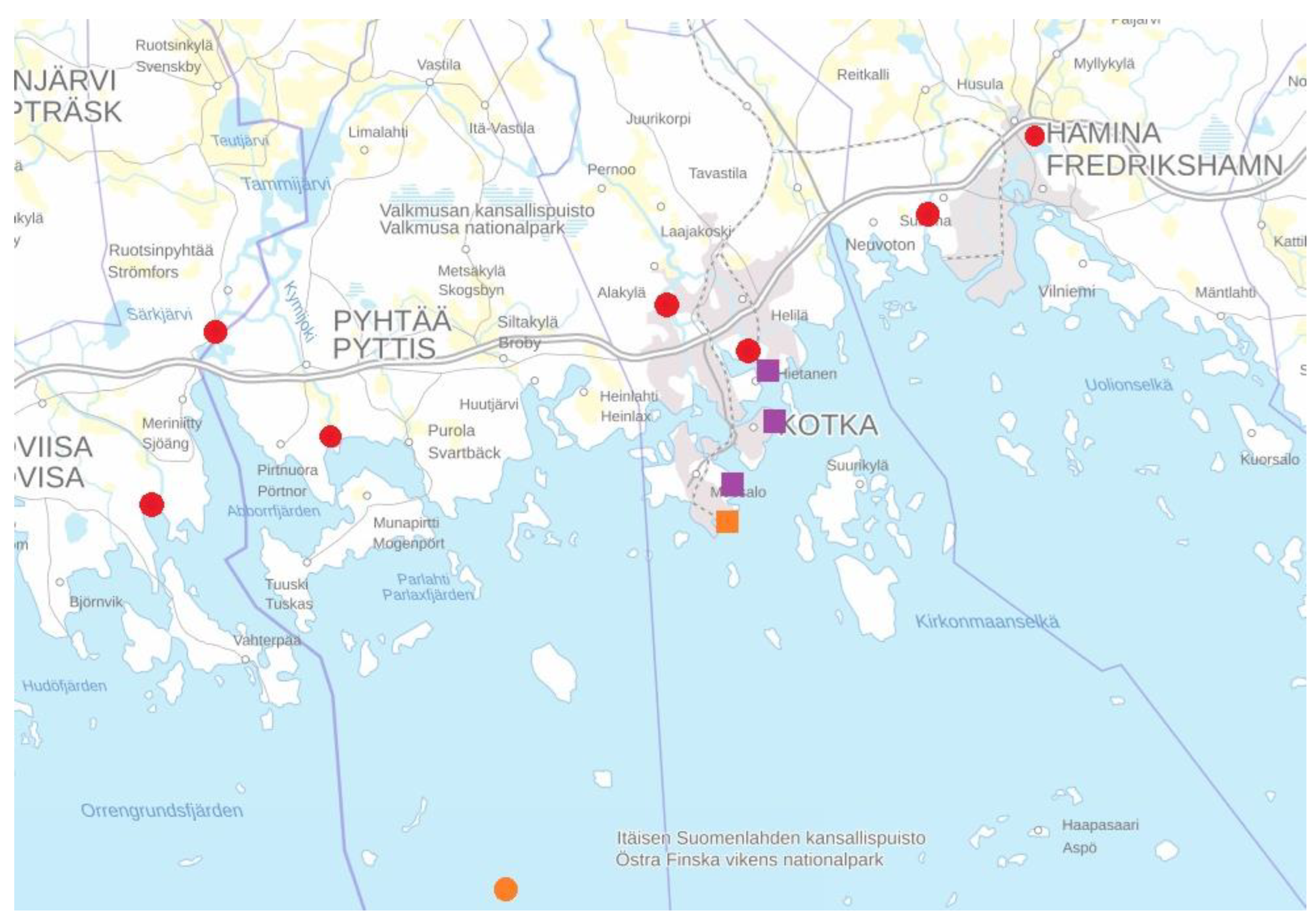
Figure 2.
Comparison of the Nitrogen discharge quantities.
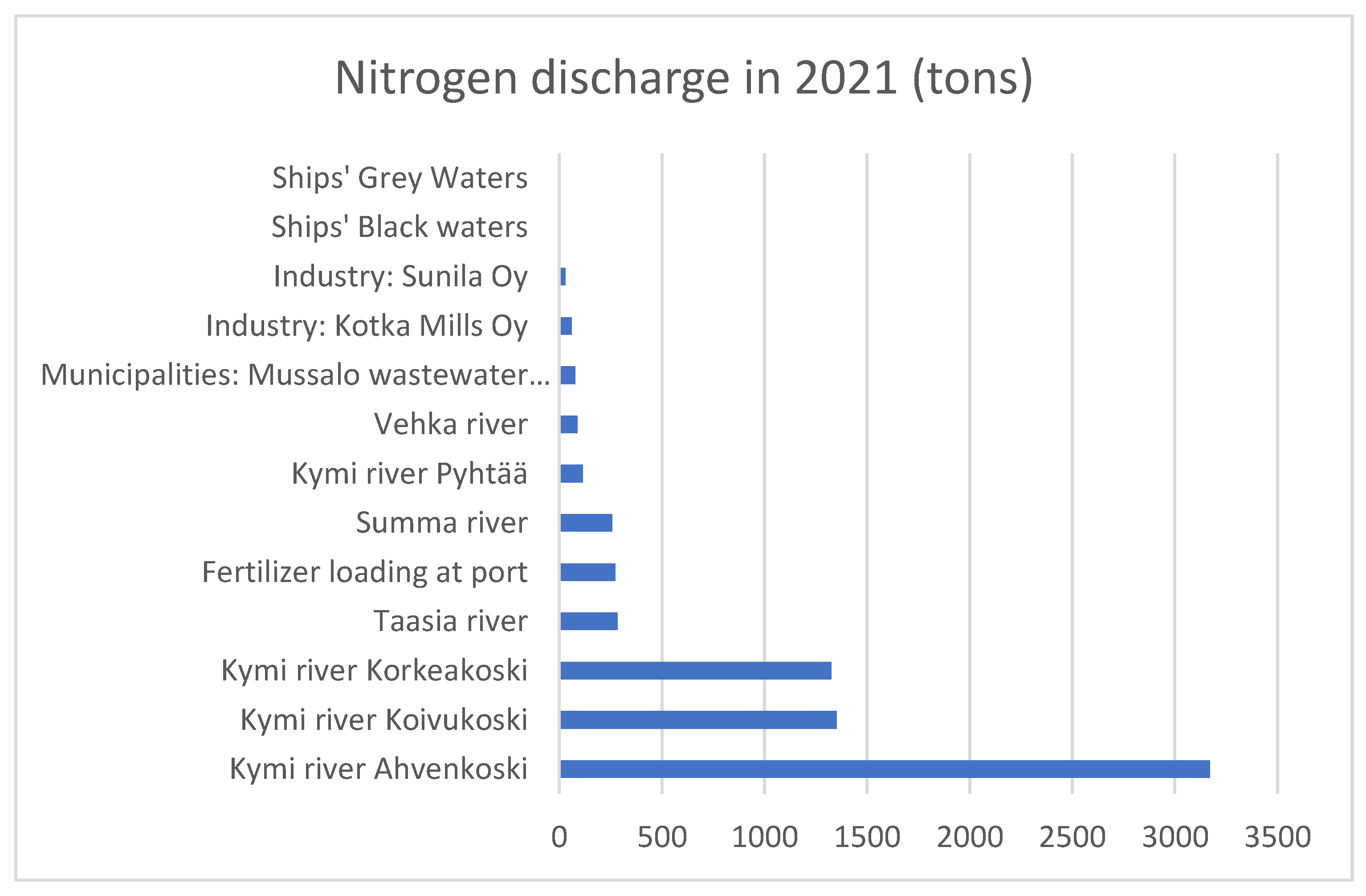
Figure 3.
Comparison of the phosphorus discharge quantities.
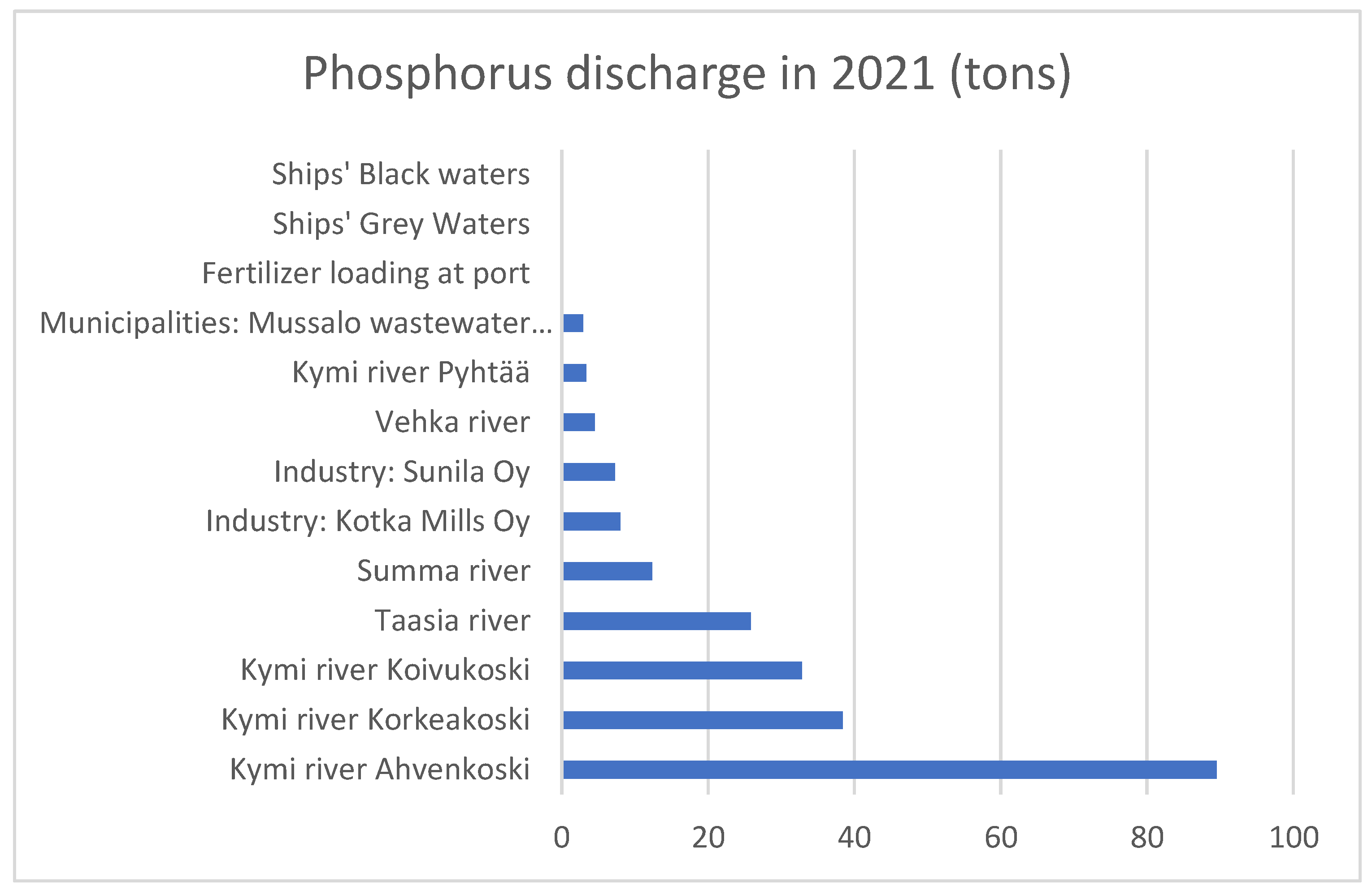
Figure 4.
Nitrogen input quantity compared to the regulatory level of each source.
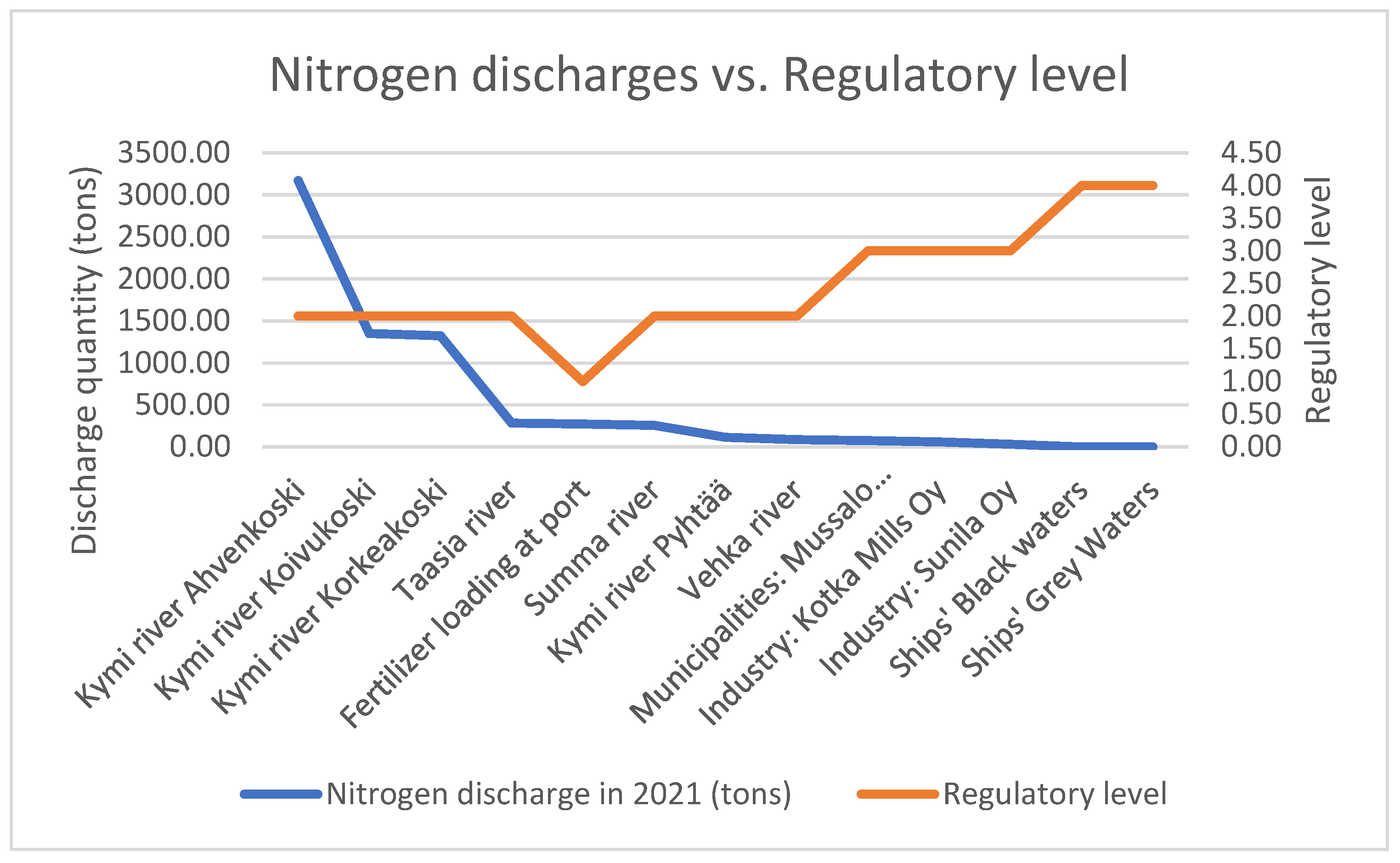
Figure 5.
Phosphorus input quantity compared to the regulatory level of each source.
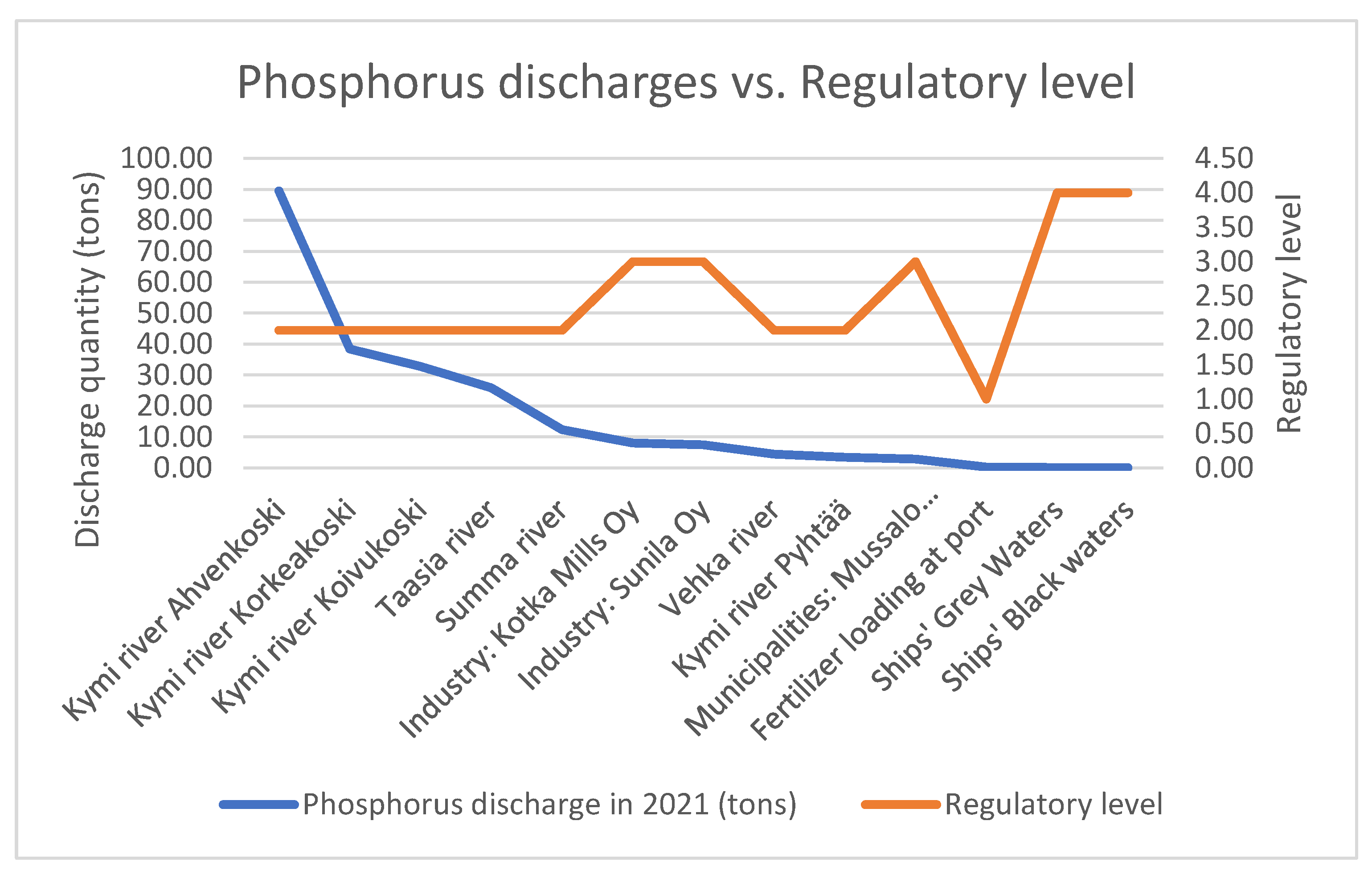
Figure 6.
Nitrogen input from point sources compared to how strictly they are controlled.
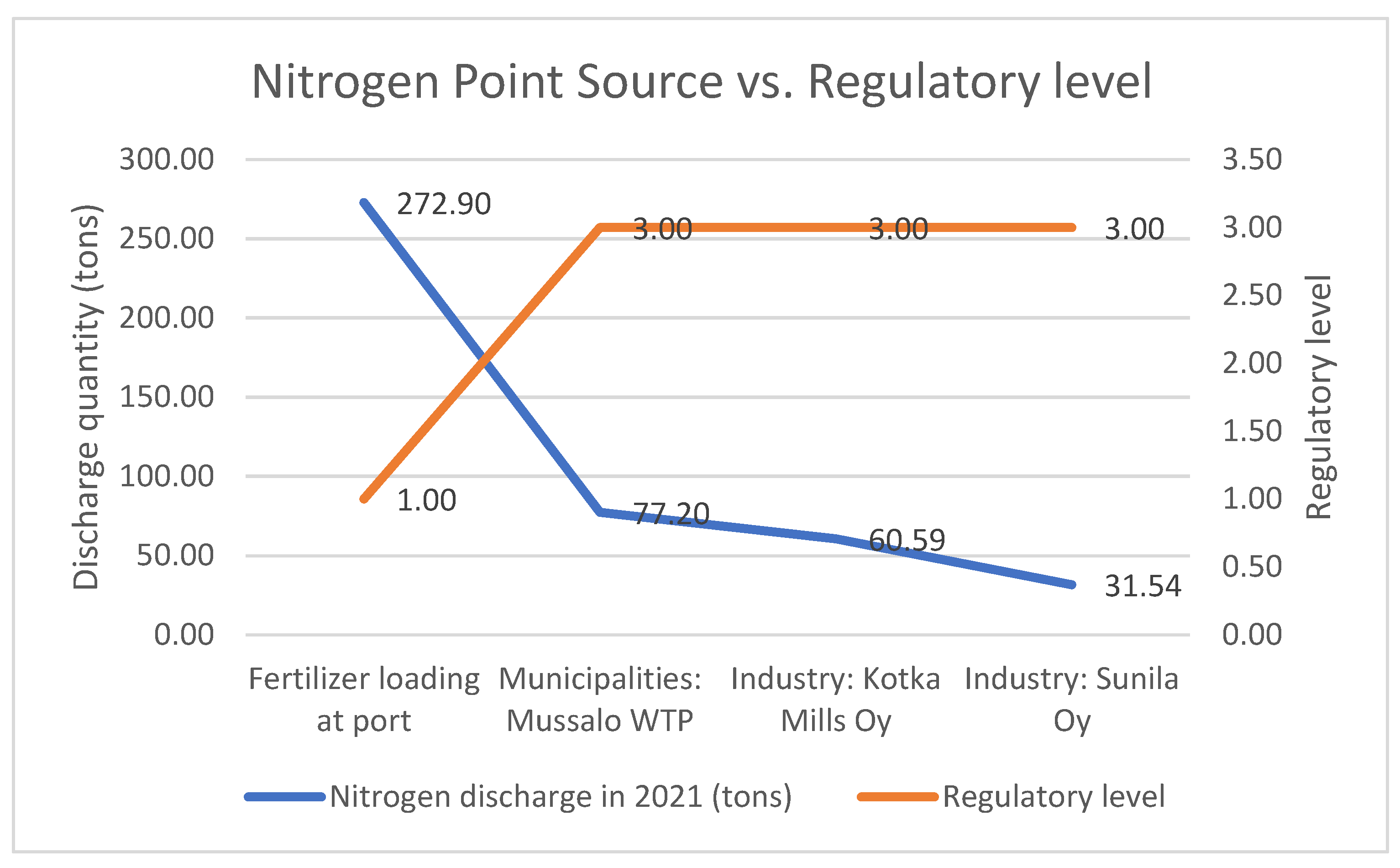
Figure 7.
Phosphorus input from point sources compared to how strictly they are controlled.
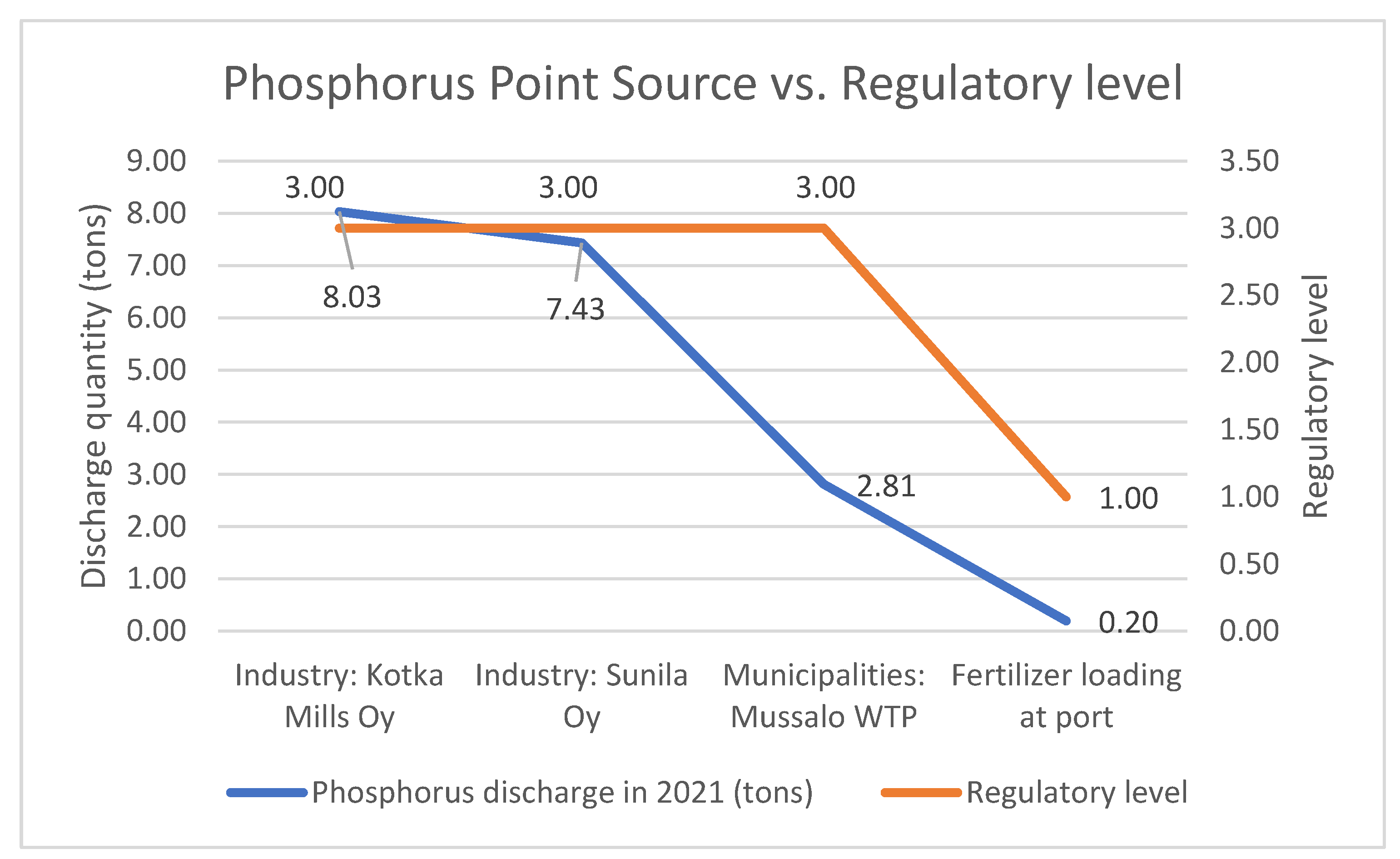

Table 1.
Qualitative regulatory classification scale.
| Regulatory Level | Criteria |
| 0 | No restrictions |
| 1 | No numerical discharge limits Monitoring and mitigation requirements |
| 2 | Numerical discharge or input limits by regulations in general Monitoring and mitigation requirements |
| 3 | Specific numerical discharge limits by environmental permits Monitoring and mitigation requirements |
| 4 | Discharge prohibited |
Table 2.
Nitrogen and phosphorus discharges in Hamina-Kotka-Pyhtää coastal area in 2021.
| Nitrogen source | Nitrogen (tons) | Point source | Phosphorus source | Phosphorus (tons) | Point source |
| Kymi River Ahvenkoski | 3171,03 | no | Kymi River Ahvenkoski | 89,49 | no |
| Kymi River Koivukoski | 1352,25 | no | Kymi River Korkeakoski | 38,45 | no |
| Kymi River Korkeakoski | 1325,21 | no | Kymi River Koivukoski | 32,83 | no |
| Taasia River | 283,97 | no | Taasia River | 25,86 | no |
| Fertilizer loading at port | 272,90 | yes | Summa River | 12,37 | no |
| Summa River | 256,93 | no | Industry: Kotkamills | 8,03 | yes |
| Kymi River Pyhtää | 114,94 | no | Industry: Sunilan Puhdistamo | 7,43 | yes |
| Vehka River | 87,90 | no | Vehka River | 4,50 | no |
| Municipalities: WWTP | 77,20 | yes | Kymi River Pyhtää | 3,37 | no |
| Industry: Kotkamills Oy | 60,59 | yes | Municipalities: WWTP | 2,81 | yes |
| Industry: Sunilan Puhdistamo | 31,54 | yes | Fertilizer loading at port | 0,20 | yes |
| Ships' Black waters | 0,61 | no | Ships' Grey Waters | 0,07 | no |
| Ships' Grey Waters | 0,17 | no | Ships' Black waters | 0,06 | no |
| Total Nitrogen load | 7035,24 | Total Phosphorus load | 225,45 |
Table 3.
Regulatory mapping of major nutrient source categories in the study area.
| Source group | Source category | Examples in this study | Main regulatory instruments | Regulatory level (0-4) |
|
Land-based sources |
Riverine and diffuse catchment inputs including point sources via rivers |
Kymi River branches; Taasia, Summa and Vehka Rivers | EU Water Framework Directive programmes of measures; Nitrates Directive; national agri-environmental regulations, environmental permits for industrial facilities along the river with numeric nitrogen and phosphorus discharge limits |
2 |
|
Municipal point sources |
Mussalo wastewater treatment plant | Environmental permit with numeric nitrogen and phosphorus discharge limits; monitoring and reporting obligations |
3 |
|
|
Industrial point sources |
Kotkamills Oy; Sunilan puhdistamo Oy | Environmental permit with numeric nitrogen and phosphorus discharge limits; monitoring and reporting obligations |
3 |
|
| Maritime and port-related sources | Port cargo handling | Fertilizer loading terminals; contaminated stormwater |
Environmental permits for port and terminal operations; operational requirements (generally without numeric nutrient limits) |
1 |
| Ship sewage (blackwater) | Cargo vessel sewage |
MARPOL Annex IV; national prohibition of sewage discharge in Finnish territorial waters |
4 |
|
| Ship greywater | Cargo vessel greywater |
(greywater not regulated under MARPOL Annex IV); national prohibition in Finnish territorial waters from 2030 |
4 |
|
Disclaimer/Publisher’s Note: The statements, opinions and data contained in all publications are solely those of the individual author(s) and contributor(s) and not of MDPI and/or the editor(s). MDPI and/or the editor(s) disclaim responsibility for any injury to people or property resulting from any ideas, methods, instructions or products referred to in the content. |
© 2026 by the authors. Licensee MDPI, Basel, Switzerland. This article is an open access article distributed under the terms and conditions of the Creative Commons Attribution (CC BY) license (http://creativecommons.org/licenses/by/4.0/).
Copyright: This open access article is published under a Creative Commons CC BY 4.0 license, which permit the free download, distribution, and reuse, provided that the author and preprint are cited in any reuse.


