

Submitted:
12 March 2026
Posted:
18 March 2026
You are already at the latest version
Abstract
Plant species in secondary forests can significantly influence soil nutrients. We assessed how soil micronutrients (B, Fe, Cu, Zn, Mn) and Al were affected by plant species in secondary forests at Masako Forest Reserve. Soil samples were collected in June 2022 and 2023 at three depths: 0–10 cm, 10-20 and 20-30 cm along five plant species. A com-pletely randomized design was used with 3 soil depths (SD) x 5 plant species (PS) replicated 4 times. Soil samples were air-dried, sieved 2 mm and sent to Brookside Laboratories (OH, USA) for analyses. Results showed that in 2022, Mn (p=0.0014) and Al (p=0.0216) were significantly affected by SD. Mn (18.30 mg/kg) concentrations were higher in 0-10 cm while Al (443.80 mg/kg) was concentrated in 20-30 cm depth. Boron, Fe, Mn, Zn and Al were all significantly affected by PS (p< 0.01). The soil under Musanga cercopoides had the highest concentrations of Mn, Cu (in magnitude), Zn and lowest in Al. Boron (0.50 mg/kg) and Fe (215.67 mg/kg) were highest in soils under Tricula Africana. As in 2022, Mn (p=0.0166) was also significantly affected by SD in 2023 with its highest concentration (5.45 mg/kg) in 0-10 cm. As for 2022, the soil under Tricula Africana had significantly higher concentrations of Fe (192.67 mg/kg) and Zinc (27.76 mg/kg). The 0-10 cm layer seems to significantly hold more nutrients as compared to deeper soil layers. Triculia africana seems to play a significant role in micronutrients cycling at Masaka Forest Reserve.
Keywords:
micronutrients
; secondary forest
; plant species
; soil properties
; Congo
1. Introduction
In tropical Africa, deforestation is largely characterized by the clearing of primary forests, driven primarily by expanding subsistence agriculture, shifting cultivation, and commercial logging [1,2]. These activities often involve slash-and-burn techniques to create farmland, destroy mature, biodiverse ecosystems, leading to high rates of permanent, irreversible forest loss [3,4]. The Congo Basin, in particular, is experiencing significant primary forest loss due to smallholder agriculture, charcoal production and increasingly, commercial farming [5]. Deforestation significantly decreases soil micronutrients and overall fertility by disrupting nutrient cycling, increasing erosion, and reducing organic matter [6]. The removal of tree cover exposes soil to sun and rain, leading to topsoil loss, reduced microbial activity, and accelerated leaching of essential elements [7]. There are, however, secondary forests that can replace primary forests following deforestation, agricultural abandonment, or logging, comprising roughly half of all remaining tropical forests [8]. ITTO [9] suggested that secondary forests represent roughly 60% of the area now defined as tropical forests. These regenerating ecosystems often grow on abandoned cropland, functioning as vital carbon sinks and providing biodiversity buffers, although they differ in structure and species composition from primary forests [10]. It has been suggested that secondary forest regeneration can significantly contribute nutrients to the level of primary forests, primarily by recovering soil nutrient pools, increasing carbon sequestration, and improving ecosystem functionality over time [11]. As secondary forests age, they restore soil health and biomass, often reaching levels similar to undisturbed forests within 15 to 50 years [12]. While it is agreed that secondary tropical forests can recover similar levels of soil nutrients and carbon to primary forests, authors do not all agree on the specific time for this to occur [13]. Lamb [14] suggested that 15 to 40 years of regeneration is enough for a secondary forest to equate a primary forest. Holz et al [15] studied the effects of history of use on secondary forest regeneration in the Upper Parana Atlantic Forest and were no longer able to differentiate the primary and secondary forests structurally or floristically after 20 years of succession. Brown and Lugo [16] reported that more organic matter is produced and transferred to the soil in younger secondary forests than is stored in above-ground vegetation. The impact of this on soil organic matter is significant and explains why the recovery of organic matter in the soil under secondary forests is relatively fast (50 yr or so). Jones et al [17] compared their estimates to published data from younger and older secondary forests in the surrounding landscape and showed that soil carbon recovers within 40 years of forest regeneration, but above-ground biomass carbon stocks continue to increase past 100 years. In secondary tropical forests, plant species exert significant, often species-specific, effects on soil nutrients, including the availability of boron (B), iron (Fe), copper (Cu), zinc (Zn), manganese (Mn), and aluminum (Al). These effects are primarily driven by differences in litter decomposition rates, root exudates, nutrient uptake strategies and, crucially, the ability to alter soil pH. Hobbie [18] reported that the rate of nutrient cycling, particularly of B, Fe, Cu, and Zn, is heavily influenced by the chemical composition of leaf litter. Ma et al [19] suggested that differences in fine-root growth and associated microorganisms (e.g., mycorrhizal fungi) affect soil carbon, nutrient retention, and the transformation of P and metallic elements. Higher tree diversity in secondary forests is generally associated with increased soil fertility, often linked to higher nutrient uptake and return through litterfall [20]. Research also shows that soil Cu, Zn, Fe, and B concentrations often increase, while soil pH decreases (acidifies) with increasing forest age in secondary succession [21]. Finally, past studies on the effect of plant species on soil nutrients, specifically micronutrients (B, Fe, Cu, Zn, Mn) and aluminum (Al) in tropical forests, often focused on how different functional groups (e.g., nitrogen-fixing vs. non-fixing trees) modify soil properties, particularly during secondary succession [22]. Finally, research on the effect of plant species on soil nutrients, specifically micronutrients (Boron, Iron, Copper, Zinc, Manganese) and Aluminum (Al) in the Masako Forest Reserve is inexistant as most work is primarily focused on soil carbon dioxide emissions, nutrient cycling, and physical properties in relation to vegetation types [23]. The objective of this study was therefore to assess how soil micronutrients fluctuate in secondary forests at Masako Forest Reserve, Kisangani, Democratic Republic of Congo
2. Materials and Methods
2.1. Area of Study
This study was conducted from June 2022 at Masako Forest Reserve, Kisangani, Democratic Republic of Congo (Figure 1). The geographic coordinates of Masako Forest Reserve are 0°36′N and 25°13′E. Masako Forest Reserve contains a tropical evergreen rainforest ecosystem defined by heavy thick vegetation [24] Masako Forest within the Congo Basin stands out because this location maintains over 10,000 plant species among its endemic flora. The Masako Forest Reserve started under Ministry of Environment administration until the University of Kisangani officially transformed it into its field research station. The change in management has established new opportunities to undertake ecology studies and monitor the environment along with protecting biodiversity and various other essential areas of work. The reserve receives worldwide recognition as a biodiversity hotspot of the DRC since it contains various endemic species found within its flora and fauna [25]. The study was conducted in agricultural fields, one of the four habitats in this reserve. The other being a fallow forest (FW), secondary forest (SF), and a primary forest (PF). Agricultural fields at Masako Forest Reserve are primarily created through slash-and-burn, causing significant deforestation. These fields often feature a mix of staple crops such as cassava, corn, plantain bananas, and groundnuts, and have led to the fragmentation of natural habitats. The conversion of forest to agricultural land is rapid, with reports suggesting high rates of habitat degradation. The area is experiencing climate-related issues, such as increased temperatures and erratic rainfall, which have negatively affected agricultural productivity and reduced the availability of water. This study was conducted in remnant secondary forests. Plant species of interest were: Entandrophragma utile, Hevea brasiliensis, Miletia laurentii, Musanga cercopoides, Triculia Africana
2.2. Measurement of Soil Nutrients
Soil samples were taken systematically in each secondary forest plot to analyze soil chemical properties and nutrients. Samples were collected at 0–10 cm, 10–20 cm and 20–30 cm, then air dried, sieved 2 mm then transferred into pre-labeled packets (30 × 30 cm each) aluminum-foil packet containing approximately 20 g of the soil. A composite soil sample was collected for each depth of every sampling site. The samples were later shipped to Brookside Laboratory (OH, USA) for analysis of soil micronutrients: Copper (Cu), iron (Fe), boron (B), manganese (Mn), zinc (Zn) and aluminum (Al). Other soil nutrients as well as soil chemical properties were also analyzed to assess the fertility and general nutrient status of the soil, but they are not included in this report.
3. Results and Discussion
3.1. Descriptive Statistics for the Effect of Plant Species on Soil Micronutrients
3.1.1. Entandrophragma utile
Table 1 presents descriptive statistics results for soil micronutrients and aluminum concentrations in soils occupied by Entandrophragma utile in the secondary forest plots during the 2022 sampling season. Entandrophragma utile, called the sipo or utile, is a species of large tree in the genus Entandrophragma, native to nearly all of tropical Africa facing the Atlantic, from Guinea to Angola, and as far east as Uganda [26]. The stem and bark of Entandrophragma utile (Meliaceae) are used traditionally for treatment of rheumatism, eye inflammation, sickle cell disease, gastric and duodenal ulcers in Nigeria [26]. Table 1 data illustrates a unique soil chemical profile, shaped by the litter input and nutrient cycling dynamics characteristic of this particular tree species. Boron had a mean of 0.39 mg/kg, which is relatively moderate compared to other forest plots in the study. The coefficient of variation (24%) indicates that boron distribution under Entandrophragma utile was fairly uniform across the sampled points. This stability could reflect the consistent release of B through leaf litter decomposition from the species' foliage, maintaining steady soil availability. Iron (Fe) had a mean value of 182.75 mg/kg and a notably high coefficient of variation (112%), suggesting a strong spatial heterogeneity in its distribution. Similar observation was also reported by Ramzan et al [27]. Such variation is often the result of micro topographical differences, water drainage patterns, and organic matter decomposition rates, all of which are sensitive to localized soil moisture and oxygenation conditions, especially under closed-canopy forest conditions [28]. Manganese (Mn) concentrations were relatively low, with a mean of 0.76 mg/kg, and displayed an extremely low variation (CV = 0.01%), suggesting relatively stable manganese levels throughout the sampling plots. This might indicate the influence of Entandrophragma utile on soil redox balance, limiting manganese solubilization and mobilization [29]. Copper presented a mean concentration of 0.46 mg/kg with moderate variation (27%). Given copper’s strong binding affinity to organic matter, this result likely reflects the active organic turnover from Entandrophragma utile's litterfall and root exudates. The range from 0.42 mg/kg to 0.52 mg/kg is relatively narrow, which suggests Cu distribution is biologically regulated under this vegetation type. Zinc levels were strikingly low, with a mean of just 0.07 mg/kg. However, the coefficient of variation (0.01%) points to a very even distribution across the sampling sites. The low availability of zinc could be attributed to strong adsorption onto soil mineral surfaces or uptake by plant roots, both common in tropical secondary forests [30]. Aluminum exhibited a mean of 400.75 mg/kg, which was lower than the values observed in primary forest plots but still substantial, underlining the natural acid soil conditions of the Masako Forest Reserve. The coefficient of variation (297%) suggests high variability, which could stem from the influence of soil pH, organic acid exudation from tree roots, or micro-site topography. The skewness values indicate some asymmetry in the distribution of certain micronutrients. For example, manganese (Mn) showed a strongly positive skew (2.31), implying the presence of a few hotspots with significantly elevated concentrations compared to the average. Similarly, zinc exhibited an extremely high skewness (7.09), which suggests that most samples had very low Zn concentrations, with a few isolated points showing much higher levels, likely linked to localized organic matter accumulation or mineral inputs. In contrast, copper and aluminum both displayed negative skewness (-1.14 and -1.09, respectively), pointing to the majority of values clustering on the higher side of the range, with few lower outliers. This could be explained by the biogeochemical interactions between organic matter and metal ions in this forest soil environment. Overall, the soil beneath Entandrophragma utile reflects a distinct nutrient signature shaped by the plant’s ecological traits and its impact on soil chemical cycling, underlining the importance of species-specific interactions in secondary forest ecosystems [31]
3.1.2. Hevea brasiliensis
Table 2 summarizes the distribution of soil micronutrients under the canopy of Hevea brasiliensis within the secondary forest plots, offering insight on this plant species' influence on soil micronutrients in the 2022 growing season. Hevea brasiliensis, the Pará rubber tree, sharinga tree, seringueira, or, most commonly, rubber tree or rubber plant, is a flowering plant belonging to the spurge family, Euphorbiaceae. It is originally native to the Amazon basin, but is now pantropical in distribution due to introductions [32]. The soil under this tree had a mean boron content of 0.21 mg/kg, suggesting that soils under Hevea brasiliensis maintained moderate boron levels. The coefficient of variation of 61.19% reflects noticeable spatial variability, which could be attributed to differences in leaf litter deposition, root activity, and microenvironmental conditions influencing boron availability. Iron concentrations averaged 133.75 mg/kg, accompanied by a relatively low CV of 14.25%, highlighting a more uniform distribution across the sampling locations. The narrow range between the minimum (102.00 mg/kg) and maximum (163.00 mg/kg) suggests that the Fe status was not heavily influenced by site heterogeneity, possibly stabilized by steady organic matter turnover or consistent soil parent material composition beneath this species. Manganese exhibited a low mean concentration of 0.59 mg/kg but showed significant variability (CV = 168.13%), suggesting that while Mn is generally scarce under Hevea brasiliensis, isolated pockets exist with elevated levels [33]. Manganese exhibited a low mean concentration of 0.59 mg/kg but showed significant variability (CV = 168.13%), suggesting that while Mn is generally scarce under Hevea brasiliensis, isolated pockets exist with elevated levels [33]. The skewness (1.50) confirms the presence of such high-value outliers, which may result from localized redox fluctuations or micro-variations in organic matter decomposition. Copper had a mean concentration of 0.45 mg/kg, with moderate variability (CV = 51.72%). This variation could be explained by differing degrees of litter decomposition and root uptake, as copper mobility is strongly affected by organic complexation and pH changes in the soil microenvironment [34]. Zinc had an exceptionally low and consistent concentration of 0.01 mg/kg across all observations, as demonstrated by the zero coefficient of variation (CV = 0.00%). This result suggests that Zn availability in soils under Hevea brasiliensis is uniformly limited, possibly constrained by strong soil adsorption mechanisms or plant uptake efficiency [35]. Aluminum had a mean concentration of 411.25 mg/kg, with relatively low variability (CV = 16.43%). This uniformity may reflect the strongly acidic nature of the soils in the Masako Forest Reserve, as aluminum becomes more soluble and mobile in such environments, particularly in the absence of significant pH-buffering organic matter inputs [22]. The distribution shapes for several nutrients are further supported by the skewness and kurtosis values. For instance, the slightly negative skewness for Boron (-0.74) and Aluminum (-0.57) suggests that the majority of the samples clustered toward higher values, while a few samples reported lower concentrations. Conversely, Manganese showed positive skewness (1.50), highlighting the presence of relatively few high Mn concentrations across the plots. Overall, the data indicate that Hevea brasiliensis, an introduced species often used in agroforestry systems, seems to maintain relatively stable micronutrient dynamics in terms of iron, copper, and aluminum, while zinc availability remains particularly constrained in its understory soil. This observation underscores the complex interplay between plant species, soil chemistry, and nutrient cycling in secondary forests, and highlights the importance of considering species-specific litter inputs and root interactions when assessing soil fertility and forest restoration potential [31].
3.1.3. Miletia laurentii
Millettia laurentii is a legume tree from Africa and is native to the Republic of Congo, the Democratic Republic of Congo, Cameroon, Gabon and Equatorial Guinea. The species is listed as "endangered" in the IUCN Red List, principally due to the destruction of its habitat and over-exploitation for timber [36]. Table 3 presents the descriptive statistics for soil micronutrient concentrations in soils under Miletia laurenti in the secondary forest. The data shows that boron levels recorded a mean of 0.41 mg/kg, reflecting relatively high availability compared to other species in the same forest type. The coefficient of variation was 29.48%, suggesting moderate variability in boron distribution across the sampling plots. This could be attributed to Miletia laurentii’s capacity to improve nutrient cycling through organic matter contribution from leaf litter and nitrogen-fixation ability that influence micronutrient dynamics in the rhizosphere [37]. Iron concentrations averaged 210.00 mg/kg, indicating robust presence and potentially favorable conditions for root respiration and enzymatic activities [37]. The variability (CV = 21.29%) was relatively low, suggesting consistent iron distribution. This may result from the stabilization of iron through organic matter chelation or uniform weathering of iron-bearing minerals in soils under Miletia laurentii stands [38]. Manganese, on the other hand, exhibited a mean of 1.50 mg/kg, but showed a high variability (CV = 114.89%), indicating considerable spatial heterogeneity. Such fluctuations may arise due to redox-sensitive solubility of manganese in tropical soils, which could be amplified by differences in drainage or organic input across micro-sites [39]. Copper had a mean concentration of 0.53 mg/kg, with a relatively high CV (58.42%), highlighting variability in copper distribution. Copper dynamics are closely linked to soil organic matter content and microbial activity, both of which can vary significantly across even small spatial scales, particularly under heterogeneous canopy structures like those of Miletia laurentii. Zinc was extremely low on average (0.09 mg/kg), and displayed the highest variability (CV = 308.96%) among all micronutrients measured. This suggests that zinc availability is highly uneven. The high skewness (3.02) and kurtosis (7.09) further confirm the presence of extreme outliers, where a few locations had significantly elevated Zn levels while the rest remained deficient. Aluminum was present at a mean concentration of 462.83 mg/kg, indicating acidic soil conditions typical of humid tropical forests [40]. The moderate variation (CV = 29.36%) and skewness (0.80) suggest that although aluminum levels were generally consistent, certain locations exhibited higher-than-average concentrations. Elevated aluminum levels in the rooting zone could potentially limit nutrient uptake due to toxicity, though Miletia laurentii may exert some resistance through root exudates or association with tolerant mycorrhizal fungi [40]. Additional hints on the micronutrients distributions may be found in their skewness and kurtosis scores. For example, Zn showed significant right-skewness, highlighting the irregular occurrence of larger concentrations, whereas Cu, Mn, and Zn all showed positive skewness. Zones of litter buildup or site-specific microbial mechanisms that promote solubilization might be the cause of this. In summary, the data from Miletia laurentii plots reflected a nutrient environment shaped by dynamic biological inputs and moderate-to-high spatial heterogeneity, particularly in trace metals like Mn and Zn. The leguminous nature of Miletia laurentii and its litter quality may contribute to improved micronutrient cycling, although localized limitations in Zn and Mn warrant further investigation in relation to plant productivity and ecosystem functioning.
3.1.4. Musanga cercopoides
Musanga cecropioides, the African corkwood tree or umbrella tree, is found in tropical Africa from Sierra Leone south to Angola and east to Uganda. It is typical in secondary forests. This tree is also known as parasolier, n'govoge, govwi, doe, kombo-kombo, musanga, and musanda [41]. Table 4 presents the summary of statistics of micronutrients in soils under Musanga cercopoides. The data illustrates significant variability in nutrient dynamics, reflecting the influence of Musanga cercopoides ecological characteristics on soil chemistry. From the results, boron was present at a relatively low mean concentration of 0.12 mg/kg, with a high coefficient of variation (CV = 117.86%), indicating considerable spatial heterogeneity. The minimum value (0.01 mg/kg) and maximum (0.35 mg/kg), along with high skewness (0.57), suggest that while most areas recorded low B levels, a few hotspots contained elevated concentrations. This pattern may be influenced by localized litter deposition or variable uptake by Musanga cercopoides, which is known for fast growth and substantial biomass turnover [42]. Iron (Fe) averaged 114.50 mg/kg and showed moderate stability across samples (CV = 19.04%). The narrow spread in iron values (79.00–142.00 mg/kg) reflects consistent availability in the rooting zone, which is vital for enzymatic activity and chlorophyll synthesis. Despite moderate skewness (-0.41), the negative value hints at a slightly left-skewed distribution, implying the majority of plots had Fe levels above the mean. Manganese showed high concentrations with a mean of 40.08 mg/kg but also revealed substantial variability (CV = 98.47%). The distribution of values (ranging from 2.00 to 115.00 mg/kg) suggests that manganese cycling under Musanga cercopoides is influenced by localized redox conditions and microbial activity [29]. Although the data show a moderate skewness (0.45), the high standard deviation (39.47 mg/kg) and broad range suggest site-specific accumulation or depletion, possibly driven by variations in moisture or organic content. Copper had a mean of 0.66 mg/kg, with values ranging from 0.01 to 1.42 mg/kg. The relatively high variability (CV = 61.06%) and skewness (0.33) indicate that copper availability is moderately inconsistent under Musanga cercopoides. Since Cu is tightly bound to organic matter [43], the differences in litterfall and decomposition rates may contribute to spatial fluctuations in Cu concentrations. Zinc exhibited an unusually high mean of 4.99 mg/kg—substantially higher than other plant species studied. However, the CV was also very high (164.56%), and the standard deviation (8.21 mg/kg) indicates extreme variability. The maximum value (24.31 mg/kg) and skewness (1.57) suggest that certain microsites beneath Musanga cercopoides significantly enrich Zn, perhaps due to site-specific organic inputs, rhizosphere interactions, or historical enrichment from surrounding vegetation. This variability points to complex Zn dynamics in these soils [44]. Aluminum levels averaged 294.33 mg/kg, with a moderate CV (38.11%). This suggests a relatively stable but not uniform distribution. The aluminum concentration range (100.00–495.00 mg/kg) is characteristic of acidic tropical soils, and although Musanga cercopoides can thrive under such conditions, elevated Al levels may influence the mobility of other nutrients and affect root growth.
Overall, Musanga cercopoides seems to influence the soil environment in ways that promote both enrichment and spatial heterogeneity of several micronutrients, particularly Zn and Mn. These patterns may reflect the species' ability to alter microclimates, organic inputs, and microbial activity beneath its canopy, further influencing nutrient availability and transformation.
3.1.5. Triculia africana
Treculia africana is a tree species in the genus Treculia which can be used as a food plant and for various other traditional uses [45]. The descriptive statistics for micronutrients in soils under Triculia africana in the secondary forest are presented in Table 5. The data shows that boron had a relatively high mean concentration of 0.50 mg/kg, the highest among all species studied in the secondary forest. This suggests a strong contribution of Triculia africana to boron accumulation in the soil, possibly due to its leaf litter quality and decomposition rate. The coefficient of variation (CV = 49.18%) indicates moderate variability, with values ranging from 0.01 to 0.84 mg/kg. The slight negative skewness (-0.29) suggests a distribution slightly biased toward higher values, supporting the inference of consistent B inputs under this species. Iron levels averaged 215.67 mg/kg, indicating a relatively enriched environment, comparable to values recorded under other forest species. The CV (33.48%) and standard deviation (72.21 mg/kg) show moderate variation. The skewness was minimal (0.02), pointing to a fairly symmetrical distribution of Fe in the soil. Iron availability is often linked to organic matter and redox conditions, both of which may be stabilized under the canopy of Triculia Africana [46]. Manganese concentrations were low (mean = 2.34 mg/kg), but highly variable (CV = 174.22%). The wide range (0.01–14.00 mg/kg), high skewness (2.20), and kurtosis (3.79) suggest a non-normal distribution, with extreme values in some plots. These data indicate that while Mn is generally low, there are pockets of significantly elevated concentrations, which may reflect fluctuating redox dynamics or site-specific litter inputs [29]. Copper showed a mean value of 0.44 mg/kg and a CV of 49.45%, suggesting moderate variability. The values were tightly clustered around the mean (0.01–0.83 mg/kg), and the distribution was nearly symmetrical (skewness = -0.05), implying consistent Cu levels in the soil. This stability may be influenced by Cu’s strong association with organic matter and minimal mobility under undisturbed forest conditions [43]. Zinc concentrations showed high variability despite a moderate mean (0.59 mg/kg). The CV was 153.22%, with values ranging from 0.01 to 2.39 mg/kg. High skewness (1.36) indicates the presence of outlier values in certain microhabitats. Zinc distribution is known to be influenced by organic matter and pH; hence, the variation could be linked to microsite differences in decomposition and soil acidity [30]. Aluminum, a key indicator of soil acidity and weathering, averaged 433.50 mg/kg. The CV (36.44%) and moderate skewness (0.67) suggest variability, but not extreme. The distribution of Al across the plots (205.00–714.00 mg/kg) suggests that Triculia africana influences Al dynamics, possibly through litter that contributes to soil acidification and mineral leaching [31]. In general, Triculia africana appears to contribute to the enrichment of several key soil micronutrients, especially boron and iron. However, the significant variability observed in Mn and Zn concentrations highlights the influence of site-specific factors, such as soil texture, moisture, and organic matter content. The species' dense canopy and litter quality may help regulate nutrient cycling, but the heterogeneous distribution underlines the complexity of soil-plant interactions in tropical secondary forests.
3.2. Analysis of Variance for the Effect of Soil Sampling Depth and Plant Species on Soil Micronutrients in the Secondary Forest in June 2022
Table 6 shows the Analysis of variance for the effect of soil sampling depth and plant species on soil micronutrients in the secondary forest in June 2022. Figure 2 shows the distribution of micronutrients in soils as affected by plant species. Soil depth (SD) only affected the distribution of Mn and Al. Manganese showed a highly significant difference across depths (p = 0.0014), with concentrations peaking at the surface layer (0–10 cm: 18.30 mg/kg) and declining sharply in subsurface layers (10–20 cm: 4.06 mg/kg; 20–30 cm: 4.81 mg/kg). This pattern is ecologically consistent with the known behavior of Mn, which accumulates in surface soils due to organic matter inputs, litter decomposition, and root exudates that enhance Mn solubility and bioavailability in the upper horizons [29]. Moreover, microbial oxidation and reduction processes, particularly in moist tropical soils, can lead to a concentration gradient favoring Mn retention in topsoil [33]. Aluminum concentrations also varied significantly by depth (p = 0.0216), with the highest levels found in the deepest layer (20–30 cm: 443.80 mg/kg). This aligns with previous findings suggesting that weathering and leaching in acidic tropical soils lead to Al accumulation in lower horizons, where lower pH and less organic matter inhibit Al complexation [32]. Such elevated Al levels in subsurface soils may pose constraints for root development, especially in sensitive crop or tree species, due to aluminum toxicity [40]. Although B, Fe, Cu, and Zn did not show statistically significant changes across depths, their slight fluctuations suggest underlying trends possibly masked by inter-sample variability. For instance, Fe concentrations decreased progressively with depth, from 177.55 mg/kg (0–10 cm) to 97.80 mg/kg (20–30 cm), likely reflecting its strong association with organic matter and redox-sensitive behavior in topsoil. The analysis also reveals that plant species (PS) were a major determinant of micronutrient concentrations, with significant effects observed on B (p = 0.0001), Fe (p = 0.0001), Mn (p = 0.0001), Zn (p = 0.0087), and Al (p = 0.0075). These results emphasize the role of vegetation in influencing soil chemistry through litter inputs, root turnover, canopy cover, and interactions with the microbial community [37]. Triculia africana exhibited the highest B and Fe concentrations (0.50 mg/kg and 215.67 mg/kg, respectively), suggesting it may be a nutrient-accumulating species that contributes significantly to micronutrient enrichment through leaf litter and root exudates. Its association with elevated Mn and Zn also points to its potential in rehabilitating nutrient-depleted soils [46]. Musanga cercopoides had a distinctive effect on Mn (40.08 mg/kg) and Zn (4.99 mg/kg), suggesting its organic residues are particularly rich in these nutrients or that it promotes conditions favorable for their mobilization. This could relate to rapid litter turnover and higher microbial biomass under Musanga cercopoides stands, enhancing the mineralization of these elements. Miletia laurentii and Entandrophragma utile showed moderate effects, particularly contributing to Cu and Fe dynamics. Their modulating capacity (in the case of legumes like Miletia laurentii) might have improved micronutrient mobilization and retention. Hevea brasiliensis, a non-native plantation species, showed the lowest values for most nutrients, which may reflect its lower contribution to nutrient cycling, possibly due to slow-decomposing litter or reduced microbial association in comparison to native species. These interspecific variations underscore the need to consider vegetation composition in forest soil management, especially for restoration programs aiming to enhance soil fertility naturally. There was a significant interaction between soil depth and plant species (SD × PS) for Mn (p = 0.0001), suggesting a synergistic relationship where the effect of one variable is dependent on the level of the other (Figure 3). The interaction shows that except for Entandrophragma utile which has similar level of Mn in 0-10 and 10-20 cm layer, all other plant species had their highest concentration of Mn in 0-10 cm surface layer. The soil under Hevea brasiliensis had exceptionally higher concentrations of this micronutrient. For the other nutrients, the lack of significant interaction suggests that their availability is driven more independently by either species or depth, without strong synergistic effects between the two [31].
3.3. Analysis of Variance for the Effect of Soil Sampling Depth and Plant Species on Soil Micronutrients in the Secondary Forest in June 2023
Table 7 presents the results of the analysis of variance for the effect of soil sampling depth and plant species on soil micronutrients in the secondary forest in June 2023. In 2023, only Mn exhibited a statistically significant response to variation in depth (p = 0.0166). The highest concentration of Mn was observed in the topsoil layer (0–10 cm), averaging 5.45 mg/kg, while substantially lower values were recorded at both 10–20 cm (1.70 mg/kg) and 20–30 cm (1.35 mg/kg). This pattern clearly illustrates that manganese availability is largely concentrated in the surface layer, likely due to enhanced microbial activity, higher organic matter content, and redox-sensitive solubility that favors its accumulation near the surface [33]. Although other nutrients such as Zinc (Zn) and Copper (Cu) also showed some numerical variation with depth, their differences were not statistically significant (p = 0.2609 and p = 0.4916, respectively). For instance, Zn decreased slightly from 1.56 mg/kg in the top layer to 0.96 mg/kg and 0.76 mg/kg in the lower layers, while Cu increased slightly with depth, suggesting different cycling behaviors. Similarly, Boron, Iron, and Aluminum did not show any significant differences with soil depth, indicating a relatively uniform vertical distribution of these nutrients in the secondary forest profile. This may be attributed to factors such as slower leaching, chemical stabilization by organic matter, or limited biological redistribution. In contrast, plant species (PS) had a more pronounced influence on certain micronutrients. Statistically significant differences were observed for both Fe and Zn, with p-values of 0.003 and 0.0037, respectively. For iron, Millettia laurentii recorded the highest mean concentration at 199.25 mg/kg, followed closely by Treculia africana and Musanga cercopoides (192.67 and 188.33 mg/kg, respectively). In contrast, Entandrophragma utile and Hevea brasiliensis had significantly lower Fe concentrations, indicating that these latter species may contribute less to iron enrichment or mobilization in the soil. The higher Fe under Millettia laurentii and Treculia may result from differences in litter quality, microbial association, or root exudates that enhance Fe solubility. Regarding Zinc, Treculia africana was clearly distinct, with a mean Zn concentration of 2.76 mg/kg—more than double that of the next closest species (Musanga cercopoides, 1.10 mg/kg). The other three species, including Hevea, Millettia, and Entandrophragma, had considerably lower Zn levels (ranging from 0.40 to 0.76 mg/kg). This substantial difference suggests that Tricula. africana may play a disproportionately important role in enhancing Zn availability in forest soils, potentially through its litter input, root-microbe interactions, or nutrient release patterns during decomposition [31]. Although the other nutrients—Boron, Manganese, Copper, and Aluminum—did not show statistically significant variation among species, the numerical patterns still offer important ecological insights. Treculia africana, for instance, consistently exhibited the highest mean values for Boron and Manganese, suggesting that it may foster microenvironments enriched in these elements, even if variation among species was not strong enough to be statistically conclusive. On the other hand, Hevea brasiliensis consistently appeared on the lower end of the spectrum for multiple nutrients, particularly for Fe, Mn, and Zn. This aligns with the understanding that exotic or plantation species like Hevea may exert a relatively weaker influence on micronutrient cycling compared to native forest species. Lastly, the interaction effects between soil depth and plant species were not statistically significant for any of the micronutrients. The absence of significant interactions reinforces the notion that species and depth contribute separately to the observed patterns in micronutrient distribution.
4. Conclusions
This study revealed that most micronutrients in secondary forests at Masako Forest Reserve are concentrated in the topsoil (0-10 cm) across all species. Plant species such as Treculia africana, Millettia laurentii and Musanga cercopoides play active roles in enhancing micronutrients in soil in which they grow, this especially for iron and zinc distributions. The fluctuations on the effect plant species on soil micronutrients underline the complexity of nutrient cycling in secondary forests where both vertical stratification and species-specific processes shape the spatial distribution of essential soil micronutrients.
Author Contributions
Conceptualization, D.A.M., N.V.N. and M.L.F.M.; methodology, D.A.M., N.V.N. and M.L.F.M.; validation, N.V.N. and M.L.F.M; formal analysis, D.A.M., investigation, D.A.M., N.V.N.; resources, N.V.N..; writing—original draft preparation, D.A.M; writing—review and editing, N.V.N. and M.L.F.M. ; supervision, N.V.N. and M.L.F.M.; project administration, N.V.N. and M.L.F.M.; Funding acquisition, N.V.N. All authors have read and agreed to the published version of the manuscript.
Funding
This research was funded by NATIONAL GEOGRAPHIC SOCIETY, Grant EC-98585R-23.
Data Availability Statement
The raw data supporting the conclusions of this article will be made available by the authors on request.
Conflicts of Interest
The authors declare no conflicts of interest.
References
- Ordway, E.M.; Asner, G.P.; Lambin, E.F. Deforestation risk due to commodity crop expansion in sub-Saharan Africa. Environmental Research Letters 2017, 12, 044015. [Google Scholar] [CrossRef]
- Aleman, J.C.; Jarzyna, M.A.; Staver, A.C. Forest extent and deforestation in tropical Africa since 1900. Nature ecology & evolution 2018, 2, 26–33. [Google Scholar]
- Pedroso-Junior, N.N.; Adams, C.; Murrieta, R.S. Slash-and-burn agriculture: a system in transformation. Current trends in human ecology 2009, 12, 12–34. [Google Scholar]
- Styger, E.; Rakotondramasy, H.M.; Pfeffer, M.J.; Fernandes, E.C.; Bates, D.M. Influence of slash-and-burn farming practices on fallow succession and land degradation in the rainforest region of Madagascar. Agriculture, Ecosystems & Environment 2007, 119, 257–269. [Google Scholar]
- Besisa Nguba, T.; Bogaert, J.; Makana, J.R.; Mate Mweru, J.P.; Sambieni, K.R.; Bwazani Balandi, J.; Mumbere Musavandalo, C.; Bastin, J.F. Assessing forest degradation in the Congo basin: the need to broaden the focus from logging to small-scale agriculture (a systematic review). Forests 2025, 16, 953. [Google Scholar] [CrossRef]
- Tyukavina, A.; Hansen, M.C.; Potapov, P.; Parker, D.; Okpa, C.; Stehman, S.V.; Kommareddy, I.; Turubanova, S. Congo Basin forest loss dominated by increasing smallholder clearing. Science advances 2018, 4, eaat2993. [Google Scholar] [CrossRef]
- Singh, A.; Prajjwal, P.P.A. Agroforestry for Soil Management. In The Living Soil: Foundations of Agriculture; Paper Trail Publication: Munich, Germany, 2025; p. 205. [Google Scholar]
- Wright, S.J. The future of tropical forests. Annals of the New York Academy of Sciences 2010, 1195, 1–27. [Google Scholar] [CrossRef]
- ITTO. ITTO guidelines for the restoration, management and rehabilitation of degraded and secondary tropical forests. In ITTO Policy Development Series No 13; International Tropical Timbers Organization: Yokohama, 2002.
- Rey Benayas, J.M.; Bullock, J.M. Restoration of biodiversity and ecosystem services on agricultural land. Ecosystems 2012, 15, 883–899. [Google Scholar] [CrossRef]
- Feldpausch, T.R.; Rondon, M.A.; Fernandes, E.C.; Riha, S.J.; Wandelli, E. Carbon and nutrient accumulation in secondary forests regenerating on pastures in central Amazonia. Ecological applications 2004, 14, 164–176. [Google Scholar] [CrossRef]
- Gupta, S.K.; Panwar, P.; Banyal, R.; Ramanan S, S. Forest Soils. In Textbook of Forest Science; Springer Nature Singapore: Singapore, 2025; pp. 165–189. [Google Scholar]
- Poorter, L.; Rozendaal, D.M.; Bongers, F.; Almeida, D.J.S.; Álvarez, F.S.; Andrade, J.L.; Arreola Villa, L.F.; Becknell, J.M.; Bhaskar, R.; Boukili, V.; Brancalion, P.H. Functional recovery of secondary tropical forests. Proceedings of the National Academy of Sciences 2021, 118, e2003405118. [Google Scholar] [CrossRef]
- Lamb, D. Natural regeneration and secondary forests. In Regreening the Bare Hills: Tropical Forest Restoration in the Asia-Pacific Region; Springer Netherlands: Dordrecht, 2010; pp. 157–209. [Google Scholar]
- Holz, S.; Placci, G.; Quintana, R.D. Effects of history of use on secondary forest regeneration in the Upper Parana Atlantic Forest (Misiones, Argentina). Forest ecology and management 2009, 258, 1629–1642. [Google Scholar] [CrossRef]
- Brown, S.; Lugo, A.E. Tropical secondary forests. Journal of tropical ecology 1990, 6, 1–32. [Google Scholar] [CrossRef]
- Jones, I.L.; DeWalt, S.J.; Lopez, O.R.; Bunnefeld, L.; Pattison, Z.; Dent, D.H. Above-and belowground carbon stocks are decoupled in secondary tropical forests and are positively related to forest age and soil nutrients respectively. Science of the Total Environment 2019, 697, 133987. [Google Scholar] [CrossRef] [PubMed]
- Hobbie, S.E. Plant species effects on nutrient cycling: revisiting litter feedbacks. Trends in ecology & evolution 2015, 30, 357–363. [Google Scholar]
- Ma, X.; Zhu, B.; Nie, Y.; Liu, Y.; Kuzyakov, Y. Root and mycorrhizal strategies for nutrient acquisition in forests under nitrogen deposition: a meta-analysis. Soil Biology and Biochemistry 2021, 163, 108418. [Google Scholar] [CrossRef]
- Huang, Y.; Ma, Y.; Zhao, K.; Niklaus, P.A.; Schmid, B.; He, J.S. Positive effects of tree species diversity on litterfall quantity and quality along a secondary successional chronosequence in a subtropical forest. Journal of Plant Ecology 2017, 10, 28–35. [Google Scholar] [CrossRef]
- Li, Y.; Yang, F.; Ou, Y.; Zhang, D.; Liu, J.; Chu, G.; Zhang, Y.; Otieno, D.; Zhou, G. Changes in forest soil properties in different successional stages in lower tropical China. PloS one 2013, 8, e81359. [Google Scholar] [CrossRef] [PubMed]
- Tanzito, G.; Ibanda, P.A.; Ocan, D.; Lejoly, J. Use of charcoal (biochar) to enhance tropical soil fertility: A case of Masako in Democratic Republic of Congo. Journal of Soil Science and Environmental Management 2020, 11, 17–29. [Google Scholar] [CrossRef]
- Nkongolo, N.V.; Liotho, J.L.; Mokea, D.A. Soil Properties Related to Carbon Dioxide (CO2) Emissions in a Primary and Fallow Forests at Masako Forest Reserve, Democratic Republic of Congo. International conference on Mediterranean Geosciences Union, 2023, November; Springer Nature Switzerland: Cham; pp. 255–259. [Google Scholar]
- Bastin, J.F.; Barbier, N.; Réjou-Méchain, M.; Fayolle, A.; Gourlet-Fleury, S.; Maniatis, D.; De Haulleville, T.; Baya, F.; Beeckman, H.; Beina, D.; Couteron, P. Seeing Central African forests through their largest trees. Scientific reports 2015, 5, 13156. [Google Scholar] [CrossRef]
- Tsongo, J.M.; Sabongo, P.; Kambale, J.K.; Malombo, B.T.; Katembo, E.W.; Kavira, P.K.; Asimonyio, J.A.; Konga, P.M.; Ngbolua, K.N. Régénération naturelle de Gilbertiodendron dewevrei (De Wild.) J. Léonard (Leguminosae) dans la réserve forestière de Masako à Kisangani, République Démocratique du Congo. International Journal of Innovation and Scientific Research 2016, 21, 61–68. [Google Scholar]
- Adejumo, O.E.; Owa-Agbanah, I.S.; Kolapo, A.L.; Ayoola, M.D. Phytochemical and antisickling activities of Entandrophragma utile, Chenopodium ambrosioides and Petiveria alliacea. J Med Plants Res 2011, 5, 1531–1535. [Google Scholar]
- Ramzan, S.; Wani, M.A. Geographic information system and geostatistical techniques to characterize spatial variability of soil micronutrients including toxic metals in an agricultural farm. Communications in Soil Science and Plant Analysis 2018, 49, 463–477. [Google Scholar] [CrossRef]
- Van Miegroet, H.; Olsson, M. Ecosystem disturbance and soil organic carbon–a review. Soil carbon in sensitive European ecosystems: From science to land management 2011, 85–117. [Google Scholar]
- Anas, M.; Khattak, W.A.; Majeed, M.; Hakki, E.E.; Fahad, S. Redox reactions and their influence on the nutrient availability of plants. In Sustainable Soil Chemistry and Plant Nutrition; Elsevier, 2026; pp. 195–218. [Google Scholar]
- Prasad, R.; Shivay, Y.S.; Kumar, D. Interactions of zinc with other nutrients in soils and plants-A Review. Indian Journal of Fertilisers 2016, 12, 16–26. [Google Scholar]
- Dent, D.H.; Wright, S.J. The future of tropical species in secondary forests: a quantitative review. Biological conservation 2009, 142, 2833–2843. [Google Scholar] [CrossRef]
- Rao, G.P.; Meenakumari, T. Natural Rubber (Hevea brasiliensis [Willd. ex A. Juss.] Müll. Arg.): History, Domestication, Genetic Diversity, Conservation and Cultivar Improvement. In Economically Important Trees: Origin, Evolution, Genetic Diversity and Ecology; Springer Nature Singapore: Singapore, 2024; pp. 3–50. [Google Scholar]
- Zemunik, G.; Winter, K.; Turner, B.L. Toxic effects of soil manganese on tropical trees. Plant and Soil 2020, 453, 343–354. [Google Scholar] [CrossRef]
- Pinto, E.; Aguiar, A.A.; Ferreira, I.M. Influence of soil chemistry and plant physiology in the phytoremediation of Cu, Mn, and Zn. Critical reviews in plant sciences 2014, 33, 351–373. [Google Scholar] [CrossRef]
- Joseph, M. Natural Rubber (Hevea brasiliensis Muell Arg.). In Soil Health Management for Plantation Crops: Recent Advances and New Paradigms; Springer Nature Singapore: Singapore, 2024; pp. 281–308. [Google Scholar]
- Choula, F.; Taffouo, V.D.; Priso, R.J.; Etame, J.; Zapfack, L.; Ntsomboh Ntsefong, G.; Ngane, K.B. Regeneration, growth and nutrient partitioning of three woody species on degraded tropical rainforest land. Applied Ecology and Environmental Research 2017, 15, 363–378. [Google Scholar] [CrossRef]
- Zhao, S.; Riaz, M. Plant–soil interactions and nutrient cycling dynamics in tropical rainforests. In Environment, climate, plant and vegetation growth; Springer Nature Switzerland: Cham, 2024; pp. 229–264. [Google Scholar]
- Nair, P.R.; Kumar, B.M.; Nair, V.D. Soil organic matter (SOM) and nutrient cycling. In An introduction to agroforestry: Four decades of scientific developments; Springer International Publishing: Cham, 2022; pp. 383–411. [Google Scholar]
- Porter, G.S.; Bajita-Locke, J.B.; Hue, N.V.; Strand, D. Manganese solubility and phytotoxicity affected by soil moisture, oxygen levels, and green manure additions. Communications in Soil Science and Plant Analysis 2004, 35, 99–116. [Google Scholar] [CrossRef]
- Szott, L.T.; Palm, C.A.; Sanchez, P.A. Agroforestry in acid soils of the humid tropics. Advances in Agronomy 1991, 45, 275–301. [Google Scholar]
- Aubréville, A.; Bossanyi, I. Secondary Forests in Equatorial Africa Côte d’Ivoire-Cameroon-FEA. Bois & Forets Des Tropiques 2015, 323, 19–48. [Google Scholar]
- Mueller, K.E.; Eissenstat, D.M.; Hobbie, S.E.; Oleksyn, J.; Jagodzinski, A.M.; Reich, P.B.; Chadwick, O.A.; Chorover, J. Tree species effects on coupled cycles of carbon, nitrogen, and acidity in mineral soils at a common garden experiment. Biogeochemistry 2012, 111, 601–614. [Google Scholar] [CrossRef]
- Cabaniss, S.E.; Shuman, M.S. Copper binding by dissolved organic matter: II. Variation in type and source of organic matter. Geochimica et Cosmochimica Acta 1988, 52, 195–200. [Google Scholar] [CrossRef]
- Rieuwerts, J.S. The mobility and bioavailability of trace metals in tropical soils: a review. Chemical Speciation & Bioavailability 2007, 19, 75–85. [Google Scholar] [CrossRef]
- Ojimelukwe, P.C.; Ugwuona, F.U. The traditional and medicinal use of African breadfruit (Treculia africana Decne): an underutilized ethnic food of the Ibo tribe of South East, Nigeria. Journal of ethnic foods 2021, 8, 21. [Google Scholar] [CrossRef]
- Becker, J.N.; Gütlein, A.; Sierra Cornejo, N.; Kiese, R.; Hertel, D.; Kuzyakov, Y. Legume and non-legume trees increase soil carbon sequestration in Savanna. Ecosystems 2017, 20, 989–999. [Google Scholar] [CrossRef]
Figure 1.
Masako Forest Reserve (Source: [25]).
Figure 1.
Masako Forest Reserve (Source: [25]).
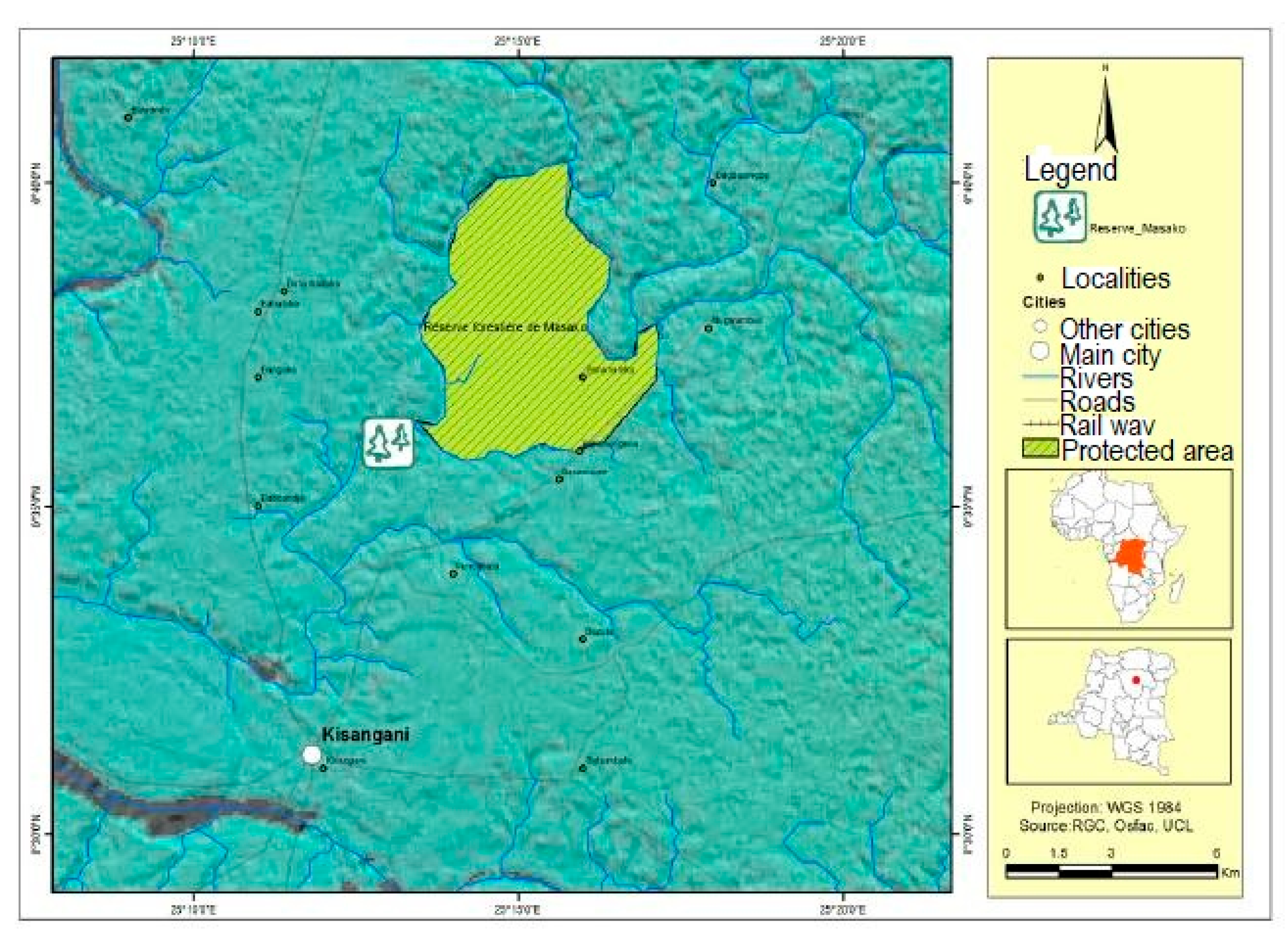
Figure 2.
Soil micronutrients in soils grown to 5 plant species.
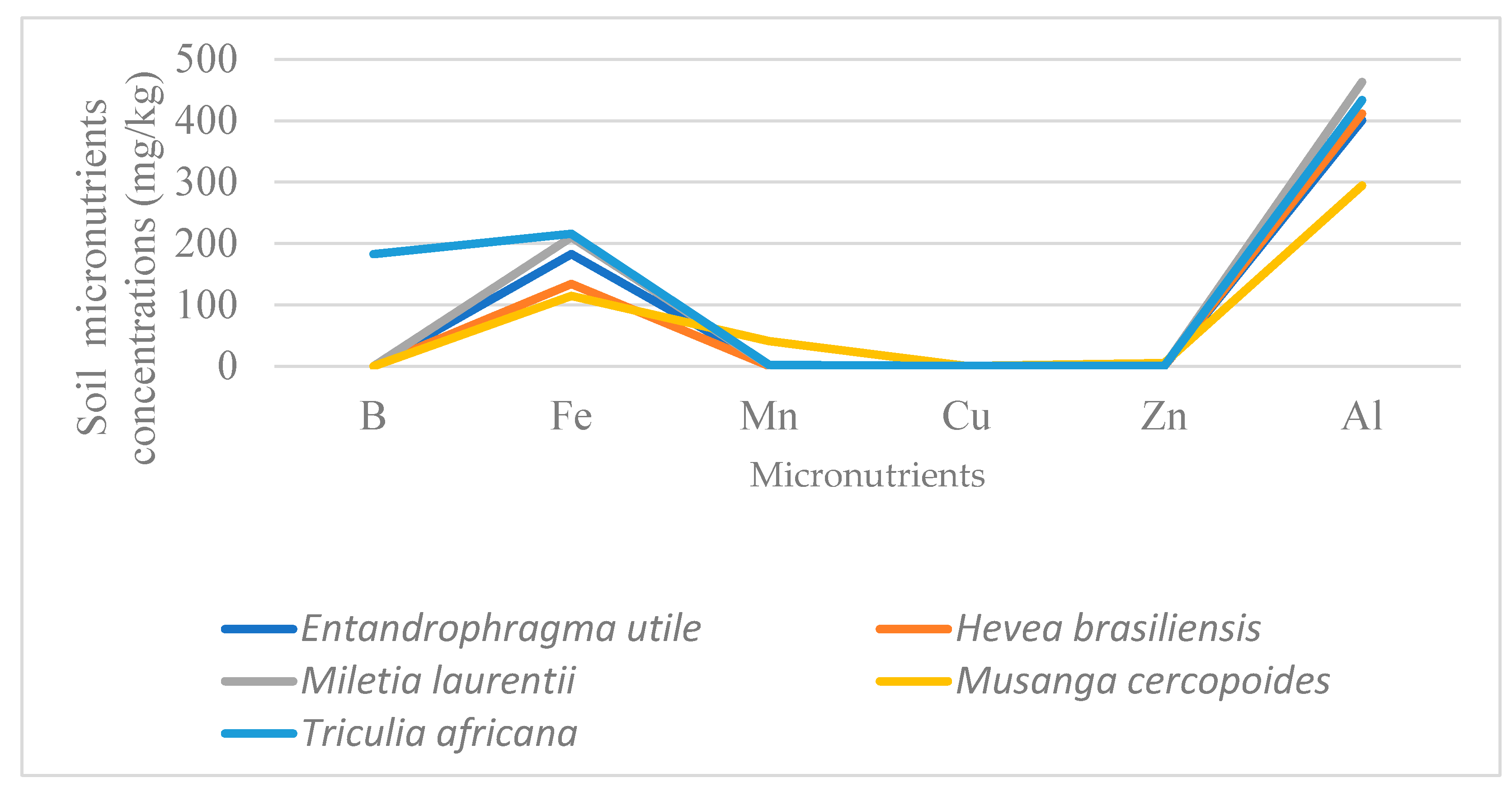
Figure 3.
Interaction SD x PS for Manganese.
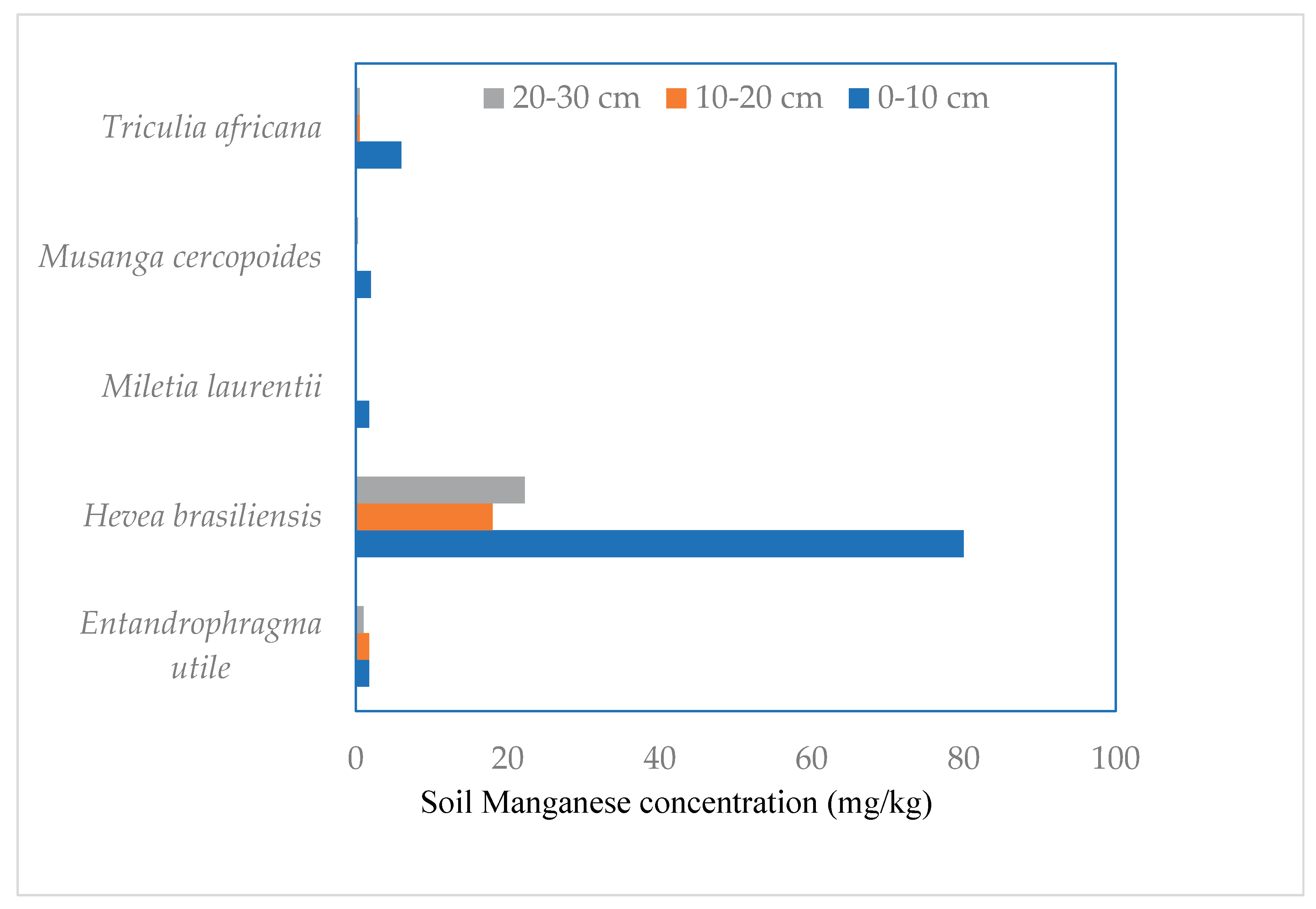

Table 1.
Descriptive statistics for the effects of plant species on soil micronutrients in the Secondary Forest in 2022: 1. Entandrophragma utile.
Table 1.
Descriptive statistics for the effects of plant species on soil micronutrients in the Secondary Forest in 2022: 1. Entandrophragma utile.
| --------------- Soil micronutrients ---------------- | ||||||
| Descriptive statistics | B | Fe | Mn | Cu | Zn | Al |
| (mg/kg) | (mg/kg) | (mg/kg) | (mg/kg) | (mg/kg) | (mg/kg) | |
| Mean | 0.39 | 182.75 | 0.76 | 0.46 | 0.07 | 400.75 |
| Standard dev (SD) | 0.12 | 35.06 | 1.21 | 0.16 | 0.22 | 76.86 |
| Variance | 30.82 | 19.19 | 160.29 | 35.83 | 298.63 | 19.18 |
| C.V. | 0.24 | 112.00 | 0.01 | 0.27 | 0.01 | 297.00 |
| Minimum | 0.37 | 182.00 | 0.01 | 0.42 | 0.01 | 393.50 |
| Median | 0.66 | 253.00 | 4.00 | 0.72 | 0.76 | 522.00 |
| Maximum | 0.88 | -0.02 | 1.77 | 0.52 | 3.02 | 0.18 |
| Skewness | 0.34 | 0.36 | 2.31 | -1.14 | 7.09 | -1.09 |
B= Borum; Fe= Iron; Mn = Manganese; Cu = Copper; Zn = Zinc and Al = Aluminum.
Table 2.
Descriptive statistics for the effects of plant species on soil micronutrients in the Secondary Forest in 2022: 2. Hevea brasiliensis.
Table 2.
Descriptive statistics for the effects of plant species on soil micronutrients in the Secondary Forest in 2022: 2. Hevea brasiliensis.
| --------------- Soil micronutrients ---------------- | ||||||
| Descriptive statistics | B | Fe | Mn | Cu | Zn | Al |
| (mg/kg) | (mg/kg) | (mg/kg) | (mg/kg) | (mg/kg) | (mg/kg) | |
| Mean | 0.21 | 133.75 | 0.59 | 0.45 | 0.01 | 411.25 |
| Standard dev (SD) | 0.13 | 19.06 | 0.99 | 0.23 | 0.00 | 67.56 |
| Variance | 0.02 | 363.11 | 0.98 | 0.06 | 0.00 | 4564.80 |
| C.V. | 61.19 | 14.25 | 168.13 | 51.72 | 0.00 | 16.43 |
| Minimum | 0.01 | 102.00 | 0.01 | 0.01 | 0.01 | 268.00 |
| Median | 0.25 | 133.50 | 0.01 | 0.43 | 0.01 | 415.50 |
| Maximum | 0.35 | 163.00 | 3.00 | 0.95 | 0.01 | 504.00 |
| Skewness | -0.74 | -0.06 | 1.50 | 0.26 | 0.01 | -0.57 |
| Kurtosis | -0.89 | -0.81 | 0.96 | 0.41 | 0.01 | -0.23 |
B= Boron; Fe= Iron; Mn = Manganese; Cu = Copper; Zn = Zinc; Al = Aluminum.
Table 3.
Descriptive statistics for the effects of plant species on soil micronutrients in the Secondary Forest in 2022: 3. Miletia laurentii.
Table 3.
Descriptive statistics for the effects of plant species on soil micronutrients in the Secondary Forest in 2022: 3. Miletia laurentii.
| --------------- Soil micronutrients ---------------- | ||||||
| Descriptive statistics | B | Fe | Mn | Cu | Zn | Al |
| (mg/kg) | (mg/kg) | (mg/kg) | (mg/kg) | (mg/kg) | (mg/kg) | |
| Mean | 0.41 | 210.00 | 1.50 | 0.53 | 0.09 | 462.83 |
| Standard dev (SD) | 0.12 | 44.72 | 1.73 | 0.31 | 0.29 | 135.88 |
| Variance | 0.01 | 1999.60 | 2.99 | 0.10 | 0.08 | 18464.00 |
| C.V. | 29.48 | 21.29 | 114.89 | 58.42 | 308.96 | 29.36 |
| Minimum | 0.26 | 156.00 | 0.01 | 0.22 | 0.01 | 332.00 |
| Median | 0.41 | 188.50 | 1.00 | 0.40 | 0.01 | 417.00 |
| Maximum | 0.63 | 285.00 | 5.00 | 1.21 | 1.00 | 732.00 |
| Skewness | 0.51 | 0.42 | 0.83 | 1.21 | 3.02 | 0.80 |
| Kurtosis | -0.62 | -1.32 | -0.57 | 0.13 | 7.09 | -0.81 |
B= Boron; Fe= Iron; Mn = Manganese; Cu = Copper; Zn = Zinc and Al = Aluminum.
Table 4.
Descriptive statistics for the effects of plant species on soil micronutrients in the Secondary Forest in 2022: 4. Musanga cercopoides.
Table 4.
Descriptive statistics for the effects of plant species on soil micronutrients in the Secondary Forest in 2022: 4. Musanga cercopoides.
| --------------- Soil micronutrients ---------------- | ||||||
| Descriptive statistics | B | Fe | Mn | Cu | Zn | Al |
| (mg/kg) | (mg/kg) | (mg/kg) | (mg/kg) | (mg/kg) | (mg/kg) | |
| Mean | 0.12 | 114.50 | 40.08 | 0.66 | 4.99 | 294.33 |
| Standard dev (SD) | 0.14 | 21.80 | 39.47 | 0.40 | 8.21 | 112.16 |
| Variance | 0.02 | 475.36 | 1557.90 | 0.16 | 67.41 | 12581.00 |
| C.V. | 117.86 | 19.04 | 98.47 | 61.06 | 164.56 | 38.11 |
| Minimum | 0.01 | 79.00 | 2.00 | 0.01 | 0.01 | 100.00 |
| Median | 0.01 | 124.50 | 31.00 | 0.55 | 0.92 | 277.00 |
| Maximum | 0.35 | 142.00 | 115.00 | 1.42 | 24.31 | 495.00 |
| Skewness | 0.57 | -0.41 | 0.45 | 0.33 | 1.57 | 0.29 |
| Kurtosis | -1.41 | -1.24 | -1.15 | -0.67 | 0.93 | -0.57 |
B= Borum; Fe= Iron; Mn = Manganese; Cu = Copper; Zn = Zinc and Al = Aluminum.
Table 5.
Descriptive statistics for the effects of plant species on soil micronutrients in the Secondary Forest in 2022: 5. Triculia africana.
Table 5.
Descriptive statistics for the effects of plant species on soil micronutrients in the Secondary Forest in 2022: 5. Triculia africana.
| --------------- Soil micronutrients ---------------- | ||||||
| Descriptive statistics | B | Fe | Mn | Cu | Zn | Al |
| (mg/kg) | (mg/kg) | (mg/kg) | (mg/kg) | (mg/kg) | (mg/kg) | |
| Mean | 0.50 | 215.67 | 2.34 | 0.44 | 0.59 | 433.50 |
| Standard dev (SD) | 0.25 | 72.21 | 4.07 | 0.22 | 0.90 | 157.97 |
| Variance | 0.06 | 5214.10 | 16.59 | 0.05 | 0.81 | 24956.00 |
| C.V. | 49.18 | 33.48 | 174.22 | 49.45 | 153.22 | 36.44 |
| Minimum | 0.01 | 115.00 | 0.01 | 0.01 | 0.01 | 205.00 |
| Median | 0.51 | 233.50 | 1.00 | 0.42 | 0.01 | 375.50 |
| Maximum | 0.84 | 341.00 | 14.00 | 0.83 | 2.39 | 714.00 |
| Skewness | -0.29 | 0.02 | 2.20 | -0.05 | 1.36 | 0.67 |
| Kurtosis | -0.57 | -1.16 | 3.79 | -0.16 | 0.32 | -0.53 |
B= Borum; Fe= Iron; Mn = Manganese; Cu = Copper; Zn = Zinc; and Al = Aluminum.
Disclaimer/Publisher’s Note: The statements, opinions and data contained in all publications are solely those of the individual author(s) and contributor(s) and not of MDPI and/or the editor(s). MDPI and/or the editor(s) disclaim responsibility for any injury to people or property resulting from any ideas, methods, instructions or products referred to in the content. |
© 2026 by the authors. Licensee MDPI, Basel, Switzerland. This article is an open access article distributed under the terms and conditions of the Creative Commons Attribution (CC BY) license (http://creativecommons.org/licenses/by/4.0/).
Copyright: This open access article is published under a Creative Commons CC BY 4.0 license, which permit the free download, distribution, and reuse, provided that the author and preprint are cited in any reuse.


