

Submitted:
16 March 2026
Posted:
17 March 2026
You are already at the latest version
Abstract
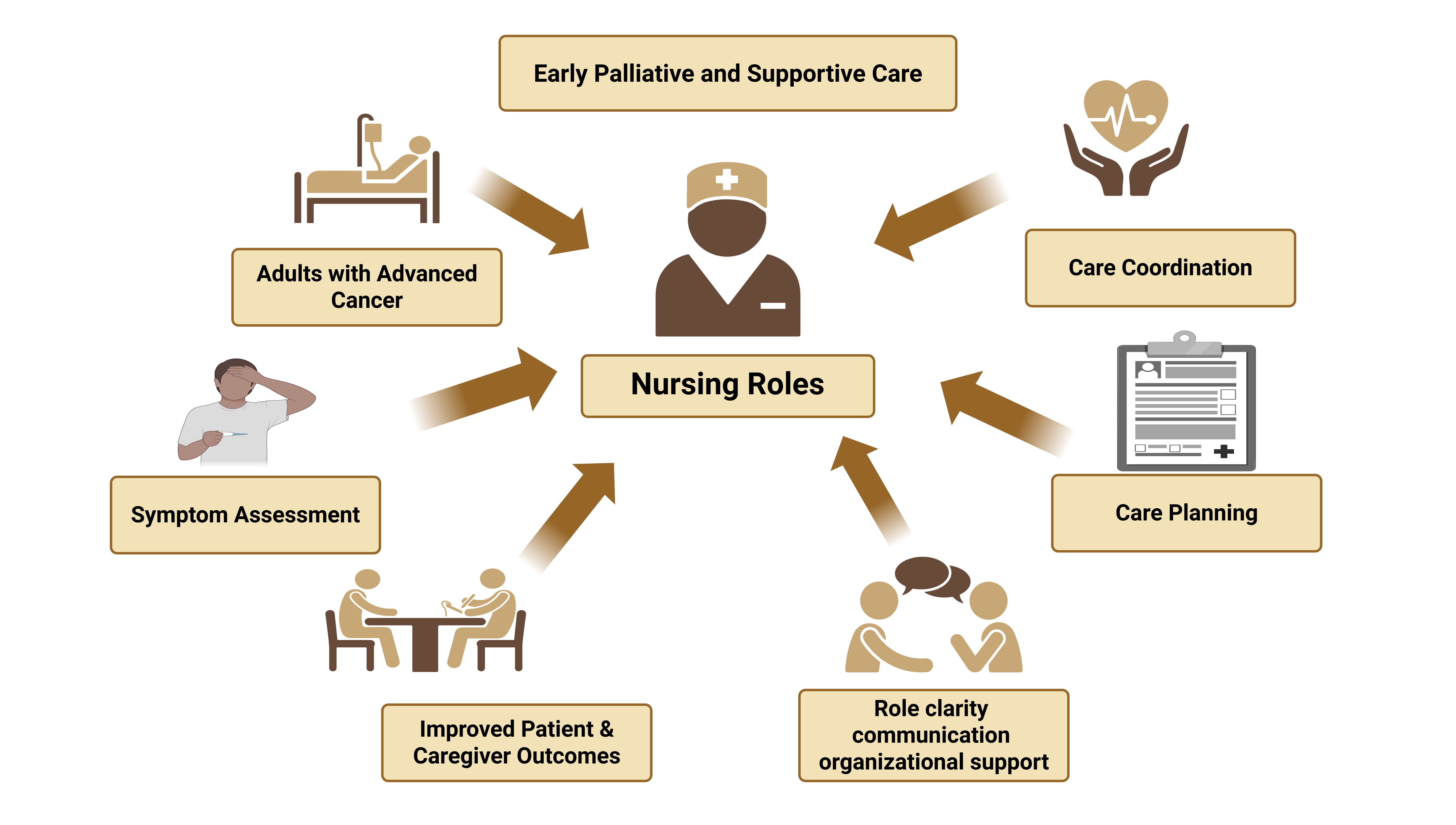
As the global cancer burden rises, adults with advanced cancer face significant physical and psychosocial symptoms requiring early integration of palliative and supportive care. Nurses in oncology, emergency, and community settings are central to symptom assessment, care coordination, communication, and advance care planning, yet their roles in early integration remain underexplored. This scoping review mapped nursing contributions to early palliative and supportive care for adults with advanced cancer and described related patient, caregiver, and system outcomes. It was based on a search of PubMed, CINAHL, Scopus, and ScienceDirect for English‑language studies (January 2016–November 2025) involving nursing‑relevant interventions. Thirteen studies were included: trials, observational studies, qualitative research, reviews, and a meta‑analysis. Six domains emerged. Early integration consistently improved quality of life and reduced symptom burden. Nurse‑led interventions increased end‑of‑life discussions and advance directive completion. Telehealth and telephone follow‑up proved feasible for symptom management. Studies noted moderate palliative competence but gaps in communication and structural support. Caregiver‑focused interventions enhanced caregiver quality of life and self‑efficacy. Conclusions: Nurses are pivotal in early palliative care. Expanding structured nurse‑led models, strengthening communication training, and addressing organizational barriers are essential to deliver timely, person‑centered care.
Keywords:
early palliative care
; oncology nursing
; advance directive
; supportive care
; nurse-led interventions
; scoping review
Copyright: This open access article is published under a Creative Commons CC BY 4.0 license, which permit the free download, distribution, and reuse, provided that the author and preprint are cited in any reuse.


