

Submitted:
17 March 2026
Posted:
18 March 2026
You are already at the latest version
Abstract
Background: Restoration of apical support is a primary objective in pelvic organ prolapse surgery; however, postoperative pelvic floor biomechanics and vaginal axis orientation are increasingly recognized as relevant determinants of clinical outcome. Laparoscopic pectopexy may be performed using synthetic mesh or non-absorbable sutures (wire), yet the influence of fixation material on postoperative vaginal axis remains insufficiently explored. This study aimed to evaluate vaginal axis orientation after mesh versus wire pectopexy using magnetic resonance imaging (MRI). Methods: A prospective non-randomized comparative cohort study included 100 women with symptomatic apical pelvic organ prolapse (POP-Q stage ≥ II). Fifty patients underwent mesh pectopexy and fifty wire pectopexy. All patients underwent standardized postoperative pelvic MRI at one-year follow-up using a 1.5 Tesla scanner with dynamic Valsalva sequences. MRI measurements included vaginal PS3L axis angle, H-line, and M-line. Clinical outcomes were assessed by gynecological examination. Statistical analysis included ANOVA, logistic regression, and ROC curve evaluation. Results: No cases of apical prolapse recurrence were observed. Vaginal axis orientation was significantly associated with postoperative clinical findings (F = 3.867, p = 0.019). Logistic regression identified vaginal axis angle as an independent predictor of normal clinical outcome (β = −0.257, p = 0.008; AUC = 0.819). A more physiological vaginal axis was more frequently observed following wire pectopexy Conclusions: Postoperative vaginal axis orientation assessed by MRI represents a relevant parameter after apical prolapse repair. Wire pectopexy was associated with a more physiological vaginal axis alignment, suggesting potential biomechanical advantages that may influence postoperative pelvic floor stability.
Keywords:
pelvic organ prolapse
; pectopexy
; vaginal axis
; MRI
; pelvic floor
; urogynecology
1. Introduction
Apical prolapse, a prevalent form of pelvic organ prolapse (POP), involves the descent of the vaginal apex, uterus, or cervix due to compromised support from the pelvic floor structures [1,2]. This condition predominantly affects women, particularly those who have experienced childbirth, undergone pelvic surgery, or are in postmenopausal stages [1,3]. The etiology of apical prolapse is multifactorial, involving intrinsic factors such as genetic predispositions and connective tissue disorders, as well as extrinsic factors like mechanical stress from obesity, chronic cough, or heavy lifting [4].
The weakening of pelvic support tissues can lead to a range of symptoms, including pelvic pressure, urinary incontinence, and sexual dysfunction, all of which can profoundly affect a woman’s quality of life. Many patients with apical prolapse remain undiagnosed or untreated, often due to stigma, lack of awareness, or inadequate communication about the condition. As the population ages, the importance of recognizing, diagnosing, and managing apical prolapse effectively becomes increasingly critical [5]. The incidence of pelvic organ prolapse rises, affecting an estimated 30% of women by the age of 60, effective surgical interventions are crucial for enhancing quality of life and functional outcomes [6].
Laparoscopic pectopexy is an innovative surgical technique designed for the treatment of pelvic organ prolapse, particularly focusing on apical support restoration [7]. This minimally invasive approach has gained traction in recent years as an alternative to sacrocolpopexy, offering several advantages including reduced intraoperative risk at the promontory, shorter recovery times, and favorable anatomical outcomes [8,9]. The pectopexy procedure involves anchoring the vaginal apex to the pectineal ligament, thus providing stable support for pelvic organs while minimizing damage to surrounding structures [10].
This technique is particularly advantageous for women who wish to preserve their uterine anatomy or those with a history of unsuccessful prolapse repairs. Recent studies have demonstrated promising outcomes associated with laparoscopic pectopexy, including significant symptom relief, high patient satisfaction rates, and favorable anatomical success rates [7,10]. Depending on surgeon preference and material availability, pectopexy can be performed using either synthetic mesh or non-absorbable sutures (wire). Mesh fixation provides broader load distribution and improved tensile strength but carries the theoretical risk of mesh exposure or foreign-body reaction. In contrast, wire suture fixation eliminates mesh-specific complications while potentially resulting in different biomechanical behavior at the apex fixation site [11]. However, evidence directly comparing these two fixation strategies remains scarce.
Beyond clinical success and recurrence rates, the anatomical orientation of the vaginal axis has gained increasing relevance due to its potential impact on pelvic support biomechanics, urinary continence mechanisms, and sexual function. Yet, the influence of fixation material (mesh vs wire) on postoperative vaginal axis has not been systematically evaluated.
Magnetic resonance imaging (MRI) provides superior visualization of pelvic floor structures and allows objective assessment of postoperative anatomical outcomes, including vaginal axis, apical support, and hiatal configuration. While MRI has been widely used to evaluate sacrocolpopexy, imaging-based data on pectopexy remain limited, and to our knowledge no previous clinical trial has analyzed the postoperative vaginal axis after mesh versus wire pectopexy using MRI [12].
This study aims to compare postoperative vaginal axis in patients undergoing mesh versus wire pectopexy using MRI-based anatomical evaluation. Understanding whether fixation material influences postoperative axis orientation may help refine surgical decision-making and optimize material selection in apical prolapse repair.
Beyond anatomical success, restoration of physiological pelvic floor biomechanics has emerged as an essential objective in modern prolapse surgery. The vaginal axis represents a key biomechanical parameter influencing the direction of intra-abdominal force transmission toward the pelvic floor [3]. A physiological vaginal axis allows pressure to be distributed along the longitudinal vaginal canal toward the sacral support structures, whereas deviation from this axis may redirect forces toward the anterior or posterior compartments, predisposing to cystocele or rectocele formation.
Recent imaging-based investigations have highlighted the importance of vaginal orientation in maintaining pelvic floor stability and functional outcomes following reconstructive surgery. Altered vaginal axis has been associated with changes in urinary continence mechanisms, sexual function, and compartmental load distribution. Despite this growing interest, most clinical studies evaluating apical prolapse repair focus primarily on recurrence rates and anatomical success, with limited attention to postoperative vaginal axis and pelvic biomechanics.
Magnetic resonance imaging offers a unique opportunity to objectively quantify postoperative pelvic anatomy. Dynamic MRI performed during Valsalva allows detailed assessment of vaginal orientation, hiatal configuration, and apical support. MRI-derived parameters such as the H-line, M-line, and vaginal axis angle provide reproducible measurements that complement clinical POP-Q evaluation and enhance understanding of postoperative pelvic floor behavior [13,14,15].
To date, imaging-based comparative data between mesh and suture-based pectopexy remain scarce. Understanding whether fixation material influences postoperative vaginal axis orientation may provide important insights into the biomechanical consequences of apical suspension and may contribute to optimization of surgical technique and material selection in prolapse repair [16,17].
2. Materials and Methods
2.1. Study Design and Setting
This study was designed as a prospective non-randomized comparative cohort study conducted at a tertiary urogynecological surgical center. The trial compared anatomical outcomes after mesh pectopexy versus wire pectopexy in womens with apical pelvic organ prolapse. The study was conducted over a two-year period, from december 2023 to december 2025. Surgical procedures were performed during the first year of the study, followed by a standardized postoperative follow-up period of one year for all included patients.
2.2. Participants
A total of 100 women with symptomatic apical pelvic organ prolapse were included. Group allocation was based on surgeon preference and material availability, resulting in two cohorts: mesh pectopexy (n = 50) and wire pectopexy (n = 50). Sixty percent of the patients resided in urban areas and forty percent in rural areas.
2.3. Inclusion and Exclusion Criteria
Inclusion criteria were: symptomatic apical prolapse with POP-Q stage ≥ II, suitability for laparoscopic pelvic reconstructive surgery, and ability to undergo pelvic magnetic resonance imaging (MRI). There was no upper age limit.
Exclusion criteria included pregnancy and gynecologic malignancies. No patients were excluded based on parity, menopausal status, or previous pelvic surgery.
2.4. Associated Procedures
Associated pelvic procedures were performed when indicated. These included total hysterectomy with bilateral adnexectomy in 60% of patients, as well as rectocele repair and McCall culdoplasty in selected cases.
2.5. Surgical Technique
All surgical procedures were performed by experienced surgeons specialized in minimally invasive pelvic floor reconstructive surgery and familiar with laparoscopic apical suspension techniques. All interventions were conducted under general anesthesia with the patient placed in dorsal lithotomy position and slight Trendelenburg tilt to facilitate pelvic visualization. Prophylactic antibiotic therapy and thromboembolic prevention were administered according to institutional protocols.
Following sterile preparation and bladder catheterization, pneumoperitoneum was established using a Veress needle or open (Hasson) technique at the umbilical level. A standard four-port laparoscopic approach was employed, consisting of a 10 mm umbilical trocar for the laparoscope and three ancillary trocars (5 mm and 10 mm) placed under direct visualization in the lower abdominal quadrants. After inspection of the abdominal cavity and confirmation of anatomical landmarks, attention was directed to the pelvic compartment.
The first operative step consisted of identification of key anatomical structures, including the round ligaments, external iliac vessels, and pectineal (Cooper’s) ligaments bilaterally. Careful dissection of the peritoneum overlying the pelvic sidewall was performed using monopolar or bipolar energy to expose the pectineal ligament along its course on the superior pubic ramus. Particular attention was paid to avoiding injury to the external iliac vein and obturator neurovascular bundle. The paravesical spaces were gently developed to allow adequate visualization and safe placement of fixation sutures or mesh [18].
Subsequently, the vaginal apex or cervical stump was identified. In patients with prior hysterectomy, the vaginal vault was mobilized by dissecting surrounding adhesions and creating adequate exposure of the anterior and posterior vaginal walls. In cases where concomitant hysterectomy was performed, the vaginal cuff was prepared and reinforced prior to apical suspension. The peritoneum overlying the vaginal apex was incised, and a limited dissection was carried out to create a secure anchoring point for fixation material while preserving surrounding support structures.
In the mesh pectopexy group, a synthetic non-absorbable mesh was tailored to appropriate dimensions and introduced into the abdominal cavity. The mesh was positioned symmetrically and secured to the vaginal apex using absorbable fixation devices (AbsorbaTack™) and titanium helical fasteners (ProTack™) to ensure stable attachment to the fibromuscular layer of the vaginal cuff. Additional non-absorbable sutures were placed as needed to reinforce fixation and optimize tension distribution. The lateral arms of the mesh were subsequently anchored bilaterally to the pectineal (Cooper’s) ligaments, ensuring symmetrical suspension and appropriate alignment of the vaginal axis. Care was taken to avoid excessive traction or asymmetric fixation that could potentially influence postoperative vaginal orientation. Care was taken to avoid excessive traction that might alter vaginal orientation or compromise surrounding structures. After confirming adequate suspension and anatomical positioning, the mesh was completely peritonealized to reduce the risk of bowel contact and adhesions.
In the wire pectopexy group, apical suspension was achieved using non-absorbable sutures without the use of prosthetic mesh. Sutures were placed through the vaginal apex or cervical stump and then anchored bilaterally to the pectineal ligaments. The sutures were adjusted to achieve physiological elevation and alignment of the vaginal axis while avoiding overcorrection or excessive tension. Symmetry of suspension was carefully evaluated laparoscopically to ensure balanced support and appropriate orientation of the vaginal canal within the pelvic cavity [19].
In both techniques, concomitant procedures were performed when indicated, including total hysterectomy with adnexectomy, posterior colporrhaphy for rectocele repair, and McCall culdoplasty to reinforce posterior support. Hemostasis was meticulously secured, and peritoneal closure was performed when necessary. Final inspection of the operative field confirmed appropriate vaginal apex position and absence of active bleeding or injury to adjacent organs.
No intraoperative conversions to open surgery were required. All procedures were completed laparoscopically without major intraoperative complications. At the end of the intervention, trocars were removed under direct visualization, pneumoperitoneum was evacuated, and skin incisions were closed in standard fashion. Patients were transferred to postoperative recovery in stable condition and followed according to institutional postoperative care protocols.
2.6. MRI Protocol and Imaging Measurements
Postoperative pelvic MRI was performed using a 1.5 Tesla scanner. Imaging was acquired in the supine position and included dynamic sequences during Valsalva maneuver. Measurements included the H-line, the M-line, and the postoperative vaginal axis orientation relative to the pelvic reference plane. Imaging analysis was performed by an experienced radiologist blinded to the surgical allocation.
2.7. Outcomes
The primary outcome was postoperative vaginal axis measured on MRI at 12 months.
Secondary outcomes included POP-Q recurrence, mesh exposure, and urinary continence status assessed clinically.
2.8. Follow-Up
Clinical follow-up was performed at regular intervals and included a standardized gynecological examination and POP-Q assessment. MRI-based evaluation was performed at ≥12 months postoperatively. All patients completed at least one year of follow-up.
2.9. Statistical Analysis
Statistical analysis was performed using Jamovi software (version 2.3, Sydney, Australia) and GraphPad Prism (GraphPad Software, San Diego, CA, USA). Continuous variables were initially assessed for normality using the Shapiro–Wilk test and are presented as mean ± standard deviation or median and interquartile range, as appropriate. Categorical variables are reported as absolute frequencies and percentages. Data completeness and consistency were verified prior to analysis, and all available observations were included in the final statistical evaluation.
Comparative analyses between groups were conducted using Student’s t-test or the Mann–Whitney U test for continuous variables, depending on data distribution, and the chi-square test for categorical variables. For comparisons involving more than two clinical categories, one-way analysis of variance (ANOVA) was applied to evaluate differences in vaginal axis measurements according to postoperative gynecological examination findings. When statistically significant differences were detected, post-hoc pairwise comparisons with Bonferroni correction were performed to control for multiple testing and to identify specific intergroup differences contributing to the overall significance. Effect sizes were calculated where appropriate in order to better quantify the magnitude of observed differences and to support the clinical interpretation of statistical findings.
To further investigate the association between imaging-derived parameters and clinical outcomes, multivariable logistic regression models were constructed using postoperative clinical status as the dependent variable and MRI-based measurements, including vaginal axis angle, as independent predictors. This analysis aimed to determine whether vaginal axis orientation could function as an independent predictor of normal postoperative findings after adjusting for potential confounding variables. Regression coefficients, odds ratios, and corresponding confidence intervals were calculated to quantify the strength and direction of associations. Model calibration and goodness-of-fit were assessed using standard diagnostic procedures to ensure reliability and internal consistency of the predictive models.
The discriminative performance of vaginal axis measurements in identifying patients with normal postoperative clinical findings was further evaluated using receiver operating characteristic (ROC) curve analysis. The area under the curve (AUC) was calculated as a global measure of model accuracy and discriminative capacity. An optimal cutoff value for vaginal axis angle was estimated using Youden’s index in order to balance sensitivity and specificity and to provide a clinically meaningful threshold for interpretation. This approach allowed a comprehensive evaluation of vaginal axis orientation as a potential imaging marker of postoperative biomechanical alignment and clinical outcome.
Exploratory analyses were additionally performed to assess the robustness of the observed associations and to evaluate the potential influence of demographic and clinical variables, including age, parity, and menopausal status, on vaginal axis measurements. Continuous variables were screened for potential outliers and distribution patterns prior to inferential testing in order to ensure stability of statistical estimates. Graphical representations, including boxplots, distribution plots, and ROC curves, were generated using GraphPad Prism to facilitate visualization of data variability and model performance. All statistical tests were two-sided, and a p value < 0.05 was considered statistically significant.
2.10. Ethical Considerations
The study protocol was approved by the Ethics Committee of the “Victor Babeș” University of Medicine and Pharmacy under approval number 01/03.01.2024. All participants provided written informed consent prior to inclusion in the study. The research was conducted in accordance with the principles of the Declaration of Helsinki.
3. Results
3.1. Study Population and Baseline Characteristics
A total of 100 women with symptomatic apical pelvic organ prolapse were included in this prospective non-randomized comparative cohort study. Fifty patients underwent mesh pectopexy and fifty underwent wire pectopexy. All patients completed the predefined minimum follow-up of 12 months and were included in the final analysis.
Baseline demographic and surgical characteristics are summarized in Table 1. The median age and body mass index were comparable between groups. Sixty percent of patients originated from urban areas and forty percent from rural areas. All patients presented with apical prolapse POP-Q stage greater or equal than II at inclusion.
Associated pelvic procedures reflected real-life urogynecological practice. Total hysterectomy with or without bilateral adnexectomy was performed more frequently in the wire pectopexy group. Posterior compartment procedures, including rectocele repair and McCall culdoplasty, were performed when clinically indicated.
3.2. MRI-Based Pelvic Floor Parameters
All patients underwent standardized postoperative pelvic magnetic resonance imaging at one year using a 1.5 Tesla scanner. Imaging was acquired in the supine position and included dynamic cine sequences during maximal Valsalva maneuver.
Global pelvic floor relaxation parameters were assessed using the H-line and M-line measurements at rest and during Valsalva. These MRI-based pelvic floor parameters are summarized in Table 2. Overall, H-line and M-line values were comparable between groups, with greater excursion observed during Valsalva, consistent with expected dynamic pelvic floor behavior.
3.3. MRI-Based Vaginal Axis Evaluation
Vaginal axis orientation was quantified on the midsagittal plane using the vaginal PS3L axis angle whch represents the orientation of the vaginal canal relative to pelvic reference lines on midsagittal MRI and serves as an imaging biomarker of postoperative pelvic floor biomechanics.The vaginal axis demonstrated measurable variability across the cohort and showed a significant relationship with postoperative clinical findings.
When stratified according to gynecological examination outcome (normal examination versus presence of compartment-specific prolapse findings), statistically significant differences in vaginal axis orientation were observed. Analysis of variance confirmed a significant association between vaginal PS3L axis angle and postoperative gynecological examination category (F = 3.867, p = 0.019), indicating that vaginal axis orientation differed according to clinical outcome (Table 3). The distribution of vaginal axis values across clinical categories is illustrated in Figure 1.
3.4. Association Between Vaginal Axis Orientation and Clinical Outcome
Logistic regression analysis was performed to evaluate the association between vaginal PS3L axis angle and postoperative gynecological examination outcome. Vaginal axis orientation emerged as a significant independent predictor of normal clinical findings. A decrease in vaginal PS3L axis angle was associated with increased odds of a normal gynecological examination (β = −0.257, p = 0.008).
3.5. Postoperative Clinical Findings
No cases of apical prolapse recurrence were identified during the one-year follow-up. However, a subset of patients developed de novo anterior or posterior compartment findings, including cystocele or rectocele. These findings support the concept that postoperative pelvic floor behavior is influenced not only by apical support restoration but also by the spatial orientation of the reconstructed vaginal axis and the findings were associated with altered vaginal axis orientation rather than loss of apical support.
Overall, MRI-based vaginal axis measurements demonstrated consistent variability across the cohort, suggesting individual differences in postoperative pelvic floor biomechanics. Patients presenting a more physiological vaginal axis orientation were more likely to demonstrate normal findings on clinical examination, whereas greater deviation from the physiological axis was associated with minor compartmental findings such as cystocele or rectocele without apical recurrence. These findings support the relevance of vaginal axis orientation as an objective imaging marker of postoperative pelvic floor alignment.
4. Discussion
4.1. Principal Findings
This prospective comparative study demonstrates that vaginal axis orientation assessed by postoperative magnetic resonance imaging is a clinically meaningful anatomical parameter following apical prolapse repair. Vaginal PS3L axis angle was significantly associated with postoperative gynecological examination findings and independently predicted normal clinical outcome at one year [16].
Importantly, the study did not identify apical prolapse recurrence but rather highlighted the occurrence of secondary compartment findings, such as cystocele or rectocele, which were associated with vaginal axis deviation rather than loss of apical support. A more physiological postoperative vaginal axis was more frequently observed following wire pectopexy compared with mesh fixation.
The present findings emphasize that restoration of apical support alone does not fully define surgical success. While apical position was preserved in all patients, the development of secondary compartment findings in a subset of cases suggests that postoperative pelvic floor biomechanics play a crucial role in overall anatomical outcome [20]. This observation reinforces the concept that vaginal orientation should be considered alongside traditional anatomical endpoints when evaluating reconstructive pelvic surgery.
The strong predictive value of vaginal axis angle for normal postoperative examination further supports its potential role as an objective imaging biomarker [21]. Patients with a more physiological axis orientation demonstrated a higher likelihood of normal clinical findings, suggesting that vaginal axis preservation may represent a key determinant of balanced pelvic floor mechanics.
4.2. Biomechanical Interpretation
Apical suspension procedures aim not only to restore anatomical support but also to preserve physiological force transmission within the pelvic floor [22]. In addition to correcting the apical defect, the orientation of the vaginal axis plays a crucial biomechanical role by influencing the direction and distribution of intra-abdominal pressure across pelvic compartments. Alterations in vaginal axis alignment may modify pressure vectors and result in increased mechanical stress on either the anterior or posterior compartment, potentially contributing to secondary compartment changes even in the absence of apical recurrence [7].
The present findings demonstrate a significant inverse relationship between vaginal axis angle and normal postoperative clinical findings, supporting the concept that maintenance of a physiological vaginal axis contributes to overall pelvic floor stability. While successful apical suspension restores vertical support, the spatial orientation of the vaginal canal determines how intra-abdominal forces are transmitted through the reconstructed pelvic floor [23]. A more physiological vaginal axis allows pressure to be distributed along the longitudinal axis of the vagina and toward the sacral support structures, thereby reducing focal stress on the anterior and posterior compartments. Conversely, deviation from this physiological orientation may disrupt biomechanical equilibrium, leading to asymmetric load distribution and potentially facilitating the development of secondary findings such as cystocele or rectocele over time. From a biomechanical perspective, restoration of an optimal vaginal axis should be considered an integral component of successful apical prolapse repair, rather than a secondary anatomical outcome [24].
4.3. Implications for Pectopexy Technique
Although this study was not designed to directly compare clinical superiority between mesh and wire pectopexy, the demonstrated association between vaginal axis preservation and favorable clinical findings provides a relevant mechanistic framework.
The tendency toward a more physiological vaginal axis observed in patients undergoing wire pectopexy suggests that fixation material may influence postoperative biomechanical alignment [25]. Wire fixation, by avoiding the rigidity associated with synthetic mesh, may allow for a more anatomical orientation of the vaginal axis, potentially reducing secondary compartment distortion without compromising apical support.
The choice of fixation material may influence not only the strength of apical suspension but also the dynamic behavior of the reconstructed vaginal apex. Mesh provides increased structural rigidity and load distribution, whereas suture-based fixation may allow greater physiological mobility and alignment [26]. Subtle differences in apex compliance and orientation may translate into variations in force transmission toward the anterior and posterior compartments.
These biomechanical considerations are particularly relevant in the context of modern prolapse surgery, where functional and anatomical outcomes are increasingly evaluated together. Preservation of a physiological vaginal axis may contribute to long-term stability of all pelvic compartments and may reduce the risk of secondary prolapse manifestations.
4.4. Role of MRI in Outcome Assessment
Magnetic resonance imaging provides a comprehensive and reproducible assessment of pelvic floor anatomy, enabling objective quantification of postoperative vaginal orientation beyond conventional POP-Q examination [17]. The integration of MRI-based measurements with clinical findings offers a more nuanced understanding of surgical outcomes beyond traditional anatomical success criteria [27]. In this context, vaginal axis orientation may serve as a valuable imaging biomarker of postoperative biomechanical balance and functional pelvic floor stability. The present findings support the potential role of MRI not only as a diagnostic tool but also as a means of refining surgical technique and material selection in reconstructive pelvic surgery and for vaginal axis assessment as a surrogate marker for clinical outcome in studies evaluating apical suspension techniques, particularly when apical recurrence is absent but secondary compartment changes occur [28,29].
4.5. Clinical Implications
The results of this study suggest that MRI-based assessment of vaginal axis could become a valuable adjunct in the postoperative evaluation of apical prolapse surgery. Identification of axis deviation may help predict the development of secondary compartment changes and guide early clinical management.
Furthermore, understanding the biomechanical impact of fixation material may assist surgeons in tailoring reconstructive techniques according to patient characteristics and anatomical requirements. Future prospective and randomized studies integrating imaging, clinical outcomes, and patient-reported measures are needed to further clarify these relationships.
4.6. Strengths and Limitations
Strengths of this study include its prospective design, standardized imaging protocol with dynamic Valsalva sequences, and integration of objective imaging parameters with clinical examination findings. The integration of imaging and clinical data represents a particular strength of this study, providing a comprehensive evaluation of postoperative pelvic floor anatomy and function.
Limitations include the non-randomized allocation of surgical technique, the presence of associated pelvic procedures, and the absence of long-term functional questionnaires, which will be addressed in future studies. The integration of MRI-based vaginal axis assessment into postoperative evaluation protocols may enhance the understanding of pelvic floor biomechanics and contribute to more individualized surgical strategies in apical prolapse repair [30].
5. Conclusions
Vaginal axis orientation assessed by postoperative MRI represents a clinically relevant parameter following apical prolapse repair. Preservation of a physiological vaginal axis appears to contribute to improved compartmental stability and favorable clinical outcomes. MRI-based evaluation of vaginal axis provides valuable insight into pelvic floor biomechanics and may support optimization of surgical techniques and material selection in apical prolapse repair. Wire pectopexy demonstrated a tendency toward a more physiological postoperative vaginal axis orientation, suggesting potential biomechanical advantages that may be relevant for surgical planning and material selection in apical prolapse repair. Future studies integrating imaging findings with functional outcomes and patient-reported measures may further clarify the role of vaginal axis orientation as a biomarker of long-term pelvic floor stability and surgical success.
Author Contributions
Conceptualization, A.D. and F.O.; methodology, O.B., C.S.; software, S.C., C.S.; validation, I.F.B and M.P.; formal analysis, S.C., C.S.; investigation, O.B.; resources, F.O. and D.P.; datacuration, A.D. and D.P.; writing—original draft preparation, A.D. and L.P.; writing—review andediting, A.D. and O.B.; visualization, M.S.; supervision, L.P.; project administration, L.P. All authorshave read and agreed to the published version of the manuscript.
Funding
We would like to acknowledge “Victor Babes”, University of Medicine and Pharmacy Timisoara, Romania for their support in covering the costs of publication for this research paper.
Institutional Review Board Statement
The study protocol was approved by the Ethics Committee of the “Victor Babeș” University of Medicine and Pharmacy under approval number 01/03.01.2024. All participants provided written informed consent prior to inclusion in the study. The research was conducted in accordance with the principles of the Declaration of Helsinki.
Informed Consent Statement
Informed consent was obtained from all subjects involved in the study. Informed consent has been obtained from the patient(s) to publish this paper if applicable.
Acknowledgments
The data are contained within the article.
Conflicts of Interest
The authors declare no conflicts of interest.
Abbreviations
The following abbreviations are used in this manuscript:
| MRI | Magnetic Resonance Imaging |
| ROC | Receiver Operating Characteristic |
| AUC | Area Under The Curve |
| POP-Q | Pelvic Organ Prolapse Quantification |
References
- Maher, C.; Feiner, B.; Baessler, K.; Schmid, C. Surgical management of pelvic organ prolapse in women. Cochrane Database Syst Rev 2013. [Google Scholar] [CrossRef]
- Barber, M.D. Pelvic organ prolapse. BMJ 2016, 354, i3853. [Google Scholar] [CrossRef] [PubMed]
- Dietz, H.P. Ultrasound in the assessment of pelvic organ prolapse. Best Pr. Res. Clin. Obstet. Gynaecol. 2019, 54, 12–30. [Google Scholar] [CrossRef] [PubMed]
- Chan, C.Y.W.; Fernandes, R.A.; Yao, H.H.-I.; O’cOnnell, H.E.; Tse, V.; Gani, J. A systematic review of the surgical management of apical pelvic organ prolapse. Int. Urogynecology J. 2022, 34, 825–841. [Google Scholar] [CrossRef]
- DeLancey, J.O.; Mastrovito, S.; Masteling, M.; Horner, W.; Ashton-Miller, J.A.; Chen, L. A unified pelvic floor conceptual model for studying morphological changes with prolapse, age, and parity. Am. J. Obstet. Gynecol. 2023, 230, 476–484.e2. [Google Scholar] [CrossRef]
- Braga, A.; Serati, M. New Advances in Female Pelvic Floor Dysfunction Management. Medicina 2023, 59, 1010. [Google Scholar] [CrossRef]
- Hai, P.; Tian, Y.; Wang, L.; Yan, S.; Zhang, Y.; Wang, Q.; Zhao, Q.; Guo, R. Clinical application of laparoscopic pectopexy in the treatment of pelvic organ prolapse: Efficacy and safety. Eur. J. Med Res. 2025, 31. [Google Scholar] [CrossRef]
- Price, N.; Slack, A.; Jackson, S.R. Laparoscopic sacrocolpopexy: An observational study of functional and anatomical outcomes. Int. Urogynecology J. 2010, 22, 77–82. [Google Scholar] [CrossRef]
- Noé, G.K.; Alkatout, I.; Schiermeier, S.; Soltécz, S.; Anapolski, M. Laparoscopic anterior and posterior native tissue repair: A new pelvic floor approach. Minim. Invasive Ther. Allied Technol. 2018, 28, 241–246. [Google Scholar] [CrossRef]
- Noé, G.K.; Schiermeier, S.; Papathemelis, T.; Fuellers, U.; Khudyakov, A.; Altmann, H.-H.; Borowski, S.; Morawski, P.P.; Gantert, M.; De Vree, B.; et al. Prospective international multicenter pectopexy trial: Interim results and findings post surgery. Eur. J. Obstet. Gynecol. Reprod. Biol. 2020, 244, 81–86. [Google Scholar] [CrossRef]
- Lei, Y.; Sun, Y.; Sun, T.; Han, X.; Zhao, Z.; Miao, Y. Mid-Term Efficacy Evaluation of Laparoscopic Sacrocolpopexy vs Laparoscopic Pectopexy for Pelvic Organ Prolapse. J. Sichuan Univ. (Med. Sci. Ed.) 2025, 56, 1104–1111. [Google Scholar]
- Kämpfer, C.; Pieper, C.C. Dynamische Magnetresonanztomographie des Beckenbodens: Klinische Anwendung. Die Radiol. 2023, 63, 799–807. [Google Scholar] [CrossRef] [PubMed]
- DeLancey, J.O.L. What’s new in the functional anatomy of pelvic organ prolapse? Curr. Opin. Obstet. Gynecol. 2016, 28, 420–429. [Google Scholar] [CrossRef]
- Shek, K.L.; Dietz, H.P. Coronal Plane Assessment for Levator Trauma. J. Ultrasound Med. 2024, 43, 1627–1633. [Google Scholar] [CrossRef] [PubMed]
- Sarpietro, G.; Foti, P.V.; Conte, C.; Matarazzo, M.G. Role of Magnetic Resonance Imaging in Pelvic Organ Prolapse Evaluation. Medicina 2023, 59, 2074. [Google Scholar] [CrossRef] [PubMed]
- Kieserman-Shmokler, C.; Swenson, C.W.; Chen, L.; Desmond, L.M.; Ashton-Miller, J.A.; DeLancey, J.O. From molecular to macro: The key role of the apical ligaments in uterovaginal support. Am. J. Obstet. Gynecol. 2020, 222, 427–436. [Google Scholar] [CrossRef]
- Ram, R.; Jambhekar, K.; Glanc, P.; Steiner, A.; Sheridan, A.D.; Arif-Tiwari, H.; Palmer, S.L.; Khatri, G. Meshy business: MRI and ultrasound evaluation of pelvic floor mesh and slings. Abdom. Imaging 2020, 46, 1414–1442. [Google Scholar] [CrossRef]
- Kale, A.; Biler, A.; Terzi, H.; Usta, T.; Kale, E. Laparoscopic pectopexy: Initial experience of single center with a new technique for apical prolapse surgery. Int. braz j urol 2017, 43, 903–909. [Google Scholar] [CrossRef]
- Pirtea, M.; Bălulescu, L.; Pirtea, L.; Brasoveanu, S.; Secosan, C.; Balan, L.; Olaru, F.; Dabica, A.; Margan, M.-M.; Navolan, D. The Effectiveness of Mesh-Less Pectopexy in the Treatment of Vaginal Apical Prolapse—A Prospective Study. Diagnostics 2025, 15, 526. [Google Scholar] [CrossRef]
- Wu, H.; Zhang, L.; He, L.; Lin, W.; Yu, B.; Yu, X.; Lin, Y. Roles and mechanisms of biomechanical-biochemical coupling in pelvic organ prolapse. Front. Med. 2024, 11, 1303044. [Google Scholar] [CrossRef]
- Wang, H.; Shen, J.; Li, S.; Gao, Z.; Ke, K.; Gu, P. The feasibility of uterine-vaginal axis MRI-based as evaluation of surgical efficacy in women with pelvic organ prolapse. Ann. Transl. Med. 2022, 10, 447. [Google Scholar] [CrossRef] [PubMed]
- Egorov, V.; Takacs, P.; Shobeiri, S.A.; Hoyte, L.; Lucente, V.; van Raalte, H.; Sarvazyan, N. Predictive Value of Biomechanical Mapping for Pelvic Organ Prolapse Surgery. Urogynecology 2021, 27, e28–e38. [Google Scholar] [CrossRef] [PubMed]
- Babayi, M.; Azghani, M.; Hajebrahimi, S.; Berghmans, B. Three-dimensional finite element analysis of the pelvic organ prolapse: A parametric biomechanical modeling. Neurourol. Urodynamics 2018, 38, 591–598. [Google Scholar] [CrossRef] [PubMed]
- Lai, W.; Wang, G.; Zhao, Z. Advancements in Magnetic Resonance Imaging for the Evaluation of Pelvic Organ Prolapse: A Comprehensive Review. Acad. Radiol. 2025, 32, 4689–4704. [Google Scholar] [CrossRef]
- Maher, C.; Feiner, B.; Baessler, K.; Christmann-Schmid, C.; Haya, N.; Marjoribanks, J. Transvaginal mesh or grafts compared with native tissue repair for vaginal prolapse. Cochrane Database Syst. Rev. 2016, 2016, CD012079. [Google Scholar] [CrossRef]
- Dabica, A.; Balint, O.; Olaru, F.; Secosan, C.; Balulescu, L.; Brasoveanu, S.; Pirtea, M.; Popin, D.; Bacila, I.F.; Pirtea, L. Complications of Pelvic Prolapse Surgery Using Mesh: A Systematic Review. J. Pers. Med. 2024, 14, 622. [Google Scholar] [CrossRef]
- Alt, C.D.; Benner, L.; Mokry, T.; Lenz, F.; Hallscheidt, P.; Sohn, C.; Kauczor, H.-U.; A Brocker, K. Five-year outcome after pelvic floor reconstructive surgery: Evaluation using dynamic magnetic resonance imaging compared to clinical examination and quality-of-life questionnaire. Acta Radiol. 2018, 59, 1264–1273. [Google Scholar] [CrossRef]
- Luo, J.; Betschart, C.; Ashton-Miller, J.A.; DeLancey, J.O.L. Quantitative analyses of variability in normal vaginal shape and dimension on MR images. Int. Urogynecology J. 2016, 27, 1087–1095. [Google Scholar] [CrossRef]
- van Oudheusden, A.M.J.; Eissing, J.; Terink, I.M.; Vink, M.D.H.; van Kuijk, S.M.J.; Bongers, M.Y.; Coolen, A.-L.W.M. Laparoscopic sacrocolpopexy versus abdominal sacrocolpopexy for vaginal vault prolapse: Long-term follow-up of a randomized controlled trial. Int. Urogynecology J. 2022, 34, 93–104. [Google Scholar] [CrossRef]
- Padoa, A.; Braga, A.; Brecher, S.; Fligelman, T.; Mesiano, G.; Serati, M. Pelvic Organ Prolapse: Current Challenges and Future Perspectives. J. Clin. Med. 2025, 14, 7313. [Google Scholar] [CrossRef]
Figure 1.
Distribution of vaginal PS3L axis angle according to gynecological examination findings.
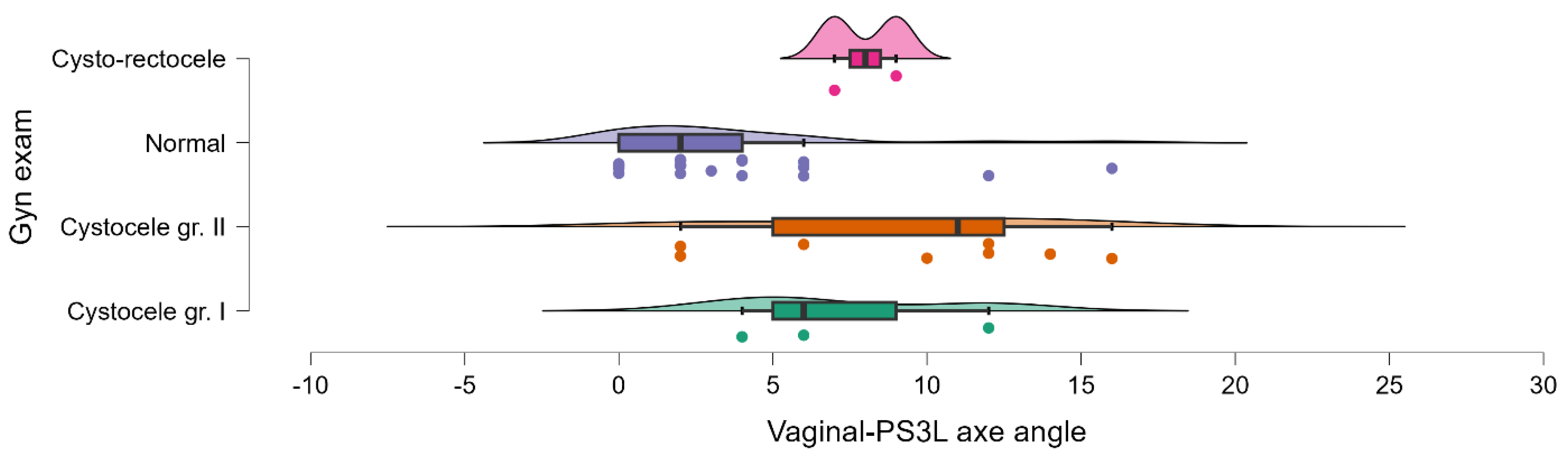
Figure 2.
Receiver operating characteristic (ROC) curve for vaginal PS3L axis angle.
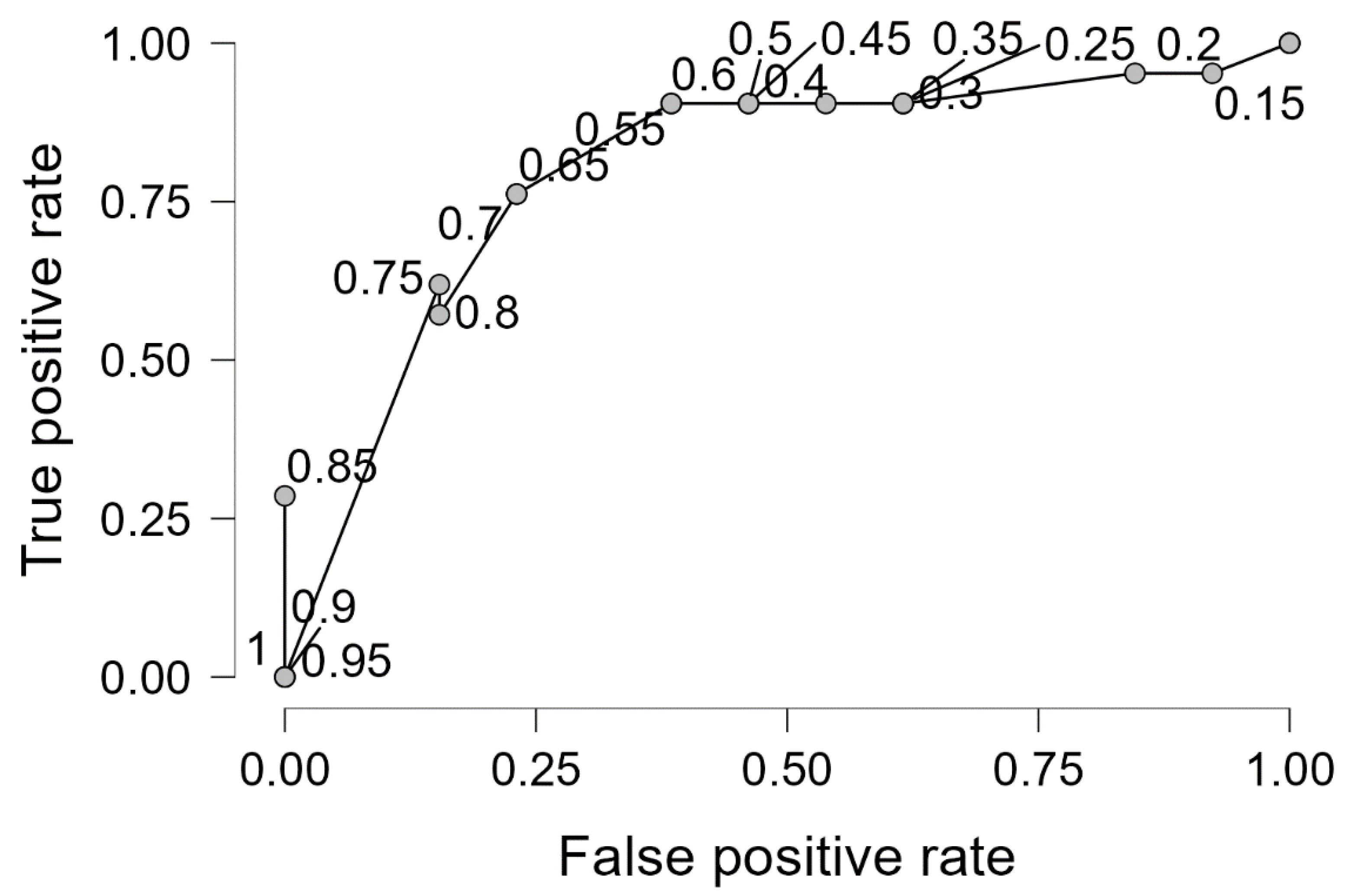

Table 1.
Baseline demographic and surgical characteristics of the study population.
| Characteristic | Mesh Pectopexy (n = 50) | Wire Pectopexy (n = 50) |
|---|---|---|
| Age, years | 55.0 (52.0–59.0) | 55.0 (52.0–59.0) |
| BMI, kg/m2 | 28.0 (26.6–29.8) | 28.0 (25.9–29.4) |
| Urban residence, n (%) | 28 (56%) | 24 (48%) |
| Rural residence, n (%) | 22 (44%) | 26 (52%) |
| Apical POP-Q stage > II, n (%) | 50 (100%) | 50 (100%) |
| Total hysterectomy ± adnexectomy, n (%) | 9 (18%) | 47 (94%) |
| Rectocele repair, n (%) | 9 (18%) | 6 (12%) |
| McCall culdoplasty, n (%) | 1 (2%) | 2 (4%) |
Data are presented as median (interquartile range) or number (percentage).
Table 2.
MRI-based pelvic floor parameters at 12 months.
| MRI Parameter | Mesh Pectopexy (n = 50) | Wire Pectopexy (n = 50) |
|---|---|---|
| H-line at rest (cm) | 5.9 (5.1–6.5) | 6.3 (5.0–7.2) |
| M-line at rest (cm) | 3.9 (3.5–5.6) | 3.9 (3.2–5.3) |
| H-line at Valsalva (cm) | 6.5 (5.6–7.9) | 6.7 (5.8–8.9) |
| M-line at Valsalva (cm) | 4.0 (3.9–6.8) | 5.6 (4.0–7.1) |
Table 3.
Analysis of variance (ANOVA) for vaginal PS3L axis angle.
| Source | Sum of Squares | df | Mean Square | F | p Value |
|---|---|---|---|---|---|
| Gynecological examination | 220.978 | 3 | 73.659 | 3.867 | 0.019 |
| Residuals | 571.405 | 30 | 19.047 | — | — |
Table 4.
Logistic regression predicting normal postoperative gynecological examination.
| Predictor | Estimate (β) | Standard Error | Wald z | p Value |
|---|---|---|---|---|
| Intercept | 1.951 | 0.687 | 2.841 | 0.004 |
| Vaginal PS3L axis angle | −0.257 | 0.096 | −2.664 | 0.008 |
Disclaimer/Publisher’s Note: The statements, opinions and data contained in all publications are solely those of the individual author(s) and contributor(s) and not of MDPI and/or the editor(s). MDPI and/or the editor(s) disclaim responsibility for any injury to people or property resulting from any ideas, methods, instructions or products referred to in the content. |
© 2026 by the authors. Licensee MDPI, Basel, Switzerland. This article is an open access article distributed under the terms and conditions of the Creative Commons Attribution (CC BY) license.
Copyright: This open access article is published under a Creative Commons CC BY 4.0 license, which permit the free download, distribution, and reuse, provided that the author and preprint are cited in any reuse.


