

Submitted:
14 March 2026
Posted:
16 March 2026
You are already at the latest version
Abstract
U.S. adults with substance use disorders (SUD) underutilize specialty substance use treatment (SUT) and are more likely to use mental health treatment (MHT) than SUT. In this study based on the 2022 and 2023 National Survey on Drug Use and Health (N=19,555, age 18+ with past-year SUD), we examined clinical and other factors associated with four distinct behavioral health service configurations: no treatment, both SUT and MHT, SUT only, and MHT only. We fitted two multinomial and binary logistic regression models to examine associations of treatment use patterns with SUD and mental illness severity as need factors, while controlling for predisposing, enabling, and other need factors. The findings show that 59.3% U.S. adults with SUD did not use SUT or MHT in the past year, 10.7% used both SUT and MHT, 3.7% used SUT only, and 26.4% used MHT only. Severe SUD (RRR=2.77, 95% CI=2.13-3.60), compared with mild SUD, and all levels of mental illness severity (RRR=7.27, 95% CI=5.41-9.79 for serious mental illness) were associated with a higher likelihood of receiving both SUT and MHT. Both moderate and severe SUD, but not mental illness severity, were associated with receiving SUT only. All levels of mental illness severity were also associated with a higher likelihood of receiving MHT only (RRR=7.30, 95% CI=6.17-8.64 for serious mental illness), whereas severe SUD was associated with a lower likelihood of receiving MHT only. The findings were similar in analyses restricted to users of any treatment or SUT. In sum, receipt of both SUT and MHT is concentrated among individuals with the highest clinical severity in both SUD and mental illness. These findings underscore the importance of integrating substance use and mental health services.
Keywords:
substance use disorder
; mental illness
; symptom severity
; specialty substance use treatment
1. Introduction
U.S. epidemiologic data showed that the proportion of individuals aged 12 years or older who needed treatment for substance use disorder (SUD) increased from 8.2% in 2013 to 17.1% in 2023; the increase was from 6.6% to 10.2% for alcohol use disorder (AUD) and from 2.6% to 9.6% for drug use disorder (DUD) [1]. Despite the increasing proportion of individuals with SUD, only one in seven in 2022-2023 received specialty substance use treatment, indicating a significant treatment gap [1,2]. Previous research has shown that the type of SUD (e.g., AUD, opioid use disorder, or other) and SUD severity are significant determinants of substance use treatment receipt versus non-receipt [3,4,5,6]. Research has also shown that the treatment gap is especially pronounced among marginalized sub-populations, including older, non-White, low-socio-economic status, and non-heterosexual populations [7,8].
Notably, prior research has consistently shown that mental health service utilization exceeds substance use treatment among individuals with SUD [9,10,11,12,13]. Multiple individual- and system-level barriers contribute to lower rates of substance use treatment relative to mental health treatment. At the individual level, lack of readiness to stop using or start treatment, stigma-related concerns, and health insurance and cost problems are significant barriers to seeking substance use treatment [3,14,15,16]. Stigma concerns are understandable, as stigma in the general public surrounding SUD tends to be higher than that surrounding mental illness [17]. System-level factors include lower availability and integration of substance use treatment services relative to mental health services within general medical and social service settings, limited funding for substance use treatment, and workforce shortages within specialty addiction treatment systems [18,19,20,21]. Treatment entry pathways also tend to prioritize mental health symptoms over substance-related problems, and substance use treatment often imposes a higher threshold for entry and continuation, such as requiring drug abstinence and criminalizing certain drug use, which may result in incarceration instead of treatment receipt [22].
Although extensive documentation shows that mental health services are used more frequently than specialty substance use treatment among individuals with SUD, prior research has not systematically examined factors associated with distinct treatment patterns, namely, receipt of mental health treatment alone, substance use treatment alone, or both. Examining clinical factors is particularly important given the high prevalence of co-occurring mental illness among individuals with SUDs [23,24,25,26]. Understanding these factors may help explain why many individuals receive mental health services without concurrent substance use treatment, whereas others use both substance use and mental health treatment.
Using nationally representative data from the 2022-2023 National Survey on Drug Use and Health (NSDUH) and focusing on adults (ages 18 or older) with any SUD (AUD and/or DUD), the present study first examined factors associated with receipt of (1) both substance use treatment (SUT) and mental health treatment (MHT), (2) SUT only, and (3) MHT only, relative to no treatment. We then focused on those who received any treatment (SUT and/or MHT) and examined factors associated with receipt of (1) both SUT and MHT and (2) SUT only, relative to MHT only. Finally, we focused on those who received SUT to examine factors associated with receipt versus non-receipt of MHT.
Andersen’s behavioral model of healthcare use [27,28] provided the conceptual framework for the study, in which predisposing, enabling, and need factors influence individuals’ health service use. Predisposing factors include biological and demographic characteristics and health beliefs, while enabling factors include resources that facilitate access to care. Need factors refer to the perceived or evaluated severity of physical and/or behavioral health problems and are often the strongest predictors of use of physical health [29] and behavioral health [30,31] services.
After controlling for predisposing and enabling factors, the study’s hypotheses were:
H1.
Relative to no treatment use: (a) higher SUD and mental illness severity would be associated with a greater likelihood of receiving both substance use treatment (SUT) and mental health treatment (MHT); (b) Higher SUD severity, but not mental illness severity, would be associated with a greater likelihood of receiving SUT only; and (c) higher mental illness severity would be associated with a greater likelihood of receiving MHT only.
H2.
Among individuals who received any treatment, higher SUD severity would be associated with receiving any SUT (with or without MHT) rather than receiving MHT alone.
H3.
Among individuals who received SUT, greater mental illness severity would be associated with receiving both SUT and MHT rather than receiving SUT alone.
The findings of this study provide new insight into how SUD severity, mental illness, and predisposing and enabling factors among individuals with SUD are associated with distinct patterns of behavioral health service utilization. These patterns enhance understanding of the facilitators and barriers to integrated treatment delivery and inform strategies to improve access to care.
2. Materials and Methods
2.1. Data Source
The NSDUH, funded by the U.S. Substance Abuse and Mental Health Administration, is the largest annual cross-sectional survey of substance use, mental health, and behavioral health treatment, using a nationally representative sample of the civilian, non-institutionalized population aged >12 years. For a larger sample, we combined the 2022 and 2023 NSDUH data. The 2021 and 2024 data were not included in the present study because substance use treatment and mental health treatment questions underwent considerable revision in the 2022 NSDUH and again in 2024 for SUD and SUT [32]. Thus, the 2022 and 2023 NSDUH estimates for these treatments should not be compared with estimates from 2021 or prior years, or with those in 2024 [33]. Due to the ongoing COVID-19 pandemic, data collection in 2022 and 2023 was conducted via both in-person and web-based modes. The overall percentage of interviews completed via the web was 40.7% in 2022 and 36.0% in 2023 [2,34].
2.2. Participants and Procedures
The 2022 and 2023 NSDUH public use data sets included responses from 59,069 and 56,705 individuals, respectively, individuals age 12 and older who completed an in-person or web-based NSDUH survey. In the present study, among 92,233 (47,100 in 2022 and 45,133 in 2023) respondents aged 18 years and older, we focused on 19,555 (9,869 in 2022 and 9,686 in 2023), or 18.1% of U.S. adults (46.4 million people), who reported past-year AUD and/or DUD. No significant difference was found between the 2022 and 2023 SUD rates (F [1,50]=0.33, p=.566). NSDUH’s multi-stage area probability sampling design made it unlikely that duplicate survey respondents occurred in the pooled two-year survey data. Analysis of these de-identified public-use data was exempt from the authors’ institutional review board review.
2.3. Measures
2.3.1. Past-Year Receipt of SUT and MHT
The 2022 and 2023 NSDUH provide a 4-category treatment pattern variable reflecting distinct behavioral health service configurations: (1) receipt of neither treatment (no SUT or MHT); (2) receipt of both SUT and MHT; (3) receipt of SUT but not MHT (SUT only); and (4) receipt of MHT but not SUT (MHT only). SUT referred to treatment for alcohol or drug use in an inpatient setting (including residential rehabilitation or treatment centers); in an outpatient setting; via telehealth; or in a prison, jail, or juvenile detention center (not mutually exclusive); or medication-assisted treatment for alcohol or opioid use. Beginning in 2022, NSDUH excluded the receipt of support services from a support group, a peer support specialist, or a recovery coach; services in an emergency department (ED); and detoxification or withdrawal support services from formal treatment, but referred to them as support or recovery services. We reported these services for descriptive purposes only.
Unlike SUT, NSDUH continued to define MHT (for “mental health, emotions, or behavior”) broadly, including medication, professional counseling, or other treatment in inpatient or medical or nonmedical outpatient settings, in the ED, in a rehabilitation center, via telehealth, or in a jail or prison. The provider list remained broad, including a variety of helping professionals, such as peer support specialists/recovery coaches, religious spiritual advisers, and alternative medical providers.
2.3.2. Past-Year SUD and SUD Severity
Respondents were asked SUD questions, per the 11 DSM-5 criteria, about any alcohol or drugs used in the 12 months prior to the survey. Any past-year SUD refers to an AUD or a DUD. Drugs included in the DUD assessments were cannabis/marijuana, cocaine (including crack), heroin, hallucinogens, inhalants, methamphetamine, and any use of prescription pain relievers, tranquilizers or sedatives (e.g., benzodiazepines), and stimulants. SUDs were categorized as AUD only, DUD only, or both AUD and DUD. For all individual SUDs, the DSM-5 SUD criteria for severity level classification were used for mild (meeting 2-3 criteria), moderate (meeting 4-5 criteria), and severe (meeting 6+ criteria) disorders. For SUD measures that were aggregated across more than one substance (e.g., any SUD, DUD), mild SUD meant that people had only mild SUDs; moderate SUD meant that people had at least one moderate SUD but did not have severe SUDs; and severe SUD meant that people had a severe SUD for at least one substance [2]. We also included nicotine dependence based on the Fagerström Test for Nicotine Dependence Test [35] as another SUD and as a covariate. Polydrug use (i.e., 2+ drug use) was reported for descriptive purposes only.
2.3.3. Past-Year Mental Illness Severity
Mental illness referred to any mental, behavioral, or emotional disorder in the past year of sufficient duration to meet DSM-IV criteria, excluding developmental and substance use disorders. Mental illness was further classified as mild, moderate, or serious (i.e., when the mental illness substantially interfered with or limited one or more major life activities) using statistical prediction models developed from clinical interview data from a subset of NSDUH adult respondents aged 18 or older between 2008 and 2012 [2].
2.3.4. Predisposing and Enabling Factors
Predisposing factors were age group (18-25, 26-34, 35-49, 50+ [50-64 and 65+], with the 35-49 age group as the reference in multivariable models); sex (male vs. female); and race/ethnicity (non-Hispanic white, non-Hispanic Black, Hispanic, or Other [Asian/Pacific Islander, American Indian/Alaska Native, multi-racial]). Enabling factors included education (college degree vs. no college degree); income (<poverty, up to 2X poverty, >2X poverty); any health insurance coverage (yes or no); health status (number [0–10] of chronic medical conditions [asthma, hypertension, diabetes, heart disease, COPD, cirrhosis of the liver, hepatitis, HIV/AIDS, kidney disease, and cancer] that a health professional diagnosed); problem self-perception (whether or not the respondent had ever perceived an alcohol or drug use problem; yes or no); and parole/probation status. Previous research found that those with a self-perception of their substance misuse were more likely to seek treatment [3,36]. Previous research has also shown that those in parole/probation tend to have a higher rate of substance use treatment receipt [4,37,38], likely through legal mandate [39,40].
2.4. Analysis
We used Stata/MP 19.5’s svy function (College Station, TX) and the subpop command in all analyses to account for NSDUH’s multi-stage, stratified sampling design, ensuring that variance estimates incorporate the full sampling design. For this study’s 2-year pooled data set, adjusted person-level analysis weights were created by dividing the final person-level analysis weights by the number of years of combined data (two in the current study) following NSDUH guidelines for combining sampling weights across multiple survey years. All estimates presented in this study are weighted except for sample sizes. First, we presented descriptive statistics (Pearson’s χ2, ANOVA, or t tests) comparing predisposing, enabling, and need factors among four groups of adults with SUD: (1) those with no past-year treatment use; (2) those who used both SUT and MHT; (3) those who used SUT only; and (4) those who used MHT only.
Second, we used a multinomial logistic regression model to test H1a - H1c (correlates of use of both SUT and MHT, SUT only, and MHT only vs. no treatment). For sensitivity analyses, we ran models adjusting for polydrug use and ED visits for substance-related problems, and also tested the interaction effects of SUD severity and mental illness severity. Statistical significance was evaluated using design-based Wald tests.
Third, we also used a multinomial logistic regression model to test H2 among treatment users (correlates of both SUT and MHT and SUT only vs. MHT only). Fourth, we used a binary logistic regression model to test H3 among SUT users (correlates of both SUT and MHT vs. SUT only). We present multinomial logistic regression results as relative risk ratios (RRR) with 95% confidence intervals (CI) and binary logistic regression results as odds ratios (OR) with 95% CI. We used the variance inflation factor (VIF) as a preliminary diagnostic to assess multicollinearity among covariates, applying a cut-off of 2.50 [41] from linear regression models. VIF diagnostics indicated that multicollinearity was not a concern. Significance was set at p<.05.
3. Results
3.1. Characteristics of Adults with SUD by Their Treatment Use Pattern
Table 1 shows that among U.S. adults with SUD, 59.3% did not use SUT or MHT in the past year, 10.7% used both SUT and MHT, 3.7% used SUT only, and 26.4% used MHT only. In total, 14.4% received SUT, and 37.1% received MHT. Among treatment users, 75.3% (both SUT and MHT) to 58.6% (MHT only) had DUD, with or without AUD. Nearly 27% of both groups of SUT users were polydrug users, and nearly a third of both groups also had nicotine dependence. SUD severity also differed by treatment pattern, with those who received any SUT having significantly higher rates of severe disorder (51.6% among users of both SUT and MHT and 44.3% among users of SUT only), compared to non-users of treatment (17.0%) and users of MHT only (17.8%). Additional analysis showed that the rate of polydrug use was significantly higher among those with severe SUD (23.2% vs. 3.0% and 8.9% among those with mild and moderate SUD, respectively (F[1.95, 97.58]=277.90, p <.001).
The prevalence and severity of comorbid mental illness were highest among users of both SUT and MHT (36.2% with serious mental illness), followed by users of MHT only (26.5% with serious mental illness). These two groups also had higher proportions of females (48.7% for both treatments and 59% for MHT only) and non-Hispanic white people (68.8% and 71.8%). Users of MHT and non-users of any treatment had higher proportions of college graduates and higher incomes than the other two groups, i.e., users of any SUT. Users of both SUT and MHT had the highest proportion (64.0%) of those with self-perceived substance use problems, followed by users of SUT only, MHT only, and non-users of any treatment (25.3%). Users of any SUT also included higher proportions of those in parole/probation, those who had a substance-related ED visit, those who participated in support groups, and those who had detoxification. Additional analysis showed that substance-related ED visits were significantly higher among those with severe SUD (10.5% vs. 0.7% and 1.4% among those with mild and moderate SUD, respectively; F[1.90, 95.03]=232.40, p <.001).
3.2. Associations of Treatment Use Patterns with SUD and Mental Illness Severity among All Adults with SUD
Table 2 presents the results from a multinomial logistic regression assessing the likelihood of each of three treatment patterns relative to no treatment. After adjusting for predisposing and enabling factors, DUD only, compared with AUD only, was associated with a higher likelihood of all three treatment types, and the dual diagnosis of DUD and AUD was associated with a higher likelihood of receiving both SUT and MHT.
Compared with mild SUD, severe SUD (RRR=2.77, 95% CI=2.13-3.60) and all levels of mental illness severity (RRR=7.27, 95% CI=5.41-9.79 for serious mental illness) were associated with a higher likelihood of receiving both SUT and MHT. Both moderate (RRR=2.26, 95% CI=1.63-3.13) and severe (RRR=4.00, 95% CI=2.69-5.95) SUD were associated with a higher likelihood of receiving SUT only, whereas mental illness severity was not a significant factor. Severe SUD (RRR=0.71, 95% CI=0.59-0.87) was associated with a lower likelihood of receiving MHT only, whereas all levels of mental illness severity (RRR=7.30, 95% CI=6.17-8.64 for serious mental illness) were associated with a higher likelihood of receiving MHT only. Nicotine dependence was associated with a higher likelihood of receiving both SUT and MHT as well as SUT only.
In sensitivity analyses adjusting for polydrug use and ED visits, the pattern of associations was similar, though effect sizes for SUD severity were attenuated. Both polydrug use and ED visits were significant factors for SUT, likely reflecting greater clinical severity. ED visits may also partially lie on the pathway between SUD severity and treatment receipt, suggesting potential mediation rather than pure confounding. In additional sensitivity analyses including interaction terms between SUD severity and mental illness severity, the joint adjusted Wald test was statistically significant (F[18,33]=2.39, p=0.014), indicating some non-additive effects. However, predicted probabilities showed that the overall pattern of associations across treatment types remained substantively similar.
Among the covariates, compared with the 35-49 age group, all other age groups had a lower likelihood of receiving any treatment. Male gender was associated with a lower likelihood of receiving both SUT and MHT or MHT only, but a higher likelihood of receiving SUT only. Black, Hispanic, and other racial/ethnic groups were also associated with a lower likelihood of receiving both SUT and MHT or MHT only. Higher income was associated with a lower likelihood of receiving SUT, with or without MHT. Any health insurance coverage and problem self-perception were associated with a higher likelihood of any treatment. Parole/probation was associated with a higher likelihood of receiving any SUT, with or without MHT. Finally, a greater number of chronic medical conditions was associated with a higher likelihood of receiving both SUT and MHT as well as MHT only.
Figure 1 shows adjusted predicted probabilities of treatment patterns by SUD and mental illness severity. The probability of receiving no treatment declined only modestly with increasing SUD severity, whereas it decreased substantially with increasing mental illness severity. The probability of receiving both SUT and MHT increased progressively with greater mental illness severity, while the probability of receiving SUT only decreased across levels of mental illness severity.
3.3. Associations of Treatment Use Patterns with SUD and Mental Illness Severity among Treatment Users
The first two columns of Table 3 present the results from a multinomial logistic regression assessing the likelihood of receiving both SUT and MHT or SUT only relative to MHT only. Compared with AUD only, DUD, with or without co-occurring AUD, was associated with a higher likelihood of receiving both SUT and MHT. In contrast, the SUD type was not significantly associated with the likelihood of receiving SUT only versus MHT only.
Regarding SUD and mental illness severity, severe SUD was associated with a higher likelihood of receiving both SUT and MHT (RRR=3.99, 95% CI=3.03-5.24); however, mental illness severity was not associated with the likelihood of receiving both SUT and MHT versus MHT only. Both moderate and severe SUD were associated with a higher likelihood of receiving SUT only (RRR=2.55, 95% CI=1.72-3.77 for moderate SUD; RRR=5.35, 95% CI=3.80-7.54 for severe SUD); however, all levels of mental illness severity were associated with a lower likelihood of receiving SUT only versus MHT only. Nicotine dependence was associated with a higher likelihood of receiving both SUT and MHT as well as SUT only.
Among the covariates, young adults, college graduates, and those with higher income had a lower likelihood of any SUT, whereas male gender and parole/probation were associated with a higher likelihood of any SUT, relative to MHT only. Being Black or Hispanic was associated with a higher likelihood of SUT only, and self-perception of problems was associated with a higher likelihood of both SUT and MHT. The number of chronic medical conditions was associated with a lower likelihood of SUT only.
3.4. Correlates of the Receipt of Both SUT and MHT Versus SUT Only
The third column of Table 3 presents the results from a logistic regression model examining the correlates of receiving both SUT and MHT, compared with SUT alone. SUD type was not a significant factor, but moderate SUD was associated with a lower likelihood of receiving both SUT and MHT. All levels of mental illness were associated with a higher likelihood of receiving both SUT and MHT. The 18-25 age group, compared with the 35-49 age group, and problem self-perception were associated with a higher likelihood of receiving both SUT and MHT, whereas male gender was associated with a lower likelihood of receiving the combination treatments.
4. Discussion
In this nationally representative study, we examined how SUD severity and mental illness severity, after adjusting for predisposing and enabling factors, were associated with behavioral health treatment patterns among U.S. adults with SUD. Overall, only 14.4% of adults with SUD received specialty SUT, whereas 37.1% received MHT, indicating that most individuals with SUD did not receive SUT. When treatment occurred, MHT was substantially more common than SUT, consistent with prior research documenting higher utilization of mental health services relative to SUT among individuals with SUD [10,12]. Even individuals with SUD but no co-occurring mental illness have been shown to have higher odds of receiving MHT than SUT [9].
Also consistent with previous research [5,42,43,44,45], the likelihood of receiving any SUT, with or without MHT, was higher among individuals with DUD than among those with AUD, despite AUD’s higher population prevalence. The lower treatment utilization observed among individuals with AUD, despite comparable disease burden, may be partly attributable to alcohol’s normalized status in U.S. culture as a legally sanctioned substance. The legal and social normalization of alcohol use may delay problem recognition among individuals and healthcare providers and reduce perceived need or external pressure to seek treatment, contributing to persistently lower utilization of alcohol-focused services [46,47]. In contrast, people with DUD often experience greater social stigma and discrimination [48] and are more likely to be identified through healthcare encounters (e.g., emergency medical services) or involvement with the criminal justice system, both of which frequently serve as external referral pathways into treatment, including mandated care [40,49,50,51]. Moreover, policy responses to the opioid crisis over the past decade have substantially expanded treatment infrastructure targeting illicit drug use, including medication-based treatment and overdose-response systems, potentially further widening differences in treatment engagement between DUD and AUD [52,53].
The key finding in this study is that increasing SUD severity, whether from AUD or DUD, is associated with specialty SUT, whereas increasing mental illness severity and relatively milder SUDs are associated with greater reliance on MHT. Receipt of both SUT and MHT is concentrated among individuals with the highest clinical severity in both SUD and mental illness, suggesting that greater, co-occurring clinical complexity or functional impairment drives the combination of mental health and substance use services at higher levels of need. Receipt of SUT alone appears primarily driven by both moderate and severe SUD, suggesting that moderate disorder may prompt engagement with specialty SUT but may not yet necessitate a combination of SUT and MHT. These findings largely support the study hypotheses.
At the system-level, these treatment use patterns likely reflect clinical triage processes, service eligibility thresholds, and crisis- or justice-system-mediated pathways that preferentially connect individuals with more severe substance use problems to addiction treatment services. As indicated by the significance of parole/probation for SUT in this study, as well as in previous studies, contact with the criminal justice system appears to be an important referral pathway to SUT. At the individual level, people with mild SUD may be less likely to perceive the need for specialty SUT and instead rely on general mental health settings to manage co-occurring mental health problems. Moreover, because stigma toward SUDs remains greater than stigma toward other psychiatric disorders [54], individuals with co-occurring behavioral health needs may preferentially seek MHT rather than SUT out of stigma concerns.
The findings also reveal significant patterns by sociodemographic factors and physical health conditions. Young adults (age <34) were less likely to receive SUT, with or without MHT; middle-aged adults (ages 35-49) were more likely to receive SUT only; and those aged 50 and older were less likely to receive MHT only. Given the well-established gender and racial/ethnic gaps [55,56,57], the lower likelihood of MHT among males and racial/ethnic minorities was not surprising. Individuals with greater chronic medical burden were more likely to engage in MHT, possibly reflecting increased contact with healthcare systems. As expected, self-perception of substance-related problems, likely need for treatment, and health insurance coverage were strongly associated with all treatment types, underscoring the combined influence of structural access and individual recognition of need.
Overall, these findings suggest that treatment engagement among adults with SUD is shaped by intersecting clinical, other individual-level, and system-level factors. Severity levels in SUD and mental illness, individuals’ problem perception and other sociodemographic factors, policy differences related to substance types, underlying social stigma, and access-related enabling resources all appear to influence pathways into behavioral health treatment. These patterns align with Andersen’s health service utilization model, in which predisposing, enabling, and need factors jointly influence service use.
This study has the following limitations: First, because NSDUH data are cross-sectional, observed associations reflect correlations, not causal relationships; thus, we cannot establish causal effects of SUD or mental illness severity on treatment use. Second, among individuals who received both SUT and MHT, the dataset does not indicate whether the services were delivered in an integrated setting or obtained separately across systems, precluding any assessment of treatment integration. Third, SUT was restricted to specialty treatments, whereas MHT encompassed a broader range of specialty and non-specialty services, including general medical providers and allied health professionals. As a result, differences in SUT and MHT treatment rates may partially reflect definitional differences rather than true disparities. Fourth, treatment use was self-reported and may be subject to recall or social desirability bias. Fifth, NSDUH does not capture treatment duration, dose, or quality, precluding assessment of adequacy of care.
5. Conclusions and Implications
Despite these data limitations, the study findings have the following clinical and policy implications. First, the fact that many individuals with SUD engage with mental health services without receiving SUT highlights missed opportunities for early integrated intervention within mental health care settings. Prior research has emphasized the importance of integrating SUT within mental health services [13] and strengthening referral mechanisms to ensure coordinated care for individuals with co-occurring conditions [10]. Mental health providers may represent a critical point of contact for individuals with milder or emerging substance use problems, suggesting that routine substance use screening, brief intervention, and facilitated referral within mental health settings could substantially expand access to SUT.
At the same time, SUT systems also need to incorporate mental health assessment and treatment capacity, given the significant association between mental illness severity and receipt of combined care observed in this study. The finding that individuals at higher levels of clinical need for both SUD and psychiatric problems appear to engage in combined treatment suggests that integration likely occurs late rather than early in the treatment trajectory. Earlier integration of mental health services within SUT programs may help prevent clinical escalation and improve continuity of care. Our recommendations align with the growing policy emphasis on integrated behavioral health care across general healthcare and in substance use and mental health services settings, and with evidence of the effectiveness of integrated services [58,59,60,61,62].
Second, the strong association between SUD severity and engagement with specialty SUT suggests that treatment access remains largely severity-contingent and that individuals with mild SUD may not receive timely specialty care. Policies that expand low-threshold and early-intervention services, including outpatient, telehealth, and community-based treatment options, may help engage individuals earlier in the course of SUDs before progression to more severe conditions.
Author Contributions
Namkee G. Choi: Writing – review & editing, Writing – original draft, Methodology, Investigation, Formal analysis, Data curation, Conceptualization. John Moore: Writing – review & editing, Methodology, Investigation, Conceptualization.
Funding
The authors did not receive any external funding for the study.
Conflicts of Interest
The authors declare no conflict of interest.
References
- Liu, L.; Zhang, C.; Nahata, M. C. Trends in treatment need and receipt for substance use disorders in the US. JAMA Netw. Open. 2025, 8(1), e2453317. [Google Scholar] [CrossRef] [PubMed]
- Substance Abuse and Mental Health Services Administration. Key Substance Use and Mental Health Indicators in the United States: Results from the 2023 National Survey on Drug Use and Health (HHS Publication No. PEP24-07-021, NSDUH Series H-59). Center for Behavioral Health Statistics and Quality, Substance Abuse and Mental Health Services Administration: Rockville, MD, USA, 2024. Available online: https://www.samhsa.gov/data/report/2023-nsduh-annual-national-report.
- Choi, N. G.; Marti, C. N. Treatment use among U.S. adults with a substance use disorder: Associations with symptom severity, problem self-perception, comorbid mental illness, and mental health treatment. Int. J. Environ. Res. Public Health. 2025, 22(4), 640. [Google Scholar] [CrossRef]
- Johnson, K.; Rigg, K. K.; Hopkins Eyles, C. Receiving addiction treatment in the US: Do patient demographics, drug of choice, or substance use disorder severity matter? Int. J. Drug Policy. 2020, 75, 102583. [Google Scholar] [CrossRef]
- Mintz, C. M.; Hartz, S. M.; Fisher, S. L.; Ramsey, A. T.; Geng, E. H.; Grucza, R. A.; Bierut, L. J. A cascade of care for alcohol use disorder: Using 2015–2019 National Survey on Drug Use and Health data to identify gaps in past 12-month care. Alcohol Clin. Exp. Res. 2021, 45(6), 1276–1286. [Google Scholar] [CrossRef]
- Pasman, E.; Blair, L.; Solberg, M. A.; McCabe, S. E.; Schepis, T.; Resko, S. M. The substance use disorder treatment gap among US college students: Findings from the 2021 National Survey on Drug Use and Health. Drug Alcohol Depend. Rep. 2024, 12, 100279. [Google Scholar] [CrossRef] [PubMed]
- Priester, M. A.; Browne, T.; Iachini, A.; Clone, S.; DeHart, D.; Seay, K. D. Treatment access barriers and disparities among individuals with co-occurring mental health and substance use disorders: An integrative literature review. J. Subst. Abuse Treat. 2016, 61, 47–59. [Google Scholar] [CrossRef] [PubMed]
- Sahker, E.; Pro, G.; Poudyal, H.; Furukawa, T. A. Evaluating the substance use disorder treatment gap in the United States, 2016–2019: A population health observational study. Am. J. Addict. 2024, 33(1), 36–47. [Google Scholar] [CrossRef]
- Dhinsa, J.; Roman-Urrestarazu, A.; van Kessel, R.; Humphreys, K. Understanding predictors of mental health and substance use treatment utilization among US adults: A repeated cross-sectional study. Glob. Epidemiol. 2023, 5, 100109. [Google Scholar] [CrossRef]
- Edlund, M. J.; Booth, B. M.; Han, X. Who seeks care where? Utilization of mental health and substance use disorder treatment in two national samples of individuals with alcohol use disorders. J. Stud. Alcohol Drugs. 2012, 73(4), 635–646. [Google Scholar] [CrossRef]
- Han, B.; Compton, W. M.; Blanco, C.; Colpe, L. J. Prevalence, treatment, and unmet treatment needs of US adults with mental health and substance use disorders. Health Aff. 2017, 36(10), 1739–1747. [Google Scholar] [CrossRef]
- Harris, K. M.; Edlund, M. J. Use of mental health care and substance abuse treatment among adults with co-occurring disorders. Psychiatr. Serv. 2005, 56(8), 954–959. [Google Scholar] [CrossRef] [PubMed]
- Mojtabai, R. Use of specialty substance abuse and mental health services in adults with substance use disorders in the community. Drug Alcohol Depend. 2005, 78(3), 345–354. [Google Scholar] [CrossRef]
- Ali, M. M.; Teich, J. L.; Mutter, R. Reasons for not seeking substance use disorder treatment: Variations by health insurance coverage. J. Behav. Health Serv. Res. 2017, 44(1), 63–74. [Google Scholar] [CrossRef]
- Hoover, K.; Lockhart, S.; Callister, C.; Holtrop, J. S.; Calcaterra, S. L. Experiences of stigma in hospitals with addiction consultation services: A qualitative analysis of patients’ and hospital-based providers’ perspectives. J. Subst. Abuse Treat. 2022, 138, 108708. [Google Scholar] [CrossRef]
- Mojtabai, R.; Chen, L. Y.; Kaufmann, C. N.; Crum, R. M. Comparing barriers to mental health treatment and substance use disorder treatment among individuals with comorbid major depression and substance use disorders. J. Subst. Abuse Treat. 2014, 46(2), 268–273. [Google Scholar] [CrossRef] [PubMed]
- Barry, C. L.; McGinty, E. E.; Pescosolido, B. A.; Goldman, H. H. Stigma, discrimination, treatment effectiveness, and policy: Public views about drug addiction and mental illness. Psychiatr. Serv. 2014, 65(10), 1269–1272. [Google Scholar] [CrossRef] [PubMed]
- Andrews, C. M.; Hinds, O. M.; Lozano-Rojas, F.; Besmann, W. L.; Abraham, A. J.; Grogan, C. M.; Silverman, A. F. State funding for substance use disorder treatment declined in the wake of Medicaid expansion. Health Aff. 2023, 42(7), 981–990. [Google Scholar] [CrossRef]
- Lindenfeld, Z.; Cantor, J. H.; Chang, J. E. Trends in the availability of comprehensive services within outpatient substance use treatment facilities from 2018 to 2022. Am. J. Drug Alcohol Abuse. 2024, 50(5), 715–726. [Google Scholar] [CrossRef]
- O’Malley, D. M.; Abraham, C. M.; Lee, H. S.; Rubinstein, E. B.; Howard, J.; Hudson, S. V.; Kieber-Emmons, A. M.; Crabtree, B. F. Substance use disorder approaches in US primary care clinics with national reputations as workforce innovators. Fam. Pract. 2022, 39(2), 282–291. [Google Scholar] [CrossRef]
- Zerden, L. S.; Gaiser, M.; Daberko, L.; Ware, O.; Lombardi, B. M. State-by-state variation in the credentialing, training, supervision, and Medicaid reimbursement of the high-school, associate’s, and bachelor’s-level addiction counselor workforce. Subst. Use Addict. J. 2025, 46(4), 859–870. [Google Scholar] [CrossRef]
- Alegría, M.; Frank, R. G.; Hansen, H. B.; Sharfstein, J. M.; Shim, R. S.; Tierney, M. Transforming mental health and addiction services. Health Aff. 2021, 40(2), 226–234. [Google Scholar] [CrossRef]
- Kress, C. B.; Schlesinger, S. The prevalence of comorbidities and substance use disorder. Nurs. Clin. North Am. 2023, 58(2), 141–151. [Google Scholar] [CrossRef]
- Mericle, A. A.; Ta Park, V. M.; Holck, P.; Arria, A. M. Prevalence, patterns, and correlates of co-occurring substance use and mental disorders in the United States: Variations by race/ethnicity. Compr. Psychiatry. 2012, 53(6), 657–665. [Google Scholar] [CrossRef]
- Najt, P.; Fusar-Poli, P.; Brambilla, P. Co-occurring mental and substance abuse disorders: A review on the potential predictors and clinical outcomes. Psychiatry Res. 2011, 186(2–3), 159–164. [Google Scholar] [CrossRef] [PubMed]
- Saani Inusah, A. H.; Wu, M.; Babyak, Z.; Li, X.; Qiao, S. Healthcare utilization among adults with co-occurring substance use and mental health disorders (2018–2023): A study based on All of Us program. medRxiv. 2026, 2026.01.28.26344935. [Google Scholar] [CrossRef]
- Andersen, R. M. Revisiting the behavioral model and access to medical care: Does it matter? J. Health Soc. Behav. 1995, 36(1), 1–10. [Google Scholar] [CrossRef]
- Andersen, R. M. National health surveys and the behavioral model of health services use. Med. Care. 2008, 46(7), 647–653. [Google Scholar] [CrossRef] [PubMed]
- Babitsch, B.; Gohl, D.; von Lengerke, T. Re-revisiting Andersen’s Behavioral Model of Health Services Use: A systematic review of studies from 1998–2011. Psychosoc. Med. 2012, 9, Doc11. [Google Scholar] [CrossRef]
- Graham, A.; Hasking, P.; Brooker, J.; Clarke, D.; Meadows, G. Mental health service use among those with depression: An exploration using Andersen’s behavioral model of health service use. J. Affect. Disord. 2017, 208, 170–176. [Google Scholar] [CrossRef]
- Ober, A. J.; Watkins, K. E.; McCullough, C. M.; Setodji, C. M.; Osilla, K.; Hunter, S. B. Patient predictors of substance use disorder treatment initiation in primary care. J. Subst. Abuse Treat. 2018, 90, 64–72. [Google Scholar] [CrossRef]
- Center for Behavioral Health Statistics and Quality. 2023 National Survey on Drug Use and Health (NSDUH): Methodological Summary and Definitions. Substance Abuse and Mental Health Services Administration: Rockville, MD, USA, 2024. Available online: https://www.samhsa.gov/data/report/2023-methodological-summary-and-definitions.
- Key Substance Use and Mental Health Indicators in the United States: Results from the 2024 National Survey on Drug Use and Health (HHS Publication No. PEP25-07-007, NSDUH Series H-60). Center for Behavioral Health Statistics and Quality, Substance Abuse and Mental Health Services Administration: Rockville, MD, USA, 2025. Available online: https://www.samhsa.gov/data/data-we-collect/nsduh-national-survey-drug-use-and-health/national-releases.
- Key Substance Use and Mental Health Indicators in the United States: Results from the 2022 National Survey on Drug Use and Health (HHS Publication No. PEP23-07-01-006, NSDUH Series H-58). Center for Behavioral Health Statistics and Quality, Substance Abuse and Mental Health Services Administration: Rockville, MD, USA, 2023. Available online: https://www.samhsa.gov/data/report/2022-nsduh-annual-national-report.
- Heatherton, T. F.; Kozlowski, L. T.; Frecker, R. C.; Fagerström, K. O. The Fagerström Test for Nicotine Dependence: A revision of the Fagerström Tolerance Questionnaire. Br. J. Addict. 1991, 86(9), 1119–1127. [Google Scholar] [CrossRef]
- Moore, J.; Choi, N.; DiNitto, D. The association of substance use disorder (SUD) type and other factors in SUD recognition among U.S. adults. J. Psychoactive Drugs. 2025, 1–12. [Google Scholar] [CrossRef]
- Epstein, J. F.; Hourani, L. L.; Heller, D. C. Predictors of treatment receipt among adults with a drug use disorder. Am. J. Drug Alcohol Abuse. 2004, 30(4), 841–869. [Google Scholar] [CrossRef]
- Hai, A. H.; Morrison, M.; Beadleston, A.; Salas-Wright, C. P.; Fearn, N.; Vaughn, M. G. Adults on probation and parole who receive substance use treatment: An analysis of correlates in a national sample, 2015–2021. J. Psychiatr. Res. 2025, 185, 154–160. [Google Scholar] [CrossRef]
- Hiller, M. L.; Knight, K.; Simpson, D. D. Recidivism following mandated residential substance abuse treatment for felony probationers. Prison J. 2006, 86(2), 230–241. [Google Scholar] [CrossRef]
- Moore, J.; Renn, T.; Veeh, C.; Beeler, S. Differences in MOUD receipt by legal referral type in outpatient treatment. J. Subst. Use Addict. Treat. 2026, 209888. [Google Scholar] [CrossRef]
- Allison, P. When can you safely ignore multicollinearity? Statistical Horizons. 2012. Available online: https://statisticalhorizons.com/multicollinearity/.
- Bearnot, B.; Rigotti, N. A.; Baggett, T. P. Access to treatment for alcohol use disorder at US health centers: A national study. J. Gen. Intern. Med. 2018, 33(12), 2040–2042. [Google Scholar] [CrossRef]
- Bearnot, B.; Fine, D. R.; Rigotti, N. A.; Baggett, T. P. Access to treatment for drug use disorder at US health centers: A national study. J. Gen. Intern. Med. 2019, 34(12), 2723–2725. [Google Scholar] [CrossRef] [PubMed]
- Le, P.; Rich, J. J.; Bernstein, E. Y.; Glass, J.; Gasoyan, H.; Back, S. E.; Bui, T. C.; Ayers, G.; Rothberg, M. B. Disparities in treatment for alcohol use disorder among All of Us participants. Am. J. Psychiatry. 2024, 181(11), 973–987. [Google Scholar] [CrossRef] [PubMed]
- Martin, C. E.; Parlier-Ahmad, A. B.; Beck, L.; Scialli, A.; Terplan, M. Need for and receipt of substance use disorder treatment among adults, by gender, in the United States. Public Health Rep. 2022, 137(5), 955–963. [Google Scholar] [CrossRef] [PubMed]
- Koob, G. F. Alcohol use disorder treatment: Problems and solutions. Annu. Rev. Pharmacol. Toxicol. 2024, 64, 255–275. [Google Scholar] [CrossRef]
- Tarp, K.; Sari, S.; Nielsen, A. S. Why treatment is not an option: Treatment-naïve individuals suffering from alcohol use disorders’ narratives about alcohol use and treatment seeking. Nord. Stud. Alcohol Drugs. 2022, 39(4), 437–452. [Google Scholar] [CrossRef]
- Leslie, M.; Osborn, C. J.; Rumrill, P.; McMahon, B. Workplace discrimination experiences of Americans with alcohol use disorders and Americans with drug use disorders: A comparative analysis. Rehabil. Couns. Bull. 2020, 65(3), 185–196. [Google Scholar] [CrossRef]
- Pickard, J. G.; Sacco, P.; van den Berk-Clark, C.; Cabrera-Nguyen, E. P. The effect of legal mandates on substance use disorder treatment completion among older adults. Aging Ment. Health. 2020, 24(3), 497–503. [Google Scholar] [CrossRef]
- Rosenberg, A.; Heimer, R.; Keene, D. E.; Groves, A. K.; Blankenship, K. M. Drug treatment accessed through the criminal justice system: Participants’ perspectives and uses. J. Urban Health. 2019, 96(3), 390–399. 96, 3, pp. 390–399. [CrossRef]
- Shearer, R. D.; Winkelman, T. N. A.; Khatri, U. G. State-level variation in substance use treatment admissions among criminal legal-referred individuals. Drug Alcohol Depend. 2022, 240, 109651. [Google Scholar] [CrossRef] [PubMed]
- Estrada, M. A. G.; Abraham, A. J.; Andrews, C. M.; Grogan, C. M. Statewide efforts to address the opioid epidemic: Results from a national survey of single state agencies. J. Subst. Use Addict. Treat. 2024, 160, 209309. [Google Scholar] [CrossRef]
- Murrin, S. States’ Use of Grant Funding for a Targeted Response to the Opioid Crisis. U.S. Department of Health and Human Services Office of Inspector General: Washington, DC, USA, 2020. Available online: https://www.researchgate.net/profile/Heather-Barton-3/publication/342049416_HHS_Office_of_Inspector_General_States’_Use_of_Grant_Funding_for_a_Targeted_Response_to_the_Opioid_Crisis.
- Yang, L. H.; Wong, L. Y.; Grivel, M. M.; Hasin, D. S. Stigma and substance use disorders: An international phenomenon. Curr. Opin. Psychiatry. 2017, 30(5), 378–388. [Google Scholar] [CrossRef]
- Pattyn, E.; Verhaeghe, M.; Bracke, P. The gender gap in mental health service use. Soc. Psychiatry Psychiatr. Epidemiol. 2015, 50(7), 1089–1095. [Google Scholar] [CrossRef]
- NeMoyer, A.; Cruz-Gonzalez, M.; Alvarez, K.; Kessler, R. C.; Sampson, N. A.; Green, J. G.; Alegría, M. Reducing racial/ethnic disparities in mental health service use among emerging adults: Community-level supply factors. Ethn. Health. 2022, 27(4), 749–769. [Google Scholar] [CrossRef]
- Yirenya-Tawiah, A.; Cubbin, C. Racial and ethnic disparities in mental health service utilization during COVID-19. J. Racial Ethn. Health Disparities. 2025. [Google Scholar] [CrossRef] [PubMed]
- Harris, J.; Dalkin, S.; Jones, L.; Ainscough, T.; Maden, M.; Bate, A.; Copello, A.; Gilchrist, G.; Griffith, E.; Mitcheson, L.; Sumnall, H.; Hughes, E. Achieving integrated treatment: A realist synthesis of service models and systems for co-existing serious mental health and substance use conditions. Lancet Psychiatry. 2023, 10(8), 632–643. [Google Scholar] [CrossRef]
- McClellan, C.; Maclean, J. C.; Saloner, B.; McGinty, E. E.; Pesko, M. F. Integrated care models and behavioral health care utilization: Quasi-experimental evidence from Medicaid health homes. Health Econ. 2020, 29(9), 1086–1097. [Google Scholar] [CrossRef] [PubMed]
- Reilly, J.; Meurk, C.; Sara, G. E.; Heffernan, E. Comprehensive care processes for substance use disorders in adult mental health services: A systematic review. Aust. N. Z. J. Psychiatry. 2025, 59(3), 209–223. [Google Scholar] [CrossRef] [PubMed]
- The Commonwealth Fund. Integrating Primary Care and Behavioral Health to Address the Behavioral Health Crisis. The Commonwealth Fund: New York, NY, USA, 2022. Available online: https://www.commonwealthfund.org/publications/explainer/2022/sep/integrating-primary-care-behavioral-health-address-crisis.
- Wetzler, S.; Counts, N.; Schwartz, B.; Patel, U.; Holcombe, S. Impact of New York State’s Health Home Model on health care utilization. Psychiatr. Serv. 2023, 74(9), 1002–1005. [Google Scholar] [CrossRef] [PubMed]
Figure 1.
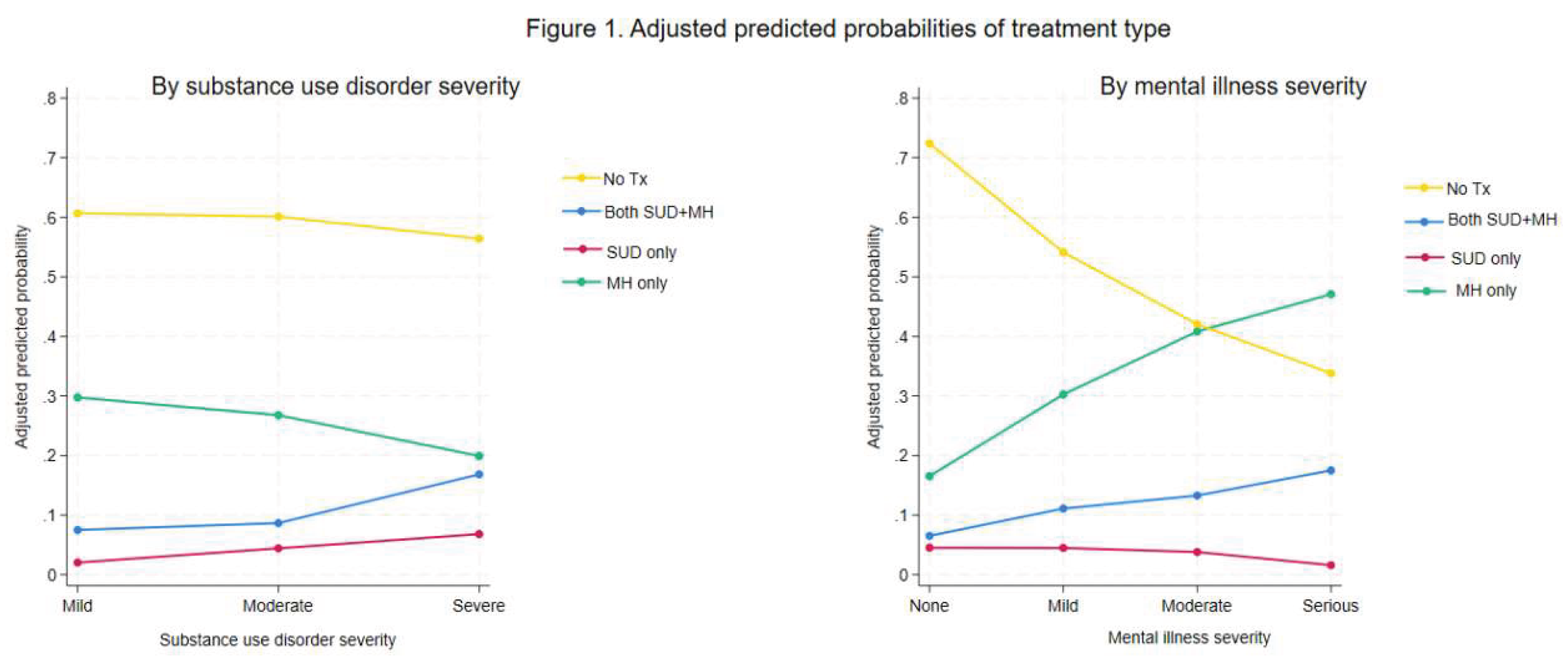

Table 1.
Characteristics of individuals with substance use disorder (SUD) by treatment use patterns.
Table 1.
Characteristics of individuals with substance use disorder (SUD) by treatment use patterns.
| No treatment N=11,307 (59.3%) |
Both SUT and MHT (1) N=2,076 (10.7%) |
SUT only (2) N=690 (3.7%) |
MHT only (3) N=5,532 (26.4%) |
P between (1) & (2) |
P between (1) & (3) |
P between (2) & (3) |
||
| SUD type (%) | .013 | <.001 | .051 | |||||
| Alcohol, not drug, use disorder | 51.4 | 24.7 | 33.7 | 41.5 | ||||
| Drug, not alcohol, use disorder | 34.4 | 48.8 | 45.4 | 42.9 | ||||
| Both alcohol and drug use disorder | 14.2 | 26.5 | 20.9 | 15.7 | ||||
| Poly (2+) drug use (%) | 4.8 | 26.9 | 26.6 | 7.8 | .892 | <.001 | <.001 | |
| SUD severity (%) | .028 | <.001 | <.001 | |||||
| Mild | 60.2 | 30.3 | 28.0 | 58.4 | ||||
| Moderate | 22.8 | 18.1 | 27.7 | 23.8 | ||||
| Severe | 17.0 | 51.6 | 44.3 | 17.8 | ||||
| Past-year mental illness (%) | <.001 | <.001 | <.001 | |||||
| None | 69.7 | 24.8 | 54.4 | 32.4 | ||||
| Mild | 14.7 | 19.0 | 21.9 | 20.1 | ||||
| Moderate | 8.4 | 20.0 | 15.4 | 21.0 | ||||
| Severe | 7.2 | 36.2 | 8.3 | 26.5 | ||||
| Nicotine dependence (%) | 14.0 | 31.7 | 31.2 | 12.3 | .884 | <.001 | <.001 | |
| Age group (%) | .138 | .003 | .006 | |||||
| 18-25 | 18.9 | 17.1 | 15.5 | 22.8 | ||||
| 26-34 | 23.3 | 21.2 | 17.8 | 23.5 | ||||
| 35-49 | 26.2 | 31.0 | 38.0 | 27.5 | ||||
| 50-64 | 20.6 | 24.4 | 19.4 | 18.1 | ||||
| 65+ | 10.0 | 6.3 | 9.3 | 8.1 | ||||
| Female (%) | 34.1 | 48.7 | 29.8 | 59.0 | <.001 | <.001 | <.001 | |
| Race/ethnicity (%) | .028 | .458 | <.001 | |||||
| Non-Hispanic White | 58.0 | 68.8 | 60.0 | 71.8 | ||||
| Non-Hispanic Black | 15.1 | 8.8 | 13.1 | 8.5 | ||||
| Hispanic | 18.8 | 14.8 | 21.4 | 13.9 | ||||
| Asian/Pacific Islander | 4.6 | 3.7 | 1.9 | 2.3 | ||||
| American Indian/Alaska Native | 0.8 | 0.7 | 1.4 | 0.5 | ||||
| Multi-racial | 2.7 | 3.1 | 2.2 | 3.0 | ||||
| College degree (%) | 27.9 | 17.5 | 12.9 | 39.4 | .100 | <.001 | <.001 | |
| Income (%) | .123 | <.001 | <.001 | |||||
| Below poverty | 16.8 | 26.5 | 33.0 | 16.4 | ||||
| Up to 2x poverty | 19.2 | 26.8 | 25.9 | 18.4 | ||||
| More than 2x poverty | 63.9 | 46.7 | 41.1 | 65.1 | ||||
| Any health insurance coverage (%) | 85.9 | 92.5 | 88.5 | 93.6 | .052 | .306 | .003 | |
| Problem self-perception (%) | 25.3 | 64.0 | 50.2 | 33.6 | <.001 | <.001 | <.001 | |
| Parole or probation state (%) | 2.7 | 13.2 | 10.7 | 1.9 | .352 | <.001 | <.001 | |
| No. of chronic medical conditions, M (SE) | 0.52 (0.02) | 0.80 (0.04) | 0.64 (0.06) | 0.73 (0.03) | .037 | .251 | .143 | |
| Emergency department visit for substance use (%) | 0.7 | 17.0 | 16.0 | 0.8 | .744 | <.001 | <.001 | |
| Support group for SUD (%) | 1.8 | 34.3 | 24.7 | 2.2 | .006 | <.001 | <.001 | |
| Detoxification for SUD (%) | <0.1 | 16.4 | 12.0 | 0.3 | .186 | <.001 | <.001 | |
SUT = Specialty substance use treatment; MHT = Mental health treatment. Note: P-values were calculated using Pearson’s χ2 for categorical variables and t-tests for continuous variables. P-values (not shown in the table) based on Pearson’s χ2 for categorical variables and ANOVA for continuous variables indicated that differences among the four groups were significant at the .001 or <.001 level across all variables.
Table 2.
Associations of treatment use pattern with substance use disorder (SUD) and mental illness severity among all adults with SUD: Multinomial logistic regression results.
Table 2.
Associations of treatment use pattern with substance use disorder (SUD) and mental illness severity among all adults with SUD: Multinomial logistic regression results.
| Both SUT and MHT RRR (95% CI) |
SUT only RRR (95% CI) |
MHT only RRR (95% CI) |
||||
| Vs. No treatment | ||||||
| SUD type: vs. Alcohol use disorder | ||||||
| Drug use disorder | 2.26 (1.76-2.91)*** | 1.69 (1.20-2.39)** | 1.35 (1.18-1.53)*** | |||
| Both alcohol and drug use disorder | 1.67 (1.24-2.26)** | 1.22 (0.78-1.92) | 1.09 (0.87-1.35) | |||
| SUD severity: vs. Mild disorder | ||||||
| Moderate disorder | 1.18 (0.89-1.58) | 2.26 (1.63-3.13)*** | 0.89 (0.74-1.08) | |||
| Severe disorder | 2.77 (2.13-3.60)*** | 4.00 (2.69-5.95)*** | 0.71 (0.59-0.87)** | |||
| Mental illness severity: No mental illness | ||||||
| Mild | 2.56 (1.93-3.40)*** | 1.41 (0.94-2.12) | 2.65 (2.17-3.23)*** | |||
| Moderate | 4.17 (2.89-6.03)*** | 1.57 (0.98-2.52) | 4.87 (3.91-6.06)*** | |||
| Serious | 7.27 (5.41-9.79)*** | 0.84 (0.52-1.35) | 7.30 (6.17-8.64)*** | |||
| Nicotine dependence vs. no dependence | 1.65 (1.25-2.16)** | 1.46 (1.04-2.07)* | 0.99 (0.77-1.27) | |||
| Age group: vs. 35-49 | ||||||
| 18-25 | 0.67 (0.51-0.87)** | 0.47 (0.35-0.64)*** | 1.07 (0.91-1.26) | |||
| 26-34 | 0.71 (0.55-0.92)* | 0.52 (0.37-0.73)*** | 0.89 (0.75-1.06) | |||
| 50+ | 1.17 (0.88-1.56) | 0.72 (0.46-1.13)* | 0.82 (0.68-0.99)* | |||
| Male vs. Female | 0.58 (0.49-0.68)*** | 1.10 (0.84-1.45)** | 0.45 (0.39-0.53)*** | |||
| Race/ethnicity: vs. Non-Hispanic White | ||||||
| Non-Hispanic Black | 0.49 (0.36-0.66)*** | 0.72 (0.48-1.07) | 0.48 (0.36-0.64)*** | |||
| Hispanic | 0.78 (0.55-1.11) | 1.15 (0.73-1.79) | 0.69 (0.55-0.87)** | |||
| Other | 0.72 (0.41-1.27) | 0.64 (0.37-1.09) | 0.55 (0.42-0.72)*** | |||
| College degree: vs. No degree | 0.96 (0.76-1.22) | 0.63 (0.43-0.92)* | 1.81 (1.51-2.16)*** | |||
| Income: vs. Below poverty | ||||||
| Up to 2x poverty | 0.89 (0.66-1.19) | 0.70 (0.47-1.06) | 0.91 (0.69-1.20) | |||
| More than 2x poverty | 0.61 (0.43-0.85)*** | 0.41 (0.29-0.56)*** | 0.91 (0.71-1.17) | |||
| Any health insurance coverage | 2.62 (1.95-3.53)** | 1.75 (1.16-2.65)** | 2.17 (1.71-2.76)*** | |||
| Problem self-perception | 2.80 (2.24-3.49)*** | 1.85 (1.28-2.66)** | 1.26 (1.05-1.52)* | |||
| Parole or probation state | 3.69 (2.51-5.40)*** | 2.66 (1.46-4.84)** | 0.91 (0.56-1.48) | |||
| No. of chronic medical condition | 1.12 (1.01-1.25)* | 1.06 (0.91-1.22) | 1.22 (1.12-1.34)*** | |||
| Model statistics | N=19,548; population N=46.4 million; design df=50 | |||||
SUT = Specialty substance use treatment; MHT = Mental health treatment. *p<.05; **p<.01; ***p<.001.
Table 3.
Associations of treatment types with substance use disorder (SUD) and mental illness severity among treatment users: Multinomial and binary logistic regression results.
Table 3.
Associations of treatment types with substance use disorder (SUD) and mental illness severity among treatment users: Multinomial and binary logistic regression results.
| Both SUT and MHT RRR (95% CI) |
SUT only RRR (95% CI) |
Both SUT and MHT OR (95% CI) | ||||
| Vs. MHT only | Vs. SUT only | |||||
| SUD type: vs. Alcohol use disorder | ||||||
| Drug use disorder | 1.77 (1.37-2.29)*** | 1.33 (0.93-1.91) | 1.27 (0.86-1.88) | |||
| Both alcohol and drug use disorder | 1.68 (1.19-2.36)** | 1.28 (0.78-2.09) | 1.21 (0.74-2.00) | |||
| SUD severity: vs. Mild disorder | ||||||
| Moderate disorder | 1.33 (0.94-1.89) | 2.55 (1.72-3.77)*** | 0.49 (0.31-0.78)** | |||
| Severe disorder | 3.99 (3.03-5.24)*** | 5.35 (3.80-7.54)*** | 0.78 (0.50-1.20) | |||
| Mental illness severity: No mental illness | ||||||
| Mild | 1.05 (0.75-1.46) | 0.59 (0.39-0.90)* | 1.78 (1.19-2.66)** | |||
| Moderate | 0.94 (0.69-1.30) | 0.35 (0.22-0.54)*** | 2.55 (1.46-4.43)** | |||
| Serious | 1.10 (0.78-1.55) | 0.13 (0.08-0.21)*** | 8.09 (4.94-13.24)*** | |||
| Nicotine dependence vs. no dependence | 1.71 (1.23-2.37)** | 1.62 (1.14-2.30)** | 1.07 (0.72-1.60) | |||
| Age group: vs. 35-49 | ||||||
| 18-25 | 0.63 (0.47-0.84)** | 0.41 (0.29-0.56)*** | 1.59 (1.03-2.44)* | |||
| 26-34 | 0.86 (0.62-1.18) | 0.61 (0.40-0.94)* | 1.38 (0.86-2.22) | |||
| 50+ | 1.41 (1.02-1.95) | 0.83 (0.53-1.30) | 1.59 (0.94-2.67) | |||
| Male vs. Female | 1.22 (1.00-1.48)* | 2.21 (1.66-2.93)*** | 0.56 (0.41-0.77)** | |||
| Race/ethnicity: vs. Non-Hispanic White | ||||||
| Non-Hispanic Black | 1.11 (0.74-1.66) | 1.56 (1.06-2.28)* | 0.69 (0.43-1.13) | |||
| Hispanic | 1.05 (0.72-1.52) | 1.53 (1.02-2.31)* | 0.75 (0.47-1.21) | |||
| Other | 1.30 (0.72-2.33) | 1.09 (0.59-2.04) | 1.45 (0.62-3.38) | |||
| College degree: vs. No degree | 0.52 (0.39-0.68)*** | 0.35 (0.22-0.55)*** | 1.37 (0.84-2.25) | |||
| Income: vs. Below poverty | ||||||
| Up to 2x poverty | 0.96 (0.70-1.31) | 0.80 (0.53-1.21) | 1.27 (0.85-1.91) | |||
| More than 2x poverty | 0.69 (0.50-0.95)* | 0.49 (0.34-0.71)*** | 1.32 (0.90-1.95) | |||
| Any health insurance coverage | 1.12 (0.76-1.64) | 0.78 (0.50-1.20) | 1.36 (0.91-2.03) | |||
| Problem self-perception | 2.13 (1.72-2.64)*** | 1.28 (0.91-1.80) | 1.62 (1.18-2.21)* | |||
| Parole or probation state | 3.66 (2.06-6.50)*** | 2.77 (1.28-5.98)* | 1.27 (0.69-2.34) | |||
| No. of chronic medical condition | 0.92 (0.82-1.04) | 0.85 (0.72-0.99)* | 1.06 (0.89-1.26) | |||
| Model statistics | N=8,293; population N=18.9 million; design df=50 |
N=2,765; population N=6.7 million; design df=50; F (22,29)=7.59; p<.001 | ||||
SUT = Specialty substance use treatment; MHT = Mental health treatment. *p<.05; **p<.01; ***p<.001.
Disclaimer/Publisher’s Note: The statements, opinions and data contained in all publications are solely those of the individual author(s) and contributor(s) and not of MDPI and/or the editor(s). MDPI and/or the editor(s) disclaim responsibility for any injury to people or property resulting from any ideas, methods, instructions or products referred to in the content. |
© 2026 by the authors. Licensee MDPI, Basel, Switzerland. This article is an open access article distributed under the terms and conditions of the Creative Commons Attribution (CC BY) license (http://creativecommons.org/licenses/by/4.0/).
Copyright: This open access article is published under a Creative Commons CC BY 4.0 license, which permit the free download, distribution, and reuse, provided that the author and preprint are cited in any reuse.