
Submitted:
13 March 2026
Posted:
16 March 2026
You are already at the latest version
Abstract
Chronic wounds, including diabetic foot ulcers, pressure ulcers, and venous leg ulcers, remain a global healthcare burden due to persistent inflammation, impaired tissue repair, and high susceptibility to infection. The rise of antibiotic-resistant pathogens and the prevalence of biofilms in these wounds have limited the effectiveness of conventional therapies, highlighting the need for advanced strategies that simultaneously control infection and promote healing. Biomaterial-based approaches have emerged as promising solutions, offering multifunctional platforms that combine antimicrobial activity with regenerative support. Natural and synthetic polymers, antimicrobial peptide-loaded scaffolds, metal oxide nanoparticles, bacteriophages-loaded biomaterials and hybrid composites have demonstrated the ability to disrupt biofilms, deliver targeted therapeutics, and create environments favorable for cell proliferation and tissue repair. Recent innovations emphasize “smart” biomaterials that respond to wound-specific stimuli, controlled-release systems for sustained drug delivery, and bioinspired materials that mimic native tissue architecture. The integration of electrospinning, 3D bioprinting, and surface functionalization has further advanced the design of next-generation wound dressings. This comprehensive review explores how biomaterials combat infection in chronic wounds, evaluates their clinical translation, and discusses barriers such as cytotoxicity, scalability, and regulatory challenges. Finally, it outlines future directions for personalized, biomaterial-based wound care that supports antimicrobial stewardship and improved patient outcomes.
Keywords:
chronic wounds
; biomaterials
; bacteriophages
; antimicrobial-peptides
; metal-based nanomaterials
; antimicrobial resistant infections
1. Introduction
Chronic wounds are a persistent healthcare challenge, with rising prevalence due to an aging population and increasing incidence of diabetes, vascular diseases, and obesity. Globally, chronic wounds affect an estimated 1–2% of the population, and this number is expected to increase as comorbidities associated with impaired wound healing become more common [1]. These wounds impose significant clinical and economic burdens: patients often require long-term treatment, repeated hospitalizations, and, in severe cases, limb amputations. The burden is further amplified by the psychosocial impact, with patients experiencing pain, limited mobility, and reduced quality of life.
While the natural process of wound healing progresses through hemostasis, inflammation, proliferation, and remodeling, chronic wounds fail to complete this cascade in a timely manner. Instead, they remain locked in a persistent inflammatory phase, often accompanied by impaired angiogenesis, poor extracellular matrix (ECM) deposition, and heightened susceptibility to infection. The multifactorial etiology of chronic wounds complicates treatment, highlighting the urgent need for innovative approaches that combine infection control with strategies to promote tissue regeneration. In this context, biomaterials have emerged as versatile platforms capable of addressing both structural and therapeutic requirements in wound healing [2].
This comprehensive review explores the multifaceted role of biomaterials in combating infections within chronic wounds, highlighting their capacity to integrate antimicrobial activity with regenerative support. By examining a wide range of strategies the review provides an in-depth understanding of how these platforms target microbial colonization, disrupt biofilm formation, and modulate the wound microenvironment to promote healing. Beyond mechanistic insights, it critically evaluates the clinical translation of biomaterial-based therapies, emphasizing both successes in approved wound dressings and ongoing limitations in broader adoption. Key barriers, such as potential cytotoxicity of embedded antimicrobial agents, challenges in large-scale and cost-effective manufacturing, and the stringent requirements of regulatory approval pathways, are discussed as significant hurdles to clinical implementation. By addressing these aspects, the review not only synthesizes current progress but also identifies the gaps that must be bridged to enable next-generation biomaterials to reach their full therapeutic potential in chronic wound management.
1.1. Chronic Wounds: Definitions and Challenges
Chronic wounds are described as lesions that do not achieve significant healing within 8 to 12 weeks under standard care protocols. Common subtypes include diabetic foot ulcers, venous leg ulcers, arterial ulcers, and pressure ulcers, each of which arises from a multifactorial pathogenesis involving systemic issues such as diabetes-associated neuropathy, vascular impairment, and metabolic dysfunction, alongside local factors like repeated trauma, hypoxia, and persistent infection [1,3].
A primary challenge in managing chronic wounds is disruption of the wound microenvironment. Chronic wounds display heightened protease activity, diminished levels of growth factors, and persistent oxidative stress, collectively impairing fibroblast and keratinocyte functions. This imbalance between tissue degradation and regeneration hinders the restoration of tissue integrity and contributes to prolonged inflammation and delayed healing. The chronic nature of these wounds can also lead to recurrent episodes, even after apparent closure, complicating long-term management and contributing to persistent risk of infection and reinjury [3,4].
1.2. Infection as a Barrier to Wound Healing
Infection represents a major obstacle to effective wound healing, particularly in the context of chronic wounds. The persistent presence of pathogenic microorganisms within the wound environment, especially those capable of forming biofilms, leads to sustained inflammation and delays tissue repair. Biofilms act as protective barriers for bacteria, sheltering them from host immune defenses and conventional antimicrobial treatments, which complicates eradication and perpetuates chronicity [5].
As microbes colonize the wound bed, they provoke a prolonged immune response that increases the production of inflammatory cytokines and proteases, thereby contributing to the degradation of the extracellular matrix and inhibiting fibroblast activity. This imbalance impedes re-epithelialization and regeneration, and can result in recurrent or spreading infections, occasionally escalating to systemic involvement such as sepsis. The complexity of chronic wound infections, including the high prevalence of antibiotic-resistant organisms, necessitates advanced therapeutic strategies, such as biomaterial-based approaches, to improve infection control and promote healing [6].
1.3. Role of Biomaterials in Wound Management
The evolution of wound care has shifted from passive coverings, such as gauze and bandages, toward advanced biomaterial-based systems capable of actively modulating the wound microenvironment. Biomaterials serve multiple roles in chronic wound management: they provide a physical barrier against external contaminants, maintain a moist environment conducive to healing, deliver therapeutic agents in a controlled manner, and interact with biological systems to stimulate tissue regeneration. Their versatility makes them particularly valuable in addressing the multifactorial barriers that prevent chronic wounds from healing, including infection, impaired angiogenesis, and persistent inflammation.
1.3.1. Structural and Protective Functions
At the most basic level, biomaterials act as protective scaffolds that shield wounds from external pathogens while preventing excessive fluid loss. Unlike traditional dressings, many modern biomaterials, such as hydrogels, hydrocolloids, and nanofiber mats, are engineered to mimic aspects of the extracellular matrix (ECM). This biomimicry enhances cell adhesion, migration, and proliferation, thereby supporting the wound healing cascade. Additionally, their tunable porosity allows the exchange of gases and nutrients, creating a more physiological healing environment [7].
1.3.2. Antimicrobial and Anti-Biofilm Capabilities
A major strength of biomaterial-based platforms lies in their ability to combat infection, a central challenge in chronic wounds [8,9]. Biomaterials can be functionalized with antimicrobial agents, such as silver nanoparticles, zinc oxide, or antimicrobial peptides, which provide sustained release at the wound site [10,11]. Some natural polymers, like chitosan, exhibit inherent antibacterial properties, offering dual roles as scaffolds and bioactive agents [12]. More recently, biomaterials have been engineered to disrupt bacterial biofilms, structures that are otherwise resistant to antibiotics, through physical disruption, enzyme release, or pH-responsive mechanisms. These approaches not only reduce bacterial load but also restore the wound’s capacity to progress through normal healing phases [13,14,15].
1.3.3. Drug and Growth Factor Delivery
Biomaterials are increasingly used as delivery systems for therapeutic molecules. Hydrogels, liposomes, and polymeric nanoparticles enable the localized and sustained release of antibiotics, growth factors (e.g., vascular endothelial growth factor, platelet-derived growth factor), and anti-inflammatory agents [16,17,18,19,20]. Controlled release reduces the need for frequent dressing changes, minimizes systemic side effects, and ensures that drugs remain concentrated at the wound site. In chronic wounds, where growth factor deficiency is common, biomaterial-mediated delivery can help restore signaling pathways necessary for angiogenesis and tissue repair [21].
1.3.4. Immunomodulation and Microenvironment Regulation
Persistent inflammation is a hallmark of chronic wounds, often perpetuated by the overactivation of neutrophils and macrophages. Biomaterials can be designed to modulate immune responses by releasing anti-inflammatory molecules or by presenting surface cues that encourage macrophage polarization toward a pro-healing (M2) phenotype. Additionally, oxygen-releasing biomaterials are being developed to counteract hypoxia, a common feature of ischemic wounds. These approaches address not only infection but also the dysregulated immune and metabolic environment that underpins chronic wound pathology [22].
1.3.5. Advanced and Smart Biomaterials
Emerging classes of “smart” biomaterials introduce dynamic responses to the wound environment. For example, pH-sensitive hydrogels release antimicrobials when local acidity increases, signaling infection. Thermoresponsive systems adapt their properties to body temperature, while enzyme-responsive scaffolds degrade selectively in response to wound-specific proteases. Integration with nanotechnology has further expanded functionality, enabling photothermal and photodynamic therapies that combine infection control with stimulation of tissue repair [23,24].
1.3.6. Clinical Potential and Limitations
Although biomaterial-based strategies show considerable potential for chronic wound management, their translation into clinical settings remains limited by a variety of factors, including heterogeneous patient wound conditions, high production costs, and significant regulatory barriers. Ensuring the biocompatibility of these materials and mitigating the cytotoxicity of embedded antimicrobials or nanoparticles also pose critical scientific and safety challenges [25,26,27].
Despite these obstacles, several biomaterial-based wound dressings—such as silver-impregnated hydrogels and collagen scaffolds—have already been introduced into clinical practice and have demonstrated safety and efficacy in both antimicrobial activity and enhanced healing. Continued innovation in materials science, coupled with the integration of personalized medicine, is expected to further increase the clinical utility and adaptability of these advanced dressings, supporting safer and more effective wound management [26,27].
2. Pathophysiology of Chronic Wound Infections
Chronic wounds provide a nutrient-rich environment that fosters the colonization of polymicrobial communities, including bacteria capable of forming resilient biofilms. These biofilms are structured aggregates encased in a protective matrix of polysaccharides, proteins, and nucleic acids, allowing microbes to adhere firmly to the wound surface and evade both immune defenses and antimicrobial therapies. Once established, biofilms perpetuate the chronicity of infection by shielding bacteria from external stressors and serving as persistent reservoirs of pathogen-derived molecules, thus impeding normal healing processes [28]. The immune response in chronic wound infections is characterized by persistent and dysregulated inflammation. Continuous microbial stimulation and biofilm formation activate innate immune cells, resulting in elevated secretion of pro-inflammatory cytokines and chemokines, which sustain leukocyte infiltration. Excess production of reactive oxygen species (ROS) and proteases further disrupts tissue integrity, while repeated activation of neutrophils and macrophages—in tandem with impaired clearance of pathogens and dead cells—propagates tissue damage and delays resolution. Additionally, local hypoxia exacerbates oxidative stress and impairs key reparative processes, contributing to fibroblast senescence and inhibition of extracellular matrix synthesis [29,30]. The protective architecture of biofilms, coupled with the presence of diverse and often resistant microbial species, significantly limits the efficacy of conventional antibiotic treatments. Biofilms slow the penetration of therapeutic agents and facilitate the exchange of resistance genes among bacteria, leading to the emergence and persistence of multidrug-resistant organisms within chronic wounds. These mechanisms, together with the physical barriers created by necrotic tissue and ongoing inflammation, pose formidable challenges to infection control and reinforce the need for advanced, biomaterial-based interventions [8,9,13].
3. Biomaterial Platforms for Wound Healing Applications
3.1. Natural Polymers
Natural polymers serve as the cornerstone of biomaterial platforms in wound healing applications due to their inherent biocompatibility, biodegradability, and ability to mimic native extracellular matrix structure. Collagen, chitosan, alginate, and hyaluronic acid are among the most widely studied and clinically used natural polymers for the fabrication of advanced wound dressings [31,32,33]. Collagen-based biomaterials provide structural integrity, promote cellular adhesion and migration, and stimulate new tissue formation [34]. Chitosan exhibits antibacterial activity, supports hemostasis, and facilitates wound closure through its positive charge and hydrophilic nature [35]. Alginate, extracted from brown algae, forms soft hydrogels capable of absorbing exudates and maintaining a moist wound environment, thereby accelerating the healing process [36]. Hyaluronic acid, an essential component of the extracellular matrix, enhances cell proliferation, modulates inflammation, and assists in tissue remodeling [37]. These natural biopolymers can be processed into hydrogels, films, nanofibers, and foams, with key advantages including high bioactivity, tunable physical properties, and low immunogenicity. Their ability to deliver therapeutic agents and support regeneration makes them leading candidates for effective and safe wound healing interventions [32].
3.2. Synthetic Polymers
Synthetic polymers, including polyurethane, poly(ε-caprolactone) (PCL), and polyethylene glycol (PEG)-based systems, offer remarkable versatility for wound healing applications due to their tunable mechanical properties, chemical stability, and ability to serve as customizable scaffolds and drug delivery vehicles. These materials are often designed to mimic the structural support of natural tissues, provide a barrier against infection, and promote tissue regeneration [31,38]. Polyurethane is widely utilized for its elasticity, durability, and excellent moisture vapor transmission, making it ideal for producing flexible wound dressings that protect wounds and regulate hydration. Its biocompatibility and resistance to bacterial penetration further enhance its suitability in clinical settings [39]. PCL features slow biodegradation, superior mechanical strength, and processability into nanofibers, membranes, or hydrogels, enabling the creation of long-lasting scaffolds that support cellular infiltration and gradual tissue integration. Its combination with bioactive compounds or other polymers has demonstrated improved wound healing, especially in chronic wounds [40]. PEG-based systems are known for their hydrophilicity, low immunogenicity, and ability to form hydrogels with tailored drug release profiles or cell-adhesive properties. PEG can be chemically modified to deliver bioactive agents, enhance cellular response, and minimize scar formation, making it a key component in advanced wound dressings [41]. Synthetic polymers can be precisely engineered to address specific wound healing requirements, including mechanical support, moisture retention, infection control, and sustained delivery of therapeutics, qualifying them as foundational materials in next-generation wound care [31,42].
3.3. Hybrid and Composite Biomaterials
Hybrid and composite biomaterials represent the next layer in wound healing platform development, seamlessly integrating natural and synthetic polymers to maximize the advantages of each. By combining components such as collagen, chitosan, alginate, hyaluronic acid, PCL, and polyurethane, these engineered materials achieve improved mechanical strength, biocompatibility, and bioactivity while enabling multifunctional wound care [43]. Hybrid systems can take the form of multilayer scaffolds, hydrogels, or nanofiber composites, where natural polymers impart biological cues for cell adhesion and proliferation, and synthetics contribute to structural integrity and controlled degradation. For instance, composite dressings consisting of chitosan and PCL offer enhanced antibacterial properties and promote angiogenesis, while gelatin-cellulose-based composites allow for sustained delivery of growth factors and active agents essential for tissue regeneration [43,44]. Additionally, the integration of inorganic components, such as zinc oxide, silver nanoparticles, or nanosilicates, further endows hybrid biomaterials with antibacterial and hemostatic functions, making them suitable for complicated wounds prone to infection or excessive exudate. Clinical and preclinical studies have shown that these composite platforms can accelerate healing, reduce inflammation, and facilitate scar reduction, positioning them as promising candidates for translational wound care solutions [43].
4. Antimicrobial Strategies Using Biomaterials
4.1. Drug- and Antibiotic-Loaded Biomaterials
The integration of antimicrobial agents, particularly drugs and antibiotics, into biomaterial platforms has emerged as a central strategy for combating chronic wound infections and accelerating healing [21]. These advanced dressings harness the tunable properties of natural and synthetic polymers to serve as delivery vehicles that control the local release of therapeutic compounds, directly at the wound site [21,45]. A wide range of antimicrobial agents, such as ciprofloxacin, amoxicillin, tetracycline, and ceftriaxone, have been successfully incorporated into hydrogels, nanofibers, and films, allowing for sustained or on-demand release to prevent bacterial colonization and biofilm formation [8,9,21,46]. For instance, liposome-loaded hydrogels can maintain drug efficacy and provide a prolonged antimicrobial environment, minimizing the risk of resistance while reducing systemic toxicity. Other innovative approaches include composite nanofibrous scaffolds capable of dual or multiple drug delivery, tailored for synergistic antimicrobial and regenerative effects [45]. Combining antibiotics with other biomolecules or bioactive compounds, such as honey, resveratrol, omega-3 fatty acids, chitosan, or silver nanoparticles, further augments antimicrobial efficacy and can support immune modulation and angiogenesis, enhancing wound closure [8,9,10,32,47]. Preclinical and clinical studies demonstrate that these functionalized biomaterials not only lower total bacterial loads (including resistant strains like Staphylococcus aureus and Pseudomonas aeruginosa) but also promote re-epithelialization and reduce inflammation—key for chronic wound treatment [45]. Overall, drug- and antibiotic-loaded biomaterial dressings represent an advanced therapeutic option, providing targeted infection control while supporting tissue regeneration, with promising outcomes shown in both research and translational clinical environments [48].
Drug- and antibiotic-loaded biomaterials represent the most advanced category in terms of regulatory approval, with numerous commercially available wound dressings, hydrogels, and polymeric matrices already in clinical use, supported by well-established active pharmaceutical ingredients and clearly defined regulatory pathways as medical devices or combination products [49,50].
4.2. Antimicrobial Peptide-Loaded Systems
Antimicrobial peptide (AMP)-loaded biomaterial systems offer potent and multifaceted strategies for infection control and tissue regeneration in wound healing. AMPs are biologically active molecules, often derived from natural immune systems, that exert rapid membrane-disruptive action against a broad spectrum of microbes—including drug-resistant strains—while simultaneously modulating local immune responses and promoting tissue repair [51,52]. AMPs encapsulated within hydrogels, nanofibers, or composite dressings ensure sustained and localized peptide release, enhancing their therapeutic window and minimizing degradation in the wound environment. Numerous studies demonstrate that AMP-loaded systems, such as GelMA hydrogels and nanofiber scaffolds, not only prevent microbial colonization and biofilm formation but also stimulate fibroblast and keratinocyte proliferation, angiogenesis, and re-epithelialization, leading to faster wound closure and improved healing outcomes [53,54]. Moreover, AMPs' immunomodulatory properties—such as promoting reparative macrophage polarization and limiting excessive inflammation, further support the transition of wounds from the inflammatory to the proliferative phase. Advanced delivery platforms, including stimulus-responsive and gene-activated biomaterials, have been developed to protect peptides from enzymatic degradation and enable controlled, targeted AMP delivery at the wound site. Despite certain challenges in stability and scalability, AMP-loaded biomaterials are emerging as highly promising alternatives to traditional antibiotics, showing efficacy in both acute and chronic wound models [52,54,55]. Antimicrobial peptide-loaded systems are predominantly at the preclinical or early clinical stage; despite their strong therapeutic potential, their clinical translation is hindered by challenges related to peptide stability, potential immunogenicity, manufacturing scalability, and regulatory classification, often bordering between drug and biologic frameworks [56].
4.3. Metal-Based Nanomaterials
Metal-based nanomaterials are at the forefront of innovative antimicrobial strategies in wound healing due to their remarkable broad-spectrum antimicrobial, anti-inflammatory, and regenerative properties [19,21]. Metals such as silver (Ag), gold (Au), copper (Cu), and zinc oxide (ZnO) are commonly engineered into nanoparticles that can be incorporated into hydrogels, scaffolds, dressings, and other wound care platforms [10,11,19,21].
Silver nanoparticles (AgNPs) have gained particular prominence owing to their potent bactericidal effects against multidrug-resistant pathogens and biofilm-producing bacteria, typical of chronic wounds [10,57]. They disrupt bacterial membranes, generate reactive oxygen species (ROS), and interfere with cellular DNA, leading to cell death. Beyond their antimicrobial action, AgNPs can modulate inflammatory cytokines, promote keratinocyte and fibroblast proliferation, and enhance overall wound closure [10,13,57,58].
Other metals, such as Cu and ZnO nanoparticles, display complementary wound-healing advantages by stimulating angiogenesis, promoting collagen synthesis, accelerating tissue regeneration, and further augmenting antibacterial efficacy. For instance, ZnO nanoparticles support re-epithelialization and regulate oxidative stress, while Cu nanoparticles exhibit antifungal, angiogenic, and matrix remodeling properties [11,59].
Incorporating metal nanoparticles into biomaterial-based composites enhances their stability, biocompatibility, and dispersion, and allows tunable release of the metal ions at the wound site. These advanced systems offer multifunctional performance, combining structural support with antimicrobial, antioxidant, and anti-inflammatory effects, leading to improved infection control and accelerated healing. Recent advances also highlight the advantages of green synthesis methods, yielding safer metallic nanomaterials that present fewer cytotoxicity concerns and optimized regenerative potential for clinical applications [10,11,19,21,57,58,59].
Metal-based nanomaterials, including silver, zinc oxide, and copper-based platforms, occupy an intermediate translational position, as several silver-containing wound dressings have successfully reached the market, whereas newly engineered nano-enabled formulations face increased regulatory scrutiny due to unresolved toxicological and environmental concerns [58].
4.4. Bacteriophages-Loaded Biomaterials
Bacteriophages, or phages, are obligate bacterial viruses characterized by high host specificity and diverse replication strategies that enable precise targeting of defined bacterial taxa. Contemporary phage therapy builds on early 20th century clinical observations by formulating lytic phage cocktails that recognize multiple bacterial receptors, thereby broadening the effective host range and reducing the probability of resistance emergence during treatment. These cocktails can be administered via parenteral, oral, or topical routes, either as monotherapy or in combination with antibiotics to achieve phage–antibiotic synergy, with documented clinical activity against respiratory, wound, bloodstream, urinary tract, and other difficult-to-treat infections [60].
Phage therapy has shown promising results for chronic wound management in ex vivo and animal in vivo models, where phage application effectively reduced biofilm-associated bacteria such as A. baumannii, P. aeruginosa, E. coli, P. mirabilis, and S. aureus, often outperforming in vitro systems and, in some cases, being enhanced by combination with agents like chestnut honey that facilitate biofilm matrix disruption and phage access. In porcine, rabbit, rodent, and pig wound models, phage treatment, alone or combined with surgical debridement, led to significant decreases in bacterial burden, including wild-type and biofilm-deficient S. aureus, and was associated with improved wound healing, epithelialization, and granulation tissue formation. Clinically, multiple early-phase and compassionate-use studies in burn wounds, diabetic foot ulcers, and chronic venous leg ulcers report that topical or locally applied phage preparations targeting pathogens such as P. aeruginosa, S. aureus (including MRSA), and E. coli can be administered safely, frequently with minimal adverse events and, in many cases, with substantial wound improvement or complete healing after repeated dosing [61]. Nonetheless, results from larger controlled trials, such as the Phagoburn study on burn wound infections, highlight critical challenges including low effective phage titers, emergence of phage-resistant bacterial phenotypes, and suboptimal formulation stability, underscoring the need to optimize phage dosing, cocktail design, and manufacturing processes before broad clinical implementation in chronic wound care [62,63,64].
Commercial bacteriophage preparations for human therapy are still not approved in Western countries, largely due to the complexity and rigidity of the current regulatory framework for biological medicinal products. Although recent dialogue with regulatory bodies has begun to outline potential pathways for formal authorization, phage therapy in these settings remains confined mainly to compassionate-use contexts under provisions such as the Declaration of Helsinki, highlighting the need for structured translation from preclinical and early clinical research into standardized, regulator-approved therapeutic products [60,61].
Bacteriophage-loaded biomaterials remain largely confined to preclinical research and exploratory clinical applications, with regulatory approval complicated by biological variability, limited standardization, and the absence of harmonized regulatory guidelines, despite growing clinical interest driven by the rise of antimicrobial resistance [63].
Table 1 summarizes the advantages and disadvantages of previously mentioned approaches.
5. Smart and Responsive Biomaterials
Smart and responsive biomaterials have revolutionized wound healing applications through their ability to adapt and respond to dynamic changes in the wound microenvironment. By leveraging environmental cues such as pH, enzyme activity, and other biomarkers, these advanced platforms provide precise and on-demand therapeutic delivery, improve tissue regeneration, and enhance antimicrobial efficacy [69].
pH-responsive biomaterials, especially hydrogels, are engineered to release drugs, growth factors, or antimicrobials selectively in response to the acidic or alkaline conditions typical of infected or healing wounds. Most notably, chitosan- and gelatin-based hydrogels undergo rapid degradation or swelling in acidic microenvironments, triggering the release of encapsulated therapeutic agents and allowing for site-specific antimicrobial and regenerative action. Other systems integrate Schiff base bonds or reversible dynamic acylhydrazone linkages that break and reform depending on local pH, imparting controlled release and self-healing capabilities to wound dressings. Similarly, enzyme-responsive platforms can sense elevated enzyme levels (such as matrix metalloproteinases) commonly present in non-healing wounds and respond by releasing antimicrobial or anti-inflammatory agents where needed most [69,70]. Figure 1 generally resumes smart and responsive materials action mode.
Controlled release is a hallmark of smart biomaterials, enabling sustained, targeted, and often multi-modal delivery of drugs, peptides, or growth factors over specified durations. By tuning polymer composition, crosslinking density, and molecular architecture, researchers create dressings that release their payloads at different rates in response to endogenous cues, including specific pH ranges, oxidative stress, enzyme presence, or moisture. Such systems minimize burst release, reduce dosing frequency, limit toxicity, and maximize therapeutic efficacy, critical for treating chronic and complex wounds [69,70]. Modern smart biomaterials increasingly adopt multifunctional designs that combine antibacterial, anti-inflammatory, pro-angiogenic, and tissue-regenerative actions within a single platform. Integrating substances like metal nanoparticles, antimicrobial peptides, and growth factors with responsive hydrogels, nanofibers, or bioadhesive films creates synergistic effects, accelerating healing and combating resistant infections more effectively than single-action dressings. Furthermore, smart dressings equipped with real-time sensing capabilities, such as colorimetric pH indicators, enable clinicians to monitor wound status and adjust treatment protocols as needed [69,70].
A critical comparison of biomaterial-based antimicrobial strategies for chronic wound management reveals substantial differences in translational maturity, mechanistic breadth, resistance mitigation potential, and regulatory complexity. Drug- and antibiotic-loaded biomaterials remain the most clinically established approach. Their principal advantage lies in the incorporation of well-characterized active pharmaceutical ingredients with defined pharmacodynamics, validated therapeutic windows, and established manufacturing pipelines [49]. These systems benefit from predictable regulatory pathways and scalable production under Good Manufacturing Practice conditions [50]. In acute or heavily contaminated wounds, they provide rapid and reliable bactericidal activity. However, their mechanistic scope is narrow, and efficacy is often limited by diffusion-controlled release kinetics and increasing antimicrobial resistance. Subtherapeutic local concentrations may promote resistance selection, and biofilm penetration remains suboptimal. Thus, while highly mature from a translational standpoint, antibiotic-loaded systems offer limited innovation in addressing the long-term challenges of multidrug-resistant infections [71].
Antimicrobial peptide (AMP)-loaded systems offer a mechanistically distinct alternative. AMPs typically exert membrane-disruptive activity, resulting in rapid bactericidal effects with a lower propensity for resistance development compared to conventional antibiotics. Their broad-spectrum activity, including effectiveness against multidrug-resistant strains, and potential immunomodulatory roles in wound healing represent significant advantages. Nonetheless, their clinical translation is hindered by susceptibility to proteolytic degradation in the wound microenvironment, possible cytotoxicity at higher concentrations, and elevated manufacturing costs associated with peptide synthesis and purification. Regulatory classification may also be complex, particularly when peptides exhibit both antimicrobial and biologically active wound-healing functions. Consequently, AMP-based systems demonstrate superior theoretical resilience against resistance but remain less mature in terms of large-scale deployment [56].
Metal-based nanomaterials, including silver, zinc oxide, and copper, occupy an intermediate position between maturity and innovation. Their antibacterial activity is typically multimodal, involving membrane disruption, reactive oxygen species generation, and interference with protein and DNA function. This multifaceted mechanism reduces the likelihood of resistance development relative to single-target antibiotics and enhances activity against biofilms. Silver-containing dressings, in particular, have achieved widespread clinical adoption. However, as nanostructuring becomes more sophisticated, concerns regarding cytotoxicity, tissue accumulation, environmental persistence, and batch reproducibility increase. The therapeutic window may narrow as antibacterial potency approaches levels that compromise host cell viability. Moreover, regulatory scrutiny intensifies with nanoscale complexity. Therefore, while metal-based systems provide strong broad-spectrum efficacy, safety and standardization remain central challenges [72].
Bacteriophage-loaded biomaterials represent a fundamentally different paradigm, characterized by high biological specificity and self-amplifying antimicrobial action. Phages can selectively target pathogenic bacteria while sparing commensal microbiota, and they are capable of penetrating biofilms effectively. Their capacity to infect and lyse antibiotic-resistant strains positions them as promising candidates in the era of antimicrobial resistance. However, their narrow host range necessitates precise pathogen identification, and bacteria may develop resistance to individual phages, requiring cocktail formulations. Stability within biomaterial matrices, large-scale manufacturing under stringent quality controls, and regulatory harmonization for biologic-device combination products present significant barriers. As a result, phage-based systems demonstrate exceptional conceptual advantages but remain limited by standardization and translational infrastructure [73,74].
When considered collectively, no single class of biomaterial provides a comprehensive solution. Antibiotic-loaded systems dominate in regulatory clarity and manufacturing feasibility but are vulnerable to resistance. AMP and phage-based platforms offer improved specificity and reduced resistance pressure but require further development to achieve scalable, standardized production. Metal-based nanomaterials provide strong broad-spectrum and anti-biofilm activity but must balance efficacy with cytotoxic and environmental concerns. Emerging multifunctional systems, including MXene-based and stimulus-responsive platforms, present the most innovative approaches for chronic, biofilm-associated infections, yet their clinical adoption depends on rigorous toxicological validation and regulatory harmonization. The field is therefore transitioning from passive, single-mechanism release systems toward integrated, multimodal platforms capable of addressing the complex microbiological and physiological landscape of chronic wounds. Future progress will likely depend on rational hybridization strategies that combine the regulatory maturity of established antimicrobials with resistance-resilient mechanisms and controlled activation technologies. Such integrative approaches may ultimately reconcile efficacy, safety, scalability, and translational feasibility in advanced wound care.
6. Role of Biomaterials in Modulating the Wound Microenvironment
Biomaterials are increasingly engineered not just for structural support but to actively shape the wound microenvironment, accelerating healing and preventing infection through targeted, responsive mechanisms. Chronic wounds often remain in a hypoxic state, which impairs angiogenesis, cell viability, and new tissue formation. Oxygen-releasing biomaterials, including hydrogels, microspheres, films, and three-dimensional scaffolds, deliver controlled supplemental oxygen locally to relieve hypoxia, increase cell proliferation, simulating collagen synthesis, accelerate angiogenesis, and reduce oxidative stress. These platforms utilize oxygen carriers (such as perfluorocarbons and hemoglobin derivatives) or oxygen-generating sources (e.g., peroxides) encapsulated in polymers to ensure sustained and safe delivery. This precise oxygen modulation also suppresses hypoxia-induced inflammation and infection, facilitating faster closure and better quality of regenerated tissue [75,76].
Biomaterial platforms are increasingly designed to modulate excessive inflammation and promote a pro-regenerative immune response at the wound site. By incorporating anti-inflammatory drugs, bioactive molecules (such as cytokines, growth factors), or surface modifications that direct macrophage polarization toward a reparative phenotype, these systems reduce chronic inflammation, suppress excessive protease activity, and promote tissue repair. Some advanced biomaterials, including smart-responsive gels and nanoparticle-laden scaffolds, deliver immunomodulatory agents in a targeted, sustained fashion, further enhancing local control over the wound-healing trajectory and minimizing scarring and fibrosis [77].
Biofilm formation by microbial communities is a key barrier to successful wound healing. Next-generation scaffolds and coatings utilize physical and biochemical approaches to disrupt established biofilms and prevent new biofilm formation. Strategies include embedding antimicrobial peptides, metallic nanoparticles, or enzyme-releasing systems into the biomaterial matrix, which can degrade the extracellular polymeric substances within biofilms and expose bacteria to delivered antimicrobials. Additionally, materials with anti-adhesive or “slippery” surfaces physically deter colonization and facilitate biofilm detachment, thus restoring antimicrobial efficacy and enabling better management of chronic wound infections [8,9].
7. Surfactants and Antioxidant-Based Biomaterials for Infection Control in Chronic Wound Healing
In addition to advanced nanomaterials and stimulus-responsive platforms, the incorporation of selected surfactants and bioactive antioxidants into wound biomaterials has emerged as a complementary strategy for infection control and modulation of the chronic wound microenvironment. Chronic wounds are characterized by excessive inflammation, elevated oxidative stress, impaired angiogenesis, and persistent microbial colonization. Biomaterials functionalized with surfactants such as poloxamers, as well as antioxidants including melatonin, curcumin (turmeric-derived compounds), and other natural or synthetic antioxidants, offer multifunctional benefits by improving antimicrobial efficacy while supporting tissue repair processes [78].
7.1. Poloxamers as Functional Surfactants in Wound Biomaterials
Poloxamers (also known as Pluronics®) are non-ionic triblock copolymers composed of poly(ethylene oxide)–poly(propylene oxide)–poly(ethylene oxide) (PEO–PPO–PEO) segments. Their amphiphilic nature enables self-assembly into micelles and thermoresponsive gelation, making them particularly attractive for topical wound applications. In chronic wound dressings, poloxamers serve multiple roles, including solubilization of hydrophobic antimicrobial agents, enhancement of drug penetration, and disruption of bacterial membranes and biofilms [79].
Certain poloxamers, such as poloxamer 407, undergo sol–gel transitions at physiological temperatures, allowing easy application in liquid form followed by in situ gel formation at the wound site. This property facilitates prolonged residence time, localized drug delivery, and maintenance of a moist wound environment. Moreover, poloxamers have been shown to sensitize bacterial membranes, increasing the susceptibility of pathogens to antibiotics and antiseptics, thereby contributing indirectly to infection control. Their established biocompatibility and regulatory acceptance further support their integration into clinically relevant wound biomaterials [80,81].
7.2. Melatonin as an Antioxidant and Immunomodulatory Agent
Melatonin, an endogenous indoleamine primarily known for regulating circadian rhythms, has gained attention for its potent antioxidant, anti-inflammatory, and immunomodulatory properties in wound healing contexts. In chronic wounds, excessive reactive oxygen species (ROS) contribute to cellular damage, delayed re-epithelialization, and impaired angiogenesis. Melatonin acts as a direct free radical scavenger and an indirect antioxidant by upregulating endogenous antioxidant enzymes [82].
When incorporated into biomaterial platforms such as hydrogels, nanofibrous scaffolds, or polymeric dressings, melatonin can locally modulate oxidative stress while supporting fibroblast proliferation, collagen deposition, and neovascularization [83]. Additionally, melatonin has demonstrated antimicrobial and anti-biofilm activity against certain bacterial strains, further enhancing its relevance for infection control [84,85,86]. Controlled release systems are particularly important to preserve melatonin stability and ensure sustained bioactivity at the wound site [83].
7.3. Curcumin and Other Antioxidants
Curcumin, the principal polyphenolic compound derived from turmeric (Curcuma longa), exhibits broad-spectrum antimicrobial, anti-inflammatory, and antioxidant activities. Its ability to inhibit bacterial growth, interfere with quorum sensing, and disrupt biofilm formation makes it an attractive candidate for chronic wound applications. However, curcumin’s poor aqueous solubility and limited bioavailability necessitate its incorporation into biomaterial carriers such as nanoparticles, micelles, or polymeric matrices [87,88].
Beyond curcumin, other antioxidants, including vitamin E, resveratrol, catechins, and plant-derived polyphenols, have been explored for wound healing applications. These compounds can attenuate oxidative stress, reduce chronic inflammation, and enhance cellular responses essential for tissue regeneration [89,90]. When combined with antimicrobial agents or nanomaterials, antioxidants can help balance ROS-mediated bacterial killing with protection of host cells, thereby improving overall therapeutic outcomes [9,90]. The integration of surfactants and antioxidant molecules into wound biomaterials represents a pragmatic and synergistic approach to infection control in chronic wounds. These components complement advanced antimicrobial strategies by enhancing drug delivery, modulating redox balance, and supporting physiological healing processes. Importantly, many of these materials benefit from established safety profiles and prior regulatory exposure, which may facilitate clinical translation. Future research should focus on optimizing release kinetics, evaluating combinatorial effects with antimicrobial nanomaterials, and validating efficacy in clinically relevant chronic wound models.
8. Translational Challenges and Clinical Applications
Translating biomaterial-based wound healing technologies from the laboratory to clinical application presents a complex array of challenges and opportunities, encompassing safety, regulatory, manufacturing, and adoption in real-world patient care.
Biocompatibility and Safety Concerns
Ensuring biocompatibility is a critical prerequisite for any wound healing biomaterial. Natural and synthetic polymers—even those already approved for medical use—can sometimes elicit immunogenic responses or cytotoxicity, particularly when loaded with active agents or subjected to chemical modifications. Variability in degradation, the accumulation of breakdown products, or the release of nanoparticles may further complicate long-term safety profiles in chronic wounds. Preclinical evidence suggests that material choice, cross-linking method, purity, and potential for contamination significantly influence host tolerance and integration. Moreover, the interplay between biomaterials and the complex wound microenvironment (e.g., pH, enzymes, immune cells) must be robustly characterized to avoid unintended inflammation or impaired healing [25,91].
Widespread clinical adoption requires rigorous regulatory approval, with standards that mandate reproducibility, sterility, scalability, and cost-effectiveness. Designing biomaterials that can be consistently manufactured and meet Good Manufacturing Practices (GMP) is essential. Many advanced or composite dressings, especially those involving living cells, growth factors, or nanomaterials, face additional hurdles: detailed documentation of efficacy and safety, long-term stability testing, and complex quality control. The elevated costs of production and the need for tailored solutions to meet individual patient needs further increase the complexity of large-scale implementation [21,25,91].
Several biomaterial-based wound dressings and scaffolds are now available or in advanced clinical trials, including collagen, gelatin, silk fibroin, chitosan, and hyaluronic acid platforms. Clinical studies in acute and chronic wounds—such as pressure ulcers and diabetic foot ulcers—demonstrate efficacy in promoting faster re-epithelialization, reducing infection, and improving tissue quality as compared to conventional dressings. Succinylated chitosan hydrogels, silk-elastin sponges, and compartmentalized bioscaffolds have shown statistically significant improvements in wound closure rates, collagen deposition, and reduced fibrosis in recent phase II and III trials. However, the literature underscores the need for larger, multicenter, and long-term studies to robustly establish safety, cost-effectiveness, and patient-reported outcomes for these advanced biomaterial therapies [27,91,92].
9. Future Perspectives
Cutting-edge technologies are reshaping the landscape of wound healing biomaterials. 3D bioprinting allows the layer-by-layer fabrication of complex, cell-laden constructs that closely resemble natural skin structures, including both dermal and epidermal components, enabling the production of personalized scaffolds and engineered skin substitutes that better match patient-specific wound geometry and biology. Nanotechnology offers new forms of wound dressings—such as nanofiber mats and nanoparticle-embedded hydrogels—with enhanced antimicrobial, antioxidant, and cell signaling properties. Nanomaterials are especially adept at modulating difficult wound environments, providing responsive drug release or facilitating key healing mechanisms such as pro-angiogenesis and modulation of oxidative stress. Gene delivery platforms are also coming to the fore, enabling local modulation of gene expression (e.g., to boost growth factor or cytokine levels) directly in the wound bed and offering new therapeutic angles for chronic, non-healing wounds and patient populations with impaired regenerative capacity [93,94].
The future of wound healing biomaterials is rapidly moving toward personalization, leveraging patient-specific information—such as genetics, age, comorbidities, and local wound microenvironment—to tailor dressings and therapies for optimal results. Innovations in bioengineered skin substitutes, customized hydrogels, and population-informed biomaterial design are making it possible to develop interventions suited to the precise needs of each patient, including those with special challenges like aged skin or diabetes. Cell-laden matrices, advanced bioactive scaffold systems, and age-oriented biomaterial functionalities are expected to overcome the “one size fits all” limitation of previous generations and deliver more effective, targeted, and durable wound healing outcomes [94,95].
Bridging biomaterials science with digital health is set to redefine wound care. Smart sensors, integrated into wound dressings, can provide real-time monitoring of wound status—such as pH, temperature, exudate composition, or infection markers—and relay this data directly to clinicians or patients via connected devices. This enables dynamic adjustment of therapy and more timely interventions. The convergence of responsive biomaterials with digital tracking systems and telemedicine may lead to not only better tailored interventions but also improved healthcare efficiency, patient engagement, and long-term healing outcomes [94,95].
10. Conclusions
The rapid evolution of biomaterial platforms has transformed wound care by providing solutions that combine biocompatibility, bioactivity, and antimicrobial functionality. Natural and synthetic polymers, hybrid systems, and multifunctional dressings have been engineered to meet the complex needs of chronic wounds, reducing infection risk, enhancing regeneration, and supporting scar-free healing. Incorporating antimicrobial agents, peptides, and nanoparticles has strengthened wound management, particularly against resistant pathogens and biofilm-associated infections. Emerging smart and stimuli-responsive biomaterials now enable on-demand therapeutic delivery tailored to the wound microenvironment, further improving outcomes.
Despite promising preclinical and early clinical results, several barriers limit broad clinical translation. Long-term safety, immune compatibility, scalability in manufacturing, and regulatory approval remain major challenges. Addressing these issues is critical for advancing biomaterial-based therapies from research to routine clinical practice.
Nevertheless, clinical evidence and approved products already demonstrate that biomaterial-based dressings can outperform conventional approaches, setting new standards for infection control and functional tissue repair. Looking forward, progress in material science, combined with personalized medicine, digital health integration, and multidisciplinary collaboration, is expected to drive next-generation therapies. Such innovations promise safer, more effective wound management and an improved quality of life for patients with chronic wounds.
Funding
This research received no external funding.
Institutional Review Board Statement
Not applicable.
Informed Consent Statement
Not applicable.
Data Availability Statement
No new data were created or analyzed in this study. Data sharing is not applicable to this article.
Conflicts of Interest
The author declares no conflicts of interest.
References
- Falanga, V.; Isseroff, R.R.; Soulika, A.M.; Romanelli, M.; Margolis, D.; Kapp, S.; Granick, M.; Harding, K. Chronic wounds. Nat Rev Dis Primers 2022, 8, 50. [Google Scholar] [CrossRef]
- Frykberg, R.G.; Banks, J. Challenges in the Treatment of Chronic Wounds. Adv Wound Care (New Rochelle) 2015, 4, 560–582. [Google Scholar] [CrossRef]
- Hunt, M.; Torres, M.; Bachar-Wikstrom, E.; Wikstrom, J.D. Multifaceted roles of mitochondria in wound healing and chronic wound pathogenesis. Front Cell Dev Biol 2023, 11, 1252318. [Google Scholar] [CrossRef]
- Monika, P.; Chandraprabha, M.N.; Rangarajan, A.; Waiker, P.V.; Chidambara Murthy, K.N. Challenges in Healing Wound: Role of Complementary and Alternative Medicine. Front Nutr 2021, 8, 791899. [Google Scholar] [CrossRef]
- Papadopoulou, V.; Sidders, A.E.; Lu, K.Y.; Velez, A.Z.; Durham, P.G.; Bui, D.T.; Angeles-Solano, M.; Dayton, P.A.; Rowe, S.E. Overcoming biological barriers to improve treatment of a Staphylococcus aureus wound infection. Cell Chem Biol 2023, 30, 513–526 e515. [Google Scholar] [CrossRef]
- Zhang, S.J.; Xu, R.; He, S.B.; Sun, R.; Wang, G.N.; Wei, S.Y.; Yan, X.Y.; Fan, K.L. Nanozyme-driven multifunctional dressings: moving beyond enzyme-like catalysis in chronic wound treatment. Mil Med Res 2025, 12, 27. [Google Scholar] [CrossRef]
- Nguyen, H.M.; Ngoc Le, T.T.; Nguyen, A.T.; Thien Le, H.N.; Pham, T.T. Biomedical materials for wound dressing: recent advances and applications. RSC Adv 2023, 13, 5509–5528. [Google Scholar] [CrossRef]
- Pereira, A.B.V.; Terroso, M.S.; Gonçalves, H.; Catita, J.; Santos, D.; Baptista, R.M.F.; Monteiro, F.J.; Lopes, C.M.; Lúcio, M.; Ferraz, M.P. Hybrid nano-scaffolds loaded with resveratrol and Omega-3 fatty Acids: An innovative antimicrobial strategy against biofilm. Int J Pharmaceut 2025, 680. [Google Scholar] [CrossRef] [PubMed]
- Pereira, A.B.V.; Terroso, M.S.; Gonçalves, H.; Catita, J.; Santos, D.; Baptista, R.M.F.; Monteiro, F.J.; Lúcio, M.; Lopes, C.M.; Ferraz, M.P. Quercetin and omega-3 fatty acids-loaded lipid hybrid nanoassemblies as promising antimicrobial biofilm strategies. Materials Today Nano 2025, 32. [Google Scholar] [CrossRef]
- Ribeiro, M.; Ferraz, M.P.; Monteiro, F.J.; Fernandes, M.H.; Beppu, M.M.; Mantione, D.; Sardon, H. Antibacterial silk fibroin/nanohydroxyapatite hydrogels with silver and gold nanoparticles for bone regeneration. Nanomed-Nanotechnol 2017, 13, 231–239. [Google Scholar] [CrossRef] [PubMed]
- Grenho, L.; Monteiro, F.J.; Ferraz, M.P. In vitro analysis of the antibacterial effect of nanohydroxyapatite-ZnO composites. J Biomed Mater Res A 2014, 102, 3726–3733. [Google Scholar] [CrossRef] [PubMed]
- Cardoso, S.; Martin, V.; Pereira, J.C.; David, A.B.; Araújo, R.; Gonçalves, L.; Landin, M.; Gomes, P.; Ferraz, M.P.; Ribeiro, I.A.C.; et al. 3D-printed chitosan-starch mesh filled with minocycline-alginate hydrogel for dual anti-Staphylococcus aureus and osteogenic effects. Carbohydrate Polymers 2025, 370, 124311. [Google Scholar] [CrossRef] [PubMed]
- Barros, J.; Monteiro, F.J.; Ferraz, M.P. Bioengineering Approaches to Fight against Orthopedic Biomaterials Related-Infections. Int J Mol Sci 2022, 23. [Google Scholar] [CrossRef]
- Kasapgil, E.; Garay-Sarmiento, M.; Rodriguez-Emmenegger, C. Advanced Antibacterial Strategies for Combatting Biomaterial-Associated Infections: A Comprehensive Review. Wiley Interdiscip Rev Nanomed Nanobiotechnol 2024, 16, e2018. [Google Scholar] [CrossRef] [PubMed]
- Landa, G.; Mendoza, G.; Irusta, S.; Arruebo, M. Bacteria-Responsive Nanostructured Drug Delivery Systems for Targeted Antimicrobial Therapy. Adv Mater 2025, e10355. [CrossRef]
- Chabria, Y.; Duffy, G.P.; Lowery, A.J.; Dwyer, R.M. Hydrogels: 3D Drug Delivery Systems for Nanoparticles and Extracellular Vesicles. Biomedicines 2021, 9. [Google Scholar] [CrossRef]
- Zegre, M.; Barros, J.; Ribeiro, I.A.C.; Santos, C.; Caetano, L.A.; Goncalves, L.; Monteiro, F.J.; Ferraz, M.P.; Bettencourt, A. Poly(DL-lactic acid) scaffolds as a bone targeting platform for the co-delivery of antimicrobial agents against mixed biofilms. Int J Pharmaceut 2022, 622. [Google Scholar] [CrossRef]
- Beheshtizadeh, N.; Gharibshahian, M.; Bayati, M.; Maleki, R.; Strachan, H.; Doughty, S.; Tayebi, L. Vascular endothelial growth factor (VEGF) delivery approaches in regenerative medicine. Biomed Pharmacother 2023, 166. [Google Scholar] [CrossRef]
- Ferraz, M.P. Advanced Nanotechnological Approaches for Biofilm Prevention and Control. Appl Sci-Basel 2024, 14. [Google Scholar] [CrossRef]
- Saberian, M.; Abak, N. Hydrogel-mediated delivery of platelet-derived exosomes: Innovations in tissue engineering. Heliyon 2024, 10, e24584. [Google Scholar] [CrossRef]
- Ferraz, M.P. Wound Dressing Materials: Bridging Material Science and Clinical Practice. Appl Sci-Basel 2025, 15. [Google Scholar] [CrossRef]
- Sousa, A.B.; Aguas, A.P.; Barbosa, M.A.; Barbosa, J.N. Immunomodulatory biomaterial-based wound dressings advance the healing of chronic wounds via regulating macrophage behavior. Regen Biomater 2022, 9, rbac065. [Google Scholar] [CrossRef]
- Zhang, S.; Ge, G.; Qin, Y.; Li, W.; Dong, J.; Mei, J.; Ma, R.; Zhang, X.; Bai, J.; Zhu, C.; et al. Recent advances in responsive hydrogels for diabetic wound healing. Mater Today Bio 2023, 18, 100508. [Google Scholar] [CrossRef]
- Delgado-Pujol, E.J.; Martínez, G.; Casado-Jurado, D.; Vázquez, J.; León-Barberena, J.; Rodríguez-Lucena, D.; Torres, Y.; Alcudia, A.; Begines, B. Hydrogels and Nanogels: Pioneering the Future of Advanced Drug Delivery Systems. Pharmaceutics 2025, 17. [Google Scholar] [CrossRef] [PubMed]
- Fadilah, N.I.M.; Maarof, M.; Motta, A.; Tabata, Y.; Fauzi, M.B. The Discovery and Development of Natural-Based Biomaterials with Demonstrated Wound Healing Properties: A Reliable Approach in Clinical Trials. Biomedicines 2022, 10. [Google Scholar] [CrossRef] [PubMed]
- Alberts, A.; Tudorache, D.I.; Niculescu, A.G.; Grumezescu, A.M. Advancements in Wound Dressing Materials: Highlighting Recent Progress in Hydrogels, Foams, and Antimicrobial Dressings. Gels 2025, 11. [Google Scholar] [CrossRef]
- Tian, S.; Bian, W. Advanced biomaterials in pressure ulcer prevention and care: from basic research to clinical practice. Front Bioeng Biotechnol 2025, 13, 1535588. [Google Scholar] [CrossRef]
- Diban, F.; Di Lodovico, S.; Di Fermo, P.; D'Ercole, S.; D'Arcangelo, S.; Di Giulio, M.; Cellini, L. Biofilms in Chronic Wound Infections: Innovative Antimicrobial Approaches Using the In Vitro Lubbock Chronic Wound Biofilm Model. Int J Mol Sci 2023, 24. [Google Scholar] [CrossRef]
- Wilkinson, H.N.; Hardman, M.J. Wound healing: cellular mechanisms and pathological outcomes. Open Biol 2020, 10, 200223. [Google Scholar] [CrossRef]
- Pastar, I.; Balukoff, N.C.; Marjanovic, J.; Chen, V.Y.; Stone, R.C.; Tomic-Canic, M. Molecular Pathophysiology of Chronic Wounds: Current State and Future Directions. Cold Spring Harb Perspect Biol 2023, 15. [Google Scholar] [CrossRef]
- Oliveira, C.; Sousa, D.; Teixeira, J.A.; Ferreira-Santos, P.; Botelho, C.M. Polymeric biomaterials for wound healing. Front Bioeng Biotechnol 2023, 11, 1136077. [Google Scholar] [CrossRef]
- Ansari, M.; Darvishi, A. A review of the current state of natural biomaterials in wound healing applications. Front Bioeng Biotechnol 2024, 12, 1309541. [Google Scholar] [CrossRef]
- Zhang, H.; Lin, X.; Cao, X.; Wang, Y.; Wang, J.; Zhao, Y. Developing natural polymers for skin wound healing. Bioact Mater 2024, 33, 355–376. [Google Scholar] [CrossRef]
- Chattopadhyay, S.; Raines, R.T. Review collagen-based biomaterials for wound healing. Biopolymers 2014, 101, 821–833. [Google Scholar] [CrossRef] [PubMed]
- Rajinikanth, B.S.; Rajkumar, D.S.R.; K, K.; Vijayaragavan, V. Chitosan-Based Biomaterial in Wound Healing: A Review. Cureus 2024, 16, e55193. [Google Scholar] [CrossRef] [PubMed]
- Aderibigbe, B.A.; Buyana, B. Alginate in Wound Dressings. Pharmaceutics 2018, 10. [Google Scholar] [CrossRef] [PubMed]
- Wu, G.; Zhong, C.; Tian, X.; Zha, L.; Hou, L.; Feng, X. Emerging roles of hyaluronic acid hydrogels in cancer treatment and wound healing: A review. Int J Biol Macromol 2025, 303, 140442. [Google Scholar] [CrossRef]
- Gill, A.S.; Sood, M.; Deol, P.K.; Kaur, I.P. Synthetic polymer based electrospun scaffolds for wound healing applications. J Drug Deliv Sci Tec 2023, 89. [Google Scholar] [CrossRef]
- Liang, W.; Ni, N.; Huang, Y.; Lin, C. An Advanced Review: Polyurethane-Related Dressings for Skin Wound Repair. Polymers (Basel) 2023, 15. [Google Scholar] [CrossRef]
- Robles, K.N.; Zahra, F.T.; Mu, R.; Giorgio, T. Advances in Electrospun Poly(ε-caprolactone)-Based Nanofibrous Scaffolds for Tissue Engineering. Polymers (Basel) 2024, 16. [Google Scholar] [CrossRef]
- Mo, Y.; Zhou, T.; Li, W.; Niu, Y.; Sheu, C. Advances in Nanohybrid Hydrogels for Wound Healing: From Functional Mechanisms to Translational Prospects. Gels 2025, 11, 483. [Google Scholar] [CrossRef]
- Prete, S.; Dattilo, M.; Patitucci, F.; Pezzi, G.; Parisi, O.I.; Puoci, F. Natural and Synthetic Polymeric Biomaterials for Application in Wound Management. Journal of Functional Biomaterials 2023, 14, 455. [Google Scholar] [CrossRef] [PubMed]
- Phadtare, P.; Viswapriya, V.; Shinde, V.; Mathure, D.; Salunke, M.R. Hybrid bionanocomposites as the advancements in biomedical utility. Hybrid Advances 2025, 8, 100365. [Google Scholar] [CrossRef]
- Attasgah, R.B.; Velasco-Rodríguez, B.; Pardo, A.; Fernández-Vega, J.; Arellano-Galindo, L.; Rosales-Rivera, L.C.; Prieto, G.; Barbosa, S.; Soltero, J.F.A.; Mahmoudi, M.; et al. Development of functional hybrid scaffolds for wound healing applications. iScience 2022, 25, 104019. [Google Scholar] [CrossRef]
- Miron, A.; Giurcaneanu, C.; Mihai, M.M.; Beiu, C.; Voiculescu, V.M.; Popescu, M.N.; Soare, E.; Popa, L.G. Antimicrobial Biomaterials for Chronic Wound Care. Pharmaceutics 2023, 15. [Google Scholar] [CrossRef] [PubMed]
- Liang, Y.; Liang, Y.; Zhang, H.; Guo, B. Antibacterial biomaterials for skin wound dressing. Asian Journal of Pharmaceutical Sciences 2022, 17, 353–384. [Google Scholar] [CrossRef]
- Fadilah, N.I.M.; Nizam, N.A.A.K.; Fauzi, M.B. Antibacterial compounds-incorporated functional biomaterials for chronic wound healing application via 3D bioprinting: The mechanism of action. IJB 2024, 10. [Google Scholar] [CrossRef]
- Kalelkar, P.P.; Riddick, M.; García, A.J. Biomaterial-based delivery of antimicrobial therapies for the treatment of bacterial infections. Nat Rev Mater 2022, 7, 39–54. [Google Scholar] [CrossRef]
- Fenton, O.S.; Olafson, K.N.; Pillai, P.S.; Mitchell, M.J.; Langer, R. Advances in Biomaterials for Drug Delivery. Adv Mater 2018, e1705328. [Google Scholar] [CrossRef]
- Trucillo, P. Biomaterials for Drug Delivery and Human Applications. Materials (Basel) 2024, 17. [Google Scholar] [CrossRef]
- Kanaujia, K.A.; Mishra, N.; Rajinikanth, P.S.; Saraf, S.A. Antimicrobial peptides as antimicrobials for wound care management: A comprehensive review. J Drug Deliv Sci Tec 2024, 95, 105570. [Google Scholar] [CrossRef]
- Adnan, S.B.; Maarof, M.; Fauzi, M.B.; Md Fadilah, N.I. Antimicrobial Peptides in Wound Healing and Skin Regeneration: Dual Roles in Immunity and Microbial Defense. Int J Mol Sci 2025, 26. [Google Scholar] [CrossRef] [PubMed]
- Rai, A.; Ferrao, R.; Marta, D.; Vilaca, A.; Lino, M.; Rondao, T.; Ji, J.; Paiva, A.; Ferreira, L. Antimicrobial Peptide-Tether Dressing Able to Enhance Wound Healing by Tissue Contact. ACS Appl Mater Interfaces 2022, 14, 24213–24228. [Google Scholar] [CrossRef]
- Liang, C.; Wang, H.; Lin, Z.; Zhang, C.; Liu, G.; Hu, Y. Augmented wound healing potential of photosensitive GelMA hydrogel incorporating antimicrobial peptides and MXene nanoparticles. Front Bioeng Biotechnol 2023, 11, 1310349. [Google Scholar] [CrossRef] [PubMed]
- Zhang, C.; Meng, L.; Sethi, G.; Wang, J.; Li, B. Peptide-driven approaches in advanced wound healing materials. Drug Discov Today 2025, 30, 104440. [Google Scholar] [CrossRef]
- Alzain, M.; Daghistani, H.; Shamrani, T.; Almoghrabi, Y.; Daghistani, Y.; Alharbi, O.S.; Sait, A.M.; Mufrrih, M.; Alhazmi, W.; Alqarni, M.A.; et al. Antimicrobial Peptides: Mechanisms, Applications, and Therapeutic Potential. Infect Drug Resist 2025, 18, 4385–4426. [Google Scholar] [CrossRef]
- Zheng, Q.; Chen, C.; Liu, Y.; Gao, J.; Li, L.; Yin, C.; Yuan, X. Metal Nanoparticles: Advanced and Promising Technology in Diabetic Wound Therapy. Int J Nanomedicine 2024, 19, 965–992. [Google Scholar] [CrossRef] [PubMed]
- Mendes, C.; Thirupathi, A.; Correa, M.; Gu, Y.; Silveira, P.C.L. The Use of Metallic Nanoparticles in Wound Healing: New Perspectives. Int J Mol Sci 2022, 23. [Google Scholar] [CrossRef]
- Faghani, G.; Azarniya, A. Emerging nanomaterials for novel wound dressings: From metallic nanoparticles and MXene nanosheets to metal-organic frameworks. Heliyon 2024, 10, e39611. [Google Scholar] [CrossRef]
- Wang, Y.; Yu, Y. Phage therapy as a revitalized weapon for treating clinical diseases. Microbiome Res Rep 2025, 4, 35. [Google Scholar] [CrossRef]
- Pinto, A.M.; Cerqueira, M.A.; Banobre-Lopes, M.; Pastrana, L.M.; Sillankorva, S. Bacteriophages for Chronic Wound Treatment: from Traditional to Novel Delivery Systems. Viruses 2020, 12. [Google Scholar] [CrossRef]
- Jault, P.; Leclerc, T.; Jennes, S.; Pirnay, J.P.; Que, Y.A.; Resch, G.; Rousseau, A.F.; Ravat, F.; Carsin, H.; Le Floch, R.; et al. Efficacy and tolerability of a cocktail of bacteriophages to treat burn wounds infected by Pseudomonas aeruginosa (PhagoBurn): a randomised, controlled, double-blind phase 1/2 trial. Lancet Infect Dis 2019, 19, 35–45. [Google Scholar] [CrossRef] [PubMed]
- Fukaya-Shiba, A.; Ogata, A.; Kuribayashi, R.; Sakurai, A.; Suzuki, K.; Takadama, S.; Nishimura, J.; Uchiyama, J.; Ohge, H.; Takeuchi, T.; et al. Regulatory considerations for developing phage therapy medicinal products for the treatment of antimicrobial resistant bacterial infections. Front Pharmacol 2025, 16. [Google Scholar] [CrossRef]
- Ferraz, M.P. Phage Therapy for Bone and Joint Infections: Challenges, Biological Dynamics, and Therapeutic Prospects in the Era of Antimicrobial Resistance. Applied Sciences 2026, 16, 2002. [Google Scholar] [CrossRef]
- Saghazadeh, S.; Rinoldi, C.; Schot, M.; Kashaf, S.S.; Sharifi, F.; Jalilian, E.; Nuutila, K.; Giatsidis, G.; Mostafalu, P.; Derakhshandeh, H.; et al. Drug delivery systems and materials for wound healing applications. Adv Drug Deliv Rev 2018, 127, 138–166. [Google Scholar] [CrossRef] [PubMed]
- Li, H.; Li, B.; Lv, D.; Li, W.; Lu, Y.; Luo, G. Biomaterials releasing drug responsively to promote wound healing via regulation of pathological microenvironment. Advanced Drug Delivery Reviews 2023, 196, 114778. [Google Scholar] [CrossRef]
- Shi, Y.; Guo, S.; Tian, J.; Xie, X.; Shi, J.; Zhang, X.; Wang, C. Biomaterials-mediated sequential drug delivery: emerging trends for wound healing. Asian Journal of Pharmaceutical Sciences 2025, 101088. [CrossRef]
- Kusnadi, K.; Herdiana, Y.; Rochima, E.; Putra, O.N.; Mohd Gazzali, A.; Muchtaridi, M. Collagen-Based Nanoparticles as Drug Delivery System in Wound Healing Applications. Int J Nanomedicine 2024, 19, 11321–11341. [Google Scholar] [CrossRef]
- He, X.; Han, Z.; Ruan, Y.; Wang, Z.; Liao, B.; Li, X.; Tan, J.; Han, X.; Shen, J.; Bai, D. Smart responsive biomaterials for spatiotemporal modulation of functional tissue repair. Mater Today Bio 2025, 33, 102063. [Google Scholar] [CrossRef]
- Xu, Z.; Fan, J.L.; Tian, W.G.; Ji, X.; Cui, Y.Q.; Nan, Q.Y.; Sun, F.F.; Zhang, J. Cellulose-Based pH-Responsive Janus Dressing with Unidirectional Moisture Drainage for Exudate Management and Diabetic Wounds Healing. Adv Funct Mater 2024, 34. [Google Scholar] [CrossRef]
- Blackburn, J.; Ousey, K.; Rippon, M.; Rogers, A.; Pastar, I.; Lev-Tov, H. Applying Antimicrobial Strategies in Wound Care Practice: A Review of the Evidence. Int Wound J 2025, 22, e70684. [Google Scholar] [CrossRef]
- Franco, D.; Calabrese, G.; Guglielmino, S.P.P.; Conoci, S. Metal-Based Nanoparticles: Antibacterial Mechanisms and Biomedical Application. Microorganisms 2022, 10. [Google Scholar] [CrossRef]
- Barros, J.; Melo, L.D.R.; Poeta, P.; Igrejas, G.; Ferraz, M.P.; Azeredo, J.; Monteiro, F.J. Lytic bacteriophages against multidrug-resistant, and isolates from orthopaedic implant-associated infections. Int J Antimicrob Ag 2019, 54, 329–337. [Google Scholar] [CrossRef] [PubMed]
- Barros, J.A.R.; de Melo, L.D.R.; da Silva, R.A.R.; Ferraz, M.P.; Azeredo, J.C.V.D.; Pinheiro, V.M.D.; Colaço, B.J.A.; Fernandes, M.H.R.; Gomes, P.D.; Monteiro, F.J. Encapsulated bacteriophages in alginate-nanohydroxyapatite hydrogel as a novel delivery system to prevent orthopedic implant-associated infections. Nanomed-Nanotechnol 2020, 24. [Google Scholar] [CrossRef] [PubMed]
- He, Y.; Chang, Q.; Lu, F. Oxygen-releasing biomaterials for chronic wounds breathing: From theoretical mechanism to application prospect. Mater Today Bio 2023, 20, 100687. [Google Scholar] [CrossRef]
- Bayraktar, S.; Ustun, C.; Kehr, N.S. Oxygen Delivery Biomaterials in Wound Healing Applications. Macromol Biosci 2024, 24, e2300363. [Google Scholar] [CrossRef]
- Wang, Y.; Vizely, K.; Li, C.Y.; Shen, K.; Shakeri, A.; Khosravi, R.; Smith, J.R.; Alteza, E.; Zhao, Y.; Radisic, M. Biomaterials for immunomodulation in wound healing. Regen Biomater 2024, 11, rbae032. [Google Scholar] [CrossRef]
- Percival, S.L.; Mayer, D.; Kirsner, R.S.; Schultz, G.; Weir, D.; Roy, S.; Alavi, A.; Romanelli, M. Surfactants: Role in biofilm management and cellular behaviour. Int Wound J 2019, 16, 753–760. [Google Scholar] [CrossRef] [PubMed]
- Di Spirito, N.A.; Grizzuti, N.; Lutz-Bueno, V.; Urciuoli, G.; Auriemma, F.; Pasquino, R. Pluronic F68 Micelles as Carriers for an Anti-Inflammatory Drug: A Rheological and Scattering Investigation. Langmuir 2024, 40, 1544–1554. [Google Scholar] [CrossRef]
- Makabenta, J.M.V.; Nabawy, A.; Chattopadhyay, A.N.; Jeon, T.; Park, J.; Lo, P.C.; Nosovitski, S.; Huang, R.; Li, C.H.; Jiang, M.; et al. Antimicrobial polymer-loaded hydrogels for the topical treatment of multidrug-resistant wound biofilm infections. J Control Release 2023, 362, 513–523. [Google Scholar] [CrossRef]
- Visvalingam, J.; Yakandawala, N.; Regmi, S.; Adeniji, A.; Sharma, P.; Sailer, M. Wound Gel Formulations Containing Poloxamer 407 and Polyhexanide Have In Vitro Antimicrobial and Antibiofilm Activity Against Wound-Associated Microbial Pathogens. Microorganisms 2024, 12. [Google Scholar] [CrossRef]
- Sohn, E.H.; Kim, S.N.; Lee, S.R. Melatonin's Impact on Wound Healing. Antioxidants (Basel) 2024, 13. [Google Scholar] [CrossRef] [PubMed]
- Kaczmarek-Szczepańska, B.; Grabska-Zielińska, S. Biopolymeric Scaffolds with Melatonin for Tissue Engineering-A Review. Int J Mol Sci 2025, 26. [Google Scholar] [CrossRef]
- Bulut, O.; Sorucu, A.; Akkoç, A.N.; Tinas, I.S. Comparison of the efficacy of royal jelly and melatonin combinations in experimentally induced wounds in geriatric and young mice. Ulus Travma Acil Cer 2024, 30, 397–405. [Google Scholar] [CrossRef]
- Chen, K.; Tong, C.C.; Yang, J.G.; Cong, P.F.; Liu, Y.; Shi, X.Y.; Liu, X.; Zhang, J.; Zou, R.F.; Xiao, K.S.; et al. Injectable melatonin-loaded carboxymethyl chitosan (CMCS)-based hydrogel accelerates wound healing by reducing inflammation and promoting angiogenesis and collagen deposition. J Mater Sci Technol 2021, 63, 236–245. [Google Scholar] [CrossRef]
- Romic, M.D.; Klaric, M.S.; Lovric, J.; Pepic, I.; Cetina-Cizmek, B.; Filipovic-Grcic, J.; Hafner, A. Melatonin-loaded chitosan/Pluronic® F127 microspheres as in situ forming hydrogel: An innovative antimicrobial wound dressing. Eur J Pharm Biopharm 2016, 107, 67–79. [Google Scholar] [CrossRef]
- Mohanty, C.; Sahoo, S.K. Curcumin and its topical formulations for wound healing applications. Drug Discovery Today 2017, 22, 1582–1592. [Google Scholar] [CrossRef] [PubMed]
- Sideek, S.A.; El-Nassan, H.B.; Fares, A.R.; ElMeshad, A.N.; Elkasabgy, N.A. Different Curcumin-Loaded Delivery Systems for Wound Healing Applications: A Comprehensive Review. Pharmaceutics 2023, 15, 38. [Google Scholar] [CrossRef] [PubMed]
- Hecker, A.; Schellnegger, M.; Hofmann, E.; Luze, H.; Nischwitz, S.P.; Kamolz, L.P.; Kotzbeck, P. The impact of resveratrol on skin wound healing, scarring, and aging. Int Wound J 2022, 19, 9–28. [Google Scholar] [CrossRef]
- Pereira, A.B.V.; Terroso, M.S.; Goncalves, H.; Catita, J.; Santos, D.; Baptista, R.M.F.; Monteiro, F.J.; Lopes, C.M.; Lucio, M.; Ferraz, M.P. Hybrid nano-scaffolds loaded with resveratrol and Omega-3 fatty Acids: An innovative antimicrobial strategy against biofilm. Int J Pharm 2025, 680, 125784. [Google Scholar] [CrossRef] [PubMed]
- Hiruthyaswamy, S.P.; Deepankumar, K. Suckerin based biomaterials for wound healing: a comparative review with natural protein-based biomaterials. Mater Adv 2025, 6, 1262–1277. [Google Scholar] [CrossRef]
- Sawaragi, E.; Sakamoto, M.; Katayama, Y.; Kawabata, S.; Somamoto, S.; Noda, K.; Morimoto, N. A prospective multicenter phase III clinical trial evaluating the efficacy and safety of silk elastin sponge in patients with skin defects. Sci Rep 2025, 15, 11279. [Google Scholar] [CrossRef] [PubMed]
- Kolimi, P.; Narala, S.; Nyavanandi, D.; Youssef, A.A.A.; Dudhipala, N. Innovative Treatment Strategies to Accelerate Wound Healing: Trajectory and Recent Advancements. Cells 2022, 11. [Google Scholar] [CrossRef] [PubMed]
- Bhardwaj, D.; Kumar, S.; Agrawal, G. Multifunctional bilayer dressings: a next generation biomaterial for enhanced wound healing. Biomater Sci 2025, 13, 4639–4662. [Google Scholar] [CrossRef] [PubMed]
- Liu, W.; Zu, L.; Wang, S.; Li, J.; Fei, X.; Geng, M.; Zhu, C.; Shi, H. Tailored biomedical materials for wound healing. Burns Trauma 2023, 11, tkad040. [Google Scholar] [CrossRef]
Figure 1.
Smart hydrogel wound dressings in the treatment of wound infection.
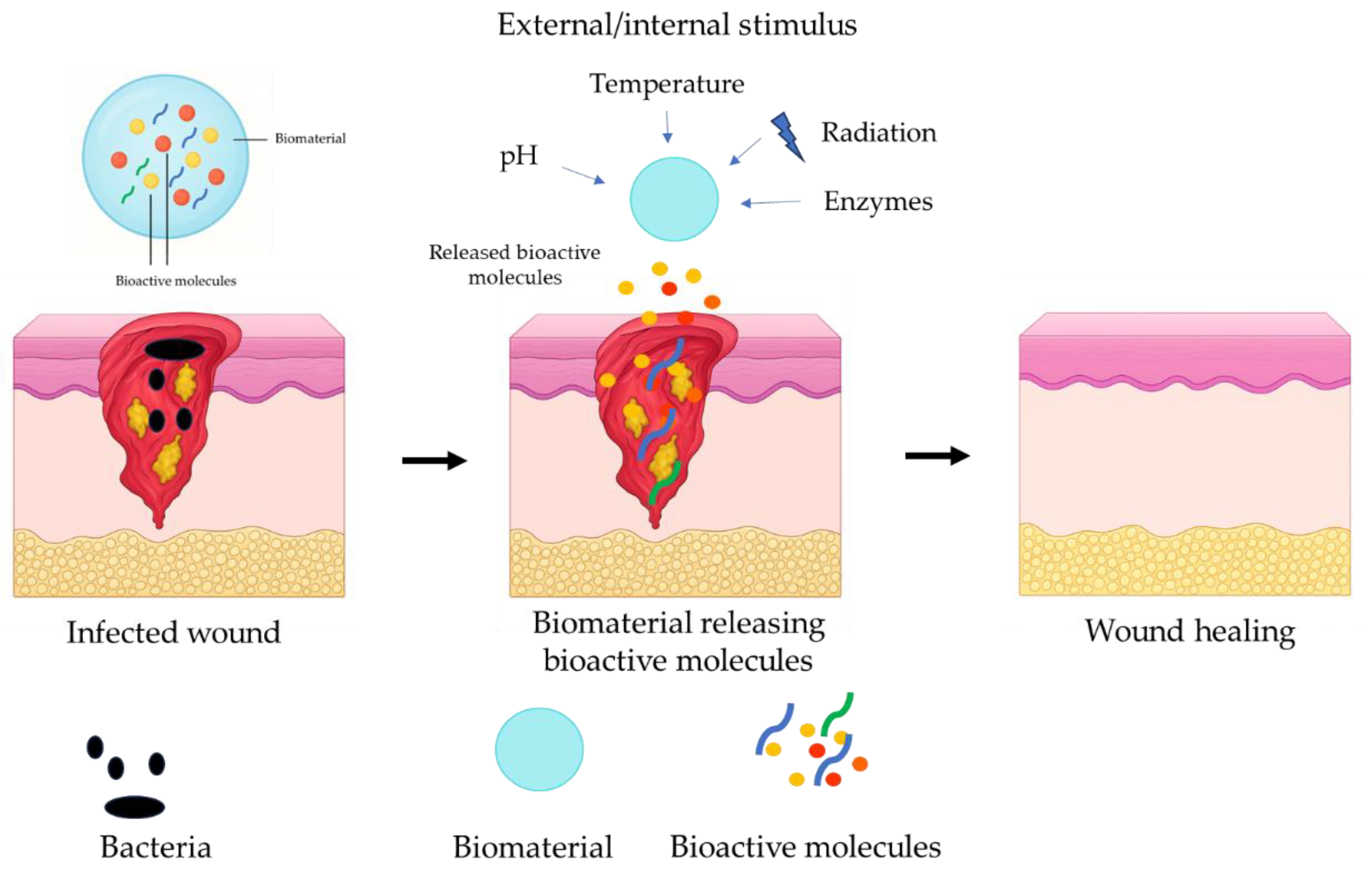

Table 1.
Advantages and disadvantages of different antimicrobial strategies using biomaterials for infection control in chronic wound healing.
Table 1.
Advantages and disadvantages of different antimicrobial strategies using biomaterials for infection control in chronic wound healing.
| Advantages | Disadvantages | References | |
| Drug- and antibiotic-loaded biomaterials | Enable localized, sustained, and controlled delivery of antibiotics or drugs directly to the wound site, reducing the risk of systemic side effects and improving local concentrations. Protect fragile therapeutic agents from degradation and extend their activity within the wound environment. Enhance patient compliance by reducing the frequency of dressing changes and systemic medication. |
Risk of developing local antibiotic resistance, especially with long-term or repeated use. Potential cytotoxicity or irritation depending on drug type, release rate, or carrier composition. Challenges with production scalability, maintaining reproducibility, and ensuring consistent drug loading and release profiles. Regulatory hurdles due to the combination nature of the device and drug. |
[32,65,66,67] |
| Antimicrobial peptide-loaded systems | Broad-spectrum antimicrobial activity, often effective against drug-resistant bacteria and biofilms at the wound site. Peptides often possess immunomodulatory functions, promoting wound healing by stimulating cell migration and reducing inflammatory responses. Usually demonstrate low propensity to induce resistance compared to traditional antibiotics. |
Peptides may be susceptible to enzymatic degradation within the wound, limiting their practical effectiveness unless protected by the delivery vehicle. Potential for cytotoxic effects at higher concentrations or with prolonged exposure. Higher manufacturing costs and stability issues compared to small molecule drugs. Limited large-scale clinical validation to date. |
[32,68] |
| Metal-based nanomaterials | Exhibit potent and broad-spectrum antimicrobial activity, including efficacy against multidrug-resistant organisms and biofilm-associated bacteria. Can synergize with other wound healing mechanisms, such as anti-inflammatory effects and promotion of tissue regeneration. Typically stable and can be incorporated into a variety of biomaterial matrices (hydrogels, nanofibers, sponges). |
Cytotoxicity and potential local or systemic toxicity, especially with metals like silver, copper, or high concentrations of nanoparticles. Long-term safety concerns regarding accumulation or leaching of metal ions. Manufacturing complexity and cost considerations for consistent size, dispersion, and controlled release. Risk of impaired healing or foreign body reactions in case of improper dosing or formulation. |
[10,11,19,21] |
| Bacteriophages-loaded biomaterials | Provide targeted antibacterial activity against specific pathogens, reducing damage to commensal microbiota and helping maintain a balanced wound microenvironment. Enable localized, sustained release of active phages from dressings, hydrogels, or scaffolds, improving biofilm penetration and bacterial clearance while limiting systemic exposure and side effects. Can be engineered as multifunctional systems combining phages with other antimicrobial or pro-regenerative agents (e.g., antiseptics, growth factors), thereby simultaneously controlling infection and supporting tissue repair. |
Phages may be unstable within some biomaterial matrices and are sensitive to temperature, pH, and storage conditions, which can lead to titer loss and reduced therapeutic efficacy over time. Bacterial populations can evolve phage resistance, especially if formulations use narrow phage spectra or are not periodically updated to match circulating clinical isolates. Clinical translation is hindered by limited standardization in manufacturing, challenges in quality control, and unclear or complex regulatory pathways for products that combine biologics with medical devices |
[60,61,62] |
Disclaimer/Publisher’s Note: The statements, opinions and data contained in all publications are solely those of the individual author(s) and contributor(s) and not of MDPI and/or the editor(s). MDPI and/or the editor(s) disclaim responsibility for any injury to people or property resulting from any ideas, methods, instructions or products referred to in the content. |
© 2026 by the authors. Licensee MDPI, Basel, Switzerland. This article is an open access article distributed under the terms and conditions of the Creative Commons Attribution (CC BY) license (http://creativecommons.org/licenses/by/4.0/).
Copyright: This open access article is published under a Creative Commons CC BY 4.0 license, which permit the free download, distribution, and reuse, provided that the author and preprint are cited in any reuse.


