

Submitted:
13 March 2026
Posted:
16 March 2026
You are already at the latest version
Abstract
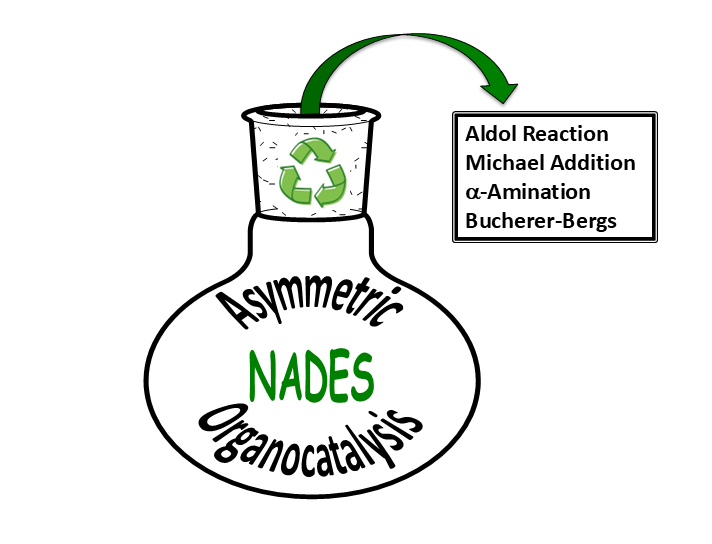
Over the last 20 years Deep-Eutectic-Solvents (DES) have been making a significant impact in the field of chemistry, with applications in nanotechnology, biomass transformation, electrochemistry pharmaceuticals and a host of other applications that includes catalysis. Considering the importance of chiral organocatalysis for the selective synthesis of drugs, pharmaceuticals and fragrances etc. DESs were quickly harnessed as the media for carrying out organocatalytic transformations. In this review, we discuss some of the most important examples from the literature that have made an impact in the field over the last 5 years. A more recent development has been the incorporation of DESs in structured and self-organized gel-like assemblies that are known as EutectoGels. These soft structures offer a more defined and compact environment that can influence stereoselectivity by pre-organizing the reactants in three-dimensional space, and potential control the types of transition states that can be formed.
Keywords:
asymmetric organocatalysis
; deep-eutectic solvents
; eutectogels
; enantioselectivity
1. Introduction
The pharmaceutical synthesis sector faces exponential growth to adopt more sustainable methodologies, driven by environmental and economic considerations. The search for alternatives to volatile and toxic organic solvents (VOTS) has been one of the most dynamic areas of research. In this context, deep eutectic solvents (DES) emerged as a promising class of green solvents, characterized by their negligible vapor pressure, low toxicity, and excellent biodegradability.
These remarkable substances known as DESs were developed by Andrew Abbott and coworkers in 2003, the first example was reline, which is a 1:2 mixture of choline chloride and urea. A DES is a mixture of two or more solid components that, when combined in a specific ratio, results in a liquid with a melting point significantly lower than that of each of the individual components [1]. This remarkable melting point depression is attributed to the formation of an intense network of intermolecular interactions, predominantly hydrogen bonds, between the components of the mixture. DESs can be tailored for specific applications by varying their composition or by diluting them with a limited amount of water. Within this class, Natural DESs (NADES), composed of primary metabolites such as sugars, amino acids, and organic acids, are of particular interest due to their biological origin and inherent biocompatibility. Current research has shown that the unique properties of DESs allow them to act not only as a simple reaction medium, but also as an active participant in catalytic processes, opening new avenues for the synthesis of drugs in a more efficient and sustainable way. In fact, other key developments include (a) reactive DESs (RDESs, see below) in which one or more of the components is a reactant in the actual reaction and (b) EutectoGels (see below), in which the DES forms part of a highly structured self-organized system that can support various types of reactions.
Although there have been reviews on the application of DESs in catalytic reactions over the last 5 years [2,3,4,5], including a list of named reactions performed in DESs published in 2025 [6,7], there has been no recent specific review uniquely focused on asymmetric organocatalysis in DESs in the last 5 years, since that of Alonso, Fanjul-Mosteirín and Amo, in 2021 [8,9].
2. Asymmetric Organocatalysis in Deep-Eutectic-Solvents
2.1. In DESs and NADES
For more than 10 years DESs (and NADES) have been used to support all types of organic reaction, ranging from metal-based catalysis [7], to biocatalysis [1,8] and organocatalysis [5]. DESs have excellent attributes for this challenge, particularly as their physicochemical properties, like polarity, polarizability, viscosity and refractive index can be tailored to the necessities of the reactions at hand. In fact, there have been some computational studies carried out to try and match these properties with those required for efficient reactivity [10].
The types of DESs that have been used so far in asymmetric organic catalysis are indicated in Table 1.
Organocatalysis uses small organic molecules, without the presence of transition metals, to accelerate and control reactions, with a remarkable ability to induce stereoselectivity. The operating mechanisms, involve to the larger extent, the formation of enamines and imines, or key structured and oriented hydrogen-bonding networks to operate and are essential for the high selectivity observed. In fact, the former operating mode is the key to why DESs can be so useful as replacements to normal organocatalysts.
Current knowledge shows that DESs do not function as mere inert solvents in this type of catalysis, and research shows that they can be active participants in the reaction. A notable example was the observation that a Betaine/Sorbitol/Water DES, a NADES, was able to catalyze a Michael addition reaction with 99% yield, even in the absence of an organic catalyst [22]. This phenomenon suggests that the acid-base properties or hydrogen bonding interactions of the DES itself are sufficient to activate the substrate. This dual function, acting both as a solvent and a catalyst, is a unique feature of DESs.
2.1.1. The Michael and Other Conjugate Additions
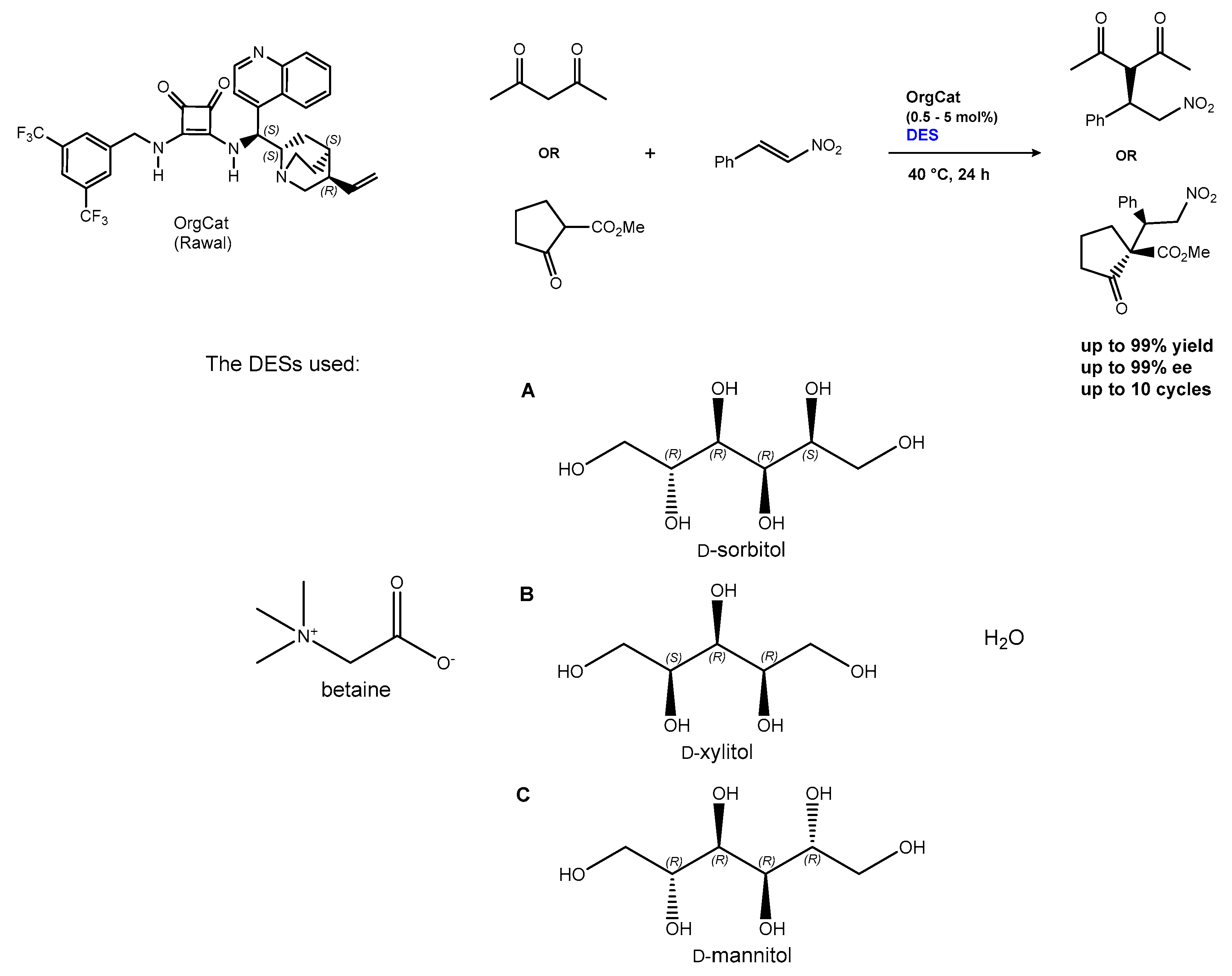
In 2023, our group published a study on the application of betaine-derived DESs in organocatalytic Michael addition reactions, simultaneously evaluating catalytic efficiency, system recyclability, and the potential of the DESs themselves to induce asymmetry [22]. Three chiral deep eutectic solvent systems (CDESs) were investigated: betaine/D-sorbitol/water, betaine/D-xylitol/water, and betaine/D-mannitol/water, in a 1:1:3 molar ratio. The Rawal organocatalyst, previously recognized for its high efficiency in this type of transformation, was employed. In reactions between acetylacetone or methyl 2-oxocyclopentane-1-carboxylate and trans-β-nitrostyrene, all three DESs afforded outstanding yields and enantioselectivities, reaching values of up to 99% for both parameters (Scheme 1). The reactions were carried out at 40 °C for 24 h, a temperature required to maintain the eutectic systems in the liquid state with suitable viscosity. These results show that the extensive hydrogen-bonding network characteristic of DESs does not compromise the activity of the organocatalyst; on the contrary, it may even play a beneficial role by stabilizing the transition state through hydrogen-bonding interactions with the catalyst.
One of the most relevant aspects of this work was the high recyclability of the system. In the case of the betaine/D-sorbitol/water DES, up to 10 consecutive cycles could be performed in the reaction with methyl 2-oxocyclopentane-1-carboxylate while maintaining high yields and enantioselectivities (97% yield and 93% ee in the 10th cycle) [22]. These results demonstrate that the DES acts simultaneously as the reaction medium and as a non-covalent immobilization matrix for the organocatalyst, clearly contributing to the sustainability of the process.
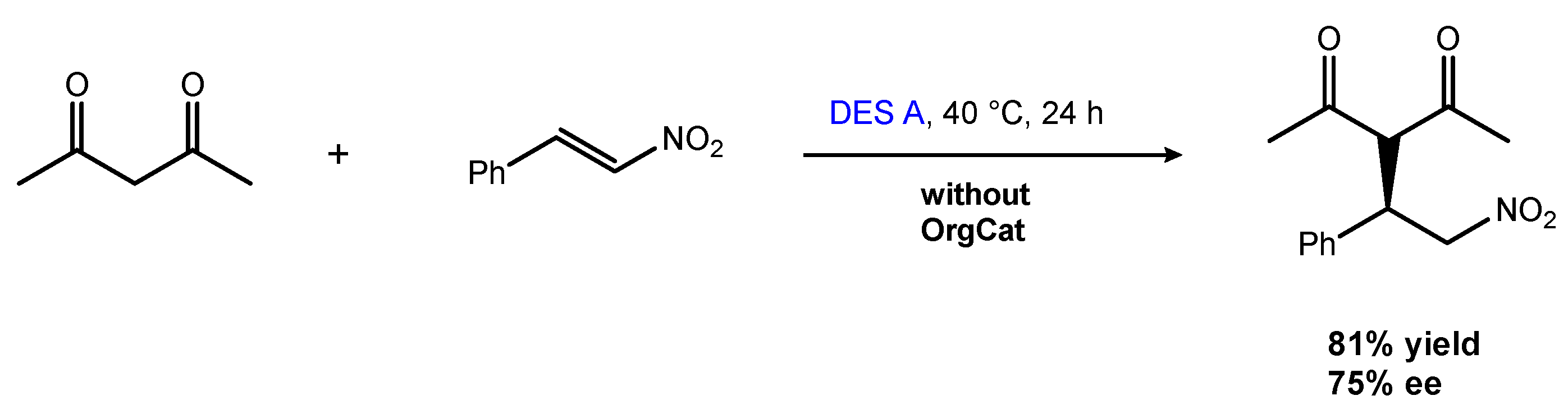
Particularly interesting was the study carried out in the absence of catalyst, aimed at evaluating the intrinsic contribution of the DES chirality to asymmetric induction. Remarkably, the betaine/D-sorbitol/water system promoted the reaction with 81% yield and 75% ee, demonstrating that the CDES itself can act as a direct source of asymmetry (Scheme 2). In contrast, DESs containing D-xylitol or D-mannitol afforded ee values below 5%, suggesting that small structural differences in the saccharide component have a decisive impact on the organization of the hydrogen-bonding network and on the differential stabilization of the transition state [22].
DFT-based computational studies corroborated this interpretation, showing that the presence of D-sorbitol leads to a lowering of the transition-state energy, most likely due to hydrogen-bonding interactions with the reaction transition-state complex. Taken together, these results support the idea that DESs can exert a cooperative catalytic effect, not only as green solvents or immobilization matrices, but also as structurally organized entities capable of energetically modulating the transition state [22].
Overall, this work demonstrates that betaine-derived CDESs can play a multifunctional role in asymmetric organocatalysis, acting simultaneously as a sustainable reaction medium, a reusable catalyst immobilization system, and a potential direct inducer of enantioselectivity.
In a more recent study, Alonso and co-workers developed a new class of CDESs based on L-prolinol and (ammonium-methyl)pyrrolidine salts derived from L-proline, designed to integrate, within a single platform, both the eutectic medium and the chiral organocatalyst [23,24]. The formation of the CDESs was confirmed by comparing theoretical and experimental solid-liquid equilibrium curves, as well as by Differential Scanning Calorimetry (DSC) and NMR studies, which revealed the non-ideal behaviour of the mixtures and the presence of extensive intermolecular hydrogen-bonding interactions. These systems were applied as reaction media in the asymmetric conjugate addition between cyclohexanone and trans-β-nitrostyrene at 30 °C.
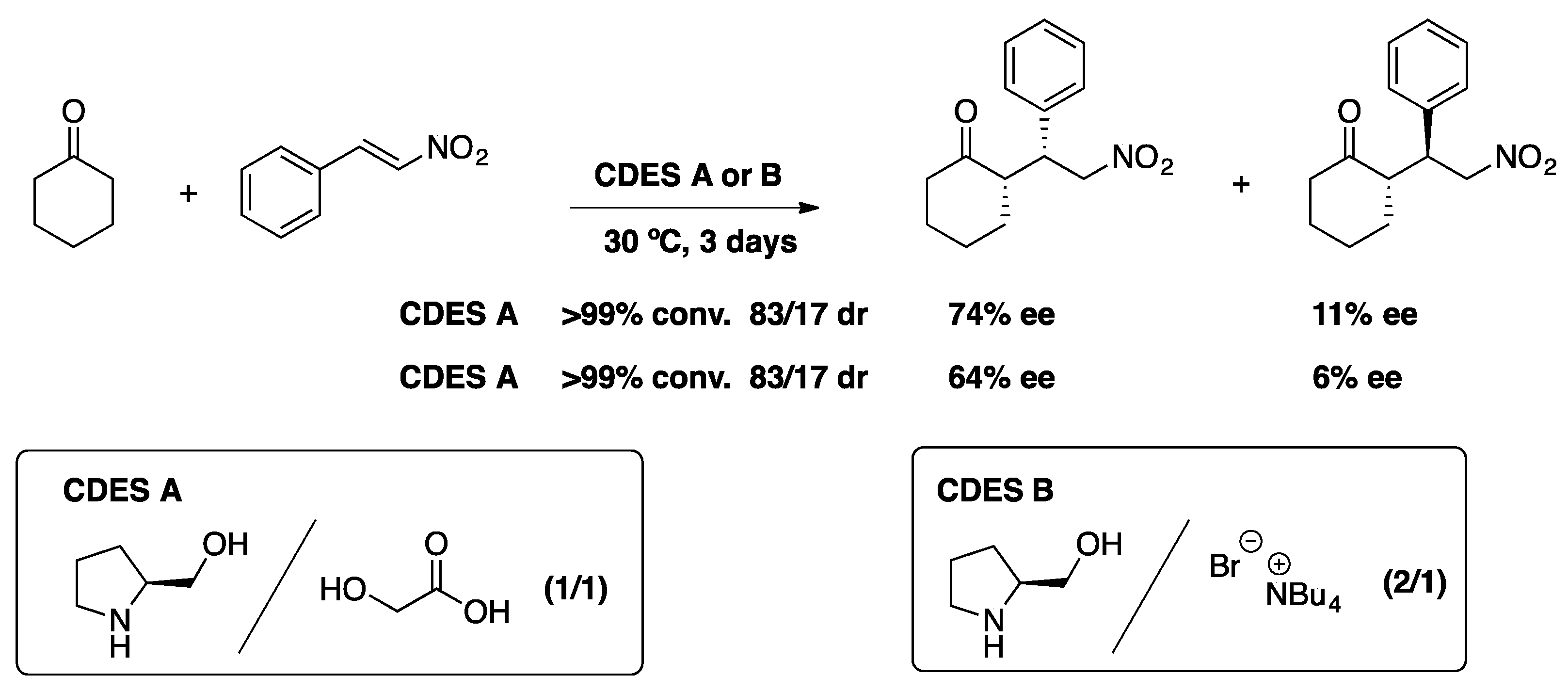
Regarding the CDESs composed of L-prolinol-based chiral liquids, they were evaluated both as solvent media and as chiral organocatalysts in the asymmetric conjugate addition of cyclohexanone to trans-β-nitrostyrene at 30 °C over 3 days (Scheme 3) [23]. The CDESs that showed the best performance, higher conversions, diastereoselectivities and enantioselectivies, were L-prolinol/glycolic acid (1:1) (CDES A) and L-prolinol/TBAB (2:1) (CDES B), with CDES A exhibiting slightly higher enantioselectivity values (Scheme CDES). The authors also compared the results obtained with the chiral liquid L-prolinol/GA (1:1) to reactions performed with L-prolinol in VOCs or under neat conditions, which proved to be similar or superior.
Another important aspect of these CDESs is their recyclability. The system was recycled and reused for five cycles under the same reaction conditions. Both conversion and diastereoselectivity remained practically constant throughout the five cycles. However, enantioselectivity remained nearly constant during the first four cycles, but a marked decrease was observed in the fifth cycle, particularly for the syn-diastereoisomer. The authors also investigated the reaction scope for the best-performing CDES system. A modest range of substrates was tested, showing very good activity and moderate to good diastereo- and enantioselectivities in the organocatalyzed conjugate addition of ketones to β-nitrostyrenes. Furthermore, a gram-scale protocol for the conjugate addition was developed.
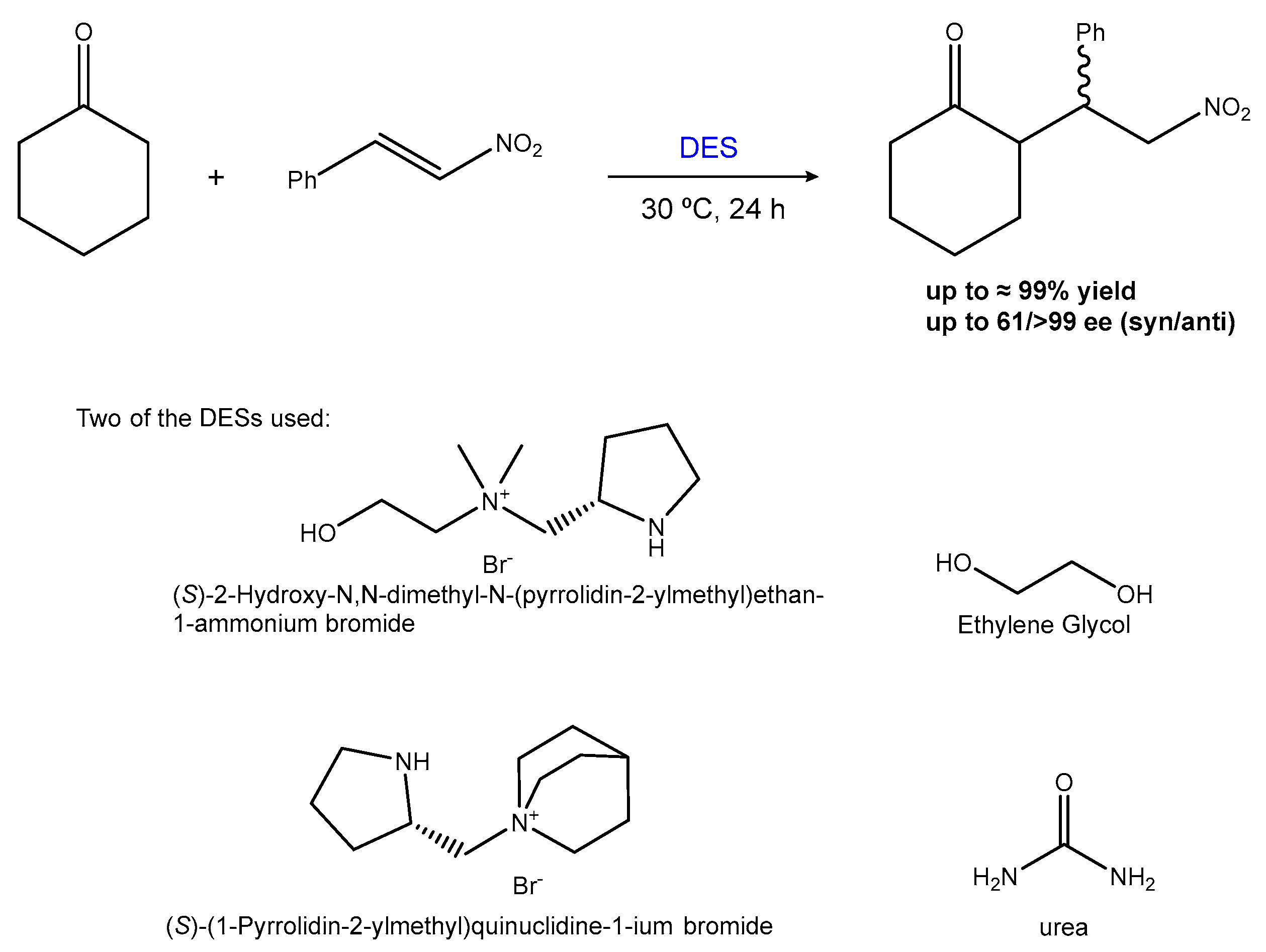
Among the CDESs evaluated, the mixtures (S)-2-hydroxy-N,N-dimethyl-N-(pyrrolidin-2-ylmethyl)ethan-1-ammonium bromide/ethylene glycol (1:3) and (S)-(1-pyrrolidin-2-ylmethyl)quinuclidinium bromide/urea (1:2) afforded quantitative conversions (>99%) within 24 h (Scheme 4). In the case of the (S)-2-hydroxy-N,N-dimethyl-N-(pyrrolidin-2-ylmethyl)ethan-1-ammonium bromide/ethylene glycol system, moderate diastereoselectivities (dr 60:40) and very high enantioselectivity for the minor diastereomer (ee > 99% for the anti isomer) were observed, whereas the major diastereomer displayed 61% ee. Similar results were obtained with the (S)-(1-pyrrolidin-2-ylmethyl)quinuclidinium bromide/urea system, albeit with lower enantioselectivity for the predominant isomer (34% ee) [24]. It is particularly noteworthy that the isolated chiral salts showed virtually no catalytic activity (< 5% conversion) [24]. This finding demonstrates that the supramolecular structure of the CDES is crucial for reaction activation, likely by promoting the iminium–enamine equilibrium and stabilizing the nitronate intermediate.
Recyclability studies further showed that the (S)-2-hydroxy-N,N-dimethyl-N-(pyrrolidin-2-ylmethyl)ethan-1-ammonium bromide/ethylene glycol system can be reused for up to four cycles while maintaining the dr and ee values, although a progressive decrease in conversion is observed after the second cycle. This decline is attributed to the strengthening of intermolecular interactions within the CDES, which progressively makes the catalytic center less accessible over successive cycles [24].
These results once again reinforce the concept of CDESs as multifunctional catalytic systems, in which the supramolecular organization of the reaction medium directly influences not only the reactivity but also the stereochemical control of the transformation.
2.1.2. The Aldol Condensation
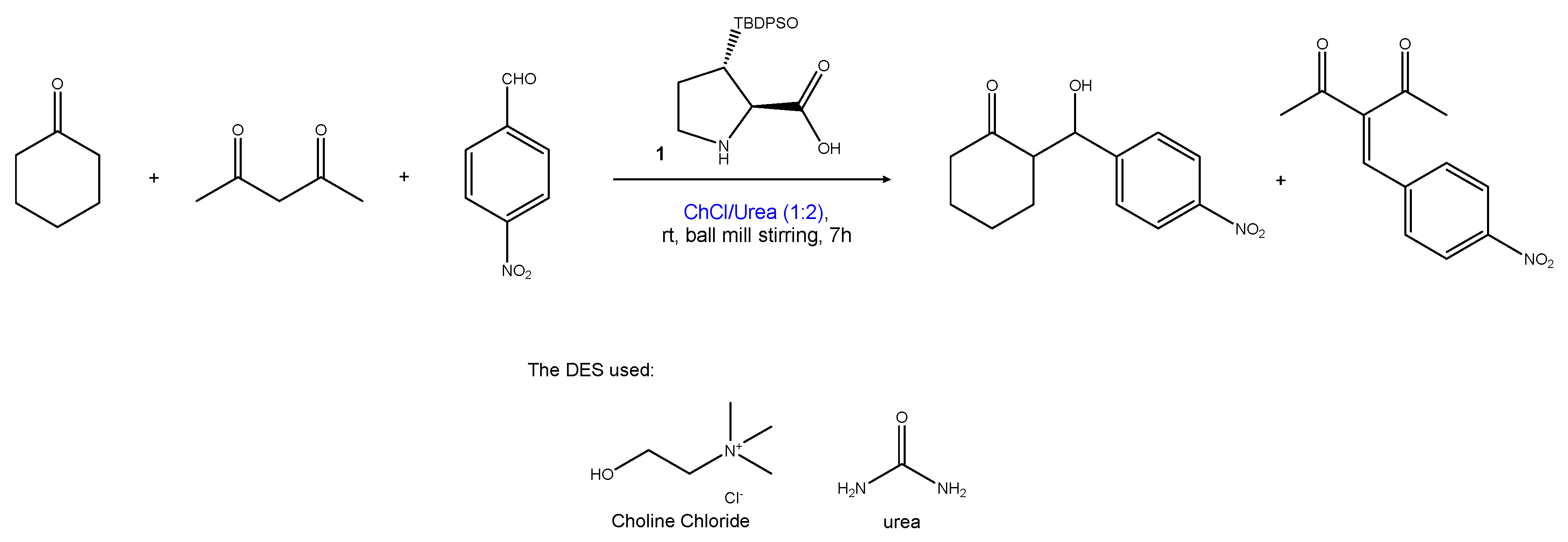
Another particularly illustrative example of the role of DESs in modulating selectivity in asymmetric organocatalysis was reported by Hassan Al Beiruty et al. in 2024, in a study of the competitive reaction between cyclohexanone and 4-nitrobenzaldehyde in the presence of acetylacetone [25]. In ChCl/Urea (1:2), using 30 mol% of chiral organocatalyst 1 and magnetic stirring, high conversion was achieved (92% in 36 h), but only modest diastereoselectivity (1.7:1) and low enantiomeric excess (32% ee) were obtained. Replacing magnetic stirring with ball milling significantly reduced the reaction time to 7h and led to clear improvements in both diastereoselectivity and enantioselectivity [25] (Scheme 5).
An even more pronounced effect was observed upon controlled addition of water, forming the ternary ChCl/urea/water system (1:2:5.7). Under these conditions, a marked increase in chemoselectivity (aldol/Knoevenagel ratio = 15:1), diastereoselectivity (8:1), and enantioselectivity (96% ee for the anti-product) was observed, while maintaining high conversion (93%). In addition, the catalyst loading could be reduced to 5 mol% without significant loss of performance. Screening of other DES compositions further showed that both conversion and selectivity depend critically on the nature of the eutectic solvent and, in particular, on the controlled presence of water. The study of the scope further revealed that different ketones, especially cyclic ones, afforded enantiomeric excesses between 53% and 99% ee for the anti-product, highlighting the robustness and versatility of the system [25].
Overall, these results confirm that DESs can act as structured reaction media in this type of transformation, simultaneously modulating reactivity, chemoselectivity, and chiral induction – an effect that is not observed under purely aqueous conditions or in conventional organic solvents.
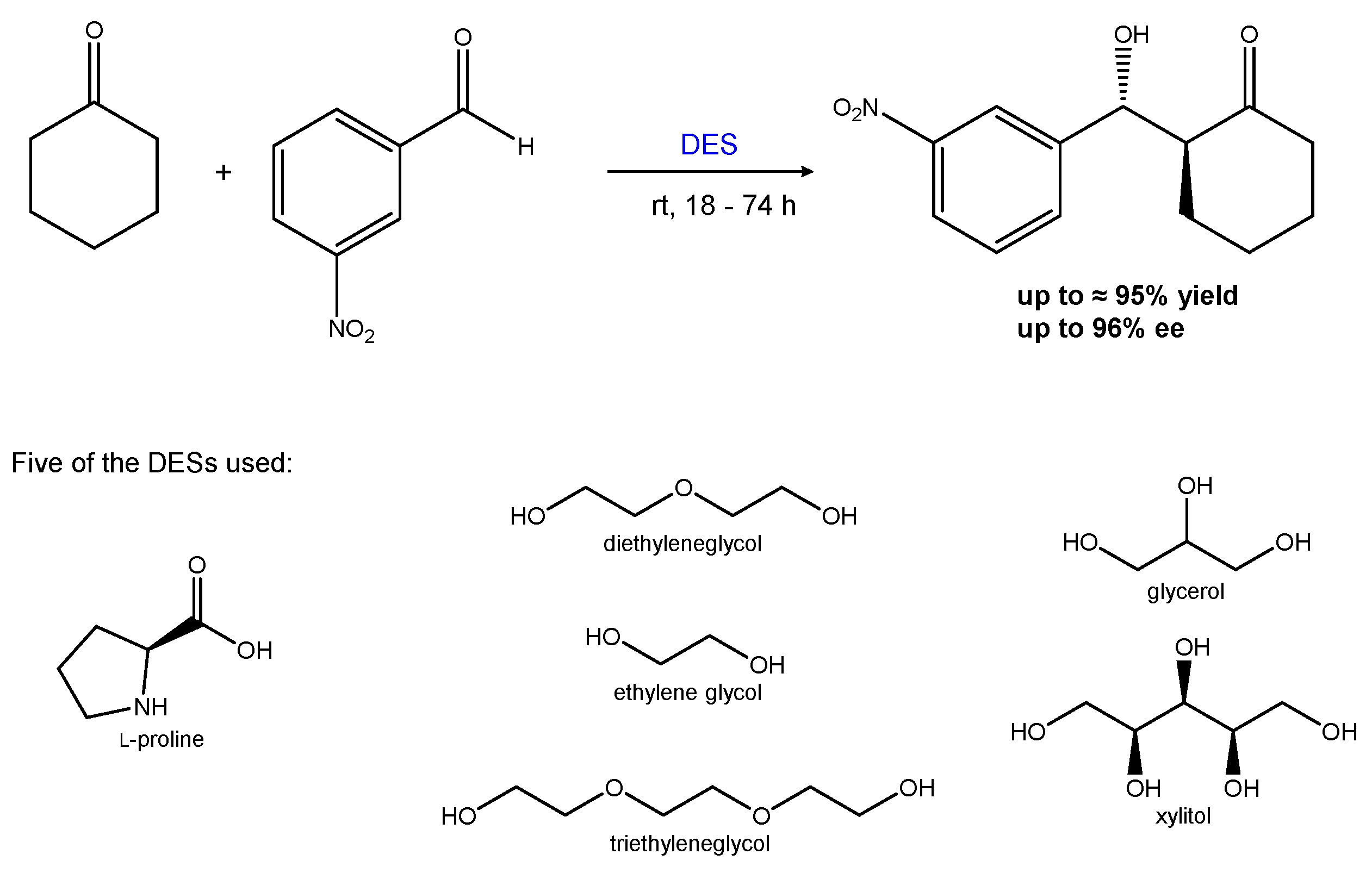
Another representative example of the use of CDESs in aldol reactions was reported by Zárate-Roldán and co-workers, who developed chiral DESs based on L-proline (as the HBA) combined with different hydrogen-bond donors (EG, DEG, TEG, glycerol, xylitol, and malic acid) [26]. These systems were explored as “2-in-1” platforms for the asymmetric aldol reaction between cyclohexanone and 3-nitrobenzaldehyde, carried out at room temperature over 18-74 h (Scheme 6). In these CDESs, the incorporated L-proline (LP) acts simultaneously as the organocatalyst, via enamine formation, and as part of the DES [26].
Among the systems evaluated, the L-Proline (LP)/DEG (Diethyleneglycol) (1:130) DES showed the best performance, allowing the effective L-proline loading to be reduced to only 10 mol% while achieving near-quantitative yields, an anti/syn diastereomeric ratio of 10:1, and enantiomeric excesses of up to 96% for the anti-isomer. Other DESs also displayed high selectivity: LP/EG (Ethyleneglycol) reached up to 93% ee, LP/TEG (Triethyleneglycol) up to 84% ee, and LP/Gly (Glycerol) and LP/Xy (Xylitol) up to 92% ee [26]. These results highlight that the nature of the glycol directly shapes the supramolecular microenvironment, contributing to stereochemical control and selective stabilization of the transition state.
It was further observed that, in several cases, reducing the fraction of L-proline in the DES led to simultaneous improvements in both diastereoselectivity and enantioselectivity, suggesting that the hydrogen-bonding network established by the glycol plays a crucial role in the selective stabilization of the transition state. Compared with conventional methodologies, which typically require about 30 mol% of L-proline in solvents such as DMSO, this system enables a significant reduction in catalyst loading while maintaining or even surpassing enantioselectivity levels. The absolute configuration of the products was confirmed by X-ray crystallography, supporting the proposed stereochemical model [26].
Overall, these results demonstrate that amino acid-based CDESs can also operate as multifunctional catalytic systems, in which the supramolecular organization of the reaction medium directly influences both reactivity and enantioinduction. Moreover, this approach represents a sustainable and highly efficient alternative to conventional asymmetric organocatalysis.
2.1.3. Carbonyl α-Aminations
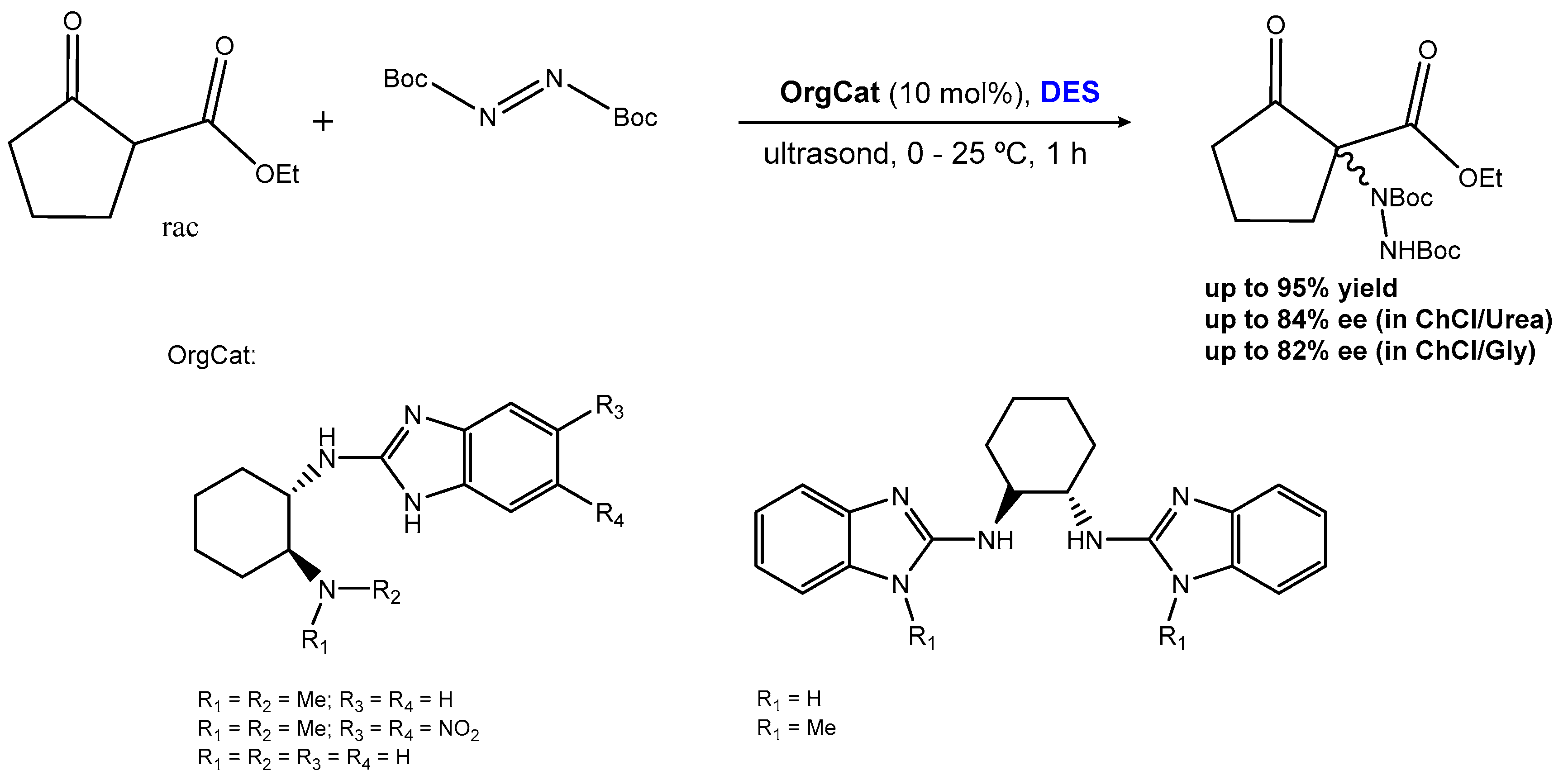
The study by Guillena and coworkers in 2018 provides a representative example of enantioselective α-amination of 1,3-dicarbonyl compounds efficiently carried out in sustainable reaction medium [18]. The authors demonstrated that DESs, particularly ChCl/Gly and ChCl/Urea (molar ratio 1:2), can serve as effective reaction media when combined with chiral organocatalysts derived from 2-aminobenzimidazole [18].
Under mild conditions (0 °C or 25 °C under ultrasound irradiation at 360 W), high conversions of up to 95% and ees of up to 84% in ChCl/Urea and 82% in ChCl/Gly were achieved (Scheme 7). The catalyst bearing nitro substituents on the benzimidazole ring exhibited the highest selectivity. These results highlight that cooperative interactions between the catalyst and the supramolecular DES network, mediated by hydrogen bonding, organize the reaction environment in a way that favors the formation of the R enantiomer [18].
The catalytic system also showed good recyclability, allowing recovery and reuse of both the catalyst and the reaction medium for at least five cycles while maintaining high ee values, although some loss of activity was observed depending on the extraction conditions. Studies on the reaction scope revealed that various β-ketoesters and 1,3-diketones are compatible with the system, whereas bulkier or more structurally rigid substrates led to more modest enantioselectivities (13-36% ee). Among the electrophiles evaluated, di-tert-butyl azodicarboxylate (DBAB) delivered the best results, underscoring the importance of this electrophile’s nature on the stereoselective performance of the reaction [18].
The robustness and synthetic applicability of the method were further demonstrated by its implementation on gram scale, maintaining high yields and enantioselectivity (95% and 85% ee, respectively). In addition, the methodology was applied to the functionalization of oxindoles and indolinones, as well as to conjugate addition reactions, affording products with high diastereoselectivity and enantiomeric excesses of up to 57% [18].
Overall, these results confirm that the integration of asymmetric organocatalysis with DESs constitutes a green, efficient, and scalable strategy for the enantioselective functionalization of 1,3-dicarbonyl compounds, reinforcing the key role of the solvent’s supramolecular microenvironment in stereochemical control.
2.1.5. Multi-Component Reactions
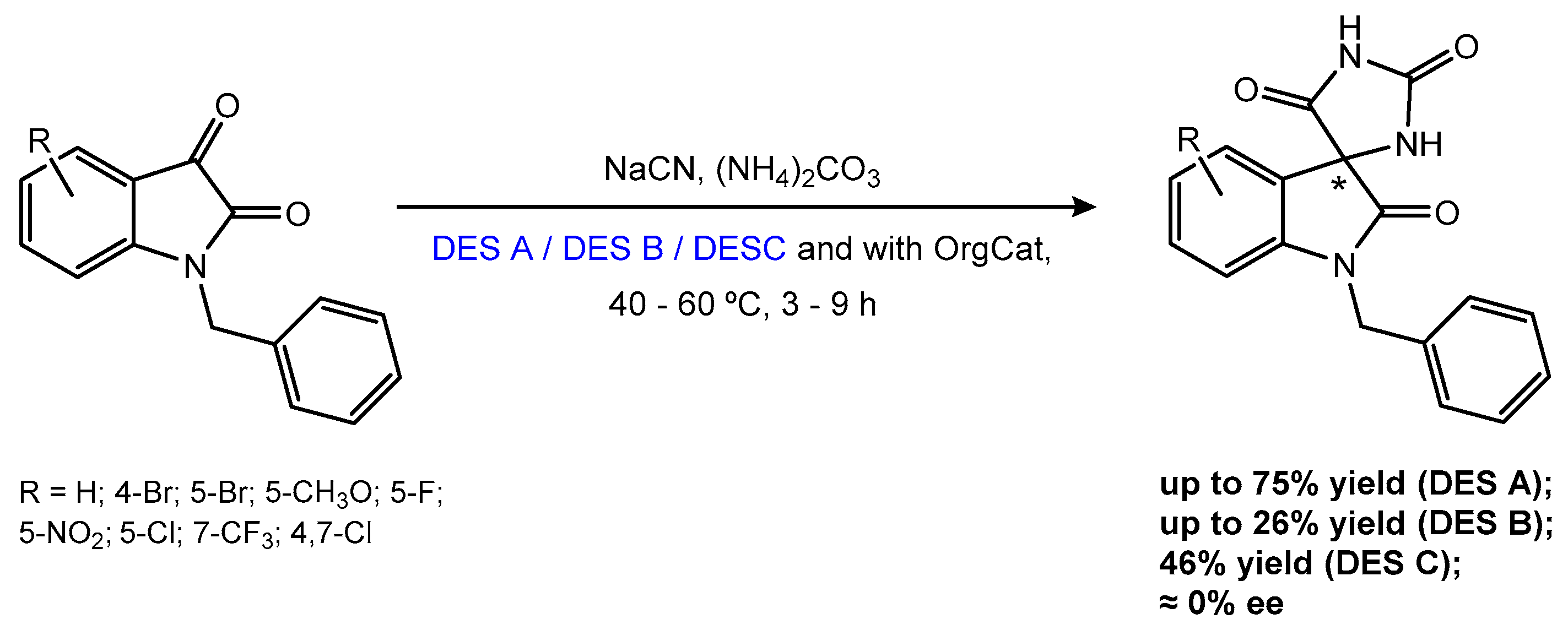
A relevant example of the potential of DESs in asymmetric multicomponent reactions is one from the Burke group, that focused on the first Bucherer-Bergs reaction in DESs, using N-benzylisatins giving spiro-oxindole hydantoins [27] (Scheme 8). Different eutectic systems in a molar ratio of 1:1:3 – betaine/D-sorbitol/water (DES A), a reactive DES based on ammonium carbonate/D-sorbitol/water (DES B), and an isotopic variant containing deuterium oxide (DES C) – were evaluated as sustainable alternatives to the conventional MeOH/H2O system. Although the yields obtained in DESs did not, overall, surpass those achieved in the conventional medium, the reactions could be performed at significantly lower temperatures (60 °C vs. 95 °C). This suggests that the microstructure of the DES may favorably influence the energetic profile of the transformation, despite limitations associated with high viscosity and mass transfer [27].
Comparison between DES A and its isotopic variant (DES C) highlighted the structural role of water in organizing the solvent hydrogen-bonding network, with a direct impact on reaction yield.
Strategies for asymmetric induction were explored using the chiral DESs based on D-sorbitol and by adding chiral organocatalysts (Rawal’s catalyst and L-proline). However, under all conditions tested, only racemic products were obtained. This suggests that, in complex multicomponent reactions such as the Bucherer-Bergs reaction, the creation of chiral microenvironments in the solvent or the addition of certain organocatalysts alone is insufficient to impose stereochemical control. This limitation likely arises from the multistep nature of the process, the conformational flexibility of the intermediates, and the relatively demanding thermal conditions. In this context, the development of alternative CDESs and more active catalysts capable of operating at lower temperatures emerges as a promising strategy to promote enantioselectivity in this type of transformation [27]. Besides, the planning can be assisted by computational tools that can match the chiral organocatalyst with the DES environment.
2.2. In Eutectogels
Another innovation is the use of eutectogels, which are a combination of DESs with low molecular weight gelling agents (LMWGs). These “soft” and organized materials help to create a structured environment that can influence stereoselectivity by pre-organizing the reactants in three-dimensional space, a level of control that is not possible in liquid solvents. This approach to reaction environment engineering demonstrates that the application of DES in organic catalysis goes far beyond the simple replacement of solvents, representing a breakthrough in the design of new catalytic systems. Eutectogels present promising physicochemical properties and have been successfully applied in a wide range of applications [28], including wastewater treatment [30,29], CO2 separation [31], lubricants [32], energy-related applications [33], packaging [34], drug delivery systems [35,36], catalysis [37] among others [38].
To the best of our knowledge, eutectogels remain largely unexplored in asymmetric organocatalysis, with only two reported examples describing their application in Aldol and Michael reactions.
2.2.1. The Aldol Reaction
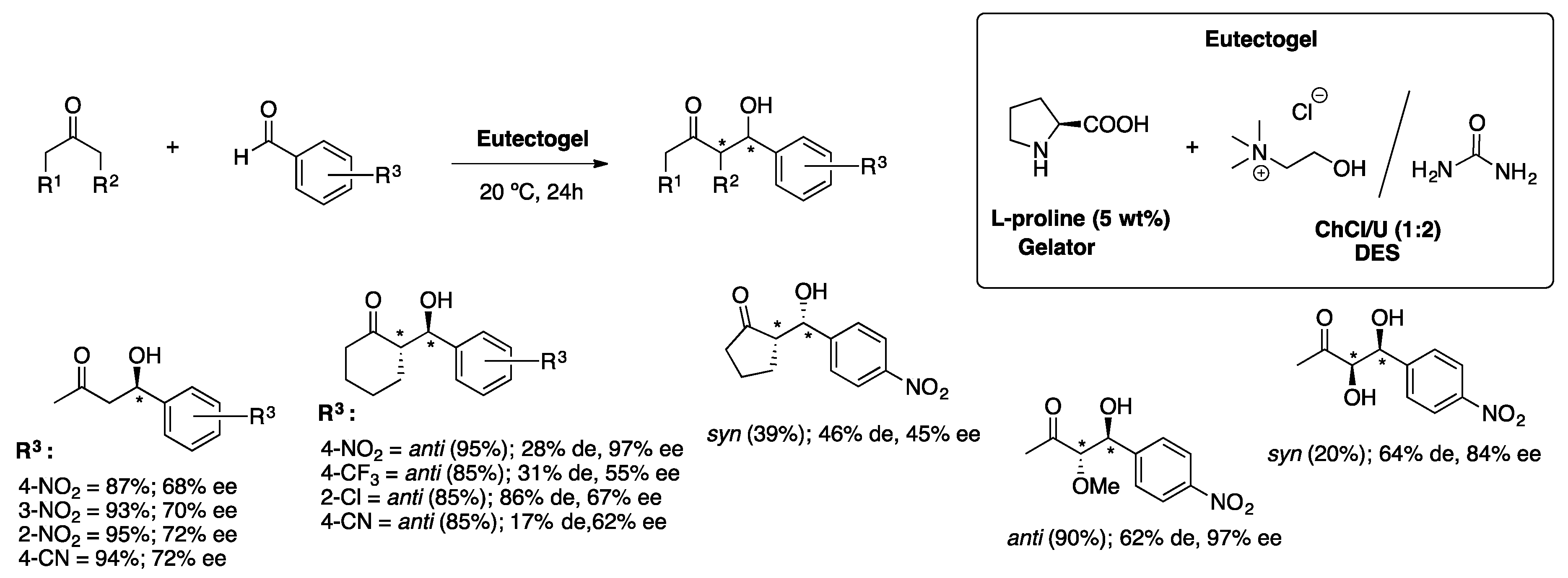
In 2021, D’Anna and coworkers reported the first example of the application of natural eutectogels in enantioselective Aldol and Michael reactions [39]. They prepared and characterized several eutectogels using natural amino acids as gelators, namely L-proline, L-serine, L-cysteine, L-isoleucine, L-asparagine, and L-tryptophan, as well as L-proline derivatives such as L-prolinamide and trans-4-hydroxy-L-proline. Several hydrogen-bond donors (HBDs) and hydrogen-bond acceptors (HBAs) were tested; however, only choline chloride:urea (1:2) formed a gel.
After full characterization, the eutectogels with the best physicochemical properties were evaluated in the benchmark Aldol reaction. Reaction conditions were optimized using acetone and p-nitrobenzaldehyde in different ChCl/urea-based eutectogels, achieving a yield of 87% and an enantiomeric excess (ee) of 62% at 20 °C over 24 h using 5 wt% of L-proline. Furthermore, the L-proline/ChCl/urea eutectogel was recycled over five cycles while maintaining the ee; however, the yield gradually decreased, reaching approximately half of its initial value by the fifth cycle.
This eutectogel was successfully used to study the reaction scope (Scheme 8). Various aromatic aldehydes bearing different electronic substituents at the ortho, meta, or para positions were investigated. In general, aldehydes containing electron-withdrawing groups favored the reaction outcome. The best results were obtained with cyano and nitro substituents, affording yields and enantioselectivities of up to 95% and 72% ee, respectively. The scope of ketone substrates was also evaluated, including cyclohexanone, cyclopentanone, and propanone derivatives (Scheme 9).
Among the four ketones studied, methoxypropanone provided the best results, likely due to its greater structural flexibility. The authors concluded that, considering the rigidity of the eutectogel network, more flexible substrates are better at supporting the formation of the enamine intermediate, which is an essential step for achieving efficient stereocontrol.
Overall, this work shows that DES-based natural eutectogels constitute a promising platform for sustainable organocatalysis, combining controlled stereochemical induction, high catalytic efficiency, and reusability, in clear alignment with the principles of Green Chemistry
2.2.2. The Michael Reaction
D’Anna and coworkers. also applied the eutectogel, L-proline (5 wt%)/ChCl/urea (1:2) to asymmetric Michael reactions between trans-β-styrene or maleimide derivatives (as electrophiles) and isobutyraldehyde (as nucleophile), in the presence of various additives (acids or organic bases) [39]. Excellent yields (>99%) were obtained for trans-β-styrene in the presence of 4-dimethylaminopyridine (DMAP), 1,4-diazabicyclo[2.2.2]octane (DABCO), imidazole, or 1,8-diazabicyclo[5.4.0]undec-7-ene (DBU); however, the enantioselectivities were moderate (up to 23% ee) (Scheme 10(A)).
In the case of maleimide-based substrates, which possess more rigid structures, the combined rigidity of both the substrate and the eutectogel likely hindered access to the catalytic site, thereby limiting the reaction. Only trace amounts of products were obtained, and no conclusions regarding enantioselectivity could be drawn, as the ee values were not determined.
The same research group developed another series of eutectogels based on 1,3:2,4-dibenzylidene-D-sorbitol (DBS), in which DBS was used as the gelator in cholinium chloride-based DESs [40]. The systems varied according to the nature of the HBD, which included ethylene glycol, diethylene glycol, triethylene glycol, glycerol, and urea.
After full characterization, both the gels and the corresponding DESs were evaluated as solvent media for the asymmetric Michael addition between malononitrile and trans-chalcone, using L-proline (20 mol%) as a chiral organocatalyst at 25 °C for 24 h (Scheme 10(B)). In general, the gels provided similar or higher conversions and yields compared to the corresponding DESs; however, no enantioselectivity was observed in either medium. The best-performing system was DBS/ChCl/urea (1:2), which afforded a yield of 99%.
Several substrates were tested under the same reaction conditions, but no enantioselectivity was detected in the obtained products. In fact, the eutectogel network is more organized and may generate stronger intermolecular interactions, which could favor reactions involving substrates with greater structural flexibility, as previously observed for L-proline/ChCl/urea eutectogels.
Comparing these two types of gels, it can be noted that when L-proline acts both as gelator and organocatalyst, high yields can be achieved, depending on the nature of the substrates and additives, along with low enantioselectivities (below 27% ee). In contrast, when L-proline is used solely as an organocatalyst in the DBS-based eutectogels, no enantioselectivity is observed.
5. Conclusions
Deep eutectic solvents represent a paradigm shift in organic synthesis, transcending their role as simple green substitutes to become intrinsic and functional components of catalytic systems. Detailed analysis of their applications in biocatalysis, metal catalysis, and organic catalysis demonstrates their vast potential.
In organocatalysis DESs have proven to be more than inert solvents; they function as co-catalysts or even as autonomous catalysts, opening new avenues for the design of simpler and more efficient reactions. Their excellent recyclability and the possibility of creating structured materials such as eutectogels reinforce their role as a versatile platform for stereochemical control.
At the current time, the democratization of chemical sciences is an important issue, various useful chemical tools have been introduced during the last 2 decades in this context, notable examples include Click chemistry and catalysis, where due to the operational simplicity of these methods specialist pre-training is not required. Along, with these “plug-and-play” type methods, one can certainly include DESs. These systems can really become bone-fide “plug-and-play” systems, due to their modular nature, and for their potential for harnessing with computational and AI methods [10].
In conclusion, intensive research on DESs is justified by the potential benefits in terms of efficiency, safety, and sustainability. The future of this area lies in the development of “tailor-made” DESs for specific reactions and in exploring their role as a structural and active matrix, beyond a simple solvation medium. This class of solvents is a pillar of green chemistry and an indispensable tool for the next generation of drug synthesis processes.
Author Contributions
Conceptualization, A.J.B; investigation, A.J.B, M.B.M.; E.P.C..; writing—original draft preparation, A.J.B., M.B.M, E.P.C.. P.P.; writing—review and editing, A.J.B, H.-J. F., E.P.C..; All authors have read and agreed to the published version of the manuscript. Please turn to the CRediT taxonomy for the term explanation. Authorship must be limited to those who have contributed substantially to the work reported.
Acknowledgments
The FCT is acknowledged for funding to CQC through projects UID/PRR/00313/2025 (https://doi.org/10.54499/UID/PRR/00313/2025) and UID/00313/2025 (https://doi.org/10.54499/UID/00313/2025) and the IMS (project LA/P/0056/2020 https://doi.org/10.54499/LA/P/0056/2020). EPC thanks the FCT for financial support through the projects UIDB/50006/2025 and UIDP/50006/2020 (LAQV-REQUIMTE).
Conflicts of Interest
AJB, EPC and HJF are shareholders of ChiraTecnics (www.chiratecmics.com).
References
- Hansen, B.B.; Spittle, S.; Chen, B.; Poe, D.; Zhang, Y.; Klein, J.M.; Horton, A.; Adhikari, L.; Zelovich, T.; Doherty, B.W.; et al. Deep Eutectic Solvents: A Review of Fundamentals and Applications. Chem. Rev. 2021, 121, 1232–1285. [Google Scholar] [CrossRef]
- Carreiro, E.P.; Federsel, H.-J.; Hermann, G.J.; Burke, A.J. Stereoselective Catalytic Synthesis of Bioactive Compounds in Natural Deep Eutectic Solvents (NADESs): A Survey across the Catalytic Spectrum. Catalysts 2024, 14, 160. [Google Scholar] [CrossRef]
- Burke, A.J.; Carreiro, E.P.; Federsel, H.-J. How Deep Eutectic Solvents Are Currently Shaping Organocatalytic and Enzymatic Asymmetric Catalysis. RSC Sustainability 2025, 3, 3883–3890. [Google Scholar] [CrossRef]
- Perna, F.M.; Vitale, P.; Capriati, V. Deep Eutectic Solvents and Their Applications as Green Solvents. Current Opinion in Green and Sustainable Chemistry 2020, 21, 27–33. [Google Scholar] [CrossRef]
- Yu, D.; Xue, Z.; Mu, T. Deep Eutectic Solvents as a Green Toolbox for Synthesis. Cell Reports Physical Science 2022, 3, 100809. [Google Scholar] [CrossRef]
- Khan, L.; Hasan, A.; Alvi, S.; Abbasi, M.; Ali, R. Organic Named Reactions in Green Deep Eutectic Solvents (DESs). Top Curr Chem (Z) 2025, 383, 36. [Google Scholar] [CrossRef]
- Zlotin, S.G.; Egorova, K.S.; Ananikov, V.P.; Akulov, A.A.; Varaksin, M.V.; Chupakhin, O.N.; Charushin, V.N.; Bryliakov, K.P.; Averin, A.D.; Beletskaya, I.P.; et al. The Green Chemistry Paradigm in Modern Organic Synthesis. RUSS CHEM REV 2023, 92, RCR5104. [Google Scholar] [CrossRef]
- Alonso, D.A.; Burlingham, S.; Chinchilla, R.; Guillena, G.; Ramón, D.J.; Tiecco, M. Asymmetric Organocatalysis in Deep Eutectic Solvents. Eur J Org Chem 2021, 2021, 4065–4071. [Google Scholar] [CrossRef]
- Fanjul-Mosteirín, N.; Del Amo, V. Organocatalytic Transformations in Deep Eutectic Solvents: Green Methodologies Made Greener. Tetrahedron 2021, 84. [Google Scholar] [CrossRef]
- Tolmachev, D.; Lukasheva, N.; Ramazanov, R.; Nazarychev, V.; Borzdun, N.; Volgin, I.; Andreeva, M.; Glova, A.; Melnikova, S.; Dobrovskiy, A.; et al. Computer Simulations of Deep Eutectic Solvents: Challenges, Solutions, and Perspectives. IJMS 2022, 23, 645. [Google Scholar] [CrossRef]
- Müller, C.R.; Meiners, I.; Domínguez de María, P. Highly enantioselective tandem enzyme–organocatalyst crossed aldol reactions with acetaldehyde in deep-eutectic solvents. RSC Adv. 2014, 4, 46097–46101. [Google Scholar] [CrossRef]
- Massolo, E.; Palmieri, S.; Benaglia, M.; Capriati, V.; Perna, F.M. Stereoselective Organocatalysed Reactions in Deep Eutectic Solvents: Highly Tunable and Biorenewable Reaction Media for Sustainable Organic Synthesis. Green Chem. 2016, 18, 792–797. [Google Scholar] [CrossRef]
- Brenna, D.; Massolo, E.; Puglisi, A.; Rossi, S.; Celentano, G.; Benaglia, M.; Capriati, V. Towards the Development of Continuous, Organocatalytic, and Stereoselective Reactions in Deep Eutectic Solvents. Beilstein J. Org. Chem. 2016, 12, 2620–2626. [Google Scholar] [CrossRef]
- Martínez, R.; Berbegal, L.; Guillena, G.; Ramón, D.J. Bio-Renewable Enantioselective Aldol Reaction in Natural Deep Eutectic Solvents. Green Chem. 2016, 18, 1724–1730. [Google Scholar] [CrossRef]
- Fanjul-Mosteirín, N.; Concellón, C.; Del Amo, V. L -Isoleucine in a Choline Chloride/Ethylene Glycol Deep Eutectic Solvent: A Reusable Reaction Kit for the Asymmetric Cross-Aldol Carboligation. Org. Lett. 2016, 18, 4266–4269. [Google Scholar] [CrossRef]
- Flores-Ferrándiz, J.; Chinchilla, R. Organocatalytic Enantioselective Conjugate Addition of Aldehydes to Maleimides in Deep Eutectic Solvents. Tetrahedron: Asymmetry 2017, 28, 302–306. [Google Scholar] [CrossRef]
- Ros Ñíguez, D.; Guillena, G.; Alonso, D.A. Chiral 2-Aminobenzimidazoles in Deep Eutectic Mixtures: Recyclable Organocatalysts for the Enantioselective Michael Addition of 1,3-Dicarbonyl Compounds to β-Nitroalkenes. ACS Sustain. Chem. Eng. 2017, 5, 10649–10656. [Google Scholar] [CrossRef]
- Ros Ñíguez, D.; Khazaeli, P.; Alonso, D.A.; Guillena, G. Deep Eutectic Mixtures as Reaction Media for the Enantioselective Organocatalyzed α-Amination of 1,3-Dicarbonyl Compounds. Catalysts 2018, 8, 217. [Google Scholar] [CrossRef]
- Palomba, T.; Ciancaleoni, G.; Del Giacco, T.; Germani, R.; Ianni, F.; Tiecco, M. Deep Eutectic Solvents Formed by Chiral Components as Chiral Reaction Media and Studies of Their Structural Properties. Journal of Molecular Liquids 2018, 262, 285–294. [Google Scholar] [CrossRef]
- Tiecco, M.; Alonso, D.A.; Ñíguez, D.R.; Ciancaleoni, G.; Guillena, G.; Ramón, D.J.; Bonillo, A.A.; Germani, R. Assessment of the Organocatalytic Activity of Chiral L-Proline-Based Deep Eutectic Solvents Based on Their Structural Features. Journal of Molecular Liquids 2020, 313, 113573. [Google Scholar] [CrossRef]
- Torregrosa-Chinillach, A.; Sánchez-Laó, A.; Santagostino, E.; Chinchilla, R. Organocatalytic Asymmetric Conjugate Addition of Aldehydes to Maleimides and Nitroalkenes in Deep Eutectic Solvents. Molecules 2019, 24, 4058. [Google Scholar] [CrossRef]
- Fonseca, D.P.; Amorim, A.C.; Carreiro, E.P.; Ramalho, J.P.P.; Hermann, G.J.; Federsel, H.-J.; Duarte, A.R.C.; Burke, A.J. Sustainable Organocatalyzed Enantioselective Catalytic Michael Additions in Betaine-Derived Deep Eutectic Solvents. SynOpen 2023, 07, 374–380. [Google Scholar] [CrossRef]
- Burlingham, S.J.; Ñíguez, J.A.; Torregrosa-Chinillach, A.; Ros Ñíguez, D.; Chinchilla, R.; Such-Basáñez, I.; Tiecco, M.; Alonso, D.A. Synthesis, Characterization and Organocatalytic Activity of Novel Chiral (Ammoniummethyl)Pyrrolidine-Derived Deep Eutectic Solvents. Journal of Molecular Liquids 2024, 411, 125724. [Google Scholar] [CrossRef]
- Ñíguez, J.A.; Burlingham, S.J.; Chinchilla, R.; Pérez, J.M.; Fernández, I.; Alonso, D.A. Synthesis and Structural Characterization of L -Prolinol Derived Chiral Eutectic Mixtures as Sustainable Solvents in Asymmetric Organocatalysis. RSC Sustainability 2024, 2, 499–509. [Google Scholar] [CrossRef]
- Al Beiruty, H.; Zhylinska, S.-S.; Kutateladze, N.; Cheong, H.K.T.; Ñíguez, J.A.; Burlingham, S.J.; Marset, X.; Guillena, G.; Chinchilla, R.; Alonso, D.A.; et al. Enantioselective catalytic aldol reactions in the presence of Knoevenagel nucleophiles: A chemoselective switch optimized in deep eutectic solvents using mechanochemistry. Molecules 2024, 29, 4. [Google Scholar] [CrossRef]
- Zárate-Roldán, S.; Trujillo-Rodríguez, M.J.; Gimeno, M.C.; Herrera, R.P. L-Proline-Based Deep Eutectic Solvents as Green and Enantioselective Organocatalyst/Media for Aldol Reaction. Journal of Molecular Liquids 2024, 396, 123971. [Google Scholar] [CrossRef]
- Moura, M.B.V.; Monteiro, H.; Alves, C.; Fernandes, C.; Amorim, A.C.; Duarte, A.R.C.; Burke, A.J. The Bucherer–Bergs reaction in deep eutectic solvents: Accessing spiro-oxindole-hydantoins. J. Mol. Liq. 2026, 129390. in press. [Google Scholar] [CrossRef]
- Mercadal, P.A.; González, A.; Beloqui, A.; Tomé, L.C.; Mecerreyes, D.; Calderón, M.; Picchio, M.L. Eutectogels: The Multifaceted Soft Ionic Materials of Tomorrow. JACS Au 2024, 4, 3744–3758. [Google Scholar] [CrossRef]
- Marullo, S.; Meli, A.; Dintcheva, N.T.; Infurna, G.; Rizzo, C.; D’Anna, F. Environmentally friendly eutectogels comprising L-amino acids and deep eutectic solvents: Efficient materials for wastewater treatment. ChemPlusChem 2020, 85, 301–308. [Google Scholar] [CrossRef]
- Zhang, Z.; Yao, A.; Raffa, P. Physically Crosslinked Amphiphilic Eutectogels with Underwater Self-Healing, Strong Adhesion, Environmental Stability and Closed-Loop Recyclability for Underwater Sensing and Information Transmission. Chemical Engineering Journal 2025, 522, 167958. [Google Scholar] [CrossRef]
- Zhang, P.; Xiong, W.; Shi, M.; Tu, Z.; Hu, X.; Zhang, X.; Wu, Y. Natural Deep Eutectic Solvent-Based Gels with Multi-Site Interaction Mechanism for Selective Membrane Separation of SO2 from N2 and CO2. Chemical Engineering Journal 2022, 438, 135626. [Google Scholar]
- Li, M.; Guan, C.; Zhi, Y.; Li, J.; Sun, S.; Zhuang, X.; Fang, Y.; Peng, J. Water-Resistant Supramolecular Eutectogel Lubricant with MoS2 : Thixotropic Behavior and High-Efficiency Lubrication. ACS Appl. Mater. Interfaces 2025, 17, 46197–46207. [Google Scholar] [CrossRef]
- Mercken, J.; De Sloovere, D.; Joos, B.; Ghogare, D.; Verhille, Y.; Smeets, S.; Derveaux, E.; Adriaensens, P.; Van Bael, M.; Hardy, A. Organic modification of eutectogels enhances electrolyte/electrode contact in sodium-ion batteries. ChemSusChem 2025, 18, e202500427. [Google Scholar] [CrossRef]
- Tian, Y.; Sun, D.-W.; Xu, L.; Fan, T.-H.; Zhu, Z. Bio-Inspired Eutectogels Enabled by Binary Natural Deep Eutectic Solvents (NADESs): Interfacial Anti-Frosting, Freezing-Tolerance, and Mechanisms. Food Hydrocolloids 2022, 128, 107568. [Google Scholar] [CrossRef]
- Cassano, R.; Sole, R.; Siciliano, C.; Baldino, N.; Mileti, O.; Procopio, D.; Curcio, F.; Calviello, G.; Serini, S.; Trombino, S.; et al. Eutectogel-Based Drug Delivery: An Innovative Approach for Atenolol Administration. Pharmaceutics 2024, 16, 1552. [Google Scholar] [CrossRef]
- Meneses, L.; Jesus, A.R. Eutectogels: Recent Advances, Design Strategies, and Emerging Applications in Biotechnology. Gels 2025, 11, 1013. [Google Scholar] [CrossRef]
- Kumar, K.; Calderón, M.; Beloqui, A.; Picchio, M.L. Eutectogels as Promising Materials in Biocatalysis. ChemCatChem 2024, 16, e202400204. [Google Scholar]
- Cheng, Q.; Hao, A.; Xing, P. Eutectogels as Matrices to Manipulate Supramolecular Chirality and Circularly Polarized Luminescence. ACS Nano 2022, 16, 6825–6834. [Google Scholar] [CrossRef]
- Saavedra, B.; Meli, A.; Rizzo, C.; Ramón, D.J.; D’Anna, F. Natural Eutectogels: Sustainable Catalytic Systems for C–C Bond Formation Reactions. Green Chem. 2021, 23, 6555–6565. [Google Scholar] [CrossRef]
- Rizzo, C.; Marullo, S.; Benaglia, M.; D’Anna, F. DBS-based eutectogels: Organized vessels to perform the Michael addition reaction. Eur. J. Org. Chem. 2023, 26, e202300263. [Google Scholar] [CrossRef]
Scheme 1.
Examples of Michael reactions with the Rawal organocatalyst conducted in betaine-derived DESs.
Scheme 1.
Examples of Michael reactions with the Rawal organocatalyst conducted in betaine-derived DESs.
Scheme 2.
Michael reaction carried out in DES A between acetylacetone and trans-β-nitrostyrene in the absence of the Rawal organocatalyst [22].
Scheme 2.
Michael reaction carried out in DES A between acetylacetone and trans-β-nitrostyrene in the absence of the Rawal organocatalyst [22].
Scheme 3.
Asymmetric conjugate additions of cyclohexanone to trans-β-nitrostyrene using a CDES based on L-prolinol.
Scheme 3.
Asymmetric conjugate additions of cyclohexanone to trans-β-nitrostyrene using a CDES based on L-prolinol.
Scheme 4.
Asymmetric conjugate addition of cyclohexanone to trans-β-nitrostyrene employing chiral DESs [24].
Scheme 4.
Asymmetric conjugate addition of cyclohexanone to trans-β-nitrostyrene employing chiral DESs [24].
Scheme 5.
Aldol chemoselective reaction in ChCl/Urea (1:2) using an organocatalyst [25].
Scheme 5.
Aldol chemoselective reaction in ChCl/Urea (1:2) using an organocatalyst [25].
Scheme 6.
Aldol reaction between cyclohexanone and 3-nitrobenzaldehyde in DESs [26].
Scheme 6.
Aldol reaction between cyclohexanone and 3-nitrobenzaldehyde in DESs [26].
Scheme 7.
Asymmetric α-amination of ethyl 2-oxocyclopentane-1-carboxylate with di-tert-butyl azodicarboxylate (DBAB) in DES using an organocatalyst [18].
Scheme 7.
Asymmetric α-amination of ethyl 2-oxocyclopentane-1-carboxylate with di-tert-butyl azodicarboxylate (DBAB) in DES using an organocatalyst [18].
Scheme 8.
Bucherer-Bergs reaction for the synthesis of spiro-oxindole hydantoins from N-benzylisatins in DESs [27]. In reactions performed in DES B, (NH4)2CO3 was not used; reactions in DES C were carried out only for R = H.
Scheme 8.
Bucherer-Bergs reaction for the synthesis of spiro-oxindole hydantoins from N-benzylisatins in DESs [27]. In reactions performed in DES B, (NH4)2CO3 was not used; reactions in DES C were carried out only for R = H.
Scheme 9.
Asymmetric Aldol reaction using the Eutectogel based in L-proline (5 wt%)/ChCl/U (1:2).
Scheme 10.
Asymmetric Michael reaction carried out in eutectogels [40].
Scheme 10.
Asymmetric Michael reaction carried out in eutectogels [40].
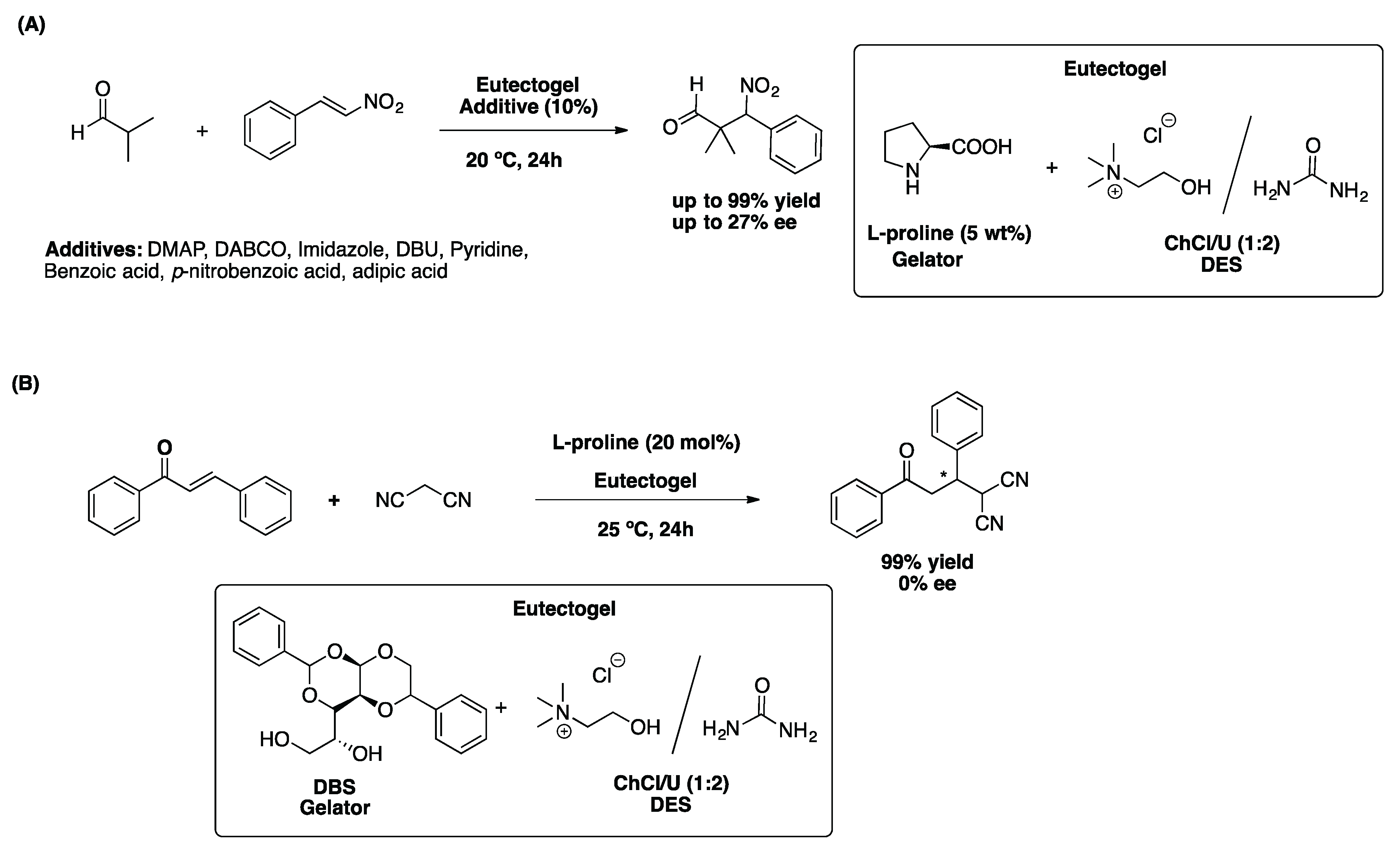

Table 1.
Survey of the DES that have already been used in Asymmetric Organocatalysis.
| Entry | Hydrogen-Bond Donor | Hydrogen-Bond Acceptor | Reaction Type | Reference |
|---|---|---|---|---|
| 1 | Glycerol | Choline Chloride | Cross-Aldol Reaction |
[11] |
| 2 | Fructose | Choline Chloride | Michael Reaction |
[12] |
| 3 | Urea | Choline Chloride | Aldol Reaction | [13] |
| 4 | D-Glucose | (D/L)-malic acid | Aldol Reaction | [14] |
| 5 | Ethylene glycol | ChCl | Aldol Reaction | [15] |
| 6 | Glycine | Ph3MePBr | Michael Reaction |
[16] |
| 7 | Glycine | ChCl |
Michael Reaction |
[17] |
| 8 | Glycerol | ChCl | α-amination | [18] |
| 9 | (+)-camphor-sulfonic acid | (S) or (R)-N,N,N-trimethyl-(1-phenylethyl)ammonium methanesulfonate | Michael-type Friedel-Crafts reaction | [19] |
| 10 | L-proline | Glycolic acid | Michael Reaction |
[20] |
| 11 | Ethylene Glycol | ChCl | Conjugate additions |
[21] |
Disclaimer/Publisher’s Note: The statements, opinions and data contained in all publications are solely those of the individual author(s) and contributor(s) and not of MDPI and/or the editor(s). MDPI and/or the editor(s) disclaim responsibility for any injury to people or property resulting from any ideas, methods, instructions or products referred to in the content. |
© 2026 by the authors. Licensee MDPI, Basel, Switzerland. This article is an open access article distributed under the terms and conditions of the Creative Commons Attribution (CC BY) license (http://creativecommons.org/licenses/by/4.0/).
Copyright: This open access article is published under a Creative Commons CC BY 4.0 license, which permit the free download, distribution, and reuse, provided that the author and preprint are cited in any reuse.


