
Submitted:
13 March 2026
Posted:
16 March 2026
You are already at the latest version
Abstract
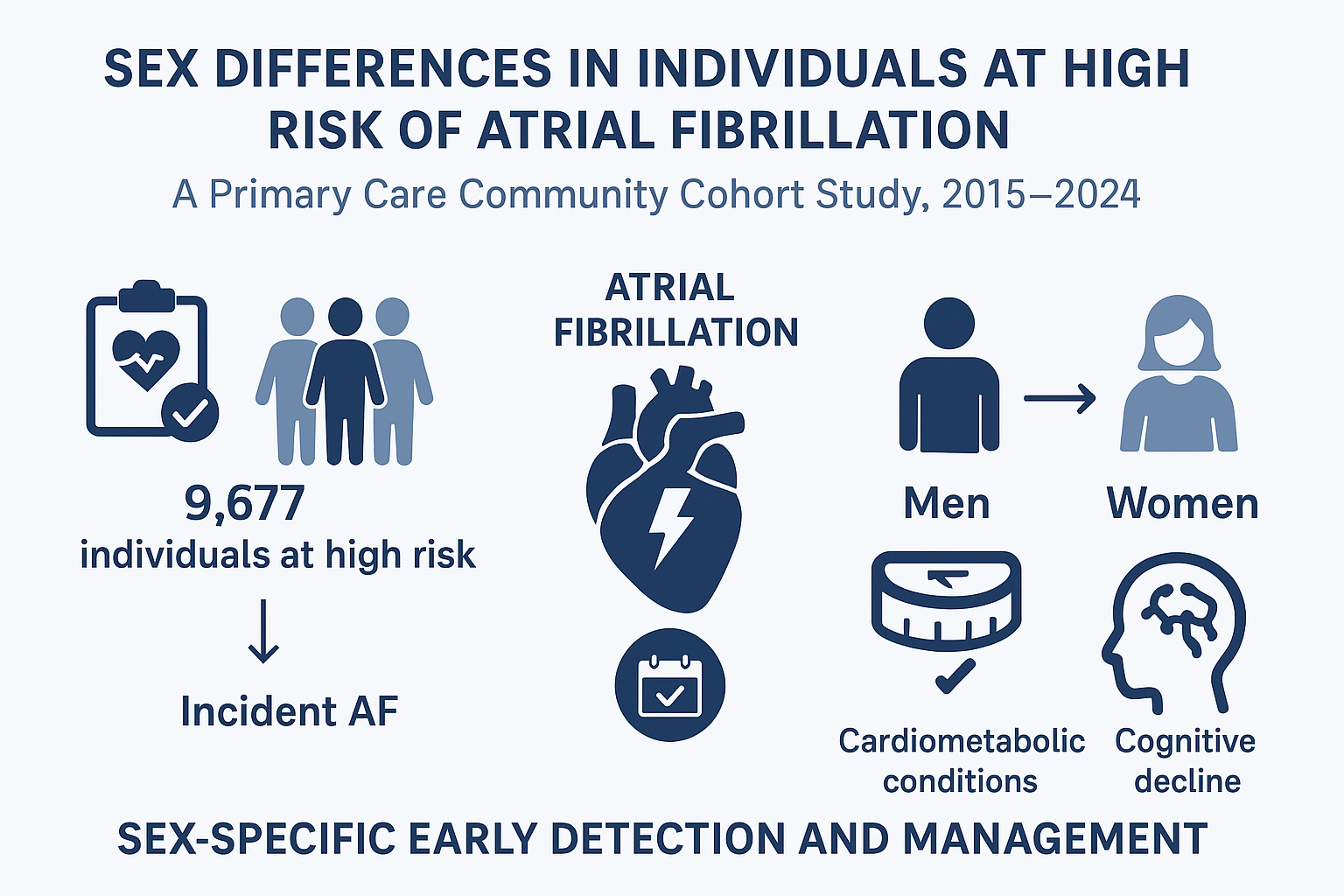
Background: Women with atrial fibrillation experience a higher lifetime risk of ischemic stroke, greater stroke severity, and worse functional outcomes than men. Preventive strategies focused on AF detection may therefore miss critical opportunities for early intervention in women; (2) Methods: We developed a decision-analytic Markov model using real-world primary care data from Catalonia (Spain) to evaluate an artificial intelligence (AI) enabled strategy for upstream thromboembolic risk detection. The intervention combined electronic health record–based risk prediction, targeted digital rhythm screening, and individualized anticoagulation. Lifetime clinical and economic outcomes were estimated for adults aged ≥65 years, with pre-specified sex-stratified analysis; (3) Results: Compared with usual care, the AI-enabled strategy reduced ischemic stroke, major adverse cardiovascular events, and long-term disability. Absolute reductions in stroke and disability were greater in women, reflecting higher baseline thromboembolic risk. Per 1,000 high-risk women, the strategy prevented more strokes and generated larger quality-adjusted life-year gains than in men. From both healthcare payer and societal perspectives, the intervention was cost-saving in women, driven by reductions in stroke-related disability and long-term care; (4) Conclusions: AI-enabled upstream thromboembolic risk detection may deliver particularly important benefits for older women and represents a promising approach to reduce sex-based inequities in stroke prevention.
Keywords:
atrial fibrillation
; thromboembolic risk
; artificial intelligence
; stroke prevention
; women’s cardiovascular health
; sex differences
; primary care
; cost-effectiveness analysis
; digital health
; quality-adjusted life-years (QALYs)
; health equity
; electronic health records
Copyright: This open access article is published under a Creative Commons CC BY 4.0 license, which permit the free download, distribution, and reuse, provided that the author and preprint are cited in any reuse.


